YubNub Social YubNub Social
    #music #tew #tuba #euphonium #tew2026 #militarymusic #armymusic #armyband #band #freedom #concertband #tusab #armyorchestra #orchestra #warmup
    Advanced Search
  • Login
  • Register

  • Night mode
  • © 2026 YubNub Social
    About • Directory • Contact Us • Developers • Privacy Policy • Terms of Use • shareasale • FB Webview Detected • Android • Apple iOS • Get Our App

    Select Language

  • English
Night mode toggle
Featured Content
Community
New Posts (Home) ChatBox Popular Posts Reels Game Zone Top PodCasts
Explore
Explore
© 2026 YubNub Social
  • English
About • Directory • Contact Us • Developers • Privacy Policy • Terms of Use • shareasale • FB Webview Detected • Android • Apple iOS • Get Our App
Advertisement
Stop Seeing These Ads

Discover posts

Posts

Users

Pages

Blog

Market

Events

Games

Forum

Conservative Voices
Conservative Voices
1 y

Cardinal Timothy Dolan teaches how to make it feel like Christmas all the time
Favicon 
www.brighteon.com

Cardinal Timothy Dolan teaches how to make it feel like Christmas all the time

Follow NewsClips channel at Brighteon.com for more updatesSubscribe to Brighteon newsletter to get the latest news and more featured videos: https://support.brighteon.com/Subscribe.html
Like
Comment
Share
Conservative Voices
Conservative Voices
1 y

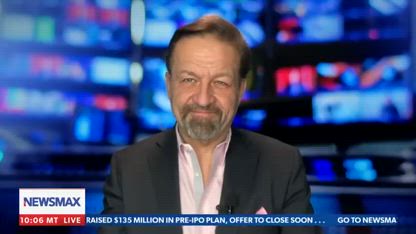
Americans don't want lawmakers spending like drunken sailors: Sebastian Gorka | Saturday Report
Favicon 
www.brighteon.com

Americans don't want lawmakers spending like drunken sailors: Sebastian Gorka | Saturday Report

Follow NewsClips channel at Brighteon.com for more updatesSubscribe to Brighteon newsletter to get the latest news and more featured videos: https://support.brighteon.com/Subscribe.html
Like
Comment
Share
Conservative Voices
Conservative Voices
1 y

Expert warns China wants war
Favicon 
www.brighteon.com

Expert warns China wants war

Follow NewsClips channel at Brighteon.com for more updatesSubscribe to Brighteon newsletter to get the latest news and more featured videos: https://support.brighteon.com/Subscribe.html
Like
Comment
Share
Conservative Voices
Conservative Voices
1 y

‘THEIR DAYS ARE NUMBERED’: Tom Homan on migrant criminals
Favicon 
www.brighteon.com

‘THEIR DAYS ARE NUMBERED’: Tom Homan on migrant criminals

Follow NewsClips channel at Brighteon.com for more updatesSubscribe to Brighteon newsletter to get the latest news and more featured videos: https://support.brighteon.com/Subscribe.html
Like
Comment
Share
Conservative Voices
Conservative Voices
1 y

Loving to Lose
Favicon 
www.theamericanconservative.com

Loving to Lose

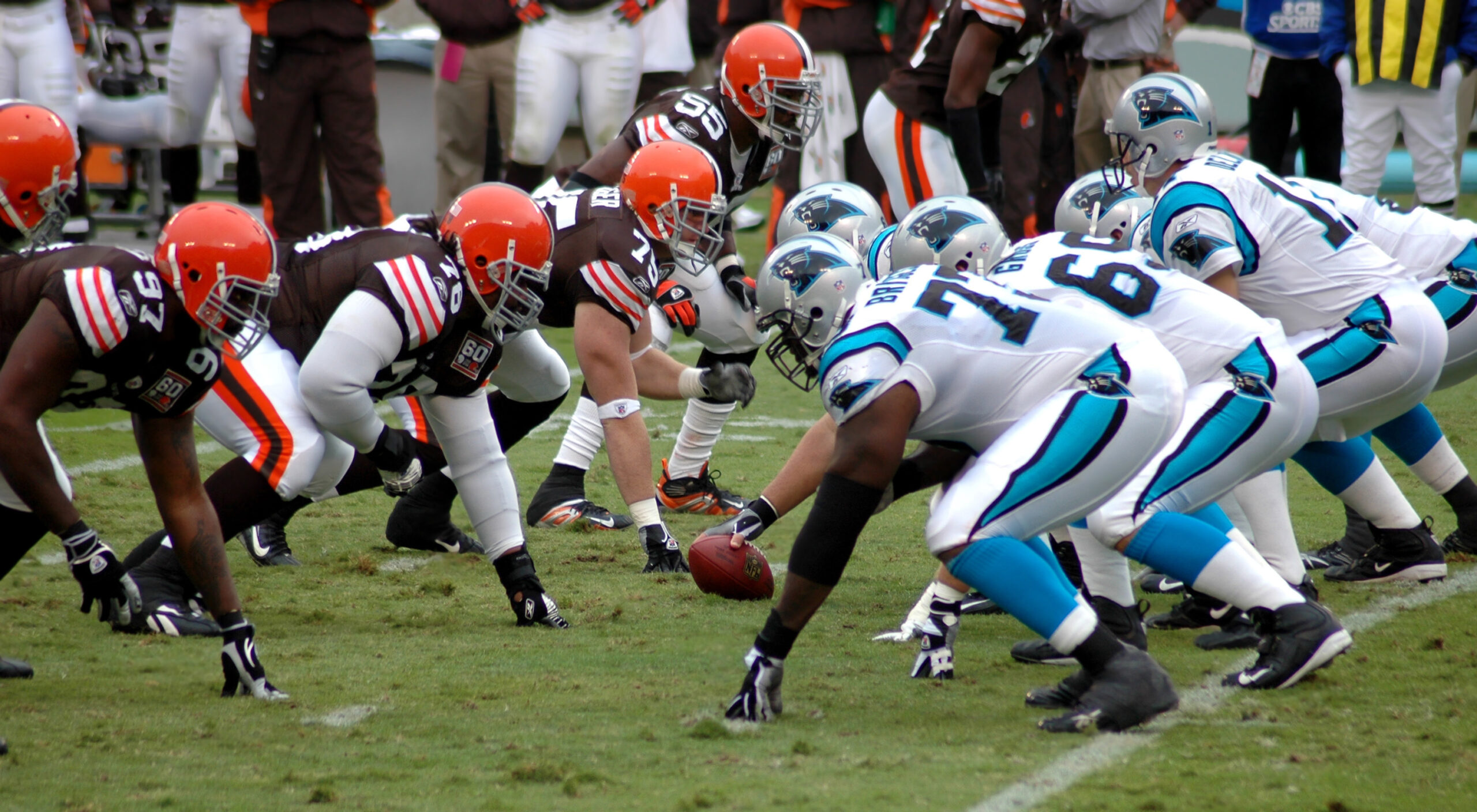
Culture Loving to Lose There is nothing like the exquisite pains of Browns fandom. Credit: Jeff Thrower/Shutterstock As a sincere but not vociferous fan of the Cleveland Browns, I have become accustomed to losing records, coaching carousels, quarterback changes, and a litany of high draft picks. Yet, unlike many of my fellow Browns enthusiasts, I have come to savor their defeats. Before real Browns fans start booing me, permit me to offer some personal history: I am a native and longtime resident of Columbus, Ohio, where the innate Midwestern appetite for gridiron sports is satiated by the ubiquitous Ohio State University Buckeyes. In the absence of an actual professional football team (officially professional, anyway), Columbus football fanatics with a hankering to watch the game on Sundays have something of a menu of options. Within the state of Ohio, we can profess loyalty to either the Browns or the Cincinnati Bengals, but many Columbus residents look one state over to the Pittsburgh Steelers. Myself, I consider the Indianapolis Colts to be too far afield—and too far removed from rough-and-tumble outdoor football—to be a favored team among the residents of our fair city, but that didn’t stop my younger brother from being the World’s #1 Colts Fan during the reign of Peyton Manning.  So, when I began following the NFL in my 20s, I was a bit of a blank slate. In the end, I chose to root for the Browns for reasons that were probably far too rational and well-considered for something as primal as pro sports. As a history-minded chap, I admired the Browns’ great founder, Paul Brown, who, pace Al Davis, truly did foster a “commitment to excellence” embodied by such star players as quarterback Otto Graham and running back Jim Brown. As a tradition-minded conservative, I appreciated the Browns’ refusal to design or affix a logo to their iconic all-orange helmet. Besides, since my father was born and raised in Marion, Ohio, and Marion was closer to Cleveland than Cincinnati, the Mistake on the Lake had a greater claim to my heritage than the Queen City. To my delight, the 2007 Browns campaign—the first one I watched with any devotion or consistency—was a success: Led by an unlikely mix of NFL misfits and spare parts that included quarterback Derek Anderson, kick return specialist Josh Cribbs, and running back Jamal Lewis, the Browns were competent enough, often enough, to produce a 10-6 record.  I soon learned that to be a Browns fan meant not getting too comfortable with such success. The subsequent season was a calamity—a 4-12 campaign that culminated with the firing of head coach Romeo Crennel. But, strangely, I did not watch any less intently. To the contrary, I found that following a truly awful team was more intellectually stimulating than following a predictably brilliant team. When I watched the New England Patriots, I found myself bored: Yes, of course they were going to execute this or that amazing play, and yes, of course they were going to prevail against their outmatched opponents. Their peerlessness was monotonous.  But there was no risk of boredom in watching the Browns. Would they be hapless, bold, or lucky—who knew? Their badness meant unending upheaval and constant controversy. During the 2008 season, I monitored the incessant debate about when the struggling Anderson would give way to the inexplicable fan favorite, the former Notre Dame signal-caller Brady Quinn. Sure enough, Quinn eventually trotted onto the field, but injuries to both Quinn and Anderson meant that both third-string quarterback Ken Dorsey and late-addition quarterback Bruce Gradkowski were tapped for starts. Admit it: Isn’t it more interesting to see how unknown players deep on the roster—or, in Gradkowski’s case, barely on the roster—perform than Pro Bowl-ordained hotshots like Patrick Mahomes? In fact, Gradkowski, starting the season finale at the Steelers, produced a truly incredible stat line: 5-of-16 for eighteen yards and two interceptions.  There is fascination in desperation. Watching Tom Brady in his prime was like watching a “how-to” video in quarterbacking; watching Browns quarterback DeShone Kizer contribute to 15 Browns losses in a 16-loss season in 2017 was like watching the apocalypse.  If variety is the spice of life, Browns fans should be grateful for having plenty of it. Where but Cleveland would former Green Bay Packers head coach Mike Holmgren make a bewildering post-coaching cameo as team president? Where but Cleveland would former Saints defensive coordinator Gregg Williams, he of the “Bountygate” scandal, be anointed interim head coach? I haven’t even mentioned Johnny Manziel. This season, when the quarterbacks Deshaun Watson and Dorian Thompson-Robinson both incurred injuries during the same game (!), third-stringer Jameis Winston suddenly found himself in the position to start a series of games—exactly the sort of unpredictable turn that followers of losing teams count on. True to the pattern, Winston’s performance was as excitingly erratic as a Trump tweet storm: He has the capacity to throw hundreds upon hundreds of yards, and dozens upon dozens of interceptions. By the standards of fans looking for painless wins, Winston’s stint has been a trial, but for those of us seeking simple diversion, it has been a treat.  This Sunday, Thompson-Robinson will start the game against the Bengals—meaning, in the pretzel-like Browns quarterback depth chart, the former second-stringer is now the first-stringer, and the former third-stringer-turned-first-stringer is now the second-stringer. To quote former vice presidential contender Tim Walz, the Browns are just “weird”—and fun to watch for it. Perhaps the nihilistic pleasure I take in this mayhem is a reflection of the inorganic means by which I became a Browns fan—not by birthright but by choice. I would argue it reflects a deep and true fandom all the same. I love the Browns win or lose, especially lose.  The post Loving to Lose appeared first on The American Conservative.

Like
Comment
Share
Conservative Voices
Conservative Voices
1 y

Canada 51
Favicon 
www.theamericanconservative.com

Canada 51

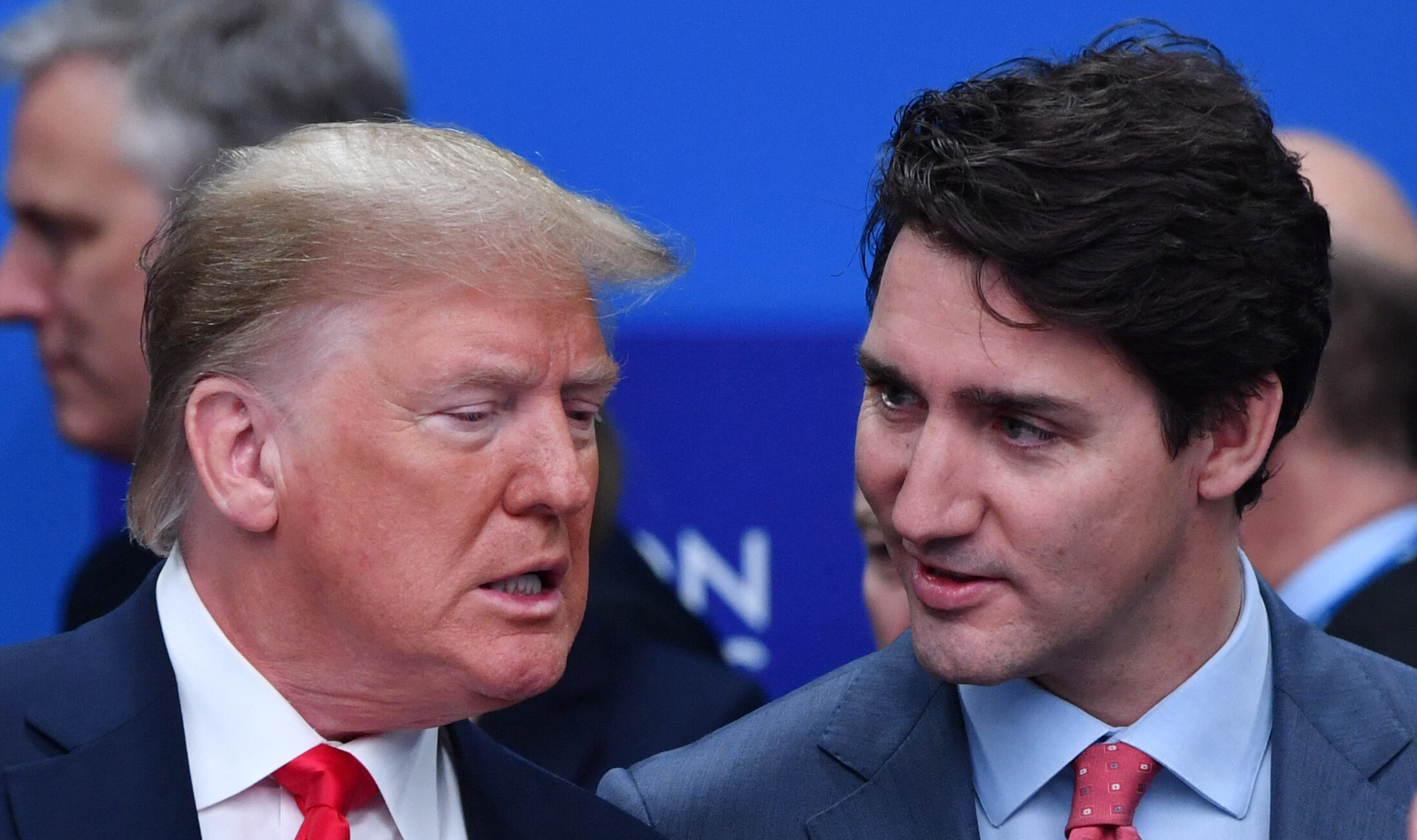
Politics Canada 51 Trump draws on a long tradition of fraternal bullying of our northern neighbor. Steve Bannon loved the idea: “People are saying—Canada 51.”  Bannon’s message was just the latest salvo in a series of recent declarations opined by President-elect Donald Trump and his MAGA army. The intent was clear—to troll Canadian Prime Minister Justin Trudeau as his government falls apart. But to some, the call for Canadian statehood is more than just a joke. To some, the idea of incorporating Canada into the greater United States is as exciting a proposition as when then-President Trump suggested the U.S. purchase Greenland.  In a post to his Truth Social network at 5 o’clock in the morning on Wednesday, Trump stated the following: “No one can answer why we subsidize Canada to the tune of over $100,000,000 a year? Makes no sense! Many Canadians want Canada to become the 51st state. They would save massively on taxes and military protection. I think it’s a great idea. 51st State!!!” And though the idea may appear far-fetched on the surface, a new Leger poll finds that 13 percent of Canadians would like the country to become the next U.S. state. Nearly one in five men polled by Leger agreed the U.S. should incorporate Canada.  The idea of annexing Canadian lands is not a new one. The task was attempted twice, militarily, during the American Revolutionary War and the War of 1812. In June of 1775, Irish-born American Maj. Gen. Richard Montgomery led a siege on Quebec Province, then a British colony. Though he captured Montreal, Montgomery was hampered by distance, inefficient supply chains, a smallpox outbreak, and American troops who showed little willingness to fight north of the border. Montgomery led a siege on Quebec City along with that Benedict Arnold during a snowstorm on New Year’s Eve, 1775. Montgomery was mortally wounded, Arnold injured, and many American men were taken prisoner by the Brits. American troops held Montreal for months, as Congress sent men and further deliberated the matter. A delegation including Benjamin Franklin made their way to Montreal but failed to gin up critical support among Montrealers. Though Commander-in-Chief George Washington continued to show interest in capturing Quebec City, by May of 1776, the Americans began to pull out and the sojourn was considered a failure. U.S. forces took their second shot at Canada (still-Britain) at the same time the Napoleonic Wars were being waged across Europe. In June of 1812, U.S. President James Madison and Congress formally declared war on the British Empire, citing British maritime blockades and attempts to court native populations into skirmishes against the U.S. along the present day Canadian border.  Though American troops outnumbered British troops by 2:1, the service was voluntary, ill-disciplined, and paid poorly. Three campaigns were commissioned but each failed to advance against the enemy.  Annexation attempts were made in the years following, including during the 1860s after US Secretary of State William Seward’s purchase of Russian Alaska. Petitions favoring annexation of British Columbia reached the desk of President Ulysses S. Grant in 1869, but the province was ultimately admitted into Canada in 1871. Despite more attempts to annex parts of Canada into modern America over the last 150 years, none were successful. In 2023, Tucker Carlson jokingly broached the topic with a similar line of inquisition as to Trump’s this week. “We’re spending all this money to liberate Ukraine from the Russians, why are we not sending an armed force north to liberate Canada from Trudeau?” Trump first mentioned the idea after hosting Trudeau for dinner at Mar-a-Lago only weeks after being reelected to the White House. Trudeau reportedly balked at Trump’s idea of levying 25 percent tariffs on Canadian imports if Trudeau is unable to slow the pipeline of illegal immigration from our northern neighbors. Trump has been hammering away at Trudeau ever since.  “If Canada can’t survive without ripping off the US to the tune of $150 billion a year, then maybe Canada should become the 51st state and Trudeau could become its governor,” Trump reportedly told Trudeau when the rivals met face to face in Florida. And the ribbing didn’t end there. Days later, Trump referred to Trudeau as the “Governor of the Great State of Canada.”  This is the pure, vintage cinema of Donald J. Trump. And in true Trump fashion, an idea that first appeared to be only a joke has grown wings and become adopted as a full policy flank for his most avid supporters. Across ?, Trump has been heralded as “the next James Polk,” the expansionist president who envisioned an America that included Cuba and large parts of northern Mexico. Canada’s political future remains uncertain following this week’s shock resignation of Chrystia Freeland, Canada’s finance minister. Opposition leader Jagmeet Singh has joined critics of Trudeau in calling for the prime minister to resign. And while Trump has surprisingly coasted through what was anticipated to be a turbulent moment in American politics, Trudeau has found only rough waters above Lake Champlain.  Though it is certainly unlikely to go forward, Trump’s trolling of Trudeau on the subject of Canadian statehood has opened possibilities that seemed laughable only weeks ago. Who is laughing now, Trudeau? The post Canada 51 appeared first on The American Conservative.

Like
Comment
Share
Conservative Voices
Conservative Voices
1 y

Milei Vindicated
Favicon 
www.theamericanconservative.com

Milei Vindicated

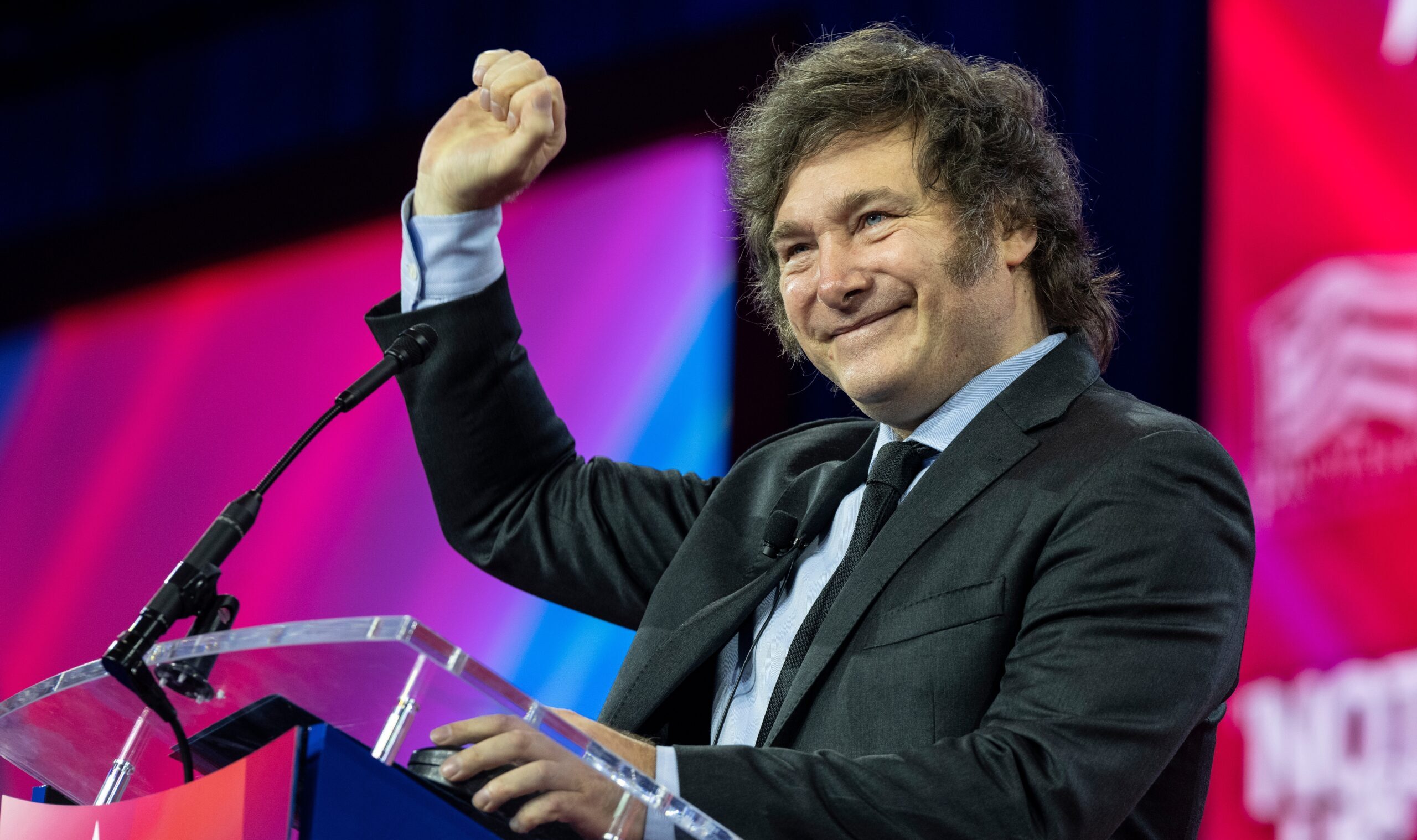
Foreign Affairs Milei Vindicated One year on, the Argentine president has outperformed expectations. By all reasonable standards, Javier Milei should never have become president of Argentina. An outsider to the political class that rules the country, Milei is the son of middle-class parents with no public profile. He and his family suffered greatly from the staggering inflation and general economic collapse of Argentina during the late ’70s and early ’80s. The country’s lamentable condition inspired Milei—among thousands of other young Argentines—to dedicate himself to the study of economics (Argentina has one of the highest concentrations of economists per capita) in an effort to understand where things went wrong and, perhaps, how they might be improved. During the course of his university studies, Milei encountered the works of Murray Rothbard and other economists of the Austrian School such as Friedrich Hayek. He left a convert to the radical school of libertarian thought known as anarcho-capitalism, which proposes the total abolition of the state and its replacement with businesses and other methods of private-sector social organization. Milei was always somewhat flamboyant—he was nicknamed “El Loco” in his youth for his furious conviction—and his new, revolutionary conception of the Argentine Problem provided excellent fuel for the spark of his aggressive style. Milei entered the public eye as a media personality, who shouted down interviewers on public television and heaped scorn on journalists and politicians. His radical ideological orientation, his combative style and his extreme personal eccentricities—the characteristic unruly mop of hair, a highly unusual private life (he claims to be a tantric sex guru), rare religious proclivities (he professes a desire to convert to Orthodox Judaism), and a bizarre relationship to his dogs (he has five, all clones of his one-time pet English Mastiff named Conan, and with whom he consults on matters political and spiritual) made him an unlikely proposition either for election or for successful governance. But Milei has managed to defy the odds and calculations of journalists and politicians, harnessing Argentines’ furor with the political status quo to successfully seat himself in the Casa Rosada (the Argentine executive office, equivalent to the White House). His tenure has proven remarkable, and he has likewise overturned the expectations of pundits, many of his fellow economists, and other more-or-less reasonable people to deliver the Argentine economy from looming hyperinflation and begin a vast campaign of substantive libertarian political reform with a finesse that would seem incredible from a perusal of his pre-presidential biography. When Milei took office at the end of 2023, inflation was on an upward spiral, from five percent per month in January to a massive 125 percent per month in December. The previous Argentine government of Alberto Fernández created massive social programs in response to the Covid-19 pandemic, funding them with reckless deficit spending and a massive program of money creation from the Argentine central bank. When the flood of pesos inevitably devalued the currency and raised prices, Argentines began pushing more and more of their money into dollars, creating even more pressure on the national currency. In response, the Fernández government imposed price controls and tightened the country’s already strict currency controls, a reaction which utterly failed to stop inflation and simply stimulated the country’s already booming black market of currency conversion. Upon entering office, Milei implemented an effective program of shock therapy. He cut the number of government ministries in half, slashed thousands of regulations, and implemented dramatic budget cuts. With a small minority in the Argentine Congress, he carefully ushered through legislation to privatize many of Argentina’s moribund state-owned companies, simplify the tax code, and eliminate some existing welfare programs while streamlining the remainder. He also clamped down on the Argentine central bank, reducing the issuance of new money (although that policy loosened somewhat later in his presidency). He also loosened Argentina’s currency controls, which devalued the peso but brought official exchange rates much closer to the real exchange rates. Milei’s program achieved excellent short-term results, at a cost. The budget cuts ended deficit spending, producing the first budget surplus for many years. Without the excess money being ploughed into the economy from government welfare programs, inflation dropped rapidly—monthly inflation declined to just 2.4 percent in November 2024, the lowest rate in 4 years and a far cry from the 125 percent a month at the beginning of his term.  But the new political program also weighed heavily on Argentina’s poor. The poverty rate rose from an already high 42 percent to 53 percent. The loss of government subsidies for necessities like food, fuel, and rent meant that many poor households struggled greatly. The economy also entered a recession, shrinking for the first three quarters of Milei’s presidency. These costs were seized on by critics, who argued that Milei’s success at restricting inflation was not worth the continuing impoverishment of the country and the accompanying recession. If the country did not exit the recession and begin to experience economic growth, Argentina might find itself in a hole it would never be able to dig itself out of, regardless of the rate of inflation. And indeed, there was some doubt that Milei’s program was sufficient to solve the complicated problems of the South American country. But Milei, it seems, has had the last laugh. New economic data came out last week for the third quarter of 2024, showing that Argentina’s economy expanded at the brisk clip of 3.9 percent from July to September. Economic forecasts project the country to grow more than 5 percent next year, and the poverty level has begun to decline from its high in 2024, a remarkably quick recovery for the severity of the measures Milei has taken to arrest the country’s inflationary spiral. By the end of 2025, Milei may be able to claim both a defeat of inflation and a net-positive economy and poverty rate. Argentina still has a long journey ahead of it before it is able to claim a stable and prosperous economy, and Milei still has the majority of his presidency to traverse. Many things can go wrong in a few years. But so far, the eccentric anarchocapitalist has been fully vindicated. The post Milei Vindicated appeared first on The American Conservative.

Like
Comment
Share
Classic Rock Lovers
Classic Rock Lovers  
1 y

Keanu Nelson: Aboriginal casio music from the Australian desert
Favicon 
faroutmagazine.co.uk

Keanu Nelson: Aboriginal casio music from the Australian desert

A new artist to discover. The post Keanu Nelson: Aboriginal casio music from the Australian desert first appeared on Far Out Magazine.
Like
Comment
Share
Conservative Voices
Conservative Voices
1 y

America Must Dominate in Crypto
Favicon 
townhall.com

America Must Dominate in Crypto

America Must Dominate in Crypto
Like
Comment
Share
Conservative Voices
Conservative Voices
1 y

Trump Should Broker Israeli-Turkish Rapprochement for Peace in Middle East
Favicon 
townhall.com

Trump Should Broker Israeli-Turkish Rapprochement for Peace in Middle East

Trump Should Broker Israeli-Turkish Rapprochement for Peace in Middle East
Like
Comment
Share
Showing 60461 out of 115177
  • 60457
  • 60458
  • 60459
  • 60460
  • 60461
  • 60462
  • 60463
  • 60464
  • 60465
  • 60466
  • 60467
  • 60468
  • 60469
  • 60470
  • 60471
  • 60472
  • 60473
  • 60474
  • 60475
  • 60476
Advertisement
Stop Seeing These Ads

Edit Offer

Add tier


Select an image
Delete your tier
Are you sure you want to delete this tier?

Reviews

In order to sell your content and posts, start by creating a few packages. Monetization

Pay By Wallet

Payment Alert

You are about to purchase the items, do you want to proceed?

Request a Refund