YubNub Social YubNub Social
    #satire #democrats #loonylibs #iran #comedy
    Advanced Search
  • Login
  • Register

  • Night mode
  • © 2026 YubNub Social
    About • Directory • Contact Us • Developers • Privacy Policy • Terms of Use • shareasale • FB Webview Detected • Android • Apple iOS • Get Our App

    Select Language

  • English
Night mode toggle
Featured Content
Community
New Posts (Home) ChatBox Popular Posts Reels Game Zone Top PodCasts
Explore
Explore
© 2026 YubNub Social
  • English
About • Directory • Contact Us • Developers • Privacy Policy • Terms of Use • shareasale • FB Webview Detected • Android • Apple iOS • Get Our App
Advertisement
Stop Seeing These Ads

Discover posts

Posts

Users

Pages

Blog

Market

Events

Games

Forum

Daily Caller Feed
Daily Caller Feed
5 d

REPORT: ‘Below Deck’ Star Emile Kotze Files $850 Million Sexual Harassment Lawsuit Against NBC
Favicon 
dailycaller.com

REPORT: ‘Below Deck’ Star Emile Kotze Files $850 Million Sexual Harassment Lawsuit Against NBC

'False, defamatory portrayal'
Like
Comment
Share
Daily Caller Feed
Daily Caller Feed
5 d

Newsom Thinks Everyday Americans Want To Hear About His Favorite Gay Bondage Street Fair
Favicon 
dailycaller.com

Newsom Thinks Everyday Americans Want To Hear About His Favorite Gay Bondage Street Fair

'I can never unsee what I saw'
Like
Comment
Share
SciFi and Fantasy
SciFi and Fantasy  
5 d

Because Real Life Isn’t Misogynistic and Infuriating Enough, Here’s the First Trailer for The Testaments
Favicon 
reactormag.com

Because Real Life Isn’t Misogynistic and Infuriating Enough, Here’s the First Trailer for The Testaments

News The Testaments Because Real Life Isn’t Misogynistic and Infuriating Enough, Here’s the First Trailer for The Testaments The Handmaid’s Tale sequel comes complete with the requisite hanging bodies scene! By Molly Templeton | Published on March 5, 2026 Screenshot: Hulu Comment 0 Share New Share Screenshot: Hulu Hulu has released the first trailer for The Testaments, an adaptation of the novel of the same name by Margaret Atwood. The book is a sequel to The Handmaid’s Tale, which showrunner Bruce Miller expanded into a six-season, award-winning, nigh-unwatchably brutal series starring Elisabeth Moss as June Osborne. At the start of that story, June’s daughter was taken from her, sent to be raised by the elite of Gilead. Not that being raised among the elite will protect you. The Testaments takes place 15 years after that fateful moment, following that stolen child as she begins to understand the horrors of her world. Here’s the synopsis: An evolution of The Handmaid’s Tale, The Testaments is a dramatic coming-of-age story set in Gilead. The series follows young teens Agnes, dutiful and pious, and Daisy, a new arrival and convert from beyond Gilead’s borders. As they navigate the gilded halls of Aunt Lydia’s elite preparatory school for future wives, a place where obedience is instilled brutally and always with divine justification, their bond becomes the catalyst that will upend their past, their present, and their future. The Testaments was created by Handmaid’s Tale showrunner Miller; Handmaid’s star Elisabeth Moss is a producer, though it remains to be seen if she will appear on screen. The adaptation stars Chase Infiniti (One Battle After Another) as Agnes, with Ann Dowd returning to the role of Aunt Lydia. The bulk of the cast is made up of fairly new faces, including Lucy Halliday as Daisy. Miller has said the series should stand alone: “You should be able to turn on the first episode and enjoy it like a drama,” he told The Hollywood Reporter. If you have the stomach for a return to Gilead, The Testaments premieres April 8 on Hulu.[end-mark] The post Because Real Life Isn’t Misogynistic and Infuriating Enough, Here’s the First Trailer for <i>The Testaments</i> appeared first on Reactor.
Like
Comment
Share
SciFi and Fantasy
SciFi and Fantasy  
5 d

Unfortunately I Am Wrestling With Genre Again
Favicon 
reactormag.com

Unfortunately I Am Wrestling With Genre Again

Books Mark as Read Unfortunately I Am Wrestling With Genre Again Can you ever really draw a line between genres? And does it matter? By Molly Templeton | Published on March 5, 2026 Illustration by Andrew Kay Womrath (1896) Comment 0 Share New Share Illustration by Andrew Kay Womrath (1896) When Orbital won the Booker Prize in 2024, arguments cropped up like weeds: Was it science fiction? Was it most definitely not science fiction? If not, why not; if so, why? I’m still thinking about those discussions. I’m hung up on the recurring discourse about what literary fiction is and what it isn’t in relation to SFF.  I still want to know if you can draw a line between “romantasy” and “fantasy with romance.” Is which genre term comes first indicative of where a book falls on the spectrum? I dunno. I don’t know anything. But while going in these loops of is/is not, knowing/not knowing, I stopped and asked myself: Does it matter? Does it matter what genre something is? Does it matter to you when you’re reading? When you’re looking for a new book? When you’re reading about books? Do you think about the genre or subgenre or handy-dandy tropes-turned-tags when you’re reading or shopping?  I am genre-indifferent at many of these times. But the world at large seems to feel otherwise. There are newspapers that put their SFF coverage into occasional columns, if they have it at all; there are outlets that publish “All this week’s new books!” lists that never include SFF books. There are, still, somehow, people who act as if genre writing is not “real” writing, and reading it not “real” reading. (SFF books that have gotten so big they’ve become mainstream are the allowed exceptions, of course.) All these things demonstrate the fact that genre-specific spaces are necessary. We need Locus and Strange Horizons (and this very site!) and blogs and social media lists made up of all the people who read SFF.  Genres need their own awards because general literary awards are not going to recognize genre. Genres need their own readers and reviewers because too often, general literary critics don’t recognize what they’re looking at when they read genre fiction.  I don’t particularly like any of these terms, and I don’t even really like the way I’m using them. I was trying out “mainstream” instead of “general literary,” but that didn’t work either. What “mainstream” means in books changes all the time. When I was a kid, everyone read Dean Koontz and Stephen King. Now they still read Stephen King, but they also read Rebecca Yarros and George R.R. Martin. Or James Patterson and Sarah J. Maas and Suzanne Collins. We’re mainstream! Except when we’re not.  Here is what frustrates me about genre conversations: the way they so quickly become us vs. them. What might begin as a discussion of topics or tropes or themes or approaches to fiction so often becomes a hierarchy or a series of sweeping generalizations. These are right, and these are wrong, or at best less right. Literary fiction is about midwestern professors trying to sleep with their students, and fantasy is about feisty princesses who can do their rescuing themselves, thank you very much. Neither of these things is true (except when they are).  At Strange Horizons, Ada Palmer has a very interesting argument that SFF writers are historians. There is so much to like in this piece, which cleverly manages to be very smart about worldbuilding while only using the word “worldbuilding” twice. She has intriguing thoughts about power and changing the world, and if I do not particularly like the phrase “advance claims”—as in, stories advance claims about how the world might change—she does step back and say that she could use the word “teaches” there instead. I would go a little further and say that books about the world changing explore possibilities about change, or ask questions about who might manifest it, and why or why not. I like my SFF to ask more questions than it answers. But my pushback really came in here: [O]ne nearly-universal characteristic of contemporary mainstream literary fiction (as nearly-universal as technology is in SF or magic in fantasy) is a focus on a powerless character making an internal journey to come to terms with the world. Do I love a book in which a “powerless” character goes on an internal journey to come to terms with the world? Sure do. But is this a universal trait of literary fiction? Well. How do you define “powerless,” and what constitutes “the world”?  (I also don’t think SFF is only about changing the world, and in fact I’d love to see more SFF that wasn’t operating with such large stakes, but that is a topic for another column.) But I suppose it could look like a litfic trait if you’re setting litfic up in opposition to SFF. Us versus them. What our books do versus what their books do. I bristled here because of how it creates an either/or situation. As Roseanna Pendlebury noted on Bluesky, “But if litfic is universally characterised by the ‘coming-to-terms’ definition, and SFF by ‘the world usually changes’, as Palmer focuses on, they can never cohabit. The definitions /are/ mutually exclusive.” This is hard for me to argue with, in a way, because of how I read, which is across this line and around it. I am especially interested in books that defy the idea that SFF and literary fiction are mutually exclusive—books like Confessions of the Fox, and Cloud Atlas, and The Ministry of Time, and North Continent Ribbon, and a whole lot of YA books that will only muddle this discussion of genres further. I don’t read any genre all that differently from any other genre. I read books about people dealing with situations and feelings and other people; sometimes they change the world, and sometimes they change a small corner of it, and sometimes they themselves are changed. Sometimes all of that happens at once. Sometimes the books’ authors are clearly, intentionally wedding their work to a lineage of other works, and sometimes the lines of influence are less clear. But Palmer’s definitions did make me wonder: Is this why SFF readers can seem reluctant to read books that appear to be “literary” even when they’re using the same devices as SFF? Why general readers are sometimes resistant to accept that SFF that has reached the mainstream—The Handmaid’s Tale is a classic example here—is, in fact, SFF? Are expectations actually the defining factor between the genres, if there is one? Is that the real deciding line between which climate-fiction novels get published by SFF imprints and which come out on the literary side, with minimalist covers? I can’t define literary fiction. At swordpoint I might say it is made up of the books taken seriously by award committees and higher-brow press; that it might be said to depend more heavily on the writer’s prose style than genres that are more plot-centric; that it frequently takes place in the real world and considers real-life concerns and the hows and whys of a person moving through their world. But if you asked me again in a week, I might argue with myself. I have a faint memory that bookstore sections were once sometimes labeled “general fiction.” This, one might argue, is too broad. Too general! Anything could go in there. And yes, it could. But readers are sophisticated now. We know how covers are designed to get genre across in a single glance. Blobby colors: highbrow, has a blurb that calls it “important,” ambitious in some way, destined to be reviewed by the New York Times. Mostly black background with an elaborate serif font, ornate florals/daggers/vines, faintly William Morris-inspired background: romantasy or dark academia, depending on how much black is used. Cartoon-like illustrations in bright colors and simple lines: contemporary romance. I won’t go on. (But I want to.) If you put a regular reader in front of a shelf of books, without looking at the backs she will probably be able to pick out which ones are of interest to her. We are all so well trained. Still, “general” may be more useful than “literary,” given that the implied superiority of “literary”—anything not “literary fiction” is clearly less literary, no?—is doing no one any good.  I can’t define science fiction, or fantasy, and I don’t really want to. But I do want us—whatever “us” my fellow genre readers feel we are a part of—to consider not being in opposition to “them.” To use genre terms as descriptors rather than buckets with the lids tightly glued on. These things should be tools, not dividers. Fantasy, romantasy, cozy, thriller, cyberpunk, dark academia, the rest—they’re nebulous clouds, overlapping, shifting, moving across the sky of public opinion.  We can, and maybe we should, read the same books differently. Orbital can be science fiction and not be science fiction—be a story about humans in space, doing science, and also a story in which humans are small and the Earth is large and they are absolutely not changing it, only watching it. Their tech is realistic, as I understand it; they do not appear to be from the future. But Earth is a planet, and observing a planet is a science fictional activity. All of these things can be true.  None of this is to say that genres shouldn’t or don’t exist, or that we should stop categorizing things; we would do that anyway. If genres didn’t exist, we would invent them (see also: the ever expanding lists of sub- and micro-genres!). But there is a long history of us vs. them when it comes to SFF and litfic, and the more I read, the more I think we are policing those boundaries too closely. I understand why SFF readers want to claim some things as ours and reject some things as not-ours, especially when we have long been looked down on by people who think they don’t read genre. (I believe that literary fiction is a genre, even if I can’t define it.) But I also think that defensive streak does us little good.  And yet, I find I get most invested in the idea of genre in defense of it. I resent the beloved outlets that seem to only cover SFF as an afterthoughts; the lists that simply don’t bother to include it; the people who act as if it can never live up to some specific literary measure and refuse to be shown examples of things that do, in fact, live up to all kinds of literary measures. I resent the people who will take the worst example of an SFF cliche and pretend it is a definitive example of anything. As if there are not terrible books in every genre. With any given genre, you have highbrow, you have lowbrow, you have every brow in between. SFF has pulp, and we have poetry. It’s what I love about this nebulous cloud of a genre. But I want to reject that defensiveness. I want to reach out instead of closing off, to extend a welcome to the readers who think that genre, any genre, is only one thing, to show them how it contains multitudes. Is it so difficult to think that a literary fiction reader could love Ancillary Justice or Rakesfall or The Spear Cuts Through Water? Are SFF readers ignoring Interior Chinatown or The Bone Clocks or Jonathan Abernathy You Are Kind because they might be in a different part of the bookstore? Are we not going to claim Station Eleven as SFF? What do we do with Annihilation? Who gets to call dibs on Zone One? As the meme asks, why don’t we have both? If we must define genre, though, I think I will go with Ted Chiang, who said in The Believer that genre is “an ongoing conversation. Genre is a conversation between authors, between books, that extends over decades.” Some people will reject that conversation (looking at you, Ian McEwan); some will bound enthusiastically into it; some will be wallflowers, or think they’re at a different party. Some will stumble into a conversation they might not be aware has been going on for decades. But the conversation continues, the guests change, readers start new offshoot conversations. Genre means everything; genre means nothing. Reading SFF means holding the possible and the impossible in your head at the same time. Can we do that with genre, too?[end-mark] The post Unfortunately I Am Wrestling With Genre Again appeared first on Reactor.
Like
Comment
Share
Daily Signal Feed
Daily Signal Feed
5 d

Failing Schools Place Politics Over Academics
Favicon 
www.dailysignal.com

Failing Schools Place Politics Over Academics

ICE protests grow as student achievement plunges… Just last week, hundreds of students at Lincoln Park Public High School in Chicago staged a mass anti-ICE “walk out,” leaving classes without permission to protest federal immigration enforcement policies. Of course, similar scenes have unfolded across the country in recent months, often either tacitly or overtly encouraged by public school teachers and teachers’ union officials. In Chicago, teachers’ union members recently filmed themselves entering a Target store where they harassed employees on the job, bizarrely demanding that they somehow shield workers from ICE enforcement. Such deliberate ideological activism—encouraged by leftist organizers and echoed by much of the media, effectively grooming students for lawlessness—might be slightly less offensive if actual student performance in the classrooms of Chicago weren’t so dreadful. Even at the protest high school, Lincoln Park, only about half the students are academically proficient, in one of the wealthiest city neighborhoods in America. That’s right—only 51% proficient in math, 53% in reading, and 42% in science. So, in a neighborhood of multimillion-dollar brownstones and tony boutiques, the best the politicized teachers’ union can achieve is half the kids doing, well, just OK. In fact, Chicago Public Schools actually boasts about Lincoln Park High, branding it as Chicago’s “top neighborhood school.” But admittedly, the school’s performance is better than the citywide marks of academic misery. Among high school juniors across the Windy City, just 19% are math proficient and only 22% read at grade level. This systemic level of failure does not come cheaply, either. In a city struggling with an unsustainable fiscal crisis, Chicago Public Schools costs taxpayers a whopping $10 billion annually, only half of which reaches student instruction. So the per-pupil cost tops $30,000. Perhaps if the teachers’ union focused on student achievement instead of constant activism, results could improve? Is the goal to create mature and capable young adults who can thrive in a new digital economy? Is it vital that America raise up a new generation of patriots who love our country and embrace the responsibilities of citizenship? Instead, it seems that school system chiefs in Chicago—and across America—prefer to indoctrinate students as politically fixated young agitators who can act out with impunity. As long as leftist narratives dominate, those vulnerable children are simply passed along, advancing grades without mastering the basic skills of a fully formed thinker. These are our children sitting in those classrooms, and these are our tax dollars funding them. Yet far too often those taxpayer dollars are used to promote progressive activism, political indoctrination, and even the grooming of students into ideological movements. Deliberately using our children and our tax dollars to push ideological activism instead of academic learning is simply wrong. Schools exist to educate, not to indoctrinate. Using taxpayer-funded schools to groom children for activism and defiance of the law is not education—it’s a betrayal of the public trust. Our schools should never be putting activism before academics—especially when it’s our children in those classrooms and our tax dollars paying the bills. Public education belongs to the American people. Our children should never be used as political instruments—especially not with our own tax dollars funding it. Additionally, don’t think these failures apply only to deeply blue cities like Chicago. In fact, nationwide numbers show systemic underperformance as well. The widely followed national testing standard NAEP—the National Assessment of Educational Progress—shows that a stunning 40% of fourth graders in America are not even at the level of “basic” reading skills. That failure rate is up 29% since pre-COVID levels. Similarly, 39% of eighth graders in America are not proficient in math, and that level of failure has risen an astounding 50% in the last decade. So instead of ICE protests and chaotic “walk out” culture, it is imperative that we reclaim education and create the conditions for children to thrive. Rather than politics and radicalism, schools must foster the hard skills of reading, writing, and mathematics. In addition, curricula should cultivate a love of Western civilization and the American way of life. That way of life includes the rule of law and the expectation that immigration to the United States flows through the legal processes designed by the people of the republic. We publish a variety of perspectives. Nothing written here is to be construed as representing the views of The Daily Signal. The post Failing Schools Place Politics Over Academics appeared first on The Daily Signal.
Like
Comment
Share
Daily Signal Feed
Daily Signal Feed
5 d

US Takes Out Iranian Behind Alleged Plot to Kill Trump
Favicon 
www.dailysignal.com

US Takes Out Iranian Behind Alleged Plot to Kill Trump

The U.S. military killed an Iranian official who allegedly orchestrated a 2024 plot to assassinate President Donald Trump, the Pentagon announced.   “Iran tried to kill President Trump and President Trump got the last laugh,” Secretary of War Pete Hegseth told reporters just days after the United States and Israel launched a large-scale attack on Iran.  Hegseth would not name the Iranian official killed in the attack. “We’ve known for a long time that Iran had intentions on trying to kill President Trump and/or other U.S. Officials,” Hegseth said, adding that the U.S. attack on Iran was not focused on eliminating those responsible for the alleged plot.  BREAKING: @SecWar Pete Hegseth says the leader of the Iranian unit behind the plot to assassinate President Trump has been killed. “Iran tried to kill President Trump. And President Trump got the last laugh.” pic.twitter.com/SUHMnsHJKD— FOX & Friends (@foxandfriends) March 4, 2026 “We were focused on missiles and launchers, and that’s the focus, but ultimately, if we had the opportunity to get at those who are trying to get out Americans specifically, we would, and so, we eventually had the opportunity to do that from the air,” Hegseth explained.   In 2024, the Justice Department announced it had charged an Iranian man in connection with an alleged plot ordered by Iran’s Revolutionary Guard Corps to assassinate Trump, then president-elect.  Tehran has denied accusations that it had targeted Trump and other U.S. officials.  The joint military operation also killed Iran’s Supreme Leader Ayatollah Ali Khamenei on Saturday. Trump made reference to the alleged Iranian plot on Sunday, telling ABC News of Khamenei, “I got him before he got me.”  General Dan Caine, chairman of the Joint Chiefs of Staff, said at Wednesday’s Pentagon briefing that the U.S. was expanding strikes to establish air superiority over Iran’s southern coast. “We will now begin to expand inland, striking progressively deeper into Iranian territory, and creating additional freedom of maneuver for U.S. forces,” Caine said.  “U.S. Central Command is making steady progress,” according to Caine.   Iran’s ballistic missile shots have fallen by 86%, according to Caine, “and their one-way attack drone shots are down 73% from the opening days.”  Reuters contributed to this report. The post US Takes Out Iranian Behind Alleged Plot to Kill Trump appeared first on The Daily Signal.
Like
Comment
Share
Reclaim The Net Feed
5 d

Google Opens Android App Distribution, Cuts Play Store Fees After Epic Antitrust Loss
Favicon 
reclaimthenet.org

Google Opens Android App Distribution, Cuts Play Store Fees After Epic Antitrust Loss

If you're tired of censorship and dystopian threats against civil liberties, subscribe to Reclaim The Net. Google has spent years deciding what software a billion Android users are allowed to install. A jury said that it was illegal. Now, after losing in court twice and facing regulators on three continents, the company is changing how it runs Android’s app distribution. Whether the changes go far enough is still before a federal judge. The core of what Google announced: rival companies can register as app stores, pay a one-time fee, and offer their own catalogs on Android devices. Google’s standard 30% cut on developer revenue drops to as low as 10% on recurring subscriptions, with a flat 5% option for developers who just want to use Google’s billing system. Developers can also route customers to external payment processors entirely. “Anybody can launch a competitive app store now,” said Epic Chief Executive Officer Tim Sweeney. “Google is opening up Android all the way with robust support for competing stores, competing payments, and a better deal for all developers,” Sweeney posted on X. That sentence would have been unremarkable a few years ago. For most of Android’s history, it wasn’t true. How Google kept the gates closed A jury concluded in 2023 that Google’s Android policies violate antitrust law. The evidence showed a company that cut deals with developers, manufacturers, and carriers to ensure Google Play remained the only practical way to distribute apps on Android. Rival stores faced what the court called “install frictions,” an arsenal of warning screens and technical barriers designed to make alternatives feel unsafe or cumbersome. The message to users was that other app stores are a risk. Judge James Donato issued an injunction ordering Google to open its app catalog to rival stores, ban preferential treatment for Google’s own services, and let developers steer customers to cheaper payments elsewhere. Google appealed. The Ninth Circuit upheld the ruling. Google asked the Supreme Court for relief. The Supreme Court said no. The new proposal, filed Wednesday in San Francisco federal court, follows the shape of Donato’s original order. Google and Epic said it should resolve concerns the judge raised about an earlier settlement he described as a “sweetheart deal” for Google. Donato still needs to approve it. What changes, and what it means The practical changes are no small deal. Registered app stores will get a neutral install screen, equal treatment to Google Play on Android devices, and access to distribute their own app catalogs. The friction that made sideloading feel dangerous to ordinary users is supposed to disappear. That matters beyond price competition. App stores that operate outside Google’s rules can carry software Google won’t. That includes apps from developers who’ve been removed from Play, apps that serve communities Google’s content policies don’t accommodate, and alternatives to Google’s own services that Google has historically had every incentive to disadvantage. When one company controls distribution on a platform used by billions of people, it controls more than commerce. It controls what software exists in practice for most of the world’s Android users. Google has faced EU fines for competition violations. The European Commission flagged the company in March 2025 for blocking developers from steering users to offers outside the Play Store, with potential fines reaching 10% of global annual revenue. The UK’s Competition and Markets Authority designated Google as having Strategic Market Status in mobile platforms, giving regulators power to mandate exactly the kind of changes announced Wednesday. Fee changes for the US, UK, and EU are expected by June, with Australia, Korea, and Japan following before the end of 2026. The revenue question Documents from the Epic litigation put Google Play’s 2020 revenue at $14.66 billion. Alphabet doesn’t break out figures for the Play Store separately. Analysts estimated the combined effect of litigation and new regulations could cost Google around $1 billion in gross profit. Google’s willingness to settle, after years of fighting these changes through every available court, tells you what the stakes looked like from inside the company. Whether that remains true once legal scrutiny fades, and whether Google enforces its new openness with the same energy it once spent closing the platform down, are questions the next few years will answer. Still, a looming problem The court victory and the settlement, though, only go so far. Google has a separate policy in the works that would effectively reassert gatekeeping control through a different mechanism. Starting September 2026, any app installed on a certified Android device must be registered by a Google-verified developer. No registration means no installation, even for apps distributed entirely outside Google Play, through stores like F-Droid or the Amazon Appstore. That means government-issued ID, agreement to Google’s terms, and a $25 fee, just to reach users on hardware Google doesn’t own, through stores Google doesn’t run. A coalition of organizations signed an open letter to Sundar Pichai demanding the policy be scrapped. If you're tired of censorship and dystopian threats against civil liberties, subscribe to Reclaim The Net. The post Google Opens Android App Distribution, Cuts Play Store Fees After Epic Antitrust Loss appeared first on Reclaim The Net.
Like
Comment
Share
Hot Air Feed
Hot Air Feed
5 d

WaPo: Here Come the Kurds?
Favicon 
hotair.com

WaPo: Here Come the Kurds?

WaPo: Here Come the Kurds?
Like
Comment
Share
NewsBusters Feed
NewsBusters Feed
5 d

IDF Busts Liberal Media Myth That Israel Dragged U.S. into Iran War: ‘Completely False’
Favicon 
www.newsbusters.org

IDF Busts Liberal Media Myth That Israel Dragged U.S. into Iran War: ‘Completely False’

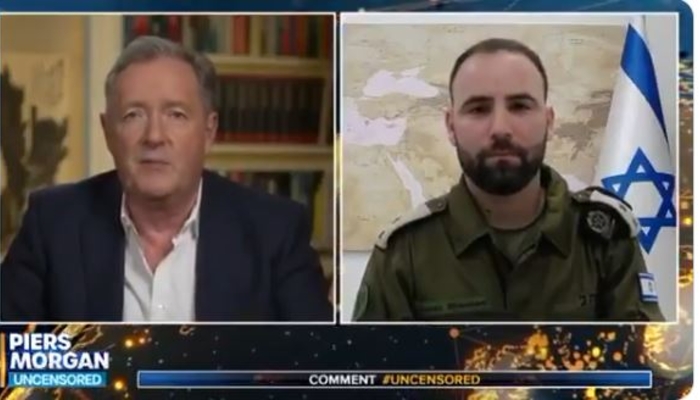
An Israeli Defense Forces (IDF) lieutenant colonel who was in the meetings when the attack on Iran was being planned says media claims that the U.S. was dragged into the war by Israel are “completely false.” In an interview on Piers Morgan Uncensored, IDF Spokesman Lieutenant Colonel Nadav Shoshani debunked the myth perpetrated by liberal legacy media: “I can say, as someone who’s been in the inner rooms with the IDF, that is not a real claim. It’s not close to the truth.” … “I can explicitly say, since I’m an IDF spokesperson, knowing we’ve been planning for weeks and months, saying that Israel decided to attack alone and the U.S. was dragged into it is just completely false.” “That is not a real claim. It’s not close to the truth,” Shoshani reiterated. “Being in the rooms, knowing what’s been happening in recent weeks and months, it has no relation to reality,” LTC Shoshani said, stressing that Iran poses a serious threat to both the U.S. and Israel: “This is a joint operation with a mutual enemy, shared interests, share values, shared enemy. “When they yell ‘Death to America,’ they yell ‘Death to Israel.’ When they yell ‘Death to Israel,’ they yell ‘Death to America.’” “America is not one to be dragged by Israel,” the IDF spokesman said. As NewsBusters has reported, liberal media ranging from ABC to CNN have maliciously misrepresented and edited comments by Secretary of State Marco Rubio in order to dupe Americans into believing that Rubio claimed the U.S. had been dragged into the war with Iran. The full interview: pic.twitter.com/4uUISpFtaY — LTC Nadav Shoshani (@LTC_Shoshani) March 4, 2026
Like
Comment
Share
The Blaze Media Feed
5 d

What ‘democratic socialism’ really means to young voters
Favicon 
www.theblaze.com

What ‘democratic socialism’ really means to young voters

Like a highly contagious mind virus, democratic socialism is spreading fast among young Americans. The numbers, the polls, and the election results all point in the same direction: A growing share of the next generation is not just flirting with socialism — it is warming to it.One poll from late 2025 found that nearly 60% of Americans ages 18 to 24 — and well north of 50% ages 25 to 29 — said they would support a democratic socialist for president in 2028. That support even included about a quarter of self-identified Republicans and 42% of moderates.America needs a return to proper free-market economic policies — and a cultural renewal that treats liberty not as a slogan, but as a birthright worth defending.Recent local elections reinforce the point. Democratic socialist mayors on both coasts — Zohran Mamdani in New York City and Katie Wilson in Seattle — won close to 80% of the youth vote in their respective races.Plenty of institutions deserve blame for this trend. Public schools. Teacher unions. Academia. Legacy media. Social media. Hollywood. Parents too. Each has played a role in shaping how young Americans see the country and what they think “fairness” requires.But focusing on those inputs misses the deeper driver.A troubling share of young Americans believes the economy is rigged against them.In late 2025, the Heartland Institute and Rasmussen Reports conducted polls on how young Americans view the U.S. economy and the American dream. The results were bleak. Only about 2 in 10 young Americans said they expect their economic future and personal happiness to be better than their parents’. Roughly three-quarters said housing costs have reached a “crisis level,” and they believe their odds of owning a home are shrinking by the day.That despair didn’t come from nowhere.This generation came of age in the aftermath of the Great Recession. They watched corporate bailouts become routine and “crony capitalism” harden into a feature of the system. They watched politicians arrive in Washington broke and leave rich, often by playing stock-market games that would end careers in the private sector.They grew up under the shadow of foreign wars that burned trillions on “nation-building” while much of America decayed. They watched the dollar lose value as Washington normalized out-of-control spending, money printing, and debt accumulation. They watched manufacturing shrivel while leaders prioritized globalism over domestic production, dimming the prospects for secure, high-paying jobs.RELATED: The party that made life more expensive wants credit for noticing Photo by Andres Kudacki/Getty ImagesPut it together, and you get a generation primed to reject the system — and open to any ideology that promises to punish the winners and rewrite the rules.Layer on the post-9/11 surveillance state, and the picture darkens further. Many young Americans have never lived in a country where privacy and liberty felt secure. They’ve grown numb to constant monitoring and to platforms that decide what they see, share, and believe. It should not surprise anyone if their commitment to free speech, property rights, and personal liberty weakens under that pressure.That is why diagnosing the rise of democratic socialism requires more than blaming schools or Hollywood. Those are symptoms and accelerants. The cause is deeper: America has drifted away from too many of the principles that made it a beacon of freedom and a land of opportunity.If that is true, the remedy won’t come from scolding young Americans for their politics. It will come from proving, again, that free markets can build a stable life, that honest work can buy a home, and that the rules apply to the powerful as well as the weak.To reduce the appeal of democratic socialism, America needs a return to proper free-market economic policies — and a cultural renewal that treats liberty not as a slogan, but as a birthright worth defending.
Like
Comment
Share
Showing 614 out of 113228
  • 610
  • 611
  • 612
  • 613
  • 614
  • 615
  • 616
  • 617
  • 618
  • 619
  • 620
  • 621
  • 622
  • 623
  • 624
  • 625
  • 626
  • 627
  • 628
  • 629
Advertisement
Stop Seeing These Ads

Edit Offer

Add tier


Select an image
Delete your tier
Are you sure you want to delete this tier?

Reviews

In order to sell your content and posts, start by creating a few packages. Monetization

Pay By Wallet

Payment Alert

You are about to purchase the items, do you want to proceed?

Request a Refund