YubNub Social YubNub Social
    #california #history #trafficsafety #assaultcar #carviolence #stopcars #notonemore #carextremism #endcarviolence #bancarsnow #blm #thinkofthechildren #fossil #paleontology #kansas
    Advanced Search
  • Login
  • Register

  • Night mode
  • © 2026 YubNub Social
    About • Directory • Contact Us • Developers • Privacy Policy • Terms of Use • shareasale • FB Webview Detected • Android • Apple iOS • Get Our App

    Select Language

  • English
Night mode toggle
Featured Content
Community
New Posts (Home) ChatBox Popular Posts Reels Game Zone Top PodCasts
Explore
Explore
© 2026 YubNub Social
  • English
About • Directory • Contact Us • Developers • Privacy Policy • Terms of Use • shareasale • FB Webview Detected • Android • Apple iOS • Get Our App
Advertisement
Stop Seeing These Ads

Discover posts

Posts

Users

Pages

Blog

Market

Events

Games

Forum

Conservative Voices
Conservative Voices
1 y

What I Saw in Butler, Pennsylvania
Favicon 
www.theamericanconservative.com

What I Saw in Butler, Pennsylvania

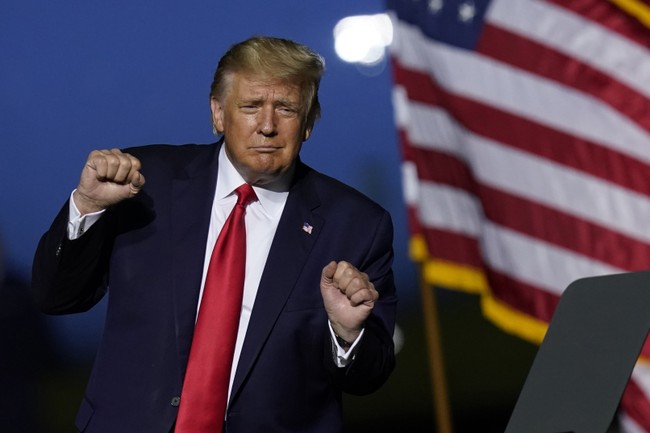
Politics What I Saw in Butler, Pennsylvania Or how I learned to stop worrying and love Donald Trump. (Twitter) On October 5, 2024, Donald Trump returned to the Butler Farm Show grounds where he had avoided death by a hair’s breadth on July 13. He was not the only one to return.  From my position on the left side of the field, close to the infamous roof, I talked to several attendees who had also been present on July 13. One man told me that he was standing more or less where he was that day when the shots rang out. He had returned to show his support. Another couple, Roger and Linda, drove all the way from West Virginia to attend the rally and showed me on an aerial map where they had been standing when the shots rang out. They recounted that it had not been immediately clear what was happening and many people had remained standing until a state trooper near them began to yell for everyone to get down.  Nearly everyone I chatted with stated in some form or another that they were here to show support for Trump and had already made their minds up to vote for him long ago. As one man who had driven about an hour to be there put it, he was there to show support in the face of the attacks Trump endures everyday.  Another man I talked to, who it serendipitously turned out had been an acquaintance nine years ago when I had worked in the DC area, had driven five hours from Northern Virginia to be here, echoed an experience nearly identical to my own. He had been a ho-hum Trump supporter who was planning to vote for him, but was not enthusiastic until the fateful and tragic events of July 13 transformed his understanding of the election and turned him into a passionate supporter.  Numerous local officials and members of the campaign spoke in the four hours leading up to Trump’s appearance around 6pm, with nearly everyone emphasizing Corey Comperatore’s life and his heroic act of shielding his family amidst the oncoming fire. When Christopher Macchio sang “Ave Maria” as a tribute to Comperatore many people were openly moved to tears.  This was my first time attending a Trump rally, or any political rally since I had attended one of Ron Paul’s in Pittsburgh in 2012. Standing around for seven hours left me plenty of time to reflect on how I ended up here—not just at the rally, but also “here” in the sense of cheering unabashedly for Trump. My 23-year-old self from 2016 would have been quite surprised to see me now.The events of July 13 played a large role. It is difficult to imagine what would have happened to the country in the event Trump had been killed, but there was more to it than just Trump’s brush with death. The shooting happened a 40-minute drive from my house. A fellow Westsylvanian was killed, and two others, one of whom lives in the township next to mine, were seriously injured. The shooter lived about a 20-minute drive away from my house. To say this struck close to home is an understatement.  For myself and many others, the assassination attempt, and Trump’s defiant, raised fist and call to “fight, fight, fight!”  represented a cosmological shift in our understanding of the presidential race.  But what exactly was he exhorting people to fight, and why did it resonate so deeply with me so as to turn me from a ho-hum unenthusiastic supporter to cheering him on without reservations?As a naive, “principled nonvoter” libertarian, I did not vote in the 2016 election. But by the time voting day rolled around, I found myself rooting for Trump because of the outpouring of vitriol against Trump supporters, who were portrayed as worse than Nazis. Since nearly my entire extended family supported Trump, I took this personally.  It did not matter to many people on social media that the same Pennsylvanian voters who had propelled Trump to victory had previously been solid Democratic voters. It did not matter that there were economic and socio-cultural grievances that had motivated this support for Trump. All that seemed to matter to the voices of rage online was that evil white people had helped to install a barbarian into the White House.  Aside from taking pleasure in the shock and horror of the people calling my friends, neighbors, and family fascist white supremacists, I still was highly critical of Trump in the years to come. Yet in the wake of Trump’s bout with Covid and the obscene death wishes to be seen all over social media, I finally began to understand that the danger of such hatred was not limited to Trump alone, but to those who support him, or even just fit the stereotype of supporting him. It was at this point I concluded that Trump’s opponents were a threat to my family and neighbors and that I would be voting for Trump. Nevertheless, while I was rooting for him, I was not particularly enthusiastic, especially in the 2024 campaign season.  I had complaints and quibbles about various policies and plans. I worried who would staff his administration after the disastrous picks the first time. I was worried about his capricious streak.  But Trump’s defiant fist transformed the election from a question of tax rates and foreign policy minutia to a symbolic clash between incompatible spiritual visions of the nation itself. Before Trump came on stage, Steve Witkoff stated that this election went beyond mere politics to the very soul of the country. The truth of that statement is especially relevant in Western Pennsylvania, not only as an important region in a state that is likely to be the keystone to the election, but as a place that encapsulates the very heart and soul of America. Seventy-five miles from where Trump was standing in Butler is the Fort Necessity National Battlefield in Fayette County. This is where George Washington ignited the French and Indian War as a result of a land dispute with the French garrison at Fort Duquesne, built at the confluence of the Allegheny and Monongahela Rivers in what is now the heart of downtown Pittsburgh.  Even back then it was clear that geography had destined Western Pennsylvania for greatness. With abundant coal and other natural resources paired with the numerous waterways that eventually flowed into the Mississippi River the region experienced extreme growth for over a century, helping to propel Pennsylvania to a peak of 38 electoral votes in the 1912 to 1928 elections, second only to New York’s 45.  Lewis and Clark launched their famous expedition from the renamed Fort Lafayette. The first ever oil well was drilled in Western Pennsylvania (near aptly named Oil City). Titans of business and industry like Andrew Carnegie, Henry Heinz, Andrew Mellon, George Westinghouse and Henry Clay Frick transformed the world with the empires they built here.  The steel mills of the Pittsburgh area produced more steel during the Second World War than all the Axis powers combined. The Jeep was created in Butler County. Two Pittsburgh companies, American Bridge and the Dravo Corporation, employed tens of thousands of people in their Ohio River shipyards, including my late grand-aunt, to produce a fifth of all the massive LSTs used in amphibious landings from Normandy to Saipan.Western Pennsylvania has been the home of my ancestors since my sixth great-grandfather, Paul Trimmer (also Richard Nixon’s third great-grandfather), died in Washington County in 1838. When my great-great grandfather, Joseph Yost, immigrated to America in 1892, he made his home in Pittsburgh and raised his 11 children five miles from where I live today.  It is precisely this deep and rich history that is ultimately responsible for the untrammeled rage its inhabitants stir in the minds of the left. A people rooted in the history of specific time and place are more difficult to treat as simple economic cogs that can be swapped out at will for immigrants from the rest of the planet. A people rooted in history similarly puts the lie to claim that foreigners can in fact be even more American than people whose ancestors have lived here for centuries, merely because they have adopted the supposedly universal values of our constitutional system, as if America exists as an abstract exercise in thought.  The disdain with which the establishment holds Western Pennsylvanians was barely hidden in the past, going back to Barack Obama’s remarks in 2008 at a San Francisco fundraiser about people in “small towns in Pennsylvania” who are “bitter” and “cling to guns or religion”. But in the wake of Trump’s 2016 victory the mask has long since slipped after it became apparent that the people stuck in history were not planning to go quietly into that good night.In addition to the unceasing vitriol about Trump supporters being Nazis, more serious proposals popped up, in places like the New York Times, where in October of 2020 Peter Beinart questioned if the U.S. might need international intervention to deal with Trump and his odious supporters. Similarly, MSNBC host Chris Hayes tweeted out “The most humane and reasonable way to deal with all these people, if we survive this, is some kind of truth and reconciliation commission”—“these people” being Trump supporters, who, in other words, need to be “dealt with” like Rwandan war criminals. “In the end, they’re not coming after me. They’re coming after you.” Trump’s words in response to his federal indictment last year ring ever truer the more one pays attention to leftist rhetoric and the open disdain with which they hold Trump supporters, even when they are not openly celebrating political violence against them.  When Elon Musk spoke at the rally, he stated that this may be the last truly democratic election in the U.S., due to the left importing millions of illegal immigrants into swing states. He later stated in an interview with Tucker Carlson that, if Trump were defeated, he would doubtlessly be targeted by the government even more than he already has been. Tucker remarked that Musk would be “f*cked”.  So would Westsylvania. But at least someone is fighting for us. The post What I Saw in Butler, Pennsylvania appeared first on The American Conservative.
Like
Comment
Share
Conservative Voices
Conservative Voices
1 y

American Giants
Favicon 
www.theamericanconservative.com

American Giants

Culture American Giants A new monument to the First World War is a worthy addition to the best of Washington’s memorials. Joe Biden has a new neighbor. Pennsylvania Avenue’s latest attraction is a 58-foot-long anti-war monument. A Soldier’s Journey, a frieze composed of 38 larger-than-life realistic figures, tells the story of one American “doughboy” from enlistment to return. A decade in the making by Sabin Howard, this bronze Iliad is epic in scale, operatic in tone and beautifully executed.  Notwithstanding these qualities, discovering an indictment of war’s folly here is surprising. A U.S. president may be black or white, Catholic or Quaker, peanut farmer or real estate mogul, but never a pacifist. That A Soldier’s Journey finds itself next door to the commander-in-chiefbetrays the First World War’s ambivalent place in Western consciousness.  Perhaps monuments always reflect the time they are made as much as the thing they honor. Washington, DC, where the National Mall is lined with what Ronald Reagan called “shrines to the giants on whose shoulders we stand,” is the place to test that theory.  The Washington Monument, the 555-foot granite needle that appears at least once in every political thriller, looms over “America’s Back Yard.” It stands proxy for a country united by the high ideals of its greatest Founding Father, George Washington. But that serene symbolism has complications aplenty. The obelisk went up in 1848, when that unity was still inchoate. There was something ingenious in capturing the nation’s internal conflict in a shrine to a plantation owner who manumitted his slaves at death. Having weathered its great crises, the U.S. expanded West to dominate the continent and its surrounding oceans.  By century’s end, the now rich country was ready to directly broach the Civil War. In 1901, the year an assassin’s bullet made Theodore Roosevelt president, Congress set aside funding to begin the splendidly solemn memorial to Ulysses S. Grant in front of the Capitol. If Grant was the first modern general, Teddy was the first modern president—an unabashed imperialist who saw as opportunities the “foreign entanglements” that George Washington dreaded. So rote are politicians’ condemnations of war today that Roosevelt’s full-blooded militarism is both shocking and refreshingly frank. “Peace,” he scoffed, “is a goddess only when she comes with a sword girt on thigh.” When the Great War finally began in 1914, Roosevelt supported Wilsonian ambitions to join the Allies. Roosevelt believed taking part was imperative for the putative superpower. He chastised congressmen who voted against conscription in 1917. One of 50,000 Americans who died fighting in Europe was a young pilot named Quentin Roosevelt. After the Spanish Flu, the national death toll exceeded 100,000. In 1919, as the vindictive Treaty of Versailles was forced on Germany, Roosevelt died a broken man. Western Civilization never recovered either. That collapse is brilliantly visualized in Howard’s sculpture. The frieze’s center depicts the “crowded hour” where Mars runs riot.  The frenzy is terrible and thrilling in a way the younger rough-riding Roosevelt would have relished. The central figure is an officer rousing his men like the famous marine who cried, “Come on, you sons of bitches, do you want to live forever?” In the aftermath, Howard undercuts our exhilaration by confronting us with the butcher’s bill. A nurse restrains a man blinded by gas as another soldier, clearly shellshocked, breaks the Fourth Wall of the composition. He turns and strides towards us. His foot hovers in empty space stepping out a world of “divine order” as Howard describes it, “into one of alienation.” America left its innocence in the trenches. While no one could argue that a war of mustard gas, barbed wire and foot rot was glorious, it made J.P. Morgan and DuPont money. These American industrialists and bankers who benefited from British imperial decline would ensure that Uncle Sam got to the party early next time.  While we now associate the interwar years with jazz, cubism, and modernist literature, that cultural disruption took time to take hold—and that is reflected in the monuments of the era. The Lincoln Memorial unveiled in 1922 is solidly classical. Again, we see an America striving to salve raw wounds by harking back to an older and now sanctified conflict. Sculpted by Daniel Chester French with a team of Italian masons, this monumental Abe is not the crafty politician of reality but an immortal patriarch. Indeed, his seated pose and the surrounding temple emulates a lost masterpiece of Phidias, the colossal Statue of Zeus at Olympia. If the Lincoln Memorial is a church packed with worshipers, the Jefferson Monument is an untended shrine; a reflection, perhaps, of how irrelevant Jeffersonian ideals are to the modern empire. The Roman serenity of Jefferson’s Monument conceals the fact that it was built while another world war, the one that created that empire, raged. The domed building is reminiscent, almost a copy, of Rome’s Pantheon. That architectural quotation may have pleased the Sage of Monticello; the 19ft bronze sculpture inside would not. This graceless lump was cast in 1947, by which time Modernism had its claws in America and academic standards were slipping.  Figurative sculpture may be older than democracy, but to American hipsters of 1950s, that just made it square. Totalitarian associations didn’t help—fascist and communist regimes both embraced the neoclassical pastiche of Heroic Realism—but mainly the problem was that classical symbols were jarringly archaic in an age that prided itself on modernity. What did columns and togas have to do with the age of Atomic Power and Sputnik? That’s not to say that Modernism produced no great monuments. The Vietnam Wall erected in 1983 is an effective way to commemorate a divisive war. Whether you think that America’s Indochina intervention was a necessary evil or simply evil, Maya Lin’s minimalist design—two long black walls of polished granite engraved with 58,320 names—is oddly eloquent. No commentary, context or justification is offered with the names of the dead—it silently bears witness and lets us draw our conclusions.  But Maya Lin’s memorial derives much of its power from juxtaposition, its functional simplicity contrasting with the iconic Lincoln and Washington monuments at either side of the Mall. The trick can only be pulled off once. Her wall in less august surroundings would be only a wall.  The Korean War Memorial takes a more traditional approach, though it dispenses with plinth and podium. Dedicated in 1995, it is realistic to the point of banality. Nineteen soldiers patrol in the long grass. Clad in raingear, they look stooped, frightened and lost, a forgotten platoon of a forgotten war. Somewhat underwhelming by day, it is most effective at night; their shapeless ponchos make the soldiers resemble a troop of weary phantoms.  No ghosts haunt the World War II Memorial, which George W Bush opened in 2004. It has majesty, if not much imagination. A fountain plays in the center of a plaza surrounded by 56 pillars. The pillars, representing states and territories, are decorated with bronze laurel wreaths. Aside from a pair of decorative eagles and some relief panels, there is none of the elaborate statuary that would have been de rigueur in Theodore or even Franklin Roosevelt’s day.  This failure of nerve aside, the memorial is effective. Its chilly grandeur communicates that World War II has become the new cornerstone of the national self-image. That austerity starkly contrasts the pathos of Howard Sabin’s monument. Though World War II killed far more—represented here by stars on the spangled “Freedom Wall”—it remains the Good War fought by the Greatest Generation. A work of equal dignity to the World War II memorial but far deeper emotion was opened by Barack Obama in 2011.  The centerpiece of the Martin Luther King memorial is a non-finito high relief by Chinese sculptor Lei Yixin. It shows a 30-ft tall figure emerging from a granite slab. The composition cleverly communicates that the Reverend’s work is unfinished, just as his crossed arms bespeak impatience. The stern portrait bears comparison to Mount Rushmore’s pantheon. That’s no accident. King now occupies an unassailable position in the national imagination that Theodore Roosevelt, Lincoln, Jefferson and Washington did in 1925.  It is increasingly hard to erect works of such grandeur. The commissioners, curators and critics that governments look to for guidance are indoctrinated in a century-old Modernist critique of academic art that renders them especially incompetent in this sphere. The Commission of Fine Arts, an agency involved in vetting the King memorial, complained of its “colossal scale and Social Realist style”. New York Times critic Edward Rothstein whined, “We don’t even see his feet.” The bizarre MLK memorial unveiled in Boston last year The Embrace is what results when such philistines have their way.  The Eisenhower memorial opened in 2020 was equally misconceived. Designed by Frank Gehry, this much-delayed and ultimately underwhelming edifice proves that Modernist architects simply don’t know how to use statuary effectively. The sculptures of Eisenhower and his staff look stiff and pathetic, dwarfed by featureless monumental blocks. Gehry belongs to a generation of so-called Starchitects, skilled at extracting fortunes from corporations and governments with gimmicky “concepts” and prima donna antics. The Eisenhower memorial officially cost $150 million. Even in the city where they print the money, that’s too much. The architect Joe Weishaar and Howard took a more honest approach with A Soldier’s Journey. They designed a monument that is revolutionary because it is not revolutionary. It is, rather, a return to form, a return to the exquisitely made and nobly conceived monuments that were the norm in pre-1940 Washington DC. A Soldier’s Journey will inspire tomorrow’s artists and architects but it would be naïve to imagine that its antiwar message will influence politicians. The princes, presidents, and prime ministers who laid wreaths in Normandy this year and vowed “Never Again” have allowed the Ukraine War to escalate to the point that we are one stray shell away from another conflagration. From history we learn little; still less from art. Even so, whoever is president next year, I like to imagine them taking a break from the next crisis and going for a walk in Pershing Park. I imagine them coming upon a vision of the hell that swallowed much of our civilization a century ago. I imagine them then returning to the Situation Room with a newfound appreciation of diplomacy.  The post American Giants appeared first on The American Conservative.
Like
Comment
Share
Intel Uncensored
Intel Uncensored
1 y

This guy explains how salt water is causing lithium devices and electric cars to catch on fire...
Favicon 
api.bitchute.com

This guy explains how salt water is causing lithium devices and electric cars to catch on fire...

?????????‍♂️ Hmmmm.....watch out those in danger of the HURRICANE ?!!
Like
Comment
Share
Intel Uncensored
Intel Uncensored
1 y

? Picking up a hitchhiker carrying a box ?, in Byron Bay, NSW, Australia ?
Favicon 
api.bitchute.com

? Picking up a hitchhiker carrying a box ?, in Byron Bay, NSW, Australia ?

It's the weekend! Time for a laugh!! UTL COMMENT:- Now what's in the box ??? For those overseas that may not know, Byron Bay is kind of the Hippie Capital of Australia ??.... I love going to Byron Bay and haven't been in years....
Like
Comment
Share
Intel Uncensored
Intel Uncensored
1 y

DANGER DAN - The Apocalyptic Death Cult. Anthony Albanese
Favicon 
api.bitchute.com

DANGER DAN - The Apocalyptic Death Cult. Anthony Albanese

D!ckhe@d Of The Week! Ep#33 Support me here: Better value than the ABC. My Patreon / itsdangerdan Shout me a beer https://www.buymeacoffee.com/dangerdan After the Whitless Whitlam Government, I did not think that any Government could ever be worse. I didn't reckon on The Albotross and Blackout Bowen. These cretins have turned Keating's Banana Republic into a sad reality. I hope to never see a Labor or Liberal Government ever again, however since we live in a so called '2 party state', that is unlikely.... :-(.
Like
Comment
Share
Intel Uncensored
Intel Uncensored
1 y

NZ Lesbian Navy Commander PRAISED After Sinking $100 Million Ship
Favicon 
api.bitchute.com

NZ Lesbian Navy Commander PRAISED After Sinking $100 Million Ship

Female Navy Commander PRAISED After Sinking 100 Million Dollar Ship. The New Zealand's Navy's ship 'Manawanui' sank this week near Samoa after it ran aground on a reef, caught fire and capsized. It was the first New Zealand Navy ship lost since world war two. The event is being spun as a 'triumph' and girl boss commander Yvonne Gray is being praised as a hero because nobody died. Visit SugarTits / @sugartits Regards, ? UTL COMMENT:- Oh FFS! She / it is being called 'heroic' because she told everyone to abandon a sinking ship. I have a feeling everyone was already in lifeboats by the time she gave the order. This lesbian just sank 11% of the NZ Navy - and it gets commended for it? Full marks for DEI - Diversity, Equity and Inclusion!! New Zealand navy ship sinks off Samoa, all 75 onboard survive | REUTERS $100m Navy ship may have lost power before running aground | TVNZ Breakfast ◇◇◇ Bearing @ BitChute https://bit.ly/2H2XisV Bearing @ Odysee https://bit.ly/3iWRX3w Bearing @ Parler https://bit.ly/3jWJT3T Bearing @ Minds https://bit.ly/2GPdPB0 Support @ SubscribeStar https://bit.ly/3dq4T0B Support @ Patreon https://bit.ly/2GUtTRS Support @ PayPal https://bit.ly/374tCXm Bearing Merch https://bit.ly/2SSJST2 Bearing's music @ Bandcamp https://bit.ly/2t6Xrkl Bearing's music @ Spotify https://spoti.fi/2JTK01y ◇◇◇
Like
Comment
Share
Classic Rock Lovers
Classic Rock Lovers  
1 y

‘She’s Electric’: The song Noel Gallagher thought predicted ‘The Importance of Being Idle’
Favicon 
faroutmagazine.co.uk

‘She’s Electric’: The song Noel Gallagher thought predicted ‘The Importance of Being Idle’

"I don’t know how I’ve come up with that." The post ‘She’s Electric’: The song Noel Gallagher thought predicted ‘The Importance of Being Idle’ first appeared on Far Out Magazine.
Like
Comment
Share
Conservative Voices
Conservative Voices
1 y

The Party of Demons
Favicon 
spectator.org

The Party of Demons

It should be clear by now, to those who have eyes to see, that the Democratic Party is profoundly anti-Catholic. The latest stunt demonstrative of this fact is a video of Michigan’s Democratic Gov. Gretchen Whitmer feeding a Dorito to a kneeling podcaster, who receives the snack food on her tongue. You know, like Catholics receive the Holy Eucharist while kneeling at the altar rail. Whitmer and her team may try to dismiss the video as anything other than the anti-Catholic mockery that it is, but Whitmer makes her meaning clear. The Hill reported that Whitmer “offers the camera a serious expression while wearing Harris-Walz campaign gear” after placing the Dorito on the kneeling girl’s tongue. However, those familiar with the Michigan governor (I myself lived in Detroit for a period of time) will recognize a distinctly defiant, mocking menace in her eyes. This is more than just a political ploy, it is more than merely poorly capitalizing on a social media trend, it is mocking and deriding American Catholics. Of course, as I said, this is simply the latest instance of a top Democrat challenging the Catholic Church in America. The Democratic Party was once a political home for American Catholics, who valued providing for the poor and needy, working to protect the vulnerable and innocent in society, and preserving such liberties as freedom of religion. Abortion was, in the end, the death knell for the Democratic Party of old. The slaughter of unborn innocents is, in the end, incompatible with caring for the poor and needy, protecting the vulnerable and innocent, and preserving or respecting the freedom of religion. Since the U.S. Supreme Court handed down its horrific Roe v. Wade ruling in 1973, the Democratic Party has pitted itself against the Catholic Church and increasingly obsessed over what it erroneously calls “reproductive rights.” The Church has, of course, unwaveringly declared the grave moral evil of abortion since the first century. Long before heresies arose and were stamped out, long before Christological details were ordained, long before even the dogma of the Immaculate Conception was decided (Famously, even St. Thomas Aquinas did not endorse — though nor did he reject — the Blessed Virgin’s Immaculate Conception, as late as the 13th century), before all this, the Church knew and proclaimed that abortion was the slaying of an innocent, unborn child. Yet, in its hubris, the Democratic Party has chosen to contend with the will of God and defy this 2,000-year-old teaching. The regime of President Joe Biden and his deputy, Vice President Kamala Harris, is illustrative of this trajectory. Under the rule of Biden–Harris, abortion has been advocated at every turn, even in defiance of the U.S. Constitution and the Supreme Court, and the Catholics who dare oppose it are hounded out, persecuted, prosecuted, and derided. Catholics who adhere to the Tridentine Mass, the form of the liturgy celebrated prior to the Second Vatican Council and liberalized and promoted by the late Pope Benedict XVI, have been targeted by the Biden–Harris FBI and smeared as “racially or ethnically motivated violent extremists.” Catholics like Mark Houck have their homes raided by the Biden–Harris DOJ’s goon squad, all for the crime of praying a Rosary outside an abortion mill. Harris has also excused herself from attending the Archdiocese of New York’s Al Smith charity dinner, so contrary to Catholic principles do her own objectives run. Even though former President Donald Trump has satisfied himself with overturning Roe v. Wade and has determined that abortion is to be a matter for states to reckon with, the Democratic Party continues to clamor and cry that a second Trump administration means — Gasp! — the potential outlawing of butchering unborn babies. With inflation and illegal immigration both running rampant, wars erupting across the globe, the cost of living rising and the quality of life declining, all that the Democratic Party has to offer is abortion. This is not simply a political maneuver — after all, a solid plan for economic recovery and prosperity would score the Democrats far more points in the polls and at the voting booth than a shrill, incessant cry that abortions are necessary. No, it is a sacrament. Abortion is, for leftism and the Democratic Party, a religious ritual. In this light, Whitmer’s mockery of Holy Communion takes on a new layer of menace and malice. To Democrats, the Eucharist is nothing more sacred or worthwhile than a Dorito. Catholics, of course, recognize that the Holy Eucharist is the Body, Blood, Soul, and Divinity of Christ Himself, truly present under the appearance of bread and wine. The author and philosopher Peter Kreeft once astutely noted, “Abortion is the Antichrist’s demonic parody of the Eucharist. That’s why it uses the same holy words, ‘This is my body,’ with the blasphemous opposite meaning.” In the Holy Eucharist, through Christ’s sacrifice on the cross, the blood of an innocent — in fact, of Innocence Himself — is offered as a willing sacrifice to God in reparation for our sins. In abortion, the blood of an innocent is offered as an unwilling sacrifice to demons, to sin, and to oneself, in pursuit of selfishness, in appeasement of fear, or in search of debauchery. The Democratic Party, as the political arm of leftism, is anti-Catholic for precisely this reason: its sacrament of abortion is incompatible with and in direct opposition to the Catholic sacrament of the Eucharist. READ MORE: The Case for Christian Conservatism Two Reasons To Pray for the Trumps The post The Party of Demons appeared first on The American Spectator | USA News and Politics.
Like
Comment
Share
Conservative Voices
Conservative Voices
1 y

Who Is Kamala Harris?
Favicon 
spectator.org

Who Is Kamala Harris?

As the 2024 Democratic National Convention drew to a close, the question remained: “Who is Kamala Harris?” More than 150 million Americans will vote in November for the next president of the United States, the person who will lead the “Free World” for four years and act as commander-in-chief of our powerful nuclear-equipped military. They will be electing the person whose pen stroke will determine what those 150 million will pay to fill their cars at the pump, buy food, and heat their homes in the dead of winter. Their vote will decide whether some of their children will be raped or murdered — or both — by a repeat criminal felon released from custody without bail or by a chronically violent gang member who will have entered the United States illegally. Or whether they will flourish peacefully in safety, unaware that they lived because that repeat criminal felon remained incarcerated and that chronic violent gang member was barred from crossing into the United States. Subscribe to The American Spectator to receive our fall 2024 print magazine, which includes this article and others like it.  Who is Kamala Harris? Her identity is deliberately hidden. The Democrat strategy presents her as a taste of water. Whether the Harris glass is half full or half empty, it has no taste. This allows Democrats and Independents, especially suburban moms and the quasi-educated but not knowledgeable, to see her as they wish. In rabbinic legend, it is taught that Queen Esther, who hid her Jewish identity from her husband, King Ahasuerus, and the people of Persia, was loved by all because everyone attributed to her whatever characteristics they wished to find in their king’s new wife (Esther 2:10, 20). This is how Democrat strategists have handled Kamala. Ask Harris voters: Why is she your candidate? They will say, “Because it is time we had an African American woman as president.” But neither her father, who was born in Jamaica, nor mother, who was from India, hail from African lineage. Even so, she knowingly falsely claimed at a Democrat candidates’ debate that she is African American. “Her story is that of a president raised from the ignominy of slavery,” a Harris voter will say. But her paternal ancestor, Hamilton Brown, who emigrated from Ireland to Jamaica, was a prominent slave owner. “Because she is tough on crime,” the voter will contend. But she responded to the George Floyd riots by urging people to donate to a group that indiscriminately bailed out violent prisoners, several of whom proceeded to rape or murder after their release. (They spent $350,000 to release Christopher Boswell, who was twice convicted of rape, faced ten more felony counts for rape and kidnaping, and was ultimately convicted of first-degree sexual assault and several other felonies, which accumulated to a sentence of twenty more years. George Howard also benefited from Harris’ care and empathy. A month after Harris’ favored group got him out, Howard murdered and was sentenced to ten more years.) Tough on crime? When she was California’s attorney general, she overlooked prosecutors who lied under oath, attained false confessions, and withheld evidence. When she was San Francisco’s district attorney, she lacked the competence to oversee forensic drug laboratories, which handle and test cocaine, fentanyl, and other such controlled substances seized from criminals. These laboratories document for criminal courts the required evidence of the seized drugs’ precise weight and purity of composition. The severity of a drug crime and length of punishment are determined by those reports. Her incompetence required judges to overturn more than six hundred convictions and impacted 1,700 criminal cases. Who is Kamala Harris? As she sought the 2020 Democrat nomination, early excitement over her candidacy was palpable; she drew over 20,000 people to her first campaign event. Soon enough, people learned more about this “African American.” She defended Jussie Smollett when he falsely described being attacked in the middle of a freezing Chicago night as he supposedly walked the deserted streets to buy a sandwich in sub-zero temperatures, only to be battered by racists yelling “MAGA!” She condemned those questioning his truth, asserting that Smollett had been the victim of a “modern-day lynching.” She advocated a Bernie Sanders–inspired “Medicare for All” scheme and promised to “get rid of” private health insurance. She failed to break out during the Democrat debates. As reported by Vox: “Harris tried to land a few jokes and zingers … but she seemed to be the only one laughing at them.” With her once-vigorous campaign collapsing into all-out freefall, she became frantic as the Iowa caucuses loomed. Unaware she was within earshot of a reporter, she told a radical-left Senate colleague, “I’m f*****g moving to Iowa.” Amid chaos in her staff and her hemorrhaging money despite early record fundraising, Harris was compelled to quit in December 2019 — never garnering a single caucus or primary vote. Who is Kamala Harris? Her first moments in the public eye were captured notoriously when she promenaded as the romantic partner to Willie Brown, who was then the most powerful Democrat in California, the speaker of the State Assembly. Brown is thirty years her senior and was married at the time to Blanche Brown, the mother of three of his children. Harris escorted Brown to soirées and posed shamelessly for the cameras with a champagne glass in hand, Brown smartly attired in his tuxedo. Harris humiliated Blanche Brown by cavorting so publicly with her husband. Blanche’s pain manifested when she told prominent journalist Herb Caen shortly before Willie Brown was sworn in as mayor of San Francisco: “Listen, she may have him at the moment, but come inauguration day and he’s up there on the platform being sworn in, I’ll be the b***h holding the Bible.” Brown gave Harris a $72,000 appointment to sit on a board that met once monthly. In reporting on the story, the Los Angeles Times described her as Willie Brown’s “girlfriend” and quoted a Brown insider who said that she was “the Speaker’s new steady.” Harris accepted that appointment after serving six months as Brown’s appointee to the state Unemployment Insurance Appeals Board, which paid $97,088 a year. Both those salaries were in addition to Harris’ salary as a prosecutor. Harris declined a Times request to be interviewed about her appointments.  This article is taken from The American Spectator’s fall 2024 print magazine. Subscribe to receive the entire magazine. Who is Kamala Harris? During her increasingly desperate 2019 presidential campaign, she proposed an incomprehensible $4.5 trillion in new spending. She promised she would ban fracking. She pledged to stop treating illegal border crossings as crimes. Instead, she advocated providing illegal immigrants with taxpayer-funded Medicare at a time when the system is tottering on the brink of bankruptcy. She encouraged considering giving felons, perhaps even the Boston Marathon bombers, the right to vote. The nonpartisan aggregator GovTrack rated Harris the most left-wing senator in the U.S. in 2019, and fourth-most the year before. When Harris became the Democrat 2024 presidential candidate, GovTrack mysteriously deleted its 2019 webpage. The ACLU rated her at 93 percent. The LGBTQ “Human Rights Campaign” and Planned Parenthood rated her 100 percent while the free-market Club for Growth rated her at 4 percent and the U.S. Chamber of Commerce gave her 52 percent.  Who is Kamala Harris? Perhaps her most infamous role has been as President Joe Biden’s “border czar,” the person he tapped to oversee border-crossing enforcement. According to the House Committee on Homeland Security, America’s southern border under Harris no longer was a border but an open gateway. Over ten million people have illegally entered the country on her watch. Tens of thousands with criminal convictions. Hundreds of known gang members, including members of MS-13. Tens of thousands of pounds — tons — of fentanyl. As far back as 2006, she has supported San Francisco’s designation as a “sanctuary city.” Who is Kamala Harris? She boasted that she was the “last person in the room” with Biden as they finalized plans on withdrawing from Afghanistan. No one knows where she stands on Israel’s existential war against Hamas’ terrorism. When speaking to Jewish groups, she says she stands solidly with Israel, even adding that she went around the Bay area as a youth to raise money to plant trees in Israel. When she speaks to Arab audiences, she condemns Israel. She refused to attend a speech by Israel’s prime minister before a joint session of Congress, even though, as vice president, she is president of the Senate. When an Arab Muslim anti-Zionist accused Israel of perpetrating “genocide,” Harris encouraged her to continue speaking “your truth.” In an interview with the Nation, Harris said that anti-Israel protesters at university encampments are “showing exactly what the human emotion should be…. I understand the emotion behind it.” She voted to condemn former President Donald Trump for authorizing the attack that killed the world’s then-leading terrorist, Qasem Soleimani, who was the head of the Iranian regime’s Quds Force. Who is Kamala Harris? Her handlers desperately prevent her from speaking impromptu in unscripted news conferences or interviews. When even left-wing media outlets intensify pressure for her to appear, her handlers limit Harris to a discrete interview with a “friendly” TV station. Even in that controlled setting, they demand that her running mate, Tim Walz, be co-interviewed. Thus, while creating the facade of Harris giving an unscripted interview, they ensure that Walz will consume half the interview time and cover her mistakes.  Who is Kamala Harris? Despite her chameleon-like effort to shift from the woke Left to the center as the 2024 presidential election looms, her record exists. In 1996, California’s citizens overwhelmingly passed Proposition 209, by a margin of 55 percent to 45 percent, to ban “affirmative action” statewide. Kamala Harris fought and opposed them. As San Francisco district attorney, she refused to request the death penalty for a convict who murdered a police officer. At the officer’s funeral, then–Senator Dianne Feinstein criticized Harris to her face, drawing a standing ovation from the hundreds of officers attending. Harris likewise endorsed a decision by Los Angeles Mayor Gil Garcetti to defund the Los Angeles Police Department by $150 million.  Who is Kamala Harris? She opposed President Trump’s tariffs against China. She stated in a TV interview that she would end the Electoral College. She stated that the only reason Stacey Abrams lost her race for Georgia governor and Andrew Gillum lost his for Florida governor was voter suppression. Who is Kamala Harris? Perhaps the greatest clue of all is that, during a single three-week period in June 2020, her Wikipedia page was changed 408 separate times, mostly by a single person, to present her in a more favorable light. That’s who. Subscribe to The American Spectator to receive our fall 2024 print magazine. The post Who Is Kamala Harris? appeared first on The American Spectator | USA News and Politics.
Like
Comment
Share
Conservative Voices
Conservative Voices
1 y

The Synod on Synodality: Petering Out Into Irrelevance?
Favicon 
spectator.org

The Synod on Synodality: Petering Out Into Irrelevance?

You were probably unaware that there was anything of note going on at the Vatican this month. Even if you’re a diehard Catholic interested in the inner workings of Church politics, there’s enough going on in the wider world to keep you distracted. We’re less than a month away from a major national election here in the United States (early voting is underway at this point), two hurricanes just wreaked havoc across North Carolina and Florida (and the current administration has failed epically at responding appropriately), and the war trumpets of World War III seem to be getting louder and clearer much more rapidly than any of us would like. Meanwhile, at the Vatican, just under 400 clerics, religious, and lay Catholics are sitting at round tables, seeking to finish a process that began nearly three years ago and which we were promised would come to an end last year. For those of us who are watching the proceedings from home, it’s still just a “meeting on meetings” — a process that Cardinal Christophe Pierre, apostolic nuncio to the U.S. reportedly compared to a lower ring of hell in Dante’s Inferno — and interest in it is slowly petering out. The synod’s agenda is not entirely clear to those of us who aren’t sitting at round tables in the St. Pope Paul VI Hall, but we do know a couple of things: First, the female diaconate (perhaps the controversial issue the synod was supposed to comment on) is not on the agenda. Back in March, the pope handed that issue to a study group, but he never gave it a deadline for when to turn in a report. Then, in May, he told 60 Minutes in no uncertain terms that a female diaconate involving the sacrament of Holy Orders was not in the works. So it seems the issue is mostly resolved. One imagines the media will continue to stir up controversy over female ordination for years to come, but at least there’s a definitive statement that one can point to as assurance that major changes to the way women are involved in parish life are not coming to the Catholic Church anytime soon. What may be on the agenda, whether the Vatican hierarchy likes it or not, is blowback to Fiducia supplicans, the document released by the Dicastery of the Doctrine of Faith (DDF) last December, which allows Catholic clergy to bless homosexual couples (although it does not permit them to bless the union between those couples). (READ MORE: Vatican Scrambles to Clarify Same-Sex Blessings. Is It Enough?) The Pillar reported that during a press briefing last week connected with the Synod on Synodality, the archbishop of Rabat, Morocco, Cardinal Cristóbal López Romero, criticized the way Fiducia supplicans was released. “It would’ve been better that [it] underwent a synodal path. It didn’t come out of the synod, but from the Dicastery of the Doctrine of Faith, without us bishops knowing it was coming, without being consulted. That’s why it’s not strange that there were many reactions against some parts,” he said. One imagines that discussion of the document, which had left many African clerics annoyed (ultimately, the Vatican saw fit to exempt the entire continent from Fiducia supplicans), is likely to take place — especially since it was something of a betrayal of the synodal way. Here, it would be remiss not to say that the Synodal Way may have had some positive outcomes in the last couple of years. As Ed Condon pointed out at the Pillar, “[I]f one wanted to point to a visible fruit of ‘synodality’ over the course of the process, it would seem to be the ability of bishops from places like Africa to assert themselves, and the weight of the Church moral authority, with confidence in the face of minority calls for radical change.” Condon is, of course, right. African bishops have proved themselves far more traditional than some of their loud European (and even sometimes American) counterparts. The Synodal Way has given them yet another opportunity to make their voices heard. Not only have African bishops pushed back against minority calls (usually coming from Germany) to embrace radical change in Church teaching or practice, it’s likely due to their influence that there won’t be major and permanent structural change to the way the Catholic Church runs things — the Vatican doesn’t seem inclined to develop a permanent parliamentary system for governance anytime soon. Even though we have yet to define what “synodality” looks like in the long term (stay tuned for more in July 2025) and even though there is plenty that the Synod should probably address in terms of global issues to avoid being condemned by future generations, nobody’s worst fears from 2021 and 2022 have been realized. Instead, the synod seems to have petered out into irrelevance, the way most “meetings on meetings” tend to do. The post The Synod on Synodality: Petering Out Into Irrelevance? appeared first on The American Spectator | USA News and Politics.
Like
Comment
Share
Showing 62148 out of 107884
  • 62144
  • 62145
  • 62146
  • 62147
  • 62148
  • 62149
  • 62150
  • 62151
  • 62152
  • 62153
  • 62154
  • 62155
  • 62156
  • 62157
  • 62158
  • 62159
  • 62160
  • 62161
  • 62162
  • 62163
Advertisement
Stop Seeing These Ads

Edit Offer

Add tier


Select an image
Delete your tier
Are you sure you want to delete this tier?

Reviews

In order to sell your content and posts, start by creating a few packages. Monetization

Pay By Wallet

Payment Alert

You are about to purchase the items, do you want to proceed?

Request a Refund