YubNub Social YubNub Social
    #astronomy #newyork #physics #astrophysics #cosmology #privacy #blackhole #keckobservatory #plasma #surveillance #facialrecognition #accretion #galaxy #at2024wpp #lowresolutionimagingspectrometer
    Advanced Search
  • Login
  • Register

  • Night mode
  • © 2026 YubNub Social
    About • Directory • Contact Us • Developers • Privacy Policy • Terms of Use • shareasale • FB Webview Detected • Android • Apple iOS • Get Our App

    Select Language

  • English
Install our *FREE* WEB APP! (PWA)
Night mode toggle
Community
New Posts (Home) ChatBox Popular Posts Reels Game Zone Top PodCasts
Explore
Explore
© 2026 YubNub Social
  • English
About • Directory • Contact Us • Developers • Privacy Policy • Terms of Use • shareasale • FB Webview Detected • Android • Apple iOS • Get Our App
Advertisement
Stop Seeing These Ads

Discover posts

Posts

Users

Pages

Blog

Market

Events

Games

Forum

History Traveler
History Traveler
1 y

Wolf teeth found in ancient Venetii cremation burial
Favicon 
www.thehistoryblog.com

Wolf teeth found in ancient Venetii cremation burial

Four wolf teeth have been found in a pre-Roman cremation burial of the Venetii people in Padova, northern Italy. The deceased was almost certainly female, based on the traditionally female grave goods (a needle, a short knife used to work textiles rather than for hunting or combat, an awl), and the four canine teeth had been drilled, likely for use as pendants. Archaeologists believe the wolf teeth may have had symbolic meaning beyond just adornment and were worn as amulets. The eastern necropolis was discovered in 1990 before a new student residence of the University of Padua was built at the location. The site was enormous, more than an acre in area, and archaeologists had to cover a lot of ground in a very short time. More than 320 tombs, most of them cremation burials, from the 9th century B.C. to the 3rd century A.D. were found in the necropolis, including the earliest graves of the Venetian people who founded what would become the city of Padua. The importance of the site would not stop the construction (today it’s a residence and a subterranean parking garage), so in 1991 archaeologists had to pack up hundreds of burials up to 3,000 years old to rescue them from the bulldozer. The Venetii buried their dead in family groups, so burials were tightly packed and overlapping. They were removed in enormous soil blocks (much larger than the usually en bloc excavation), encased in wooden boxes, some reinforced with cement, and transported to a warehouse of the Archaeological Superintendency for the region of Veneto. The first of the enormous “loaves of earth,” as they are called, were excavated in 1999. After a gap, excavations resumed in 2007 and 2009, but after that there was an even longer hiatus. until 2017. Since then, the necropolis boxes have been excavated on an annual basis, spearheaded by archaeologists from the Ca’ Foscari University of Venice. So far the archaeologists have found two types of cremation context: a wooden box of which the imprints of the corners are all that remains, and a dolium, a massive earthenware pot used in antiquity as storage vessels. The dolia contain the cremated remains of the deceased and grave goods (ornaments of bronze, iron, bone and amber, ceramic pots, bowls, cups, glasses), many of them very rich. Because decades have passed since they were originally removed, the silty clay of the soil blocks has become so compact and hard it is almost impermeable to water. It must therefore be excavated dry with only small jets of water directed to the soil alone, avoiding any contact with the ceramics. The ceramics are highly fragmented, and the dry scraping required to excavate the boxes often causes micro-cracks to expand. To ensure the finds stay in place for the meticulously documentation process, very thin Japanese paper is adhered to the fractured points with acrylic resin. Today, Wednesday, September 25th, the excavation laboratory opens to the public for a one-time-only event to share the extraordinary excavation process and the discoveries with the general public. You can see the wolf teeth emerge from the giant soil block in this Italian language video at 2:00 and 6:10. You can see the small knife and awl with one of the excavated wolf teeth at 7:35.
Like
Comment
Share
YubNub News
YubNub News
1 y

The brink of all-out war
Favicon 
yubnub.news

The brink of all-out war

Hezbollah and Israel remain on the brink of all-out war. Hezbollah launched dozens of rockets into Israel and Israel says it killed a top Hezbollah commander. Joe Biden has delivered his final address…
Like
Comment
Share
YubNub News
YubNub News
1 y

Phil Donahue’s Cold War Legacy
Favicon 
yubnub.news

Phil Donahue’s Cold War Legacy

The recent passing of the American journalist Phil Donahue at the age of 88 marked the end of a unique era in television. Revered for pioneering the daytime talk show format, Donahue’s contribution…
Like
Comment
Share
YubNub News
YubNub News
1 y

Challenges Remain
Favicon 
yubnub.news

Challenges Remain

Before the man-bites-dog stories coming out of Springfield, Ohio, the most fact-checked claim by a Republican presidential candidate was Ronald Reagan and the “welfare queen.” To this day decried…
Like
Comment
Share
YubNub News
YubNub News
1 y

The U.S. Misadventure in Niger Is a Wake-Up Call
Favicon 
yubnub.news

The U.S. Misadventure in Niger Is a Wake-Up Call

Recently, after over two decades of an unnecessary U.S. military presence in Niger, the U.S. finally withdrew from the West African country. I, for one, never believed we should have been there in the…
Like
Comment
Share
Science Explorer
Science Explorer
1 y

This Many Crosswords Each Week Could Benefit Our Brains as We Age
Favicon 
www.sciencealert.com

This Many Crosswords Each Week Could Benefit Our Brains as We Age

Like exercise, but fun!
Like
Comment
Share
Conservative Voices
Conservative Voices
1 y

Phil Donahue’s Cold War Legacy
Favicon 
www.theamericanconservative.com

Phil Donahue’s Cold War Legacy

Foreign Affairs Phil Donahue’s Cold War Legacy The late telejournalist was a pioneer of informal diplomacy between American and Soviet citizens. The recent passing of the American journalist Phil Donahue at the age of 88 marked the end of a unique era in television. Revered for pioneering the daytime talk show format, Donahue’s contribution to American media has been well documented. Yet his lesser-known role as an unofficial diplomat, fostering dialogue between the United States and the Soviet Union during the Cold War, bears greater relevance today as tensions between the U.S. and Russia once again rise to a boil. Born on December 21, 1935, in Cleveland, Ohio, Donahue emerged from a middle-class Irish Catholic background to become one of television’s most influential figures. His show, “The Phil Donahue Show,” debuted in November 1967 on WDTN and was groundbreaking for its format. Donahue’s show was the first to integrate audience participation into the talk show genre, allowing viewers to interact with guests and engage in discussions on pressing social issues. This format not only set a new standard for daytime television but also helped shape the careers of future media icons like Oprah Winfrey and Ellen DeGeneres. Running until 1996 and encompassing over 6,000 episodes, Donahue’s show became a platform for some of the most significant figures of the 20th century, including Muhammad Ali, Jimmy Carter, and Nelson Mandela. His coverage of the 1992 presidential election,  featuring a conversation between President George H.W. Bush and Bill Clinton, further cemented his role as a key player in shaping public discourse. Donahue received numerous accolades for his achievements, including nine Emmy Awards and the Presidential Medal of Freedom, which President Joe Biden described as a recognition of his ability to “change hearts and minds through honest and open dialogue.” While Donahue’s daytime television legacy is indelible, his less publicized role as an unofficial Cold-War diplomat offers the most significant lessons for today’s fractured world. At a time when the U.S. and the Soviet Union were locked in a bitter ideological struggle, with mutual distrust and nuclear arsenals at the ready, Donahue, alongside Soviet-American journalist Vladimir Pozner, took a revolutionary step: He helped humanize the supposed “enemy” by bringing ordinary citizens on both sides of the Iron Curtain together  in real-time, televised conversations, known as “space bridges.” The first of these teleconferences, held in December 1985 and dubbed “A Citizens’ Summit” in the U.S. and “Dialogue through Space” in the USSR, was a historical milestone. Produced by the King Broadcasting Company, the Documentary Guild, and the Soviet State Committee for Television and Radio, this event brought 175 Russians in Leningrad and 175 Americans in Seattle together via satellite for a two-and-a-half-hour discussion. Donahue opened the session with an acknowledgement of the prevailing mistrust, stating, “Not a few Americans believe that you are not really able to speak from your soul for fear of reprisal from Soviet Government authority. There are even some people in this country who feel that you will all serve as mouthpieces for the official party line because to do otherwise might earn you a visit to a psychiatric hospital or perhaps a prison. This is not to say that all Americans believe that.” The topics of conversation ranged from the war in Afghanistan and human rights abuses to more mundane matters of daily life. Political issues initially dominated the discussion, but as the dialogue evolved, participants began to focus more on personal experiences and shared concerns. One American participant’s plea for a shift away from politics to personal connection captured the essence of these exchanges: “I would like our conversation to be less political so that we could just get to know each other. I think we started off wrong. We started badly! I wouldn’t have come here if I knew there would be so much politics. Can’t you see that you are being provoked from here? I don’t like this! I want to sit down with you and get to know each other.” The impact of this teleconference was profound. The program was broadcast in prime time on Soviet television, reaching approximately 180 million viewers, while in the United States, where the teleconference was edited down to 40 minutes, it attracted around eight million viewers. This was not merely a television event but a significant step toward humanizing adversaries and fostering mutual understanding. Donahue and Pozner’s initiative was about building bridges between people who had been kept apart by political machinations and ideological rigidity. Their efforts were not limited to one teleconference. Throughout the mid-1980s, Donahue and Pozner facilitated several more, each with its own unique focus and impact. During the July 1986 teleconference between Leningrad and Boston titled “Women Talk to Women,” in one of the more memorable exchanges, Lyudmila Ivanova, a member of the Soviet Women’s Committee, claimed, “We don’t have sex, and we are categorically against it!” Her remark delivered awkwardly, was meant to highlight the difference in how the Soviet Union and the U.S. depicted sexuality in the media. Instead, it became a moment of shared laughter, symbolizing how an unintended joke could reveal our common humanity even in the Cold War’s thick fog of fear and hostility. Later the same year, the teleconference “We Wish You Happiness,” held between Moscow and Minnesota, was dedicated to American schoolgirl and goodwill ambassador Samantha Smith, who symbolized youthful hope for peace. Furthermore, also in 1986, Donahue became the first foreign correspondent to report from the Chernobyl nuclear disaster site, further cementing his role as a pioneering figure in international journalism. His coverage of the disaster highlighted not only the scale of the tragedy but also the human stories behind it, reinforcing the idea that despite political differences, people everywhere were bound by everyday concerns. Nevertheless, it is worth noting that the very first teleconferences—in 1982, 1983 and 1985— took place without the participation of hosts. In September 1982, an earlier teleconference marked the beginning of a decade-long practice of remote dialogue between Soviet and American citizens. Initiated during the rock festival “We” and spearheaded by Apple co-founder Steve Wozniak, it used satellite technology to connect Moscow and California. The festival, aimed at showcasing that “America and Russia can get along,” was a symbolic gesture of cooperation, although it was initially limited to musical exchanges. The next time the people of the two countries came into contact was on May 28, 1983,  two and a half months after U.S. President Ronald Reagan called the USSR an “evil empire.”  The teleconference, timed to coincide with Memorial Day, was again held “on the sidelines” of the “We” rock festival, but this time, it focused on the nuclear threat—a pressing concern of the era. Nuclear scientist Evgeny Velikhov’s statement that “people think that nuclear weapons are the muscles of a nation while they are a cancerous tumor on a nation’s body” poignantly captured the shared anxiety about nuclear proliferation. This event underscored the urgency of dialogue in mitigating the risks of a nuclear catastrophe. The space bridges did not always run smoothly. They faced significant challenges, from technical issues to political tensions. For example, a planned teleconference on the topic of the Moscow Book Fair in September 1983 was due to deteriorating relations after the shooting down of a South Korean airliner, only to gain new momentum two years later, when the 1985 teleconference connecting Moscow and San Diego, commemorating the 40th anniversary of the Second World War, featured Soviet veterans and prominent figures like director Sergei Bondarchuk. The sentiment from Elliott Roosevelt, who remarked that the forum was “a message from the people to the leaders of the two countries,” encapsulated the hopeful spirit of the time. These space bridges were not merely a product of their time but a bold experiment in media’s potential to bridge international divides. They emerged from a climate of heightened tension, but with perestroika and the ascent of Mikhail Gorbachev, they became emblematic of a new era of openness and dialogue. The connection between Moscow State University and Tufts University in 1989, discussing “The Nuclear Age: Culture and the Bomb,” was one of the last major teleconferences of this format, reflecting the ongoing desire for cross-cultural communication even as the Cold War began to wind down. Despite the success of these initiatives, the end of the Cold War and the shifting media landscape of the 1990s brought challenges for Donahue. His outspoken opposition to the Gulf War contributed to the decline of his show’s ratings, culminating in its cancellation in 1996. His return to television in 2002 was short-lived, as the MSNBC network terminated Donahue’s new show in 2003, partly due to his critical stance on the Iraq War. Nevertheless, Donahue’s unwavering commitment to his principles, even at the cost of his career, was a testament to his integrity as a journalist and public figure, as evidenced by his 2007 documentary, “Body of War,” which examined the impact of war on American soldiers. Donahue’s death coincides with a time when the world stands once again on the brink of a new, more dangerous confrontation, this time exacerbated by the ongoing war in Ukraine. NATO is expanding, sanctions are piling up, and the threat of nuclear escalation feels closer than it has in decades. In this context, Donahue’s space bridges seem like a lost relic of a more hopeful time—a reminder that there was once a moment when dialogue was possible, even in the most adversarial relationships. Today’s media landscape, however, offers little room for the kind of citizen diplomacy that Donahue pioneered. In the 1980s, Soviet leaders jammed American-funded radio programs, but that was seen as a repressive tactic of a closed society. Today, Russia’s media outlets are banned or severely restricted in much of the Western world, and American journalists face increasing hostility in Russia. The opportunity for ordinary Americans and Russians to engage in meaningful conversation has all but vanished. This media blockade in both directions only deepens the Cold War 2.0 mentality. The recent indictment of Dimitri K. Simes, a prominent political commentator who once advised both Presidents Richard Nixon and Donald Trump, illustrates the complex and often contentious nature of modern U.S.–Russia relations. Simes, whose Virginia home was raided by the FBI and who has faced charges for allegedly helping a Russian broadcaster, Channel One, circumvent U.S. sanctions, exemplifies the challenges of navigating a media landscape fraught with geopolitical tensions. His case highlights the difficulties faced by journalists and commentators striving to bridge divides in an increasingly polarized environment.  It is worth noting that Simes’s name was mentioned more than 100 times in a 2019 report by U.S. Special Counsel Robert Mueller, which eventually found no collusion with Moscow. Interestingly, the indictments against Simes and his wife came a day after the Biden administration announced a series of actions over Russia’s alleged efforts to influence U.S. public opinion ahead of the general election in November this year.  As the prominent Russia scholar from the University of Kent in the U.K. and a good friend of mine, Professor Richard Sakwa, rightly pointed out in his 2019 book The Deception: Russiagate and the New Cold War, the current environment is more polarized than even the height of the Reagan-Brezhnev standoff. Sakwa argues that investigations like Russiagate, with their unverified claims and political bias, have deepened divisions within the U.S. and escalated tensions with Russia, making rapprochement nearly impossible. Despite this atmosphere, Donahue’s legacy serves as both a beacon of hope and a call to action. Imagine, for instance, a space bridge today connecting citizens of Washington and Moscow or Washington and Beijing, allowing them to voice their concerns, share their fears, and—most importantly—recognize their shared humanity. Would it solve all of our problems? Of course not. But it would be a start, and right now, we desperately need a start. Phil Donahue’s death, in the comfort of his home surrounded by family and his golden retriever, Charlie, was a quiet end for a man whose life was anything but. In a media landscape dominated by noise, polarization, and fear, we need new Donahues. We need new space bridges. The post Phil Donahue’s Cold War Legacy appeared first on The American Conservative.
Like
Comment
Share
Conservative Voices
Conservative Voices
1 y

Challenges Remain
Favicon 
www.theamericanconservative.com

Challenges Remain

Politics Challenges Remain The bare facts of the Springfield story are enough to explain our political moment; they are ignored at peril. Credit: Rawpixel Before the man-bites-dog stories coming out of Springfield, Ohio, the most fact-checked claim by a Republican presidential candidate was Ronald Reagan and the “welfare queen.” To this day decried as a vile and racist myth illustrative of the conservative movement’s nefarious motives, the woman who was the basis of many of Reagan’s anecdotes did exist and she did commit welfare fraud, which might have been the least of her crimes, even if some of the details were embellished in political speeches. NPR’s “All Things Considered” devoted a 2013 story to the “truth behind the lies,” which, if the network’s ideological commitments were different, might have gone down in history with “alternative facts.” More importantly, by the 1990s there was a bipartisan consensus that the welfare system was incentivizing bad behavior, often to the detriment of the people it was intended to help, and needed reform. In Massachusetts, this was partially driven by the Boston Globe’s reporting on Claribel Ventura, a successor of sorts to Linda Taylor. While there remain prominent dissenters against that consensus even today, relatively few people want to go back to welfare as we knew it. Perhaps a similar consensus reimagining immigration will someday take hold. Briefly, at a similar point in the 1990s, it nearly did before being unraveled by a different bipartisan coalition of big business, labor, and government. That doesn’t mean there will be future documentaries about the real cat consumers of Clark County. The former President Donald Trump is a more prolific apocryphal tale-wagger than Reagan.  One need not accept at face value every urban legend being circulated on the internet to see that the situation in Springfield is suboptimal and created by highly debatable policy choices. My colleague Tiana Lowe Doescher did a deep dive following the money in Springfield, outlining many practices that would not be described as progressive in any other context. “One man with a long relationship with the city government is being paid by migrants to house them in properties he owns and to drive them in vans he owns to jobs for wages that can be artificially lower than the market because federal taxpayers are subsidizing their healthcare and grocery budgets,” she writes. Sometimes, no politically expedient embellishment is required. The reality is troubling enough.  Why is a relatively small, heavily working-class community being asked to bear these costs, a fraction of which would elicit a full-scale freakout in places like Martha’s Vineyard and New York City? “The migrant crisis did not ‘destroy’ New York,” reads a New York Times headline that belongs in the hall of fame beside the one mentioned earlier from NPR. “But challenges remain.” The Gray Lady goes on to quote “advocates” who want city officials to treat the situation as “an opportunity rather than a catastrophe.” What about what the voters in the receiving city want? Dumb and ugly things are often said about race in connection with issues like welfare, crime, immigration, and affirmative action. They should not be. Political leaders who traffic in such rhetoric often do real damage both to their causes and the country at large. The same can be said of those who spread falsehoods, which is wrong in principle and in practice also serves to discredit the problems they wish to draw attention to in the eyes of an unsympathetic media.  But part of the reason Democrats lost their grip on national political power is they too often refused to deal with real problems associated with welfare, crime, and affirmative action, dismissing genuine popular desires for fairness and safety as racist backlash. By, again, the 1990s, that sentiment made New York City ready to elect Rudy Giuliani. The same is now happening with immigration and related issues. Immigration has always conferred benefits as well as costs. Wealthy countries should within reason afford generosity to immigrants, refugees, and legitimate asylum-seekers. But progressives are ordinarily quick to argue that America’s wealth is not shared equally among all its citizens and that what’s good for corporations isn’t always beneficial to workers. When it comes to immigration (or green-energy subsidies), suddenly they transform from Norma Rae into 1950s Eisenhower Republicans proclaiming that what’s good for General Motors is necessarily good for America. Communities that are spread thin deserve responsible, non-demagogic political leaders who are responsive to their needs and concerns. But, as they say, challenges remain. The post Challenges Remain appeared first on The American Conservative.
Like
Comment
Share
Conservative Voices
Conservative Voices
1 y

The U.S. Misadventure in Niger Is a Wake-Up Call
Favicon 
www.theamericanconservative.com

The U.S. Misadventure in Niger Is a Wake-Up Call

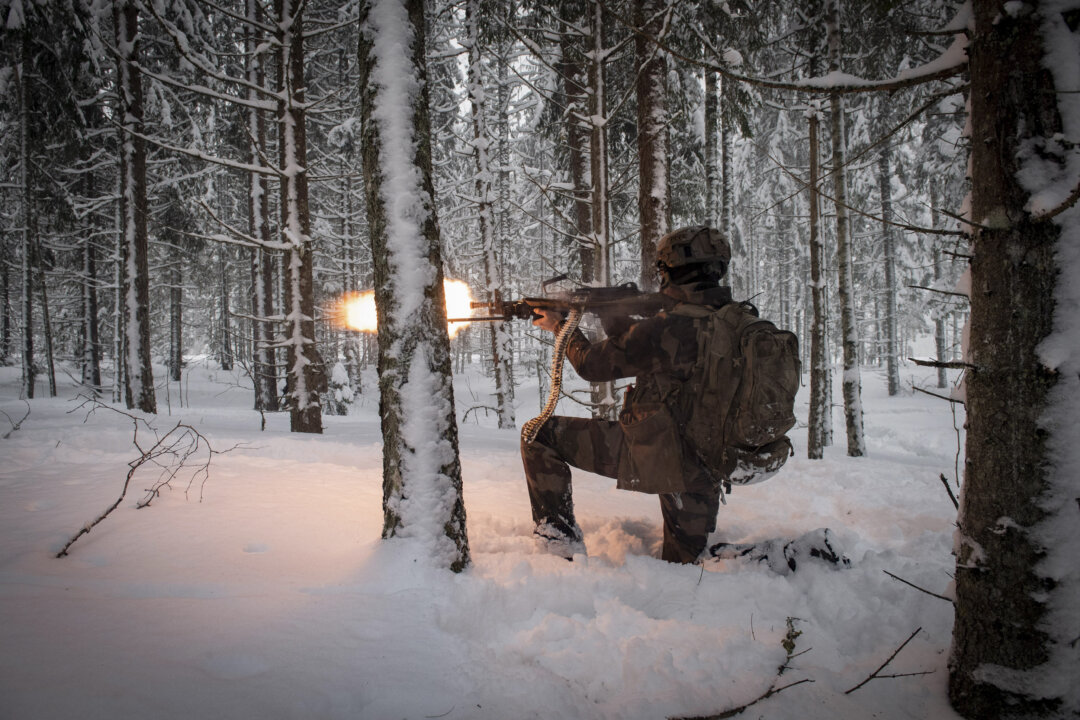
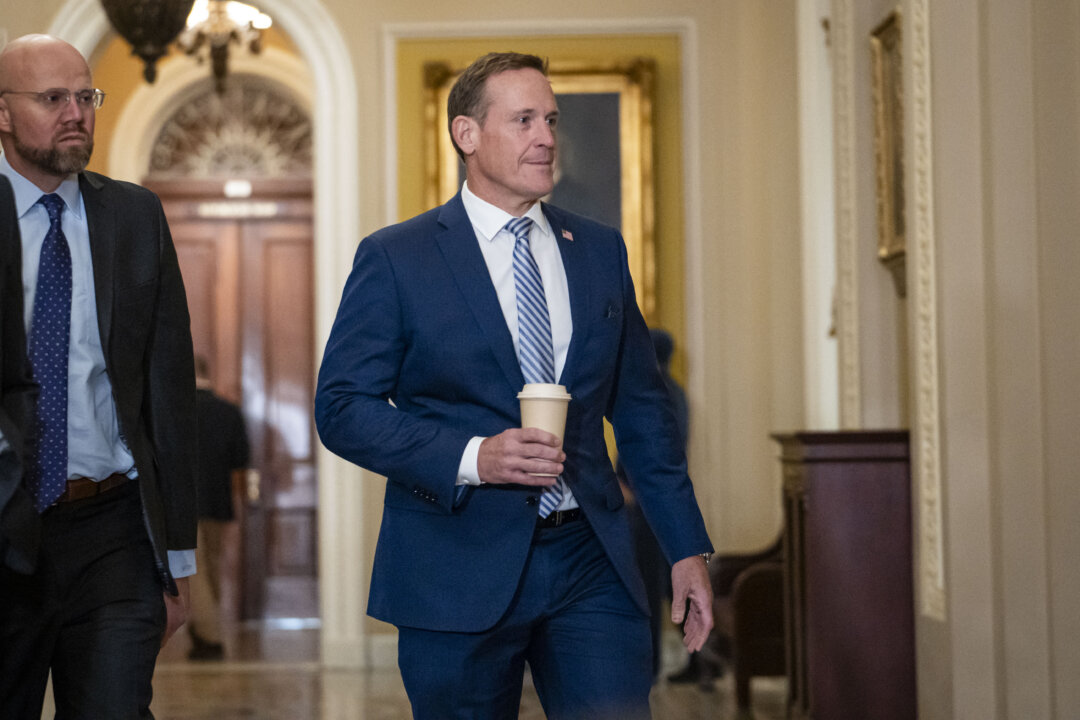
Foreign Affairs The U.S. Misadventure in Niger Is a Wake-Up Call Congress owes it to the country to retake its war powers from the executive. Recently, after over two decades of an unnecessary U.S. military presence in Niger, the U.S. finally withdrew from the West African country. I, for one, never believed we should have been there in the first place and warned our presence was doing more harm than good. Congress never authorized sending troops to Niger. Last year, I was right to demand their withdrawal. Why waste our money and risk our troops’ lives for a hostile country? In over a decade, civilian lives were lost, U.S. service members were killed, millions of taxpayer dollars were spent, and we have nothing to show for it. So, what exactly did we do in Niger? I repeat: Congress never voted to send troops there. Congress never authorized the use of military force there. Yet, on multiple occasions, U.S. forces in Niger had to engage with hostile groups and, sadly, American lives were lost.  Some may recall that, on October 4, 2017, four U.S. soldiers—Sergeant 1st Class Jeremiah Johnson, Staff Sergeant Bryan Black, Staff Sergeant Dustin Wright, and Sergeant La David Johnson—were ambushed and killed while on a mission near the village of Tongo Tongo, Niger. This tragic incident was the largest loss of life for U.S. forces in Africa since the 1993 Black Hawk Down incident in Somalia. At the time, the New York Times reported, in a piece called “An Endless War,” that two senior senators, a Republican and a Democrat, both of whom are still serving, knew little of the American military presence in Niger. They were surprised because Congress had abdicated its constitutional war-making power to the executive branch. They were surprised because Congress is content to allow the President to sidestep the Constitution and unilaterally deploy U.S. forces anywhere in the world, at any time, for any reason, by citing a limitless interpretation of the 9/11 AUMF.  Passed in the days following the tragic events of September 11, 2001, the 9/11 AUMF was narrowly tailored to bring to justice those responsible for the attacks. An ever-aggrandizing executive, however, deliberately misinterprets the AUMF as limitless, empowering the President to go to war everywhere, all the time, forever.  Using an AUMF written 23 years ago to justify war today is a perverse abuse of power, yet Congress stands idly by.  These military interventions the U.S. has carried out all across the Middle East and Africa have made us less safe and less prosperous. In many cases, including that of Niger and the surrounding region, our interventions have been counterproductive, destabilizing, and helped create the conditions for Islamic extremism to prosper.  Does anyone remember our intervention in Libya? I know many think this is ancient history, but in 2011, the Obama-led offensive helped destroy that country. The American-led coalition toppled the government of Muammar Gaddafi, killed hundreds of civilians, fomented anarchy throughout the country, and opened the floodgates for widespread extremist terror to spread throughout the region. Gaddafi kept Libya’s tribal rivalries in check, but his U.S-sponsored overthrow exacerbated them. Many tribal members turned to Islamists for guns and training to defend themselves against rivals. In fact, I forced a vote in the Senate in 2011 declaring that President Obama’s decision to intervene militarily in Libya violated the Constitution. Unfortunately, it failed 90-10, and here we are, 13 years later, and not much has changed. During that 2011 floor debate, I stated, “Though I’m new here in the Senate, I am appalled that the Senate has abdicated its responsibility.” Well, I’m now in my third term, and I’m still appalled that Congress refuses to acknowledge its constitutional role on the question of determining when and where the United States goes to war. Libyans today are unambiguously worse off than before we intervened. In 2010, the UN Human Development Index ranked Libya 53rd in the world. This year, Libya is ranked 92nd. The UN Human Rights Office reports that the execution and torture of civilians in Libya is a regular occurrence. The UN has also identified the existence of “open slave markets” where migrants and refugees transiting Libya are bought and sold as slaves. The disaster the Obama administration helped unleash in Libya has had lasting consequences for the region. Libyan arms, including heavy weaponry such as anti-aircraft guns and surface-to-air missiles, have been traced to criminals and terrorists across the region, including in Niger, Mali, Tunisia, Syria, Algeria, and Gaza. It is rarely asked if our interminable military interventions create the terrorists we seek to destroy. That’s a question Congress needs to answer. In the 11 years U.S. troops were in Niger, Congress did not once debate the merits of the mission and never authorized the use of military force. As the U.S. was forced out of Niger, Russia was welcomed with open arms, solidifying that our efforts have almost been counterproductive.  After over a decade, lives lost, and hundreds of millions spent, the U.S. didn’t stop the spread of Islamic extremism, didn’t help build or spread democracy in other nations, and has now lost a top ally in the region. At what point will Congress learn that its inaction and reliance on the executive branch is not only a dereliction of its constitutional duty but also worsening global relations? Last year, Niger’s democratically elected leader was ousted in a coup led by Nigerian military officers. With the potential of U.S. service members being caught in the crosshairs, I forced the Senate to vote on a War Powers Resolution. The resolution directed the President to remove all U.S. Armed Forces from hostilities in Niger within 30 days of its enactment, something that should have been done as soon as the Biden administration formally declared that a military coup took place.  Eighty-six Senate Republicans and Democrats voted against my resolution and the removal of U.S. troops in Niger amid the coup, further involving America in another foreign conflict. We owed it to those service members to debate their mission. Not only because it was a new conflict not contemplated by the 9/11 AUMF, but because, if we are asking our young men and women to remain in harm’s way and potentially pay the ultimate sacrifice, Congress should fulfill its duty.  Committing America’s military to fight wars on behalf of the nation is the most consequential and humbling responsibility that Congress is entrusted with. If America’s interest in another country is of such vital importance that we ask our young men and women to fight and potentially pay the ultimate sacrifice to defend it, we at least owe our service members a debate in Congress.  The post The U.S. Misadventure in Niger Is a Wake-Up Call appeared first on The American Conservative.
Like
Comment
Share
Worth it or Woke?
Worth it or Woke?
1 y

Sweetwater
Favicon 
worthitorwoke.com

Sweetwater

This content is for members only. Visit the site and log in/register to read.The post Sweetwater first appeared on Worth it or Woke.
Like
Comment
Share
Showing 62397 out of 105872
  • 62393
  • 62394
  • 62395
  • 62396
  • 62397
  • 62398
  • 62399
  • 62400
  • 62401
  • 62402
  • 62403
  • 62404
  • 62405
  • 62406
  • 62407
  • 62408
  • 62409
  • 62410
  • 62411
  • 62412
Advertisement
Stop Seeing These Ads

Edit Offer

Add tier


Select an image
Delete your tier
Are you sure you want to delete this tier?

Reviews

In order to sell your content and posts, start by creating a few packages. Monetization

Pay By Wallet

Payment Alert

You are about to purchase the items, do you want to proceed?

Request a Refund