YubNub Social YubNub Social
    #music #trombone #atw #armymusic #militarymusic #atw2026 #armyband #band #concertband #tusab #jazz #trombonechoir #jazztrombone #quartet #warmup
    Advanced Search
  • Login
  • Register

  • Night mode
  • © 2026 YubNub Social
    About • Directory • Contact Us • Developers • Privacy Policy • Terms of Use • shareasale • FB Webview Detected • Android • Apple iOS • Get Our App

    Select Language

  • English
Night mode toggle
Featured Content
Community
New Posts (Home) ChatBox Popular Posts Reels Game Zone Top PodCasts
Explore
Explore
© 2026 YubNub Social
  • English
About • Directory • Contact Us • Developers • Privacy Policy • Terms of Use • shareasale • FB Webview Detected • Android • Apple iOS • Get Our App
Advertisement
Stop Seeing These Ads

Discover posts

Posts

Users

Pages

Blog

Market

Events

Games

Forum

Daily Wire Feed
Daily Wire Feed
1 y

Speaker Johnson Orders Flags At U.S. Capitol To Fly At Full-Staff For Trump’s Inauguration
Favicon 
www.dailywire.com

Speaker Johnson Orders Flags At U.S. Capitol To Fly At Full-Staff For Trump’s Inauguration

When President-elect Donald Trump and Vice President-elect JD Vance are sworn into office on Inauguration Day, flags at the U.S. Capitol will fly at full-staff, House Speaker Mike Johnson (R-LA) announced on Tuesday. Flags at the U.S. Capitol in Washington, D.C., had been lowered to half-staff at the end of December for a 30-day mourning period after former President Jimmy Carter died at the age of 100. “On January 20th, the flags at the Capitol will fly at full-staff to celebrate our country coming together behind the inauguration of our 47th President, Donald Trump,” Johnson said in a statement. “The flags will be lowered back to half-staff the following day to continue honoring President Jimmy Carter.” On January 20th, the flags at the Capitol will fly at full-staff to celebrate our country coming together behind the inauguration of our 47th President, Donald Trump. The flags will be lowered back to half-staff the following day to continue honoring President Jimmy Carter. — Speaker Mike Johnson (@SpeakerJohnson) January 14, 2025 On X, Rep. Nathaniel Moran (R-TX) thanked Johnson, writing: “Inauguration Day should be a day of celebration – NOT a day when our nation’s flag is flown at half mast.” Moran also noted that he is a “proud” co-sponsor of a bill from Rep. Monica De La Cruz (R-TX) that would mandate American flags fly at their “highest peak” on Inauguration Day. The speaker’s move comes after governors in some states ordered flags to return to full-staff at their state capitols and state buildings for Inauguration Day. JOIN THE MOVEMENT IN ’25 WITH 25% OFF DAILYWIRE+ ANNUAL MEMBERSHIPS WITH CODE DW25 “Inauguration Day is a day of celebration for America,” Texas Republican Governor Greg Abbott said in a post to X on Monday. “Today, I ordered flags raised to full-staff at the Texas Capitol & state buildings for President Trump’s inauguration. While we honor President Carter’s service, we also celebrate an incoming President & our bright future.” Among the others who did the same were Alabama Republican Governor Kay Ivey and North Dakota Republican Governor Kelly Armstrong. The Associated Press reported that a large flag at Trump’s Mar-a-Lago club in Florida was lowered to half-staff but had been raised to full height in recent days before the end of the 30-day mourning period for Carter. Trump and other dignitaries traveled to Washington, D.C., last week to pay their respects to Carter, where the late president laid in state at the U.S. Capitol Rotunda. His funeral was held in the National Cathedral.
Like
Comment
Share
Daily Wire Feed
Daily Wire Feed
1 y

We’ve Won. Now What?
Favicon 
www.dailywire.com

We’ve Won. Now What?

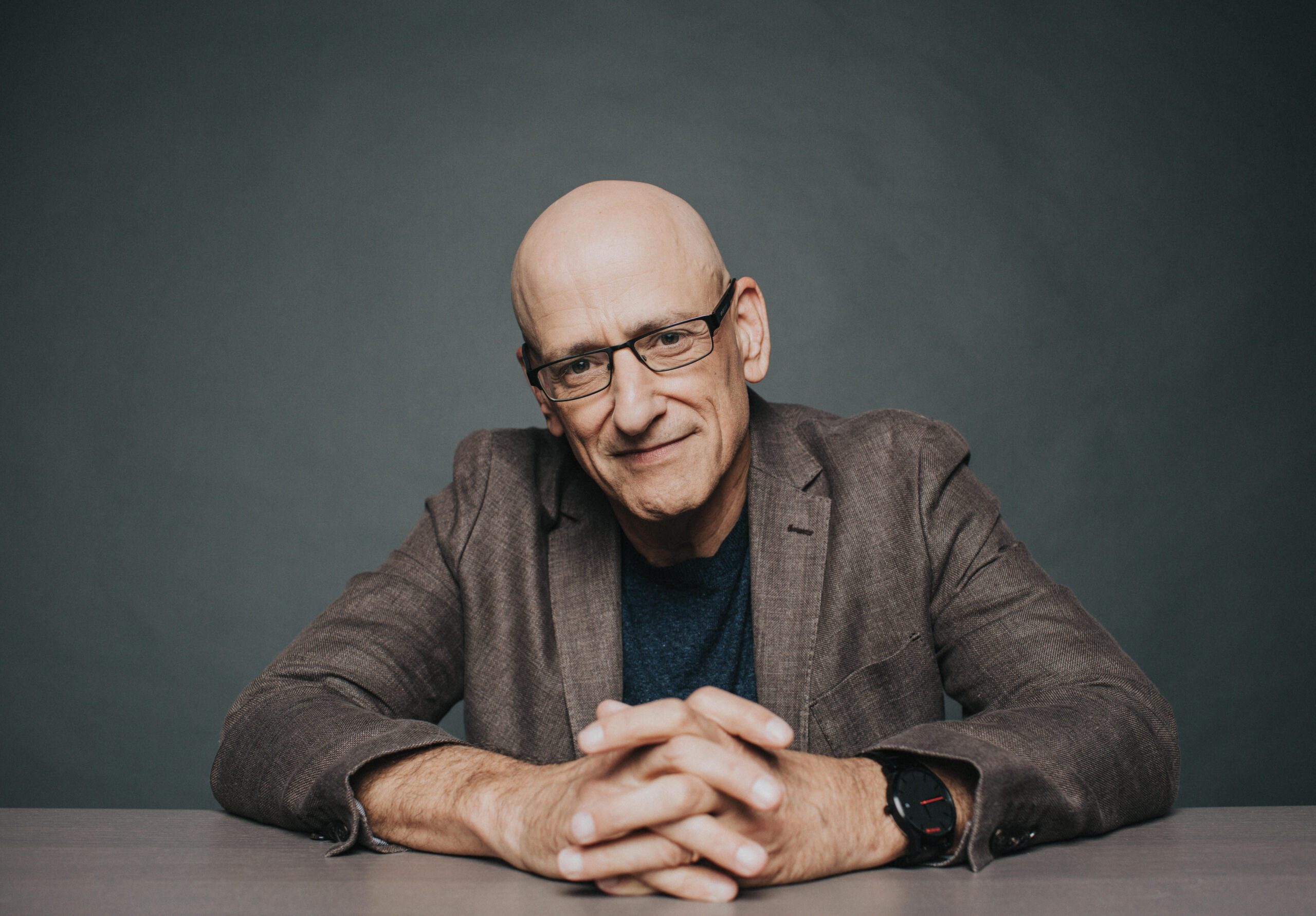
The following essay was originally published on Andrew Klavan’s Substack, “The New Jerusalem.” The night Donald Trump won re-election, a sense of sweet peace settled over me. It had little to do with politics, little even to do with Trump himself. Trump is, to be sure, a titanic figure, a living avatar of our age, for good and sometimes ill. No other man I know of could have manifested the inner iron required to defy the entrenched powers and withstand their tidal onslaught of abuse and deceit. But his fight was not my fight, and his victory was just a symbol of my victory. I have only ever been a novelist, a storytelling artist. I drifted into political commentary when, after seven years as an expatriate, I returned to an America whose foundational ideas had been gutted by a corrupted culture. Our universities were infested with leftist theorists who worked to smother the voices of the sages they were meant to teach. Our news media was biased to the point of corruption. And our entertainment media was using every pop icon from Superman to Snow White as a propagandist for perversion, racialism, and Western self-hatred. When, barely a year after my return, a group of Islamist murderers attacked the city of my birth, slaughtering three thousand civilians in the name of their hateful god — and when, in response, our professors and journalists and entertainers quivered with philosophical nuance, wondering aloud what the naughty U.S. had done to bring this atrocity upon itself — and when the film industry in which I worked began churning out movies about evil G.I.’s and CIA agents tormenting and oppressing innocent Muslims in their cherubic multicultural piety — I saw no other honorable course but to write and speak about these moral distortions. I believe, though I can’t prove, that this decision cost me my multi-million dollar career as a screenwriter and my place of respect in the literary world I love. All I know for sure is that the phone calls from Hollywood and the awards and raves from New York vanished in a startling flash. Nevertheless, I persisted. And over the next twenty years or so, I watched as entrepreneurs like Andrew Breitbart, Jeremy Boreing, Bari Weiss and Elon Musk organized scattered and lonesome rebels like myself into an internet militia which, like our revolutionary forefathers, could pop out of cover and take potshots at the goose-stepping legions of the empire of lies. To me, Trump’s victory meant simply this: we beat them. Skirmish by skirmish, we exposed their oppressive philosophies, their abuses of power, and their ceaselessly dishonest mangling of history, news and national mythology. When they slandered Trump as Hitler, when they indicted him on wholly bogus charges, when they created movies and TV shows and novels singing the praises of government power and idiot utopianism, we shot them down one by one until half the electorate felt bold enough to reject them. The day was ours. So … What now? WATCH: The Andrew Klavan Show on DailyWire+ The losers, of course, must pass through the seven stages of grief: anger, whining, blaming everyone but themselves, more whining, denial, denial, denial. Who knows if they will ever face the facts? Their philosophy was false; their policies failed; they lied and censored in an effort to maintain their power and prestige; the rotten structure collapsed on their heads. End of story. The victorious entrepreneurs, having done the negative work of debunking the opposition’s lies, must now build the structures for the positive business of truth-telling: unbiased journalism, the creation of high and popular art, and the infrastructure of commentary, appreciation, reviews and awards. But I remain what I always was: a barefoot teller of tales. For me, there is only one question. What do I want to write about next? The answer is this: I want to explore the nature of God. Over these past twenty years or so, it has become increasingly clear to me that our worst problems have their sources in unbelief. Our centuries-long drift away from Christian faith — what Nietzsche called the death of God — is, as Nietzsche predicted it would be, at the heart of our catastrophe. Most often, it manifests itself in one of three forms. Materialism, the idea that spiritual problems can be solved by physical means. Misogyny, devaluing women as women — as wives, homemakers and mothers who excel outside masculine power structures. And antisemitism, the hatred of Jews, which as I explained in a previous essay, is really a disguised hatred of one Jew, namely Jesus Christ. Examine our most entrenched dysfunctions — the dearth of children, degrading promiscuity and perversion, government redistribution of wealth, censorship and authoritarianism, drug abuse both lay and medical, the sexual butchering of the young, the atrocity of abortion, the snarling cruelty and ignorance of our debates — and you can trace them back to one of these three manifestations of our faithlessness. But the truth is, just as we have won the political argument, this argument too is already over. “Something profound is happening,” writes Peter Savodnik in the Free Press. “Instead of smirking at religion, some of our most important philosophers, novelists, and public intellectuals are now reassessing their contempt for it.” Sales of Bibles Are Booming, Fueled by First-Time Buyers, reads the Wall Street Journal headline. The sales spiked 22% in a year. The revival of the intelligentsia — which I’ve predicted for over a decade — has begun. As in the political sphere, our job is no longer to debunk the non-believers, it is to rediscover what it means to believe. The ancient and medieval wisdoms and orthodoxies are important, but there are more basic questions that have to be answered before thinking non-believers can even put their toe in those deep waters. Plus, old language may not always suffice in our new scientific and technological world. As The New Jerusalem enters a new year and, I hope, a new era, I would like to propose some topics for open discussion. Heart vs. Mind Science, technology and capitalism are so responsive to the work of intellection that they have lifted reason above its station. GK Chesterton was right when he said, “The madman is not the man who has lost his reason. The madman is the man who has lost everything except his reason.” Conversely, prophets, artists, and mystics are frequently not the most intellectual of men. They possess a wholeness of perception that reveals the world to them with an immediacy that can only be communicated by parable, art, and praxis. When we look at Jesus honestly, we find he too is vastly bigger than our theologies. His presence cannot be reduced to rules and philosophies. We must renew the rituals and practices that can re-open our eyes to a love beyond reason. Inside vs. Out For centuries, materialist thinkers have sought to find the source of spiritual reality within the mind of man. Whether it was a Freudian understanding of God as a psychic projection of our fathers, the Jungian dodge of a “collective unconscious,” or an image of the evolved brain as a generator of false perceptions, the basic idea was that spiritual truth is a psychic creation rather than an outward reality. Not so. We see God through a glass darkly, but his incarnation in Christ is proof that what we see is really there. What should we believe, then, about God’s actions on earth? The reality of angels and demons? The efficacy of prayer? How can we discuss this without descending into either superstition or rationalism? Symbol vs. Reality The thesis of all religion is that there is an invisible reality that our world reveals and symbolizes. Transcendental values like love, justice and mercy must be made manifest in human word and deed. But what are the limits? It’s lovely to say a husband and wife represent Christ and the church, but is that what he’s thinking when he’s chasing her around the bedroom? (I hope not!) While living into transcendentals can elevate our behavior, inhuman restrictions based on metaphor can be immiserating, inflame doctrinal hatred and give fuel to the arguments of unbelievers. Can we discuss ecumenicism, interfaith cooperation, and various other species of tolerance and deviance without either moral surrender or bullying self-certainty? Orthodoxy vs. Individuality A church without orthodoxy is Satan’s sandbox. Orthodoxy creates the image of the spiritual kingdom to which we are responsible. But each person’s journey to that kingdom is unique and may take them through territory of which church orthodoxy disapproves. Can we allow the beauty of the single soul to thrive in a church of true faith? I’ve given up much to speak my mind. Money and prestige and career dreams. All things of value, make no mistake. My peaceful sense of victory now is gratifying. But the destruction of lies is not the triumph of the truth, and it’s on the truth that the reclamation of our culture depends. Our enemy counts on us to defend our faith with rigidity, belligerence and cruelty. Give us vision, open minds and loving hearts, and we will watch him fall like lightning. * * * Read the full post on Andrew Klavan’s new Substack “The New Jerusalem,” where he and son Spencer Klavan chart an alternative path toward life in the 21st century and beyond. * * * Andrew Klavan is the host of “The Andrew Klavan Show” at The Daily Wire. He is the bestselling author of the Cameron Winter Mystery series. The fourth installment, “A WOMAN UNDERGROUND,” is now available. Follow him on X: @andrewklavan The views expressed in this article are those of the author and do not necessarily represent those of The Daily Wire.
Like
Comment
Share
Daily Wire Feed
Daily Wire Feed
1 y

The H1-B Jobs That Prove The Visa Program Badly Needs Reform
Favicon 
www.dailywire.com

The H1-B Jobs That Prove The Visa Program Badly Needs Reform

The H1-B foreign worker visa program, marketed as a way for U.S. companies to bring in high-skilled workers from abroad for “speciality occupations,” is being abused for mid-range jobs for which Americans are likely readily available, a Daily Wire review of Department of Labor data found. The Society of Cannabis Clinicians, for example, apparently could not find anyone where it’s headquartered in Baltimore willing to publicly espouse the virtues of marijuana, instead using an H1-B visa holder for “PR & Communications” at $48 to $50 an hour. Danboise Mechanical in Michigan sought to bring in a foreign worker to serve as a “Plumbing Estimator” for $85,000 a year. And public schools in our nation’s capital looked to other countries for well-paying, non-specialized jobs, such as a $70,000 instructional coordinator and a $65,000 school-based public relations specialist. The H1-B program says it’s only for jobs that require “theoretical and practical application of a body of highly specialized knowledge.” But in fiscal year 2024, nearly 12,000 accountants and auditors were deemed eligible to enter the lottery, along with more than 1,000 construction managers and hundreds each of public relations specialists, interior designers, and landscape architects. There were some 755,000 H1-B workers in the United States as of 2023, according to government data. Eighty-five thousand H1-Bs are granted each year to companies, chosen randomly from among the approved lottery entrants, plus many more from colleges, government and research nonprofits, which aren’t subject to that cap. The visas grant admission for up to three years, which can be extended. The beneficiaries’ families can also come with them. The visa program has been under the microscope in recent weeks. Tech mogul Elon Musk, President-elect Donald Trump’s efficiency czar, said last month that, when working as intended, H1-Bs can allow American industry to skim the brightest fraction of a percent from other countries.  He also said that abuses should be rooted out. Trump has said similar, saying “we need smart people coming into our country,” while proposing reforms. In the final months of Trump’s first term, his administration implemented or proposed several new regulations. His administration revised the “regulatory definition of and standards for a ‘specialty occupation,’” and proposed moving from a random lottery to prioritizing the highest-paying jobs first, letting the market prove that the skills are actually high-end. But the Biden administration scrapped the changes. An analysis of the program in the final year under Biden shows that it has strayed far from its intended purpose, with positions granted for many positions that are neither specialized nor hard to fill with an American worker. Foreign friends? The data suggests that some foreigners may use small businesses to secure entry into the United States for acquaintances, with the false claim that no one in the country could do those jobs. Arshad Virani of Houston, for example, fashions himself a DJ, saying on SoundCloud, where he has 178 followers, that “DJ AV also known as Arshad Virani is a 29 year old who’s vigorous passion for music has lead him to… ware out the dance floors at any bash!” According to the government data, DJ AV Entertainment, Inc. needs to bring someone into America through 2027 to serve as Virani’s “public relations manager” at $36 an hour. Smokers Paradize, a marijuana accessories store in San Antonio owned by Karimali Maknojia, says it can’t find any Texans qualified and willing to be its “brand promotions director” for $53,000. Abdul Quddus, president of a collection of Fast N Friendly convenience stores, successfully brought in foreigners to work as store manager for separate stores in the Missouri towns of Kansas City, Overland Park, Nelson, and Grandview, based on the notion that he could not find Americans willing to do the job—despite paying up to $58,000, above the average income in the state. These sorts of foreign-sounding names were very commonly listed as the U.S. point of contact for employers seeking to take advantage of the program. Yanhyujiao Hu, president of the Hu Insurance Agency in Irvine, California, asked to bring in a Financial Planner from abroad for $30 an hour. Santwant Singh was another insurance proprietor who couldn’t find a Californian qualified to serve as New Business Operations Manager for $65,000 a year. In Virginia, Aziza Kasawat, the owner of a 7-Eleven, sought to bring someone to America to work the cash register for $13 an hour. In Alpine, Texas, 20% of the population is impoverished, but Hursh Patel, principal of the America’s Best Value Inn, said he needed to bring in a foreigner to work as manager of the hotel for $68,000 a year — twice the per capita income of the town. In Tioga, North Dakota, a similar situation played out with Sashin Patel, owner of the Mainstay Suites Tioga. In fact, 1,941 requests for foreign workers listed a U.S. business contact with the last name of Patel, one of the most common names in India. You can scroll through some H1-B applications from last year — all “certified” as eligible by the government, though not all actually won the lottery — that caught our eye here. Displacing Americans in sought-after industries Some industries in which many Americans aspire to work, but in which well-paying jobs have increasingly been hard to come by, have turned to foreign workers. Major video game studios — an industry sought out by many young computer scientists — have brought foreign labor into the United States. Activision Publishing, the company behind Call of Duty, wants a foreigner to work as an associate designer for $39 an hour. Blizzard Entertainment, producer of World of Warcraft, wants a game designer for $57, while Epic Games wants one for $120,000 a year. And Amazon is seeking 10 foreigners to work as game designers for $53,331. In journalism, National Public Radio is looking to retain a foreigner to serve as digital editor of its National Desk at $123,000 to $148,000. The Concord Monitor in New Hampshire wants an investigative reporter to work for $19 an hour by drawing someone from thousands of miles away from the community it covers. The San Francisco Chronicle sought an “Asian American and Pacific Islander Reporter,” turning not to the city’s sizable Asian-American population but to actual Asians, for $87,500. Bloomberg is seeking foreigners for a slew of positions. In fashion, Abercrombie & Fitch sought to renew an H1-B for a designer making $38,000, while Armor Jeans sought one for $55,000 and J. Crew for $62,100. Mundane tech labor The largest categories of H1-B workers, by far, are in the tech industry. Tech companies have justified the program as giving access to brilliant, specialized engineers. While some fit that category, others don’t—and the H1-B system in its current form selects randomly among all “certified” applicants, without regard to who is more high-skilled. When selecting a job classification from a list of choices on the Department of Labor’s form, companies said they were seeking a quarter-million “software developers,” including extending 80,000 who are currently in the country. That description is too broad to determine whether they are elite engineers pioneering novel technologies, or whether they are simply doing the everyday work of software development. Other job classifications more clearly fall into the latter. For example, more than 9,300 “database administrators” were sought. Employers also report the job title of the person they intend to hire, and when the title is specific, it often suggests duties that typical American programmers could readily do. Thousands involved tinkering with a company’s Salesforce implementation. Some were for “web administrators” or Python developers — a basic computer programming language that any comp-sci graduate would be qualified for. More than 1,000 were for “scrum masters” or “agile” leads — project management positions consisting of asking computer programmers how far along in their projects they are. Others were for marketing jobs that involve using technology more than creating it; for example, Autozone sought out a foreigner to handle Search Engine Optimization in Memphis for $113,500 a year. Thousands of graphic designers and user experience designers — creative jobs for which many in the United States are qualified — are also on the list. Colleges and activists Unite Here, a union that says it is dedicated to “making sure our jobs are safe,” sought to skip over American applicants when hiring for two meeting planners in New York City, paying $62,400 and $48,006. The fact that nonprofit “research” groups, governments and colleges are exempted from the H1-B cap has led them to make heavy use of the program, including left-wing activist groups. There were 94 H1-B applications for “climate change policy analysts” in 2024, including from the Center for Earth, Energy and Democracy, which “fundamentally addresses racial and class justice” and used the program to install a foreigner with a masters degree as its “federal policy director.” Colleges sometimes give recent graduates low-paid jobs seemingly to enable them to remain in the United States, and other times turn to foreigners to fill faculty positions despite ferocious competition in those fields from Americans who paid tuition to earn advanced degrees from the university’s own programs. It is difficult to say whether, in the hard sciences, some are hired because the brightest minds in difficult fields happened to be from abroad. But in the humanities and soft sciences, it is difficult to believe that is the case. Adelphi University in New York, for example, turned to H1-B to try to fill jobs for Assistant Professor of Sport Management ($78,000) and Assistant Professor of Physical Education ($75,000). The school charges undergrads $68,000 a year in tuition, and its sports management program promises a “thriving career.” Grambling University, a historically black university in Louisiana, sought to renew the visa of an assistant professor of leisure studies who teaches REC 201 – Outdoor Recreation, for $65,000. The University of Louisville’s Department of Health and Sport Sciences “serves nearly 1,000 graduate and undergraduate students pursuing careers in the health, fitness, and sport industries.” Yet when it came time to hire a lecturer, it looked abroad, paying $56,000—about the cost of a single student’s annual expenses. In all, twenty-six “recreation” professors are in the U.S. on H1-B visas and seeking renewal, on top of 85 requests for more visas for the recreation experts. The figures are higher for fields like art, drama, music, political science, history, and sociology—all fields where the number of American Ph.D.’s seeking jobs far exceeds the available jobs. When it comes to non-academic staff positions at universities, schools that market themselves as training centers for certain jobs often say they can’t find an American capable of doing that very job, and hire foreign workers—likely a student who came from abroad to study at the university and wants to stay after graduation. Alabama A&M, for example, applied for an H1-B financial aid analyst at $35,525, and the University of Illinois is looking for a “grants and contracts associate” for $45,257. Indiana University-Bloomington is turning to H1-B to employ a web developer for $57,803, despite pumping out nearly 500 comp-sci graduates a year. In the interactive database below, you can click a job category and browse H1-B applications for that job from fiscal year 2024. All of the jobs were “certified,” meaning the U.S. government found them eligible to enter the H1-B lottery. However, not all them were selected in the lottery. 

Like
Comment
Share
Daily Caller Feed
Daily Caller Feed
1 y

J.D. FOSTER: Trump Is Right About The Debt Limit — Kill It
Favicon 
dailycaller.com

J.D. FOSTER: Trump Is Right About The Debt Limit — Kill It

'In practice, the debt limit generates typical Washington theater'
Like
Comment
Share
Daily Caller Feed
Daily Caller Feed
1 y

Chris Paul, Victor Wembanyama Do Coolest Thing Ever For JJ Redick’s Kids, Who Lost Memorabilia To California Fires
Favicon 
dailycaller.com

Chris Paul, Victor Wembanyama Do Coolest Thing Ever For JJ Redick’s Kids, Who Lost Memorabilia To California Fires

This is pretty damn cool
Like
Comment
Share
Daily Caller Feed
Daily Caller Feed
1 y

Kirsten Gillibrand Chews Up 8 Minutes Of Hearing Lecturing Pete Hegseth About Women In Military
Favicon 
dailycaller.com

Kirsten Gillibrand Chews Up 8 Minutes Of Hearing Lecturing Pete Hegseth About Women In Military

'They're brutal and they're mean'
Like
Comment
Share
Daily Caller Feed
Daily Caller Feed
1 y

Nine Inch Nails Announce First World Tour In Seven Years
Favicon 
dailycaller.com

Nine Inch Nails Announce First World Tour In Seven Years

They will not share details in light of current events
Like
Comment
Share
Daily Caller Feed
Daily Caller Feed
1 y

‘Sassy’ Republican Congressman’s New Look Makes Waves
Favicon 
dailycaller.com

‘Sassy’ Republican Congressman’s New Look Makes Waves

Congressman Thomas Massie used his 54th birthday to debut his sudden glow-up
Like
Comment
Share
Pet Life
Pet Life
1 y

Think Cats Can’t Be Trained? This Record-Breaking Program Proves Otherwise With 102 Cats Saved!
Favicon 
www.catster.com

Think Cats Can’t Be Trained? This Record-Breaking Program Proves Otherwise With 102 Cats Saved!

The post Think Cats Can’t Be Trained? This Record-Breaking Program Proves Otherwise With 102 Cats Saved! by Nicole Cosgrove appeared first on Catster. Copying over entire articles infringes on copyright laws. You may not be aware of it, but all of these articles were assigned, contracted and paid for, so they aren't considered public domain. However, we appreciate that you like the article and would love it if you continued sharing just the first paragraph of an article, then linking out to the rest of the piece on Catster.com. Click to Skip Ahead Behavior Modification Training for Cats A Lasting Impact About the Oregon Humane Society For the first time in its history, the Oregon Humane Society’s (OHS) Behavior Modification Program for cats and kittens has surpassed 100 annual adoptions, with 102 cats finding loving homes in 2024. This groundbreaking program is specifically designed for pets who require specialized training and care before they are ready for adoption. Behavior Modification Training for Cats Cats at the OHS often face unique challenges. Many are extremely shy and fearful, while others struggle with overstimulation, frustration, or specific behavioral issues that make it difficult for them to adapt to life in a home. This is where the Behavior Modification Program comes in. “When people think of behavior modification and training, dogs are often who comes to mind,” says Tanya Roberts, OHS Director of Training and Behavior. “But this program is having an extraordinary, lifesaving impact on cats and kittens.” Take, for example, a 5-month-old kitten named John. On December 24, John became the 100th feline to be adopted through the Behavior Modification Program in 2024. John came to OHS from an overwhelmed pet owner struggling to care for too many animals. His adoption represents a major milestone for a program that has seen significant growth since moving to its purpose-built Behavior and Rescue Center in late 2022. Erika Sims, the OHS Feline Behavior Modification Manager, explains that “cats and kittens are getting ready for adoption almost 50% faster than they did when we were doing this work in the main shelter. This means we can help even more cats because we are truly a lifeline and often the last option for most of the felines who come through our program.” The success of the Behavior Modification Program lies in its individualized approach. Every cat entering the program receives a customized plan tailored to their specific needs. “Working with a shy, fearful cat is a slow process of building trust,” says Erika. “While a cat who gets overstimulated and frustrated needs time to decompress before we can start changing their behavior.” Patience is key to addressing behavioral challenges in cats. The process is often gradual, but the outcomes are profound. “Progress is measured in small increments, but the results are life-changing, and lifesaving,” Erika adds. “We are changing stereotypes and showing that cats have an incredible capacity to learn and change.” A Lasting Impact Pet parents who welcome these special cats into their homes receive additional support and guidance to ensure a smooth transition and a successful match. This extra level of care helps create lasting bonds between the cats and their new families. As the program continues to grow, so does its impact. The milestone reached in 2024 is a testament to the dedication of the OHS team and the transformative power of behavior modification. By addressing the unique needs of each cat, OHS is not only giving them a second chance at life but also changing the way people view feline behavior and training. With every success story, the OHS Behavior Modification Program is proving that even the most challenging cats deserve a chance to thrive—and that with patience, compassion, and expertise, they can find their place in a loving home. About the Oregon Humane Society Founded in 1868, the Oregon Humane Society is one of the most respected animal welfare organizations in the United States. Through their mission of Creating a More Humane Society, they are working toward their vision of a world where all animals are treated with compassion, kindness, and respect. With campuses in Portland and Salem, OHS is an Oregon-based nonprofit that relies on donor support for its adoption, education, medical, and humane law enforcement programs. Visit oregonhumane.org for more information. Images provided to Catster by Oregon Humane Society The post Think Cats Can’t Be Trained? This Record-Breaking Program Proves Otherwise With 102 Cats Saved! by Nicole Cosgrove appeared first on Catster. Copying over entire articles infringes on copyright laws. You may not be aware of it, but all of these articles were assigned, contracted and paid for, so they aren't considered public domain. However, we appreciate that you like the article and would love it if you continued sharing just the first paragraph of an article, then linking out to the rest of the piece on Catster.com.
Like
Comment
Share
SciFi and Fantasy
SciFi and Fantasy  
1 y

A Spectre Is Haunting Catesby Wran: “Smoke Ghost” by Fritz Leiber
Favicon 
reactormag.com

A Spectre Is Haunting Catesby Wran: “Smoke Ghost” by Fritz Leiber

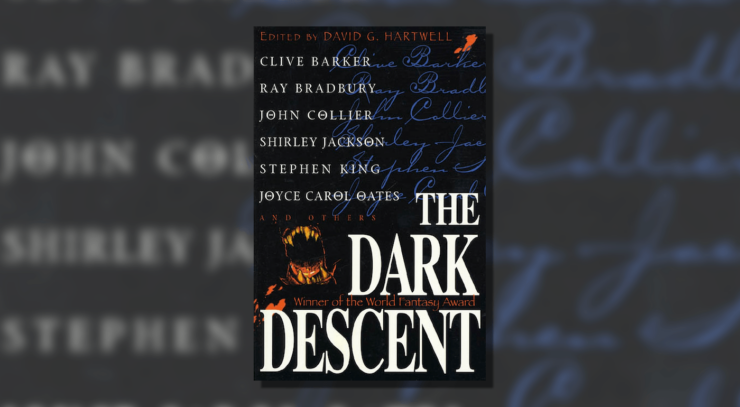
Books Dissecting The Dark Descent A Spectre Is Haunting Catesby Wran: “Smoke Ghost” by Fritz Leiber An advertising exec faces the existential horrors of the modern world. By Sam Reader | Published on January 14, 2025 Comment 0 Share New Share Welcome back to Dissecting The Dark Descent, where we lovingly delve into the guts of David Hartwell’s seminal 1987 anthology story by story, and in the process, explore the underpinnings of a genre we all love. For an in-depth introduction, here’s the intro post. As we’ve seen before, Fritz Leiber has a way with the horrors of the urban landscape. His first story in the anthology, “Belsen Express,” turned an irascible right-winger’s commute into a rapidly evolving nightmare filled with hostile architecture and parallels to Nazi atrocities designed to punish him for his casual cruelty. “Smoke Ghost” evokes similarities to “Belsen Express” in structure—following an advertising executive on his way to and from the workplace and through his chats with his coworker about the idea of a “modern” ghost. “Belsen Express” offers a more moral and psychological approach, focusing more on what is wrong with the protagonist. While “Smoke Ghost” might have similar urban-gothic stylings, it takes a more existential slant, concentrating on how Catesby Wran is uniquely suited to perceive something going wrong with the world, a creeping toxicity just starting to take hold around him. In this way, “Smoke Ghost” calls back to “The Crowd” and “The Whimper of Whipped Dogs” in its exploration of a monstrous natural order, while settling itself firmly in the existential environment of Hartwell’s “fantastic” with its emphasis on unnatural aspects of the story’s reality. Catesby Wran is an advertiser who finds himself preoccupied with the idea of a “modern ghost.” As he discusses the issue with his assistant Ms. Millick, he outlines the idea of a many-faced ghost made of soot and grime who talks in unintelligible, threatening mutterings. What he doesn’t tell Ms. Millick is that he’s seen this ghost before, a waving shapeless figure glimpsed out the window of the train home. A figure that now stalks him, appearing outside windows and as the filthy smudges that accumulate on every surface around him. It visits his psychiatrist, and shadows (pun very much intended) his family. The more the “ghost” invades his life, the more Wran becomes sure that he’s seen something he shouldn’t have, and this modern ghost will ensure he pays for that mistake in full. Immediately from the description of a threatening, mumbling, many-faced grime creature, it’s clear that we’re dealing with something more like a god or spirit than a strict ghost the way usually we understand it. While it takes the form of pollution and grime, there’s something undeniably corrupting about it, whether it’s the way it fills spaces with gritty black soot, the unnerving way people seem to see it as a racist caricature (the psychiatrist even claims it looks like “a white man in blackface” at first), or even the way it possesses Ms. Millick at the end of the story to chase Wran up to the roof, soot dripping out of her every orifice and making her sound strangled. When Wran first describes the ghost, he specifically invokes the horrors of capitalism, worker exploitation, and the tensions and violence that come with modern industrial labor exploitation. It’s an insidious but visible symbol of the corrosion behind the modernized urban environment, gumming up typewriters and smearing windows. It also marks Wran as a participant in this world, detached though he is through his work (advertising being a potent but more hands-off wing of capitalism). The way it marks him also ties it closer to the existential threats of “The Crowd” and “Whimper of Whipped Dogs.” The “smoke ghost” only becomes obsessed with Wran when he notices it, the same trigger as the earlier stories. The way the entity obsesses single-mindedly on Wran once it’s been spotted, threatens him directly, and will not leave him alone until it either breaks him down or kills him, speaks to the same naturalistic and hideously sapient impulses as the crowd from “The Crowd” and the infant god we meet in “Whimper”—once noticed, it reacts as if it has been threatened and must bring that threat to heel. It’s a theme common to what Hartwell calls “the fantastic,” as the darker aspects of the world only reveal themselves once someone inadvertently brushes up against some horrifying truth, once they notice or experience something beyond their understanding. It’s a nightmare that only occurs once they become aware of how unnatural the world around them is, and how terrifying the creatures that hide just out of sight truly are. Wran is a protagonist uniquely suited to existential horror of this type. He’s a former psychic prodigy who used to perform something like remote viewing for audiences at the urging of an abusive spiritualist mother, only to suffer a nervous breakdown under stress and have his talents repressed by his father in an equally toxic manner. His “brain abnormality” (his words) and aggressive performance of normality mean that he’s already aware that things are out of joint, on some level, only to be confirmed when he’s stalked by a bizarre entity in the form of a sack of soot with eyes. Driving the point that he’s alert to the fact that the world is wrong are the moments when he has independent confirmation that the world truly is wrong—both his psychiatrist and his son are stalked by the fledgling god of industrial capitalism—completely neutralizing the idea that somehow, he’s making this all up or is otherwise delusional. He’s rational, he’s just also completely aware of an unspeakable wrongness pervading existence. Underscoring this is the way the spirit makes its final attack on Wran. It possesses his administrative assistant, turning her into a super-strong vessel of corruption that can bend metal with its fingers and talks in a choked voice. Chillingly, there’s nothing particularly out of place about its attacks. It pulls apart the metal clasp of a purse to open it, its taunts are delivered in a cloying parody of concern, and it even turns Ms. Millick’s commonly used phrase of “Why Mr. Wran” into a terrifying verbal tic as it stalks and chases Wran up to the rooftops where this all began. It’s all horrifying, but in a way that perverts and corrupts “the real” to its own ends. It shows exactly how much control it has over Wran’s desperate bid at leading a normal life. Rather than see Wran consumed by the horrors he’s now aware of (as in “The Crowd”) or gleefully becoming part of them (as we see in “The Whimper of Whipped Dogs”), he has a far grimmer but more appropriate fate for an existential horror story—he must live with the knowledge that the awful modern god who has hunted and terrorized him can only ever be temporarily pacified. His bowing obeisance to the “smoke ghost” is merely a tactic to keep it from killing him on the rooftop, the creature vanishing into the night with Wran fully aware that it’s going to be back. In a sense, it’s even more cynical than “Whimper.” The ending of “Whimper of Whipped Dogs” left its main character with the sense that the god was protecting her. In “Smoke Ghost,” the titular entity can never be fully pacified. It will never fully leave. It will always want more. That ambiguity, ending on a grim question rather than a conclusion, is what puts “Smoke Ghost” squarely in the realm of “the fantastic.” The capitalistic corrosion represented by Wran’s spectral stalker will never be defeated or go away. There can be no definitive ending, no moral. At the end of the story, there is only what is, the knowledge that the world itself is wrong in ways we cannot normally see. In our case (and that of Catesby Wran), seeing it means fighting the wrongness we are aware of endlessly, with only uncertain moments of calm, knowing that even pacified, it will be back for more. It’s horrifying, but when the alternative is worse, what else can we do? And now to turn it over to you: Is “Smoke Ghost” more pessimistic than “The Whimper of Whipped Dogs?” Is the titular ghost more a metaphor for capitalism or industrialism? Is “obeisance” a word I should be trusted to use? Is there a favorite Fritz Leiber horror story of yours you wish had ended up in this anthology? Please join us in two weeks for “Seven American Nights” from master of the utterly weird story, Gene Wolfe. See you then.[end-mark] The post A Spectre Is Haunting Catesby Wran: “Smoke Ghost” by Fritz Leiber appeared first on Reactor.
Like
Comment
Share
Showing 62438 out of 119787
  • 62434
  • 62435
  • 62436
  • 62437
  • 62438
  • 62439
  • 62440
  • 62441
  • 62442
  • 62443
  • 62444
  • 62445
  • 62446
  • 62447
  • 62448
  • 62449
  • 62450
  • 62451
  • 62452
  • 62453
Advertisement
Stop Seeing These Ads

Edit Offer

Add tier


Select an image
Delete your tier
Are you sure you want to delete this tier?

Reviews

In order to sell your content and posts, start by creating a few packages. Monetization

Pay By Wallet

Payment Alert

You are about to purchase the items, do you want to proceed?

Request a Refund