www.newsbusters.org
CBS's Margaret Brennan Blames Holocaust on Free Speech, Gets SMACKED DOWN by SecState Rubio
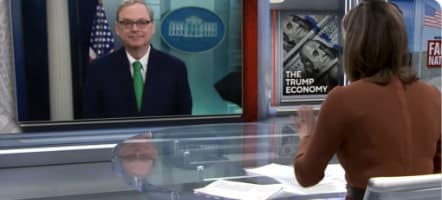
CBS’s Margaret Brennan continues on a tour-de-force of galaxy brained takes that ultimately cause her to get smacked down by her conservative interlocutor. The latest such instance involves her assertion that the Holocaust was caused by (weaponized) free speech, which was promptly and thoroughly rebuffed by Secretary of State Marco Rubio.
Watch the remarkable exchange, which closed out their interview (click "expand" to view transcript):
MARCO RUBIO: I assure you, the United States has come under withering criticism on many occasions from many leaders in Europe, and we don't go around throwing temper tantrums about it.
MARGARET BRENNAN: Well, he was standing in a country where free speech was weaponized to conduct a genocide. And he met with the head of a political party that has far right views and some historic ties to extreme groups. The context of that was changing the tone of it. And you know that, that the censorship was specifically about the right.
RUBIO: Well, I have to disagree with you. No, I have – I have to disagree with you. Free speech was not used to conduct a genocide. The genocide was conducted by an authoritarian Nazi regime that happened to also be genocidal because they hated Jews and they hated minorities and they hated those that they – they had a list of people they hated, but primarily the Jews. There was no free speech in Nazi Germany. There was none. There was also no opposition in Nazi Germany. They were a sole and only party that governed that country. So that's not an accurate reflection of history. I also think it's wrong – again, I go back to the point of his speech. The point of his speech was basically that there is an erosion in free speech and intolerance for opposing points of view within Europe, and that's of concern, because that is eroding. That's not an erosion of your military capabilities. That's not an erosion of your economic standing. That's an erosion of the actual values that bind us together in this transatlantic union that everybody talks about. And I think allies and friends and partners that have worked together now for 80 years should be able to speak frankly to one another in open forums without being offended, insulted, or upset. And I spoke to Foreign Ministers from multiple countries throughout Europe. Many of them probably didn't like the speech or didn't agree with it, but they were continuing to engage with us on all sorts of issues that unite us. So, again, at the end of the day, I think that, you know, people give all - - that is a forum in which you're supposed to be inviting people to give speeches, not basically a chorus where everyone is saying the exact same thing. That's not always going to be the case when it's a collection of democracies where leaders have the right and the privilege to speak their minds in forums such as these.
We could’ve just as easily titled this blog “JD Vance is still in Margaret Brennan’s Head”, because the exchange in question was in reaction to the Vice President’s remarks before the Munich Security Conference, wherein he forgoes the usual transatlantic platitudes and tells Europe in no uncertain terms to get their act together on free speech and censorship. That Brennan found it so triggering tells you a lot about the state of the media and the current global order, the preservation of which increasingly relies on the censorship of its citizens.
Two things stick out about Brennan’s hot take: the first, that Nazi Germany didn’t weaponize free speech but suppressed it. This tracks with the former regime’s fixation on “misinformation”, and desire to control social media. It is with this lens that Brennan seeks to superimpose the past upon today’s events.
Second, that Brennan vcoughed up that hot take even after hearing Rubio go through an initial defense of free speech in response to her question on Vance's remarks. The full exchange in its context makes Brennan worse:
The full Brennan-Rubio exchange on the @JDVance at the Munich Security Conference is worse than the "censorship" clip because she first tries to smear AfD with "investigated by German intelligence", as if that would cow anyone into compliance after the last 4 years pic.twitter.com/s43p92HhhU
— Jorge Bonilla (@BonillaJL) February 16, 2025
MARGARET BRENNAN: I want to ask you about what happened in Munich, Germany, at the Security Conference. Vice President Vance gave a speech, and he told U.S. allies that the threat he worries about the most is not Russia. It is not China. He called it the threat from within, and he lectured about what he described as censorship, mainly focusing, though, on including more views from the right. He also met with the leader of a far-right party known as the AfD, which, as you know, is under investigation and monitoring by German intelligence because of extremism. What did all of this accomplish, other than irritating our allies?
MARCO RUBIO: Why would our allies or anybody be irritated by free speech and by someone giving their opinion? We are, after all, democracies. The Munich – Munich Security Conference is largely a conference of democracies, in which one of the things that we cherish and value is the ability to speak freely and provide your opinions. And so I think if anyone's angry about his words, they don't have to agree with him, but to be angry about it, I think, actually makes his point. I thought it was actually a pretty historic speech. Whether you agree with him or not, I think the valid points he's making to Europe is, we are concerned that the true values that we share, the values that bind us together with Europe are things like free speech and democracy and our shared history in winning two World Wars and defeating Soviet communism and the like. These are the values that we shared in common. And, in that Cold War, we fought against things like censorship and oppression and so forth.
BRENNAN: Right.
RUBIO: And when you see backsliding, and you raise that, that's a very valid concern. We can't tell them how to run their countries. We are – he simply expressed in a speech his view of it, which a lot of people, frankly, share. And I thought he said a lot of things in that speech that needed to be said. And, honestly, I don't know why anybody would be upset about it. People are allowed – you know, you don't have to agree on someone's speech. I happen to agree with a lot of what he said, but you don't have to agree with someone's speech to – to at least appreciate the fact they have a right to say it and that you should listen to it and see whether those criticisms are valid.
BRENNAN: Yes.
RUBIO: I assure you, the United States has come under withering criticism on many occasions from many leaders in Europe, and we don't go around throwing temper tantrums about it.
BRENNAN: Well, he was standing in a country where free speech was weaponized to conduct a genocide. And he met with the head of a political party that has far right views and some historic ties to extreme groups. The context of that was changing the tone of it. And you know that, that the censorship was specifically about the right.
RUBIO: Well, I have to disagree with you. No, I have – I have to disagree with you. Free speech was not used to conduct a genocide. The genocide was conducted by an authoritarian Nazi regime that happened to also be genocidal because they hated Jews and they hated minorities and they hated those that they – they had a list of people they hated, but primarily the Jews. There was no free speech in Nazi Germany. There was none. There was also no opposition in Nazi Germany. They were a sole and only party that governed that country. So that's not an accurate reflection of history. I also think it's wrong – again, I go back to the point of his speech. The point of his speech was basically that there is an erosion in free speech and intolerance for opposing points of view within Europe, and that's of concern, because that is eroding. That's not an erosion of your military capabilities. That's not an erosion of your economic standing. That's an erosion of the actual values that bind us together in this transatlantic union that everybody talks about. And I think allies and friends and partners that have worked together now for 80 years should be able to speak frankly to one another in open forums without being offended, insulted, or upset. And I spoke to Foreign Ministers from multiple countries throughout Europe. Many of them probably didn't like the speech or didn't agree with it, but they were continuing to engage with us on all sorts of issues that unite us. So, again, at the end of the day, I think that, you know, people give all - - that is a forum in which you're supposed to be inviting people to give speeches, not basically a chorus where everyone is saying the exact same thing. That's not always going to be the case when it's a collection of democracies where leaders have the right and the privilege to speak their minds in forums such as these.
BRENNAN: Mr. Secretary, I'm told that we are out of time. A lot to get through with you. We appreciate you making time today.
RUBIO: Yes.
BRENNAN: We’ll be back in a minute.
Such historically inaccurate views, especially paired with contempt for actual freedom of speech, are quite commonplace in our politics. What is uncommon is for a supposedly reputable media outlet to have a person with such views as its chief political correspondent.
Much of the focus of coverage of CBS’s woes is on its new and already beleaguered Evening News, but one can’t imagine Brennan evading internal scrutiny much longer.
Click “expand” to view the full transcript of the aforementioned interview as aired on CBS Face the Nation on Sunday, February 16th, 2025:
CBS FACE THE NATION
2/16/25
10:31 AM
MARGARET BRENNAN: Good morning, and welcome to Face the Nation.
We want to begin today with Secretary of State Marco Rubio, who is in Jerusalem on the second leg of his trip through Europe and the Middle East.
Mr. Secretary, I know it's the evening hours there, and you've had a long day. We appreciate your time. You've got quite a busy schedule. You met earlier with Prime Minister Netanyahu. He said he's lockstep with the Trump administration, but he can't share details on – quote – "when the Gates of Hell will be open if all our hostages are not released." Did he tell you he wants to keep talks going to get to Phase Two of this hostage deal?
MARCO RUBIO: Well, I think we share a common goal. We want to see every hostage released. Frankly, I think – and the president has said this – we want to see them out as soon as we possibly can. And – and, certainly, you know, the world has watched these images of people – and it's just heartbreaking to remember that some of them have been now almost two years there. It's a horrifying situation. So we coordinate and work very close with them. We share the goal that every hostage needs to come home, every single one, without delay. Obviously, the – there are details of how we're pursuing that and coordinating that we're not going to share publicly because we don't want to endanger the hostages and we don't want to endanger this process. But suffice it to say that, if it was up to us, every one of these hostages would be home right now, and we want it to happen as soon as possible.
BRENNAN: OK. So, the deal stands?
RUBIO: Again, we want every hostage out as soon as possible.
BRENNAN: OK.
RUBIO: We will – and we want to see them home. There are some that are supposed to – under the deal, there are some that are supposed to be released coming up next weekend. We expect that to happen, but we'd like to see them all come out. We're not going to – we're not in favor of waiting weeks and weeks. Now, that may be the process that's in place because of the deal, but we would like to see them all out as soon as possible, and we continue to coordinate. And that – that's what we'd like to see as the outcome.
BRENNAN: Yes.
RUBIO: Who wouldn't want all these hostages to be home and with their families?
BRENNAN: Understood. Want to ask you about Iran as well. President Trump has said he wants a diplomatic deal with Iran. Are you reaching out to them? And alongside that, does the U.S. support a preemptive strike by Israel on Iran to take out its nuclear program?
RUBIO: Well, first of all, Israel will always have to act in what they believe is their national interest and their national defense. And so I'm not going to speak about whatever strategies they may have on this or any other topic. I will say that we don't have any outreach from Iran. We haven't seen any. And, ultimately, we've seen in the past that efforts that Iran has undertaken diplomatically have been only about how to extend the time frame that – but continue to enrich and re – and – and in addition to sponsor terrorism, in addition to build these long-range weapons, in addition to sow instability throughout the region. But let's be clear. There's been zero outreach or interest to date from Iran about any negotiated deal. Ideally, yes, I would love to wake up one day and hear the news that Iran has decided not to pursue a nuclear weapon, not to sponsor terrorism, and reengage in the world as a – as a – as a normal government. We've had no indication of any of that, not just now, but for 30 years.
BRENNAN: So you head from Israel to Saudi Arabia next. I know you'll be talking about Gaza, but we've also learned that Saudi Arabia is trying to facilitate this diplomacy with Russia about Ukraine. Which Russian officials do you expect to be meeting with? And what will the focus of your talks there be? Do you actually believe Vladimir Putin is ready to negotiate and make concessions?
RUBIO: Well, here's what I know. I know President Trump spoke to Vladimir Putin last week. And, in it, Vladimir Putin expressed his interest in peace, and the president expressed his desire to see an end to this conflict in a way that was enduring and that protected Ukrainian sovereignty, and that was an enduring peace, not that we're going to have another invasion in three or four years. That's a good call. Now, obviously, it has to be followed up by action. So, the next few weeks and days will determine whether it's serious or not. Ultimately, one phone call does not make peace. One phone call does not solve a war as complex as this one. But I can tell you that Donald Trump is the only leader in the world that could potentially begin that process. Other leaders have tried. They have not been able to do so. When he ran in his campaign and he was elected as president, one of his promises was, he would work to bring an end to this conflict in a way that's sustainable and fair.
And, obviously, you know, this is the first step in that process, but we have a long ways to go. Again, one call doesn't make it. One meeting wouldn't make it. This – there's a lot of work to be done. But I – I thought it has – you know, even the longest journey begins with the first step. So we'll see what happens from here, hopefully good things.
BRENNAN: Who will you be meeting with?
RUBIO: Well, nothing's been finalized yet. I was scheduled to be in Saudi Arabia anyways. We invited – we announced that trip a week ago, and – a week-and-a-half ago. So, ultimately, look, if at any point in time there's an opportunity to continue the work that President Trump started last week to begin to create an opening for a broader conversation, that it would involve Ukraine and would involve the end of the war, and would involve our allies all over the world, particularly in Europe, we're going to explore it, if that opportunity presents itself. I don't have any details for you this morning, other than to say that we stand ready to follow the president's lead on this and begin to explore ways, if those opportunities present itself, to begin a process towards peace. Now, a process towards peace is not a one-meeting thing. This war has been going on for a while.
BRENNAN: Right.
RUBIO: It's difficult. It's complicated. It's been bloody. It's been costly. So it will not be easy to end the conflict in this. And there are other parties at stake that have opinions on this as well. The European Union has sanctions as well. The Ukrainians are obviously fighting this war. It's their country, and they're on the front lines. So, one meeting isn't going to solve it. But I want to reiterate, the president made clear he wants to end this war. And if opportunities present themselves to further that, we're going to take them if they present themselves. We'll see what happens over the next few days.
BRENNAN: But, to be clear, Keith Kellogg, who is the envoy appointed to help with these talks, says these are going to be parallel negotiations, meaning the Ukrainians and Russians aren't talking to each other yet. When you meet with your Russian counterpart, whoever that is, are you going to be sitting there arguing Ukraine's position?
RUBIO: Well, first of all, I think that we have to understand is, right now, there is no process.
BRENNAN: Right.
RUBIO: What – what we have right now is a call between Putin and President Trump in which both sides expressed an interest in ending this conflict. I imagine there will be follow-up conversations to figure out what a process to talk about that would look like. And then, at that point, perhaps we can begin to share more details. So it's a bit premature. I know there's been a lot of reaction to it, because there's been no conversation about it, any serious conversation. But I want to go back to the point I made. President Trump ran. He was very clear. He thinks this war needs to end. And if he sees an opportunity to end it, which is what he's looking for, whether there is an opportunity or not, we're going to pursue it. Ultimately, it will reach a point when you are – if it's real negotiations, and we're not there yet, but if that were to happen, Ukraine will have to be involved, because they're the one that were invaded, and the Europeans will have to be involved because they're the – they have sanctions on Putin and Russia as well, and – and they've contributed to this effort.
Yes.
RUBIO: We're just not there yet. We really aren't, but hopefully we will be, because we'd all like to see this war end.
BRENNAN: No doubt. The last administration did have contact through the intelligence agencies with Russia, but they didn't believe there was any proof that Vladimir Putin was interested in talks. You know the history with Vladimir Putin. He likes to use diplomacy as a cover to distract while he continues to wage war. Do you trust that this time is different?
RUBIO: Yeah, I don't think, in geopolitics, anyone should trust anyone. I think these things have to be verified through actions. I said yesterday that peace is not a noun. It's a verb. It's an action. You have to take concrete steps towards it. What I can tell you is, I know of no better negotiator in American politics than President Trump.
BRENNAN: Yeah.
RUBIO: I don't – I think President Trump will know very quickly whether to say, is this a real thing or whether this is an effort to buy time. But I don't want to prejudge that. I don't want to foreclose the opportunity to end a conflict that's already cost the lives of hundreds of thousands and continues every single day to be increasingly a war of attrition on both sides. I think everyone should be celebrating the fact that we have an American president that is seeking to promote peace in the world, not start wars, but end them, in a way that's enduring.
BRENNAN: Right.
RUBIO: That's something we should be happy about. Whether it's possible or not, we're certainly willing, but it's not entirely up to us, obviously, but we'll find out.
BRENNAN: Well, you did speak in a phone call with Russia's top diplomat, Sergey Lavrov. The Russian side claimed that you discussed restoring trade, which seemed to be a nod to sanctions, easing restrictions on diplomats, and other gestures like a high-level leaders meeting. Are you actually considering, is the Trump administration considering lifting sanctions on Russia?
RUBIO: Well, the phone call was to establish communications that are consistent with the call the president made last week with Vladimir Putin, because if we are – if there is going to be the possibility of – of progress here towards peace, we are going to need to talk to the Russians. I mean, that is going to have to happen, and we're going to have to be able to be able to do it across our channels.
BRENNAN: About lifting sanctions, though?
RUBIO: I also raised in that conversation concerns that – well, we didn't go into any details. I mean, what we just discussed is basically the ability to begin communicating. I had never spoken to Mr. Lavrov in my life, so it was an opportunity for us to begin to open that channel of communication, which, again, if there's the potential for peace here, that's a channel that has to exist. But let me add one more thing. I also raised the issue of our embassy in Moscow, which operates under very difficult conditions. I raised that because it's important. It's going to be very difficult to engage in communication with Russia about anything if our embassy is not functioning. And he raised concerns about his diplomatic mission in the United States. So, at a very basic level, if, in fact, there is going to be an opportunity here to pursue peace by engaging with the Russians, we're going to need to have functional embassies in Moscow and in Washington, D.C., and that's certainly something foreign ministers would talk about as a matter of normal course.
BRENNAN: I want to ask you about what happened in Munich, Germany, at the Security Conference. Vice President Vance gave a speech, and he told U.S. allies that the threat he worries about the most is not Russia. It is not China. He called it the threat from within, and he lectured about what he described as censorship, mainly focusing, though, on including more views from the right. He also met with the leader of a far-right party known as the AfD, which, as you know, is under investigation and monitoring by German intelligence because of extremism. What did all of this accomplish, other than irritating our allies?
RUBIO: Why would our allies or anybody be irritated by free speech and by someone giving their opinion? We are, after all, democracies. The Munich – Munich Security Conference is largely a conference of democracies, in which one of the things that we cherish and value is the ability to speak freely and provide your opinions. And so I think if anyone's angry about his words, they don't have to agree with him, but to be angry about it, I think, actually makes his point. I thought it was actually a pretty historic speech. Whether you agree with him or not, I think the valid points he's making to Europe is, we are concerned that the true values that we share, the values that bind us together with Europe are things like free speech and democracy and our shared history in winning two World Wars and defeating Soviet communism and the like. These are the values that we shared in common. And, in that Cold War, we fought against things like censorship and oppression and so forth.
BRENNAN: Right.
RUBIO: And when you see backsliding, and you raise that, that's a very valid concern. We can't tell them how to run their countries. We are – he simply expressed in a speech his view of it, which a lot of people, frankly, share. And I thought he said a lot of things in that speech that needed to be said. And, honestly, I don't know why anybody would be upset about it. People are allowed – you know, you don't have to agree on someone's speech. I happen to agree with a lot of what he said, but you don't have to agree with someone's speech to – to at least appreciate the fact they have a right to say it and that you should listen to it and see whether those criticisms are valid.
BRENNAN: Yes.
RUBIO: I assure you, the United States has come under withering criticism on many occasions from many leaders in Europe, and we don't go around throwing temper tantrums about it.
BRENNAN: Well, he was standing in a country where free speech was weaponized to conduct a genocide. And he met with the head of a political party that has far right views and some historic ties to extreme groups. The context of that was changing the tone of it. And you know that, that the censorship was specifically about the right.
RUBIO: Well, I have to disagree with you. No, I have – I have to disagree with you. Free speech was not used to conduct a genocide. The genocide was conducted by an authoritarian Nazi regime that happened to also be genocidal because they hated Jews and they hated minorities and they hated those that they – they had a list of people they hated, but primarily the Jews. There was no free speech in Nazi Germany. There was none. There was also no opposition in Nazi Germany. They were a sole and only party that governed that country. So that's not an accurate reflection of history. I also think it's wrong – again, I go back to the point of his speech. The point of his speech was basically that there is an erosion in free speech and intolerance for opposing points of view within Europe, and that's of concern, because that is eroding. That's not an erosion of your military capabilities. That's not an erosion of your economic standing. That's an erosion of the actual values that bind us together in this transatlantic union that everybody talks about. And I think allies and friends and partners that have worked together now for 80 years should be able to speak frankly to one another in open forums without being offended, insulted, or upset. And I spoke to Foreign Ministers from multiple countries throughout Europe. Many of them probably didn't like the speech or didn't agree with it, but they were continuing to engage with us on all sorts of issues that unite us. So, again, at the end of the day, I think that, you know, people give all - - that is a forum in which you're supposed to be inviting people to give speeches, not basically a chorus where everyone is saying the exact same thing. That's not always going to be the case when it's a collection of democracies where leaders have the right and the privilege to speak their minds in forums such as these.
BRENNAN: Mr. Secretary, I'm told that we are out of time. A lot to get through with you. We appreciate you making time today.
RUBIO: Yes.
BRENNAN: We’ll be back in a minute.









 New Posts (Home)
 ChatBox
 Popular Posts
  Game Zone
 Top PodCasts