reclaimthenet.org
Telegram Founder’s Arrest Signals Dangerous Times for Online Free Speech
If you're tired of censorship and dystopian threats against civil liberties, subscribe to Reclaim The Net.
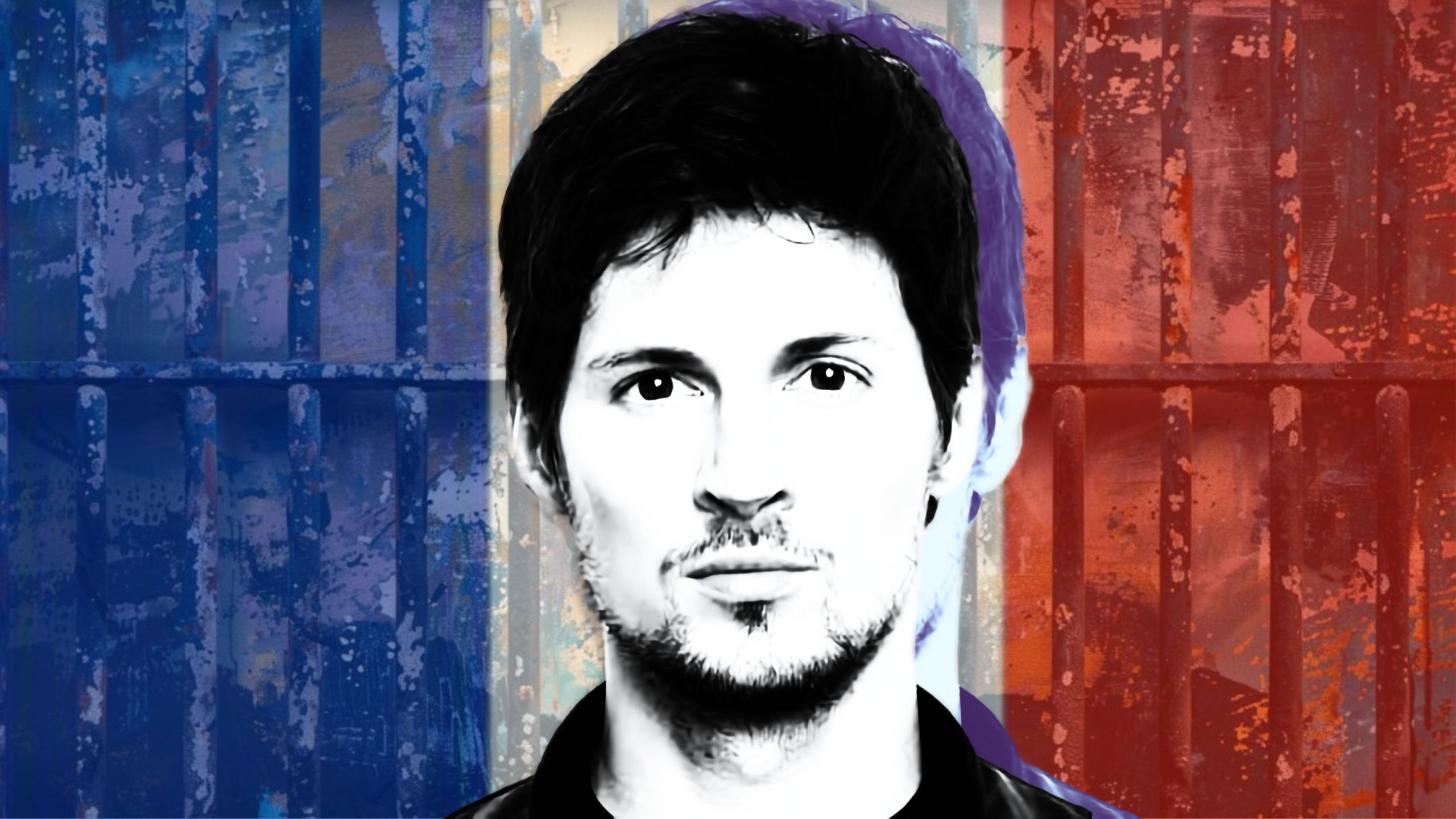
Picture this: A tech billionaire, who’s made his fortune building a platform that prioritizes privacy and free speech, is arrested at a Paris airport. Sounds like the plot of a dystopian thriller, right? Except it’s real life. Pavel Durov, the brain behind Telegram, found himself in handcuffs at Le Bourget airport over the weekend, marking another dark chapter in the ongoing war against free speech.
What’s Durov’s crime, you ask? Well, it depends on which bureaucrat you ask. According to the official indictment, he’s guilty of everything short of kicking puppies—fraud, drug trafficking, organized crime, encouraging terrorism, and, just for good measure, “cyberbullying.” The French authorities must have felt ambitious that day, throwing in the entire criminal code just to be sure. Let’s not forget that this whole circus started because Durov reportedly had the support free speech. Apparently, in 2024, that’s enough to get you a one-way ticket to a Parisian jail cell.
Durov’s detention has been extended by 96 hours. Because, you know, it takes a while to figure out which of these ludicrous charges will stick when the real crime was defending free speech.
French President Emmanuel Macron assures everyone that Durov’s arrest is nothing more than a purely “judicial,” non-political act. You know, the kind of legal housekeeping every free society must endure to keep its otherwise robust freedoms from accidentally going rogue. Because, clearly, when you find the head of a privacy-focused tech giant behind bars, it’s all about upholding legal standards, right?
But before we crown France this month’s champion of authoritarianism, let’s take a quick tour around the globe. In the European Union’s ever-benevolent grasp, a high-ranking official is threatening to drag US social media platforms through the censorship ringer. What’s the endgame? To ensure that the EU’s favorite brand of speech policing crosses the Atlantic. Forget about free expression—it’s all about toeing the line, or else.
Not to be outdone, Brazil’s Supreme Court is adding its own flair to the global crackdown with secretive censorship orders slapped on online platforms. The idea here is simple: If you can’t kill the message, just gag the messenger. No court hearings, no appeals—just pure, unfiltered control.
And then there’s the pièce de résistance: the British Prime Minister, who’s now arresting citizens for—wait for it—social media posts. That’s right. In the United Kingdom, all it takes is a tweet or a Facebook rant to earn yourself a pair of handcuffs. George Orwell must be rolling in his grave, muttering, “I told you so.”
So, here we are, watching as the pillars of free speech are bulldozed in broad daylight, with tech moguls like Durov tossed behind bars for daring to build platforms that don’t kowtow to government censorship. The arrest of a billionaire for refusing to censor, a Prime Minister having citizens arrested for social media posts, an EU official threatening American companies with censorship demands, and a Brazilian judge unleashing secretive orders—this isn’t just a bad month for free speech; it’s a full-on assault.
What’s the message being sent to every tech visionary, journalist, or outspoken citizen? Simple: If you don’t play by the new rules, the state will come for you. They’ve got the handcuffs, the secret orders, and, apparently, the global mandate to ensure that dissenting voices are silenced, one way or another.
This isn’t just about Durov or Telegram. This is about the battle lines being drawn between governments that want absolute control and a shrinking pool of platforms still willing to fight for freedom. These are dangerous times for free speech, and if we don’t pay attention, we might just wake up to find it gone for good.
Durov, who departed Russia in 2014 following disagreements with the Kremlin over internet freedoms, particularly related to his refusal to close opposition groups on the VK social network which he founded at the age of 22, has since dedicated his efforts to developing Telegram.
Yet, after escaping Russia and its oppressive censorship demands, it’s now Western governments that have been the ones to make censorship demands.
Created with his brother Nikolai in 2013, Telegram initially functioned similarly to other messaging services but has evolved into a more complex social network, facilitating large-scale communication through channels and groups.
Despite residing in Dubai, where he enjoys citizenship alongside France and the UAE, Durov champions the app as a bastion of neutrality and free speech in an increasingly monitored digital world.
In a statement on Telegram, the company said, “Telegram abides by EU laws,” mentioning the Digital Services Act in particular and adding that Pavel Durov “has nothing to hide.”
The sight of Russian officials donning the mantle of “free speech defenders” is like watching a fox petition for chicken rights. Yet, here we are. Moscow is outraged—not at the idea of censorship (they do enough of that themselves) but because they’re not the ones holding the keys to the cell. French authorities, evidently too busy trying to build a legal house of cards against Telegram’s founder have somehow managed to snub their Russian counterparts, who are now demanding consular access and throwing diplomatic shade from the Russian embassy in Paris.
Enter Vladislav Davankov, the deputy speaker of Russia’s State Duma, who’s managed to turn Durov’s arrest into a soapbox moment. Davankov’s allegation? That Durov’s detention is nothing more than a thinly veiled scheme by the West to hack into Telegram’s treasure trove of user data. According to him, this kind of violation of privacy “cannot be allowed.” That’s rich, coming from a regime that’s never met a dissident it didn’t want to silence or a data packet it didn’t want to intercept. But his allegations against the French government may actually be pretty close.
To understand why Moscow is crying foul over Durov’s arrest, one must rewind the clock to 2014, when a 29-year-old Durov found himself at odds with the Kremlin. Back then, the Russian government was trying to twist his arm to shut down opposition groups on VK, the social network Durov had built from the ground up. Instead of capitulating, Durov took a stand for internet freedom, packed his bags, and left Russia for good. Fast forward a decade, and Durov is now based in Dubai, where he enjoys triple citizenship and a lifestyle reportedly far removed from his Kremlin-tangled past.
The New York Times – 2014.
Durov’s masterpiece, Telegram, started as just another messaging app but has since morphed into a digital juggernaut. With 950 million monthly users, it’s a lifeline for news, a platform for both truth (and yes, like any other platform or legacy news outlet, misinformation) and, much to the chagrin of various governments, a symbol of digital resistance. In the chaotic storm of Russia’s invasion of Ukraine, Telegram has become a critical tool for both reporting on the conflict and narratives that governments find increasingly difficult to control.
The irony in all of this is that after fleeing Russia’s oppressive demands, it’s now the so-called free world coming after Durov. The man who said “no” to the Kremlin’s censorship now finds himself in the crosshairs of Western governments, who are just as eager to force his hand. While the West has long championed itself as a bastion of free speech, Durov’s recent experience suggests otherwise.
Telegram’s official statement makes this clear enough: “Telegram abides by EU laws,” it reads, with a polite nod to the much-vaunted Digital Services Act. But the real interesting part comes with the company’s assertion that Durov “has nothing to hide.” This could be true—or it could be the last defiant proclamation before the doors are kicked in by the data-hungry enforcers of digital orthodoxy.
For Durov, this ordeal must feel like a twisted rerun. The same man who once resisted Moscow’s censorship demands now finds himself dodging the West’s increasingly sharp regulatory spears. It’s a grim reminder that no matter which flag flies over the government building, those in power seem to share one common goal: control.
The arrest, coupled with the Kremlin’s performative outrage, lays bare the truth about the state of global free speech: it’s under attack from all sides. Whether it’s through overt censorship, as seen in Russia, or the subtler, but equally insidious, pressures from the West, the aim is the same: silence dissent, control the narrative, and pry open every digital lock that doesn’t fit the state’s key.
In the EU, the Digital Services Act has been rolled out with all the fanfare of a revolutionary triumph, marketed as a safeguard for user “safety.” The truth, however, is far more sinister. What the EU is really doing is tightening its grip on the digital world, muzzling dissent under the guise of combating “misinformation” and “hate speech.” The arrest of Durov in France is just the latest—and most brazen—example of this creeping authoritarianism dressed up in bureaucratic language.
The DSA is the EU’s shiny new tool for keeping social media and tech companies under its thumb. It mandates that platforms like Telegram must now answer to Big Brother, swiftly addressing so-called “disinformation” or risk facing severe penalties. The law is designed to force companies to do the dirty work of governments, effectively turning them into enforcers of state-approved narratives. It’s not about protecting users; it’s about controlling them. And in the world of modern governance, where the line between regulation and repression is blurrier than ever, Durov’s arrest is a warning shot.
Digital Speech Under Siege: Europe’s March Toward Censorship
Let’s not mince words: the EU’s relentless push to “enhance user safety” is a euphemism for ramping up censorship. By couching these regulations in the language of public good, the EU manages to dodge the inconvenient truth that its real goal is to control the flow of information. The Digital Services Act, hailed as a “significant overhaul” of the EU’s digital policy, is little more than a power grab disguised as a public service. And the timing of Durov’s arrest in France—an EU stronghold—couldn’t be more telling.
Durov, who’s spent years fighting back against censorship, now finds himself in the middle of a battle over the future of online speech. He’s built his reputation on refusing to bow to government demands, whether from the Kremlin or the West. But with his arrest in a supposedly free country, we see just how far the EU is willing to go to enforce its new digital regime. The DSA gives the EU unprecedented control over tech companies, demanding rapid responses to whatever it deems unfit for public consumption. For Telegram, this means beefing up content moderation or facing the wrath of Brussels—a stark choice between betraying its principles or suffering the consequences.
The Global Chill: Durov’s Arrest as a Warning to Tech CEOs
Durov’s arrest sends a clear and chilling message: no one is safe from the reach of the state. If a billionaire tech CEO can be nabbed at an airport and held on dubious charges for daring to defend free speech, what hope is there for anyone else? The EU’s new laws and the arrest of Durov mark a dangerous escalation in the global war on free expression. Other tech leaders who have championed privacy and resisted censorship must be watching with a mix of fear and trepidation, wondering if they’re next on the hit list.
The implications are profound. Durov’s stand against censorship has made him a symbol of resistance, but it’s also turned him into a target. The arrest coincides with an era where tensions over digital freedom are reaching a boiling point. Governments across the globe are tightening their noose on online platforms, and the EU’s DSA is the latest weapon in this fight. What we’re witnessing is the opening salvo in a broader campaign to control the digital public square, to ensure that only the “correct” information sees the light of day.
The Digital Guillotine: How the EU’s DSA is Reshaping the Internet
In the tradition of authoritarian overreach, the EU’s DSA represents more than just regulation—it’s the construction of a digital guillotine. The law doesn’t just keep tech companies in check; it keeps them in fear. With the power to fine, sanction, or even shut down platforms that don’t toe the line, the DSA is a blueprint for modern-day censorship, one that’s already beginning to claim its first high-profile victim in Durov.
Tech bosses are increasingly finding themselves in the crosshairs of powerful states eager to bend digital platforms to their will. Just ask X owner Elon Musk, who has escaped the wrath of both Brazil and the European Union this month. Musk’s crime was refusing to play ball with their censorship demands. Brazil, never one to shy away from the strong-arm approach, even threatened to lock up X employees if they didn’t secretly censor users. Musk and X CEO Linda Yaccarino’s response was to shut down operations in Brazil entirely—an audacious move, but one that highlights the growing tension between tech innovators and authoritarian government actions.
But the Durov saga takes this conflict to a new, terrifying level. While it’s not Brazil’s first rodeo—remember when they threw Facebook’s Diego Dzodan behind bars in 2016 for WhatsApp’s encryption?—Durov’s arrest marks a grim first: the CEO of a major messaging platform being jailed for refusing to censor. The message to tech leaders is crystal clear: stand up to government overreach, and you might just find yourself in a cell.
The Washington Post – 2016
A Chilling Effect on Innovation
Durov’s arrest is a dire warning to anyone who dares to innovate in the realm of communication.
The chilling effect this could have on innovation cannot be overstated. Imagine the next generation of tech entrepreneurs, who might now think twice before developing a revolutionary new app or encryption tool, fearing they’ll end up like Durov.
This crackdown could particularly cripple the burgeoning crypto industry, where privacy and decentralization are core tenets. If tech CEOs are too scared to push the boundaries of free communication, the progress in these fields could grind to a halt. The digital market would be poorer for it, as the space for free expression shrinks and the room for government surveillance expands.
Elon Musk, never one to shy away from controversy, wasted no time showing solidarity with Durov. His “#FreePavel” post accompanied a video clip of Durov praising X for fostering innovation and freedom of expression.
Musk’s tweet was a clear shot across the bow, aimed at governments who think they can bully tech leaders into submission. But he didn’t stop there. In a further swipe at the powers that be, Musk called out the hypocrisy surrounding Durov’s arrest by questioning why other tech leaders—looking at you, Mark Zuckerberg—haven’t faced similar legal heat.
Musk’s point is as sharp as it is damning. Zuckerberg, the poster child for compliance, has avoided the kind of scrutiny that’s now falling on Durov.
Musk pointed out the glaring double standard: while Durov is arrested for standing up to censorship, Zuckerberg seems to skate by, despite Instagram being plagued by a “massive child exploitation problem.” According to Musk, the difference is simple—Zuckerberg “already caved into censorship pressure,” and “backdoors” making him a darling of the same governments now going after Durov. In Musk’s eyes, it’s not about justice or protecting users; it’s about punishing those who refuse to kneel.
The Future of Free Speech: A Digital Cold War
Durov’s arrest, coupled with Musk’s pointed critique, highlights a deepening divide in the tech world. On one side, we have leaders like Durov and Musk, who are willing to fight for digital freedom, even if it means taking on the most powerful governments in the world. On the other hand, there are those who’ve chosen to play it safe, complying with censorship demands to avoid the kind of fate that’s now befallen Durov.
But the stakes in this digital Cold War are high. If governments succeed in making examples out of leaders like Durov, the era of free and open digital communication could be nearing its end. Innovators might retreat from building the next Telegram or X, knowing that doing so could land them in jail.
If you needed another sign that the battle for free speech is turning into a full-blown exodus, look no further than Rumble CEO Chris Pavlovski, who has just packed his bags and left Europe after a visit.
Pavlovski, a vocal critic of government censorship, could be staring down the barrel of the same threats that led to Durov’s detention. But unlike most tech CEOs who prefer quiet compliance to public defiance, Pavlovski is making it clear: he’s not going down without a fight.
Rumble, a platform built on the promise of free expression, has been under fire from France for some time. The French government has been relentless in its push to censor content on the platform, leading to ongoing litigation. But Durov’s arrest has pushed Pavlovski to escalate his stance. On X, he blasted France for crossing a red line, calling Durov’s arrest a blatant violation of fundamental human rights. “Rumble will not stand for this behavior,” he declared, vowing to use every legal weapon in his arsenal to defend free speech. His message is clear: the fight for digital freedom is global, and it’s far from over.
Pavlovski’s critique of the French government’s actions goes beyond mere rhetoric. By linking Durov’s arrest to a broader crackdown on free expression, he’s framing this as a global issue—one that tech companies can no longer afford to ignore. The implications of Durov’s arrest are chilling. It’s not just about one CEO being dragged off a plane; it’s about the growing power of governments to intrude into private communications on platforms that were once considered safe havens for free speech.
Pavlovski’s words resonate with a fundamental truth: the war on digital freedom is escalating, and it’s playing out in courtrooms and boardrooms across the world.
The question now is how many other tech leaders will join in taking a stand. Will they rally behind Durov, Musk, Pavlovski, or will they buckle under the pressure, opting for the safety of compliance over the risk of resistance? One thing is certain: as the war on free speech heats up, the choices made by today’s tech CEOs will determine the landscape for years to come. And for those who believe in the sanctity of free expression, there’s no room left for complacency in this fight.
If you're tired of censorship and dystopian threats against civil liberties, subscribe to Reclaim The Net.
The post Telegram Founder’s Arrest Signals Dangerous Times for Online Free Speech appeared first on Reclaim The Net.









 New Posts (Home)
 ChatBox
 Popular Posts
  Game Zone
 Top PodCasts