YubNub Social YubNub Social
    #music #tew #tuba #euphonium #militarymusic #armymusic #armyband #satire #tew2026 #jazz #quartet #history #warmup #bigband #armyblues
    Advanced Search
  • Login
  • Register

  • Night mode
  • © 2026 YubNub Social
    About • Directory • Contact Us • Developers • Privacy Policy • Terms of Use • shareasale • FB Webview Detected • Android • Apple iOS • Get Our App

    Select Language

  • English
Night mode toggle
Featured Content
Community
New Posts (Home) ChatBox Popular Posts Reels Game Zone Top PodCasts
Explore
Explore
© 2026 YubNub Social
  • English
About • Directory • Contact Us • Developers • Privacy Policy • Terms of Use • shareasale • FB Webview Detected • Android • Apple iOS • Get Our App
Advertisement
Stop Seeing These Ads

Discover posts

Posts

Users

Pages

Blog

Market

Events

Games

Forum

Survival Prepper
Survival Prepper  
4 d

How you can tell if you eat too much fast food
Favicon 
prepping.com

How you can tell if you eat too much fast food

#fastfood #funny #eating #comedy #greatlakescountry
Like
Comment
Share
Classic Rock Lovers
Classic Rock Lovers  
4 d

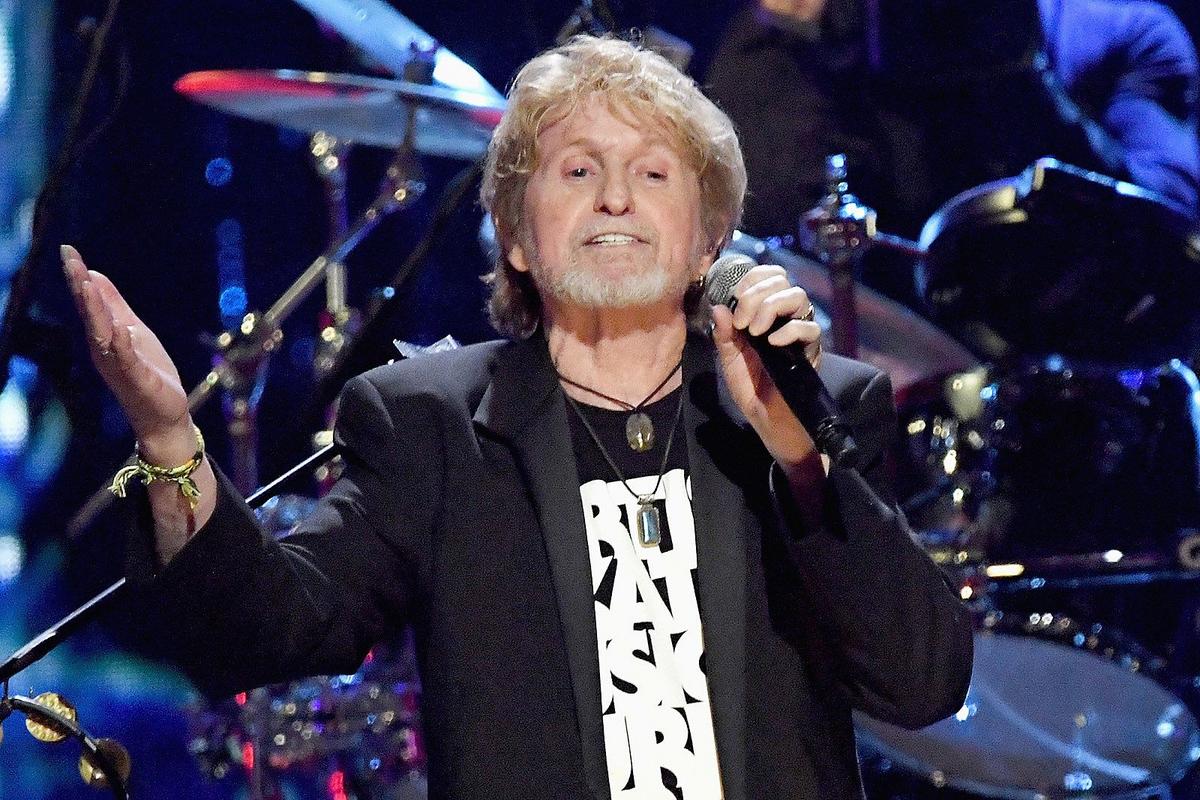
Jon Anderson Shares New 2026 Tour Dates
Favicon 
ultimateclassicrock.com

Jon Anderson Shares New 2026 Tour Dates

The former Yes frontman adds 16 additional concerts with the Band Geeks, including a second leg for the U.S. Continue reading…
Like
Comment
Share
Classic Rock Lovers
Classic Rock Lovers  
4 d

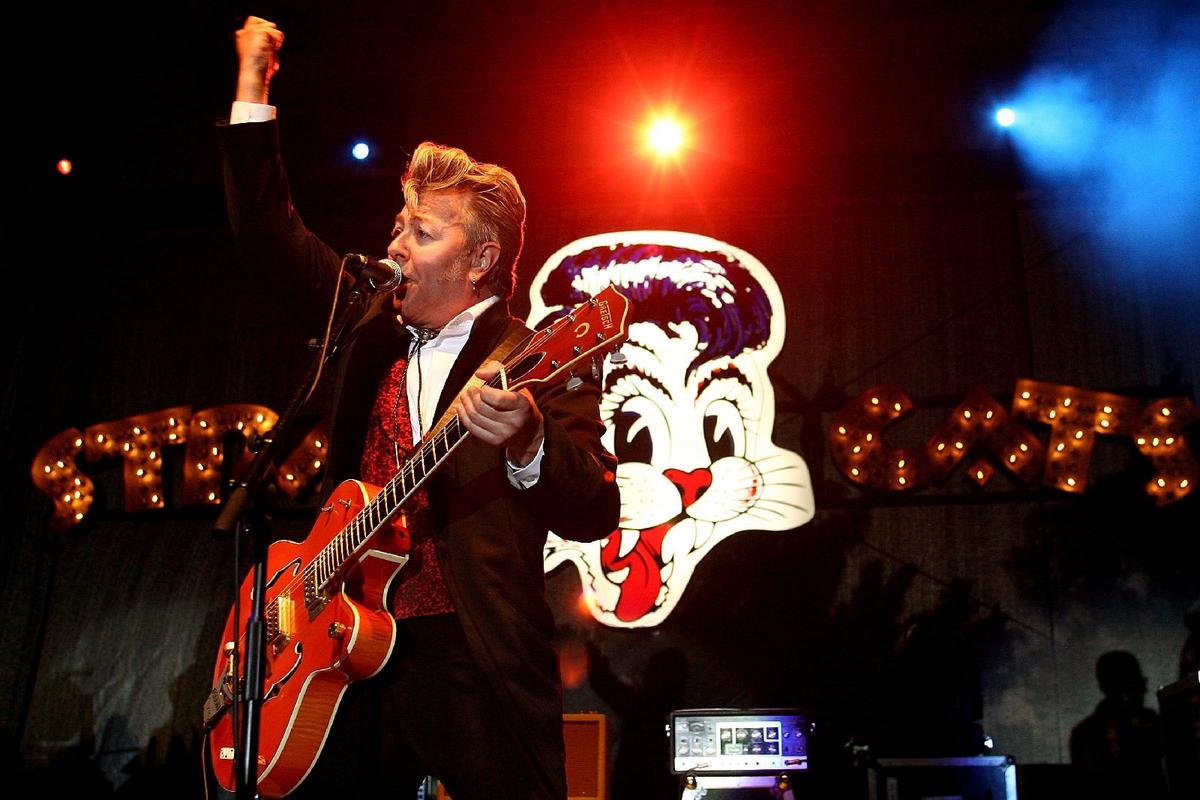
Stray Cats Announce 2026 Tour After Health Challenges
Favicon 
ultimateclassicrock.com

Stray Cats Announce 2026 Tour After Health Challenges

Summer shows launch in July. Continue reading…
Like
Comment
Share
Classic Rock Lovers
Classic Rock Lovers  
4 d

John Fogerty Adds Shared Steve Winwood Dates to Ongoing 2026 Tour
Favicon 
ultimateclassicrock.com

John Fogerty Adds Shared Steve Winwood Dates to Ongoing 2026 Tour

Major stops include Atlantic City, Boston, Chicago and Miami, among others. Continue reading…
Like
Comment
Share
Constitution Watch
Constitution Watch
4 d ·Youtube Politics

YouTube
FITTON: Judicial Watch Heads to the Supreme Court: Election Day Must Mean Election Day!
Like
Comment
Share
Constitution Watch
Constitution Watch
4 d

The dissent that believed the Olympics belong to everyone
Favicon 
www.scotusblog.com

The dissent that believed the Olympics belong to everyone

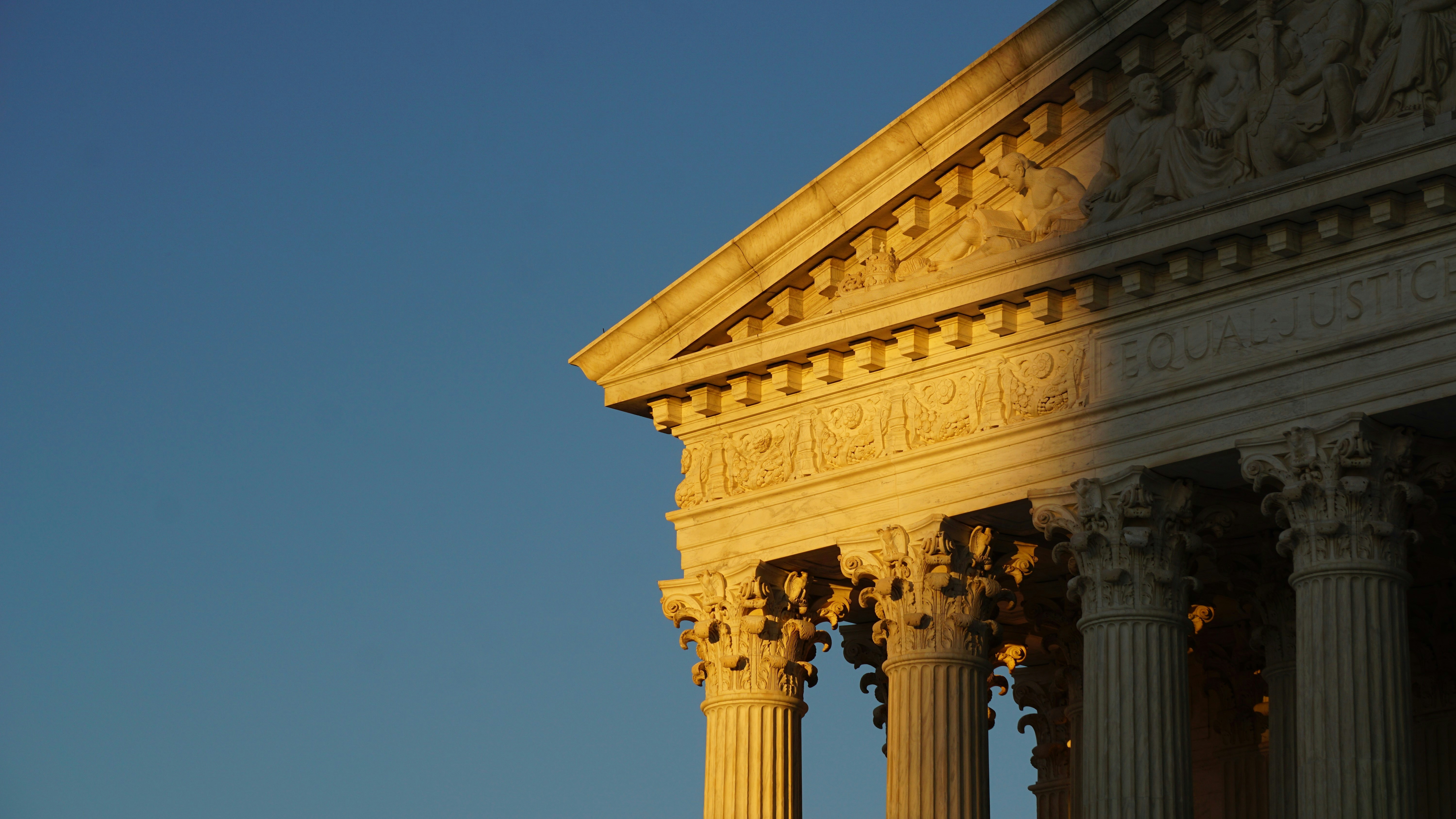
In Dissent is a recurring series by Anastasia Boden on Supreme Court dissents that have shaped (or reshaped) our country. The Olympics are one of those rare moments when the country comes together whatever its divisions and stays up late watching a skater joyfully complete a near perfect routine just years after quitting the sport completely – or cheers as a hockey player scores the winning goal in overtime moments after losing a few teeth to an opponent’s stick. The athletes’ personal stories somehow feel like our own. In 1981, former Olympian Thomas Waddell believed the word “Olympic” itself belonged to everyone. He wanted to organize a “Gay Olympic Games” – a nine-day, international athletic competition in San Francisco meant to challenge stereotypes about the gay community. He had heard that using the term “Olympic” required permission from the United States Olympic Committee, so he asked for it, but it declined. On the advice of the ACLU, he used the name anyway, and the USOC sued to stop him. The resulting Supreme Court case – San Francisco Arts & Athletics, Inc. v. United States Olympic Committee – highlights a tension that arises when Congress decides to get involved in something, but not too involved. The government had chartered the USOC, armed it with powers that no other private organization had ever held, and then watched from across the street as the USOC exercised those powers in broad and seemingly arbitrary ways. The USOC had sued to stop the term Gay Olympics, for example, but not the Crab Cooking Olympics, the Senior Olympics, the Special Olympics, or the dozens of “Olympic” restaurants, dry cleaners, and other establishments that line U.S. streets. When San Francisco Arts & Athletics, inc., the organizer of the Gay Olympic Games, argued that this selective enforcement violated the Constitution’s guarantee of equal treatment under the laws, the USOC said it was a private organization and the Constitution therefore did not apply to it. Most justices agreed that the USOC had the power to block SFAA from using the word “Olympic.” But even a few of those in the majority dissented when it came to power without accountability, and about the increasingly blurry line Congress sometimes draws between a creature of its own making and an arm of the state. I. Olympic dreams One night in the early 1980s, while flipping through television channels and landing on a gay bowling tournament, Dr. Thomas Waddell had an idea. Waddell had placed sixth in the decathlon at the 1968 Mexico City Olympics and had worked as a military paratrooper and physician. Watching the bowlers compete for glory, he wanted to challenge the prevailing stereotype of gay men. He wanted, as the Gay Olympics charter would eventually put it, to “bring people together for greater understanding and physical fitness and not for the purpose of establishing one group being better than any other.” Why not model it on the greatest athletic competition in the world? And why not use the word “Olympic”? There were, after all, all sorts of Olympic derivatives in the world – the Firemen’s Olympics, the Rat Olympics, the wrist-wrestling Olympics, even something called the Alcoholic Olympics. “The bottom line is that if I’m a rat, a crab, a copying machine or an Armenian, I can have my own Olympics,” Waddell later said. “If I’m gay, I can’t.” Waddell had heard that using the word Olympic required the blessing of the United States Olympic Committee, which was a relatively recent congressional creation. Congress had long left the organization of U.S. Olympic participation to a private body called the Amateur Athletic Union, but the AAU had managed things badly – excluding women from some events, allowing internal politics to hamper athletic performance, and failing to keep pace with the increasingly sophisticated national programs in other countries. In response, Congress passed the Amateur Sports Act of 1978, which dissolved the AAU’s authority, chartered the USOC as its replacement, gave it exclusive governance over participation by the United States in the Olympic Games, and granted it extraordinary control over Olympic words and symbols, including the exclusive right to use the word “Olympic” for commercial and promotional purposes. Waddell wrote to the USOC executive director explaining his vision, but the USOC refused to allow him to use the word “Olympic” to describe his planned event. So, Waddell initially agreed to change the name to the Gay Olympic Games. Then, after the ACLU advised him that he had a solid legal argument, he resumed using the original name. The USOC sued in August 1982, just weeks before the first games were to begin. A federal district court granted a temporary restraining order and then a preliminary injunction, forcing organizers to frantically remove the word “Olympic” from posters, T-shirts, tickets, and bumper stickers, ultimately renaming the event the “Gay Games.” Waddell was disappointed. He didn’t think “Gay Games” carried the same weight. Typically, one defense in trademark law is that the contested use is not confusing to consumers. So SFAA argued that nobody would think this was the actual Olympics. But the U.S. Court of Appeals for the 9th Circuit ruled in 1986 that no such defense was available under the Amateur Sports Act, and that Congress’ ban on the word’s use did not violate the First Amendment because SFAA had “satisfactory alternative means” to express itself. Over the objections of three jduges, the full court declined to rehear the case. The lead dissent was written by Judge Alex Kozinski, joined by two other judges. Kozinski wrote that the panel’s decision “threatens a potentially serious and widespread infringement of personal liberties.” Quoting Justice John Harlan II’s 1971 opinion in Cohen v. California – the famous “Fu*k the Draft” jacket case – Kozinski wrote that “we cannot indulge the facile assumption that one can forbid particular words without also running a substantial risk of suppressing ideas in the process.” And then, in his own words: “To say that the SFAA could have named its event ‘The Best and Most Accomplished Amateur Gay Athletes Competition’ no more answers the First Amendment concerns here than to suggest that Paul Robert Cohen could have worn a jacket saying ‘I Strongly Resent the Draft.’” There were also, Kozinski noted, serious equal protection concerns. “Handicapped, juniors, police, Explorers, even dogs are allowed to carry the Olympic torch,” he wrote, “but homosexuals are not.” SFAA appealed to the Supreme Court, represented by Mary C. Dunlap, an openly gay San Francisco attorney who had broken her thumb that same year playing goalkeeper in the soccer semi-finals of the second Gay Games. She flew to Washington for oral argument in what she said “no one [would] ever be able to prevent [her] from calling” the “Gay Olympics case.” II. Olympic arguments The case presented several issues: the scope of the USOC’s statutory rights (that is, whether Congress had authorized it to bar uses of the term “Olympic” or only those that cause consumer confusion); whether Congress’ grant of those rights violated the First Amendment (or whether as the district court said, SFAA had “no more First Amendment right to market the ‘Gay Olympics’ than they would Gay Coca-Cola”); whether the USOC was engaged in “state action” and therefore had to abide by the Constitution; and if so, whether its selective enforcement violated principles of equal protection. Oral argument opened with a pointed debate over a missing comma. The statute covered “the words ‘Olympic’, ‘Olympiad’, ‘Citius Altius Fortius’, or any combination or simulation thereof tending to cause confusion.” Justice Antonin Scalia pressed Dunlap. Without a comma after “thereof,” the natural grammatical reading was that “tending to cause confusion” modified only “combination or simulation thereof,” not the word “Olympic” standing alone. This meant that USOC could bar uses of the term whether they were confusing or not. Dunlap pushed back: in her view, the legislative history showed Congress had wanted to reach only confusing uses, and the absence of a comma shouldn’t be allowed to give the USOC a crown monopoly over an ancient word. Scalia remained skeptical – though Dunlap later described him as “playfully hostile” rather than outright hostile. Other justices pressed just how far USOC’s monopoly reached. The organization’s attorney was forced to concede to Justice John Paul Stevens that a cereal manufacturer would be barred from putting an athlete’s picture on the box stating it had helped him win three Olympic medals. The exchange prompted laughter when Justice Sandra Day O’Connor got the attorney to admit that “Breakfast of Olympic Champions,” was “clearly covered.” But for the most part, the justices were clearly with USOC. III. Olympic decision The court affirmed the 9th Circuit and ruled for the USOC on all counts. Justice Lewis Powell wrote the majority opinion. It was his final term, and he announced his retirement the same month the decision came down. The year before, Powell had authored Bowers v. Hardwick, holding that the Constitution offered no protection to gay intimacy. He later said Bowers was the opinion he most regretted. He never expressed any regret about this one. Powell was joined by Chief Justice William Rehnquist and Justices Byron White, Stevens, and Scalia in full. The opinion stated that the statute did cover all uses of the term, whether they tended to cause confusion or not, that this was not an unconstitutional burden on protected speech, and that the USOC was not engaging in any state action. Because it was a private organization rather than a state actor, it could engage in discriminatory enforcement free of the Constitution’s limits. Justices Harry Blackmun and O’Connor joined the parts related to the statutory interpretation and protected speech, but they dissented with regard to state action. Justices William Brennan and Thurgood Marshall dissented across the board. On the First Amendment, the majority applied the intermediate scrutiny test from the 1968 case of United States v. O’Brien for laws that incidentally burden expression while pursuing a permissible government purpose. Congress had a legitimate interest in encouraging the USOC to perpetuate a “quality product,” according to the court, and SFAA could convey its message without using the word “Olympic.” In fact, it had renamed its event “Gay Games I” and “Gay Games II” and successfully drew 1,300 participants from 12 countries in 1982 and 3,400 in 1986. On this point, Brennan and Marshall dissented alone, contending that the USOC’s monopoly on language was unconstitutionally overbroad. But on state action, they picked up two more dissenters in Blackmun and O’Connor. These four justices would have held that USOC was a state actor because it performed the distinctively governmental and important function of representing the nation to the world community: “Every aspect of the Olympic pageant, from the procession of athletes costumed in national uniform, to the raising of national flags and the playing of national anthems at the medal ceremony, to the official tally of medals won by each national team, reinforces the national significance of Olympic participation.” In the dissenters’ view, the public associated the USOC with the United States itself. “Private organizations sometimes participate in international conferences resplendent with billowing flags,” these dissenters continued, “[b]ut the Olympic Games are unique: at stake are significant national interests that stem not only from pageantry, but from politics.” And in fact, when the president had told the USOC to boycott the 1980 Moscow Olympics out of foreign policy concerns, it did. In sum, the dissenters wrote, the public viewed the USOC as linked to the state. The USOC sometimes made decisions based on U.S political interests. And it wielded extraordinary state-like power. The USOC sure looked like a state actor, and if it was, it had to abide by constitutional limits just like the government. This meant that its selective enforcement of the Olympic trademark and viewpoint discrimination was likely unconstitutional and illegal. The dissenters concluded by observing the irony of the case. USOC’s primary source of funding was its government-granted monopoly over the word “Olympic.” It would be an “‘irony amounting to grave injustice’ if, to finance the team that is to represent the virtues of our political system, the USOC were free to employ Government-created economic leverage to prohibit political speech.” O’Connor wrote a separate dissent joined by Blackmun. Rather than deeming the actions outright discriminatory, as Brennan and Marshall had, they would have sent the case back to the lower court for it to determine whether the USOC’s enforcement was unequal. The upshot was that the USOC won on every count. The word “Olympic” belonged to the USOC. IV. Aftermath Waddell had known for years by then that he had AIDS, and he died just weeks after the decision was released. “The Supreme Court’s terrible decision probably did not hasten Tom’s death,” Dunlap said. “It just made it all the more bitter.” The USOC had been awarded its attorneys’ fees and had placed a lien on Waddell’s house to collect them. A few weeks before he died, the USOC waived its legal fees and lifted the lien. The Gay Games continued without the word. Gay Games IV in New York City in 1994 drew more than 11,000 athletes and 500,000 spectators, setting a record at the time as the largest athletic competition in world history. Closing ceremonies were held at Yankee Stadium. This year, the Gay Games will be held in Spain. The arguments over state action at the heart of the Gay Games dispute reflect a recurring structural problem in U.S. law: what happens when Congress creates a private entity, invests it with governmental powers and privileges, even pressures it into politically laden decisions, and then that entity argues that its conduct falls outside constitutional constraints because it is technically “private”? Similar questions surround the National Collegiate Athletic Association and the Financial Industry Regulatory Authority, which have cozy relationships with the government – their rules must even sometimes be approved by the government – yet have been considered “private” and thus free from constitutional constraints. And the issue arose in different form this term, as the court considered whether private entities acting on behalf of the government can claim its immunities as well as its powers. So, just as the Gay Games will go on, so will the questions this case raised. The post The dissent that believed the Olympics belong to everyone appeared first on SCOTUSblog.

Like
Comment
Share
Constitution Watch
Constitution Watch
4 d

In birthright citizenship case, Justice Department urges court to treat an old concept in a new way
Favicon 
www.scotusblog.com

In birthright citizenship case, Justice Department urges court to treat an old concept in a new way

Immigration Matters is a recurring series by César Cuauhtémoc García Hernández that analyzes the court’s immigration docket, highlighting emerging legal questions about new policy and enforcement practices. President Donald Trump’s attempt to narrow access to birthright citizenship is less than one month from argument. The Justice Department is urging the justices to side with Trump’s interpretation of the 14th Amendment’s citizenship clause by incorporating into it the legal concept of domicile, which traditionally refers to the place where a person lives and intends to continue living, even though it doesn’t appear in the constitutional provision’s text. In doing so, the Justice Department also attempts to transform domicile from a broad principle to one that is remarkably more restrictive. *** The birthright citizenship executive order, which Trump issued last January, claims that the 14th Amendment grants citizenship at birth to children depending on the citizenship or immigration status of their parents. According to the order, children born in the United States are not U.S. citizens if, at the time of the child’s birth, their father was neither a U.S. citizen nor lawful permanent resident and their mother was living in the United States without the federal government’s authorization or with permission to live here temporarily. The justices are scheduled to hear arguments about the executive order’s legality on April 1 in Trump v. Barbara. The 14th Amendment citizenship clause provides citizenship to “[a]ll persons born or naturalized in the United States, and subject to the jurisdiction thereof.” The clause doesn’t use the term “domicile.” Despite that, the solicitor general, which represents the federal government in Supreme Court cases, argues that the clause nonetheless incorporates a stringent version of domicile that would grant citizenship to children only if, at the time of the child’s birth, their parents had legal permission to live in the country permanently and in fact did so. The court’s 1898 decision in United States v. Wong Kim Ark, its leading case about the citizenship clause, “mentioned domicile 22 times in its opinion,” the solicitor general’s brief explains. Those repeated references “would have been inexplicable if domicile were irrelevant to citizenship,” the solicitor general adds. Lawyers representing the two babies who are challenging Trump’s order don’t dispute that Wong Kim Ark mentions domicile, but they disagree about what the term means and its significance to the case’s outcome. To create a legally recognized domicile, a person must simply create a “residence with intent to indefinitely remain,” they argue. But more importantly, in their view, “Wong Kim Ark never suggested that parental domicile was necessary, just that it was more than sufficient in Mr. Wong’s case.” Since the citizenship clause doesn’t mention domicile, the solicitor general argues that it is implied in the constitutional text’s reference to residence. According to the 14th Amendment, everyone who satisfies the location and jurisdiction requirements are “citizens of the United States and of the States wherein they reside.” To close the gap between the word reside, which does appear in the constitutional text, and domicile, which doesn’t, the solicitor general explains “‘residence’ means ‘domicile,’” citing an 1878 decision Robertson v. Cease. Except that case isn’t about birthright citizenship at all. Instead, it concerns federal courts’ authority to decide certain civil lawsuits. Incorporating a concept from one area of law to another isn’t necessarily fatal, but it does stretch the decision’s relevance. (The solicitor general also doesn’t do itself any favors by illustrating sloppy lawyering: the government cites to page 659 of the Robertson decision, but the opinion ends on page 651 of that year’s official volume in which Supreme Court decisions were published. No lawyer wants to leave it to any judge to guess about what part of a case they’re referring to.) If the justices agree with the government that the citizenship clause requires domicile despite the term not appearing in the Constitution and the solicitor general’s obvious gaff, they will then have to decide what the term means. Though the solicitor general doesn’t provide a straightforward definition of domicile, it does identify two criteria: the location where a person has created their “permanent home and place of habitation” and done so lawfully. Children born to migrants who are in the United States temporarily “are domiciled elsewhere,” the government argues. Likewise, children born to unauthorized migrants are too because their parents “lack the legal capacity to form a domicile in the United States.” The problem with the government’s definition of domicile is that courts have long treated it much more broadly than the government claims. In the decision in which the Supreme Court defines domicile as a person’s “permanent home and place of habitation,” the 1983 case of Martinez v. Bynum, the court added in the very next sentence that “[i]t is the place to which, whenever he is absent, he has the intention of returning.” Martinez doesn’t mention anything about legal capacity, instead prioritizing the person’s own plans. Without the concern for the government’s permission, the Martinez decision’s version of domicile is broader than what the solicitor general favors. Beyond its broad description of domicile, Martinez offers the Trump administration little value because the majority opinion cautions against making much of its passing discussion to the law of domicile. “Contrary to the suggestion in the dissent, we have said nothing about domicile,” Justice Lewis Powell wrote on behalf of the majority. Rather, Powell and the majority of his colleagues seem to have thought Martinez was a case about a state’s power to limit attendance in its public schools to state residents. They explained the meaning of domicile only to contrast it with the “far more generous” residence requirement for tuition-free enrollment in public schools that they were grappling with. Ironically, Martinez involved a child, Roberto Morales, who was born in the Texas border city of McAllen to parents who were Mexican citizens living in in the Mexican border city of Reynosa, Tamaulipas. And none of the justices doubted his U.S. citizenship. Instead, the majority stated that “Morales was born in 1969 in McAllen, Texas, and is thus a United States citizen by birth,” the concurrence described him as “a United States citizen whose parents are non-resident aliens,” and the dissent didn’t comment on his citizenship. The solicitor general’s claim that domicile requires “legal capacity” also isn’t supported by the sources on which it relies. The first edition of an influential legal guide that the solicitor general quotes, the Restatement of Conflict of Laws, explains, that, to change domicile, a “legally capable” person “must establish a dwelling-place with the intention of making it his home.” The guide’s second edition, which the solicitor general also quotes, repeats these requirements, as does a third edition, currently in draft form, that the solicitor general does not mention. In addition, the examples in the Restatement suggest that legal capacity has nothing to do with immigration status. The first Restatement describes legal capability as a person’s “exercise of his own free will” and mentions a case in which a federal court concluded that a person who suffered from alcoholism was incapable of making certain choices. The guide’s second edition notes, as an example, that an eight-year-old child “may not acquire a domicil of choice since he lacks legal capacity to do so.” Unlike the Restatement’s first edition, the second edition lists multiple cases in which a court concluded that a person’s immigration status was irrelevant to their domicile. In one of the cases listed, Cabral v. State Board of Control, for example, a state court in California explained that “anyone having the legal capacity to contract may change his or her domicile,” including two people who entered the United States without the federal government’s permission. The most recent draft of the Restatement also casts doubt on the solicitor general’s interpretation of legal capacity to change domicile. In an explanatory comment, the third edition’s authors write that “non-U.S. citizens who do not possess immigration status, who did not receive authorization to enter the United States, or who lack current authorization to reside in the United States can obtain domicile in a U.S. state.” The solicitor general relies on another book, The Law of Domicil, written by the English lawyer Robert Phillimore, that also fails to support its constrained view of domicile. According to the solicitor general, Phillimore’s book, published in 1847, shows that in the 19th century “a person could not retain a domicile in a country from which he had been exiled or deported.” Phillimore makes no such claim. Instead, the page that the solicitor general cites describes the case of a person referenced only as “Mr. Bruce” who voluntarily left Scotland and moved to India to work for the East India Company. Bruce “was bound to reside in India, and could not reside elsewhere.” For that reason, his domicile was in India. But unlike Bruce, the migrants whose children stand to be affected by Trump’s executive order aren’t contractually required to live in any given place. Finally, the solicitor general discusses a series of cases about tuition at public schools that further fail to support the government’s position that the only people who can establish domicile are U.S. citizens and permanent residents. While both are important, accessing public education is different than accessing citizenship. The Supreme Court has explained that there is no constitutional right to public education. By contrast, citizenship is protected by the 14th Amendment and can’t “be jeopardized any moment Congress decides to do so,” as the court explained in a 1967 decision about involuntary loss of citizenship. Allowing Congress to decide who is eligible for citizenship under the 14th Amendment, as the solicitor general urges by asking the justices to consider immigration-law restrictions, would seem to jeopardize citizenship as much as allowing Congress to strip it from people. Even if the justices accepted the solicitor general’s invitation to permit Congress or state legislatures to impact access to citizenship, it would find that the court cases that the solicitor general cites don’t support the executive order’s sweeping claim that all temporary migrants are unable to establish domicile. In two decisions, both of which the solicitor general references, involving the same challenge to a 1973 University of Maryland policy concerning in-state tuition, the Supreme Court took the opposite position from the solicitor general. Federal immigration law permits some “nonimmigrant aliens to adopt the United States as their domicile,” the court explained in Elkins v. Moreno in 1978, using the formal term for migrants granted temporary authorization to enter the country. Four years later, when the same lawsuit returned to the court, the justices repeated this point, explaining that Congress allowed the migrants involved in the lawsuit “to enter the country on terms permitting the establishment of domicile in the United States.” In defense of Trump’s birthright citizenship executive order, the solicitor general has reimagined the 14th Amendment. The solicitor general is urging the justices to define and incorporate a familiar concept, domicile, in an unfamiliar way and into a constitutional provision that does not mention it. The post In birthright citizenship case, Justice Department urges court to treat an old concept in a new way appeared first on SCOTUSblog.

Like
Comment
Share
American Family Living
4 d

What To Do With Old Crayons
Favicon 
familyfocusblog.com

What To Do With Old Crayons

This Easter rabbit craft is the perfect activity to do with your children. If your house is like mine, there are random crayons in every nook and cranny and most of them are broken or half used. Here’s what to do with old crayons! Gather up all those old/mostly used crayons and get ready for […] The post What To Do With Old Crayons appeared first on Family Focus Blog.
Like
Comment
Share
Entertainment News
Entertainment News
4 d

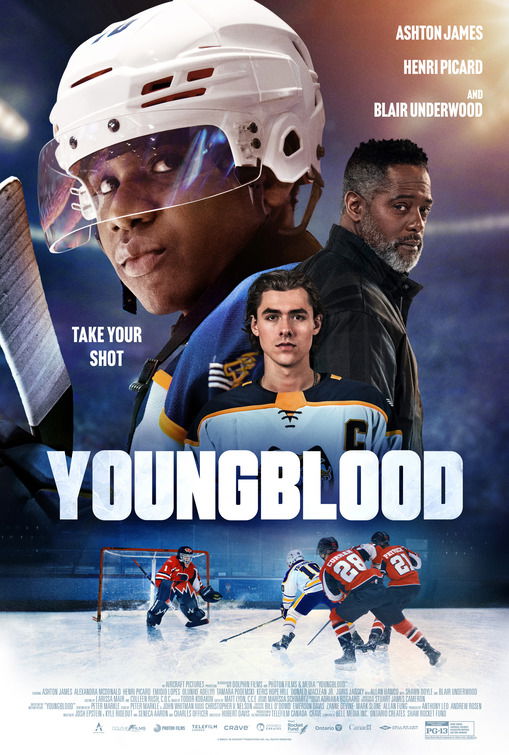
YOUNGBLOOD
Favicon 
www.movieguide.org

YOUNGBLOOD

YOUNGBLOOD is a riveting reimagining of a popular 1986 hockey movie, where the new movie has changed the title character
Like
Comment
Share
Entertainment News
Entertainment News
4 d

PROJECT HAIL MARY Reminds Us of ‘What We’re Capable Of,’ Says Star 
Favicon 
www.movieguide.org

PROJECT HAIL MARY Reminds Us of ‘What We’re Capable Of,’ Says Star 

Threat of global annihilation due to a sun-destroying microorganism might seem like a bleak theme for a movie, but at the heart of the...
Like
Comment
Share
Showing 649 out of 113755
  • 645
  • 646
  • 647
  • 648
  • 649
  • 650
  • 651
  • 652
  • 653
  • 654
  • 655
  • 656
  • 657
  • 658
  • 659
  • 660
  • 661
  • 662
  • 663
  • 664
Advertisement
Stop Seeing These Ads

Edit Offer

Add tier


Select an image
Delete your tier
Are you sure you want to delete this tier?

Reviews

In order to sell your content and posts, start by creating a few packages. Monetization

Pay By Wallet

Payment Alert

You are about to purchase the items, do you want to proceed?

Request a Refund