YubNub Social YubNub Social
    #music #tew #tuba #euphonium #militarymusic #tew2026 #armymusic #armyband #uk #jazz #quartet #history #warmup #bigband #armyblues
    Advanced Search
  • Login
  • Register

  • Night mode
  • © 2026 YubNub Social
    About • Directory • Contact Us • Developers • Privacy Policy • Terms of Use • shareasale • FB Webview Detected • Android • Apple iOS • Get Our App

    Select Language

  • English
Night mode toggle
Featured Content
Community
New Posts (Home) ChatBox Popular Posts Reels Game Zone Top PodCasts
Explore
Explore
© 2026 YubNub Social
  • English
About • Directory • Contact Us • Developers • Privacy Policy • Terms of Use • shareasale • FB Webview Detected • Android • Apple iOS • Get Our App
Advertisement
Stop Seeing These Ads

Discover posts

Posts

Users

Pages

Blog

Market

Events

Games

Forum

Survival Prepper
Survival Prepper  
5 d

We ARE PREPARING X2
Favicon 
prepping.com

We ARE PREPARING X2

Find The Equipment Here: https://www.refugemedical.com Get The Training: https://refugetraining.com/ Become An Affiliate: https://af.uppromote.com/refuge-medical/register Refuge Medical is a family owned and operated business. We design, and manufacture handmade, made in the USA, guaranteed for life first aid kits for military, law enforcement, EMS, firefighters, and civilians. We set out daily to continue to make the best individual first aid kits on the market while also continuously innovating alongside industry leaders to grow along with the needs of every American. In the last two years we've grown from being in a barn ONE hour a week, to an 8,000 square foot facility full-time. All of this is possible because of The Father’s provisions and loyal customers that support our small business.
Like
Comment
Share
Survival Prepper
Survival Prepper  
5 d

We’re Preparing For It
Favicon 
prepping.com

We’re Preparing For It

Find The Equipment Here: https://www.refugemedical.com Get The Training: https://refugetraining.com/ Become An Affiliate: https://af.uppromote.com/refuge-medical/register Refuge Medical is a family owned and operated business. We design, and manufacture handmade, made in the USA, guaranteed for life first aid kits for military, law enforcement, EMS, firefighters, and civilians. We set out daily to continue to make the best individual first aid kits on the market while also continuously innovating alongside industry leaders to grow along with the needs of every American. In the last two years we've grown from being in a barn ONE hour a week, to an 8,000 square foot facility full-time. All of this is possible because of The Father’s provisions and loyal customers that support our small business.
Like
Comment
Share
Survival Prepper
Survival Prepper  
5 d

Get Ready or Soon Regret It
Favicon 
prepping.com

Get Ready or Soon Regret It

Iran has threatened attacks within the US. Do you think it's possible?
Like
Comment
Share
Survival Prepper
Survival Prepper  
5 d

Favicon 
prepping.com

Like
Comment
Share
Survival Prepper
Survival Prepper  
5 d

Storm Prep
Favicon 
prepping.com

Storm Prep

Like
Comment
Share
Survival Prepper
Survival Prepper  
5 d

FBI Warns of Possible Iranian Attack on California
Favicon 
prepping.com

FBI Warns of Possible Iranian Attack on California

Join us for a free 7-day trial at: https://forwardobserver.com/trial/ Get The Area Intelligence Handbook here: https://amzn.to/40rSDqk
Like
Comment
Share
Science Explorer
Science Explorer
5 d

CHEOPS Discovery Defies Planetary Formation Rules
Favicon 
www.universetoday.com

CHEOPS Discovery Defies Planetary Formation Rules

We’re starting to see just how exceptional our own solar system and its history is, as more exoplanets are discovered. A fourth exoplanet discovery in the LHS 1903 system made by ESA’s CHEOPS mission places a rocky world right where it shouldn’t be. This ‘inside-out system’ could challenge our current understanding of planetary formation.
Like
Comment
Share
Classic Rock Lovers
Classic Rock Lovers  
5 d

Film From John Lennon's Last Concerts Set for Theatrical Release
Favicon 
ultimateclassicrock.com

Film From John Lennon's Last Concerts Set for Theatrical Release

'That Madison Square Garden gig was the best music I enjoyed playing since the Cavern or even Hamburg,' the former Beatles star said. Continue reading…
Like
Comment
Share
Constitution Watch
Constitution Watch
5 d

When presidents attack the Supreme Court
Favicon 
www.scotusblog.com

When presidents attack the Supreme Court

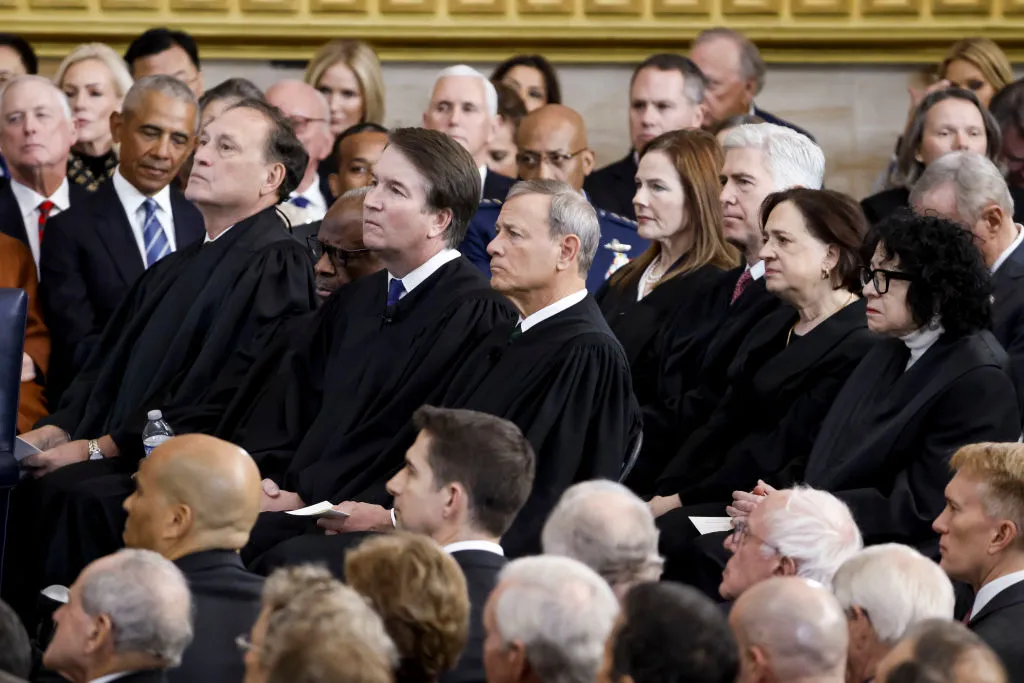
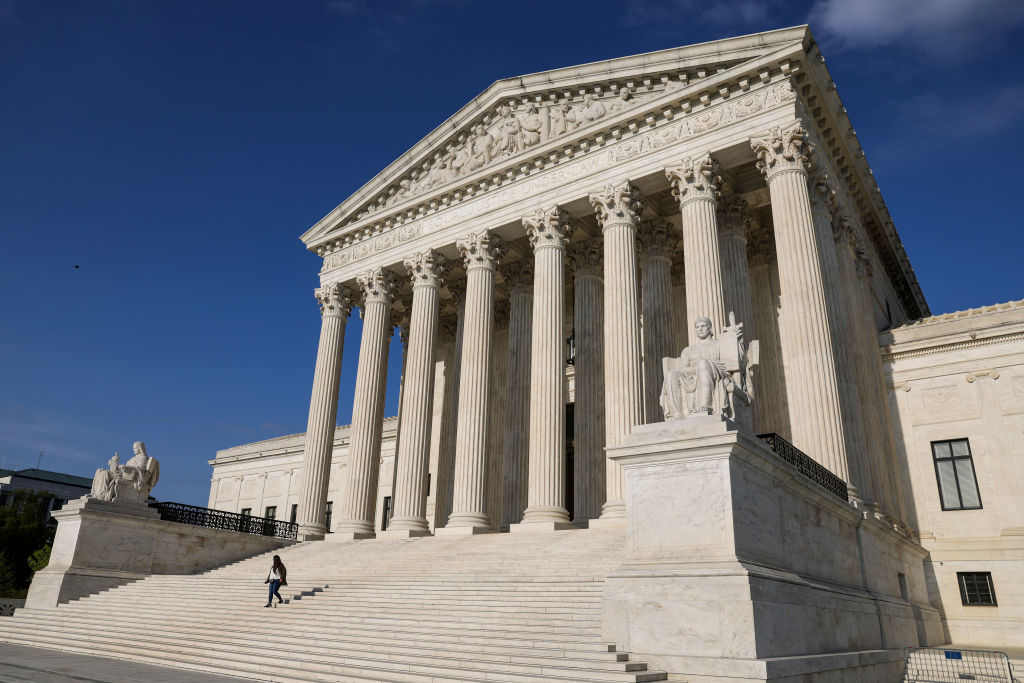
During a roundtable at the White House on Friday, March 6, President Donald Trump returned to what has become a familiar refrain in the weeks since the Supreme Court struck down his signature tariffs: He railed against the justices for interfering with his policy plans, accusing the court of harming the country. “I think the Supreme Court ought to be ashamed of itself for a lot of reasons, ok?,” the president said. “They have hurt this country so badly because they haven’t had the guts to do what’s right.” With Friday’s comments, Trump furthered his reputation as a president comfortable complaining about the Supreme Court. But to be clear, he is not the first president – and he almost certainly won’t be the last – to do so. Several others have questioned the court’s authority to resolve a particular policy debate or expressed frustration with its rulings – and even criticized the justices themselves. Here’s an overview of some of the most famous conflicts between presidents and the court. President Thomas Jefferson Presidential critiques of the court are not a modern phenomenon. Some early presidents lashed out at the justices, including President Thomas Jefferson, who repeatedly questioned the judicial branch’s authority and came into open conflict with Chief Justice John Marshall. (He also pushed for the removal of Justice Samuel Chase, who was impeached by the House in 1804 but then acquitted by the Senate.) Jefferson complained not just about the effect of the court’s rulings, but about how they were written, arguing that Marshall was a master of “twistifications” and could make it sound like he supported your position even as he undermined it, as he did in Marbury v. Madison, when the court sided with the Jefferson administration in a dispute over President John Adam’s final judicial appointments yet, in doing so, established judicial review. (To Jefferson, had the Constitution wished to provide such an awesome power to the judiciary it would have said so explicitly.) Perhaps even more pointedly, Jefferson once wrote that Marshall holds “rancorous hatred” toward “the government of his country” but “enshround[s] himself” with “cunning and sophistry.” In a letter written in 1820, more than a decade after he left the White House, Jefferson succinctly described his concerns with the judiciary, concerns that were likely solidified when the Marshall court limited states’ rights in 1819’s McCulloch v. Maryland, rejecting a vision of the balance between state and federal power that Jefferson’s had championed. While “[t]axes and short elections” keep the legislative branch in line, Jefferson wrote, judges and justices face no such limits. “The judiciary of the United States is the subtle corps of sappers and miners constantly working under ground to undermine the foundations of our confederated fabric,” he said. Jefferson shared a similar thought in an earlier letter, writing that, “[t]he constitution … is a mere thing of wax in the hands of the judiciary, which they may twist, and shape into any form they please.” President Andrew Jackson v. Chief Justice John Marshall President Andrew Jackson, like Jefferson, is known for his “constitutional clashes” with Marshall. One of the sources of tension between them was Worcester v. Georgia, an 1832 case in which the court held that Native American tribes are sovereign nations and barred states from certain regulations of them. Jackson opposed the ruling because he supported “expanding American territory into Native American lands” and did not want to antagonize the state of Georgia as other southern states threatened secession. He has been said to have issued something of a dare to Marshall after it was handed down: “John Marshall has made his decision. Now let him enforce it!” But Jackson likely didn’t actually say this famous line, according to the National Constitution Center. Instead, he described the ruling as “still born” in a letter to a friend and noted that the court “cannot coerce Georgia to yield to its mandate.” Still, the pithier quote captures Jackson’s initial response to the ruling. While the federal government did not openly defy the decision, it also did not proactively enforce it. It did not, for example, “threaten Georgia with federal forces” when the state passed a law “declaring that anyone who came to Georgia to enforce the Supreme Court ruling would be hanged,” according to The Atlantic. Later, Jackson helped defuse the conflict by convincing Georgia’s governor to free the missionaries whose arrest on tribal land had led to the Supreme Court case in the first place. President Abraham Lincoln questions the court’s power In March 1857, the Supreme Court released one of its most notorious rulings, holding in Dred Scott v. Sandford that Scott, an enslaved man who had spent time in free territory, was not free; that Black Americans, whether enslaved or free, were not citizens and could not sue in federal courts; and that the Missouri Compromise, which banned slavery in certain territories, was unconstitutional. Abraham Lincoln, who was not yet president when the ruling was released, condemned it during his debates with Stephen Douglas and later said that he would not enforce it while he was campaigning for the presidency in 1860. After winning the election, Lincoln briefly addressed his frustration with the Supreme Court during his inaugural address. While Supreme Court decisions are “entitled to very high respect and consideration” by the government, it is natural to be frustrated by the justices’ power, he said. “[T]he candid citizen must confess that if the policy of the Government upon vital questions affecting the whole people is to be irrevocably fixed by decisions of the Supreme Court, the instant they are made … the people will have ceased to be their own rulers, having to that extent practically resigned their Government into the hands of that eminent tribunal.” He added that this view is not an “assault upon the court or the judges,” and that it “is a duty from which they may not shrink to decide cases properly brought before them, and it is no fault of theirs if others seek to turn their decisions to political purposes.” Around three months later, tension between Lincoln and the court came to a head in Ex Parte Merryman, which Chief Justice Roger Taney addressed in his capacity as circuit justice for the federal circuit that included Maryland. Taney held that Lincoln did not have the authority to suspend the writ of habeas corpus during the Civil War, because this power was reserved to Congress by the Constitution. Lincoln publicly confronted Taney about the decision during an address to Congress on July 4, 1861, implying that Taney had put the country at risk. “Are all the laws but one to go unexecuted, and the Government itself go to pieces lest that one be violated? Even in such a case, would not the official oath be broken if the Government should be overthrown when it was believed that disregarding the single law would tend to preserve it?,” Lincoln said. Lincoln went on to receive approval from Congress in March 1863 to suspend the writ for the duration of the conflict when “the public safety may require it.” President Franklin Delano Roosevelt’s ‘no man’s land’ President Franklin Delano Roosevelt is better known for his efforts to change the court – by, for example, threatening to add justices – than his comments about it. But he publicly criticized the court on several occasions during his 12 years in office. For example, in May 1935, Roosevelt accused the court of relegating the country “to the horse-and-buggy definition of interstate commerce” after it cited the Constitution’s commerce clause to strike down poultry industry regulations. A year later, after another high-profile loss, the president told reporters that the justices were creating “a ‘no man’s land’ where neither states nor the federal government had the right to legislate.” Roosevelt summarized his frustration with the court during an address to Congress in 1937. “The Judicial branch also is asked by the people to do its part in making democracy successful,” he said. “We do not ask the Courts to call non-existent powers into being, but we have a right to expect that conceded powers or those legitimately implied shall be made effective instruments for the common good.” President Barack Obama’s bully pulpit President Barack Obama’s most memorable clash with the Supreme Court is more often discussed in terms of how one justice responded, rather than what Obama said. The scene was the State of the Union address in 2010, which took place about a week after a divided court struck down restrictions on political spending by corporations and unions in Citizens United v. Federal Election Commission. Obama referenced the decision near the end of his remarks, contending that it threatened American elections and calling on Congress to pass a bill to address its potential harms. “With all due deference to separation of powers, last week the Supreme Court reversed a century of law that I believe will open the floodgates for special interests – including foreign corporations – to spend without limit in our elections,” he said in part. While Obama spoke, the cameras panned to the six Supreme Court justices who attended the address and caught Justice Samuel Alito mouthing something while shaking his head, as SCOTUSblog reported at the time. Many observers concluded that Alito was saying, “Not true.” That moment is thought to be one of the only times – if not the only time – a justice has openly expressed frustration during a State of the Union address. Alito has not attended one since. Obama’s relationship with the Supreme Court returned to the spotlight in 2012, as the justices considered the constitutionality of the Affordable Care Act’s “individual mandate” provision. During an April 2, 2012, news conference, Obama reflected on the case, sharing why he believed the health care law would survive the legal challenge. “Ultimately, I am confident that the Supreme Court will not take what would be an unprecedented, extraordinary step of overturning a law that was passed by a strong majority of a democratically elected Congress,” he said. “And I’d just remind conservative commentators that, for years, what we have heard is, the biggest problem on the bench was judicial activism, or a lack of judicial restraint, that an unelected group of people would somehow overturn a duly constituted and passed law. … Well, this is a good example.” Obama faced pushback for the remarks from both conservative politicians and legal scholars, who argued that Obama’s comments were inaccurate and that presidents must avoid appearing to pressure the justices. President Donald Trump’s tariffs talk As these quotes from the past make clear, it’s not unusual for a president to criticize the court. But many commentators contend that Trump has done so in an unprecedented manner based on the nature of his complaints and the number of comments that he’s made. The rise of social media may help explain the latter development. During his first term and now during his second, Trump has regularly taken to sites like Twitter/X to air his grievances about the Supreme Court and individual justices. In the first week after the court released its tariffs decision, he posted on Truth Social about it at least five times, calling the ruling “deeply disappointing” and stating that justices in the majority “should be ashamed of themselves.” As those quotes make clear, Trump’s comments about the court are typically more personal than those of his predecessors, as Trump has not hesitated to criticize individual justices. For example, when Trump was asked during a Feb. 20 press conference about two of his appointees – Justices Neil Gorsuch and Amy Coney Barrett – voting to strike down his tariffs, he said that the decision is “an embarrassment to their families.” During the same press conference, he insulted Chief Justice John Roberts without naming him, saying, “It’s almost like [the decision was] not written by smart people.” Although the court has not responded to these comments – just as it has generally maintained its silence in the past – the justices have likely seen them. Barrett appeared to reference Trump’s press conference (as well as certain criticisms from the other side of the aisle) during a book event on Sunday, March 8. After being asked if she dreamed of being a justice when she was growing up, Barrett responded that she had recently been asked that by “[o]ne of the law clerks of another justice.” She jokingly explained that she had told the clerk, “Do you mean when I was a little girl did I dream that people would call me a religious zealot, an embarrassment?” The post When presidents attack the Supreme Court appeared first on SCOTUSblog.
Like
Comment
Share
Constitution Watch
Constitution Watch
5 d

An interview with Jerry Goldman, founder of the Oyez Project
Favicon 
www.scotusblog.com

An interview with Jerry Goldman, founder of the Oyez Project

Welcome to our SCOTUS Innovators series, a new recurring column on people who have shaped our understanding of the Supreme Court. A few weeks ago, I had the opportunity to chat with Jerry Goldman (a fellow Northwestern alum), founder of the Oyez project. For those unfamiliar with Oyez, this website was the first to digitize and share thousands of hours of Supreme Court oral arguments and opinion announcements, making it far easier for legal scholars and the public to engage with the court. In our discussion, Goldman talks about the evolution of Oyez, the process behind saving decaying audio of the court, and his take on the court (such as advocating term limits for justices). For SCOTUSblog readers interested in technology and the Supreme Court (two things that, not too long ago, used to mix like oil and water), Goldman’s story offers an interesting lens into the court and the role Oyez – and technology in general – has played in helping to shape our understanding of it. (Please note this interview has been edited for clarity and length.) First off, how do you pronounce the name of your site? If you’re talking about O-Y-E-Z, it’s the imperative of the French verb ouïr, which means “to hear.” So it’s pronounced “oh-yay,” although in some quarters it’s also “oh-yes” – the Old French version. In the Supreme Court, it’s pronounced “oh-yay,” so [when the marshal says it before the court goes into session] it means “hear ye, hear ye, hear ye.” Who owns Oyez? [Oyez’s] ownership is with the Legal Information Institute at Cornell, shared with Justia [and Chicago-Kent College of Law], which handles all the administration and upkeep. The project took me 25 years and I was happy with the result. Were you always interested in the court? Tell us about your background and how that came to be – I read a bit about your [inspiration from] baseball cards. When I was an undergraduate, I took an interest in political science and in the Supreme Court in particular. I had a mentor at that time who really encouraged and directed me. His name was Samuel Konefsky, and he was a constitutional historian. He was also blind, so I was his research assistant for a few years. I worked closely with him and admired him. Then I went to Hopkins and studied with Jay Woodford Howard, who was a Supreme Court scholar, and I focused on the court and the federal judiciary generally, then wound my way to Northwestern in 1975 and did that for 36 years, ending my run there in 2011. Did your work as a research assistant [to Konefsky] inspire any part of Oyez’s multimedia components, or was that separate? No. No one knew of the existence of Supreme Court audio back in 1967-68. It was there, but it was basically just stored at the National Archives. Eventually, a few researchers gained access but had to sign an agreement that they would never reproduce the materials and use them only for educational purposes. That ended in 1992 when political scientist Peter Irons published a set of audio cassette tapes of 23 hours of Supreme Court audio edited by him, and called it “May It Please the Court.” The court tried to stop him because he violated this agreement, and the consequence of this [was that] it became newsworthy, and Nina Totenberg would broadcast excerpts from the tapes – which is exactly what the Supreme Court didn’t want to happen. In stopping him, they gave him enormous attention and then withdrew their lawsuit. I think he sold 75,000 copies of those tapes. At that point, I had learned of the existence of these materials, and it bothered me that Irons would edit them – [for instance] he would edit a case involving Chief Justice Warren Burger, and in the argument, Irons would clip the audio and then say, “at this point, Chief Justice Burger tried to introduce a measure of humor into this very tense moment.” I’d like to hear Burger trying to engage in a little humor on the Supreme Court, so editing them is unfortunate. So that’s the start of what became the Oyez project. How did you manage to do this with the early internet? So the tapes were stored on big reel-to-reel, physical tapes at the National Archives, or two versions of these tapes. There were the original masters and then they had an entire set of reel-to-reel copies that they kept on the shelf. And if you as a citizen were in the archives at College Park, you could tape the reel-to-reel tapes and then put on headphones, mount them on a tape machine and listen to them. So I went there several times, experimented with this and hired an undergrad music student to be my copyist. I would give her DAT, a little recording device that records digitally to tape, not analog to digital, but in a tape medium, and I equipped her with this tape recorder and commissioned her to record these giant reel-to-reel tapes at my direction. She did a poor job, but it was a start. I then got enough grant money to figure out how to do it in a better way and ultimately [made] an agreement with the National Archives that I could make archival, high quality digital copies, as long as I provided a copy of the copies to the National Archives. I would create one, and I would commission two copies, one for my use, and one that went back to the National Archives. So I essentially, with my grant money, helped them digitize their decaying collection of reel-to-reel tapes. There are a lot of problems with these old tapes. They decay and sometimes the Supreme Court may not have kept their recording decks up to standard and may not have been serviced very well. So, there were variations (like the voices slowing down) that we tried to correct for. Then there was something called “sticky shed syndrome” – in the 1980s the manufacturers of reel-to-reel tapes changed the formula for the iron oxide used on the acetate that recorded the audio, and they didn’t recognize the long-term consequence of storing the tapes in this new formula and the tapes started to stick together. The only way to undo that is to bake the reel in a toaster oven. At a certain point, you take it out, mount it on the tape device, run it through and record what’s on there. At the end, the tape would be destroyed. It was like Mission Impossible. It became an issue in the Supreme Court because they, being frugal, they had a stack of blank reel-to-reel tapes and they didn’t know about this problem. So they continued to record on these poor-quality reels. When did the Supreme Court begin releasing audio of arguments? In November of 2000, the court heard two really important arguments after the 2000 election – Bush v. Palm Beach County [Canvassing] Board and then the follow-up that became Bush v. Gore. The press was all over the Supreme Court: we want video, we want the people to see – the outcome of the presidency hinges on these oral arguments. The court resisted and said no, we’re not doing that. At the time, William Rehnquist was chief justice, and I faxed [him]. My position was: the court releases these audio[s] at the end of the term; because of the importance of these cases, would the court consider releasing the audio to the standard news outlets at the end of the session? And the only time that Rehnquist ever replied to my correspondence was a fax to me saying that’s what they’d do. So it became policy for cases of great public importance. Then they changed the game because they started identifying who spoke in the transcript. In the Oyez project we had to identify [those voices] manually. I got really good at that and could tell from the first utterance. Roberts was very polite – “May I interrupt you? I really would like to ask a question.” Justice [Byron] White would begin by clearing his throat – he was still a smoker, and that was apparent. Each justice had particular tics, and we had a set of key commands. I could sit through an hour of oral argument in about five minutes. Do you know if the court has any impressions of Oyez? The clerks all know about this. They’ve gone to law school and they’ve used it, but this [acknowledgment] is only informally. I’ve never had any response to this project – I’ve had contacts with the court over the things that I requested them and in the earlier version of website, I also included virtual reality tours of the chambers of a few justices and also of the courtroom and the conference room. What was that experience like? I used an early version of digital camera to take 360-degree images of these locations and then stitch them together so that you could basically with your mouse pan the room and the chambers. I enjoyed doing that. It was a lot of work, but a lot of fun. And the court gave me permission to do that, so I was pleased about that. When I did John Roberts’ chambers, he made me come back to add some things into the VR that weren’t in the chambers to begin with, because he was very proud of these possessions, but they were in other parts of his suite of offices. And Justice Ruth Bader Ginsburg had a lot of tchotchkes in her office, and I focused on those. Getting to the court is an important experience, and I really want the public to have that access – it really shouldn’t just be limited to the handful of people who can gain access. I was lucky enough to befriend the marshal at the time, Pamela Talkin. She was helpful to me in my effort to build the Oyez project. Could you tell me about your new project, On the Docket, [which uses AI to produce “videos” of the justices during recorded opinion announcements]? When the court announces an opinion, that’s the important part. There’s some entertainment value in an oral argument, but the real money shot is in the justices rendering an opinion and then explaining it in their own words, paraphrasing their written opinion to the public. But the public that’s sitting there is only about 200 people – not 50 million. That was the brilliant inspiration for On the Docket. Our mission is not to deliver On the Docket primarily on a website, but through social media. The materials we’re producing now we share on YouTube, X, TikTok, maybe Instagram. And just in two weeks – mind-blowing – 100,000 views of two cases, just two cases. I don’t think Gen Z or Gen Alpha have the patience to listen to 23 minutes of Sonia Sotomayor, but if I give them a minute of different chunks of it, they will. Given On the Docket’s focus on opinion announcements, what are your thoughts on the Supreme Court providing video – or at least same-day audio – of those announcements? I actually asked the chief justice about this. One of my students, Benjamin Snyder, ended up clerking for John Roberts and arranged for me and my seminar to visit the court and meet with the chief justice. I put that question to him, and the takeaway was – because these opinion announcements are statements drawn up individually by the justices and not reviewed – the plan had always been to just let that justice have his or her say, and then wait until the end of the term and package it up with all the other audio. If revealed same day, perhaps there would be some grandstanding; I’m just reading into his thoughts, but I don’t know if that’s the case. In any event, I still think they should be public. My mission now – I estimate there are about 300 hours of these opinion announcements going back to the early 1990s and maybe even earlier – is that I might find the support to create videos of all of them and distribute them on social media. You’ve spoken about term limits for justices. Are you an advocate of them? I think it’s a good idea because before 1950 the average term a justice served was somewhere in the 20–22-year period on average, and today it’s over 35 years. When you are my age serving on the bench, as some justices do, you really lose touch with the vast majority of the public who are probably under 50 – and so many of them are gathering their information in ways that people in my age cohort can’t really understand, like YouTube and Instagram. It’s a different world we live in compared to you. Ending service after 25 years seems like a good idea. You’re still a justice, but you don’t serve [for life]. I think there are satisfactory ways to overcome what some think of as a constitutional impediment – service for life. Until I hear a better argument on the other side, that’s my position. I think it’s always political – you’re not going to remove politics – but it will moderate the politics, and that’s why I like the idea. Is there anything you think would be important for our readers to know that I haven’t asked already – about On the Docket, Oyez, or even your journey developing both? I faced enormous opposition from my colleagues at Northwestern when I decided this was my mission, and I stuck to my view that this was really important. It takes the courage of your convictions, and I was ready to fail with the Oyez project – and I succeeded, in my view, remarkably well. Many of my colleagues – all of them, in fact – spent their careers writing articles and books that frankly very few people are reading today. There are tens of millions of people who listen to these arguments and engage in debates and learn from them. As a consequence, I feel like I have surpassed many of my colleagues in the influence I’ve had on the public, so I’m pleased about that. But there’s always pressure in these environments, and there was a lot of pressure put on me. In the end I had the resources from the National Science Foundation, from private funders, to keep the Oyez project going, and it turned out to be a great success. So if you have an idea and you believe in it – hold fast and pursue it. The post An interview with Jerry Goldman, founder of the Oyez Project appeared first on SCOTUSblog.

Like
Comment
Share
Showing 653 out of 114242
  • 649
  • 650
  • 651
  • 652
  • 653
  • 654
  • 655
  • 656
  • 657
  • 658
  • 659
  • 660
  • 661
  • 662
  • 663
  • 664
  • 665
  • 666
  • 667
  • 668
Advertisement
Stop Seeing These Ads

Edit Offer

Add tier


Select an image
Delete your tier
Are you sure you want to delete this tier?

Reviews

In order to sell your content and posts, start by creating a few packages. Monetization

Pay By Wallet

Payment Alert

You are about to purchase the items, do you want to proceed?

Request a Refund