YubNub Social YubNub Social
    #jesuschrist #christmas #christ #merrychristmas #princeofpeace #achildisborn #noël #christmas2025
    Advanced Search
  • Login
  • Register

  • Night mode
  • © 2025 YubNub Social
    About • Directory • Contact Us • Developers • Privacy Policy • Terms of Use • shareasale • FB Webview Detected • Android • Apple iOS • Get Our App

    Select Language

  • English
Install our *FREE* WEB APP! (PWA)
Night mode toggle
Community
New Posts (Home) ChatBox Popular Posts Reels Game Zone Top PodCasts
Explore
Explore
© 2025 YubNub Social
  • English
About • Directory • Contact Us • Developers • Privacy Policy • Terms of Use • shareasale • FB Webview Detected • Android • Apple iOS • Get Our App
Advertisement
Stop Seeing These Ads

Discover posts

Posts

Users

Pages

Blog

Market

Events

Games

Forum

Daily Wire Feed
Daily Wire Feed
1 y

Cornell Profs Play Kamala Harris Victim Card: She’s The Target Of ‘Misogynoir’
Favicon 
www.dailywire.com

Cornell Profs Play Kamala Harris Victim Card: She’s The Target Of ‘Misogynoir’

Ivy League professors interested in popularizing a new term to protect Vice President Kamala Harris and portray her as a victim stated that she might be the target of “misogynoir.” “Cornell University recently placed a press release on its web page in which three professors provided insight into Harris’ candidacy,” Campus Reform reported. “There is no question that Harris’s candidacy will open up a torrent of misogynoir, a term coined by Moya Bailey and Trudy for the intersection of misogyny and racism (particularly anti-Black racism, although Harris is also of course South Asian),” associate professor of philosophy Kate Manne complained. “It’s our job to fight it in our circles and even ourselves. Opposing the misogynoir Harris is about to face loudly and vocally is the only way forward. The fate of our country hangs precariously in the balance.” WATCH THE TRAILER FOR ‘AM I RACIST?’ — A MATT WALSH COMEDY ON DEI “This has been a tough year for black women in leadership (e.g., Claudine Gay),” Samantha Sheppard, associate professor of performing and media arts, referring to the former Harvard University president, echoed. “It’s critical for black women with platforms to work together to rise above the misogynoir that Harris will face.” Gay resigned after numerous allegations of plagiarism had been made against her and her testimony before Congress about anti-Semitism on Harvard’s campus. Following Gay’s resignation, Rep. Elise Stefanik (R-NY) stated, “It was long overdue. She should have resigned immediately following the hearing.” “[S]he failed to stand up for Jewish students on campus who have been facing antisemitic attacks, who have been facing physical assault,” Stefanik continued. “We’ve seen that footage. We’ve heard that directly from students on campus. We’ve also heard faculty concerns about her tenure, and her position, and her lack of academic integrity. But it really goes back to protecting Jewish students. And, frankly, when it comes to Harvard, the only time that Harvard has pled for academic freedom or freedom of speech was when it comes to the genocide of the Jewish people. That is inherently unfit for a person to be president of a university.”
Like
Comment
Share
Daily Wire Feed
Daily Wire Feed
1 y

‘Master Teacher’: Walz Praised Hitler-Promoting Imam, Cited ‘Time We’ve Spent Together’
Favicon 
www.dailywire.com

‘Master Teacher’: Walz Praised Hitler-Promoting Imam, Cited ‘Time We’ve Spent Together’

In the face of a claim from Vice President Kamala Harris’ presidential campaign that her vice presidential pick Tim Walz had no “personal relationship” with a Muslim imam who promoted a pro-Hitler film, new footage has been unearthed showing Walz praising the imam to his face at a public event as a “master teacher … over the time we’ve spent together.” Walz was videotaped at an event hosted by Minnesota’s Muslim American Society on Feb. 16, 2018, as The Washington Examiner reported. “I would like to first of all say thank you to imam,” Walz said to imam Asad Zaman, the Executive Director at Muslim American Society of Minnesota. “I am a teacher, so when I see a master teacher, I know it. Over the time we’ve spent together, one of the things I’ve had the privilege of is seeing the things in life through the eye of a master teacher, to try and get the understanding.” “That brings me to the second lesson that imam taught me,” he continued. “I represent southern Minnesota in the United States Congress, and I’m not telling you anything new here, but Congress is a very broken place right now. It is a place that feeds on fear more than hope, it’s a place that feeds on division more than unity; it’s a place that feeds on trying someone to be the other than to be my brother. And I understood that; and I spent a lifetime making sure that all were welcome.” “It was a lesson when imam told me to go speak to people,” he said. ‘I have pushed back through my whole career on the demonization of Islam, on the demonization of immigrants. … In this space, Imam Zaman is right on this, there is Islamophobia, there is a hatred that is being stirred.” Walz has hosted Zaman at least five times, the Examiner noted. Those included May 2023 at Walz’s gubernatorial office; a May 2020 event; in April 2019, when the imam gave the invocation before Walz’s state address, and a May 2019 event that Walz hosted for Ramadan. On October 7, as Hamas brutally massacred over 1200 Israelis, Zaman said he “stands in solidarity with Palestinians against Israeli attacks.” “Zaman, meanwhile, has used his Facebook page over the years to share official Hamas press releases, blog posts on anti-Semitic websites slamming Jews, and, in one 2015 instance, a link to a piece on a website for a pro-Hitler film called The Greatest Story Never Told,” the Examiner pointed out.
Like
Comment
Share
The Lighter Side
The Lighter Side
1 y

Chihuahua Shows Off Hilariously Questionable Swimming Skills, “Still Working On His Form”
Favicon 
www.inspiremore.com

Chihuahua Shows Off Hilariously Questionable Swimming Skills, “Still Working On His Form”

Most of us can only dream of what it would be like to compete in the Olympics. Even those of us who are considered talented in sports aren’t quite up to par with athletes like Katie Ledecky. A social media trend has folks proving this is the case with some of the most hilarious athletic attempts… that end in failure. But humans aren’t the only ones showcasing their sports mishaps. Take, for example, this adorable swimming chihuahua named Potato. It seems that this adorable pup is aptly named. With a lack of athletic prowess, this little guy was meant to chill on the sidelines while others show off their skills. Still, Potato’s owner tries to make sure he’s active enough to stay healthy. But as you’ll see in the video below, maybe swimming isn’t his thing… at least for now! @canineantics Potato swims better without the life jacket #chihuahua #olympics ♬ Star Spangled (Bass Boosted) – SNC Meet Potato, the Swimming Chihuahua Who is Simply Trying His Best “Potato is still a working on his form,” his human mom shares in the caption. “We took our little chihuahua, Potato to the river yesterday. And unfortunately, he is no Potato Phelps. This attempt at swimming was an absolutely fail, but he did his best.” Who of us can say that we haven’t been Potato in at least one situation in our lives? Maybe that’s part of the reason this video has gone viral — each of us can relate to this hilariously sweet pup on some level. “Potato givin it the ol razzle dazzle,” someone in the comment sections shares, with another adding, “It’s the confidence for me…. Goes in to the water already paddling, immediately flops.” “Nah potato just tried out for the wrong sport,” a third person points out. “He’s perfect for synchronized swimming.” You can find the source of this story’s featured image here! The post Chihuahua Shows Off Hilariously Questionable Swimming Skills, “Still Working On His Form” appeared first on InspireMore.
Like
Comment
Share
The Lighter Side
The Lighter Side
1 y

Mom Challenges Baby-Wearing Fiancé To “Dance Battle” — Who’s The Winner?
Favicon 
www.inspiremore.com

Mom Challenges Baby-Wearing Fiancé To “Dance Battle” — Who’s The Winner?

What is life without some spontaneity? This is clearly the mindset that Sophia and Jeff Bullis have, and they showcase it all the time. How? By sharing wholesome moments online! This sweet couple has a baby together, so they make sure to include him when they can, like in the video below. In this particularly joyful video, Mom decides to challenge Dad to an impromptu dance battle. Part of what makes this moment so amazing, however, is the fact that he’s carrying their son! So, with the baby strapped onto his chest, Jeff watches as Sophia starts the battle with some impressive moves. The way he simply cannot get over her challenging him in that moment is so precious! Then, when it’s finally Dad’s turn to dance, he is able to prove that baby or not, he’s got unbeatable moves. Watch this wholesome dance battle in the video below! View this post on Instagram A post shared by Sophia & Jeff Bullis (@jeffandsophi) You might would think that the baby would negatively affect Jeff’s dancing, but it seems the opposite is true. Each move he manages to pull off only gets better because of the amused little one he has hanging on his chest. When Mom Challenges Dad and Baby to a Dance Battle, the Winner is Clear… So, while Sophia and Jeff both did a fantastic job, the general consensus is that baby and Dad win this one! Though, in the end, aren’t all three of them winners in this adorable dance-off? “The baby kicking his feet while daddy is dancing. So cute!” someone in the comment section points out, with another adding, “Waiting for the baby to join these battles soon.” “I love the way he’s holding [baby’s] head still!!” a third person shares. “Such a good daddy. You guys have so much fun!!” You can find the source of this story’s featured image here! The post Mom Challenges Baby-Wearing Fiancé To “Dance Battle” — Who’s The Winner? appeared first on InspireMore.
Like
Comment
Share
Daily Caller Feed
Daily Caller Feed
1 y

FACT CHECK: Does This Video Show A Recent Pro-Trump Rally In Tokyo?
Favicon 
checkyourfact.com

FACT CHECK: Does This Video Show A Recent Pro-Trump Rally In Tokyo?

The video is from January 2021, not 2024
Like
Comment
Share
Daily Caller Feed
Daily Caller Feed
1 y

REPORT: Ex-Girlfriend Shows Court Scars All Over Her Body After Actor Allegedly Stabbed Her 20 Times, Left Her For Dead
Favicon 
dailycaller.com

REPORT: Ex-Girlfriend Shows Court Scars All Over Her Body After Actor Allegedly Stabbed Her 20 Times, Left Her For Dead

Dealing with the permanent damage is really hard. I can't go back completely to how I was
Like
Comment
Share
The Lighter Side
The Lighter Side
1 y

Woman Gives Birth in Lobby of Welsh Cinema and the Daughter Now Has Free Movies for Life
Favicon 
www.goodnewsnetwork.org

Woman Gives Birth in Lobby of Welsh Cinema and the Daughter Now Has Free Movies for Life

Welsh news media described it as a “blockbuster” arrival at a local movie theater—no not Deadpool 2—a beautiful baby girl whose mom gave birth in the lobby. Sarah Vincent was 39 weeks-pregnant when she went to the Cinema World in her hometown, near the capital city of Cardiff, with her 3-year-old son Liam and her […] The post Woman Gives Birth in Lobby of Welsh Cinema and the Daughter Now Has Free Movies for Life appeared first on Good News Network.
Like
Comment
Share
SciFi and Fantasy
SciFi and Fantasy  
1 y

Unwanted Spectral Advances: “How Love Came to Professor Guildea” by Robert Hichens
Favicon 
reactormag.com

Unwanted Spectral Advances: “How Love Came to Professor Guildea” by Robert Hichens

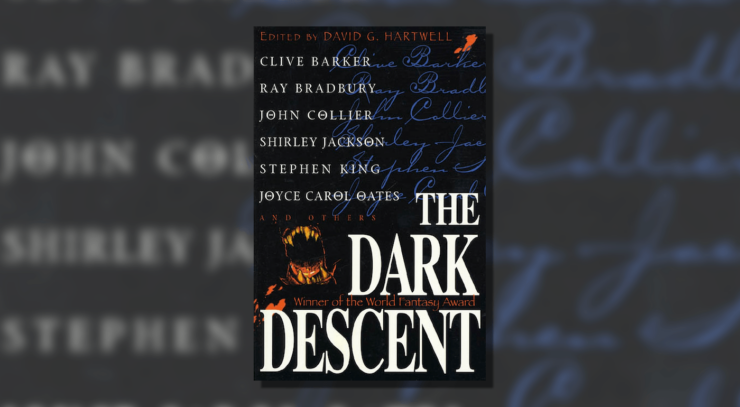
Books Unwanted Spectral Advances: “How Love Came to Professor Guildea” by Robert Hichens Toxic masculinity, extreme repression, and a supernatural presence demanding affection and intimacy drive this classic tale of psychological horror. By Sam Reader | Published on August 13, 2024 Comment 0 Share New Share Welcome back to Dissecting The Dark Descent, where we lovingly delve into the guts of David Hartwell’s seminal 1987 anthology story by story, and in the process, explore the underpinnings of a genre we all love. For an in-depth introduction, here’s the intro post. Robert Hichens was a queer journalist, satirist, playwright, and novelist who chronicled the 1890s and the early part of the twentieth century. While his career was prolific and saw him rubbing elbows with George Bernard Shaw and Oscar Wilde, Hichens was also a gifted writer of psychological and supernatural horror. “How Love Came to Professor Guildea,” from Hichens’ collection Tongues of Conscience, is his most enduring work, an unnerving mix of hysterical fiction and supernatural horror suffused with terrors so intimate they could be a precursor to authors like Clive Barker. This tale of intimate invasion and a lack of masculine intimacy seems ever more prescient with the passing of time, adding an unnerving subtext about consent and bodily autonomy to an already wrenching psychological horror story exploring the effects of the patriarchy from a masculine perspective.   Father Murchison, an Anglican priest working in London, makes the acquaintance of Professor Guildea, a prickly and stuffy rationalist whose life is completely devoid of faith. The two strike up an odd yet incredibly cordial friendship over the years, having nightly chats by the fire at the Professor’s house. When Guildea is followed home by a strange spirit that falls obsessively and unconditionally in love with him, Murchison is the first person he asks to help him with his new and unnerving situation. As the all-loving priest and the prickly, repressed professor delve more into the mystery of Guildea’s new lodger, it’s unclear exactly what the spirit is. All that is clear is that it loves Professor Guildea. Whether he wants it to or not. It’s obvious Guildea is being punished for his toxic masculinity. He’s a misanthrope who eschews all intimacy, has no use for women, and the reason he’s punished specifically by a guileless manifestation of pure affection (one that comes off, while animalistic, as somewhat feminine, given its indistinguishable voice and light caresses) is because he shuts off his full range of emotion. He’s a creature of self-loathing and rationality bolstered by the idea that he has no need for “softer” emotions. The ironic punishment, then, is to be pursued by a creature who is the spiritual embodiment of all the things he lacks—an irrational, unseen avatar of desire and affection, the polar opposite of his cold rationality. He has relationships—his parrot Napoleon, his butler Pitting, and of course Father Murchison are all examples of lasting relationships in his life—but he is obstinate in insisting that he’s alone and incapable of feeling anything for the people around him. In the end, his absolute revulsion toward intimacy and self-loathing is what allows the strange presence he encounters to bring about his death, as he finds the entire thing so unbearable that his heart gives out. Guildea even rids himself of Napoleon and Pitting (his constant companions) when they cannot protect him against the spirit and his final monologue is about how he must “be a man again” and face down his spectral intruder with utter hatred.  Father Murchison, by contrast, is every bit the rational skeptic Professor Guildea is, but in a much less toxic fashion. His lack of intimate relationships is driven by his vows of celibacy more than any self-deprivation or a desire to rob himself of softer things. He’s skeptical at first and chalks the Professor’s distress up to simple overwork and being wound too tight until his dear friend (Murchison is perhaps the one healthy relationship Guildea has in the story) proves to him without a doubt that the only rational explanation is in fact a haunting. Despite his rationality, he’s conscientious, gives people space, and offers advice to those who need it. Murchison is genuinely worried about others and tries to find love in his life wherever he can. He’s no less a man than Guildea, but leads a much healthier existence. Once he’s convinced of the supernatural intruder, he even remembers his own unnerving encounters with a spectral woman in white who tried to invade his personal space in the same way Professor Guildea’s intruder invades his. The difference is that Murchison has learned several harsh lessons along the way, and isn’t nearly as violently closed-off as Guildea gets. Murchison’s final play is even to plead with Guildea to learn to love his intruder, to allow himself to express love and kindness somehow. Hichens reproduces the general structure of hysterical fiction as seen in the previous few entries of this column (such as “The Yellow Wallpaper” and “A Rose for Emily”), but from a new and masculine perspective. Both Guildea and Murchison are seen as rational people, but Guildea is driven to hysteria by the supernatural presence that senses his aversion to intimacy and shoves itself into the absent space. He is attacked and punished specifically for lacking “softer” emotions, with the invisible creature determined to give him a surplus of the very thing he lacks. While his brain and body might be ravaged by the supernatural, they’re also confronted by the very real psychological idea that his inability to let go of his own toxic attitudes eventually kills him. The isolation is self-imposed, the spirit’s presence is a punishment for Guildea’s desire only for negative emotions and a “facts and logic”-based approach to his social affairs, and in the end, as with most hysterical fiction, the result is his brain self-destructing while the creature finishes off his body. From a modern context, it’s possibilities to see more similarities with hysterical fiction than the author, perhaps, intended. While Murchison certainly means well and understands more than the average gothic fiction protagonist, his approach puts Guildea at the mercy of something he very much doesn’t consent to. Guildea is molested, his boundaries invaded, and the spirit makes intimate contact with him. Murchison might be correct about the thing being an ironic punishment for Guildea’s intense rejection of intimacy, but the solution for rigidly blocking everyone out is not to let a ghostly lover feel you up. In fact, that’s exactly how someone dies in It Follows. The advice he offers at the end—to love the creature who’s tormenting Guildea—even sounds like something every trauma survivor dreads their friends and family saying: “give them what they want, and they will go away.” For all his healthier attitudes, Murchison still believes that being intimately harassed by a ghost is something that Guildea somehow deserves for blocking out all intimate connection and emotion. “How Love Came to Professor Guildea” uses the framework of hysterical fiction as a darker satire to devastating effect. In Guildea, Hichens illustrates the horrors of toxic masculinity and the tendency to cut oneself off from anything deemed “soft,” most of the time to one’s detriment, and even to the point of self-annihilation. In Father Murchison, Hichens depicts a non-toxic masculine figure, but one still bound by the patriarchal ties of hysterical fiction to the point of encouraging his friend to abandon his bodily and sexual autonomy. In both cases, the story offers an unnerving portrait of exactly how inadequate modern masculinity (in both toxic and non-toxic versions) is at addressing feelings of intimacy.   And now to turn it over to you. Does Murchison’s encouragement to let the spirit love Guildea read like he’s ignoring Guildea’s bodily autonomy? Did Hichens’ queer perspective and command of intimate horror act as a precursor to later, more visceral works? Please join us in two weeks for horror legend Richard Matheson and his first professionally published story, the disturbing “Born of Man and Woman.”[end-mark] The post Unwanted Spectral Advances: “How Love Came to Professor Guildea” by Robert Hichens appeared first on Reactor.

Like
Comment
Share
Daily Signal Feed
Daily Signal Feed
1 y

Modi’s Miracle: Indian Populism Wins Wide Support
Favicon 
www.dailysignal.com

Modi’s Miracle: Indian Populism Wins Wide Support

Editor’s note: This is a lightly edited transcript of the accompanying video from professor Peter St. Onge. As anti-elite populism rises worldwide, from the U.S. and Europe to Latin America, the socialists are fighting tooth and nail, using everything from cynical election coalitions in France to outright censorship and jailing dissenters in Britain. But there’s one big country where populism has now taken over: India. Since first taking office in 2014, Prime Minister Narendra Modi has managed to gain widespread support for populism: He regularly polls around 80%, gaining support from both working-class and middle-class Indians. And he’s won an unprecedented three terms in India’s rambunctious democracy. A recent Ipsos poll found 77% of Indians think the country is on the right track, compared to 35% of Americans, 30% in Canada, 21% of Brits, and 18% of the French. Modi’s success is down to three factors: First, an emphasis on nationalism as a unifier, as opposed to the Left’s tribalism. Those on the Left, naturally, frame nationalism as itself divisive, as they do in America, because they’re addicted to promoting civil war. Second, Modi has delivered relatively competent government and strong economic growth to the long-suffering voters of India. Outside of COVID-19, Modi has delivered 7% to 8% gross domestic product growth. The country is building coal and nuclear plants while America and Europe screw around with green handouts. And India’s cities are much safer than, say, blue cities in America and Europe. The third is a widespread feeling in India that the system’s broken under decades of the previous ruling party called Congress, so many Indians were open to a strong personality to push through radical change. This is actually true in the U.S. and Europe as well—the people are ready for change—but left-wing media diffuses that anger away from reform and into that tribalism. That’s divide-and-rule by the media-aligned elite. As for Modi, he just won a third five-year term—albeit with coalition partners—and he’s now promising to make India a developed country in 25 years by bringing back manufacturing and improving digital infrastructure. That may actually be possible. India is already the world’s largest exporter of information technology and business services at $193 billion last year. And it’s scooping up manufacturers fleeing China over rising costs and political risks ranging from Beijing’s police state to China’s trade friction with the West. As the Economic Times put it, for manufacturers, Modi replaced the red tape with the red carpet, inviting the kind of foreign investment that developed places like South Korea, Taiwan, and China itself. Still, there are a lot of challenges. India remains desperately poor, thanks to decades of socialism imported from postwar Britain. For example, a recent survey found just half of Indians can afford three meals a day. Modi remains in trench warfare with India’s deep corruption. A recent medical-test scandal brought it back to the headlines. And, y’know, the street vendors. Moreover, even if Modi’s bringing manufacturing back, a worldwide recession in America and Europe will slow or stop India’s growth in the near-term. So, what’s next? Modi’s populist success in India is an example for those of us who want more power for the people, as opposed to corporate and political elites. Emphasizing nationalism over race or class, delivering the goods in governance, and tapping into widespread dissatisfaction with corrupt elites, apparently, get the job done. We publish a variety of perspectives. Nothing written here is to be construed as representing the views of The Daily Signal. The post Modi’s Miracle: Indian Populism Wins Wide Support appeared first on The Daily Signal.
Like
Comment
Share
Daily Signal Feed
Daily Signal Feed
1 y

Judges, Not Bureaucrats, Interpret the Law
Favicon 
www.dailysignal.com

Judges, Not Bureaucrats, Interpret the Law

To hear Vice President Kamala Harris tell it, the Supreme Court’s decision this summer to curb the federal bureaucracy’s authority to interpret vague laws so as to favor giving itself more power threatens everything from clean water and air, accessible health care, and sound financial markets to safe products and worker safety. Well, don’t believe everything you hear. The court’s decision doesn’t spell doom for medicine, industry, or the environment, but it is important for a different reason; namely, the separation of powers and an important check on government power. In schools that still teach civics, kids learn that the three branches of government have different jobs: The legislative branch makes the law, the judicial branch interprets it, and the executive branch enforces it. That separation of power, America’s Founders said, protects our freedom by preventing too much power from ending up in too few hands. At least that’s the theory. The separation of powers works only if the branches actually stay in their own lanes. The Supreme Court’s June 28 decision in Loper Bright v. Raimondo was a big step toward making that happen. LOPER BRIGHT decision SCOTUSDownload More than ever, the rules and regulations that govern our lives come from bureaucrats in powerful executive branch agencies. Implementing Congress’ statutes is not as simple as delivering a package to a particular address. Sometimes laws are unclear, and figuring out what Congress meant by what it enacted may take some work. How can we make sure that agencies don’t cross the line from interpreting what Congress meant to changing statutes altogether? The Supreme Court blurred that line in a 1984 decision, Chevron v. National Resources Defense Council, by requiring that courts must accept “permissible” agency interpretations of statutory provisions that are “ambiguous” or “silent” about a particular issue. Needless to say, those interpretations are in the eye of the bureaucratic holder. The upshot of Chevron is that bureaucrats will often have almost free rein to define their own power and how to use it. Loper Bright, in which the Supreme Court overruled Chevron, is a good example of how this paradigm can go wrong. In 1976, Congress enacted a statute to manage the coastal fishery industry. The National Marine Fisheries Service implements this statute through regional fishery management councils. The statute allows the agency to require that “one or more observers be carried on board” domestic vessels for data collection and to require that two categories of such vessels bear the cost of those observers, which can top $700 per day. The agency, however, began requiring that fishing vessels outside those categories also pay for observers, and Atlantic herring fishermen sued. The lower courts, citing Chevron, upheld the regulation, but the Supreme Court disagreed. Chief Justice John Roberts, writing for the majority, explained that America’s Founders designed a system in the “interpretation of the laws” would be the “proper and peculiar province of the courts.”   Don’t get us wrong. One of us worked in the U.S. Senate for a long time and saw how the legislative sausage is made. Congress enacts statutes with vague or unclear language, without defining important terms or answering key policy questions. It’s almost as if Congress figures that unelected bureaucrats will finish the job of lawmaking for them. Chevron, in fact, practically invited them to do so. Article III of the Constitution, however, forecloses that option by assigning the “the judicial Power of the United States [to] one supreme Court, and in such inferior Courts as the Congress may from time to time ordain and establish.” Interpretation of statutes—that is, determining what a legislature meant by what it enacted—is a core element of judicial power. The point is that, as the Supreme Court put it in Marbury v. Madison, it is “emphatically the province and duty of the judicial department to say what the law is.” Chevron turned that design on its head. In his concurring opinion in Loper Bright, Justice Clarence Thomas explained that the deference required by Chevron “compromises [the] separation of powers” by both “curb[ing] the judicial power afforded to courts” and “expand[ing] agencies’ executive power beyond constitutional limits.” That obviously does not mean that courts should ignore the judgment or opinion of agencies. That input can be helpful, but it cannot take the place of courts doing what they alone have the authority to do. Nor does a statute’s subject matter make any difference: Agencies have no more lawmaking power when a statute concerns the environment than when it involves something much more pedestrian. So, while Harris’ complaints about Loper Bright are emphatic, they are completely unjustified.Agencies will still be able to enforce clear statutes that protect industry, health, and the environment. But Chevron deference went too far. It invited agencies to abuse judicial power when the law was unclear. That breached the separation of powers. Therefore, Chevron had to go. Thankfully, our system of government prioritizes individual liberty over collective government power. In Loper Bright, the Supreme Court took an important step toward getting those priorities back in order. The post Judges, Not Bureaucrats, Interpret the Law appeared first on The Daily Signal.
Like
Comment
Share
Showing 66104 out of 103999
  • 66100
  • 66101
  • 66102
  • 66103
  • 66104
  • 66105
  • 66106
  • 66107
  • 66108
  • 66109
  • 66110
  • 66111
  • 66112
  • 66113
  • 66114
  • 66115
  • 66116
  • 66117
  • 66118
  • 66119
Advertisement
Stop Seeing These Ads

Edit Offer

Add tier


Select an image
Delete your tier
Are you sure you want to delete this tier?

Reviews

In order to sell your content and posts, start by creating a few packages. Monetization

Pay By Wallet

Payment Alert

You are about to purchase the items, do you want to proceed?

Request a Refund