YubNub Social YubNub Social
    #astronomy #pandemic #death #vaccination #biology #astrophysics #mortality #cosmology #blackhole #keckobservatory #plasma #infection #excessdeaths #galaxy #statistics
    Advanced Search
  • Login
  • Register

  • Night mode
  • © 2026 YubNub Social
    About • Directory • Contact Us • Developers • Privacy Policy • Terms of Use • shareasale • FB Webview Detected • Android • Apple iOS • Get Our App

    Select Language

  • English
Install our *FREE* WEB APP! (PWA)
Night mode toggle
Community
New Posts (Home) ChatBox Popular Posts Reels Game Zone Top PodCasts
Explore
Explore
© 2026 YubNub Social
  • English
About • Directory • Contact Us • Developers • Privacy Policy • Terms of Use • shareasale • FB Webview Detected • Android • Apple iOS • Get Our App
Advertisement
Stop Seeing These Ads

Discover posts

Posts

Users

Pages

Blog

Market

Events

Games

Forum

History Traveler
History Traveler
1 y

Bim-Bom: How a Soviet Clown Duo Defied the Soviets
Favicon 
www.thecollector.com

Bim-Bom: How a Soviet Clown Duo Defied the Soviets

  Before cinema and television became the norm, the circus was a popular entertainment form worldwide. During the Russian Revolution and Stalin eras, art, circus comedy, and expression in Soviet public spaces walked a tightrope between conformity and dissent. A political joke told to the wrong person at the wrong time could land someone in the Gulag, the vast Soviet forced labor camp system. During the twentieth century, two Polish clowns, known by their stage name Bim-Bom, risked their lives to entertain a nation and satirize the Soviet state.   The Circus in Prerevolutionary Russia Early skomorokh (Pliasun i skomorokh) collected by D. A. Rovinskii, 1881. Source: New York Public Library Rare Book Division   In the 20th century, Russia became a synonym for circus. During the post-Stalin thaw, Soviet performers toured Europe and the United States. These global tours made the Moscow Circus famous outside the Soviet Union.   The roots of the circus in Russia and Ukraine are almost 1,000 years old. In the 11th century, wandering comedians, minstrels, and jesters called skomorokhi appeared as echoes of ancient, pagan Slavic folk culture. They performed songs, comedies, and conjuring tricks in villages and squares for weddings, feast days, and spring or winter solstice celebrations. Skomorokhi also appeared at open-air sporting events such as horse races and bear fights.   During the sixteenth century, the skomorokhi began to unite and travel in groups of 60 to 100 people. Skomorokhi wore bright clothing, caps with jingling caps, leather masks, or animal horns. They sang folk songs, told ribald jokes, engaged in political satire, and told comic stories in rhyme that attracted crowds to their shows and away from the church.   Jester at the Russian court, collected by D. A. Rovinskii, 1881. New York Public Library Rare Book Division   Like Bim-Bom’s act hundreds of years later, these jesters used buffoonery and political satire to expose the day’s big and small social problems. They poked fun at the weaknesses of the common people and the foibles of the merchants, boyars, clergy, and other influential people.   The wandering minstrels’ irreverent popularity turned the elite against them. Banning popular art was nothing new. Since medieval Rus’, the tsars and the Orthodox Church censored folk culture that involved tricks, jokes, puppets, and song-and-dance acts regarded as “demonic” or a threat to the state.   Some tsars did not appreciate the skomorokhi lifestyle or habit of poking fun at the rich and powerful. In 1648, Tsar Alexis I, the second Romanov ruler, waged war against the skomorokhi, banned their profession, and burned their balalaikas. Accused of witchcraft and sinister intentions, artists suffered corporal punishments, hard labor, or exile. Many skomorokhi, storytellers, balalaika artists, and gusli players escaped to Ukraine. There, itinerate folk bards called kobzars rose during the Cossack Hetmanate in the seventeenth century.   The circus experienced a resurgence under Peter I. Peter the Great loved the circus and brought it back into circulation. Circus performers appeared in court again. Show booths sprang up at village fairs, town squares, and other public celebrations. While the skomorokhi disappeared, their comedic legacy survived in popular memory, lingered in folk sayings, and evolved into modern circus acts.   From Streets to Stages Theater of Wandering Artists in Moscow, by Boris Vasilyevich Smirnov, 1904. Source: Library of Congress   Over the next two hundred years, street entertainment with a knack for popular songs, storytelling, tumbling acts, and satirizing authority evolved into a new entertainment form for the aristocracy.   In the early nineteenth century, stationary, indoor circuses began to appear. Even Tsar Nicholas I helped design circus sets. After the abolition of serfdom, the circus began to thrive with new input from peasant artists. In 1877, during the reign of Tsar Liberator Alexander II, an Italian horseman named Gaetano Ciniselli, a legend throughout Europe for his bold performances, opened an opulent circus in St. Petersburg. Housed in an ornate building on the Fontanka Embankment, the Ciniselli Circus featured a lavish royal box, a grand stage, and programs printed on silk in French and Russian. The building held 1,500 seats, and shows sold out a year in advance.   Ciniselli Circus equestrian act by E. Martinik, 1877. Source: Library of Congress   In 1880, Albert Salamonsky opened the first Moscow circus in a stone building on Tsvetnoy Boulevard. It became the first circus that performed children’s shows, New Year’s tree displays, and Christmas plays. Since they typically functioned without stage directors, the popularity of these circuses depended on their artists’ high level of creative art. Until 1919, no state circuses, only private circuses, existed. By the 1890s, over 50 circuses and circus show-booths operated across the Russian Empire.   The Bim-Bom Act Is Born Ciniselli Circus in St. Petersburg by Vasily Aleksandrovich Kenel, 1877. Source: Library of Congress   The Bim-Bom circus act started with Ivan Semyonovich Radunsky. Born in Poland in 1872, Radunsky found his way into popular entertainment after his stepfather kicked him out at age 16. He found his way to Odesa in Ukraine and began performing in the streets. Later, he played pots and bottles on a stage in the garden at the Odesa Brewery (Stites, 1992, p. 19).   In 1891, Radunsky moved to St. Petersburg, where he joined a Russian-Italian musician named Vitaly Lazarenko Cortesi (Miller, 1999, p. 190). They took the stage name Bim-Bom. Together, they created a new clown duo act. Radunsky penned witty lyrics, and Cortesi wrote the music. They wore white clown makeup and knee-length costumes made from silk with puffy sleeves and lace collars. Cortesi also wore a black nose and a red wig. Their act took off after Bim-Bom performed at the popular Ciniselli Circus (Leach and Borovsky, 1999, p. 127).   In 1897, Cortesi died in a drowning accident while swimming in a river while on tour in Astrakhan. After Cortesi’s death, Radunsky struggled to keep the act going. First, he tried to act with his wife, then with Cortesi’s wife. But none of these stand-ins rivaled the satirical hilarity he managed with his first performing partner.   Three years later, Radunsky found a new partner named Mieszyslaw Antonovich Stanievsky.   Like Radunsky, Stanievsky started his circus career in the last decade of the nineteenth century. Born in Poland, Stanievsky worked as a carpet clown in provincial circuses. A carpet clown appeared between the main act while workers switched the set and carpets. They performed various tricks and acrobatics and delivered verbal routines. Stanievsky capitalized on these skills when he joined forces with Radunsky in 1900.   A Dynamic Duo Ivan Radunsky (left) and Felix Cortesi. Source: Dzen.ru   The new Bim-Bom partnership became the stars of the Ciniselli Circus. Their act began with a song-and-dance routine trotted out by Bim. Bom followed with hard-hitting lines. Bim assumed a naïve and eager persona. In contrast, Bom delivered witty and scathing ripostes as a slightly drunk man about town. While Radunsky often wore a clown costume, Stanievsky disdained a clown aesthetic. Instead, he sported a giant chrysanthemum on his tuxedo.   According to some sources, Radunsky joined the Bolshevik Party before the Russian Revolution. He also aligned himself with the Futurist movement. Futurism thrived in Russia between 1910 and 1917. It rejected sentimental and bourgeois art forms in favor of art that reflected the working class. The Futurist movement focused on the relentless pace and dynamism of machines, industry, and active urban hustle. The Futurists broke away from static art forms to promote a dynamic and modern vision of the future.   Ivan Radunsky (Bim) and Mieszyslaw Stanievsky (Bom). Source: Dzen.ru   During the Russo-Japanese War, the duo dropped their slapstick and acrobatic routines to focus on musical comedy and topical satire. While government censorship often banned their reprises, satirical jabs at military incompetence and government repression still slipped through:   Bim: “Do you know, Bom, there aren’t enough machine guns in the Far East?” Bom: “I know.” Bim: “And how do you explain this?” Bom: “Why give them to strangers? They can be useful against our own.”   Radunsky and Stanievsky performed this act until the government banned it. Then, they went off on a grand tour around the empire.   Inside the Ciniselli Circus by S. Chamotte and A. Zubchaninov, 1878. Source: Library of Congress   Despite censorship bans, Bim-Bom’s career flourished. After Salamonsky died, his circus crumbled. In 1914, the circus performers elected Radunsky as the director of the Salamonsky Circus. Radunsky had no previous managerial experience, but under his leadership, the circus flourished again.   During the First World War, he organized the Russian Society of Variety and Circus Artists (ROAVTSA). Together, Radunsky and Stanievsky also took part in patriotic performances during World War I (Hubertus, 1998, p. 94).   Meanwhile, Bom ran a bustling artistic café named BOM on Tverskoy Boulevard. From 1916 to 1919, the café brimmed with Social Revolutionaries, Bolsheviks, Mensheviks, and artists such as the Chekist Yakov Blumkin, internationalist Yuliy Martov, the author Ilya Ehrenberg, and the clown Vladimir Durov. The café closed during the Russian Civil War (Evdokimova et al. 2021, p. 24).   Ciniselli circus program, 1877. Source: Library of Congress; Moscow State Circus poster, 1960. Source: Harry Ransom Center, the University of Texas at Austin   Thanks to the invention of the gramophone, Bim-Bom had the chance to immortalize their lines with a record company. Konona Records produced their first record, Tangled Kinship. Sirena-Grand-Record released Bim-Bom’s next album, Scena Komiczna. Zonophone Record released Hunting Adventure, a comic dialogue in 1910. These record companies released vast quantities of Bim-Bom records and shipped them nationwide before government censors could stop them. Across the country, fans snapped up Bim-Bom records and played them in defiance of the ban.   Bim-Bom became a famous cultural icon, appearing in several early films and receiving a notable mention in the 1956 Soviet movie Carnival Night.   Nationalization of the Circus Crowd outside Moscow workers’ soviet by Underwood and Underwood, 1918. Source: The National Archives, US   After the October Revolution, the Soviet government nationalized the circus in 1919. They also launched mass theater-circus displays as a new propaganda platform. Bolshevik festivals became all the rage among soldiers, sailors, and workers in urban areas (Rolf, 2013, p. 99).   From ballet and theater to circus performances, performing arts in early Soviet Russia had a dual purpose. They functioned both as a popular art form and a platform for propaganda. Vladimir Lenin believed that the circus had real potential as a tool for mass propaganda. In response, Soviet artists such as Vladimir Mayakovsky composed political lines and propaganda circus plays ridiculing relics of the recent past, such as religion, tsarism, capitalism, and various perceived enemies.   The Soviet circus fell under a specialized agency, first known as the Circus Central Management and later as SoyuzGosTsirk (the Union of State Circuses). Their first symbolic act was to demolish the old, aristocratic Salamonsky circus building and build a new modern circus on the spot. The Soviets renamed the Salamonsky and Nikitin circuses the First and Second State Circuses (Neirick, 2012, p. 33).   Russian circus by Grigorii Gustavovich Likman, 1945. Source: Library of Congress   The government decreed state-sponsored productions, and Anatoly Lunacharsky, a Bolshevik critic, playwright, and commissar for the Ministry of Education, carried out the reforms.   The former Salamonsky Circus became a famous space to prime audiences for propaganda. Despite their political goals, the Soviet Committee for the Arts did not have a clear goal for the medium of circus art. Instead, they dabbled in an art form they did not fully grasp. Now, the propagandists ran the show. Konstantin Stanislavsky launched an experimental, politically correct circus spectacle called Political Carrousel. It was a spectacular flop. After this sensational failure, the Bolsheviks turned the circus over to a professional manager.   While the new director, William Truzzi, put the circus back on track, so many artists had fled that the circus’ quality remained low. Too few artists remained to run multiple permanent circuses. While the Soviets kept pushing artists to use the circus as a propaganda vehicle, things did not always go according to plan.   The Hottest Act in Moscow Bolshevik soldiers march in Red Square by Underwood and Underwood, 1917-1918. Source: National Archives US   Disillusioned with the Soviets, Radunsky and Stanievsky pitted their wits against the new power. Their popularity soared. In 1918, the Bolsheviks still found themselves on shaky political ground. They influenced but did not yet fully control circus repertoires.   Bim and Bom spiced up their routine by decorating and playing unusual musical instruments such as brooms, saws, pans, flowerpots, music stands, business cards, and bottles. They remembered their lines using a cheat sheet with the verses written on the back of each instrument and even on the wide cuffs of their sleeves (Leach, 1994, p. 5).   During one performance, Bim stepped onto the stage between two framed pictures of Lenin and Trotsky. Glancing at the leaders of the October Revolution, Bom asked Bim what he planned to do with them.   Radunsky didn’t mince words:   “I’ll hang one and put the other against the wall.”   This innocent remark had darker connotations that amounted to “black laughter” or hangman’s humor. In December 1917, the Bolsheviks established the headquarters of the Cheka, or Soviet secret police, at Number 11 Bolshaya Lubyanka Street in Moscow. The Cheka began its first executions in the building’s basement just two months later. Later, the Cheka set up local stations throughout the country to conduct mass terror. Bim-Bom’s remark reflected Bolshevik propaganda that vowed to put their enemies “against the wall” to execute them (Seldes, 1995, p. 198-200).   Bim and Bom perform their circus act. Source: Dzen.ru.   Having a reputation as the hottest act in Moscow came with its risks. Unfortunately, the Cheka did not share their sense of humor. They soon saw Bim-Bom’s counterrevolutionary laughter as a threat (Terbish, 2022, p. 30).   On March 27, 1918, Bim-Bom gave their most memorable performance. As usual, the two clowns ignited the arena with flashes of satire.   Bim: “In French – le savon,” Bom: “And in Russian – soap.” “The French – sorry,” “But the Russians – in the snout.” “In French, it’s a promenade,” “But in ours, it’s a jail cell.” “The French have liberté,” “And we have the whip.” “In French, an amateur –” “But in ours – an amateur.” “The French have a quartermaster –” “And we have a robber.”   Sitting in the audience, Cheka agents and members of the Bolshevik Latvian Riflemen did not find it funny. Right in the middle of the performance, the secret police pulled out their revolvers and rushed the stage to arrest the clowns on the spot. The audience laughed, thinking it was part of the act. When Radunsky spotted the Cheka’s Browning revolvers, he bolted backstage. The secret police shot after him and missed, hitting several people in the audience (Figes, 1997, 631). Panic erupted inside the circus. In the chaos, Stanievsky hid in the circus stables.   Miraculously, they escaped.   The next day, the Cheka hauled the pair in for questioning. Radunsky and Stanievsky still wore their circus costumes. With Soviet power only established for a few months and an anti-Bolshevik Army rising south of Moscow, the Bolsheviks preferred to avoid a popular protest. They let the clowns go with a warning (Kotkin, 2015, p. 287). Censored Satire Festivities in Honor of the Second Comintern Congress by Boris Kustodiev, 1921. Source: The State Russian Museum   After an attempted Soviet land grab and Polish resistance, the Russo-Polish War ended with an uneasy ceasefire in 1920. That year, Stanievsky returned to his homeland to run a circus with his brother. Radunsky joined him in 1925, and they performed in Poland for several years. They also recorded a new album with Sirena-Records.   In 1925, Radunsky returned to the USSR and resurrected the comedic duet with a new partner,   Nikolai Iosifovich Vilâtzak. Their partnership lasted until 1936. Stanievsky died in Poland in 1927. When Radunsky and Vilâtzak toured Siberia in 1928, they visited newspaper editors’ offices to familiarize themselves with local news and keep their finger on the pulse of the people. They knew that today’s concerns would immediately impact their audience.   Art & Control in the Soviet Union Joseph Stalin, 1937. Source: National Portrait Gallery, Washington DC   Political jokes made people laugh at serious situations. Humor became a way to take a public jab at new social issues that replaced the old ones. Comedy also helped people survive or resist difficult circumstances.   Socialist idealism evolved into Socialist Realism as the wild days of the October Revolution shifted to tighter control. Artists who failed to toe the party line risked suppression and arrest. With the death of Vladimir Lenin, the struggle for succession, and Joseph Stalin’s rise to power, the focus shifted from spreading world communism to establishing communist domination at home. From film and theater to the circus, art aimed to promote the virtues of Soviet life (Miller, 1999, p. 194-195).   Designed by Joseph Stalin to consolidate control over the Communist Party, eliminate rivals, and suppress dissent, the Great Purge and the waves of political terror that preceded it had an impact on what people said—or didn’t say. People who spoke out against the government risked a severe sentence under the infamous Article 58 of the Soviet penal code.   Bim-Bom’s subtle criticisms and ambiguous anti-humor walked the line between subversion and therapeutic relief. They remained popular with the people because they targeted the Bolsheviks with their wit and kept the anger of the day always present in their repertoire (Von Geldern, 1993, p. 114).   Art Belongs to the People A clown performs for Soviet troops by the Museum of Circus Art, 1943. Source: Petersburg Theater Journal   Lenin declared that “Art belongs to the people.” Bim-Bom brought it to them.   Over the years, Bim-Bom performed their cutting political satire. They dodged being used as propaganda machines and put their spin on current topics that mattered to their audiences in a clever and public form of artistic resistance.   The crowd roared with approval whenever the orchestra started playing to announce Bim-Bom’s appearance. It was hard to gain status as a public favorite, but once Bim-Bom won the public’s love, they remained eternal favorites, giving them a semi-protected status during uncertain times. One winter, they gave a charity benefit performance with inflated prices, but the circus sold out, and bouquets and expensive gifts covered the stage.   Surviving Stalin Bolshevik by Boris Kustodiev, 1920. Source: The Hoover Institution   Under Stalin, restrictions on artists tightened. In the 1930s, at the height of the Great Purge, Bim-Bom erased political satire from their act. Instead, they stuck to musical routines.   During World War II, circus performers toured the Eastern Front to boost Soviet soldiers’ morale. In 1939, on the eve of Adolf Hitler’s invasion of Poland, Radunsky received the title “Honored Artist of the RSFSR.” In the postwar years, from 1946 to 1948, Radunsky performed alone.   In 1953, Stalin died. The following year, Radunsky published his circus memoirs, Notes of an Old Clown. Radunsky, the original half of the Bim-Bom duo, lived several years into the Khrushchev era. For almost 60 years and several regime changes, Radunsky outwitted and entertained a Soviet generation with public truths that others only dared whisper.   References   Evdokimova, Irina, Slav N. Gratchev, and Margarita Marinova, eds. (2021). Russian Modernism  in the Memories of the Survivors: The Duvakin Interviews, 1967-1974. University of Toronto Press. Figes, Orlando. (1997). A People’s Tragedy: The Russian Revolution, 1891-1924. Penguin Books. Geldern, James von. (1993). Bolshevik Festivals, 1917-1920. University of California Press. Jahn, Hubertus. (1998). Patriotic Culture in Russia During World War I. Cornell University Press. Kotin, Stephen. (2015). Stalin: Paradoxes of Power, 1878-1928. Penguin Books. Vol. I. Leach, Robert. (1994). Revolutionary Theater. Routledge. Leach, Robert, Victor Borovsky, eds. (1999). A History of Russian Theater. Cambridge University Press. Miller, Tyrus (1999). Late Modernism: Politics, Fiction, and the Arts Between the World Wars. University of California Press. Neirick, Miriam (2012). When Pigs Could Fly and Bears Could Dance: A History of the Soviet  Circus. University of Wisconsin Press. Seldes, George. (1995). Witness to a Century. Ballantine Books. Stites, Richard (1992). Russian Popular Culture: Entertainment and Society since 1900.  Cambridge University Press. Terbish, Baasanjav. (2022). State Ideology, Science, and Pseudoscience in Russia: Between  the Cosmos and the Earth. Lexington Books. Ulam, Adam B. (1998). The Bolsheviks: The Intellectual and Political History of the Triumph of  Communism in Russia. Harvard University Press.

Like
Comment
Share
Conservative Voices
Conservative Voices
1 y ·Youtube Politics

YouTube
BEWARE of Woke Teachers
Like
Comment
Share
One America News Network Feed
1 y

Telegram CEO Pavel Durov Arrested In Paris
Favicon 
www.oann.com

Telegram CEO Pavel Durov Arrested In Paris

Telegram CEO Pavel Durov has been arrested at the Paris airport in relation to a preliminary police investigation.
Like
Comment
Share
NEWSMAX Feed
NEWSMAX Feed
1 y ·Youtube News & Oppinion

YouTube
Lidia Curanaj: The theme of the DNC was hate Trump | Sunday Agenda
Like
Comment
Share
Daily Wire Feed
Daily Wire Feed
1 y

JD Vance Sticks It to Kristen Welker When She Tries To Defend Kamala On Border Crisis
Favicon 
www.dailywire.com

JD Vance Sticks It to Kristen Welker When She Tries To Defend Kamala On Border Crisis

Senator JD Vance (R-OH) fired right back when “Meet the Press” anchor Kristen Welker attempted to defend Vice President Kamala Harris on her role in tackling the illegal immigration crisis at the U.S.-Mexico border. Vance joined Welker for Sunday morning’s broadcast, and in a wide-ranging interview addressed the fact that millions of illegal aliens had flooded across the border since Harris — dubbed the “border czar” by multiple media outlets at the time — was charged with determining the “root causes of migration” in order to mitigate the crisis. WATCH: Hello 911, I’d like to report a murder: JD Vance: Whatever the number is, it’s way too high. Millions upon millions of illegals have come in since Kamala became border czar. Welker: She was put in charge of the root causes of migration. JD Vance: Well, the root causes of… pic.twitter.com/igMpSASVSC — Kevin Dalton (@TheKevinDalton) August 25, 2024 “Well, we have to start with the foundational issue here, which is we have 25 million illegal aliens in this country right now because Kamala Harris has refused to do her job,” Vance began. Welker pushed back, saying, “I have, very quickly, DHS says it’s much lower, it’s closer to eight million. Where do you get the 25 million from?” “Well, I think the 25 million are the people that should’ve been deported that maybe weren’t deported, plus you add another 12 to 15 million that have come in since Kamala Harris. Look, whatever the number is —” Vance tried again. “DHS disputes that number, for the record. They say it’s closer to eight to ten million, but please continue,” Welker repeated her objection. “Fair, but I think there are reasons to think that DHS is underestimating. Whatever the number is, it’s way too high, right?” Vance said of the ongoing crisis. “It’s millions upon millions of illegal immigrants that have come in just since Kamala became border czar a few years ago. The first thing —” “She was put in charge of the root causes of migration,” Welker interrupted. “Well, the root cause of migration, I would say, Kristen, is that Kamala Harris refuses to do her job as Border Czar,” Vance shot back.
Like
Comment
Share
Daily Caller Feed
Daily Caller Feed
1 y

Anti-Trump PAC Continues To Shuffle Millions Of Donor Dollars To Firms Owned By Insiders
Favicon 
dailycaller.com

Anti-Trump PAC Continues To Shuffle Millions Of Donor Dollars To Firms Owned By Insiders

'Their whole schtick is ticking off Donald Trump'
Like
Comment
Share
Daily Caller Feed
Daily Caller Feed
1 y

‘Let’s Tell The Truth’: CNN Panel Clashes After Former Biden Official Says Inflation Is ‘Down’
Favicon 
dailycaller.com

‘Let’s Tell The Truth’: CNN Panel Clashes After Former Biden Official Says Inflation Is ‘Down’

'let's tell the truth'
Like
Comment
Share
Classic Rock Lovers
Classic Rock Lovers  
1 y

Favicon 
www.classicrockhistory.com

10 Best Classic Rock Songs About Needing Help

Our 10 Best Classic Rock Songs About Needing Help Classic rock digs into a musical genre that has always dived deep into themes of needing help. Ask yourself how many times you have gone to music for salvation?  Whether it’s reaching out for emotional support, battling personal demons, or simply crying out for connection, classic rock is full of songs that explore vulnerability, struggle, and the desire for rescue. These tracks reveal the raw side of some of rock’s greatest artists, offering listeners a sense of comfort and solidarity in times of need. In this article, we’re counting down the The post 10 Best Classic Rock Songs About Needing Help appeared first on ClassicRockHistory.com.
Like
Comment
Share
The Blaze Media Feed
1 y

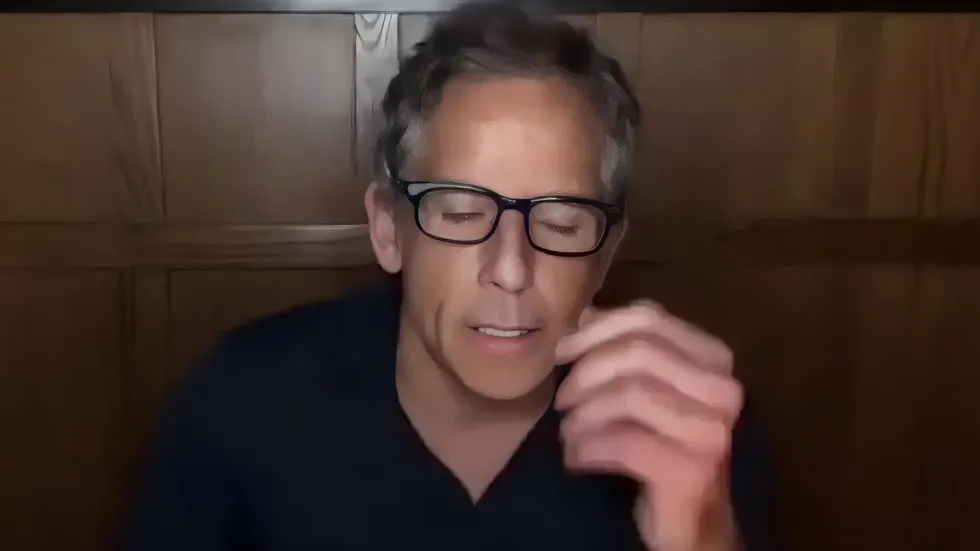
‘I wish I was black’: Ben Stiller bows down to Kamala in HUMILIATING fundraiser speech
Favicon 
www.theblaze.com

‘I wish I was black’: Ben Stiller bows down to Kamala in HUMILIATING fundraiser speech

The rich and famous love to tell middle-class Americans how to live and who they should vote for, and unfortunately, once funny guy Ben Stiller is no different. “Is there anything better than Hollywood celebrities on the things that they say?” Dave Rubin of “The Rubin Report” comments before playing a clip of Stiller speaking during a Kamala fundraiser, during which he says a whole lot of nothing. “I’m so genuinely excited about the potential to actually win this election,” Stiller began. “What’s happened the last couple of weeks, just the turn of the tide, and that you know, Vice President Harris can actually win this thing if we all just rally around and really take advantage of this incredible energy.” “I just want a decent person in the White House, you know, a person who cares about democracy more than themselves, who doesn’t lie, who’s not fomenting anger and rage, someone who cares about people, and that’s what Kamala Harris is,” he continued. Stiller then went on to praise that she’s “like a human being” and “acts like a human being.” “She has empathy and she has humor and it's beautiful when she laughs because she’s a real person who is reacting to things,” he said, sounding fairly delusional. Stiller attempted to talk policy by exclaiming that Kamala “wants to put an end to gun violence in this country” and “the fact that she’s going to fight for a woman’s right to choose.” While his discombobulated and ill-informed speech didn’t seem as if it could get any worse, it got worse. “I’m Jewish and Irish. I wish I was black. Every white Jewish guy wishes he was black,” he attempted to joke, adding, “It’s just, get out there and vote and donate and like take advantage.”Want more from Dave Rubin?To enjoy more honest conversations, free speech, and big ideas with Dave Rubin, subscribe to BlazeTV — the largest multi-platform network of voices who love America, defend the Constitution, and live the American dream.
Like
Comment
Share
The Blaze Media Feed
1 y

Blaze News originals: 6 more Hollywood actors who are unapologetically Christian
Favicon 
www.theblaze.com

Blaze News originals: 6 more Hollywood actors who are unapologetically Christian

Hollywood is synonymous with glitz and glamor, but many of the entertainment industry's stars have used their celebrity status to share and promote their Christian faith. These Hollywood stars have made a huge impact on the big screen, but their off-screen contributions with their faith-driven actions should also be celebrated. This list features six Hollywood celebrities who embrace their Christian faith — ranging from box-office powerhouses and critically acclaimed performers to cherished television personalities. These Hollywood actors have proved that faith and fame can go hand in hand. 'Love of God makes so much sense to me when other things don't.' These celebrities stand out not just for their acting talent but for their dedication to their faith. These Hollywood celebrities have not only achieved success in their careers but have also used their massive platforms to spread messages of hope, love, and spirituality. Whether they're sharing Bible verses on Instagram, proudly promoting their Christian faith in interviews, supporting charitable causes, or carefully choosing acting roles that align with their religious beliefs, these stars are making incredible impacts beyond the entertainment industry. The stories of these show business stars offer a refreshing perspective on the entertainment industry. These actors have portrayed unforgettable characters, but their most important role might be as ambassadors for their Christian faith. This list will shine a spotlight on actors who are committed to being unapologetically Christian. Kirk Cameron Nathan Congleton/NBCU Photo Bank/NBCUniversal via Getty Images via Getty Images Kirk Cameron is not only known for his role as Mike Seaver on the hit 1980s sitcom "Growing Pains," but he's also one of Hollywood's most outspoken Christian actors. Cameron said he came from a home where his family never went to church and never talked about God. However, a "really cute girl" changed Kirk's perception of God when he was 14 years old. "I thought that Jesus was part of a different trinity — the Easter Bunny, the Tooth Fairy, and God," Cameron said on the "Veritas Vox" podcast. "It was when I met a really cute girl on the set of 'Growing Pains' who invited me to meet with her family one weekend that I found myself at their church, and I heard the message of the gospel preached and went to a youth group meeting after that," the former child actor explained of his spiritual journey. Cameron continued, "That really got me thinking, and I started asking questions about the resurrection, about the Bible, about Christianity, and other religions, what about science and evolution, and eventually realized that there were really good answers to the questions that I had. Somebody else invited me to a church and gave me a Bible, and it made me start thinking about just the big questions of life, the existential questions, the big spiritual and philosophical questions." Cameron cemented his faith after he was given the book "More Than a Carpenter" by Josh McDowell. "I finished the book and came out convinced that Jesus really was who he said he was," Cameron said. "Intellectually I had to admit that I believed in God or that I had a hidden agenda to not believe in God." Cameron detailed being a devout Christian while working in Hollywood. "So the same difficult challenges and influences of Hollywood that turn some people sour and make them narcissistic and bitter and joyless and afraid to not fit in is the same pressure that actually softened my heart and caused me to embrace gratitude and be thankful for the life that I have and want to use a platform and this Hollywood industry to advance the good," Cameron said in 2022. "I really think it’s what you’re made of. And if you don’t know what you’re made of, don’t look to your environment or your industry or other people to give you an identity," he continued. "There was somebody who made you — ask Him. And you can be sure that the ending of the story is gonna be fantastic." Cameron is also a children's book author who has drawn massive crowds to his book readings at libraries across the country. As Blaze News previously reported, there have been progressive protests at Cameron's book readings. Cameron has appeared in numerous faith-based movies and TV shows, including "Left Behind," "Fireproof," "Unstoppable," "Saving Christmas," "Revive Us," and "The Way of the Master." The "Growing Pains" actor delivered a speech at the 49th annual March for Life. "If you talk to the people who are here, some people don’t understand why we come and why we’re marching, but we understand as the family of faith that our hope is ultimately not in who governs us; it’s not in the laws that we make as a nation," Cameron declared. "Our hope is in the power of God working in the hearts of people, and there are thousands and thousands of us here today. We want to make a difference; we want to champion life." Cameron said in 2023: So you can think what you want about God. You can think what you want about your capacity to love. Sometimes our spouse has a better read on how well we’re actually loving, but I think God has the best read because he made us, and he is love and he says that all of us fall short of his standard of love. In fact, the one we’re supposed to love more than anyone else is God himself. That’s the first and greatest commandment: to love God with all of your heart, all of your mind, soul, and strength. He said the second commandment is like it, to love your neighbor as yourself. None of us have kept that commandment because we’ve been born, the Bible says, with a selfish nature, which then leads us to willfully choose to be prideful and selfish and judgmental and unkind and hateful and lustful and resistant to authority and ungrateful, and we fail to fear God and we fail to know God. Kirk's sister and fellow actor, Candace Cameron Bure, is also a devout Christian, as detailed in the Blaze News original "5 Hollywood actors who are unapologetically Christian." You can watch the BlazeTV interview with Kirk Cameron here. Neal McDonough Stephane Cardinale - Corbis/Corbis via Getty Images Neal McDonough has 146 acting credits to his name, including "Band of Brothers," "Minority Report," "Boomtown, "Desperate Housewives," "Captain America: The First Avenger," "Justified," "Yellowstone," and "American Horror Story: Double Feature." McDonough is also deeply religious, which he said has significantly hurt his Hollywood career. McDonough said he faced backlash in Hollywood for voicing his faith. "You know, I didn't work for two years. I lost everything: house, cars, this, that, you know. It was one of the most brutal times in my life for sure. And my wife, Ruvé, helped me get through it and my belief in who I am and what I stand for," McDonough told Fox Business in December. "And now here I am 10, 15 years later because of that, now doing all these films with Angel Studios." McDonough explained, "It was a horrible situation for me. After that, I couldn’t get a job because everybody thought I was this religious zealot. I am very religious. I put God and family first and me second. That’s what I live by. It was hard for a few years." The award-winning actor faced scrutiny when he declared that he would not act in roles that call for intimacy for the sanctity of his marriage. "I won’t kiss any other woman because these lips are meant for one woman," he said of his wife and the mother of his five children. The devout Catholic has appeared in faith-related TV shows and movies including "The Shift," "Greater," and "Left Behind: Rise of the Antichrist." McDonough launched his own production company — the McDonough Company. "All of our projects have a faith backdrop to it. … We want to reach out to people who aren't just Christians," he stated. "I've certainly done plenty enough where my characters don't portray the best things in life, but as an actor, you're part of a piece," McDonough continued. "My part of a piece was to be the dark side in a lot of things, which is really interesting because that's kind of the antithesis to what I am in real life. So it's a great challenge as an actor; it's a great challenge as a man. It's also a great challenge as a child of God to press on with the right material." "Now I have that opportunity because Ruve and I are doing it ourselves and are so blessed to have companies that support us and back us and want to make more films and TV shows, or reality shows or any kind of show that gives glory to Him," McDonough said. "Not just to make a movie, but to do a movie that actually gives Him glory — that's our goal. And that's what we're after, and we're very fortunate to be able to do it." Jim Caviezel Gilbert Carrasquillo/FilmMagic Jim Caviezel — best known for his portrayal of Jesus Christ in Mel Gibson's 2004 film "The Passion of the Christ" — has delivered powerful acting performances while also displaying his unwavering commitment to his Christian faith. Caviezel has appeared in several faith-based movies, including "The Passion of the Christ," "Sound of Freedom," "Paul, Apostle of Christ," and "I Am David." Caviezel said that "The Passion of the Christ" and "Sound of Freedom" challenged him as an actor. "Both films gave me the chance to play individuals who stood for only good and who were willing to make extreme sacrifices to try to help others, literally rescuing them," Caviezel told Jetset magazine. "It creates a humbling effect to carry the magnitude of these roles, and I hope that I might have the courage in my life to make the right decisions, too, when tested." The actor added, “While shooting 'The Passion of the Christ,' not only was I struck by lightning, but I also dislocated my shoulder. So here I am, being hoisted up to hang on the cross. I’ve got to remove the sling and they’re stretching my arms, so I say, ‘OK, God, this is where I need a hug to stay up here because this hurts like crazy!’ He definitely did lift me up, because there was no way my shoulder would have held up. I was a true believer before but was a confirmed one after that grueling day.” Caviezel told Fox News last year, "The problem is that modern-day Christianity has become so weak and useless. I mean, modern-day Christians are more afraid of the devil than they are of God. God could destroy the devil without a glance, but he looks to us to make a decision." Caviezel and his wife, Kerri Browitt, adopted three children with health issues. "I've been to places around the world where orphans are, and we have three of them," he said of his three children. "Two of them had brain tumors and one had cancer sarcoma. Their chance of survival wasn’t great, but I wanted to help." Letitia Wright Kevin Winter/Getty Images Letitia Wright — born in Guyana and raised in London — credits her faith in shaping her life. Wright said Christianity lifted her out of her depression. "It gave me the centering I needed, the good foundation I needed, and it helped me to put in perspective what was important for me," Wright told the Guardian in 2022. "Chasing something that is not tangible or not wholesome is not the way I want to go. If I was to pack all this up, I'd still be happy with my faith, the contentment I feel, and the connection to God." "We all chase things. You feel you need a better job, or better role, or more accolades, or more recognition," Wright stated. "And I was chasing that. I had been chasing, chasing, chasing, but feeling empty. I realized I don’t have to chase that any more. If I trust that God has a plan for my life and I follow that and trust I’m doing the right things, then if people feel it, they will." She noted, "I had to find what worked for me, and I found that Jesus worked for me. The more I prayed, the more I felt connected and the less anxious." As previously reported by Blaze News, Wright said she stopped acting for a while to embrace her faith. "I was going through a lot, a very difficult time in my life, and I just needed to take a break from acting because I really idolized it," Wright said. "So I came off from it, and I went on a journey to discover God and my relationship with God, and I became a Christian. It really just gave me so much love and light within myself. I felt secure and I felt like I didn't need validation from anyone else or from getting a part. My happiness wasn't dependent on that; it was dependent on my relationship with God." "I'm centered in who I am, and I'm really grateful. I'm not perfect," she said. "Especially as a Christian, you're not perfect. But you're walking every day and trying to just stay connected, and yeah it's helped me a lot, so I'm really grateful." Wright — best known for portraying Shuri in "Black Panther" — won the Rising Star award at the 2019 British Academy Film Awards. "I identify myself as a child of God, and I can’t get up here without thanking God," Wright said at the BATFAs. "A few years ago, I saw myself in a deep state of depression, and I literally wanted to quit acting. The only thing that pulled me out of it was God, my belief, my faith and my family, and an email from BAFTA asking me to become part of the BAFTA Breakthrough Brits." Speaking about being unapologetically Christian in Hollywood, Wright said, "I've had people tell me, 'Hey, you should stop talking about Jesus.' But there will always be pressures to keep things private that the world may not agree with. And I'm not trying to force anything on anyone. I'm sharing my truth because I probably wouldn't be alive right now if it wasn't for Jesus; I probably wouldn't have been able to cope. And if someone saves you and brings light and love to your life, you want to share that. You don't want to hide it." Wright told W magazine about the benefits of reading the Bible. “Worrying will kill you, man," Wright said in 2018. "It will … eat. You. Up. But in the Bible, Jesus is basically like, ‘Chill out, guys.’ If you gracefully trust that everything is going to be okay, you start to feel lighter. You’ve just got to let go and let God." Wright launched her own production company, which she says was inspired by God. Her company, Threesixteen Productions, was named after the popular Bible verse John 3:16 to create "meaningful content within the entertainment industry." She told Porter magazine, "It was a name that was pressed on my heart. When I was in a dark place, God reached out to me, and I kind of see my production company in that sense: There's an issue and it needs a little bit of saving." Stephen Baldwin Kris Connor/Getty Images Stephen Baldwin — the youngest of the Baldwin brothers — has been vocal about his personal journey to finding his Christian faith. Baldwin was raised a Roman Catholic until he was about 12 years old, but it "didn't stick." During his marriage to his Brazilian wife, Kennya Baldwin, she converted to Christianity. Baldwin described her acceptance of Jesus Christ as her Lord and Savior as a "radically beautiful metamorphosis." Baldwin did not become a Christian until the devastating events of Sept. 11, 2001. Baldwin told the Christian Broadcasting Network, "September 11 kind of freaked me out. I said, 'Hey, what’s this all about? My wife’s a Jesus freak. Maybe it’s time I begin thinking about this faith thing.' Pursued it, became born again, accepted the Lord, baptized in water." "My life before Christ was focused on making money," Baldwin said. "My life before Christ was a totally day-in and day-out existence that was — unbeknownst to me at the time — an existence of self-absorbance. [I was] just doing what you normally do when you’re trying to maintain a career in the movie business." The actor, producer, and director regularly shares Bible verses on his Instagram page. Baldwin wrote on his social media page, "True freedom, not for everyone? Fear, focus, pride, happy? Available to all of us in this world? And I have been blessed to experience most of them in Hollywood but now all that is left for me is Jesus as there is nothing in this world and I mean nothing — this world has to offer! that gives the same satisfaction as (salvation) this is true." Baldwin added that he is "free from Hollywood, free from distraction." Speaking about integrating Christian messages into entertainment, Baldwin told CBN: "I've made about 110 films in 30 years, so the Lord is always giving me ideas. Film is so natural to me, I have to stay in touch with the Holy Spirit. I get ideas every day for, let’s say, a Christian version of 'CSI' or 'Law and Order.'" He stressed, "We need to give it more crossover potential, make it more attractive so we can get the gospel message across!" You can listen to Glenn Beck's BlazeTV interview with Stephen Baldwin here. Angela Bassett Amy Sussman/Getty Images World-renowned actress Angela Bassett has an illustrious acting career and has won 60 awards and 127 nominations. Bassett has also touted her unwavering religious beliefs during acceptance speeches and in media interviews. While accepting the award for Best Supporting Actress for her performance in "Black Panther: Wakanda Forever" at the 2023 Golden Globe Awards, Bassett pointed out the importance of daily prayer and proclaimed that she was only accepting the award "by the grace of God." "The late Toni Morrison said, 'Your life is already a miracle of chance just waiting for you to order its destiny,'" Bassett began. "In order for the destiny to manifest, I think that it requires courage to have faith, it requires patience, and it requires a true sense of yourself." The 10-time Emmy-nominated actress continued, "My mother always said, 'Good things come to those who pray.' I see the truth in that every day as we welcome each new day as a family." Bassett told the Christian Post in 2013, "Prayers are answered in their own time. We pray for what we think we want right now, but to answer that one might set off a chain reaction of other things we might not want," the actress said. "As they say, there's grace and there's mercy; grace is a gift you don't deserve, and mercy is a punishment you do deserve but God keeps from you." "All things work together for good for those who have the Lord and are called according to His purpose," Bassett quoted Romans 8:28 in a 2023 interview with the Christian Post. She added, "So I have foundations, and He is my rock I keep going back to." Bassett's strong religious foundation comes from her devout Christian upbringing. "I grew up in Florida; my great-grandfather was a pastor; I think my other grandfather was a pastor as well," the Golden Globe-winning actress told Parade magazine in 2015. "My mother had us in Sunday school and choir. Growing up in the church means things like going to Bible study with your grandmother on Wednesday, and if the choir director picks you up hitchhiking, he’ll give you a lesson, and then your mother will give you a lesson and maybe a lockdown. The community was involved." The "Waiting to Exhale" actress continued, "Love of God makes so much sense to me when other things don’t. Life is so beautiful and complex that it doesn’t make sense to me that it was just an explosion. It’s my belief system." Like Blaze News? Bypass the censors, sign up for our newsletters, and get stories like this direct to your inbox. Sign up here!
Like
Comment
Share
Showing 66671 out of 106178
  • 66667
  • 66668
  • 66669
  • 66670
  • 66671
  • 66672
  • 66673
  • 66674
  • 66675
  • 66676
  • 66677
  • 66678
  • 66679
  • 66680
  • 66681
  • 66682
  • 66683
  • 66684
  • 66685
  • 66686
Advertisement
Stop Seeing These Ads

Edit Offer

Add tier


Select an image
Delete your tier
Are you sure you want to delete this tier?

Reviews

In order to sell your content and posts, start by creating a few packages. Monetization

Pay By Wallet

Payment Alert

You are about to purchase the items, do you want to proceed?

Request a Refund