YubNub Social YubNub Social
    Advanced Search
  • Login
  • Register

  • Night mode
  • © 2026 YubNub Social
    About • Directory • Contact Us • Developers • Privacy Policy • Terms of Use • shareasale • FB Webview Detected • Android • Apple iOS • Get Our App

    Select Language

  • English
Community
New Posts (Home) ChatBox Popular Posts Reels Game Zone Top PodCasts
Explore
Explore
© 2026 YubNub Social
  • English
About • Directory • Contact Us • Developers • Privacy Policy • Terms of Use • shareasale • FB Webview Detected • Android • Apple iOS • Get Our App

Discover posts

Posts

Users

Pages

Blog

Market

Events

Games

Forum

Daily Caller Feed
Daily Caller Feed
2 yrs

Bill Belichick’s Girlfriend Was Allegedly A Complete Nightmare In His Latest Interview
Favicon 
dailycaller.com

Bill Belichick’s Girlfriend Was Allegedly A Complete Nightmare In His Latest Interview

'Runaway train'
Like
Comment
Share
Daily Caller Feed
Daily Caller Feed
2 yrs

Romania’s Donald Trump-Supporting Candidate Leads In Polls Ahead Of Presidential Election
Favicon 
dailycaller.com

Romania’s Donald Trump-Supporting Candidate Leads In Polls Ahead Of Presidential Election

'We are the natural allies of the Republican Party'
Like
Comment
Share
Daily Caller Feed
Daily Caller Feed
2 yrs

EXCLUSIVE: IBM Pulls Plug On Left-Wing Ad Policies After Taking Heat From Conservative Orgs
Favicon 
dailycaller.com

EXCLUSIVE: IBM Pulls Plug On Left-Wing Ad Policies After Taking Heat From Conservative Orgs

'The price of liberty is eternal vigilance'
Like
Comment
Share
Daily Caller Feed
Daily Caller Feed
2 yrs

‘Gonna Be Very Blunt’: Dem Rep Says Articles Of Impeachment Against Trump Are ‘Distraction’
Favicon 
dailycaller.com

‘Gonna Be Very Blunt’: Dem Rep Says Articles Of Impeachment Against Trump Are ‘Distraction’

'I don't agree with my colleague on what he did'
Like
Comment
Share
SciFi and Fantasy
SciFi and Fantasy  
2 yrs

Like Its Puppet Protagonist, The Legend of Ochi Is Not What It Appears to Be
Favicon 
reactormag.com

Like Its Puppet Protagonist, The Legend of Ochi Is Not What It Appears to Be

Movies & TV The Legend of Ochi Like Its Puppet Protagonist, The Legend of Ochi Is Not What It Appears to Be You will not be traumatized. You will be transformed. By Emmet Asher-Perrin | Published on April 29, 2025 Credit: A24 Comment 0 Share New Share Credit: A24 On a remote island in the Black Sea, a young girl is told to fear the local creatures because they destroyed her family. When she encounters a little one, however, it leads to a journey of exploration and understanding, as well as an unlikely new friendship. You know stories like this. You’ve watched them plenty of times. Maybe. [Spoilers ahead.] It’s bemusing to see The Legend of Ochi draw so many comparisons to E.T. and other ‘80s kid classics—or any story where a child befriends avatars of the unknown. In actuality, Ochi has more in common with Taika Waititi’s Hunt for the Wilderpeople. It is about a misanthropic little gremlin of a kid. It details parent-child dynamics in painful, absurdist detail, and questions what makes a family. And most of the magic (if there truly is any any at all) is in the journey itself, rather the myriad discoveries therein. Yuri (Helena Zengel) is the child of Maxim (Willem Dafoe), a man who trains young boys from poor farming families to fight the Ochi, a species that their people regularly kill on sight. Maxim is miserable because the Ochi are monsters that destroyed his family—his wife is gone, which means he has no son to call his own and train. He warns his daughter to fear the dark and the monsters that lie in wait. Except… his wife isn’t dead, she just left. And he has a surrogate son in Petro (Finn Wolfhard), who’s practically his adopted ward. And he leads his “army” of boys with guns in his own very silly, incomplete set of faux-historical armor. And he regularly sends Yuri to check the traps he’s laid about their property, even after dark. There are plenty of clues throughout this film, clever tricks of worldbuilding, to let its audience know they’re not being told the whole story. Even the narration at the start from Yuri herself: It’s delivered like the opening to a storybook, not a history. Something is being left out. Maybe a lot of things. What those things are, you’ll largely have to suss out for yourself. But Yuri is done going along with her dad’s version of things. She doesn’t speak loudly or clearly, but she loves to tell people when they are being “stupid” or “dumb.” She has an aquarium full of fluffy blue caterpillars. She has a puffy oversized yellow coat in lieu of her dad’s armor. She has a heavy metal poster on her wall with a huge viking-looking guy and the words DESTROY YOUR FATHER emblazoned at the bottom. She doesn’t look like she’s bathed in a while. In short, she’s everything I wanted to see in a movie when I was her age. When Yuri discovers a baby Ochi caught in one of their traps, her instinct is to protect it. She quickly decides that she’ll have to nurse it back to health and bring it home to its family, sneaking out in the middle of the night. As a farm girl who has been surviving on a lack of parental guidance or attention for many years, she’s pretty well-equipped to go off on this sort of survivalist hike. (She does raid a grocery store in the interim and drink milk right out of the carton in the refrigerator aisle.) Oh, and she does run into her mother Dasha (Emily Watson) again. A woman who is alive and well and curiously sporting one wooden hand. Who seems to know a great deal about Ochi, interestingly enough. Turns out the family dynamics only get more interesting from here. A few fun trope reversals of the sort of tale Ochi is aping pop up in writer-director Isaiah Saxon’s compact script. For example, rather than the Ochi learning Yuri’s language in bits and pieces, she is shocked when she realizes she can understand and communicate with her friend in its own tongue. (And be honest, isn’t that the real dream in those situations?) The regular world manages to feel just as fantastical as the wilderness Yuri sets out into, the people in it as confusing as wildlife. In a narrowing of scope, there’s no big villain to this story. Only delightfully odd people with their largely invented problems. The special effects are part of what make this such a spectacular feat. The Legend of Ochi renders its creatures using clever combinations of puppetry, animatronics, and CGI, creating a performance that is miraculously touchable to the eye. I kept whispering to myself “this is future Jim Henson wanted” as the film played—a seamless integration of what’s real and what isn’t to make up a character that outmatches any computer rendering. (Did it help that the baby ochi’s face greatly resembles that of my half-pug puppy? Well, let’s just say it certainly didn’t hurt.) There are two aspects of this film that stand out amongst similar ventures. The first is that Yuri’s journey is one built on her own bids for connection. She is lonely, much like Bastian of The Neverending Story, but not from grief so much as neglect. She has finally reached a point in her growth where she realizes that her needs are going unmet and that she’s angry about it. Even Petro, who should be more like a brother to her, is pointless in this. “You’re nice when no one’s looking,” she tells him early on, and you know immediately how useful he’ll be going forward. Yuri’s parents have not been anything of the sort to her, and part of this story is about them learning that they still have to try, even if they’re coming to it too late. The events only moves forward as they should when both of them give Yuri what she asks for, when they truly listen to her. But the other aspect might be my favorite: This movie is almost entirely about the way that people project their own concepts of morality, temperament, and ethics onto the natural world. Maxim’s armor is decorated with wolves, as he facies himself a predator of solitude with a singular goal. Pointedly, neither he, nor real-life wolves, operate this way: He is surrounded by his army of boys and wolves live in packs. Dasha insists to Yuri that returning the baby ochi to its mother won’t work because it will reject the child for having the “stink of man” on it, just as birds do. But this is a myth that humans like to perpetuate and completely false amongst birds. It’s on Dasha to realize that perhaps she is the one rejecting a child for having the stink of man… or one man in particular. The ochi themselves are the final piece to this puzzle, a species of untold brutality according to the start of this story, who proceed to do nothing that lives up to such an image. As always, it’s humans using animals as justifications for their behavior and beliefs, and expecting everyone to go along with the tale they’ve constructed to everyone’s detriment. If you’re worried about traumatizing the children in your life (or yourself) with Bambi-style grief, rest assured that nothing resembling that lies in wait. The Legend of Ochi would never be so predictable or boring as that. Instead, it’s a genuine little fable about the implacable will of one girl who deserves the world… and will find it for herself if no one’s planning to help.[end-mark] The post Like Its Puppet Protagonist, <i>The Legend of Ochi</i> Is Not What It Appears to Be appeared first on Reactor.
Like
Comment
Share
SciFi and Fantasy
SciFi and Fantasy  
2 yrs

Strange Inheritances: On Marie-Helene Bertino’s Exit Zero
Favicon 
reactormag.com

Strange Inheritances: On Marie-Helene Bertino’s Exit Zero

Books book reviews Strange Inheritances: On Marie-Helene Bertino’s Exit Zero Twelve strange, haunting stories from the acclaimed, oracular author of Beautyland. By Tobias Carroll | Published on April 29, 2025 Comment 0 Share New Share Last year saw the publication of Marie-Helene Bertino’s novel Beautyland, the story of a young Italian-American woman slowly developing into a writer who turns her sense of alienation from the world into an iconic point of view. There’s also the matter of the protagonist possibly being an alien. One could read Beautyland as an extended metaphor (à la Will Self’s Great Apes) or a very low-key work of science fiction (a la John Wyndham’s Chocky), and some of that same ambiguity persists in the stories collected in Bertino’s new collection Exit Zero. Exit Zero is, overall, much less ambiguous about its uncanny and fantastical elements; the unicorn that shows up in one story is very real, and capable of doing unholy things to a hotel room at that. There’s still much of the same blend of formalism and heartache that characterized Beautyland on display here: Several of the stories focus on protagonists who are left to deal with the unfinished affairs of a family member or loved one. (That’s what the unicorn is doing there.)  Bertino also utilizes some of the same attention to regional detail that populated Beautyland’s descriptions of Philadelphia and New York City. The title story takes its name from the southernmost exit on the Garden State Parkway (typed the critic who grew up near Exit 109), and south Jersey provides a backdrop for several of the stories here. “Exit Zero” is the one with the unicorn, by the way. Protagonist Jo is staying temporarily in the town of Rio Grande, New Jersey, where she’s settling her late father’s estate, one component of which is the aforementioned horned creature. Jo dubs the unicorn Jasmine; a zookeeper interested in the unicorn’s welfare corrects her, stating that her name is “a sound like a breeze moving through plastic tubing in an open field.” Buy the Book Exit Zero Marie-Helene Bertino Buy Book Exit Zero Marie-Helene Bertino Buy this book from: AmazonBarnes and NobleiBooksIndieBoundTarget The juxtaposition of real places and the surreal is a device Bertino uses throughout the collection to memorable effect. The final story here, “Viola in Midwinter,” begins with an opening that seems pulled from the “Kmart Realism” movement of the 1980s: The Margaretville Shop & Save stays open twenty-four hours as a service to hunters, hospital employees, sex workers, and other creatures who work at night. Viola in predawn debates poppers and pharaoh snakes in the fireworks aisle. In the checkout line, hunters discuss a bobcat one saw on his drive into town. A mama, probably, looking for food before the real snow arrives and locks the county into place. That’s a stunning amount of detail and stage-setting accomplished in a handful of sentences. It isn’t hard to imagine a wholly realistic story playing out in this vein, but Bertino has other plans. After a few more pages, we understand two things very clearly: Viola is much older than she seems, and she subsists on blood. (Both human and animal varieties are acceptable.) This isn’t quite a typical story about vampirism, though it does borrow some of its tropes. Instead, Bertino is a lot more interested in seeing what that sort of immortality might do to someone; how they might adapt to living far longer than they’d planned, and what compromises they might make along the way. The collection’s strongest story, at least for this reader, is the haunting “The Ecstasy of Sam Malone.” Yes, as in Ted Danson’s character on the television show Cheers. The narrator begins the story by recalling her one year of college, and a professor who’d made an impression on her by discussing psychoanalyst Donald Winnicott’s idea of the false self. She has an awkward conversation with her mother, then ventures out with her friends in search of alcohol. And when she comes to after presumably blacking out, she’s in a world that’s one part purgatory, one part Cheers. In the darkness, a song plays above us on speakers I can’t see. A man sings. It is the theme song from Cheers, my mother’s favorite show. I recognize the actors though they look the same age as in the 1980s and ‘90s when the show was broadcast. The idea of sitcom-as-purgatory isn’t unique to this story, but Bertino doesn’t go to any obvious places; there’s no moment when one of the characters turns suddenly sinister or demonic, for instance. The sheer weirdness of the situation gives the story its own haunting energy. In the opening paragraph, the narrator sets the story up for us by placing it in a time when “I was still a barfly,” and there’s something inevitable about a bleary-eyed night winding up in one of the most archetypal watering holes in all of popular culture. As for the song the narrator hears playing when she first arrives in Cheers? Well, its title happens to be “Where Everybody Knows Your Name.” (It’s also quoted in The Mountain Goats’ “Autoclave.”) The narrator’s name, of course, goes unsaid throughout. The best of these stories tap into the same heartfelt sense of isolation that Bertino’s Beautyland did, but find different variations on that theme. There’s a particular sentence in this collection that feels like a statement of purpose for the book as a whole: “Family can slough away from you like bones shed meat in boiling water.” There’s something visceral about that sentence, but there’s also something powerfully ambiguous about it. It all depends on how you view the image of a bone shedding its meat. Are you witnessing a kind of transmutation, or are you witnessing a separation, the birth of something new and alone? When Exit Zero is humming, it turns that sense of isolation into something hallucinatory, sad, and beatific.[end-mark] Exit Zero is published by FSG Originals. The post Strange Inheritances: On Marie-Helene Bertino’s <i>Exit Zero</i> appeared first on Reactor.
Like
Comment
Share
Daily Signal Feed
Daily Signal Feed
2 yrs

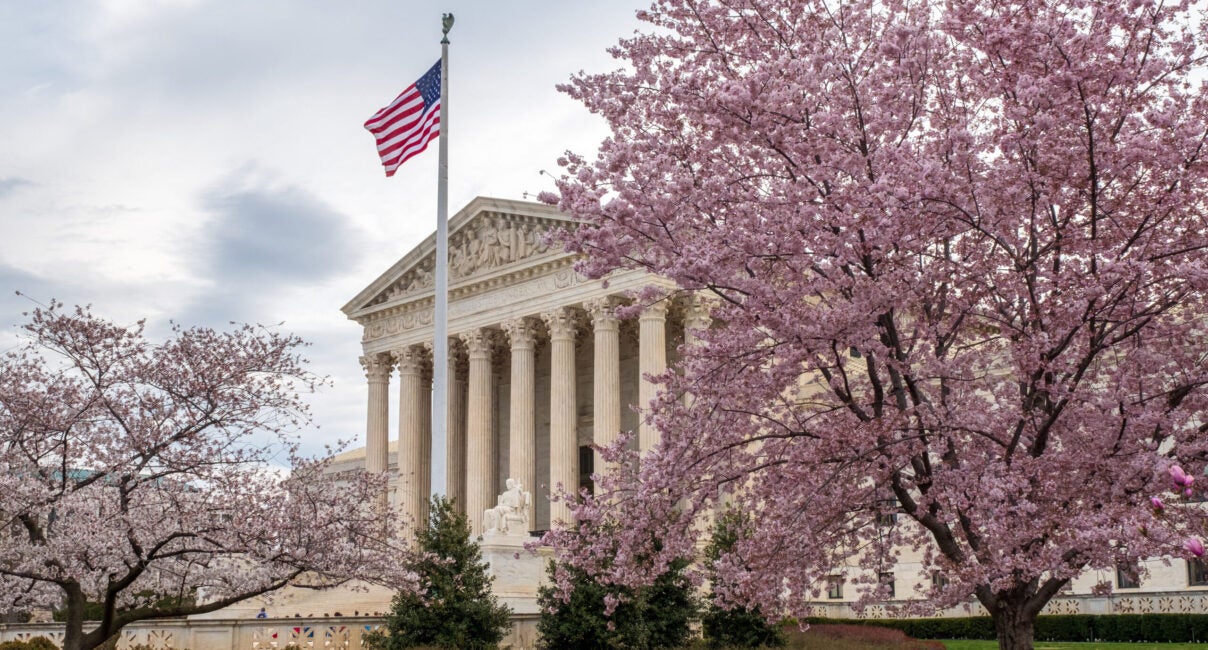
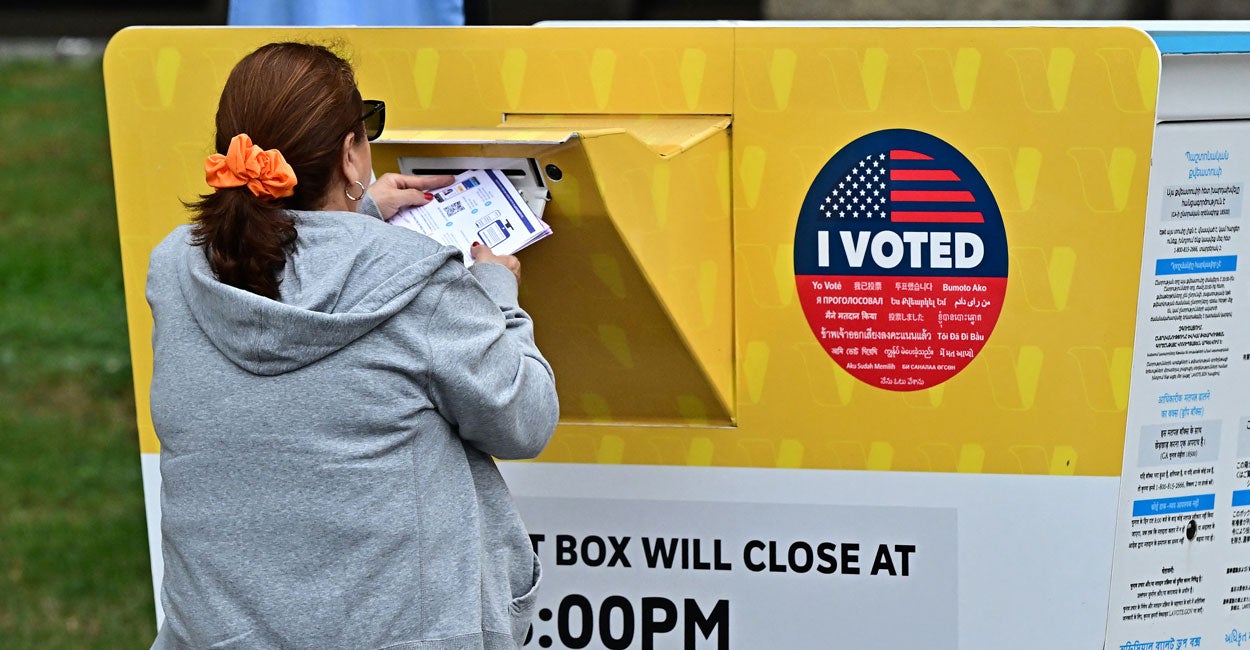
Supreme Court Could Decide How Late Ballots Can Arrive After Election Day
Favicon 
www.dailysignal.com

Supreme Court Could Decide How Late Ballots Can Arrive After Election Day

The U.S. Supreme Court could decide a case regarding whether voters’ ballots rolling in days or weeks after Election Day still can be counted.  Just weeks before last November’s election, the 5th U.S. Circuit Court of Appeals ruled in a case from Mississippi that federal law requires mail-in ballots to arrive by Election Day. Mississippi had allowed for counting ballots that arrived up to five days after Election Day. The ruling didn’t impact the 2024 election.  At least 17 states and the District of Columbia count ballots that arrive late, with at least two allowing them to arrive as many as 14 days afterward.  On April 18, U.S. District Judge Louis Guirola Jr. of the Southern District of Mississippi ordered a stay on further litigation in the Mississippi case until the U.S. Supreme Court decides on the matter. Though Mississippi Secretary of State Michael Watson—who runs elections in the state—hasn’t committed to appealing to the high court yet.  “The secretary is exploring all options, which could include an appeal,” Watson spokesperson Alana Magliolo told The Daily Signal Tuesday.  Guirola wrote in his April 18 order that Watson’s motion was “to stay further district court proceedings pending the filing and disposition of a petition for a writ of certiorari in the United States Supreme Court and the conclusion of any Supreme Court proceedings.” A Supreme Court ruling on the matter could be significant, as President Donald Trump’s executive order on election integrity included a provision that would deny federal election funding grants to states that continue counting ballots that arrive after Election Day. As documented in my book “The Myth of Voter Suppression,” absentee ballot harvesting has been the single biggest source of proven election fraud, even leading to overturned races, including a congressional election in 2018. Ballot harvesting is when political operatives collect or distribute large amounts of absentee ballots. This could lead to the intentional or unintentional loss of certain ballots, ballots being filled out fraudulently by the operatives, or the people receiving the ballots being coerced by the operatives to vote a certain way. California is most well known for seeing the forecast of races flip because late-arriving ballots are counted. Rep. Darrell Issa, R-Calif., and government accountability group Judicial Watch sued California in March to require counting only ballots that arrive by Election Day. The 5th Circuit covers the states of Mississippi; Texas, where state law allows ballots arriving one day after Election Day to be counted; and Louisiana, which requires mail-in ballots arrive one day before Election Day.   The October ruling by the three-judge panel of the 5th Circuit says, “Federal law does not permit the state of Mississippi to extend the period for voting by one day, five days, or 100 days.” After the October ruling, a coalition of liberal groups filed a motion asking the full 5th Circuit to reconsider the panel’s decision, claiming it “dramatically upsets the balance between state and federal election administration struck by the Constitution’s elections clause by reading into the federal statutes an unspoken limitation on state power that has no grounding in text or history.”  Groups on the Left have contended that enforcing such rules could disenfranchise voters.  The dispute is about counting ballots that arrive after Election Day. It does not concern counting ballots after Election Day as long as they arrive on or before Election Day, for instance, if there is a recount or the election workers could not complete the count on election night.  Illinois and Utah count ballots arriving up to 14 days after Election Day, according to the National Conference of State Legislatures.  Alaska and Maryland allow ballots postmarked by Election Day to be counted up to 10 days after the election.  California, the District of Columbia, New York, and Oregon count ballots arriving seven days after the election.  New Jersey counts ballots arriving up to six days later. West Virginia will accept mail-in ballots arriving five days after. Nevada and Ohio count up to four days after. Kansas, Massachusetts, and Virginia count ballots arriving up to three days after Election Day.  Washington state law says that ballots received after the election with postmarks before Election Day are counted, but no deadline is specified for when they must be received, according to the National Conference of State Legislatures. The post Supreme Court Could Decide How Late Ballots Can Arrive After Election Day appeared first on The Daily Signal.
Like
Comment
Share
Daily Signal Feed
Daily Signal Feed
2 yrs

Oklahoma Case Offers Supreme Court Chance to Benefit Families
Favicon 
www.dailysignal.com

Oklahoma Case Offers Supreme Court Chance to Benefit Families

A great many of the cases heard by our nation’s courts, at every level, require the delicate parsing of subtly contradictory facts and opinions leading to a decision that, almost inevitably, will greatly benefit some people while frustrating the lives and purposes of others.Happily, Oklahoma Statewide Charter School Board v. Drummond is not one of those cases.For Drummond essentially comes down to this: Oklahoma families should have as many good educational opportunities as possible. The state’s charter school board has determined that St. Isidore of Seville—a new Catholic charter school—meets all the necessary qualifications to be added to those learning options as an Oklahoma charter school.Oklahoma Attorney General Gentner Drummond, however, objects. Drummond will be arguing Wednesday before the Supreme Court that, as a religious school, St. Isidore should not receive charter school funding, primarily because granting it, to his mind, would violate the Establishment Clause of the First Amendment. Giving state funds to and contracting with a Catholic school, he contends, will make that school an instrument of the government and present Catholicism as the state religion.Actually, it won’t. And we’ll be defending the state board’s decision, arguing that the Constitution and the U.S. Supreme Court’s own recent cases make it clear that states can’t categorically exclude religious institutions from participating in public programs that are open to other private entities.So we’re asking the Supreme Court to uphold the First Amendment, end this religious discrimination, and open these educational opportunities to families who desperately need it.St. Isidore is a private, religious, nonprofit organization founded by two Catholic dioceses. It’s operated by a privately selected board that sets the school’s curriculum, establishes its policies, and makes its operational decisions. It contracts with the state and receives per-pupil state funding. But the government neither creates nor controls St. Isidore’s day-to-day operations.Meeting all requirements to operate as a charter school, St. Isidore offers a high-quality education for any family that chooses it. And while the state board knew Oklahoma law excluded schools sponsored by religious groups from its charter school program, the board members also realized that such an exclusion violates the First Amendment.So the board approved St. Isidore’s application … whereupon the attorney general sued them.The board, however, had it right. In three cases over the last eight years, the Supreme Court has affirmed that when a state creates a generally available public program and invites private groups to participate—but then excludes religious organizations—it violates the Free Exercise Clause. The court has described that as “odious” religious discrimination.What’s more, the Supreme Court has said that establishing a contract between the government and a privately operated school—even when the government provides 99% of the school’s funding—doesn’t make that school an instrument of the government … which is a good thing, for both parties.Conforming religious groups to the government’s agenda would unnecessarily—and uncharitably—complicate the good work schools like St. Isidore (and many other religious organizations) are doing in their communities. The government, meanwhile, doesn’t have to tie itself to any specific religious affiliation.There are other benefits, for everyone: St. Isidore’s receipt of state funds hinges on parents sending their kids there. If no parent chooses St. Isidore, its state aid would be zero. On the other hand, parents who do enroll their children can redirect their tax dollars to fund the kind of education they want their children to have rather than the cultural indoctrinations so many public schools are pushing these days.Best of all, though, charter schools like St. Isidore offer more parents more good options for their children: the choice of a school even low-income families can afford, with potential for much higher academic success than what is being seen in Oklahoma’s public schools. The latter will always be the primary go-to for most families, but competition with successful charter schools could nudge public schools to make some crucial improvements. And religious private schools will offer a more faith-specific learning environment for families who want that and can afford it.In short, charter schools offer Oklahoma parents an important option that poses no threat to any other institution of learning, public or private, and no threat to the secular sanctity of state government. And it’s an option thoroughly protected by long-standing legal precedent and the U.S. Constitution.That’s a lot of wins and no downside for the people of Oklahoma and families all over the country. We publish a variety of perspectives. Nothing written here is to be construed as representing the views of The Daily Signal. The post Oklahoma Case Offers Supreme Court Chance to Benefit Families appeared first on The Daily Signal.
Like
Comment
Share
Daily Signal Feed
Daily Signal Feed
2 yrs

Trump to Sign Executive Order Providing Automakers Tariff Relief
Favicon 
www.dailysignal.com

Trump to Sign Executive Order Providing Automakers Tariff Relief

President Donald Trump will sign an executive order on Tuesday relaxing some of his 25% tariffs on autos and auto parts. The directive is the result of conversations directly with domestic auto manufacturers, a senior Commerce Department official said on a call with reporters. The order “will go substantially toward reassuring American auto manufacturing,” Treasury Secretary Scott Bessent told reporters Tuesday morning. “And again, the goal here is to bring back the high-quality industrial jobs to the U.S.,”he added. “President Trump is interested in the jobs of the future, not the jobs of the past.” The administration will offer automakers that finish their vehicles domestically a 15% offset of the cost of the tariffs. Automakers can choose how to allocate the offset. The current 25% tariff leveled on imported cars will remain intact, but other similar tariffs, such as tariffs on steel and aluminum, will not stack on top of the 25% auto tariff.  The offset is not a payment from the government, a Commerce official said on the press call. Rather, domestic auto manufacturers that finish building cars in the U.S. will receive an offset for automobile parts tariffs equal to 3.75% of the Manufacturer’s Suggested Retail Price of a manufacturer’s U.S. production for the next 12 months, and 2.5% of U.S. production for the year following. Offsets will only be available to the finished producer making and selling the car. The Trump administration expects the order to catalyze job growth and prosperity for domestic car manufacturers, a senior Commerce official said. “President Trump, his overriding concern and belief is that economic security is national security,” Bessent said. “National Security is economic security, and we saw during COVID that our supply chains got cut off, and we need to bring back a lot of those supply chains, whether it’s in semiconductors, medicine, or steel, and we have to onshore those so it’s a combination of making trade free and fair and remedying this gaping national security hole that he was left with.” The post Trump to Sign Executive Order Providing Automakers Tariff Relief appeared first on The Daily Signal.
Like
Comment
Share
Daily Signal Feed
Daily Signal Feed
2 yrs

Most of Trump’s Election Integrity Executive Order Remains in Place
Favicon 
www.dailysignal.com

Most of Trump’s Election Integrity Executive Order Remains in Place

If you thought from news coverage that a federal judge had completely knocked out President Donald Trump’s March 25 executive order, “Preserving and Protecting the Integrity of American Elections,” you’ve been misled (as usual) by the mainstream media. Judge Colleen Kollar-Kotelly of the U.S. District Court for the District of Columbia only issued a preliminary injunction on April 24 against two of the five parts of the executive order that the Democratic National Committee, the League of Women Voters, and other partisans were challenging. And they didn’t even challenge numerous other provisions in the executive order. The judge granted an injunction against Sections 2 (a) and (d) of the executive order. Section 2 (a) concerns the federal voter registration form established under the National Voter Registration Act. The U.S. Election Assistance Commission, an “independent” federal agency, has the statutory authority to regulate that form, including its contents and instructions for its use.  In Section 2 (a), the president directed the commission to require anyone using the federal registration form to register to vote to provide proof of U.S. citizenship and for the commission to include a list of acceptable documents to prove citizenship. Kollar-Kotelly enjoined the implementation of that directive because she said the challengers were likely to succeed in their claim that the president has no authority to order the commission to do that. The judge held that since the Election Assistance Commission was created as a bipartisan commission by Congress and assigned it to administer the federal voter registration form, the president has no constitutional or statutory authority to direct its affairs. She stated, “Congress has never assigned any responsibility for the content of the Federal Form to the President or to any other individual in the Executive Branch with the power to act unilaterally.”  The fact that the commission is an agency within the executive branch was dismissed by the judge, who said that the president’s power over it is limited to overseeing “officers through removal.” She is referring to the four commissioners who run the agency, two Republicans and two Democrats, who are nominated by the president and confirmed by the Senate. Kollar-Kotelly says the president is “free to state his views about what policies he believes that Congress, the EAC, or other federal agencies should consider or adopt,” but he can’t issue an order directing an independent agency to act: “That command exceeds the President’s authority.” Of course, that view means that other than the drastic step of removing the Senate-confirmed head of an independent agency, a president essentially has no control whatsoever over what such an agency is doing. In other words, he can’t control the actions of parts of the executive branch over which he is the constitutional head because of the restrictions imposed by another branch—Congress. Which also makes the heads of such independent agencies basically unaccountable to voters and the American public for their executive actions. Similarly, Kollar-Kotelly enjoined Section 2 (d) of the executive order, which directs federal agencies to “assess citizenship prior to providing the Federal voter registration form to enrollees of public assistance programs.” She claimed that because the National Voter Registration Act requires voter registration agencies to provide the form to each individual who applies for “service or assistance” at an agency, “this mandatory duty leaves no discretion for agencies to ‘assess citizenship’ before providing the Federal Form to ‘enrollees of public assistance programs.’” This is a bizarre holding. Aliens are barred by federal law from registering or voting in federal elections. In fact, it is a criminal violation of the law to do so. And yet under this ruling, if a federal agency knows from the paperwork it has received that the applicant is an alien, the judge is telling the feds they still have to provide that alien with a voter registration form. This is particularly troublesome when one considers that under 8 U.S.C. §1611, aliens are barred from receiving almost all federal public assistance benefits. Moreover, this National Voter Registration Act requirement to provide voter registration forms also applies to state agencies such as state departments of motor vehicles. It has never been interpreted to require state DMVs to provide voter registration forms to individuals who are obviously ineligible to vote, such as the 15-, 16-, and 17-year-olds who apply for learner’s permits and driver’s licenses but are unable to vote until they are 18. Under Kollar-Kotelly’s holding, however, any state DMV not offering a 15-year-old the opportunity to register to vote is violating federal law. Congress obviously never intended that when it passed the National Voter Registration Act. Kollar-Kotelly did refuse to grant an injunction on three other provisions in the executive order, calling the challenges either premature or holding that the plaintiffs didn’t have standing to bring their claims. This included: Section 2 (b), which directs the Departments of Homeland Security and State to make their databases on citizenship and immigration status available to state election officials, as well as directs DHS to send the Justice Department information on aliens who admit in any immigration forms that they have registered or voted in a U.S. election. To the extent state election officials are not taking advantage of access to these federal databases, DHS is also ordered to work with the Department of Government Efficiency to check publicly available state voter registration databases to verify citizenship and other federal requirements that apply to voter registration records. Section 7 (a), which directs the Justice Department to enforce the federal laws that set the national date for a federal election against states that allow absentee ballots to continue to arrive after Election Day and be counted in federal election results. Section 7 (d), which directs the Election Assistance Commission to condition the federal funding that it distributes to the states on those states complying with federal law by not allowing absentee ballots to be accepted and counted after Election Day. Other provisions in the executive order were not even challenged. These include the president directing the attorney general to “prioritize enforcement” of federal laws barring aliens from voting or individuals from engaging in other forms of election fraud such as registering multiple times or providing false information when registering. The Justice Department is ordered to enter into “information-sharing agreements” with states to obtain detailed information on suspected violations of state and federal election laws that will enhance such enforcement, something that has never been done.  Similarly, the attorney general is ordered to “take appropriate action” to enforce the provisions of both the National Voter Registration Act and the Help America Vote Act that require states to engage in the “list maintenance” needed to have clean, accurate, and up-to-date voter registration rolls. This is something Democrat administrations have refused to do. The entire section of the executive order on improving the security of voting systems to prevent hacks, intrusions, malware, and other computer problems also remains untouched. The Treasury Department is still directed to work with the Justice Department to enforce federal laws that “prevent foreign nationals from contributing or donating” money to candidates in U.S. elections and to be involved in administering elections as well as enforcing the ban on “lobbying by organizations or entities that have received any Federal funds.”   The fact that there was a preliminary injunction issued against the executive order emphasizes the importance of the Senate taking up and passing the bill the House has already passed: the SAVE Act. This would amend federal law to require proof of citizenship when registering to vote, which would render Kollar-Kotelly’s injunction moot. Given the judge-shopping we have seen the Left indulge in to find judges favorable to their cause, we are certain to get more lawsuits against Trump’s commonsense executive order on election integrity and, unfortunately, more nationwide injunctions that are short on legal justification and long on the policy preferences of the liberal judges in the cases. But for the moment, the bulk of Trump’s executive order remains in place. If federal agencies carry out its policies as directed, election integrity will be significantly improved. The post Most of Trump’s Election Integrity Executive Order Remains in Place appeared first on The Daily Signal.
Like
Comment
Share
Showing 70291 out of 142290
  • 70287
  • 70288
  • 70289
  • 70290
  • 70291
  • 70292
  • 70293
  • 70294
  • 70295
  • 70296
  • 70297
  • 70298
  • 70299
  • 70300
  • 70301
  • 70302
  • 70303
  • 70304
  • 70305
  • 70306

Edit Offer

Add tier


Select an image
Delete your tier
Are you sure you want to delete this tier?

Reviews

In order to sell your content and posts, start by creating a few packages. Monetization

Pay By Wallet

Payment Alert

You are about to purchase the items, do you want to proceed?

Request a Refund