YubNub Social YubNub Social
    #biology #blood #brazil #fossil #paleontology #dinosaur #dinosaurblood #aratasaurusmuseunacionali #romualdoformation #csrf
    Advanced Search
  • Login
  • Register

  • Night mode
  • © 2026 YubNub Social
    About • Directory • Contact Us • Developers • Privacy Policy • Terms of Use • shareasale • FB Webview Detected • Android • Apple iOS • Get Our App

    Select Language

  • English
Community
New Posts (Home) ChatBox Popular Posts Reels Game Zone Top PodCasts
Explore
Explore
© 2026 YubNub Social
  • English
About • Directory • Contact Us • Developers • Privacy Policy • Terms of Use • shareasale • FB Webview Detected • Android • Apple iOS • Get Our App

Discover posts

Posts

Users

Pages

Blog

Market

Events

Games

Forum

Intel Uncensored
Intel Uncensored
2 yrs

Gold Has a Path to $4,000 if Investors Continue to Lose Faith in US Dollar Assets
Favicon 
www.sgtreport.com

Gold Has a Path to $4,000 if Investors Continue to Lose Faith in US Dollar Assets

by JD Rucker, Discern Report: (Kitco News)—The gold market is seeing higher volatility, holding initial support at $3,300 an ounce as investors continue to navigate geopolitical and economic uncertainty; however, one market strategist said that gold still has room to move higher as it remains an attractive safe-haven asset. In his latest report on gold, Bernard Dahdah, […]
Like
Comment
Share
Classic Rock Lovers
Classic Rock Lovers  
2 yrs

“Fans were tetchy about the future. When they heard these twisting rhythms and proggy sounds, all fears were allayed”: 11 great Rush songs from the 90s and beyond
Favicon 
www.loudersound.com

“Fans were tetchy about the future. When they heard these twisting rhythms and proggy sounds, all fears were allayed”: 11 great Rush songs from the 90s and beyond

The cream of the Canadian trio Rush's later years
Like
Comment
Share
BlabberBuzz Feed
BlabberBuzz Feed
2 yrs

WATCH: 'Shark Tank' Star Believes He's Found 'The BEST Marketeer In Politics!'
Favicon 
www.blabber.buzz

WATCH: 'Shark Tank' Star Believes He's Found 'The BEST Marketeer In Politics!'

Like
Comment
Share
Living In Faith
Living In Faith
2 yrs

A God Beginning - Crosswalk Couples Devotional - May 1
Favicon 
www.christianity.com

A God Beginning - Crosswalk Couples Devotional - May 1

Even marriages that start out right can hit walls of difficulty and forget their good beginnings with God.
Like
Comment
Share
Living In Faith
Living In Faith
2 yrs

Porn Shaped Gen Z Men. The Bible Can Too.
Favicon 
www.thegospelcoalition.org

Porn Shaped Gen Z Men. The Bible Can Too.

For the modern man, porn isn’t a guilty indulgence—it’s a daily ritual. In a 2020 Psychology Today article, Michael Castleman estimates that, on average, single men watch porn for 25 minutes per day, while coupled men watch around 7.5 minutes. Castleman notes that, for many, the daily porn break is as casual as a coffee run. For Gen Z men, the generation that grew up with unlimited access at our fingertips, the effects have been devastating. Porn has shaped—or, more accurately, malformed—my generation. Of course, porn is a complicated problem. Even for Christian men—who recognize porn not just as a “bad habit” but as a grievous sin they’re highly motivated to eradicate—the solutions are not easy or simple. Porn, after all, is not just about lust. It’s also about isolation, shame, digital overexposure, and a culture that prizes instant pleasure but withholds the tools for long-term flourishing. We live in a world that elevates sex as ultimate, then cheapens it into a product. We’re saturated with stimulation yet starved for connection. There’s no single fix for something this deeply embedded. But sometimes, even in the middle of a complex problem, there’s a place to start. How Porn Has Shaped Gen Z I was recently leading a high school small group of Gen Z males. I asked them, “If you watched porn every day for a year, do you think that would shape how you live?” The answer was obvious. Of course, it would. They didn’t need to be told. It’s their reality. They’ve felt the frustration, the shame, and how it’s reshaped them. And they’re exhausted. It’s shaped how we think about sex: warping expectations, encouraging extremes, and training us to crave novelty over intimacy. It’s shaped how we think about relationships: preferring the predictable, on-demand pleasure of a screen to the complexities (and challenges) of another human. It’s shaped how we feel about ourselves, eroding our confidence and chipping away at our self-worth when we measure ourselves against the digitally enhanced bodies and sexual performances we’ve consumed. Porn is a drug. The list of side effects and consequences is immense. And addiction is an everyday reality. Quitting can feel impossible. Sometimes, even in the middle of a complex problem, there’s a place to start. I asked my small group a follow-up question: “If 10 minutes of watching porn per day has shaped your brain, what do you think 10 minutes in the Bible could do?” While it wasn’t the mic-drop moment I imagined, a flicker of hope shone on their faces as they began to consider the surprising reality. Porn shaped us. But the Bible can shape us even more forcefully. Porn Teaches a Biblical Truth As a young man, I know firsthand why so many guys struggle to read their Bibles: Deep down, they don’t believe it will help. Yes, the psalmist prayed for physical and spiritual healing: “Heal me, LORD, for my bones are in agony” (Ps. 6:2, NIV). But I believed hope was for him, not me. Gen Z was raised on instant gratification. Everything we want—entertainment, information, food, clothing, and even social validation—is available with a click. We’ve grown up on dopamine media and all its fabricated highs, cheap thrills, and immediate results. So when a young man opens his Bible, reads a chapter, and walks away with no dopamine burst or goose bumps, it’s easy to think, What’s the point? When the Bible’s formative power takes years to accomplish what algorithms do in moments, it’s easy to think, This isn’t doing anything. He’s left with a simmering frustration toward God, reminiscent of a spoiled child: “It’s my spiritual growth, and I want it now!” Ironically, it’s his struggle with pornography that reveals the truth he doubts: Small habits shape you in profound ways. Ten minutes of daily porn forms thought patterns, shifted desires, altered speech, and changed relationships. It turns people into objects, intimacy into performance, and satisfaction into orgasm. What if, in the same way, 10 minutes a day in God’s Word—replacing 10 minutes of porn—could reverse that? Not instantly. Not overnight. But slowly, surely, powerfully. What if every time you thought about clicking on porn you opened the Bible instead? What if 10 minutes of Scripture each day began to reshape you—making holiness the default instead of lust? What if, day by day, your thoughts started to align more with Christ’s? Your desires shifted toward purity? Your hopes restored? The good news is that this is precisely how God designed us. This is how spiritual growth works. Spiritual Battle for Neural Pathways Most guys assume freedom from porn requires a dramatic, life-changing moment. Sometimes God works that way. But more often, he works through a slow, steady renewal of the mind. You might be rolling your eyes. You’re telling me if I read the Bible, I’ll stop looking at porn? I’ve tried that. It didn’t work! I get it. Opening your Bible and expecting your temptation to vanish feels like tossing a cup of water on a wildfire. And you’re right—reading the Bible alone isn’t enough. But it’s a solid foundation. And it arms you with the truth, habits, and hope you need to fight back. The Bible teaches you to surround yourself with a community that holds you accountable (Heb. 10:24–25). It teaches you to confess your sins (James 5:16). It teaches you to approach the throne of grace with confidence (Heb. 4:16). It teaches you to pray without ceasing (1 Thess. 5:17). It teaches you to fix your mind on things above (Col. 3:2). It teaches you God’s unbreakable love (Rom. 8:38–39). Scripture doesn’t just inform us once; it reminds us daily. Breaking free from sin isn’t about a single life-changing moment. It’s about the daily decision to keep fighting. Science backs this up. Neuroscientists have discovered that repeated behaviors create well-worn neural pathways in our brains. The more you practice a habit, the wider those pathways become, making it easier to repeat and harder to break. That’s why porn isn’t just a habit—it’s a deeply ingrained pattern. And for Gen Z, who grew up with unlimited access, those pathways aren’t dirt roads. They’re highways. But they don’t have to be permanent. Repeated exposure to sin strengthens sinful patterns. But repeated exposure to truth can build new ones. Repeated exposure to sin strengthens sinful patterns. But repeated exposure to truth can build new ones. Porn trains your neural pathways to see people (especially women) as objects to be used. The Bible trains your neural pathways to see people as precious images of God—made to be cherished, not consumed (Gen. 1:27). Porn teaches your neural pathways to escape into fantasy whenever you feel stressed, anxious, or bored. The Bible teaches your neural pathways to take refuge in God, your salvation and strength (Ps. 46:1). Porn cultivates your neural pathways to default to lust. To take rather than give. The Bible cultivates your neural pathways to default to chaste self-control. To love rather than consume (Gal. 5:22–23). For Gen Z men, this battle is happening in real time. But the best way to fight isn’t just to resist—it’s to feast on something better. We have to believe and experience these realities: God’s love really is better than lust. God’s face really is better than pornography. God’s presence really is more satisfying than masturbation. We should also remember that this fight isn’t just spiritual—it’s personal, communal, and physical too. Porn use doesn’t happen in a vacuum. It thrives in isolation. It feeds off boredom, loneliness, and disconnection. That’s why formation can’t happen alone. We need communities built around confession, accountability, encouragement, and hope. We need friendships that offer more than just distraction—that offer presence. And we need churches that don’t just say “Don’t do that” but paint a bigger, better vision of sexuality, work, rest, and embodied life. Question You Have to Ask You’re going to be shaped by something. The only question is by what. What if the battle against porn isn’t just about breaking a bad habit but about building a better one? Because here’s the truth: If you commit to daily Scripture, the Holy Spirit will forge new neural pathways. Slowly but surely, you’ll begin to see the difference. The escape you once sought in porn will start to pale in comparison to the rest you find in God. Sinful desires won’t just be resisted—they’ll be replaced. Over time, dark desires will be expelled by holy longing. Scripture becomes the anchor steadying you when temptation hits, grounding you when shame creeps in, and holding you fast when everything else tries to pull you under. It’s not the whole fight, but it’s where the fight begins. For years, porn has been shaping our minds—forming thought patterns, distorting desires, and warping the way we see relationships, sex, and even ourselves. But it doesn’t have to. Porn shaped Gen Z men. But the Bible can too. Which one will shape you?

Like
Comment
Share
Living In Faith
Living In Faith
2 yrs

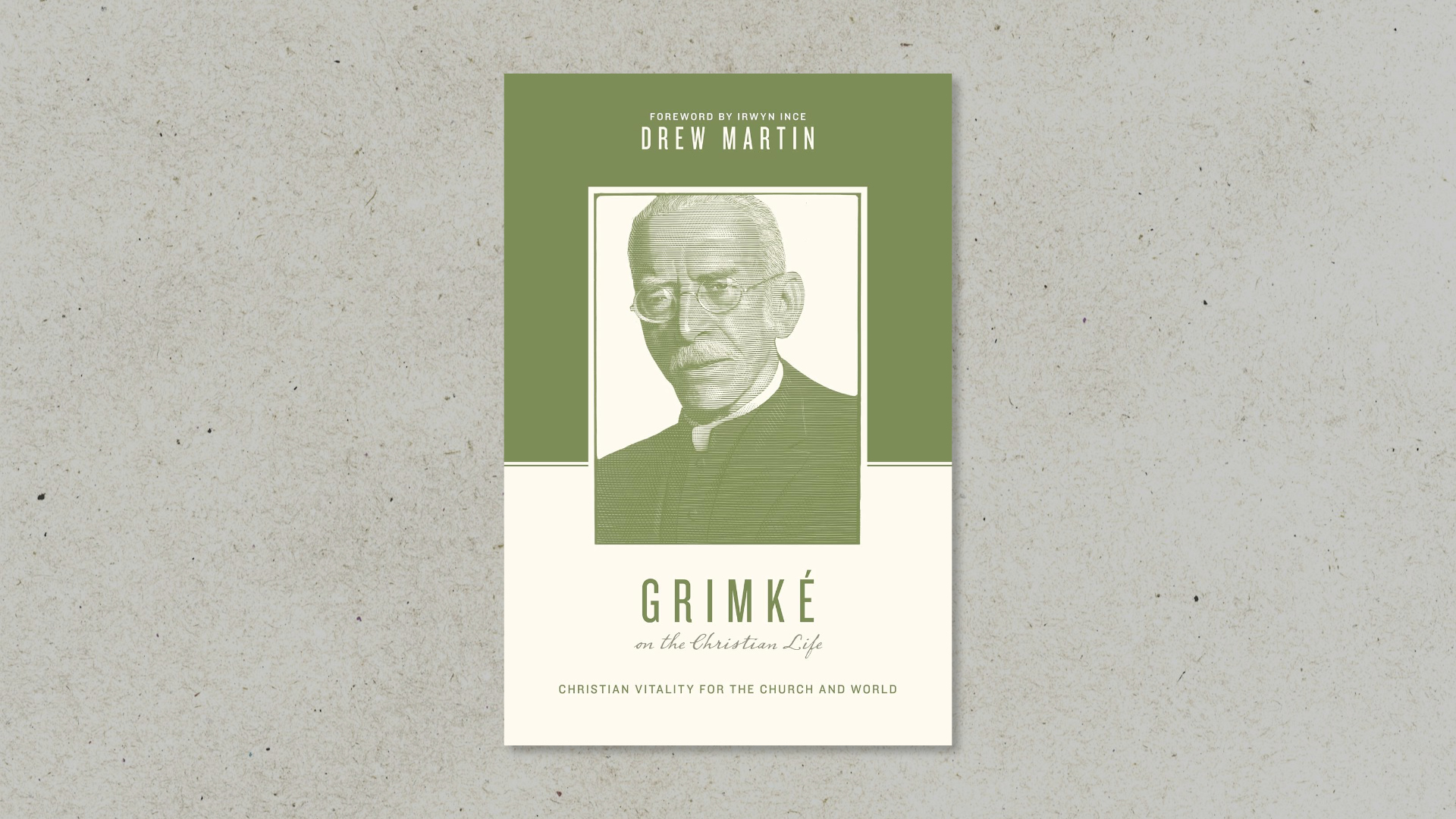
Francis Grimké: A Model for Christian Social Engagement
Favicon 
www.thegospelcoalition.org

Francis Grimké: A Model for Christian Social Engagement

Francis Grimké’s life is the stuff movies are made of. Remembered as a “Black Puritan,” Grimké journeyed from slavery in South Carolina to seminary at Princeton. His story offers an almost unparalleled glimpse into the complexities of race, pastoral ministry, and politics during Reconstruction and Jim Crow. For too long, however, Grimké’s legacy has been overshadowed by either his more famous abolitionist great-aunts (“the Grimké sisters”) or his older brother, Archibald, a Harvard-educated lawyer who helped found the NAACP. In Grimké on the Christian Life: Christian Vitality for the Church and World, Drew Martin, associate professor of systematic theology at Covenant Theological Seminary, closes a gap. He uncovers the theological vision that shaped Grimké’s ministry at one of the most influential churches in Washington, DC. Grimké was neither strictly conservative nor comfortably progressive but instead a theologian who navigated between polarized extremes. Through careful distinctions—such as between the gathered and scattered church, and spiritual and temporal kingdoms—Martin highlights Grimké’s remarkable ability to maintain gospel clarity while actively confronting societal injustices. He shows that Grimké’s example is relevant for contemporary Christians as we live out our faith in a complex society. Grimké’s Story Grimké was born in 1850 as the son of a wealthy white plantation owner, Henry Grimké, and an enslaved woman named Nancy Weston. He experienced firsthand the brutal injustices of slavery. After his father’s death, Grimké and his brother Archibald were treated harshly by their half-brother and his wife, who forced them into labor and punished any resistance severely. Following emancipation at the end of the Civil War, Grimké attended Lincoln University, becoming valedictorian of his class. He went on to study under Charles Hodge at Princeton Seminary. In 1878, Grimké began his long ministry at Fifteenth Street Presbyterian Church in Washington, DC, a notable church with a distinguished congregation that included some of the city’s most prominent black leaders. Apart from a four-year interruption between 1885 and 1889, Grimké ministered at Fifteenth Street until 1927, serving nearly 50 years. Grimké was also deeply engaged in broader social activism, helping form the NAACP. He’s arguably the leading African American theologian of the Reformed tradition of his generation, if not of all time. His life and writings offer a fascinating perspective into the Christian life. Law and Gospel According to Martin, Grimké’s ministry can be framed using the classic Reformed distinction between law and gospel. In traditional fashion, Grimké saw the moral law as indispensable to both evangelism and discipleship, acting as a mirror that reveals human sinfulness and serving as a guide for Christian living. In a more nuanced fashion, Grimké viewed the gospel in two ways: broadly, to include ethical imperatives like love for neighbor, and narrowly, to emphasize Christ’s saving work. For Martin, both aspects of the gospel were necessary for Grimké’s proclamation of salvation in Christ and ethical living. Grimké viewed the gospel in two ways: broadly, to include ethical imperatives like love for neighbor, and narrowly, to emphasize Christ’s saving work. Martin’s “broad” and “narrow” categories reveal potential ambiguities. On the one hand, they help explain why Grimké often referred to social and ethical demands under the umbrella of the “gospel.” For instance, Grimké asserted that the gospel includes teachings on the “fatherhood of God” and “brotherhood of man,” equating these ethical demands with the gospel message itself (28–33). On the other hand, Grimké’s inclusion of ethical imperatives as “gospel” seems to risk conflating law and gospel at points. It’s a good reminder that our appropriation of historical sources should always be careful and critical. Model for Christian Social Engagement Martin articulates Grimké’s vision for the mission of the church through a careful delineation between its “gathered” and “scattered” aspects, as well as the distinction between the spiritual and temporal kingdoms. Grimké emphasized the gathered church’s primary mission as narrowly defined by the Great Commission—focusing on evangelism, discipleship, and proclamation of the Word. Grimké celebrated the “material effects” (Christianity’s influences) on society yet kept them in their proper place as “secondary consequences” rather than primary goals (130–31). He argued that the church mustn’t “waste its time, energy and resources on side issues, on matters of little or no importance in their bearing on the ultimate result” (131). In this, Grimké stood in stark contrast to the theological modernists and advocates of the social gospel of his day, who, in Martin’s view, “made social unity and racial equality the center of the church’s kingdom mission” (131). Grimké affirmed these ideals and agreed with the social agendas of many theological liberals (for example, advocating against racial discrimination). Yet he differed because he “taught that they were natural consequences and not the mission itself” (132). At the same time, Grimké insisted the mission of the scattered church—individual Christians at work in the world—extends broadly into society through diverse vocations and ethical living. Thus, Grimké avoided both reducing the church to a political advocacy group and restricting Christians’ engagement in society. Though he boldly tackled political subjects, Grimké refused “to make the pulpit a platform from which to discuss all sorts of subjects” (142). Martin illustrates how Grimké differentiated between the roles of the gathered and scattered church in addressing moral issues in society: “The church (gathered) has a clear command from Jesus to teach the moral principle that murder is wrong. On the political questions of how reduce or punish murder, the church has no explicit precept, but individual Christians (the church scattered) have an obligation to employ wisdom alongside non-Christians to form better human laws” (206). Some of the categories Martin uses to explain Grimké’s thought don’t seem entirely organic. However, Martin’s categories move the book beyond the safe confines of historical description into prescription for today’s readers. The result is a helpful set of guideposts for navigating complex contemporary realities. Significant Historical Contribution Grimké on the Christian Life would have been an achievement if it had merely used readily available resources to introduce Grimké to an expanded audience. But Martin didn’t content himself with information from Grimké’s four-volume Collected Works. His research extends to Grimké’s unpublished personal papers held at Howard University’s Moorland-Spingarn Research Center. Thus, we learn that the posthumously published Works excludes some of Grimké’s most insightful and acclaimed writings on the church’s mission. Grimké differentiated between the roles of the gathered and scattered church in addressing moral issues in society. Most notably, his Works omits his famous address “Christ’s Program for Saving the World” (1936), which emphasized the church’s “narrow mission” of preaching the gospel and teaching obedience to Christ over a “broad mission” of social activism. Martin explains that “readers of Grimké’s collected works should recognize that these volumes are not necessarily representative of the full scope of his teaching emphasis” (144). The result is a more accurate and complex portrait of one of DC’s greatest theologians. Martin offers a contextually sensitive examination of Grimké’s life and writings through a theological and ecclesiological lens. Meanwhile, ample footnotes on primary and secondary literature give eager readers handholds for future historical research. Most significantly, Grimké on the Christian Life provides a roadmap for pastors and church leaders as they address social problems without drifting from the church’s mission.
Like
Comment
Share
Living In Faith
Living In Faith
2 yrs

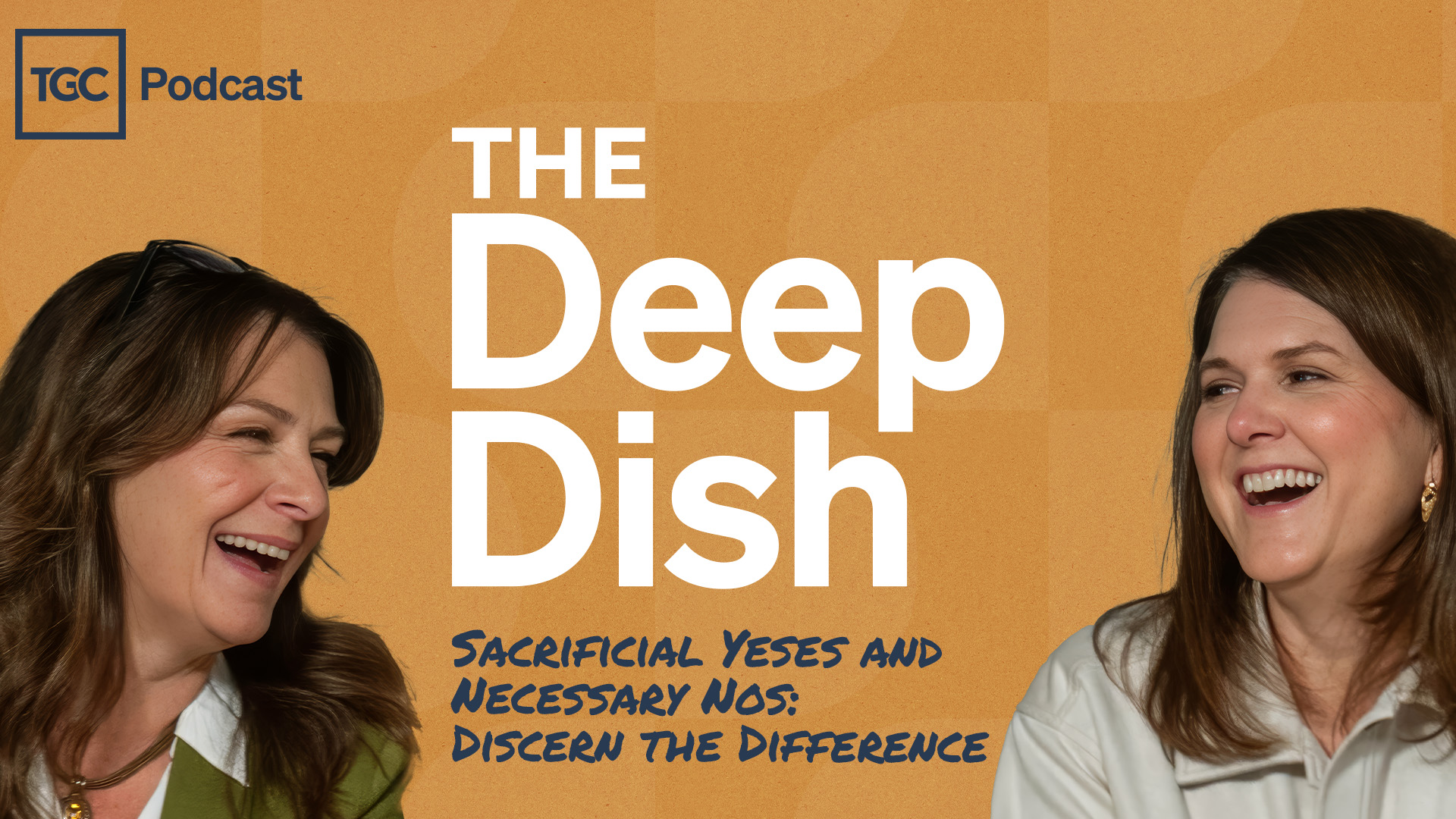
Sacrificial Yeses and Necessary Nos: Discern the Difference
Favicon 
www.thegospelcoalition.org

Sacrificial Yeses and Necessary Nos: Discern the Difference

Courtney Doctor and Melissa Kruger discuss how to make decisions about using your time. They talk about how to think of yourself with sober judgment, the wrong reasons to say “yes” and “no,” and how to recognize which callings in your life must be prioritized. Although there’s no formula for determining when to say yes or no, there’s always wisdom available from God when we ask for it. Recommended Resources: Second Timothy 4:6–18 The Envy of Eve by Melissa Kruger Work Well with All Types of People (The Deep Dish, episode 7) Related Content: Let’s Talk: Decision-Making How to Know When to Say No Make It Your Ambition: Seven Godly Pursuits for the Next Generation by Jeremy Writebol Help! I’m Afraid I Made the Wrong Decision Discussion Questions: 1. What’s a situation in which you struggled to give a yes or no? What made that decision difficult? 2. Do you tend to say yes or no more often? What usually motivates your answer? 3. What might pursuing time with the Lord in order to have a “transformed mind” look like in your life right now? What might need to change for you to prioritize this? 4. What situations has God used in your life to reveal your unique giftings? 5. In what ways do you experience tension between pursuing self-care/rest and sacrificial service? How can self-care and comfort become idols that influence our decision-making? 6. How has God provided rest for you during seasons of sacrificial yeses? What Sabbath practices help you find rest in the Lord?
Like
Comment
Share
Daily Caller Feed
Daily Caller Feed
2 yrs

Staffer For Nationals Suddenly Collapses During Pre-Game Festivities In Philadelphia
Favicon 
dailycaller.com

Staffer For Nationals Suddenly Collapses During Pre-Game Festivities In Philadelphia

Scary moment out of Philly
Like
Comment
Share
Daily Caller Feed
Daily Caller Feed
2 yrs

Scott Bessent Reveals Number Of Trading Partners Trump Team Currently Negotiating With
Favicon 
dailycaller.com

Scott Bessent Reveals Number Of Trading Partners Trump Team Currently Negotiating With

'All 17 have approached us'
Like
Comment
Share
Twitchy Feed
Twitchy Feed
2 yrs

Beware Incels, X Hilariously Mocks Hitler's 80th 'Death Day'
Favicon 
twitchy.com

Beware Incels, X Hilariously Mocks Hitler's 80th 'Death Day'

Beware Incels, X Hilariously Mocks Hitler's 80th 'Death Day'
Like
Comment
Share
Showing 70386 out of 142632
  • 70382
  • 70383
  • 70384
  • 70385
  • 70386
  • 70387
  • 70388
  • 70389
  • 70390
  • 70391
  • 70392
  • 70393
  • 70394
  • 70395
  • 70396
  • 70397
  • 70398
  • 70399
  • 70400
  • 70401

Edit Offer

Add tier


Select an image
Delete your tier
Are you sure you want to delete this tier?

Reviews

In order to sell your content and posts, start by creating a few packages. Monetization

Pay By Wallet

Payment Alert

You are about to purchase the items, do you want to proceed?

Request a Refund