YubNub Social YubNub Social
    #biology #blood #brazil #fossil #paleontology #dinosaur #dinosaurblood #aratasaurusmuseunacionali #romualdoformation #csrf
    Advanced Search
  • Login
  • Register

  • Night mode
  • © 2026 YubNub Social
    About • Directory • Contact Us • Developers • Privacy Policy • Terms of Use • shareasale • FB Webview Detected • Android • Apple iOS • Get Our App

    Select Language

  • English
Community
New Posts (Home) ChatBox Popular Posts Reels Game Zone Top PodCasts
Explore
Explore
© 2026 YubNub Social
  • English
About • Directory • Contact Us • Developers • Privacy Policy • Terms of Use • shareasale • FB Webview Detected • Android • Apple iOS • Get Our App

Discover posts

Posts

Users

Pages

Blog

Market

Events

Games

Forum

Conservative Voices
Conservative Voices
2 yrs

Is China being pushed to the negotiating table with the US?
Favicon 
www.brighteon.com

Is China being pushed to the negotiating table with the US?

Follow NewsClips channel at Brighteon.com for more updatesSubscribe to Brighteon newsletter to get the latest news and more featured videos: https://support.brighteon.com/Subscribe.html
Like
Comment
Share
Conservative Voices
Conservative Voices
2 yrs

Dear Jordan Peterson, the Psychopaths Are Already Here
Favicon 
www.theamericanconservative.com

Dear Jordan Peterson, the Psychopaths Are Already Here

Foreign Affairs Dear Jordan Peterson, the Psychopaths Are Already Here The celebrity psychologist misdiagnoses what ails the right. Dr. Jordan Peterson is making the rounds to warn that the political right faces a new need to bar “psychopaths” from insinuating themselves among us and using social media platforms to acquire attention and power. I agree! However, Peterson says he is particularly concerned about psychopathic antisemites taking over the right, and on this point he deserves some pushback. “Antisemite” is a term that has become both more meaningful and almost meaningless in recent years. More meaningful in that there has been a sharp increase in genuine anti-Jewish bigotry on the political right. More meaningless in that political and media elites (including on the political right) now smear as “antisemitic” anyone—including any Jew or other Semite in the Holy Land—who opposes the ongoing deadly actions of the state of Israel against the people of Gaza. So, my response to Peterson would be that if he wants to protect the political right from being manipulated by “psychopaths” who are seeking “their own gain,” as he has said, then he should put first things first. Rather than going on a booby-trapped quest of condemning “antisemites,” now is the time to call out the group that has already very successfully insinuated itself on the political right: The radical Zionists who empty the word “antisemitic” of its meaning (therefore making it impossible in the first place to meaningfully oppose Jew hatred), and who use both Jews and the political right for the shallow purpose of paving the way for the military ambitions of Israeli Prime Minister Benjamin Netanyahu. Netanyahu certainly does not deserve the affection and loyalty of America’s right wing. He isn’t merely an ordinary politician in a foreign country—though he is that, too—but a corrupt and unpopular one who seems to be sustaining the war in Gaza as a means to secure his grip on power. The radical Zionists who have insinuated themselves among us in America, however, present Netanyahu’s goals as fundamentally beyond critique. In fact, unlike the “antisemites” Peterson warns us about, these “psychopaths” have so much influence that you’d be hard-pressed to find a respectable conservative American treating Netanyahu as anything other than a perfect representative not only of the state of Israel, but of all Jews. But this isn’t just about Netanyahu and Israel. Indeed, these “psychopaths” strike at the root of the Western civilization that conservatives are supposed to stand for. As I wrote recently elsewhere,  Western Civilization is founded on God’s revelation that every human person is made in His image. And it’s founded on Christ’s insistence on associating Himself most intimately with the most vulnerable among us—the widow, the orphan, and all of those rejected by the powerful and living under urgent threats of violence… That Gospel truth is the meaning behind all the best articulations of Western Civilization. It’s in the Magna Carta’s words of warning against unjustly arresting and punishing individuals without trial. It’s in the Declaration of Independence’s recognition of “Nature’s God,” before Whom “all men are created equal” with “inalienable rights.” It’s in the United Nations Charter of Human Rights and in the West’s condemnations of Nazi offenses against human dignity at Nuremberg. Contrast that foundational conservative principle with best-selling author Douglas Murray’s calling Arabs “a people of death” and suggesting they are inherently a noxious threat to the West—including, presumably, their women and children dying in the tens of thousands in Gaza. Or with mainstream Christian conservative commentator Erick Erickson’s encouraging the Israeli military to “carpet bomb” an entire city in Gaza.  Or with the numerous other expressions of dehumanizing hatred—even more mainstream in the sense of being more pervasive—among smaller but still significant right-wing social media accounts like this one, whose crude and brutal language I dare not quote here.  Of course, Douglas Murray and Erick Erickson do not strike me as actual clinical psychopaths, but their pronouncements do represent a tide of small-minded bigotry that Peterson ignores. But, thank God, that tide may be turning, in part due to the bluntness of President Donald Trump. Last week, Trump recounted that, during his last talk with the prime minister, he said, “You got to be good to Gaza.”  “Those people are suffering,” Trump told reporters on Air Force One. “There’s a very big need for food and medicine, and we’re taking care of it … We’re pushing [Israel] very hard.” Given Trump’s incredible influence on conservative discourse, such statements are significant, and hopefully matched by real action. I’m not here to say Dr. Peterson’s warning about bad actors using conservatives for their own sinister purposes doesn’t make any sense or isn’t true in principle.  On the contrary, what concerns me about it is just how true it already is—and has been since long before Peterson got it into his head to defend the political right from infiltrators. In fact, Peterson’s message itself may prove more than anything else just how vulnerable the political right is to the kind of infiltration he’s warning against.  The evidence? Right now, at the high-water mark of conservatives’ moral indifference to the people of Gaza—if not active hatred for them—a great conservative-leaning intellectual like Peterson is drawing the public’s attention away from the plight of the Palestinians and helping to pathologize criticism of the state that is brutalizing them. The post Dear Jordan Peterson, the Psychopaths Are Already Here appeared first on The American Conservative.
Like
Comment
Share
Conservative Voices
Conservative Voices
2 yrs

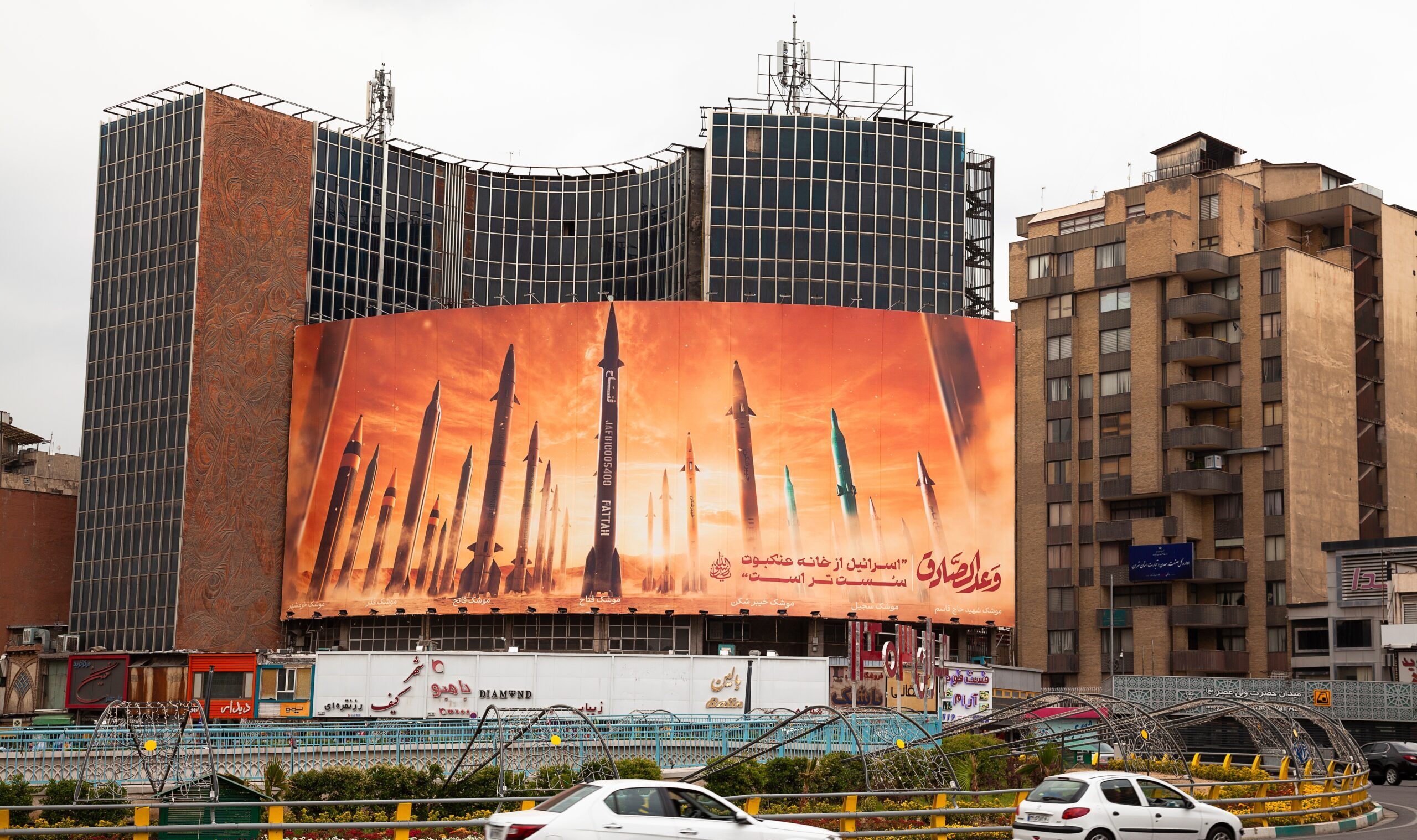
Will Donald Trump Say No to War with Iran? 
Favicon 
www.theamericanconservative.com

Will Donald Trump Say No to War with Iran? 

Foreign Affairs Will Donald Trump Say No to War with Iran?  The choice should be easy. Credit: saideex/Shutterstock The Trump administration and Iranian government concluded another round of nuclear talks on Saturday. A “senior Trump administration official” termed the discussion “positive and productive.” Iran’s Foreign Minister Abbas Araghchi said he was “hopeful but very cautious.”  Much depends on whether President Donald Trump is seriously committed to reaching a deal with the Islamist state. He long has appeared to be in thrall to a disparate group of uber-hawks and neocons, many of whom promoted the Iraq debacle and are now campaigning for war against Iran. Although the president claims that he wants a diplomatic solution, he has been moving, per a report in the War Zone, “B-2 stealth bombers, fighters, support aircraft, another carrier strike group, air defenses, and more” into the Mideast.   Last month Trump declared, “If they don’t make a deal, there will be bombing. It will be bombing the likes of which they have never seen before.” In an interview published Friday he dismissed concern about the Israeli Prime Minister Benjamin Netanyahu’s persistent campaign to drag Americans into war with Iran, stating, “I may go in very willingly if we can’t get a deal. If we don’t make a deal, I’ll be leading the pack.” No doubt, rather like China in its policy toward Taiwan, Trump hopes intimidation will deliver a favorable result. But like Taipei, Tehran has spent years resisting pressure. What if Iran rejects the president’s terms? Before approving military strikes on its nuclear facilities, he should remember that acting in haste is often followed by repenting at leisure—in his case through the rest of his term and probably well beyond. Launching an unprovoked war against Iran would make George W. Bush’s disastrous legacy look good in comparison. Of course, the radical forces that dominate the current Tehran regime are malign. Unfortunately, multiple U.S. administrations have done much to turn Iran, the state and many of its people, into adversaries if not enemies. In 1953, at the behest of Great Britain, angry over Tehran’s nationalization of British oil assets, President Dwight Eisenhower helped overthrow the elected prime minister, Mohammed Mosaddegh, and empower the shah, Mohammad Reza Pahlavi, who was mostly a figurehead. For a quarter of a century Washington supported its often difficult, but always corrupt and autocratic, partner. President Jimmy Carter, who ostentatiously promoted human rights, hosted an embarrassing state dinner for the shah and reciprocated with a sycophantic visit to Iran. Ironically, it was this nominal American ally which began Tehran’s nuclear program. Growing public dissent eventually ended the Pahlavi dynasty, despite the Carter administration’s support for a deadly crackdown. Reported the New York Times:  Over lunch at the Knickerbocker Club in New York, [President Jimmy] Carter’s special envoy to Tehran, Gen. Robert E. Huyser, told the Project Eagle team that he had urged Iran’s top military leaders to kill as many demonstrators as necessary to keep the shah in power. If shooting over the heads of demonstrators failed to disperse them, “move to focusing on the chests,” General Huyser said he told the Iranian generals, according to minutes of the lunch. “I got stern and noisy with the military,” he added, but in the end, the top general was “gutless.” Ignoring the Shah’s many crimes, the U.S. gave sanctuary to the dying dictator.  A radical Islamic state followed, but, despite the early kidnapping of American diplomatic personnel, Tehran never seriously threatened the U.S. Rather, it was Washington that constantly threatened Iran. Successive administrations had provided sustained support for and weapons sales to the Shah’s repressive regime. While his forced modernization was understandably welcomed by both educated elites and the West, it fostered resentment and opposition among more traditional communities and spurred the Islamic revolution. After the shah’s overthrow, the Reagan administration supported Iraq’s bloody aggression against Iran, even reflagging oil tankers to protect Baghdad’s revenue stream. The result was eight terrible years of conflict and a million or more casualties. The U.S. also armed Saudi Arabia and Israel, Iran’s principal regional rivals, imposed economic sanctions on Tehran, repeatedly threatened military action against the Islamic regime, deployed air and naval assets around Iran, assassinated Qassem Soleimani, the influential head of Iran’s Quds Force, and actively intervened on Israel’s behalf even after the latter initiated military attacks on Iranian personnel and interests, including on a diplomatic facility in Syria and a government building in Tehran. It should come as no surprise that many Iranian policymakers desired to build a potent retaliatory nuclear arsenal.  Nevertheless, despite the outsize role of the militant Islamic Revolutionary Guards, there are more moderate and responsible leaders, who negotiated the Joint Comprehensive Plan of Action (JCPOA) with the Obama administration. That agreement constrained the Iranian nuclear program. Moreover, successive Iranian governments forged a détente with Saudi Arabia, whose de facto ruler, Mohammed bin Salman, once called Iran’s Supreme Leader Ali Khamenei “the new Hitler of the Middle East.” In mid-April, the Saudi defense minister traveled to Tehran for talks, the first visit by a senior Saudi royal in almost 30 years. Although Washington’s war lobby dismisses Tehran’s suitability as a negotiating partner, the Iranians abided by the JCPOA. Washington, on the other hand, proved to be faithless. Congress opposed the agreement and undermined its implementation. The Obama administration did little to ease the spillover effects of remaining U.S. sanctions, which continued to discourage trade with and investment in Iran. Despite Tehran’s continued compliance, Trump abandoned the pact and reinstated sanctions, leading the Islamic regime to revive its nuclear program. Then the Biden administration, rather than restore the agreement, sought to take advantage of its predecessor’s breach to force harsher terms.  After all this, the U.S. is threatening military action. But war is not just another foreign policy tool. It is unique, sending Americans into combat, killing and disabling many. It also means visiting death and destruction upon other peoples and lands. The economic costs, too, are high. Imagine America if thousands of lives and trillions of dollars had not been squandered in Washington’s foolish wars over the last quarter century. Conflict with Iran would only increase the criminal toll. The situation with Tehran is one of Uncle Sam’s great policy failures, but war is not the answer. Indeed, military action would not be justified even if it seemed likely to be successful in some abstract sense. War should require a serious and imminent threat to vital or critical interests. Iran falls short in every way. First, the JCPOA demonstrated the success of diplomacy. The agreement placed serious restraints on the Iranian nuclear program, made proliferation less likely, and “ensured that in the worst-case scenario, Iran would be proliferating from a lower baseline.” Neither Riyadh nor Jerusalem, along with their advocates in Washington, were happy with the accord, because they were committed to a U.S. war against Tehran, irrespective of the cost—to Americans and Iranians alike. Nevertheless, the JCPOA benefited both the U.S. and Middle East, avoiding unnecessary war and nuclear proliferation.  Unfortunately, after Trump resumed economic war, Iran predictably revived its nuclear program. As a result, today Tehran is better positioned to weaponize the results. Saudi Arabia’s Crown Prince Mohammed bin Salman has threatened to join the nuclear race. And the Israeli government risked war by targeting aspects of Iran’s program and threatening broader strikes, even though it likely lacked the means to halt weapons development.  Second, Iran is not an easy target. It has three times the population of Iraq and, unlike the latter, was not an artificial creation of the West. Even younger Iranians who want liberalization aren’t likely to welcome American bombs. While the Iran would lose a shooting war, it could cause serious U.S. casualties and regional damage. The Iranian military commander Amir Ali Hajizadeh warned: “The Americans have at least 10 bases with 50,000 troops in the region, meaning they are sitting in a glass house”—and should be wary of tossing stones. Military action would likely only delay development of a bomb and would certainly convince any regime doubters that they required a nuclear weapon to survive. Moreover, an extended military campaign likely would be necessary to have a serious chance of halting Iranian nuclear development. The Washington Institute’s Michael Eisenstadt predicted that “a preventive attack likely won’t be a one-off but rather the opening round of a lengthy campaign employing military strikes, covert action, and other elements of national power. Such a campaign…could presage either a more stable order for the region or a new, dangerous phase.” Moreover, war would threaten Tehran’s neighbors. A desperate Iran might strike at facilities hosting U.S. forces throughout the Gulf and seek to block oil traffic. Angry populations might challenge royal regimes with negligible popular legitimacy. Which helps explain why even Saudi Arabia, once an enthusiastic advocate of American military action against Iran, has urged the U.S. and Israel not to let slip the dogs of war. Third, Tehran would not use nuclear weapons against the U.S., given Washington’s ability to retaliate on a massive scale. Iran is seeking deterrence in a bad neighborhood, where nuclear-armed Israel’s depredations dramatically demonstrate its conventional superiority. Moreover, the latter has long been informally allied with several of the Gulf kingdoms and other Arab states, with Iran their primary target. Although the latter has greatly improved its relations with its neighbors, it remains vulnerable. The region would benefit from an effective balance of power. Indeed, 13 years ago Kenneth Waltz, at the Saltzman Institute of War and Peace Studies, provocatively contended that a nuclear Iran “would probably be the best possible result: the one most likely to restore stability to the Middle East.” Israel’s brutal treatment of Palestinians within its control and Arabs elsewhere demonstrates its dangerous mix of excessive ambition and power: “Israel’s regional nuclear monopoly, which has proved remarkably durable for the past four decades, has long fueled instability in the Middle East. In no other region of the world does a lone, unchecked nuclear state exist. It is Israel’s nuclear arsenal, not Iran’s desire for one, that has contributed most to the current crisis. Power, after all, begs to be balanced.” Best would be an agreement by Tehran to forego nuclear weapons made possible by corresponding Israeli and U.S. military restraint. Fourth, America has ever less at stake in the Middle East and Persian Gulf. The region was never a vital interest. The Cold War fear was a Soviet attempt to cut off oil to the US and Europe. Now Russia’s military weakness, China’s dependence on imported energy, increased diversity of the international market, and expanded American energy production, have steadily reduced threats to and importance of Middle East oil. A secondary fear was for Israel’s survival, but the greatest threat to Jerusalem today is internal, the growing impossibility of Israel being both democratic and Jewish. In any case, the heedless desire for cheap gasoline and bizarre conflation of Biblical and modern Israel provide no justification for the U.S. going to war. As noted earlier, over the last quarter century Washington policymakers have promiscuously sacrificed American lives and wealth in reckless Mideast conflicts. Adding Iran to the list of misbegotten U.S. targets would be criminal. Trump surely knows better than to start shooting at Iran. He campaigned against forever wars. He criticized George W. Bush’s criminal attack on Iraq. In 2019 Trump refused to retaliate against Iran for its shootdown of an American drone and for the attack on Saudi oil facilities. Neither warranted war. Nor is there cause for conflict with Iran today. When even Riyadh is urging the U.S. and Israel not to ignite the Mideast, the president should keep the peace.  The post Will Donald Trump Say No to War with Iran?  appeared first on The American Conservative.

Like
Comment
Share
Conservative Voices
Conservative Voices
2 yrs

Röttgen: ‘U.S. Taxpayers Are No Longer Willing to Do the Heavy Lifting’
Favicon 
www.theamericanconservative.com

Röttgen: ‘U.S. Taxpayers Are No Longer Willing to Do the Heavy Lifting’

Foreign Affairs Röttgen: ‘U.S. Taxpayers Are No Longer Willing to Do the Heavy Lifting’ An interview with Norbert Röttgen, former chairman of the Bundestag’s Foreign Affairs Committee. Credit: Scharfsinn/Shutterstock Norbert Röttgen, a member of the German Bundestag and its Foreign Affairs Committee (which he chaired from 2014 to 2021), sat down for an exclusive interview with The American Conservative on the politics and foreign policy of Germany today. Germany is undergoing a strategic revolution, or so the thinking goes. Chancellor Friedrich Merz’s alteration of the debt brake signals a newly assertive Germany, ready to take up its natural hegemonic role in Europe. But in reality, how will that affect both German politics, and perception of Europe? Is the new German leadership willing to unilaterally lead, or will the new leadership will still be hamstrung by EU consensus politics? To fully understand the magnitude of the change in Germany, one needs to know that the debt brake was formerly introduced by the Christian Democratic Party (CDU) as a consequence of the global financial crisis. It has now been lifted for only one specific area, namely defense spending, even before the new government has taken office. This shows how serious we are about assuming a new role in security and defense—and with a debt-to-GDP ratio of slightly above 60 percent we have the fiscal capacity to do so. As Christian Democrats, we are ready to massively invest in European security out of our own strategic interests in response to Russia‘s imperialist war in Europe and in light of the changes we see in the United States. This readiness is personified by the CDU leader and likely new German chancellor, Friedrich Merz.  But leadership in a European context must never again mean hegemony. For centuries European powers fought brutal wars, including two world wars, to assume hegemony. Following the Second World War and with the help of the United States, we have come to a new understanding of Europe as a common peace project. Hence, leadership in Europe can never be unilateral, but must take place in coordination with our European partners.  Since defense continues to be a national competence within the EU framework, Germany is ready to pursue intergovernmental cooperation amongst like-minded states both aligned with and beyond the EU institutions. This framework is open to anyone willing and able to contribute to shaping a new European security order, with the prime objective of deterring further Russian aggression.  Speaking of American retrenchment, allow me to ask you a few strategic questions. There seems to be a significant division between the new American administration, particularly the VP’s office, and the new German government. What are the sources of this tension, and is there any possible alignment between the two sides? As Germans we are long-term strategic partners of the United States, and I am confident that our future Chancellor Friedrich Merz will have a good working relationship with the new U.S. administration. This relationship should be based on a shared understanding of interests in primarily three areas: security, economy, and values. In Germany and Europe, we fully understand that U.S. taxpayers are no longer willing to do the heavy lifting on European security. I absolutely concur that we should have acted on this earlier, but we have now taken major and unprecedented steps to make the money available that is necessary to massively ramp up European defense capabilities. This creates space for the United States to militarily focus on the Indo-Pacific and China, while maintaining Europe as a comprehensive strategic partner.   With regards to economic and trade policy, we acknowledge that the United States pursues its own interests. So do we. We will define and defend our economic interests while remaining strongly convinced that our economic relationship isn’t bound to be zero-sum but bears huge potential to create win-win solutions.  And finally, there is the topic of values. After centuries of warfare in Europe, culminating in two devastating world wars, we are proud of the liberal democracies we have become. In Germany this would not have been possible without the helping hand from the United States.  Hence, when U.S. politicians challenge the fabric of our liberal democracies in supporting far-right extremist parties such as the AfD [Alternativ für Deutschland] in Germany, this is somewhat disturbing for us and not acceptable. These parties intentionally undermine our democracies. They are not only allies of Putin but are also strongly aligned with China. When U.S. Vice President Vance endorses these parties that openly sympathize with China, it becomes more difficult for us to explain to voters why we should reduce trade with China and bear the economic costs.  As Secretary of Defense Pete Hegseth commented recently, an ideal American strategy would be one where Europe takes the ownership of the “conventional deterrence,” and it is implied that the U.S. will provide the nuclear and naval umbrella needed. What is a good burden-sharing model in your opinion?  I agree with Secretary of Defence Pete Hegseth on this, and the necessary transition is taking place in Europe. This is in large part an American achievement as well. But after decades of dependency from the United States as our main security provider, some U.S. military capabilities cannot be substituted overnight. To transition successfully requires a bit of time.  Given Russian and Chinese interest in the Arctic, a renewed American presence in Greenland is beneficial to both the U.S. and Europe. From what can be gathered, Europe is bending over backward to offer further mining, basing, and settlement rights to Americans in the northern hemisphere. In your opinion, are the Americans being too coercive in Greenland and will that lead to an adverse diplomatic effect? The United States has long had a military base in Greenland. From my understanding neither Denmark nor Greenland as an autonomous territory had an issue with U.S. military or industrial presence. What has been counterproductive and led to major irritation in Greenland and across Europe is the coercive language used in relation to a NATO partner. I think the United States would find that a great deal of understanding exists in Denmark and Greenland if it simply talked to both about American and shared security interests instead of issuing threats.  Chancellor Merz recently hinted that Taurus missiles might be used in Crimea, which resulted in some disagreement even among the coalition partners. How far is the new German leadership willing to escalate against Russia, given the very real possibility that there will be no American support if the Russians counter-escalate? Is Germany going to be part of the “coalition of the willing” trip-wire force in Ukraine, in the possibility of an American retrenchment?  I disagree with the narrative that supporting Ukraine, in whatever way, constitutes an escalation against Russia. There is only one country that keeps escalating and continues to commit horrendous war crimes against Ukrainian civilians. This country is Russia. The United Kingdom, France, and the United States have already delivered long-range missiles to Ukraine. While the Kremlin has been verbally threatening them, we have seen no actual retaliation by Russia. This is because Putin has already fully escalated with all means available to Russia. Using nuclear weapons against Ukraine or its allies is a red line defined by Russia’s most important ally—China—that Russia cannot afford to lose. This is not to say that we shouldn’t carefully weigh the risks involved when delivering new weapons systems. We must and will avoid becoming a party to the war ourselves. But after lots of deliberation I personally concluded that not (sufficiently) supporting Ukraine entails a much greater risk than supporting it. If Putin were to be even partially successful in Ukraine, he would feel emboldened to attack other countries such as Moldova or even one of the Baltic states. This is both in line with Russian imperialism as well as the level of military build-up we see in Russia which goes way beyond what is necessary to continue the war against Ukraine. I am therefore in favor of a European coalition of the willing. This coalition needs to be willing to support Ukraine with all means available to ensure that Russia’s war fails. Sending German Taurus missiles in coordination with our allies should thus of course be on the table. But we should avoid discussions that are pointless at this moment in time and only disclose rifts amongst the allies. This applies to a potential European trip-wire force in Ukraine, as long as no one can say which troops would be deployed and what their exact mandate would be. You are a notable China hawk in Germany. In that regard, you’re perhaps the closest of all German politicians to the current U.S. political elite. But is the European Union too cozy to China when it comes to trade? If Europe has to choose between the U.S. and China on some of the core strategic questions of our times, will it be a unified decision, or will it be split and divided? Do you think the VP’s speech has pushed the European public opinion towards China? The European Union has considerably toughened up on trade vis-à-vis China. The Commission actively advocates a derisking approach, which includes protecting our infrastructure against Chinese manipulation (i.e. 5G). At the end of last year, the EU issued tariffs against Chinese electric vehicles entering Europe. It did so against German opposition. Unfortunately, it has long been Germany with its export-oriented economy that has pushed back against a tougher EU China policy.  However, given the painful and expensive experience we made with respect to our Russian energy dependency, the incoming CDU-led government is determined to reduce economic dependencies from China. Doing so is necessary to put ourselves in a position to withstand sanctions and counter-sanctions in the event of Chinese aggression against Taiwan.  This policy shift reflects a newly found realism towards China both amongst German politicians as well as the general public. Hence, I do not believe that Vice President Vance’s Munich speech has pushed the public opinion towards China. But his siding with pro-China parties in Germany and Europe has caused some irritation. You have been a rare German voice about the need for human rights and war crimes accountability, not just in Ukraine, but also elsewhere. Would you elaborate the position of Germany with regards to the Middle East, especially in regards to Syria, Palestine, and Turkey?  Germany is an advocate of universal values as enshrined in the UN Human Rights Declaration. This entails that we do what is within our means to enforce those rights. Sometimes, and that is part of the truth, this is not a lot.  With regards to Syria, Germany has always opposed the idea of a normalization of relations with the Assad regime, which was responsible for gross human rights violations, including the use of chemical weapons against its own population. We upheld far-reaching economic sanctions against the regime. With the new government now in place, we are carefully readjusting our posture. We are offering sanctions relief to allow for an economic recovery and political stabilization of the country, but with effective snap-back mechanisms in case the new leadership does not live up to its promises. We have equally taken a tough stance on Iran, putting into effect new sanctions after the brutal government crackdown against peaceful protests following the death of Jina Mahsa Amini. Personally, I would like to go even further and put the Islamic Revolutionary Guard on the EU terror list.  Regarding Israel, one of our closest allies, we are steadfast in our support of its right to self-defense. But this right does not entail a carte blanche, as jus in bello (the law that governs the way in which warfare is conducted) applies to the defending state as well.  Berlin, as noted in these pages, and elsewhere, has the real European “special relationship” with America. A duopoly between Germany and the U.S. is not only needed, but is beneficial to surviving the coming great power competition, especially with a rising China and revanchist Russia. Should there be a rapprochement (for lack of a better word) and a new social compact between the two, and if so, what might be the steps and confidence building measures, to reach that new relationship, especially from a position of mutual respect and admiration? And what might be the German red-lines, related to American interference and meddling?  I share your assessment that U.S.-German relations are particularly important. They have a European dimension that extends beyond Germany, as we collectively want to keep the USA as a strong ally; and a geopolitical dimension that stems from Germany’s importance in positioning itself against a rising China and a revisionist Russia. Pursuing a relationship not based on military dependencies but mutual interests and benefits would be something new for both countries. For such an endeavor to be successful the conditions are easy to define: First, Germany must continue to match its words with actions and demonstrate that it is truly committed to its new stance on European security.  Second, a new accord must be based on the shared assessment that China’s rise as a systemic rival and Russia’s persistent belligerent imperialism are the most pressing threats to regional and global security. It is a pressing but achievable task for the United States and Germany to design a coherent and joint policy to contain these security threats.  Third, from a German and European perspective we consider any external support for extremist political parties that are aligned with powers that we perceive as threats to our national security as incompatible with such an approach.  The post Röttgen: ‘U.S. Taxpayers Are No Longer Willing to Do the Heavy Lifting’ appeared first on The American Conservative.
Like
Comment
Share
Beyond Bizarre
Beyond Bizarre
2 yrs ·Youtube Wild & Crazy

YouTube
20 Most Evil Humans to Ever Walk the Earth!
Like
Comment
Share
Intel Uncensored
Intel Uncensored
2 yrs

Learn how to turn a cheap box fan into an air filtration system for your home—for just $15! ?‼️
Favicon 
api.bitchute.com

Learn how to turn a cheap box fan into an air filtration system for your home—for just $15! ?‼️

➡️?You’re going to wish you knew this air filtration hack sooner! ?
Like
Comment
Share
Intel Uncensored
Intel Uncensored
2 yrs

Jeffrey Epstein victim, she is frightened after what has happened to Virginia Guiffre and others.
Favicon 
api.bitchute.com

Jeffrey Epstein victim, she is frightened after what has happened to Virginia Guiffre and others.

Jeffrey Epstein victim, Juliette Bryant posted a video on her Twitter/X, saying she is frightened after what has happened to Virginia Guiffre and others.
Like
Comment
Share
AllSides - Balanced News
2 yrs

Favicon 
www.allsides.com

Did Wisconsin Gov. Tony Evers tell state employees not to assist federal immigration officials?

A memo issued by Democratic Wisconsin Gov. Tony Evers’ administration directs state employees to contact an attorney before offering any cooperation if they are encountered in the workplace by a federal Immigration and Customs Enforcement agent. AllSides highlights content from Gigafact, a network of newsrooms that respond to online claims. View the full fact brief on Wisconsin Watch.
Like
Comment
Share
The Lighter Side
The Lighter Side
2 yrs

Woman brilliantly uses a microwave to get a sick day from work
Favicon 
www.upworthy.com

Woman brilliantly uses a microwave to get a sick day from work

Most of us have had "that day" where we simply didn't want to go to work. We scoured our brains to come up with an excuse—car won't start, alien abduction, kid is sick. (I tried the latter once and my boss immediately replied, "But you don't HAVE a kid." Oops.)These days, we have to get extra creative to get our much-needed day off, and one woman on TikTok took it to a whole new level. Her name is Tiffaney (@Tiffaneyfirstlady), and she used an everyday kitchen appliance as her accomplice. Casually holding her phone on speaker in one hand, she says, "Yeah, I'm at the hospital. I'm not gonna be able to come in today. Um, they running tests right now. They doing an IV. And I will let y'all know what's going on with me as soon as I leave the hospital." Faking Sick Matthew Broderick GIF by STARZ Giphy That's not the genius part. The whole time she's giving this speech, she's methodically clicking her microwave button to make it beep like she's hooked up to an IV pump or the like. Diabolical, maybe. Brilliant? Definitely. @tiffaneyfirstlady Calling out of work be like....#preparetheotherscauseiaintcoming?? #fyp #pov #53havingfun♌️ #callingoutofwork #callingoutsick Now most likely this is "just for fun" content. But the comments are just as hilarious as the video. One writes what I was thinking, "I would have accidentally hit start."This commenter had a note about her performance, at least in terms of the timing: "The fact that she can’t multitask and keep up with the microwave tempo while trying to keep the conversation going." And this person is concerned the boss would see right through it. "The boss asking you to call after you change the smoke detector batteries because he couldn’t hear you well."Quite a few people were disappointed because they "work in the hospital," so this wouldn't help. Another warns, "You DO know that employers watch TikTok as well!" Sick Season 4 GIF by Friends Giphy There are many Reddit threads dedicated to other innovative ideas for getting the coveted sick day. In an r/AskReddit sub, someone asked, "What's your best excuse for calling in sick to work?" Redditors were ready, though some of the suggestions involved some pretty graphically disgusting illnesses involving super unsanitary practices. From Pink Eye to Typhoid Fever to words I can't actually transcribe—they had it all.This one was a bit dark, but certainly got the job done: "I called in once and said my gran had died. This got me 2 weeks paid time off... It wasn't a lie, I just didn't say when she had died."This excuse isn't quite so fail-safe: "My leg just got amputated. Pro Tip: Doesn't work three times." Sick 1980S Tv GIF by absurdnoise Giphy This person complied an amazing list of excuses to try, should your job last at least a year. (Note: A few were removed to make the list ever-so-slightly family friendly.) The heartbreak of psoriasis A 24-hour Ebola bug that's going around Streptococcal-gonnechenoccus Connodial buttnoids Inflamed fallopian tubes (I'm a dude) P---s envy Stockholm syndrome Dry skin Münchhausen by proxyAnd lastly, this Redditor might take the cake (or the Viagra, rather) with this gem: "I took too many Viagras while drunk last night and now I can't see."
Like
Comment
Share
The Lighter Side
The Lighter Side
2 yrs

Teacher goes viral for showing up to her middle school at 10pm in a bonnet and pajamas
Favicon 
www.upworthy.com

Teacher goes viral for showing up to her middle school at 10pm in a bonnet and pajamas

While we often think of test day as purely a stressful day for students, teachers definitely feel the pressure too. Just take middle school teacher Sarah Ashley Winans’ word for it. Winans recently went viral on TikTok after sharing a video of herself entering the school she works at in the middle of the night, donning her pajamas and a sleeping bonnet. No, this wasn’t a bizarre episode of sleepwalking—Winans woke up from her pre-test day slumber and realized she had forgotten to plug in her computer charging cart that would be vital for students to take the exam. Luckily, the crisis was somewhat easily averted. In the clip we see her hop out of her car, unlock the building, walk down the hall and into her classroom, and in two seconds flat she comes out flashing an “all is well” peace sign to the security camera. Phew. @misswinans_teach Test taking anxiety isn’t just for the kids. Mind you…this was at 10:15 p.m. ?? #itsfineimfineeverythingsfine #viralvideo #teachersoftiktok #teachertok #middleschoolteacher #teacherlife #teacherhumor #middleschool #fyp #trending #sendhelp #whyamilikethis ♬ This Is The Life Demo Hannah Montana - out of context hannah montana “Test anxiety isn’t just for kids,” her caption read.In an interview with Today, Winans shared how this test anxiety comes from a place of wanting all her students to feel at ease. "I don't really sleep the week of testing, because I want them to be OK, and I want them to feel confident, not to be nervous and worried. I know testing can really put a lot of pressure on people." Sarah Ashley Winans.Courtesy of Sarah Ashley WinansDown in the comments, people really felt for Winans’ plight. "I just know you were stress texting your principal,” one person wrote. Another echoed, "Yall know she was (on the phone) with someone bc she was scared to death." Indeed, Winans did call her administrator before making her adventure to the school (luckily only a five minute drive away), and that was actually how she got this hilarious footage. "She let me look at it, and then I said, 'I have to record it,'" Winans told the outletViewers who were not feeling secondhand anxiety just chimed in with pure appreciation. “This is so Janine coded,” one person wrote, referencing Quinta Brunson's character in Abbott Elementary. Janine from Abbott Elementary. media.giphy.com “Not all heroes wear capes, they’re in bonnets plugging in the chromebook cart at 10pm,” quipped another. Still another said, “Just so you know, you’re an amazing teacher because WHO would go late at night when you’re already in your jammies? You’re awesome.” Following the huge response to her video, Winans told Today, that she hopes it humanizes teachers a bit and reminds folks they aren’t perfect, but still do everything they can to provide for their students. "This is just something we do. Teachers, you make mistakes, and you forget to do things and, I mean, you just do what you have to do to make sure your kids are successful. And I was just doing my job."So, in addition to providing education, therapy, and mentorship, teachers also have to do a little recovery missions from time to time. That’s just reason #509 that they deserve more.
Like
Comment
Share
Showing 70388 out of 142632
  • 70384
  • 70385
  • 70386
  • 70387
  • 70388
  • 70389
  • 70390
  • 70391
  • 70392
  • 70393
  • 70394
  • 70395
  • 70396
  • 70397
  • 70398
  • 70399
  • 70400
  • 70401
  • 70402
  • 70403

Edit Offer

Add tier


Select an image
Delete your tier
Are you sure you want to delete this tier?

Reviews

In order to sell your content and posts, start by creating a few packages. Monetization

Pay By Wallet

Payment Alert

You are about to purchase the items, do you want to proceed?

Request a Refund