YubNub Social YubNub Social
    #astronomy #police #nightsky #florida #humor #law #electionfraud #voterfraud #civilrights #funny #lawsuit #jupiter #policemisconduct #lies #transportation
    Advanced Search
  • Login
  • Register

  • Night mode
  • © 2026 YubNub Social
    About • Directory • Contact Us • Developers • Privacy Policy • Terms of Use • shareasale • FB Webview Detected • Android • Apple iOS • Get Our App

    Select Language

  • English
Community
New Posts (Home) ChatBox Popular Posts Reels Game Zone Top PodCasts
Explore
Explore
© 2026 YubNub Social
  • English
About • Directory • Contact Us • Developers • Privacy Policy • Terms of Use • shareasale • FB Webview Detected • Android • Apple iOS • Get Our App
Advertisement
Stop Seeing These Ads

Discover posts

Posts

Users

Pages

Blog

Market

Events

Games

Forum

Intel Uncensored
Intel Uncensored
1 y News & Oppinion

rumbleRumble
NDAA Calls For A Draft & War With China
Like
Comment
Share
Intel Uncensored
Intel Uncensored
1 y News & Oppinion

rumbleRumble
Alex Jones Issues Emergency Warning To President Trump
Like
Comment
Share
Conservative Voices
Conservative Voices
1 y

Trump Denounces Automation of US Ports
Favicon 
www.theamericanconservative.com

Trump Denounces Automation of US Ports

Donald Trump announced on Truth Social Monday that, after meeting with the leadership of the International Longshoremen’s Association (ILA), he is against further automation of American ports. “The amount of money saved is nowhere near the distress, hurt, and harm it causes for American Workers,” Trump said in his statement. The issue of port automation also featured in the 2024 presidential campaign, when the 45,000 port workers represented by the ILA threatened to go on strike in early October after a breakdown in contract negotiations. The strike threatened to paralyze American commerce at a pivotal moment of the election, but was defused by, among other things, action from the Biden administration, which pressured both parties to come to a settlement in order to help with the recovery from Hurricane Helene. Automation has become a contentious issue in the post-pandemic years, as concerns about supply-chain integrity have become more salient. During the pandemic, poor port performance caused major shortages in the country, as dozens of ships waited uselessly for their cargoes to be unloaded. American ports are also some of the least efficient in the world; in the most recent World Bank report on port efficiency, not one of the top 50 most efficient ports was American. Proponents of automation argue that increasing port capacity will serve as a massive boon to the American economy by making exports more competitive and imports more affordable, as well as shortening transit times and strengthening American supply chains. Opponents, led by the ILA, argue that any potential economic gains are not worth the cost of high-paying American jobs that would be replaced by new technologies.  Trump’s statement agrees with this conclusion. “For the great privilege of accessing our markets, these foreign companies should hire our incredible American Workers,” he wrote. The post Trump Denounces Automation of US Ports appeared first on The American Conservative.
Like
Comment
Share
Conservative Voices
Conservative Voices
1 y

The Fever Breaks
Favicon 
www.theamericanconservative.com

The Fever Breaks

Politics The Fever Breaks The Penny verdict marks the end of an era. (John Lamparski/Getty Images) Daniel Penny was acquitted Monday of the charge of the criminally negligent homicide of Jordan Neely after a New York jury was unable to come to an agreement on the more severe charge of manslaughter. The trial itself was a farce, a case that under normal circumstances would never have been brought. Neely, a mentally-ill criminal and drug addict with more than 40 arrests to his name, entered a car on the Manhattan F train and threatened the passengers, screaming that he was going to kill someone and that he was ready to go to prison for life. When the danger that Neely posed to the passengers became apparent, Penny, a former U.S. marine, stepped in and restrained him with a chokehold, with two other passengers assisting him. Penny continued restraining Neely for six minutes until the police arrived, and the unconscious Neely died shortly afterwards. In a functional society, Penny would not be a hero, because this event would never have happened. Public transportation would be safe from the depredations of criminals and the degradation of the drug-dependent and the mentally ill. In our less-than-ideal society, Penny is a hero, and ought to be recognized as such: Of his own initiative, and at significant risk to himself, he defended innocent bystanders—including mothers and young children—from the actions of a deranged and violent individual. (Neely had recently been released after spending 15 months in jail for assaulting an elderly woman and breaking her nose). In New York, however, because Penny is white and Neely was black, they tried to make him a scapegoat, a racist, and a murderer. The gears of the American racial animosity–industrial complex began to hum almost as soon as the events were publicized. Al Sharpton, the perennial provocateur, delivered the eulogy at Neely’s funeral, blaming his death on systemic racism. Protestors jammed the subway system, demanding that Penny be charged and accusing him of murdering Neely out of racial animosity. Mainstream media outfits published articles equating Neely’s death with lynching. This was yet more proof that black people could be “murdered like animals in public spaces,” one such article stated. Neely’s estranged father, who had apparently not provided him with a place to live during his long years of chronic homelessness, suddenly appeared in front of the cameras to lament his son’s death and demand that prosecutors hit Penny with a murder charge. Everything was set to make Neely yet another undeserving avatar of racial grievance and to tar Penny with the collective sins, real and imagined, of “White America”. The Manhattan District Attorney Alvin Bragg was more than happy to play his own part in the familiar drama. Bragg, a Democrat, was elected on a promise to lighten the prosecution on theft and shoplifting in order to promote “racial equity.”  “These cases do not belong in criminal court. The punishments are disproportionately harsh, and fall disproportionately on the backs of people of color,” Bragg stated on his website. “This makes them morally indefensible.” He ultimately charged Penny with manslaughter and criminally negligent homicide, declining the murder charge for potential lack of evidence. The prosecutor he placed on Penny’s case was of the same ideological cast: In 2019, Dafna Yoran requested a reduced sentence in a felony murder case where the defendant had assaulted and killed an elderly Korean professor during a robbery.  “I really felt incredibly sorry for him that he had gotten to that point in his life where he felt there was no choice but to commit this robbery,” she said in an online seminar where she discussed race and “restorative justice.” During the prosecution, Yoran played up the racial angle in court, referring to Penny as “the white man” and “murderer” and framing the situation as yet another racially motivated killing, evocative of George Floyd, Michael Brown, and the various other cases that have inflamed American racial tensions in the 21st century. The playbook was the same as the one that left the country in flames in 2020. This time, however, the sparks fell on less forgiving fuel. The country has learned a few things since the Summer of Floyd, it appears. The pseudointellectual nonprofiteering of Ibram X. Kendi, Robin DiAngelo, and Patrice Cullors has been exposed as a rapaciously self-interested sham. The public became first disenchanted and then outraged with progressive attempts to pare back policing: Furious with rising crime and generalized public disorder, even the left-wing strongholds of San Francisco and Los Angeles kicked out their progressive prosecutors. Parents, discovering with horror the maliciously racialized curriculum propagandizing their children in public schools, reacted sharply, driving activists from school boards and propelling a wave of successful school-choice initiatives. The backlash even reached academia: Subtle frustration with the politicization of scientific journals broke out into a public outcry by academics against requirements that all research papers submit explanations of how their contents advance diversity and equity in society at large. By the time the trial had drawn to a close and the time for a verdict was reached, perhaps the most unkindest cut of all had been struck against the progressive race consensus: the election of Donald Trump with the greatest proportion of minority support received by a Republican candidate in 20 years. One of the defining factors in that election was the weakness of Kamala Harris, an accidental candidate whose arrival at the top of the Democratic ticket was the result of Joe Biden’s capitulation to the progressive racial grievance wing. The country as a whole had rendered its own verdict: out with the politics of racial division, out with the perpetual ritual denunciation of America and Americans, out with the insatiable demands for abasement and self-flagellation. As the jury contemplated the verdict, progressive protesters packed the courthouse, as they have many times before. This time, however, the outcome was different. There would be no more humiliation. Daniel Penny was acquitted, but it was America that was freed. The expected litany of execrations and calumnies has followed, but even those seem perfunctory. Their speakers seem to recognize that they are merely parroting the performances of a bygone era; whatever power over the American imagination they might have once had has disappeared. In contrast with the progressive politicians and Twitter revolutionaries, Penny himself is remarkably circumspect about the ordeal. “All this attention and limelight is very uncomfortable…. I didn’t want any attention or praise, and I still don’t. The guilt I would have felt if someone did get hurt, if he did do what he was threatening to do, I would never be able to live with myself,” he said. “I’ll take a million court appearances and people calling me names and people hating me, just to keep one of those people from getting hurt or killed.” In a certain sense, that’s really all there is to it. People were in danger, and a brave American veteran stepped in to protect them. The story never needed to be more than that. But in another, very real sense, the Penny case marks a momentous turning point in American life. The dead hand of racial ressentiment that has gripped this country has lost its strength. It has done immeasurable damage, institutionalizing itself across the broad swathe of American private and public life, and its undoing will be a generational project. But the fever is breaking. The post The Fever Breaks appeared first on The American Conservative.
Like
Comment
Share
Conservative Voices
Conservative Voices
1 y

IT’S A SALE-A-BRATION
Favicon 
www.theamericanconservative.com

IT’S A SALE-A-BRATION

Culture IT’S A SALE-A-BRATION What’s wrong with the commercial Christmas? Credit: Lyuba Bilyk/Shutterstock Well, I’m lighting an artificial log in the fireplace tonight, and not just any artificial log, either. I’ll be firing up the KFC 11 Herbs and Spices log, which beat out the competition, though the choice was not an easy one. I also considered the Pine Mountain product (“scented like a fresh Alpine Forest”) and the Yankee Candle Balsam and Cedar Scented offering (“Enjoy the fragrance before lighting”).  But maybe it was the smiling face of Col. Sanders on the KFC product’s easy-burn wrapper that decided the issue. I mean, who doesn’t want a fire in the fireplace that reminds them of an eight-piece Fried Chicken Bucket? Yes, it is that magical time of year again. “Santa Baby” is blasting out of every speaker at Target, and Peeps Marshmallow Snowmen are grinning at me on Walgreens’ shelves. Sure, some party poopers out there—somber souls who read too much Horkheimer and Adorno in their college days—are bemoaning the fact that the holiday season arrives earlier and earlier each year. If any of your neighbors are like that, you can host an Ugly Christmas Sweater competition in your own festively decorated family room and invite them to it. It’s never been easier to find an Ugly Christmas Sweater. Not so long ago, you had to prowl the aisles at the Goodwill store, but now all the major retailers carry them—the retailers, I mean, who take the holidays seriously. Or you can invite these killjoys along when you take the much anticipated “tacky lights tour.” Tacky lights tours are everywhere these days, at least in the better neighborhoods. As civic-minded people, encouraged by the local HOA, compete to have the tackiest displays, the competition gets fiercer every year. And costlier: You have to be pretty well off to spend thousands of dollars to make your front lawn look tacky on purpose. Yes, this wonderous time of year has arrived. I know because I just received a heartwarming flyer from the United States Postal Service reminding me that its 600,000 employees will be “delivering infinite moments of joy all season long,” which pretty much makes it official. Especially heartwarming is the picture of the father and daughter gleefully wrapping presents—with a Christmas tree and a Hanukkah candelabrum behind them—with this thoughtful reminder: “Stay cozy while printing shipping labels at home with our Click-N-Ship service, and schedule free Package Pickup for ultimate convenience.” I know, I know. Some people tell us that Christmas these days is too commercial. Their complaint, ironically enough, has become part of the holiday tradition. It would not be Christmas without it. Some 50 years ago, there was a real Scrooge named Christopher Lasch whose book The Culture of Narcissism caused a kind of sensation. Boy, what a grump! Lasch, who had been influenced in his early years by Marxist ideas, said that Americans had become so alienated from their work that they took refuge “in jokes, mockery, and cynicism.”  Even on festive occasions, this alienated American shows “by his actions that it’s all a game—false, artificial, insincere: a grotesque travesty of sociability.” I can only imagine what Lasch, in his obvious disdain for kitsch, would have made of the Ugly Sweaters and tacky lights tours. Would he really have found nothing redeeming in the unassuming fruitcake? People who claim Christmas is too commercial have their own kitschy notion about what these holidays should be, and it is far more ahistorical than what they are so upset about. They seem to want to drive it all back indoors, celebrated with quiet reverence in some quaint Dickensian setting, with the family gathered round a fireplace with real logs—while the neighbors, behind their own closed doors, do the same, and mind their own damned business.  This elitist critique privileges the private over the public—the nuclear family over the community—and those who make this complaint don’t seem to understand what a 1950s notion of America they are holding up as the ideal.  Christmas was traditionally a public celebration, even at the beginning. The Three Wise Men—public figures all—went shopping before they got to Bethlehem, and I, for one, hope they took advantage of the sales.  The other day at Burlington I saw what is for now my favorite Christmas decoration of all time. It’s a 16×20 mass-produced painting called “Santa Believes.” It shows Santa gazing into a snow globe that contains the baby Jesus, surrounded by Mary and Joseph and all the rest. Or maybe it is the Holy Family gazing into a snow globe containing Santa. I’m not sure which. In either case, if that doesn’t put the Christ back in Christmas, I don’t know what does. The post IT’S A SALE-A-BRATION appeared first on The American Conservative.
Like
Comment
Share
Conservative Voices
Conservative Voices
1 y

Why Do These People Agree About the Mangione Murder?
Favicon 
www.theamericanconservative.com

Why Do These People Agree About the Mangione Murder?

Politics Why Do These People Agree About the Mangione Murder? Elites of any political persuasion ignore widespread anger over the healthcare system at their own peril. Credit: JHVEPhoto/Shutterstock The dirtbag left and the populist right were, for once, in agreement—they didn’t want Luigi Mangione caught.  Despite a nationwide manhunt, breathlessly promoted by millionaire gabbers in the legacy media, the people of America—the ones who vote, the ones who pay the taxes for the wars, the ones whose family members have been bankrupted by healthcare companies utilizing AI chatbots to find fault with their life-saving health claims—were fed up.  The dirtbag left, as voiced by the former Washington Post reporter Taylor Lorenz, was nothing short of disappointed as news broke that Mangione had been captured on Monday in Pennsylvania. Lorenz admitted to Piers Morgan on that evening’s show that she felt “joy” upon learning of the assassination. Morgan, as he is wont to do, was outraged. Joy? How could anyone feel “joy” about the death of another human being?  The Daily Wire chief Ben Shapiro was similarly incensed. Though he spent the better part of Monday defending and praising Daniel Penny, a former marine who subdued a homeless black man for five minutes on an NYC subway ultimately leading to his death, Shapiro held no such sympathies for Mangione, who had instead targeted the wealthy, white CEO of a company that is known for denying the life-saving claims of its clients.  To Shapiro, the 26-year-old Ivy Leaguer who brazenly assassinated UnitedHealthcare CEO Brian Thompson in mid-Manhattan last week was not an antihero lashing out at a corrupted health system, he was some punk kid animating blood-soaked terrors of the new left. There was simply no rhyme or reason to Mangione’s action other than that he was just another America-hating leftist who wanted a successful member of the capitalist power class destroyed. For Shapiro, and for many other well-heeled pundits across the centrist media axis, this was an open and shut case of far-left boogeyman extremists flaunting their anti-life positions for America to see. In Shapiro’s own words: “The revolutionary left is creeping into the mainstream. Liberals are people who disagree with me on public policy but aren’t in favor of, you know, the murder of their opponents. The left is a different thing.” In Shapiro and Morgan’s minds, the celebration of Thompson’s death (and it was celebrated) could be simply chalked up to leftwing lunatics like Lorenz and the BlueSky resisters who are hellbent on the destruction of all that is morally right and sound in our country.  But there’s a major problem with this hypothesis: It’s not true. As evidenced by the comment section below Shapiro’s own YouTube video on the topic, even his own, die-hard conservative fans had heard enough from the California lawyer.  The top comment on his video titled “The EVIL Revolutionary Left Cheers Murder!” read simply: “We got conservatives and liberals hugging each other in the comments section.” Another: “I’m not buying this ‘left vs right’ shit anymore Ben, I want healthcare for my family.” And yet another: “Right winger here, you are wrong Ben, this man denied 35% of claims. The facts do not care about any of our feelings. Respectfully, I think this take was out of touch.” And the anger didn’t dissipate there. “I’m a Republican. I voted for Trump and I’m unsubscribing from Ben,” read another highly-rated response. Comment after comment disagreed with Shapiro and other right-wing partisans attempting to explain away the real meaning of Luigi, the boy who killed. “Saw my lifelong hardworking father become bankrupt as a result of claims being denied after getting cancer,” wrote one commentator who got more likes than Shapiro’s own video on the subject. “You are out of touch, man.” And it wasn’t just Shapiro and Morgan who attempted to paint the deplorable public who met the murder with a shrug as heartless, soulless, cowardly vigilantes. CNN and Fox News were vexed by the killing, with both networks struggling to frame the killing in a context that best benefited their advertisers. Though it was difficult for their anchors to grasp the horror, Mangione’s message was being received loud and clear by their viewers. And many, to the shock and awe of the punditry class, liked it. “None of these news programs are talking about the incredible lack of empathy from the general public about this because of how these insurance companies treat people when they’re at their most vulnerable,” the comedian Bill Burr said in response to the assassination. “After we’ve all given them our money every f—king month and now we finally need you and all you do is deny us…. I gotta be honest with you, I love that f—king CEOs are f—king afraid right now. You should be. By and large, you’re all a bunch of selfish, greedy f—king pieces of sh-t and a lot of you are mass murderers, you just don’t pull the trigger so it looks clean.” In Mangione, large parts of the American public identified clear markers from their own lives. He reminded them of Travis Bickle, of Alain Delon. Mangione’s smile, seen only in a grainy picture caught on a CCTV camera at the hostel where he stayed in NYC, provoked swoons across the net. Not only had this man attacked an institution many of them despised, he was good looking too.  “If the guy is fit, you must acquit,” read one viral post on ?. “He’s even hotter with his mask and shirt off,” wrote another. Mangione’s looks were so celebrated that the New York Times instructed its newsroom to “dial back” the use of Mangione’s photo on its stories. Fox News went the other direction, dedicating hours upon hours of air time Mangione’s face as its hosts took turns complaining about Americans who were attracted to the alleged killer.  The host Jesse Watters dedicated an entire portion of his nightly show Tuesday to a segment his producers titled “Libs Have the Hots for Alleged Killer.” Watters said that women were attracted to “the bad boy factor” Mangione possessed, that they dreamed of being Bonnie to his Clyde. Watters finished by claiming that some women have just a “sick fantasy” for “damaged guys.”  The women of Fox News didn’t fare much better as they attempted to placate the whims of their advertisers. Dana Perino was “disgusted” that “some people say this is because of the insurance industry.” Obscured from her take was the killer’s own words, which Fox News and CNN have both refused to release as of this writing. In the manifesto, confirmed by the Daily Beast, Mangione makes it clear that his actions were indeed “because of the insurance industry.” “The US has the #1 most expensive healthcare system in the world, yet we rank roughly #42 in life expectancy,” Mangione wrote. “United is the largest company in the US by market cap, behind only Apple, Google, Walmart. It has grown and grown, but has our life expectancy? No [sic] the reality is, these [indecipherable] have simply gotten too powerful, and they continue to abuse our country for immense profit because the American public has allowed them to get away with it.” Though we’ve come to expect CNN to suppress manifestos such as these, it’s rich for Fox News, whose anchors bemoaned the suppression of the Nashville transgender killer’s manifesto, to do the same when the words attack their cash cows. And the hosts at Fox News weren’t done. In most Orwellian fashion, Emily Compagno called on employers to “check the social media” of employees to see if they cheered on Mangione, to hell with personal privacy and the First and Fourth Amendments. Wanted posters with the names and faces of healthcare company CEOs were plastered onto street lamps in Manhattan Tuesday. Thompson’s face was included with a big, fat X mark over it. On the internet, Mangione was being made a star. In one viral video glorifying Mangione, clippers edited Charlie XCX’s “Spring Breakers” over videos of Mangione being arrested and his valedictorian speech at Baltimore’s prestigious all-boys Gilman school. A folk singer went viral on TikTok with a Dylan-esque jig called “There ain’t no U in United Health.” T-shirts with his likeness surrounded by hearts were being printed by the thousands. Even a poll created by the hard-right ? account “End Wokeness” found surprising support for Mangione with nearly 15,000 users voting that the assassination was “justified.” And the internet was not the only place where Mangione found uncomfortable favor. In the streets of Italy, walls were graffitied with “Deny, Defend, Depose” and “Luigi Mangione Our Hero.” An ? account that shared the image received more than 15,000 likes. On Highway 99 in Seattle, a roadway sign was hacked to read: “One less CEO. Many more to go.” In Santa Fe, New Mexico, someone posted fliers around town that read “Deny, Defend, Depose.” Those who knew Mangione couldn’t believe it was him. TMZ shared video of Mangione in college, smashing a beer against his head before chugging it. Classmates referred to him as “the life of the party.” A former roommate described the killing as “incompatible” with Mangione’s personality. A friend of Luigi’s said the news was “unfathomable.”  Then came the donations. Mangione’s lawyer, Thomas Dickey, said they were pouring in from all parts of this country. The CNN host Kaitlan Collins couldn’t believe what she was hearing. And although Dickey said he was unlikely to accept the donations, Collins and the group panels that followed struggled to comprehend just how many Americans saw this kid as the American Antihero.  But Bill Burr could see it. And so too could millions of Americans, many of whom ran to social media to cheer on the assassin. “For (CNN) to be like, ‘Why would anyone do this!?!’ They’re denying claims and people are dying. The food supply is poisoned. The motive out there is wild,” Burr concluded.  Then came Luigi’s tweets. Although ? owner Elon Musk initially scrubbed Mangione’s alleged ? account, the page was reinstated just hours later and was recently granted a verification badge. For the past few days, Luigi’s past tweets have been going viral across the platform. He voiced concerns about declining birth rates in Japan, examined the consequences of the decline of Christianity, complained about DEI, shared Peter Thiel speeches, decried wokeism, supported nuclear energy, and poked fun at the atheist Richard Dawkins. From his tweets, he seemed to be a New Right–leaning, libertarian tech bro who followed an exotic mix of accounts ranging from Robert F. Kennedy Jr. and AOC to Joe Rogan and Ezra Klein. The right dug that he spoke their language, and the left saw a handsome mercenary who had done their dirty work. As Shapiro, Watters, Morgan, Collins, Perino, Compagno, and others chewed through their typical material on the TV, the internet was abuzz, marveling at Mangione’s eclectic tweets and manifesto. First came the revelations about his reading habits. Ted Kaczynski, Dr. Seuss, Aldous Huxley, Orwell, and Malcom Gladwell were just some of the authors Mangione reviewed on his GoodReads account. Mangionie had shared a quote from Seuss’s The Lorax: “Unless someone like you cares a whole awful lot, / Nothing is going to get better. It’s not.” The books on back pain and psychedelic therapy were there too. A lot of it was source material the online right had already read and digested. Depending on where you fell, ideologically, the motive was in there somewhere.  For some, it was clear that Mangione went off the grid when he became interested in the use of psychedelics to treat his unyielding back pain. A viral 2023 tweet about granola crunching, yoga millennial moms getting their minds scrambled on ayahuasca retreats in the jungle was retweeted by Musk and many agreed that the same had happened to Mangione.  “I do apologize for any strife or traumas but it had to be done,” Mangione wrote in his manifesto. “Frankly, these parasites simply had it coming… Obviously the problem is more complex, but I do not have space, and frankly I do not pretend to be the most qualified person to lay out the full argument. But many have illuminated the corruption and greed (e.g.: Rosenthal, Moore), decades ago and the problems simply remain. It is not an issue of awareness at this point, but clearly power games at play. Evidently I am the first to face it with such brutal honesty.” Mangione doesn’t seem like some punk leftist driven mad by hallucinogenic-induced terrors. His thoughts are not elliptical; they are concise and charged. The scion of one of the richest legacies in all of Maryland and a child of a family who were made wealthy via their (ironically) knee-deep interests in the healthcare industry, Mangione had achieved in everything he attempted before chronic back pain changed his life forever.  After graduating from the University of Pennsylvania, Mangione took off for Hawaii where he earned a spot at a “co-living” space in Hawaii managed by RJ Martin. Mangione’s back pain was so intense that he told Martin it was impossible to have sex or date anyone as a result.  Martin described Mangione as “an ideal member” of the co-living space. “Our mission statement is that we’re a community of givers and that we leave things better than we found them,” Martin said. “We look for people who are looking to give back. And he fit the bill.” Mangione opted for spinal surgery to treat spondylolisthesis in 2023. And based on an x-ray image of Mangione’s back that appears on his Twitter banner, the alleged killer likely received a lumbar fusion, a metal brace inserted into his lower spinal vertebrae.  If Magione’s manifesto is taken at face value, even the richest amongst us struggle at the hands of a system that prioritizes capital over people. Despite voicing fair critiques of the American health system, it goes without saying that Mangione is no hero. His brutal murder of Thompson, a middle-classer who rose to the very top of the American corporate totem pole, speaks to the precarious and violent nature of America, 1492 to now. He is not the first, nor the last, to selfishly snuff out the life of another vain pursuit of his own particular revenge.  But Mangione, who escaped into the American interior before being busted at a McDonald’s in Altoona, is the exact sort of antihero the internet has always craved and cheered on. From Breaking Bad and Joker to V for Vendetta and the Sopranos, America’s fictional tastes reflect a people who revel in cheering on complicated bad guys. It’s an uncomfortable truth we are all struggling, in our own ways, to process this week. In a post to ? on Wednesday, Elon Musk responded to Mangione’s manifesto. Musk wrote “nothing would do more to improve the health, lifespan and quality of life for Americans than making GLP inhibitors super low cost to the public,” a statement out of step with the incoming HHS Secretary Robert F. Kennedy’s natural vision of a healthy America. Musk’s statement hid a troubling truth. One bullet and a page of scribbled words had spurred President-elect Donald Trump’s new favorite friend to address the crumbling American healthcare system on his worldwide platform.  On the other side of the political ocean, Sen. Elizabeth Warren weighed in on the situation Wednesday evening stating, “People can only be pushed so far.” Some called for Warren to be thrown off her committee assignments. Others cheered her. Warren wasn’t done. She called the killing “a warning that if you push people hard enough, they lose faith in the ability of their government to make change.” Rep. Alexandria-Ocasia Cortez took a similar line, claiming that “anyone who is confused or shocked or appalled, they need to understand that people interpret and feel and experience denied claims as an act of violence.” The fact that Mangione’s actions are being discussed at such lengths across the political spectrum indicates much more than naked vigilantism. It suggests a certain rage bubbling underneath the staid surface of modern America toward institutions beyond the people’s control. It’s an anger that animates itself in all sorts of ways, both political and cultural regardless of political affiliation. After all, this is the country we built—a violent one. And it’s been a violent year.  The post Why Do These People Agree About the Mangione Murder? appeared first on The American Conservative.

Like
Comment
Share
Conservative Voices
Conservative Voices
1 y

Christmas Stories
Favicon 
www.theamericanconservative.com

Christmas Stories

Culture Christmas Stories Most Christmas gifts are ephemeral—except books. Credit: Bogdan Sonjachnyj Over the 40 Christmases in my life so far, I find that what stands out most clearly are the books. In these several decades’ worth of experience, few Christmas gifts have proven to have longer lifespans than the books opened on Christmas morning. I judge books against other gifts that proliferate during the holiday season. Toys given to a child are destined to be outgrown, forgotten, discarded, or, at best, repurposed for a subsequent child. Clothes will inevitably grow worn, threadbare, and, perhaps mercifully, out of style—except, that is, in the case of my cherished Shetland sweaters and Gloverall duffle coats. (Invest in high-quality clothing made on the British Isles—it pays for itself.) As for tech gifts—well, forget about it. Raise your hand if you have ever received a portable DVD player or waited in line, on Black Friday, to make off with a big-screen TV, and if so, whether those items have ended up in the basement, the trash can, or with your favorite charity.  By contrast, properly chosen and appropriately gifted books are far less subject to disuse, on account of the wisdom they contain, or breakage, on account of the unbeatable sturdiness of their construction. Even children’s books have a way of following their recipients into adulthood without embarrassment or apology: From The Adventures of Tom Sawyer to Little Women, who among us does not have a book acquired in youth that has accompanied us for years thereafter?  As I scrutinize the many bookshelves in my house, my eyes stop on those titles that came into my possession on Christmases of years gone by. Predictably, many of these books are aligned with my interests or obsessions during a given year. Throughout the early 1990s, I used Christmas to accumulate an inordinate number of anthologies of Doonesbury comic strips, including those long out-of-print that had to be procured from secondhand bookshops—a reflection of my early, misspent aspiration to become the next Garry Trudeau. (See this space last week for further details.) I remember Christmas 1996 as a banner year for my budding book-collecting habit. That year, deep in the throes of my adolescent enthusiasm for Kurt Vonnegut, I received first edition hardcovers of Vonnegut’s 1965 novel God Bless You, Mr. Rosewater and his 1979 novel Jailbird, a rather plodding academic treatment of the author titled The Vonnegut Chronicles, and, most gloriously, a book of photos by Vonnegut’s wife, the talented photojournalist Jill Krementz—The Writer’s Desk, in which Krementz not only presented a view of her husband’s workspace but those of countless others of my heroes: John Cheever, John Updike, Eudora Welty, Saul Bellow, and so on. I still remember how pleased I was when assessing that haul of books: these volumes, stacked one atop another, satisfied my vision of myself as a writer-in-training. By 1998, my Christmas literary wish list reflected my accelerating interest in the movies. I requested and received a host of classic cinema books, including Francois Truffaut’s interview book with the Master of Suspense, Hitchcock/Truffaut, and Peter Bogdanovich’s interview book with Orson Welles, This Is Orson Welles. There were subsequent Christmases in which the books I requested and received reflected my sudden fascination with Winston Churchill (the Martin Gilbert biography; The Wit & Wisdom of Winston Churchill, with an introduction by President Nixon; et cetera) and my rightward drift (Mr. Republican: A Biography of Robert A. Taft; Scalia Dissents; et cetera).  Through it all, my parents good-naturedly indulged me by fulfilling these literary wish lists. I find myself touched that my parents went to the trouble of purchasing volumes they would have surely never selected of their own accord, and that my mother, the appointed gift-wrapper in our family, took the time to prepare them as carefully as she would any other gift. My mother once wondered aloud whether I had asked for Robert K. Massie’s biography of Peter the Great simply because I liked the title. Sometimes, however, my parents selected books on my behalf. In 1996, the year of the Vonnegut bounty, I remember receiving a Modern Library edition of three short works by Truman Capote, including the incomparably lovely A Christmas Memory—a book I would have never asked for but one that they felt I should, perhaps, read. A decade or so later, my mother gave me Essential Manners for Men: What to Do, When to Do It, and Why by Peter Post (progeny of Emily Post).  I don’t think I especially appreciated either at the time, but I now find that I am far more fascinated in discerning my parents’ hopes for me, through the books they picked out, than in remembering my own hopes for myself, through the books I requested. I can’t say that I have held onto all of the books I have received for Christmas—I certainly have not kept all of those interminable Doonesbury anthologies—but you can be sure that I still have A Christmas Memory and that book by Peter Post. Yes, it is better to give than to receive, but it also better to receive what someone picks out for you than what you pick out yourself—especially if it’s a book. The post Christmas Stories appeared first on The American Conservative.
Like
Comment
Share
Conservative Voices
Conservative Voices
1 y

France’s Newest Hero
Favicon 
www.theamericanconservative.com

France’s Newest Hero

Foreign Affairs France’s Newest Hero Marc Bloch’s ascent to the Pantheon could not be more timely. Credit: Jerome Labouyrie/Shutterstock In the spring of 1944, the Gestapo picked up a slight, bespectacled man in his late 50s. Despite a disguise and false documents, they were able to identify their captive as Marc Bloch, lately a medievalist at the Sorbonne and presently a regional commander in the French Resistance. Imprisonment, interrogation, and torture followed; finally, the Germans took this middle-aged historian to a meadow and machinegunned him in the back, just days after the Allies landed at Normandy. Eighty years on, the French state has decided to accord him the nation’s ultimate honor. “For his work, his teaching, and his courage,” President Emmanuel Macron announced in November, “we have decided that Marc Bloch will enter the Pantheon.” Bloch’s mortal remains will join those of Rousseau, Voltaire, Hugo, Saint-Exupéry, Curie, and dozens of other embodiments of Gallic excellence. Given the frenetic pace of events in France since then—in just the first week of December, the country’s Prime Minister was toppled and Notre Dame was triumphantly reopened—it’s understandable that this received only passing coverage. But it’s not unrelated to those more spectacular developments; indeed, Macron himself has long been fascinated by Bloch, and his decision to confer such a signal honor tells us something about his apparently embattled political project. In a passage the president is apparently fond of quoting, Bloch observed that there are two types of Frenchmen who will never really understand their civilization: “those who refuse to thrill to the Consecration of our Kings at Rheims, and those who can read unmoved the account of the Festival of Federation.” To be fully French is to be alive to the glories and richness of the country’s religious, monarchical roots, while also leaning into the exhilarating vistas opened by the experiment of 1789. In political terms, this means reconciling the great tensions that continue to run through the heart of French identity: republicanism and authoritarianism, universalizing egalitarianism and particularist exclusion, militant laïcité and public Catholicism. Only France’s most brilliant leaders—Napoleon, Clemenceau to some extent, de Gaulle—have managed this balancing act; Macron’s Jupiterian ambition has been to do so under 21st-century conditions. History will judge him according to the success of the effort. Hence the interest in Bloch. A leftist who considered it his ineluctable duty to fight and die for his homeland, a committed republican transfixed by medieval kingship, a secularist who sought to mentally inhabit the most intensely religious period in the history of man—through his life and work, this most recent panthéonisé offers ample inspiration for such a synthesis. Just how did Bloch come to contain such multitudes? Much can be explained by his status as a “partial outsider,” firmly ensconced in French society yet able to see things invisible to most members. Two facts of his background, in particular, set him apart from the typical Frenchman.  First, the family hailed from Alsace, a region lost to German expansionism fifteen years before Bloch’s birth in 1886. His father and uncles had defended it during the Franco–Prussian War, and fled rather than live under a foreign yoke. They conveyed this nationalism to Bloch at an early age, imparting a love of country and a sense of patriotic duty that would never leave him. Second, the family was of Jewish descent. Though he was raised in a secular household (and would remain outside organized religion for the rest of his life), in fin de siècle France Bloch’s Jewishness would at times mark him out as a quasi-alien, particularly after the Dreyfus Affair inflamed the nation’s latent antisemitism. But rather than sparking resentment—or a retreat to ethnoreligious particularism—Bloch’s experiences as a Jew seem to have informed a universalistic, humanist political outlook. “I am at pains never to stress my heredity,” he would later write, “save when I am in the presence of an antisemite.” Bloch was thus keenly aware, not just of how France could fall short of her promise, but how vast and singular was this promise in the first place. And indeed, France had extended him opportunity and, for a while at least, recognized his talents. He trained for a promising academic career as a historian of the Middle Ages, with a particular focus on France’s Capetian monarchy. Following distinguished service in the First World War (during which he acquired a vital, firsthand experience with a broad cross-section of humanity), Bloch turned away from the political and military developments that feature so heavily in medieval chronicles, focusing instead on economic, social, and even psychological phenomena. In 1924 his first major work was published: The Royal Touch, a brilliant, unconventional study of the folk belief that a king’s touch could heal scrofula. By training his gaze on the deeper structures of society, Bloch was able to produce incredibly vivid and edifying historical writing. Take Feudal Society, for instance. In this book—a masterpiece of brevity and sweep, which does in 500 pages what would take 2,000 in a lesser work—one gets an unnerving sense of both the strangeness and the vitality of the medieval world. “The savage animals that now haunt only our nursery tales,” he reminds us, “prowled in every wilderness, and even amongst the cultivated fields.” The very nights were darker, the cold more intense. The visible world was a cipher, permeated by and revelatory of the vastly more important world of the spirit: Men weighed everything in the light of Catholicism, and “fear of hell constituted one of the great social forces of the age.” The nobility, which pined for nothing more than “fresh, joyful war,” bound the mass of laboring mankind to its manors through serfdom, and—hard currency being perennially scarce in post-Roman Europe—engaged the services of its members and other elites through prebends (essentially, livings in a lordly household) or grants of land (these latter constituting, of course, the basis of feudalism). Bloch’s work also brought broader changes to historiography. Together with his colleague Lucien Febvre, he started the Annales d’Histoire Économique et Sociale, described by a contemporary as “the liveliest, most suggestive, and original of all the historical journals in Europe.” Such was its influence that its name came to stand for an entire historiographical movement: the Annales school, which centered the operation of social, economic, and geographical factors over long stretches of time (the longue durée) and counted among its members some of France’s greatest historians. Despite this long residence in the ivory tower, Bloch maintained that it was “the historian’s prime duty…to show a keen interest in life.” It was his misfortune to be born in times more keenly interesting than most. As the clouds darkened through the ’30s, his background precluded him from involvement with the fascists and the ultranationalists; to his great credit (and unlike many of his colleagues), he was unmoved by the siren song of communism. For, his long love affair with the Middle Ages notwithstanding, Bloch had remained in his ideological commitments a man of the Enlightenment. When the storm finally broke, he put aside his 53 years and again donned a uniform, serving as an officer through the Phoney War and the Battle of France. After the Third Republic surrendered to Hitler in June of 1940, Bloch committed his interpretation of the ordeal to paper. The result was one of the most compelling books to emerge from the Second World War.  Written “in a white heat of rage,” L’Étrange Défaite—Strange Defeat—excoriates a twofold failure: that of the French army, which was poorly prepared, sloppily organized, and badly led; and that of the nation itself, which was crippled by internal divisions and governed by men without the stomach for sacrifice. Bloch is ruthless toward those who held authority, whether military (“our High Command, finding itself face to face with novelty… not only experienced defeat, but, like a boxer grown fat and thrown off balance by the first unexpected blow, accepted it”) or civilian (“it was entirely owing to our ministers and assemblies that we were so ill-prepared”). As for the nation’s rank-and-file, he expressed respect and admiration, praising “the high nobility which lies unexpressed in the hearts of a people which, like ours, has behind it a long history of political action.” Like his historical writing, Strange Defeat bears the marks of unimpeachable craftsmanship: it is succinct, frank, and relentlessly original; suffused with sufficient detail to serve as an authoritative account of the Fall of France, yet grand and profound enough to offer an ideal-typical portrait of a democracy too weak and decadent to live up to its own ideals. What is more, Bloch was too honest, too scrupulous to exempt himself and his confreres from this indictment. “The generation to which I belong,” he relates, “has a bad conscience. It is true that we emerged from the last war desperately tired, and that after four years not only of fighting, but of mental laziness, we were only too anxious to get back to our proper employments…so behind were we with our work that we set ourselves to bolt it down in indigestible mouthfuls. That is our excuse. But I have long ceased to believe it can wash us clean of guilt.” Despite the urgings of his friends, and the offers of several American and British universities, the historian elected not to escape the consequences of the defeat he chronicled. Things worsened as the war wore on; he was forced out of his academic posts, and subjected to humiliating incidents of harassment. When, in late 1942, the Nazis moved to directly occupy the area heretofore left to the Vichy authorities, Bloch joined the Resistance. Finally, that fatal encounter with the Gestapo.  As France closes out 2024, the kind of ecumenical, hard-headed nationalism that Bloch embodied looks increasingly necessary. Macronisme, to the extent we can speak of such a thing, aspires to the energy, the broad republican commitments, and the respect—at least on an intellectual level—for French identity and history. Less certain is whether it also embraces the martyred historian’s faith in the common man, or his ethic of patriotic sacrifice. The reopening of Notre Dame may be adduced as at least partial evidence of success. Accomplished in the span of only five years through the intensive mobilization of state resources and the commitment of countless volunteers, the restoration of such an integral part of the national patrimony is a remarkable accomplishment. Of course, on the other side of the ledger is the political crisis that has roiled the country for the better part of the year, culminating in the collapse of the Barnier premiership. It suggests a lack of understanding between rulers and ruled; it certainly evinces some of the same complacency and arrogance that came in for such withering criticism in Strange Defeat.   Considered more broadly, Bloch’s induction reminds one of how lucky France is to have the Pantheon, that hallowed repository for her best and brightest and bravest (alas, it’s impossible to imagine such a thing working in contemporary America). If nothing else, this latest addition affords the nation an opportunity to reflect on the legacy of one of its greatest sons. The post France’s Newest Hero appeared first on The American Conservative.
Like
Comment
Share
Conservative Voices
Conservative Voices
1 y

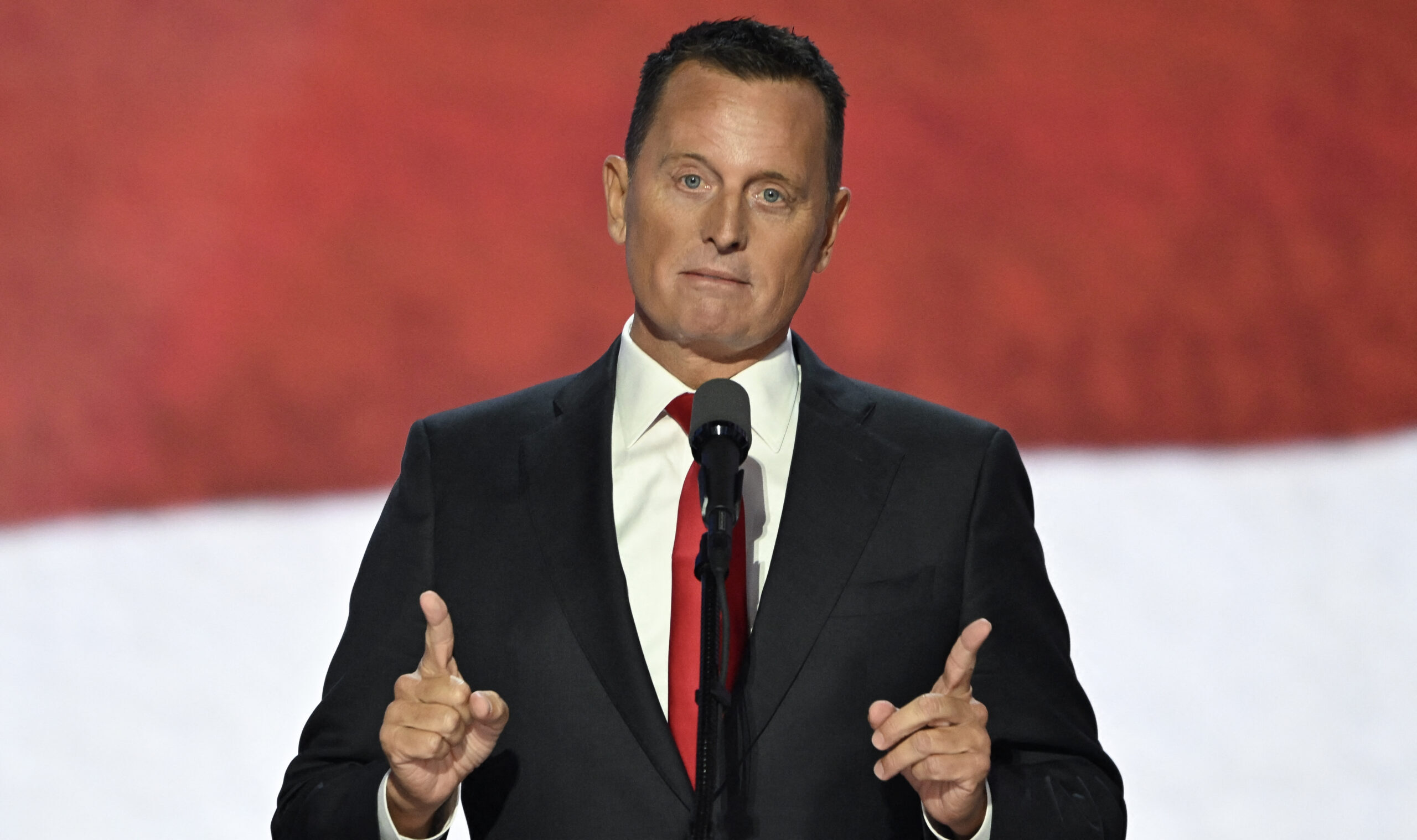
Trump Names Grenell Ambassador for Special Missions
Favicon 
www.theamericanconservative.com

Trump Names Grenell Ambassador for Special Missions

President-elect Donald Trump announced on Saturday that he has selected Richard Grenell to be his presidential envoy for special missions. The new position will have a focus on contentious areas of geopolitics. ? President Trump announces that @RichardGrenell will serve as the Presidential Envoy for Special Missions pic.twitter.com/bQkzFENZts— Trump War Room (@TrumpWarRoom) December 14, 2024 Trump was expected to take Grenell, a vociferous campaign surrogate, into the administration. In a Thursday post on Truth Social, the president-elect referred to Grenell as a “fabulous person,” stating that “he will be someplace high up.” Grenell served in the first Trump administration in a variety of roles, including as ambassador to Germany, as the acting director of national intelligence, and as a presidential envoy in negotiations between Serbia and Kosovo. Earlier in the transition process, Grenell was considered for the role of secretary of state. He allegedly turned down the position of director of national intelligence. The post Trump Names Grenell Ambassador for Special Missions appeared first on The American Conservative.
Like
Comment
Share
Conservative Voices
Conservative Voices
1 y

Thumbs Down
Favicon 
www.theamericanconservative.com

Thumbs Down

Film Thumbs Down Ridley Scott betrays his empire with an expensive reboot that mocks the original masterpiece. Credit: Sarunyu L/Shutterstock Sitting in a near-empty theater on opening weekend of Gladiator II, I couldn’t help but think of an early line from filmmaker Ridley Scott’s epic 2000 masterpiece Gladiator: “People should know when they’re conquered.” Twenty-four long years since his finest hour, the 86-year-old Scott would’ve done well to heed the serene wisdom in that fine phrase as the sequel makes one thing abundantly clear—as a filmmaker, Scott’s best days are far, far behind him. The legendary director of Blade Runner and Alien, Scott has thrown all caution to the wind with this poor imitation of perhaps his greatest source material. Marcus Aurelius. Maximus. Commodus. Proximo. Lucilla. Lucius. For those of us old enough to remember the sensation of the first film, these names still ring titanic decades later. Each possessed their own ambitions and faults. Each their own momentous and memorable dialogues that carried the story forward between bloody battles in the Colosseum. But in Scott’s latest adaptation, a $250 million CGI-laden farce, there isn’t a single memorable line throughout the nearly two and half hour run time. Even Denzel Washington, whose character is a shameless ripoff of Oliver Reed’s brilliant Proximo in the original, can’t save this film. The characters never build, the story never unfolds, and the battle scenes are fraught with the tacky simulacra in every other digitized blockbuster.  It’s ironic that, in 2023, Scott proudly proclaimed he has turned down multiple offers from major production houses to make a superhero movie because he sees them as cheap creatures of a corrupt Hollywood system. Though Scott is right in his assessment of the Marvel Universe, Gladiator II is indiscernible from what he criticizes. He has created a cartoonish, plotless hellscape that wanders aimlessly in a pool of its own magnificent gluttony. For all the hype, there’s simply nothing here worth remembering.  In reviews of the film, the one consistently positive comment is that it looks amazing. If only I could see what others saw. The original’s gritty gray and austere hemp has been replaced by a squeaky-clean rendering that could’ve been shot in an Apple Store. Gone are the bruised bronzes and tone-heavy ambers; in their place are bleached white and see-through steel.  Its characters too are bereft of tonal range. Lucius Verus Aurelius, played by Paul Mescal, was a boy when Maximus defied Commodus in the original film. Here, he reappears in a foreign land as a man living under the alias of Hanno. He fights for Jugurtha, a strong-spoken chieftain in the kingdom of Numidia who is given no backstory whatsoever. Hanno, just like Maximus in the original, has a beautiful wife named Arishat who tends to their humble farm far away from the Roman capital. When their lands are invaded by the Roman general Acacius, played by Pedro Pascal, the pair suit up in armor and defend a seaside fortress.  Because Scott portrays Arishat as a strong-willed superhero, her role in the film is not as an unwilling bystander who is killed merely because of her relationship to the titular character. Instead, she is killed in battle, a battle in which she chooses to fight. As such, Lucius’s motivation to avenge her death fails to carry the same weight as that of Maximus, who tirelessly rides a horse across the entire kingdom in the original only to find his wife and child stripped, beaten, and crucified.  Maximus has good reason to loathe Commodus as he seeks rightful vengeance in the first installment. Not only had the mad son Commadus murdered his benevolent and wise father Aurelius, he also ordered the execution of Maximus’s family despite the general’s pleading. In Gladiator II, Pascal’s men don’t know who Arishat is, only that she is a formidable fighter who must be killed as any other combatant would be in the midst of battle. As a result, Lucius spends the first half of the film vowing vengeance against Acacius, a man he does not know.  Returning to the capital, we learn that Acacius is not the same, crazed playboy portrayed by the fantastic Joaquin Phoenix in the 2000 original. In fact, Acacius is a good man who argues for an end to constant war and bloodshed. When informed that he will lead new wars in Persia and India, Acacius protests. As a result, the audience is left to wonder who Lucius’s real enemy is and the rest of the movie attempts, and fails, to explain. The joint emperors, Geta and Caracalla, could be the arch villains of this film but neither are as intimidating or mad as Scott would like them to be. Lazily mired in the palatial kingdom of Rome, the two men find no motivating factors for their angst. When the pair arrange a series of gladiatorial games to celebrate the victory of Acacius, there is no pushback from the conspicuously absent Senate, whose Gracchus, Gaius, and Falco all played meaningful roles in the first film. Denzel Washington finally appears in the role of Macrinus, an arms dealer living on the outskirts of Rome. There, he keeps a stable of gladiators and conspires to wrest control of the empire. Early reviews claimed that Washington single-handedly carried the film. On this point, I must disagree. He is a shadow of the original’s conflicted and passionate Oliver Reed, whose rich backstory—a gladiator who won his freedom—paces and inspires Maximus to great heights.  In one of the finest acting performances in the history of cinema, Reed dreams of days gone by as Russell Crowe and the audience hang on his every word. Staring out an open window whose peach curtains swirling in the background, Reed takes a deep breath and in one mesmerizing monologue describes the awe and spectacle of the Colosseum. “Fifty thousand Romans,” Reed says wistfully. “Watching every movement of your sword. Willing you to make that killer blow. The silence before you strike and the noise afterwards. It rises, rises up like a storm, as if you were the Thundergod himself.”  Here, with the fantastic original score building out the scene, Reed accomplishes something that Washington simply cannot—a moment of sheer inspiration that catapults the viewer 2,000 years back in time.  Ridley Scott has never shown an interest in producing historically accurate films—his Napoleon was thoroughly maligned for this reason—but Reed barrels right through that wall, whether Scott likes it or not, to a time and place long before film cameras and moviemakers. That, more than anything, is what Gladiator II is missing: the feeling of the past staring back at us across the centuries.  And, while the first film never advertised itself as an accurate portrayal of the Roman Empire, the second veers so far off course it might as well have left the whole premise behind. Mescal battles CGI-monkeys, outsmarts a CGI-rhinoceros, and dodges CGI-sharks. They all look as silly as anything you’d find in those Marvel films Scott refuses to helm. The real Romans actually did flood the Colosseum for gladiatorial games, but Scott goes so overboard with the charade that it borders on comedy.  When Crowe stepped into the arena there was a real, palpable sense he could be killed at any given moment. When Mescal takes his turn, I couldn’t help but think of the Townes Van Zandt tune “Waiting Around to Die.” Gone is the spine-tingling, nauseating suspense of the first film. In its place just the dull foreknowledge that everybody except Mescal is going down. The thumb-tilting sequence makes a return to little effect. Joaquin Phoenix was terrifying in his portrayal of Commodus. These two clown emperors, with their hands outstretched to the gods, possess none of the verve or horror that Phoenix so adeptly mustered. When Pascal is struck down by Praetorian arrows after a thumbs-down decision, you can sense scriptwriter David Scarpa’s heavy hand at work.  Washington eventually, and inevitably, outfoxes these two goons and brutally takes control of the empire. It all rather hurriedly leads to a rushed ending in which everyone quickly dies except Mescal. Even the luminous Connie Nielsen, who reprises her role as Lucilla to great effect, can’t outlive Scarpa’s death march.  At the end of Gladiator II, the bad guys lose and the good guy wins in the exact sort of anti-climactic flourish its predecessor smartly avoided. When Crowe dies in the original, the audience feels sadness, but the story is completed in a way that is resolute and satisfying. His death was not only required by the storyteller, but earned. As Mescal reaches for the Colosseum’s dirt in the sequel, having dispatched Washington in a watery battle as dueling Roman armies look on, one can sense Scott attempting to perfectly tie up the bow on his late-career, but it’s got none of the original’s gravitas. At its core, Gladiator II is little more than a bastardized rebranding of one of the seminal movies in blockbuster history. This is a movie soon to be forgotten. For all its blood and guts, it has no heart. Gone is the charm and scale and depth of the first film. In its place heartless caricatures and a runtime that borders on punishment. If the first film was a filet mignon, this is Scott’s Value Meal. See it at home. Or, better yet, skip it altogether. The post Thumbs Down appeared first on The American Conservative.
Like
Comment
Share
Showing 71630 out of 125545
  • 71626
  • 71627
  • 71628
  • 71629
  • 71630
  • 71631
  • 71632
  • 71633
  • 71634
  • 71635
  • 71636
  • 71637
  • 71638
  • 71639
  • 71640
  • 71641
  • 71642
  • 71643
  • 71644
  • 71645
Advertisement
Stop Seeing These Ads

Edit Offer

Add tier


Select an image
Delete your tier
Are you sure you want to delete this tier?

Reviews

In order to sell your content and posts, start by creating a few packages. Monetization

Pay By Wallet

Payment Alert

You are about to purchase the items, do you want to proceed?

Request a Refund