YubNub Social YubNub Social
    #bible #america #god #jesuschrist #youtube #kjv #kingjamesbible #kjb #scriptures #scripture #biblestudy #psalms #acts #jews #bibles
    Advanced Search
  • Login
  • Register

  • Day mode
  • © 2026 YubNub Social
    About • Directory • Contact Us • Developers • Privacy Policy • Terms of Use • shareasale • FB Webview Detected • Android • Apple iOS • Get Our App

    Select Language

  • English
Night mode toggle
Featured Content
Community
New Posts (Home) ChatBox Popular Posts Reels Game Zone Top PodCasts
Explore
Explore
© 2026 YubNub Social
  • English
About • Directory • Contact Us • Developers • Privacy Policy • Terms of Use • shareasale • FB Webview Detected • Android • Apple iOS • Get Our App
Advertisement
Stop Seeing These Ads

Discover posts

Posts

Users

Pages

Blog

Market

Events

Games

Forum

The Lighter Side
The Lighter Side
8 w

We Can’t Get Over Sweet Baby Flamingo Learning to Feed and Fly
Favicon 
www.inspiremore.com

We Can’t Get Over Sweet Baby Flamingo Learning to Feed and Fly

When we think about flamingos, a tall, pink, majestic bird with long legs comes to mind. But when baby flamingos are born, they aren’t tall or pink, they’re tiny white fluffy furballs. These chicks have to learn to fly just like human babies must learn to crawl and then walk. According to @beyond_the_wildlife, “As they grow, they stay close to the adults, wandering through shallow waters and slowly learning the skills they need to survive, especially how to forage for food.” View this post on Instagram A post shared by Beyond the Wildlife (@beyond_the_wildlife) Baby Flamingos Love to Splash in Water They used their baby flamingo feet to explore the world around them and begin figuring out their food sources. Each playful step stirs up the mud beneath them, bringing small crustaceans and algae to the surface, which are vital parts of their diet,” Beyond the Wildlife explains. “Beyond helping them find food, these gentle splashes show their natural curiosity. With every little movement, they explore their surroundings and build the confidence they need to thrive in their watery world.” Adult flamingos help the chicks along like doting parents do. Before they know it, they’ll be all grown up and pink perched on their long, beautiful legs. “Flamingo is my favorite since I was a child,” a comment reads. “Grandma and Grandpa would take me to Brookfield Zoo to see them.” “I got to see wild flamingos in Italy. When they fly, they look like winged pool noodles,” another person shared. This follower loved watching the baby flamingo play and knew just what the bird was telling its parents. “He says to his mommy and daddy mama look the water splashes. Can you see that mama?#. That’s what the baby is saying,” they wrote. It’s always incredible to see how many different kinds of animals we live among in this beautiful life. We’re all so lucky. This story’s featured image can be found here
Like
Comment
Share
Daily Caller Feed
Daily Caller Feed
8 w

Democrat Suggests She’s Running For Congress ‘Out Of Spite’ Because Guy Broke Her Heart
Favicon 
dailycaller.com

Democrat Suggests She’s Running For Congress ‘Out Of Spite’ Because Guy Broke Her Heart

'but now baby, I'm running for Congress'
Like
Comment
Share
Daily Caller Feed
Daily Caller Feed
8 w

USA Hockey Players Shut Down Reporter With Pure American Glory — And A Beer
Favicon 
dailycaller.com

USA Hockey Players Shut Down Reporter With Pure American Glory — And A Beer

The glory in this version of Team USA is absolutely out of this world
Like
Comment
Share
Daily Caller Feed
Daily Caller Feed
8 w

Mamdani Finds Way To Downplay Homeless Deaths After Deadly Blizzard
Favicon 
dailycaller.com

Mamdani Finds Way To Downplay Homeless Deaths After Deadly Blizzard

'we have no deaths reported from this blizzard'
Like
Comment
Share
Daily Signal Feed
Daily Signal Feed
8 w

Preventive or Preemptive? The Pros and Cons of a Potential US Strike on Iran
Favicon 
www.dailysignal.com

Preventive or Preemptive? The Pros and Cons of a Potential US Strike on Iran

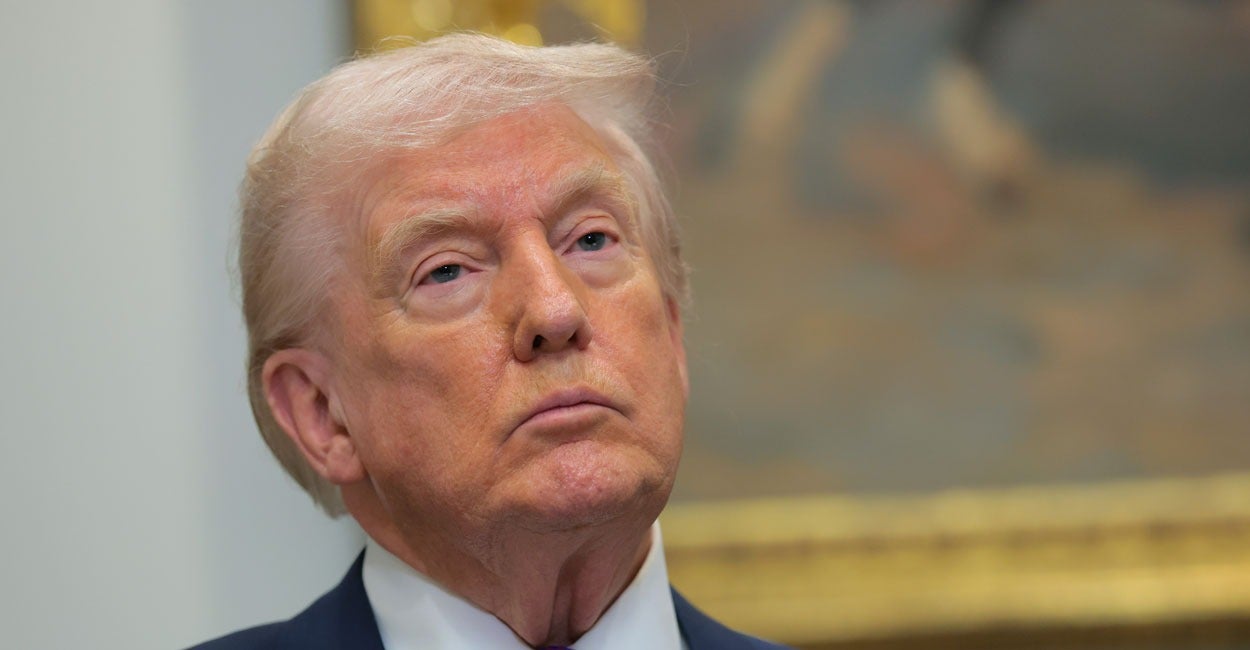
Editor’s note: This is a lightly edited transcript of a segment from today’s edition of “Victor Davis Hanson: In His Own Words” from Daily Signal Senior Contributor Victor Davis Hanson. Subscribe to Hanson’s own YouTube channel to watch past episodes. Hello, this is Victor Davis Hanson for The Daily Signal. President Donald Trump is positioning the largest naval and air forces with submarines off the coast of Iran—in the Persian Gulf, in the Mediterranean, in the Red Sea—that we’ve seen since the invasion of Iraq in 2003. And there are pros and cons about striking Iran. We’re not at war with them right now, so this is what we would call either a preventive war, long-term threat, or a preemptive war, that there’s a short-term threat that has to be precluded by the use of force. It’s very controversial, and we don’t know whether he’s going to pull the trigger or not. He said help was on the way when the protests were maximized. Anywhere from 10,000 to 30,000 people, estimates say, were killed. Those protests are now—we haven’t seen much of them, given the mass death and murder on this awful regime of some, it’s getting nearer, as you know, a half-century, 46 years. So, what are the pros and cons of what we’re doing? Does he have to go to Congress to get a declaration of war? No. No more than the Obama administration had to do when they bombed Libya, for example. But there are pros and cons, and let’s go through the pros first. It has been the dream of eight presidencies, going back to Jimmy Carter, all the way to Donald Trump, to have some type of regime change. There’s one exception, Barack Obama. He had a harebrained scheme, remember, that he was going to empower Iran. He had the Iran deal. He brought in $400 million at night on pallets to give them money that had been sanctioned. He lifted the sanctions. So did Joe Biden. The idea was to balance off Israel and the Arab countries with a Shia revolutionary country. And then that would produce creative tension, I suppose, that Obama thought he would adjudicate. But other than that, every president has wanted an end to that anti-American regime. They have killed more Americans than any terrorist organization, probably as much as ISIS or more than ISIS, given the use of shaped charges in Iraq. So, that makes sense that you’d want to get rid of it. You would also, in this cat-and-mouse game that we played for 20 years about Iranian nukes, it’s a given that anytime they sign a nuclear nonproliferation deal or they give someone their word, it’s not going to happen. They can’t be trusted. They’re a revolutionary, ideologically driven, not rational regime. But it would be very good if they didn’t have the ability with their hypersonic missiles or their other ballistic missiles to hit Europe or our allies in the Middle East or even, at some future date, us. So, you could end that project for good. They’re in remission now, thanks to our prior bombing missions, but we haven’t ended that threat. It’s existential as long as the regime is in. It would be a moral thing, as I said, 10,000 to 30,000 protesters were murdered. Their bodies were not even given back, in some cases, to their families, secretly buried. And this regime, as we speak, is hanging people, executing people. It’s a rogue regime. And the moral case is strong to help out the protesters, and there might be a chance that Donald Trump could time his attack with a second wave of protests. It would also stabilize. Everybody thinks it’s going to destabilize the Middle East. It would probably stabilize the Middle East. And with the source of funding for Hamas, for the Houthis, and for Hezbollah completely cut off, those terrorist organizations may die in the vine, and the Arab countries might feel more secure that they could cut a deal according to the Abraham Accords with Israel. But there are cons. Let’s make no mistake about it. When you park 200,000-ton displacement carriers, one in the Persian Gulf and one in the Mediterranean, those are big targets. They’ve got some of the best air defenses in the history of naval warfare. They have a fleet of accompanying ships. Hopefully, their air arms could take out the ability of the Iranians to hit them with either drones or missiles, but it’s not a sure thing. And they’re big targets. And we’ve got about 5,000 Americans on each one of those carriers, and they’re a $13 billion, $14 billion investment. So, that’s a great risk. The midterms are coming up in November. Most presidents are very wary to take on an optional military engagement when there’s so many unknowns up in the air, and it could either sink the Trump administration’s prospects in November or, if he was able to displace and get rid of this horrific regime, the first of, as I said, eight presidents to be able to do that, that would be quite an achievement, it might help him in the midterms. He has another problem. That is the MAGA base. The MAGA base is neo-isolationist. He campaigned in 2016 and 2020 against so-called forever wars, optional military engagements, especially in the Middle East. In the past, he’s been able to square that circle by limited engagements. In other words, the taking out of the Wagner Group in Syria, the killing of Qasem Soleimani or Abu Bakr al-Baghdadi, or the bombing of the nuclear facilities. They were all finite, very short, solved the problem. Bombed ISIS into oblivion. Said he was going to bomb them, he did. This is a little different. There’s not so easily an endgame here because this is a huge country and it’s got a very ideologically fervent population. There’s another thing, too. The protesters themselves, we think, are pro-Western. They want to bring back the shah, but we’re not sure of that. So, if you’re a protester and they killed 30,000 of you and you’re afraid to go back out and you’re sitting in your apartment and you see bombs raining, and they’re not going to be completely accurate, and take my word for it and your word for it, these Iranians know how to do Hamas and Hezbollah-like tactics. Their missiles and their command and control will not be in something that says a secure bunker. They will be near hospitals. They will be near mosques. They will be near schools. They will be, as we saw in Lebanon, in residential areas. So, there will be collateral damage. Will the Iranian public have the long-term view that that’s in their interest, or the short-term view and turn on the Americans? These are all pros and cons, but ultimately, Donald Trump will have to make that decision. He’ll have to make the decision pretty quickly because you can’t just take those many naval assets and stick them halfway across the world. In terms of deployment, wear and tear on the machinery, deployment time, etc., there is a window. And the window is probably about another six weeks. He’ll have to make that decision. We have the Olympics. You would not want to strike during the Olympics, apparently. He’s got to worry about the Israelis. On the one hand, they want the regime gone. On the other hand, the last time they exchanged missiles and attacks with Iran, they were getting very low on anti-ballistic missile defense weaponry. So, we don’t know quite where their stocks are now. Finally, what should Trump do? I’m not going to advise him. I don’t have the expertise or the knowledge to advise him. But I do think that he might want to have a brief press conference or address to the nation, five minutes, not detailed, just say that we are facing an existential threat for nearly 50 years with this country. It’s killed thousands of Americans in Iraq and Lebanon. And it is a human rights abuser. It murders its own people. And it’s very important, given its key role in controlling the Strait of Hormuz, where 20% to 30% of the world’s oil passes every day. And more importantly, the price of oil will depend on it as well. And here are the dangers and here are the advantages, and I’m going to make my—it doesn’t have to be that explicit, but he needs to give some information to the American people. We publish a variety of perspectives. Nothing written here is to be construed as representing the views of The Daily Signal. The post Preventive or Preemptive? The Pros and Cons of a Potential US Strike on Iran appeared first on The Daily Signal.
Like
Comment
Share
Hot Air Feed
Hot Air Feed
8 w

ChatGPT Is Something Else
Favicon 
hotair.com

ChatGPT Is Something Else

ChatGPT Is Something Else
Like
Comment
Share
Hot Air Feed
Hot Air Feed
8 w

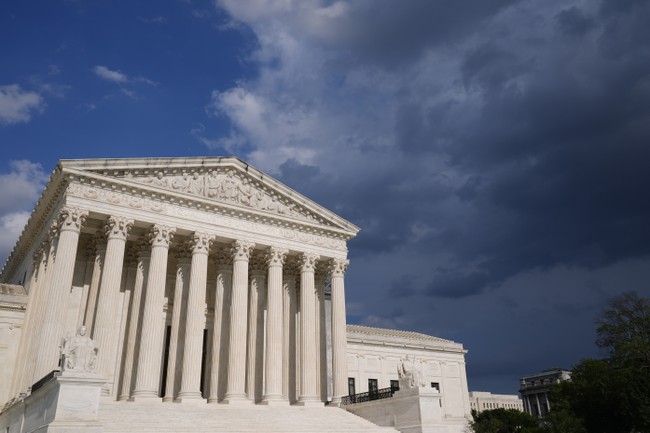
Supreme Court Hears Cases Involving Property Stolen by Cuba's Communists
Favicon 
hotair.com

Supreme Court Hears Cases Involving Property Stolen by Cuba's Communists

Supreme Court Hears Cases Involving Property Stolen by Cuba's Communists
Like
Comment
Share
The Blaze Media Feed
8 w

Canadian politician faces fierce backlash over message to '2SLGBTQIA+' members caught in Mexican cartel chaos
Favicon 
www.theblaze.com

Canadian politician faces fierce backlash over message to '2SLGBTQIA+' members caught in Mexican cartel chaos

As Mexico continues to burn in the wake of the capture and death of a major drug cartel leader, one Canadian politician is being ridiculed for her bizarre response.Parts of Puerto Vallarta went up in blazes after authorities said Nemesio "El Mencho" Oseguera Cervantes was killed during an operation by the Mexican army in Tapalpa, Jalisco.'I trust the cartel has taken the appropriate DEI training to respond appropriately.'While many lawmakers have expressed concern for their constituents who were caught up in the Mexican conflagration, House of Commons member Heather McPherson was especially worried about "2SLGBTQIA+" people."Many Canadians, especially members of the 2SLGBTQIA+ community, are in Puerto Vallarta, where violence has quickly escalated. A shelter-in-place order is in effect," McPherson wrote in a post Sunday on social media."Please stay vigilant and consult the Government of Canada travel advisories for Mexico," she added.The expanded woke acronym refers to two-spirit, lesbian, gay, bisexual, transgender, queer/questioning, intersex, and asexual people.Many online scolded McPherson for focusing on the gender identity agenda when Canadians were under potentially lethal threat in Mexico."Can you meet with and pressure the Mexican cartel terror groups to be 2SLGBTQIA+ inclusive?" journalist Andy Ngo responded."Why 'especially members of the 2SLGBTQIA+'? Do you value their lives more than the rest of the alphanumeric digit lives out there because you hope they'll vote for you?" journalist Dahlia Kurtz replied."Not progressive enough! Next time I want a land acknowledgement before hitting the trans button please," documentarian Tim Thielmann said."I trust the cartel has taken the appropriate DEI training to respond appropriately," activist Eva Chipiuk joked."How are those Canadians in PV different from non-alphabet Canadians in PV? Why are you like this?" another popular response reads."My mother is in Mexico right now, which I confirmed last night, is safe, not someone you'd care about because she's not part of your alphabet gang. Do you see how dumb your post is?" another detractor said.RELATED: Mexico hands over 26 high-ranking alleged drug cartel figures to US for prosecution "WTH, you should delete this post, many Albertans are in Mexico and may be stranded regardless of sexual preference! This is not a time for politics it is a time for unity towards all stranded Albertans," another user said.Cervantes, the founder of the Jalisco New Generation Cartel, controlled a vast criminal organization that specialized in smugging cocaine, methamphetamines, fentanyl, and illegal aliens into the U.S. His death leaves a power vacuum that is unlikely to be resolved without further bloodshed.Like Blaze News? Bypass the censors, sign up for our newsletters, and get stories like this direct to your inbox. Sign up here!
Like
Comment
Share
History Traveler
History Traveler
8 w

A Couple Walking Their Dogs On A Scottish Beach Just Happened Upon Footprints That Date Back 2,000 Years
Favicon 
allthatsinteresting.com

A Couple Walking Their Dogs On A Scottish Beach Just Happened Upon Footprints That Date Back 2,000 Years

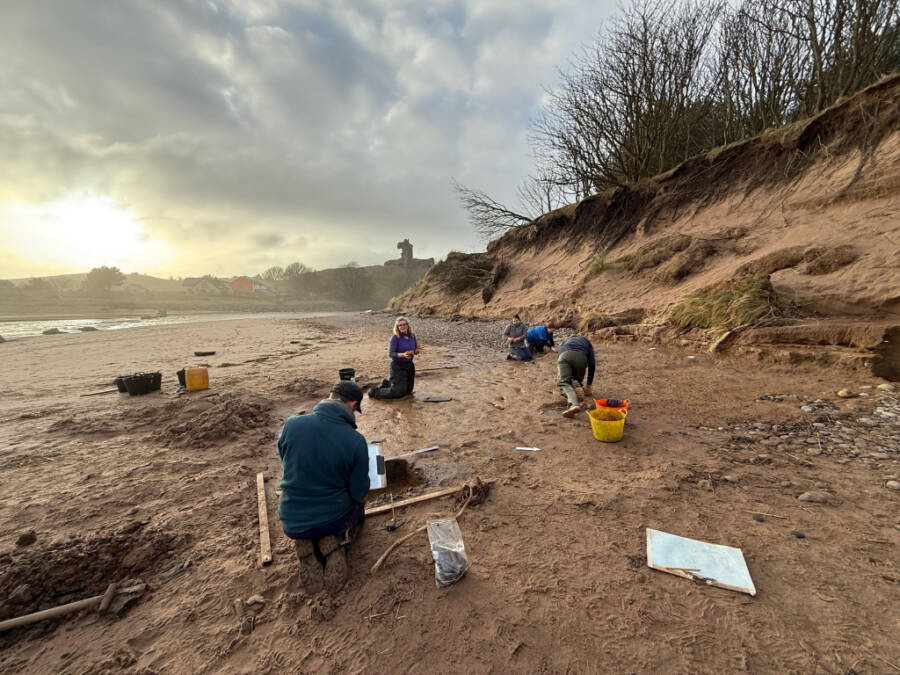
University of AberdeenArchaeologists had to race against time to document the footprints before the sea swallowed them up. In the aftermath of violent storms in eastern Scotland, two locals took their dogs for a stroll on the beaches of Lunan Bay along the Angus coast. While walking, they noticed that the storm had kicked up a layer of sand — revealing human and animal footprints from thousands of years ago. Archaeologists hurried to the scene, though they only had a narrow window to document and examine the footprints before they were destroyed by the rising tides. During their analysis, they determined that the footprints were roughly 2,000 years old, dating to the time of the Roman invasion of Scotland. Documenting The 2,000-Year-Old Footprints Found Along Scotland’s Lunan Bay According to a statement from the University of Aberdeen, the footprints were spotted by a pair of locals, Ivor Campbell and Jenny Snedden, who decided to take a walk along the beach following a series of recent storms. While strolling with their dogs, Ziggy and Juno, Campbell and Snedden noticed that the storms had shifted the sands on the beach, exposing a layer of clay. And within the clay was a set of distinctive markings that looked like footprints. Campbell and Snedden called council archaeologist Bruce Mann, who realized the possible significance of the discovery — as well as the need to document it before the tide rose again. He notified archaeologists at the University of Aberdeen, who sped to the scene to examine the exposed clay. “We knew we were dealing with a really rare site and that this discovery offered a unique snapshot in time – but it was also clear that the sea would soon take back what had so recently been revealed,” said University of Aberdeen archaeology professor Kate Britton. University of AberdeenA 2,000-year-old footprint found in the clay along Lunan Bay. The incoming tide wasn’t the only challenge that the archaeologists faced. As they worked, 55 mile-per-hour winds whipped along the beach, stirring up loose sand and further damaging the delicate site. “We had to work fast in the worst conditions I’ve ever encountered for archaeological fieldwork,” Britton recalled. “[T]he sea was coming in fast, with every high tide ripping away parts of the site, while wind-blown sand was simultaneously damaging it. We were effectively being sandblasted and the site was too, all while we were trying to delicately clean, study and document it, so it became a race against the elements.” “And, within 48 hours,” she said, “the entire site was destroyed.” But the archaeologists succeeded in documenting the footprints, which included both human prints and prints from animals like deer. And after examining these discoveries more closely, archaeologists realized just how incredible they truly were. Footprints From The Era Of The Roman Invasion Of Scotland By studying plants that were preserved just beneath the footprints, archaeologists determined that the prints were roughly 2,000 years old — and thus had been made “around the time of Boudicca, Jesus, and the height of the Roman Empire.” Specifically, archaeologists suspect that the prints were made around the time of the Roman invasion of Scotland, and shortly before the rise of the ancient Scottish people known as the Picts. Wikimedia CommonsA depiction of a Pict warrior, as described by the Romans who encountered them. “This is a real tangible link to the region’s past,” said team member Gordon Noble, an archaeology professor at the University of Aberdeen. “The late Iron Age dates are in keeping with what we know about the rich archaeology of nearby Lunan Valley. It’s very exciting to think these prints were made by people around the time of the Roman invasions of Scotland and in the centuries leading up to the emergence of the Picts.” It’s not the first time that changing tides have revealed lost chapters of history. Last year, waves in Hawaii washed away sand and revealed centuries-old petroglyphs carved into the rock. And in Scotland, archaeologists suspect that other sandy beaches may conceal former muddy estuaries, where ancient people and animals once walked. As such, though the Lunan Bay site was short-lived, it offered up an incredible look into Scotland’s ancient past. And archaeologists are grateful that the dog-walkers, Campbell and Snedden, happened to spot the exposed clay. “It was a powerful reminder that some of the most important discoveries start with someone noticing something and choosing to report it,” said Mann. “What came next was a race against time… Standing there, watching the site being destroyed as the waves crashed over it, was heartbreaking in some ways, but at least we got the chance to record most of it.” After reading about the Roman-era footprints found on a beach in Scotland, go inside the reasons behind the fall of the Roman Empire. Then, discover the stories of some of the worst Roman emperors, from Caracalla to Caligula. The post A Couple Walking Their Dogs On A Scottish Beach Just Happened Upon Footprints That Date Back 2,000 Years appeared first on All That's Interesting.
Like
Comment
Share
History Traveler
History Traveler
8 w

Inside The Infamous Story Of George Nichopoulos, Elvis Presley’s Personal Physician
Favicon 
allthatsinteresting.com

Inside The Infamous Story Of George Nichopoulos, Elvis Presley’s Personal Physician

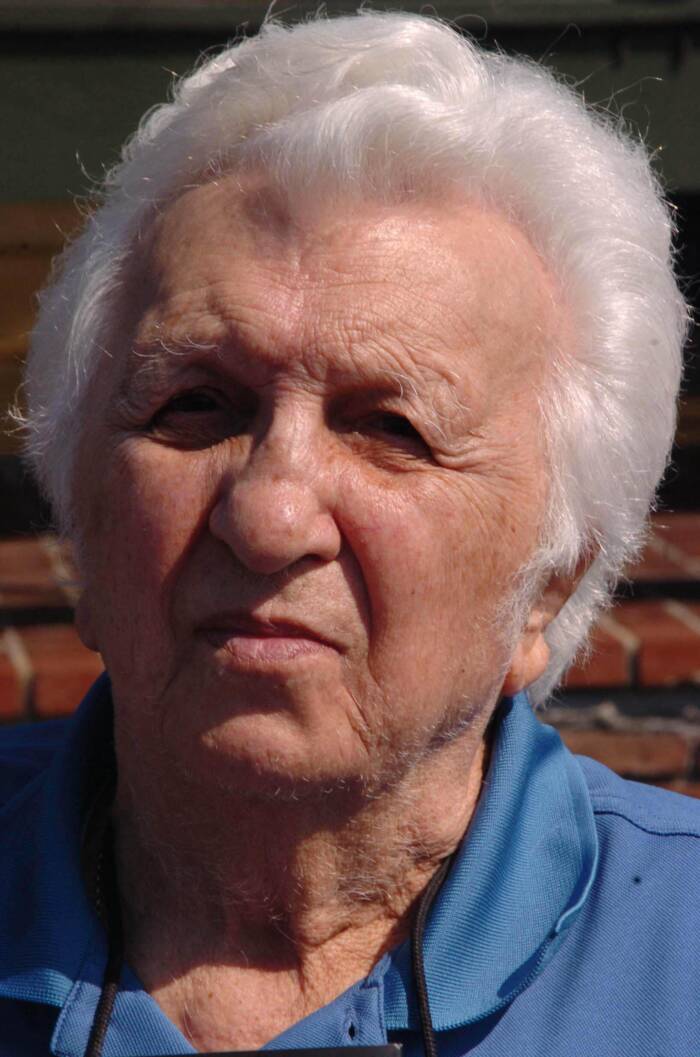
ZUMA Press, Inc./Alamy Stock PhotoGeorge “Dr. Nick” Nichopoulos, Elvis Presley’s personal doctor. In his final years, Elvis Presley was in noticeably poor health. Although he had initially tried to avoid using any drugs, his time in the army had introduced him to amphetamines, and since these were prescription drugs, not street drugs, the rock star convinced himself it was safer. By the 1970s, however, he had expanded his drug intake to a number of other medications. And, of course, someone had to write the prescriptions. That person was usually George Nichopoulos, a.k.a. “Dr. Nick,” Elvis Presley’s personal physician. Nichopoulos once described Presley as “a person who thought that as far as medications and drugs went, there was something for everything.” So, for the last decade of Presley’s life, Dr. Nick supplied the King with drugs while developing a controversial friendship with him. Even as Presley’s behavior grew more and more bizarre — and even after he suffered two overdoses in 1973 — Dr. Nick controversially continued to supply the prescriptions. By this point, Presley had gained a substantial amount of weight, his health had deteriorated, and on August 16, 1977, he died at his Graceland home. George Nichopoulos was the one who signed the death certificate. Some fans would argue he had been signing it over and over again each time he wrote Presley a prescription. Although Dr. Nick was ultimately acquitted of any crime in regard to Elvis Presley’s death, the fact remains that in the 31 months leading up to that tragic day, the doctor had prescribed him 19,000 doses of drugs, including sedatives, amphetamines, and narcotics. Chillingly, the final prescription was written just 12 hours before Presley’s untimely demise. So, was George Nichopoulos partly to blame? How Dr. Nick Met The King It’s not every day that you’re introduced to one of the most famous men on the planet, but the meeting between George Nichopoulos and Elvis Presley began with nothing more than a simple call. At that time, in 1967, the girlfriend of the DJ George Klein — a friend of Presley’s — was working in Nichopoulos’ office. So, when Presley got “saddle sore” after riding horses at the Circle G Ranch, he was recommended to call Nichopoulos. “I went all the way up to the damn ranch, three times!” Dr. Nick told Andrew Hearn in an interview that was later archived by Elvis Australia. “I went all the way out there to take a look, and he asked if I wouldn’t mind stopping by Graceland to take a look at his grandma.” But after Dr. Nick went from the ranch to Graceland, Elvis called him back out two more times. It wasn’t for anything serious. Nichopoulos, who was supposed to be on call at his practice, didn’t think much of it. Fotos International/Archive Photos/Getty ImagesElvis Presley, pictured in 1973. “He just liked having new people around, just someone new to talk to,” Nichopoulos said. “He’d get tired of the same people, some of the guys. He’d get tired of their conversations too. He loved to talk about a lot of things.” Nichopoulos, who had spent much of his life in the South even though he had been born in Ridgway, Pennsylvania, on Oct. 29, 1927, found himself frequently departing from his Memphis office to treat Presley. Eventually, when it came time for Presley to go on tour, he asked Nichopoulos to tag along — not just for his sake, either. Dr. Nick said he was looking after about 150 people associated with Presley while on the road. And although Nichopoulos was never officially on the payroll during the tour, he and Presley worked out a system so he would be paid the same amount that he would have made while he was in the office for that time period. Before long, he became Elvis Presley’s personal physician. “It was demanding,” Nichopoulos said. “When we were home, I’d still see Elvis probably five or six days out of the week. Every night on the way home, I’d go by his house just to check on him or just to sit and talk.” How Elvis Presley’s Drug Abuse Escalated George Nichopoulos told The Guardian in 2002 that he had initially been treating Elvis Presley for insomnia. Presley’s sleep issues had worsened after his mother’s death and his time in the army. Paired with his amphetamine use, this made it increasingly difficult to properly manage his sleep. Nichopoulos didn’t get Presley started on drugs. By the time they met, the King was already taking Tiunal, Desbutal, Escatrol, and, soon enough, Placidyl. Eventually, Presley started sending other associates to Vegas to procure even more intense drugs for him, which started to affect his personality and eventually caused tension between him and Nichopoulos. “I don’t know where he was getting it from, not that kind of thing anyway,” Nichopoulos remarked. “Elvis called me everything imaginable and another doctor went on the next tour. The new doctor changed the medicine around that I was giving him and the stuff that he gave him was a heavy tranquilizer… Elvis just couldn’t wake up.” Other doctors were more than happy to give Elvis Presley whatever drugs he wanted at anytime he wanted. Dr. Nick said he felt a responsibility to keep him relatively stable, at least in comparison to other personal physicians. “No one understands that Elvis was so complicated,” Nichopoulos told The Daily Beast in 2009. “I worked so hard just to keep things together and then they turned the tables on me after he died and decided I was to blame.” PictureLux/The Hollywood Archive/Alamy Stock PhotoA young Priscilla Beaulieu, pictured before she married Elvis Presley. Things got worse when Presley’s wife Priscilla left him in 1971. Presley became more and more erratic. He was always on something — anything he could get, essentially. Then, in 1973, he overdosed twice on barbiturates. Dr. Nick realized that Presley was continuing to get more drugs from other doctors. While there was little he could do about Presley’s other appointments, he said he tried to tell Presley to stop taking so many pills. Eventually, Nichopoulos said he resorted to giving the rock star placebos, since it was clear the singer wouldn’t listen to his advice. “I don’t think he ever realized how harmful these things could be to him,” Dr. Nick said. “If he got a sore throat, and I gave him a penicillin tablet — I gave him 20 to take, saying, ‘You take four a day of these things until you use these up,’ so he’s going to take eight or 12 a day until he uses them up, [because] he thinks he’ll get well faster that way.” Of course, the exact opposite was true. Elvis Presley was only getting worse. And in August 1977, it all caught up to him. Did George Nichopoulos Hasten — Or Cause — Elvis Presley’s Death? Bettmann/Getty ImagesPallbearers carrying Elvis Presley’s casket into a mausoleum in Memphis. On August 16, 1977, Elvis Presley was found dead at the age of 42 in his bathroom at Graceland. At the time of his demise, he had been suffering from glaucoma, high blood pressure, liver damage, and an enlarged colon. All were either aggravated or caused by his many years of drug abuse. By Dr. Nick’s own admission, he had written prescriptions totaling over 10,000 doses of sedatives, amphetamines, and narcotics for Presley that year alone. But he also said that, despite bearing Presley’s name, these doses were collectively for Presley and the 150-person crew that worked for him. George Nichopoulos claimed that he was surprised when he got the call about Elvis Presley’s death. He was even more surprised, over the following months, about the number of death threats sent his way. He said he was blindsided again in 1979 when the Tennessee Medical Board charged him with gross malpractice over the illegal prescription of painkillers and other drugs to Elvis Presley, the singer and pianist Jerry Lee Lewis, and 12 other patients. The district attorney’s office even looked into potential criminal charges against him related to Presley’s death. In January 1980, the Medical Board Tribunal found Dr. Nick guilty of overprescription, resulting in a three-month suspension of his license and three years’ probation. Later that year, he faced criminal prosecution for abusing his license to prescribe controlled drugs and a potential prison sentence of up to 10 years. However, he was acquitted on all counts. Joe Corrigan/Getty ImagesDr. Nick’s medical bag. “I don’t regret any of the medications I gave him. They were necessities,” Nichopoulos insisted. “Later, everyone attacked me, saying all I was interested in was making money from Elvis. That’s just not true. I never charged him for a house call, and I’d make those four or five times a week.” In 1994, Elvis Presley’s death was re-examined, and the coroner Dr. Joseph Davis determined that the cause of death was likely a heart attack, a claim that remains controversial to this day. Still, just a year later, in 1995, the Tennessee Board of Medical Examiners permanently suspended Nichopoulos’ medical license, saying that it was because he had been overprescribing to numerous patients for years. From then until his own death on Feb. 24, 2016, Nichopoulos would occasionally resurface in the news, sometimes selling Elvis Presley memorabilia or reappearing for an interview, always unable to escape the specter of Elvis Presley’s death looming over him. “You break your balls to help somebody and try to keep him alive and it turns around you were in it for the money,” George Nichopoulos had lamented. “I was one of his closest friends. At times I was his father, his best friend, his doctor. Whatever role I needed to play at the time, I did.” Next, learn about Elvis Presley’s father Vernon Presley. Then, go inside the tragic story of Benjamin Keough, Elvis Presley’s grandson. The post Inside The Infamous Story Of George Nichopoulos, Elvis Presley’s Personal Physician appeared first on All That's Interesting.
Like
Comment
Share
Showing 7187 out of 118417
  • 7183
  • 7184
  • 7185
  • 7186
  • 7187
  • 7188
  • 7189
  • 7190
  • 7191
  • 7192
  • 7193
  • 7194
  • 7195
  • 7196
  • 7197
  • 7198
  • 7199
  • 7200
  • 7201
  • 7202
Advertisement
Stop Seeing These Ads

Edit Offer

Add tier


Select an image
Delete your tier
Are you sure you want to delete this tier?

Reviews

In order to sell your content and posts, start by creating a few packages. Monetization

Pay By Wallet

Payment Alert

You are about to purchase the items, do you want to proceed?

Request a Refund