YubNub Social YubNub Social
    #astronomy #nightsky #florida #humor #law #loonylibs #electionfraud #voterfraud #civilrights #trans #lawsuit #funny #jupiter #policemisconduct #lies
    Advanced Search
  • Login
  • Register

  • Night mode
  • © 2026 YubNub Social
    About • Directory • Contact Us • Developers • Privacy Policy • Terms of Use • shareasale • FB Webview Detected • Android • Apple iOS • Get Our App

    Select Language

  • English
Community
New Posts (Home) ChatBox Popular Posts Reels Game Zone Top PodCasts
Explore
Explore
© 2026 YubNub Social
  • English
About • Directory • Contact Us • Developers • Privacy Policy • Terms of Use • shareasale • FB Webview Detected • Android • Apple iOS • Get Our App
Advertisement
Stop Seeing These Ads

Discover posts

Posts

Users

Pages

Blog

Market

Events

Games

Forum

Entertainment News
Entertainment News
8 w

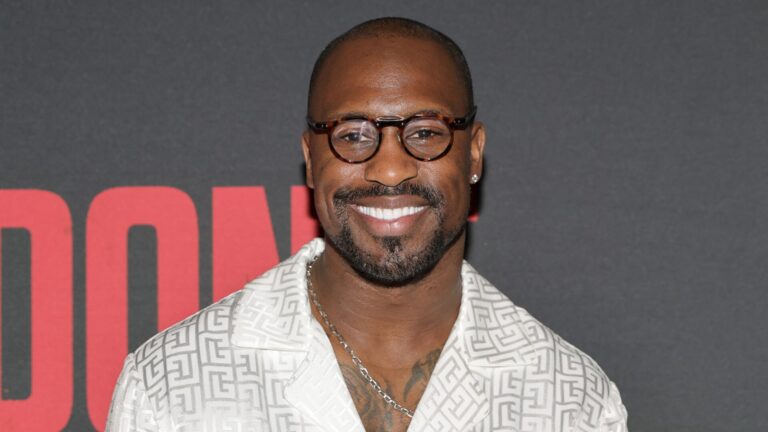
Ex-NFL Star Brings Renovation Roots and Competitive Edge to This HGTV Show
Favicon 
www.movieguide.org

Ex-NFL Star Brings Renovation Roots and Competitive Edge to This HGTV Show

Former NFL tight end Vernon Davis takes his competitive edge to a whole new word on HGTV's ROCK THE BLOCK. "A lot of people don't know...
Like
Comment
Share
Young Conservatives
Young Conservatives
8 w

Community College in Minnesota Faces Free Speech Scrutiny Over ‘Speech Zone’ Policy
Favicon 
legalinsurrection.com

Community College in Minnesota Faces Free Speech Scrutiny Over ‘Speech Zone’ Policy

“serious First Amendment concerns” The post Community College in Minnesota Faces Free Speech Scrutiny Over ‘Speech Zone’ Policy first appeared on Le·gal In·sur·rec·tion.
Like
Comment
Share
Young Conservatives
Young Conservatives
8 w

Iran Hostilities Set to Resume as U.S. Enforces Hormuz Blockade
Favicon 
legalinsurrection.com

Iran Hostilities Set to Resume as U.S. Enforces Hormuz Blockade

Centcom: The blockade to be "enforced impartially against vessels of all nations entering or departing Iranian ports (...)." The post Iran Hostilities Set to Resume as U.S. Enforces Hormuz Blockade first appeared on Le·gal In·sur·rec·tion.
Like
Comment
Share
Nostalgia Machine
Nostalgia Machine
8 w

Gen X Is Sharing The Irrational Fears Instilled In Them As Kids In The 70s and 80s (20 Pics)
Favicon 
pleated-jeans.com

Gen X Is Sharing The Irrational Fears Instilled In Them As Kids In The 70s and 80s (20 Pics)

The post Gen X Is Sharing The Irrational Fears Instilled In Them As Kids In The 70s and 80s (20 Pics) appeared first on Pleated Jeans.
Like
Comment
Share
Trending Tech
Trending Tech
8 w

Slate Auto raises $650M to fund its affordable EV truck plans
Favicon 
techcrunch.com

Slate Auto raises $650M to fund its affordable EV truck plans

Slate Auto's latest funding round was led by existing investor TWG Global, a firm run by LA Dodgers owner Mark Walter.
Like
Comment
Share
Sons Of Liberty Media
8 w

The People Of Western North Carolina Are Still In Need After Hurricane Helene (Video)
Favicon 
sonsoflibertymedia.com

The People Of Western North Carolina Are Still In Need After Hurricane Helene (Video)

In this episode, Norm Davis joins me to remind people that nearly a year and a half after Hurricane Helene, people in western North Carolina are still without homes, running water and heat. Many are still living in makeshift tents and some have even been coerced by the state of NC to sell their land …
Like
Comment
Share
Country Roundup
Country Roundup
8 w

Cross Canadian Ragweed Confirms Live Album From 2025’s “Boys From Oklahoma” Concerts Is Coming Soon
Favicon 
www.whiskeyriff.com

Cross Canadian Ragweed Confirms Live Album From 2025’s “Boys From Oklahoma” Concerts Is Coming Soon

Get ready. Against all odds, 2025 proved to be nothing short of a miracle for Cross Canadian Ragweed. After making their long-awaited return to the stage in January at Mile 0 Fest in Key West, Florida, Ragweed dropped the bombshell and announced their grand reunion: “The Boys From Oklahoma” Concert series, a four-night experience in April, along with fellow Red Dirt legends, Turnpike Troubadours. This would later expand into a “Texas Encore” edition of the reunion, which included Shane Smith & The Saints, Wade Bowen and more in August. Given the success last year, with all the aforementioned shows selling out, Ragweed has been hitting the road hard again this year. Not only did they headline Mile 0 Fest in Key West, Florida, but they also teamed up with Turnpike once again for two “Boys From Oklahoma” concerts in Athens, Georgia, back in February. In March, fresh off a sold-out show at Houston Rodeo, the Red Dirt legends would send fans into a frenzy by teasing what looked to be their first new live album in nearly 20 years, sharing a cropped album cover for a record seemingly titled Live & Loud. View this post on Instagram Over the weekend, Ragweed would return to Boone Pickens Stadium in Stillwater, Oklahoma, where they made their grand return at the “Boys From Oklahoma” series last year, and it proved to be another massive success. Calling upon Turnpike once again, they’d also bring out fellow Oklahoman, Wyatt Flores, as well as Shane Smith & the Saints, they performed to another sold-out crowd in their home state. On a night filled with memorable moments, ranging from a performance with Smith and Co. on “17” to closing the show with a cover of Charlie Robison’s “My Hometown,” frontman Cody Canada delivered the best news of the night by confirming that the live album is officially on the way. Talking to the Stillwater crowd, he would confirm that Live and Loud will consist of songs from the original four-night run of the “Boys From Oklahoma” concerts last year. “So last year we had four nights of this, 100 songs. I know this because I went through this in a studio and went down a list of everything we did last year for a reason, so maybe one day we could have a live album called ‘Live From Boone Pickens Stadium.’ We should call it ‘Live and Loud From Boone Pickens Stadium.'” Following up on the announcement at the show, Ragweed would then take to Instagram Sunday afternoon to post yet another teaser for the live album. Uploading a slick animation of the Easter egg-filled album cover coming to life, they would confirm the record’s Live and Loud From Boone Pickens Stadium title. View this post on Instagram As Canada noted at the Stillwater show, there’s plenty to choose from for the album. In case you forgot, Turnpike’s Evan Felker and Kyle Nix, Parker McCollum, Wyatt Flores, Kaitlin Butts, Wade Bowen, Mike McClure, Jason Boland, Dierks Bentley, Shelby Stone and Graycie York all made appearances with Ragweed throughout the legendary four-night run last year on various songs. While there’s no confirmation if any of the collaborations will make the final tracklist for Live and Loud, there’s no denying that it would be a dream come true for Red Dirt fans to hear all of these massive collaborations in studio quality. As of now, Live and Loud From Boone Pickens Stadium does not have a release date; however, it’s safe to say that we’ll get an official announcement here very soon. Before you go, fire up “Boys From Oklahoma” live at Billy Bob’s Texas back in 2002. Cross Canadian Ragweed Tour Dates July 24 – Morrison, Colorado – Red Rocks Amphitheater August 22 – Lincoln, Nebraska – Memorial StadiumThe post Cross Canadian Ragweed Confirms Live Album From 2025’s “Boys From Oklahoma” Concerts Is Coming Soon first appeared on Whiskey Riff.
Like
Comment
Share
Conservative Voices
Conservative Voices
8 w

Ghostwriter in a Hurry
Favicon 
www.theamericanconservative.com

Ghostwriter in a Hurry

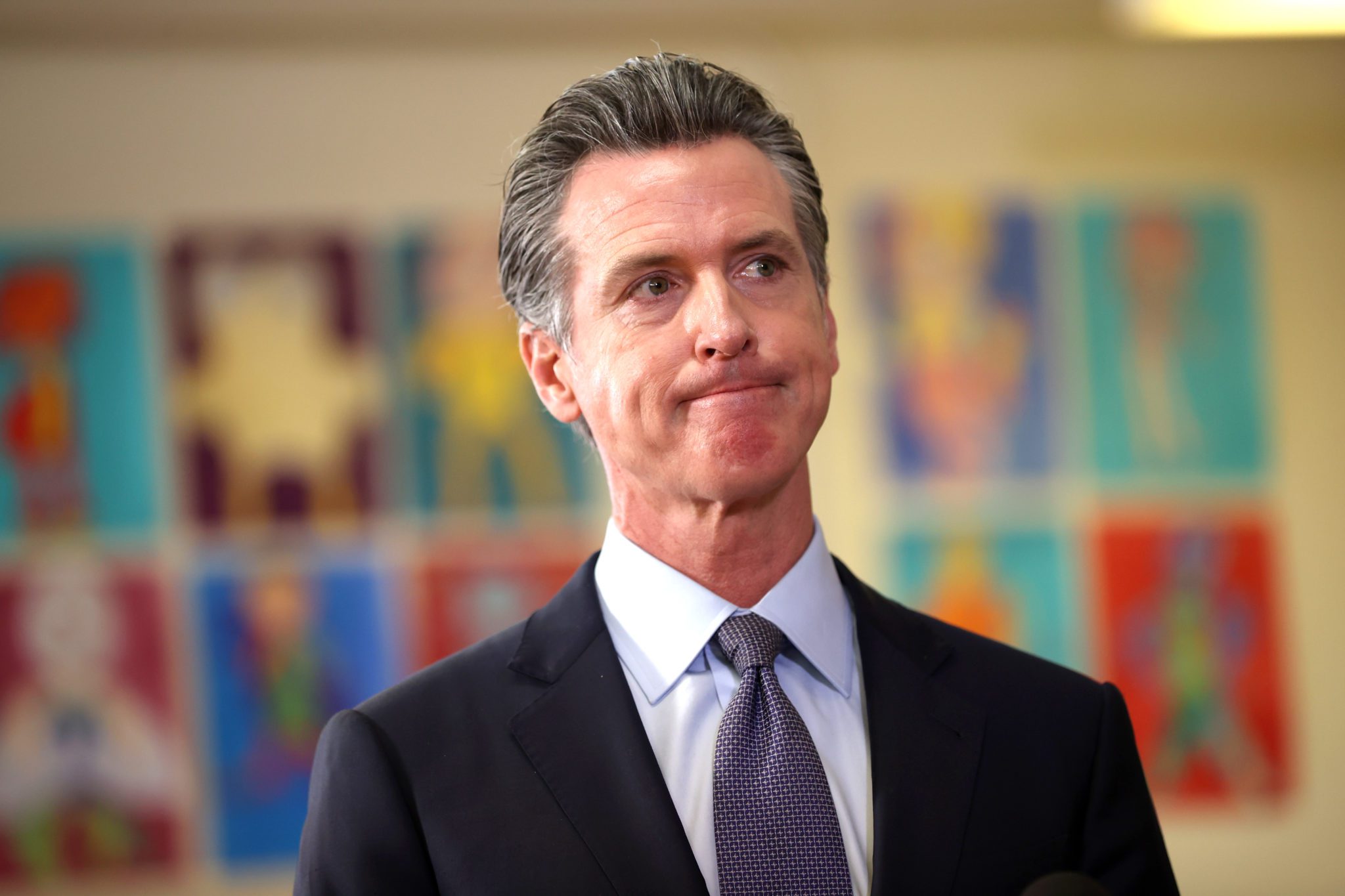
Books Ghostwriter in a Hurry Pity the hack who works for Gavin Newsom. (Photo by Justin Sullivan/Getty Images) Young Man in a Hurry: A Memoir of Discovery, by Gavin Newsom. Penguin Press, 304 pages. Let’s start with the acknowledgments, usually the best place to begin in a political memoir. Here the author admits that he is less composer and more collaborator. Although his name appears on the cover and the story is his own, the real work of compilation is done by a shadow army of ghostwriters, developmental editors, line editors, copy editors, and fact checkers. No one feels any compunction about this arrangement. It is just the way the business works. The writers and editors offer their services, the author accepts, and everyone who participated in the project gets half a line of thanks. Most people know you can’t judge a book by its cover. Only those in publishing understand that you must consult the acknowledgements. Gavin Newsom is cognizant of this industry dynamic, and it suits him well. The governor of California is one of the most forthright fakers in American politics. He proudly declares in the acknowledgements of Young Man in a Hurry that he did not write his memoir. Instead, he “enjoyed the privilege” of hiring Mark Arax, a literary nonfiction journalist in California, to do the work for him. The idea was to produce something classier than a campaign book. Arax’s role “went beyond mere ghostwriter,” Newsom says. “He asked for one thing: that the memoir would go where it needed to go, no matter how personal and wrenching, and I agreed.” That’s a big promise, especially coming from a guy who is eyeing the White House in 2028. Pity that Newsom doesn’t deliver. Young Man in a Hurry fails on its own terms. It is neither personal nor wrenching. Worse, neither author nor writer seems to understand how badly he has blundered. Nor, I should add, do most reviewers. The memoir has been praised for its literary qualities, for its humility, for its honesty. It possesses none of these things. It is a pastiche of introspection; unconvincing and shallow, like Newsom himself.  The problem of authenticity is one with which Newsom has struggled ever since he got into politics. His family is one of the most venerable in San Francisco, and he spent much of his childhood gadding about the world with the Getty children, whose family trust his father administered. His first political assignment was an appointed position, courtesy of Willie Brown, another friend of his father’s. Almost every position has occupied since has owed something to his family name and connections. Newsom does not deny nor downplay any of it. But he insists that he has known struggle too. His parents divorced when he was young, and his mother had to work three jobs just to get by. He claims that as a child he was gangly, awkward, and afflicted by undiagnosed dyslexia. When he grew up, he became aware of a painful duality within himself that he has spent years attempting to understand.  “Before my image had been curated and projected onto the screen by the packaging of politics, I was some combination of genes and upbringings whose imprint I struggled to deduce,” Newsom says. “I began to tunnel backward, the questions more lucid in my head. I might have stopped at the first painful revelation, but my obsessive gear kicked in and I kept boring deeper into the past.” Boring is the right word. Arax clearly tried to extract some admission from the governor, some telling anecdote that reveals the humanity behind his self-serious bluster. After all, the book is subtitled “A Memoir of Discovery.” But the ghostwriter came up short. So he was forced instead to insert vague circumlocutions where there should have been specific details. Thus, we learn that Newsom was ejected from third grade “for one shortcoming or another” and that his grandmother gave him a drawing lesson in “one thing and another.” He tells us that the past was “all too painful” for his father to recount, and when he did tell stories about it, he used a script that was “all too familiar” to his son. Yet Newsom still finds the voice of his father within him “all too alive.” And when Arax does manage to get a real story out of the governor, it is usually only insipid family lore. “Nobody could ever get me to eat peas. I would never eat peas,” Newsom recalls his father saying. But one day his grandmother “mashed them in the mashed potatoes, and I ate peas.”  This is not to say that the book is completely content-free. In some places it’s packed with facts, too many facts. Arax has a tendency, typical of political journalists, to mistake an overload of useless information for a stylistic flourish. Sometimes this manifests as fake descriptive writing. (On Gordon and Ann Getty: “They moved into a 1914 mansion set atop Pacific Heights with a one-of-a-kind view of the San Francisco Bay.”) Other times it surfaces as real descriptive writing that nevertheless does not tell the reader anything important. (On Treasure Island: “It had action, it had a place remote and mysterious, it had a one-legged pirate disguised as a cook named Long John Silver.”) At its most ludicrous, it employs the inane precision that I associate most readily with the novelist Dan Brown. (On touring Rome: “the rococo style of the 135 Spanish Steps,” On The Economist: “the London-based weekly that had been pushing its ‘radical centrism’ since the 1840s,” On Hilaire Belloc: “one of the Big Four of Edwardian letters.”) In the funniest of these howlers, Newsom declares that the movie Rocky “was the Metamorphoses for a kid like me”—perhaps the only time Sylvester Stallone has entered Ovid’s orbit. So much for the book’s literary qualities. Young Man in a Hurry’s political content is equally flimsy. Newsom seems to have poured so much effort into portraying himself as a sensitive young man that he forgot that his memoir is also a campaign book. Maybe there just isn’t much to say. The governor treats his political career in San Francisco at some length, but he tends to focus on piddling achievements. While a city commissioner, for example, he changed the name of the people who hand out parking tickets from “meter maid” to “parking control officer,” a bureaucratization which he treats as a massive win for human dignity. Similarly, while mayor, he changed the paperwork in the issuance of marriage licenses such that the forms no longer read “man and wife” but “Applicant One” and “Applicant Two,” a decision that (for a time) made San Francisco one of the few places to marry gay people.  Once Newsom exits his hometown for state politics, he falls curiously silent. Little is said about his time as lieutenant governor. (He claims he was known simply as the “guns and weed dude.”) And almost nothing about his current office. The narrative strategically ends while Newsom is governor-elect, allowing him to skirt any discussion of his conduct during the pandemic, his management of the state’s budget, and a host of other difficulties he has muddled through since taking control of California in 2019. But the book is not a total wash. There is actually one revealing anecdote, though I doubt Newsom and Arax intended it to land as it does. Around the time Newsom was courting his second wife, Jen Siebel, he was also evading a stalker in San Francisco. Han Sup Shin was a middle-aged psychotic who dressed in purple ties and latex gloves and who enjoyed taking pictures of the mayor’s pants. One night, Shin attempted to break into Newsom’s apartment building with a roll of duct tape in his hand. He was arrested, and the police confiscated his bizarre photo collection, as well as a video recorder on which he was taping a cassette titled “President Newsom.”Newsom reflects that he found the incident disconcerting. He’s right to. Only a madman would seriously consider him in the White House. The post Ghostwriter in a Hurry appeared first on The American Conservative.
Like
Comment
Share
Conservative Voices
Conservative Voices
8 w

Quitting Time?
Favicon 
www.theamericanconservative.com

Quitting Time?

The Home Plate Quitting Time? Where are the J.D. Vances of yesteryear? (Brendan SMIALOWSKI / AFP via Getty Images) While waiting for Vice President J.D. Vance—who as Senator Vance was among the corporal’s guard of war skeptics in that body—either to regain his voice or to reclaim his cojones from a safe-deposit box buried deep within the bowels of Trump Tower, patriots in the administration’s foreign-policy division might examine how their forebears answered the question, “Should I Stay or Should I Go?” In Resignation in Protest (1975), the political scientists Edward Weisband and Thomas M. Franck wondered why, despite Vietnam and Watergate, there had been so few “courageous public defections of key disaffected members of the Johnson and Nixon administrations.” One man’s careerist weasel is another man’s team player. The meretricious lure of power, the shame of being labeled a “quitter,” and the near certainty of vindictive reprisal have made bold resignations by presidential appointees almost as rare as transits of Venus. (Joe Kent, who resigned as Trump’s director of the National Counterterrorism Center, is an exception to this rule.) Consider two very different men who disagreed strongly with the boss’s bellicosity: the populist Nebraska Democrat William Jennings Bryan and the Cold War-era establishmentarian George Ball. Bryan—whose defeat in 1896 by William McKinley was a pivotal event in the transmogrification of these United States from shining republic (however imperfect) to empire—was secretary of state in the Woodrow Wilson administration as Europe was committing suicide in the Great War. A sincere if inconsistent proponent of beating of swords into ploughshares, Bryan stood out like a rose in concrete as he held fast to the Washington—Jefferson doctrine of noninvolvement in European affairs, even after the Germans sank the Lusitania, a British passenger ship bearing munitions. Over a thousand souls perished at sea, including 128 Americans. A “ship carrying contraband should not rely upon passengers to protect her from attack,” said Bryan. “It would be like putting women and children in front of an army.” Secretary Bryan resigned rather than support the Anglophilic administration’s retreat from neutrality. A believer in arbitration, he proposed that there “be no declaration and no commencement of hostilities until the matters in dispute have been investigated by an international commission, and a year’s time is allowed for investigation and report”—a cooling-off period that would have saved 118,000 American lives. Bryan would not go quietly into retirement: “Already the jingoes of our own country have caught the rabies from the dogs of war; shall the opponents of organized slaughter be silent while the disease spreads?” (In our day he would be ridiculed as a hopeless pussy by those big strong He-men Lindsey Graham and Pete Hegseth.) Bryan explained, in a simple sentence that must strike the Mike Johnsons and Chuck Schumers as the drooling of a demented child: “A man in public life must act according to his conscience.” Ball, undersecretary of state to Presidents Kennedy and Johnson, warned early against the commitment of U.S. forces to Vietnam. “Within five years we’d have 300,000 men in the paddies and jungles and never find them again,” he told JFK, who didn’t listen. But Ball neutered himself by delaying, for several months in the crucial 1964–65 period, transmission of a blunt memo to LBJ arguing that Vietnam was an “unwinnable war” from which the U.S. should disengage. He was less reticent with his peers. After Dean Acheson, John McCloy, and others of the risibly denominated “Wise Men” urged LBJ in a July 1965 White House meeting to press on, Ball exploded: “You goddamned old bastards… remind me of nothing so much as a bunch of buzzards sitting on a fence and letting the young men die.” Shortly before his death, Ball was asked why he did not quit on principle and cause a public splash. He responded, “I knew the Johnson administration very well, and I knew how the president operated. If there had been any intimation that I might resign, the president would have passed the word out through the White House leaks that Ball had proved a total failure. That he had been quite incompetent, and that he was going to have to leave.” Such objurgations would be pronounced upon any principled man or woman who resigned from the current administration, though they would be in the form of taunts one might hear from a particularly stupid schoolyard bully. He or she would be called “a Loser with a capital L.” Secretary of the Treasury William McAdoo, President Wilson’s son-in-law—a sharper tool than Jared Kushner—told William Jennings Bryan that resignation would ruin his career. Bryan replied, “I believe you are right. I think this will destroy me; but whether it does or not, I must do my duty according to my conscience, and if I am destroyed, it is, after all, merely the sacrifice that one must not hesitate to make to serve his God and his country.” The J.D. Vance of Hillbilly Elegy might have made such a speech. The post Quitting Time? appeared first on The American Conservative.
Like
Comment
Share
Conservative Voices
Conservative Voices
8 w

How the Influencer Economy Ruined Childhood
Favicon 
www.theamericanconservative.com

How the Influencer Economy Ruined Childhood

Books How the Influencer Economy Ruined Childhood What’s it like being the child of an oversharing mom or dad with millions of social media followers? (Matt Cardy/Getty Images) Like, Follow, Subscribe: Influencer Kids and the Cost of a Childhood Online, by Fortesa Latifi. Gallery Books, 288 pp. Last Halloween, a clever costume “won the Internet,” as the saying goes. Kate Snyder of Brooklyn posted a picture of herself in a tiny smocked dress, knee-high socks, and a white cardboard heart surrounding her white-painted face. Her caption reads “[I’m] the toddler of a celebrity mom who wants to protect my identity but she also want[s] to post my outfits.” Snyder’s post received thousands of likes on Instagram and even made its way over to a Reddit snark page (more on what that is later). The costume poked fun at the concept of “mindful sharenting,” one of many quickly-emerging social media trends examined by journalist Fortesa Latifi in her new book Like, Follow, Subscribe: Influencer Kids and the Cost of a Childhood Online. In Like, Follow, Subscribe, Latifi interviews parent and child influencers to pull back the curtain on how the industry uses parasocial relationships to sell everything from dining tables to diaper cream, and how growing up in a home that’s essentially a 24/7 reality television set negatively impacts a child. Latifi cites books like Momfluenced: Inside the Maddening, Picture-Perfect World of Mommy Influencer Culture by Sara Petersen and zeroes in on the effects on child influencers specifically. Social media is a huge part of how contemporary Americans shop, work, and play. It’s also a huge part of how they parent—both what they share and consume. “Mindful sharenting—which can include photographing a child from the back or putting an emoji over their faces—can be a way to navigate the perceived risks of sharing your child online while still showcasing your experience of parenthood,” a communication studies expert tells Latifi in the book. “Mindful sharenting” is an approach that’s trickled down from influencers like Brooklyn McKnight (who has millions of Instagram followers and is herself a former child influencer) to normal parents who say they value privacy for their children.  But children’s online privacy encompasses much more than just the decision to show their faces on parents’ social media accounts. Latifi, herself a mother, traces the history of blogging and vlogging about family life from text to image to video. At each step, the financial incentives grew, and so did the invasiveness. “The amount of money in the mom influencer and family vlogging world is almost unbelievable,” Latifi writes. “Whatever you’re thinking, it’s more than that. According to Goldman Sachs research, the creator economy is expected to reach $500 trillion by 2027, and the highest echelons of mom influencers and family vloggers make hundreds of thousands or even millions of dollars a year.” That money—much of which goes to Big Tech companies’ bottom lines—is life-changing for families, but it also turns them into “something more resembling a business arrangement,” in Latifi’s words. Family influencing encompasses a spectrum of experiences. Latifi interviews child influencers who say they love what they do; after all, “they’re living the dreams of the 86 percent of young Americans who want to be influencers,” she writes. She also interviews and writes about children who have been hurt, betrayed, and even abused by parents chasing fortune and fame, the most extreme example being momfluencer Ruby Franke, who is in prison after pleading guilty to aggravated child abuse. Latifi talks to YouTuber and mom of eight Julie Jeppson, who lets her in on a dirty little secret of the business: content with sick or injured kids performs the best. It’s the content “that you’re not supposed to post,” in Jeppson’s words.  “People would be like, ‘Oh my gosh, your kids are always sick, and I swear that she’s doing this on purpose and blah, blah, blah.’ They can think what they want,” she tells Latifi. “Humans are curious, and they want to know what is happening and why is this kid in the hospital? So they click on it.”  Latifi is skeptical but sympathetic toward her subjects. She acknowledges the constraints of raising a family (especially as a single mom, as Jeppson identifies herself) under late-stage capitalism. But she also exposes the lies that influencer parents tell themselves and others. Latifi talks to Jeppson about a video of her daughter India crying because of Father’s Day songs at a sacrament meeting (the Jeppsons are Mormon). Jeppson and her husband were separated at the time, and India needed to step away to process her emotions. Jeppson says she got consent from India, who understands that the family’s videos can help other children going through similar situations.  Latifi isn’t buying it. “I’ve read comments on Jeppson’s videos that thank her for her unpolished content and describe how it’s helped other people get through their own difficulties. I just don’t understand how that is more important than allowing India to experience such an emotional moment privately,” she writes. “Sure, it might help other kids who are missing their dads, but in my mind, other kids aren’t Jeppson’s concern. India is.” Latifi has a similar conversation with a family vlogger who chooses to be identified only as “Sam” in order to protect his or her identity. “Any parent influencer is constantly fighting feelings of guilt, feelings of questioning, second-guessing yourself. But you learn to bury it and silence it with justifications,” Sam tells her.  Sam is not alone. Latifi dedicates an entire chapter of Like, Follow, Subscribe, titled “From Content to Consent: The Parents Who Changed Their Minds,” to parents who built huge followings thanks in part to their young children, then reversed course. Aspyn Ovard, who transitioned from teenfluencer to momfluencer, stopped posting her children’s faces in 2023 to protect the children’s privacy.  “Aspyn explains [in a 2024 video] that she’s gone back to delete old content featuring her kids, but when it comes to sponsored content, she hasn’t been able to, because featured in some of the contracts is the understanding that the content will live on her platform indefinitely,” Latifi writes. She points out that many influencers build lucrative platforms using their kids then choose to stop posting their children once they’ve already inked brand deals—in other words, those influencers are still benefiting from the choice to post their children.  Family influencing is uncharted territory, and a couple of states have passed legislation around it. Such regulations on child influencers can be complicated and quickly outflanked by the rate of technological change, so Latifi is circumspect. “The exact nature of family influencing is what makes it so difficult to legislate…. The labor of a child influencer is so different than that of child actors, to whom they are often compared,” she writes.  Like, Follow, Subscribe poses many thought-provoking questions about parental rights as the conservative parental rights movement grows. Currently, the conservative parental rights movement is focused on things like parents’ ability to say no to vaccine schedules pushed by pediatricians or sexually graphic books assigned by public school teachers. But how should conservatives respond to children being exploited online by their parents and corporations when appealing to “parental rights” plays right into Big Tech’s hands?  Latifi is right that parents know best, until they don’t. In an especially disturbing chapter, she talks to a mom who rationalizes posting videos of her young daughters’ dance routines even though she knows such content appeals to pedophiles. Some of Latifi’s commentary—her priors include Teen Vogue and Rolling Stone—is sure to rankle readers on the right. She cites a researcher who includes homeschooling and/or frequent relocating as one of eight potential harms to child influencers. She ponders the tradwife-versus-girlboss dichotomy and American feminism. “As I’m writing this, Donald Trump is president for the second time, and the experience of American motherhood has never been more threatened,” she writes, referring to the patchwork of post-Roe abortion laws. But such a claim does a disservice to Latifi’s important work on child safety that is sure to be a huge issue long after Trump leaves office. Our collectively commodified online existence is threatening American motherhood and many, many other aspects of American life, and this issue won’t leave office in 2029.  Should children have a right to online privacy from birth, or should parents have the right to determine a child’s online profile when he or she is young? These are questions that seem black-and-white but turn much grayer as you look more closely. At a minimum, the evidence in Like, Follow, Subscribe should push conservatives to think through what they really mean when they discuss parental rights. There’s no perfect solution to preserve all parents’ autonomy and protect every child from every potential harm. Which compromises are conservatives willing to make? What outcomes are they willing to accept? As for the abovementioned snark pages—this may be some of the most interesting digging that Latifi does in the book, because it involves not influencers and wannabe celebrities but everyday people. Look up any major influencer’s name plus the word “snark,” and there’s probably a page dedicated to tearing him or her apart on Reddit. A subreddit dedicated to Aspyn Ovard snark has more than 30,000 weekly visitors. Latifi writes, There tends to be this idealized vision of snarking, where, [digital culture expert Jess] Rauchberg explains, ‘We’re not gossiping, we’re not shit-talking, but we are doing a secret third thing.’ One of the ways snarkers define their role is by instituting rules around their snark… This is what separates snarkers from haters – snarkers have embarked on what they see as a moral crusade. When you read through snark pages, the posters are adamant that they’re not just hating – they’re raising awareness about whatever issue they think the influencer they’re talking shit about exemplifies. The most interesting revelation? Many “snarkers” are former fans who have soured on the influencers they once idolized. They still consume, analyze, and share the influencers’ content, just with a different purpose. But they’re absorbing it and being affected by it just the same.  Social media is a digital double-edged sword. It creates connections, spreads ideas, and enforces accountability. But all Americans, whether they’re parents or not, need to remember that if something’s free, then they’re the product. Your data, your time, your purchasing power—the more time you’re on social media, the more multinational corporations benefit. Instead of relying on momfluencers to tell us how to parent and what to buy, ask a friend or family member for help, no affiliate link or promo code needed. The post How the Influencer Economy Ruined Childhood appeared first on The American Conservative.

Like
Comment
Share
Showing 7591 out of 125359
  • 7587
  • 7588
  • 7589
  • 7590
  • 7591
  • 7592
  • 7593
  • 7594
  • 7595
  • 7596
  • 7597
  • 7598
  • 7599
  • 7600
  • 7601
  • 7602
  • 7603
  • 7604
  • 7605
  • 7606
Advertisement
Stop Seeing These Ads

Edit Offer

Add tier


Select an image
Delete your tier
Are you sure you want to delete this tier?

Reviews

In order to sell your content and posts, start by creating a few packages. Monetization

Pay By Wallet

Payment Alert

You are about to purchase the items, do you want to proceed?

Request a Refund