YubNub Social YubNub Social
    #jesuschrist #christmas #christ #merrychristmas #princeofpeace #achildisborn #noël #christmas2025
    Advanced Search
  • Login
  • Register

  • Night mode
  • © 2025 YubNub Social
    About • Directory • Contact Us • Developers • Privacy Policy • Terms of Use • shareasale • FB Webview Detected • Android • Apple iOS • Get Our App

    Select Language

  • English
Install our *FREE* WEB APP! (PWA)
Night mode toggle
Community
New Posts (Home) ChatBox Popular Posts Reels Game Zone Top PodCasts
Explore
Explore
© 2025 YubNub Social
  • English
About • Directory • Contact Us • Developers • Privacy Policy • Terms of Use • shareasale • FB Webview Detected • Android • Apple iOS • Get Our App
Advertisement
Stop Seeing These Ads

Discover posts

Posts

Users

Pages

Blog

Market

Events

Games

Forum

The Lighter Side
The Lighter Side
2 yrs

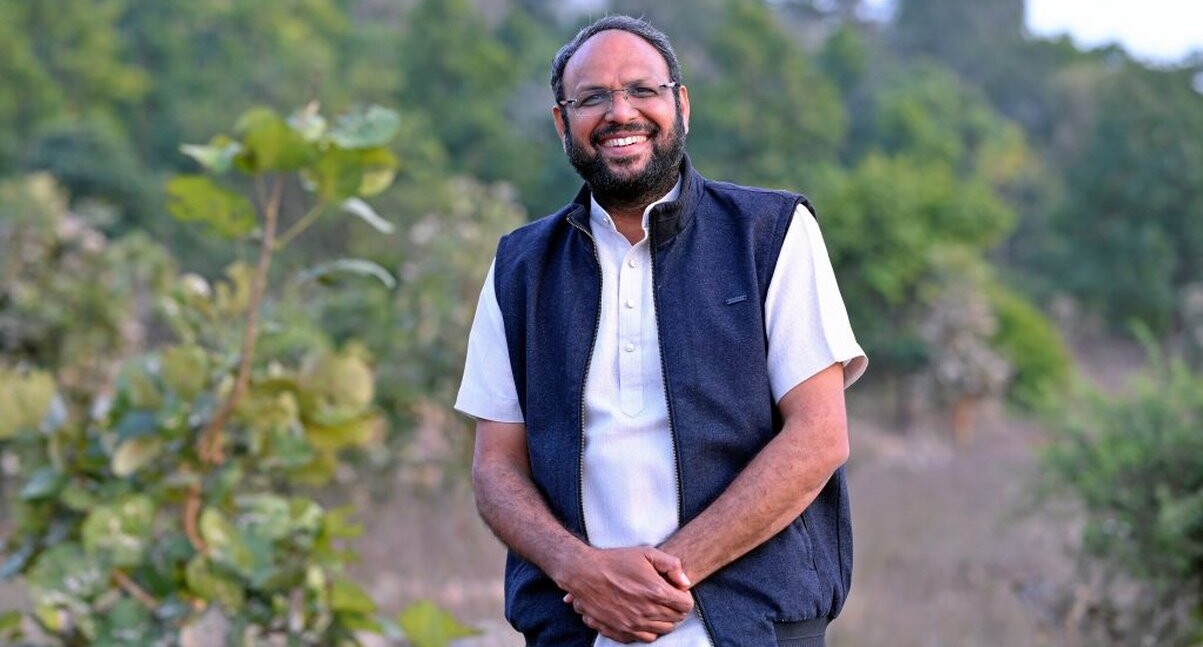
He Saved One of the Largest Forests in India from Coal Mining, Wins 2024 Goldman Prize
Favicon 
www.goodnewsnetwork.org

He Saved One of the Largest Forests in India from Coal Mining, Wins 2024 Goldman Prize

Winning what’s been called the ‘Green Nobel’ an Indian environmental activist has been recognized for saving a 657 square-mile forest from 21 coal mines. From the New Delhi train station to high-end hotels to the poorest communities, virtually no one in India is free from periodic blackouts. As part of the Modi regime’s push for […] The post He Saved One of the Largest Forests in India from Coal Mining, Wins 2024 Goldman Prize appeared first on Good News Network.
Like
Comment
Share
The Lighter Side
The Lighter Side
2 yrs

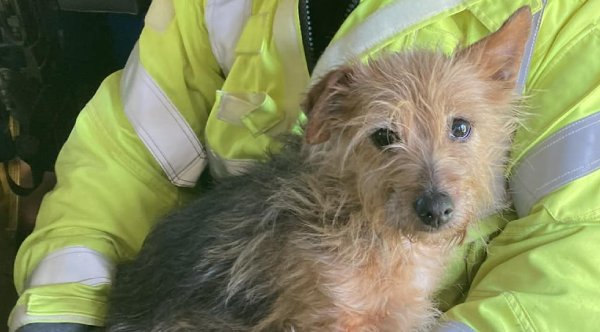
and#039;She Just Jumped Into My Armsand#039;: Firefighter Adopts Dog Found Beside Deceased Owner
Favicon 
www.sunnyskyz.com

and#039;She Just Jumped Into My Armsand#039;: Firefighter Adopts Dog Found Beside Deceased Owner

Like
Comment
Share
The Lighter Side
The Lighter Side
2 yrs

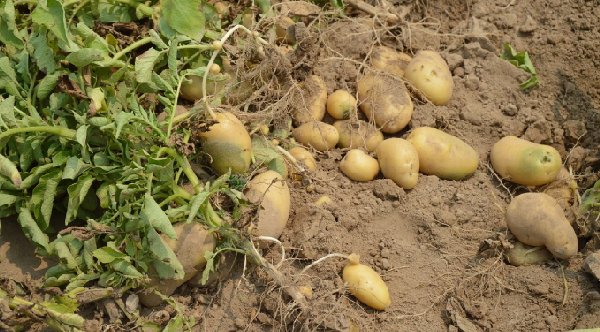
Manitoba Farmer Gives Away Millions Of Potatoes To People In Need
Favicon 
www.sunnyskyz.com

Manitoba Farmer Gives Away Millions Of Potatoes To People In Need

Like
Comment
Share
SciFi and Fantasy
SciFi and Fantasy  
2 yrs

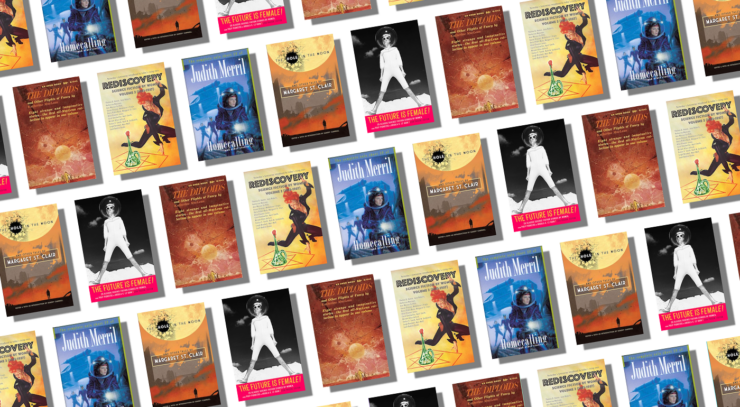
Looking for Classic SF by Women? Here Are Five Places to Start…
Favicon 
reactormag.com

Looking for Classic SF by Women? Here Are Five Places to Start…

Books classic science fiction Looking for Classic SF by Women? Here Are Five Places to Start… These collections and anthologies are invaluable resources, featuring otherwise hard-to-find stories from the first half of the 20th century. By James Davis Nicoll | Published on May 20, 2024 Comment 0 Share New Share From time to time, SF fans will observe that they didn’t know that there were any women writing science fiction back in the golden age of magazines in the 1930s, ’40s, and ’50s. This is not terribly surprising, as magazines are by their nature ephemeral and (as documented by academic Liza Yaszek) early anthologists such as John W. Campbell, Jr. and Groff Conklin went out of their way to exclude women SF authors. More recent editors have made very different decisions. SF fans wanting to explore the world of vintage science fiction by women should consider the collections and anthologies below.1 I’ve limited myself to works that are, as far as I can tell, in print.2 Homecalling and Other Stories by Judith Merril (2005) Merril made many contributions to SF as an author, editor, founder of what was then known as the Spaced Out Library (now Toronto’s Merril Collection of Science Fiction, Speculation, and Fantasy), Canadian media personality, and (of course) fan. Thanks to NESFA Press, her non-collaborative short fiction has been collected in Homecalling, a massive tome that will challenge the mechanical properties of your bookshelf even as it expands your knowledge of classic SF. Of particular note, the story “That Only a Mother,” in which a husband and wife have different attitudes toward their precocious war-time child. The Hole in the Moon and Other Tales by Margaret St. Clair (2019) Active under her own name, as Idris Seabright, and also under other pen names, St. Clair was a prolific contributor to golden age magazines. She published often in The Magazine of Science Fiction and Fantasy.3 While at first glance, her stories might seem to hew to pulp conventions, closer reading reveals slyly subversive undercurrents. The Hole in the Moon4 contains seventeen stories. My favourite is “The Little Red Owl,” whose horrific elements are all too mundane. The Diploids by Katherine MacLean (1962) As one might deduce from the fact that her work appeared in magazines as a diverse as Astounding (now Analog) and Galaxy, MacLean was comfortable working across a spectrum of subgenres, from overt satire to more conventional SF. Astonishingly (or perhaps Astoundingly), her 1962 collection is somehow still in print, a measure of how well her fiction stands up. My favourite, “The Snowball Effect,” details a social experiment as unbounded by ethics as it was unprepared for the consequences of its success. Of course, no list like this would be complete without anthologies. There is a wealth of choice here but if I had to select just two—and my absurd insistence on five examples requires me to limit myself—these two anthologies are the obvious choice. The Future is Female! by Lisa Yaszek (2018) The Future Is Female! delivers twenty-five classic science fiction stories by women, from the 1920s to the late 1960s5, as well as commentary on the often-overlooked history of women SF authors. Yaszek anthologizes in the tradition of previous efforts such as Sargent’s Women of Wonder and Kidd’s Millennial Women, building on the early anthologies’ themes without recapitulating their contents. My favourite story is Kit Reed’s “The New You,” the moral of which (RTFM) is still timely. Rediscovery: Science Fiction by Women (1953 – 1957) edited by Gideon Marcus (2022) The second volume in the Rediscovery series, Rediscovery: Science Fiction by Women (1953–1957) anthologizes twenty Eisenhower-era SF stories. This series avoids stories that are already over-anthologized6, but clearly this choice was no impediment to finding entertaining works by women from this era. In addition, the volume includes ample ancillary material on each author. The quality is consistently high but if I had to choose a favourite, that would be St. Clair’s quiet “The Wines of Earth.” Of course, these are just a few of the works I could have recommended—and an even smaller fraction of the works that I could have recommended, save for the fact I have not yet read them. If you have suggestions of in-print works of interest to readers seeking out golden age SF by women, please mention them in comments below. Pamela Sargent’s Women of Wonder anthologies are omitted for two reasons: they were discussed in this previously published essay… and also they are out of print. ︎Figuring out which Leigh Brackett works were still in print proved unexpectedly difficult. I could find supposedly in-print books on a certain bookseller named for a river, but when I crosschecked with the publishers of those books, most of her collections and omnibuses appeared to be out of print. What’s particularly puzzling is that when I checked Free Speculative Fiction Online’s Brackett section, I found links to Baen book samples for books that I could not find on Baen’s site. ︎St. Clair received a memorably wretched back cover blurb on her novel, Sign of the Labrys. I won’t go into detail here lest that be the focus of the comment section, but it is not hard to find. ︎The Hole in the Moon and Other Stories edged out The Best of Margaret St. Clair because The Best appears to be available only in the UK. ︎Readers may object that a collection that includes stories from the late 1960s shouldn’t count, because the 1960s were well after my designated period of interest. Society was different then; feminism was burgeoning and more women were writing. But the book has enough great material from the golden age of magazines that I feel comfortable including it here. ︎The editors did well in their quest to avoid the over-anthologized; eighteen of the stories were new to me. ︎The post Looking for Classic SF by Women? Here Are Five Places to Start… appeared first on Reactor.

Like
Comment
Share
INFOWARS
INFOWARS
2 yrs

The American Journal: Iranians Take To Streets After Death & Likely Assassination Of President | ?? #americanjournal

https://madmaxworld.tv/channel..../the-american-journa
https://www.infowars.com/posts..../the-american-journa

Get a signed copy of 'The Great Awakening' & help keep us on air!
https://www.infowarsstore.com/....the-great-awakening- #supportinfowars

The American Journal
Favicon 
madmaxworld.tv

The American Journal

Taking a record of the heart and minds of the people, American Journal puts the power of the conversation into the callers' hands. Join us Monday through Friday, 8-11AM CST and call in to talk to Harrison Smith about all current topics and stories in the news and on your mind.
Like
Comment
Share
Reclaim The Net Feed
2 yrs

Mortgage Brokers Leak Sensitive Data to Facebook
Favicon 
reclaimthenet.org

Mortgage Brokers Leak Sensitive Data to Facebook

If you're tired of censorship and dystopian threats against civil liberties, subscribe to Reclaim The Net. Another big source of Facebook’s “bread and butter” – namely, people’s personal data – has been highlighted in a new investigative report, which identified that source as the online mortgage brokers industry. These are companies that act as intermediaries between borrowers and lenders, and when people either apply for a loan or seek refinancing, they give up highly sensitive information, trusting that it will be used by those firms alone. But The Markup reveals that this data, in an alarming number of cases (over 200 out of about 700 tested broker websites), gets “shared” with Facebook. The sites are run by both major and smaller companies – one of them being the Fairway Independent Mortgage Corporation, a top US lender. And Fairway Independent is among the sites that give data to Facebook. When contacted by the publication, this company said that it has discontinued the practice and that personally identifiable information was not made available to Facebook before – but a representative stopped short of explaining what they consider to be identifiable information. The article mentions a number of sites involved in similar data collecting and sharing schemes, and details scenarios under which this is happening. Not all were willing to comment at all – not even to the extent of Fairway Independent’s not-overly-useful response. What reveals that a site is engaged in this practice is the presence of the Meta Pixel tracker; the JavaScript snippet is embedded in websites, and Meta promotes it as a way for those sites to optimize their targeted ad campaigns on Facebook and Instagram. In return, Meta (Facebook) gets visitors’ personal data, which in the case of mortgage brokers includes estimated credit, veteran status, occupation, co-borrowers’ names, bankruptcy, home ownership and citizenship status, interest in specific homes, as well as their addresses, writes The Markup. “At a minimum legally dubious” is how George Washington University law professor Alicia Solow-Niederman described this. Meanwhile over at Facebook – which claims it is trying to stop Meta Pixel users from sending sensitive data, but doesn’t say if it’s succeeding – not even the giant’s engineers seem certain how the system works. “The engineers wrote in a document obtained by Vice’s Motherboard in 2022 that they ‘do not have an adequate level of control and explainability over how our systems use data’,” the article noted. If you're tired of censorship and dystopian threats against civil liberties, subscribe to Reclaim The Net. The post Mortgage Brokers Leak Sensitive Data to Facebook appeared first on Reclaim The Net.
Like
Comment
Share
Hot Air Feed
Hot Air Feed
2 yrs

Iranian President Dead After Chopper Crash
Favicon 
hotair.com

Iranian President Dead After Chopper Crash

Iranian President Dead After Chopper Crash
Like
Comment
Share
Hot Air Feed
Hot Air Feed
2 yrs

Fire Harrison Butker? K.C. Star Opinion Writer Says Yes. Time to Hire Female Kicker
Favicon 
hotair.com

Fire Harrison Butker? K.C. Star Opinion Writer Says Yes. Time to Hire Female Kicker

Fire Harrison Butker? K.C. Star Opinion Writer Says Yes. Time to Hire Female Kicker
Like
Comment
Share
Science Explorer
Science Explorer
2 yrs

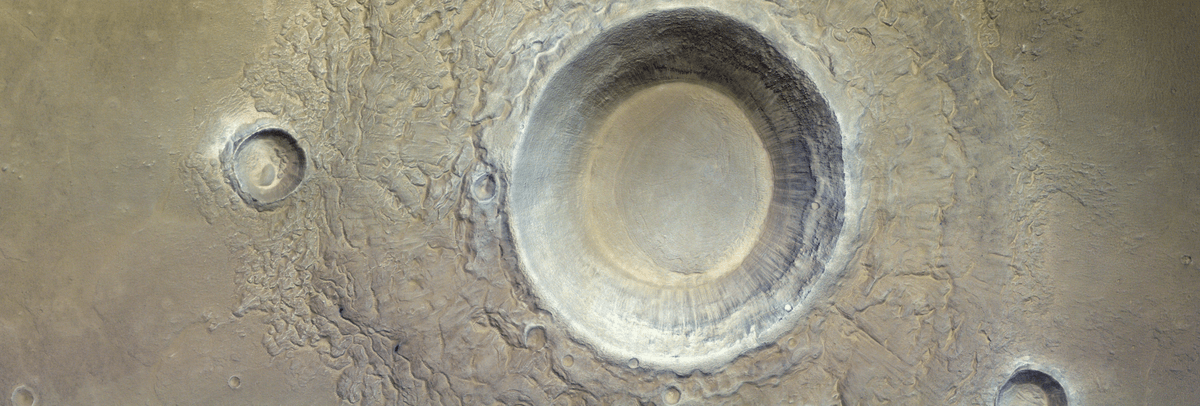
Gaze Into The Colossal Craters Of Mars And They Will Stare Icily Back
Favicon 
www.iflscience.com

Gaze Into The Colossal Craters Of Mars And They Will Stare Icily Back

Freshly released images show a bird’s eye view of the colossal craters that scar the surface of Mars. Not only do they make for a pretty sight, but the images provide clues about whether life has ever lived on our closest planetary neighbor.The images were captured by the Trace Gas Orbiter of ExoMars, an astrobiology program of the European Space Agency (ESA) and the Russian space agency (Roscosmos). The first image (above) shows a crater in Utopia Planitia, the largest confirmed impact basin in the Solar System with a diameter of roughly 3,300 kilometers (2,050 miles) – that’s around the distance from Las Vegas to Washington DC.Taken from about 400 kilometers (248 miles) above the surface, the image suggests the crater was formed by an asteroid collision at a time when this region was home to water ice. The smooth shape of the crater is further evidence that the region once held water ice. Splat! An interesting bunch of craters in Ganges Chasma, Mars.Image credit: ESA/TGO/CaSSISOn Earth, the presence of water is a good indication there is life present. While it’s not yet certain this “rule” applies to other planets, evidence of Martian water raises the possibility that the Red Planet once harbored life. The second image (above) shows a scattering of craters near the equator of Mars in a deep canyon known as the Ganges Chasma. Be aware that this is a false color image – the Red Planet hasn't suddenly started feeling blue. The color filters were added so scientists can highlight mineralogical or geologic differences on Mars’s surface that are hard to distinguish with the naked eye.The two larger craters measure 4 kilometers (2.4 miles) and 1.2 kilometers (0.7 miles) in diameter.  Once again, the splatter shape of the large crater suggests that the surface was not completely dry at the time of impact.This giant crater is an ancient one.Image credit: ESA/TGO/CaSSISLastly, ESA unveiled a final image (above) of an ancient crater in the southern highlands of Mars. Located in the Tyrrhena Terra region, the 15-kilometer (9.3-mile) wide crater is relatively old. Unlike younger craters that have a sharp and defined rim, this giant crater has been battered by millennia of erosion and has since been filled with sediment. Smaller craters dotted within the larger cater also indicate this feature has been here for a very, very long time. What it lacks in life, Mars makes up for in geology. The Red Planet may only be around half the size of planet Earth, but it’s home to some truly massive geological features, including some of the largest known impact craters. Mars is also home to volcanoes that are far larger than those on Earth, including some of the largest known volcanoes in the Solar System. 
Like
Comment
Share
Science Explorer
Science Explorer
2 yrs

Keeping Up With COVID Vaccines Arms The Immune System Against Future Variants And Viruses
Favicon 
www.iflscience.com

Keeping Up With COVID Vaccines Arms The Immune System Against Future Variants And Viruses

Keeping up with your COVID vaccines could have benefits beyond just topping up immunity to the latest circulating variants, according to a new study. Researchers led by a team at Washington University School of Medicine found that the antibodies generated by the vaccine have broad effectiveness against a range of variants, and might even help us build our defenses against the coronaviruses of the future.The trouble with immune imprintingWe’ve heard a lot over the last four years about the similarities, and crucial differences, between COVID-19 and another great respiratory virus foe: influenza. As a seasonal disease (unlike COVID, as far as we know), each year scientists have the unenviable task of updating the flu vaccine to match their best guesses for which strains of the virus will be causing the most problems. But there’s a problem. The memory cells that are produced by the immune system in response to one year’s vaccine don’t always leave space for new antibody-generating cells the following year, meaning you get a weaker immune response. This effect is called imprinting. While with the flu vaccine imprinting can have a negative impact on a seasonal shot’s efficacy, no one knew whether the same could be true for COVID-19. It’s not on the same annual schedule as flu, but we’re all too aware of how readily this virus can mutate to spawn new variants, and the vaccines have undergone several rounds of updates as a consequence.What the study foundTo investigate, the team looked at antibodies from humans and mice that had received a course of mRNA COVID-19 vaccines targeting first the OG variant from the days of social distancing and sold-out toilet paper, and then the newer Omicron variants. Some of the human participants had also gained antibodies from a natural COVID infection at some point during the pandemic.While there was evidence of imprinting from the initial vaccine, it did not seem to be having the negative impacts it can have with flu vaccines. Very few of the antibodies recovered were specific to either original COVID or Omicron – rather, the vast majority were cross-reactive, recognizing both variants of the virus. The researchers then tested the antibodies against a panel of different coronaviruses. There were two SARS-CoV-2 variants from different Omicron lineages, a pangolin coronavirus, the SARS virus from the 2002-2003 epidemic, and the virus responsible for Middle Eastern Respiratory Syndrome (MERS). The antibodies were able to neutralize all of these viruses except for MERS, which is more evolutionarily distinct from the others. The key to this cross-reactivity, the scientists discovered, was the combination of the different vaccines received. The same breadth of antibodies was not generated when people had only been vaccinated against the original COVID variant, and had not received an Omicron booster. This means that keeping abreast of the latest variants and regularly boosting the population against them could be storing up even greater benefits than simply keeping COVID at bay.When COVID hit, we were starting from scratch. Most of humanity had not encountered a similar virus before, so there wasn’t a level of baseline immunity in the population to help protect us. This study opens the tantalizing possibility that continuing to vaccinate against COVID could mean the situation would be very different if another novel coronavirus were to come along.“We do not know for certain whether getting an updated COVID-19 vaccine every year would protect people against emerging coronaviruses, but it’s plausible,” said senior study author Michael Diamond in a statement. “These data suggest that if these cross-reactive antibodies do not rapidly wane – we would need to follow their levels over time to know for certain – they may confer some or even substantial protection against a pandemic caused by a related coronavirus.”What’s the latest on vaccines and the FLiRT variants?Well, that all sounds quite promising. But given all the recent news about yet another new set of COVID variants, how are our vaccination efforts stacking up right now?The FLiRT variants have become the latest to surge in frequency across much of the globe. One in particular, KP.2, has recently overtaken the previous big-hitter, JN.1, and is causing the greatest proportion of infections in the US. While KP.2 has attained some mutations that some speculate might be helping it to evade prior immunity from vaccines and infections, this new research supports what many health experts have said, that all those previous antibodies you’ve generated will still be helping to protect you. It is important to keep boosting your immunity though, so if it’s possible for you to access an up-to-date shot where you live – especially if it’s been a while since your last one – it might be time to consider it, or to hold out for the next round of updates. Epidemiologist Adrian Esterman told Newsweek recently that “there will be a new vaccine available around September, based on either JN.1 or one of the FLiRT subvariants, that will give much better protection.”The vaccine landscape itself also changed recently with the withdrawal of the AstraZeneca vaccine from the global market. With their vaccine, named Vaxzevria, AstraZeneca did not take steps to update the formula based on newer virus variants coming into circulation – unlike the manufacturers of several of the mRNA vaccines, for example. Without these updates, Vaxzevria has likely now waned in effectiveness, and a decline in demand for their product means AstraZeneca have reportedly taken a commercial decision to discontinue it. It was a vital part of the global pandemic response when it was first developed, but now that there are so many other options – something we could only have dreamed of in the darkest days of 2020 – it seems it has had its day.But if you were one of the millions of people who received this vaccine, this new antibody research should reassure you that the beneficial effects, combined with any booster shots you have and will continue to receive, could last long after its withdrawal is complete.The study is published in Nature. 
Like
Comment
Share
Showing 76486 out of 103895
  • 76482
  • 76483
  • 76484
  • 76485
  • 76486
  • 76487
  • 76488
  • 76489
  • 76490
  • 76491
  • 76492
  • 76493
  • 76494
  • 76495
  • 76496
  • 76497
  • 76498
  • 76499
  • 76500
  • 76501
Advertisement
Stop Seeing These Ads

Edit Offer

Add tier


Select an image
Delete your tier
Are you sure you want to delete this tier?

Reviews

In order to sell your content and posts, start by creating a few packages. Monetization

Pay By Wallet

Payment Alert

You are about to purchase the items, do you want to proceed?

Request a Refund