YubNub Social YubNub Social
    #astronomy #nightsky #moon #liberals #fullmoon #planet #jupiter #americafirst #socialists #pinkmoon #recruitment #nokings
    Advanced Search
  • Login
  • Register

  • Night mode
  • © 2026 YubNub Social
    About • Directory • Contact Us • Developers • Privacy Policy • Terms of Use • shareasale • FB Webview Detected • Android • Apple iOS • Get Our App

    Select Language

  • English
Night mode toggle
Featured Content
Community
New Posts (Home) ChatBox Popular Posts Reels Game Zone Top PodCasts
Explore
Explore
© 2026 YubNub Social
  • English
About • Directory • Contact Us • Developers • Privacy Policy • Terms of Use • shareasale • FB Webview Detected • Android • Apple iOS • Get Our App
Advertisement
Stop Seeing These Ads

Discover posts

Posts

Users

Pages

Blog

Market

Events

Games

Forum

SciFi and Fantasy
SciFi and Fantasy  
2 yrs

The Acolyte Stumbles Its Way Through “Day”
Favicon 
reactormag.com

The Acolyte Stumbles Its Way Through “Day”

Movies & TV Star Wars: The Acolyte The Acolyte Stumbles Its Way Through “Day” Please stop giving us half-hour episodes in shows that are not sitcoms? By Emmet Asher-Perrin | Published on June 20, 2024 Image: Disney+ Comment 0 Share New Share Image: Disney+ Our requisite half-hour nothingness in an eight-episode season. Love when this happens. Recap Image: Disney+ On Khofar, Kelnacca lives alone; on the walls of his home is the same symbol as on Mae’s forehead. Back on Coruscant, Osha arrives at the end of a group training session to say goodbye to Jecki; she’s decided that Mae is the Jedi’s problem now and wants to leave, but promises to look her up next time she’s in town. Jecki asks if she’s said goodbye to Sol, but Osha thinks she’s caused him enough trouble. Mae and Qimir arrives on Khofar and begin their trek into the treacherous forests; Qimir knows Kelnacca’s whereabouts because he’s been here before, out of a desire to help Mae. He reminds her that she made a deal with her master and must complete her mission. A group of Jedi meet with Venestra and Sol to discuss what’s happening here. They agree not to tell the Jedi Council because the Council would tell the Senate; it would become a galactic scandal that Mae is seeking revenge on Jedi. Venestra tries to send Jedi Holden to capture Mae, but Sol fights her on it and insists that going himself with Osha and a group of knights would be the best plan so that they can learn the identity of the person who trained her. Venestra reluctantly agrees. On Khofar, Qimir asks Mae about her quest, and they talk about her sister being with the Jedi and her fondness for Sol. Sol finds Osha on her way to leave, and asks her to come on the mission. Osha agrees and once on board the ship, she meets Bazil (Hassan Taj), a Tynnan who can track Mae once they reach Khofar. The group sets out toward the forest. As Bazil leads them on, Osha stops Yord briefly and lets him know that she won’t be able to fight her sister. She asks Yord to step in and stop her if she can’t be saved as Sol hopes. In the forest, the group encounters giant bugs in the trees, being guarded by their parent. Sol kills it when it attacks. Osha tells Jecki that she was able to sense that creature and believes her connection to the Force is returning. She tells Jecki that she was never able to become a true Jedi because she couldn’t accept what she lost, but Jecki tells her that they’re not defined by loss, but by what they survive. Mae insists that she pause in her trek with Qimir and also tells him that her “test” from the master cannot be completed because no Jedi will fight a person without a weapon. She also reveals that her master will kill her if she doesn’t complete this mission. Bazil finally hones in on Mae’s scent and the Jedi press forward. Mae calls for help in the forest, but she’s actually set a trap for Qimir, hanging him upside-down by the ankle. She tells him that everything is different now that her sister is alive; she’s going to turn herself in to Kelnacca, not kill him, and tell the Jedi what she knows so she can be reunited with Osha. On making it to Kelnacca’s home, Osha finds the Wookiee already dead from a lightsaber strike to the abdomen. The Jedi surround the place and tell her to come out, but a figure appears behind Osha—it’s Mae’s master. He draws his saber and knocks Osha out of the way while all the Jedi charge him. He knocks the whole group back with the Force. Commentary Image: Disney+ Oh. So Manny Jacinto is the Sith guy, right? Y’all, you could’ve made him so much more cleverer and mysterious by giving his character just a pinch of actual backstory? Instead of “ah yes, the random former smuggler type without a past that Sith love to ‘collect’ who keeps helping out on your journey and staying close while no one knows who your master is, and he’s played by an extremely charismatic well-known actor who deserves a meatier role than this seems to be…” Literally who else would make it a real reveal at this point? (Unless it was one of their undead moms?) I mean, I guess they could make it Venestra, but that would be disappointing because she’s already holding up her end as a problematic Jedi bureaucrat. And you knew that whole ending was going to happen the instant Mae got the idea to give herself up to the Jedi. We’re only halfway through the season—of course something has to occur that forces her away from her sister and any form of reconciliation. The worst part is, the change of heart is so muddy that it feels meaningless. We don’t understand Mae’s journey well enough to feel invested for anything other than Osha’s sake; we don’t know why she joined this master, how long she’s been learning from him, what her goals have been these past sixteen years. Where is your entire story? We’re back to weekly episodes with much of television, but they need to get on board with longer seasons again. This pacing is deadly for storytelling. There’s no time to do anything interesting! Not even to explore properly, never mind solidify your characters. Imagine if this had been an old-school 22-episode season of TV. If we really got to sink into this era and learn what it was like. Spend time with the Jedi and their messy politics. Let Qimir’s character and relationship to Mae marinate for the majority of that season (or longer, wait for a big season two climax) before letting us in on some secrets. Give us the chance to actually meet Kelnacca? We got to watch him do three whole things before you murdered him—off camera, which makes it even worse. Stop making us infer and use our associations to enjoy things: Make an entire damn television series, front to back, with all the meandering weirdness that used to entail. This is going to continue to be a problem for the era we’ve entered, entertainment-wise. And the issues are manifold: For one, television creates more “canon” than movies do (even when you make it this needlessly barebones), and if your story is accustomed to using films as their primary canon-maker (*stares dead-eyed at the MCU*), folks are gonna get twitchy about how much more television is poised to do. This has been a problem across the board for Star Wars—you can practically feel a producer stepping in with the Lucasfilm-approved story beats in the scripts. Corporate interest doesn’t want to let anyone write a plot that cuts off potential narrative avenues for someone else in the future. It’s antithetical to how art is made, and that keeps showing at the seams, especially in these ridiculous half-hour mid-chapters shoved into what’s supposed to be an hour-long action-drama series. Remember when they told fans that the format was flexible and the episodes didn’t have to be the exact same length each time? Did anyone else mistakenly hope that would mean the occasional longer episode when we hit mid-season? And it’s depressing because they’ve got great characters and every little bit of interplay we get is so enjoyable. The friendship (and possibly flirting) we’ve got going between Jecki and Osha, and Osha’s request that Yord step in for her with Mae, and Sol still trying to find reasons to keep his former Padawan around, and Mae talking with Qimir about how to kill Jedi without weapons—it’s all good stuff, but there’s just an absolute bare minimum of it. Like we’re being given humanity as table scraps. Star Wars is rarely great at this anyhow, but many of the other shows have the benefit of built-in context. We got nothing here. We needed a full season of television. Spanners and Sabers Image: Disney+ I want to know if Jecki’s training class is required while being a Padawan, or if she’s just this hardcore about her studies and taking every elective you can at Jedi school. Tell me more. Can we talk about the fact that Sol uses the term “neutralize” instead of “kill” when he clearly means kill (when he’s talking to Venestra about sending Holden after Mae). That’s, uh… that’s a choice. That the Jedi seem to have made. Civilian Jedi robes? Civilian—okay, that’s really good, though. I also love the Jedi translator deal-y, which is basically the same as what we all use on phones. Bazil is a Tynnan, which is a real deep cut of a reference. The species first showed up in the Han Solo Adventures books by Brian Daley, specifically Han Solo’s Revenge, published in 1979. But in appearance and temperament, he reminds me a lot of Teak from The Ewok Adventures films. Curious about why Kelnacca is allowed to just live in solitude on this world? Can Jedi just wander off and become hermits with the Order’s blessing and what exactly does that look like? Venestra is getting all weird about the Jedi Council knowing about this problem because she knows the Council would feel obligated to tell the Senate. Which leaves me with the question: Who is her circle made up of? There’s an entire group of them discussing this with Sol, so I’m curious about the internal politics of the temple now, and how these little micro-groups try to protect various aspects of Jedi life and work. (Also just love the idea that plenty of Jedi are like ugh, the Council instead of Obi-Wan’s constant earnestness and need to please.) Hoping for something meatier next week… [end-mark] The post <i>The Acolyte</i> Stumbles Its Way Through “Day” appeared first on Reactor.
Like
Comment
Share
Daily Signal Feed
Daily Signal Feed
2 yrs

‘Abuse of Power’: Louisiana Officials Urge Legal Challenges to Biden’s Title IX Change
Favicon 
www.dailysignal.com

‘Abuse of Power’: Louisiana Officials Urge Legal Challenges to Biden’s Title IX Change

The Biden administration’s new Title IX rule allowing males to participate in women’s sports and share women-only spaces is an “abuse of power” violating the safety and order of society, Louisiana State Superintendent of Education Cade Brumley says. “I choose to stand for girls and women in our state, as discrimination has no home under my watch,” Brumley said Thursday at a rally outside the Supreme Court celebrating the 52nd anniversary of the passage and enactment of Title IX. That U.S. law prohibits sex-based discrimination in federally funded education programs across the nation.  In April, Louisiana became the first state to file a legal challenge against the Biden’s administration’s proposed revisions of Title IX, at the instigation of Brumley and Louisiana Attorney General Liz Murrill, a Republican. Murrill was scheduled to speak later Thursday at a Heritage Foundation event focused on the Title IX changes and headlined by Florida Gov. Ron DeSantis, a Republican. The Biden administration’s revisions add “gender identity” to the list of sex-based protections. Although officials don’t include a formal definition of “gender identity” in the revised rule, legal experts say it would allow males to participate in girls’ and women’s sports, use female-only locker rooms and bathrooms, bunk with females in hotel rooms during overnight trips, and more.  Last week, a judge blocked the Title IX rule in Louisiana, as well as in Mississippi, Montana, and Idaho. “I am grateful and proud to be able to say that we obtained the first injunction in the country, shortly followed by that issued to the state of Tennessee and another coalition of states, so I expect many more to follow,” Murrill said at the Heritage-sponsored rally and press conference. “I think what’s unfortunate is that there will be a number of states who remain unprotected,” the Louisiana attorney general said. “And so I encourage anyone in those states to reach out to [Alliance Defending Freedom] or other organizations who are willing to fight for them so that they can obtain the same protections that their leaders in those states refuse to provide for them.” A religious liberty law firm, Alliance Defending Freedom has filed five lawsuits against the Biden administration’s Title IX reinterpretation.  One of the worst things about the new rule is that in addition to requiring women to change clothes in the same locker room with males, women are threatened by discrimination lawsuits if they speak out, Murrill said. “They are punished for complaining about it,” she said. “These rules do not just expose us to harm in some of our most private spaces, but they prohibit us from talking about it.” Louisiana stands on the side of common sense by challenging the new rule, Brumley said.  “These reckless changes to Title IX have drawn a clear line in the sand for Louisiana,” the state’s superintendent of schools said, adding that the state also will “stand on the side of the First Amendment and on the side of equal opportunity under the law.”  The Biden administration’s reinterpretation of Title IX is contrary to state sovereignty and self-government, Brumley said. “If these Title IX changes are enacted, state officials will be required to choose between enforcing their own laws, essentially protecting their own sovereign interest, or violating the federal government’s new gender identity mandate and Title IX,” he said. The post ‘Abuse of Power’: Louisiana Officials Urge Legal Challenges to Biden’s Title IX Change appeared first on The Daily Signal.
Like
Comment
Share
Daily Signal Feed
Daily Signal Feed
2 yrs

The Job Market Looks Good Only If You Ignore What’s Really Going On
Favicon 
www.dailysignal.com

The Job Market Looks Good Only If You Ignore What’s Really Going On

The Biden administration has turned the U.S. labor market into a temporary employment agency for foreigners, leaving American workers behind, and the administration’s own data prove it. Yet instead of acknowledging this failure, the White house is taking victory laps on a few cherry-picked numbers. The May job report from the Bureau of Labor Statistics showed a headline number of 272,000 payrolls added, and cheerleaders for the Biden administration were quick to extol this number. Unfortunately, that’s where the good news ended for the labor market last month. Households reported a stunning drop in employment by over 400,000. Another 400,000 people gave up and left the labor force entirely. The result was an increase in the unemployment rate to 4%. That raises an important question: Why are businesses reporting more payrolls while households are reporting fewer people employed? Part of that answer is people having to get multiple jobs to make ends meet. The runaway inflation over the last several years has caused a cost-of-living crisis, requiring many workers to supplement their income with additional work. Every time a person gets a second (or even a third) job, that increases the number of payrolls, without increasing the number of people employed. There are also significant statistical problems today with the BLS models that estimate the number of payrolls. Some of the assumptions used in these models made sense before 2020, but not today, due to changes in the economy. The result is an artificial inflation in the headline payroll figure. That was made clear when the BLS recently released more accurate census data for 2023 showing that about one-quarter of all the jobs supposedly added last year never existed. Statistical problems, the double counting of multiple job holders, and other factors have caused the number of payrolls to continue climbing while the number of people employed has been falling. There are now 783,000 million fewer people employed than six months ago. But while employment is falling, more foreigners are getting jobs in America. Over the last year, employment rose 637,000 for foreign-born workers but fell 299,000 for native-born Americans. There are fewer native-born Americans employed today than before the pandemic, meaning American workers have made no progress in over four years. In fact, they’ve fallen behind. Conversely, the employment level of foreign-born workers is not only about 3 million above its pre-pandemic level but has even returned to its pre-pandemic growth trend. It’s no wonder why Americans view the economy so unfavorably: They aren’t the ones getting jobs. And the jobs being created aren’t good-paying, full-time work. Instead, they’re all part-time. In the month of May, the economy shed over 600,000 full-time jobs and only added part-time ones on net. Sadly, that’s nothing new, but the continuation of a trend. Over the last 11 months, part-time work has exploded while the economy has hemorrhaged over 1.5 million full-time jobs. But some of those who were formerly employed full-time have had to take multiple part-time jobs, being unable to find new full-time work. That has exacerbated the double counting problem for the number of payrolls and masked an indicator of impoverishment as a sign of progress. Not only is the economy only adding part-time jobs, which are all going to foreign-born workers, but less than 13% of the metropolitan areas in the country have added jobs over the last year, according to the BLS. The idea that Americans across the country are enjoying a strong labor market is completely fallacious. The Biden administration’s disastrous open-border policies have directly contributed to the labor market chaos. The BLS admits that illegal aliens are included in its foreign-born worker statistics because neither the surveys of businesses nor of households have any questions about workers’ legal status. It’s estimated that the flood of foreigners accounts for over half of the recent increase in payrolls. The May jobs report shows what a disaster Bidenomics has been for the American people. They are losing their full-time jobs, and leaving the labor force, while the number of foreign-born workers in low-wage, part-time gigs skyrockets. The economic and social policies of this White House are perhaps best summed up as “Americans need not apply.” ©2024 Tribune Content Agency, LLC. The post The Job Market Looks Good Only If You Ignore What’s Really Going On appeared first on The Daily Signal.
Like
Comment
Share
Homesteaders Haven
Homesteaders Haven
2 yrs

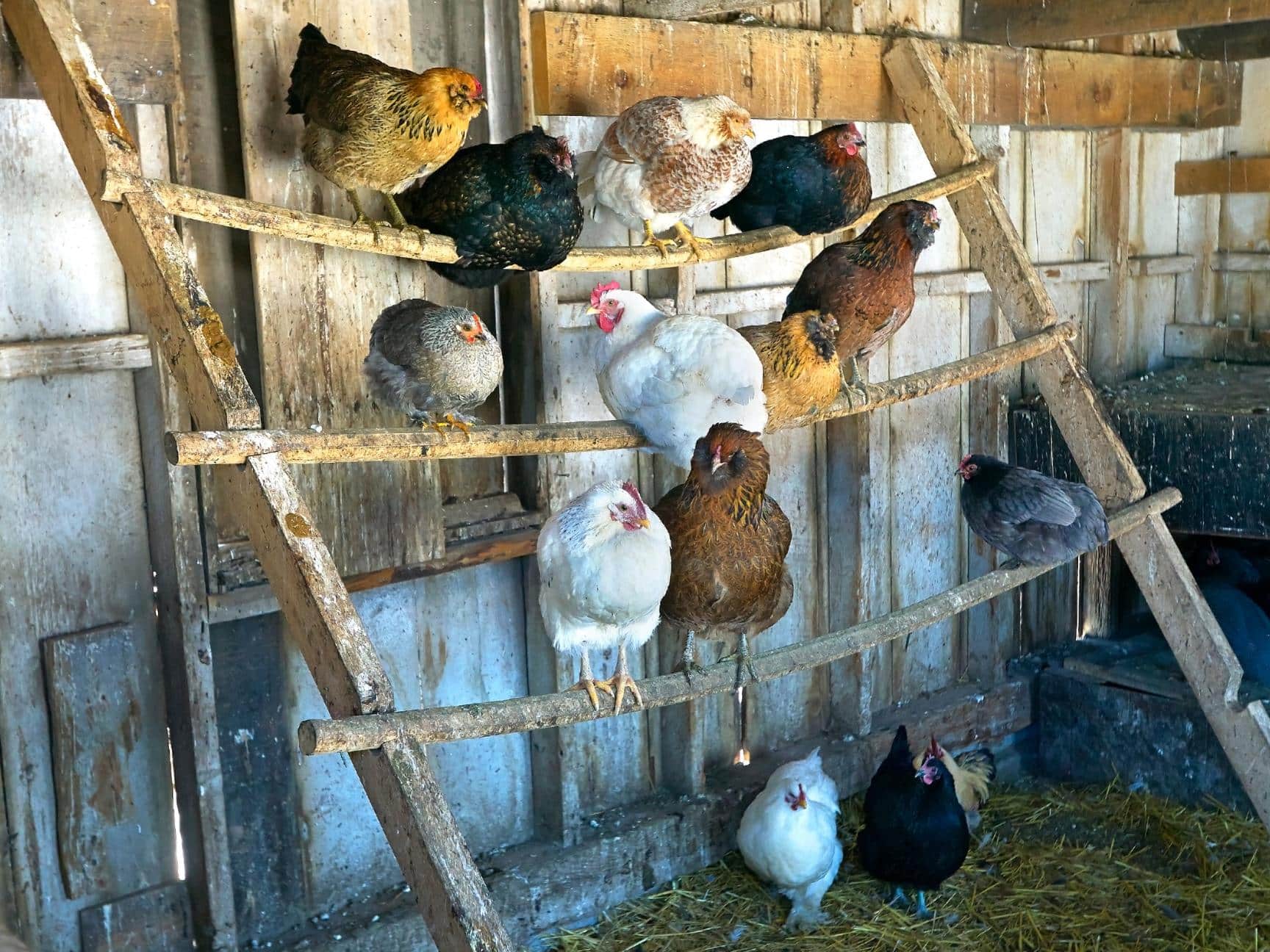
Introducing New Chickens (or Chicks) to a Flock: Best Practices
Favicon 
homesteadandchill.com

Introducing New Chickens (or Chicks) to a Flock: Best Practices

Adding new chickens to your flock is fun and exciting, but it can also be stressful for all parties involved! Come learn how to carefully and gradually introduce new chickens to your existing flock for the smoothest, safest transition possible. Before bringing home new chickens, it’s important to have a plan in place – along with any necessary supplies like extra fencing, additional food and water containers, or even a temporary coop. This post will cover the best practices to introduce chicks, young pullets or adult chickens to a flock, including frequently asked questions about timing, age, feeding a mixed flock, dealing with bullies, and more. RELATED: If you’re getting new chicks, don’t miss our ultimate list of over 500 cute and funny chicken names, or these 11 awesome DIY chick brooder ideas. Also learn how to ferment chicken feed to boost nutrition AND cut feed costs! What is “The Pecking Order”? Chickens can be mean girls. They are highly territorial, and can unfortunately be pretty darn agressive towards each other at times. Flocks develop a social hierarchy called “the pecking order”, which is literally enforced through pecking at one another. The dominant top hens keep the lower ones in check and get their first choice at the feeder, roosts, nesting boxes, and mates. Chickens also tend to pick on sick or weak members of the flock. Especially if they see blood, chickens can continue to pick to the point of cannibalism. Introducing new chickens to the flock disrupts the pecking order, leaving the newest and smallest members vulnerable to attacks by the older dominant birds as they establish a new social order. Therefore, the integration must be done slowly, carefully, and with patience! Disclosure: Homestead and Chill is reader-supported. When you purchase through links on our site, we may earn an affiliate commission. What age to introduce new chicks to a flock? Never introduce new chicks younger than 8 weeks to an adult flock. They’re far too small and vulnerable to safely withstand an attack from a large hen, which could turn deadly. Plus, chicks under 8 weeks old are not yet fully feathered so it may be too cold for them to live fully outside with the others, nor would they be safe to free range. If possible, wait until the young ones are at least 10 to 12 weeks old. The bigger, the better! The closer to the same size all the chickens are at the time of integration, the safer the new ones will be. When we had a smaller coop and run, we would integrate new chicks into our flock around 8 weeks. Now in our larger space, we aren’t rushing it. Our current chicks are 12 weeks old. They intermingle with the adult hens for a few hours a day, but still sleep in their own coop and stay inside the fully enclosed run while the big girls free range in the uncovered chicken yard. These littles are about 5 to 6 weeks old and not yet fully feathered. Here, they were getting to know their older sisters through the fence but not yet co-mingling. Can I add just one chicken to a flock? If you can avoid it, don’t introduce just one new chicken to an existing flock. Even after a gradual introduction, it’s almost guaranteed they’ll be singled out and excessively picked on. Instead, add at least a few newbies of the same size at a time. That way, they’ll have their own little clique to pal around with. The few exceptions where only one bird may be accepted are: 1) if the new and existing chickens are very young and a similar age (under 16 weeks old) or 2) you happen to have just a couple old, very gentle birds. Also avoid adding a second rooster to your flock, unless you have an adequate hen-to-rooster ratio of at least 10 to 12 hens for every rooster. With very large or docile breeds, it may be possible to have one rooster for every 5 to 7 hens. One rooster will emerge as the dominant alpha. You can look, but don’t touch! Before Introductions: Look Don’t Touch Whether you’re introducing new chicks, pullets, or adult chickens to your flock, it’s always best to implement the “look but don’t touch” method – where the two groups can see each other through fencing but not physically access one another – for at least a week or two before letting them co-mingle. The longer, the better! To do so, securely fence off a section of your chicken run or create a separate adjacent coop or pen. This gives the older chickens time to get used to the presence of the newer ones without risk of injury, while letting the newcomers get used to their new space in a stress-free manner. Quarantining new chickens that came from another farm or home (vs chicks you raised yourself) is also an important time to monitor and assess their health before introduction, including disease or parasites. During this particular introduction, we fenced off half the run and built a simple temporary “baby coop” out of plywood for the littles to use for a couple weeks during the look-no-touch period. During our most recent introduction, we only had 2 adult hens left and were adding 13 new chicks – so we fenced off a section of the run and built a small temporary plywood coop for the adults instead, letting the young ones have the main big coop when it was time for the them to move outside. That way, the adult birds can come and go into the uncovered day yard while the littles are safe in the enclosed run for another month or so. Space and Resources Before adding to your flock, ensure there is plenty of roosting space and room to move around in both the coop and run. Bullying will be much more intense in confined, crowded areas. It’s best practice to provide at least 3 to 4 square feet per chicken in the coop, 8 to 12 inches of roost space per bird, and no less than 10 square feet per chicken in the run. Offering free-range of an even larger space during the daytime (if safe) is ideal! Chickens will compete for resources. Add additional food and water containers to reduce competition and stress. Also plan to have at least one nesting box for every four hens (even though they all usually favor and crowd the same ones). You may want to create an additional dust bath space too. Learn how to make a dust bath for chickens here. When we were down to only two adult hens, we revamped the coop with fresh paint, a new larger roost, and additional nesting boxes to prepare for the incoming flock members. Tips for Introduction Time After a couple of weeks in adjacent fenced spaces, go ahead and introduce the new chickens to the flock by letting everyone co-mingle together in the same area. I like to do this for short periods of time at first (especially since it needs to be supervised) and gradually increase the time spent together as they adjust. During the first few social mixers, offer treats as a fun distraction. For example, scatter scratch or mealworms on the ground, put out a couple treat blocks, or stuff wire baskets with lettuce. Spread them out so everyone isn’t fighting over the same pile of goodies! Since they can’t see in the dark, slipping new chickens into the coop at night can make for a smoother transition. Supervise the introduction, but know that some scuffles are expected and inevitable as the two flocks merge and establish their new pecking order. Try not to intervene unless the behavior is overly aggressive or causing injury. I recommend having styptic powder on hand for emergencies. Chickens are very attracted to the color red (including blood) and styptic powder or cornstarch quickly stops bleeding. After many weeks in separate sides of the run, it was time to open up the fencing between and let the big girls meet the new littles. They have plenty of places to roost, run, play or hide. How long does it take for chickens to accept newcomers? Most chickens should adjust to new flock members within a couple weeks. They’ll eventually all become accustomed to one another, but may continue to pal around with their original group the most. The level of aggression and time required to get settled will vary from flock to flock, depending on the age and number of chickens involved, amount of space in the coop and run, and free range situation. Some introductions are surprisingly smooth (especially when the new or younger birds outnumber the older ones), while others can be a tad more hectic. See tips about how to deal with a relentless bully chicken below. Supervising the first introduction. Honestly, Zoey and Hennifer were more interested in trying the littles food than picking on them! Lol. Meanwhile, the littles are happily distracted with the scratch we scattered. Feeding a Mixed Flock Feeding a mixed-age flock of chickens can feel confusing. Young chicks and juvenile pullets should not consume layer feed since the high level of calcium is bad for their kidneys. Yet laying hens need extra calcium in order to safely lay normal eggs! Therefore, the standard recommendation is to offer grower feed to a mixed flock of both laying hens and young pullets (and roosters). Grower feed is appropriate for chicks over 8 weeks old. To keep the older egg-laying hens healthy, also ensure there is a supply of free-choice calcium readily available (in a dish separate from the feed). Crushed eggshells or flaked oyster shells are both good sources of calcium for chickens. Learn important tips about baking eggshells for chickens here. Once all the chickens are of laying age (around 18 weeks) gradually transition to layer feed. Continue to offer free-choice calcium on the side. How to Deal with a Bully Hen Every once in a while, a dominant hen may have an especially difficult time accepting newcomers. If one neurotic little weirdo is harassing others to the point of injury or nonstop stress, you may need to intervene. Particularly if the bully behavior persists for weeks past the initial introduction. Before all else, be sure you’ve already addressed the suggested practices we’ve discussed in this post: start introductions gradually, provide ample space, extra feeders or roosts, treats, free range time, and so on. Are several hens ganging up on one particular chicken? That could be a sign of illness or injury, since chickens will often pick on the weak. Do a wellness check to ensure everything is okay health-wise. Separating the bully hen for a few days can help to reset the pecking order and make her more chill once re-introduced. You could bring her inside in a crate with food and water, or keep her in a large dog crate or other enclosure with food and water within the run (and tuck her back into the coop each night after dark). Don’t separate the victim (unless medically necessary). It will only make her lower in the pecking order and more of a target once she returns. In order to keep the peace, some folks opt to maintain two separate flocks in different coops and runs long-term. If all else fails, re-homing the bully hen could be an option. As a newcomer in a new flock, they’ll start out at the bottom of the pecking order. We needed to keep Fiona separate for a couple days to monitor a health concern, so we set a large dog crate in the run (shimmied down into the soil) so she could still be around her sisters. You could do the same to separate a bully. And that’s how to safely introduce new chickens to a flock! Well fellow chicken tenders, I hope this answered all your burning questions about adding to your flock. If you found this post useful, please consider sharing it or leaving a comment below! Also feel free to share any helpful tips I may have missed, or ask any questions you may have. Thank you for tuning in today. Best of luck to you and your new little chicken friends! You may also enjoy: Male or Female Chicks? 5 Ways to Tell the Difference How to Store & Wash Fresh Eggs: Best Practices for Backyard Chicken Eggs When Do Chickens Start Laying Eggs? 5 Tell-Tale Signs It’s Soon! How to Set Up a Chick Brooder: Temperature Chart and Supplies Did you enjoy this article? Want to hear more? Stay in touch! Sign up below to receive weekly updates on new posts from Homestead and Chill. The post Introducing New Chickens (or Chicks) to a Flock: Best Practices appeared first on Homestead and Chill.

Like
Comment
Share
Reclaim The Net Feed
2 yrs

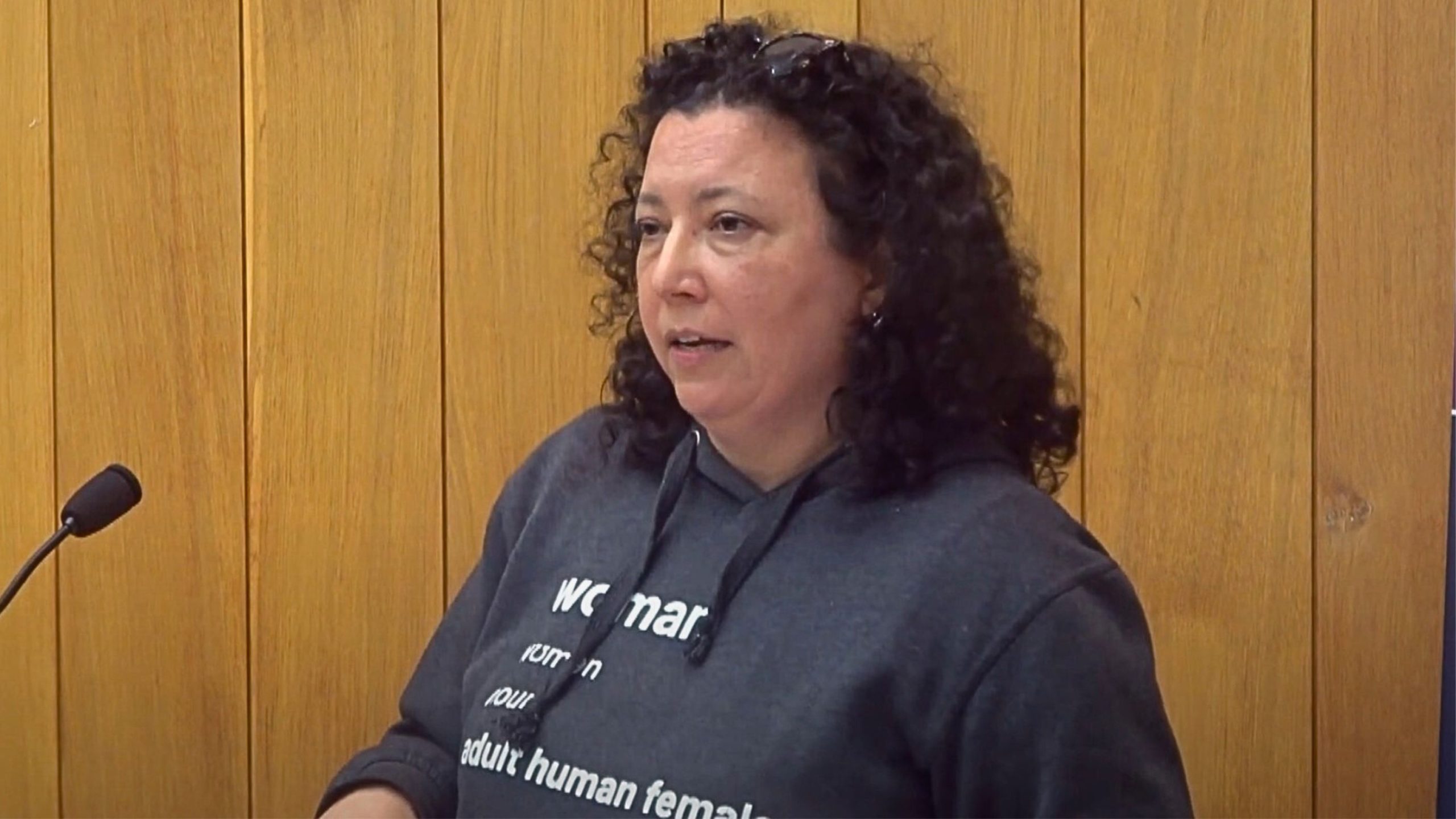
Feminist Accuses UK Police of “Harassment” Over Tweet Investigation
Favicon 
reclaimthenet.org

Feminist Accuses UK Police of “Harassment” Over Tweet Investigation

If you're tired of censorship and dystopian threats against civil liberties, subscribe to Reclaim The Net. Maya Forstater, a feminist activist and head of the charity Sex Matters, has been targeted following a tweet she posted about Dr. Kamilla Kamaruddin, a transgender doctor. Forstater is currently under police investigation for what the Metropolitan Police has termed “malicious communication.” The tweet in question, posted on the social media platform X in June last year, criticized Dr. Kamaruddin for the manner of conducting intimate examinations, which Forstater claimed the doctor enjoyed doing without patients’ consent. This investigation stems from Forstater’s response to a blog post by Dr. Kamaruddin, a former GP who became a transgender woman. Dr. Kamaruddin noted that patients allowed more latitude for intimate examinations compared to before Kamaruddin transitioned. Forstater’s tweet linked back to an earlier blog post where she had questioned the legitimacy of consent given by Dr. Kamaruddin’s patients. The legal ramifications for the alleged offense could be severe, with potential imprisonment of up to two years. Forstater, who had previously won an employment tribunal case affirming her right to express gender-critical views without facing job discrimination, expressed her distress over the ongoing investigation. In an interview with The Times, she disclosed receiving an email from the police in August, notifying her of the investigation but omitting the reasons. She was later interviewed under caution at Charing Cross police station. During the interview, Forstater was questioned about the potentially “transphobic” nature of her tweet. She defended her position, asserting, “My tweet isn’t even something that would get deleted by Twitter.” She described the experience as a form of “bullying and harassment” due to her beliefs and mentioned the possibility of legal action against the police for their handling of the case. As of ten months after the initial contact from the police, Forstater’s situation remains unresolved despite her lawyer’s efforts to challenge the grounds of the investigation. She lamented, “Despite my solicitor following up with written representations giving chapter and verse on the law, arguing that the investigation is unjustified and pressing for resolution, I remain under investigation.” If you're tired of censorship and dystopian threats against civil liberties, subscribe to Reclaim The Net. The post Feminist Accuses UK Police of “Harassment” Over Tweet Investigation appeared first on Reclaim The Net.
Like
Comment
Share
Hot Air Feed
Hot Air Feed
2 yrs

Warning, Will Robinson: Women Voters are Abandoning Biden, Losing Steam with Black Voters
Favicon 
hotair.com

Warning, Will Robinson: Women Voters are Abandoning Biden, Losing Steam with Black Voters

Warning, Will Robinson: Women Voters are Abandoning Biden, Losing Steam with Black Voters
Like
Comment
Share
Science Explorer
Science Explorer
2 yrs

These Monkeys Had A Stable Society – Until A Hurricane Forced Social Change
Favicon 
www.iflscience.com

These Monkeys Had A Stable Society – Until A Hurricane Forced Social Change

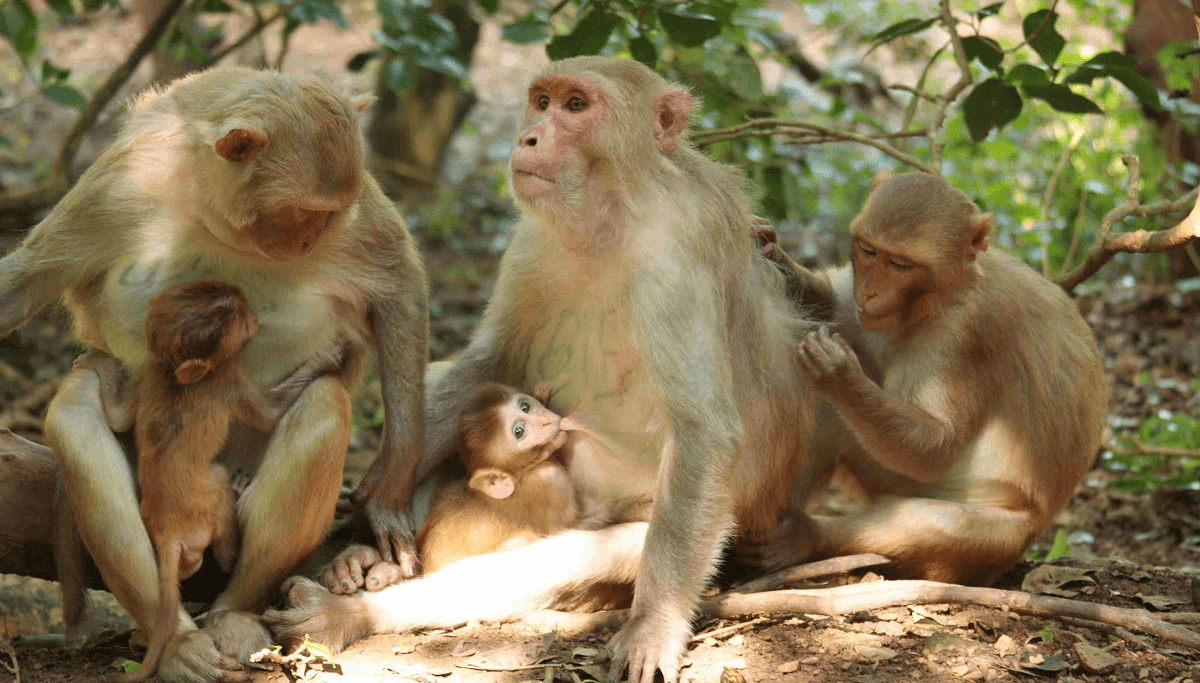
The monkeys of Cayo Santiago were known for their aggression – until Hurricane Maria struck in 2017. Although the humans of nearby Puerto Rico were harder hit, with 3,000 deaths, the resource depletion the monkeys suffered changed them in ways that have continued to this day.Cayo Santiago is a unique site, greatly valued by scientists. It is known as "Monkey Island" because in 1938, hundreds of rhesus macaques (Macaca mulatta) were imported and without predators, they have been thriving ever since. The opportunity to study large populations of our fellow primates in a semi-wild setting with relative ease exists nowhere else on Earth.When war or natural disaster makes resources more scarce, humans often become more violent and aggressive, holding on more tightly to the little we have. We might think it was the same for macaques, but the lessons of Hurricane Maria show that’s not always the case. The hurricane destroyed 63 percent of the island’s vegetation, but most macaques survived. On an island where their population density is similar to humans in New York City, that created a resource problem.In the tropical heat, macaques need shade to survive, and now there was a great deal less of it. Instead of initiating monkey wars over the little shade that was left, as primatologists expected, the inhabitants learned to live and let live.“In response to the drastic changes caused by the hurricane, macaques persistently increased tolerance and decreased aggression towards each other,” said Dr Camille Testard, of the University of Pennsylvania in a statement. “This enabled more macaques to access scarce shade.”The island is crowded for the monkeys, and when the trees are killed, things get worse.Image credit: Lauren BrentWhen Testard and colleagues studied ten years of observations from before and after the hurricane, they found being good at sharing was now a major survival enhancer.“Before the hurricane, tolerating others had no impact on risk of death,” Testard said. “Afterwards, macaques that displayed more than average social tolerance – and were therefore better able to share shade – were 42% less likely to die than those that were less tolerant.”Once you’ve shared a patch of shade with someone, it forms a bond, or so it seems. “We found that this tolerance spills over into other daily interactions,” Testard noted. “Macaques that began sharing shade also spend time together in the mornings, before the day’s heat forces them to seek shade.” That’s not something that always comes easily to the macaques, as Testard depicts in part of an extended cartoon on the topic.A chart of four primate species on a normal tolerance-aggression scale. Rhesus macaques normally don't like to share.Image credit: Caroline Hu. In collaboration with Camille Testard for scripting.This may indicate that, at least in some ways, macaques and humans are not so different. Social proximity has been proposed to overcome hostile attitudes such as bigotry, although unfortunately, it’s not failsafe. Moreover, researchers provide the macaques with plenty of food, which they managed to largely maintain after the hurricane, Perhaps if this was in short supply, instead of shade, the effect would have been different.Suddenly, on Cayo Santiago, it’s survival of the nicest, or at least the most tolerant. “For group-living animals, social relationships may allow them to cope with disturbances in the environment, including human-induced climate change,” said co-author Professor Lauren Brent of the University of Exeter. “We were surprised the macaques’ social behaviour was so flexible, making them resilient to this environmental change, but some species may not display this same flexibility.”Put it another way, “Monkeys together strong.”Sometimes a crisis brings us together.Image credit: Caroline Hu. In collaboration with Camille Testard for scripting.There probably isn’t a gene for shade-sharing, but it is likely to be a partially heritable trait. If so, the future of Cayo Santiago may be a kinder and more peaceful one. Who votes for luring a bunch of billionaires and heads of government to a tropical island just before a hurricane goes through? Even if it doesn’t work, it would make great reality TV.The study is published in Science.
Like
Comment
Share
Science Explorer
Science Explorer
2 yrs

Chimpanzees Self-Medicate With Antibiotic Plants From The Forest Pharmacy
Favicon 
www.iflscience.com

Chimpanzees Self-Medicate With Antibiotic Plants From The Forest Pharmacy

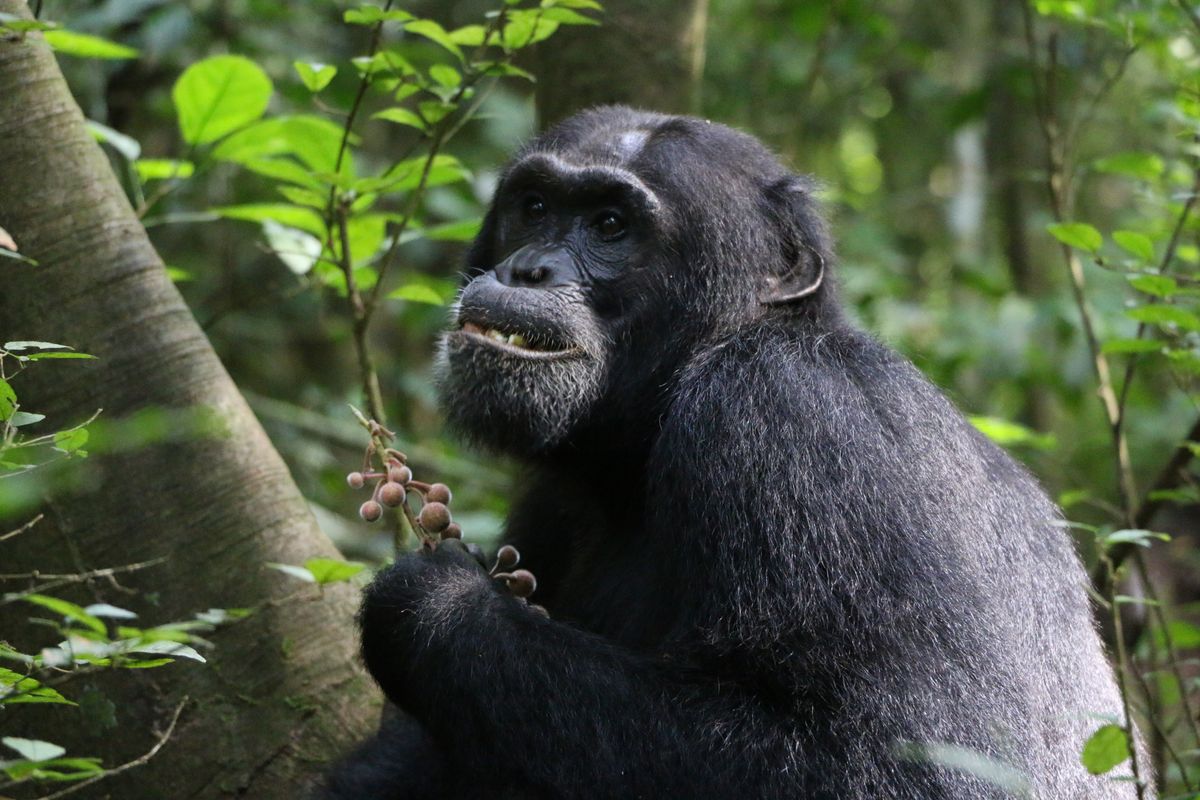
Chimpanzees intentionally seek out medicinal plants with antibacterial and anti-inflammatory properties when they are sick or wounded, new research has suggested. By documenting the primates’ incredible pharmaceutical practices, the study authors shine a light on the complexities of chimp behavior while also revealing potential new sources of vital medications for humans.The idea of self-medicating chimpanzees has been tentatively suggested by primatologists for a number of years, as the animals are regularly seen eating plants that have no apparent nutritional value or contain toxins. To understand exactly why the apes consume these unpalatable species, the authors of the new study monitored the health and feeding behavior of 51 chimpanzees from two populations in Uganda’s Budongo Central Forest Reserve.In total, the researchers identified 13 plants that the chimps seemed to seek out only when suffering from health problems. Lab tests revealed that 88 percent of the extracts studied inhibited the growth of pathogenic bacteria, including the six strains that make up the so-called ESKAPE group of harmful microbes that have become highly resistant to existing antibiotic medications.Commenting on these findings in a statement seen by IFLScience, study author Dr Elodie Freymann explained that “after spending months in the field collecting behavioral clues that led us to specific plant species, it was thrilling to analyze the pharmacological results and discover that many of these plants exhibited high levels of bioactivity.”For instance, the strongest antimicrobial activity was produced by the wood of the tree species Alstonia boonei, which belongs to the Dogbane family. According to the researchers, this plant is well known for its healing properties across East Africa, where it is “commonly used for a variety of reproductive, bacterial, and gastro-intestinal issues, as well as for snake bites, asthma, and dizziness.”During the study period, numerous chimpanzees were observed ingesting dead wood from this tree seemingly to treat parasitic infections such as tapeworm.Bark and resin from the East African mahogany tree (Khaya anthotheca), meanwhile, were found to be highly potent inhibitors of pathogens such as E. coli and E. faecium, both of which commonly cause illness in humans and have become increasingly resistant to treatment. The study authors observed at least three wounded chimpanzees consuming elements of this tree – possibly as a means of preventing infection – while another also ingested the bark while suffering from a persistent cough.A third of all plant extracts analyzed also displayed anti-inflammatory properties, with one of the most potent being the leaves of a type of fern called Christella parasitica. Interestingly, the only chimp that the researchers saw eating this fern happened to have an injured hand, leading them to speculate that the plant may help to reduce pain and swelling.With antibiotic resistance now among the leading global health crises, Freymann suggests that following these self-medicating primates may help us to develop new and more effective drugs against stubborn pathogens. “Our study highlights the medicinal knowledge that can be gained from observing other species in the wild and underscores the urgent need to preserve these forest pharmacies for future generations,” she said.The study is published in the journal PLOS ONE.
Like
Comment
Share
Pet Life
Pet Life
2 yrs

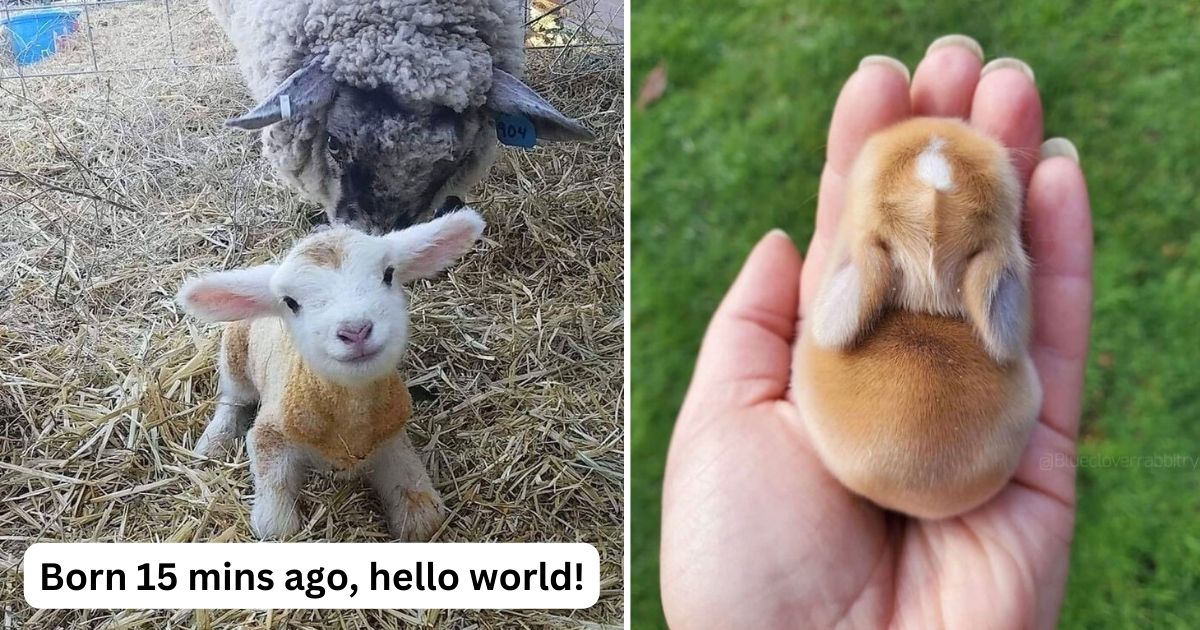
40 Animal Pics So Adorable Your Heart Will Squeal With Joy
Favicon 
animalchannel.co

40 Animal Pics So Adorable Your Heart Will Squeal With Joy

The post 40 Animal Pics So Adorable Your Heart Will Squeal With Joy appeared first on Animal Channel.
Like
Comment
Share
Pet Life
Pet Life
2 yrs

Puppies are mesmerized by storytelling dragon and adorable footage melts hearts
Favicon 
animalchannel.co

Puppies are mesmerized by storytelling dragon and adorable footage melts hearts

Golden retriever puppies are known for their playful and curious nature, but a recent event showcased their love for storytelling in a heartwarming way. A video capturing this moment went viral, delighting viewers worldwide. It all started at SunnyDreams, a family-operated breeding house for golden retrievers in Redland, California. Here, a unique bedtime ritual featured... The post Puppies are mesmerized by storytelling dragon and adorable footage melts hearts appeared first on Animal Channel.
Like
Comment
Share
Showing 85432 out of 116749
  • 85428
  • 85429
  • 85430
  • 85431
  • 85432
  • 85433
  • 85434
  • 85435
  • 85436
  • 85437
  • 85438
  • 85439
  • 85440
  • 85441
  • 85442
  • 85443
  • 85444
  • 85445
  • 85446
  • 85447
Advertisement
Stop Seeing These Ads

Edit Offer

Add tier


Select an image
Delete your tier
Are you sure you want to delete this tier?

Reviews

In order to sell your content and posts, start by creating a few packages. Monetization

Pay By Wallet

Payment Alert

You are about to purchase the items, do you want to proceed?

Request a Refund