YubNub Social YubNub Social
    #satire #democrats #loonylibs #iran #comedy
    Advanced Search
  • Login
  • Register

  • Day mode
  • © 2026 YubNub Social
    About • Directory • Contact Us • Developers • Privacy Policy • Terms of Use • shareasale • FB Webview Detected • Android • Apple iOS • Get Our App

    Select Language

  • English
Night mode toggle
Featured Content
Community
New Posts (Home) ChatBox Popular Posts Reels Game Zone Top PodCasts
Explore
Explore
© 2026 YubNub Social
  • English
About • Directory • Contact Us • Developers • Privacy Policy • Terms of Use • shareasale • FB Webview Detected • Android • Apple iOS • Get Our App
Advertisement
Stop Seeing These Ads

Discover posts

Posts

Users

Pages

Blog

Market

Events

Games

Forum

Classic Rock Lovers
Classic Rock Lovers  
7 d

“I was in the front row. Everybody was pushing and things got really violent”: This is what it was like watching Metallica on their first European tour, as explained by a fellow thrash metal star
Favicon 
www.loudersound.com

“I was in the front row. Everybody was pushing and things got really violent”: This is what it was like watching Metallica on their first European tour, as explained by a fellow thrash metal star

Kreator’s Mille Petrozza was 15 when he saw the future biggest band in metal support Venom at a 3,000-capacity festival in the Netherlands
Like
Comment
Share
cloudsandwind
cloudsandwind
7 d

https://rmx.news/article/they-....shoved-me-in-a-car-a

'They shoved me in a car and took me to the army' — Ethnic Hungarian with mental health issues dragged to Ukraine front line and is now missing, family says
Favicon 
rmx.news

'They shoved me in a car and took me to the army' — Ethnic Hungarian with mental health issues dragged to Ukraine front line and is now missing, family says

The family of Hungarian-born Balázs Veres say he was forcibly conscripted in Transcarpathia as tensions between Budapest and Kyiv intensify over the treatment of ethnic Hungarians
Like
Comment
Share
Living In Faith
Living In Faith
7 d

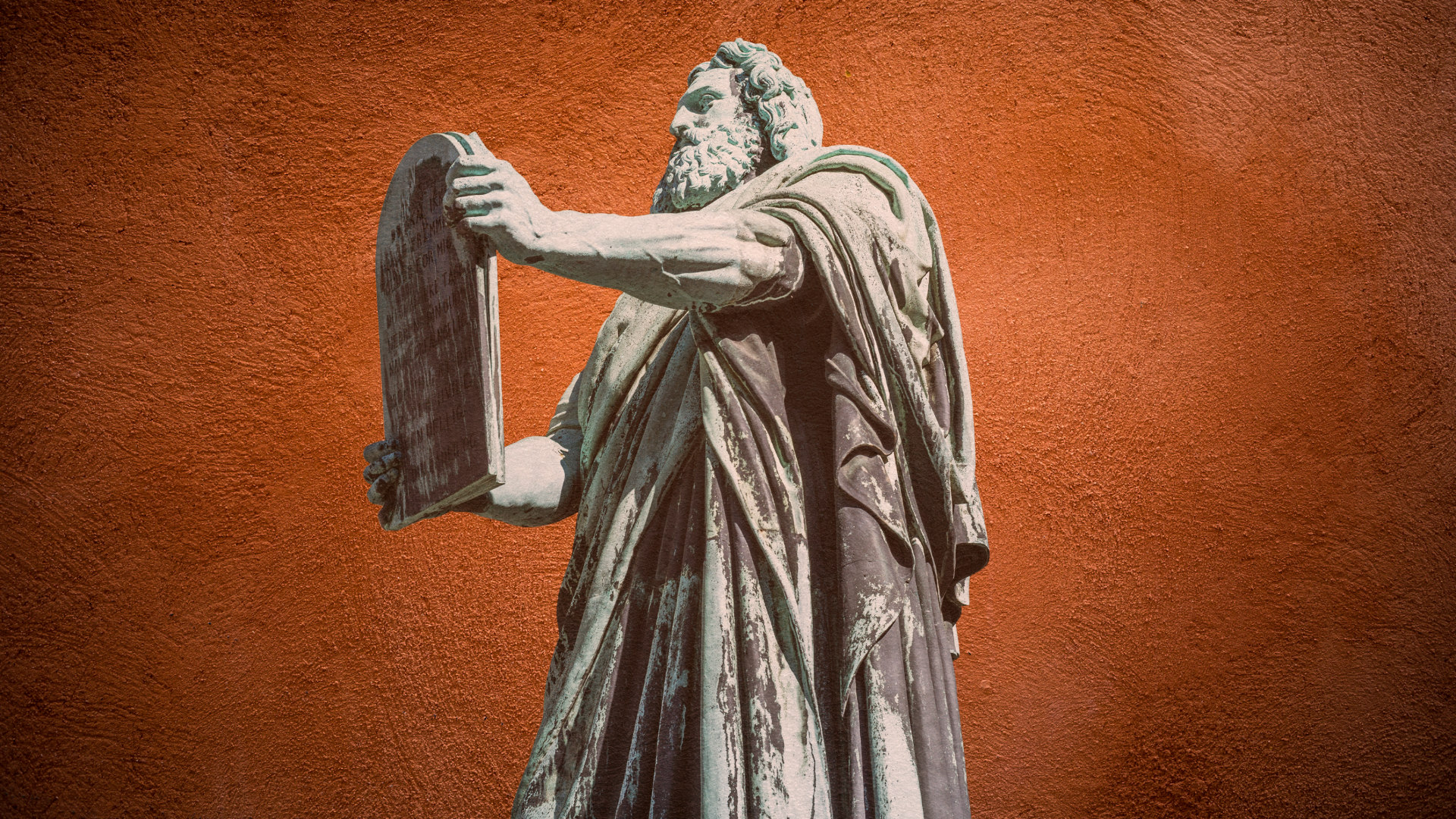
The Lawful Shape of Christlikeness
Favicon 
www.thegospelcoalition.org

The Lawful Shape of Christlikeness

In Christian spiritual formation, image-bearers are conformed to Christ, the true image of God (Col. 1:15; Heb. 1:3; see John 1:18; 14:9). Scripture consistently frames the Christian life as following in Jesus’s steps (1 Pet. 2:21), walking as he walked (1 John 2:6), and being shaped into his likeness (Rom. 8:29). Therefore, Christ isn’t merely the inspiration for spiritual formation; he’s its form—the definitive pattern into which believers are being fashioned. For this reason, spiritual formation isn’t a self-directed project of personal optimization or a set of therapeutic life-hacks. It’s the shaping of human life according to a given norm. And because God has predestined his people “to be conformed to the image of his Son” (Rom. 8:29), that norm is irreducibly christological. This raises a pressing question: What’s the role of God’s law in this process of becoming like Christ? Haven’t Christians, freed from the curse of the law (Gal. 3:10–13) and the debt it held over us (Col. 2:13–14), also been released from the law (Rom. 6:14; 7:1–6; Gal. 2:19; 3:24–25; 5:1, 18)? In answer to these questions, Reformed theology has long been clear: Christlikeness isn’t opposed to God’s law but is its embodiment. To be formed into Christ’s image is to be conformed, by the Spirit, to God’s moral will—not as a means of earning life but as the shape of a life lived in filial communion with God through union with his Son. Christ Came Not to Abolish but to Fulfill Jesus fulfilled all righteousness on our behalf (Matt. 3:13–17; 2 Cor. 5:21; Gal. 4:4–5). He obeyed where we failed, and he accomplished what we couldn’t in our sinful flesh (Rom. 5:18–19; 8:3). Yet the One who fulfilled the law also insisted he hadn’t come to abolish it (Matt. 5:17–18). Reformed theology has long been clear: Christlikeness isn’t opposed to God’s law but is its embodiment. In the Sermon on the Mount, Jesus deepens and intensifies the law’s demands (vv. 21–48), warns against relaxing its requirements (v. 19), and insists that true discipleship involves hearing his words and putting them into practice (7:24). He affirms the commandments when speaking with the rich young ruler (Luke 10:25–28), teaches that love for him expresses itself in obedience (John 14:15), and commissions his church to make disciples by teaching them to obey all he has commanded (Matt. 28:18–20). Indeed, a stated aim of Christ’s redemptive work is that “the righteous requirement of the law might be fulfilled in us” (Rom. 8:4, emphasis added), so Paul calls us to fulfill the law of Christ in our lives (Gal. 6:2). Perennial Threat of Antinomianism One of the most persistent threats to this vision of Christian formation is antinomianism—what Dietrich Bonhoeffer calls “cheap grace.” Literally meaning “against the law,” antinomianism denies that God’s moral law has any constructive role in the believer’s life. Often framed as a safeguard of grace, antinomianism frequently functions instead as a license for lawlessness. The result isn’t freedom but deformation. This error cuts deeper than is often recognized. Lawlessness isn’t merely one sin among others; one could argue it’s the sin beneath all sins. Scripture defines sin precisely this way: “Sin is lawlessness” (1 John 3:4). The Westminster Shorter Catechism echoes this logic, defining sin as “any want of conformity unto, or transgression of, the law of God” (Q&A 14). Rejecting the law repeats Eden’s primal distortion. The Serpent portrayed God’s command as restrictive, Eve embraced that lie, and Adam acted on it. Every sin since echoes this gesture, treating God’s commands as obstacles to joy rather than gifts for life. The Reformed tradition has consistently resisted this lie. The Westminster Confession affirms that the moral law remains “of great use” to believers as a rule of life, directing them in God’s will (19.6). The law isn’t a burden imposed on redeemed people; it’s instruction for living in fellowship with the God who redeems. Legalism and Antinomianism: Twin Christological Errors Antinomianism is often contrasted with legalism, but the two share a common root. Both are, as Mark Jones explains, “fleshly” approaches to holiness. Legalism treats obedience as the ground of acceptance; antinomianism treats obedience as unnecessary. In different ways, both displace Christ from the center of sanctification. The solution isn’t to strike a balance between law and grace, as though sanctification lay somewhere between license and rigor. Both errors are christological failures. The true alternative is union with Christ, in whom believers receive both full acceptance before God and real power for obedience by the Spirit. Christ, the Pattern of Holiness Biblical holiness begins not with projects of self-optimization or pure moral effort but with God himself: “You shall be holy, for I am holy” (1 Pet. 1:16; see Lev. 19:2). Fellowship with the Holy One requires corresponding holiness in us. Jesus Christ stands at the center of this correspondence. He embodies God’s moral will in his human life. As Marcus Peter Johnson observes, “Conformity to Christ is . . . conformity to the law,” since “the law is an expression of God’s holy character.” Christ, therefore, is both our holiness and our pattern of holiness. His obedience is imputed to us for justification, and that same obedience is replicated in us through sanctification. Scripture holds these together. God justifies the ungodly (Rom. 4:5), choosing us while we were still dead in sin (Eph. 2:1) and enemies (Rom. 5:10). Yet he chose us “that we should be holy” (Eph. 1:4), and he predestined us for conformity to Christ’s image (Rom. 8:29). To belong to Christ is also to be summoned into his likeness. Christ’s Human Obedience and the Spirit’s Agency It’s crucial to see that Christ’s obedience was genuinely human. Jesus kept the commandments perfectly (John 15:10; Heb. 4:15; 1 Pet. 2:22) without bypassing his humanity. John Owen is emphatic on this point: Christ’s divine nature didn’t replace his human faculties; rather, his obedience was exercised through his humanity empowered by the Spirit. In this way, Jesus lived the obedient human life precisely as human beings were meant to live it. This has decisive implications for formation. The same Spirit who empowered Christ’s obedience is given to those united to him. Progressive sanctification isn’t Christ acting instead of us, nor the erasure of human agency, but the Spirit restoring and enabling it. As Paul writes, “God works in you, both to will and to work for his good pleasure” (Phil. 2:13). Antinomianism regularly stumbles here. While rightly affirming Christ’s obedience on our behalf, it wrongly infers that sanctification consists merely in believing that obedience is already complete. Salvation is collapsed into justification, and sanctification is reduced to correct thinking about forgiveness. The result is, as Jones argues, an ethical “hyper-Calvinism” that denies genuine human participation in holiness. The Reformed alternative is richer: Christ’s obedience is the ground of our righteousness, but sanctification requires our active cooperation—dependent on the Spirit, yet involving our wills. God works in us, not instead of us. Law as a Rule of Life in Christ A decisive fault line, therefore, between Reformed orthodoxy and antinomianism concerns the law’s role in sanctification. Antinomians deny it any positive function. Reformed theology insists the law remains a rule of life for believers, guiding them in grateful obedience. The Westminster Confession affirms that Christ and the gospel do not “dissolve, but much strengthen this obligation” to the moral law (19.5). Jones explains this through the classic Reformed indicative-imperative framework: Because the indicatives of the new covenant are greater, the imperatives aren’t relaxed but intensified. Jones clarifies this by distinguishing between the gospel “narrowly” and “broadly” considered. Narrowly, the gospel announces what Christ has accomplished. Broadly, it includes the Spirit’s application of that work, writing the law on the heart. Here’s how Richard Gaffin memorably puts it: Outside of Christ, the law is a condemnatory enemy. In Christ, it becomes a “friendly guide” for life with God. This is implicit in what the Reformed tradition has identified as the “third use” of the law (even though the “first use” of the law—convicting us of our failure to perfectly keep the law and driving us to gospel repentance—is never abrogated). Romans 8 brings this into focus: What the law couldn’t accomplish because of sin, God accomplishes by the Spirit, fulfilling the law in us. The law no longer condemns, but neither does it disappear. It becomes both an instrument of sanctification and a goal of salvation as we’re conformed to Christ’s image. Union with Christ and the Restoration of the Image All this depends on union with Christ. As John Murray insists, union with Christ is “the central truth of the whole doctrine of salvation.” Murray is inspired by John Calvin, who expounded on the relation between union with Christ as our reception of the benefits of Christ’s saving work: “As long as Christ remains outside of us, and we separated from him, all that he has suffered and done for the salvation of the human race remains useless and of no value for us” (Institutes, III.1.1). Union with Christ is the ground of every saving benefit—justification, sanctification, adoption, and glorification. “Indeed,” Murray argues, “the whole process of salvation has its origin in one phase of union with Christ and salvation has in view the realization of other phases of union with Christ.” This is why Calvin speaks of the duplex gratia, the double grace of justification and sanctification. Christ never gives one without the other. To separate them is to tear Christ apart (Institutes, III.16.1). Justification frees us from condemnation; sanctification restores us to the image of God. Both flow from the same union with Christ. The goal of formation, therefore, is nothing less than the restoration of God’s image. Jesus Christ is the true image, the true human, the archetype of humanity as God intended it. To become most fully ourselves, to be “authentically” human, isn’t to look inward but to be conformed to him. As Coleman Ford writes, “Christ in us is the best version of ourselves. . . . Our ‘true’ or ‘authentic’ self is the self that is in Christ.” Sanctification isn’t mere morality; it’s participation in Christ’s holiness through union with the One who is that holiness. Adoption and Family Likeness Union with Christ reaches its height in adoption. As J. I. Packer argues, adoption is “the highest privilege the gospel offers.” To be joined to the Son is to share in the Son’s relationship with the Father. We’re loved with the love with which the Father loves Christ. God doesn’t merely forgive us; he welcomes us as his children in love. And as Johnson says, “To be joined to Jesus Christ is to participate in the love the Father has for the Son. It means to belong to God as his children.” We’re loved as the Father loves Christ (see John 14–17). This reframes obedience entirely. We don’t keep the law to earn life, nor merely out of abstract gratitude, but as sons and daughters who desire to please their Father. Obedience becomes family likeness. As children resemble their parents, so the children of God are conformed to their Father’s character (Matt. 5:45). We don’t keep the law to earn life, nor merely out of abstract gratitude, but as sons and daughters who desire to please their Father. Holiness, in this sense, is “simply a consistent living out of our filial relationship with God,” Packer explains. It’s a matter of being true to type—expressing adoption in life. The Spirit is key here. He reminds us of our filial status and works within us to shape us into children who resemble the Son and seek to glorify God the Father. Christian formation isn’t about becoming someone else, engaging in self-directed self-improvement, or working our way to salvation. It’s the working out of the salvation already given to us—living out our fundamental union with Christ and adoption into God’s family. It’s about becoming, more fully and faithfully, who we already are in Christ. God’s love precedes our obedience. God’s law gives shape to our obedience. God’s Son is both the source and pattern of our holiness. God’s Spirit enables real, human, joyful conformity to Christ. Formation, then, is learning to live as beloved children—being remade into the likeness of the Son, by the power of the Spirit, for the pleasure of the Father.

Like
Comment
Share
Living In Faith
Living In Faith
7 d

Our Investments Reveal Our Eschatology
Favicon 
www.thegospelcoalition.org

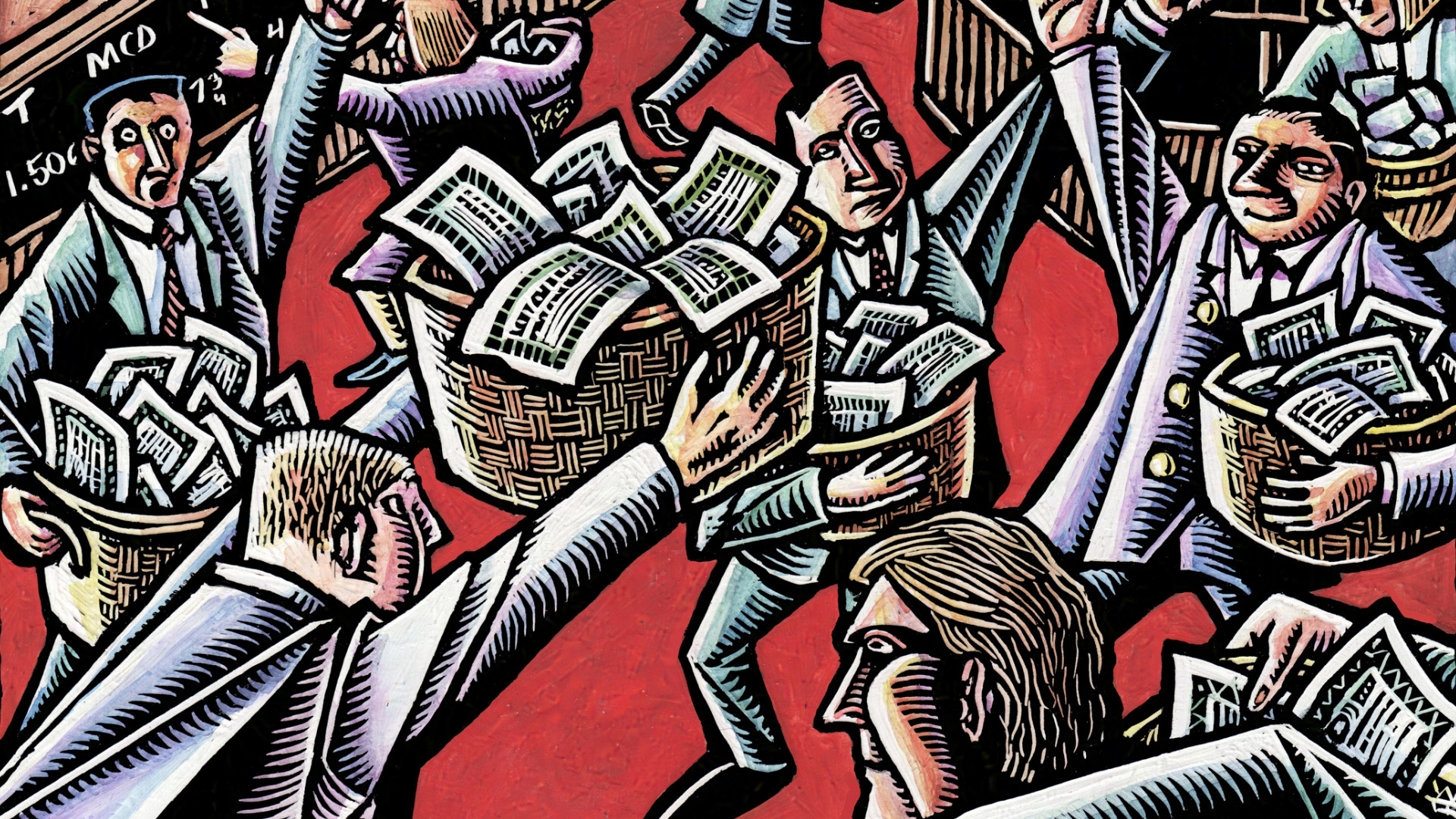
Our Investments Reveal Our Eschatology

I love a lot about my Christian university. It’s small, local, and relational. It’s the kind of place that takes formation seriously. Faith isn’t treated as an accessory; it’s expected to shape the whole of life. That’s why one experience has lingered with me. In conversations with classmates, I’ve noticed how often financial goals dominate our shared imagination of the future. The language is strikingly consistent: make money, invest aggressively, retire as soon as possible. The goal is rarely generosity or vocation. It’s freedom—defined almost entirely as freedom from work. None of this is unusual. Modern society often views this approach as responsible. Yet it raises an important theological question: What kind of future are Christians living toward? Question of Eschatology At its core, the Christian struggle with money isn’t ethical or practical first. It’s eschatological. It’s a struggle between competing visions of the future. Christianity is fundamentally forward-looking. Scripture consistently directs Christian hope beyond the present age toward a future already secured by God’s promise. Jesus tells his followers to store up treasure “where neither moth nor rust destroys”; he grounds financial faithfulness in the confidence that God’s kingdom will endure (Matt. 6:19–21). According to the New Testament, wealth is provisional. Possessions are temporary. The Christian life is oriented toward spiritual inheritance, resurrection, final judgment, and new creation—realities that won’t be brought about by savvy financial planning. This is the Christian future. And yet the way many Christians plan their financial lives suggests a different horizon. Market’s Competing Future The market offers its own eschatology, one that rivals the church’s without announcing itself as theology. The market offers its own eschatology, one that rivals the church’s without announcing itself as theology. In this vision, salvation comes through accumulation. Hope is deferred to financial independence, and peace arrives when one finally escapes risk. Investments mature, debts disappear, work becomes optional. The ideal future is retirement. This story gains power even among believers precisely because it masquerades as prudence rather than idolatry. It promises control over uncertainty and insulation from suffering. We believe we can outrun fragility. Isn’t that wisdom? But this eschatological posture subtly reshapes our desires. Work becomes something to endure, a means to an end rather than a vocation that’s a good in its own right. Instead of a tool for love, wealth becomes the condition of personal rest. The future becomes something to be secured through discipline and strategy rather than received as a gift. Living Between Two Futures Many Christians are pulled between these two futures without noticing the tension. We confess the coming kingdom on Sunday and organize our lives around financial self-preservation on Monday. We pray “Your kingdom come” while structuring our hopes around passive income. Over time, the louder story wins. This is especially visible among younger Christians caught up in hustle culture. I’ve listened to many stories about chasing crypto trends and working relentlessly with the hope of “being done” by 40. But is that vision of the good life—work and invest to get rich quick, then retire in your 30s—the vision the Bible prescribes? A future defined primarily by achieving personal freedom bears little resemblance to the New Testament’s picture of Christian hope. What Christian Hope Reorders Christian eschatology forces us to be honest about what money can and cannot promise. If God truly secures the future, then wealth cannot be our savior. If resurrection is real, then work cannot be merely a burden to escape. If we’re promised an inheritance, we must live generously. A future defined primarily by achieving personal freedom bears little resemblance to the New Testament’s picture of Christian hope. Jesus warns against storing up treasure not because the future is uncertain but because it isn’t. An eternal spiritual future awaits everyone. That’s a far more important reality than whatever financial freedom we achieve for ourselves—or our loved ones—in this life. When the church fails to teach this clearly, Christians will naturally default to the market’s priorities and the market’s vision of hope. Everyone lives toward a promised future, whether it’s named or not. The question is simply which one is forming us. Different Orientation We don’t need to reject wisdom or even wealth itself. Scripture consistently commends financial stewardship as a way to love of God and neighbor. Practices like generosity, Sabbath rest, and contentment are eschatological disciplines, training us to live now in light of what’s coming. The question is never simply whether Christians invest but how and what for. Are our firstfruits offered back to God? Are we investing in or charitably supporting kingdom-advancing causes? Does this generosity disrupt our desire for comfort and control? If Christians are increasingly shaped by the market’s story of salvation, the church must recover a clearer, truer account of the future we’re living toward.
Like
Comment
Share
Daily Caller Feed
Daily Caller Feed
7 d

Aaron Judge Declares Team USA ‘Fired Up’ For World Baseball Classic, Hopes To ‘Copy’ American Olympic Glory
Favicon 
dailycaller.com

Aaron Judge Declares Team USA ‘Fired Up’ For World Baseball Classic, Hopes To ‘Copy’ American Olympic Glory

We've got another edition of Team USA to root for, and it's happening on the baseball field
Like
Comment
Share
The Blaze Media Feed
7 d

Trump’s Iran week: The hidden wins you didn’t hear about
Favicon 
www.theblaze.com

Trump’s Iran week: The hidden wins you didn’t hear about

The daily news cycle around President Trump moves at a pace that buries accomplishments most presidents would tout for weeks. Several developments in late February fit that pattern. The headlines fixated on Iran, but other wins piled up in the background.On February 22, CNBC reported that the average rate on a 30-year fixed mortgage fell to 5.99%, its lowest level since 2022. A year earlier, the rate sat at 6.89%. That drop matters because mortgage rates drive affordability. When rates fall, more families can buy a home, refinance, or move without swallowing a punishing monthly payment. Home ownership still anchors the American dream for millions of households, and lower rates expand access.In Trump Time, one week can carry the weight of a season.The news barely lingered there.Last week, Trump delivered his State of the Union address and used it to draw a bright line between two governing priorities. He framed the choice in plain language: “The first duty of the American government is to protect American citizens, not illegal aliens.” Republicans applauded. Democrats looked unsure how to respond, caught between the demands of their activist base and the public’s expectation that government first serve citizens.A CNN poll afterward reported that 54% of respondents supported the president’s priorities and 64% reacted positively to the address. Trump notched another measurable win in a week already packed with news.On Thursday, another development landed. Netflix dropped its bid to acquire Warner Bros. Discovery. That retreat looked like a setback for a streaming giant that critics often associate with a “woke” programming agenda. It also reopened the field for Paramount and Skydance to pursue a deal involving Warner Bros. Discovery.If corporate maneuvering eventually places CNN under new ownership more sympathetic to Trump, the political and media implications could prove significant. Even the possibility signals a shift in leverage and influence.RELATED: CNN’s biggest nightmare is one step closer to finally coming true Photo by Artur Widak/NurPhoto via Getty ImagesDemocrats, meanwhile, appeared to watch one of their own tactics rebound.For years, many on the left and in legacy media downplayed Jeffrey Epstein’s world, treated the story as politically inconvenient, or framed it as tabloid excess. When Democrats and their allies tried to turn Epstein-related scrutiny into a weapon against Trump, the blowback reached prominent Democrats as well.Reports circulated about possible testimony and renewed scrutiny for figures long treated as untouchable. Bill Clinton again faced questions about his proximity to Epstein and Epstein’s network. And, once again, the former president insisted: “I know what I did and, more importantly, what I didn’t do. I saw nothing, and I did nothing wrong.”Then Iran swallowed the rest of the news.As reports surfaced about a rare gathering of Iran’s senior leadership, Trump authorized a combined strike with Israel that killed more than 40 prominent Iranian figures. Iran has served as a major sponsor of terrorism for decades and has threatened the United States and Israel openly, with chants of “Death to America” and repeated vows to destroy Israel. The regime’s proxies and partners have fueled violence across the region and beyond.RELATED: Iran, China, and Trump’s ‘art of the squeal’ Photo by Kenny Holston-Pool/Getty ImagesTrump framed the strikes as a turning point and spoke directly to the Iranian people afterward. He argued that past presidents refused to do what he did and urged Iranians to seize the moment. His message carried a theme he returns to often: American strength, applied decisively, can change the calculus abroad and open space for change at home in hostile regimes.Democrats struggled to land on a coherent response. Many want to condemn the Iranian regime. Many also want to attack Trump for acting against it. That tension keeps surfacing in real time, especially when Trump moves quickly and forces the opposition to choose between moral clarity and partisan reflex.Trump’s week ended with a dramatic shift in the U.S. posture toward Iran and the broader Middle East. At the same time, the mortgage story, the polling bump, and the corporate shake-ups showed how much else moved beneath the Iran headlines.In Trump Time, one week can carry the weight of a season.
Like
Comment
Share
History Traveler
History Traveler
7 d

Rijksmuseum identifies new Rembrandt painting
Favicon 
www.thehistoryblog.com

Rijksmuseum identifies new Rembrandt painting

Rijksmuseum researchers have identified a painting as the work of Rembrandt van Rijn. Analysis of the wood panel, style, changes made to the details while the work was being painted, the signature applied while the painting was still wet and the overall high quality confirm that it was an autograph work by Rembrandt himself, painted when he was 27 years old and had just moved to Amsterdam. Vision of Zacharias in the Temple (1633) is a moody depiction of the account in the Gospel of Luke of the high priest Zachariah learning his “barren” elderly wife Elizabeth will bear a son, the future John the Baptist. The announcing angel, Gabriel, is not visible in the painting. He is represented only as a glow of light in the upper right corner of the panel, a novel approach at a time when angels were usually depicted as humans with wings. Zachariah is captured in the midst of performing his temple duties — reading scripture in front of a smoking censer of burning incense  — caught very much unawares by this announcement. His expression conveys his surprise and incredulity, an attitude that plays a large role in the rest of the story as Gabriel strikes him dumb for his disbelief and he remains mute through the conception and nine months of pregnancy, only regaining the ability to speak after he writes that he agrees with Elizabeth that their newborn son should be named John. A label on the back of the panel from 1898 notes that it was exhibited in September and October of that year as an authentic Rembrandt. Decades later in 1960, Rembrandt specialists rejected the attribution and the work fell into obscurity. It was bought by a private collector in 1961 and no scholars were permitted to study it until two years ago when the current owner contacted the Rijksmuseum. For the first time in 65 years, Vision of Zacharias in the Temple was given a rigorous examination, this time with modern imaging technology and, most importantly, with a vastly greater depth of knowledge about Rembrandt’s techniques and materials thanks to Operation Night Watch, the museum’s ambitious research and conservation project for the This two-year study has revealed that all the paints used for the Vision of Zacharias in the Temple are found in other Rembrandt van Rijn works from the same period. The painting technique and the build-up of paint layers are also comparable to other early works by Rembrandt. Macro-XRF scans and visual inspection additionally revealed compositional changes that support the authenticity of the work. Research into the signature shows that it is original, and dendrochronological analysis of the wooden panel confirms that the date of 1633 on the painting is correct. The painting is now on long-term loan to the Rijksmuseum and will go on public display on March 4th.
Like
Comment
Share
cloudsandwind
cloudsandwind
7 d

https://rmx.news/article/edinb....urgh-council-leader-

Edinburgh council leader praises city’s diversity after stabbing spree leaves two in hospital
Favicon 
rmx.news

Edinburgh council leader praises city’s diversity after stabbing spree leaves two in hospital

The city’s council leader urged residents to remain proud of its diversity as police arrest suspect accused of embarking on a stabbing spree across the Scottish capital
Like
Comment
Share
YubNub News
YubNub News
7 d

Melania Trump Calls on UN Security Council to Foster Peace Through Education and Technology
Favicon 
yubnub.news

Melania Trump Calls on UN Security Council to Foster Peace Through Education and Technology

U.S. First Lady Melania Trump chairs a meeting of the United Nations Security Council at U.N. Headquarters in New York on March 2, 2026. Timothy A. Clary/AFP via Getty ImagesU.S. First Lady Melania Trump,…
Like
Comment
Share
YubNub News
YubNub News
7 d

Labor Blocks Coalition’s Proposed Bill to Criminalise Repatriation Assistance
Favicon 
yubnub.news

Labor Blocks Coalition’s Proposed Bill to Criminalise Repatriation Assistance

People walk beside a van with their belongings for departure at the Roj camp in al Malikiyah, Syria, on February 15, 2026. These families, who had been affiliated with ISIS, are among 11 Australian families…
Like
Comment
Share
Showing 980 out of 113233
  • 976
  • 977
  • 978
  • 979
  • 980
  • 981
  • 982
  • 983
  • 984
  • 985
  • 986
  • 987
  • 988
  • 989
  • 990
  • 991
  • 992
  • 993
  • 994
  • 995
Advertisement
Stop Seeing These Ads

Edit Offer

Add tier


Select an image
Delete your tier
Are you sure you want to delete this tier?

Reviews

In order to sell your content and posts, start by creating a few packages. Monetization

Pay By Wallet

Payment Alert

You are about to purchase the items, do you want to proceed?

Request a Refund