YubNub Social YubNub Social
    Advanced Search
  • Login
  • Register

  • Night mode
  • © 2025 YubNub Social
    About • Directory • Contact Us • Developers • Privacy Policy • Terms of Use • shareasale • FB Webview Detected • Android • Apple iOS • Get Our App

    Select Language

  • English
Install our *FREE* WEB APP! (PWA)
Night mode toggle
Community
New Posts (Home) ChatBox Popular Posts Reels Game Zone Top PodCasts
Explore
Explore
© 2025 YubNub Social
  • English
About • Directory • Contact Us • Developers • Privacy Policy • Terms of Use • shareasale • FB Webview Detected • Android • Apple iOS • Get Our App
Advertisement
Stop Seeing These Ads

Discover posts

Posts

Users

Pages

Blog

Market

Events

Games

Forum

Daily Caller Feed
Daily Caller Feed
1 w

Turns Out Teetotaling, Mormon GOP Governor Is A Savage Populist Who Wants To Nuke Big Tech
Favicon 
dailycaller.com

Turns Out Teetotaling, Mormon GOP Governor Is A Savage Populist Who Wants To Nuke Big Tech

Is Big Tech evil?
Like
Comment
Share
Daily Caller Feed
Daily Caller Feed
1 w

‘Cheap Carnival Tricks’: School District Hit With Complaint After DCNF Exposed Race-Based Hiring
Favicon 
dailycaller.com

‘Cheap Carnival Tricks’: School District Hit With Complaint After DCNF Exposed Race-Based Hiring

'Illegal and immoral'
Like
Comment
Share
Daily Caller Feed
Daily Caller Feed
1 w

White House Reportedly Sent Netanyahu Scathing Message After He Violated Gaza Ceasefire
Favicon 
dailycaller.com

White House Reportedly Sent Netanyahu Scathing Message After He Violated Gaza Ceasefire

'We are not going to waste our time.'
Like
Comment
Share
The Lighter Side
The Lighter Side
1 w

Wireless Implant That ‘Speaks’ to the Brain with Light Paves Way To Potentially Restoring Lost Senses
Favicon 
www.goodnewsnetwork.org

Wireless Implant That ‘Speaks’ to the Brain with Light Paves Way To Potentially Restoring Lost Senses

Around the size of a postage stamp and thinner than a credit card, a wireless implant that “speaks” to the brain could help restore lost senses. The device uses light to send information directly to the brain, bypassing the body’s natural sensory pathways in what scientists are hailing as a “leap” for neurobiology and bioelectronics. […] The post Wireless Implant That ‘Speaks’ to the Brain with Light Paves Way To Potentially Restoring Lost Senses appeared first on Good News Network.
Like
Comment
Share
SciFi and Fantasy
SciFi and Fantasy  
1 w

Babylon 5 Rewatch: “No Surrender, No Retreat”
Favicon 
reactormag.com

Babylon 5 Rewatch: “No Surrender, No Retreat”

Column Babylon 5 Rewatch Babylon 5 Rewatch: “No Surrender, No Retreat” Sheridan once again mobilizes for war… By Keith R.A. DeCandido | Published on December 15, 2025 Credit: Warner Bros. Television Comment 0 Share New Share Credit: Warner Bros. Television “No Surrender, No Retreat”Written by J. Michael StraczynskiDirected by Michael VejarSeason 4, Episode 15Production episode 415Original air date: May 26, 1997 It was the dawn of the third age… B5 is back on a war footing. The Starfuries are running drills under the direction of Corwin, while Sheridan has an early-morning meeting with the representatives of the various non-human nations on B5. Sheridan is calling in a favor in return for the patrols of their borders by the White Star fleet: he’s asking that they sever their ties with Earth Alliance and only respond to calls for humanitarian aid, but not to provide any military aid. He also asks for one capital ship from each of them to protect B5 itself. G’Kar speaks out in favor of this, pointing out that Earth promised to help Narn in exchange for the weapons that Narn sold them during the Earth-Minbari War. Yet Earth’s aid was nowhere to be found when the Centauri attacked and conquered them, nor did they help out with the Shadow War. Cole comes to the war room with intelligence from Proxima III, which is the first step of their campaign, to take that world back. There’s a blockade of six Omega-class destroyers in orbit, two of which—the Heracles and the Pollux—are the ones that fired on civilians. Sheridan doesn’t know the commanders of those two ships—Captain Trevor Hall and Captain Elizabeth Morgenstern, respectively—so he figures they’re new and loyal to Clark. Cole also reports that ships are trying to run the blockade despite the very low likelihood of success because that blockade is working—people on Proxima are starving to death. Sheridan intends to attack from multiple sides, but he also wants to know if there are any vessels that have deliberately avoided firing on civilians. Cole promises to find out. Sheridan also asks Franklin to get the telepaths they rescued from the Shadows and have in stasis ready to be moved. Ivanova and Corwin continue to do drills with the Starfuries, reminding them that all orders must be in the proper code. EarthForce has Sheridan and Ivanova’s voiceprints on file, so they can fake verbal orders. Vir has fallen asleep doing paperwork. He is awakened from a nightmare by the arrival of Garibaldi, who needs a favor from Mollari. Vir offhandedly mentions the “new offensive,” which surprises Garibaldi. His surprise, in turn, surprises Vir, who assumes that Garibaldi is going to join back up for the fight. When Garibaldi answers in the negative, Vir is confused. Doesn’t Garibaldi want to save his homeworld. Garibaldi says he does, but not Sheridan’s way. Mollari comes to G’Kar’s quarters with a proposal: he wants them to sign a joint statement in support of Sheridan’s resistance. A joint statement from their two nations that were so recently at war will likely prompt the other nations to follow suit. Mollari wishes to end the acrimony between the two of them, or at least reduce it. To that end, he offers to share a drink as they did before Emperor Turhan’s death. Mollari also offers a belated thanks for G’Kar’s help in getting rid of Emperor Cartagia, even though he knows G’Kar didn’t do it for him. Credit: Warner Bros. Television G’Kar, however, has no interest in Mollari’s thanks, or sharing a drink with him, or the joint statement. Mollari leaves, disappointed. Sheridan has Ivanova send three White Stars to the sol system to make Clark think they’re scout for an invasion and so he might draw forces away from Proxima, or at least not be able to send reinforcements there. The main fleet heads to Proxima, with the White Star ships painted with B5’s logo. Three White Stars jump into the far side of the system. Hall, who is in charge of the fleet and who is very much a Clark loyalist, sends the Pollux and the Nemesis after them. Sheridan then sends in more ships on the near side, and finally the main fleet through the system’s jumpgate behind the Heracles. The Vesta, under the command of Captain Edward MacDougan—an old comrade of Sheridan’s—breaks radio silence. MacDougan tries to convince Sheridan to withdraw; Sheridan tries to convince MacDougan that the orders Clark is giving are clearly illegal. Sheridan reminds MacDougan of ethics classes he taught at the Academy. Hall orders the Heracles and the battle is joined. Sheridan’s orders are crystal clear: do not fire unless fired upon. Notably, the Furies does not respond to a flyby and the Juno withdraws from the battle completely, leaving the system. Hall orders MacDougan’s first officer, Commander Robert Philby, to take command and fire on the White Stars. Philby does so eagerly, prompting a wry comment from MacDougan about how he didn’t realize his XO wanted a promotion that badly. However, Philby’s time in command lasts about seven-and-a-half seconds before the rest of the crew mutinies and restores MacDougan to command. The Vesta then immediately stands down. One White Star and the Pollux are both destroyed with all hands on both ships lost. The Nemesis surrenders, having taken heavy damage. Hall refuses to go down without a fight—especially since he’s dead no matter what happens—but his first officer, Commander Sandra Levitt, refuses to let him take the crew down with him. She orders Hall put under arrest and she broadcasts a surrender to Sheridan. Sheridan requests that the four remaining ship commanders come to the White Star 2 to discuss what happens next. On B5, Mollari is joined at the bar by G’Kar, who takes Mollari’s drink, gulps it down, and agrees to the joint statement—but only if they sign on different pages. Mollari agrees. On the White Star 2, Sheridan meets with MacDougan, Levitt, Captain Yoshi Kawagawa of the Nemesis, and Captain Stephanie Eckland of the Furies. Sheridan just wants to remove Clark from power and then let the people decide if their actions were justified. Levitt is no fan of Clark, but she’s no fan of open rebellion, either. MacDougan says they need to discuss it amongst themselves. They make their decisions: Levitt will make like the Juno and withdraw, taking the Heracles to Beta IX for repairs, keeping Hall under arrest, and staying out of it. Eckland will keep the Furies at Proxima to now defend the colony against retaliation by Clark’s forces. MacDougan and Kawagawa agree to join Sheridan’s fleet. Credit: Warner Bros. Television On B5, Ivanova goes on the Voice of the Resistance to announce both the liberation of Proxima and the joint statement by the Narn Regime and the Centauri Republic supporting the resistance. Garibaldi leaves the station for Mars to meet up with Edgars. He tells the customs guard that he has no plans to return. (Yes, this paragraph also appeared last week in the rewatch for “Moments of Transition,” because your humble rewatcher is a big honking doofus and conflated the end of this episode with the end of that one. Derp derp.) Get the hell out of our galaxy! Sheridan has to tread a fine line here, as he doesn’t want to be seen as an invader, but a liberator. He is also devastated by the destruction of one of the White Stars and the Pollux, and refuses to refer to what happens at Proxima a victory—merely that they achieved their mission objective, which was to liberate that world. Ivanova is God. At one point, Corwin comments that the operational phrase is “Trust no one,” but Ivanova says no, it’s “Trust Ivanova, trust yourself—anybody else, shoot ’em.” The household god of frustration. Garibaldi is not very convincing when he tells Vir that he wants to save his homeworld, just not Sheridan’s way. If you value your lives, be somewhere else. Sheridan insists that this be a “clean fight” when queried by Levitt as to why his non-human allies aren’t part of his fleet. But his actual fleet are Minbari-designed ships that use Vorlon tech, and which are mostly staffed by Minbari… In the glorious days of the Centauri Republic… Mollari is trying very hard to redeem himself, and he also raises a toast to the humans, who have provided a bridge between the Centauri and the Narn. Though it take a thousand years, we will be free. It takes G’Kar some time to see past his loathing of the Centauri in general and Mollari in particular to see his way to understanding that the joint statement is a very good idea. G’Kar’s support was already helpful in getting the League of Non-Aligned Worlds on board with supporting the resistance over the Clark regime, and he eventually sees the wisdom of Mollari’s plan. That it takes a while is very understandable, of course… We live for the one, we die for the one. Cole is the one who gets intelligence on what’s happening on Proxima from the people there. Looking ahead. Sheridan’s plan for the cryogenically frozen telepaths will finally be revealed in “Endgame.” Credit: Warner Bros. Television Welcome aboard. The three big guests are Marcia Mitzman Gaven as Levitt, the great Richard Gant as MacDougan, and Ken Jenkins, warming up for his role as Dr. Bob Kelso on Scrubs as Hall. Gant will return in “The Face of the Enemy.” Also Joshua Cox is back from “Z’ha’dum” as Corwin; he’ll next be in “No Compromises.” The extras who play Eckland and Kawagawa are never identified. Philby is played by Neil Bradley, one of the regular background actors on the show—amusingly, this is the only one of Bradley’s ten roles on B5 and Crusade in which he’s not in a ton of makeup, as his other nine roles are as Drazi or Narn. Trivial matters. Clark ordering civilians to be targeted by EarthForce was revealed at the end of the prior episode, “Moments of Transition.” The White Star fleet started patrolling the borders of the Centauri and the Narn in “Conflicts of Interest” and the nations of the League of Non-Aligned Worlds in “Rumors, Bargains, and Lies.” Mollari’s referring to humans as a bridge between opposing factions echoes comments Delenn has made about humans in both “And Now for a Word” and “Lines of Communication.” The title of this episode was also the title for the whole season. (It also always tweaks your humble rewatcher, because as a Bruce Springsteen fan, I expect “no retreat” to be before “no surrender.”) The echoes of all of our conversations. “Captain, I wasn’t about to let Captain Hall get the rest of my crew killed defending Clark’s policies—I happen to disagree with those policies. But that doesn’t mean I agree with your actions, either. It’s not the role of the military to make policy.” “Our mandate is to defend Earth against all enemies, foreign and domestic. Now Clark has become that enemy. Your oath is to the alliance and to the people back home, not to any particular government.” “You’re splitting that hair mighty thin, John.” —Levitt, Sheridan, and MacDougan discussing military ethics. Credit: Warner Bros. Television The name of the place is Babylon 5. “Enough is enough.” This has always been one of my favorite episodes of the show, because as great as “Severed Dreams” was as an episode, it missed out on one very important aspect of this entire plotline: the difficult decisions that EarthForce personnel would have to make. In that episode, the ships that tried to take B5 were not given faces and barely given voices. But here, we see Hall and Levitt and MacDougan and Philby, and they represent different approaches to this. Hall’s the true believer, the perfect fascist tool, sneering that MacDougan “doesn’t have what it takes” and more concerned with saving his own skin than the welfare of his crew. (Casting Ken Jenkins was a masterstroke, as few actors sneer as well as he does.) Philby is obviously mostly just in it for his own command, following orders like a good little drone. Levitt is primarily concerned with the welfare of her crew, which is more than her CO can say. And then we have MacDougan, magnificently played by Richard Gant. He’s walking the line between obeying general orders and not carrying out specific ones, and Sheridan forces him to fall off that high-wire, at which point it’s just a matter of in which direction he goes. It’s to his credit that he falls in the right direction. It’s also to his credit that he’s the only commander who tries talking to Sheridan, though that’s partly motivated by their history. We know it’s a good history, too, as Sheridan lets loose with a smile when Cole mentions that the Vesta is part of the blockade. Bruce Boxleitner is also superb here, and J. Michael Straczynski writes Sheridan perfectly as well. Throughout, Sheridan is bending over backward to not do what Clark’s been wanting EarthForce to do. He starts out by talking, asking the EarthForce ships to withdraw peacefully (an offer that only the Juno takes him up on, and then only after hostilities have broken out), and he refuses to fire on anyone until they fire first. On top of that, the only ships he will initially identify as hostile are the two they know have fired on civilian targets and are therefore viable targets. He refuses to fire on the Furies once it’s clear they won’t engage. In the end, he also defaults to understanding and compassion and staying within the bounds of military protocol. He just wants to restore things to what they were before Clark introduced fun stuff like NightWatch and firing on civilians. It’s particularly to his credit that he gives the ships options both before and after the battle: withdraw peacefully, defend Proxima, or join them. It’s very rare that the portions of an episode that feature Mollari and G’Kar are an afterthought, but this is one of those exceptional instances, as I had to keep reminding myself that there were scenes with those two—and they were really really good scenes, too! As ever, both actors just knock it out of the park. Peter Jurasik gives us an exhausted Mollari who is trying so desperately to crawl out of the murderous hole that he dug for himself (I mean, yeah, Morden gave him the shovel, but still…), while Andreas Katsulas gives not a millimeter in the scene in G’Kar’s quarters. The quiet intensity with which Katsulas has G’Kar rebuff every single overture made by Mollari is superlative, and you don’t see the conflict until the later scene in the Zocalo when G’Kar has finally come to—very reluctantly—accept that Mollari’s notion is a good one. And even there, he refuses to give in completely, insisting on their signatures being on separate pages… In general, I love that this particular storyline will take several episodes to play out. Nature favors the destructive process—what Sheridan is trying to do is rebuild something that Clark has destroyed, and that’s a much longer, more laborious, more difficult thing to achieve. This is the last Babylon 5 Rewatch of 2025. Thank you all so much for continuing to follow me on this journey through the dawn of the third age. We’ll be off for the next couple of weeks, coming back on the 5th of January 2026 with “The Exercise of Vital Powers.” Have a wonderful holiday season and a happy new year![end-mark] The post <i>Babylon 5</i> Rewatch: “No Surrender, No Retreat” appeared first on Reactor.

Like
Comment
Share
Reclaim The Net Feed
1 w

700Credit Data Breach Exposes 5.6 Million Americans, Showing Risks of Centralized Digital ID Systems
Favicon 
reclaimthenet.org

700Credit Data Breach Exposes 5.6 Million Americans, Showing Risks of Centralized Digital ID Systems

If you're tired of censorship and dystopian threats against civil liberties, subscribe to Reclaim The Net. The breach at 700Credit has once again shown how fragile centralized identity systems can be and why the growing push for digital ID systems is so reckless. The company, which provides credit and identity verification tools to auto dealerships across the United States, confirmed that personal data belonging to at least 5.6 million people was stolen in an October cyberattack. More: Discord Support Data Breach Exposes User IDs, Personal Data In a notice on its website, 700Credit described the attacker as an “unidentified bad actor.” The stolen data, gathered from dealerships between May and October 2025, included names, addresses, dates of birth, and Social Security numbers. These are the same details that financial institutions across the country rely on to verify identity. More: The Digital ID and Online Age Verification Agenda Michigan Attorney General Dana Nessel urged residents to take the company’s outreach seriously. “If you get a letter from 700Credit, don’t ignore it,” she said. “It is important that anyone affected by this data breach takes steps as soon as possible to protect their information. A credit freeze or monitoring services can go a long way in preventing fraud, and I encourage Michiganders to use the tools available to keep their identity safe.” 700Credit stated that it is sending written notices to affected individuals and offering credit monitoring services. But the larger issue runs deeper. Companies that handle identity verification store enormous collections of highly sensitive data, leaving individuals exposed when that information is compromised. Once stolen, identifiers like Social Security numbers cannot be replaced, and their misuse can continue for years. This breach shows a structural weakness in digital identity systems. Centralized databases may simplify verification for businesses, yet they also create a single point of failure for millions of people. If you're tired of censorship and dystopian threats against civil liberties, subscribe to Reclaim The Net. The post 700Credit Data Breach Exposes 5.6 Million Americans, Showing Risks of Centralized Digital ID Systems appeared first on Reclaim The Net.
Like
Comment
Share
Reclaim The Net Feed
1 w

Substack Imposes Digital ID Checks in Australia
Favicon 
reclaimthenet.org

Substack Imposes Digital ID Checks in Australia

If you're tired of censorship and dystopian threats against civil liberties, subscribe to Reclaim The Net. Australian readers opening Substack this fall have found a new step inserted between curiosity and the page. Click the wrong post and a full-screen message appears, informing users they “may be asked to verify your age before viewing certain content.”  Due to authoritarian internet laws, reading now comes with paperwork. Substack says the change is not a philosophical shift but a legal one. The trigger is Australia’s Online “Safety” Act, a regulatory framework that treats written words with the same suspicion once reserved for explicit video.  The law requires platforms to block or filter material deemed age-restricted, even when that material is lawful. The Online Safety Act hands the eSafety Commissioner broad authority to order platforms to restrict, hide, or remove content considered unsuitable for minors.  The definition of unsuitable is wide enough to cover commentary, essays, or creative writing that falls nowhere near criminal territory. To comply, Substack now asks some Australian readers to confirm they are over 18. That can mean uploading identity documents or passing through third-party verification services.  Readers who already verified their identity through payment systems might be spared another check, though the underlying system remains the same. Access depends on linking a real person to a specific act of reading. This marks a shift for a platform built on the idea that subscribing and reading could be done quietly. The act of opening an essay now risks leaving a record that connects identity with interest. In an October 2025 statement titled Our Position on the Online Safety Act, Substack warned that the law carries “real costs to free expression.”  The company made clear it would follow Australian law, while arguing that mandatory age verification threatens the independence of digital publishing. This is not the familiar filter used by streaming services or adult entertainment platforms. This is text. Essays. Journalism. Political argument. Material that has long circulated without checkpoints. The same machinery sold as child protection now sits in front of discussions about social issues, politics, or art. Australian users trying to access posts marked as adult content are met with a demand to confirm their age before proceeding.  The process may be quick, but it requires data exchanges that associate a reader with specific material. Even if those links are temporary, they represent a break from the historical norm of private reading. For writers and readers who valued Substack as a direct channel, the dynamic has changed. Subscribing is no longer enough. Proof is required. That requirement may not ban content outright, but it introduces friction that discourages engagement with sensitive or controversial topics. It also normalizes the idea that access to writing should depend on disclosing personal identity. Once such systems exist, expanding them becomes an administrative decision. Australia is not alone. Similar problems are underway in the United Kingdom and the European Union, where online safety proposals also rely on digital identity frameworks.  The common premise is that anonymous access is a problem to be solved rather than a feature to be preserved. Substack’s choice reflects the bind facing global platforms. Defy the rules and risk being blocked. Comply and accept the slow reshaping of how people read. For now, Australian readers can still reach their favorite writers, provided they show ID first. The price of admission is proof that you are old enough to read. If you're tired of censorship and dystopian threats against civil liberties, subscribe to Reclaim The Net. The post Substack Imposes Digital ID Checks in Australia appeared first on Reclaim The Net.
Like
Comment
Share
Reclaim The Net Feed
1 w

UK Lawmakers Propose Mandatory On-Device Surveillance and VPN Age Verification
Favicon 
reclaimthenet.org

UK Lawmakers Propose Mandatory On-Device Surveillance and VPN Age Verification

If you're tired of censorship and dystopian threats against civil liberties, subscribe to Reclaim The Net. Lawmakers in the United Kingdom are proposing amendments to the Children’s Wellbeing and Schools Bill that would require nearly all smartphones and tablets to include built-in, unremovable surveillance software. The proposal appears under a section titled “Action to promote the well-being of children by combating child sexual abuse material (CSAM).” We obtained a copy of the proposed amendments for you here. The amendment text specifies that any “relevant device supplied for use in the UK must have installed tamper-proof system software which is highly effective at preventing the recording, transmitting (by any means, including livestreaming) and viewing of CSAM using that device.” It further defines “relevant devices” as “smartphones or tablet computers which are either internet-connectable products or network-connectable products for the purposes of section 5 of the Product Security and Telecommunications Infrastructure Act 2022.” Under this clause, manufacturers, importers, and distributors would be legally required to ensure that every internet-connected phone or tablet they sell in the UK meets this “CSAM requirement.” Enforcement would occur “as if the CSAM requirement was a security requirement for the purposes of Part 1 of the Product Security and Telecommunications Infrastructure Act 2022.” In practical terms, the only way for such software to “prevent the recording, transmitting (by any means, including livestreaming) and viewing of CSAM” would be for devices to continuously scan and analyze all photos, videos, and livestreams handled by the device. That process would have to take place directly on users’ phones and tablets, examining both personal and encrypted material to determine whether any of it might be considered illegal content. Although the measure is presented as a child-safety protection, its operation would create a system of constant client-side scanning. This means the software would inspect private communications, media, and files on personal devices without the user’s consent. Such a mechanism would undermine end-to-end encryption and normalize pre-emptive surveillance built directly into consumer hardware. The latest figures from German law enforcement offer a clear warning about the risks of expanding this type of surveillance: in 2024, nearly half of all CSAM scanning tips received by Germany were errors. According to the Federal Criminal Police Office (BKA), 99,375 of the 205,728 reports forwarded by the US-based National Center for Missing and Exploited Children (NCMEC) were not criminally relevant, an error rate of 48.3 percent, up from 90,950 false positives the year before. Many of these reports originate from private companies such as Meta, Microsoft, and Google, which voluntarily scan user communications and forward suspected material to NCMEC under the current “Chat Control 1.0” framework, a system that is neither mandatory nor applied to end-to-end encrypted services. Such a high error rate means that users are having their legal and private photos and videos falsely flagged and sent to authorities, a massive invasion of privacy. Other parts of the same bill introduce additional “age assurance” obligations. On pages 19 and 20, the section titled “Action to prohibit the provision of VPN services to children in the United Kingdom” would compel VPN providers to apply “age assurance, which is highly effective at correctly determining whether or not that person is a child.” On page 21, another amendment titled “Action to promote the well-being of children in relation to social media” would require “all regulated user-to-user services to use highly-effective age assurance measures to prevent children under the age of 16 from becoming or being users.” Together, these amendments establish a framework in which device-level scanning and strict age verification become legal obligations. While described as efforts to “promote the wellbeing of children,” they would, in effect, turn personal smartphones and tablets into permanent monitoring systems and reduce the privacy of digital life to a conditional privilege. The proposal represents one of the most widespread assaults on digital privacy ever introduced in a democratic country. Unlike the European Union’s controversial “Chat Control” initiative, which has faced strong resistance for proposing the scanning of private communications by online services, the UK plan goes a step further. The EU proposal focused on scanning content as it passed through communication platforms. The UK’s version would build surveillance directly into the operating system of personal devices themselves. Every photo taken, every video saved, every image viewed could be silently analyzed by software running beneath the user’s control. The bill would turn every connected device into a government-mandated inspection terminal. Even though it is presented as a measure to protect children, the scope of what it enables is staggering. Once a legal foundation for on-device scanning exists, the definition of what must be scanned can easily expand. A system designed to detect child abuse imagery today could be repurposed to search for other material tomorrow. The architecture for continuous surveillance would already be in place. The United Kingdom is seeing a steady erosion of civil liberties as surveillance and speech policing expand at the same time. People are being arrested over online posts and private messages under loosely applied communications laws, while police are rolling out live facial recognition systems that scan the public without consent and rely on error-prone biometric data. When this is combined with proposals for device-level content scanning and mandatory age verification, the result is a climate in which privacy, anonymity, and free expression are increasingly treated as risks to be managed rather than rights to be protected. If you're tired of censorship and dystopian threats against civil liberties, subscribe to Reclaim The Net. The post UK Lawmakers Propose Mandatory On-Device Surveillance and VPN Age Verification appeared first on Reclaim The Net.
Like
Comment
Share
Reclaim The Net Feed
1 w

Global Lawmakers Smell a Blueprint in Australia’s Online Digital ID Law
Favicon 
reclaimthenet.org

Global Lawmakers Smell a Blueprint in Australia’s Online Digital ID Law

If you're tired of censorship and dystopian threats against civil liberties, subscribe to Reclaim The Net. Lawmakers in several Western countries are now considering online age verification digital ID systems similar to those that recently came into force in Australia. The Australian model, which blocks children under sixteen from joining social media platforms and so forces all adults to submit ID to access platforms, has quickly become a reference point for politicians abroad who describe it as a child safety measure, while others warn it could normalize digital identity tracking. In the United States, Senator Katie Britt of Alabama said she hopes “Australia taking this step…leads the US to actually doing something.” Britt, a mother of two, is one of the sponsors of the bipartisan Kids Off Social Media Act, which would prevent children under thirteen from using social platforms. Senator Josh Hawley, a Republican member of the Senate Judiciary Committee, told The Sydney Morning Herald that he supports similar limits. “I like it. I’ve supported age limits here in the US for kids on social media,” he said. “I say this as a parent…Parents need help, and they feel like they’re swimming upstream when everybody else has social media.” Hawley, author of The Tyranny of Big Tech, said he has spoken with Australian stakeholders about the ban, though he did not identify them. In the United Kingdom, several senior figures have also praised the Australian approach. Lord John Nash, a Conservative member of the House of Lords and long-time technology investor, argued that children should be kept off social media until they are older. “For 40 years, I have been a tech investor. I believe in technology’s power to change lives. I just believe we should give children more time before they can use these platforms,” he wrote. Nash added that his proposed amendment to the Children’s Wellbeing and Schools Bill would replicate the Australian model and enjoys strong public support. Labour MPs Jonathan Hinder and Joani Reid have both said the UK should consider banning under-16s from social media. Reid criticized the country’s censorship law, the Online Safety Act, saying it does not go far enough, and urged Ofcom to “be bolder” in tackling “online harms” and to issue more fines under the law. Across Europe, Danish MEP Christel Schaldemose, who led a non-binding European Parliament resolution that endorsed continent-wide age checks for social networks, video sites, and AI systems, praised Australia’s decision. “I’m happy that they want to protect kids, and I’m happy that we have a chance to see how they do it and see if we can learn from them,” she said. UK Culture Secretary Lisa Nandy struck a cautious tone. Speaking to BBC Breakfast, she said the government “certainly would consider” a similar ban “if young people… believed that it was working and trusted that that was a solution.” She added that there are no immediate plans due to “enforceability” concerns. In a later interview with Good Morning Britain, Nandy said the UK “could” introduce such a measure but questioned whether it would be effective and expressed doubts about Australia’s approach. Mandatory age verification carries significant privacy risks. Systems designed to verify age often rely on sensitive data such as government-issued identification, biometric scans, or facial images. Once introduced, such data infrastructure can be extended for other purposes, allowing broader forms of monitoring, record-keeping, and speech suppression. If you're tired of censorship and dystopian threats against civil liberties, subscribe to Reclaim The Net. The post Global Lawmakers Smell a Blueprint in Australia’s Online Digital ID Law appeared first on Reclaim The Net.
Like
Comment
Share
Hot Air Feed
Hot Air Feed
1 w

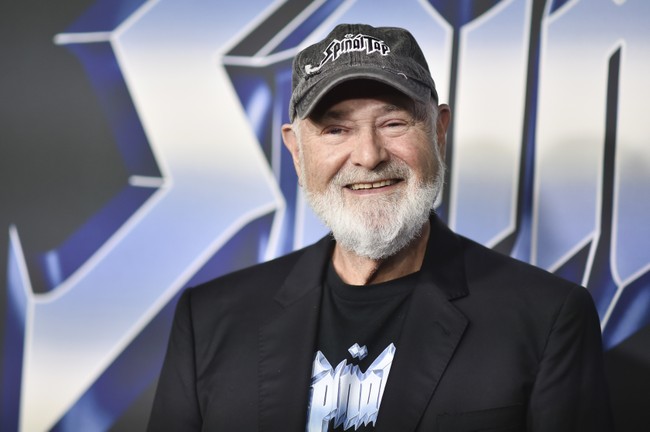
NEW: Police Arrest Nick Reiner After Parents' Homicides; Held on $4M Bail (Update: Murder Charged)
Favicon 
hotair.com

NEW: Police Arrest Nick Reiner After Parents' Homicides; Held on $4M Bail (Update: Murder Charged)

NEW: Police Arrest Nick Reiner After Parents' Homicides; Held on $4M Bail (Update: Murder Charged)
Like
Comment
Share
Showing 1174 out of 103854
  • 1170
  • 1171
  • 1172
  • 1173
  • 1174
  • 1175
  • 1176
  • 1177
  • 1178
  • 1179
  • 1180
  • 1181
  • 1182
  • 1183
  • 1184
  • 1185
  • 1186
  • 1187
  • 1188
  • 1189
Advertisement
Stop Seeing These Ads

Edit Offer

Add tier


Select an image
Delete your tier
Are you sure you want to delete this tier?

Reviews

In order to sell your content and posts, start by creating a few packages. Monetization

Pay By Wallet

Payment Alert

You are about to purchase the items, do you want to proceed?

Request a Refund