YubNub Social YubNub Social
    #astronomy #pandemic #death #vaccination #biology #astrophysics #mortality #cosmology #blackhole #keckobservatory #plasma #infection #excessdeaths #galaxy #statistics
    Advanced Search
  • Login
  • Register

  • Night mode
  • © 2026 YubNub Social
    About • Directory • Contact Us • Developers • Privacy Policy • Terms of Use • shareasale • FB Webview Detected • Android • Apple iOS • Get Our App

    Select Language

  • English
Night mode toggle
Community
New Posts (Home) ChatBox Popular Posts Reels Game Zone Top PodCasts
Explore
Explore
© 2026 YubNub Social
  • English
About • Directory • Contact Us • Developers • Privacy Policy • Terms of Use • shareasale • FB Webview Detected • Android • Apple iOS • Get Our App
Advertisement
Stop Seeing These Ads

Discover posts

Posts

Users

Pages

Blog

Market

Events

Games

Forum

Intel Uncensored
Intel Uncensored
1 w News & Oppinion

rumbleBitchute
This Public Health Ironwoman Just Got Knocked Out of the Runnin'!
Like
Comment
Share
Classic Rock Lovers
Classic Rock Lovers  
1 w

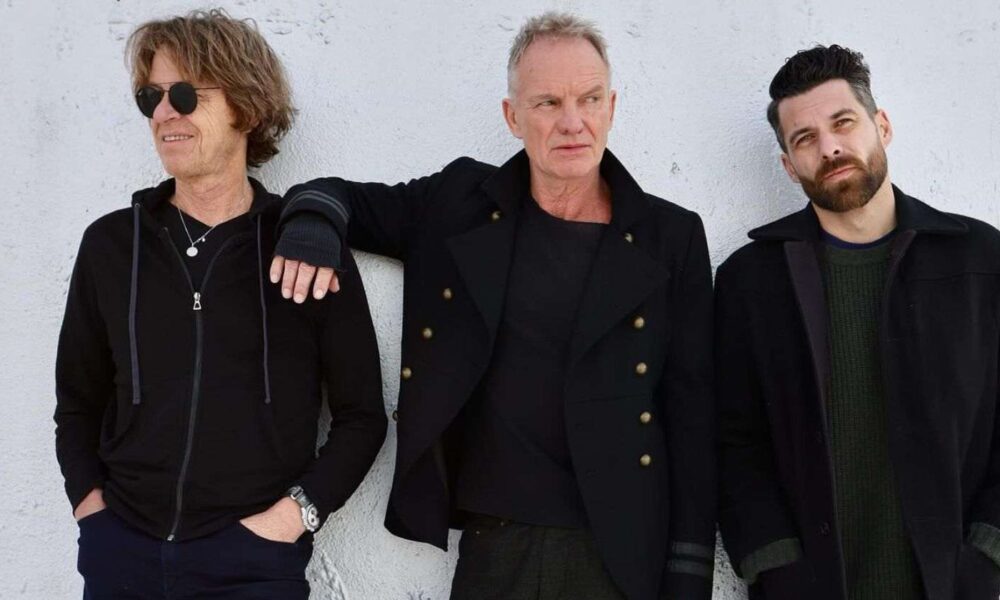
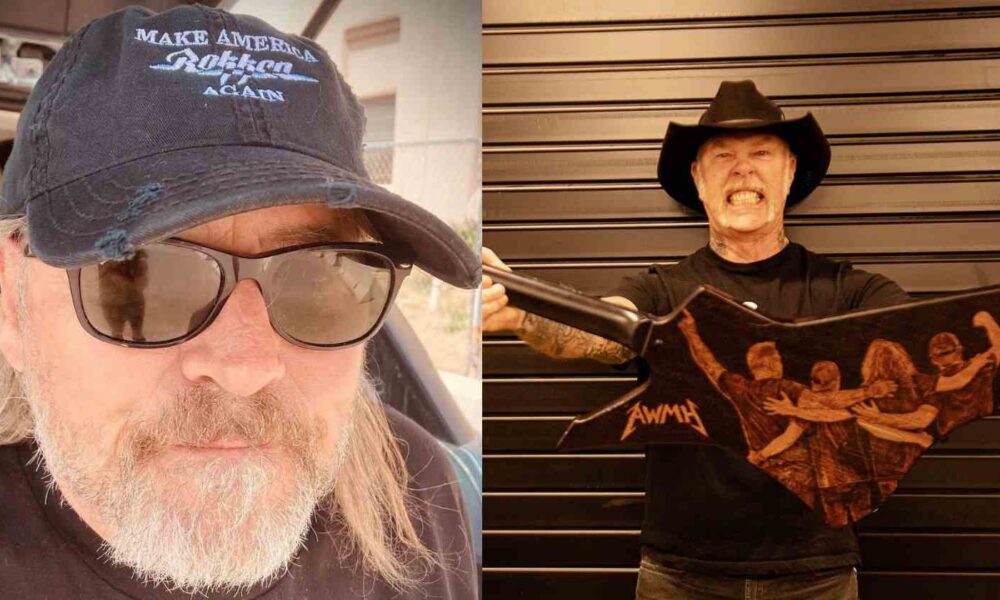
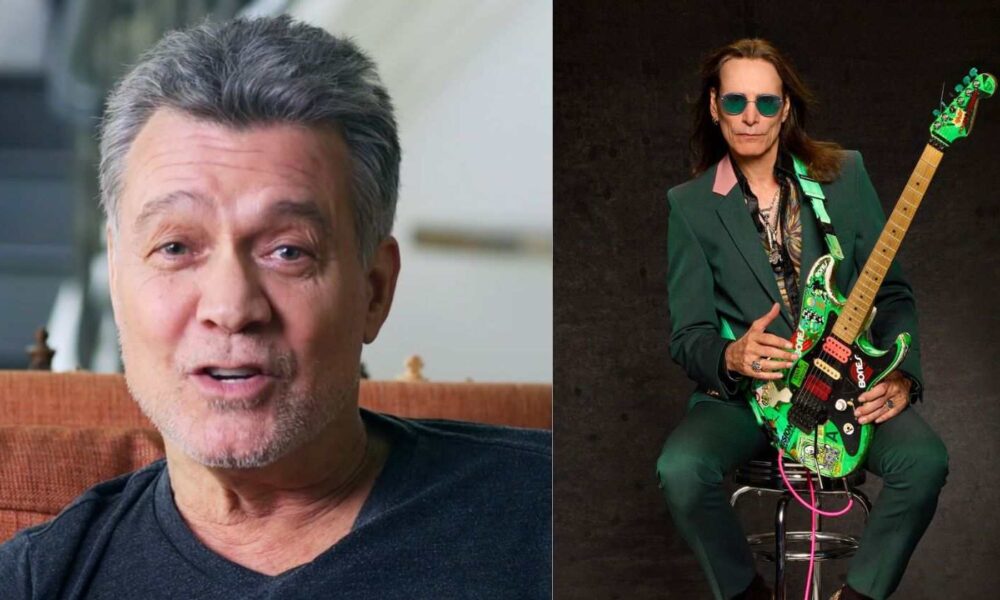
The hardest working musician in classic rock, according to James Hetfield: “Insane”
Favicon 
faroutmagazine.co.uk

The hardest working musician in classic rock, according to James Hetfield: “Insane”

"The canary in the coal mine." The post The hardest working musician in classic rock, according to James Hetfield: “Insane” first appeared on Far Out Magazine.
Like
Comment
Share
Conservative Voices
Conservative Voices
1 w

Favicon 
spectator.org

Yes, Trump’s Action Against Maduro Was Legal

It was hardly necessary to consult the Delphic Oracle to know that every Democrat within reach of a microphone would denounce President Trump’s military action against Venezuelan dictator Nicolás Maduro. It was, however, surprising to discover how ignorant his congressional critics are concerning the President’s authority to deploy military forces. Saturday morning, for example, House Minority Leader Hakeem Jeffries (D-N.Y.) brayed, “The Trump administration has not sought congressional authorization for the use of military force and has failed to properly notify Congress in advance of the operation in Venezuela.” Jeffries is evidently unaware of the War Powers Resolution of 1973 (WPR). In the end, both history and legal precedent suggests that President Trump acted within the law when he ordered the military operation that resulted in the capture of Nicolás Maduro. Someone on Jeffries’ staff should have informed him that the WPR permits the Commander-in-Chief to launch military operations without first notifying Congress. Moreover, several recent Democratic Presidents — including Clinton, Obama and Biden — have used the WPR to justify launching similar attacks without prior notification of Congress. The resolution does require the President to notify the Speaker of the House and President Pro Tempore of the Senate within 48 hours of initiating military operations and limits deployments to no more than 60 days without congressional authorization. The New York Times reports that House Speaker Johnson plans to schedule briefings for members as Congress returns to Washington. Nonetheless, congressional Democrats such as Senate Minority Leader Chuck Schumer (D-N.Y.), Sen. Tim Kaine (D-Va.), Sen. Andy Kim (D-N.J.), Sen. Jack Reed (D-R.I.), Rep. Seth Moulton (D-Mass.), Rep. Darren Soto (D-Fla.), ad infinitum, are demanding President Trump’s head on a platter. Many of these characters have jumped the shark. According to a report in AXIOS, Rep. Jared Huffman (D-Calif.) called Trump’s plan to run Venezuela “truly insane” and added, “We are in 25th Amendment territory now.” Huffman clearly doesn’t understand that the 25th Amendment must be initiated by Trump’s Cabinet. Inevitably, they are back on impeachment: Rep. Delia C. Ramirez (D-Ill.) issued the following hysterical statement: Today’s military operation in Venezuela and the kidnapping of Nicolás Maduro are illegal, dangerous violations of international and U.S. law that put us all at risk. The Trump Administration is continuing an agenda of U.S. interventionism in Latin America that has only led to human rights violations, democratic backsliding, economic destabilization, deep poverty, genocide, and mass migration. History has shown us that peace and democracy in Latin America have never been realized through unauthorized United States military intervention … Trump must be impeached.” Similarly irresponsible claims about “violations of international law” were posted on social media by New York City’s recently minted Mayor, Zohran Mamdani: “Unilaterally attacking a sovereign nation is an act of war and a violation of federal and international law. This blatant pursuit of regime change doesn’t just affect those abroad, it directly impacts New Yorkers, including tens of thousands of Venezuelans who call this city home.” Because Maduro will be incarcerated in a Brooklyn jail as he awaits prosecution on federal narcotics and weapons charges, it’s likely that Mamdani will try to grab a few headlines by interfering with the process. According to legal scholar Jonathan Turley, however, Trump is on solid legal ground: The courts have previously upheld the authority of presidents to seize individuals abroad, including the purported heads of state. This case is actually stronger in many respects than the one involving Noriega. Maduro will now make the same failed arguments that Noriega raised. He should lose those challenges under existing precedent. If courts apply the same standards to Trump (often an uncertain proposition), Trump will win on the right to seize Maduro and bring him to justice … I do not see how a court could free Maduro simply because it disapproves of nation-building. The Noriega precedent to which Turley refers is of course a reference to Gen. Manuel Noriega, the erstwhile dictator of Panama. Like Maduro, Noriega had been indicted in the U.S. on federal drug trafficking charges whereupon President George H.W. Bush sent U.S. troops into Panama in 1989 to capture him. At length he surrendered and was brought to the United States to stand trial. He was convicted and sentenced to 40 years in prison. As with Trump’s military action against Maduro, numerous Democrats objected to Bush’s failure to notify Congress prior to the deployment of troops. The case went to court and the Bush administration won. As Turley puts it, “The Noriega case offers ample support for the Trump Administration.” Nonetheless, the Democrats will certainly attempt to use the capture of Maduro as a pretext to portray President Trump as a lawless enemy of democracy whose actions in Venezuela are politically self-serving. As renowned foreign policy expert, Rep. Alexandria Ocasio-Cortez (D-N.) wrote on social media, “It’s about oil and regime change. And they need a trial now to pretend that it isn’t. Especially to distract from Epstein and skyrocketing healthcare costs.” This spurious nonsense was echoed by that celebrated paragon of virtue, Sen. Adam Schiff (D-Calif.) on social media: “Americans, especially our military families, deserve better than a President who will so openly break his promises of peace when there’s oil profits on the line.” In the end, both history and legal precedent suggests that President Trump acted within the law when he ordered the military operation that resulted in the capture of Nicolás Maduro. Sadly, the Democrats couldn’t care less about history or the law. They will continue to demagogue the issue, and will almost certainly use it as a pretext to impeach him if the voters are foolish enough to give the Democratic Party a House majority in next November’s midterms. For the good of the nation Maduro must go to prison and the GOP must maintain its House majority. READ MORE from David Catron: The Fulton County 2020 Election Bombshell The Democrats Decide to Lose EU Censorship Metastasizes
Like
Comment
Share
Conservative Voices
Conservative Voices
1 w

Favicon 
spectator.org

The Experts Were Wrong About Pete Hegseth

Remember all the criticisms Pete Hegseth endured as his nomination to head the Pentagon proceeded? Besides the gratuitous personal attacks, many so-called defense experts pronounced Hegseth unqualified for the job. Liberal National Public Radio reported that Hegseth’s nomination for secretary of defense was being met “with disbelief and outrage among some members of Congress and former military officers.” “If confirmed,” NPR said, Hegseth “would be the least experienced defense secretary in the history of the republic.” The New York Times called his selection to head the Pentagon “deeply troubling.” Donald Trump’s Pentagon led by Secretary Hegseth, it appears, knows how to successfully use force to carry out the nation’s objectives. Nearly a year later, War Secretary Pete Hegseth’s Pentagon is two-for-two in the limited but complex military operations undertaken against Iran and Venezuela. Put aside for a moment the questions of geopolitical necessity and the policy implications of the strike on Iran’s nuclear facilities and the capture of Maduro in Venezuela, and focus on the competence of our military when used correctly by our civilian leaders. In Iran, the U.S. military successfully acted with Israel to destroy — at least for the time being — Iran’s capability to construct and deploy nuclear weapons. By doing so, the U.S. seriously set back Iran’s nuclear weapons project and helped remove a threat to all of our allies in the region and, as recent events show, greatly weakened the Islamic regime’s hold on power, without committing our forces to another endless war in the region. In Venezuela, our military, intelligence, and law enforcement forces captured Venezuelan President Nicolas Maduro, who had been indicted by a federal grand jury in New York on terrorism, drug, and gun charges. The Pentagon’s role in the Maduro operation is reminiscent of its role in the capture of Panamanian dictator Manuel Noriega in January 1990, who, like Maduro, had been indicted on drug trafficking charges (and later convicted). Chairman of the Joint Chiefs of Staff Gen. Dan Caine described the complexity of the military operation that led to Maduro’s capture, which involved more than 150 aircraft “launching across the Western Hemisphere in close coordination, all coming together in time and place to lay effects for a single purpose, to get an interdiction force into downtown Caracas while maintaining the element of tactical surprise.” The operation, Gen. Caine continued, “required the utmost precision and integration within our joint force.” President Trump called it “an extraordinary military operation” in which “overwhelming American military power, air, land, and sea was used to launch a spectacular assault.” Donald Trump’s Pentagon led by Secretary Hegseth, it appears, knows how to successfully use force to carry out the nation’s objectives. What a difference from the days of Joe Biden’s Pentagon run by Gen. Lloyd Austin, which botched the U.S. withdrawal from Afghanistan in 2021. Biden’s Pentagon in that instance was reminiscent of Jimmy Carter’s Pentagon, led by Harold Brown, which engineered the fiasco of the failed hostage rescue mission in Iran in 1980. President Trump’s Venezuela decisiveness brings to mind Ronald Reagan’s similar decisiveness about the invasion of the Caribbean island of Grenada in October 1983, during which our military rescued American medical students and overthrew a brutal communist regime that was backed by Cuba and the Soviet Union. Reagan followed that up with actions that saved El Salvador from a communist insurgency and led to the ouster of a communist regime in Nicaragua. Maduro’s Venezuela had increasingly allied itself with China, which strongly condemned Trump’s actions. Under Presidents Obama and Biden, China had made inroads into Latin America via its Belt and Road Initiative. Obama’s Secretary of State John Kerry, after all, had publicly pronounced the death of the Monroe Doctrine. Under Obama and Biden, China knew it had nothing to fear by increasing its presence in the Western Hemisphere, and the nations of Latin America knew that they had nothing to fear by inviting China to spread its influence throughout the region. President Trump has not only rhetorically revived the Monroe Doctrine, but he and War Secretary Hegseth have demonstrated that they know how to use America’s military power to accomplish geopolitical objectives. READ MORE from Francis P. Sempa: The ‘Warmth of Collectivism’ Comes to New York Xi Jinping: ‘The Reunification of Our Motherland Is Unstoppable’ The Christmas Gift of Walter Russell Mead
Like
Comment
Share
Conservative Voices
Conservative Voices
1 w

Favicon 
spectator.org

Exit, the Hollywood Women

“Forty more days and Nineveh will be overthrown!” (Jonah 3:4), cried the prophet Jonah. His warning scared the devil out of the Ninevites. All the people from the king down prostrated themselves in repentance, averting the city’s doom. [W]omen in Hollywood always had equality with men — in front of the camera, on the screen, as real women not fake men. For seven years in this great magazine, I’ve been a Jonah, except predicting the destruction of Hollywood. But Hollywoodians, unlike the Ninevites, do not fear God, just white men. They did everything they could to banish us — from the writers’ room, from the screen and, to their shock, from the audience. They damned us, mocked us, villainized us, yet expected us to reward them for it. Because their ignorance of the screen art extended to the screen business, more specifically the end of it. Only now, as their jobs collapse around them, are they heeding voices such as mine. A Breitbart article last week by John Nolte cites a new study showing the number of movies directed by women hit a seven-year low last year. Coincidence? I think not. “In 2025, only nine of the top 100-grossing films were directed by women, the lowest since 2018, according to Paste Magazine. “This year, women accounted for 8.1 percent of the top 100-grossing films, a steep drop from last year’s 13.4 percent and still higher than 2018’s 4.5 percent.” Nolte suggests men are better than women at the problem-solving challenges of directing. And of course he’s right. The work resembles that of a military command over hundreds of personnel and under changing situations. A script is but a vague battle plan requiring quick decisions on every deviation, and with actors and actions, these are unavoidable. A classic example was Francis Ford Coppola’s realization on The Godfather (talk about studio pressure) that a line ad-libbed by actor Richard S. Castellano as Clemenza — “Take the cannoli” right after the scripted “Leave the gun” — enriched the scene. The combined line — “Leave the gun. Take the cannoli” — beautifully reflected the dichotomy of family and mob life. It became one of the most memorable bits in the masterpiece, the perfect union of art and theme. Fewer women are wired for this alchemy. For instance, I don’t have to be Chuck Norris to know there were no women on the Delta Force team that captured Venezuelan dictator Nicolás Maduro and wife late last Saturday night with no casualties. They weren’t only all men, they were real men, including those in charge at Mar-a-Lago — President Trump, Secretary of State Rubio, Secretary of War Hegseth, Chairman of the Joint Chiefs of Staff General Dan Caine. Whereas military ops controlled by DEI-heavy weaklings and women — a Democrat specialty — such as Jimmy Carter, Joe Biden, Kamala Harris, Lloyd Austin, and Mark Milley — invariably end up with dead soldiers and enemy fighters dancing on their corpses. It’s the same in Hollywood, except at least there the burning is of studio money instead of U.S. aircraft. The derailment of most modern films starts long before their direction — at their conception, already sabotaged by ideology. The problem is not female but feminist. There were many great lady screenwriters in 20th Century Hollywood — Anita Loos (The Women, Gentlemen Prefer Blondes), Betty Reinhardt (Laura), Frances Goodrich (It’s a Wonderful Life, Easter Parade, Father of the Bride), Leigh Brackett (The Big Sleep, Rio Bravo, El Dorado), Fay Kanin (Teacher’s Pet), Nora Ephron (When Harry Met Sally, Sleepless in Seattle). The two differences between them and today’s harridan hacks is they tailored their work to male master auteurs — such as Otto Preminger, Howard Hawks, and Vincent Minneli — and they respected men. Leigh Brackett’s scripts for Hawks helped iconize Humphrey Bogart (The Big Sleep) and John Wayne (Rio Bravo). Their successors couldn’t do this if they wanted to, which they very much don’t. They can only, and prefer to, emasculate the male icons they inherited, like Han Solo, Luke Skywalker, Indiana Jones, and James Bond. Similarly, Nora Ephron’s rom-coms — another lost art for current male-bashing female writers — popularized non-macho everyman actors Billy Crystal and Tom Hanks into likable leading men, and pretty feminine girls like Meg Ryan into both female and male favorites. The Meg Ryan type no longer even exists. She was replaced by asexual girlbosses and ridiculous action heroines. The most unintentionally laughable example of both is the recent G20 starring 60-year-old Viola Davis as the President of the United States doing a Steven Segal Under Siege number in a tank-top against white male terrorists twice her weight and half her age. “I don’t know who was working harder on this film,” remarked the Critical Drinker. “Davis just to get through the action set pieces without keeling over, or the stunt team to make it look like she could even do a fraction of this stuff for real.” Of course the movie was a radioactive bomb, appealing to neither men nor women. Yet it got greenlit by MGM Amazon producer Courtenay Valenti, probably thinking, “Yeah, this’ll teach toxic white men something about black female empowerment.” There’s a good chance Valenti, the two G20 women writers (Caitlin Parrish, Erica Weiss) and the woman director (Patricia Riggen) are part of the involuntary female exile from Hollywood. Maybe their replacements will know what they didn’t. That women in Hollywood always had equality with men — in front of the camera, on the screen, as real women not fake men. READ MORE from Lou Aguilar: Heroes and Zeroes of 2025 Bardot and Other Screen Legends We Lost in 2025 When the Churches Go Silent at Christmas
Like
Comment
Share
Conservative Voices
Conservative Voices
1 w

Favicon 
spectator.org

Stop Building Battleships, Start Building Fear

It is too early to tell what advice President Trump received from military leaders concerning the strategic ramifications of the recent Venezuelan operation. We Americans are superb military tacticians. However, in the past two decades, U.S. military leaders have lost sight of strategic art and have recently not given their civilian leaders sound advice. Policy toward China is a good example. While the Chinese are placing vertical launched missiles in boxes aboard container ships to augment their navy, we are building battleships. Our generals and admirals see the massive Chinese warship building program as an overwhelming group of targets and agonize over losing an attritional sea battle. They should be viewing the Chinese surface fleet as an expendable matador’s cape aimed at distracting us into wasting valuable and limited amounts of anti-ship missiles while the Chinese overwhelm their true objective whether it be Taiwan, the Philippines, or some other U.S. ally such as Japan. Chinese President Xi Jinping has stepped up his rhetoric to unify Taiwan and China by force if necessary. The art of identifying centers of gravity and critical vulnerabilities has largely been lost and with it our ability to truly deter Chinese aggression. I have said in this publication on a number of occasions that Beijing’s real strategic center of gravity is her export economy and her critical vulnerability is her need to import oil. Her surface combatants are pawns to be sacrificed early in a conflict to mask her real intentions. The container ship missile are just the tip of the iceberg. In the event of a Taiwan attack, we would be better off concentrating our drones and missiles on Chinese amphibious ships than cruisers and destroyers. Instead of flattering President Trump with the possibility of naming a battleship after him, the admirals should be threatening unlimited naval warfare targeting Chinese imports and exports world-wide. This should be an unlimited naval campaign aimed at bringing China to her economic knees in the event of an attack on Taiwan, the Philippines, Japan, or any other U.S. ally. The threat and ability of the U.S. to totally blockade China in the event of a conflict would be a real deterrent to war. Any thoughts of a conventional naval battle are merely playing into Beijing’s hands. History may not repeat itself, but it often rhymes. A good example is the run-up to War II in Europe. Germany always had the potential to isolate Great Britain by conducting a naval campaign against her imports of food, oil, and other raw materials needed for waging war. Instead of building an overwhelming fleet of attack submarines, Hitler hedged his bets by wasting precious resources on building two super-battleships (Bismarck and Tirpitz). These ships were designed to be huge anti-commerce raiders. Instead, the Bismarck was quickly sunk by the British Navy after aircraft had crippled her. After that, the Tirpitz never ventured into the open ocean and was eventually sunk in port by British naval aircraft. The Germans had the right idea but lacked the resources to properly implement it. In the Pacific the Japanese did much the same thing, squandering precious limited resources on the super-battleships Yamato and Musashi. Even the Marine Corps has been mesmerized by the Chinese matador’s cape. The Corps has retooled its primary function away from world-wide crisis response to an attritional missile firing force in the South China Sea. This is something the other services are much more capable of doing. The Marine Corps should scrap its missile strategy called Force Design and concentrate on its proved ability to seize and board commercial vessels worldwide on the high seas. Chinese President Xi Jinping has stepped up his rhetoric to unify Taiwan and China by force if necessary and backed up his intention with naval exercises designed to show that he can blockade or invade Taiwan. These are not idle threats. He obviously does not respect or fear our current strategic posture. A threat of unlimited naval war backed up by radically expanding our attack submarine fleet would send an unambiguous message. Such a conflict would hurt America, but would ruin China. The promise and demonstrated capability to fight such a conflict would deter it from ever happening. Instead of naming battleships after the President, the Navy should be building Trump class attack submarines. READ MORE from Gary Anderson: Learning From the Past, Leading in the Present Rules of Engagement and Command Decisions Celebrating Marines While Questioning Their Future Gary Anderson is a retired Marine Corp Colonel. He was Chief of Staff of the Marine Corps Warfighting Lab and served as a civilian special Advisor to the Deputy Secretary of Defense  
Like
Comment
Share
Conservative Voices
Conservative Voices
1 w

Favicon 
spectator.org

When Common Sense Went Viral

Two hundred fifty years ago on January 10, 1776, Thomas Paine published his influential pamphlet, Common Sense. In today’s words, its publication went “viral” as it was re-printed and distributed throughout the American colonies. [H]is approach to government was so radical that he was treated with disdain in the United States, Great Britain, and France. At the time of its circulation, the colonies were in a state of flux. British troops were engaged in active combat against colonial militias and both sides had taken significant casualties. But not all the colonies were in active rebellion. In fact, some colonial leaders sought reconciliation, but everyone realized the military conflict had irreversibly altered the colonists’ relationship with their mother country. The next steps were uncertain, and no single idea of a way forward captured the imagination of the colonists. Into this purgatory of crisis of conscience entered Thomas Paine and his thoughts about King George III, Parliament and the idea of monarchy.  In many ways, Paine was a Johnny come lately to the American cause. He had only immigrated to the colonies in late 1774 and had not experienced anything but the growing animosity between the colonists and Britain. He had not seen the initial autonomy of the colonies nor felt the symbiotic relationship between local, colonial government and the crown. Paine was in trouble and not welcomed in Britain. He was a strident critic of his government and advocated any number of radical causes including the elimination of the monarchy. In fact, he spent so much time on political advocacy that he lost his position as a tax collector and the business he inherited from his wife failed. Facing debtors’ prison, he was forced to sell assets and with such financial instability, he became separated from his wife. Fortunately, Paine was introduced to Benjamin Franklin in London and was encouraged to emigrate to Philadelphia. So, as many others had done, he left his financial and domestic troubles at home, crossed the Atlantic and came to Pennsylvania for a fresh start. His arrival in Philadelphia came just as the Boston colonists were rattling sabers at Red Coats’ occupation of their town. Once fighting at Lexington and Concord started, Paine was in a unique position to assess and then encourage colonial independence. In the first full year of coming to America, he experienced the anxiety of the colonists with their relationship with Britain. He had witnessed the military conflict in Massachusetts and was in the middle of a political vortex of the colonist’s consideration of what direction to pursue. Common Sense came at the ideal time as all colonists were questioning not only their relationship with the King and Parliament, but how they would organize to govern and protect themselves. If the road to independence was not clear, Paine provided a shining path. As a newcomer, Paine published the work anonymously, identifying himself only as “an Englishman,” believing that the appearance of English authorship would confer greater legitimacy on his argument. His work hit the right nerve. Within a few months more than 100,000 copies of the 47-page pamphlet were in circulation throughout the colonies. Paine’s work seemed to finally supply the organizing principle of independence to the colonists. Rather than make the distinction that the British Parliament and not King George was the root cause of the colonists’ predicament, Paine directly attacked the King. Lambasting George III was not based on specific actions, but on the idea of the monarchy itself. Paine was a republican and 250 years ago, that meant no hereditary monarchy. Viewing all men as equal he argued that kings were historically the source of trouble for people and should be eliminated. He further argued that independence was the only course of action to take and that the colonists must separate themselves from the evils of a king, seek self-government, and form a new society. While the colonists were weary of the king and chaffed under his decrees, they largely blamed the king’s ministers and viewed King George as getting bad advice from poor counselors. Paine disabused the colonist of this notion and pointed out the entire problem was having a king to start with. His arguments provided a logical basis to consider that being independent of Britain was the only way to resolve the conflict. If people had doubts about the colonists’ end game with their relationship with Britain, Paine gave them moral authority to pursue complete separation. But Paine’s prescription after independence was a radical government that was more populist and closer to a pure democracy. This ran counter to many of the traditional colonists who had experienced the pre-revolutionary, benign neglect from Britain and simply wanted that again. The more established colonial leadership, while willing to replace the king, wanted to maintain the structure of state centered, colonial government. Many thought that Paine went too far. Paine’s writing continued to support the Revolution, but once it reached a favorable conclusion, Paine returned to Europe and caught the spirit of the French Revolution. In London, he advocated for the right of the people to overthrow their government. This did not sit well, and Paine was convicted of sedition. He fled to France and was instrumental in supporting that revolution too. But his writings became so radical that he was arrested and was slated for execution. Fortunately, American ambassador James Monroe intervened to save Paine from the guillotine. Paine would return to what was now the United States, but he became wildly critical of his former friends when he realized they did not fully embrace his ideas of government. As a radical to the end, he could never find comfort with the U.S. Constitution and the stability of divided, co-equal government. When he died, hardly anyone attended his funeral. While he was a catalyst for shedding the colonists of a king, his approach to government was so radical that he was treated with disdain in the United States, Great Britain, and France. Quite an accomplishment, but a sad ending to such an important advocate for American liberty. READ MORE from Will Sellers: A Missed Opportunity: Russia and the Decembrist Revolt Heinz Rises From Bankruptcy to an American Icon Ford and the Making of Democracy’s Arsenal Will Sellers is a graduate of Hillsdale College and is an Associate Justice on the Supreme Court of Alabama. He is best reached at jws@willsellers.com.
Like
Comment
Share
Conservative Voices
Conservative Voices
1 w

Favicon 
spectator.org

Student-Athlete or Free Agent?

With college football finally shuffling off stage like an aging rock star, college basketball has decided to crank up the speakers and throw the kind of house party that makes the neighbors call the cops. Griffin is building for the long haul in a sport addicted to the short term. That doesn’t make him outdated. It makes him countercultural. Coaches and a sizable portion of the traditional fan base across our fruited plain are not too happy over the NCAA’s latest eligibility circus, as schools roll out the red carpet for players with pro credentials.  Nothing says “student-athlete” like someone who has already cashed a sizeable paycheck playing professionally. College basketball has turned into the latest edition of the comeback tour. The NCAA has allowed former NBA draft pick James Nnaji to play immediately for Baylor, while Illinois and Utah roll out the welcome mat for former European pros Toni Bilic and Lucas Langarita. Just when you think the circus tent could not get any bigger, Chicago Bulls small forward Trentyn Flowers, whose journey was a bit more drawn-out. Flowers went from high school to a Louisville commitment to professional basketball in Australia and finally back home in the NBA where he has played in eight games and is now shopping his basketball wares. According to the NCAA, the chaos in college sports’ Name, Image and Likeness (NIL) Era has nothing to do with decades of NCAA micromanagement or shifting legal standards. Rather it is those rogue nationwide judges throwing the whole convoluted system into chaos while reducing opportunities for high school athletes. This eligibility fiasco is just the opening act in the NCAA’s audition for an antitrust exemption. There is nothing like manufactured chaos to make a persuasive case for special treatment. In a dazzling display of faith in bureaucratic speed, the NCAA has asked Congress for an assist in fixing their mess.  When you need fast, decisive action, who better than the people who have not managed to pass a budget on time since 1997. You can’t really blame the players; they are just cashing in on the buffet of opportunities laid out for them. That is the paradox of arrival — abundance is a blessing until it becomes a burden. At the going rate don’t be surprised if LeBron James shows up for a “gap year” at Duke. After all, nothing says amateur athletics like a roster full of guys who have cashed checks bigger than the school’s endowment. Welcome to The Wild Wild West of college hoops, where if the NCAA had even a flicker of humor, they would commission Robert Conrad as basketball czar, though first they would need to grab a shovel to find him. The question is simple: student-athlete or professional player. The NCAA’s identity crisis is not just a branding disaster; it is an engineered masterpiece in what happens when an institution ignores the values it claims to uphold. As the NCAA remains in denial, the coaching fraternity is bewildered and the frustration is mounting.  “We just want to know the rules so we can abide by them,” Purdue head coach Matt Painter said recently.  “We don’t know what’s going on.” “If you go pro, I don’t care what country you’re from, if you leave your name in, you cannot play college basketball,” said Arkansas head coach John Calipari. As Bucknell opens Patriot League play at home at Sojka Pavillion on Saturday against longtime rival Lehigh, head coach John Griffin echoed both Painter and Calipari. “Once a player is drafted and participates in the NBA Summer League, that decision should mark a clear transition away from college athletics, Griffin said in a recent email. “Choosing to pursue the NBA path is a valid and respected option, but it should be a definitive one. That level of clarity would benefit players, programs, and the sport as a whole.” Big time college sports have become the nation’s most chaotic commodities exchange, a place where players are traded, flipped, and repackaged faster than meme stocks. In this brave new world of instant returns and overnight reinvention, Bucknell’s John Griffin is something of an anachronism, a rotary phone in a 5G universe. Or, depending on whom you ask, the only adult left in the room. Griffin, who played at Bucknell from 2004 to 2008, comes from the era when guards dove on the floor because it mattered, not because it made good NIL content. He helped power some of the strongest teams in the program’s 131‑year history, back when “development” wasn’t a dirty word and “continuity” wasn’t something you needed a waiver for. Now, as head coach, Griffin is doubling down on that slow‑cook philosophy in a sport that increasingly prefers the microwave. Griffin is part of a shrinking but stubbornly unbothered cohort of coaches whose atavistic thinking still appeals to a certain kind of athlete who doesn’t need a GPS to find the gym. Griffin builds his roster “through high school, prep school, international prospects, and the transfer portal, identifying young men who align with Bucknell’s academic standards, competitive culture, and long-term development model.” In 2026, that sentence reads like someone bragging about their vinyl collection at a Spotify convention. And yet, for the right player, it is a breath of fresh air. For others.… It is a fever dream that is nothing more than a flickering mirage of guaranteed minutes and SEC glory where dancing mascots chant nonstop “instant gratification” in perfect harmony. The transfer portal has become college basketball’s express lane with no tolls, no speed limits, no questions asked. And last offseason, Bucknell watched its reigning Patriot League Player of the Year, junior Noah Williamson, merge into it with the confidence of a player who had never once been cut off in traffic from the low post to Route 80. At Bucknell, Williamson was the sun, the moon, and the gravitational pull that kept the offense from floating into space. High‑usage, high‑minute, high‑production, the kind of player who could tilt a game by his mere presence. At Alabama, Williamson is a deep‑rotation cameo, getting single digit minutes that could fit inside a pair of media timeouts. The contrast is not subtle. It is a billboard that bought ad time during the SEC Network halftime show. To some, Williamson’s move is the natural next step: chase the money, the lights, follow the brand, and the promise of “more.” To others, it is the cautionary tale of a system that sells instant gratification like a late‑night infomercial that is polished, loud, and suspiciously lacking in contact information for refunds. At Bucknell, the seven foot Williamson, a Latvia native, was a star on the picturesque Lewisburg, Pennsylvania campus. At Alabama, he’s a role player in a galaxy already overcrowded with five‑stars and future draft picks. Griffin’s coaching is old school, a philosophy he inherited while growing up around his father’s St. Joseph’s teams in Philadelphia back when the biggest off‑court concern was practice time and homework, not agents and NIL negotiations. Such a coaching philosophy that is rooted in patience, calculated, and forged in identity can look almost radical in comparison. Griffin is not anti‑portal; he is anti‑shortcut. He is not nostalgic; he is principled. And in a landscape where players reinvent themselves annually, he is betting on the power of staying put long enough to actually grow, a concept so foreign it might as well require a green card. For some athletes, that is exactly the point: a place that sees them as more than a rental. For others, it is a relic from the Pleistocene Era. But here is the twist: the so‑called “crazy” approach might be the one that endures. Because while the portal can offer opportunity, it can also offer illusion. And while the high‑major leap can elevate a career, it can just as easily shrink it. Griffin is building for the long haul in a sport addicted to the short term. That doesn’t make him outdated. It makes him countercultural.  And countercultures, history tells us, have a way of outlasting trends. As Griffin put it, “At Bucknell, we know who we are, what we value, and how we want to develop players — on the court, in the classroom, and beyond basketball.” As 2026 gets its legs, that might be the most radical statement of all. (P.S. Bucknell won their Patriot League home opener over Lehigh this weekend: 72-65.) READ MORE from Greg Maresca: Eligibility, International Intrigue and NCAA Drama A Cynic’s Ruminations on 2026 2025 Rear-View Awards Greg Maresca, a longtime columnist with the Sample News Group, served as the public address announcer for Bucknell’s men’s and women’s basketball for 23 years.
Like
Comment
Share
Intel Uncensored
Intel Uncensored
1 w

Favicon 
www.infowars.com

Germany’s AfD Party Tears Down International Firewall, Strengthens Relationships With MAGA, European Leaders

Alternative for Germany party growing more powerful domestically and on world stage
Like
Comment
Share
Intel Uncensored
Intel Uncensored
1 w

SPECIAL REPORT! US CAPTURES VENEZUELAN LEADER MADURO, RUSSIA/CHINA FURIOUS, BRICS CONDEMNS
Favicon 
www.sgtreport.com

SPECIAL REPORT! US CAPTURES VENEZUELAN LEADER MADURO, RUSSIA/CHINA FURIOUS, BRICS CONDEMNS

from Redacted News: TRUTH LIVES on at https://sgtreport.tv/
Like
Comment
Share
Showing 1365 out of 106323
  • 1361
  • 1362
  • 1363
  • 1364
  • 1365
  • 1366
  • 1367
  • 1368
  • 1369
  • 1370
  • 1371
  • 1372
  • 1373
  • 1374
  • 1375
  • 1376
  • 1377
  • 1378
  • 1379
  • 1380
Advertisement
Stop Seeing These Ads

Edit Offer

Add tier


Select an image
Delete your tier
Are you sure you want to delete this tier?

Reviews

In order to sell your content and posts, start by creating a few packages. Monetization

Pay By Wallet

Payment Alert

You are about to purchase the items, do you want to proceed?

Request a Refund