YubNub Social YubNub Social
    Advanced Search
  • Login
  • Register

  • Night mode
  • © 2026 YubNub Social
    About • Directory • Contact Us • Developers • Privacy Policy • Terms of Use • shareasale • FB Webview Detected • Android • Apple iOS • Get Our App

    Select Language

  • English
Night mode toggle
Featured Content
Community
New Posts (Home) ChatBox Popular Posts Reels Game Zone Top PodCasts
Explore
Explore
© 2026 YubNub Social
  • English
About • Directory • Contact Us • Developers • Privacy Policy • Terms of Use • shareasale • FB Webview Detected • Android • Apple iOS • Get Our App
Advertisement
Stop Seeing These Ads

Discover posts

Posts

Users

Pages

Blog

Market

Events

Games

Forum

Daily Caller Feed
Daily Caller Feed
3 w

Washington Post Misquotes Trump Twice In Single Article
Favicon 
dailycaller.com

Washington Post Misquotes Trump Twice In Single Article

'A previous version of this article incorrectly quoted President Donald Trump'
Like
Comment
Share
Daily Caller Feed
Daily Caller Feed
3 w

SCOTUS Doesn’t Seem To Buy Trump’s Reasons For Rushing To Fire Lisa Cook
Favicon 
dailycaller.com

SCOTUS Doesn’t Seem To Buy Trump’s Reasons For Rushing To Fire Lisa Cook

'For Cause'
Like
Comment
Share
Daily Caller Feed
Daily Caller Feed
3 w

Americans Don’t Want To See Whistle-Clad Libs Blocking ICE Agents, Survey Finds
Favicon 
dailycaller.com

Americans Don’t Want To See Whistle-Clad Libs Blocking ICE Agents, Survey Finds

'A serious issue'
Like
Comment
Share
SciFi and Fantasy
SciFi and Fantasy  
3 w

Jamie Lee Curtis to Star in Murder, She Wrote Movie
Favicon 
reactormag.com

Jamie Lee Curtis to Star in Murder, She Wrote Movie

News Murder She Wrote Jamie Lee Curtis to Star in Murder, She Wrote Movie Pitch Perfect filmmaker Jason Moore is set to direct By Vanessa Armstrong | Published on January 21, 2026 Screenshot: CBS Comment 0 Share New Share Screenshot: CBS Knock knock, Jessica Fletcher is calling. Today, we’ve got news that Murder She Wrote, the long-running television series from the ‘80s and ‘90s, is coming back as a feature film. We also got even better news that none other than Jamie Lee Curtis will be starring as Jessica Fletcher, the author originally played by Angela Lansbury who solves the disturbing number of murders that occur in her small town. According to Deadline, Jason Moore, whose previous credits include Pitch Perfect and Shotgun Wedding, is on board to direct. The project appears to be moving steadily ahead—there’s already a script from Lauren Schuker Blum and Rebecca Angelo, and Lord Miller (the production company of Phil Lord and Chris Miller) is producing through their deal with Universal Pictures. There’s no news yet on what the story will entail. Here are some plot points, however, that seem likely: Jessica (Curtis) will be living in the quaint fictional town of Cabot Cove, Maine; a murder will happen, and Jessica will ultimately solve it. The project is still in the pre-production phase—it’s not clear when it will go into production given Moore has other projects on his plate, including directing a revival of Avenue Q in the West End this April. We’ll continue sleuthing to find out. [end-mark] The post Jamie Lee Curtis to Star in <i>Murder, She Wrote</i> Movie appeared first on Reactor.
Like
Comment
Share
SciFi and Fantasy
SciFi and Fantasy  
3 w

Read an Excerpt From Weavingshaw by Heba Al-Wasity
Favicon 
reactormag.com

Read an Excerpt From Weavingshaw by Heba Al-Wasity

Excerpts gothic fantasy Read an Excerpt From Weavingshaw by Heba Al-Wasity A young woman who can see the dead strikes a deal with the Saint of Silence, a dangerous purveyor of dark secrets, to save her brother’s life. By Heba Al-Wasity | Published on January 21, 2026 Comment 0 Share New Share We’re thrilled to share an excerpt from Weavingshaw by Heba Al-Wasity, a debut gothic fantasy out from Del Rey on February 24. Three years ago, Leena Al-Sayer awoke with a terrible power.She can see the dead.Since then, she has hidden herself away from the world, knowing that if she ever reveals her curse she will be locked up in an asylum.When her beloved brother, Rami, falls fatally ill, Leena is faced with a terrible choice: Let him die or buy the expensive medicine that will save his life by bartering the only valuable thing she has—her secret.The Saint of Silence, a ruthless merchant who trades in confessions and is shrouded in unearthly rumors of cruelty and power, accepts her bargain, for a deadly price. Leena must find the ghost of Percival Avon, the last lord of Weavingshaw—or lose her freedom to the Saint forever.As Leena’s search takes her and the Saint to Weavingshaw, she finds the estate and the surrounding moors to be living things—hungry for blood and sacrifice. Fighting against Weavingshaw’s might, Leena must also fight her growing pull toward the enigmatic Saint himself, whose connection to Percival Avon remains a mystery.As the house begins to entomb them, time is running out on their desperate hunt for answers.For Leena has come to see that here in Weavingshaw, the dead are not hushed—and some secrets are better left buried with them. 1 The Saint of Silence “Tell me how to seek the Saint.” The old woman stared at the girl for a long moment, eyes narrowed, shriveled lips pursed. Without lowering her gaze, she inhaled a slow drag from her pipe. “Got a confession, Leena?” Leena shrank back, although the emaciated form of the old woman posed no threat to her. “Margery…” Leena began, then paused, her conviction dimming. “I only mean to seek him out.” Faster than she thought the old woman could move, Margery dug her yellowed nails into the soft flesh of Leena’s forearm. “No one—and I mean no one—goes to see the Saint without a reason,” Margery snarled. “Are you looking for a bit of coin, girlie? Some pretty baubles?” Her grip bruised. “Do not seek him.” Leena didn’t respond as, not for the first time, something else had caught her attention. Her gaze flickered to a point past Margery’s shoulder, and she stared at it for a second too long. When Margery turned to look, there was nothing there but peeling papered walls. “What are you staring at, girlie?” Margery demanded. Leena startled before shaking her head. Leena’s eyes roved the interior of Margery’s home, directly abutting her own. Each house was an exact replica of the other—squat and terraced with sparse windows and a barely functioning fireplace, their only source of water an outside pump. The old woman had lived here for as long as Leena could remember, the only resident in these clustered spaces of cramped houses who was not an Algaraan refugee. Unlike Leena, whose own parents had fled the Algaraan civil war more than twenty years ago before settling uneasily into Morland, Margery was salt-of-the-earth and Morish through and through. Leena did not think the old woman had ventured once out of Golborne, Morland’s capital city, or even farther than the limit of her own house these days, her fluid-swollen legs barely carrying her past her front step. Despite Margery’s lack of mobility, Leena never dared question how she seemed to procure a steady stream of Tar. Whenever Leena knocked on the old woman’s door, it was always the same picture: Margery hunched over a hookah, her eyes red from the cloying Tar smoke, her blue-veined hands shaking for the next addictive puff. “Rami is unwell. He is going to…” Leena trailed off. “I need to see the Saint.” “Your brother?” It took all of Leena’s strength to force her voice to remain steady, even as terror slithered down her body at the mere utterance of the illness. “He has Sweeper’s Cough.” Margery withdrew, leaving half-moon welts on Leena’s skin. “I had it once and barely survived it.” Buy the Book Weavingshaw Heba Al-Wasity Buy Book Weavingshaw Heba Al-Wasity Buy this book from: AmazonBarnes and NobleiBooksIndieBoundTarget Leena knew this, or else she would never have dared enter Margery’s house and invite the sickness into her home. Sweeper’s Cough could only be had once and never again—as long as one survived it. Baba had once said Leena had caught it as a young girl in the refugee camps, and she had been so unwell that the camp overseer had told her mother to start sewing a white burial shroud. “So, you see, my worry is justified.” Leena pulled at a stray thread unraveling from the hemline of her skirt. “I must go see the Saint of Silence.” “No—even that is not enough.” Margery swallowed harshly. “What secrets can a green girl like you have? The Saint of Silence does not accept schoolroom scandals.” Once again, Leena’s eyes flickered to the nothingness behind Margery’s shoulder. “Have you not heard the stories that swirl around the Saint?” Margery demanded again, and Leena stiffened. Of course she had heard the rumors; everyone had. He was the first of his kind to pay for secrets; the more shameful the divulgence, the higher the price. But even the most trivial of confessions, seemingly useless to anyone, received some coin. So at first, the rest of the cityfolk—Leena included—thought it was an act of charity: another so-called philanthropist who had made his wealth in the factories, or abroad in the wars, and decided to give back. A do-gooder who had arrived suddenly in this soot-ridden city eight years ago and would disappear just as abruptly. Although his name was St. Silas, he was often referred to as the Saint of Silence instead—a play on his surname, after the country’s oldest Saint, whose crumbled statues still littered the outside of cathedrals and cemeteries. A Saint who had once granted blessings in exchange for sins back when Golborne was a mere settlement, not a thriving metropolis built of smoke and greed. No one prayed to any of the Saints anymore. People wanted bread, not sacraments. But if this new Saint of Silence, like his former namesake, was willing to offer coins for a few measly secrets—the fool—why stop him? It soon became apparent that it was not charity. And that he was no fool. Rumors began to spring up. Those who confessed to him came back changed, as if despair and terror had carved a home between their eyes. Others—those St. Silas claimed had lied in their confessions—had their tongues cut out. Ribs cracked. A bloodied X sliced through their mouth, the vermilion border of the lips gouged and carved: the scar of the Saint. Some never came back at all. Leena knew all this, but her heart was already so engulfed with death and loss she could not bear burying a brother. She knew this—and she chose to seek the Saint of Silence anyway. Margery saw the change in her face: the subtle lift of her chin, the determination that drew her dark brows in. The old woman lowered her voice. “Do you remember what he did to Mr. Jamil?” Leena’s thoughts recoiled at the memory of the man who had once lived a couple of doors down from them. He had also been a refugee, escaping Algaraa at the same time as Leena’s parents did. She remembered Baba’s distrust of Mr. Jamil; it was widely known in their small district that Mr. Jamil had been an informant for the Malik’s police back home. Gossip swirled that he’d been the one to turn in his own nephew for hiding illegal pamphlets belonging to the Liberation Party. The nephew had been taken, then found a few weeks later, tortured into madness. Leena had heard that the Malik had sent Mr. Jamil a slaughtered sheep for his acts of loyalty—a rarity as hunger swept through the country. When the war broke out in Algaraa and the Liberation Party rose, Mr. Jamil had fled to Morland in fear of being captured and punished by the rebels for his terrible acts of service to the Malik. Baba, ever the revolutionist, had warned Leena and Rami to stay away from Mr. Jamil, stating that those who turned on their countrymen on their own soil would not think twice of doing so in a foreign land. Baba was not wrong. Leena never forgot the way Mr. Jamil had looked after visiting the Saint of Silence nearly four years ago. They had found him in the morning, a crumpled mess on the stoop. The intersecting X on his mouth shone with blood, his broken body racked with shudders. I didn’t lie, he sobbed as Baba and a few other men carried him into his house. I swear I didn’t lie to the Saint. He took to the bottle not long afterward. Hard drink. In one of his drunken stupors, he admitted to Baba that he’d thought no harm would come from telling the Saint of Silence small falsehoods about the neighbors to fill his gnawing hunger. By that point, the alcohol had made Mr. Jamil’s belly protrude and the whites of his eyes turn a deep yellow. He was dead by the spring. “I do,” Leena said steadily, but her head throbbed. “Have you ever sought the Saint of Silence?” Margery toyed with the pipe between her fingers. Finally, she nodded. “It wasn’t an act of release for me, though; it was reckoning. It felt like death…” She trailed off, a vague look in her rheumy eyes. “The nightmares that came afterward—he never even touched me—but the very act of confession… like being gutted… left to rot…” The old woman took a long, desperate drag on the pipe, her eyelids fluttering from the effect of the drug. “Some say his mother’s a demon.” “Demon? ” Leena lifted her brows. Spirituality had faded in Morland with the first cropping of factories, leaving sparsely filled church pews in its staid and ghostly cathedrals, but some still clung firmly to their belief in Saints, demons, and curses. Algaraans feared evil under a different name. Leena had grown up with stories of jinns, and even now her bedroom was filled with old charms shaped like eyes to ward them away. There was not a lot of time in Leena’s life to debate the existence of jinns, demons, or even Saints, but all she knew was that none of them had helped her survive. A faint humorous glint crossed Leena’s eyes. “Is he a Saint or a demon? He cannot be both.” Margery’s lips thinned. “Do not make a mockery of things you do not understand.” With shaky hands, she pulled an idol necklace from her bodice, her lips muttering a whispered prayer to cast off wickedness. Leena peeked at the small wooden figurine of a woman holding an olive branch. She could not remember which Saint the imagery corresponded with, but the way Margery gripped the effigy made it clear that it brought her some measure of comfort. Leena never assumed Margery was religious; fewer people nowadays believed in the old relics. Still, she bowed her head, apologizing for causing the old woman offense. “Do. Not. Seek. Him,” Margery rasped again, interrupting her apologies. “I don’t have a choice—” “You always have a choice. Do not choose wrong.” This time it was Leena who grabbed the old woman’s arm, the papery skin fragile in her grip. “I will find him, with or without your help. So spare me and give me some guidance. I cannot waste any more time.” Margery regarded Leena for a long moment: the brown Algaraan features, the firm eyebrows, the gaunt cheeks, the dark eyes that could not conceal a single emotion. “Your face reveals too much,” Margery whispered, almost to herself. “A lie would look foreign on you. Do not attempt it.” “I won’t.” The old woman brought a trembling hand to her forehead. “He’s in the Northern Quarters…” Her thin chest rattled with emotion as she detailed the exact directions. She huffed another puff of smoke, a tinge of pink appearing on her wrinkled cheeks, before she continued in a hazy voice. “What isn’t learned in the cradle…” “… will be learned too late. Thank you.” Leena rose to leave, but the old woman’s voice stopped her. “Do not lie to him, Leena,” Margery warned again. Once more, Leena’s gaze focused on the corner of the room. Once more, Margery turned to look. Nothing. “Mrs. Khalid next door tells me that you’re mad, girlie,” Margery said, peering closely at her. “You have already lost one promising employment due to your… eccentricities. How much further will you allow yourself to fall?” Leena had been a lady’s companion, back when her future still had promise. She had fled that life when her circumstances changed and she realized she could not swallow her new oddities. If the aristos had noticed her strange behavior, they might lock her in the asylum. Now, rather than an esteemed lady’s companion, she was the gossip of old crones, the shame of their street, a warning to all immigrant parents about the dangers of overeducating a girl. Leena’s eyes blazed. “Until there is no distance left to fall.” Excerpted from Weavingshaw by Heba Al-Wasity. Copyright © 2026 by Heba Al-Wasity. All rights reserved. No part of this excerpt may be reproduced or reprinted without permission in writing from the publisher. The post Read an Excerpt From <i>Weavingshaw</i> by Heba Al-Wasity appeared first on Reactor.

Like
Comment
Share
Daily Signal Feed
Daily Signal Feed
3 w

EXCLUSIVE: Congressman Introduces Amendment To Stop Democrats From Blocking Education Department Closure
Favicon 
www.dailysignal.com

EXCLUSIVE: Congressman Introduces Amendment To Stop Democrats From Blocking Education Department Closure

FIRST ON THE DAILY SIGNAL—Rep. Mark Harris, R-N.C., has introduced an amendment to stop Democrats from blocking the closure of the Education Department. In the bill to fund the Departments of Health, Labor, and Education, Democrats had inserted a provision to block funds previously appropriated to the Department of Education “for any activity relating to implementing a reorganization that decentralizes, reduces the staffing level, or alters the responsibilities, structure, authority, or functionality of the Budget Service as in effect on January 1, 2018.” Harris’ amendment, introduced on Wednesday, would strike this section from the bill. When asked by The Daily Signal about the Democrats’ plan, Education Secretary Linda McMahon said she is working in conjunction with Congress to codify the reassignments of responsibilities to other agencies. “As we look at the budget, and we look at the ways that we’re trying to do this, they make sense,” she said in an exclusive interview. “This is not something that’s extraordinary that we’re doing. There hasn’t always been a Department of Education.” “It didn’t come about until 1980 and all of the funding streams managed to get to where they were supposed to go, and I just certainly think that we can get rid of a lot of the bureaucracy and the cost in Washington,” she continued. “We can make it more efficient. We can have less regulation and all of that is a good thing for our students.” McMahon said the Department has spent $1.7 trillion, but it has failed to improve the nation’s report card scores. “We are not doing something right and the actions that we have taken in Washington so far,” she said, “building up this bureaucracy that we have here has not been effective.” McMahon told The Daily Signal in July that she planned to work with Congress on dismantling the agency through small pieces of legislation. That effort would include moving certain critical responsibilities, such as special-needs education and student loans, to other federal agencies, she noted. The post EXCLUSIVE: Congressman Introduces Amendment To Stop Democrats From Blocking Education Department Closure appeared first on The Daily Signal.
Like
Comment
Share
Daily Signal Feed
Daily Signal Feed
3 w

An Inside Look at Congress’ New Anti-Sharia Law Caucus
Favicon 
www.dailysignal.com

An Inside Look at Congress’ New Anti-Sharia Law Caucus

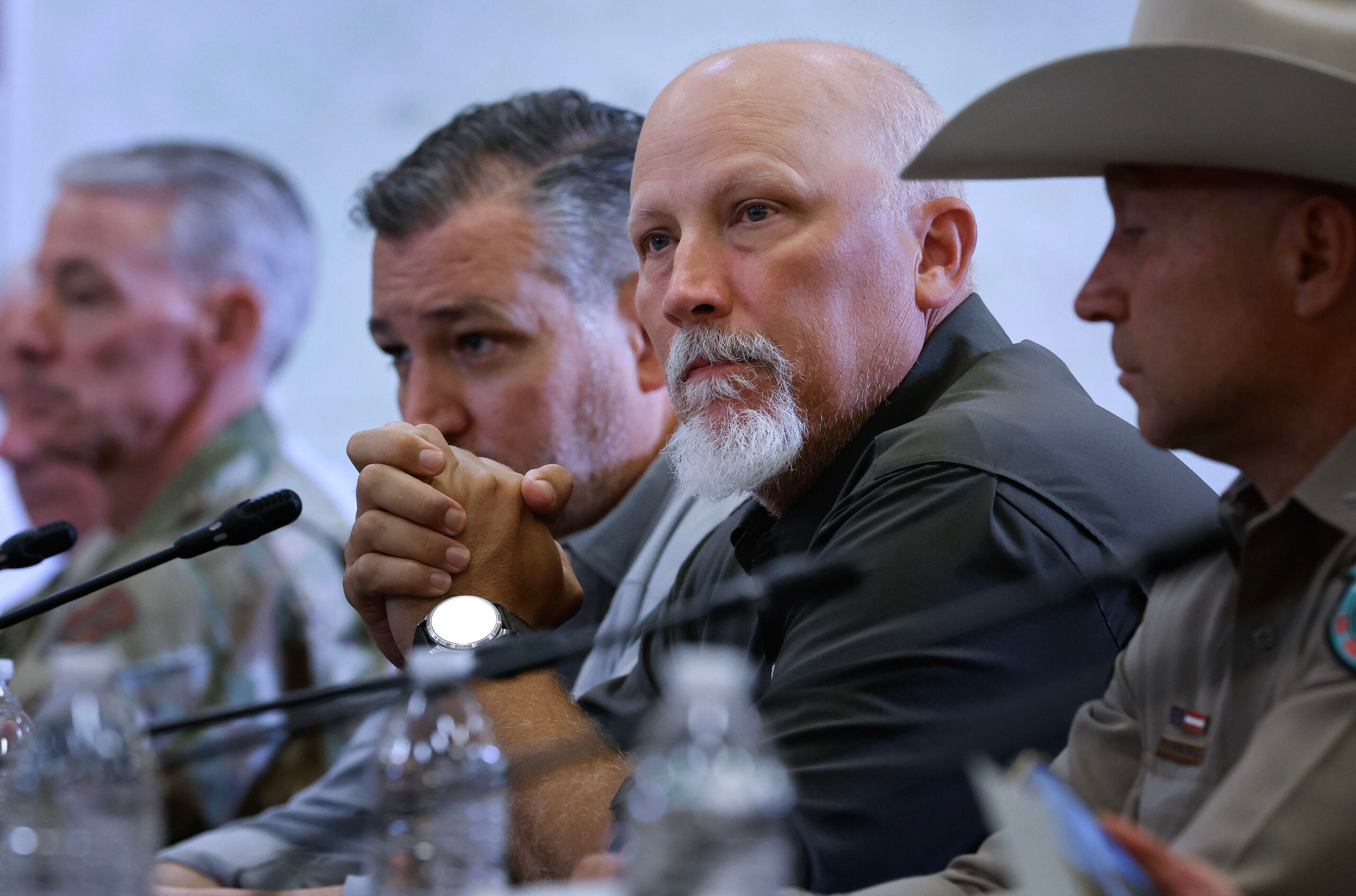
Less than a month after it was launched, 24 Republicans in the U.S. House of Representatives have already joined the Sharia Free America Caucus. Republican Reps. Keith Self and Chip Roy of Texas created the caucus to “fight back against the radical ideology” and “save Western Civilization from the threat of Sharia.” “Sharia law and groups linked to radical Islamist ideology seek to gain a foothold in our communities, challenging the Constitution and the Western values on which our nation was founded,” Roy told The Daily Signal. “I am encouraged that more Members of Congress are recognizing these threats and are joining the Sharia Free America Caucus to confront them head-on in Congress.” ‘Nations Are Losing Their Identity and Freedoms’ to Radical Islam The threat of Sharia Law in Muslim-dominated American communities has increasingly garnered conservative lawmakers’ attention. Sharia law is a system of Islamic religious law that guides personal behavior and civil and criminal justice, often in conflict with Western concepts of liberty and government. Self, the caucus’s co-founder, told The Daily Signal that the group’s “core mission is to sound the alarm on the alarming rise and spread of Sharia in the United States—before it erodes our sovereignty, culture, and way of life,” as it has been seen “in parts of Europe, where nations are losing their identity and freedoms.” The caucus hopes to “educate” Congress, foreign lawmakers, and the American people on the “clear dangers of Sharia,” to “U.S. law and our constitutional rights, while preventing “any infiltration of Sharia,” through the reinforcement of America’s legal and immigration systems, and the advancement of “bold legislation.” In March of 2025, the first major Sharia Law-only compound, known as EPIC City, emerged in the United States. Texas Gov. Greg Abbott tweeted that he has “signed laws that BAN Sharia Law and Sharia Compounds in Texas.” I signed laws that BAN Sharia Law and Sharia Compounds in Texas.No business & no individual should fear fools like this. If this person, or ANYONE, attempts to impose Sharia compliance, report it to local law enforcement or the Texas Dept. of Public Safety. https://t.co/cVV2MJItLH— Greg Abbott (@GregAbbott_TX) September 8, 2025 In response, the Texas chapter of the Council on American-Islamic Relations condemned Abbott’s response. What the Sharia Free America Caucus Wants The “bold” initiatives championed by the group includes the Preserving a Sharia-Free America Act and the No Sharia Act, which aims to bar the enforcement of Sharia-based judgments in U.S. courts. Other legislation upheld by the caucus includes the No Tax Exemptions for Terrorist Acts, which would target the funding and tax-exempt status of groups tied to Sharia Law, such as the Muslim Brotherhood and CAIR. By enacting such legislation, the caucus aims to ensure that “no foreign legal system, religious code, or radical ideology will ever supersede the Constitution as the unchallenged foundation of American governance.” Self-added. Other members, such as Reps. Randy Fine, R-Fla., and Mark Harris, R-N.C., told The Daily Signal that the caucus ultimately aims to “call evil by its name” and “reduce the threat of radical Islam.” Harris told The Daily Signal that “radical Islam isn’t just a threat in places like Mamdani’s New York City—it’s already here in suburban North Carolina and spreading rapidly across America.” Fine told The Daily Signal that “mainstream Islam is one of the biggest threats facing the United States today.” “We just saw the Muslim Attorney General in Minnesota siding with the rioters who stormed a Christian Church, because he claimed it was their First Amendment right to desecrate a place of worship,” Fine added. “We need to call evil by its name. Sharia Law seeks to subjugate women; it seeks to destroy what made America, America,” Fine continued. “We can see it in the Muslim Somalis, who have come to this country, where 84% are on welfare, and compare that to the Hindus, where 10% are on welfare.” “We cannot ignore the danger on our doorstep. Sharia Law encourages its followers to harm innocent people – the exact opposite of our Constitution, which protects the liberty and rights of all Americans,” Harris added. “Radical Islam is not compatible with Western Civilization.” The post An Inside Look at Congress’ New Anti-Sharia Law Caucus appeared first on The Daily Signal.
Like
Comment
Share
Reclaim The Net Feed
3 w

OpenAI’s AI Age Prediction System Turns Age Verification into Widespread User Surveillance
Favicon 
reclaimthenet.org

OpenAI’s AI Age Prediction System Turns Age Verification into Widespread User Surveillance

If you're tired of censorship and dystopian threats against civil liberties, subscribe to Reclaim The Net. Efforts to enforce age restrictions online are now reshaping how major tech platforms monitor their users. OpenAI’s latest addition to ChatGPT, a system that predicts whether someone is under 18 by studying how they use the app, shows how child-safety rules and surveillance-based data collection are becoming closely linked. The company says its new “age prediction model” analyzes a combination of behavioral and account-level data. That includes when a person logs in, how long their account has existed, usage frequency, and their stated age. From those signals, the system estimates whether an account likely belongs to a minor. If that prediction is positive, ChatGPT automatically applies content restrictions designed to limit exposure to material such as self-harm discussions. To regain unrestricted access, flagged users must verify their identity through Persona, an external ID verification company. More: From Roblox To The IRS: The Great Biometric Data Grab  Persona’s privacy policy allows it to collect not only information provided directly by users but also data from outside sources, including brokers, marketing partners, and “publicly available sources…such as open government databases.” The company may also gather device identifiers and geolocation details. This arrangement effectively extends surveillance from OpenAI’s internal monitoring to a larger commercial network that links people’s AI activity with personal and location data. In the process of proving age, companies are building detailed behavioral profiles that make constant observation an ordinary part of digital life. OpenAI describes this approach as a step toward safer experiences for younger users. Yet the method of classifying individuals through behavioral analysis and then requiring identification to override errors establishes a structure that can easily deepen ongoing monitoring. Once collected, these data points can be combined and retained in ways that go beyond the stated goal of protecting minors. This trend is unfolding across the wider tech industry. The Federal Trade Commission is investigating how AI chatbots may affect children and teens, and OpenAI has been named in lawsuits, including one related to a teenager’s death. Lawmakers have also pressured other platforms, such as Roblox, which uses Persona, to demonstrate stronger safeguards for minors. Over the past year, OpenAI has introduced parental controls and set up a mental health advisory group to study how AI influences users’ emotions and motivation. The company says its age prediction system will expand to the European Union “to account for regional requirements” and that it plans to refine its accuracy over time. The push for age verification is evolving into a new model of behavioral tracking, where AI companies quietly build internal profiles of how people interact online. These systems are presented as safety features, yet they depend on the same continuous observation and data aggregation that define modern digital surveillance. If you're tired of censorship and dystopian threats against civil liberties, subscribe to Reclaim The Net. The post OpenAI’s AI Age Prediction System Turns Age Verification into Widespread User Surveillance appeared first on Reclaim The Net.
Like
Comment
Share
Reclaim The Net Feed
3 w

Africa Becomes the Sandbox for Bill Gates and OpenAI’s AI Health Experiment
Favicon 
reclaimthenet.org

Africa Becomes the Sandbox for Bill Gates and OpenAI’s AI Health Experiment

If you're tired of censorship and dystopian threats against civil liberties, subscribe to Reclaim The Net. The Gates Foundation and OpenAI have announced a $50mn initiative to introduce artificial intelligence tools into primary healthcare networks across Rwanda and other African nations by 2028. The project, named Horizon1000, is meant to relieve overwhelmed medical workers and improve access to care, but its approach is renewing questions about how data-driven systems are being tested on vulnerable populations. At the World Economic Forum in Davos, Bill Gates described the plan as a breakthrough for under-resourced countries. “We aim to accelerate the adoption of AI tools across primary care clinics, within communities and in people’s homes,” he said, calling the technology a possible “game-changer in expanding access to quality care.” The foundation and OpenAI say the tools will help with patient records and clinical evaluations, giving health workers more time and better guidance. Gates emphasized that the project will “support health workers, not replace them.” He noted that sub-Saharan Africa faces an estimated shortfall of nearly six million health professionals, leaving many in what he called an “impossible situation” where they must “triage too many patients with too little administrative support, modern technology, and up-to-date clinical guidance.” More: The UN Is Using Africa as a Testing Ground for Controversial Digital ID Systems Hospitals around the world are already experimenting with artificial intelligence to automate medical notes, summarize consultations, and flag potentially serious symptoms. Systems like ChatGPT and Gemini are now used to generate documentation that once required hours of manual effort. Yet this growing dependence on algorithmic systems in healthcare introduces a layer of risk that goes beyond efficiency. To function, these models rely on immense datasets, often containing personal or identifiable medical information. In regions without strong privacy legislation, the line between helpful automation and invasive data collection can easily blur. OpenAI’s chief executive, Sam Altman, highlighted the social potential of the technology, saying: “AI is going to be a scientific marvel no matter what, but for it to be a societal marvel, we’ve got to figure out ways that we use this incredible technology to improve people’s lives.” His statement reflects the optimism surrounding AI in medicine, but the implementation context matters. Africa has become a frequent starting point for large-scale technology pilots funded by global foundations and corporations. From digital identity programs to vaccine logistics, the continent is often chosen for early trials that later influence global health strategies. Gates argues this accelerates innovation where resources are scarce. However, such experiments can also occur in environments where informed consent, data governance, and regulatory oversight are still developing or even non-existent. More: Inside The Bill Gates and Friends’ Plot To Hardwire AI Into Public Services The Gates Foundation has said it will monitor and audit the AI models for safety, bias, and accuracy, rolling out the technology gradually and tailoring it for local needs. Rwanda, for example, has established a national health intelligence centre to use AI in analyzing data at the community level. Language remains a persistent challenge. Many leading AI systems are trained primarily on English-language data, which limits their ability to interpret medical terms and symptoms described in local dialects. A 2023 study from the Massachusetts Institute of Technology found that medical questions containing typos or informal phrasing were between 7 and 9 per cent more likely to trigger an incorrect recommendation against seeking care, even when the clinical meaning was identical. Such findings illustrate how easily a model’s training data can reproduce inequality. Patients who are not fluent in English or who communicate in non-standard ways risk being misunderstood by the very systems designed to assist them. If you're tired of censorship and dystopian threats against civil liberties, subscribe to Reclaim The Net. The post Africa Becomes the Sandbox for Bill Gates and OpenAI’s AI Health Experiment appeared first on Reclaim The Net.
Like
Comment
Share
Reclaim The Net Feed
3 w

TSA Proposes MyTSA PreCheck Digital ID, Integrating Biometrics and Federal Databases
Favicon 
reclaimthenet.org

TSA Proposes MyTSA PreCheck Digital ID, Integrating Biometrics and Federal Databases

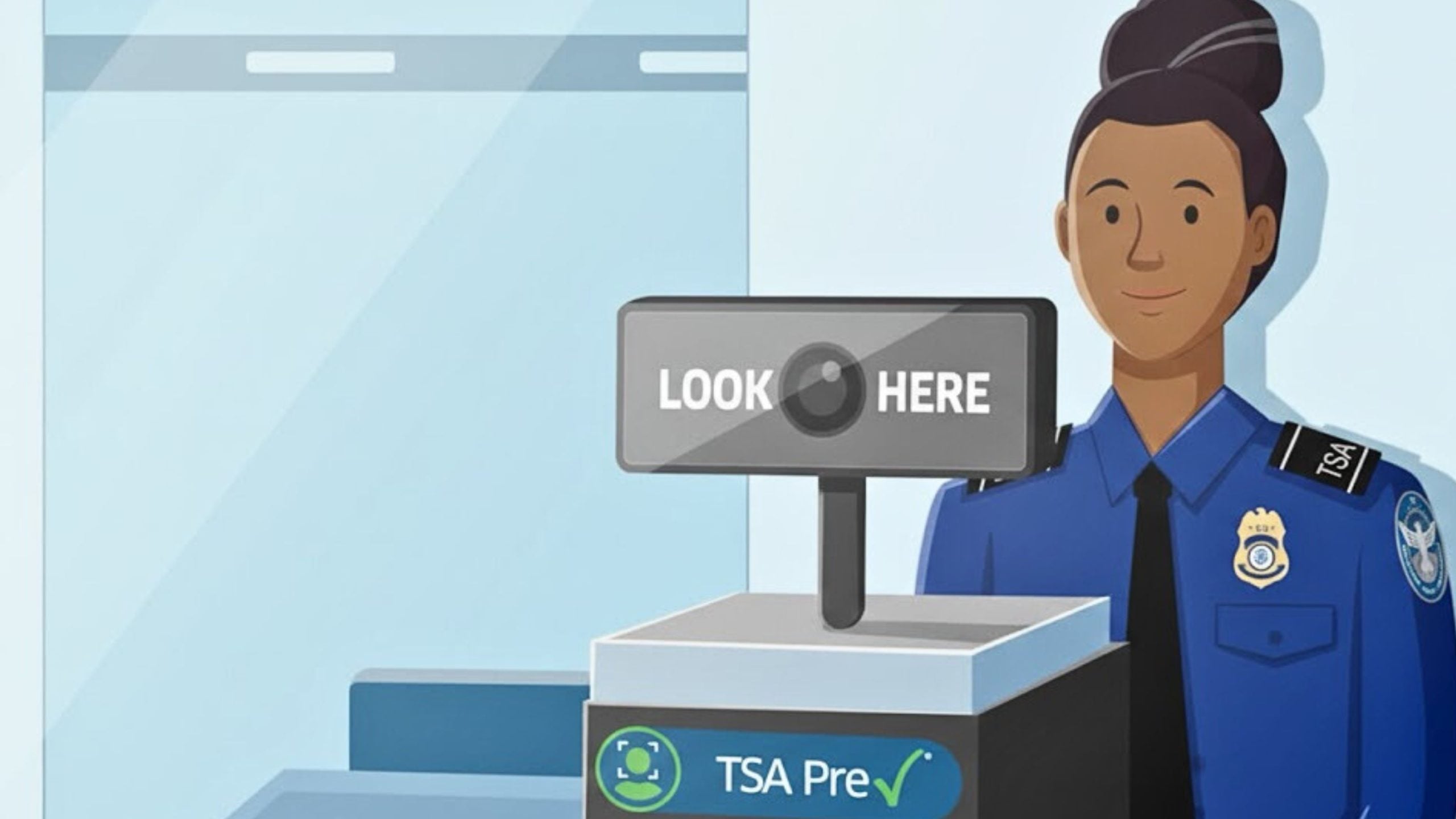
If you're tired of censorship and dystopian threats against civil liberties, subscribe to Reclaim The Net. The Transportation Security Administration is reshaping how it verifies the identities of US air travelers, proposing a major update that merges biometric data, mobile credentials, and government authentication platforms into one expanded framework. Published in the Federal Register, the notice outlines a new form of digital identification, the MyTSA PreCheck ID, which would extend the agency’s existing PreCheck program into a mobile environment requiring more detailed data from participants. More: TSA Fast Track Programs Are a Deal With The Devil Under the plan, travelers who want to activate the new digital ID on their phones would have to provide additional biographic and biometric details such as fingerprints and facial imagery, along with the information already collected for PreCheck enrollment. The proposal appears alongside TSA’s recently finalized ConfirmID program, a separate fee-based service designed for passengers who arrive at checkpoints without a REAL ID or another approved credential. More: A $45 Fee and Three Ways to Lose Your Privacy Before You Fly TSA is seeking approval from the Office of Management and Budget to revise its public data collection process for trusted traveler programs. The public comment window remains open until March 16. According to the agency, the updates would align PreCheck enrollment with a “modernized” identity infrastructure, consolidating personal and biometric data under a more unified system. Travelers applying for or renewing PreCheck would continue to provide core information such as name, date of birth, and citizenship status, but the new system would further integrate fingerprints and facial data into DHS databases for continuous identity verification. TSA said these biometrics will be compared with FBI records through the Next Generation Identification system, with ongoing checks conducted under the FBI’s Rap Back service for as long as individuals remain active in the program. In addition, biometric data would feed into DHS’s Automated Biometric Identification System, a database that supports continuous vetting and identity confirmation at airport security points. Alongside the new mobile ID, TSA is introducing a Customer Service Portal to centralize how travelers manage their program details. Users would log in through Login.gov, the government’s shared authentication service, to upload documents, change preferences, or opt in and out of certain features. The agency also detailed a cooperative arrangement with U.S. Customs and Border Protection that would allow PreCheck data, both biographic and biometric, to be reused for Global Entry processing if travelers choose to participate. The TSA says this would cut down on duplication across trusted traveler programs. Over the next three years, TSA projects it will process data from more than 25 million people, representing roughly 4.7 million annual administrative hours. Enrollment and renewal fees will stay consistent: $80 for a new application, $70 for online renewals, and $75 for in-person renewals. Meanwhile, the updated ConfirmID program is set to begin on February 1. It offers passengers a way to verify their identity for $45 if they reach a checkpoint without proper identification. The process can be initiated online before arriving at the airport. “TSA ConfirmID will be an option for travelers that do not bring a REAL ID or other acceptable form of ID to the TSA checkpoint and still want to fly,” said Adam Stahl, the senior official performing the duties of TSA deputy administrator. He added that the fee structure is meant to discourage travelers from arriving unprepared while ensuring they can still complete their journey. While TSA presents these changes as a modernization effort, the combination of mobile credentials, biometric retention, and expanded data sharing signals a gradual move toward a more centralized identity model. Travelers are being encouraged to exchange increasing amounts of personal and biological information for convenience at the checkpoint, a tradeoff that continues to reshape what “voluntary” participation means in the context of air travel security. If you're tired of censorship and dystopian threats against civil liberties, subscribe to Reclaim The Net. The post TSA Proposes MyTSA PreCheck Digital ID, Integrating Biometrics and Federal Databases appeared first on Reclaim The Net.
Like
Comment
Share
Showing 2344 out of 109491
  • 2340
  • 2341
  • 2342
  • 2343
  • 2344
  • 2345
  • 2346
  • 2347
  • 2348
  • 2349
  • 2350
  • 2351
  • 2352
  • 2353
  • 2354
  • 2355
  • 2356
  • 2357
  • 2358
  • 2359
Advertisement
Stop Seeing These Ads

Edit Offer

Add tier


Select an image
Delete your tier
Are you sure you want to delete this tier?

Reviews

In order to sell your content and posts, start by creating a few packages. Monetization

Pay By Wallet

Payment Alert

You are about to purchase the items, do you want to proceed?

Request a Refund