YubNub Social YubNub Social
    #freedom #libtards #terrorism #patriots #antifa #privacy #americafirst #loonyleft #surveillancestate #police\ #alpr #flock #foundingfathers #patriotichistory #wethepeople
    Advanced Search
  • Login
  • Register

  • Day mode
  • © 2026 YubNub Social
    About • Directory • Contact Us • Developers • Privacy Policy • Terms of Use • shareasale • FB Webview Detected • Android • Apple iOS • Get Our App

    Select Language

  • English
Community
New Posts (Home) ChatBox Popular Posts Reels Game Zone Top PodCasts
Explore
Explore
© 2026 YubNub Social
  • English
About • Directory • Contact Us • Developers • Privacy Policy • Terms of Use • shareasale • FB Webview Detected • Android • Apple iOS • Get Our App
Advertisement
Stop Seeing These Ads

Discover posts

Posts

Users

Pages

Blog

Market

Events

Games

Forum

RedState Feed
RedState Feed
3 hrs

Unbelievable Media Headline About Dems' Reaction to World Cup Has Jaws Dropping
Favicon 
redstate.com

Unbelievable Media Headline About Dems' Reaction to World Cup Has Jaws Dropping

Unbelievable Media Headline About Dems' Reaction to World Cup Has Jaws Dropping
Like
Comment
Share
RedState Feed
RedState Feed
3 hrs

Mamdani's Response to Trump's Supreme Court Win Is Exactly What You'd Expect
Favicon 
redstate.com

Mamdani's Response to Trump's Supreme Court Win Is Exactly What You'd Expect

Mamdani's Response to Trump's Supreme Court Win Is Exactly What You'd Expect
Like
Comment
Share
RedState Feed
RedState Feed
3 hrs

After Weeks of Socialist Gains, Trump Warns 'The Communists Are Finally Making Their Move'
Favicon 
redstate.com

After Weeks of Socialist Gains, Trump Warns 'The Communists Are Finally Making Their Move'

After Weeks of Socialist Gains, Trump Warns 'The Communists Are Finally Making Their Move'
Like
Comment
Share
Science Explorer
Science Explorer
3 hrs

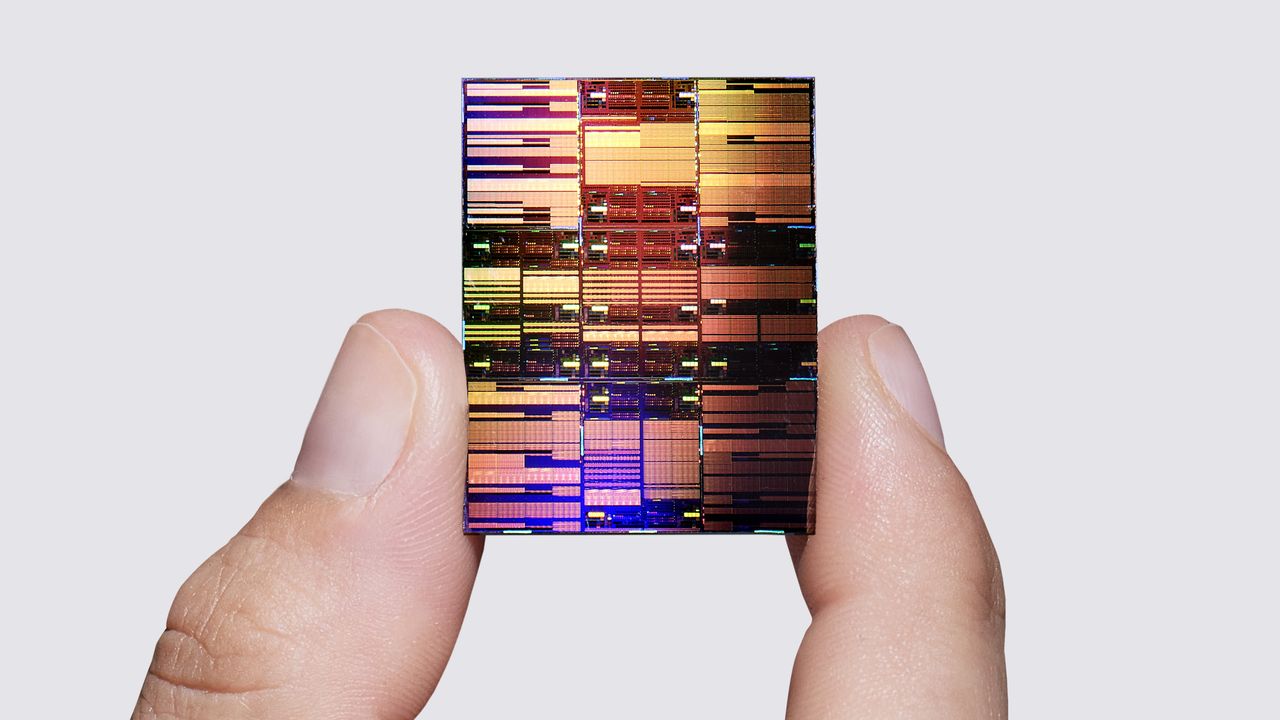
IBM creates world's first sub-1nm computer chip — cramming 100 billion transistors into a tiny fingernail-sized space
Favicon 
www.livescience.com

IBM creates world's first sub-1nm computer chip — cramming 100 billion transistors into a tiny fingernail-sized space

For the first time, scientists can develop computer chips with transistors smaller than 1 nanometer. The new "NanoStack" architecture that has made this possible could even one day lead to transistors as small as 0.1 nm, the scientists claimed. The new 0.7 nm transistors are significantly smaller than those that feature in standard 2 nm semiconductor chips used in supercomputers, AI systems and advanced graphics processing units (GPUs). While size designation doesn't necessarily correlate with an exact measurement of the transistors on the chips, it does represent their general capabilities. Essentially, the smaller the transistors and their supporting components, the more you can fit on a chip. A typical 2 nm chip design, for example, can fit roughly 50 billion transistors onto a space the size of a human fingernail. The new chip features transistors that are so diminutive they're not measured in nanometers but "angstroms," a unit of measurement typically reserved for atoms. The first of these chips is expected to be manufactured with transistors that are a mere 7 angstroms — equivalent to 0.7 nanometers or roughly the width of a glucose molecule. At this size, engineers can squeeze nearly 100 billion transistors into a fingernail-size space — nearly twice that of the current 2 nm platform.Stacking and staggeringThe scientists achieved this feat using a novel technique called "nanostacking," which they first outlined in a study published as part of the peer-reviewed 2025 Symposium on VLSI Technology and Circuits and uploaded July 2025 to the IEEE Xplore server. This enables engineers to vertically stack the nanosheets used to build the previous generation of 2 nm computer chips.The technology used in all conventional circuits — known as complementary metal-oxide-semiconductor (CMOS) — demands extremely high temperatures during manufacturing. As transistors shrink, they also suffer from issues such as "charge trapping" — where electrons or holes become immobilized by defects or impurities — and "gate leakage" — static power dissipation. Such problems have posed a challenge to attempts to shrink transistor size below 2 nm, and thus improve the performance and efficiency of computer chips beyond today's best capabilities. IBM's three-dimensional stacked architecture, however, aims to alleviate some of these pain points, the scientists said."NanoStack is nanosheets transistors stacking on top of each other. But it's not through a simple monolithic lithography and etch process," said Huiming Bu vice president for IBM semiconductors global R&D and Albany operations, during a press briefing. "What happens here is we actually stack the device. I call it stacking, but also staggering. Stacking in vertical direction, so the front side of each transistor and the backside of each transistor can be contacted independently for signal and power. The stacking of these transistors are done by single dielectric bonding, which is a key innovation that we have developed." (Image credit: IBM)IBM representatives added in the briefing that the new technology provides up to 50% greater performance with a 70% reduction in energy use versus the 2 nm platform — and will eventually replace this technology altogether within the next five years. The scientists say the research could carry deep implications for the computing industry, with revolutionary impacts on the artificial intelligence (AI) and quantum computing sectors. One of the immediate technological benefits could also lie in creating better static random access memory (SRAM) chips, which are used for a variety of computing applications, including CPU caching, networking and in devices such as pacemakers and vehicle sensors. SRAM is also vital in AI processing because it's located close to processing cores (versus other kinds of RAM modules that are often separate components), increasing the speed of data shuttling around systems and therefore reducing bottlenecks.IBM representatives added in the press briefing that they demonstrated a 40% improvement in the scaling of SRAM memory versus the 2 nm platform. This will be a boon to AI workflows, which demand much higher bandwidth and efficiency.The future of computing "We actually have entered a domain that semiconductor manufacturing is almost magic," Huiming added about the design process. "Think about the structure we are building here. We actually deposit the layer atom by atom, and we actually layer atom by atom."IBM representatives said the nanostacking approach isn't a minor upgrade but a generational shift that will eventually enable foundries to scale these chips from 0.7 nm transistors all the way to a single angstrom or just 0.1 nm — keeping Moore's Law alive for a little longer at least. Shrinking the transistor nodes on these chips will allow for more powerful processes, they said, thanks to a near-twice jump in the transistor count, while the stacked and staggered design significantly reduces the energy requirements. Huiming said that while everybody demands performance, nobody wants to pay the bill for the power. "It will replace nanosheet as today's mainstream [platform] at leading foundries. Whether it's CPU or GPU," he added. "And we believe that transition will happen at around 7 angstroms. So within a decade, this will become another mainstream [platform] that we have invented. This is the next jump in technology."Related storiesMicrosoft breakthrough could reduce errors in quantum computers by 1,000 timesQuantum internet inches closer thanks to new chip — it helps beam quantum signals over real-world fiber-optic cablesScientists trained an AI model using an IBM quantum computer — and it answered questions correctly that the base model couldn'tThe findings of the 2025 study suggest that not only can the chipset provide much-improved performance with much lower energy consumption, but it may also provide a path toward reducing the thermal impact that high-power computing has on hardware. These innovations could also have an impact on quantum computing, IBM representatives said, as they could lead to improvements in the classical systems with which quantum computers will work together as the technology emerges. "For quantum computing, we need to use lots of classical compute with it," Jay Gambetta, IBM's director of research, said during the press conference. "We want to build decoders, we want to build controllers for decoders and accelerators. And we are working right now on that type of classical with the 2 nm [platform]. If we can continue to change the platform, use more efficient, more powerful [chipsets], it will only help the rate and pace at which we've got to build the classical compute that goes along with the quantum."
Like
Comment
Share
YubNub News
YubNub News
3 hrs

Democrats’ Communist Revolution Will Destroy America If The Right Doesn’t Take It Seriously
Favicon 
yubnub.news

Democrats’ Communist Revolution Will Destroy America If The Right Doesn’t Take It Seriously

[View Article at Source]A radical faction inside the Democratic Party now openly rejects our founding principles and the free enterprise system that built the most successful nation in history.
Like
Comment
Share
Science Explorer
Science Explorer
3 hrs

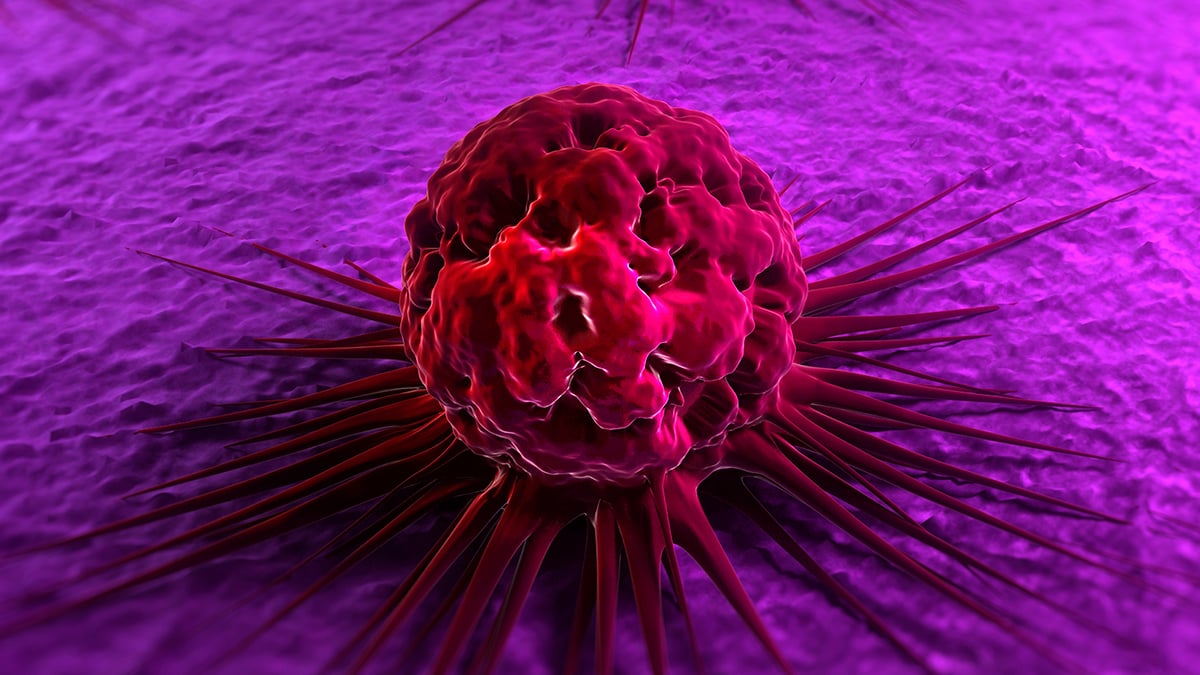
Low Testosterone Is Linked to a Higher Risk of Cancer, Study Finds
Favicon 
www.sciencealert.com

Low Testosterone Is Linked to a Higher Risk of Cancer, Study Finds

With one exception.ScienceAlert stories are written, fact-checked, and edited by humans, never generated by AI. Don't miss a story, subscribe here.
Like
Comment
Share
Phil Lozier
Phil Lozier  created a new article
4 hrs

Who Was The First President of the United States? Easy, Right? | #foundingfathers #patriotichistory #wethepeople

Who Was The First President of the United States? Easy, Right?
Politics

Who Was The First President of the United States? Easy, Right?

How The Forgotten Presidents Before Our Constitution Paved The Way For George Washington
Like
Comment
Share
Heroes In Uniform
Heroes In Uniform
4 hrs

What happened on the final flight of the namesake for Edwards Air Force Base
Favicon 
www.wearethemighty.com

What happened on the final flight of the namesake for Edwards Air Force Base

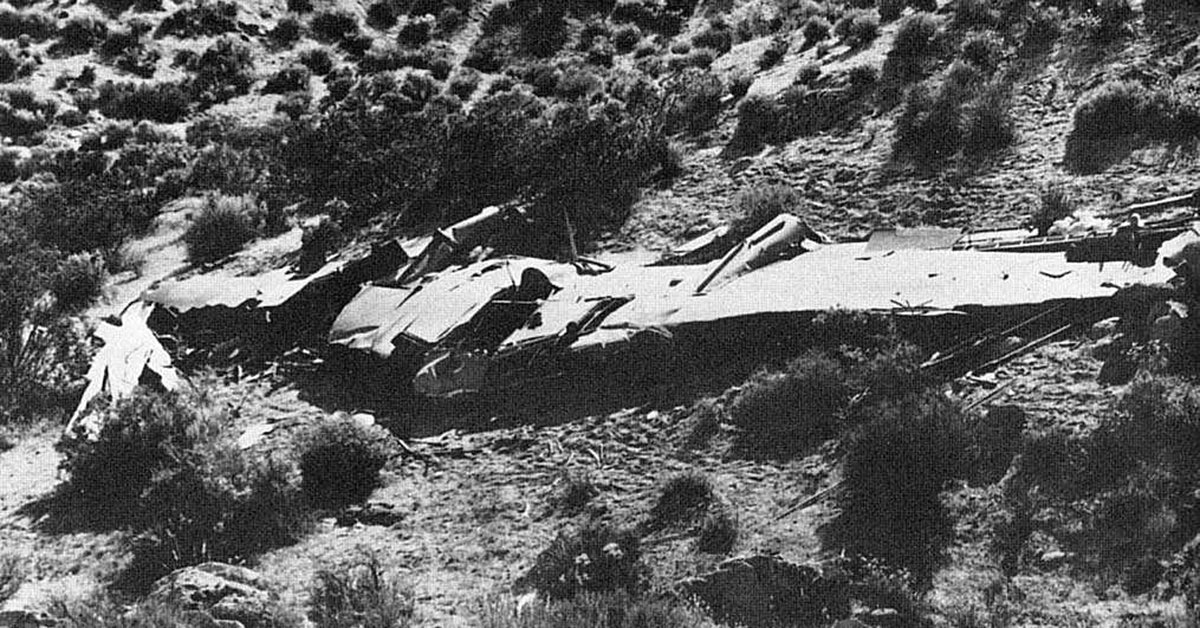
On Friday, June 4, 1948, Air Force test pilot Glen Edwards felt slightly frustrated.Maj. Daniel Forbes Jr. was perturbed, too. With Forbes as the pilot and Edwards as his co-pilot, they tested a jet-propelled, heavy bomber prototype known as YB-49 No. 2. The YB-49 was a Flying Wing with eight turbojet engines and four vertical stabilizers. It had no fuselage or tails. For all of its sleek design, the YB-49 sometimes proved difficult to control in the air.Also Read: How Mel Brooks kept his sense of humor while serving in World War IIEdwards, who kept a diary while serving during World War II and his career as a test pilot, expressed his annoyance with the YB-49 in writing.“Got two flights off today with doubtful success,” Edwards once wrote, according to Daniel Ford’s 1997 article in the Smithsonian magazine. “Darnedest airplane I ever tried to do anything with. Quite uncontrollable at times. Hope to be more favorably impressed as time goes on.”Refusing to wait until after the weekend, Edwards and Forbes pulled together a crew and added a flight on Saturday, June 5. They wanted to improve their comfort level flying the YB-49 No. 2. That last-minute flight never landed as the prototype came apart in midair and crashed in the Mojave Desert, killing all five on board. A 19-Minute Combat Mission A U.S. destroyer cuts through the wake of a U.S. aircraft carrier on patrol during the first day of fighting off North Africa, November 8, 1942. (U.S. Navy) Born in 1916 in Medicine Hat, Alberta, Canada, Edwards moved with his family to California as a teenager. Shortly after graduating from the University of California at Berkeley with a bachelor’s degree in chemical engineering, Edwards joined the military as an aviation cadet.The Army Air Forces placed Edwards with the 86th Light Bombardment Squadron of the 47th Bombardment Group. He saw action during Operation Torch, the Allied invasion of North Africa. Later, at the Battle of Kasserine Pass in Tunisia, Edwards’ squadron flew 11 missions in one day. One of those lasted, from start to finish, all of 19 minutes.Edwards also participated in the invasion of Sicily, completing his wartime service with 50 combat missions. After earning four Distinguished Flying Crosses and six Air Medals as a military aviator, Edwards came back to the U.S. and became a test pilot.Edwards, who rose to the rank of captain, distinguished himself in that burgeoning specialty. On December 8, 1945, Edwards and Lt. Col. Henry E. Warden took off from Long Beach, California, in a Douglas XB-42 Mixmaster. They arrived in Washington, D.C., 5 hours, 17 minutes, 34 seconds later with an average speed of 433.6 mph.That flight established a transcontinental speed record, a milestone that only added another notch to Edwards’ well-earned reputation. He was so highly respected within the test-pilot community that higher-ups strongly considered him as a candidate to become the first pilot to attempt to break the speed of sound. They bypassed Edwards, though, and went with Chuck Yeager.That was no slight on Edwards’ abilities. Other opportunities awaited him. Testing the YB-49 Gen. Reuben C. Hood (left), deputy chief of Air Staff, congratulates Capt. Glen Edwards (right), the co-pilot, and Lt. Col. Henry Warden, the pilot, on their record-setting transcontinental flight on December 8, 1945. (Getty Images) Besides the Douglas XB-42 Mixmaster, Edwards also gained experience in another prototype bomber, the Convair XB-46. He also flew the Northrop N-9M, an experimental Flying Wing.Each aircraft presented its own challenges for Edwards. The highly decorated airman, who earned a master’s degree in aeronautical engineering from Princeton in 1947, normally figured things out.So it was that the Air Force relocated Edwards from Wright Field in Ohio to Muroc Air Force Base in California the following year to test the YB-49, Smithsonian magazine noted.“Then this evening all heck broke loose,” Edwards detailed in his diary. “Seems like I’m bound for Muroc tomorrow by fastest means possible. Plan to run stability [tests] on the YB-49… what fun! Sounds like I’ll be there for awhile. Packing like mad tonight.”After Edwards arrived on the West Coast, he soon realized why the YB-49 created varying degrees of concern. Even its designer, acclaimed aviation engineer Jack Northrop, expressed reservations about how it flew under certain conditions, Ford wrote in Smithsonian magazine.Once Edwards flew the YB-49, he tended to agree.“I flew the airplane and must confess it is somewhat of an experience,” Edwards said in his diary. “Stability is poor all around—landing is peculiar. Has a great tendency to float.” A Fatal High-Speed Spin The YB-49 was a Flying Wing, a jet-propelled, heavy bomber prototype. (U.S. Air Force) On Edwards’ first flight, he and Forbes took off from Muroc Air Force Base shortly before 7 a.m. As Ford recounted, they passed over Bakersfield and then over the Antelope Valley before encountering serious issues.The Smithsonian magazine writer couldn’t say with 100% certainty what caused what happened next. With Edwards, Forbes, Lt. Edward Swindell, and two civilian engineers aboard, the YB-49 apparently went into a high-speed downward or sideways spin.Its outer wings tore off as a result. The Flying Wing broke apart 10 miles northwest of Muroc. The Air Force renamed Muroc posthumously for Edwards, who was 32 years old at the time of his death, on December 8, 1949. The service performs all testing of its developmental aircraft at Edwards Air Force Base, which is approximately a hundred miles from Los Angeles.  Don’t Miss the Best of We Are The Mighty • An all gain, no pain infantry-ready workout, from beginner to advanced• The Chief of Staff’s Bible is one of the least-known Air Force traditions• Before 3 tours in Vietnam, this fighter pilot dropped nearly 20 miles from high above Featured World War II What happened on the final flight of the namesake for Edwards Air Force Base By Stephen Ruiz Coast Guard A close look at the Coast Guard’s biggest rescue ever besides Hurricane Katrina By Stephen Ruiz Entertainment Navy veteran David Ayer honors fellow sailor in “Heart of the Beast” By Miguel Ortiz History Why ‘the father of the Air Force’ was court-martialed By Stephen Ruiz History What went wrong when the Navy first attempted to fly nonstop to Hawaii By Stephen Ruiz The post What happened on the final flight of the namesake for Edwards Air Force Base appeared first on We Are The Mighty.

Like
Comment
Share
American Family Living
4 hrs

How To Help Toddler Adjust To New Baby
Favicon 
familyfocusblog.com

How To Help Toddler Adjust To New Baby

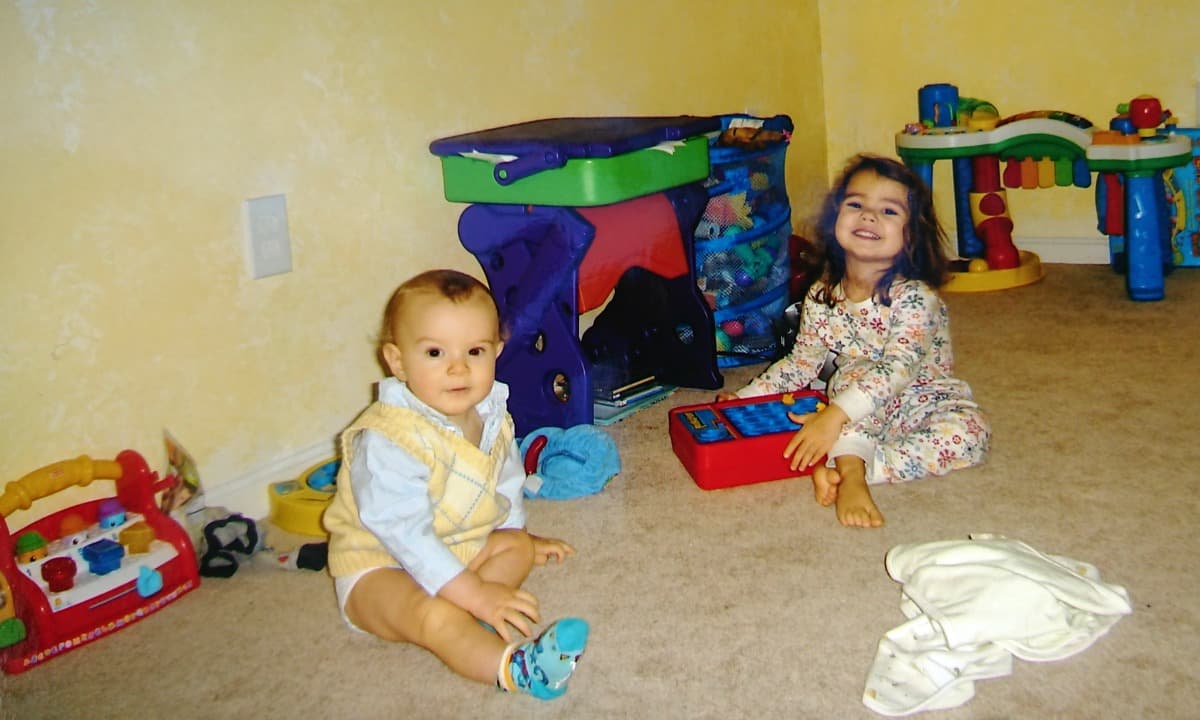
Welcoming a new baby is always a very important time for the entire family. Ideally, it should make everyone even more happy and strengthen the bonds between the members of the family. However, siblings often need time to adjust to the newest member of the family. Here are some tips for helping older siblings cope with […] The post How To Help Toddler Adjust To New Baby appeared first on Family Focus Blog.
Like
Comment
Share
American Family Living
4 hrs

Fraises Romanoff Recipe- Fresh Strawberry Dessert
Favicon 
familyfocusblog.com

Fraises Romanoff Recipe- Fresh Strawberry Dessert

Here is a delicious recipe for Fraises Romanoff. It is a light, sweet, refreshing dessert that is easy to make! Fraises is French for strawberries and fresh strawberries are the star of this dessert.  The sweet and tart flavors of fresh berries so wonderful with the creamy accompaniment. This Strawberry Romanoff Recipe will serve 4-5 […] The post Fraises Romanoff Recipe- Fresh Strawberry Dessert appeared first on Family Focus Blog.
Like
Comment
Share
Showing 30 out of 127410
  • 26
  • 27
  • 28
  • 29
  • 30
  • 31
  • 32
  • 33
  • 34
  • 35
  • 36
  • 37
  • 38
  • 39
  • 40
  • 41
  • 42
  • 43
  • 44
  • 45
Advertisement
Stop Seeing These Ads

Edit Offer

Add tier


Select an image
Delete your tier
Are you sure you want to delete this tier?

Reviews

In order to sell your content and posts, start by creating a few packages. Monetization

Pay By Wallet

Payment Alert

You are about to purchase the items, do you want to proceed?

Request a Refund