YubNub Social YubNub Social
    #music #tew #tuba #euphonium #tew2026 #militarymusic #armymusic #armyband #band #freedom #concertband #tusab #duet #aftee #melodyshop
    Advanced Search
  • Login
  • Register

  • Night mode
  • © 2026 YubNub Social
    About • Directory • Contact Us • Developers • Privacy Policy • Terms of Use • shareasale • FB Webview Detected • Android • Apple iOS • Get Our App

    Select Language

  • English
Night mode toggle
Featured Content
Community
New Posts (Home) ChatBox Popular Posts Reels Game Zone Top PodCasts
Explore
Explore
© 2026 YubNub Social
  • English
About • Directory • Contact Us • Developers • Privacy Policy • Terms of Use • shareasale • FB Webview Detected • Android • Apple iOS • Get Our App
Advertisement
Stop Seeing These Ads

Discover posts

Posts

Users

Pages

Blog

Market

Events

Games

Forum

Ben Shapiro YT Feed
Ben Shapiro YT Feed
2 d ·Youtube Politics

YouTube
What A Bizarre Encounter
Like
Comment
Share
Country Roundup
Country Roundup
2 d

Beyond Her Own Hits: 5 Songs Miranda Lambert Penned For Other Country Artists
Favicon 
www.whiskeyriff.com

Beyond Her Own Hits: 5 Songs Miranda Lambert Penned For Other Country Artists

She’s one of the best in the business… and not just when it comes to writing and recording her own songs. Miranda Lambert has written plenty of hits for some of country music’s biggest modern stars, too. Miranda released her debut album Kerosene in 2005, she’s scored multiple chart-topping hits, holds the record as the most-awarded artist in ACM history, is a three-time Grammy winner, multiple Platinum-certified albums, and accolades for Female Vocalist of the Year from both the CMA and ACM. It’s impressive to say the least, we all know what kind of solo career she’s had as one of the most prominent country artists over the last 20 years, but it should be noted too how much of that experience and success she’s used to help other artists get ahead in their own careers. She’s become a mentor and friend to ladies like Ella Langley and Lainey Wilson, and she continues to help write some of the best country songs in the mainstream part of the genre. And she recently shared a post on Instagram of a video of her singing a medley of some of the songs she’s co-written for other artists that perfectly captures even in just the last several years how much that rings true… from Chris Stapleton and Morgan Wallen to Ella Langley and Lainey Wilson, it’s a stacked list, and all of the songs have been written and recorded in the last five or less years. Check them out: “What Am I Gonna Do” — Chris Stapleton This song was included on Chris Stapleton’s 2023 fifth studio album Higher, and it’s easily one of my favorites from the album. Chris and Miranda co-wrote it, and we all know they have a knack for stunningly beautiful country heartbreakers. “Outrunnin’ Your Memory” — Luke Combs Luke and Miranda co-wrote this song with Dan Isbell, and Miranda is also a featured vocalist. I’ve always thought this song should’ve been MUCH bigger, because it’s super catchy and who doesn’t love a good duet? They sound great together, and that first verse just gets me very time… “Outrunnin’ Your Memory” was included on his 2022 Growin’ Up album, and I can never get enough: “Choosin’ Texas” — Ella Langley Of course, this song is absolutely crushing it right now, and Miranda and Ella co-wrote “Choosin’ Texas” with Luke Dick and Joybeth Taylor. The song has spent its fourth week at #1 on the Hot 100 as of today, and Ella has officially surpassed Taylor Swift with the record for longest-running #1 hit on the Billboard Hot 100 by a female country singer in history. “Thought You Should Know” — Morgan Wallen This song is undoubtedly one of the biggest on this list, and when you pen a hit for the biggest act in music, you clearly know what you’re doing. “Thought You Should Know” was written by Morgan with Miranda Lambert and Nicolle Galyon, and included vs a single form his 2023 One Thing at a Time album. It ultimately went #1 on the Billboard US Hot Country Songs chart, and in my humble opinion, remains one of the best songs in his vast and very successful catalog. “Good Horses” — Lainey Wilson Miranda is a featured on “Good Horses,” which she co-wrote with Lainey and Luke Dick, and it was included on Lainey’s 2024 Grammy-nominated album, Whirlwind. We know Miranda has written and co-written some of her own biggest hits like “Bluebird,” “Vice,” and “Gunpowder & Lead,” and plenty of songs for other artists that didn’t make the medley like Parker McCollum’s “Falling Apart,” and Jelly Roll’s “The Lost,” but just those five songs alone prove that not only is Miranda one of the most impressive and accomplished solo artists in the modern era of country music, but one of the most prolific writers for herself and others, too. She’s a generational talent, and no doubt she earned her spot in the Texas Songwriters Association Hall of Fame which she was inducted into in February, and I’m sure she will continue to for decades to come. Miranda recently debuted a medley of all of the above songs at a show, saying she wanted to sing some of her favorites she’s written with friends in the pretty recent past. To remain so relevant as an artist, and writer, like this is NOT easy to do, and makes it look like it’s nothin’ because it’s just the standard she’s set after so many years in the business: “I wrote a lot of songs with some of my best friends. I thought I would do a little medley for y’all of a few of my favorite songs I’ve written.” It’s just heater after heater… check it out: View this post on Instagram The post Beyond Her Own Hits: 5 Songs Miranda Lambert Penned For Other Country Artists first appeared on Whiskey Riff.
Like
Comment
Share
Conservative Voices
Conservative Voices
2 d

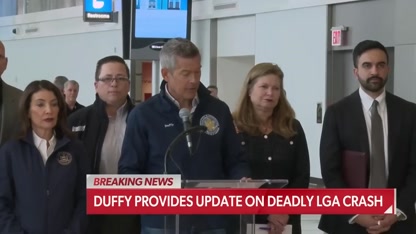
Duffy, Hochul, Mamdani provide update on deadly LaGuardia Airport plane crash
Favicon 
www.brighteon.com

Duffy, Hochul, Mamdani provide update on deadly LaGuardia Airport plane crash

Follow NewsClips channel at Brighteon.com for more updatesSubscribe to Brighteon newsletter to get the latest news and more featured videos: https://support.brighteon.com/Subscribe.html
Like
Comment
Share
Conservative Voices
Conservative Voices
2 d

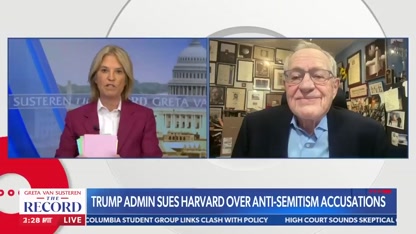
Mamdani's wife supports terrorism against Jews: Alan Dershowitz | The Record
Favicon 
www.brighteon.com

Mamdani's wife supports terrorism against Jews: Alan Dershowitz | The Record

Follow NewsClips channel at Brighteon.com for more updatesSubscribe to Brighteon newsletter to get the latest news and more featured videos: https://support.brighteon.com/Subscribe.html
Like
Comment
Share
Survival Prepper
Survival Prepper  
2 d ·Youtube Prepping & Survival

YouTube
First Aid Trauma Kit Essentials #prepping #medical #firstaid #carprep #survival
Like
Comment
Share
Classic Rock Lovers
Classic Rock Lovers  
2 d

How Donald Trump became the first person to step foot in Studio 54, New York’s most important nightclub
Favicon 
faroutmagazine.co.uk

How Donald Trump became the first person to step foot in Studio 54, New York’s most important nightclub

Young man, there's no need to feel down. The post How Donald Trump became the first person to step foot in Studio 54, New York’s most important nightclub first appeared on Far Out Magazine.
Like
Comment
Share
Conservative Voices
Conservative Voices
2 d

Favicon 
spectator.org

Who’s Teaching Those AI Machines Your Kids Will Learn From?

If you’ve been watching the various segments Melissa and I have been doing about AI at The Spectacle Podcast in recent weeks — and if you haven’t, what on earth is the matter with you? — you’ll know that I’m the sunny optimist of the two. Melissa, by comparison, is almost convinced SkyNet is going to kill us all before the Yankees next win the World Series. (RELATED: The Spectacle Ep. 350: Here’s What to Look Out for With AI) It’s not that I can’t see that happening. I do believe in chaos theory, though. I’m a little like Jeff Goldblum’s character in the Jurassic Park movies — I’m the guy who says, “Yeah, you think that’s how it’s going to work, but… it probably isn’t going down that way.” (RELATED: The Robot Revolution Is Nigh) I wrote a scene in Blockbusters, my last novel, where the protagonist decides to take the plunge and ride in a Waymo while he’s in L.A. And when the driverless taxi gets off the highway to deposit him downtown, he finds himself stuck in the middle of an ICE riot. The cartel thugs starting the trouble insist that he depart from his ride — because they’re going to set the Waymo ablaze. Because the cartels control the taxi companies, you see, and Waymos are not good for the traditional taxi business. It turns out that burning Waymos isn’t exactly the preferred method of Luddite rebellion. Instead, people simply open the car doors, and the Waymos now can’t go anywhere. Waymo is now paying DoorDash drivers to come by and shut the doors of the disabled robotaxis so they can get back to work. Anyway — pranking Waymos won’t stop SkyNet. AI is still coming. In fact, America is entering a moment that might prove more consequential than the early days of the internet itself. AI is quickly becoming the infrastructure behind how information flows, how speech is moderated, how money moves online, and even how truth is interpreted in digital spaces. (RELATED: When Effort Becomes Optional) The public conversation often focuses on which company will “win” the AI race. A lot better question is one Melissa keeps asking in those fabulous Spectacle segments: what values are being programmed into these systems that will soon help govern modern life? (RELATED: The Peril and Promise of AI) That question becomes especially urgent when it comes to the kids. Over the past decade, parents have slowly come to realize that the internet children inhabit is very different from the one many adults first encountered. Digital platforms, once described as harmless entertainment, are now powerful cultural ecosystems shaping our identity, behavior, and belief. And not in a way we’ve voted for. Online environments designed for kids have repeatedly been linked to disturbing content and predatory behavior. Some of those platforms have struggled — and others have barely bothered — to protect young users. Online environments designed for kids have repeatedly been linked to disturbing content and predatory behavior. Reporting and investigations have documented cases involving explicit sexual material, grooming, violent simulations, and other deeply troubling experiences accessible to minors. This problem is not hypothetical. We’ve all seen the headlines. Law enforcement has testified about the dangers. Advocacy groups working with victims say the scale of exploitation facilitated through digital platforms is appalling and getting worse. One example of how bad things are is the scandal around the massive gaming platform Roblox Corporation. Marketed primarily to younger audiences, the platform allows users to build and share games with millions of others. But its open design has also created opportunities for inappropriate content and interactions that can be difficult for parents to monitor. Roblox represents only one piece of a much larger system, though. The digital ecosystem children encounter every day is heavily shaped by the technology giants that control search engines, advertising pipelines, recommendation algorithms, and social media feeds. Companies such as Google and TikTok influence what children discover online long before they ever log into a game or social platform. Now those same companies are rapidly integrating artificial intelligence into nearly every layer of the internet, meaning there isn’t even a manager you can ask to see. AI is already being used to filter content, recommend videos, moderate speech, and determine which advertisements are approved or rejected. In the near future, these systems will play an even larger role in determining who can communicate online and how digital economies function. (RELATED: Suing Social Media Won’t Save the Children — But It Could Silence Everyone) Brent Dusing, founder of TruPlay, a faith-based gaming app for kids, believes the implications of this shift are enormous… As AI becomes more powerful and ubiquitous, it will be making decisions on who can post on social media, who receives payments, how resources are allocated, and even interpreting what is true. For the survival of our nation, these models must be based on the moral foundations of our civilization, including western ethical traditions, the common law, and the Bible. AI systems learn by absorbing enormous amounts of information and pattern recognition from the data used to train them. That training process inevitably reflects the worldview of the organizations building the technology. If the values embedded in those systems diverge sharply from the cultural and moral traditions that shaped American society, critics warn that the consequences could extend far beyond social media feeds. “We cannot allow AI models based on the values of Communist China or leftist atheist big tech companies to destroy American civilization,” Dusing says. These concerns become even more serious when viewed alongside the ongoing crisis of online child exploitation. The internet is the primary tool used by predators to identify and manipulate vulnerable children. Messaging apps, social platforms, and gaming communities can all provide avenues for grooming and exploitation when safeguards fail. Lawmakers from both political parties have begun to acknowledge the severity of the problem. A bipartisan measure known as the Renewed Hope Act seeks to strengthen the process for identifying and rescuing children who are victims of online sexual exploitation. The legislation would improve coordination between tech companies and law enforcement working to locate victims and dismantle trafficking networks. Faster identification can mean the difference between life and death for children trapped in abusive situations. This is the issue that Heisman Trophy winner and former NFL quarterback and philanthropist Tim Tebow has spoken forcefully about lately. During testimony before a Senate committee, Tebow described reviewing investigative evidence documenting the exploitation of children and urged lawmakers to take stronger action. That same scrutiny may also need to extend to how major technology platforms treat companies attempting to build safer alternatives for children. Dusing’s TruPlay, the faith-based children’s gaming and entertainment platform, says it has repeatedly had advertising blocked by Google and TikTok despite promoting content designed specifically to protect kids from many of the dangers discussed above. Why on earth would Google be blocking TruPlay? Dusing believes his company is being singled out because it’s a Christian outfit, even as other controversial content continues to circulate freely across those same platforms. If companies that claim to prioritize child safety are sidelined while problematic material flourishes, lawmakers should ask why. In fact, many legal experts are now calling on Congress to examine whether dominant technology platforms are applying their advertising and moderation policies fairly. Freezing the Christians out of the digital marketplace so that soulless Silicon Valley tech bros can dominate the childhood of your kids certainly isn’t what most of you would vote for. Despite those calls for action, Big Tech’s response so far is a fat yawn. All they care about is growth, ad revenue, and user engagement. Child protection? Bo-ring. Dusing believes ideological bias within certain technology platforms is part of the problem. “Clearly Google and TikTok hate Christianity because they block our ads, while allowing satanic, Buddhist, and children transgender content to advertise,” he says. “Do we really want Google’s AI model deciding what is posted on social media, who receives electronic payments, and what is true?” The concern is that the same algorithms shaping online visibility today could soon expand their authority into even more powerful areas of digital life. “We have the receipts that Google’s far-left atheistic AI hates American values,” Dusing says. “And Google is winning the AI race today. Do we want Google’s AI algorithm banning Christians from social media, blocking churches from receiving funds, and classifying the Bible as hate speech?” And AI — the digital afterbirth of the tech bros, if you will — is rapidly becoming the architecture of the internet itself. The systems being built today, by a number of companies you probably hadn’t even heard of a year ago, will influence speech, commerce, and culture for decades to come. So freezing the TruPlays out of the digital space is an awfully bad sign. If AI systems are trained without clear moral guardrails, which is what seems awfully clear to be the case, they’re going to end up amplifying the very problems parents and lawmakers are struggling to solve. Technology powerful enough to identify predators could also be used to silence voices or reshape cultural norms. The challenge facing the country here isn’t really technological. It’s moral and civic. We’re going to have to decide whether the digital systems guiding the next generation will reflect the moral and ethical foundations that built us, or are we stuck with the priorities of a handful of powerful corporations run by people who really, really don’t identify with us? The answer will shape the world our children inherit. God help us. READ MORE from Scott McKay: Five Quick Things: Hormuz Death of a Charlatan Darkness Before the Light in Cuba

Like
Comment
Share
Conservative Voices
Conservative Voices
2 d

Favicon 
spectator.org

The Price of Gas and the November Elections

Well, of course. The headline over there at Fox Business was blunt, “Energy prices could fall ‘pretty significantly’ if Iran deal reached, energy secretary says,” with the subtitle, “Energy Secretary Chris Wright says reopening the Strait of Hormuz through a peace agreement could quickly stabilize global fuel costs.” And unspoken? The effect the reality of energy prices falling “pretty significantly” would have on this November’s congressional elections. In fact, the effect would influence the federal elections not only for the Senate and House but races for state governorships and state legislatures as well. In fact, there is nothing new about this.  But one example of many along these lines took place way back there, a full 60 years ago in 1966. For those who came in late, two years earlier, in 1964, the Democrat President Lyndon Johnson swept to a 44-state landslide over the GOP nominee Senator Barry Goldwater. But two years later? In 1966, as noted a mere two years later, Republicans came back and clobbered LBJ and his Democrats in the congressional/gubernatorial elections. The GOP won 47 seats in the House, just shy of taking control of the House for the first time since 1954. They also won three Senate seats, again not enough for control of the Senate, but inching closer. Another big headline was the GOP’s win of 8 governorships. And notably, one of those state elections that captured headlines in the day was the victory of actor, movie and TV star Ronald Reagan. Reagan came seemingly out of the blue to win a landslide election as governor of California. And you know the rest of that story! And oh yes. Amidst all those GOP House wins in 1966 was the election of Houston businessman George H.W. Bush to a seat representing Houston in Congress. You know the rest of that story as well! Which is to say, not one but two future Republican presidents got their start in that 1966 GOP landslide. (With a third president, Bush’s son George W., doubtless taking notes on his Dad’s win. Setting Bush Jr. on the path of his own future career in, first, Texas politics as governor and eventually as a two-term president himself.) Without question, the LBJ insistence on liberal legislation passed in 1964 and 1965 finally caught up with Democrats in 1966.  Surging to the front of the issues of the day was the emerging LBJ-supported War in Vietnam. And close behind was a focus on the economy and crime. Leading the concern in the crime department was a 1965 riot in the Watts section of Los Angeles. The riot lasted six days, with considerable television coverage of vast looting and burning stores. There were also snipers taking shots at responding police. Collectively, vividly televised, the images coming through American televisions were of a war zone as usually seen in the coverage of foreign countries. Over 30 people were killed in the Watts riot, and millions of dollars in property damage collectively made the headlines. The question? What if, instead of riots and an inflation-infected economy driving the election, the reverse had been true? With peace, tranquility, and a thriving economy, the dominant realities of the previous two years after the 1964 election that led into the fall 1966 elections? In 2026, as that Fox Business headline indicates, a peace agreement with Iran over the Strait of Hormuz that in turn produces a corresponding significant drop in energy prices will, with little doubt, have a real effect on the 2026 elections. And correspondingly, as the 1966 elections illustrated, the opposite can produce a GOP loss. But without doubt, no one is more aware of this than President Trump and the elders of the GOP who are responsible for the multiple elections taking place throughout the country in 2026. Each of these elections is decidedly unique in its own fashion. What is an issue in one state is not necessarily an issue in another. Yet still and all, with a dominant national issue like energy prices, how much it costs Americans to fill ‘er up at the local gas station can easily become the leading issue in the election. And for the easiest of reasons to understand. Which is that the price of energy is a central driving factor in the state of the economy. The political formula is as simple as it is ancient. When the economy is in great shape, the party seen as the party responsible for this has the makings of an election win. When the opposite is true, the results reflect that. So buckle in, America. Starting in April (and actually beginning in what’s left of March!), the rest of 2026, leading to the November elections, will see a considerable political struggle over the shape of the economy and whatever credit or blame is assigned to the players involved. And the price of gas will be out front as an issue. 2026 is already following in the long, very long tradition of congressional and gubernatorial elections held when a president is not on the ballot as a candidate for re-election. With the state of the economy — in this case driven by the price of gas — front and center as issue number one. With whatever is happening in foreign policy — like the state of any war in the Middle East — right behind as issue number two. And again? Buckle in, America. Buckle in. READ MORE from Jeffrey Lord: Joe Kent vs. Iran’s Imminent Threat If FDR Had Killed Hitler? A New Tax Bracket: Politicians
Like
Comment
Share
Conservative Voices
Conservative Voices
2 d

Sound Teaching and Talarico
Favicon 
spectator.org

Sound Teaching and Talarico

“Sound Teaching and Talarico,” editorial cartoon by Yogi Love for The American Spectator on Mar. 23, 2026.
Like
Comment
Share
Conservative Voices
Conservative Voices
2 d

Favicon 
spectator.org

Texas and Florida Shatter the ABA’s Gatekeeping Power

During the left’s infamous “march through the institutions,” it brilliantly captured organizations that held gatekeeping authority over access to careers and professions. Among these were education, journalism, and much of the fine arts, but the most important was the left’s capture of the American Bar Association. ABA accreditation of a law school has been required in all 50 states for a law school’s graduates to be able to take the bar exam. Texas and Florida just ended the ABA’s monopoly, and not a moment too soon. As documented by George Parry at The American Spectator last May, in 1992, “the ABA abandoned all pretense of being an apolitical professional organization and publicly emerged as a special-interest adjunct of the Democrat Party.” (READ MORE: The American Bar Association’s Day of Reckoning) That year, the ABA took a partisan stand in favor of abortion legislation, and it presented an award to Anita Hill for her testimony against Clarence Thomas in his 1991 Supreme Court confirmation hearings. The situation only got worse from there. By 2021, to maintain accreditation, law schools had to “demonstrate by concrete action a commitment to diversity and inclusion.” This included having faculty and student bodies that were “diverse with respect to gender, race, and ethnicity.” With the ABA’s monolithic power now weakened, it didn’t take long for the other big red state to follow Texas’s lead. While there was some pushback against the ABA’s political agenda, its monopoly power remained unchecked. In 2023, the U.S. Supreme Court ruled that certain race-based admissions programs (at Harvard and the University of North Carolina) violated the Equal Protection Clause of the 14th Amendment and Title VI of the 1964 Civil Rights Act, but the ABA continued to seek workarounds to perpetuate the requirement for diversity quotas. In April 2025, President Trump issued an Executive Order barring the use of DEI (Diversity, Equity, Inclusion) as a metric in law school accreditation. But it was the state of Texas that finally dropped the bomb that terminated the ABA’s monopoly on accreditation. This past January, Texas formally terminated the requirement that a degree from an ABA-accredited law school be required to take the state bar exam and gain admittance to the State Bar of Texas. As documented in a piece at Insight Into Academia titled  “Texas Ends ABA Accreditation Requirement for Law Schools,”  the state Supreme Court will now take on the role of being the accrediting agency. In a recent order, the Texas Supreme Court announced it will no longer require graduation from an ABA-accredited law school for admission to the Texas bar. Instead, the court will establish and maintain its own list of approved law schools — ending a 42-year arrangement under which the ABA effectively served as the gatekeeper for legal licensure in the state. Texans rightfully trust a court elected by the citizens of Texas to do a better job in setting accreditation standards than the hyper-partisan ABA has done. With the ABA’s monolithic power now weakened, it didn’t take long for the other big red state to follow Texas’s lead.  Shortly thereafter, Florida’s Supreme Court terminated Florida’s sole reliance on the ABA for law school accreditation. As documented in a Reuters piece dated Jan. 16,  The Supreme Court of Florida said in an opinion on Thursday that it was replacing the ABA as the “sole accrediting agency” for law schools whose graduates may take the state’s bar exam, which is a requirement to practice in the state. Graduates of ABA law schools are still eligible to take Florida’s exam, but the court said it plans to extend bar eligibility to law schools approved by other federally recognized accrediting agencies — though it noted that no such agencies currently have rules specific to law schools. The court said it will contact other accrediting agencies to gauge their interest in approving law schools. Florida Governor Ron DeSantis weighed in on X (Twitter), stating that “The (highly partisan) ABA should not be a gatekeeper for legal education or the legal profession.” The liberation of Texas and Florida law schools from mandatory, ABA-enforced woke orthodoxy is a major milestone. Other conservative states should quickly follow suit, helping accelerate the nullification of the ABA’s authority into a broad preference cascade. READ MORE from Buck Throckmorton: Shipping Interruption in Persian Gulf Is Yet Another Reminder of the Risks of Offshoring Media Dishonestly Blames Rising Sea Levels for Houses Lost to Surf in North Carolina’s Outer Banks Blue States Are Moving Legislation Forward to Restrict How Much You Can Drive
Like
Comment
Share
Showing 343 out of 115505
  • 339
  • 340
  • 341
  • 342
  • 343
  • 344
  • 345
  • 346
  • 347
  • 348
  • 349
  • 350
  • 351
  • 352
  • 353
  • 354
  • 355
  • 356
  • 357
  • 358
Advertisement
Stop Seeing These Ads

Edit Offer

Add tier


Select an image
Delete your tier
Are you sure you want to delete this tier?

Reviews

In order to sell your content and posts, start by creating a few packages. Monetization

Pay By Wallet

Payment Alert

You are about to purchase the items, do you want to proceed?

Request a Refund