YubNub Social YubNub Social
    #freedom #privacy #surveillancestate #police\ #alpr #flock
    Advanced Search
  • Login
  • Register

  • Night mode
  • © 2026 YubNub Social
    About • Directory • Contact Us • Developers • Privacy Policy • Terms of Use • shareasale • FB Webview Detected • Android • Apple iOS • Get Our App

    Select Language

  • English
Community
New Posts (Home) ChatBox Popular Posts Reels Game Zone Top PodCasts
Explore
Explore
© 2026 YubNub Social
  • English
About • Directory • Contact Us • Developers • Privacy Policy • Terms of Use • shareasale • FB Webview Detected • Android • Apple iOS • Get Our App
Advertisement
Stop Seeing These Ads

Discover posts

Posts

Users

Pages

Blog

Market

Events

Games

Forum

AllSides - Balanced News
5 w

Study finds 'no evidence' of citizens taking jobs vacated during Trump deportations
Favicon 
www.allsides.com

Study finds 'no evidence' of citizens taking jobs vacated during Trump deportations

A recent study finds "no evidence" that native-born citizens have taken jobs abandoned by illegal immigrants during President Trump's pursuit of mass deportations.
Like
Comment
Share
Let's Get Cooking
Let's Get Cooking
5 w

4 Ordering Tips To Get The Best Whataburger Burger
Favicon 
www.mashed.com

4 Ordering Tips To Get The Best Whataburger Burger

If you never experiment with Whataburger's beefy handhelds, then every order becomes a missed opportunity. Here are four tasty ways to seize the day!
Like
Comment
Share
Let's Get Cooking
Let's Get Cooking
5 w

The Chick-Fil-A Controversy That Will Always Haunt The Franchise
Favicon 
www.mashed.com

The Chick-Fil-A Controversy That Will Always Haunt The Franchise

Chick-fil-A is known for its chicken, humorous commercials, being closed on Sundays, and ongoing controversial takes. This fast-food chain has quite the legacy.
Like
Comment
Share
Intel Uncensored
Intel Uncensored
5 w News & Oppinion

rumbleBitchute
What Joe Rogan Just BROKE Has Me TERRIFIED
Like
Comment
Share
Intel Uncensored
Intel Uncensored
5 w

People Keep Falling For False Rumors About A Peace Deal, But The Truth Is That All-Out War Is Coming
Favicon 
endoftheamericandream.com

People Keep Falling For False Rumors About A Peace Deal, But The Truth Is That All-Out War Is Coming

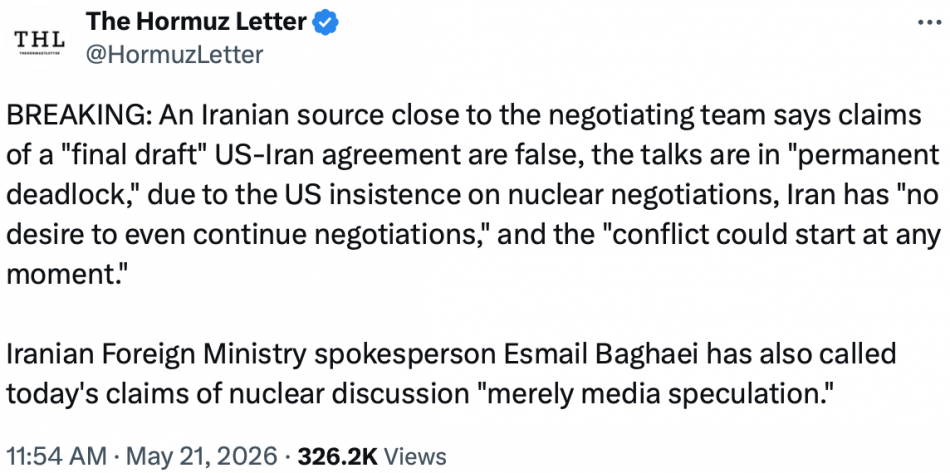
It just keeps happening over and over again. False rumors about a peace deal between the United States and Iran start circulating, and a lot of people out there just keep falling for it. How many times is this going to play out? Look, the reality of the matter is that Iran is only going to make a deal if President Trump basically surrenders and gives the Iranians everything on their completely absurd wishlist. If that doesn’t happen, there simply isn’t going to be a deal. The Iranians and the Trump administration are not even in the same universe when it comes to the nuclear issues, and as I discussed in my last article, the fact that the Iranians intend to make the status quo in the Strait of Hormuz permanent is completely and utterly unacceptable to U.S. officials. Those that keep expecting some sort of a “breakthrough” are going to be disappointed every single time. On Thursday, so many sources were reporting that a “final draft” of a peace agreement had been agreed to and that a formal announcement was imminent. But it was completely fake news, and it was soon exposed as completely fake news. The Iranians have not moved from their core negotiating positions and they aren’t going to move. At this point, the Iranians are telling us that negotiations are in a “permanent deadlock” and that they have “no desire to even continue negotiations”… President Trump is not going to move from his core negotiating positions either. He believes that preventing Iran from getting nuclear weapons is “more important than anything else”… Trump said if the question was put to Americans, “they will all agree” Iran cannot get a nuclear weapon. “This is the nuclearization of a country that some people would say is somewhat crazy, and we cannot let Iran have a nuclear weapon, that’s all it is,” he said. “We can’t let it.” “You will have a nuclear war in the Middle East, and that war will come here, that war will go to Europe,” Mr. Trump said. “We cannot let that happen, and it won’t happen. That’s more important than anything else.” Who is going to make the drastic compromises that are necessary for a deal to be achieved? The people that keep falling for the false rumors will never tell you that. To the Iranians, accepting the terms that Trump is offering would be the equivalent of surrendering, and Iranian President Masoud Pezeshkian is telling us that “martyrdom” would be preferable to that… Iranian President Masoud Pezeshkian has stated, “We will not bow our heads, our ministers and experts are working day and night, without a single day off.” He added, per state sources: “We are willing to sacrifice as much as possible for the honor and pride of Iran, and we are not afraid of martyrdom.” Pezeshkian is actually one of the “moderates” that we keep hearing about. So just imagine how the hardcore “radicals” are feeling. The Iranians do not believe that a peace deal will actually happen. Instead, they are feverishly preparing for the next chapter of the war… Iran has already restarted some of its drone production during the six-week ceasefire that began in early April, one sign it is rapidly rebuilding certain military capabilities degraded by US-Israeli strikes, according to two sources familiar with US intelligence assessments. Four sources told CNN that US intelligence indicates Iran’s military is reconstituting much faster than initially estimated. The rebuilding of military capabilities, including replacing missile sites, launchers and production capacity for key weapons systems destroyed during the current conflict, means that Iran remains a significant threat to regional allies should President Donald Trump restart the bombing campaign, according to the four sources familiar with the intelligence. It also calls into question claims about the extent to which US-Israeli strikes have degraded Iran’s military in the long term. When fighting with Iran erupts again, things are going to get really wild. In fact, the Iranians are promising to extend the war beyond the Middle East this time… Iran vowed Wednesday to attack countries outside the Middle East if President Trump follows through with his threat of “big hit” strikes amid stalled talks to end the war. “If aggression against Iran is repeated, the promised regional war will extend beyond the region this time,” Iran’s Revolutionary Guards said in a statement aired on state media. The Iranians still have some really big surprises up their sleeves. Just watch. Meanwhile, the fighting in Ukraine is really starting to escalate. In fact, it is being reported that the Russians have recently been using depleted uranium munitions in northern Ukraine… Russia has fired missiles armed with depleted uranium warheads at northern Ukraine, causing radiation levels to spike around bomb sites. The Security Service of Ukraine (SBU) said it found harmful levels of radiation emanating from an unexploded R-60 air-to-air missile after an attack on the village of Kamka in the Chernihiv region last month. The source of the radiation was identified as Uranium-235 and Uranium-238, it added. Depleted uranium is a leftover material from the enrichment process used to produce nuclear fuel and weapons, making it less radioactive than natural uranium. Depleted uranium munitions should never be used by any nation under any circumstances, because they are incredibly bad for the environment. If you doubt this, just go to Google Images and type in “depleted uranium birth defects Iraq” and have a look. The U.S. extensively used depleted uranium munitions during the war in Iraq, and what we did to those children is beyond criminal. So whenever I hear of anyone using depleted uranium munitions it makes me very angry. The Russians also just conducted a major readiness exercise for their strategic nuclear forces… Russia’s Defense Ministry said the exercise involved 64,000 troops, over 200 missile launchers, more than 140 aircraft, 73 surface warships and 13 submarines, including eight armed with nuclear-tipped ICBMs. The drills focused on the “preparation and use of nuclear forces under the threat of aggression,” it said. The maneuvers also practice cooperation with Belarus, an ally that hosts Russian nuclear weapons. Russian arsenals in Belarus include its latest intermediate range nuclear-capable Oreshnik missile system. The Russians can see the writing on the wall. They realize that a global war has erupted, and they want to be ready for what is coming next. On Monday, the Russians pledged to provide “the most active support” to the regime in Cuba… Russia said on May 21 that it would provide active support to Cuba despite attempts by the United States to intimidate and tighten the “sanctions noose” around the Communist‑run island republic. The US announced murder charges against former Cuban president Raul Castro on May 20, a major escalation in Washington’s campaign against Cuba, where Castro’s communists have been in charge since his late brother, former leader Fidel Castro, led a revolution in 1959. “We will continue to provide the most active support to the fraternal Cuban people during this extremely difficult period,” Russian Foreign Ministry spokeswoman Maria Zakharova told reporters. This should deeply alarm all of us, because it appears that the U.S. is about to get a lot more aggressive with Cuba. President Trump has been talking about “the fall of Cuba” for months, and now the USS Nimitz is being deployed in that direction… The aircraft carrier Nimitz and its escort warships entered the southern Caribbean Sea on Wednesday and will remain in the region for at least a few days as part of the Trump administration’s campaign to pressure the Cuban government, according to the military’s Southern Command and a U.S. official. Right now, the administration intends to use the Nimitz, and its wing of fighter jets, as a show of force, not as a platform for major military operations, as the aircraft carrier Gerald Ford did during the commando raid to seize President Nicolas Maduro of Venezuela in January, said the U.S. official, who spoke on condition of anonymity to discuss operational matters. Many are wondering if we are about to do the same thing to Cuba that we did to Venezuela. First we indicted Venezuelan President Nicolas Maduro, and then the military went in and grabbed him. Now we have indicted Raul Castro and a number of other Cuban officials, and a naval buildup in the vicinity of Cuba has begun… The Nimitz and its escort ships entered the Caribbean on May 20, the same day the Department of Justice announced the indictment of Cuba’s former President Raúl Castro, 94, on murder charges. Castro and five other Cuban officials were indicted for the deaths of four American civilians in a 1996 military operation in which Cuban jets shot down two unarmed planes on a humanitarian mission. The naval buildup is similar to the one that took place near Venezuela in late 2025. That ended when U.S. special forces seized Venezuelan president Nicolás Maduro and his wife, Cilia Flores, on Jan. 3. Considering the fact that the crisis in the Middle East is far from resolved, I think that it would be a huge strategic mistake to make a move on Cuba at this time. But it might happen. If it does happen, it will give the Russians and the Chinese yet another reason to be extremely angry with us. A lot of people out there are still convinced that everything is going to work out just fine somehow. Sadly, that is not the truth. The truth is that all-out war is coming, and our world will never be the same again. Michael’s new book entitled “10 Prophetic Events That Are Coming Next” is available in paperback and for the Kindle on Amazon.com, and you can subscribe to his Substack newsletter at michaeltsnyder.substack.com. About the Author: Michael Snyder’s new book entitled “10 Prophetic Events That Are Coming Next” is available in paperback and for the Kindle on Amazon.com.  He has also written nine other books that are available on Amazon.com including “Chaos”, “End Times”, “7 Year Apocalypse”, “Lost Prophecies Of The Future Of America”, “The Beginning Of The End”, and “Living A Life That Really Matters”.  When you purchase any of Michael’s books you help to support the work that he is doing.  You can also get his articles by email as soon as he publishes them by subscribing to his Substack newsletter.  Michael has published thousands of articles on The Economic Collapse Blog, End Of The American Dream and The Most Important News, and he always freely and happily allows others to republish those articles on their own websites.  These are such troubled times, and people need hope.  John 3:16 tells us about the hope that God has given us through Jesus Christ: “For God so loved the world, that he gave his only begotten Son, that whosoever believeth in him should not perish, but have everlasting life.”  If you have not already done so, we strongly urge you to invite Jesus Christ to be your Lord and Savior today. The post People Keep Falling For False Rumors About A Peace Deal, But The Truth Is That All-Out War Is Coming appeared first on End Of The American Dream.
Like
Comment
Share
Mad Mad World
Mad Mad World
5 w Wild & Crazy

rumbleOdysee
Woke Streamer Begs For Help When He Runs into African "Migrants"
Like
Comment
Share
Intel Uncensored
Intel Uncensored
5 w

Jim Willie Fire Side Chat Pt1
Favicon 
www.sgtreport.com

Jim Willie Fire Side Chat Pt1

from Snafuradio: TRUTH LIVES on at https://sgtreport.tv/
Like
Comment
Share
History Traveler
History Traveler
5 w

The Battle for Berlin & Germany’s Desperate Last Stand in WWII
Favicon 
www.thecollector.com

The Battle for Berlin & Germany’s Desperate Last Stand in WWII

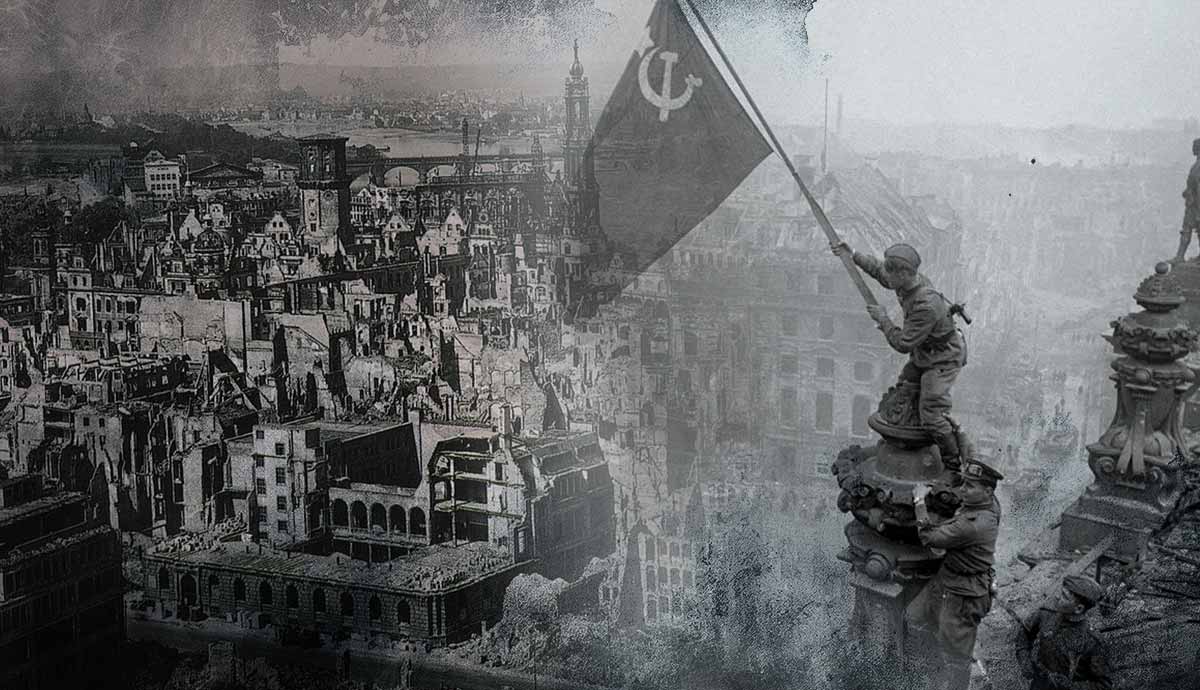
  At the beginning of 1945, the Allies were fighting their way toward Germany and Japan. Outnumbered, the two Axis powers attempted to delay defeat, inflicting heavy casualties on their enemies in the last major battles of the war. However, with little air power and dwindling resources, they capitulated. While the Battle of Berlin marked the end of the hostilities in Europe in May, the war continued throughout the summer in the Pacific Theater.   The Last German Offensive Before the Battle of Berlin German prisoners taken during the Battle of the Bulge, by John Florea, 1945. Source: The LIFE Picture Collection, New York   Following the D-Day landings in France on June 6, 1944, the Allied armies smashed through German defenses. Optimists predicted the war in Europe could be over by the end of the year.   However, as winter descended on the continent, Adolf Hitler ordered a counteroffensive through the Ardennes to split the Allies and retake Antwerp. The bulk of the attack was against American forces stationed in the region. Many soldiers were inexperienced, and the Ardennes were considered quieter than other parts of the front line.   On December 16, amidst heavy fog that prevented American planes from taking off, more than 200,000 German troops and 1,000 tanks advanced west. The attack was like the offensive against France in May 1940 and took the Americans by surprise. After a full day of fighting, the Germans smashed through American positions, creating a bulge in the lines.   After the initial surprise, American troops rallied and put up a fierce resistance despite a lack of air support. Troops around the towns of Bastogne and St. Vith defended themselves vigorously and slowed the German advance.   Allied commander Dwight D. Eisenhower rushed in reinforcements to bolster Allied lines. The US Third Army under General George Patton raced north to counterattack German tank divisions. As the weather cleared in late December, American planes took off to bomb German positions.   In early January, the Allies counterattacked and pushed back the German forces. By January 25, the Nazis had retreated to their previous positions.   This was the last German attack in the west. The Allies continued their march toward Berlin. British Prime Minister Winston Churchill called the Battle of the Bulge the greatest American battle of the war. American casualties were close to 20,000 soldiers, while the Germans lost 100,000 men.   Closing In: The Bombing of Dresden A postcard depicting Dresden after the 1945 bombing, Deutsche Fotothek, 2000. Source: Wikimedia Commons/Brück & Sohn   Following the Battle of Britain and the intense bombings of London and other British cities throughout 1940 and 1941, the Allies targeted Germany. For years waves of planes dropped bombs on German-occupied Europe in efforts to curtail the Nazi war machine.   The German city of Dresden remained mostly unscathed until 1945. Dresden was a historic city. In 1945, it was also the site of a German rail center and arms production factories. The population was 630,000, but an influx of refugees fleeing the advancing Soviets increased the number of residents to over a million in 1945.   The Allies scheduled coordinated air raids on Dresden between February 13 and 15. Britain would bomb at night, while American planes would attack during the day.   The first wave of bombings began on the evening of February 13, led by a Royal Air Force squadron of Lancaster bombers. With little opposition from anti-aircraft guns, the RAF flew at a lower altitude and dropped high-explosive bombs and incendiaries. Eight hundred eighty tons of bombs crashed into the city center.   The intensity of the bombings created high-pressure air. The fires created by incendiary explosives met the air to originate a firestorm. Firefighters on the ground were overwhelmed. Hurricane-force winds carried fires throughout the city.   A second wave of Lancaster bombers followed, increasing the intensity of the firestorm. Steel melted, stone disintegrated, and trees exploded from the intense heat. The next day, more than 300 American B-17 Flying Fortresses struck Dresden, increasing the carnage. Several more Allied raids followed.   An estimated 25,000 to 35,000 people died in the Dresden bombings, perhaps more. It was difficult to make an accurate assessment as many bodies were incinerated instantly.   Germany’s Last Stand: The Battle of Seelow Heights Memorial of the Battle of Seelow Heights. Source: Museen in Brandenburg/Gedenkstätte und Museum Seelower Höhen, Seelow   While the Americans, British, Canadians, and other Allies fought their way to Germany from the west, the Russians moved in from the east. By April 1945, the Russian army and their allies were ready to push to Berlin itself.   About 70 kilometers east of Berlin, German forces prepared a defense at Seelow Heights on the west bank of the Oder River. The Russians had approximately one million troops pitted against 100,000 Germans.   The Soviets at Seelow Heights were commanded by Marshal Georgy Zhukov. A rival commander, Marshal Ivan Konev, was in charge of another group nearby. Stalin decided that whoever got through German defenses first could lead the capture of Berlin.   Colonel-General Gotthard Heinrici led German troops. Heinrici ordered engineers to open dams on the Oder to flood the river and turn it into a muddy swamp.   On early April 16, Soviet forces unleashed a massive bombardment on German positions. Large searchlights were pointed at the defenders to spot their positions. However, large amounts of smoke reflected the lights back and left the Russians exposed instead. German fire held back the Russian advance.   By April 17, the Soviets were still bogged down under German artillery fire and the flooded river. Hearing that Konev was having better success, Zhukov intensified his frontal attack on April 18.   On April 19, Heinrici abandoned the last German defenses and retreated toward Berlin. Zhukov could now concentrate on the final assault on the capital.   The battle was short but costly. The Soviets sustained over 30,000 losses and hundreds of destroyed tanks. Around 12,000 Germans died at Seelow Heights.   Battle of Berlin Flag raised over Reichstag, by Yevgeny Khaldei. Source: Wikimedia Commons/Anne Frank House, Amsterdam   The last battle in Europe took place when Berlin was surrounded on April 20, 1945, by the Soviet army. The Soviets had far more troops, planes, tanks, and artillery than the defenders. Nearly two and a half million Russians faced less than one million German troops, some of them inexperienced boys of the Hitler Youth. A constant bombardment of the city lasted until its surrender.   The Germans attempted to break the siege but were easily repelled. Few Germans surrendered as they preferred to die fighting rather than becoming Soviet prisoners.   Hitler ordered all bridges into the city destroyed. When Russian troops entered Berlin, they were slowed by urban combat, as the Germans fought house to house.   The objective of Soviet Marshal Zhukov was to destroy German opposition and take the Reichstag (Parliament), seen as the symbol of Nazi power. He also wanted to force Berlin’s surrender to the Soviet Union before the Americans could reach the city.   On April 30, Hitler and his new wife, Eva Braun, committed suicide in their bunker. That evening, the Russians reached the Reichstag, but the fighting around the building raged for two more days. There was vicious hand-to-hand combat. On May 2, troops reached the roof and hoisted the Soviet flag.   German general Helmuth Weidling, defending Berlin, ordered his men to lay down their arms and surrender. The Battle of Berlin was over. Fighting in other pockets of the country continued until the unconditional surrender of Nazi Germany on May 8. The war in Europe was finally over.   Once again, casualties were high. The Russians lost an estimated 80,000 soldiers, while 100,000 German troops died, along with over 100,000 civilians.   While the war in Europe ended after the Battle of Berlin, the conflict continued in the Pacific Theater.   The Pacific Theater in 1945: The Battle of Iwo Jima Raising the American flag on Iwo Jima, by Joe Rosenthal, 1945. Source: Wikimedia Commons   As in Europe, the Americans were steadily pushing through occupied Asia on their way to Japan. Iwo Jima was an island southeast of mainland Japan and was used as a base to attack American bombers flying toward their homeland.   The US military strategy was twofold. First, the Americans aimed to neutralize the tiny island’s strategic threat to American pilots. Then, they planned to turn Iwo Jima into a friendly airbase close to Japan to launch B-29 bombers and fighter planes.   Through late 1944 and into early 1945, American naval and air units bombed the island, hoping to soften troop positions there. However, Japanese defenders were deeply entrenched in secure bunkers waiting out the bombardments.   On February 19, thousands of US Marines landed on the beaches to confront the almost 20,000 Japanese troops waiting for them. The soft black volcanic sand proved exceedingly difficult for the American forces to advance while under heavy fire, causing numerous casualties on the first day. Still, marines reached the summit of Mount Suribachi, where they raised the American flag in the famous photograph.   The following days and weeks were bloody. Hand-to-hand combat was common. American troops used flame throwers and tanks to advance. The Japanese used mines and anti-tank guns in defense. In one confrontation, 800 marines died taking one Japanese fortification.   By the end of February, the Americans reached the opposite end of Iwo Jima, splitting the island in two. Yet heavy fighting continued into March. Most Japanese positions had to be conquered by infantry, with air and sea support proving ineffective.   On March 26, officials declared the island secure, and heavy fighting ended. Seven thousand marines perished in the battle. An estimated 19,000 Japanese troops died. Very few Japanese surrendered to the enemy.   Battle of Okinawa: The Last Major Battle of WWII An American marine receives medical aid in Okinawa, 1945. Source: Wikimedia Commons/USMC Archives, Quantico   The island of Okinawa was located southwest of Japan. It was the last territory before an invasion of mainland Japan could begin. The strategic value of Okinawa for the Americans was that it could be used as an air and naval base to launch an attack against Japan.   Following heavy air and naval bombardment, the Americans landed on April 1, 1945, with little initial opposition. Japanese forces under Admiral Mitsuru Ushijima waited further inland in bunkers and tunnels.   The Japanese counterattacked on April 6 with hundreds of suicidal kamikaze-style air and boat attacks on the American fleet. Although some American ships were sunk in the deadly attack, the bulk of the fleet remained intact. During the kamikaze raids, the massive Japanese battleship Yamamoto attacked the fleet but then sank after a counterattack by American planes.   Heavy fighting ensued on land through April and May. The Japanese put up stiff resistance as they fought embedded in difficult terrain for the Americans to access. It became a war of attrition. Marines slowly fought their way through Japanese defenses, aided by artillery fire.   Monsoon rains in May added to the difficulties. The battlefield turned to mud, with rotting corpses, garbage, and maggots.   Toward the end of May, US Marines entered the mostly deserted Okinawan capital, Naha. Japanese troops retreated to regroup.   In early June, the Americans launched an assault on 4,000 Japanese sailors defending an airfield. Outnumbered and surrounded, all the defenders died in suicide attacks or by killing themselves. Sporadic pockets of fighting continued until June 21. Once again, many Japanese soldiers and almost all commanders committed suicide rather than surrender to the enemy.   American General Douglas MacArthur preparing for Japanese surrender in Tokyo Bay, by New York World-Telegram & Sun Newspaper Photograph Collection, 1945. Source: The Library of Congress, Washington DC   Okinawa was yet another bloody confrontation. Up to 100,000 Japanese troops perished, including thousands of native Okinawans conscripted into the Japanese army. The Americans lost 12,000, with up to 50,000 casualties.   Okinawa was the last major battle of the Second World War. The war in Europe was already over after Germany’s capitulation in May. In August 1945, the Americans dropped two atomic bombs, leading to Japan’s unconditional surrender. In the final battles of World War II, the Allies were vastly superior in numbers, but the fighting was just as deadly and vicious as the earlier years.

Like
Comment
Share
Fun Facts And Interesting Bits
5 w ·Youtube General Interest

YouTube
Worst Weather in Decades About to Begin - It Could Be Catastrophic
Like
Comment
Share
Fun Facts And Interesting Bits
5 w ·Youtube General Interest

YouTube
One of The World's Largest Cities Is Sinking Faster Than Expected
Like
Comment
Share
Showing 3968 out of 126989
  • 3964
  • 3965
  • 3966
  • 3967
  • 3968
  • 3969
  • 3970
  • 3971
  • 3972
  • 3973
  • 3974
  • 3975
  • 3976
  • 3977
  • 3978
  • 3979
  • 3980
  • 3981
  • 3982
  • 3983
Advertisement
Stop Seeing These Ads

Edit Offer

Add tier


Select an image
Delete your tier
Are you sure you want to delete this tier?

Reviews

In order to sell your content and posts, start by creating a few packages. Monetization

Pay By Wallet

Payment Alert

You are about to purchase the items, do you want to proceed?

Request a Refund