YubNub Social YubNub Social
    #libtards #terrorism #patriots #antifa #americafirst #loonyleft #police\ #foundingfathers #patriotichistory #wethepeople
    Advanced Search
  • Login
  • Register

  • Night mode
  • © 2026 YubNub Social
    About • Directory • Contact Us • Developers • Privacy Policy • Terms of Use • shareasale • FB Webview Detected • Android • Apple iOS • Get Our App

    Select Language

  • English
Community
New Posts (Home) ChatBox Popular Posts Reels Game Zone Top PodCasts
Explore
Explore
© 2026 YubNub Social
  • English
About • Directory • Contact Us • Developers • Privacy Policy • Terms of Use • shareasale • FB Webview Detected • Android • Apple iOS • Get Our App
Advertisement
Stop Seeing These Ads

Discover posts

Posts

Users

Pages

Blog

Market

Events

Games

Forum

The Blaze Media Feed
5 w ·Youtube News & Oppinion

YouTube
The INSANE Reason why Hollywood Movies are SO BAD Now!
Like
Comment
Share
Daily Wire Feed
Daily Wire Feed
5 w

The Lost Skill That Once Held Society Together
Favicon 
www.dailywire.com

The Lost Skill That Once Held Society Together

This article is part of Upstream, The Daily Wire’s new home for culture and lifestyle. Real human insight and human stories — from our featured writers to you. *** Do you ever scroll through social media and wonder why on earth someone shared that online? A certain AI-generated image from the president leaps to mind. Or have you watched a celebrity talk and wondered where decency has gone? Consider Jimmy Kimmel’s comments about Charlie Kirk or Nikki Glaser’s unhinged interview in which she confessed to enjoying it when her husband cheats on her. This lack of restraint, especially when it comes to social media, isn’t just inflicting celebrities, politicians, and those in the public eye; it’s endemic to American society. Consider the endless quantity of Facebook rants, over-sharing personal details online, and the keyboard warrior’s need to counter every differing opinion. It’s clear that moderation and restraint are in short demand these days. I know this on a personal level, as I’m sure most readers can relate, because I, too, have looked back at previous social media posts or recalled scenarios and wished I’d exercised more self control. Gone may be the days of changing our Facebook statuses to reflect our current mood, but we can agree that the American public forum is oversaturated with overly personal outbursts, poorly premeditated commentary, and trivial oversharing. It’s no wonder though that we struggle with restraint. Instant gratification and the brief fame of a viral social media post bait us to share anything and everything that comes to mind, spurring the kind of impulsive sharing that adds no value to society. In addition to the opiate-like pull of social media to overshare, self expression is paramount in our society. Self obsession is so ubiquitous in America that almost no elaboration is needed; the prevalence of personal social media accounts, the advent of “selfies,” the self-love and self-care movements, and the emphasis on self-expression all speak for themselves. From our love of self-care to our social media profiles to our unsolicited opinions, we are everywhere encouraged to “express ourselves” and never taught to hold back. The lack of restraint in society today may be fueled by social media, but it is fundamentally undergirded by the unhealthy amount of value our culture places in self-expression.  And it’s a self obsession that is passed to the next generation. We value self-expression over restraint, and even our parenting philosophies reflect it. The rise of gentle parenting among millennial parents insists that all emotions are valid, and parenting techniques work to understand and relieve the emotions undergirding the behavior issues rather than correct or discipline the behavior itself. While this may sound appealing at first, gentle parenting makes it difficult for children to learn restraint and self-control regardless of their emotional state. Consequently, many parents have lost the conviction that kids should be taught to restrain their emotions. We no longer expect children to have age-appropriate levels of self control — and it’s no wonder considering the lack of self-control that many adults display and the way in which culture writ large celebrates self-expression at the expense of moderation. But it wasn’t always this way. The West, until very recently, had a long tradition of valuing things such as self-control, restraint, temperance, and prudence.  These ideas were codified in stoic philosophy and greatly valued by the giants of Western ethics. Aristotle, often considered the father of Western philosophy, has this masterful quote in the “Nicheomachean Ethics”: “Whatever it lies in our power to do, it lies in our power not to do.” It’s a clever reminder that we shouldn’t do or say anything and everything that comes to mind.  Like most of the great ideas of the ancient philosophers, self-discipline and restraint, especially when it came to speaking, were also highly esteemed by the American founders. George Washington, in his “Rules of Civility,” put it this way, “Speak not when you should hold your peace.” Wouldn’t it be nice to see that maxim employed more often in our online forums today? Perhaps one of the most profound quotes on the importance of self-control comes from Thomas Jefferson’s translation of Cicero’s “Disputations,” which underscores the importance of restraint, its relationship to personal peace, and its importance to American success. In a now-famous letter to a reverend who hoped to secure Jefferson’s assistance in founding a school, Jefferson paraphrases Cicero, offering the reverend this advice: “Therefore the man, whoever he is, whose soul is tranquilized by restraint and consistency and who is at peace with himself, so that he neither pines away in distress, nor is broken down by fear, nor consumed with a thirst of longing in pursuit of some ambition, nor maudlin in the exuberance of meaningless eagerness — he is the wise man of whom we are in quest, he is the happy man.” (Emphasis added.) Jefferson appreciated the connection that Cicero underscored between happiness and self-control, and he esteemed it a necessary ingredient in American education and success. One of the reasons we’ve abandoned prudence and restraint in modern times is because we have lost this very realization: that while unrestrained speech and actions may seem liberating in the moment, they sew chaos and discontent, not least of which in our own psyche. Harmony and peace are cultivated through the exercise of self-restraint, and modern America, unfortunately, has entirely forgotten that connection. Recall George Washington’s rule; there’s a reason that holding your tongue (or typing fingers) was also referred to as “keeping your peace.”  Despite culture’s obsession with self-indulgence, we have finally reached a point in which we intuitively feel the need for more self-control, specifically in the areas of technology use, online opinions, social media oversharing, and perhaps even the attributes we want to instill in our children. We are so oversaturated and fed up with bottomless self-expression and the general lack of decorum that the return of prudence in the public forum would offer a collective breath of fresh air. And, as intellectual giants such as Cicero and Washington have pointed out, it’s not just about restoring restraint so that we don’t have to suffer through oversharing, but that the practice of restraint helps instill calmness and harmony in the individual’s life. Self-control builds psychological resilience, and we could all use a little more mental stability these days. So is the key to happiness really so simple as keeping your mouth shut? Well, it’s a good start. If we think longer before before speaking, listen more than talk, and restrain our ever-increasing technological use, we just might find a degree of harmony that so often alludes us in a self-possessed world. *** Rebekah Bills is a freelance writer and mother of three. She previously served as a civilian intelligence officer in the Defense Intelligence Agency.

Like
Comment
Share
Daily Signal Feed
Daily Signal Feed
5 w

What Every Graduate Should Aim For
Favicon 
www.dailysignal.com

What Every Graduate Should Aim For

Many of today’s graduates are about to make the same mistake Matthew Emmons made during the 2004 Olympics. It’s commencement season for high school and college seniors. The future may be unknown, but graduates know what they want in their future—money. A 2025 poll by Harvard Political Review asked young Americans to identify their important goals. More than 86% chose financial security. Around three in four selected owning a home, a tangible sign of financial well-being. Just 57% thought getting married was an essential pursuit. That was just a hair ahead of accumulating “significant wealth” at 56%. Less than half said having children was important. But before aiming at those goals, look at what happened to the 23-year-old Emmons during the Athens Olympics. Emmons competed as a USA rifle shooter. He won gold in the men’s 50m Rifle Prone—using a teammate’s rifle after someone had tampered with his. His second event was the Men’s 50m Rifle 3 positions. He shot well and made the finals. He and the other seven competitors would fire 10 shots from a standing position. Through nine shots, he had a commanding lead. To win a second gold medal, he didn’t need a bullseye. He only needed to hit near the center of the target. He calmed his breathing, aimed, and fired. But there was a problem. After Emmons pulled the trigger, the electronic scoring device didn’t award him any points. He turned to the officials, confused. “I shot,” he said. He had indeed fired his rifle. And the shot would have scored high enough to win the gold medal—but he had aimed at the wrong target. He was in Lane 2, but he had hit the target in Lane 3. “On that shot, I was just worrying about calming myself down and just breaking a good shot, and so I didn’t even look at the number,” Emmons said. “I probably should have. I will from now on.” That should be a sobering thought for graduates. Like Emmons, you have put in countless hours of preparation. Your degree is tangible evidence of your ability. You stand on the cusp of accomplishing great things. But it doesn’t matter how skilled or hard-working you are if you’re headed towards the wrong goal. Think about money. It’s obviously important. You’ll need it to buy food, clothes, shelter, and transportation. It can also buy luxuries like vacations, concert tickets, and ATVs. But note this. Money isn’t the goal. Money’s usefulness is indirect—it allows you to obtain other things. This is where many young people go wrong. They see something important as a “means” and make it their “end.” Think about it this way. A career that provides for a family is meaningful—no matter your job. But making your career your life goal is the path to burnout and loneliness. People are made for purpose and community, not merely to climb the corporate ladder. Consider the rest of Emmons’ story. After losing the gold medal in heartbreaking and humiliating fashion, he sat in a nearby beer garden. Suddenly, he felt someone tap his shoulder. It was Czech shooter Katerina Kurkova and her father, who sympathized with him and gave him words of encouragement. That interaction—in the pit of unimaginable professional failure—sparked a budding personal relationship. They later started dating and married in 2007, eventually having four children. “Had I not made that mistake, maybe I retire from shooting, maybe I don’t marry Katy,” Emmons said. “I wouldn’t change a thing.” Those are the words of a man who’s aiming at the right target. COPYRIGHT 2026 CREATORS.COM We publish a variety of perspectives. Nothing written here is to be construed as representing the views of the Daily Signal.
Like
Comment
Share
Science Explorer
Science Explorer
5 w

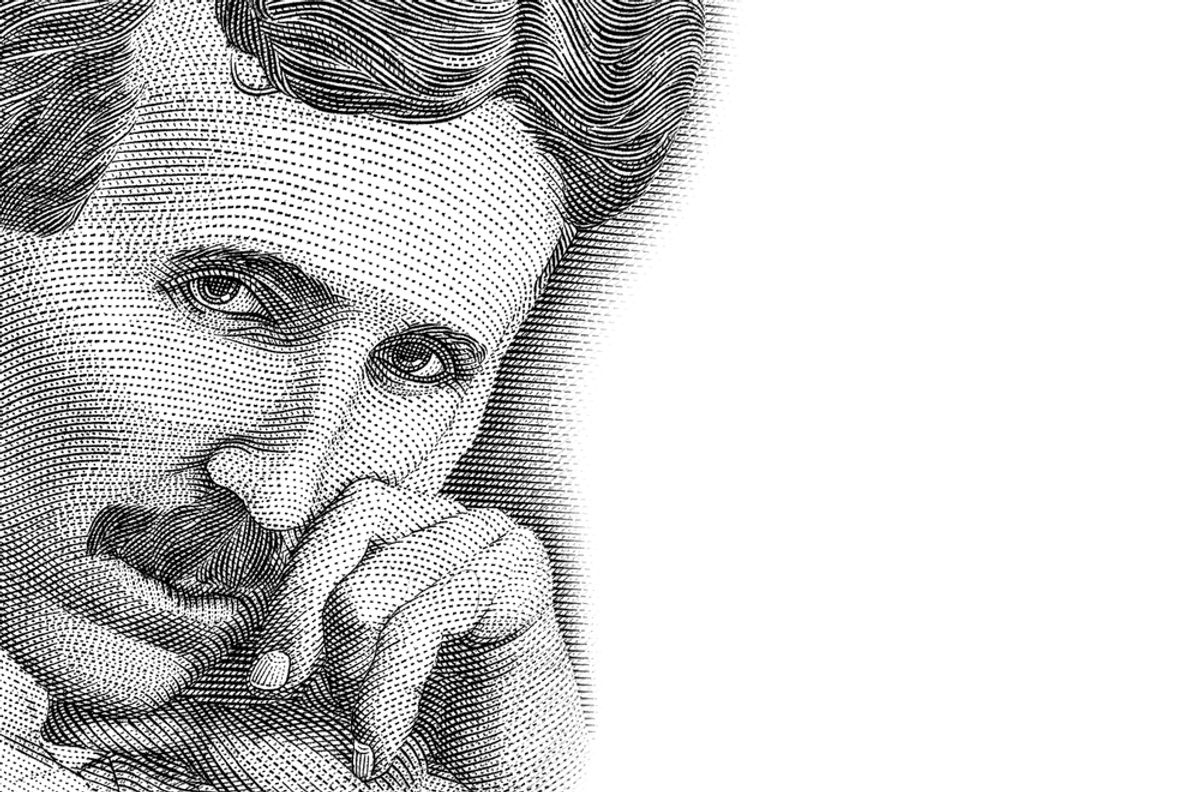
Nikola Tesla Was Brilliant, But He Got A Surprising Number Of Things Wrong
Favicon 
www.iflscience.com

Nikola Tesla Was Brilliant, But He Got A Surprising Number Of Things Wrong

Despite his pioneering work on electricity, Tesla did not believe electrons existed.
Like
Comment
Share
NewsBusters Feed
NewsBusters Feed
5 w

Shocking: PBS Takes Up DNC Autopsy of 2024, But Only As a Helpful Chat to Fix Things
Favicon 
www.newsbusters.org

Shocking: PBS Takes Up DNC Autopsy of 2024, But Only As a Helpful Chat to Fix Things

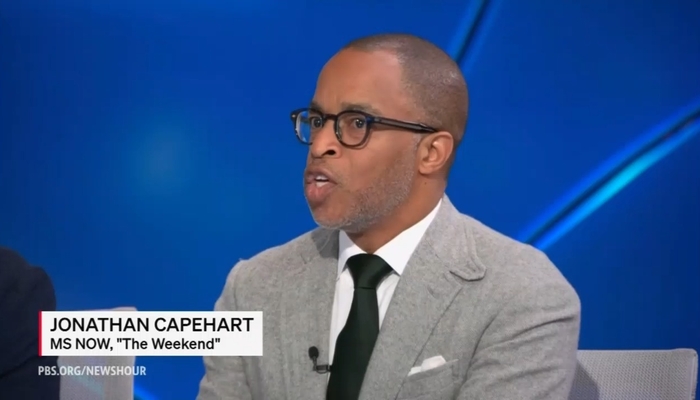
The Friday night Week In Politics segment of the PBS News Hour is almost always focused on blasting Trump, week after week. So it was shocking when they took up the DNC “autopsy” of their 2024 losses, allowing MS NOW host Jonathan Capehart to lecture Democrats to stop internal fighting…minutes after he mocked the Republican resistance to Trump as a “one-cell organism.” WILLIAM BRANGHAM, host: We also saw this week this very ham-handed release of the DNC's autopsy. This is basically an unfinished document that -- I mean, if a high school or college student had submitted this thing, you would give them an F if you were feeling generous. What does this tell you about the Democratic Party? JONATHAN CAPEHART: Well, what this tells you is why the Democratic chairman didn't want to release it. I just called it a trash can of warmed-over conclusions with none of the introspection of, say, the autopsy of 2012 when Mitt Romney lost to President Obama. Recall that Donald Trump won in 2016 by ignoring the general conclusion of the 2012 RNC report, that the GOP had to work harder to appeal to minority voters, for example. Then came the lecture: PBS News Hour surprisingly asked Jonny Capehart about the DNC's awful autopsy, and he lectured Democrats to stop internal fighting…minutes after he mocked GOP resistance to Trump as a “one-cell organism.” They root for internal warfare among Republicans, and discourage it in… pic.twitter.com/0HxH19zI4Y — Tim Graham (@TimJGraham) May 25, 2026 CAPEHART: I think right now what Democrats need to do is stop with the fighting with each other, looking at this at this terrible -- whatever this is, this autopsy, such as it is, focus on the here and now. And what the leadership of the Democratic Party should be doing is figuring out how to channel the anger, the palpable anger among Democrats into what their priorities are going to be if they take back the House and maybe even if they take back the Senate, and then how they're going to drive that to '28. PBS also interviewed former Bernie Sanders strategist Faiz Shakir on Thursday’s News Hour, but it had that sound of two Democrats hashing out how to fix things. Bennett introduced him as "our friend." Shakir talked about the need for “hard conversations,” but they weren’t having them. Bennett opened by noting this report “does not mention Mr. Biden's age or the war in Gaza and how opposition to it may have depressed Democratic enthusiasm,” but they didn’t discuss Biden scandals or Harris failures or leftist extremism turning voters to back Trump. Bennett's questions were just conversation starters:  PBS anchor Geoff Bennett asked leftist Dem strategist Faiz Shakir friendly questions about the awful autopsy by the DNC, such as: "Is part of the problem here that Democrats are facing a Republican Party that rewards power and grievance and not traditional policy arguments?" pic.twitter.com/wzOISAshdL — Tim Graham (@TimJGraham) May 25, 2026 There's a striking line in this report suggesting that Democrats became too dependent on what is called in this report negative partisanship, essentially asking voters to fear Republicans rather than believe in Democrats. Is that a fair criticism? ….Kamala Harris could not be accused, though, of not having policy prescriptions. I mean, it is part of the problem here that Democrats are facing a Republican Party that rewards power and grievance and not traditional policy arguments? ….But how do Democrats move forward from here? And frankly, do they need a DNC, a strong DNC to win the presidency? The DNC -- Barack Obama didn't rely on the DNC much at all. Naturally, a socialist is going to advocate more socialism a la Mamdani as the winning formula against what he called the "Epstein class":  SHAKIR: The way you choose to decide what are your values, what you care about is when you say to Jeff Bezos, we're going to tax the rich. And then Jeff Bezos gets very angry and upset about it. [As if Bezos doesn't pay billions in taxes.] And you see what's going on with Zohran Mamdani in New York City. Why is his popularity increasing? Because he is comfortable in the friction. He is saying, here's a vision. Here's how we can increase taxation. Here's how we can provide childcare. Yes, some people can take me on. But are you with me or are you with the corrupt class? And that is a kind of a leadership that I think we need more of across the country.
Like
Comment
Share
The Blaze Media Feed
5 w

The knock that changes everything: Glenn Beck’s powerful reminder of Memorial Day’s true meaning
Favicon 
www.theblaze.com

The knock that changes everything: Glenn Beck’s powerful reminder of Memorial Day’s true meaning

For many Americans, Memorial Day is nothing more than a welcome day off of work to kick back and relax and maybe host a backyard barbeque.But the true meaning of this holiday should stir deep gratitude and empathy in every American citizen. Memorial Day is set aside not for leisure but for reverence. It is about honoring and remembering the men and women of the armed forces who died while serving in the military.Two years ago, Glenn Beck delivered an unforgettable message that is worth revisiting on this important day. - YouTubeGlenn starts by telling a common story that only the parents of fallen soldiers will truly understand.“If you will, try to imagine this in the first person, through the eyes of someone I'm about to describe,” he begins.“Your son has been in the United States Marine Corps for what seems like forever now. … What begins as extreme worry and then turns to panic, then helplessness, then all time seems to stop. It's as if you're stranded in the loneliest cold of winter, with no daylight to help tell you the passage of time. It's just you, your worry, and no end in sight,” he narrates.Unbeknownst to you, your beloved son suddenly falls in combat. This immediately sets a precise military protocol in motion.“This is what's happening behind the scenes,” says Glenn. “First a death notification. It has to be executed within eight hours. A discreet attempt to locate you, the next of kin, is initiated so the officers chosen to deliver the notification arrive at the right place at the right time.”“Three individuals are typically chosen to arrive at your home: an officer at least one rank higher than the deceased, a chaplain, and someone capable of delivering medical help should the next of kin pass out or worse,” he continues.The parent, already sensing the gut-wrenching news, listens in horror as the officer delivers the following message: “The commandant of the Marine Corps has entrusted me to express his deep regret that your son John was killed in action on Friday, March 26. The commandant and the Marine Corps extend their deepest sympathy to you and your family in your loss.”“This is the nightmare that thousands have had to endure, thousands fear could happen to them at any time,” says Glenn.“312 parents experienced what I just described in 2003 alone; in 2007, 847 military men and women died in combat; in 2008, 352; in 2009, 346 — and the list and the numbers go on and on,” he recounts.This Memorial Day, as we gather with friends and family, Glenn hopes that we will take time to remember the true meaning of this somber holiday.“I'm not trying to be a downer here, but there is a sacredness to Memorial Day that most of us just cannot understand,” he says.Glenn concludes by reading John 15:13: “Greater love hath no man than this, that a man lay down his life for his friends.”“This weekend, remember the honor, the love of country, the families. Together they represent the absolute best of all of us.”To hear Glenn deliver this touching monologue, watch the video above.Want more from Glenn Beck?To enjoy more of Glenn’s masterful storytelling, thought-provoking analysis, and uncanny ability to make sense of the chaos, subscribe to BlazeTV — the largest multi-platform network of voices who love America, defend the Constitution, and live the American dream.
Like
Comment
Share
The Blaze Media Feed
5 w

Remembering America's first Army chaplain KIA: John Rosbrugh
Favicon 
www.theblaze.com

Remembering America's first Army chaplain KIA: John Rosbrugh

Rev. John Rosbrugh, the first U.S. Army chaplain killed in battle, was bayoneted 239 years ago in the midst of the withdrawal from the Battle of Assunpink Creek in the Revolutionary War.In a 19th-century biography detailing the "life, labors, and death" of this "Clerical Martyr of the Revolution," Rev. John Clyde emphasizes at the outset, "Amid all the light thrown upon his career socially, ecclesiastically, and politically — by tradition and historical record — nothing but the good he did lived after him, whilst the evil was interred with his bones — so far as known no blot rests on his fair name."'Sabre slashes were made at his devoted head, three of which penetrated through the horsehair wig which he wore.'Rosbrugh belonged to a Scottish family that migrated in the early 18th century to Northern Ireland. With his older brother William, Rosbrugh eventually moved to the American Colonies, settling in New Jersey, where at the age of 19, he married a woman named Sarah, who would tragically perish along with their baby during childbirth.Although unable himself decades later to afford "that thorough education which was required of those who would enter the sacred office in his day," the aspiring Presbyterian minister studied theology at the College of New Jersey — now Princeton University — with the help of financial aid and graduated in 1761.Rosbrugh was ordained as a minister in 1764 at Greenwich Presbyterian Church in New Jersey.The minister, whose recognition and responsibilities exploded in subsequent years, married again, this time to Jane Ralston of the Allen Township Presbyterian Church. Rosbrugh and Jane ultimately had five children — the eldest, James, would later serve as a militia captain in the War of 1812.Long before his son would take up arms in defense of his country, Rosbrugh — "filled with the spirit of freedom" — decided to lead his congregants out of church and toward the battlefield.According to Clyde, Rosbrugh assembled his congregation, urged them to satisfy the Continental Army's request for reinforcements, quoted them Judges 5:23, and proposed that he join them as chaplain. The congregation was apparently keen to go — but only if he would be their commander. After some deliberation and receiving consent from his wife, Rosbrugh agreed.RELATED: The crown laughed at our Declaration — but America got the last word Gen. George Washington at the first Battle of Trenton. Hulton Archive/Getty ImagesAfter penning his last will and testament, the minister "put a musket to his shoulder and marched out to the highway, and all fell into line and followed" Rosbrugh to join General George Washington in Philadelphia."The little boy James, rode the gray horse by his father's side till they passed over the brow of the hill, just east of their home, as we suppose," wrote Clyde. "Then the father took him from the horse, kissed him, and bade him go home to his mother, and be a good boy till he should return — he never saw his father's face again."In Philadelphia, Rosbrugh assumed, as he intended from the start, the role of company chaplain and was replaced as commander by Capt. John Hays. The previous year, the Continental Congress authorized one chaplain for each regiment of the Continental Army with pay equaling that of a captain.Rosbrugh's tenure as a chaplain in Washington's army was short-lived. Just days after the Battle of Trenton, where Washington — having just crossed the Delaware River — led a momentous victory against Hessian auxiliaries, the chaplain breathed his last.Clyde noted that there are varying accounts of how the chaplain perished but held that the most trustworthy version has that the chaplain — whose company partook in the Battle of Assunpink Creek — unwittingly lingered behind at the eponymous site of the Second Battle of Trenton while the patriot army withdrew.On Jan. 2, 1777, Rosbrugh tied up his horse outside a pub, then went inside for refreshments only to hear someone cry, "The Hessians are coming."The 63-year-old chaplain rushed outside to find that his horse had been stolen, then attempted to make his escape on foot, only to run into a small group of Hessians under the command of a British officer.Clyde explained what reportedly happened next:Seeing that further attempt at escape was useless, he surrendered himself a prisoner of war. Having done so, he offered to his captors his gold watch and money if they would spare his life for his family's sake. Notwithstanding these were taken, they immediately prepared to put him to death. Seeing this, he knelt down at the foot of a tree and, it is said, prayed for his enemies. Now seventeen bayonet thrusts were made at his body, and one bayonet was left broken off in his quivering frame. Sabre slashes were made at his devoted head, three of which penetrated through the horsehair wig which he wore.The stone monument erected in Rosburgh's memory at Hanover Academy in Trenton states, "Clerical Martyr of the Revolution[.] Moderator of the Presbytery of New Brunswick 1776[.] Chaplain 3d Battalion Northampton County PA Militia December 25, 1776[.] Bayoneted to death by Hessians in Trenton January 2, 1777."Like Blaze News? Bypass the censors, sign up for our newsletters, and get stories like this direct to your inbox. Sign up here!
Like
Comment
Share
National Review
National Review
5 w

Bob Woodson Was a Hero
Favicon 
www.nationalreview.com

Bob Woodson Was a Hero

Remembering the great civil rights leader.
Like
Comment
Share
National Review
National Review
5 w

For America’s Service Members, Memorial Day Is a Lifetime
Favicon 
www.nationalreview.com

For America’s Service Members, Memorial Day Is a Lifetime

Military members and their families face far more difficult moments than we see in the headlines.
Like
Comment
Share
National Review
National Review
5 w

The Empty Desks Are Telling Us Something
Favicon 
www.nationalreview.com

The Empty Desks Are Telling Us Something

When students stop showing up, the education establishment treats it as a discipline problem. It may be closer to a performance review.
Like
Comment
Share
Showing 4212 out of 127570
  • 4208
  • 4209
  • 4210
  • 4211
  • 4212
  • 4213
  • 4214
  • 4215
  • 4216
  • 4217
  • 4218
  • 4219
  • 4220
  • 4221
  • 4222
  • 4223
  • 4224
  • 4225
  • 4226
  • 4227
Advertisement
Stop Seeing These Ads

Edit Offer

Add tier


Select an image
Delete your tier
Are you sure you want to delete this tier?

Reviews

In order to sell your content and posts, start by creating a few packages. Monetization

Pay By Wallet

Payment Alert

You are about to purchase the items, do you want to proceed?

Request a Refund