YubNub Social YubNub Social
    Advanced Search
  • Login
  • Register

  • Day mode
  • © 2026 YubNub Social
    About • Directory • Contact Us • Developers • Privacy Policy • Terms of Use • shareasale • FB Webview Detected • Android • Apple iOS • Get Our App

    Select Language

  • English
Night mode toggle
Featured Content
Community
New Posts (Home) ChatBox Popular Posts Reels Game Zone Top PodCasts
Explore
Explore
© 2026 YubNub Social
  • English
About • Directory • Contact Us • Developers • Privacy Policy • Terms of Use • shareasale • FB Webview Detected • Android • Apple iOS • Get Our App
Advertisement
Stop Seeing These Ads

Discover posts

Posts

Users

Pages

Blog

Market

Events

Games

Forum

Daily Caller Feed
Daily Caller Feed
5 w

Leaked Photo Brought Hillary Clinton’s Closed-Door Epstein Testimony To Abrupt Halt
Favicon 
dailycaller.com

Leaked Photo Brought Hillary Clinton’s Closed-Door Epstein Testimony To Abrupt Halt

'It was authorized'
Like
Comment
Share
SciFi and Fantasy
SciFi and Fantasy  
5 w

Theatre Kids — Star Trek: Starfleet Academy’s “The Life of the Stars”
Favicon 
reactormag.com

Theatre Kids — Star Trek: Starfleet Academy’s “The Life of the Stars”

Movies & TV Star Trek: Starfleet Academy Theatre Kids — Star Trek: Starfleet Academy’s “The Life of the Stars” Tilly arrives at the Academy to lead a drama workshop, while Sam’s holographic glitches continue… By Keith R.A. DeCandido | Published on February 26, 2026 Credit: Paramount+ Comment 0 Share New Share Credit: Paramount+ One of the things I really like about how television in general has evolved over the past couple of decades is that the folks writing them and acting in them have finally started to admit that trauma is a thing and that actions have actual consequences. Part of this is a natural byproduct of the trend toward serialization and, even in shows that aren’t serialized, stronger continuity between episodes. And it’s all for the better, because I have always found it frustrating that shows haven’t dealt with those consequences. I think it was one of the reasons why I loved, for example, Hill Street Blues so much, because that show, unlike most, dealt with consequences and trauma on a regular basis. To keep this to Star Trek, it has always frustrated me that the conventions of TV at the time prevented them from truly dealing with the traumas that the characters went through. I mean, look at the end of the first season of the original series: first Kirk has to allow the great love of his life to die in order to save history, then in the very next episode he has to listen to his sister-in-law die shortly before finding the dead body of his older brother. That’s the kind of thing that would take months for him to work through, but 1960s TV didn’t do that sort of thing. Hell, they barely had the consequences make it to the end of the episode. This didn’t get much better with the first wave of spinoffs. The example that stands out the most for me is La Forge being brainwashed in “The Mind’s Eye,” which acknowledged the trauma at the very end of the episode, with LeVar Burton plaintively crying to Troi, “But I remember everything!” about his trip to Risa that never happened. But over the course of the character’s remaining appearances on three seasons of TNG, four movies, and one season of Picard, this trauma is never even mentioned. Not to mention things like Kim on Voyager doing the same coming-of-age story over and over and over and over again. The current crop of shows, however, have embraced the notion of consequences and especially of how characters deal with trauma, whether it’s small—Detmer’s difficulties handling the leap forward in time in Discovery’s third season—or large—Picard’s visceral reaction to being back at a Borg Cube in Picard’s first season. TNG had the good sense to put a shrink on the ship, but it wasn’t until Picard’s “Nepenthe” that Troi truly felt like a therapist rather than a plot device. All this is a long way toward saying that “The Life of the Stars” is a superlative example of showing the characters dealing with trauma. There’s a lot that’s impressive about this episode—which finally brings in Mary Wiseman’s Tilly, who was originally promised to be a recurring character, but who is apparently only in this one episode this season—but perhaps the thing that impressed me most was that it used the Thorton Wilder play Our Town, a play I have always despised with every fibre of my being, and in the end I actually liked the use of it. The thing that impressed me the second-most was that it wasn’t just the trauma of the events of “Come, Let’s Away” being dealt with here, as the EMH gets himself a story arc that deals with the Doctor’s own centuries-old trauma. Let’s start with Our Town. Tilly arrives from the original off-Earth Academy campus she was seen transferring to in Discovery’s “All is Possible” in order to help the cadets who went through the Miyazaki mission. The class she offers that our main characters participate in? A theatre class! The cadets all think this is stupid. Darem goes so far as to say that it’s stupid, and Tilly says that the ones who say that are the ones who don’t become captains. Stagecraft is a big part of being an officer in so many ways. The students are asked to suggest plays that can be performed and discussed. Jay-Den suggests a Klingon opera, while SAM—who has, of course, studied every play she can get her photonic hands on—suggests Our Town. Unfortunately, SAM is unable to stick around, because she’s still glitching. The patches applied at the holographic spa she went to in “Ko’Zeine” aren’t taking. (The EMH is a bit peeved that SAM kept this from him until she collapses in class.) The solution is to return to the Kasq homeworld, which Ake, the EMH, and SAM do. The Kasq live in a place where time moves more quickly than it does elsewhere, prompting the EMH to recall a similar planet Voyager encountered in “Blink of an Eye,” including the Doctor living there for three years and having a family. Because the EMH and Ake don’t hardly age, they are the only ones who can go. The EMH continues to resist SAM’s attempts to have him as a mentor, which we saw from the moment they met in “Kids These Days,” and extends here to the EMH refusing to hold SAM’s hand when the Kasq supervisor—again voiced by the great Chiwetel Ejiofor—examines her. This seems unimaginably cruel, but eventually it all comes out when the EMH explains about the events of Voyager’s “Real Life,” when he created a family for himself on the holodeck and had to watch his daughter die. Since then, he has lived for centuries, and everyone he was close to when we saw him in the twenty-fourth century on both Voyager and Prodigy is now long dead. He’s resisted SAM’s overtures because he resists everyone’s overtures. He doesn’t want to go through the trauma of losing someone he loves all over again, as he’s done that plenty of times, and it’s awful, and he is a self-described coward. But then SAM’s problem is diagnosed. The reason why she continues to have cascading failures is that she’s not equipped to deal with trauma. Sentient beings build their ability to suffer through childhood. That’s part of what growing up is: learning how to deal with life. SAM, though, didn’t have a childhood. She was created as a seventeen-year-old, but she didn’t actually have those seventeen years of infancy, childhood, and adolescence. Therefore the EMH recommends that SAM be re-created as an infant, have her grow to seventeen years of age. She’ll still have the memories of the previous iteration of SAM, but that will be integrated with the new SAM that has lived seventeen years, with the EMH as her parent (and Ake presumably as her eccentric aunt, as she’s still around for all of this). Because time passes more quickly on Kasq, the seventeen years is only a few weeks back at the Academy, during which Tilly is trying to get the kids to process their trauma—especially Tarima. Yes, Tarima is back, and she has transferred to the Academy from the War College, having been given an implant that is better, faster, stronger at regulating her empathy-gone-wild. Zoë Steiner does superlative work, as Tarima is so very brittle here, as she may have recovered physically, but the psychological recovery still has a long way to go. When she first arrives, she makes almost no eye contact with anyone, and is holding herself so tightly you fear she’s going to break in half. Tellingly, she doesn’t loosen up until she gets drunk, at which point she summons Caleb—which is the first time she truly acknowledges Caleb, despite his best efforts. She tries to seduce him, but to his credit, Caleb refuses to give in to that while she’s inebriated. She then opens up to Genesis in their shared quarters (shared with SAM, but she’s off on Kasq at this point) about how she doesn’t know who she is anymore. She wanted to go to the War College to learn discipline, but now she’s been forced to focus on the sciences to keep her out of trouble. Genesis reminds her that they’re all doing that: trying to figure out who they’re turning into. Credit: Paramount+ In class, though, Tarima keeps refusing delivery of what Tilly is trying to provide. She’s so stubborn about not wanting to address her issues that even her brother tells her to quit it, as tiptoeing around her has become exhausting. Tilly, of course, doesn’t give up, and continues to do what she’s there to do: educate. I love how first SAM, then Tilly, then all the students—though it takes them a while to get there—use Our Town to help process what they’ve been through. Like I said, I have never liked that particular play (it’s entirely populated with characters about whom I don’t give even the tiniest shit), but I can see why writers Gaia Violo and Jane Maggs used it. The relationship between George and Emily is a bog-obvious comp for Caleb and Tarima, with Tilly going so far as to cast them both in those roles. And the play is inherently about change and the cycle of life. This is a beautifully put together episode, and a complex one that incorporates many different characterizations and elements. I came out of it wanting more, truly, but I think it addressed what it came to address very skillfully. I loved Ake and the EMH talking about the effects of immortality on their ability to love people, I loved Reno and Tilly having their reunion, I loved Ake, Reno, and Tilly sharing a drink and passing the Bechdel Test with flying colors, I loved the sheer joy on everyone’s face when SAM returned to the Academy, I loved how absolutely goddamned brilliantly Robert Picardo played the EMH’s emotional struggles, I loved Ake returning to the Academy after seventeen subjective years and just sitting alone on the bridge. Most of all, I loved seeing how Tilly has matured and thrived in her role as teacher. Watching Tilly’s progress from motor-mouthed bundle of anxious energy cadet in Discovery’s first season to the mature, superlative educator has been an absolute joy. I really hope they use her more in season two.[end-mark] The post Theatre Kids — <i>Star Trek: Starfleet Academy</i>’s “The Life of the Stars” appeared first on Reactor.

Like
Comment
Share
Daily Signal Feed
Daily Signal Feed
5 w

Why Trump’s Tech Defense in the EU Is an America First Policy
Favicon 
www.dailysignal.com

Why Trump’s Tech Defense in the EU Is an America First Policy

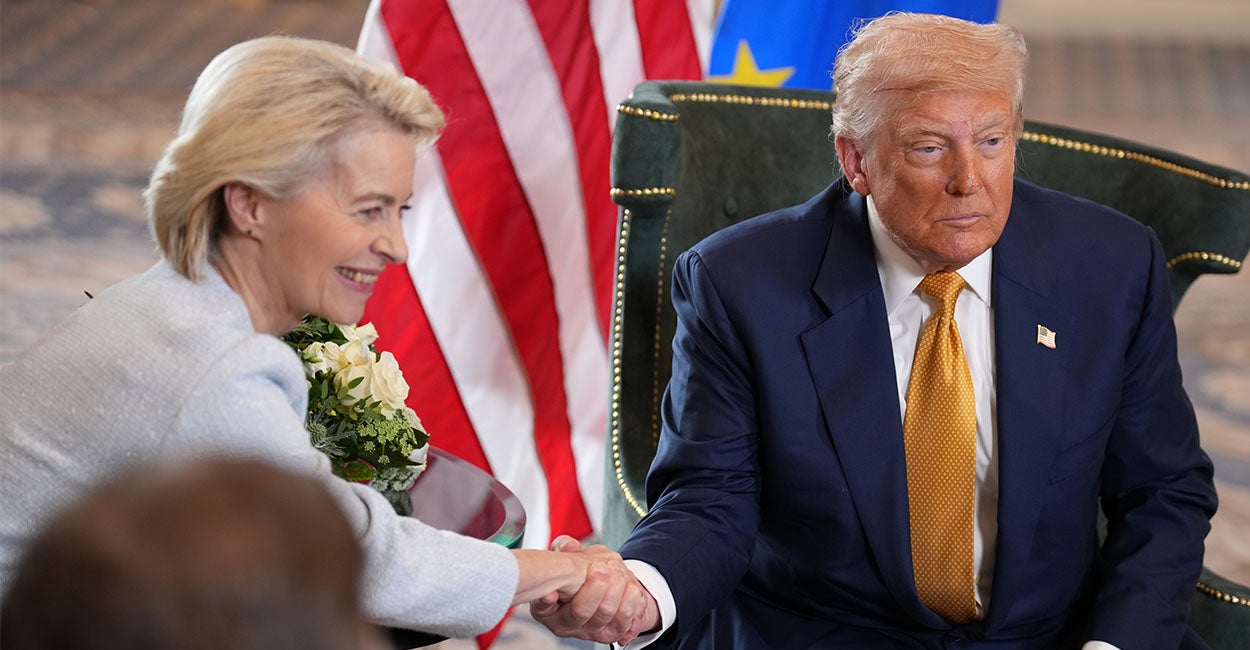
A fundamental principle of international law is comity—the mutual respect sovereign nations afford one another in enforcing their laws. For the United States, comity is not an abstraction. It is the predicate for stable trade relationships and predictable cross-border enforcement. When that principle erodes, diplomacy becomes nearly impossible. Comity is central to the U.S. dispute with the European Union over the Digital Services Act and the Digital Markets Act. It is also the basis for the Trump administration’s Section 301 investigation. Section 301 of the Trade Act of 1974 authorizes the United States Trade Representative to investigate foreign government actions that are “unjustifiable,” “unreasonable,” or “discriminatory” and that burden U.S. commerce. If such findings are made, the U.S. Trade Representative may respond with tariffs, import restrictions, or the suspension of trade concessions. This authority is not novel. Presidents of both parties have invoked it—President Joe Biden in increasing tariffs on certain Chinese technology imports, and Presidents George H.W. Bush and Bill Clinton in resolving disputes with countries such as Japan. The question, then, is whether the EU’s digital regulations fall within Section 301’s ambit. The Digital Services Act raises serious concerns. Like the General Data Protection Regulation before it, the Digital Services Act projects regulatory authority beyond Europe’s borders. It exposes companies—overwhelmingly American—to fines of up to 6% of global annual revenue, subjects them to open-ended “systemic risk” investigations, and prescribes detailed obligations governing content moderation. When a regulatory framework disproportionately burdens foreign firms and carries penalties tied to global revenue, it strains credulity to describe it as neutral. That is leverage. To be frank, the Digital Markets Act presents an even clearer case. Marketed as a tool to promote “fairness” and “contestability,” it relies on quantitative thresholds that initially captured just seven companies. Six are American: Alphabet, Amazon, Apple, Meta, Microsoft, and Booking.com. Only one non-Western company, ByteDance (TikTok), was designated. This outcome was not accidental—it was by design. In 2021, Andreas Schwab, the Digital Markets Act’s lead rapporteur, proposed raising the thresholds even further—an amendment analysts at the Center for Strategic and International Studies observed would have kept European-headquartered firms out of the law’s ambit while leaving American companies squarely in scope. That is not conjecture; it is legislative history. Other jurisdictions have addressed competition concerns in targeted ways—particularly in app store governance—without erecting sweeping structural obligations that conveniently spare domestic champions. By contrast, the Digital Markets Act’s architecture all but guarantees asymmetric impact. To be frank, this asymmetric lawfare is precisely what is driving U.S. concern. None of this is a defense of large technology companies. The U.S. brought its own competition and consumer protection cases against many of these firms. But those actions are grounded in neutral statutes and due process protections. We do not draft alleged consumer-protection statutes that just happen to neatly capture foreign competitors while shielding domestic firms. Indeed, U.S. policy has tended in the opposite direction. The SAFE Web Act encourages cooperation with foreign enforcement authorities. The CLOUD Act formalizes mechanisms for cross-border data access consistent with comity principles. These statutes reflect a commitment to reciprocity and rule-of-law norms. Reciprocity is not protectionism. When a trading partner imposes measures that distort trade and impose disproportionate burdens on foreign companies, the affected nation is entitled to examine whether those measures are discriminatory and to respond accordingly. That is precisely what Section 301 contemplates. The U.S. has allowed European firms to compete freely within our market. It is reasonable to expect comparable treatment. If that expectation is unmet, a Section 301 investigation is not escalation—it is the enforcement of fair dealing.  We publish a variety of perspectives. Nothing written here is to be construed as representing the views of The Daily Signal. The post Why Trump’s Tech Defense in the EU Is an America First Policy appeared first on The Daily Signal.
Like
Comment
Share
Daily Signal Feed
Daily Signal Feed
5 w

EXCLUSIVE: Victims of AI Fight for Utah Bill Opposed by Trump Administration
Favicon 
www.dailysignal.com

EXCLUSIVE: Victims of AI Fight for Utah Bill Opposed by Trump Administration

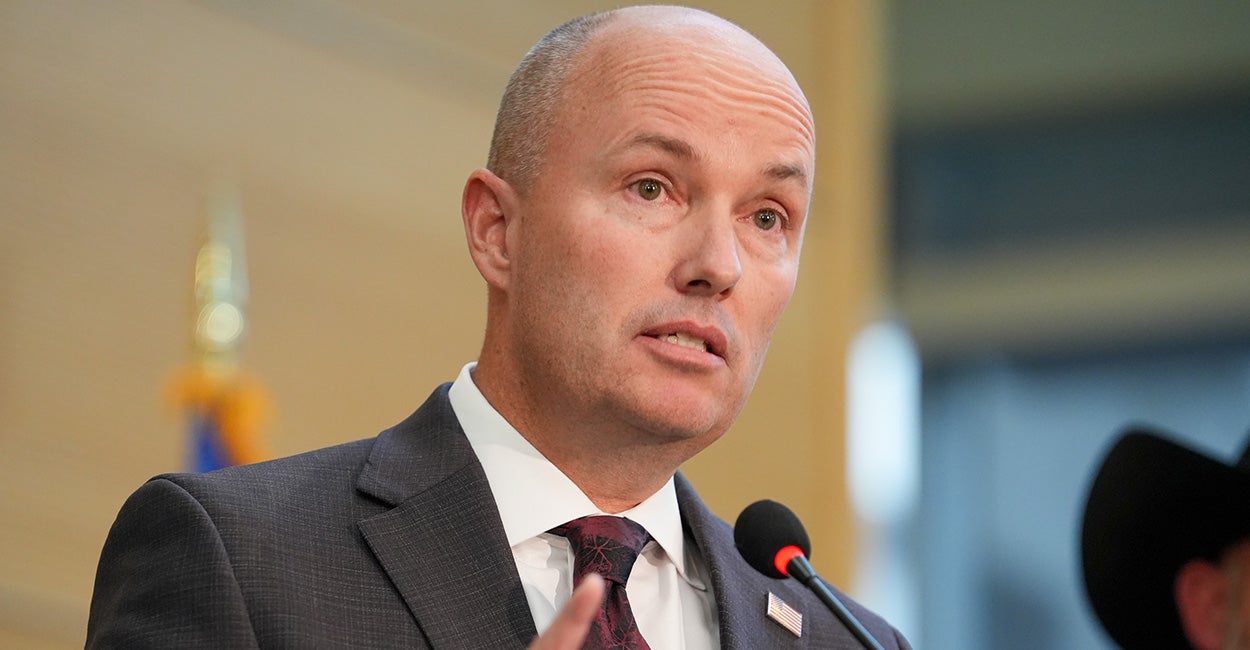
FIRST ON THE DAILY SIGNAL—Jennie DeSerio lost her 16-year-old son to suicide after she says he was inundated with self-harm videos on TikTok. Now, she is leading a group of parents fighting for Utah to pass a law protecting kids online. The Trump administration, however, has taken a firm stance against the bill. Ten parents who say they lost their children to online harms such as fentanyl sales, cyberbullying, sextortion, and self-harm pushed by social media algorithms and AI chatbots, wrote a letter to Utah’s governor and congressional leadership asking them to pass House Bill 286. The legislation would require tech companies to publish safety and child-protection plans. The parents asked Utah Gov. Spencer Cox, House Speaker Mike Schultz, Senate President Stuart Adams, and Senate Majority Leader Kirk Cullimore, all Republicans, to “stand up to David Sacks” and “his idea that the American people are less valuable than AI companies” by moving the bill forward. The White House Office of Intergovernmental Affairs sent a letter to the bill sponsor saying the Trump administration is “categorically opposed” to the legislation and views it as an “unfixable bill that goes against the Administration’s AI Agenda.” That prompted the parents to petition Utah’s leadership. The Office of Science and Technology Policy has not taken an official stance against the bill. “The choice being made at the federal level is to choose the AI industry over the rights of states like Utah and the safety of everyday Americans,” the letter says. “You have never made that choice, and your residents and their children are counting on you not to back down.” “His agenda is the fastest possible growth of the AI industry,” the letter says of Sacks. “Our children’s safety is an obstacle to that agenda, not a priority within it. Unelected officials in D.C. who are unwilling to engage with this bill on its merits, unwilling to sit with the families paying the price for the status quo, have not earned the authority to kill it.” A White House official previously told The Daily Signal the president supports AI regulation protecting minors, as outlined in Trump’s Dec. 11 executive order, “Ensuring a National Policy Framework for Artificial Intelligence.” “To give the American people confidence in AI, President Trump has called for an AI policy framework that protects children, prevents censorship, respects intellectual property, and safeguards communities,” a White House spokesperson told The Daily Signal in response to the letter. “We continue to have productive conversations with state and local leaders as we work with Congress towards national AI legislation, as directed in the president’s Executive Order.” The Utah parents argue that now the dangers of social media are clear, the state must stop history from repeating itself with the growth of AI. “We know exactly what it looks like when a powerful industry moves fast and dismisses concern because they are counting on no one being held responsible,” the letter continues. “We know where that road ends for families. And when we look at what is happening with AI, and at who is trying to stop HB 286, we are watching the same deadly cycle begin again.” The parents say AI is already creeping into the lives of children, just like social media. “The social media companies now facing trial for harms against our children never had to disclose what they knew about the risks to our children using their platforms,” the letter says. “Now those same companies are fighting us in legislatures to get away with it again on AI.” DeSerio’s son Mason developed a social media addiction after going through a breakup in high school. One night after DeSerio took Mason’s phone away, he had a mental break and came downstairs acting out of character. He punched his mother and then went into his room took his life, according to DeSerio. A few weeks later, she looked at his TikTok history and saw that over the course of 13 days, he became inundated with videos glorifying suicide. “The algorithm got to him,” she said. “Social media murdered my son.” Though DeSerio cannot get her son back, she is fighting to prevent other families from losing their children. But without transparency and accountability laws, nothing is going to change, she says. “This isn’t a First Amendment issue,” DeSerio said. “This is just, before we release a product, we’re going to let you know every safety testing result, and when something is missed and it harms kids, reporting that.” The post EXCLUSIVE: Victims of AI Fight for Utah Bill Opposed by Trump Administration appeared first on The Daily Signal.
Like
Comment
Share
Reclaim The Net Feed
5 w

Privacy Groups Revolt Against Google’s Demand to Register Every Android Developer
Favicon 
reclaimthenet.org

Privacy Groups Revolt Against Google’s Demand to Register Every Android Developer

If you're tired of censorship and dystopian threats against civil liberties, subscribe to Reclaim The Net. Android’s defining advantage over iOS has always been openness. You could build an app, distribute it yourself, and never touch Google’s systems. That era is about to end unless the open-source community can force Google to back down. Starting September 2026, any app installed on a certified Android device must be registered by a Google-verified developer. No registration, no installation. The verification demands government-issued identification, agreement to Google’s terms and conditions, and a $25 fee. Developers who skip Google’s approval process will find their apps blocked, even when distributed entirely outside Google Play, through stores like F-Droid, the Amazon Appstore, or Samsung’s Galaxy Store. Organizations, including the Electronic Frontier Foundation, the Free Software Foundation, F-Droid, Article 19, Fastmail, and Vivaldi, signed an open letter calling on Alphabet CEO Sundar Pichai, founders Larry Page and Sergey Brin, and app ecosystem chief Vijaya Kaza to kill the policy. Their message is simple: Google is reaching into distribution channels it doesn’t own, doesn’t operate, and has no legitimate authority over. “This extends Google’s gatekeeping authority beyond its own marketplace into distribution channels where it has no legitimate operational role,” the signatories argue. “Developers who choose not to use Google’s services should not be forced to register with, and submit to the judgement of, Google.” Google announced the requirement in August 2025, framing it as a security measure against bad actors. “Starting next year, Android will require all apps to be registered by verified developers in order to be installed by users on certified Android devices,” the company said. “This creates crucial accountability, making it much harder for malicious actors to quickly distribute another harmful app after we take the first one down.” The program has been in preview since November 2025 and opens to all developers in March 2026. The September rollout adds Brazil, Indonesia, Singapore, and Thailand. Google Play developers have faced similar verification requirements since 2023, so this primarily hits the alternative distribution ecosystem. Custom Android builds like GrapheneOS, LineageOS, and /e/OS are unaffected. The letter doesn’t dismiss security concerns entirely. But it rejects the premise that government ID registration from Google is the solution. “While we do recognize the importance of platform security and user safety, the Android platform already includes multiple security mechanisms that do not require central registration,” the letter says. “Forcibly injecting an alien security model that runs counter to Android’s historic open nature threatens innovation, competition, privacy, and user freedom. We urge Google to withdraw this policy and work with the open-source and security communities on less restrictive alternatives.” What the signatories are naming, specifically, is that this policy converts sideloading from a right into a privilege Google administers. Independent developers, researchers, academics, and open-source contributors with limited resources now face the same identity-verification demands as commercial app publishers. Their government IDs go into Google’s systems. Their apps go under Google’s opaque review process. Their ability to reach users becomes contingent on Google’s continued approval. Google built its mobile dominance partly on the argument that Android was different: more open, less controlled, a genuine alternative to Apple’s walled garden. This policy narrows that difference considerably. And registration that runs through a single corporate gatekeeper is control, regardless of what it’s called. If you're tired of censorship and dystopian threats against civil liberties, subscribe to Reclaim The Net. The post Privacy Groups Revolt Against Google’s Demand to Register Every Android Developer appeared first on Reclaim The Net.
Like
Comment
Share
Reclaim The Net Feed
5 w

The Revolt Brewing Over Discord’s Digital ID Future
Favicon 
reclaimthenet.org

The Revolt Brewing Over Discord’s Digital ID Future

This Post is for Paid Supporters Reclaim your digital freedom. Get the latest on censorship and surveillance, and learn how to fight back. SUBSCRIBE Already a supporter? Sign In. (If you’re already logged in but still seeing this, refresh this page to show the post.) The post The Revolt Brewing Over Discord’s Digital ID Future appeared first on Reclaim The Net.
Like
Comment
Share
Hot Air Feed
Hot Air Feed
5 w

Slop: How the Most Recent Attack on Candace Owens' Critics Got Started
Favicon 
hotair.com

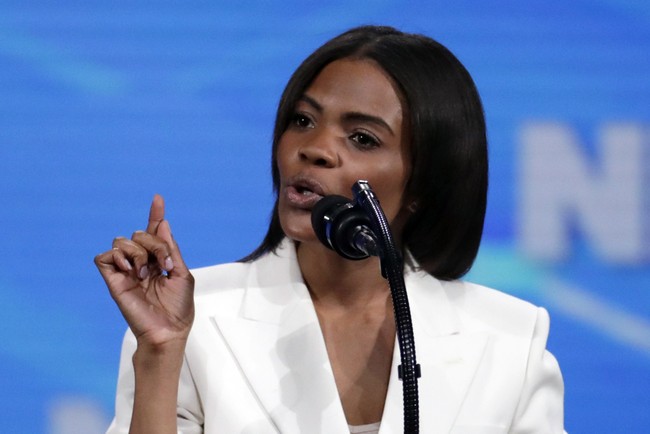
Slop: How the Most Recent Attack on Candace Owens' Critics Got Started

Slop: How the Most Recent Attack on Candace Owens' Critics Got Started
Like
Comment
Share
Science Explorer
Science Explorer
5 w

"Maybe We Never Really Had That Many Of Their X Chromosomes": Prehistoric Human Women Had The Hots For Neanderthal Dudes
Favicon 
www.iflscience.com

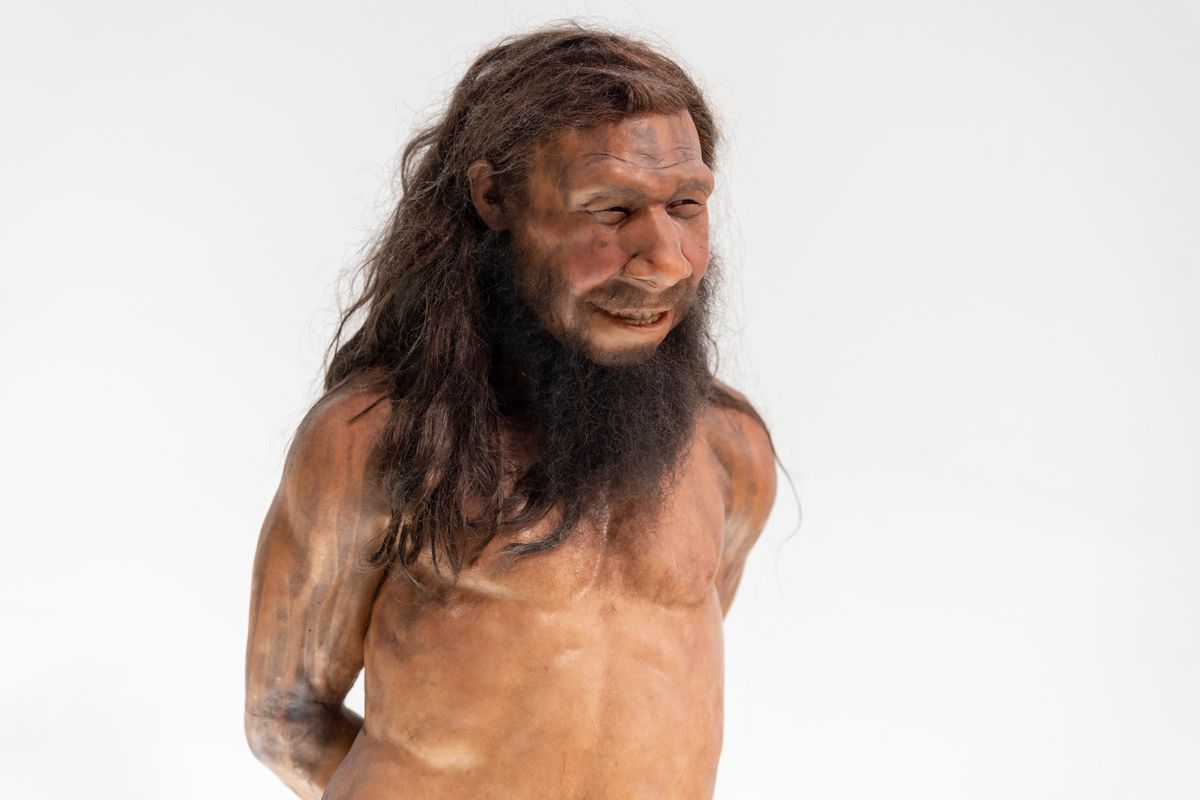
"Maybe We Never Really Had That Many Of Their X Chromosomes": Prehistoric Human Women Had The Hots For Neanderthal Dudes

Imagine what they would have made of Homo erectus!
Like
Comment
Share
NewsBusters Feed
NewsBusters Feed
5 w

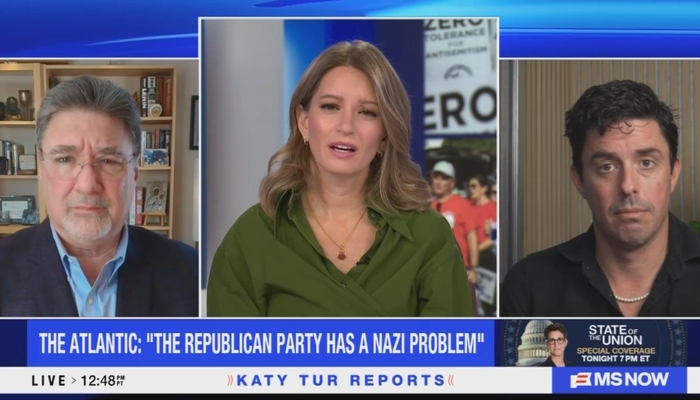
Katy Tur Compares Pro-Trump Jews to Rich Austrian Jews Who Didn't Fear Hitler
Favicon 
www.newsbusters.org

Katy Tur Compares Pro-Trump Jews to Rich Austrian Jews Who Didn't Fear Hitler

On Tuesday afternoon, MS NOW made the latest comparison of President Donald Trump to Nazi dictator Adolf Hitler as afternoon host Katy Tur made an analogy between Jews who support Trump and wealthy Jews in Vienna who did not take Hitler seriously in the 1930s. The comments came during a segment in which The Atlantic's Tom Nichols appeared as a guest to complain that Republican leaders like Trump and Vice President JD Vance do not do enough to condemn Nazi sympathizers, which he recently wrote about. He insisted "The GOP has a Nazi problem," and said he was "aggrieved by how quickly 21st-century Nazism has found a home in the party of Lincoln." Democrats really enjoy smearing the Other Party this way. At one point, Tur brought up Trump White House advisor Stephen Miller and other Jews who support Trump: TUR: Stephen Miller's a Jew, though, you know, and Donald Trump's daughter has converted to Judaism. His son-in-law is a Jew. So I guess this is what always has been so confusing and and weird about this -- because even in 2015 and 2016, when Donald Trump was refusing to push away David Duke, or when he, you know, there were all sorts of examples, but there was a very famous one where he put Hillary Clinton's face over a pile of cash and a star of David calling her corrupt. Did Trump "refuse to push away David Duke" during his first presidential campaign? He disavowed Duke in 2015 and in 2016, but the press pounded away at it, and Trump did try to claim he didn't know anything about Duke...but he ultimately would disavow him. The stars at MS NOW would think it was garbage if you started talking about Democrats who were soft on Louis Farrakhan. Speaking to Nichols, she added: TUR: I mean, the dog whistles were barely dog whistles. They were bullhorns at that point, and now it's only gotten more extreme. So I guess -- what is the -- if we're going to keep going with this down this line, Tom, from what it started as to to what we're seeing today, what is the end? And how do you, I guess, how do you rectify the fact that Donald Trump's got Jewish grandkids with this? After Nichols theorized that Trump's supporters believe Nazi sympathizers are a part of their base that they do not want to risk losing the votes of, Tur responded: "Maybe they think they're rich enough, but ask the Jewish families in Vienna if they thought -- if they were rich enough to steer clear of any problems as the Nazis came in." Transcript follows: MS NOW's Katy Tur Reports February 24, 2026 3:49 p.m. Eastern KATY TUR: Stephen Miller's a Jew, though, you know, and Donald Trump's daughter has converted to Judaism. His son-in-law is a Jew. So I guess this is what always has been so confusing and and weird about this -- because even in 2015 and 2016, when Donald Trump was refusing to push away David Duke, or when he, you know, there were all sorts of examples, but there was a very famous one where he put Hillary Clinton's face over a pile of cash and a star of David calling her corrupt. I mean, the dog whistles were barely dog whistles. They were bullhorns at that point, and now it's only gotten more extreme. So I guess -- what is the -- if we're going to keep going with this down this line, Tom, from what it started as to to what we're seeing today, what is the end? And how do you, I guess, how do you rectify the fact that Donald Trump's got Jewish grandkids with this? TOM NICHOLLS, THE ATLANTIC: I don't think Donald Trump thinks in those terms. I think he thinks, "What's good for me and my family and what isn't." And right now, I think Tim (Miller) absolutely nailed it. And I talk about this in the piece. These people, you know -- you ask, "What do they get out of this?" They get votes, they get support, they get, you know, when JD Vance was asked to condemn these people, he said, "Well, I didn't come here with a list of people to condemn," you know, because they -- that's part of their base, and they think of themselves as a beleaguered minority. Even though they control the government, they think they need every single vote they can get. And they're not going to be Bob Dole. They're not going to be George H.W. Bush, who who in '91 basically says about David Duke, "Everybody, he's not a Republican. Everybody needs to vote for the other guy." You know, they're just not going to do that. And I think they think, and, "We're rich and powerful enough that none of this is going to touch us," you know, "Our families doesn't matter." And I think, you know, asking what Miller or Trump see in this, they don't think in those terms. They think in terms of themselves, and then they think in terms of everybody else. One of the names Tim mentioned, talking about how peaceful America would be after 100 million deportations, how is, you know, "What -- what kind of message is that? And where do you suppose they got that from when you're talking about deporting a third of the United States? So I just don't think they think in those terms. They think this is good politics, it's good rhetoric, it's votes. TUR: Maybe they think they're rich enough, but ask the Jewish families in Vienna if they thought -- if they were rich enough to steer clear of any problems as the Nazis came in. NICHOLS: I'm not saying it's smart, Katy. TUR: Yeah, no, I know, I know you're not.
Like
Comment
Share
NewsBusters Feed
NewsBusters Feed
5 w

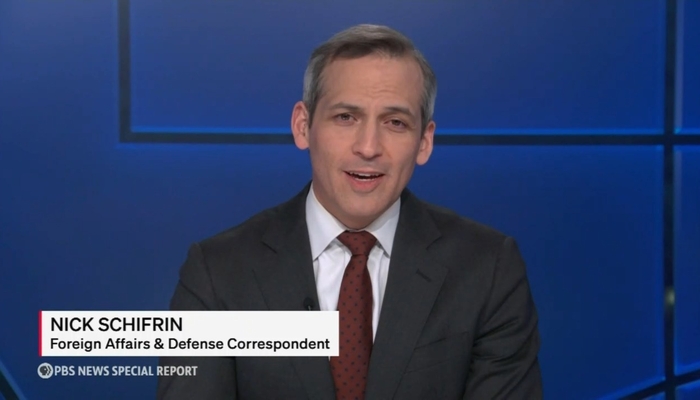
PBS’s Nick Schifrin Nitpicks Trump's Iran Death Figures, But Swallowed Hamas Claims Whole
Favicon 
www.newsbusters.org

PBS’s Nick Schifrin Nitpicks Trump's Iran Death Figures, But Swallowed Hamas Claims Whole

After Virginia Gov. Abigail Spanberger’s rebuttal speech to President Trump’s State of the Union address, PBS News Hour’s foreign affairs correspondent  Nick Schifrin nitpicked President Trump’s claim about the carnage in Iran. Nick Schifrin: ….the president accused Iran of working to build missiles that will soon reach the United States. That's from a defense intelligence assessment. And also the death toll, 32,000 killed in those protests, much higher than most activists believe, or at least have said publicly. Combined, clearly, Amna, trying to paint the regime in Iran as something that he could target if he decides, and, of course, that big military buildup will give him that opportunity in the days and weeks to come. There’s an ideological point to casting doubt on the estimated number of peaceful protesters killed by the Iranian regime, given that Trump may be building up U.S. forces in the region to strike against Iran. While PBS quibbles over the American president’s numbers, there’s one national body whose death toll figures Schifrin and his colleagues seem to trust intimately: PBS has been all too eager to validate anti-Israel propaganda fatality figures, often originating from the Gaza Health Ministry -- numbers approved by the terrorist group Hamas that runs Gaza. Schifrin on August 15, 2024, under the online headline “Gazan families shattered as war's death toll crosses 40,000”: "on average, every day, for 314 days, more than 100 Gazans have died, often before they had the chance to live." Schifrin on October 4, 2024 came close to full disclosure but didn’t make it: “Gaza's Health Ministry, which answers to Hamas, says 140,000, or more than 5 percent of the Gaza Strip, have been killed or wounded, 900 families wiped off entirely from the civil registry, and in more than 1,300 cases, only one family member survived….But all the numbers may yet prove an undercount.” On August 22, 2025 he took dictation from a report by the anti-Israel United Nations: “Since the war began, the U.N. says more than 17,000 Gazan children have been killed, 33,000 wounded.” Seemingly every PBS reporter or anchor took Hamas’s propaganda at face value. Co-anchor Amna Nawaz introduced an October 8, 2025 Schifrin report this way: “Today, we examine the toll on Palestinians in the Gaza Strip. Palestinian health authorities say more than 67,000 people have been killed. More than 40,000 children have lost one or both parents.” But when President Trump gives a plausible figure for the murder count of the hostile Iranian regime, estimates are suddenly dubious?
Like
Comment
Share
Showing 4550 out of 116199
  • 4546
  • 4547
  • 4548
  • 4549
  • 4550
  • 4551
  • 4552
  • 4553
  • 4554
  • 4555
  • 4556
  • 4557
  • 4558
  • 4559
  • 4560
  • 4561
  • 4562
  • 4563
  • 4564
  • 4565
Advertisement
Stop Seeing These Ads

Edit Offer

Add tier


Select an image
Delete your tier
Are you sure you want to delete this tier?

Reviews

In order to sell your content and posts, start by creating a few packages. Monetization

Pay By Wallet

Payment Alert

You are about to purchase the items, do you want to proceed?

Request a Refund