YubNub Social YubNub Social
    #music #tew #tuba #euphonium #tew2026 #militarymusic #armymusic #armyband #band #freedom #concertband #tusab #orchestra #armyorchestra #warmup
    Advanced Search
  • Login
  • Register

  • Day mode
  • © 2026 YubNub Social
    About • Directory • Contact Us • Developers • Privacy Policy • Terms of Use • shareasale • FB Webview Detected • Android • Apple iOS • Get Our App

    Select Language

  • English
Night mode toggle
Featured Content
Community
New Posts (Home) ChatBox Popular Posts Reels Game Zone Top PodCasts
Explore
Explore
© 2026 YubNub Social
  • English
About • Directory • Contact Us • Developers • Privacy Policy • Terms of Use • shareasale • FB Webview Detected • Android • Apple iOS • Get Our App
Advertisement
Stop Seeing These Ads

Discover posts

Posts

Users

Pages

Blog

Market

Events

Games

Forum

Pet Life
Pet Life
5 w ·Youtube Pets & Animals

YouTube
43-Pound Cat Loses Half His Weight Thanks To His New Mom | The Dodo
Like
Comment
Share
History Traveler
History Traveler
5 w

5 Great Challenges That Ulysses S. Grant Faced During His Presidency
Favicon 
www.thecollector.com

5 Great Challenges That Ulysses S. Grant Faced During His Presidency

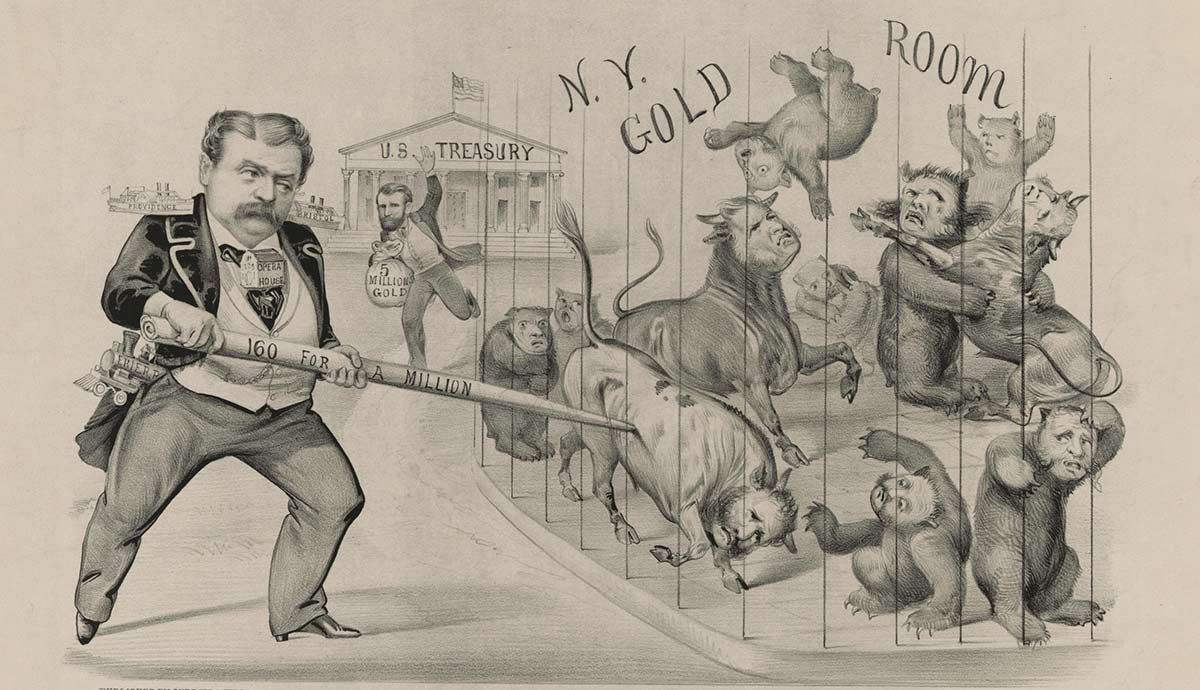
  Ulysses S. Grant didn’t even want to be president. However, courted by the Radical Republicans, he won the 1868 election in a landslide, defeating his opponent by a 3 to 1 margin in the Electoral College vote. He maintained favor with many, winning re-election in 1872. Despite his popularity, Grant faced a number of challenges when he ascended to the presidency. Just a few years after the Civil War, the country was still struggling to piece itself back together and looking for strong leadership. Was Grant the man for the job?   1. Reconstruction Woes Abound This Reconstruction-era cartoon shows Lincoln “propping up” the United States while Andrew Johnson stitches the country back together. Source: Library of Congress/Wikimedia Commons   The United States struggled to reunite after a devastating Civil War concluded in 1865. The man who had led the country through its turmoil, Abraham Lincoln, had been gunned down in April 1865, leaving his vice president, Andrew Johnson, at the helm. However, Johnson lacked Lincoln’s popularity and skill, and many disavowed his progress in Reconstruction after the war. In his presidential policy, Ulysses S. Grant leaned more towards Lincoln’s original plans to repair the country, seeking to reconcile rather than deal retribution to the former Confederates. At the same time, regained Confederate interests had to be prevented from gaining a foothold.   A Currier & Ives image depicts the first African American senators and representatives in 1872. Source: Library of Congress/Wikimedia Commons   The issue of how to integrate newly freed Black Americans into society was another primary issue facing Grant. A son of a staunch abolitionist father, Grant had been raised to view slavery negatively, though his wife’s family was a slaveholding one. Those in the South and even many citizens in the North did not equate Black freedom with social equality. Grant sought to protect newly freed slaves without alienating the rest of the country. Throughout his presidency, he utilized military might and national legislation to protect the African American citizenry. He signed off on the Fifteenth Amendment in 1870, protecting the Black vote throughout the country.   2. The Rise of the KKK The KKK, photographed here on the Harvard University campus in 1924, was established and growing during Grant’s era. Source: The Crimson/Wikimedia Commons   The Ku Klux Klan (KKK) is a white supremacist group established in 1866 by former Confederates. As it grew and spread throughout the South, the KKK became increasingly bold and violent. Its members attacked freedmen and women who were exercising their newly granted rights as American citizens and those who sympathized with and supported them. Their activities included burning Black schools and churches, voter intimidation, assault, and even rape and murder.   The Klan was supported by many members of law enforcement and government officials throughout the South, which meant that their crimes often went unpunished. This directly hampered Grant’s reconstruction efforts in the South, and although he had limited means with his resources already stretched, Grant appealed to Congress for assistance. A series of laws known as “Force Acts” were pushed through Congress, aimed at curbing the violence. These acts prevented activities such as “going in disguise” to another person’s property (a hallmark of the KKK is to wear white masks or hoods). He also put elections under federal supervision.   Four KKK members prepare to take off in a plane to scatter Klan literature over Virginia suburbs in 1922. Source: Voice of America/Wikimedia Commons   Grant also issued a proclamation in 1871, indicating to the KKK that his administration would not tolerate acts of terrorism in the South or elsewhere, emphasizing the need for equal protection for all Americans. Since Grant lacked the resources to crack down on the Klan completely, he made examples of certain areas, including the Piedmont region of South Carolina.   Grant suspended habeas corpus and declared martial law in nine counties. Members of the military were stationed in the area to gather intelligence and round up offenders for trial. While there were some convictions, and law and order was temporarily restored in some areas, the efforts had mixed results. Issues of state versus federal jurisdiction came into question, and many of the offenders received light sentences. As Southern Democrats came into control in the following years, the KKK became less relevant, as white supremacy became a common theme among elected officials.   3. A “Peace Policy”? Indigenous Affairs Ely Parker became the first Indigenous cabinet member and first Indigenous Commissioner of the Bureau of Indian Affairs under Grant. Parker served alongside Grant in the Civil War. Source: National Archives at College Park/Wikimedia Commons   Grant’s relationship with America’s Indigenous people was a complicated one. He called them the “original occupants of the land” and hoped to ultimately reach citizenship status for them. However, his means of achieving this would require American Indians to sacrifice their culture and way of life. Grant served with Ely Parker, a Seneca man, in the Civil War, with Parker acting as his personal secretary for much of the affair. It was no surprise to many when he chose Parker to act as his Commissioner of Indian Affairs. Parker was the first Indigenous person to hold this position and the first to be a member of the US presidential cabinet.   Ely Parker in 1889. Source: New York State Museum/Wikimedia Commons   Parker and Grant worked together to form Grant’s Indian Policy. Ultimately, the goal was that the US military would protect Indigenous people on a reservation system as they transitioned from their traditional ways of life to Americanized ones. They would learn trades and businesses that would allow them to integrate into white society.   However, this was a flawed policy. Many American Indians had no desire to leave their homelands and desert their culture, while the reservation system was widely corrupt, resulting in poor rations and few resources. Grant also faced blowback from the Board of Indian Commissioners and Congress, many of whom sought to profit from the reservations. The Board falsely accused Parker of pocketing money from the Lakota reservation and put him on trial. Though he was exonerated, Parker chose to resign from his role as Commissioner of Indian Affairs.   The Little Bighorn battlefield site. Source: Acroterion/Wikimedia Commons   Grant also offered to purchase the Black Hills from plains tribes in an effort to stem conflict between the tribes and white settlers, but this was to no avail. Under Grant, the army would fight many different bands throughout the Midwest and the West, especially in the 1870s. One of the most famous battles, The Greasy Grass, or Little Bighorn, took place under his watch in 1876. By the end of his final term, Grant’s perhaps well-meaning “peace policy” towards America’s Indigenous people was laughable.   4. A Different Kind of Black Friday An 1869 Currier & Ives cartoon shows Grant thwarting the manipulation of the gold market. Source: Library of Congress/Wikimedia Commons   Grant was a longtime supporter of the gold standard, and one of his methods for improving the economy, like his predecessor Andrew Johnson, was to reduce the supply of paper currency by using gold to buy dollars from citizens. In 1869, two Wall Street schemers, Jay Gould and Jim Fisk, hoped to manipulate the market by buying up as much gold as they could and then selling it when its value rose. However, Grant flooded the market with gold, which dampened their plans.   Fisk and Gould met with Grant several times at public events, directing their conversation to argue against government involvement with the gold market. The men judged Grant’s response to be amenable and went ahead with their plan. However, Grant discovered the scheme and, as a result, ordered the sale of four million dollars in government gold. Investors panicked, with many rushing to sell their gold holdings. Some were financially ruined. As a result, September 24, 1869, became known as “Black Friday.”   5. The Panic of 1873 This 1873 cartoon by Frank Bellew shows the character “Panic” sweeping the garbage off of Wall Street. Source: Library of Congress/Wikimedia Commons   The economic woes of the Grant administration continued with the Panic of 1873. On September 18, Jay Cooke and Company, a banking firm that heavily invested in the booming railroad industry, closed its doors, leading to economic panic across the nation. Cooke and Company, who had been the Union Army’s chief financier during the Civil War, had overextended itself and declared bankruptcy. Other companies soon followed, with 89 of the country’s 264 railroads declaring bankruptcy. In two years, 18,000 businesses had closed, and unemployment shot to 14%. The ensuing economic depression cast a shadow over the remainder of Grant’s presidency.   While many people suffered as a result, African Americans in the South were in crisis. Many faced unemployment, and with the ongoing poor economy, the government was more focused on addressing financial woes than protecting all citizens. KKK activities ramped back up, and violence became commonplace. This crisis would lead to Southern white supremacists gaining unfettered control in governmental positions, undoing many of Grant’s Reconstruction efforts.
Like
Comment
Share
History Traveler
History Traveler
5 w

5 Major Historical Inaccuracies In “The Tudors” TV Show
Favicon 
www.thecollector.com

5 Major Historical Inaccuracies In “The Tudors” TV Show

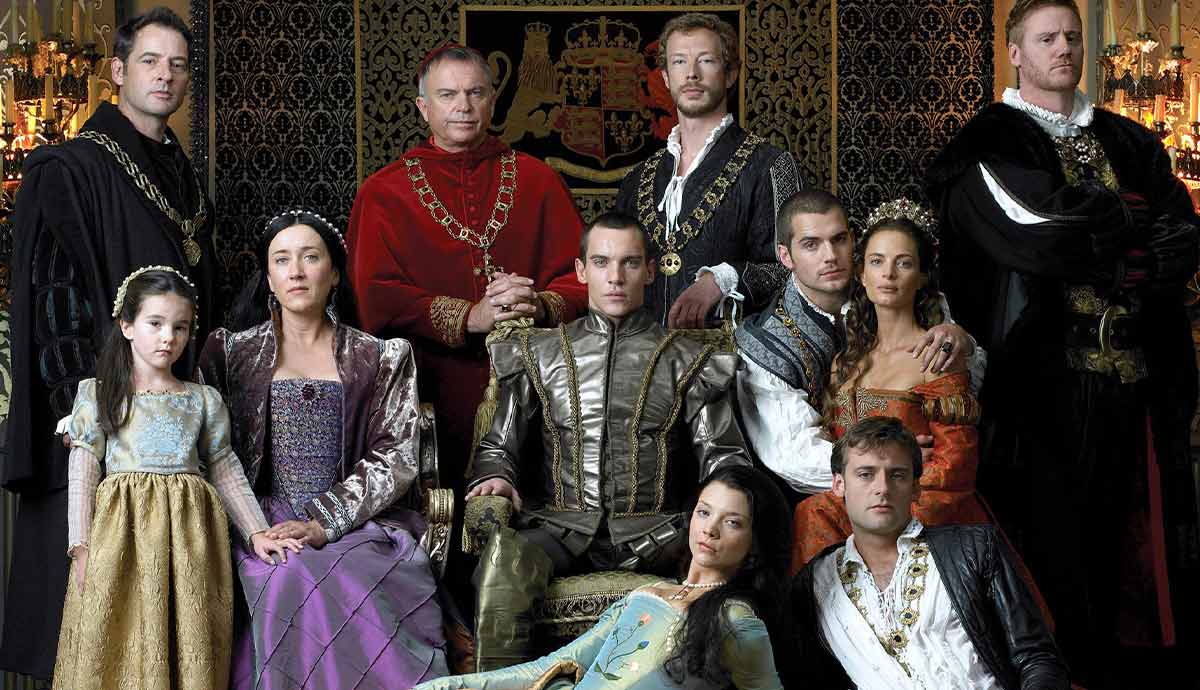
  The Tudors is an English historical drama that ran between 2007 and 2010. Since its release, it has become known for its popularity amongst history enthusiasts, but it is also notorious for its many historical inaccuracies. Were these inaccuracies accidental as a result of poor research? Or were they intentional changes made by the writers and producers to enhance the viewing experience of their audience?   In this article, we will count down the five most obvious historical inaccuracies in The Tudors, review the most shockingly contrived scenes, and question why they were included in the series at all.   The Tudors: Artistic License or Accidental Blunder? The Family of Henry VIII: An Allegory of the Tudor Succession, by Lucas de Heere, 1572. Source: RKD Images   There is nothing that divides history enthusiasts like the discussion of period dramas.   Some people credit period dramas as being the origin of their interest in history. Some people enjoy them for what they are, not a factual documentary, but a little light-hearted entertainment based on events of the past. On the other hand, some people simply cannot stand to watch anything that is not 100 percent accurate.   There are many period dramas to choose from. The White Queen, The White Princess, The Spanish Princess, Reign, Becoming Elizabeth, Gunpowder, and The Power and the Passion are just a few of the television series based on 15th to 17th-century figures and events. The Tudors, another such series, was created and written by Michael Hirst for the American television channel, Showtime.    The series ran for 38 episodes and followed the reign of King Henry VIII. Although the timings are jumbled pretty much all the way through, we can derive that the series begins around 1520 and ends with King Henry’s death in 1547. The star of the show is Johnathan Rhys Meyers, who gives an outstanding and often sympathetic portrayal of King Henry and artfully brings to life the most iconic moments of his reign.   Henry VIII, by Hans Holbein the Younger, 1540-47. Source: Wikimedia Commons   Michael Hirst himself acknowledged the fact that his work was not one of unquestionable accuracy. However, he has also claimed that he hoped and expected people to draw inspiration from the series and carry out their own research as a result of their enjoyment. Of The Tudors, he said the following. “One of the effects of The Tudors has been to drive people back to the history books with renewed interest, and we’re drawing in those who had initially no interest in the subject. From the feedback I’ve been getting, the show has galvanised interest even in academic history.”    Let us now delve into The Tudors and review five of its craziest inaccuracies. These are not just slight errors with costumes, multiple uses of words and phrases that did not exist during the era, or notable moments where modern-day items are left in shots on screen. These are incomprehensible errors that must surely have been made consciously, occasionally for reasons that are not completely clear to the viewer.   Inaccuracy Number 1: The Absent Tudor Sister Louis XII of France and his third wife, English princess Mary Tudor, 1514. Source: British Library   Of all the mistakes, inaccuracies, and anomalies included in the television series The Tudors, the absence of King Henry VIII’s sister is the most obvious. Furthermore, it may actually be the most historically problematic.   King Henry had two sisters. They were named Margaret and Mary Tudor, and both were equally important. Margaret was the elder; she first married King James IV of Scotland, and later married twice more. Mary was the younger; her first husband was King Louis XII of France, and her second was Charles Brandon, the Duke of Suffolk.   In The Tudors, however, King Henry is provided with only one sister. Interestingly, it is almost impossible to determine which has been kept and which has been omitted. The character is given the name Margaret. In contrast, although her story is almost entirely fictional, it seems to align a little more with the life of Mary Tudor.   Portrait of Margaret Tudor, by Daniel Mytens, 17th century. Source: Wikimedia Commons   So, for what reason was the second sister excluded from the drama altogether? The answer given was that there were already too many characters named Mary. Mary Boleyn and Princess Mary already featured as somewhat minor characters. Obviously, the production team concluded that Mary Tudor was just one Mary too many for their audiences to cope with. This is somewhat patronizing to viewers, who are more than likely to be able to distinguish between three entirely different characters and storylines, even if they do have the same name.   Apparently, the same problem does not apply when it comes to the name Thomas, for we have Thomas Wolsey, Thomas Cromwell, Thomas Cranmer, Thomas More, Thomas Howard, Thomas Wyatt, Thomas Boleyn, Thomas Tallis, and Thomas Seymour, none of whom were selected for removal. It is a particular shame that neither sister married the king of Scotland, for it is only through King James IV and Margaret Tudor that we can get to the bottom of the royal family tree. King Charles III of England is descended not from King Henry VIII or any of his children, but through King Henry’s elder sister Margaret and her offspring. Without Margaret and James, Britain’s current royal family, as we know it in 2025, would simply not exist.   Inaccuracy Number 2: Portugal, Marriage, and Murder Portrait of Manuel I, King of Portugal. Source: Wikimedia Commons   Inaccuracy number two follows directly from inaccuracy number one. Margaret Tudor, the only sister King Henry VIII has been left with, is appointed for marriage not to the king of Scotland or the king of France, but instead to the king of another European nation. For an unknown reason, it was the king of Portugal that Margaret was to wed. This would have come as something of a surprise to Maria of Aragon and Eleanor of Austria, the real wives of the actual King of Portugal, Manuel I.   Perhaps the writers assumed that their audiences would know very little about the history of Portugal, and therefore be less likely to complain about the obvious error?   Marriage to either the king of Scotland or the king of France would have been more appropriate, since those were the monarchs whom Margaret and Mary actually married. However, by the time of Margaret’s marriage, the new king of France (Francis I) had already inherited the throne and was already married to Queen Claude. Scotland was not an option, for it was mentioned so little in the series that it hardly seems as if it exists at all.   So, in episode four of series one, Margaret is accompanied all the way to Portugal by the Duke of Suffolk. The two are clearly attracted to each other (as Mary and the duke were in real life). During a violent storm at sea, and after a game of cards, they dismiss their servants and sleep together before even arriving in Portugal.   Margaret Tudor, as portrayed by Gabrielle Anwar in The Tudors. Source: WeLovePeriodDramas   One thing the series does get right is the reluctance with which Margaret sets sail in the first place. She was horrified by the idea of marriage to the king of Portugal, just as the real Princess Mary was by the idea of marriage to the king of France. Upon meeting her future husband, the fictional Margaret is disgusted, and makes an excellent first impression by publicly fainting at the mention of bearing his children.   By the end of the episode, the fictional Princess Margaret has boarded a ship, had sex with the Duke of Suffolk, married the mysteriously unnamed king of Portugal, and then, as a final flourish, murdered her weakening husband by smothering him with a pillow the morning after the wedding.   In reality, it was Mary who married the Duke of Suffolk in this hectic manner. Her husband, King Louis XII of France, died on the first day of January in 1515. Following this death, Mary was kept in isolation at the Hotel De Cluny for a period of six weeks, the intention being to confirm that she was not carrying an heir to the throne. Of course, this was not the case.   Mary Tuor and Charles Brandon, Jan Gossaert, 1515. Source: Wikimedia Commons   When King Henry VIII heard this news back in England, he sent none other than his best friend, the Duke of Suffolk, to France to collect his sister. The duke was given strict instructions to negotiate with the French Council, to put Mary’s affairs in order, and to transport her safely back to England.   Predictably, the Duke of Suffolk and Princess Mary were married within a few weeks of his arrival. Although the exact date of their secret wedding is unknown, it has been suggested that they married sometime between the 15th and 20th of February that same year.   By the time the newlyweds returned to the English court, King Henry had learned of what had taken place. He was so angry over the betrayal of trust that he decided to have Mary sent into exile and the duke executed. It was Cardinal Wolsey who stepped in and suggested an alternative, financial punishment. Predictably, both Mary and Charles were restored to favor within a month or two.   Inaccuracy Number 3: A Fling With Mary Boleyn Portrait of Mary Boleyn, attributed to Remigius van Leemput, 17th century. Source: Wikimedia Commons   In The Tudors, the role of Mary Boleyn was played by an actress named Perdita Weeks. She is not a major character, but appears several times for short periods throughout seasons one and two. Mary Boleyn is portrayed as a likeable, fun-loving, unambitious, and promiscuous character. She is mistress not only to King Henry VIII of England, but also to King Francis I of France. It is for this reason that she is known as “the great prostitute.”    It is suggested in The Tudors that King Henry becomes bored with Mary very quickly. After just two or three encounters, he rejects her advances and demands that she leave his presence. The affair begins in the episode entitled Simply Henry, and is over in less than 60 minutes of screen time.   In reality, the length of the relationship between King Henry and Mary is unknown. However, historians are fairly sure that it exceeded three years. This is quite a different affair from the three days of passion represented in the series. In fact, two of her children were rumored to have been fathered by King Henry rather than her first husband, William Carey. Both Catherine Carey and Henry Carey later became favorites of Queen Elizabeth I, who at the least was their cousin, but at the most could have been their half-sister.   So, why was Mary Boleyn done away with so quickly, even though she played such a central role in the lives of both King Henry VIII and the rest of the Boleyns? Viewers can only assume that writers wanted to get her out of the way in order to move swiftly onto the love story starring Anne, the other Boleyn girl.   Inaccuracy Number 4: The Death of Cardinal Wolsey Portrait of Cardinal Wolsey, 1585-96. Source: Art UK   It is in episode ten of series one that Cardinal Thomas Wolsey, one of the principal characters in the series, is finally killed off. This is not a problem in itself, for Cardinal Wolsey died around halfway through King Henry VIII’s reign. On the whole, the circumstances seem to make sense, and the timings appear to add up correctly. The only thing that is wrong—something that is glaringly obviously wrong—is the manner of the Cardinal’s death.   In reality, Cardinal Wolsey died of natural causes, possibly brought on by the anxiety, distress, and upheaval caused by his downfall and disgrace. Evidently, this death was not exciting enough for The Tudors. Instead, they had poor Cardinal Wolsey commit suicide in his prison cell.   Out of all of the episodes of The Tudors, this is perhaps the biggest injustice done to a historic figure. The series suggests that Cardinal Wolsey prematurely ends his life out of fear, whilst in reality, he bravely soldiered on to whatever end awaited him. He died not by his own hand in an empty jail room, but of weakening health, surrounded and comforted by the brothers of the Abbey of Saint Mary in the Meadow.   Cardinal Wolsey breathed his last on November 29 in 1530, having arrived at his final resting place just three days earlier. At the command of King Henry, he had been travelling back to London, but had been forced to break his journey due to the worsening of his sickness. His last words were apparently, “If I had served God as diligently as I have served the King, he would not have given me over in my grey hairs.”    Sam Neill, who played Cardinal Wolsey in The Tudors. Source: Wikimedia Commons   Most historians insist that, as far as he himself would have been concerned, Cardinal Wolsey’s death was conveniently well-timed. It is thought that by dying a natural death, he escaped the fate that awaited him at the Tower of London. However, there are a few academics who argue that Cardinal Wolsey might have been forgiven by King Henry VIII, and may even have been pardoned and granted permission to live away from court as archbishop of York.   On the whole, Cardinal Wolsey’s character was given an excellent portrayal by Sam Neill. He was also granted a fair amount of screen time. In 1988, the historian John Guy stated the following regarding the relationship between King Henry VIII and Cardinal Wolsey: “Only in the broadest respects was the King taking independent decisions; it was Wolsey who almost invariably calculated the available options and ranked them for Royal consideration; who established the parameters of each successive debate; who controlled the flow of official information; who selected the King’s secretaries, middle-ranked officials, and who promulgated decisions himself.” It is fair to say that—if nothing else—the series adequately brings to life this manner of relationship.   Inaccuracy Number 5: The Death of Henry Fitzroy The Coat of Arms of Henry Fitzroy. Source: Wikimedia Commons   With the correct casting and some major amendments to both timeline and script, Henry Fitzroy may have had the potential to become an engaging and memorable character. Unfortunately for King Henry’s much-loved but illegitimate boy, he played such an insignificant part in The Tudors that viewers may wonder why the writers bothered including him at all. He appears in only two episodes, numbers two and five of season one, and is killed off around twelve years too early. It seems likely that the production had no place for another Henry, or simply did not know what to do with him during the years leading up to his death.   But what are the few facts regarding this real, historic figure? Firstly, Henry Fitzroy was born out of wedlock in the year of 1519. His mother was King Henry VIII’s mistress, Elizabeth Blount. Of all his illegitimate children (of whom there were surprisingly few), Henry Fitzroy was the only one that King Henry chose to acknowledge as his own. The chosen name tells the historian everything they need to know. Firstly, the child was Henry, just like his father. Secondly, the following name of Fitzroy literally translates as “son of the King” from Norman French.   King Henry was thrilled to have been given a male child. Over the previous decade, he had seen no success in producing an heir with Catherine of Aragon. Now, Henry Fitzroy was living, breathing proof that the fault lay not with the King. The baby was described as a “goodly man child of beauty.”    Henry Fitzroy, by Lucas Horenbout, 1533-4. Source: Wikimedia Commons   In the series, Henry Fitzroy is killed off fairly swiftly, at an unspecified age, after suffering from an unnamed childhood disease. To be fair, since infant mortality was shockingly high during this era, the idea hardly seems unreasonable or outlandish. However, in reality, this is not how events panned out. Whilst residing at Saint James Palace in London, Henry Fitzroy died on July 23, 1536. At the time of his death, he was aged 18. He had lived even to see the downfall and death of his godfather, Cardinal Wolsey, and also to see the disgrace and execution of his stepmother, Anne Boleyn.   The famous chronicler Thomas Fuller stated the following regarding the death of Henry Fitzroy. “Well was it for them that Henry Fitzroy his natural son was dead, otherwise had he survived King Edward the Sixth, we might have heard of a King Henry the ninth, so great was his father’s affection and so unlimited his power to prefer him.”    Henry Fitzroy left behind his young wife, Mary Howard of the Norfolk family. The union had produced no children. Strangely, despite his love for his deceased son, King Henry VIII did not grant Henry Fitzroy a state funeral. Instead, he left all arrangements to the Duke of Norfolk. Consequently, Henry Fitzroy received only a simple and modest funeral service and was buried without much ceremony. He was laid to rest in the Howard family vault in Thetford Priory, with only the Duke of Norfolk and the Earl of Surrey in attendance.   King Henry did not forget about Henry Fitzroy. In April of 1537, the year after Fitzroy’s death, King Henry ordered 80 masses to be said for his soul.   Is The Tudors Worth It? Promotional poster photo for The Tudors. Source: IMDb   In this article, we have reviewed five of the biggest mistakes in the television series The Tudors. The main question to answer is: Is it worth viewing, in spite of its shortcomings?   The long and short of it is that no production can please everyone. No matter how qualified the writers, no matter how experienced the cast, no matter how knowledgeable the designers, no matter how immaculately researched the script, there would always be a problem for a small percentage of viewers. Even if the production were written and directed by King Henry VIII himself, there would be somebody, somewhere, who would take great delight in declaring… well, that’s not right.   The viewing of period dramas such as The Tudors is an entirely personal choice. Whether you grow to love it or hate it is down to many factors and preferences.   One may argue that, what it lacks in historical accuracy, it more than makes up for in style, excellent performances, ample excitement, and overall entertainment value.

Like
Comment
Share
Country Roundup
Country Roundup
5 w

How Robert Duvall Helped Keep Billy Joe Shaver Out of Prison
Favicon 
tasteofcountry.com

How Robert Duvall Helped Keep Billy Joe Shaver Out of Prison

Legendary late actor Robert Duvall once testified in court for country legend Billy Joe Shaver — and maybe even changed the outcome of Shaver's trial. Continue reading…
Like
Comment
Share
NEWSMAX Feed
NEWSMAX Feed
5 w ·Youtube News & Oppinion

YouTube
Garcia basically gifted a ‘get out of jail free’ card: Judge Andrew Napolitano | Wake Up America
Like
Comment
Share
BlabberBuzz Feed
BlabberBuzz Feed
5 w

What Was Really Going On Between Steve Bannon And Epstein?
Favicon 
www.blabber.buzz

What Was Really Going On Between Steve Bannon And Epstein?

Like
Comment
Share
Daily Wire Feed
Daily Wire Feed
5 w

Morning Brief: Trans Gunman Kills Family, Iran Stalls For Time, & Trump Stays Neutral In Texas
Favicon 
www.dailywire.com

Morning Brief: Trans Gunman Kills Family, Iran Stalls For Time, & Trump Stays Neutral In Texas

Tragic new details emerge about Monday’s deadly shooting at a Rhode Island ice rink, the United States and Iran report progress in their nuclear talks in Geneva, and a critical Republican Senate primary in Texas gains nationwide attention. It’s Wednesday, February 18, 2026, and this is the news you need to know to start your day. Today’s edition of the Morning Wire podcast can be heard below: Trans Hockey Shooting Tragic new details have emerged following Monday’s deadly shooting at a Rhode Island ice rink. Friends and family had gathered for a high school hockey game in Pawtucket, Rhode Island. Shortly after the game started, a lone gunman who identified as transgender descended from the back row of the bleachers and opened fire, killing his ex-wife and his son, and injuring at least three others, including his father and mother-in-law — all three victims are in critical condition. A livestream from the game captured the shooting and showed the players drop their sticks as they realized what was unfolding, as panicked spectators also attempted to flee. Rather than running for safety, one heroic bystander instead rushed the shooter. The video shows him jumping on top of the gunman and bringing an end to the carnage. Police later praised that man, saying his actions “led to a swift end to this tragic event.” During the ensuing scuffle, the gunman ultimately took his own life. Hours later, one of the gunman’s daughters spoke briefly with reporters and said her father had “mental health issues.” Iran Talks The United States and Iran held nuclear talks in Geneva on Tuesday, and both sides are reporting progress. Behnam Ben Taleblu, the senior director of the Iran program at the Foundation for Defense of Democracies, joined Morning Wire to analyze the discussions. The American side has been “tight-lipped,” but Tehran has not hesitated to talk to the media after every round of negotiations. According to Taleblu, the Iranians have two main goals with their strategy: dilute Trump’s resolve to strike Iran, and dilute the protesters’ resolve to continue to resist the regime internally. Meanwhile, the regime continues to crack down on internal dissent. Trump’s Nonendorsement-Endorsement In Texas The 2026 midterms are starting to heat up, with a critical Republican Senate primary in Texas getting nationwide attention. President Trump said he backs all three of the Republican candidates in the heated race as early voting kicked off on Tuesday. On Air Force One on Monday night, the president declined to support any one above the others. Attorney General Ken Paxton is backed by Turning Point Action, while incumbent Sen. John Cornyn is backed by the National Republican Senatorial Committee. The race also includes Rep. Wesley Hunt (R-TX).
Like
Comment
Share
Fun Facts And Interesting Bits
5 w

Fascinating Facts About Furby
Favicon 
theretronetwork.com

Fascinating Facts About Furby

Furby burst into the late 90s with blinking eyes, strange chatter, and a personality that felt alive. These fascinating facts revisit the toy craze that captivated kids, baffled adults, and became a true pop‑culture phenomenon. The post Fascinating Facts About Furby appeared first on The Retro Network.
Like
Comment
Share
Survival Prepper
Survival Prepper  
5 w

A Prepper’s Guide to Personal Hygiene When the SHTF
Favicon 
www.theorganicprepper.com

A Prepper’s Guide to Personal Hygiene When the SHTF

When I think of prepping, I often envision the usual topics of discussion: stockpiling food, raising crops, accumulating weapons, and methods of water purification. These are all very important subjects that need to be discussed and expanded upon. However, one of the least discussed preparedness topics is maintaining good personal hygiene when the SHTF. While it may not be the most riveting problem to face, it’s still an important issue we’ll all be forced to reckon with during an SHTF event. In the event of a sudden SHTF scenario or even the later stages of a slow-burning crisis, items like soap and shampoo may not be readily available. Jose told us about this happening in Venezuela. Whether it’s due to skyrocketing inflation that makes basic necessities unaffordable for the average person, overall shortages, or a large-scale disaster, practicing basic hygiene can become increasingly difficult. While it’s always a good idea to stock up on soap, shampoo, and other supplies for hygiene, they’ll only last for so long, especially in the case of a societal collapse. They can act as a temporary solution to save you time and energy and keep you clean while you adapt to this new situation. However, as the disaster continues for several years, you may run out of supplies or find that the rest of it has gone bad. Believe it or not, shampoo and soap do expire. Sealed soaps and shampoos generally have a shelf life ranging from two to four years. Using soaps, body washes, detergents, and shampoos that are far past their expiration dates is not only futile but also risky. Chemical compounds begin to break down and degrade in outdated products, rendering them useless, even rancid. When this happens, they can become breeding grounds for harmful bacteria and fungi. Without soap to keep yourself, your group, and your pots and pans clean, things start to become unsanitary, and already bad living conditions worsen. Consequences of poor personal hygiene when the SHTF Poor hygiene can lead to anything ranging from irritating skin rashes to bacterial, fungal, and viral infections. Bad bacteria, dirt, and dead skin gradually accumulate and outnumber the good bacteria on your skin that are beneficial to your health. In its least threatening form, going a few months without showering or clean clothes can be a real morale killer for your prepper group. At its worst, living in such an unsanitary way can not only cause poor health and eventually kill you, but it can also cause unnecessary disease outbreaks, posing a direct threat to your family or group. In an SHTF event, sicknesses that were once easily treatable in modern society suddenly become much more potentially life-threatening. If you’re trapped in a perpetual state of survival mode, where you’re constantly thinking about how to obtain food or clean water or whether you can defend yourself and your family from attackers, your personal hygiene often becomes neglected in favor of other more critical priorities. And I don’t blame anyone. I’m not going to be thinking about when I can wash my hands if people are trying to break into my house. I’m not going to be thinking of showering if there’s been a long drought and I don’t have much drinking water left. T here are going to be tough circumstances where personal hygiene is placed on the back burner. But when the immediate threats clear, it’s imperative that we get ourselves cleaned up to the best of our ability. Current cleanliness routines are a more modern norm. Showering once a day is more of a modern cultural norm. It started becoming popular in the 1800s when people were faced with the threats from unsanitary living conditions in populated areas. They took extra showers and began cleaning up their properties as a precaution. Before people lived in complex, technologically advanced societies, they often couldn’t bathe as much as they needed. They lacked access to their own private showers or bathtubs and often had to travel to rivers or streams if they didn’t have their own well. In the event of a societal collapse, at times, you may not have the luxury of being able to shower every day. If you find yourself in such a situation, you should try to make it a personal goal to bathe at least twice a week so you don’t compromise your health or the health of your family. What did our ancestors use to keep themselves clean? Today’s soap and shampoo products all have one very important trait in common: lye is used to create them. Our current soaps cannot be made without it. Most companies, in addition to lye, use a cocktail of other chemicals in their soap recipes. In a more severe SHTF scenario, most of us won’t have access to jugs of lye or these chemical components anymore. However, our ancestors survived without these particular types of soaps. So what did they use throughout the ages? All around the world, people used a variety of ways to clean themselves before the invention of modern soap and shampoo. We can look to what our ancestors used around the world as our inspiration. Generations of people before us have survived for millennia by using natural alternatives. People once used sand, clay, and salt to help scrub away dead skin and dirt. Some people used scrapers to help remove dirt and grime from their skin. Our ancestors would often make primitive bars of soap with beeswax, fats, and various vegetable oils, such as olive oil and coconut oil, mixed with ashes of wood. Sometimes they would clean their hair with vinegar, alcohol, lemon juice, and beer rinses. Others would use a pot of water to steep various herbs in it to bathe and wash their hair. While people today may scoff at these ideas, it was certainly good enough to help our predecessors survive. I can personally attest that vinegar is an excellent cleanser. Olive oil on its own can help remove dirt and grime from the skin. I use it on a piece of soft towel to help safely clean my animals’ ears. When I first tried it years ago, I couldn’t believe how well it removed the dirt and wax! Many of the herbs we stockpile in our medicine cabinets already have antifungal, antibacterial, and antiviral properties. We can easily grow, preserve, and use these herbs not just as a natural medicine but also as an alternative method to keep harmful germs off of our skin. I already added a few drops of oregano oil to a basin of water to soak my dishes in to help sterilize them, especially if my family is sick, and it works like a charm. And if the sage tea I drink can help me fight off the flu, it should also be good enough to add to hot water so I can bathe, should I have no access to soap or disinfectants during SHTF. Some ideas for natural alternatives for personal hygiene when the SHTF There are quite a few methods that we can use to stay sanitary and maintain our personal hygiene when the SHTF. It depends on what resources are available to us at the time, whether we’re bugging in or bugging out, and if we can grow and produce our materials or simply forage for them. No matter what you decide to use, it’s a good idea to boil any water you plan on using in order to sterilize it. If you don’t have that option, consider collecting rainwater or going to a water source that is fairly clean and not polluted. Salt scrubs We can forage for salt near sandy areas at riverbeds. While salt can help remove grime from the skin, it’s also an essential nutrient that can be difficult to procure. I would personally prefer to save and use salt on food for nutritional value during the collapse instead of using it to bathe. Sand scrubs This is a much more viable option to help scrub away dirt. Sand is common and easier to find. You can mix it with an oil of your choice or just use it with water. Clay Clay is another possible alternative to remove grime from your skin. It’s reportedly good to use for detoxification purposes. Charcoal scrub You can easily make your own charcoal scrub by burning wood from certain types of hardwood trees, such as ash, walnut, and oak. Charcoal is known for its absorbent, cleansing, and detoxifying properties, making it effective in removing dirt from the skin. Vinegar If you know how to make your own vinegar, this can be great to wash your hair and skin with, as well as clean pots and pans. Vinegar has natural antibacterial properties that can help keep you clean and sanitized. Vegetable oils For those who grow their crops, you can create various oils, such as corn oil, soybean oil, almond oil, and olive oil, to name a few. These oils can bind to oils and grime on your skin, making it easier to wash the dirt away. You can opt to add sand, salt or herbs to make an effective mixture. This is a suitable alternative for cleansing. Herbal waters Steep herbs of your choosing (or those available) in water to create herbal waters for rinsing and cleaning your hair and skin. Add one teaspoon of herbs per 12 ounces of water. Some herbs with antimicrobial properties include sage, rosemary, basil, tulsi, bay leaves, rose, hibiscus, calendula, lavender, thyme, oregano, pine needles, garlic, cloves, echinacea, ginger, peppermint, lemongrass, licorice root, goldenseal, dandelion, neem, tea tree, aloe vera, parsley, fennel, and catnip. When foraging for these herbs, make sure you properly identify them to avoid using any look-alikes that may be ineffective or harmful to your skin. Conduct a small patch test on your skin to ensure you aren’t allergic to any of the herbs. You can make your own (clear) essential oils from herbs to add to your laundry to give clothes a fresh, clean scent. Starches to Clean Clothes A variety of starches can be used to wash and scrub clothes. Wheat starch, cornstarch, potato starch, or rice starch can be used in place of laundry detergents for natural fabrics. They work by removing dirt and helping to prevent future dirt build-up. Simply save the water when cooking starchy foods to use for this purpose. Lemon juice While lemon juice was used in the past for hair and skin care, I strongly advise against using it on your skin. Lemon is photosensitive, as well as lime, grapefruit and bergamot. Any oils or juice that are absorbed into your skin will cause a chemical reaction when exposed to sunlight. You’ll experience blistering and severe burns on your skin from photosensitive oils. Use the previous recommended methods instead. Lemon juice can still be used to clean surfaces rather than skin. These solutions will be different but effective. Remember, these alternative methods won’t be like the shampoo, detergents, and soaps that we’ve grown accustomed to using. They won’t produce the same lather, bubbles or scents. However, they are based strictly on the function of removing oil, grime, and dirt and washing away germs. These methods rely on ingredients that we can grow or make ourselves and are relatively easy to find in nature. Your hair may feel greasy after the first few times of using natural soap methods, but this is not because they don’t work. It’s because our skin is conditioned to produce an excess amount of oils due to the constant use of modern soaps, which unfortunately strip away our natural oils. In an SHTF event where we are forced to stop using modern soaps and start using alternative methods of cleaning ourselves, our skin will gradually begin to regulate oil production again and return to normal, healthy levels. What are your thoughts on personal hygiene when the SHTF? Maintaining personal hygiene during a crisis is important for your well-being and the overall health of your group. Utilizing natural alternatives to soap and shampoo can be an effective solution. Do you have a strategy in place for keeping clean? If you have any other ideas or methods to share, let’s discuss them in the comments section. About Blackbird Blackbird grew up in poverty in the rural Pennsylvania countryside during a harsh economic recession. She learned self-reliance from her family at a young age and is now a seasoned prepper of many years. She enjoys nature walks, reading, gardening, working outdoors, and drawing in her spare time. The post A Prepper’s Guide to Personal Hygiene When the SHTF appeared first on The Organic Prepper.
Like
Comment
Share
Daily Signal Feed
Daily Signal Feed
5 w

FTC Probes American Academy of Pediatrics, WPATH Over Gender-Transition Procedures for Minors
Favicon 
www.dailysignal.com

FTC Probes American Academy of Pediatrics, WPATH Over Gender-Transition Procedures for Minors

The Federal Trade Commission’s consumer protection arm has launched official probes into the American Academy of Pediatrics and the World Professional Association for Transgender Health over their continued support for gender transition procedures for minors. “The @AmerAcadPeds and @WPATH have driven the biggest medical scandal of our time, pushing irreversible interventions on children without the evidence to back them up,” cheered pro-detransitioner organization Genspect. “The @FTC investigation is a necessary step toward holding them accountable.” The FTC began investigating the issue in earnest last summer, shortly after the Trump administration’s FTC Commissioner Andrew N. Ferguson was sworn in to his post on April 2, 2025. On July 9, the FTC hosted a workshop on “The Dangers of ‘Gender-Affirming Care’ for Minors,” focusing on “unfair or deceptive trade practices.” On July 28, the FTC announced a public Request for Information seeking “to evaluate whether consumers (in particular, minors) have been harmed and whether medical professionals or others may have violated Sections 5 and 12 of the FTC Act by failing to disclose material risks associated with ‘gender-affirming care’ or making false or unsubstantiated claims about the benefits or effectiveness of ‘gender-affirming care.’” By Jan. 15, 2026, the FTC inquiry had advanced to the point that it demanded documents from the AAP and WPATH, clarifying its claims related to gender transition procedures on minors, according to Bloomberg. Both organizations have published clinical guidance on gender-transition procedures for minors, and WPATH infamously changed its guidance after political pressure from the Biden administration Department of Health and Human Services. Bloomberg’s reporting did not say whether the FTC had sent Civil Investigative Demands to any other professional medical organizations. By publishing time, the FTC had not responded to a request for comment. However, a letter on a separate controversy published earlier this month suggests that the FTC inquiry expanded beyond these two organizations. “Over the past several weeks, ASPS [the American Society of Plastic Surgeons], along with a small number of other national medical societies, has been participating in an urgent, time-limited process initiated by a federal agency seeking clarification of medical society positions on this topic.” So Michael Costelloe, executive vice president of ASPS, informed the ASPS Gender Surgery Task Force on Feb. 2. That comment was cited in an open letter signed by seven members of the Task Force to the ASPS Board, which Dr. Scott Leibowitz published on LinkedIn last Tuesday. Leibowitz is a prominent member of WPATH and one of the Task Force members who signed the letter. The open letter, spearheaded by Dr. Jens Berli, responded to a position statement issued by the plastic surgeon board on Feb. 3, which recommended “that surgeons delay gender-related breast/chest, genital, and facial surgery until a patient is at least 19 years old.” The ASPS issued the statement one day after a New York detransitioner won a $2 million malpractice verdict against a psychologist and a plastic surgeon who rushed her into a double mastectomy at the age of 16. While the open letter did not object to the content of the ASPS position statement, it did raise questions about its method. “Task Force members were unaware that a separate ASPS position statement addressing adolescent gender surgical care was developed outside of the Task Force. … To date, the Task Force is unaware of the statement’s authors and what methodology was used to arrive at the statement’s position,” the signatories wrote. They were also unclear whether the statement had been prepared over the “past several weeks,” per Costelloe’s statement, or whether it was first drafted in 2024. The publication of the letter generated more drama when one signatory, Dr. Steven Montante, sought to withdraw his signature. Montante objected to being publicly associated with advocates of providing gender transition surgeries to minors, as he thinks the ASPS should set the minimum age for such surgeries at 25, according to a separate letter he sent to the Board. Relying on news reports, the open letter did identify one author of the ASPS Board position statement as Dr. Scot Glasberg, a past ASPS president and co-chair of the Gender Surgery Task Force. “These conversations are very difficult,” Glasberg said, in comments that explain why the Task Force’s own work had progressed so slowly. “There are many different opinions around this issue. And so, it’s very difficult to come to consensus, as you can imagine.” According to Glasberg, the ASPS Board is the only entity with authority to release a position statement for the organization. However, the statement it did release expressed openness to future modification based on changing evidence—should the Task Force ever settle on its own position. Glasberg kept the Board informed of the Task Force’s activities, but he did not inform the Task Force of the Board’s separate effort to craft a policy statement. When asked for comment, the ASPS Board said the open letter was “based on a series of misunderstandings, which ASPS is in the process of clarifying for its members.” The ASPS drama serves to reveal a third factor behind the organization’s decision to release a position statement against gender surgeries for minors and the timing of that decision. First, an increasingly clear picture of scientific evidence against the procedures provided a scientific rationale for the position. Second, the recent detransitioner verdict provided a strong financial incentive. Third, government scrutiny from the FTC raised the prospect of legal jeopardy for organizations who continued to support gender procedures for minors, without evidence to back them up. In the midst of its probe into the AAP and WPATH, the FTC bolstered its consumer protection team by hiring Glenna Goldis, a left-wing, lesbian lawyer fired by the New York attorney general’s office for raising consumer protection concerns over gender transition procedures for minors. According to The Daily Wire, which broke the news, Goldis “will spearhead investigations into any potential harms from so-called ‘gender affirming care.’” Meanwhile, the AAP and WPATH are trying to avoid turning over any documents to the FTC as part of the probe. On Feb. 9, WPATH filed a motion to quash the Civil Investigative Demand “because the FTC lacks authority to issue investigative demands against nonprofits like WPATH, because this investigation violates WPATH’s constitutional rights, and because the [Civil Investigative Demand] is overly broad, unduly burdensome, vague, and ambiguous.” On the same day, the AAP likewise filed a motion to quash the [Civil Investigative Demand] “because it: (1) exceeds the scope of the Commission’s authority to investigate; (2) violates the First Amendment; (3) was not issued pursuant to a Commission Resolution; and (4) is overbroad and unduly burdensome.” According to Bloomberg, the outcome of what is now a legal battle will turn on whether the FTC can take enforcement actions against nonprofit organizations as it does against commercial businesses. With this probe, however, the FTC under President Donald Trump has performed a complete reversal from the position taken by the Biden administration. Whereas the Biden administration privately communicated with WPATH to change details of its guidelines on providing gender transition procedures to minors, the Trump administration is investigating WPATH for the very same guidelines. Editor’s Note: On Tuesday, the American Academy of Pediatrics filed a lawsuit against the Federal Trade Commission over its investigation into the organization’s support of “gender-affirming care“ for transgender youth. Originally published by The Washington Stand The post FTC Probes American Academy of Pediatrics, WPATH Over Gender-Transition Procedures for Minors appeared first on The Daily Signal.
Like
Comment
Share
Showing 4657 out of 115131
  • 4653
  • 4654
  • 4655
  • 4656
  • 4657
  • 4658
  • 4659
  • 4660
  • 4661
  • 4662
  • 4663
  • 4664
  • 4665
  • 4666
  • 4667
  • 4668
  • 4669
  • 4670
  • 4671
  • 4672
Advertisement
Stop Seeing These Ads

Edit Offer

Add tier


Select an image
Delete your tier
Are you sure you want to delete this tier?

Reviews

In order to sell your content and posts, start by creating a few packages. Monetization

Pay By Wallet

Payment Alert

You are about to purchase the items, do you want to proceed?

Request a Refund