YubNub Social YubNub Social
    #music #tew #tuba #euphonium #militarymusic #tew2026 #armymusic #armyband #satire #uk #jazz #quartet #history #warmup #armyblues
    Advanced Search
  • Login
  • Register

  • Day mode
  • © 2026 YubNub Social
    About • Directory • Contact Us • Developers • Privacy Policy • Terms of Use • shareasale • FB Webview Detected • Android • Apple iOS • Get Our App

    Select Language

  • English
Night mode toggle
Featured Content
Community
New Posts (Home) ChatBox Popular Posts Reels Game Zone Top PodCasts
Explore
Explore
© 2026 YubNub Social
  • English
About • Directory • Contact Us • Developers • Privacy Policy • Terms of Use • shareasale • FB Webview Detected • Android • Apple iOS • Get Our App
Advertisement
Stop Seeing These Ads

Discover posts

Posts

Users

Pages

Blog

Market

Events

Games

Forum

Living In Faith
Living In Faith
6 w

Trusting God When You Don’t Know What’s Next
Favicon 
www.ibelieve.com

Trusting God When You Don’t Know What’s Next

Transitioning to a dream career can bring unexpected fear and uncertainty, but this article explores how to navigate these challenging seasons by remembering God's faithfulness, His unchanging Word, and His ultimate control. Discover practical strategies to embrace the in-between and find peace even when the path ahead is unclear.
Like
Comment
Share
Living In Faith
Living In Faith
6 w

5 Reasons Christians Should Care about Black History Month
Favicon 
www.ibelieve.com

5 Reasons Christians Should Care about Black History Month

February is the month of love, presidential birthday celebrations, and if you live in the Northeast like me, wondering if that groundhog was really telling the truth about six more weeks of winter. But February is also when we celebrate Black History Month. Now, I know what some of you may be thinking. Are we about to have another conversation about race that's going to make everyone uncomfortable? Well, maybe that slight discomfort you are feeling is exactly why we need to have these conversations. However, my desire is to not make this a heavy conversation, but one that is engaging and meaningful to you. So, I ask you to open your heart, and let's talk about why Black History Month should matter, especially to those of us who are followers of Jesus.Photo Credit: ©Getty Images/Janusz T. 
Like
Comment
Share
Living In Faith
Living In Faith
6 w

How My Brain Injury Prepared Me for the AI Revolution
Favicon 
www.thegospelcoalition.org

How My Brain Injury Prepared Me for the AI Revolution

When I was 17, a speeding Lexus turned my life into a question mark. On a quiet street in Columbus, Indiana, just outside my parents’ driveway, I was riding my skateboard, showing my 9-year-old neighbor Hannah some tricks. Then a driver ignored the speed limit and struck me at full force. My head shattered the windshield, my body dented the roof, and I landed 20 feet away in a neighbor’s yard. Hannah, who heard but didn’t see the crash, ran into her grandma’s house screaming, “Cameron’s been shot, Cameron’s been shot!” A helicopter transported me to a hospital in Indianapolis, where I remained in an unmedicated coma for nearly three weeks. Physicians diagnosed me with the highest level of severe diffuse axonal brain injury down to the brain stem. They told my family that I may never wake up, and that if I did, I’d be a shadow of myself, trapped in a vegetative state or with a child’s mind. Courtesy of Cameron M. Fathauer When my eyes finally opened, I found myself in an unfamiliar world. I couldn’t walk, talk, or even remember the name of my fiancée, Chelsea, whom I’d proposed to a month earlier. Life objectively was different. My initial response? Indifference. While relearning the basics was brutal, the real battle for me was existential. I’d lost a third of my skull—a big deal, for sure. But losing my sense of self cut deeper. My faith told me I was more than my brain. But the brain injury whispered something else. As I wrote in my journal years ago, This is your forever life, Cameron. The way you feel today––depressed, dragged, undone––is the way you will always feel. Those strange looks? They’ll keep coming. Those close friends? They’ll keep running. Those goals of yours? They’ll need rewriting. This disorientation unearthed questions I’d never faced before: Who am I without my abilities or memories? What defines human worth when output vanishes? As I wrestled with these questions, I began to see them echoing beyond my own life, into a world on the brink of its own awakening. I’m seeing how these aren’t just my struggles. They’ll soon be the world’s struggles too. Human Value in the AI Age The world is in a kind of comatose state as we near what I call the “global blink”––the moment we wake up and see how AI has infiltrated our jobs, our commerce, and even our entertainment; the moment humanlike robots roam the streets; the moment we’re forced to wrestle with what makes us truly different from machines. Courtesy of Cameron M. Fathauer My world looked different when I woke up from that coma, and the world is about to look different when it wakes up from its own. What defines human worth when output vanishes? I’m not opposed to AI. I use it often in my legal practice and daily life. But I foresee a coming global identity crisis similar to what I went through personally. We’ll see the collapse of the modern belief that human value derives from our objective merits and accomplishments (i.e., “what you can do for me,” or David Brooks’s “résumé virtues”) because AI can and will continue to supersede all that, even the brightest of us combined. But what if someone and not something gives us unshakable value? That was my question after a brain injury nearly took my life. The answer I found is that human worth rests in dependence, not dominance. Defined by Relationship Being human means relying not just on doctors for medicine or on farmers for food but on someone else for identity and meaning. This relational dependence reflects the biblical imago Dei. Human worth rests in dependence, not dominance. In Genesis, God didn’t code humans like data. He formed man from dust and breathed life into him (2:5–8). That breath––a relational act––turned dirt into a person, a what into a who, an object into a subject. Man became God’s own. As the sun gives life to the objective world, so God gives life to the subjective one. Therein lies the true meaning of the imago Dei: the capacity for personal relationship with both God and neighbor. While AI can “relate” to its creators practically, it cannot do so personally. It’ll never be a subject––a being capable of personal relationship. I know “subject” isn’t the prettiest word. But it’s the right one. It captures our dependent, relational nature as communal beings made in the image of a triune being. It signifies how, from Eden, belonging has always preceded becoming. Subjects, Not Objects In my darkest moments after the injury, I clung to 1 Corinthians 4:7: “What do you have that you did not receive?” Paul’s question grounded me in the truth that what I have and what I lack is all from the Lord. If he is good, then what I have and what I lack can be good too. I wrote the following on January 30, 2023, while combating my last bout of suicidal desires: Hold onto your kite of a life; Where some days it’ll fly high, Others it’ll fly low; Some days it’ll toss to and fro, Others it will not; But regardless of what happens to your kite, The number one task is to keep a strong grip on that string. And maybe that’s the right perspective: To hold onto life like a string to a kite. Because that’s all you can do. Trust Him with the weather. No one chooses the cross he or she must carry. Even Jesus pleaded “Let this cup pass from me” before his crucifixion. But then he surrendered to the Father’s will: “Not as I will, but as you will” (Matt. 26:39). An object would never make that choice. Only a subject can. Suffering—at least the existential and redemptive suffering described here—is a uniquely human trait. It draws us out of ourselves and into relationship. There’s a communal nature to it, an understanding that we aren’t meant to carry it alone. And relational dependence isn’t weakness. It’s the doorway to transformation. Courtesy of Cameron M. Fathauer Chelsea and I got married just months after the accident––my speech still slurring, but her still believing. When nausea (brought on by my traumatic brain injury) struck and I vomited in the car, she cleaned it without a word. When I slit my arms right in front of her, she bandaged me up and drove me to the hospital for stitches. I barely remember that first year of marriage, and things only got harder. By age 22, we were raising four kids––three of them triplets. We’ll celebrate 10 years of marriage on March 26, 2026. We’ve gotten through this the only way we could: together. Courtesy of Cameron M. Fathauer Sure, by 26, I’d become a licensed attorney and published author. But the miracle wasn’t in those accomplishments. It was in my posture: one of surrender to a personal will far greater than my own. Testimony AI Can Never Tell AI can repeat and generate, but it can’t be reshaped by grace or held in love. It can’t suffer. And because it can’t suffer, it can’t transform. Our capacity for personal transformation will always set humans apart from AI. AI will always remain an object. But we’re subjects––crafted by the hand and breath of God for the purpose of relating, relying, and being remade. AI can repeat and generate, but it can’t be reshaped by grace or held in love. It can’t suffer. And because it can’t suffer, it can’t transform. Our culture urges independence and self-sufficiency. But the imago Dei calls us to something deeper: to be known, to be held, and to depend on God. Only a subject can say, “I was broken, but now I’m whole—not because of what I did but because I found someone else to carry me through it.” That’s a testimony AI can never tell, because it’s something only a subject can live out. And if that’s you––still breathing, still broken, still becoming––then you’re already living it too. The coming years will test people’s sense of worth in ways they never expected. And if the church doesn’t speak into this––if we don’t stand in the gap and proclaim that human value was never about what we do but who we belong to––then people will be left to find their answers in a world progressively primed to reduce them to objects.

Like
Comment
Share
Living In Faith
Living In Faith
6 w

Perfect Pitch Is Not a Fruit of the Spirit
Favicon 
www.thegospelcoalition.org

Perfect Pitch Is Not a Fruit of the Spirit

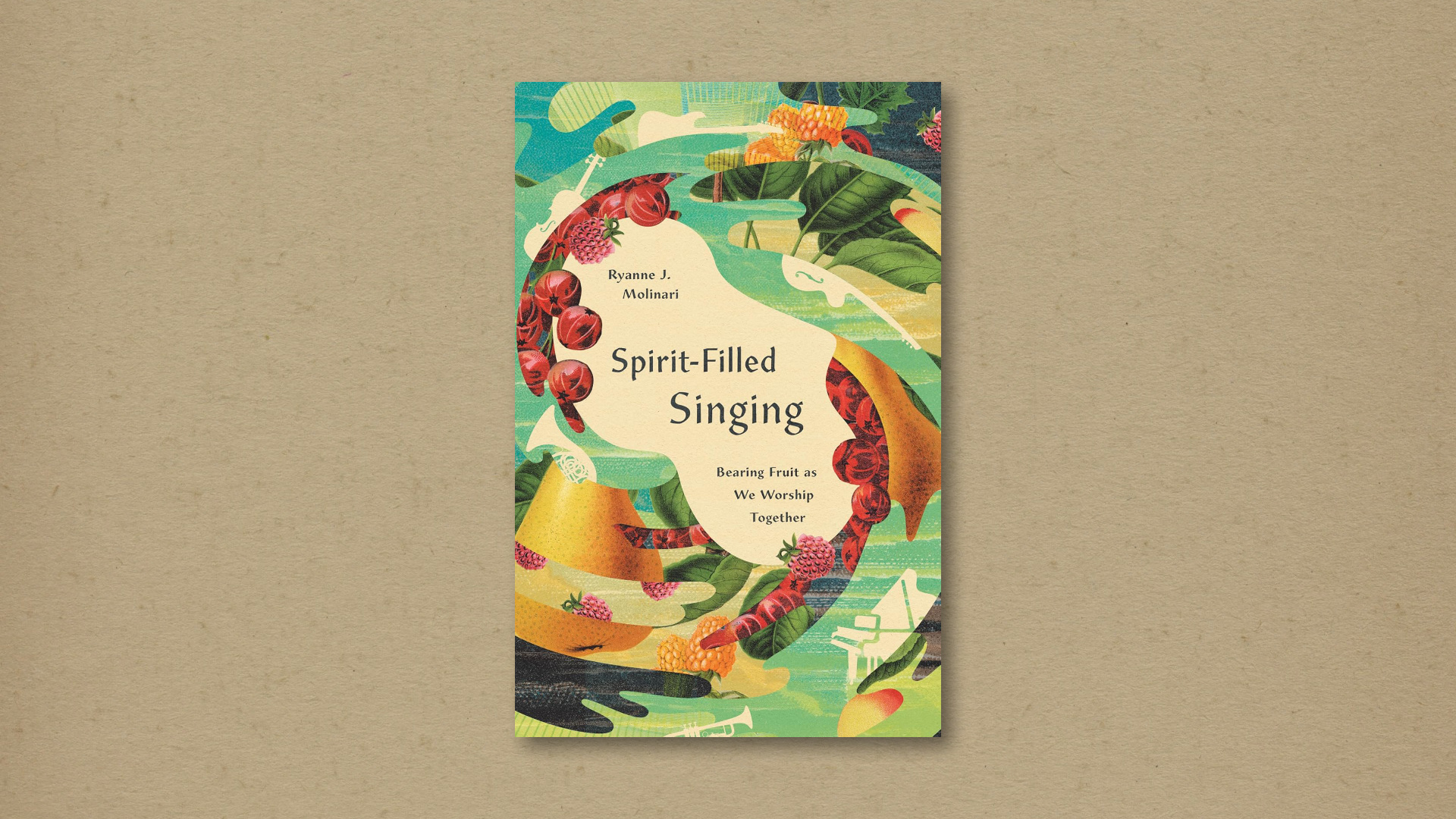
As professional musicians, my wife and I love to visit churches when we’re on tour. It’s always interesting to see how different congregations do the work of ministry. Yet on one Sunday morning, we were handed earplugs as we entered the sanctuary because the speaker output exceeded the city’s noise regulations. I’m grateful the church wanted to protect our hearing. However, it’s difficult to sing to one another (Eph. 5:19) while wearing earplugs. By making the music so loud, the worship team sent the signal that congregational singing was optional. That kind of experience helps explain why Ryanne Molinari’s Spirit-Filled Singing: Bearing Fruit as We Worship Together feels so necessary. Molinari, a classically trained musician and a worship director in her local church, challenges worship leaders and musicians to rethink their musical life together—not according to taste, trends, or production value but according to the fruit of the Spirit. In her synthesis of Paul’s teaching on the fruit of the Spirit (Gal. 5) and his call to sing to one another (Eph. 5), she points out that “worshipful singing and godly living are inextricably linked as ministries of the Spirit” (3). She presents a well-argued case that those leading church music need to think beyond technical excellence and song selection to the spiritual formation of both the music team and congregation. Worship isn’t just something we do; it forms us for good or ill. More than Song Selection At the heart of Spirit-Filled Singing is a call to prioritize love as the “firstborn” of the fruit of the Spirit, as every other aspect springs from this one (13). For Molinari, love isn’t merely a feeling or sentiment. It’s practical, communal, and countercultural. Love is expressed not only in how we feel while singing but in how we care for one another as we sing together. Yet love doesn’t simply shape the way we perform music; it affects the songs we choose and how we respond to people’s concerns. It seems obvious that songs can come to mean different things to different people. However, when we read the story of a woman’s anger toward traditional worship music and heartache at overhearing Molinari practicing the hymn “How Great Thou Art” in what she thought was an empty room, it’s easy to see how important love and mutual care are in church music. That hymn brought the woman memories of pastoral maltreatment to the surface in ways that Molinari couldn’t have anticipated. Thankfully, a gracious, loving response brought unity in what could have been a divisive situation. Love doesn’t simply shape the way we perform music; it affects the songs we choose and how we respond to people’s concerns. Not every worship leader will encounter such emotional challenges to his or her song selection. Nevertheless, Molinari’s anecdote reminds us that churches need an approach to musical worship that combines scriptural faithfulness with a willingness to accommodate preferences when possible. Church music ministries should focus on cultivating the character in musicians that enables them to offer a gracious response when critiques and complaints inevitably arise. The root of that character is a genuine, heartfelt love toward one another. Cultivate People The most spiritual worship isn’t necessarily the most polished. Yet there’s a critical balance between avoiding distraction and allowing for the development of budding musicians within the congregation. We need to resist the temptation to prioritize musical excellence over spiritual growth and broadened participation. As a songwriter and worship leader in Nashville, I think Molinari’s concerns about the growing trend of churches regularly employing nonbelieving musicians are valid. This isn’t about gatekeeping. It’s about the congregation’s spiritual formation. Molinari asks, “Are we really willing to exchange the edification of musicians in our congregations for the entertainment value and ease of hiring non-Christians?” (63). A key idea here is that leading a congregation in worship grows the musicians as much as the people in the pews. Moreover, having people who aren’t part of the congregation routinely leading worship prevents the congregation from developing meaningful relationships with its musicians. Of course, there are huge differences between the way worship ministries function at large churches and small churches. Molinari addresses the heart of the matter by emphasizing the ordinary faithfulness of regular music ministry: the simple work of showing up and working together in small churches, at volunteer posts, and even in larger church settings. “Giving our all on stage—where we receive applause and accumulate followings—is a human accomplishment,” she argues. “Worshiping week after week in anonymity, with broken instruments, in unglamorous settings, or before small congregations—well, that’s a spiritual feat” (110). True faithfulness often requires demonstrating patience with unskilled volunteers, enduring awkward rehearsals, and finding creative ways to encourage involvement from the whole congregation. Fruitful Guide The tragedy of musical worship is that one of the means God has ordained to unite congregations has become one of the most dissonant aspects of church life. Sadly, Molinari is correct when she writes, “As we try to make music, we too often seem to break peace” (44). True faithfulness often requires demonstrating patience with unskilled volunteers and finding creative ways to encourage involvement from the whole congregation. Though musical worship is the topic of Spirit-Filled Singing, church health is the underlying theme. We can’t have a healthy church without the fruit of the Spirit, especially among those who lead worship. Molinari notes, “To be patient with others’ skill levels is to practice love. To sing with self-control—with focus and intentionality—is to prioritize and protect love” (15). A ministry that cultivates character in its musicians can do a lot to help a church become healthy. Unlike many books about musical worship that argue for or against particular styles, provide guidelines for navigating multiethnic worship, or promote mere tolerance of differences, Spirit-Filled Singing goes much deeper. It’s a guide for church leaders to pursue spiritual maturity within the whole congregation. At the same time, it’s also designed for use in a small group (like the worship ministry), with study questions and a hymn at the end of each chapter. By emphasizing musical worship’s role in forming the congregation, Molinari offers church leaders and musicians a biblically and theologically rich resource for catalyzing church health. Spirit-Filled Singing reminds us that faithful worship is measured not by what we produce on a stage but by the kind of people we’re becoming together before God.
Like
Comment
Share
Daily Caller Feed
Daily Caller Feed
6 w

LYNN WESTMORELAND: Trump Reviving Economy, But Credit Crackdown Could Stop Engine
Favicon 
dailycaller.com

LYNN WESTMORELAND: Trump Reviving Economy, But Credit Crackdown Could Stop Engine

it’s a mistake
Like
Comment
Share
Twitchy Feed
Twitchy Feed
6 w

Lemon’s Lemmings: Ana Navarro and ‘The View’ Crew Have Suddenly Soured on the Judgment of Grand Juries
Favicon 
twitchy.com

Lemon’s Lemmings: Ana Navarro and ‘The View’ Crew Have Suddenly Soured on the Judgment of Grand Juries

Lemon’s Lemmings: Ana Navarro and ‘The View’ Crew Have Suddenly Soured on the Judgment of Grand Juries
Like
Comment
Share
Twitchy Feed
Twitchy Feed
6 w

Cycle Spectacle: Motocross Star Colby Raha Soars High in World Record Jump (WATCH)
Favicon 
twitchy.com

Cycle Spectacle: Motocross Star Colby Raha Soars High in World Record Jump (WATCH)

Cycle Spectacle: Motocross Star Colby Raha Soars High in World Record Jump (WATCH)
Like
Comment
Share
Twitchy Feed
Twitchy Feed
6 w

Revolting Situation: CNN Staff Upset Scott Jennings Is Referring to Illegal Aliens As ‘Illegal Aliens’
Favicon 
twitchy.com

Revolting Situation: CNN Staff Upset Scott Jennings Is Referring to Illegal Aliens As ‘Illegal Aliens’

Revolting Situation: CNN Staff Upset Scott Jennings Is Referring to Illegal Aliens As ‘Illegal Aliens’
Like
Comment
Share
YubNub News
YubNub News
6 w

Federal Judge Stops Democrats’ Attempt to Block Immigration Enforcement
Favicon 
yubnub.news

Federal Judge Stops Democrats’ Attempt to Block Immigration Enforcement

While admitting the point, she determined Ellison failed to explain how that concept applies to immigration enforcement choices made by the executive branch or why a court should second-guess where federal…
Like
Comment
Share
YubNub News
YubNub News
6 w

Lemon’s Lemmings: Ana Navarro and ‘The View’ Crew Have Suddenly Soured on the Judgment of Grand Juries
Favicon 
yubnub.news

Lemon’s Lemmings: Ana Navarro and ‘The View’ Crew Have Suddenly Soured on the Judgment of Grand Juries

The vultures of ABC’s The View quickly gathered and planned their next meal when a grand jury indicted President Donald Trump. But now that a grand jury has indicted Don Lemon, one of their own,…
Like
Comment
Share
Showing 5580 out of 113920
  • 5576
  • 5577
  • 5578
  • 5579
  • 5580
  • 5581
  • 5582
  • 5583
  • 5584
  • 5585
  • 5586
  • 5587
  • 5588
  • 5589
  • 5590
  • 5591
  • 5592
  • 5593
  • 5594
  • 5595
Advertisement
Stop Seeing These Ads

Edit Offer

Add tier


Select an image
Delete your tier
Are you sure you want to delete this tier?

Reviews

In order to sell your content and posts, start by creating a few packages. Monetization

Pay By Wallet

Payment Alert

You are about to purchase the items, do you want to proceed?

Request a Refund