YubNub Social YubNub Social
    #freedom #americanhistory #amercia250
    Advanced Search
  • Login
  • Register

  • Night mode
  • © 2026 YubNub Social
    About • Directory • Contact Us • Developers • Privacy Policy • Terms of Use • shareasale • FB Webview Detected • Android • Apple iOS • Get Our App

    Select Language

  • English
Night mode toggle
Featured Content
Community
New Posts (Home) ChatBox Popular Posts Reels Game Zone Top PodCasts
Explore
Explore
© 2026 YubNub Social
  • English
About • Directory • Contact Us • Developers • Privacy Policy • Terms of Use • shareasale • FB Webview Detected • Android • Apple iOS • Get Our App
Advertisement
Stop Seeing These Ads

Discover posts

Posts

Users

Pages

Blog

Market

Events

Games

Forum

YubNub News
YubNub News
1 y

Will Trump Focus on the Western Hemisphere?
Favicon 
yubnub.news

Will Trump Focus on the Western Hemisphere?

Chris, Zack, and Melanie got together to talk about the second Trump administration’s agenda in the Western Hemisphere. What interests does the United States have in Latin America? Should the United…
Like
Comment
Share
The Lighter Side
The Lighter Side
1 y

London man finds a mysterious egg, incubates it, and launches a Pixar-worthy journey of love
Favicon 
www.upworthy.com

London man finds a mysterious egg, incubates it, and launches a Pixar-worthy journey of love

The story of Riyadh and Spike starts like the opening to a children's book: "One day, a man was walking along and spotted a lone egg where an egg should not have been…" And between that beginning and the story's mostly sweet ending is a beautiful journey of curiosity, care, and connection that has captivated people all over the world. Irish author Riyadh Khalaf was out walking in Devon, England, when he came upon an egg. "We just found what we think is a duck egg," Riyadh says in a video showing the milky white egg sitting in a pile of dirt. "Just sitting here on its own. No nest. No other eggs."Thinking there was no way it was going to survive on its own, Riyadh put the egg in a paper cup cushioned with a napkin and took it home to London, which entailed two car rides, a hotel stay, a train ride, a tube ride, and a bus ride. He said he used to breed chickens and pigeons, so he had some experience with birds. Knowing the egg could survive for a while in a dormant state, he ordered an incubator on Amazon, and the journey to see if the egg was viable began. Even though it was "just an egg," Riyadh quickly became attached, and once it showed signs of life he took on the role of "duck dad." Every day, the egg showed a drastic change in development, and Riyadh's giddy joy at each new discovery—movement, a discernible eye, a beak outline—was palpable. He devoured information on ducks to learn as much as he could about the baby he was (hopefully) about to hatch and care for. View this post on Instagram A post shared by Riyadh Khalaf (@riyadhk)Finally, 28 days later, the shell of the egg began to crack. "I could see this very clear outline of the most gorgeous little round bill," Riyadh said—confirmation that it was, indeed, a duck as he had suspected. But duckling hatching is a process, and one they have to do it on their own. Ducklings instinctively know to turn the egg as it hatches so that the umbilical cord detaches, and the whole process can take up to 48 hours. Riyadh watched and monitored until he finally fell asleep, but at 4:51am, 29 hours after the egg had started to hatch, he awakened to the sound of tweets. "There was just this little wet alien staring back at me," he said. "It was love at first sight."Riyadh named his rescue duckling Spike. Once Spike was ready to leave the incubator, he moved into "Duckingham Palace," a setup with all of the things he would need to grow into a healthy, self-sufficient duck—including things that contribute to his mental health. (Apparently ducklings can die from poor mental health, which can happen when they don't have other ducks to interact with—who knew?) "My son shall not only survive, but he shall thrive!" declared the proud papa. View this post on Instagram A post shared by Riyadh Khalaf (@riyadhk)Riyadh knew it would be impossible for Spike to not imprint on him somewhat, but he didn't want him to see him as his mother. Riyadh set up mirrors so that Spike could see another duckling (even though it was just himself) and used a surrogate stuffed duck to teach him how to do things like eat food with his beak. He used a duck whistle and hid his face from Spike while feeding him, and he played duck sounds on his computer to accustom Spike to the sounds of his species. "It's just such a fulfilling process to watch a small being learn," said Riyadh.As Spike grew, Riyadh took him to the park to get him accustomed to the outdoors and gave him opportunities to swim in a small bath. He learned to forage and do all the things a duck needs to do. Throughout, Riyadh made sure that Spike was getting the proper balanced nutrition he needed as well. Check this out: View this post on Instagram A post shared by Riyadh Khalaf (@riyadhk)After 89 days, the day finally came for Spike to leave Riyadh's care and be integrated into a community of his kind "to learn how to properly be a duck." A rehabilitation center welcomed him in and he joined a flock in an open-air facility where he would be able to choose whether to stay or to leave once he became accustomed to flying. Within a few weeks of being at the rehabilitation center, his signature mallard colors developed, marking his transition from adolescence. Spike has been thriving with his flock, and Riyadh was even able to share video of his first flight. View this post on Instagram A post shared by Riyadh Khalaf (@riyadhk)This is the where "And they all lived happily ever after" would be a fitting end to the story, but unfortunately, Spike and his fowl friends are living in trying times. The rehabilitation center was notified by the U.K. government in December of 2024 that the duck flock needed to be kept indoors for the time being to protect them from a bird flu outbreak and keep it from spreading. Building an entire building for a flock of ducks is not a simple or cheap task, so Riyadh called on his community of "daunties" and "duncles" who had been following Spike's story to help with a fundraiser to build a "Duckingham Palace" for the whole flock. Riyadh's followers quickly raised over £11,000, which made a huge difference for the center's owners to be able to protect Spike and his friends. View this post on Instagram A post shared by Riyadh Khalaf (@riyadhk)All in all, Riyadh and Spike's story is a testament to what can happen when people genuinely care. If Riyadh had left that egg where it was, it may not have made it. If Spike hadn't survived and been moved to the rehab center, the ducks there would be in greater danger of the bird flu due to the costs of building an indoor shelter for them. Despite the ongoing bird flu threat, the story really does have a happy ending.Thank to Riyadh for sharing Spike's journey with us. (You can follow Riyadh on Instagram here.)
Like
Comment
Share
Classic Rock Lovers
Classic Rock Lovers  
1 y

‘Be My Baby’: Hurray for the Riff Raff’s greatest cover
Favicon 
faroutmagazine.co.uk

‘Be My Baby’: Hurray for the Riff Raff’s greatest cover

An interesting take... The post ‘Be My Baby’: Hurray for the Riff Raff’s greatest cover first appeared on Far Out Magazine.
Like
Comment
Share
Intel Uncensored
Intel Uncensored
1 y

‘This Is Just Egregious’: Megyn Kelly, Who Is A Former Attorney,  Slams Biden’s Last-Minute Pardons, But Those Pardoned Can Still Face Prosecution
Favicon 
www.sgtreport.com

‘This Is Just Egregious’: Megyn Kelly, Who Is A Former Attorney, Slams Biden’s Last-Minute Pardons, But Those Pardoned Can Still Face Prosecution

by Hailey Gomez, All News Pipeline: SiriusXM’s Megyn Kelly called out former President Joe Biden’s last-minute pardons Monday on her show, outlining how those pardoned could still face prosecution at the state level. On Monday, Biden issued a series of pardons throughout the day, with some announced just minutes before President Donald Trump was sworn into office. […]
Like
Comment
Share
Conservative Voices
Conservative Voices
1 y Politics

rumbleRumble
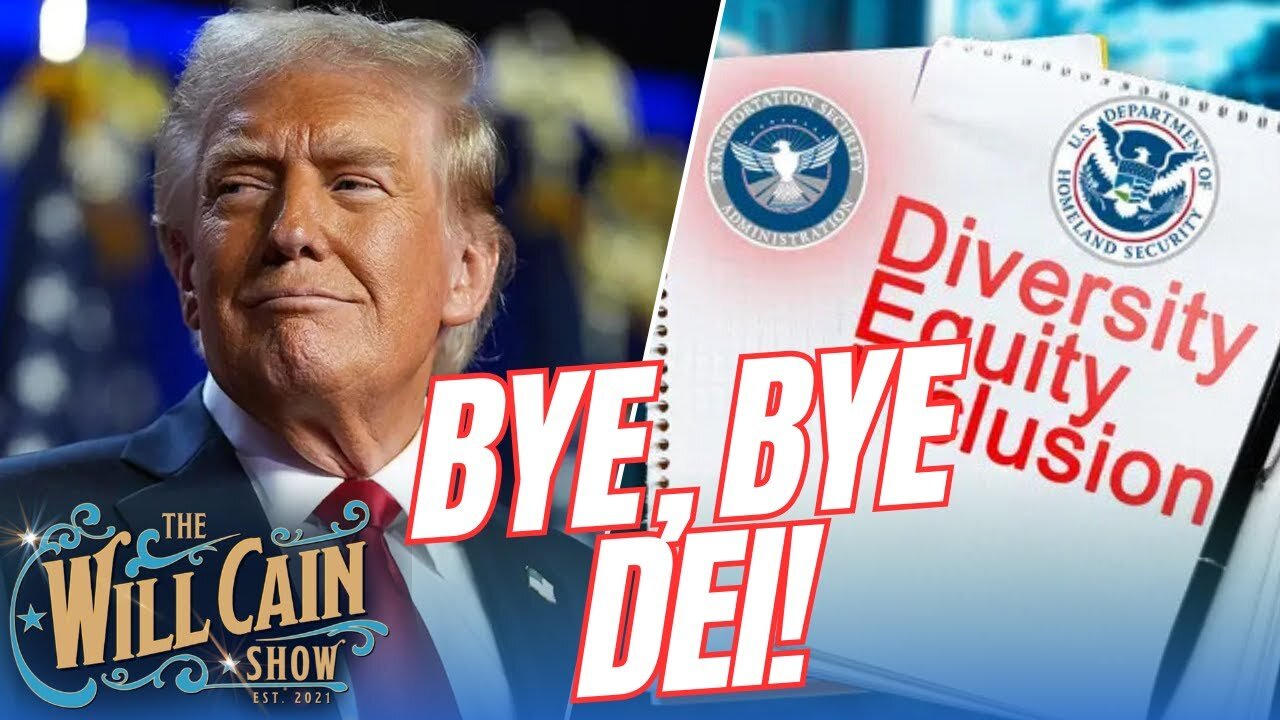
Trump dismantles DEI, defends women and fires the DEEP STATE!
Like
Comment
Share
History Traveler
History Traveler
1 y

The Paris Peace Conference: Who Were the Big Four?
Favicon 
www.thecollector.com

The Paris Peace Conference: Who Were the Big Four?

  The leaders of the Allied Powers (Britain, US, France, Italy, Russia and Japan) had the difficult task of deciding what should happen to the defeated Central Powers (Germany, Austria Hungary, the Ottoman Empire and Bulgaria) after the war. David Lloyd George (Britain), Woodrow Wilson (the US), Georges Clemenceau (France) and Vittorio Orlando (Italy) became known as the Big Four after meeting, and leading, at the Paris Peace Conference in January 1919. Crucial decision making took place at the conference and, most significantly, the Treaty of Versailles was created from it.   What Was the Paris Peace Conference? The Big Four in Paris, 1919. Source: Wikimedia Commons   When the Armistice was signed on the 11th of November 1918, it was agreed that a Peace Conference would be held in Paris to settle affairs following the war. This would eventually be the Paris Peace Conference the following year. Beginning on January the 18th, 1919 the conference involved 27 nations. Delegations for the countries who lost the war were not allowed to attend- they only received terms of the treaties when they were laid out following negotiations. [1] Meetings were held at various locations in and around Paris, including the Palace of Versailles, until 20th January 1920.   What Were the Aims of the Big Four? David Lloyd George. Source: Wikimedia Commons   David Lloyd George served as Prime Minister from 1916 to 1922, navigating the First World War and its aftermath, representing Britain at the conference. The British public desired harsh punishment for Germany, and although Lloyd George wanted punishment for Germany too, he took a softer approach. He wanted to please the British public, but he was also aware of the importance of trade with Germany for the economy so advocated for more lenience.    Woodrow Wilson. Source: Wikimedia Commons   Thomas Woodrow Wilson was the 28th President of the United States, serving between 1913 and 1921, representing the US at the conference. Wilson wanted lasting peace and wanted Germany to be treated fairly, for blame not to be placed solely at Germany’s door. He drew on his earlier created 14 points to advocate the creation of a peace-keeping organisation titled the League of Nations which would solve disputes and prevent future conflict. [2]   Georges Clemenceau. Source: Wikimedia Commons   Georges Benjamin Clemenceau served as the Prime Minister of France between 1917 and 1920. Clemenceau represented France at the conference, where he lived up to his nickname ‘The Tiger’. Clemenceau took a much harsher line- he wanted huge reparations and to punish Germany harshly so that the country was so weak it could not attack again. He also wanted Germany to take the blame for starting the war and wanted land which had been conceded to Germany previously to be returned to France, especially Alsace-Lorraine. [3]   Vittorio Orlando. Source: Wikimedia Commons   Vittorio Emanuele Orlando was the Prime Minister of Italy from October 1917 to June 1919, he was known as the ‘Premier of Victory’ following the defeat of the Central Powers. Italy’s desires were made apparent before 1919, and Orlando attended the conference to secure what had been promised. In 1915, Italy had made a secret agreement (The Treaty of London) with France, Britain and Russia. It was agreed that should Italy enter the war on the allied side, they would receive territory at the end of it. [4]   By March 1919, divisions really began to show, especially regarding Germany. Lloyd George was still concerned that a harsh peace would only result in an angry, bitter Germany so he composed the Fontainebleau Memorandum which warned of the potential repercussions of too harsh a peace. [5]   What Was the Outcome of the Paris Peace Conference? The Treaty of Versailles. Source: Wikimedia Commons   After a year of negotiations between almost 30 nations, the peace conference ended with treaties signed by Germany, Austria, Bulgaria, Hungary and Turkey. The most significant of these was the treaty created for Germany, the Treaty of Versailles. [6]   Each of the Big Four achieved some of their desired outcomes in the Treaty of Versailles:   It was agreed that the Allies would occupy the Rhineland for 15 years, which satisfied Clemenceau Lloyd George persuaded Clemenceau to agree to the League of Nations to satisfy Wilson, and convinced Wilson to agree to the War Guilt Clause to appease Clemenceau Lloyd George achieved his own aim by persuading Clemenceau to agree to a more lenient peace that would not totally destroy Germany Although they had wanted more, Italy was given a seat on the League of Nations, a share in German war reparations and control of the Tyrol region   The Germans were shown the treaty with no option for negotiation and on the 28th of June 1919, the delegates met at the Hall of Mirrors in the Palace of Versailles and forced two Germans to sign. Although it was hoped that the conference would establish, and allow for, a lasting peace, this hope would be shattered with the advent of World War Two.   Sources   [1] Tudor Roşu, Călin Anghel, Sorin Arhire, The Paris Peace Conference and Its Consequences in Early-1920s Europe (Cambridge Scholars Publishing, 2023), p.1. [2] THE PARIS PEACE CONFERENCE, The Advocate of Peace (1894-1920), Vol. 81, No. 1 (JANUARY 1919), p.163. [3] THE PARIS PEACE CONFERENCE, The Advocate of Peace (1894-1920), Vol. 81, No. 1 (JANUARY 1919), p.162. [4] Stefano Marcuzzi, Britain and Italy in the Era of the Great War: Defending and Forging Empires (Cambridge University Press, 2020), p.5. [5] Paul W. Doerr, British Foreign Policy, 1919-1939 (Manchester University Press, 1998), p.48. [6] https://spartacus-educational.com/FWWversailles.htm
Like
Comment
Share
History Traveler
History Traveler
1 y

The Black War: How Tasmania Was Born From the Ashes of the Black Line
Favicon 
www.thecollector.com

The Black War: How Tasmania Was Born From the Ashes of the Black Line

  The Black War is the bloodiest chapter in the history of Van Diemen’s Land, now Tasmania. The war lasted from 1824 (1826, according to some historians) to 1832 and was punctuated by three main events. All of them took place under the leadership of colonial governor Sir George Arthur (1784-1854) and were aimed at forcing Aboriginal clans into a quick surrender. The first was Arthur’s government notice of November 29, 1826, which authorized colonists to kill Aboriginal people when they threatened or attacked them. The proclamation of martial law in November 1828 was the second and the turning point in the history of Van Diemen’s Land. It directly set the stage for creating the Black Line in 1830.   The Black War Against Aboriginal People  View of Woolwich near Kent shewing the employment of the Convicts from the Hulks, 1800, among the 2,200 men taking part in the Black Line, there were 700 convicts. Source: National Museum of Australia   The Black War is part of the so-called Australian Frontier Wars (now also known as Aboriginal Resistance), the series of conflicts, massacres, ambushes, and sabotage that lasted from 1788, when the First Fleet landed in Botany Bay, to the early 1930s. The Black War is one of the bloodiest chapters in the history of the Australian Frontier Wars. It is also a uniquely Tasmanian product deeply rooted in the pastoral invasion of the island in 1817 that further displaced Aboriginal clans from their ancestral lands.   The war officially began in the mid-1820s and finally came to an end almost ten years later, in 1832. Some historians maintain that it began on November 29, 1826, when Sir George Arthur, then governor of Van Diemen’s Land, issued a government notice authorizing settlers, pastoralists, and convicts to kill Aboriginal people if and when they threatened or attacked their cattle and properties.   Patterdale, Van Diemen’s Land, painting by John Glover, 1834. Source: Art Gallery of Western Australia   When Arthur declared martial law on November 1, 1828, the five Aboriginal clans still operating in the Settled Districts were officially considered “open enemies” of the colony. Soldiers and settlers could kill or capture them with impunity. In 1828, the five clans comprised about 500 people divided into five groups. The first group was the Pallittorre Clan of the North Nation. The second comprised two clans of the Big River people, responsible for the attacks carried out against settlers on the Central Plateau, along the banks of the Clyde and Ouse rivers.   The third group comprised two clans of the Oyster Bay Nation, which were active in the Pitt Water area and the Central Midlands. The fourth group, operating around Oyster Bay, was a clan of the North Midlands Nation. Finally, the fifth group brought together different clans of the Ben Lomond and Oyster Bay nations and operated in the Fingal district.   Aboriginal Resistance Aboriginal people at Oyster Cove. Source: National Museum of Australia   At the very start of the Black War, during the summer of 1826-27, clans of the Oyster Bay Nation joined the Big River and North Midlands nations in demanding that settlers vacate their ancestral kangaroo hunting grounds. It was not just a matter of respect. People were hungry and kangaroos were one of their main sources of food. When their demands went unheard, they launched a massive campaign against the settlers, convicts, and stock keepers stationed on their ancestral lands.   In January 1827, they speared stock-keeper George Roberts. Other settlers were speared and sometimes killed first at Fingal and then at Norfolk Plains. In June 1829 a group of up to 20 Oyster Bay men killed five servants in the Pitt Water area. Before leaving, they took flour from their huts and dug up potatoes. Aboriginal attacks continued throughout the war.   View of Hobart Town, Van Diemen’s Land, by Joseph Lycett, 1824. Source: National Museum of Australia   Colonists responded by organizing parties of soldiers, field police, and settlers who often carried out indiscriminate reprisal killings taking Aboriginal groups by surprise at night. In early September 1829, John Batman led an attack against a camp of Ben Lomond People. It was dawn and they were all asleep. He killed 15 of them and then executed two more who had been severely wounded.   The Ben Lomond People carried out a series of attacks in retaliation, but, to put it with Lyndall Ryan, “many more Ben Lomond people must have been killed after these incidents, because after that, they were rarely seen again.”   By the end of 1829, Aboriginal attacks had changed. They had become more sudden, following no apparent logic, and they would take place at any time, day or night. Aboriginal warriors began to use fire consistently, destroying not only the settlers’ huts but also their crops, as happened to the property of John Sherwin on the Clyde River.   Bushrangers attacking the mail wagon, print from The Australian Sketchbook, by ST Gill, 1865. Source: National Museum of Australia   Women participated in the attacks too, mainly robbing huts. These are just some of the thousands of attacks led by European settlers and troops against Aboriginal clans in the Settled Districts, and just some of the thousands of attacks led by Aboriginal people against the Europeans settling on their ancestral lands, but they exemplify the level of violence and seemingly never-ending bloodshed that took place in the Settled Districts in this phase of the war. Most of the bloodshed occurred on the lands of the Oyster Bay and Big River nations, especially in the Richmond, Clyde, and Oatlands districts. By the winter of 1829, the region had become a war zone.   The Black Line Truganini and her partner William Lanney, 1870. Source: Wikimedia Commons   Pressured by settlers, in September 1830, George Arthur called on every able-bodied man in the colony to join the military and police forces. Their job was to form a human chain (or Line), systematically scout the whole island, and trap and drive the remaining Big River and Oyster Bay people from the Settled Districts into the Tasman peninsula, the designated place for an Aboriginal mission.   The human chain, or Line, would stretch from Quamby Bluff in the Great Western Tiers to St Patrick’s Head on the East Coast and advance in a pincer movement. About ten percent of Van Diemen’s Land male population participated in the Black Line, making up around 2,200 men and 541 troops. 700 of them were convicts. The Black Line was devised by George Arthur, with the input of civil officers, many of whom were veterans who had served at Waterloo and in India.   Aboriginal people on Flinders Island, where many of the survivors were relocated after the Black Line campaign, painting by John Skinner Prout, 19th century. Source: National Museum of Australia   There were no more than 200 Aboriginal men and women inside the Line (that is, inside the Settled Districts). They belonged to three different groups, operating in various areas, and led by different leaders. One of the groups comprised four small clusters of people from three nations, the Oyster Bay, Ben Lomond, and North Midlands nations. The second, operating in the Pitt Water area, was made up of about 60 people from the Big River and Oyster Bay nations. Finally, the last group comprised 60 men and women from the Big River Nation. Thanks to their ancestral knowledge of the land, some of them managed to slip across the Line.   What started as a military operation, quickly turned into a large-scale massacre, or, to put it with British historian Charles Esdaile, “a very large scale” Scottish Highlands shooting party.   Chevaux de frise here at Fort Sedgwick, Virginia were used extensively during the Black Line campaign, photograph by Timothy H. O’Sullivan, 1865. Source: The MET, New York   At the end of October, after several attacks on settlers in the Pitt Water district, Arthur had chevaux de frise erected at strategic points along the Line, which at this point stretched for 50 kilometers (31 miles) from Richmond to Spring Bay. At night, men would light fires on the hills to maintain communication with others.   At the end of November, the operation was called off. Despite George Arthur’s disappointment, the Black Line had the effect of drastically reducing the number of Aboriginal attacks on colonists and their properties. When they did attack, they often plundered huts, stole food, and killed women and children. Eventually, the survivors of the Big River and Oyster Bay nations surrendered in December 1831. Less than one month later, another Oyster Bay clan surrendered. Arthur finally revoked martial law.   The Numbers Behind the Facts The Conciliation, by Benjamin Duterrau, 1840. Source: National Portrait Gallery, Australia   In his article, In Consideration of Massacres, Jacques Semelin writes: “If no witness is intended or present, who will be believed? (…) The nature of the event often leads to silence in the immediate aftermath. However, witnesses and perpetrators sometimes speak about massacre long after it is over, when they are immune from prosecution or removed from fear of reprisal from other perpetrators.”   During the Black War, the killings of settlers at the hands of Aboriginal groups were widely and carefully documented. On the contrary, those carried out by settlers against Aboriginal people were not. Just like in mainland Australia, what we know now about these deaths comes from Aboriginal oral histories and the sparse testimonies given decades after the massacres by those who participated in them.   The Rainbow, by John Glover, 1794, like many of John Glover’s paintings, depicts an idealized Tasmania, devoid of its original inhabitants. Source: The MET, New York   Overall, 1079 people lost their lives during the Black War, between November 1823 and August 1834. 201 of them were colonists. The rest—878—were Aboriginal people from the various nations within and outside the Settled Districts. The Aboriginal: colonial death ratio was 4:1.   In Tasmanian Aborigines, Lyndall Ryan reports that most Aboriginal people were killed “in the war’s second and third phases; that is, between 1 December 1826 and 31 January 1832.” Fewer Aboriginal people were killed in the period when martial law was in force (between November 1828 and January 1832) than during the second phase, that is, between December 1826 and October 1828.   Although the exact numbers won’t ever be determined, estimates suggest that at least 400 Aboriginal people were killed during the second phase of the war. The number, however, is probably much higher.   Hobart, Tasmania, 2024, photograph by Harlan Ashworth. Source: Unsplash   On the other hand, most of the colonists who died during the Black War were killed during the third phase of the war, between November 1828 and January 1832, precisely during those months when martial law was in force to protect them. The number of colonists living in the Settled Districts had exponentially grown by that time and Aboriginal clans, increasingly hungry and dispossessed, had engaged in more violent measures to defend themselves and their ancestral lands. Over this period, at least 90 colonists were killed and 180 were injured.   Among the dead, ten were women and six were children. The evolution of Tasmania was marked and shaped by the bloodshed that claimed the lives of so many Aboriginal people and European settlers during the Black War. While monuments have been erected to commemorate the settlers and police forces who lost their lives during the conflict, Aboriginal losses have for far too long been ignored.

Like
Comment
Share
History Traveler
History Traveler
1 y

Power Players: 4 Vice Presidents Who Shined Beyond the President
Favicon 
www.thecollector.com

Power Players: 4 Vice Presidents Who Shined Beyond the President

  One of the most vexing political questions throughout American history has been the role and importance of the vice president. Originally, the vice president was little more than a backup in case the chief executive was suddenly incapacitated. Since the 1920s, the position has picked up more advisory and administrative powers but still carries little executive authority. Famously, many vice presidents have even disparaged their own position, criticizing its lack of power. Strategically, it is a difficult decision to give up a position as a state governor or US senator to become a vice president with no independent power. But can it be the best stepping stone to the White House itself?   Setting the Stage: Article II of the Constitution An image inviting the reader to learn more about Article II of the United States Constitution, which covers the presidency. Source: National Constitution Center   When fifty-five of our nation’s Founding Fathers settled into a closed conference hall in Philadelphia during the summer of 1787, they created a new guiding document for our country. The United States Constitution of 1787 was a drastic departure from the previous Articles of Confederation in its creation of a new position: president. This president would be the chief executive of the nation’s new central government and have tremendous powers (especially for the time). But what if this man were to suddenly be incapacitated while in office?   With some degree of foresight, the framers of the Constitution also included a backup position: vice president. In addition to standing by in case something happened to the president, the vice president also served as the president of the US Senate and would cast a tie-breaking ballot in the event of a perfect tie on a bill or confirmation vote. However, the role of the president of the Senate was largely ceremonial due to its only tangible power being to break a tie. This lack of real power led many vice presidents to gaze longingly at the top job.   The Original Veep-to-President: John Adams A painting of then-diplomat John Adams circa 1783, just after the United States secured its formal independence from Britain. Source: Harvard University   Like the first US president, the nation’s first vice president came pre-installed even before the US Constitution was ratified. In the winter of 1788-89, as states still debated ratifying the Constitution, the Electoral College met for the first time, with each of the 69 attending electors receiving two ballots to use. George Washington received one vote from every elector, automatically granting him the presidency. Each elector could then cast a second ballot, with the candidate receiving the second-most votes becoming vice president. John Adams, a diplomat during the Revolutionary War, received 34 votes, with John Jay and John Hancock also receiving votes.   After serving two terms as president, Washington voluntarily stepped aside in 1796, allowing Adams to run. Adams saw himself as the natural heir to Washington’s seat but was challenged by Secretary of State Thomas Jefferson. The brief campaign was bitter, with Adams running as a Federalist and Jefferson running as a Democratic-Republican (America’s first two major political parties). Adams narrowly won the election, becoming the first US vice president to become president. Unfortunately for Adams, he was far outshone by his predecessor, George Washington.   1. The First Veep to Outshine the President: Thomas Jefferson in 1800 Thomas Jefferson, vice president under John Adams, defeated Adams in 1800 to accomplish the first partisan changeover in power. Source: National Portrait Gallery, Smithsonian Institution, Washington DC   In 1796, Vice President John Adams won the presidential election and succeeded his chief executive, George Washington, in office. However, under the original Constitution, nobody ran for vice president, and that office was granted to the candidate who won the second-most electoral votes. This meant Thomas Jefferson, who lost the presidential election, was elected vice president. Now, the president and vice president were from different political parties and would not likely work well together. Although the error seems tremendous today, it was overlooked in 1787 because the Constitution did not include political parties, and the central government was intended to be nonpartisan.   Four years later, Adams ran for reelection, and “his” vice president, Thomas Jefferson, ran again too. This time, Jefferson won. For the first time, presidential power was transferred from one political party to another. Fortunately, Federalist leader John Adams did not try to prevent Democratic-Republican Jefferson from taking control of the office of president. The Peaceful Revolution of 1800 revealed that executive power could transition peacefully. Ultimately, Jefferson outshone Adams in the history books thanks to the Louisiana Purchase and his 1776 authoring of the Declaration of Independence. His more statuesque physical appearance did not hurt, either.   1804: 12th Amendment Creates the Running Mate  Article V of the United States Constitution provides the rules for amending the guiding document, which was done in 1804 with the 12th Amendment. Source: PBS   The animosity between Adams and Jefferson revealed the problem of partisanship when it came to the presidency and vice presidency. In 1803, Congress set out to fix the problem by proposing the Twelfth Amendment to the US Constitution. This amendment declared that electors would cast their two votes separately, once for president and once for vice president. This led to the creation of party tickets: the presidential and vice presidential candidates ran together. Now, if the president became incapacitated in office, a similarly-aligned vice president would finish out the term and prevent a major political disruption.   However, to prevent a presidential ticket from giving too much power to any one state, the amendment also included a provision that implied that both candidates could not be from the same state. This led to a common strategy of balancing the ticket: presidential nominees would select vice presidential nominees, known as running mates, from another region of the country. Historically, a Northern presidential nominee would choose a Southern running mate to help attract Southern votes and vice versa. This remained common until the late 20th century.   1836: Martin Van Buren Is the First Running Mate to Become President  Martin Van Buren, eighth president of the United States, became the first post-12th Amendment running mate to succeed his chief executive in 1836. Source: Cumberland University   Under the Twelfth Amendment, presidents now effectively chose their vice presidents. This gave presidents a strong incentive to help their vice presidents campaign for the office after them. This paid off for Vice President Martin Van Buren in 1836; he had been explicitly courting the support of President Andrew Jackson and Jackson’s supporters. Jackson’s widespread popularity allowed Van Buren to win many votes by claiming to simply continue his chief executive’s policies. The close relationship between Jackson and Van Buren led to a well-organized campaign in 1836, with Van Buren easily chosen as the Democratic Party’s presidential nominee.   Van Buren won the presidential election easily that November, especially thanks to Jackson’s endorsement. However, Van Buren did not retain that popularity as easily as his predecessor and lost his bid for reelection in 1840. The opposing party, the Whigs, had become well-organized since 1836 and ran a unified campaign with war hero William Henry Harrison. In the end, Van Buren’s single term as president definitely did not outshine his two-term predecessor, Andrew Jackson, a hero of the War of 1812.   2. Second Veep to Outshine: Teddy Roosevelt Becomes Youngest President in 1901 Theodore Roosevelt, vice president of William McKinley, succeeded his chief executive in 1901, months into McKinley’s second term. Source: National Park Service   In 1865, US President Abraham Lincoln was tragically assassinated only weeks into his second term. Sixteen years later, President James Garfield was shot by an assassin only weeks into his first term. Twenty years after that, President William McKinley, shortly into his second term, was shot by an anarchist (anti-government) radical. While Lincoln and Garfield had both been replaced by relatively little-renowned vice presidents, McKinley had chosen his 1900 running mate well: Theodore Roosevelt, governor of New York, was a hero from the recent Spanish-American War.   Few vice presidents could have hoped to outshine Abraham Lincoln, and James Garfield was well-liked despite his very short term. William McKinley was no slouch, either, as the president who saw rapid American expansion into the Pacific region. In a rarity, President Roosevelt went on to outshine the twice-winning McKinley by passing many Progressive Era reforms. Theodore “Teddy” Roosevelt became famous for breaking up monopolies, regulating food safety, and promoting the naturalist movement that eventually led to the National Park Service. Roosevelt easily won reelection in 1904, then handed the Republican Party reins over to Cabinet Secretary William Howard Taft in 1908.   1945: Harry S. Truman Goes From Little-Known Veep to Big-Time President A portrait of Harry S. Truman, US vice president who took over after Franklin D. Roosevelt died months into his fourth term. Source: Harry S. Truman Library and Museum   Forty years after Teddy Roosevelt won reelection as president, a little-known US senator from Missouri named Harry S. Truman was named vice president by popular incumbent president Franklin D. Roosevelt. As FDR ran for a fourth term in the White House, he wanted a less controversial running mate. Sadly, FDR died only a few months into his fourth term, thrusting new Vice President Truman into the Oval Office while World War II still raged in the Pacific. Not since the assassination of Abraham Lincoln eighty years earlier had such tension immediately engulfed a vice president.   Truman did not outshine FDR, though he likely would have outshone most other chief executives. In rapid succession, Truman presided over the end of World War II, demobilization from the war, aiding wounded allies in Europe, and guiding the nation through the beginning of the Cold War. He fought hard and won an upset victory for reelection in 1948, proving his mettle as a national campaigner. Historians rank Truman very high among US presidents…but not as high as FDR himself.   3. Third Veep to Outshine: Lyndon B. Johnson in 1964 Vice President Lyndon B. Johnson (left) with President John F. Kennedy (right) in September 1963, shortly before Kennedy’s tragic assassination. Source: LBJ Presidential Library   While FDR had died of natural causes in the spring of 1945, a tragic assassination returned to haunt the presidency in November 1963. President John F. Kennedy was shot by a sniper while riding in a convertible in Dallas, Texas, thrusting Vice President Lyndon B. Johnson into the role of chief executive. Fortunately for the Kennedy administration, Johnson was a hard-charging former Senate Majority Leader and knew how to get things done in Congress. The tough-talking Texan was able to push through Kennedy’s proposals on Civil Rights and pass major economic reforms.   Johnson’s quick legislative successes in 1964 and 1965 made him extremely popular. Then, however, the escalating Vietnam War rapidly eroded that popularity. By early 1968, the man who had won a full term by a historic landslide in 1964 was at risk of not winning the Democratic Party’s nomination for president again. In a surprise move, Johnson dropped out of the 1968 presidential campaign and announced that he would not seek reelection. Despite his rapid fall from grace, Johnson’s major reforms of 1964 and 1965 could be considered to outshine the impressive accomplishments of John F. Kennedy (JFK) himself.   4. Fourth Veep to Outshine (in a Negative Light): Richard M. Nixon in 1968 Vice President Richard Nixon (right) with President Dwight D. Eisenhower (left) in 1956. Source: Dwight D. Eisenhower Presidential Library, Museum & Boyhood Home   When Johnson chose not to run for reelection in 1968, it threw the Democratic Party into turmoil. This gave an easier path to victory to Republican presidential nominee Richard Nixon, who had served as vice president under Dwight D. Eisenhower during the 1950s and narrowly lost the 1960 presidential election to John F. Kennedy in 1960. Nixon avenged his humiliating loss of 1960 (and California gubernatorial loss in 1962) in 1968, handily winning the White House against Johnson’s own vice president, Hubert Humphrey. Nixon governed largely as a moderate but won praise for foreign policy successes: he began drawing down the number of US troops in Vietnam and reopened diplomatic relations with China.   With the US economy strong and peace almost at hand in Vietnam, Nixon easily won reelection in 1972, becoming the first man to win two terms as both vice president and as president. Unfortunately, part of his 1972 landslide victory was due to illegal behavior on account of his campaign. Nixon attempted to cover up this illegal behavior, sparking the infamous Watergate Scandal. The cover-up unraveled, and Nixon resigned in disgrace in August 1974, becoming the first president to do so. Despite this infamy, Nixon’s foreign policy successes often make him outshine the quieter Dwight D. Eisenhower.   1988 and 2020: Bush and Biden Seen as Continuers, Not Outshiners Vice President George Bush Sr. (right) with President Ronald Reagan (left) in 1981, seven years before Bush himself won the presidency. Source: American Academy of Achievement   The two most recent vice presidents to become president were George Bush Sr. in 1988 and Joe Biden in 2020. Both men had served two terms as vice president, with Bush serving under Ronald Reagan and Biden serving under Barack Obama. However, Bush ran for the presidency and won during his last year as vice president, becoming the first to do so since Martin Van Buren in 1836. Nixon ran in 1960 but was defeated, and all other vice presidents between Bush and Van Buren had been elevated to the Oval Office by the death of the president, not winning an election.   A photograph of the United States Naval Observatory (USNO) at Number One Observatory Circle, which is the official residence of the US vice president. Source: The White House   Bush saw his popularity spike in early 1991 when the US won a quick victory in the Gulf War, but this quickly fizzled due to a brief economic recession later that same year. A popular Democratic challenger, Bill Clinton, defeated Bush’s reelection bid in 1992. Despite the Gulf War victory, Bush never got close to outshining his predecessor, who received credit for winning the Cold War. In contrast to Bush, Joe Biden chose not to run for the presidency during his last year as vice president in 2016 and only returned to the campaign trail four years later. Both Bush and Biden are largely seen as continuers of their respective predecessors rather than innovators of their own policies.
Like
Comment
Share
Classic Rock Lovers
Classic Rock Lovers  
1 y

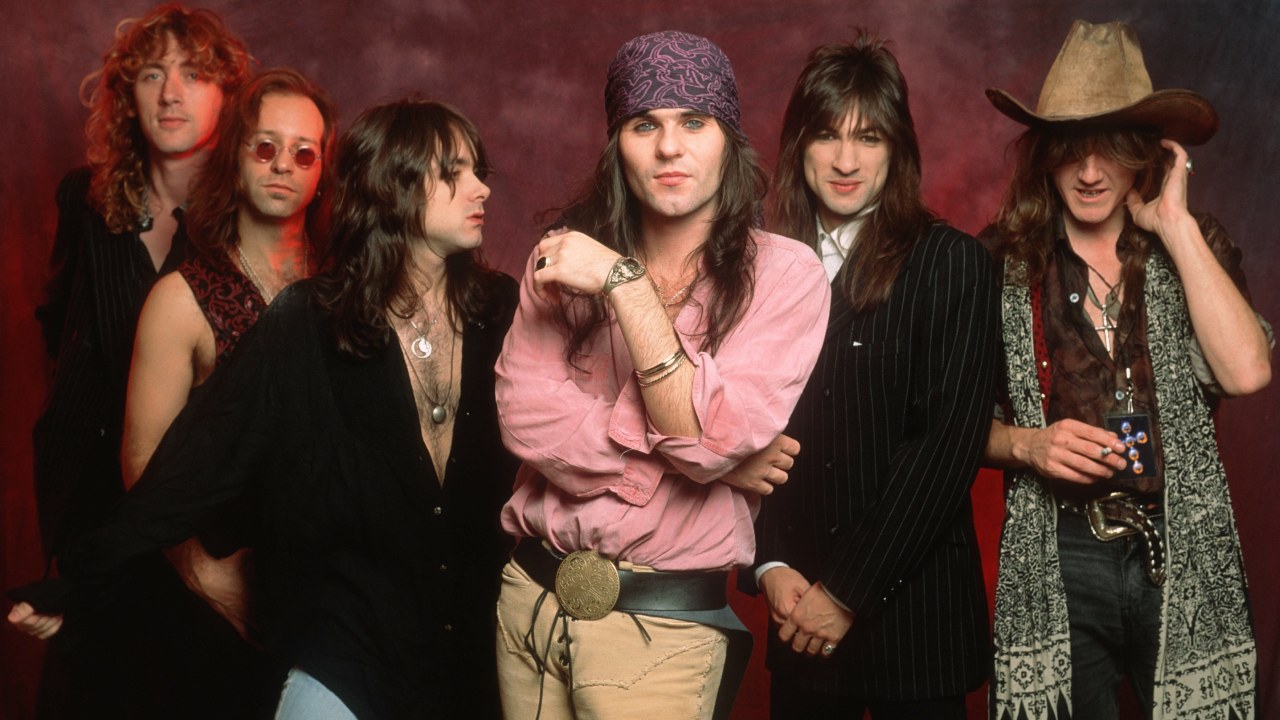
"We all went to visit him in hospital. And he was still wearing his cowboy hat": The crazed story of The Quireboys, the band who had it all then partied it all away
Favicon 
www.loudersound.com

"We all went to visit him in hospital. And he was still wearing his cowboy hat": The crazed story of The Quireboys, the band who had it all then partied it all away

They've got a ballsy singer and catchy songs. Sharon Osbourne was their manager, Guns N' Roses were their mates. So why aren’t The Quireboys living in mansions?
Like
Comment
Share
Classic Rock Lovers
Classic Rock Lovers  
1 y

10 crazy metal collaborations that took us totally by surprise last year
Favicon 
www.loudersound.com

10 crazy metal collaborations that took us totally by surprise last year

From ska-punk/metalcore crossovers to industrial threesomes, these team-ups showed metal is more collaborative than ever
Like
Comment
Share
Showing 57248 out of 115818
  • 57244
  • 57245
  • 57246
  • 57247
  • 57248
  • 57249
  • 57250
  • 57251
  • 57252
  • 57253
  • 57254
  • 57255
  • 57256
  • 57257
  • 57258
  • 57259
  • 57260
  • 57261
  • 57262
  • 57263
Advertisement
Stop Seeing These Ads

Edit Offer

Add tier


Select an image
Delete your tier
Are you sure you want to delete this tier?

Reviews

In order to sell your content and posts, start by creating a few packages. Monetization

Pay By Wallet

Payment Alert

You are about to purchase the items, do you want to proceed?

Request a Refund