YubNub Social YubNub Social
    #jesuschrist #christmas #christ #merrychristmas #princeofpeace #achildisborn #noël #christmas2025
    Advanced Search
  • Login
  • Register

  • Night mode
  • © 2025 YubNub Social
    About • Directory • Contact Us • Developers • Privacy Policy • Terms of Use • shareasale • FB Webview Detected • Android • Apple iOS • Get Our App

    Select Language

  • English
Install our *FREE* WEB APP! (PWA)
Night mode toggle
Community
New Posts (Home) ChatBox Popular Posts Reels Game Zone Top PodCasts
Explore
Explore
© 2025 YubNub Social
  • English
About • Directory • Contact Us • Developers • Privacy Policy • Terms of Use • shareasale • FB Webview Detected • Android • Apple iOS • Get Our App
Advertisement
Stop Seeing These Ads

Discover posts

Posts

Users

Pages

Blog

Market

Events

Games

Forum

YubNub News
YubNub News
1 y

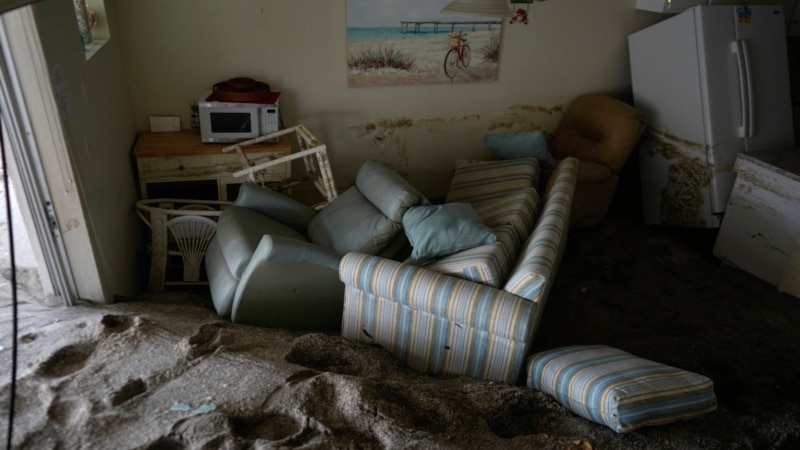
Florida digs out of mountains of sand swept in by back-to-back hurricanes
Favicon 
yubnub.news

Florida digs out of mountains of sand swept in by back-to-back hurricanes

BRADENTON BEACH, Florida —  When a hurricane sets its sights on Florida, storm-weary residents may think of catastrophic wind, hammering rain and dangerous storm surge. Mounds of sand swallowing…
Like
Comment
Share
YubNub News
YubNub News
1 y

The Path to Alleviating Tension: A Call for U.S. Foreign Policy Transformation in the Israel-Gaza Conflict
Favicon 
yubnub.news

The Path to Alleviating Tension: A Call for U.S. Foreign Policy Transformation in the Israel-Gaza Conflict

As we pass the first anniversary of the horrific October 7 attack by Hamas, where roughly 1,200 Israelis were killed, thousands more wounded, and 251 hostages were taken—12 of whom were American…
Like
Comment
Share
YubNub News
YubNub News
1 y

It Didn’t Work For Hillary, And It’s Not Working For Kamala (Side By Side Video)
Favicon 
yubnub.news

It Didn’t Work For Hillary, And It’s Not Working For Kamala (Side By Side Video)

Really good memes are those that need very little alteration to be funny and make a point.  But the BEST memes are the ones that need absolutely no alteration at all. And that’s when LEAHmemes…
Like
Comment
Share
Conservative Voices
Conservative Voices
1 y

Inciting Violence: Convicted Perjurer Michael Cohen Falsely Claims Trump Will Abolish Congress And Judiciary, Rewrite The Constitution (Video)
Favicon 
conservativefiringline.com

Inciting Violence: Convicted Perjurer Michael Cohen Falsely Claims Trump Will Abolish Congress And Judiciary, Rewrite The Constitution (Video)

The following article, Inciting Violence: Convicted Perjurer Michael Cohen Falsely Claims Trump Will Abolish Congress And Judiciary, Rewrite The Constitution (Video), was first published on Conservative Firing Line. It seems that liberals are competing with each other to see who can conjure up the most insane ridiculous lies regarding Donald Trump’s potential return to the White House.  While appearing on MSNBC, the official network of insane liberal rage, hate, and stupid, lying, liberal propaganda, convicted perjurer (read, liar) Michael Cohen (who, by the … Continue reading Inciting Violence: Convicted Perjurer Michael Cohen Falsely Claims Trump Will Abolish Congress And Judiciary, Rewrite The Constitution (Video) ...
Like
Comment
Share
Classic Rock Lovers
Classic Rock Lovers  
1 y

The story behind Angus Young’s AC/DC schoolboy outfit
Favicon 
faroutmagazine.co.uk

The story behind Angus Young’s AC/DC schoolboy outfit

The tale of an outfit. The post The story behind Angus Young’s AC/DC schoolboy outfit first appeared on Far Out Magazine.
Like
Comment
Share
Intel Uncensored
Intel Uncensored
1 y

Exposed: How Israeli Spies Control Your VPN
Favicon 
www.sgtreport.com

Exposed: How Israeli Spies Control Your VPN

from MintPress News: An estimated 1.6 billion people rely on VPNs to carry out the most sensitive tasks online, from watching illegal videos to engaging in sexual or political activities. But few people know that a considerable chunk of that market—including three of the six most popular VPNs—is quietly operated by an Israeli-owned company with close connections […]
Like
Comment
Share
Intel Uncensored
Intel Uncensored
1 y

Doctors Issue Red Alert over New ‘Replicon’ Covid ‘Vaccines’
Favicon 
www.sgtreport.com

Doctors Issue Red Alert over New ‘Replicon’ Covid ‘Vaccines’

by Frank Bergman, Slay News: Leading doctors in Canada are speaking out to warn the public about new “replicon” self-amplifying Covid mRNA “vaccines” which have been dubbed the “third atomic bomb” by renowned experts in Japan. As Slay News recently reported, some of Japan’s most prominent scientists, doctors, immunologists, and academics are sounding the alarm over […]
Like
Comment
Share
History Traveler
History Traveler
1 y

What Was Procopius’ “Secret History”? (& Why You Shouldn’t Trust It)
Favicon 
www.thecollector.com

What Was Procopius’ “Secret History”? (& Why You Shouldn’t Trust It)

  Procopius of Caesarea, one of the most famous late Roman (or Byzantine) historians, wrote the “Secret History” around 550 CE. This controversial work starkly contrasts with Procopius’ other writings, namely his “History of the Wars” and “The Buildings.” Instead of praising Justinian’s reign and his reconquest of the West, the “Secret History” is a vehement attack on the emperor and his wife, Empress Theodora – a calculated and brutal critique of the imperial couple, their advisors, and the court. We should be aware, however, that the “Secret History” is a biased work penned by a person disillusioned with the emperor’s policies or who wanted to protect himself in case of the emperor’s fall.   Procopius of Caesarea – The Man Behind “The Secret History” Mosaic showing the emperor Justinian and his retinue, the bearded figure to the left of the emperor is probably Belisarius, 6th century CE. Source: Basilica di San Vitale, Ravenna   The “Secret History,” one of the most controversial works of late antiquity, was penned by a most unlikely writer. Procopius of Caesarea, born around 500 CE, was a late Roman scholar and historian. He was a well-educated man who became a lawyer (rhetor). This endowed Procopius with good knowledge of Latin, although he originated from the Greek half of the Empire. More importantly, Procopius became an advisor and personal secretary to the general Belisarius, whom Emperor Justinian made a chief military commander during the initial stages of his ambitious “Reconquista” – the reconquest of the Roman West.   Procopius accompanied Belisarius on his many campaigns, starting with the war against Persia on the Eastern front. The historian was also present during the Nika Riot, which almost cost Justinian the throne (and his life). Procopius accompanied Belisarius during the reconquest of North Africa from the Vandals and witnessed the recapture of Carthage. He also chronicled the Gothic War, which, after initial victories and the fall of Ravenna, turned into a bloody and protracted struggle that ruined Italy. In short, Procopius had VIP access to all the important personae and events of Justinian’s reign, being one of the most important members of the imperial establishment.   Through the Mirror Darkly – The Re-Discovery of “Secret History” Constantinople and its sea walls, with the Hippodrome, Great Palace, and Hagia Sophia in the distance, ca. 10th century, by Antoine Helbert. Source: Antoine Helbert   While Procopius’ “Wars” and “Buildings” chronicle Justinian’s wars of conquest and praise the emperor’s architectural achievements (including the construction of Hagia Sophia), the “Secret History” reveals a starkly different perspective. The “Secret History”—also known as “Anecdota” or “Historia Arcana”—is a scathing critique of Emperor Justinian and his wife, Empress Theodora. Written around 550 CE (perhaps in 558), the “Secret History” was not published during Procopius’ life. Until its discovery, almost two centuries after the fall of the Byzantine Empire, the only evidence of its existence was a reference in the “Suda,” a 10th-century Byzantine encyclopedia. Finally, in 1623, the “Secret History” was published, continuing to attract scholars and history enthusiasts to the present day.   The “Secret History” covers roughly the same period as the first seven books of the “Wars,” but instead of praising Justinian’s military and political achievements, it paints a picture of tyranny, mismanagement, and the ruin of the Empire. It provides a rare but controversial glimpse into the darker, scandalous aspects of the court in Constantinople – a stark contrast from the glorified public image presented in Procopius’ other works. In each of the thirty short chapters, Procopius systematically dismantles the reputations of all the major players in Constantinople.   The Tales From Justinian’s Court – Eroticism, Intrigues and Demons Empress Theodora, Jean-Joseph Benjamin-Constant, 1887. Source: Museo Nacional de Bellas Artes, Buenos Aires   The “Secret History” is probably most famous for its salacious stories, which sometimes border on occultism and fantasy. The most notorious tale is certainly that of Empress Theodora’s early years. According to Procopius, Theodora was a former actress and courtesan who used her seductive talents and beauty to manipulate men and climb the social ladder. However, the vivid anecdotes of the empress’ alleged promiscuity, her lewd performances, and immoral acts can also be seen as an attempt to denigrate a powerful woman who went against the social norms, breaking the rules, rising from the sands of the Hippodrome to the empress of the world’s most powerful empire.   Similarly, Procopius accused Emperor Justinian of being a cruel and incompetent ruler, a deceptive and treacherous leader whose policies brought widespread suffering and economic hardship across the Empire. In his attempt to discredit the emperor, Procopius goes so far as to portray Justinian as a nearly inhuman tyrant, a headless daemon roaming the palace at night. We should not forget, however, that Justinian, too, did not belong to the established aristocracy, and that many of his enemies considered him a political upstart who, like his uncle Justin, broke social norms to ascend the throne.   To Ruin an Empire – Procopius’ Attack on Justinian A gold solidus of Justinian I, with victory depicted on the reverse, minted in Ravenna, ca. 530-539 CE. Source: British Museum, London   In his attempts to discredit Justinian, Theodora, and their associates, Procopius turns the “Secret History” into a rant. According to the author, whose resentment is palpable in every sentence, Emperor Justinian emptied the eastern border of soldiers, allowing the Persians to attack almost unopposed. He also blames the emperor for failings in trade and commerce and even goes so far as to accredit natural disasters—earthquakes, plagues, and floods—to “a demon in human form,” Justinian, who “depopulated the whole world.”   While these accusations are preposterous and hard to believe, Justinian’s Reconquista and the prolonged warfare in Italy did empty the imperial treasury, and the focus on the West diverted resources and manpower from the East. Justinian’s economic interventions, including price controls, disrupted the market, further weakening the imperial economy. Additionally, an expensive, empire-wide building program placed an extra burden on the state, prompting the tax rise. Yet, all those policies were not something Justinian did out of malice but responses to emerging crises. On the other hand, the calamities such as the Justinianic plague were beyond the emperor’s control.   The Great Disillusion or a Backup Plan? The “Barberini Ivory” debate is ongoing as to whether it depicts Anastasius or Justinian I, 525-550 AD. Source: The Louvre, Paris   Procopius does not stop at the royal couple. He does the same for Justinian’s chief ministers and generals, blaming them for corruption and incompetence. Even Belisarius is not spared, becoming a weak man emasculated by his manipulative wife, Antonina, who happened to be Theodora’s close friend and former actress. Procopius is particularly hostile to the powerful women at court, who, like the empress, dared to rise beyond their limits. All those accounts, almost always exaggerated and distorted, serve to undermine the emperor’s legacy and provide a starkly different narrative than the one found in Procopius’ published works.   But why did Procopius change his narrative to such a degree? Why such hostility towards the imperial couple, their allies, and confidants? Modern historians offer several reasons. Procopius could, as a proponent of established order, consider Justinian and Theodora upstarts, unworthy of the crown. He could also blame the imperial couple and their associates for Belisarius’ misfortunes, which led to his patron losing the command after the mishap at Ravenna in 540 CE. Most probably, however, Procopius could have prepared the “Secret History” as a sort of protection in the case of a successful coup against Justinian’s regime. After all, Justinian almost lost his crown and life in the Nika Riots.   “Secret History” – Deconstructing Imperial Propaganda The detail of the mosaic showing the emperor Justinian I and empress Theodora, 6th century CE. Source: Basilica di San Vitale, Ravenna   Despite its strong anti-imperial agenda, the “Secret History” remains an important source for Justinian’s reign and Roman/Byzantine history as a whole. While the work is undeniably sensationalist and filled with vitriolic attacks, it also provides valuable insight into the late Roman Empire at the crossroads. This was a period of victorious wars of reconquest but also of a bloody struggle. It was a period of imperial renewal but also of a deadly plague, which Procopius also chronicled in detail. It was a time of emperor’s glory, but also of internal strife.   Thus, by reading “Secret History” and comparing it to other Procopius’ writings, as well to the writings of other historians, one can construct a more balanced view of Justinian’s reign, recognizing both his achievements and his flaws. The “Secret History” provides a counter-narrative to the more official, propagandistic accounts of Justinian’s reign, highlighting the complex aspects of his rule that might otherwise be overlooked. The “Secret History” serves as a crucial reminder of the complexities and contradictions inherent in historical figures and events, leading to a more nuanced understanding of Roman and Byzantine history.
Like
Comment
Share
History Traveler
History Traveler
1 y

Middle Kingdom Pyramids: The Lesser Known Pyramids of Ancient Egypt
Favicon 
www.thecollector.com

Middle Kingdom Pyramids: The Lesser Known Pyramids of Ancient Egypt

  During the Middle Kingdom (c. 2040-1782 BCE), Egypt rebounded from the First Intermediate Period to build a strong and stable empire. But it is still often ranked behind the Old Kingdom and the New Kingdom in terms of importance, especially regarding architecture. The Old Kingdom had the great pyramids, and the New Kingdom had its colossal temples. What did the Middle Kingdom have?   Several Middle Kingdom pharaohs revived the art of pyramid building, but different construction methods meant that their pyramids did not stand the test of time. However, these monumental tombs were innovative in other ways. This is a survey of the most important Middle Kingdom pyramids.   The Establishment of the Middle Kingdom Sandstone statue of Mentuhotep II, c. 2055-2004 BCE. Source: Metropolitan Museum of Art, New York.   The collapse of the Old Kingdom did not happen suddenly but was the culmination of a long process. The central authority of the Egyptian state based in Memphis weakened until competing dynasties formed in the Fayum city of Heracleopolis and the Upper Egyptian city of Thebes. Decentralized power characterized the First Intermediate Period (2180-2040 BCE).   The first ruler of the Middle Kingdom, Mentuhotep II (ruled c. 2061-2010 BCE) of the 11th dynasty in Thebes, embarked on a campaign to forcibly reunite Egypt. Mentuhotep II ruled Egypt from Thebes, but the first king of the 12th dynasty, Amenemhat I (reigned c. 1991-1962 BCE), decided to move the capital.   The location of the new capital was in Lower Egypt, just north of the Fayum near the modern village of Lisht. Amenemhat I named his new capital Iti-tawi, which is translated as “Seizer of the Two Lands.” Although Memphis and Thebes remained important religious, administrative, and cultural centers, Lisht/Iti-tawi was the king’s primary residence, in this life and the next.   Early Middle Kingdom Pyramids Marble head of a sphinx, possibly representing Amenemhat I, c. 1981-1952 BCE. Source: Metropolitan Museum of Art, New York.   Amenemhat I was the first king of the Middle Kingdom to reintroduce the idea of a pyramid complex as a tomb and place to worship the deified pharaoh. The Old Kingdom pharaohs all named their pyramids, so when Amenemhat I revived the tradition he named his, Soot Khau Amenemhat, or “The Places of Appearances of Amenemhat.”   Amenemhat I’s pyramid had a 276-foot base, a height of 180 feet, and a 54-degree slope. The core of the pyramid was made of small blocks of rough limestone, sand, debris, and mudbrick. The outer casing was made of limestone.   Amenemhat I’s son and successor, Senusret I (Senwosret/Sesostris) (ruled c. 1971-1926 BCE), built his pyramid about 1.25 miles south of his father’s. Senusret I’s pyramid was slightly larger, with a 300-foot base and a height of 201 feet, but what made it more impressive was the overall size of the complex.   All Egyptian pyramids were part of much larger complexes. The pyramid served as the focal point where the king’s body was usually interred. But it was part of a larger complex enclosed by a wall. Within the wall were chapels where priests would perform rituals for the deified king and courtyards that were used for sed festivals. The sed festival was a jubilee celebration of a king’s thirty years on the throne, which the king participated in by running a circuit of the courtyard.   Pyramid of Amenemhat I at Lisht, c. 1952 BCE. Source: Metropolitan Museum of Art, New York.   Senusret I’s pyramid complex included nine smaller pyramids for his queens and what is known as a “satellite pyramid.” Satellite pyramids, which were miniature doubles of the main pyramids, were common in the Old Kingdom and were believed to house the deceased king’s ka or spirit. Senusret I’s satellite pyramid was the last one built in Egypt and the only one known from the Middle Kingdom.   The primary pyramid, the satellite pyramid, and a chapel entrance to the main pyramid were enclosed by a mudbrick wall. Another mudbrick wall enclosed the queens’ pyramids along with an inner enclosure, creating an enclosure within an enclosure. A causeway led to the entrance of the first gate and an entrance hall that was between the outer and inner enclosures. Senusret I’s immediate successor had difficulties replicating the impressiveness of his pyramid complex.   Granite statue of Amenemhat II, c. 1929-1895 BCE. Source: Museum of Fine Arts, Boston.   Senusret I’s successor was Amenemhat II (reigned c. 1929-1895 BCE). He built his pyramid near the Lower Egyptian village of Dahshur. This move put his pyramid closer to the Old Kingdom pyramids, but it unfortunately did not stand the test of time. Little remains of the pyramid and it has not been completely cleared, but it probably had a base of about 65 feet. A sloping entrance passage leads to what is probably the burial chamber and a vertical shaft that connects to it, but this is now all underwater.   A Change in Construction Methods Pyramid of Senusret II, c. 1897-1878 BCE. Source: Wikimedia Commons.   Senusret II (ruled c. 1897-1878) made two notable changes to his pyramid. The first was relocating his pyramid back to the Fayum region, closer to Lisht. The second was building his pyramid with a complete mudbrick core. The first change was not as permanent, as later rulers alternated between the Fayum and the Delta, but the second innovation was permanent. All subsequent Middle Kingdom pyramids were also built with mudbrick cores. The pyramid was similar in size to previous Middle Kingdom pyramids, with a base of 348 feet and a height of 159 feet.   Senusret III (ruled c. 1878-1860 BCE) chose to build his pyramid in Dahshur in the shadow of Old Kingdom pharaoh Sneferu’s (reigned c. 2613-2589 BCE) Bent Pyramid. Senusret III’s pyramid was notable because sand was used instead of mortar to fill the seams of the mudbrick core. This change was perhaps a sign of the declining quality of Middle Kingdom pyramids, or possibly even the decline of the Middle Kingdom itself. With that said, Senusret III’s successor was the most ambitious of all Middle Kingdom pyramid builders.   The Pyramids of Amenemhat III  Statuette of Amenemhat III, c. 1853-1798 BC. Source: Louvre Museum, Paris.   Amenemhat III (reigned c. 1860-1815 BCE) ruled Egypt for nearly forty years, which allowed him to leave his mark on art, foreign policy, and architecture.   The first pyramid he built was named “Amenemhat is Beautiful” and was located in Dahshur. It was second in height to Senusret III’s pyramid at 246 feet and had a base of 344 feet. However, the underground chambers of the pyramid had structural problems, so it had to be abandoned. Fortunately for the long-lived pharaoh, Amenemhat III had plenty of time to build an even more enduring afterlife abode.   Pyramid of Amenemhat III at Dahshur, c. 1860-1815. Source: Wikimedia Commons.   Amenemhat III had his next pyramid built in the Fayum near Hawara. Named “Amenemhat Lives,” the second pyramid was 190 feet high with a base of 344 feet and an angle of 48 degrees. This was not as impressive as his Dahshur pyramid in terms of size. But what the Hawara pyramid lacked in size it made up for with the historical importance of its courtyard complex.   Hawara Pyramid of Amenemhat III, c. 19th century BCE. Source: Wikimedia Commons.   The mortuary temple within the enclosure of Amenemhat III’s pyramid was large, intricate, and on two levels. It was so impressive that the 5th century BCE Greek historian Herodotus and the 1st century CE Greek geographer Strabo visited and wrote about the site. The classical authors compared the complex to the labyrinth of the legendary King Minos, who, according to myth, would send children to the complex to be eaten by the Minotaur. Herodotus wrote:   “The pyramids, too, are astonishing structures, each one of them equal to many of the most ambitious works of Greece; but the labyrinth surpasses them. It has twelve covered courts—six in a row facing north, six south—the ages of the one range exactly fronting the gates of the other, with a continuous wall round the outside of the whole. Inside, the building is of two stories and contains three thousand rooms, of which half are underground, and the other half directly above them.”   Construction of Middle Kingdom Pyramids  A collection of Egyptian construction tools found at the tomb of Ani in Thebes, c. 13th century BCE. Source: British Museum, London.   When compared to their Old Kingdom counterparts, the Middle Kingdom pyramids were smaller. The mudbrick cores also ensured that the Middle Kingdom pyramids would be far less enduring, but that is not to say that they were not architecturally important. Middle Kingdom engineers designed their pyramids to deal with the situation at hand, and a considerable workforce was needed to complete the projects.   As mentioned previously, the biggest difference between Middle Kingdom pyramids and those of the Old Kingdom, especially those built in the 4th dynasty, was the use of mudbrick. The 4th dynasty pyramids used stone cores while those built from Senusret III onward used mudbrick cores. Although Old Kingdom pyramids fell victim to later cultures reusing their casings to build medieval parts of Egypt, their stone cores ensured they would endure. This was not the case with the Middle Kingdom pyramids. The use of mudbrick cores indicates that the Middle Kingdom rulers did not have the resources to create purely stone structures.   Middle Kingdom engineers introduced another interesting building technique. In the Old Kingdom, pyramid builders would join structurally important blocks using fine joints. Middle Kingdom engineers abandoned those in favor of wooden dovetail cramps. It is estimated that about 12,000 wooden dovetail cramps were used in Senusret I’s pyramid complex, each one bearing the name of the king.   Model of bakery and brewery found in a tomb at Deir El-Bersha, c. 2010-1961 BCE. Source: Museum of Fine Arts, Boston.   Although the Middle Kingdom pyramids were not as grand as those of the Old Kingdom, they still required a significant workforce to be built. Based on archaeological evidence, it is estimated that 4,770 workers were used on average during the Middle Kingdom. Most workers were drafted in a corvee system, which was a form of enforced labor.   The workers included about 1,500 stone transporters, who had the most dangerous job. These men would deliver the stone or mud bricks on sleds that were pulled by several men. Water was used as a lubricant for the sled as it was pulled up an earthen ramp to place the blocks. The skilled workers included brick makers, stone cutters, sailors, and engineers. It has also been estimated that about 1,500 auxiliary workers were part of an average pyramid-building labor force. These workers included sculptors and painters as well as cooks, brewers, bakers, weavers, and water carriers.   In contrast, it is estimated that the Old Kingdom Pharaoh’s gathered workforces of between 20,000 to 10,000 workers to construct their pyramids.
Like
Comment
Share
History Traveler
History Traveler
1 y

Incredible Bronze Age Architecture From the Near East and the Aegean
Favicon 
www.thecollector.com

Incredible Bronze Age Architecture From the Near East and the Aegean

  The technology of the Bronze Age seems primitive by today’s standards, which makes it incredible that Bronze Age people living 3000-5000 years ago were able to build architectural marvels that still stand today. Including the pyramids of ancient Egypt, the ziggurats of Mesopotamia, and the palaces of Minoan Crete and Mycenaean Greece, this is a look at some of the most impressive and important examples of Bronze Age architecture from the Near East and Aegean.   Early Egyptian Architecture Step Pyramid and temple complex of Djosser, Saqqara, Egypt, c. 2667-2648 BCE. Source: Copyright Jared Krebsbach.   Egypt has some of the world’s most enduring architecture. Its most famous monuments are the pyramids. But before the Egyptians built their pyramids, they built tomb structures known as mastabas, which means bench in Arabic. These tomb structures were given this name by later Arab visitors to Egypt, who thought the rectangular structures looked like simple benches.   The kings of the 1st dynasty (c. 3000-2800 BCE) and the last two kings of the 2nd dynasty (c. 2800-2675 BCE) were buried underneath these tombs near the Upper Egyptian city of Abydos.   During the 3rd dynasty, Egypt’s capital moved north to Memphis, and this became the new necropolis area. Egypt experienced a major architectural revolution when Djoser (ruled c. 2687-2648 BCE) built the Step Pyramid. The king’s vizier and architect Imhotep oversaw and planned the work. It was essentially six mastabas placed on top of each other. The 196-foot-high structure was enclosed by a wall 34-foot-high and 5,397-foot-long.   The Pyramid Age Pyramid of King Sneferu at Meidum, Egypt, c. 2613-2589 BCE. Source: Copyright Jared Krebsbach.   The first king of the 4th dynasty, Sneferu (reigned c. 2613-2589 BCE), ushered in the “Pyramid Age” with his attempts to build a true pyramid. The ambitious king commissioned four pyramids: one at Meidum, two at Dahshur, and one at Seila. The most famous are the Bent Pyramid and the Red Pyramid at Dahshur. Many scholars consider the former to be the first true pyramid. This laid the groundwork for the greatest pyramids at Giza.   Sneferu’s Bent Pyramid at Dahshur, Egypt, c. 2613-2589 BCE. Source: Copyright Jared Krebsbach.   The Giza pyramids include those of Khufu (c. 2589-2566 BCE), Khafra (2558-2532 BCE), and Menkaura (2532-2503). Khufu’s pyramid is the largest and is considered the Great Pyramid by modern scholars. The ancient Greeks included it as one of their Seven Wonders of the World. The Great Pyramid covers 13.1 acres of space, is 479 feet tall, and has an impressive slope of 53 degrees. The Giza pyramids were built with locally quarried limestone by well-organized groups of 25,000 men working in three-month shifts.   Giza Pyramids, near Cairo, Egypt, c. 2589-2503 BCE. Source: Copyright Jared Krebsbach.   The purpose of the pyramids was to serve as tombs for the deceased kings and their wives. Many pyramids had “satellite” pyramids for the queens. They were also the focal point of a larger religious complex where priests would carry out rituals to worship the deified kings.   Although modern scholars know the purpose of Egyptian pyramids, their symbolism remains enigmatic. Some scholars argue that the shape of a pyramid represents the sun’s rays giving life to the reborn king. Others have suggested they represent the primordial mound of creation from Egyptian mythology.   New Kingdom Egyptian Architecture Ramesseum Temple, West Bank of Thebes (modern Luxor), Egypt, c. 1279-1213 BCE. Source: Copyright Jared Krebsbach.   After the 4th dynasty, pyramids were still built but declined in size and quality. Little remains of the pyramids built in the Middle Kingdom because they were made with mud brick rather than sandstone cores. The next major Egyptian architectural innovations happened during the New Kingdom (c. 1550-1069 BCE).   New Kingdom Egypt is known for its empire that stretched far south into Nubia and north into the Levant, which brought wealth into the Nile Valley. The Egyptians used that wealth to build monumental temples and tombs cut into the side of cliffs. The pyramids remained ancient wonders, but the temples were equally impressive.   The most impressive building activity happened around Thebes (modern-day Luxor) in Upper Egypt. The temples of Karnak, Luxor, Medinet Habu, and the Ramesseum are among the largest and best preserved temples. These New Kingdom temples were built of stone to endure time and were added to by subsequent kings. Like rings on a tree, kings added pylon gateways, chapels, and temples within temples to create massive labyrinths. The later Greek and Roman rulers were so impressed with the New Kingdom temples that they modeled new temples on them.   Architecture in Ancient Mesopotamia Ziggurat of Ur, Mesopotamian, c. 2112-2095 BCE. Source: Wikimedia Commons.   As the Egyptians were building their pyramids, hundreds of miles to the east between the Tigris and Euphrates rivers, people were building equally impressive architectural monuments. Unlike ethnically homogenous Egypt, ancient Mesopotamia comprised many different peoples, although the different groups shared similar beliefs and architectural styles. The most impressive of all Mesopotamian monuments was the ziggurat.   Ziggurats, which means “temple-tower,” were triangular-shaped temples that looked similar to Egyptian pyramids, but served very different functions. Pyramids were tombs and temple complexes for the deified kings, while ziggurats had many purposes. Ziggurats did function as temples, but they were also used as scribal schools and astronomical observatories. Like pyramids, ziggurat construction evolved over a considerable period before they arrived at their final, most revered form.   The predecessors to the ziggurat were simple towers built on top of platforms, first built by the Sumerians during the Uruk Period (c. 3500-2900 BCE). Each ziggurat was dedicated to a particular god or goddess, and it was believed that the complex served as the earthly home of the patron deity. The tower itself likely symbolized the mountain home of the deity. Although ziggurats were well built, they were made of mud brick, which is why only fragments remain today.   Chronology of Some Notable Ziggurats Foundation figurine of Ur-Nammu, Mesopotamia c. 2112-2095 BCE. Source: Metropolitan Museum of Art, New York.   The first true ziggurats were built during the Sumerian Ur III dynasty (c. 2112-2004 BCE) and from there quickly spread across the region. The best known and preserved ziggurat is the Ziggurat of Ur, built by King Ur-Nammu (ruled c. 2112-2095 BCE). The ziggurat honored the moon-god, Sin, and stood in the center of a massive temple complex in the dynasty’s capital city of Ur. The base of the ziggurat measures 190 by 130 feet and possibly 100 feet in height, although only two levels remain. Today, most Assyriologists believe there were three levels.   After the collapse of the Ur dynasty, ziggurat building was adopted by other ethnic groups and dynasties in Mesopotamia and beyond. Babylon became the cultural and political center of Mesopotamia for much of the second millennium and ziggurat building likely took place there. Unfortunately, ancient Babylon is now covered by farmland and the suburbs of Baghdad, leaving little evidence of ziggurats. More archaeological evidence has been uncovered just east of Mesopotamia in Elam and the northern Mesopotamian region of Assyria.   Al-Untash-Napirisha Ziggurat, Elam, Southern Iran, c. 1275-1240 BCE. Source: UNESCO.   During the early Bronze Age, the Elamites established a kingdom just east of Mesopotamia in what would today be southwestern Iran. By the late Bronze Age, an Elamite dynasty ruled lands as wealthy and powerful as their more famous Near Eastern neighbors. The Elamite King Untash-Napirisha (ruled c. 1275-1240 BCE) founded the city of Al-Untash-Napirisha (Choga Zanbil), and a massive ziggurat was its crown jewel.   The ziggurat was dedicated to Napirisha, the primary Elamite god, and Inshushinak, the patron god of the Elamite capital city of Susa. Millions of baked bricks were used to build the ziggurat, and today it is the best-preserved ziggurat in the Near East.   The ziggurat-building tradition continued in the Near East after the Bronze Age collapse in around 1200 BCE. The Assyrians built a number of ziggurats in their homeland. The most notable of these were built by Assurnasirpal II (reigned 883-859 BCE), who built a large ziggurat next to his palace in the capital city of Nimrud. Sargon II (ruled 721-705 BCE) also built an impressive palace and ziggurat in his capital city of Dur-Sharrukin. Sargon’s ziggurat stood 143 feet high and possibly had seven different levels. In addition to the Assyrians making their ziggurats bigger, they also added the feature of connecting the royal palace to the ziggurat.   Glazed ceramic wall depicting a lion, Babylon, c. 604-562 BCE. Source: Metropolitan Museum of Art, New York.   One final post-Bronze Age ziggurat worth mentioning is the Etemenanki Ziggurat in Babylon. This ziggurat, whose name is translated into English as the “House of the Frontier between Heaven and Earth,” was built by Nebuchadnezzar II (reigned 604-562 BCE). The Etemenanki Ziggurat was dedicated to Marduk, the patron of Babylon, and was very likely the inspiration for the Old Testament “Tower of Babel” in Genesis 11:4.   Minoan Architecture North Portico of the Palace of Knossos, Minoan Crete, c. 2000-1600 BCE. Source: Wikimedia Commons.   The island of Crete is the location of Europe’s first advanced society, the Minoans. Named for King Minos of Greek myth by British archaeologist Arthur Evans in the early 20th century, the Minoan culture rose by about 2000 BCE.   The Minoans were a naval power who controlled trade in the Aegean until about 1600 BCE and are credited with many contributions to classical Greek culture. The Greeks inherited sports and some elements of art from the Minoans, but the classical Greeks inherited little of Minoan architecture.   Minoan architecture is often referred to as “palace architecture” because the most impressive structures have the appearance of palaces. The most notable of these structures are located in Knossos, Malia, and Phaistos, but the reality is that modern scholars are only beginning to understand their purpose.   The language of the Minoans—Linear A—is still undeciphered. Consequently many elements of their culture remain open to conjecture. Archaeologists now believe that serving as royal palaces was only one of the purposes of these large structures.   Fresco of boys boxing from Thera, Minoan Crete, c. 1600 BCE. Source: National Archaeological Museum, Athens.   The layout of these structures was similar at each site, although the size varied. Most of these “palaces” were large squares with several adjoining rooms, hallways, and at least one open court area. The complexes are believed to have been multifunctional, combining economic, political, and religious elements. The royal family may have lived in a part of the complex, and certain areas were off-limits to the public.   The palace complexes at Phaistos and Knossos had large courtyards that archaeologists call “theatrical areas.” These areas were likely semipublic for sporting and musical events and religious rituals. It was in these theatrical areas where the famous bull leaping took place that the Minoans documented on their beautiful frescoes.   Minoan palace complexes resembled contemporary Near East temples rather than later Mycenean or classical Greek temples. What Minoan palaces represented and how they functioned is perhaps best described by Donald Preziosi and Louise Hitchcock.   “A Minoan palace may best be understood as a theory or diagram of an ideal integration of the component parts of Minoan life and society, assembled together in a sophisticated architectural package, itself harmoniously integrated into its environment.”   Mycenaean Architecture Treasury of Atreus in Mycenae, Greece, c. 13th century BCE. Source: Wikimedia Commons.   Minoan society collapsed by 1600 BCE, probably due to a combination of warfare between the Minoan states and the eruption of a volcano on the island of Thera. The Mycenaeans, Greek-speaking people from mainland Greece, quickly moved in to fill the void. The Myceneans conquered Crete by 1450 BCE and took control of most of the Aegean. Between 1300 and 1230 BCE, the Mycenaeans built a large palace in the settlement of Pylos on the Peloponnesian peninsula of Greece that in many ways was the hallmark of Mycenaean architecture.   The Pylos palace consisted of four separate structures, including a two-story building with a throne on the east wall of the courtyard. This is where the megaron, a large circular courtyard, was located. Megara were common features in Bronze Age Greece. Archaeologists know that Pylos was a palace from Linear B tablets discovered there. Other important Mycenaean palaces may have included Mycenae, Tiryns, and a Mycenaean-era palace at Knossos. While no extant Linear B tablets definitively state these were palaces, their size and structure resemble the palace at Pylos.   Early Mycenean Krater, Maroni, Cyprus, c. 14th century BCE. Source: British Museum, London.   Archaeologists have determined that the techniques used by the Mycenaeans to build their palaces were probably inherited from the Minoans. Timber and rubble cores were used in the interior of the walls, just like the Minoans, while exterior walls were made of ashlar blocks or porous limestone. The blocks were cut into “V” shapes for fitting, just as the Minoans did on Crete.   One final piece of Mycenaean architecture that deserves mention are the circular tombs. Known as tholos tombs, they were located next to the palaces at the major sites. When several tholos tombs were located in the same vicinity, they created a “beehive” effect that still creates quite a stunning visual.   The largest and most impressive of all the tholos tombs is located at Mycenae. The so-called “Treasury of Atreus” was once believed to have been associated with the legendary King Atreus, but it is not known for whom the tomb was built. It was cut into a hillside and is nearly fifty feet in diameter and 118 feet in length. It was likely the tomb of a Mycenaean ruler and his family, but there are no extant inscriptions to confirm the information.

Like
Comment
Share
Showing 57428 out of 103962
  • 57424
  • 57425
  • 57426
  • 57427
  • 57428
  • 57429
  • 57430
  • 57431
  • 57432
  • 57433
  • 57434
  • 57435
  • 57436
  • 57437
  • 57438
  • 57439
  • 57440
  • 57441
  • 57442
  • 57443
Advertisement
Stop Seeing These Ads

Edit Offer

Add tier


Select an image
Delete your tier
Are you sure you want to delete this tier?

Reviews

In order to sell your content and posts, start by creating a few packages. Monetization

Pay By Wallet

Payment Alert

You are about to purchase the items, do you want to proceed?

Request a Refund