YubNub Social YubNub Social
    #astronomy #nightsky #moon #liberals #fullmoon #planet #jupiter #americafirst #socialists #pinkmoon #recruitment #nokings
    Advanced Search
  • Login
  • Register

  • Night mode
  • © 2026 YubNub Social
    About • Directory • Contact Us • Developers • Privacy Policy • Terms of Use • shareasale • FB Webview Detected • Android • Apple iOS • Get Our App

    Select Language

  • English
Night mode toggle
Featured Content
Community
New Posts (Home) ChatBox Popular Posts Reels Game Zone Top PodCasts
Explore
Explore
© 2026 YubNub Social
  • English
About • Directory • Contact Us • Developers • Privacy Policy • Terms of Use • shareasale • FB Webview Detected • Android • Apple iOS • Get Our App
Advertisement
Stop Seeing These Ads

Discover posts

Posts

Users

Pages

Blog

Market

Events

Games

Forum

Daily Wire Feed
Daily Wire Feed
1 y

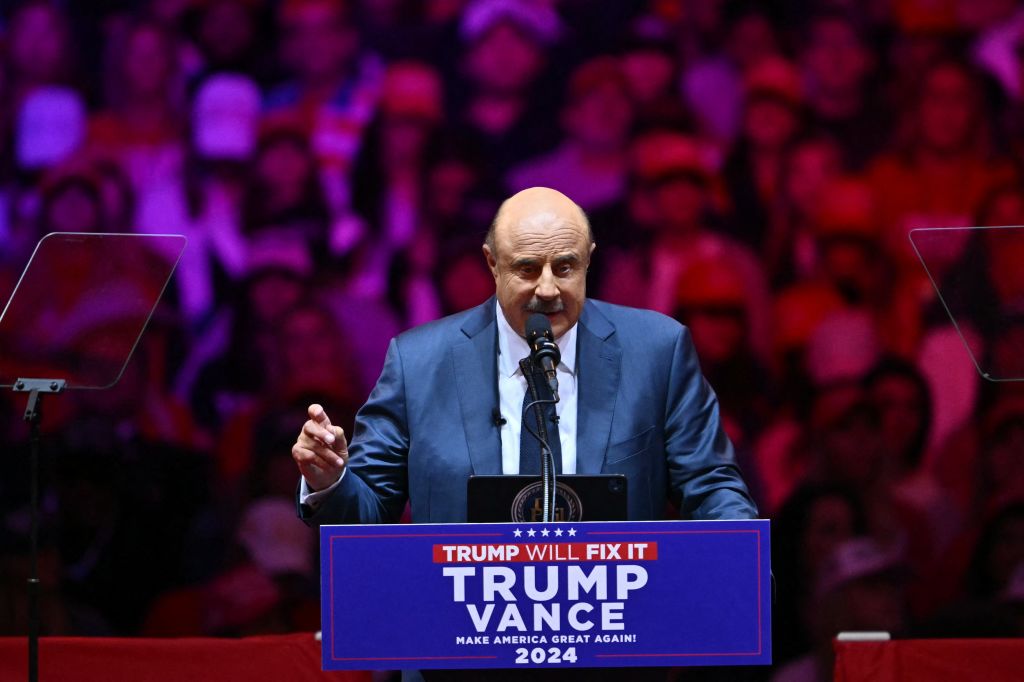
Chicago Tribune Viciously Attacks Dr. Phil For Joining ICE As They Deport Sex Offender
Favicon 
www.dailywire.com

Chicago Tribune Viciously Attacks Dr. Phil For Joining ICE As They Deport Sex Offender

The Chicago Tribune editorial board viciously attacked television’s Dr. Phil McGraw for appearing at the scene as ICE arrested an illegal immigrant who was a convicted sex offender and “internet predator,” according to U.S. Immigration and Customs Enforcement (ICE). In an editorial Monday, the once reliably conservative newspaper for over 100 years — until it took a swing to the Left, refusing to endorse a GOP presidential candidate since 2004 — went so far as to liken McGraw to the Taliban. McGraw embedded with U.S. immigration officers during deportation raids and interviewed Sam Seda, a Thai national whom border czar Tom Homan stated was “an illegal alien convicted of sex crimes involving children.” “He’s walking the streets of Chicago,” Homan added. McGraw asked Seda if he’d “been charged with sex crimes involving children,” as Homan had stated, prompting Seda to answer, “Not really.” “Here in America, we don’t have show trials nor do we ritualistically lambaste such people in service of political power or television ratings,” the Tribune editorial board huffed. “Unlike some nations, we don’t hang, beat or interrogate people in the public square, either.” Then the Tribune vilified McGraw, saying, “We were astonished to see Phil McGraw, a man who uses a sobriquet that includes the word ‘doctor,’ embedding himself with ICE, a questionable move in and of itself for a person who has claimed to heal, and then literally shining a spotlight on a Thai national who was rounded up by ICE on Sunday in Chicago.” The Tribune wrote dramatically, “Dr. Phil’s quarry told him he recognized him from TV and then took part, consciously or not, in his own ritual humiliation for a hungry TV audience.” After acknowledging that the man “reportedly was a convicted sex offender and internet predator, and we want him gone,” the Tribune took a swipe at the Trump administration, writing, “We understand the propaganda value, too, for a Trump administration that wants to confirm the president’s point that there are bad people in this city and state without legal authorization.” “There was something profoundly unsettling about a man who found fame and a huge fortune in our city on ‘The Oprah Winfrey Show,’ a man who made his bones by offering advice to often vulnerable guests as a psychotherapist would, someone who set himself up as an avuncular healer, telling people how to nurture their relationship with their spouse or cope after a relationship has fallen apart,” the Tribune complained. Not yet done attacking the Trump administration, the Tribune snapped, “We get why Donald Trump’s Department of Justice wants him there: It implies that such people won’t just be removed; they’ll be humiliated at the same time.” Incredibly, the Tribune then compared Dr. Phil to the Taliban, writing, “Given the abhorrent nature of the Thai national’s crimes, it’s easy to say that’s all fine. Take all the licks you want, Dr. Phil But it’s not. The Taliban do not roam the streets of Chicago, and their modus operandi should not be applied here.”
Like
Comment
Share
Daily Caller Feed
Daily Caller Feed
1 y

50 Cent Taunts High-Profile Lawyer After He’s Accused Of Assault
Favicon 
dailycaller.com

50 Cent Taunts High-Profile Lawyer After He’s Accused Of Assault

'If you call me I’ll take you to dinner'
Like
Comment
Share
Daily Caller Feed
Daily Caller Feed
1 y

CURTIS SCHUBE: Trump’s Administration Can Supercharge America’s Energy Comeback Even Further
Favicon 
dailycaller.com

CURTIS SCHUBE: Trump’s Administration Can Supercharge America’s Energy Comeback Even Further

'Unleashing American Energy'
Like
Comment
Share
The Lighter Side
The Lighter Side
1 y

California Fire Chief Saves Altadena Homes from Blaze with Nothing but Milk and ‘a Couple Beers’
Favicon 
www.goodnewsnetwork.org

California Fire Chief Saves Altadena Homes from Blaze with Nothing but Milk and ‘a Couple Beers’

A California fire chief single-handedly saved his brother’s house and that of his neighbor, armed only with a carton of milk and a few beers. Brian Fennessy said that was a first despite an almost 50-year career in firefighting. As soon as Fennessy heard about the Eaten Fire springing in the canyon above Altadena, he […] The post California Fire Chief Saves Altadena Homes from Blaze with Nothing but Milk and ‘a Couple Beers’ appeared first on Good News Network.
Like
Comment
Share
SciFi and Fantasy
SciFi and Fantasy  
1 y

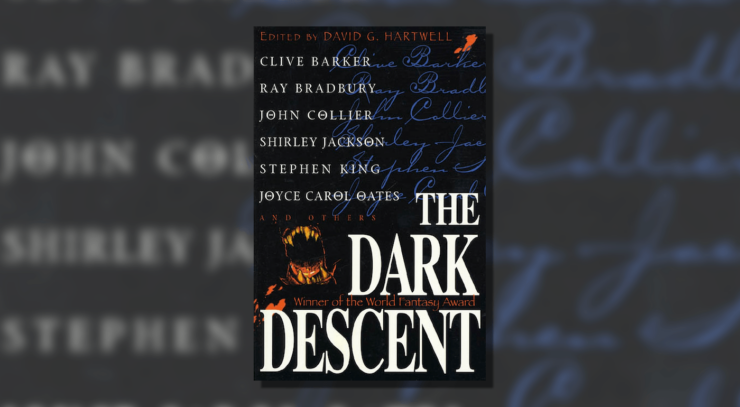
Tourism, Drugs, and Dystopia: “Seven American Nights” by Gene Wolfe 
Favicon 
reactormag.com

Tourism, Drugs, and Dystopia: “Seven American Nights” by Gene Wolfe 

Books Dissecting The Dark Descent Tourism, Drugs, and Dystopia: “Seven American Nights” by Gene Wolfe  An obnoxious traveler has a very bad trip indeed. By Sam Reader | Published on January 28, 2025 Comment 0 Share New Share Welcome back to Dissecting The Dark Descent, where we lovingly delve into the guts of David Hartwell’s seminal 1987 anthology story by story, and in the process, explore the underpinnings of a genre we all love. For an in-depth introduction, here’s the intro post. When it comes to speculative short stories, Gene Wolfe was one of the great stylists. He experiments with form and uses the strange to skewer the unconscious biases of society. Whether we’re focusing on his dense webs of symbolism, his use of satire and metafiction, or simply his gift for the bizarre, it’s rare to find someone who (even if they’re not a huge fan of Wolfe) can keep themselves from marveling at the man’s dedication to craft. “Seven American Nights” puts all of this on display, flipping the idea of the “ugly American” in fiction and the “exotic travel narrative” on its head, and then plunging it into unreliable psychedelic horror. The result is a gleefully deconstructive and disturbing look at xenophobia, the fall of empires, and the entrenched tendency of supposedly “civilized” people to exoticize and essentialize other cultures. “Seven American Nights” is the diary of Nadan Jaffarzadeh, a Persian artist taking his first trip to the savage third-world nation of America. The America of the future is a horrid, polluted wasteland where technology has regressed to medieval levels and the citizenry has mutated into grotesque creatures. While Nadan claims to be resistant to this horrid country’s supposed charms, he quickly succumbs to an obsession over an “American beauty” by the name of Ardis Dahl, gets ensnared in philosophical conversations, and begins playing a dangerous game with six marzipan eggs and weapons-grade LSD purchased at the Smithsonian. This game sends Nadan’s vacation from hell spiraling into a full-on sojourn into the infernal, as the barriers between reality and dreams, abstraction and concrete ideas, and his own sanity melt away. Nadan might survive his seven American nights, but what will be left of him? “Seven American Nights” is a riff on travel narratives where a (usually white, usually anglophone, usually Christian) young man or woman would go to some exotic place and experience odd sights, surreal danger, and mysticism. Similar riffs on the narrative even extend into the 1950s with such works as Naked Lunch, which presents itself as an American’s adventures abroad in a horrifyingly surreal version of Morocco. Wolfe, of course, turns this xenophobic concept on its head by having a Persian man (Orientalism being a common thread in these stories) journey to a dystopian, post-apocalyptic America in decline. All the usual tropes are highlighted and made fun of alongside the exaggerated dystopian criticisms usually made of America, with exoticized descriptions of the mutated people, comparisons of this “savage land” with the more civilized Iran (a poke at the US and UK involvement in the coup and subsequent revolutions that placed Ayatollah Khomeini in charge of Iran), and the ruins of the White House treated like the last vestiges of an ancient civilization. The play Nadan sees is similarly a jab on this—Gore Vidal’s Visit to a Small Planet is a satire on 1950s America and the military-industrial complex. In another parallel to exotic travel narratives, the narrator buys a local psychedelic drug, implied to be a weapons-grade hallucinogen. This device is what throws “Seven American Nights” into the territory of the truly strange and upends the simple conceit of a deconstructed “exotic travel” narrative. Nadan decides to play a game like Russian roulette with a box of marzipan eggs, dumping the entirety of a bottle’s worth of hallucinogen on one of the eggs and putting them in an empty drawer in his hotel room. From that point on, the narrative continues its strange exploration of a future America where a “genetic crisis,” societal collapse, and pollution have turned it into something that barely qualifies as a third-world nation but with the added twist that what we see might be the protagonist’s own drug-fueled nightmare. This underscores the existing strangeness and heightens the horror—Wolfe’s America is a world that already borders on nightmare, and with each subsequent possibly spiked candy, that nightmare only grows more unnerving. It also allows Wolfe to dip into “tourist horror,” with both the rampant exoticization and horrifying danger to foreigners showing where the blame should be placed in travel narratives: on the tourists themselves. Rather than enlightenment, Nadan finds only his own paranoia and a disturbing propensity for violence as he loses his grip on reality. Nadan is the author of his own misfortune—from getting lost in nested abstractions that see him flipping between drug trip, miserable tourist experience, and elements of the plays he sees at the theatre, to his insistence on continuing his idiotic drug-trip “game” even after he shoots something he can’t be sure is real while stalking the actress he’s obsessed with. His ill-fated trip to the secret police even begins because he started a fight with someone and then pressed charges at the urging of police. Much like Americans and other wealthy, entitled tourists tend to do in other countries, he treats himself as the main character of some exciting narrative even (and especially) when it gets others hurt or killed. While there’s certainly pathos in Nadan—no one deserves to go through the horrors he experiences; he has reasons for going to America he edits out of the document, and he seems to just get swept up in excitement—it’s similar to “Evening Primrose,” in that he believes he’s some kind of amazing artist when really he’s just a pathetic figure imposing himself on people with less privilege. While there’s room for pity, it couldn’t happen to a more deserving person. Nadan is every bit the narcissistic, exoticizing tourist one finds in most travel narratives. Even before the possibility that he’s drugged turns him into a deranged and paranoid murderer, he’s condescending and rude towards the locals, becomes obsessed with an actress’s “American” beauty, and disparages most of the culture and food he encounters. He has delusions of grandeur that he’ll write a book or sketch the postapocalyptic ruins of Washington, D.C. but “delusions” is all they are. Most of his time is spent wandering around the few spots within walking distance of his hotel until he gets drawn into intrigue with the theatre troupe and the secret police. In traditional travel narratives, he might be redeemed by his enlightened experience with the psychedelic drug and the local exotic beauty. In pure tourist horror, he’d be savaged and possibly murdered (or merely taught a harsh lesson) after failing to pay attention to the local customs, but it would largely be seen as the fault of the esoteric and exotic people he’d stumbled across. Wolfe isn’t interested in either of these outcomes. For “Seven American Nights” to work, it needs to be the tourist’s fault every step of the way. Wolfe’s novella is a harsh critique of xenophobia and a deconstruction of what was (in 1978) the potential trajectory of America’s descent into a polluted and paranoid police state. Through its nominal hero, psychedelic horror spiraling into multiple layers of abstraction, and a plot that references both the burgeoning “tourist in strange locale gets terrorized by locals” genre and the well-established “tourist has an enlightening experience in a strange land” genre, “Seven American Nights” ruthlessly skewers not just the social and political climate of the 1970s but the lazy writing of numerous, hackneyed “trips to foreign lands” stories that unfortunately endure to this day. We might not be living in Wolfe’s psychedelic horror of an America, but it’s hard not to look at his twisted vision and see it as prescient. And now to turn it over to you. What did you think of Wolfe’s vision of the future US? Will there ever be an end to the glut of “white people getting enlightened abroad” stories? And what’s your personal favorite work from Gene Wolfe’s long and storied career? Please join us in two weeks for “The Signalman” from a certified master of the English ghost story, Charles Dickens.[end-mark] The post Tourism, Drugs, and Dystopia: “Seven American Nights” by Gene Wolfe  appeared first on Reactor.
Like
Comment
Share
Reclaim The Net Feed
1 y

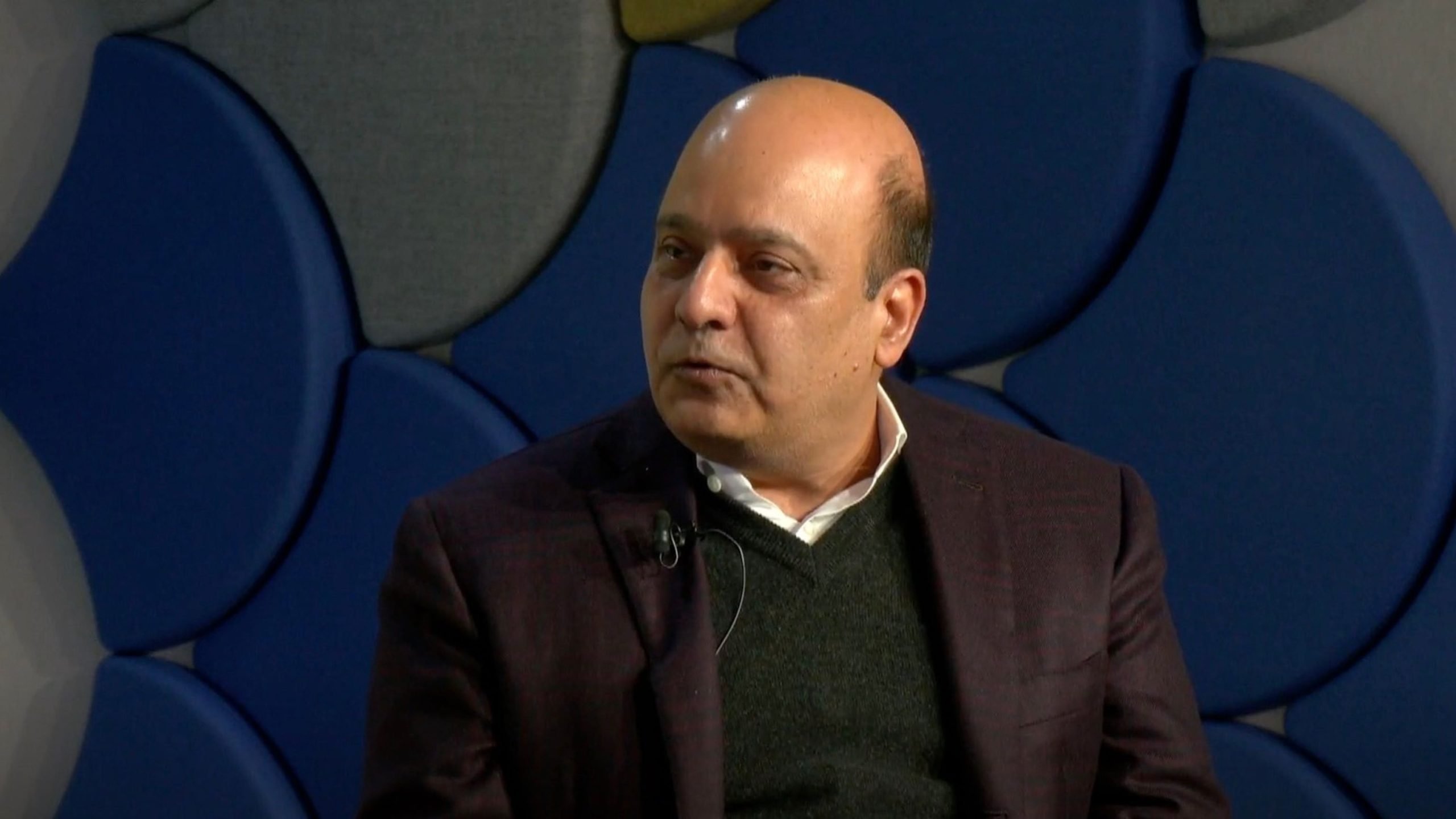
WEF 2025: AI CEO Says Facial Recognition Will Replace Digital IDs in Smart Cities
Favicon 
reclaimthenet.org

WEF 2025: AI CEO Says Facial Recognition Will Replace Digital IDs in Smart Cities

If you're tired of censorship and dystopian threats against civil liberties, subscribe to Reclaim The Net. One of the panels during last week’s World Economic Forum (WEF) annual meeting – “Empowering People with Digital Public Infrastructure” – saw the participation of Avathon CEO Pervinder Johar, who provided a vision of a gloomy future of “optimized” and omnipresent surveillance. Johar, of course, would not put it quite that way. Avathon, which produces AI tech, including the surveillance kind – believes that in the next five to ten years there will be no need for digital ID since facial recognition “and other things” will be built into “smart cities.” The panel was dedicated to digital public infrastructure (DPI) – a buzzword used by digital ID proponents like the UN, the EU, the WEF, and Bill Gates – and Johar said the financial and identity portions of digital ID will “converge” to produce the result he predicted. This suggests that the population will be under constant surveillance and identified at all times. Johar had more “good news” – Avathon makes what it calls an industrial AI platform, a surveillance system that the CEO shared has been deployed in Round Rock High School in Texas – “for children’s safety.” It “utilizes a school’s existing camera infrastructure to proactively detect everything from a weapon to an open door, unauthorized access, or even a fire.” Another panelist, Hoda Al Khzaimi, Associate Vice Provost for Research Translation and Entrepreneurship at New York University Abu Dhabi Hoda Al Khzaimi, also spoke about the connection between the DPI and “smart cities.” “Digital public infrastructures came into manifestation because governments want to make sure that they provide seamless services in the rise of smart cities,” said Al Khzaimi, at the same time effectively suggesting that “the optimal application of DPI” is pushing digital ID on citizens. Al Khzaimi also addressed the issue of DPI data. “What’s positive is that if this data provided by the DPI infrastructure are open and in many kinds of scenarios, you have open marketplaces for these data, users themselves can nudge governments and can nudge providers of these services and to tell them what do you want, and what do you not want and control the trends of how to deploy and build for solutions,” she said. Al Khzaimi also praised the public-private partnership on the DPI. And while acknowledging the potential for abuse (“you don’t want to subject the citizens to mass analytics if they don’t want to have this mass analytics infrastructure”) she quickly contradicted herself by saying there are cases when this should be done – such as to “analyze population data for health pandemic outbreaks.” Kapital Co-Founder and CEO Rene Saul spoke about Mexico’s digital passport (which utilizes biometric ID verification at the borders – something Saul did not mention), which he is a holder of, as a positive example of digital ID. After all, it saved him 35 minutes. “I arrived to Europe for the first time, and I saw the sign with other three countries that had electronic passport. So, I saved 35 minutes just to enter Europe when it took me one hour. So, that’s one of good examples, and that, and another good example of this technology is, it opened our borders,” said Saul. Know Your Customer (KYC) was also mentioned as helpful in developing digital services such as those used by banks. KYC itself is an invasive form of digital ID verification that incorporates document scans and biometric ID verification. If you're tired of censorship and dystopian threats against civil liberties, subscribe to Reclaim The Net. The post WEF 2025: AI CEO Says Facial Recognition Will Replace Digital IDs in Smart Cities appeared first on Reclaim The Net.
Like
Comment
Share
Reclaim The Net Feed
1 y

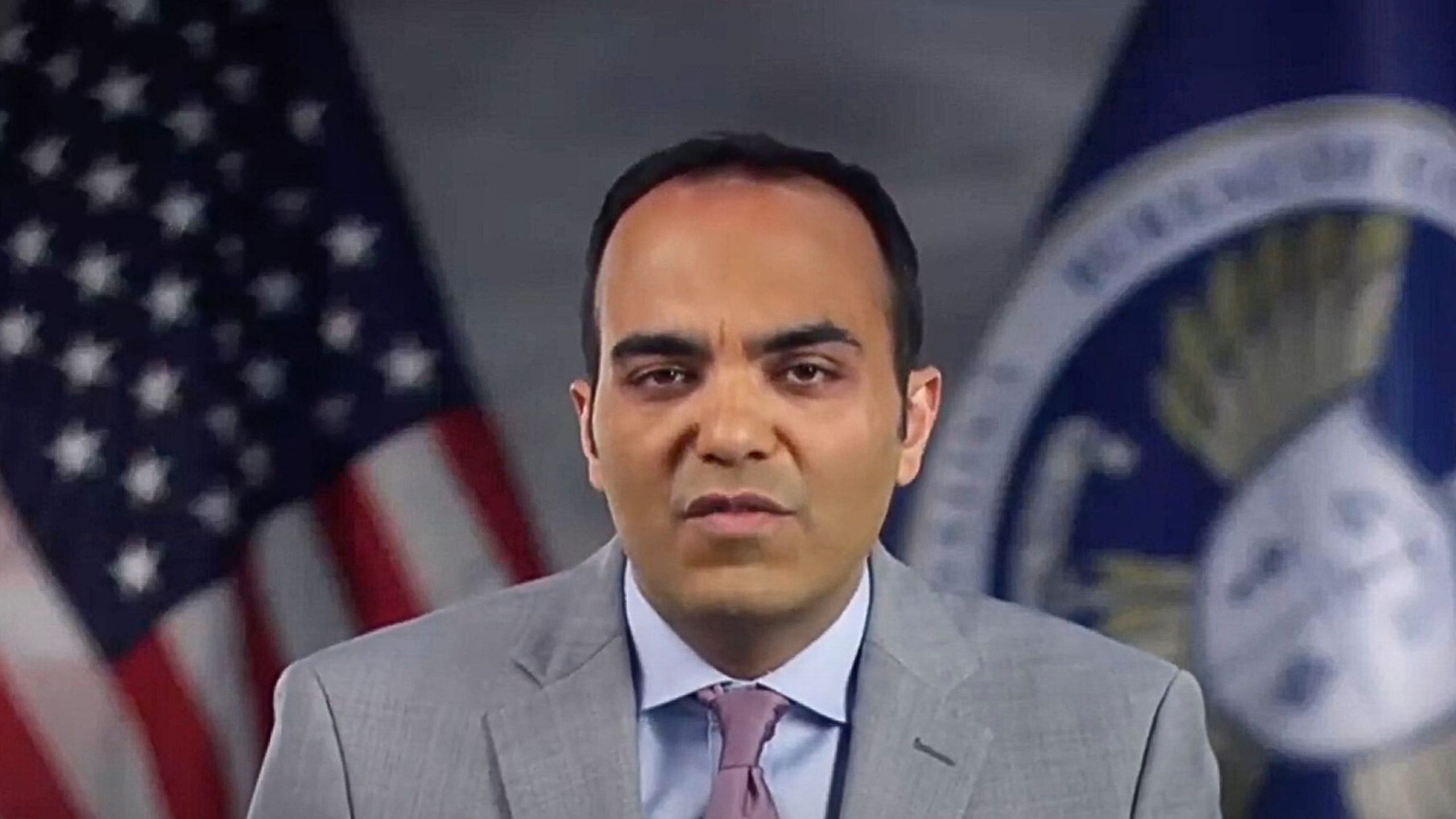
CFPB Director Rohit Chopra: Banks Resisted Rules Against De-Banking Over Political or Religious Views
Favicon 
reclaimthenet.org

CFPB Director Rohit Chopra: Banks Resisted Rules Against De-Banking Over Political or Religious Views

If you're tired of censorship and dystopian threats against civil liberties, subscribe to Reclaim The Net. The news that de-banking is very much a real phenomenon, documented on both sides of the Atlantic, apparently has not reached the legacy media in the US. Either that or they are deliberately ignoring it. The reason could be that de-banking – the policy of denying financial services to individuals or companies because of their political views – became visible during the Biden administration, as it affected some high-profile figures. Prompted by President Trump bringing up the issue last Thursday, straight to the face of the elites gathered in Davos, including financial ones, when he spoke about major banks debanking conservative customers – the likes of MSNBC and the Financial Times decided to gaslight their audience into believing that the remarks were “crazy,” “bonkers,” and variations thereof. But then, none other than Rohit Chopra, the head of the Consumer Financial Protection Bureau (CFPB) and a Biden appointee, went on CNBC to give credence to Trump’s comments. According to NewsBusters, shortly before that, MSNBC’s Stephanie Ruhle asked, “What in the world is he (Trump) talking about?!,” Chopra’s words might shed some light. “When the CFPB put into place a policy view that banks should not be de-banking based on certain characteristics, they sued us for that,” he said, the reference to “certain characteristics” pertaining to political or religious views. When a co-host said that the banks are denying they engage in de-banking of this type, Chopra wondered, “So why have they been so resistant, then, to some of the rules that make that absolutely clear?… I would certainly hope that they are not using any of those criteria at all, but it is important that the regulators make sure of that.” US legislators feel the same. A House Committee on Oversight and Government Reform investigation is now underway to determine if American individuals and businesses have indeed been exposed to de-banking because of their political affiliation. One of those who previously spoke about this is venture capitalist Marc Andreessen, who told Joe Rogan that more than two dozen tech founders got de-banking during the previous four years – because of their politics. There are also reports going back to the Covid era of individuals and organizations being denied financial services because they failed to toe the official line on lockdowns and other restrictions. Some of the prominent figures that in the past accused banks of discriminating against them or family members by means of de-banking are First Lady Melania Trump, and Nigel Farage in the UK. If you're tired of censorship and dystopian threats against civil liberties, subscribe to Reclaim The Net. The post CFPB Director Rohit Chopra: Banks Resisted Rules Against De-Banking Over Political or Religious Views appeared first on Reclaim The Net.
Like
Comment
Share
Hot Air Feed
Hot Air Feed
1 y

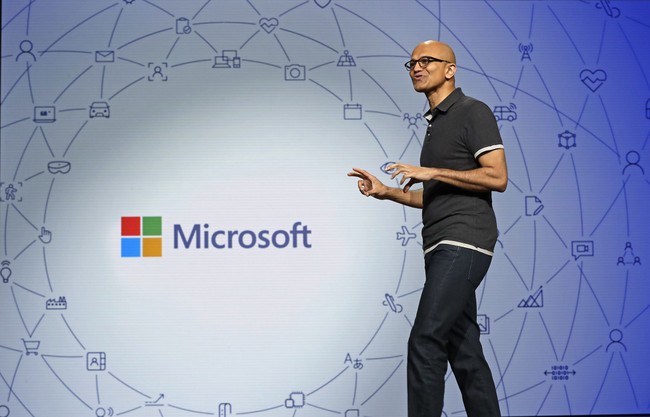
Will Microsoft Buy TikTok?
Favicon 
hotair.com

Will Microsoft Buy TikTok?

Will Microsoft Buy TikTok?
Like
Comment
Share
Science Explorer
Science Explorer
1 y

Scientists Eating Pasta At A Party Decide To Solve The Physics Of Salt Rings
Favicon 
www.iflscience.com

Scientists Eating Pasta At A Party Decide To Solve The Physics Of Salt Rings

Dinner parties with scientists can get pretty wild.
Like
Comment
Share
Science Explorer
Science Explorer
1 y

Twist On The Volcano Experiment You Did In School Reveals Something Important About Mars
Favicon 
www.iflscience.com

Twist On The Volcano Experiment You Did In School Reveals Something Important About Mars

The formation of a special type of volcanic eruption can be explained with a kitchen experiment.
Like
Comment
Share
Showing 57432 out of 116696
  • 57428
  • 57429
  • 57430
  • 57431
  • 57432
  • 57433
  • 57434
  • 57435
  • 57436
  • 57437
  • 57438
  • 57439
  • 57440
  • 57441
  • 57442
  • 57443
  • 57444
  • 57445
  • 57446
  • 57447
Advertisement
Stop Seeing These Ads

Edit Offer

Add tier


Select an image
Delete your tier
Are you sure you want to delete this tier?

Reviews

In order to sell your content and posts, start by creating a few packages. Monetization

Pay By Wallet

Payment Alert

You are about to purchase the items, do you want to proceed?

Request a Refund