YubNub Social YubNub Social
    #jesuschrist #liberals #christ #jesus #americafirst #socialists #easter #resurrection #resurrectionsunday #heisrisen #christisrisen #happyeaster #recruitment #rebirth #nokings
    Advanced Search
  • Login
  • Register

  • Night mode
  • © 2026 YubNub Social
    About • Directory • Contact Us • Developers • Privacy Policy • Terms of Use • shareasale • FB Webview Detected • Android • Apple iOS • Get Our App

    Select Language

  • English
Night mode toggle
Featured Content
Community
New Posts (Home) ChatBox Popular Posts Reels Game Zone Top PodCasts
Explore
Explore
© 2026 YubNub Social
  • English
About • Directory • Contact Us • Developers • Privacy Policy • Terms of Use • shareasale • FB Webview Detected • Android • Apple iOS • Get Our App
Advertisement
Stop Seeing These Ads

Discover posts

Posts

Users

Pages

Blog

Market

Events

Games

Forum

Science Explorer
Science Explorer
1 y

Billions of Hidden Black Holes Could Be Lurking in Space
Favicon 
www.sciencealert.com

Billions of Hidden Black Holes Could Be Lurking in Space

Impossible to detect?
Like
Comment
Share
Conservative Voices
Conservative Voices
1 y

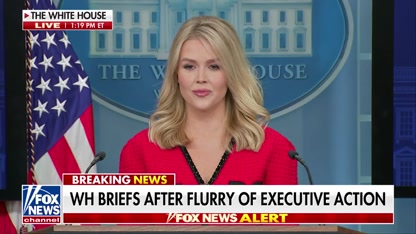
Leavitt confirms Trump's tariffs on Canada, Mexico and China will take effect
Favicon 
www.brighteon.com

Leavitt confirms Trump's tariffs on Canada, Mexico and China will take effect

Follow NewsClips channel at Brighteon.com for more updatesSubscribe to Brighteon newsletter to get the latest news and more featured videos: https://support.brighteon.com/Subscribe.html
Like
Comment
Share
Conservative Voices
Conservative Voices
1 y

Trump will ‘unleash’ US economy in a way we ‘can’t even grasp’: Dagen McDowell
Favicon 
www.brighteon.com

Trump will ‘unleash’ US economy in a way we ‘can’t even grasp’: Dagen McDowell

Follow NewsClips channel at Brighteon.com for more updatesSubscribe to Brighteon newsletter to get the latest news and more featured videos: https://support.brighteon.com/Subscribe.html
Like
Comment
Share
Conservative Voices
Conservative Voices
1 y

Trump's nominees want the federal government to be efficient, GOP rep says
Favicon 
www.brighteon.com

Trump's nominees want the federal government to be efficient, GOP rep says

Follow NewsClips channel at Brighteon.com for more updatesSubscribe to Brighteon newsletter to get the latest news and more featured videos: https://support.brighteon.com/Subscribe.html
Like
Comment
Share
Conservative Voices
Conservative Voices
1 y

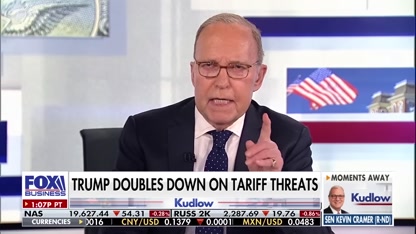
Larry Kudlow: Trump is absolutely right about this tough tariff diplomacy
Favicon 
www.brighteon.com

Larry Kudlow: Trump is absolutely right about this tough tariff diplomacy

Follow NewsClips channel at Brighteon.com for more updatesSubscribe to Brighteon newsletter to get the latest news and more featured videos: https://support.brighteon.com/Subscribe.html
Like
Comment
Share
Conservative Voices
Conservative Voices
1 y

Here’s How Trump Can Make a Strong Deal With Iran
Favicon 
www.theamericanconservative.com

Here’s How Trump Can Make a Strong Deal With Iran

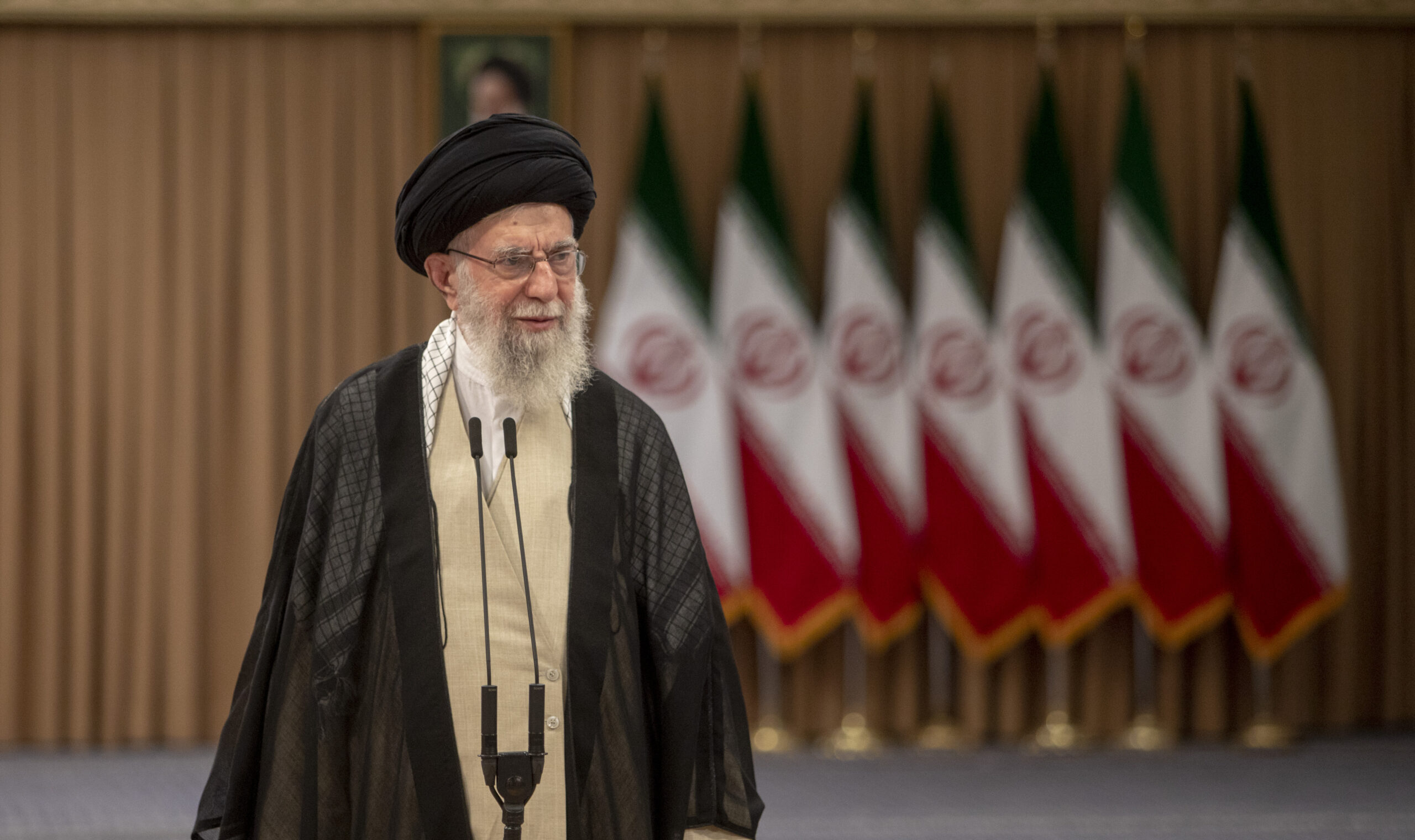
Foreign Affairs Here’s How Trump Can Make a Strong Deal With Iran The president will find Tehran more amenable than ever if he tries to drive a bargain. Credit: Majid Saeedi/Getty Images Donald Trump built his reputation as the ultimate dealmaker—someone who turns chaos into opportunity and delivers results where others fall short. Now, with the Middle East still reeling from tenuously paused conflicts in Gaza and Lebanon and U.S.–Iran tensions at a critical juncture, Trump has the chance to cement his place in history by achieving what no president before him could: a bold, transformative deal with Iran.  Such a deal would not just stabilize a turbulent region, but could unlock economic opportunities for American workers, bolster U.S. security, and showcase Trump’s unique ability to outmaneuver the Washington establishment and deliver a historic win. For decades, American presidents have stumbled when it comes to Iran. George W. Bush plunged the Middle East into chaos with disastrous regime-change wars, spurred on by advisors like Dick Cheney who had their sights set on Iran after Iraq. Barack Obama’s 2015 nuclear deal was a limited step that left other issues for future resolution, while a multi-layered U.S. sanctions architecture continued to sideline American businesses, leaving economic opportunities in Iran largely untapped. Following Trump’s withdrawal from that deal, Joe Biden showed little resolve or vision, allowing tensions to simmer without a coherent strategy for deescalation. Trump has the chance to break this cycle of missteps and half-measures. Such a deal wouldn’t just accomplish Trump’s vital goal of preventing Iran from ever acquiring a nuclear weapon—it would also keep America out of another endless, costly war, fulfilling Trump’s inaugural speech promise to avoid the disastrous foreign entanglements of past administrations. But the real genius of this opportunity lies in the prosperity it could bring: a deal with Iran could open the door to billions of dollars in untapped markets, giving American businesses a competitive edge and creating thousands of jobs for hardworking Americans. This isn’t just about diplomacy—it’s about delivering real, tangible benefits for America’s economy and solidifying Trump’s legacy as a dealmaker who puts America first. The potential for economic cooperation with Iran is enormous, as even some Iranian reformist voices have recently highlighted. The leading Iranian reformist newspaper Shargh, aligned with the administration of Iranian President Masoud Pezeshkian, recently ran a headline about the potential for U.S.–Iran relations under Trump: “A $2 Trillion Agreement Benefiting All.” The article outlined bold economic possibilities, such as U.S. participation in major infrastructure projects: selling 1,500 Boeing airplanes, manufacturing 8 million cars, building refineries, and investing in agriculture, IT, and pharmaceuticals. This may sound like a lofty dream, but history shows it’s not far-fetched. In the 1990s, Iran offered major oil contracts to U.S. companies before being rebuffed by sanctions from the Clinton administration. Similarly, after the 2015 nuclear deal, Boeing secured a groundbreaking $20 billion contract with Iran, projected to support nearly 100,000 American jobs. However, this opportunity fell apart when the nuclear deal collapsed—a collapse fueled in part by the agreement’s fatal flaw: It excluded most U.S. businesses from direct engagement with Iran, leaving the door wide open for European and Asian competitors to dominate the Iranian market. Trump himself pointed this out in 2015, tweeting: “Everybody’s involved now with Iran selling them stuff. We’re probably (going to) be the only ones that won’t be selling them anything.” A new deal—crafted with Trump’s signature savvy—could fix these mistakes and open the door for American companies to capitalize on one of the world’s last untapped markets. Iran, with the world’s second-largest natural gas reserves, fourth-largest oil reserves, and a population of nearly 90 million eager for global engagement, offers a massive market for American investment. Critics might argue that hardline elements in Iran have historically opposed business with the United States, even going so far as to sabotage such opportunities. Nevertheless, there is growing momentum among pragmatic forces in Iran advocating for a more mutually beneficial approach. There is also precedent for this shift: As recently as 2016, Iran’s oil minister openly welcomed U.S. investment in its energy sector. Today, figures in the Pezeshkian government, like Ali Abdolalizadeh, the president’s representative for maritime development policies, have stated that U.S. companies would be welcome to invest in Iran if sanctions are lifted. This pragmatism suggests that, with a well-crafted strategy, the barriers to U.S.–Iran economic cooperation can be overcome. Still, another natural question arises: Would Iran’s supreme leader, Ayatollah Ali Khamenei—long known for his distrust of the United States—ever greenlight a historic shift in U.S.–Iran relations? While skepticism is warranted, his recent rhetoric and the statements of his closest advisors suggest the possibility is very real. Khamenei has, in fact, shown a willingness to support foreign investment that directly benefits Iran’s infrastructure and economic growth. For example, in a 2016 speech, he stated, “The benefit of the visits by these [foreign] delegations should be investment, the creation of production, and bringing in new technologies in areas where we need them.”  More importantly, his top advisors are signaling readiness for a new chapter. Kamal Kharrazi, head of Iran’s Strategic Council on Foreign Relations and a trusted confidant of Khamenei, recently declared, “Tehran is ready for negotiations,” while making clear that Iran’s actions would depend on the U.S. adopting a constructive approach. Ali Larijani, another senior advisor and former parliamentary speaker, went further, stating in an interview on Khamenei’s official website that Iran is prepared for nuclear talks and open to a “new agreement” with the United States. The Pezeshkian government, a reformist administration elected on a promise to prioritize diplomacy in foreign relations, has made its stance clear. Pezeshkian himself recently reiterated Iran’s readiness for talks in an NBC News interview, and emphasized that Iran has not and will not target Trump personally. Pezeshkian’s foreign policy team has also been clear and consistent in their support for diplomacy. Foreign Minister Abbas Araghchi has repeatedly highlighted Iran’s readiness for constructive negotiations, and Strategic Vice President Javad Zarif reinforced this message at the World Economic Forum in Davos, emphasizing Iran’s preference for an agreement. Their united stance signals that the Pezeshkian government is prepared to pursue meaningful dialogue. This presents a unique opportunity for the U.S. to secure a historic deal under Trump’s leadership—advancing American interests, avoiding conflict, and solidifying Trump’s legacy as the dealmaker who ended decades of deadlock. Of course, both Iran and the United States face political hurdles to pursuing negotiations, but with bold, decisive leadership, they can be overcome. In Iran, Pezeshkian has a strong mandate for diplomacy and has skillfully built consensus among the country’s centers of power. This strategy is already paying off: Pezeshkian’s government successfully sidelined a controversial mandatory hijab bill and eased some internet restrictions, proving his ability to navigate Iran’s complex political landscape. Crucially, Pezeshkian has aligned himself closely with Supreme Leader Khamenei, whose backing ensures that hardliners are unable to block meaningful negotiations. In the United States, the obstacles come from the entrenched foreign policy establishment and hawkish critics who will attack any effort to engage Iran constructively. We’ve already seen them go after Trump’s appointees who dared to pursue pragmatic approaches. But Trump has never been one to back down from a fight. He has consistently defied the establishment, staying true to his instincts and the promises that got him elected.  Americans voted for Trump to end endless wars, not start new ones, and to deliver peace by striking bold, historic deals—even with adversaries like Iran. The American public is likely to back him on this, and Trump has the unique ability to sell the deal by emphasizing the massive economic benefits it would create for U.S. businesses and workers. With his trademark resolve and his unmatched ability to connect with the American people, Trump can rise above the noise, seize this moment, and deliver a victory that cements his legacy as a dealmaker and a leader who puts American interests first. The post Here’s How Trump Can Make a Strong Deal With Iran appeared first on The American Conservative.

Like
Comment
Share
Conservative Voices
Conservative Voices
1 y

The Real Meaning of the Fight Over Tulsi Gabbard 
Favicon 
www.theamericanconservative.com

The Real Meaning of the Fight Over Tulsi Gabbard 

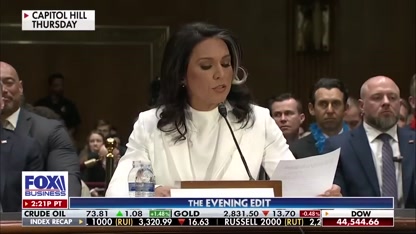
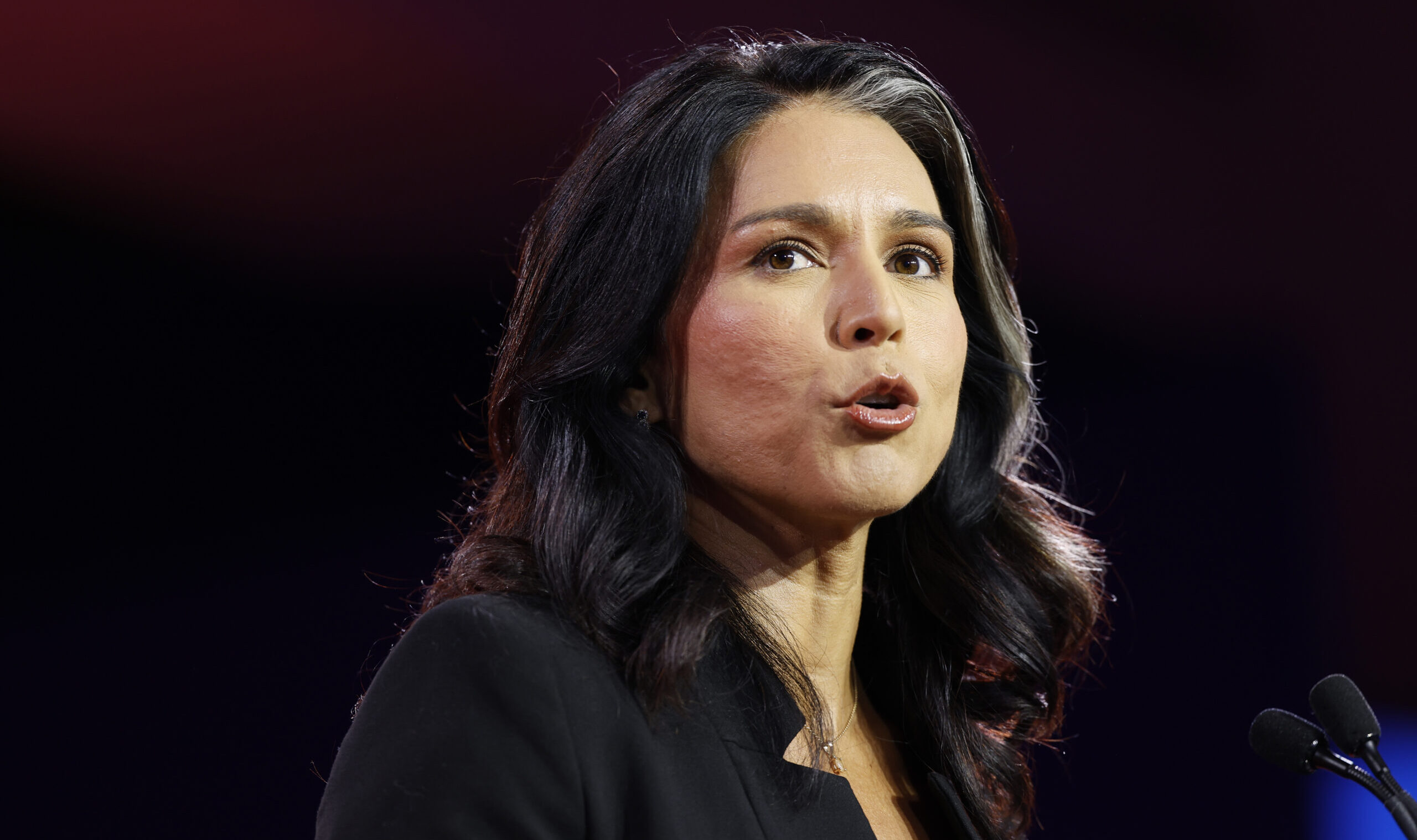
Politics The Real Meaning of the Fight Over Tulsi Gabbard Gabbard threatens the self-protective national security clique. Credit: Anna Moneymaker/Getty Images Mark Twain once described members of Congress as having “the smallest minds and the selfishest souls and the cowardliest hearts that God makes.”  And true to form, yesterday morning the cowardly lions of the Senate Select Committee on Intelligence roared away during former congresswoman Tulsi Gabbard’s confirmation hearing to become the next director of national intelligence. Leading the charge against Gabbard on the Senate Intelligence Committee is ranking member Mark Warner, Democrat of Virginia who, like his counterpart Adam Schiff (then serving as chairman of the House Permanent Select Committee on Intelligence), spent four years lying to the American people about Donald Trump’s alleged connections to the Kremlin. Warner’s bellyaching over Gabbard’s past praise of whistleblower Edward Snowden (who, even if one disagrees with his methods, did disclose very real abuses by the National Security Agency) captures the general, worshipful attitude Democrats have developed toward the permanent national security state in the years since Trump took the White House in 2016. National Security Democrats—usually but not always former CIA officers like the newly minted Democratic Senator from Michigan, Elise Slotkin—abhor the idea of actual oversight. They simply exist to further the objectives of the permanent national security bureaucracy. The objections to Gabbard, then, come in two forms. The first is that she once met with Syrian dictator Bashar al-Assad, ergo she is in league with a war criminal (the same smears have not been applied to Nancy Pelosi who met with Assad in 2007). And secondly, and more egregiously in the eyes of the NatSec Dems, Gabbard refuses to genuflect at the altar of the 17 U.S. intelligence agencies that comprise the “Intelligence Community” which she has been nominated to oversee. Let’s first turn our attention to Syria. Peter Ford, whom I spoke to this week, was the United Kingdom’s ambassador to Syria from 1999 to 2003 and later served as representative of the commissioner general of the United Nations Relief and Works Agency for Palestine Refugees (UNRWA) from 2006 to 2015.  He has courageously and at great cost to his reputation spoken out about the rank stupidity and recklessness of the West’s dirty war against Assad. The project, which has now tragically come to fruition, of isolating and ultimately overthrowing Assad has benefitted only a gang of Sunni Islamist militants with roots in organizations like al-Qaeda and al-Nusra. Ford tells me that in his view Gabbard was justified in visiting Damascus because keeping a closed mind on Assad was doing no service to the US. For many years Assad had pleaded with the West not to force him into the camp of Iran, with which secular Arabs like Assad felt no natural affinity. But that is exactly what we did. In the same way we forced Assad to become reliant on Russia when only the Russians came to his assistance when ISIS were literally at the gates of Damascus. He continued, From my time as British Ambassador, I knew the London-trained eye- doctor wanted to take his country in a pro-Western direction but we spurned the opportunity, making him mistrustful of the West. Personal diplomacy by people like Gabbard offered a way to get back on course. By 2019 none of Assad’s actions could remotely be described as anti-American unless resisting US openly acknowledged attempts at regime change could be categorized thus. Even the illegal presence of US troops in North East Syria was not actively opposed. Gabbard’s other great sin is that of lèse-majesté. The national-security Blob protects its own. Warner’s entire career is proof of that. And the big problem with Gabbard is that she questions the prevailing wisdom—and such questioning will not do. In a way, Warner and the NatSec Dems are right. The “threat” Gabbard poses to their prerogatives—namely, the ongoing series of worldwide covert regime change operations that redound to no one’s benefit but the Pentagon and IC’s budgets— is indeed a serious one—and one that sensible Americans should welcome.  A manager of national intelligence need not check her brain at the door. As the former CIA head of Russia analysis George Beebe has written in these pages, If the IC is to improve its analytic record, it needs to promote rather than penalize diverse thinking and employ rigorous methodology to explain instances where objective analysts might reasonably offer alternatives to mainstream opinion. In an illuminating 1971 essay titled “The National Security Managers and the National Interest,” Richard Barnet observed that “National Security Managers exercise their power chiefly by filtering the information that reaches the President and by interpreting the outside world for him.” The philosopher Hannah Arendt also observed around the same time that “the President, one is tempted to argue, allegedly the most powerful man in the most powerful country, is the only person in this country whose range of choices can be predetermined.”  As Gabbard noted in her opening statement, a misuse of the IC’s power, as happened with the politicization of intelligence in the run up to Iraq, can result in catastrophe. But NatSec Dems have fully embraced their role as the party of the permanent national security state. Warner and the rest know that the real threat Gabbard poses to their agenda is the threat that truth poses to power. The post The Real Meaning of the Fight Over Tulsi Gabbard  appeared first on The American Conservative.

Like
Comment
Share
Intel Uncensored
Intel Uncensored
1 y

The Enslavement of the Middle Class (Documentary)
Favicon 
api.bitchute.com

The Enslavement of the Middle Class (Documentary)

The Engineered Social and Economic Entrapment of the Masses *** 377,750 views Jan. 3, 2025 Jake Tran - ? PART 2 is OUT NOW! Click HERE to watch! ➡️ https://l.escapethemiddleclass.yt/join - - FAIR USE FOR EDUCATIONAL PURPOSES MIrrored From: https://youtu.be/uU085DHfAm0?si=zFVxMnL6iNH3qO1q - Shoutout to Andrei Jikh for inspiring the part about the worker productivity/income split and ClearValue Tax for the Great Melt-Up part! They've got great channels!    / @andreijikh      / @clearvaluetax9382   - So you run a country and you have a problem: Every few years, you have to get re-elected. And what is the #1 way to get fired by voters? If the economy is doing bad… Because a bad economy equals people struggling to pay rent, buy food, and all that stuff. Heck even if you run a dictatorship, if the people are suffering too much, eventually you’re gonna get overthrown… So that’s why your #1 priority as a noble leader is “growth” - economic growth Why? Because if your country makes more money, there’s less unemployment, the plebs are at least content with the status quo, you get more tax dollars, more weapons, more nukes, more leverage over other countries, and ultimately, more power. Why do you think all they talk about at the Federal Reserve, on CNBC, on the White House podium is “growth”? Why do you think they’re so scared of an “economic slowdown”? It’s because America is mostly run by a bunch of people who might get fired every few years by voters. And creating growth lets you keep your power and gain more of it. But here’s the thing, the only way you’re gonna get more economic growth, is if you have a giant segment of your population slaving away What do I mean by that? Well just think about what it takes for a giant country like the US to grow at 2% a year: if your economy is gonna grow at 2% a year indefinitely, someone’s gotta pick up the trash? Someone’s gotta flip the hamburgers build the roads, construct the buildings, clean the sewers, do the bookkeeping, mop the floors, deliver your food, operate the buses, and a bunch of other tasks that are very vital, but also very miserable to do? In other words, you need a bunch of people, who no matter how much they hate their lives, no matter how resentful and bitter they are about giving up on their dreams - you need them to still get up every day… and just take it. Take it for the good of the country… Because if your population doesn’t do that, there’s nothing! If everyone today who works a miserable job isn’t motivated to wake up tomorrow and do your plumbing, pick up your trash, make sure the street lights are working - everything goes to hell. In fact, this is the only difference between a 1st world country and a 3rd world country: Putting aside the corruption we cover on this channel, the only difference between a 1st world country and a 3rd world country is some dude waking up, and deciding to pick up your trash… The trash man has no real motivation to pick up your trash? So
Like
Comment
Share
Classic Rock Lovers
Classic Rock Lovers  
1 y

The forgotten guitarist Jimmy Page called “absolutely brilliant”
Favicon 
faroutmagazine.co.uk

The forgotten guitarist Jimmy Page called “absolutely brilliant”

An underrated talent. The post The forgotten guitarist Jimmy Page called “absolutely brilliant” first appeared on Far Out Magazine.
Like
Comment
Share
Classic Rock Lovers
Classic Rock Lovers  
1 y

Steve Nicks’ heartbreaking regret about David Bowie: “Maybe we could get together”
Favicon 
faroutmagazine.co.uk

Steve Nicks’ heartbreaking regret about David Bowie: “Maybe we could get together”

Nicks wishes she could go back. The post Steve Nicks’ heartbreaking regret about David Bowie: “Maybe we could get together” first appeared on Far Out Magazine.
Like
Comment
Share
Showing 57585 out of 117432
  • 57581
  • 57582
  • 57583
  • 57584
  • 57585
  • 57586
  • 57587
  • 57588
  • 57589
  • 57590
  • 57591
  • 57592
  • 57593
  • 57594
  • 57595
  • 57596
  • 57597
  • 57598
  • 57599
  • 57600
Advertisement
Stop Seeing These Ads

Edit Offer

Add tier


Select an image
Delete your tier
Are you sure you want to delete this tier?

Reviews

In order to sell your content and posts, start by creating a few packages. Monetization

Pay By Wallet

Payment Alert

You are about to purchase the items, do you want to proceed?

Request a Refund