YubNub Social YubNub Social
    #racism #elections #conservatives #gerrymandering
    Advanced Search
  • Login
  • Register

  • Night mode
  • © 2026 YubNub Social
    About • Directory • Contact Us • Developers • Privacy Policy • Terms of Use • shareasale • FB Webview Detected • Android • Apple iOS • Get Our App

    Select Language

  • English
Night mode toggle
Featured Content
Community
New Posts (Home) ChatBox Popular Posts Reels Game Zone Top PodCasts
Explore
Explore
© 2026 YubNub Social
  • English
About • Directory • Contact Us • Developers • Privacy Policy • Terms of Use • shareasale • FB Webview Detected • Android • Apple iOS • Get Our App
Advertisement
Stop Seeing These Ads

Discover posts

Posts

Users

Pages

Blog

Market

Events

Games

Forum

History Traveler
History Traveler
1 y

A Day in the Life of a Medieval Woman in England
Favicon 
www.thecollector.com

A Day in the Life of a Medieval Woman in England

  “Medieval” has come to mean backward, uninformed, and brutal, particularly when looking at the lives of women. This does not reflect the reality of the time but is an interpretation of a later age that sought to create a divide between the enlightened Classical world and their own Renaissance era. While a Medieval woman certainly did not have the personal power of a woman of the 21st century, she was not without agency, and even a peasant woman could wield some authority in her family and community.   Seasons in the Middle Ages  Monthly Calendar of Tasks, by Master of the Geneva Boccaccio, 1470-75. Source: BnF   The average peasant woman was a wife and mother, responsible for keeping the household fed, clothed, and healthy. What this meant for any given day was dictated by the calendar: during planting and harvesting, she would be found working alongside her husband and the rest of the people who worked for their manor lord; all through the growing months, she tended her kitchen garden, growing fruits and vegetables that could be enjoyed fresh or preserved for the long winter. Herbs were also found in the garden, which could soothe the inevitable headaches, colds, or stomach troubles of the family.   During the cold of the winter, days could be spent productively weaving and sewing or making candles. She might also do piecework for a little extra money or to fulfill obligations to the manor. No matter the season, there was always the regular round of preparing food, caring for children and family, and tending to livestock. But it was not all drudgery, that calendar also dictated days of rest, festivals, and holidays.   Around the Peasant’s House  House and stocks in the Medieval Village Cosmeston, Wales. Source: Wikimedia Commons   Most peasant houses were built primarily of wood, or a wood frame with plaster. It may have had a few wooden-framed windows, with shutters to keep out wind and rain and cold. It would have had a thatched roof, built up with straw that was patch-repaired as needed, and watertight. Along one wall were the family’s beds and a trunk or cupboard which held their clothes.   The building would have been warmed by either a hearth fire in the middle or a fireplace along one wall with a chimney. Near that fire would be a cupboard with cooking implements, a ceramic pot with a lid that could be placed directly into the fire, some long-handled spoons and forks, a spit for cooking a piece of meat over the fire, and a treasured copper or bronze pot.   These tools were used to make a hearty porridge in the morning, served in wooden bowls accompanied by a glazed pottery cup filled with small beer, a slightly fermented drink brewed from grain. In season, some fresh fruit or vegetables rounded out the meal, out of season fruit preserves and pickled veggies did the same. For the evening meal, the same pot might hold a stew or soup, heavy on vegetables with a little meat for flavor.   A restored medieval kitchen inside Verrucole Castle, Tuscany, Italy. Source: Wikimedia Commons   At butchering time, a fresh piece of meat would be skewered to roast over the fire, while the rest of the animal was salted or smoked to preserve it for the winter. Whatever the central portion of the meal, bread was always on the table. Fresh bread with butter, of course, but also stale bread serving as a type of plate, called a trencher.   The bread was baked in a community oven, using flour produced at the community grain mill, with a small portion going to the manor lord as payment for the use of both. Meals were eaten with a knife and spoon, and one’s hands. The fork was not yet part of tableware, though it was used in cooking.   Before eating, the family would wash their hands in a basin or bucket, possibly with some homemade soap, another of women’s wintertime crafts. It is often said that people in Europe during the Middle Ages did not bathe — this is simply untrue. Though they did not bathe as often as people in the modern day (few, if any, people in history did), they were far from dirty.   A complete bath as we think of it, in a tub with heated water and soap, might only happen a few times a year at most, but hands and faces were washed daily and a wet rag was used to clean the rest of the body as needed. For those near a pond or stream, a dip after a long day in the fields was enough to take off the sweat and grime of such work.   Laundry was also done on a fairly regular basis, though mainly for undergarments; outerwear was spot-cleaned as needed but rarely fully washed. A fresh chemise or undertunic went a long way to helping one feel clean.   Farm Work  June, from The Very Rich Hours of the Duke of Berry, by the Limbourg Brothers, c. 1412. Source: Wikimedia Commons   For those who had livestock, the “barn” might be attached to the house, separated by a wall that did not quite reach the ceiling. The warmth of the animals’ bodies helped to keep the house warm in the winter and allowed them to be cared for without going outside. It also made it more difficult for anyone to steal the livestock.   Almost all peasant families kept some chickens for both eggs and meat. Eggs were an easy way to supplement one’s income and could even be used to pay some of the dues owed to the landlord. A cat was a welcome addition to the family, keeping rodents out of the store cupboard and a dog was also appreciated for protection and (for those who had it) helping to herd livestock.   Peasant women did a lot of the same work as men: planting, harvesting, caring for livestock, and general maintenance of the house and farm. The labor done by medieval peasants was not as strictly defined by gender as it was among the upper classes. Even so, women were disproportionately responsible for home and hearth in addition to whatever other work was required of them.   The multigenerational nature of one’s community (if not one’s own household) was incredibly important. A mother, spinster sister (a “spinster” in medieval times being a woman who spins for a living, something associated with single women past marriageable age), or older daughters could provide childcare on the days a woman’s labor was needed in the fields. Even without blood bonds, women friends could trade this work for each other as they fulfilled these obligations.   Growing Up  Swaddled baby and a toddler in a baby walker from, Histoire ancienne jusqu’ à César, 15th century. Source: Bodleian Library   Once peasant children were old enough, they were also involved in farmwork. While schooling was certainly valued, most peasants did not get any type of formal schooling. It was, in short, unnecessary. Generally, children learned what they needed to know for adulthood by working alongside their parents. Boys generally took up their father’s occupation, whether farming or a skilled trade. Girls learned household management and childcare at their mother’s skirts and were often tasked with adult responsibilities at a very young age.   Reading was not usually an element in this education, but basic numeracy and ciphering were, though informally. If parents had the means, they might send their sons to school in a nearby town or monastery. There was no reason for them to send a daughter to school.   Both boys and girls could be sent into domestic service, usually at the behest of the manor lord for either his home or another’s. They might also be apprenticed to learn a trade, again this was usually at the lord’s behest or (minimally) with his permission.   The eldest son, by virtue of his position, inherited any property the father held. Girls could not inherit if they married (any property would go to her husband or sons), but if they did not marry, they could inherit in their own name. Adolescents who expressed a calling to the Church were usually assisted in fulfilling this vow unless they were needed to fulfill a role within the family.   Married Life  A wedding, from Spiegel des menschlichen Lebens, Augsburg, about 1475-76. Source: Godecookery.com   Girls could expect to marry in their late teens but were technically marriageable as soon as they began menstruating. The choice of spouse was one arena where peasants could be said to have had it better than the upper classes, as they could choose a love match. In fact, peasant couples were often not formally married.   In this era, the purpose of marriage was to have a formal contract between two families for the exchange of property and the assurance of the legitimacy of heirs; people without property do not need to make formal arrangements regarding its distribution. This did not mean, however, that their children were not legitimate, these informal marriages were recognized by the community, and that was really all that mattered.   A medieval wife (whether a peasant on a farm or a queen in a castle) might birth ten or more children, though it was unlikely that all would survive to adulthood. In an era before antibiotics and other elements of modern medicine, even a simple injury or illness could be fatal. A woman took her own life into her hands, every time she went to the childbed.   Afterward, the baby was kept at the breast until age two or so, helping (though not guaranteeing) to space out births. It was not at all unusual for a woman to still be having children when her eldest had already married and started having their own.   Medieval Women in England: Conclusion  Woman with a spinning wheel, and a man using bellows on a fire, from Decretals of Gregory IX, 13th century. Source: Picryl   The most important thing to remember when looking at the lives of people throughout history is that we have not truly changed. A woman in medieval England wanted the same basic things a modern one does: a roof over her head, enough food to eat and clothes to wear, happiness for themselves and their families, and for their children to do just a little better than they did.
Like
Comment
Share
History Traveler
History Traveler
1 y

9 Defining Moments in British Medieval Warfare
Favicon 
www.thecollector.com

9 Defining Moments in British Medieval Warfare

  Interestingly, the medieval period in Britain begins with a battle. In 1066 CE, the Battle of Hastings marked the beginning of Norman rule and a new era in Britain. Medieval warfare in Britain was often used as a tool to help implement feudalism and maintain the centralization of power. The period from 1066 to 1485 CE saw a number of important battles that were instrumental in both political and territorial politics. The Medieval Period in Britain both began and ended with a battle — ending with the Battle of Bosworth Field and the rise of the Tudor Dynasty.   1. The Battle of Hastings (1066)  Detail from the Bayeux Tapestry, Scene 57: the death of King Harold at the Battle of Hastings, 1170s. Source: Wikimedia Commons   October 14th, 1066 CE, marked the start of Norman rule over England after they ousted the Anglo-Saxons. The Battle of Hastings involved the forces of William, Duke of Normandy, often referred to as William the Conqueror, and the army of Harold Godwinson, the last Anglo-Saxon king of England.   King Edward the Confessor left no clear heir when he died in January of 1066. You will see throughout history that this was a common problem in England. While Harold Godwinson was crowned king, he immediately faced a contesting claim from William of Normandy. William claimed that Edward had promised him the throne as far back as 1051. This dispute set the stage for the subsequent Norman invasion.   The battle took place near the present-day town of Battle, East Sussex. The fighting lasted from morning until dusk. William used innovative tactics, new to the English Saxons, which included feigned retreats that drew out and broke the English shield wall. This tactic has been attributed as the leading factor in the Norman victory. The end of the battle was signaled by Harold’s death. The famous Bayeux Tapestry depicts his death as an arrow to the eye. Despite this artistic representation of events, historians regularly debate the details of his death.   William’s victory fundamentally altered England and its aristocracy. Anglo-Saxon lords were replaced with Norman ones, and a new system of governance was introduced. Norman-French started to replace Old English as William was crowned King of England on Christmas Day 1066.   2. The Battle of Stirling Bridge (1297) The Battle of Stirling Bridge, 19th century. Source: Wikimedia Commons   A battle made famous by Hollywood in the film Braveheart, the Battle of Stirling Bridge was fought on September 11th, 1297 CE. This was one of the largest battles during the First War of Scottish Independence. William Wallace and Andrew Murray led Scottish forces to a decisive victory against English forces led by John de Warrene, the Earl of Surrey, and Hugh de Cressingham.   Edward I of England wanted to assert control over Scotland after the death of the Scottish queen in 1290. The people of Scotland disagreed, and this disagreement culminated in this battle at Stirling Bridge.   The English were at a disadvantage. They were forced to cross a narrow bridge over the River Forth, and the Scots made sure to capitalize on this moment. This narrow path limited how much English troops were able to move. The Scots could then hold back their forces until most of the English had crossed the river. Once they crossed, Wallace and Murray launched a surprise attack and cut off the English access to the bridge. The English were left vulnerable and disorganized, resulting in a Scottish victory.   This victory boosted Scottish morale and cemented Wallace’s reputation as a symbol of the resistance. This eventually made him a great target for the English crown. However, this defeat forced Edward I to reconsider his strategies in Scotland, and Scottish resistance only grew.   3. The Battle of Bannockburn (1314) The Battle of Bannockburn, by Andrew Hillhouse. Source: Smith Art Gallery and Museum   The Battle of Bannockburn was fought from June 23rd to 24th, 1314. This battle is another large event during the First War of Scottish Independence against England. While the Battle of Stirling Bridge was a decisive victory, the Battle of Bannockburn finally confirmed Scottish independence and solidified Robert the Bruce’s place as a legendary figure of national pride in Scotland.   By 1314, the tensions between Scotland and England had escalated considerably. Edward II now controlled England and wanted to assert control over Scotland. The siege of Stirling Castle became a focal point of these tensions and set the stage for a great battle. The Scots were led by Robert the Bruce, who aimed to lift the siege and simultaneously assert their independence. They were at a disadvantage, though. They faced an English army that was significantly larger and better equipped than their own.   Yet again, the Scots employed the terrain to their advantage and forced the English into a cramped and marshy battlefield at Bannockburn near Stirling. This tactical advantage hampered the English forces’ movement and effectiveness.   The Scottish forces were organized into schiltrons. This special formation moved infantry into dense groups with outward-facing spears. They were highly effective against cavalry. With these tactical formations and their expert use of the terrain, the Scots could decisively defeat the English.   The victory at Bannockburn ended English claims over Scotland and established Robert the Bruce as the uncontested ruler of an independent Scotland. The legacy of this battle extends beyond the immediate victory. The Battle of Bannockburn became a symbol because of the triumph of a smaller and less equipped force against a larger, well-armed adversary. It is a defining moment in Scottish history.   4. The Battle of Crécy (1346) Edward III with the Black Prince after the Battle of Crecy, by Benjamin West, after 1788. Source: The Royal Collection Trust   The Battle of Crécy, on August 26th, 1346, was a rather significant conflict during the Hundred Years’ War. The Hundred Years’ War was a series of conflicts as the English monarchs tried to assert their claims over French territories. In this case, King Edward III of England landed his army in Normandy. From here, he launched a campaign of rapid movement and scorched earth tactics all across northern France. This campaign culminated in the Battle of Crécy at Crécy-en-Ponthieu. It was here that Edward held a strong defensive position against the French army led by King Philip VI.   Edward’s army was very good at using their longbows to their benefit, and the longbowman formed the backbone of his tactical approach. English archers, at this time, were famous. Edward positioned his archers in a place that would capitalize on their long-range and rapid-fire rate. These archers alone were able to devastate French forces.   The French Knights were hampered by muddy terrain. Combine that with the instant disorganization that followed the initial volleys of English arrows, and they were set to fail. The French were never able to break through the English defensive formations. This battle is famous in history for its successful use of the longbow which very easily outperformed the Genoese crossbowmen that the French used.   The English won an overwhelming victory here. That’s not all the Battle of Crécy accomplished though. From this point forward, you can see the decline in the dominance of heavy cavalry in medieval warfare and a move toward the heavy use of infantry, especially those with longbows. Medieval warfare shifted from melee or hand-to-hand combat to a heavier focus on ranged weaponry.   5. The Battle of Neville’s Cross (1346) The Battle of Neville’s Cross, 1346, from Froissart’s Chronicle, 15th century. Source: BnF   While deeply involved in the Hundred Years’ War, England was also facing the Second War of Scottish Independence. The Battle of Neville’s Cross, fought on October 17, 1346, occurred near Durham, England.   Because of the conflict between England and France in the Hundred Years’ War, France chose to ally with Scotland. Through the Auld Alliance, France encouraged the Scottish King David II to open up a northern front against England. This was less about Scotland and more about France. France wanted English resources diverted to the Scottish border so that they would focus less on the siege of Calais. King Edward III of England anticipated France making a move like this and had already prepared for it by stationing a strong defensive force in northern England.   The Scottish army started by rampaging through Northumberland but was eventually caught by an English force near Durham. The English army was smaller but still held the advantage of higher ground. In the previous Scottish victories against England, it was the Scottish forces that held the higher ground. This switch in circumstances allowed English forces to disintegrate Scottish forces through fierce attacks using English longbowmen.   Not only did England win a conclusive victory, but the Scottish king was captured. Scottish power was weakened, and the English very quickly exploited this. After Neville’s Cross, England gained stronger control over southern Scotland. The capture of the Scottish king also led to major negotiations for his ransom. Paying this ransom put a great strain on the Scottish economy and the defeat crippled Scottish morale.   6. The Battle of Agincourt (1415) The Battle of Agincourt, from the Chronicle of Enguerrand de Monstrelet, 1470-80. Source: Wikimedia Commons   The Hundred Years’ War was a constant back-and-forth between England and France very typical of medieval warfare. On October 25th, 1415, Henry V of England was campaigning to assert his claim over the French throne and invaded Normandy. However, the English army had been greatly weakened by battle and disease. Henry still decided to push forward and march for Calais, where he was intercepted by a larger French force near Agincourt. The French forces were led by Charles d’Albret, the Constable of France.   This is another one of those moments in history where, despite the French having the numbers, they were ill-suited for this particular battle. Their heavy cavalry and knights could not perform properly on the muddy, enclosed battlefield. This limited their movement and their effectiveness. The English were weakened, but they were able to exploit their longbowmen’s reach and mobility, which meant they could inflict severe losses on the French forces. Henry had his archers flanked by stakes and positioned them to maximize their impact, which played a central role in the English victory.   Agincourt was devastating for the French. They suffered significant losses and that included many of their nobility. So, they not only lost this battle, but it weakened their feudal military structure. For England, once again, they showcased the abilities of their longbowmen in battle and simultaneously boosted national morale. The loss at Agincourt could be directly linked to Henry’s success in France, which led to the Treaty of Troyes recognizing him as heir to the French throne.   7. The Battle of Towton (1461) The Battle of Towton, by John Quarterly, circa 1878. Source: Wikimedia Commons   The War of the Roses was a continuous, prolonged affair between the houses of York and Lancaster. For years the throne of England was in dispute — the Lancasters and the Yorks were in disagreement over the rightful ruler of England. The Battle of Towton, March 29, 1461, is said to be the largest and deadliest battle ever fought on English ground. The combatants encountered each other in the midst of a vicious snowstorm which added to the battle’s carnage.   Yorkist leader Edward IV confronted the Lancastrians, the loyalists of Henry VI. The Yorks and the Lancastrians were not only at each other’s throats, but all of this was exacerbated by a similar struggle for power among the nobles. The nobles had been agitated by major players like Richard Neville, Earl of Warwick (the Kingmaker).   Wars of the Roses – Edward IV, Henry VI, St George with Allegory, by Edward Burne-Jones, 1862/1864. Source: Wikimedia Commons   The severe weather conditions did not aid matters, but this battle saw some great tactics employed. The Yorkists came back to the successful deployment of longbowmen. Lord Falkenburg, a Yorkist leader, was a genius. He used the wind and snow of the storm to his advantage. He instructed his archers not to shoot a single arrow until he gave the command; which came, after the Lancastrians had spent the majority of their shots. After a long period of long-range combat, the battle came down to short, fierce hand-to-hand fighting.   The Yorkists achieved a crushing victory, which immediately led to Edward IV’s ascension to the throne. The Lancastrian cause was virtually wiped out, as their leader, Henry VI, went into hiding and they lost many Lancastrian nobles on the field. The actual figures in regard to loss of life in this battle are hotly debated. What historians do agree on is the fact the Battle of Towton took the lives of more Englishmen than any other battle during the War of the Roses and perhaps in all of English history.   8. The Siege of Orleans (1428-1429) Joan of Arc, by Jules Bastien-Lepage, 1879. Source: The Met   In 1428, the English could boast of its alliances with Burgundian troops and they controlled most of northern France including Paris. The city of Orleans represented a vital crossroads leading to the South of France. Since England aimed at conquering the whole of France, the capture of Orleans was strategically essential.   The Earl of Salisbury, later Duke of Suffolk, mobilized his English troops and laid siege to Orleans, the last important stronghold held for Charles VII of France. The English achieved some local successes in taking strategic points but no further offensive was undertaken until the arrival of Joan of Arc.   Joan arrived in April 1429. With her, she brought fresh inspiration with her claims to have had visions from the Saints and she led several assaults against strategic English positions. Her presence was said to revitalize the French forces and led to the end of the siege in May. With Joan as inspiration, they were able to overrun key English fortifications.   Not being able to take Orleans because of Joan’s leadership was a significant blow to English aspirations. It also boosted French morale and started a resurgence of the French forces. After this siege, Joan of Arc rose to a position of considerable influence within French politics and military strategy.   The English, however, became egotistical. The lack of decisive action made them vulnerable in their strategic planning. This vulnerability was very quickly taken advantage of simply by a charismatic leader.   The siege of Orleans lasted almost a year, from October 12, 1428, to May 8, 1429. It was one of the most famous battles of the Hundred Years’ War between France and England.   9. The Battle of Bosworth Field (1485) The Battle of Bosworth Field, by Philip James de Loutherbourg, 1804. Source: Wikimedia Commons   The Battle of Bosworth Field was the final important engagement of the War of the Roses. It marked a shift in the control of the throne from the House of York to the House of Lancaster. Henry Tudor, who would become Henry VII, ended the reign of Richard III and also effectively concluded the Plantagenet Dynasty’s hold on the English crown after centuries.   Richard III ascended the English throne in 1483 after he declared his nephews illegitimate. This declaration was incredibly controversial and was not universally accepted. These actions only led to more instability and more conflict. The Lancastrians had been incredibly weakened by the Battle of Towton. Henry Tudor rose up as a Lancastrian claimant, but his claim was tenuous. The instability in England after Richard supplanted his nephews’ claim to the throne was more than enough for Henry Tudor to slide into the Lancastrian seat of power.   Henry Tudor landed in Wales in 1485, gathered the forces he needed, and marched to London. His forces were outnumbered, but as we know from other battles, that didn’t necessarily mean he would lose. Henry Tudor was intelligent and strategic.   Richard III either took great courage from the fact that he had greater numbers or was incredibly bold in general. He led a direct charge aiming to kill Henry Tudor himself, effectively ending the civil war once and for all. His charge ultimately failed. Not because of tactical genius on Henry’s part, but because one of Richard’s largest supporters, the Stanleys, declared for Henry mid-battle. Richard was killed in the fray.   Battle of Bosworth Field, 1905. Source: National Library of Wales   With Richard’s death, Henry Tudor ascended the English throne as Henry VII and Henry Tudor was able to unite the warring factions through his marriage to Elizabeth of York. Together they founded the Tudor Dynasty under a combined Lancastrian and York flag. This rise of the Tudor Dynasty and Henry’s marriage is seen as the end of the Medieval Period in England.
Like
Comment
Share
Conservative Voices
Conservative Voices
1 y ·Youtube Politics

YouTube
How is Trump using tariff policy moving forward?
Like
Comment
Share
100 Percent Fed Up Feed
1 y

WAKE UP AMERICA…Your Food Is BANNED In 30+ Countries!
Favicon 
100percentfedup.com

WAKE UP AMERICA…Your Food Is BANNED In 30+ Countries!

Why are Americans fat, sick and diseased? Sure, lack of willpower may be part of it…. But I think there is a much bigger reason. FOOD. The “food” we eat, and yes I have to put that in quotes. We all know that some things we eat aren’t good for us, but you might not know that even when you’re trying to eat good food, you’re often eating things that are literally BANNED in other countries. But they feed them to you by the gallon here in America! It’s why you’ll often hear stories (or tell them yourself) of people who travel over to Europe and they’ll say “we ate all the time, but we never felt sick and we actually started to feel a lot better during our stay.” Why? Because they’re not eating all the literal poisons that are in our foods. Allow me to explain… Let’s start off right here with 13 chemical additives that are banned in most other countries, but still used in the USA: I asked ChatGPT to give me a more comprehensive list and this is what it gave me — pretty mind-blowing (and depressing): Creating a comprehensive list of 100 specific American foods and food additives that are allowed in the USA but banned in other countries on the spot is quite challenging, given the vast number of food items and the differences in regulations across countries. However, I can highlight some well-known examples to give you an idea of the types of products and additives that often face bans or restrictions outside the United States. This will not reach 100 items, but it will provide insight into some key substances: rBGH (Recombinant Bovine Growth Hormone) – Used to increase milk production in dairy cows. Banned or restricted in the EU, Canada, and other countries due to animal welfare and potential health risks. Brominated Vegetable Oil (BVO) – Used in some soft drinks and sports drinks to stabilize the emulsion. Banned in the EU and Japan due to health concerns. Azodicarbonamide (ADA) – Used as a bleaching agent in flour and a dough conditioner. Banned in the EU and Australia due to potential health risks. BHA (Butylated Hydroxyanisole) and BHT (Butylated Hydroxytoluene) – Used as preservatives in various foods, including snacks and cereals. Banned or restricted in parts of the EU and Japan due to potential carcinogenic effects. Artificial Colors (e.g., Blue 1, Blue 2, Yellow 5, and Yellow 6) – Used in candies, beverages, and other processed foods. Banned or restricted in Norway, Finland, and Austria, among others, due to health concerns. Olestra (Olean) – A fat substitute used in some snack foods. Banned in Canada and the EU due to gastrointestinal side effects. Potassium Bromate – Used as a flour improver to strengthen dough. Banned in the EU, Canada, and China among others due to carcinogenic concerns. Arsenic – Found in some animal feeds, especially in poultry industry. Banned or restricted in the EU. GMOs (Genetically Modified Organisms) – Specific GMO crops are banned or heavily regulated in many countries, including much of the EU, due to environmental and health concerns. Propylparaben – Used as a preservative in various food products. Banned or restricted in the EU for use in certain foods due to potential endocrine-disrupting effects. High Fructose Corn Syrup (HFCS) – While not banned in many countries, it’s subject to higher regulations and less commonly used in countries like the EU due to health concerns. Diacetyl – Used for butter flavoring in microwave popcorn and other foods. Restricted due to respiratory health concerns in occupational settings. Neonicotinoid Pesticides – While not a food additive, these pesticides used on crops are banned or restricted in the EU due to concerns about their impact on bee populations. Trans Fats (Partially Hydrogenated Oils) – Used in processed foods and baked goods. Severely restricted or banned in several countries due to heart disease risk. Aluminum-based Additives – Used in processed foods and as colorants. Restricted in some countries due to potential health risks. Theobromine – Used in some baked goods and to enhance flavor in chocolate products. Subject to regulation in some countries due to its effects similar to caffeine. Carrageenan – Used as a thickener and emulsifier in dairy and other products. Banned or restricted in infant formula in the EU due to digestive system concerns. Sodium Nitrite/Nitrate – Used for curing meats. While not banned, it is more heavily regulated in some countries due to potential cancer risks. Red Dye No. 40 (Allura Red AC) – A common food dye. Restricted in parts of the EU and associated with hyperactivity in children. Soylent – A meal replacement product. Banned in Canada for not meeting a meal replacement classification. Glyphosate-Based Herbicides – Widely used agricultural chemical. Banned or restricted in several countries due to potential carcinogenic and environmental effects. Meat from Cloned Animals – While not a substance, the sale of meat from cloned animals is allowed in the US but banned or restricted in the EU. Ethoxyquin – Used as a preservative in pet foods and some human foods like spices. Banned in the EU for certain uses due to potential health risks. Acrylamide – Not an additive, but a chemical that forms in some foods during high-temperature cooking. EU has stricter regulations to limit exposure. TBHQ (Tertiary Butylhydroquinone) – A preservative used in many processed foods. Limited use or restrictions in the EU due to potential health effects. Chlorpyrifos – A pesticide used on crops. Banned or restricted in the EU and other countries due to developmental risks. Dimethyl Dicarbonate (Velcorin) – Used in the beverage industry for microbial control. Restrictions vary due to toxicity concerns. Methyl Silicone – Used in non-food products but can migrate to food from treatments like antifoaming agents. Regulations vary. Phosphate Additives – Used in various processed foods. More heavily regulated in some countries due to health concerns related to heart disease. Quaternary Ammonium Compounds (Quats) – Used in food processing as antimicrobial agents. Restrictions vary due to potential health risks. Acesulfame Potassium – An artificial sweetener. While approved in the US, it faces more scrutiny and limitations in other countries due to safety concerns. Sucralose – Another artificial sweetener. Some countries recommend more moderate consumption due to potential health impacts. Titanium Dioxide – Used as a whitening agent in foods. Banned as a food additive in the EU due to concerns over nanoparticle effects on health. Here’s another list… Do you see Arsenic? That’s LITERAL rat poison, and it’s approved for use in our food here in the USA in certain quantities: Here’s what ChatGPT says about arsenic in our American food — my favorite part is how they work to “reduce” the amount of arsenic in baby food.  REDUCE?  How about eliminate and ban??? The FDA actively monitors and regulates the presence of arsenic in foods within the United States to ensure the safety of the food supply. Arsenic, a toxic element, can be present in food due to environmental contamination in soil, water, or air. The FDA’s efforts to manage arsenic levels include testing foods for total arsenic, distinguishing between organic (less harmful) and inorganic (more harmful) forms, and conducting risk assessments to understand the potential health risks associated with arsenic exposure from food. One significant focus has been on reducing arsenic exposure in foods commonly consumed by infants and young children, such as rice and rice products, because of their vulnerability to the harmful effects of these contaminants. The FDA’s actions include establishing “action levels” for inorganic arsenic in infant rice cereals and apple juice to minimize exposure. The action level for inorganic arsenic in infant rice cereal, for example, aims to protect the health of the most vulnerable populations, including babies, by setting a recommended maximum amount of inorganic arsenic allowed in these products. The FDA emphasizes the importance of a balanced diet to reduce the risks associated with arsenic and other contaminants, suggesting that diversifying foods can help limit exposure. Additionally, the FDA’s “Closer to Zero” plan outlines steps to reduce exposure to arsenic, lead, cadmium, and mercury in foods eaten by babies and young children to the lowest possible levels. Ok, now let’s take SPECIFIC foods and I think you’ll be blown away by this. Starting with good old Kraft Macaroni and Cheese. Look at what your kids eat in the USA vs what they give you in the UK: We all know Mac and Cheese isn’t the most healthy in the first place. But say you’re trying to eat better and you go for Oatmeal? Here’s what you get in the USA vs. the UK: Which one do you want to eat? Now let’s do McDonalds fries: And Mountain Dew (an old favorite of mine that I had to give up years ago): Check out this list of ingredients for Doritos: And Frosted Flakes: Tony the Tiger is all hopped up on CRAP here in the USA. It’s not grrrrrrreat…… Which I shamelessly stole from this moment on Norm Macdonald Live: Now back to the food…. Here’s even more (and then keep reading because I have a SOLUTION for you so you can start to take action today!): “Fake Food” EXPOSED: Watch For These Signs! I think this is going to open up a lot of eyes… Is your food FAKE? I think on some level we all know it is. We all know it’s full of chemicals and fillers and all sorts of other toxic things. We know that, but sometimes a picture is worth a thousand words…. ….and a video is worth a lot more. So I know you know it deep down already, and so do I, but I was STUNNED to see this video to see all the ways it is fake and toxic. It’s only 3 minutes long but it’s a huge eye opener. Take a look, from Rumble: Crazy, right? Speaking of fake food, let’s keep it going…. Have you heard of Bill Gates’ new company called “Apeel”? Bill Gates seems to think he IS God…and he won’t stop messing with our food supply. Here’s the latest…. It’s a company called “Apeel” and they place a “protective coating” over the outside of fruits. Gee, what could go wrong? Take a look: Beware – this is GM Gates ‘Apeel’ crap – DO NOT BUY! https://t.co/C6PphHTXcV — TheSmallestMinority (@G0dsW8r) April 12, 2023 Here’s what people are saying: If you see the Apeel logo on any fruit and veg do not buy it, this is a Bill Gates and WEF company, this chemical makes things last 3x longer and cannot be washed off, in US and Canada at the moment. pic.twitter.com/vvby1dZVxE — Ella Proud Refusenik (@EleftheriaElpis) April 12, 2023 @asda Asda is the first UK retailer to introduce Apeel’s plant-based protection to increase shelf life and help reduce food waste. Apeel was founded in 2012 after receiving a $100,000 grant from the Bill and Melinda Gates Foundation.https://t.co/HzVEoWrM4S pic.twitter.com/iGirpJPkQ0 — Step #NoLockDowns (@beatthesystem1) April 12, 2023 Checking on Wikipedia, we confirm this IS INDEED a Bill Gates funded company: So basically, Bill Gates has decided he needs to put a “protective cover” over fruit. You know, the “peel” that God created is no longer good enough. Unreal the arrogance and evil of this man: According to Apeel, the Avocados will last twice as long! Just spray this stuff on your food, no problemo: Here’s what they say from their website: From Eater.com: Throwing out spoiled avocados may be a thing of the past, thanks to a California-based startup that counts Bill Gates among its backers. Apeel Sciences says it’s devised a way to keep avocados at peak ripeness for twice as long, Bloomberg reports, which could drastically cut back on food waste at grocery stores (and at the homes of avocado toast-loving millennials). Apeel uses recycled plant material to make a powder, which is then mixed with water and used to wash the avocados, resulting in a kind of “second skin” being applied to the fruit. According to the company, “Apeel keeps moisture inside produce and oxygen out, which dramatically slows the rate that produce spoils.” Apeel says its product is odorless, colorless, and tasteless, and has been tested on more than two dozen different types of fruits and vegetables, though for now it’s focusing on the pricey and popular avocado. The company is currently testing its product on avocados in a partnership with produce supplier Del Rey Avocados; they will be available in more than 100 Midwestern grocery stores, including 30 Costco locations. While avocados that stay ripe for longer would seemingly be welcome just about everywhere, it makes particular sense for them to be sold at Costco, the bulk retailer where avocados are sold in multi-count bags rather than individually. Speaking of Bill Gates, if making the fruit toxic isn’t enough, he’s also trying to put the mRNA vaxx in Cattle! Hello mRNA steaks! Would you like your steak well done? Medium? Medium rare? No matter what you choose it’s about to also come with a side of the mRNA poison vaxx! How wonderful! **BUT KEEP READING, I HAVE THE SOLUTION DOWN BELOW** Look, I don’t know about you but I don’t want mRNA in my meat. I want to eat big, beautiful Black Angus RED MEAT the way God made it! The very fact they’re trying to poison the meat tells you all you need to know. Meat must be very good for you. Especially meat without antibiotics, without growth hormones, without chemicals….and definitely without mRNA! But thanks to “Kill Gates” and his friends like Klaus (Anal) Schwab, that kind of unadulterated meat is becoming harder and harder to find. Why do the big companies pump the cattle full of all this crap? In Bill Gates’ case, I think he truly believes in a depopulation agenda. For all the rest? It’s business, baby!  Big business!  Toxic Big Business! These big companies raise the cattle in stalls with no space in between them. The result? One cow gets sick, they all get sick! So to keep the operation going, they are constantly pumped full of hormones and antibiotics….and then guess what goes into your body when you eat them? Guess what goes into your kids bodies? Ever wonder why kids are starting puberty at younger and younger ages? Couldn’t be related to them eating meat pumped full of cow steroids, could it? But enough about the problem…. I NEVER leave you with just the problem. You better know I’ve got the solution! I’d like to introduce you to Black Angus beef, pasture raised on hundreds of thousands of acres. Free roaming with plenty of open air between all the cattle. Grass fed. No hormones and no antibiotics.  Never! Oh, and it’s CHEAPER than Omaha Steaks! BOOM, who loves ya baby! The only “catch”? It’s Invite only. Good thing you know someone that has the invites….(me!). If you’d like to find out more and get a FREE personal invite, just go here and tell them Noah sent you:  https://SwitchWithNoah.com More info on the beef here: U.S. Ranchers Banding Together To Save Our Food Supply! $300 Million Raised! It's the real deal, and because they don't raise the Black Angus like the big companies do, they may have the SHUT OFF invites if they grow too fast. So if you want in, let me know soon. It's all part of something bigger I've just started working on. Let me fill you in... When I started this website back in 2015 I started it because I was on a mission... I wanted to get the truth out to as many people as possible. The truth that wasn't being covered anywhere else. I started with literally 0. Zero experience... Zero money... Zero backers... Zero readers... Zero of any of you! Along the way, we've built a massive community of people who love America and want to see our country become great again. We now average between 4 and 6 million readers EACH MONTH! And we're growing again, pretty quickly. More importantly, the MISSION is growing! But we've also faced major opposition. Oh it hasn't been easy by any stretch of the imagination. We were DELETED from Facebook after having 1.5 million people Follow and Love our Page! Just poof....one day, gone! We've been censored on almost every platform out there, emails sent to Junk or just "disappeared" despite people signing up over and over. Speaking of email, we've had two email companies ban us because they went Far-Left. So it hasn't always been easy... But we're on a MISSION and mission always wins out in the end. And today I want to tell you about an expansion of that mission. From Day 1, our mission has been about getting the truth out to as many people as we possibly can. But after being deleted, banned and censored by almost everyone out there, I realized pretty quick that we need a Parallel Economy! We need to stop sending our dollars to the corporations that hate us and want to see us gone! Remember the Georgia Guidestones? They literally told us they wanted to reduce us from 8 billion people on the Earth down to only 500 million. No big deal, right? Just an elimination of 94% of all people living right now. And yet we continue to shop at their big stores and send them our money, because until now we've had little choice. Well, today that changes. And today my mission EXPANDS... And I'm SO excited! Allow me to introduce you to the solution. It's time to "Make The Switch" and change where you send your dollars each month. What if I told you instead of sending your money to Jeff Bezos and Costco and Walmart, you could shop at the LAST pro-America, freedom-loving, American designer, manufacturer and shipper of all the stuff you buy each month! Oh, and what if I told you the products are BETTER and often CHEAPER? Yes, for real. And what if I told you this is the best kept secret you've never heard of before, but that this company has been doing this for the last 37 years? And their founder was once placed on Barack Hussein Obama's list of the Top 10 most "Dangerous Conservatives" in America? (a list I one day hope to make myself!) All of that is real and I'm so excited to tell you about it and I hope you'll join the MISSION with me. Here's a quick summary of this company that I'm so excited to now be partnered up with on this mission: Sound good to anyone else? Me too! The reason you've never heard of them is because it's Invite Only. I can get you in, but you can't just go sign up. They only want people on the same mission to join and they're happy to say "no" to the Far-Left Libs! They've been doing it for 37 years and it's been working great. Oh, and did I mention the products are non-toxic and don't have all the chemicals and crap like Red Dye 40 that all the Big Corporations put in their products to weaken you? To wear you down? To make you -- and your family -- sick? Because then when you get sick you'll buy their drugs! Sorry folks, I don't play that game and neither does my family. We're talking the LAST all natural, grass fed, no hormone, massive beef cattle ranch in the United States.... Sound good? We're talking Fluoride Free Toothpaste, chemical free cleaners, Deet-free mosquito repellant! What novel concepts, right? Stop sending you money to these 11 corporations that do NOT have your best interest at heart: It's an ILLUSION of choice. There's only one pro-American, American made and manufactured, chemical free, toxin free, hormone free, company left....and I'm teaming up with them to FIGHT BACK! Who's with me? Watch this: As I said, it's Invite Only and the invite is completely free! In fact, I've assembled a team of patriots who will personally get you invited and signed up....if you want in. It's called "Patriot Switch" and I think the name says it all. Folks, we don't have many strongholds left. This is one. And I'm all in. If you'd like to find out more and get a FREE personal invite, just go here: https://SwitchWithNoah.com Tell them Noah sent you and I promise you will get a personal call, text or email. Don't freak out when you do. And make sure you tell them you are interested in the Black Angus beef! I know I tend to get concerned when I get messages from numbers I don't recognize, but if you request a Free Invite (Link here: https://SwitchWithNoah.com) you WILL have someone from my Inner Circle reach out to you....so be ready! These are awesome people and I think you'll love getting a chance to talk with them. And they'll help get you all set up. Who's with me? - Noah p.s. Since everyone gets personal attention, we will take these in the order in which they come in.  So if you are excited, ask for your invite now or you might be far down on the list.  I have a great team, but they can only do so much and they'll work on a first-come, first-served basis. Request a free Invite here:  https://SwitchWithNoah.com

Like
Comment
Share
The People's Voice Feed
1 y

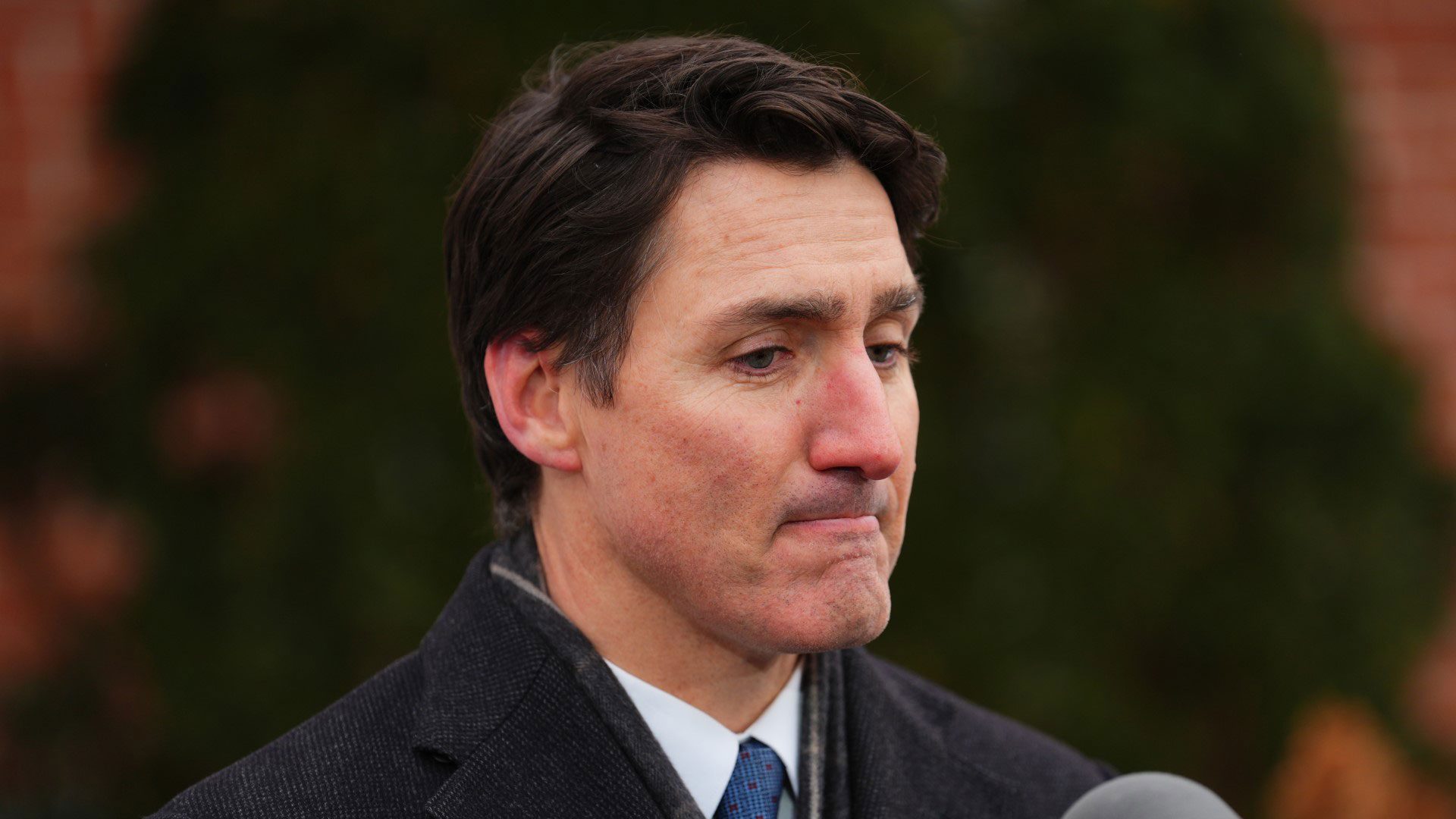
Trudeau Gov’t Exposed Using Indigenous Children For Secret Experimental Vaccine Trials
Favicon 
thepeoplesvoice.tv

Trudeau Gov’t Exposed Using Indigenous Children For Secret Experimental Vaccine Trials

For three years, Canadian officials embedded in the Trudeau regime secretly injected Inuit children with an experimental RSV Palivizumab vaccine—without parental consent and without informing the Inuit community. This disturbing revelation, uncovered through newly obtained [...] The post Trudeau Gov’t Exposed Using Indigenous Children For Secret Experimental Vaccine Trials appeared first on The People's Voice.
Like
Comment
Share
NEWSMAX Feed
NEWSMAX Feed
1 y ·Youtube News & Oppinion

YouTube
Greg Kelly: James Comey is getting what he deserves for targeting Trump
Like
Comment
Share
BlabberBuzz Feed
BlabberBuzz Feed
1 y

Meltdown Mode: Liberals Rage as Trump Names Dan Bongino Deputy FBI Director
Favicon 
www.blabber.buzz

Meltdown Mode: Liberals Rage as Trump Names Dan Bongino Deputy FBI Director

Like
Comment
Share
BlabberBuzz Feed
BlabberBuzz Feed
1 y

Trouble Brewing: The View Hosts Told To Dial THIS Down!
Favicon 
www.blabber.buzz

Trouble Brewing: The View Hosts Told To Dial THIS Down!

Like
Comment
Share
Daily Wire Feed
Daily Wire Feed
1 y

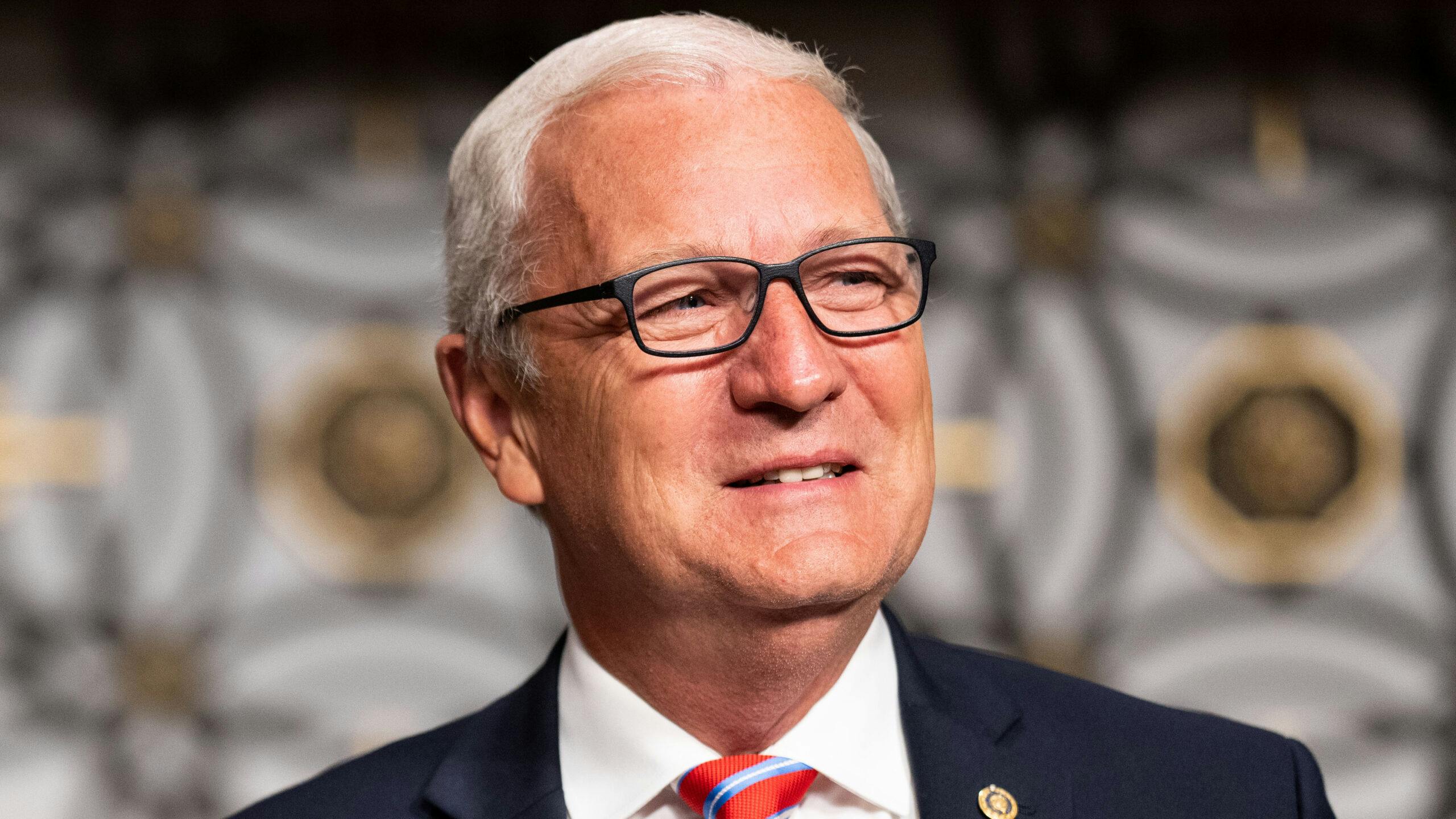
Republican Senator Suffers Brain Bleed After Falling On Ice During Seizure
Favicon 
www.dailywire.com

Republican Senator Suffers Brain Bleed After Falling On Ice During Seizure

Sen. Kevin Cramer (R-ND) is recovering after suffering from a brain bleed he sustained when he fell on ice while experiencing a seizure. “Late yesterday afternoon, I walked to my backyard intending to retrieve a piece of conduit which came off my dock and was laying on the ice,” the 64-year-old wrote on social media on Monday night. “While walking on the hill down to the dock, I stepped on ice and evidently fell hard, hitting the back of my head.” In the post — which included a photo that showed blood from where he hit his head on the ice — Cramer said that he had a CT scan and was diagnosed “with a severe concussion, a seizure, and a slight brain bleed.” “The wound on my head wouldn’t stop oozing, so the doctor punched a couple of staples on the laceration and admitted me,” he added. “I had a good night sleep before getting a second CT Scan. I am better today with only a slight brain bleed and pretty bad headaches.” He said that his wife regularly sends tips to the family in group texts of how to take care of their brains and that he needed to listen to her more. In a subsequent post, he said that he was “recovering at home with a bottle of Kepra (anti-seizure medicine) and Kris.” “The head still hurts a bit, but I sleep a lot,” he added. “Thank you to all of the folks praying for a full recovery. God is good!” President Donald Trump released a statement on Tuesday night expressing well wishes for Cramer. “Our Great Senator from North Dakota, Senator Kevin Cramer, just recently slipped on ice, and hit his head, causing quite an injury,” Trump posted on social media. “He is now resting comfortably, but went through a lot,” Trump added. “His wonderful wife, Kris, is with him, and I’m sure he will be fine, but it was a close call! Get well soon Kevin, and thank you to Kris for her quick and very alert response to Kevin’s difficult moment!”
Like
Comment
Share
Daily Caller Feed
Daily Caller Feed
1 y

‘They’re Exposing Themselves’: Tulsi Gabbard Responds To CIA Agents Threatening To Sell Secrets To Enemies
Favicon 
dailycaller.com

‘They’re Exposing Themselves’: Tulsi Gabbard Responds To CIA Agents Threatening To Sell Secrets To Enemies

'People are stepping forward because they are all on board with the mission to clean house'
Like
Comment
Share
Showing 57886 out of 121058
  • 57882
  • 57883
  • 57884
  • 57885
  • 57886
  • 57887
  • 57888
  • 57889
  • 57890
  • 57891
  • 57892
  • 57893
  • 57894
  • 57895
  • 57896
  • 57897
  • 57898
  • 57899
  • 57900
  • 57901
Advertisement
Stop Seeing These Ads

Edit Offer

Add tier


Select an image
Delete your tier
Are you sure you want to delete this tier?

Reviews

In order to sell your content and posts, start by creating a few packages. Monetization

Pay By Wallet

Payment Alert

You are about to purchase the items, do you want to proceed?

Request a Refund