YubNub Social YubNub Social
    Advanced Search
  • Login
  • Register

  • Night mode
  • © 2026 YubNub Social
    About • Directory • Contact Us • Developers • Privacy Policy • Terms of Use • shareasale • FB Webview Detected • Android • Apple iOS • Get Our App

    Select Language

  • English
Night mode toggle
Featured Content
Community
New Posts (Home) ChatBox Popular Posts Reels Game Zone Top PodCasts
Explore
Explore
© 2026 YubNub Social
  • English
About • Directory • Contact Us • Developers • Privacy Policy • Terms of Use • shareasale • FB Webview Detected • Android • Apple iOS • Get Our App
Advertisement
Stop Seeing These Ads

Discover posts

Posts

Users

Pages

Blog

Market

Events

Games

Forum

Conservative Voices
Conservative Voices
1 y

Michael Anton: Worthy Heir to George Kennan
Favicon 
www.theamericanconservative.com

Michael Anton: Worthy Heir to George Kennan

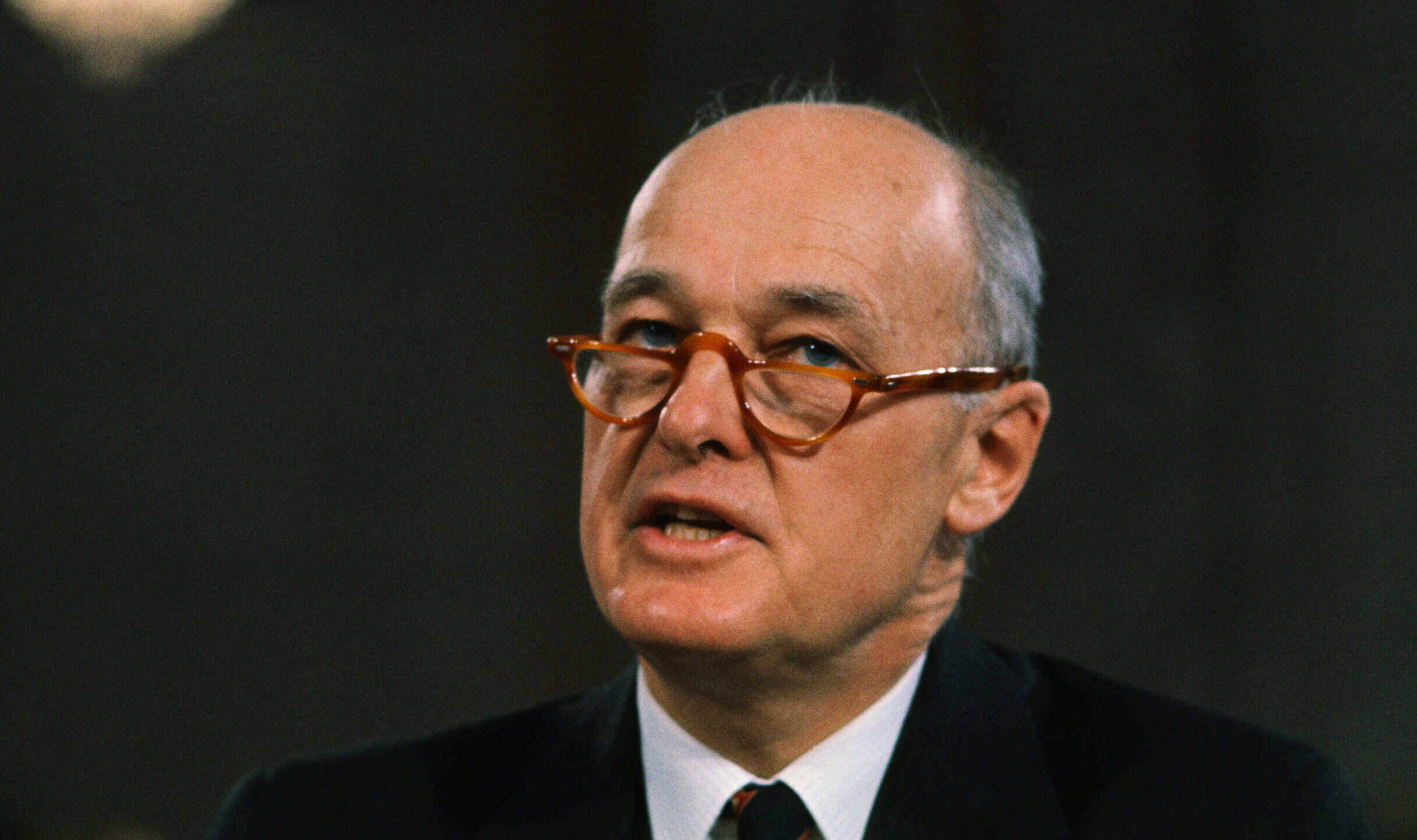
Politics Michael Anton: Worthy Heir to George Kennan More than any recent vintage, the Trumpist intellectual fits the bill for the State Department’s main brain. Credit: Bettmann/Getty Images Michael Anton and I got off on the wrong foot. It’s a dead-and-buried Trumpworld feud, but at one point in time, Michael Anton was on the wrong side of it—or at least he was perceived to be. An April 9, 2018 National Interest article by yours truly declared that “Michael Anton Lost the Faith of the Populist Right.”  The piece featured anonymous quotes by senior Trump administration officials that diagnosed that the then-deputy assistant to the president for strategic communications “was a shill” and to not “believe for a second he resigned out of principle.” Another major Trumpworld interlocutor emailed, “Anton came in as [former National Security Advisor Michael] Flynn’s guy as the biggest proponent of Trump’s ‘America First’ and went to the dark side.”  I stand by the reporting: The quotes were real, and the sentiment against Anton wasn’t beneath the surface; it was piping hot magma spewing from the Trump volcano that weird and fateful spring.  People had it out for Anton. And that’s all I said.  But what wasn’t in the piece (I tried to call balls and strikes a little more fastidiously in those days than I do now as the paleocon crank reporter you know and love) is that the whole feud was doltish. Anton had been a pseudonymous penman behind the virtuoso and now-defunct Journal of American Greatness (one of the few honest outlets in 2016), and put his money where his mouth was by leaving a cush comms job at BlackRock and joining a now self-admittedly ramshackle administration in 2017. Anton went in with Trump’s first national security advisor, Michael Flynn (whom the sage left-wing writer Chris Hedges once floated as Trump’s MAGA heir had the New Yorker lost the 2016 election), and Flynn had been a conquering hero of military intelligence in his commando days. It theoretically was not a joke posting, but Flynn ended up being part railroaded, part naïf, and apparently part enamored of gobs of Turkish dosh.  Flynn lasted a “Scaramucci” or two in the White House, and his most memorable line was “putting Iran on notice,” whatever that meant. It all didn’t work out. Flynn was replaced with H.R. McMaster, a harder-working, more conventional, less interesting version of his predecessor. Anton had two choices: resign in moral protest over his man’s sacking (though it was never clear how close the two ever were or are), or be a good soldier. He chose the latter, and portions of the MAGA right crucified him for it.  I am writing here to say, once and for all, that I don’t regret reporting on the skirmish, but that that kind of criticism was dead wrong. In the years since, Anton has distinguished himself (not that he was lacking) as a cerebral force for those who would like to repair the country along nationalist and populist lines. His retention as the prospective Secretary of State Marco Rubio’s director of policy planning, or Foggy Bottom’s main brain, is a salutary development in what has been a characteristically hurly-burly transition.  Anton survived a rough-hewn cancellation attempt in autumn over his China views for having the temerity to even ask the question, in 2021, on Taiwan if it is “wise to threaten, much less launch, a nuclear strike [emphasis: mine] over a territory [China sees] as a vital organ but is peripheral to us?” Perhaps Anton’s greatest transgression (he is a true student of ideology) is calling out neoconservatives when he sees them.  Also stated in that now-notorious piece in the Federalist: “Even if the great neocon dream for China were suddenly to become reality, a ‘liberal democratic’ Beijing would want Taiwan back too.” (Such realities are seen, on a smaller scale, tonight in the streets of Damascus. In five years’ time, should he still have the throne, will Ahmed al-Sharaa see Syrian interests all that differently than the Assad clan did?) Moving along, Anton has spent the down years between the Trump terms heroically and hilariously combatting the antediluvian Reaganite Mark Helprin on the issue of Ukraine in the pages of the Claremont Review of Books. Anton’s instincts speak well of the fact that at least one member of America’s coming ruling council is skeptical of technocratic blather: “Helprin at times reads like one of those quantitative political scientists supremely confident that everything can be counted, measured, and calculated to exactness. … But he never shows that, not on any point.” If successful, which I suspect will be the case, Anton’s tenure will invariably be compared to that of George Kennan, the hero-founder of the Policy Planning office as Washington was of the presidency and Hamilton of the Treasury Department. Smoothly, Anton has also recently reviewed Kennan, and addressed the late diplomat’s virtues and shortcomings. The two share much: principally, perfectionism and obsessiveness (Anton’s menswear enthusiasm is the stuff of fable at this point.) Per Anton, Kennan had “an overdeveloped conscience.” Anton says Kennan was “sometimes even soft about matters of genuine concern that are better addressed by recourse to that analytical coldness than to emotional appeals, however well-intentioned or deeply felt.”  Anton notes further: “Kennan’s instinctual conservatism ran so deep that he was something of a Luddite. He lived to see the internet but said little about it. Judging from his lifelong disdain for machines and industrialization (he hated cars), he would have loathed Big Tech.” And Anton diagnoses, correctly, how Kennan’s career peaked and then swiftly faded—in the annals of real power, that is:  Kennan continued riding high as long as George Marshall remained secretary of state. But when the former general resigned, citing exhaustion, Kennan’s new boss, Dean Acheson, was far less deferential to his advice. The two went back a long way and were friendly, but Acheson had less patience for Kennan’s mostly long (not to say long-winded) intellectual expositions and preferred attacking problems head-on. Kennan, realizing that his star had dimmed, took a leave, eventually landing a spot at Princeton’s highly prestigious Institute for Advanced Study (then home to Albert Einstein, Robert Oppenheimer, John von Neumann, and many other luminaries). Two years later, he was tapped to return to Moscow, this time as ambassador. But neither President Harry Truman nor Acheson gave him any instructions; to the contrary, they expected him to observe and report—and that’s all. Anton’s goal now? Match—and maybe outlast—his hero. The post Michael Anton: Worthy Heir to George Kennan appeared first on The American Conservative.
Like
Comment
Share
RetroGame Roundup
RetroGame Roundup
1 y ·Youtube Gaming

YouTube
The History of Data East's Captain America and the Avengers - Arcade console documentary - 2025
Like
Comment
Share
Bikers Den
Bikers Den
1 y ·Youtube General Interest

YouTube
Bikers Worst Nightmare | @RowanTheChillGuy
Like
Comment
Share
Conservative Voices
Conservative Voices
1 y Politics

rumbleRumble
Can the FBI Be Reformed?
Like
Comment
Share
Conservative Voices
Conservative Voices
1 y Politics

rumbleRumble
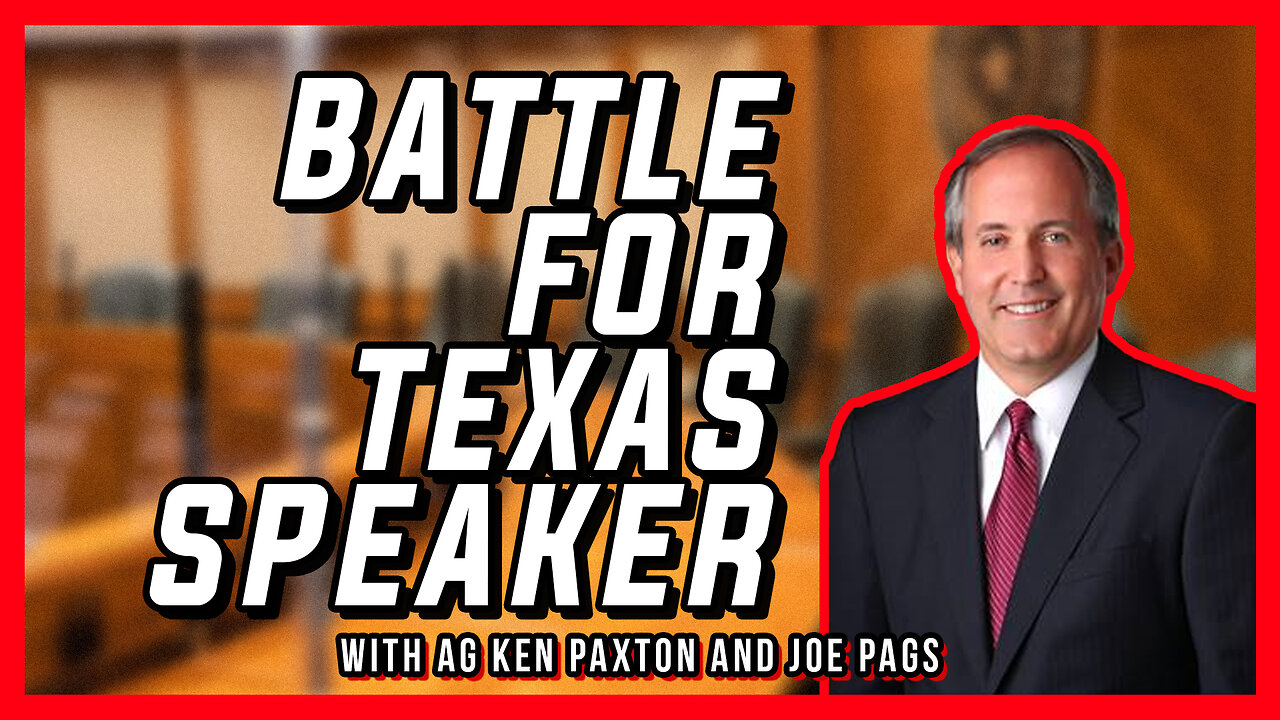
Why the Texas Speaker-of-the-House Race Matters to YOU!
Like
Comment
Share
Classic Rock Lovers
Classic Rock Lovers  
1 y

Bo Diddley: Joe Strummer’s guitar playing hero
Favicon 
faroutmagazine.co.uk

Bo Diddley: Joe Strummer’s guitar playing hero

God-like worship. The post Bo Diddley: Joe Strummer’s guitar playing hero first appeared on Far Out Magazine.
Like
Comment
Share
Intel Uncensored
Intel Uncensored
1 y News & Oppinion

rumbleRumble
The Flyover Conservatives Show
Like
Comment
Share
Conservative Voices
Conservative Voices
1 y

You First, America.
Favicon 
spectator.org

You First, America.

We’ve all been there. Sitting in that uncomfortable leather airplane seat, metal buckle strapped around our waist, trying to remember if we did actually need something out of that bag stored overhead, all while listening to some bossy flight attendant named Carol on the speaker going through the list of dos and dont’s in case of an emergency. They tell adults to put their oxygen masks on first if there’s a drop in cabin pressure. This is because if you — the capable adult — don’t put your mask on first, you’ll pass out along with everyone else and will be of absolutely no help to anyone. Okay, Carol — now do America. People say the words “America First” with disgust. Their noses wrinkle, mouths turn down, eyes narrow, “America First?! How selfish! What about the rest of the world!? There are children starving in Africa and people in third-world countries who need our help!” My response: “What about the Americans — including children — hungry and living as if they are in a third-world country, despite the fact they live here, in the United States?” The reply is usually some utterance of, “It’s not the same thing!” Well, I’m here to tell you that it is, in fact, the same thing. Actually, it’s worse. We are Americans living in America and, if we can’t take care of our own, we have no business taking care of the world. I’m no isolationist. I know enough history to say that mindset has caused more harm than good, including the events that led to WWII. I think it is vital to engage on a global scale. But I’m no globalist, either. I was pro-Brexit, can’t stand the U.N., and think the EU is obliterating Europe out of existence with its unchecked mass immigration stance, for starters. What I am is tired. Tired of America spending hardworking taxpayer dollars on people who are not citizens, while Americans go unfed, unsheltered, unclothed, uneducated, and uncared for. “America First” has become a buzzy catchphrase with negative connotations — the America First Policy Institute (AFPI) has been the target of media blitzes since before Trump’s transition even began. Despite the boogeyman characterization, their mission doesn’t sound all that crazy. It states that it “exists to advance policies that put the American people first. Our guiding principles are liberty, free enterprise, national greatness, American military superiority, foreign-policy engagement in the American interest, and the primacy of American workers, families, and communities in all we do.” Why would any American not want that? According to the Federation for American Immigration Reform, illegal immigrants cost our country more than $150 billion per year, with the majority going to “educate children who are here illegally themselves or whose parents are here without authorization.” What about American children? The National Illiteracy Institute reported that, as of 2022, 130 million adults were unable to read a children’s book and 21 percent of adults in the U.S. are completely illiterate. The literacy of American citizens has a direct impact on things like the nation’s economy and crime —75 percent of American welfare recipients and 60 percent of American prisoners can’t read. Some states base their projection of how many future prison inmates they will have on elementary students’ reading test performances. Illiteracy costs American taxpayers “an estimated $20 billion each year. School dropouts cost our nation $240 billion in social service expenditures and lost tax revenues.” Imagine if we instead invested in educating American children over illegal immigrants. Our economy would naturally improve and our crime rates would decrease. We’d be wealthier and smarter. In April, President Biden signed a $95 billion foreign aid package to help various countries, and just recently pledged another $1 billion in “humanitarian support to Africans.” Biden said that the U.S. is, and will continue to be, the “world’s largest provider of humanitarian aid and development assistance. That’s going to increase … that’s the right thing for the wealthiest nation in the world to do.” I beg to differ. Americans have been left completely homeless due to Hurricane Helene and are living out of tents and cars as freezing winter weather sets in. It has been fellow Americans — not the U.S. Government — who are helping the victims out of their own pockets while Biden gives billions of dollars to noncitizens. This is about priorities or lack thereof. America and her people are not a bottomless bank account. Nor are we some mythical land of milk and honey where food, water, and shelter are in endless supply. We earn what we take. We work for what we have. And we work harder than anyone else on the planet. American greatness is no accident. It has been earned. Other countries often have the ability to make a difference in their homeland, help their people, change their governments or ways of life — they choose not to. Why would they when America is always there to step in and clean up their mess? Why fix a problem when Americans can write you a cheque for it instead? Under “America-last” policies, the rest of the world became a reckless, spoiled teenager and we, the parents, fixed everything for them with a wave of our credit card, instead of discipline, and realized the consequences. You want to save the world and help those in need? Wonderful, but you’re going to have to be the adult on this plane and put America’s oxygen mask on first. If we don’t prioritize our own citizens, laws, and economic policies before the well-being of others, there won’t be Americans left to help anyone else at all. READ MORE from Tiffany Marie Brannon: New Kids on the Block Kamala Should Call Her Daddy The post You First, America. appeared first on The American Spectator | USA News and Politics.
Like
Comment
Share
Conservative Voices
Conservative Voices
1 y

I Am Giving This Script to Disney So They Can Get Rich Again.
Favicon 
spectator.org

I Am Giving This Script to Disney So They Can Get Rich Again.

Disney’s owners have discovered that their primary mission is to “entertain and sell tickets,” in the words of CEO Bob Iger. It has taken them a great many years and a few million dollars along the way. In my opinion, it would have been cheaper for them to unfreeze Walt Disney and ask him. Going forward, the company will not be guided by any political agenda. Or so they say. At the moment they have removed a transgender story from Pixar’s children’s animated series Win or Lose. The person who is most angry about this decision seems to be a former Pixar assistant named Sarah Ligatich, who is transgender and a social activist. After her dismissal, she criticized Disney for prioritizing “making money” instead of changing society, then opened a donation account to survive without a job. It seems Ligatich and Disney have something in common: they both want to make money. Disney will have to stop introducing its gender, race, sex, feminism, environmentalism, secularism, multiculturalism, and other progressive obsessions if it wants a return to being the family company it once was. In fact, it should stop promoting what they call female empowerment, which consists of convincing girls that they will be happy alone, reaching adulthood surrounded by cats and dildos. Whoever aims for that kind of happiness has a problem and is doomed to dissatisfaction, and the worst possible way out is the one they are choosing: spreading the problem to everyone else. However, from now on the company has the option of doing something really new and groundbreaking, after countless repetitive releases promoting models of society that do not exist, overrepresenting minorities and, consequently, distancing itself from its real audience. At no cost, I offer Disney the synopsis of a script for a truly avant-garde, daring, unprecedented, and wildly box-office-worthy film. It is the story of James and Emma, a white boy and a white middle-class girl who meet in college, are sweethearts for three years, get married in the church nearest their home in a sober and familiar Christian ceremony, and begin working from sun up to sun down to pay for their first apartment, which they moved into after the wedding, not before. James and Emma have six children: James Jr, Oliver, Amelia, Charlotte, Gabriel, Jack, and Ellie, whom they did not expect but whom they welcomed as a nice surprise when they were older, giving her the same or more affection than to all the others, and without a moment’s thought about the possibility of an abortion. To this day, all the children remain the sex they were born — that is, the boys are still boys and the girls are still girls, although at Disney they may not understand how such a thing is possible. Keeping their reproductive systems intact allowed James and Amelia to marry Nova and Ethan respectively, in an equally sober, familiar, and Christian ceremony, and to bring James, Ethan Jr., and Isabella into the world, three babies who have made happy grandparents out of James and Emma. Grandparents, children, and grandchildren celebrate Christmas as a family, have a lot of friends always around, are valued at their workplaces, and have instilled in their children a love for family values and a healthy patriotism, respect for the Constitution, courtesy in manners, generosity, sincerity, fortitude, and the like. The film ends when James, first, and Emma, later, die of old age surrounded by children and grandchildren, who all attend their Christian funerals, and pass on their life stories and values to the littlest ones in the house. A huge queue of friends presented themselves at the church to say their last goodbyes, showing that many people loved and admired them, even though their life was outrageously normal. You can put the “The End” plate up without including a transgender nun in love with a bishop, without bringing out seven million African Americans in every shot, without the kids in the family having Greta Thunberg posters in the bedroom, and without Emma attending anti-gun ownership rallies. In fact, you can put “The End” without needing to include hardcore sex scenes (even if it’s straight), you can animate it, and you can spare the kids’ drug use, the grandfather’s macho caricature, the job dissatisfaction of the women because of discrimination at work, the non-binary pet dog, and the TikToker daughter who identifies as a bunny and creates trans-species content. I know it’s a script worth gold, however, the idea is not mine, but G. K. Chesterton’s: “The most extraordinary thing in the world is an ordinary man, his ordinary wife, and his ordinary children.” Groundbreaking material, Disney. The box office takings will be massive. READ MORE from Itxu Díaz: The Year the (Woke) Stupidity Bubble Burst A Dispassionate Summary of 2024 Those Phones Were Much Smarter The post I Am Giving This Script to Disney So They Can Get Rich Again. appeared first on The American Spectator | USA News and Politics.

Like
Comment
Share
Conservative Voices
Conservative Voices
1 y

Will Fiscal Responsibility Now Become the Cornerstone of Economic Policy?
Favicon 
spectator.org

Will Fiscal Responsibility Now Become the Cornerstone of Economic Policy?

The arrival of a new presidential administration invokes new beginnings and a break from the past. Still, realities from previous administrations remain, such as a fiscal challenge that demands immediate attention. It may weigh on the newcomers even more than they realize today. We can only hope they take it more seriously than their predecessors have done. The longstanding notion that debt accumulation is benign, based largely on interest rates that for a time fell below growth rates, has proven dangerously misleading. This flawed thinking ignored both human nature and economic reality: Politicians rarely limit borrowing to one-time emergencies (as the theory requires), and interest rates inevitably rise. Today, we face the consequences of these miscalculations. As economist Hanno Lustig of Stanford University rightly noted on X, “Right now, with the 10 year US Treasury yield trading well above 4.5% and the federal government spending roughly the equivalent of the defense budget just on interest expenses, a fairly broad-based consensus seems to be developing among economists that the fiscal path we’re on is in fact not a sustainable one, as (Federal Reserve Chair) Jay Powell pointed out 4 weeks ago.” Treasury Secretary Janet Yellen agrees. She recently said, “Well, I am concerned about fiscal sustainability,” adding, “I believe that the deficit needs to be brought down, especially now that we’re in an environment of higher interest rates.” With inflation risks persisting and entitlement spending surging, the situation cannot be ignored. So here’s hoping Lustig is right that “2024 may also be remembered as the year U.S. fiscal exuberance died.” My complaint, however, is that we got to this point to begin with. Yes, incentives make politicians eager to spend while letting their successors figure out how to pay. However, encouraging this irresponsible behavior with theories about free lunches and interest rates always being low was always unwise. It was never a secret that spending was set to explode far beyond what the feds raised in revenue, followed eventually by an increase in interest rates. Politicians who never needed the encouragement went all out for decades and sped spending up during the pandemic without reversing course afterward. Inflation emerged, interest rates went up, interest payments skyrocketed, and now we are on thinner fiscal ice than ever before. Many people share the blame. Politicians, of course, but also Yellen and Powell, who a few years ago encouraged spending exuberance and cheered the pricey American Rescue Plan. The situation has reached a critical juncture. Social Security and Medicare costs are projected to rise dramatically as the baby boomer generation keeps retiring, adding further pressure to an already strained federal budget. Politically, it would be easy to extend Donald Trump’s 2017 tax cuts without offsetting the lost revenue, which could worsen our fiscal trajectory. There’s also Trump’s foolish determination to impose growth-slowing tariffs. Some of the negative effects would be offset if the administration is successful in deregulating the economy, and the energy sector in particular. These reforms would boost productivity and economic growth without requiring additional federal spending, strengthening the economy while maintaining fiscal discipline. However, this will be remarkably hard and slow work. At the end of the day, reforming entitlement programs is necessary. This includes gradually raising eligibility ages, implementing means-testing for benefits, and introducing market mechanisms to control costs while maintaining essential services. And while the extensions of existing tax provisions must be offset with some spending reductions, Congress should use the opportunity to boost the economy through long-needed tax reform. This approach should be reinforced through strict budget enforcement mechanisms, including statutory caps on discretionary spending and enhanced pay-as-you-go rules for new legislation. But above all, politicians must refrain from believing any enablers who claim austerity can wait. Theories about growing out of our future debt aren’t credible. Neither are theories about fiscal discipline through the imposition of tariffs, nor theories about achieving fiscal stability without touching entitlement spending. A credible commitment to fiscal responsibility will yield significant economic advantages. Markets will respond to reduced government borrowing with lower long-term interest rates. Private investment will expand as fewer private projects are crowded out by government borrowing. Uncle Sam will maintain the ability to respond to genuine emergencies while improving intergenerational equity by reducing the burden on future taxpayers. We have seen the limitations of wishful thinking that debt doesn’t matter. The incoming administration should usher in a new day by recognizing reality and acting decisively to address fiscal challenges. Failure risks America’s economic stability and prosperity for generations to come. Veronique de Rugy is the George Gibbs Chair in Political Economy and a senior research fellow at the Mercatus Center at George Mason University. To find out more about Veronique de Rugy and read features by other Creators Syndicate writers and cartoonists, visit the Creators Syndicate webpage at www.creators.com. COPYRIGHT 2025 CREATORS.COM READ MORE: Thinking Big as Trump, Congress Tackle Taxes Wishing for Santa-Like Efficiency in the US Regulations’ Enormous Costs and DOGE’s Enormous Upside The post Will Fiscal Responsibility Now Become the Cornerstone of Economic Policy? appeared first on The American Spectator | USA News and Politics.

Like
Comment
Share
Showing 59439 out of 116105
  • 59435
  • 59436
  • 59437
  • 59438
  • 59439
  • 59440
  • 59441
  • 59442
  • 59443
  • 59444
  • 59445
  • 59446
  • 59447
  • 59448
  • 59449
  • 59450
  • 59451
  • 59452
  • 59453
  • 59454
Advertisement
Stop Seeing These Ads

Edit Offer

Add tier


Select an image
Delete your tier
Are you sure you want to delete this tier?

Reviews

In order to sell your content and posts, start by creating a few packages. Monetization

Pay By Wallet

Payment Alert

You are about to purchase the items, do you want to proceed?

Request a Refund