YubNub Social YubNub Social
    #astronomy #jesuschrist #nightsky #moon #liberals #fullmoon #planet #christ #jesus #jupiter #americafirst #socialists #easter #resurrection #christisrisen
    Advanced Search
  • Login
  • Register

  • Night mode
  • © 2026 YubNub Social
    About • Directory • Contact Us • Developers • Privacy Policy • Terms of Use • shareasale • FB Webview Detected • Android • Apple iOS • Get Our App

    Select Language

  • English
Night mode toggle
Featured Content
Community
New Posts (Home) ChatBox Popular Posts Reels Game Zone Top PodCasts
Explore
Explore
© 2026 YubNub Social
  • English
About • Directory • Contact Us • Developers • Privacy Policy • Terms of Use • shareasale • FB Webview Detected • Android • Apple iOS • Get Our App
Advertisement
Stop Seeing These Ads

Discover posts

Posts

Users

Pages

Blog

Market

Events

Games

Forum

Conservative Voices
Conservative Voices
1 y

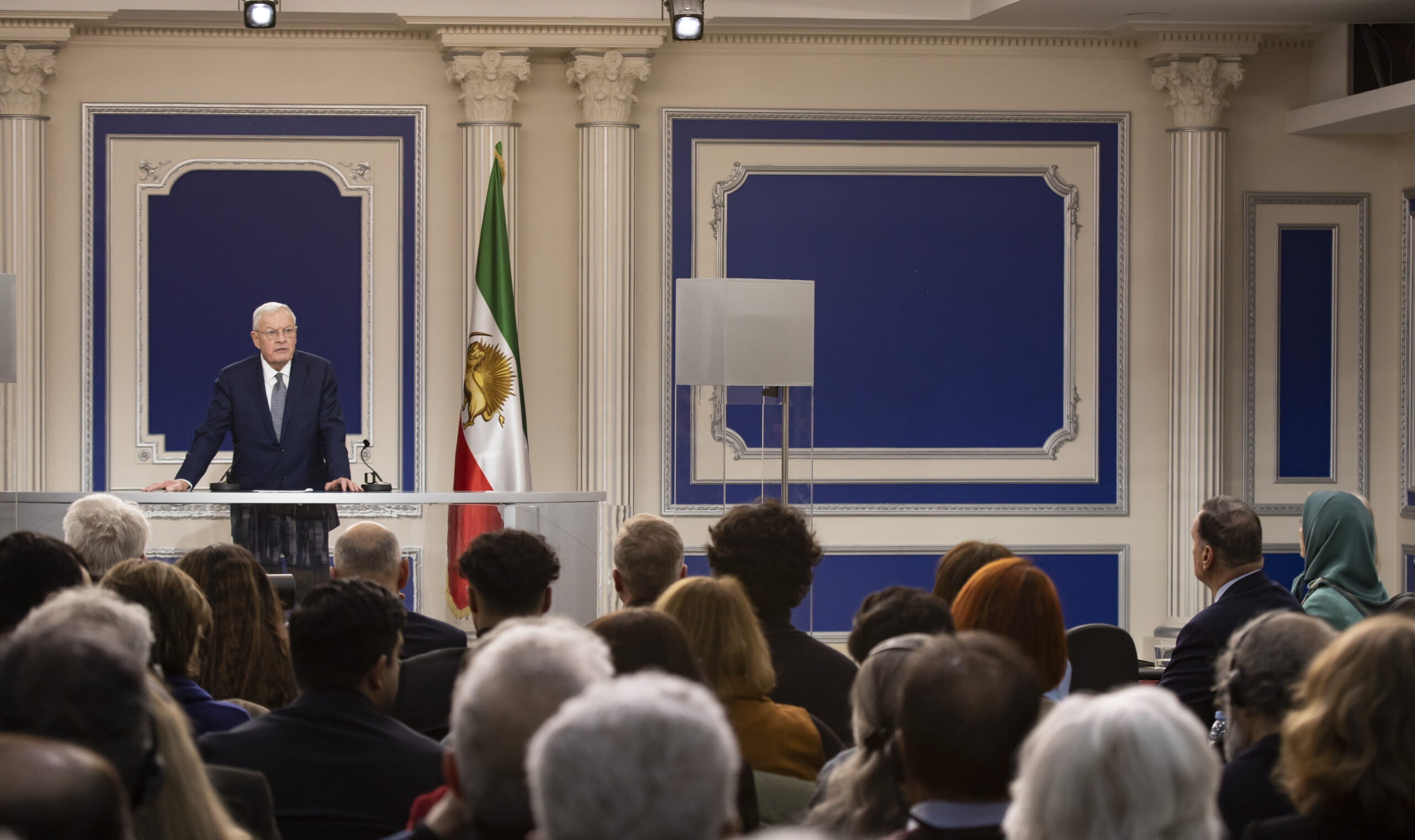
Why Did Trump’s Ukraine Envoy Address an Iranian Cult?
Favicon 
www.theamericanconservative.com

Why Did Trump’s Ukraine Envoy Address an Iranian Cult?

Foreign Affairs Why Did Trump’s Ukraine Envoy Address an Iranian Cult? Contacts between the administration and MEK are a distraction and worse. Credit: Siavosh Hosseini/Getty Images Last weekend, the president-elect Donald Trump’s incoming envoy on Ukraine, Gen. Keith Kellogg, spoke in Paris at an event of the National Council of Resistance of Iran (NCRI), also known as MEK (Mujahedeen-e Khalk), a Iranian exile group that seeks to overthrow the Islamic government in the country.  Kellogg advocated for a reinstatement of the “maximum pressure” campaign against Iran that was the hallmark of Trump’s first administration. It saw Trump abandon the nuclear agreement between Iran and the world powers, known as JCPOA, and assassinate the influential commander of the Iranian elite Al-Quds force, Qassem Soleimani. The latter act brought Washington and Tehran to the brink of war in early 2020. Kellogg emphasized that the “regime’s weakness” meant that the “the time is moving towards a free and different Iran”.  The whole focus of the event in Paris was to capitalize on Iran’s geopolitical setbacks following Israel’s battering of Hezbollah in Lebanon and the downfall of Bashar al-Assad’s regime in Syria, as well as the country’s mounting internal problems, such as the energy crisis. MEK, implacably hostile to the Islamic Republic, seeks to position itself at the forefront of the efforts to promote regime change in Iran. Yet the organization is anything but a legitimate, democratic opposition to the current rulers in Tehran. It has radical Marxist-Islamist roots and a history of killing Americans (which earned it a place on the U.S. terrorist list). Its human rights abuses and totalitarian internal practices with cultic characteristics are well documented, including by serious research organizations, such as Human Rights Watch and RAND Corporation. The MEK’s service to the Iraqi dictator Saddam Hussein during the bloody Iran–Iraq War in 1980s ensured that the group is overwhelmingly despised by the Iranians, including those who harbor no sympathy whatsoever for the Islamic Republic. What, then, explains the attraction this group exercises over so many Western politicians and officials? There might be true believers, but another possible explanation could be the fact that MEK is a deep-pocketed organization known to expend lavish sums on the speakers at its events. These well-funded lobbying efforts succeeded in taking it off the U.S. terrorist list in 2012.  Kellogg is not the only member of the incoming administration who has engaged the MEK. So did the incoming secretary of state Marco Rubio. That raises inevitable questions about the extent to which the NCRI/MEK will have an ear in Washington come January 20. And how would MEK’s influence be compatible with the position of Trump himself, who explicitly ruled out the regime change in Iran as a U.S. foreign policy goal in his second term? Kellogg’s actions raise an uncomfortable specter of the precedents in the first Trump administration, with some of its officials proudly boasting about undermining the president’s agenda. Yet the more intriguing question is why Kellogg, the envoy on Ukraine, showed up in Paris to talk about Iran in the first place. In fact, he was expected to travel to Ukraine in early January to test the ground with President Volodymyr Zelensky for ending the war. His visit was postponed, which the Ukrainian Foreign Ministry explained as a quirk of American legislation allegedly prohibiting such contacts before the official inauguration of the new president.  That is not a convincing explanation. Trump’s incoming special representative on the Middle East, Stephen Witkoff, did visit Israel and Qatar and reportedly pressured Israel’s Prime Minister Benjamin Netanyahu to accept concessions needed to secure the release of hostages held by the Palestinian terrorist organization Hamas before Trump’s inauguration. No legislation apparently stood in the way of this visit.  It is more likely that Kellogg’s visit was postponed because Zelensky’s ideas on how to end the war are at odds with what Trump has been propounding. In his interview with Lex Fridman, a popular American podcaster, Zelensky doubled down on his line that the end of the war is impossible without an invitation for Ukraine to join NATO or similarly strong security guarantees from the U.S. Zelensky also insisted that he wanted to discuss those guarantees with Washington and the European allies, and only then sit down at the table with his Russian counterpart Vladimir Putin. There is no evidence, however, that these ideas are in sync with Trump’s thinking. Recently, in a major departure from the default U.S. narrative of the war in Ukraine as a battle between democracy and autocracy, the president-elect expressed his “understanding” of the Russian security concerns related to Ukraine’s perceived drift to NATO. Trump is also not keen on having European allies join the future negotiations. Those, in return, fearful that they’ll be cut off from a potential diplomatic settlement, are encouraging Zelensky to dig in his heels till he can negotiate “from the position of strength”.  It seems that the views on Ukraine are not entirely settled in the incoming Trump team itself. His prospective national security adviser, Mike Walz, echoed a similar push from the outgoing Biden administration and stated that Ukraine should go “all-in for democracy” and lower the conscription age to 18 years. This would throw more young Ukrainians into the meatgrinder in an elusive search of that “position of strength”.  All of these complexities underscore the magnitude of the task of bringing the war to an end. Getting to the negotiation table requires a razor-sharp focus on diplomacy and discipline in Trump’s team. Kellogg’s ill-advised trip to Paris to address an Iranian cult with a history of anti-American terrorism is nothing but a harmful distraction from his main brief. The post Why Did Trump’s Ukraine Envoy Address an Iranian Cult? appeared first on The American Conservative.
Like
Comment
Share
Conservative Voices
Conservative Voices
1 y

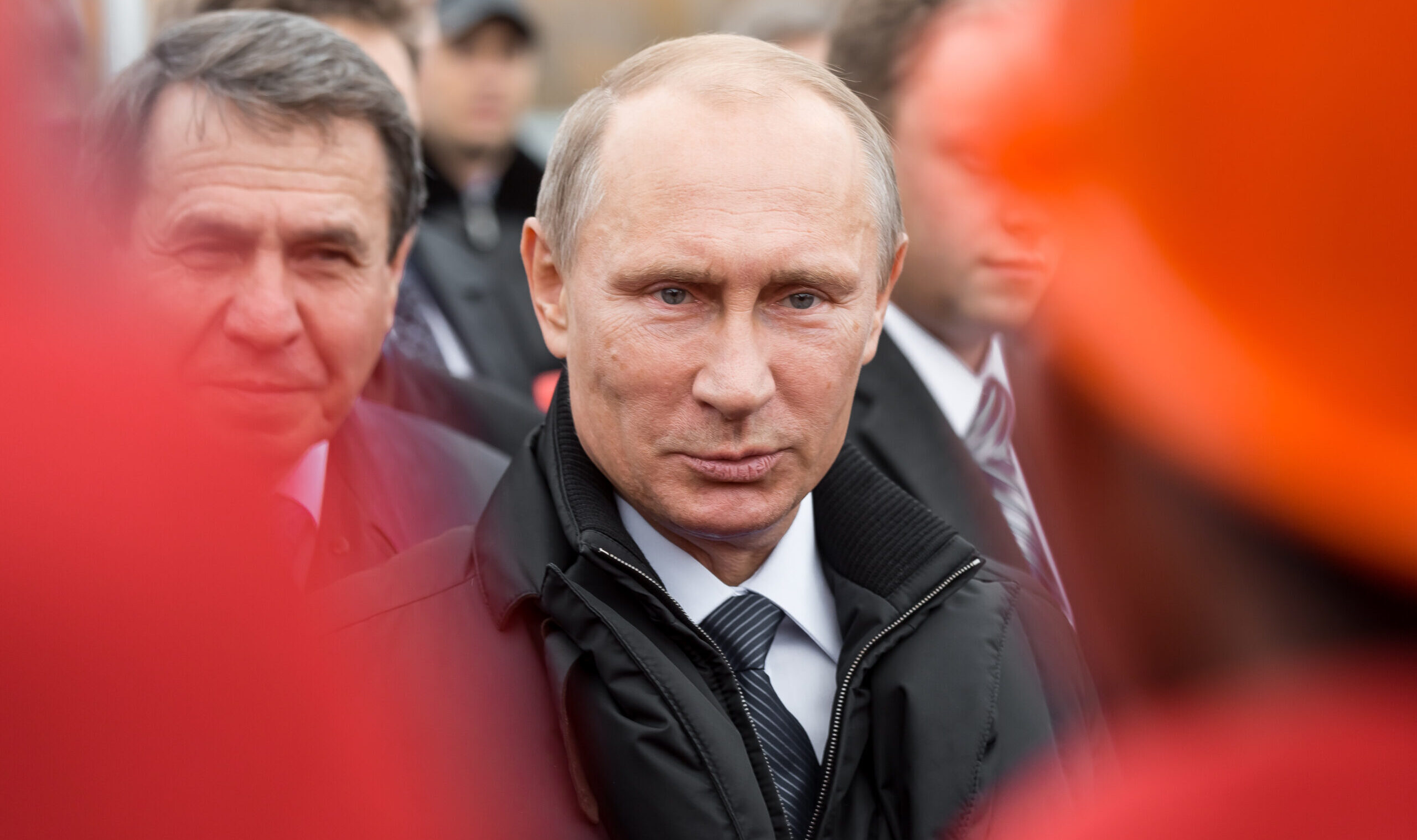
Getting Russia Wrong: A Quarter Century of Putin
Favicon 
www.theamericanconservative.com

Getting Russia Wrong: A Quarter Century of Putin

Foreign Affairs Getting Russia Wrong: A Quarter Century of Putin What began with fanfare has ended in embarrassment. Credit: Mr. Tempter It started out rather differently than we now sometimes imagine it. When Vladimir Putin took over the Russian presidency from Boris Yeltsin 25 years ago, on New Year’s Eve 1999, he was seen as a man with whom Washington could do business.  President Bill Clinton lauded Putin’s accession to the presidency as a “democratic transfer of executive power,” which it certainly was not. Clinton administration officials hailed Putin as “one of [Russia’s] leading reformers” who, according to the New York Times, “clearly has an intellectual grasp of democracy.” The “prospects for meaningful reform in Russia,” opined another journalist, “are now excellent.” Administration officials also dismissed worries over Putin’s KGB background as “psychobabble.” In the aftermath of the September 11 attacks, a Carnegie Endowment expert who has since become one of Putin’s most public critics wrote that, in his view,  U.S.–Russian relations offer one bright counter to this otherwise gloomier international picture. Russian President Vladimir Putin was one of the first foreign leaders to speak directly to President Bush. In that phone call, he expressed his condolences to the president and the American people and his unequivocal support for whatever reactions the American president might decide to take. He then followed this rhetorical support with concrete policies. Expectations for an era of heightened U.S.–Russian cooperation began to unravel in the mid-2000s. Indeed, future historians (should there be any) will likely come to see the period between 2007 and 2012 as crucial to explaining why U.S.–Russian relations went so terribly wrong.  The milestones are by now familiar to those with even a cursory interest in this Great Power rivalry. These include Putin’s speech at the Munich Security Conference in February 2007, where he declared Russia would pursue a foreign policy independent from that of the West, and the six-day war in neighboring Georgia in August 2008, during which the Republican nominee for president made the fatuous and equally unlikely declaration that “we are all Georgians now.” It was, however, the grisly rape-murder of Libyan strongman Muammar Gaddafi in October 2011 that did more than most to poison Putin’s view of Washington and the way it does business. Briefly, then: The Obama administration was able, under false pretenses, to obtain a promise from the Russian government not to veto UN Security Council resolution 1973  “to take all necessary measures to protect civilians under threat of attack” in Libya. The deal was that the Russians would abstain from using their veto as long as the establishment of a “no-fly zone” didn’t morph into a regime change operation.  Yet after Gaddafi’s very public execution and the American secretary of state’s tasteless celebration of it, Moscow felt that Washington welched on the deal. For Putin, then waiting in the wings as prime minister, this was the likely point of no return.  If that was his, what was ours? By 2011–2012, the unelected U.S. foreign policy establishment (which basically calls the shots regardless of whom we Americans send to Washington) had decided that Putin was a man with whom we could not and should not do business. Any sort of diplomatic relationship ended, not with the Maidan coup and subsequent Ukrainian civil war in the spring of 2014, nor with the Russian invasion of Ukraine in February 2022. No, it essentially ended when Putin decided to return to the Russian presidency for a third term.  The resulting anti-government protests that took place in Moscow after Putin made his intentions clear encouraged the media’s supposedly best-informed Russian analysts to indulge in fantasies of their own devising. And throughout, they were proven wrong. Masha (now “M.”) Gessen declared in the pages of the Guardian that the Russian media had turned on Putin and predicted that the Putin regime was about to “come tumbling down.” The American Enterprise Institute’s Leon Aron, writing in the pages of Foreign Policy magazine, declared, in an article titled “Putin Is Already Dead,” that  as the Russian protest movement expands and radicalizes in the lead-up to the March 4 presidential election, the key question is not whether Vladimir Putin—and Putinism—will survive. They will not. In an analysis somewhat further down the sophistication curve, the New Republic’s Julia Ioffe tweeted, “Putin’s fucked, y’all.”  At just this time, during a brief, unhappy stint over in Foggy Bottom, I learned of a cable sent in by U.S. law enforcement agents who had taken a Russian national with expired papers in for questioning at an airport out in California. With a great, breathless urgency the agents described that they, in the process of interrogation, had learned that Vladimir Putin would, in the view of the man in custody, be coming back to serve as president of Russia for a third term. I thought, What were these Masters of the Obvious so worked up about? Of course he was. Yet my reaction was a bit unfair—after all, what was understandably news to these agents out West also came as an unwelcome surprise to our superiors in the White House.  Some might recall that around that time the sitting vice president, Joseph R. Biden, was dispatched to Moscow to advise the sitting Russian prime minister, Putin, that if he were in his position, he would not run for a third term. The White House was perhaps unaware that the serious tend to disregard advice proffered by the unserious. By this time however, the president and his comically egotistical chief Russia adviser had convinced themselves that the sitting (and, alas, very temporary) Russian President, Dmitry Medvedev, would be back for a second term, largely, it was assumed, on the strength of his personal relationship with the American president.  The personal connection between Obama and Medvedev was thought to be real. It was also, for some reason, assumed to somehow matter in the calculus of the man who held the actual power in Russia.  New to Washington in the summer of 2010, I, at the invitation of a friend from my time as a lowly paper-pusher at Goldman Sachs, was given a tour of the West Wing by an Obama speechwriter. The speechwriter, touted then as the second coming of Ted Sorensen, could not have been more gracious to this stranger from New York, and in the course of the tour, stopped at a picture of his boss and the Medvedev chowing down at Ray’s Hell Burger in Arlington.  “POTUS,” he said, “really loves this guy.” I thought, but didn’t say: Oh. Trouble. When U.S.–Russia relations are overly (as they were in that period) reliant on the personal relationship between the two principals, nothing (much) good comes of it. In this case, some good did come of it: the New START Treaty. But Putin’s return to the presidency for a third time dashed widely held expectations that Obama would have four more years with which to work with the seemingly pro-Western Medvedev (and note what a long way in the other direction Medvedev has traveled since then).  So when Putin did what every serious person knew he was going to do and return for a third term, a decade’s worth of bitter recriminations—from the White House, from Capitol Hill, and from our government-supervised media—followed. The rest is history. None of it good. Foreign Affairs The post Getting Russia Wrong: A Quarter Century of Putin appeared first on The American Conservative.

Like
Comment
Share
Intel Uncensored
Intel Uncensored
1 y

The LA fires. Mechanisms of Sabotage and Intent. How Fire Storm/Winds Are Created
Favicon 
api.bitchute.com

The LA fires. Mechanisms of Sabotage and Intent. How Fire Storm/Winds Are Created

The LA fires. Mechanisms of Sabotage and Intent. How Fire Storm/Winds Are Created - 7,881 views January 15, 2025 The Fullerton Informer - (((I have been hard at work researching and several video projects. I also spent some time looking into a couple of potential personal businesses ventures. Just in case you were wondering why I haven't been post as much as usual. Stay tuned. I have some explosive subjects. TheWarAgainstYou))) * A PERFECT STORM IS RARE AND IS NOT A COMMON OCCURRENCE IN NATURE - BUT NOW, TECHNOLOGY ALLOWS THE CREATION OF THE PERFECT CONDITIONS REQUIRED - The Extreme Winds that Drove these Fires Do Not Naturally Occur This Time of Year. Nor is the Air Dry Enough This Time of Year. - So, How Did These Insane Fires Happen? Hear Joe's Explanation on What it Took to Bring Together the Right Conditions and Required Elements to BURN IT ALL TO THE GROUND... - AIR PRESSURE IS WHAT DIRECTS WIND AND WEATHER EVENTS - DIRECTING WEATHER ONLY REQUIRES A CHANGE IN TEMPERATURE IN THE RIGHT PLACE - THIS IS EXACTLY HOW THEY PUSH THE JETSTREAM NORTH, TO CAUSE PROLONGED DROUGHTS IN THE SOUTH WEST *** Fullerton Informer Gives His Last Take on Comments About the LA Fire Storms... - FAIR USE FOR EDUCATIONAL PURPOSES MIrrored From: https://www.youtube.com/@TheFullertonInformerl
Like
Comment
Share
Intel Uncensored
Intel Uncensored
1 y

Burning Man is a Warning: NWO Agenda to Destroy, Corrupt, Weaken & Pervert Society
Favicon 
api.bitchute.com

Burning Man is a Warning: NWO Agenda to Destroy, Corrupt, Weaken & Pervert Society

Burning Man is a Warning: NWO Agenda to Destroy, Corrupt, Weaken & Pervert Society -29,569 views Jan. 10, 2025 Author Carl Teichrib - Will Spencer - Author, Researcher and Activist Carl Teichrib Says: Burning Man is a Warning. And he has All of the Documentation to Prove Everything... - BIG TECH, NEW AGE AND THE CIA TAVISTOCK CREATED COUNTER CULTURE MOVEMENT, WERE ALL CREATED TO LEED SOCIETY TOWARDS IT'S OWN DOOM - - AND TO SET THE STAGE FOR THE NEW WORLD ORDER - Social, Political, Economic, Technological, Sexual and Spiritual Engineering by Cabal NWO Operatives to Weaken and Transform the World into the Coming Prison Planet Global Governance Dictatorship. * Carl Teichrib, a Christian author and researcher, comes on the show to discuss his impactful book, *Game of Gods: The Temple of Man in the Age of Re-Enchantment*. - Teichrib shares his insights on the rise of progressive spirituality, its roots in historical movements, and how it shapes contemporary culture. The conversation highlights the transformative experiences at events like Burning Man, where participants often seek deeper meaning through communal rituals that blur the lines between various spiritual traditions. - Teichrib argues that these trends reveal a fundamental shift away from a Judeo-Christian worldview towards a more pluralistic and mystical approach to spirituality. As he dissects Teichrib emphasizes the need for Christians to reclaim their narrative and engage with the broader cultural conversation, offering a compelling vision for the future of faith in a postmodern world. ⇨ - TAKEAWAYS • Carl Teichrib's book offers a detailed analysis of the New Age movement and its dangers. • The podcast discusses the intersection of spirituality and politics seen at events like Burning Man. • Transhumanism is a growing ideology that influences modern technology and social policies. • The concept of 'oneness' is central to many contemporary spiritual practices and movements. • Christians are encouraged to engage with the culture thoughtfully and with biblical truth. • Teichrib emphasizes the importance of understanding cultural shifts. ⇨ - MENTIONED IN THIS PODCAST "You Are Not A Gadget" by Jaron Lanier: https://www.amazon.com/You-Are-Not-Ga... - The Mandelbrot Set Proves God:    • The Mandelbrot Set: Atheists’ WORST N...   - FAIR USE FOR EDUCATIONAL PURPOSES MIrrored From: https://www.youtube.com/@willspencerpod
Like
Comment
Share
Intel Uncensored
Intel Uncensored
1 y

A step-by-step guide to removing heavy metals from the body using chlorella
Favicon 
api.bitchute.com

A step-by-step guide to removing heavy metals from the body using chlorella

Learn more about detoxing at NaturalNews.com. Every dollar you spend at the Health Ranger Store goes toward helping us achieve important science and content goals for humanity: https://www.brighteonstore.com/ For more updates, visit: https://www.brighteon.com/channel/naturalnews Source: https://www.brighteon.com/00000000-0000-0000-0006-040697818001
Like
Comment
Share
Worth it or Woke?
Worth it or Woke?
1 y

Your Friendly Neighborhood Spider-Man
Favicon 
worthitorwoke.com

Your Friendly Neighborhood Spider-Man

The post Your Friendly Neighborhood Spider-Man first appeared on Worth it or Woke.
Like
Comment
Share
Classic Rock Lovers
Classic Rock Lovers  
1 y

“I cheat”: Peter Gabriel on the song that became difficult to sing
Favicon 
faroutmagazine.co.uk

“I cheat”: Peter Gabriel on the song that became difficult to sing

Finding a few vocal shortcuts. The post “I cheat”: Peter Gabriel on the song that became difficult to sing first appeared on Far Out Magazine.
Like
Comment
Share
Classic Rock Lovers
Classic Rock Lovers  
1 y

The band that overtook The Who: “Snapping at our heels”
Favicon 
faroutmagazine.co.uk

The band that overtook The Who: “Snapping at our heels”

A great achievement. The post The band that overtook The Who: “Snapping at our heels” first appeared on Far Out Magazine.
Like
Comment
Share
Intel Uncensored
Intel Uncensored
1 y News & Oppinion

rumbleRumble
The Flyover Conservatives Show
Like
Comment
Share
Conservative Voices
Conservative Voices
1 y

The Only Path Leading All the Way Out of Our Inflation Quagmire
Favicon 
spectator.org

The Only Path Leading All the Way Out of Our Inflation Quagmire

The Federal Reserve’s premature victory lap over inflation reveals a worrisome misunderstanding of the predicament we still find ourselves in. Unprecedented government spending and debt, combined with mounting fears that the debt can’t (or won’t) be repaid, played a misunderstood role in inflation’s rise several years ago. As such, fiscal policy must be part of the solution. Otherwise, expect the recent acceleration of inflation to stick around or get worse, bringing trouble for the new administration. The pressure on the Fed to declare the race over and continue lowering interest rates is real. It would be a mistake to cave any further. Some measures show inflation holding steady. Others show it trending back up since last July. Either way, it’s above the Fed’s 2 percent target, and now the 10-year rate is pointing up. To understand what’s going on, remember how we got here. When COVID-19 and the overreaction of lockdowns arrived, Washington dramatically increased spending through stimulus checks, enhanced unemployment benefits and other means. Spending rose by over $5 trillion, with the Fed accommodating much of that. Congress and the Biden administration later added another $4 trillion in various large legislation. Unlike previous crises — recall former President Barack Obama’s promise to halve the deficit within five years of the end of the Great Recession — there was no plan to offset the spending hikes by raising revenue or cutting other spending. In fact, it was the opposite. The Biden administration doubled down with more plans for student loan forgiveness and talk of handing additional billions to semiconductor manufacturers through a second CHIPs Act. When bondholders don’t see a credible fiscal path to be repaid for current and future government debt, they expect that eventually the central bank will create new money to buy those government bonds, leading to higher inflation. It didn’t help that the Fed kept interest rates so low for so long, including for months after it was clear the inflation problem was anything but “transitory.” This is how focusing solely on monetary policy or interest rates misses the importance of fiscal policy. Recent inflation wasn’t just about money supply; it reflected the market’s adjustment to unsustainable fiscal policy. Recent studies confirm this. Francesco Bianchi and coauthors, for instance, find that “unfunded fiscal shocks sustain the recovery but also cause a persistent increase in inflation.” Meanwhile, Bianchi’s new study with Robert Barro uses an informative measurement of spending (the growth of government spending during the COVID-19 years compared to the pre-COVID-19 debt burden, and how long that debt needed to be paid back), revealing a very clear relation between government spending and inflation. Making matters trickier, not only can fiscal policy fuel inflation, but vice versa is true too. The Fed fought inflation with higher interest rates that, coupled with quickly maturing government debt, made the fiscal situation worse. Each percentage-point increase in interest rates adds hundreds of billions to the government’s debt-financing costs very rapidly. So we’re left with a dangerous feedback loop: Higher inflation leads to higher interest rates, which lead to higher debt-service costs, which then require more government borrowing or money creation, potentially fueling further inflation. The result? The Fed can hike interest rates, but without equivalent fiscal adjustments to make space for the larger debt payments, inflation goes down at the cost of making it more persistent. And right now, it’s persistent. For all the excitement about the incoming administration and a return to the 2019 economy, market stability rests on the precarious assumption that the government will eventually put its fiscal house in order. Continued high spending and the prospect of mostly unfunded tax-cut extensions could shatter this confidence. If bond markets grow too pessimistic, the resulting interest-rate spike will further increase borrowing costs and may trigger a fiscal crisis. It’s important for the new administration to understand that controlling inflation requires more than Federal Reserve action. It demands fiscal discipline. That means difficult choices that politicians typically avoid. Federal spending must be curtailed, particularly in entitlement programs. Tax revenues must be made stable and predictable. Most importantly, the administration must reject new spending, regardless of the apparent merits. Finally, more tax revenue through more growth — made possible by the improved tax system and deregulation — would help. Continuing to ignore fiscal-monetary interactions and hoping inflation will mysteriously moderate risks a crisis that could dwarf any challenges we face today. Fiscal responsibility isn’t just about balancing books; it’s about maintaining the stability of the dollar and the prosperity of the American people. History tells us that the longer we wait, the more costly the eventual solution becomes. Veronique de Rugy is the George Gibbs Chair in Political Economy and a senior research fellow at the Mercatus Center at George Mason University. To find out more about Veronique de Rugy and read features by other Creators Syndicate writers and cartoonists, visit the Creators Syndicate webpage at www.creators.com. COPYRIGHT 2025 CREATORS.COM READ MORE: Will Fiscal Responsibility Now Become the Cornerstone of Economic Policy? Thinking Big as Trump, Congress Tackle Taxes Wishing for Santa-Like Efficiency in the US The post The Only Path Leading All the Way Out of Our Inflation Quagmire appeared first on The American Spectator | USA News and Politics.
Like
Comment
Share
Showing 59652 out of 117251
  • 59648
  • 59649
  • 59650
  • 59651
  • 59652
  • 59653
  • 59654
  • 59655
  • 59656
  • 59657
  • 59658
  • 59659
  • 59660
  • 59661
  • 59662
  • 59663
  • 59664
  • 59665
  • 59666
  • 59667
Advertisement
Stop Seeing These Ads

Edit Offer

Add tier


Select an image
Delete your tier
Are you sure you want to delete this tier?

Reviews

In order to sell your content and posts, start by creating a few packages. Monetization

Pay By Wallet

Payment Alert

You are about to purchase the items, do you want to proceed?

Request a Refund