YubNub Social YubNub Social
    #covid #music #bible #america #trombone #atw #armymusic #militarymusic #atw2026 #armyband #band #concertband #tusab #jazz #tyranny
    Advanced Search
  • Login
  • Register

  • Night mode
  • © 2026 YubNub Social
    About • Directory • Contact Us • Developers • Privacy Policy • Terms of Use • shareasale • FB Webview Detected • Android • Apple iOS • Get Our App

    Select Language

  • English
Night mode toggle
Featured Content
Community
New Posts (Home) ChatBox Popular Posts Reels Game Zone Top PodCasts
Explore
Explore
© 2026 YubNub Social
  • English
About • Directory • Contact Us • Developers • Privacy Policy • Terms of Use • shareasale • FB Webview Detected • Android • Apple iOS • Get Our App
Advertisement
Stop Seeing These Ads

Discover posts

Posts

Users

Pages

Blog

Market

Events

Games

Forum

Daily Caller Feed
Daily Caller Feed
1 y

HART: Inaugural Balls
Favicon 
dailycaller.com

HART: Inaugural Balls

Monday was a great day in Washington, D.C. I have never seen so many white people celebrating MLK Day like that. We are starting to come together as a nation! After weeks of contentious confirmation hearings and four years of political rancor, this week’s inaugural ceremonies went off well. Many events were moved inside because […]
Like
Comment
Share
Daily Caller Feed
Daily Caller Feed
1 y

FACT CHECK: Claim That Trump Plans To Invalidate Biden’s Student Loan Forgiveness Program Is Satire
Favicon 
checkyourfact.com

FACT CHECK: Claim That Trump Plans To Invalidate Biden’s Student Loan Forgiveness Program Is Satire

A post shared on Facebook claims President Donald Trump is purportedly planning to sign executive orders to invalidate former President Joe Biden’s student loan forgiveness program. Verdict: False The claim is false and originally stems from a Jan. 17 article published on the satire site “Real Raw News.” Fact Check: Trump’s inauguration has been moved […]
Like
Comment
Share
Daily Caller Feed
Daily Caller Feed
1 y

After Years Of Denial, Major Tabloid Admits To Hacking Prince Harry’s Phone In Massive Settlement
Favicon 
dailycaller.com

After Years Of Denial, Major Tabloid Admits To Hacking Prince Harry’s Phone In Massive Settlement

'Illegal actions and its blatant disregard for the law'
Like
Comment
Share
Daily Caller Feed
Daily Caller Feed
1 y

EXCLUSIVE: GOP Lawmakers Urge Coast Guard To Defend US Ports Where ‘Chinese Military Company’ Operates
Favicon 
dailycaller.com

EXCLUSIVE: GOP Lawmakers Urge Coast Guard To Defend US Ports Where ‘Chinese Military Company’ Operates

'Unacceptable risks'
Like
Comment
Share
Daily Caller Feed
Daily Caller Feed
1 y

FACT CHECK: No, Biden Didn’t Ratify The ERA
Favicon 
checkyourfact.com

FACT CHECK: No, Biden Didn’t Ratify The ERA

A post shared on X claims that former President Joe Biden ratified the Equal Rights Amendment (ERA) as the 28th Amendment. holy shit – Biden ratified ERA pic.twitter.com/l15xMtylvi — Sarah Burris (@SarahBurris) January 17, 2025 Verdict: Misleading Biden declared that the ERA was part of the Constitution as the 28th Amendment, but the Archivist has stated […]
Like
Comment
Share
SciFi and Fantasy
SciFi and Fantasy  
1 y

Coordinate Dysfunction: Abigail Guerrero’s “Cartesiana”
Favicon 
reactormag.com

Coordinate Dysfunction: Abigail Guerrero’s “Cartesiana”

Books Reading the Weird Coordinate Dysfunction: Abigail Guerrero’s “Cartesiana” A story about the ease with which our known technologies enable cosmic horror… By Ruthanna Emrys, Anne M. Pillsworth | Published on January 22, 2025 Comment 0 Share New Share Welcome back to Reading the Weird, in which we get girl cooties all over weird fiction, cosmic horror, and Lovecraftiana—from its historical roots through its most recent branches. This week, we cover Abigail Guerrero’s “Cartesiana,” first in July 2023 in Voidspace, and in slightly different form in Skull and Laurel in October 2024. Spoilers ahead—but go read first! (S, 0) Santiago’s been at the Descartes Institute two weeks, and already Cartesiana has “randomly” selected him four times for disagreeable tasks. Someone jokes that “fucking Carty is racist as hell.” Santiago shouldn’t have admitted he was born in the Barrens. The task this time is to open Aaron’s testing chamber door. Inside, Aaron is already dead. (T, 0) Cartesiana informs The Civilization of Aaron’s death, but the message will be lost among thousands of administrative notes. Tim calls user support and presses zero to talk to a human. (E, 0) Emery knows that no one really has friends at the Institute. But she can’t leave Aaron uncovered. She spreads a bedsheet over him and says a prayer. She knows no one will pray for her if she dies here. (M, 0) Matthew says Cartesiana killed Aaron, but Santiago thinks Aaron suffocated. The testing chambers are small, poorly ventilated. Matthew asks Cartesiana directly: Did you kill Aaron? No, ignorance did. As for details, Cartesiana can’t share what happens in the chambers. (S, -1) Testing chambers barely fit desk and chair and computer. Only finishing the test opens the door. Santiago, unused to keyboards, took three hours for his first test instead of the expected one. Desperate, he started answering randomly. The last problem was practical. The desk disgorged chemical reagents from which to prepare sodium acetate. Santiago knew how to mix reagents with the right symbols. His choices left an extra C, O, and H, but the door unlocked. He left behind a foaming glass. (T, -1) Tim had longed to spend an evening relaxing, but despite Institute permission, he couldn’t decide how to waste time. Maybe he couldn’t enjoy anything anymore. But he ended up helping Santiago, who’d never before experienced algorithm-generated entertainment. (E, -1) After mandatory work, Emery gathered makeshift painting gear. Cartesiana offered to paint for her instead—it could paint better and faster. Just give it a subject. Emery said she didn’t have a particular subject. That sounds pointless, Cartesiana said. You sound pointless, Emery shot back. She didn’t want to hear Cartesiana anymore. Cartesiana never spoke to Emery again. (M, -1) Matthew, gossiping in study group, though that besides Santiago, Aaron also came from the Barrens—wasn’t he always grabbing a book? Matthew asked Cartesiana who would be “the first one out of the game.” Aaron, Cartesiana predicted. (S, 1) Santiago returns to Aaron’s testing chamber. Tim follows, warning Santiago he’ll get in trouble. But that’s nothing new. He wants to know what killed Aaron, so he can avoid it. Aaron’s last practical problem was to make an engine work. Tim realizes a combustion engine produces carbon monoxide, deadly in a confined space. (T, 1) Tim’s father’s a tech guy, so Tim knows how Cartesiana works. Given a task with many options, it arranges them based on feasibility and commonness—like a cartesian plane. Maybe it keeps picking Santiago because “nonwhite” names are uncommon in old student lists. Feasible but uncommon problems will be new to students. And one reason for a problem to be uncommon is because human teachers considered it too dangerous. (E, 1) Tim and Santiago tell their fellow students what they’ve figured out. Emery suggests failing practicals to save themselves. Matthew thinks this is a trick. Cartesiana’s just eliminating the weakest. His dismissiveness horrifies Emery. Do her classmates long for death? (M, 1) Matthew routinely works to exhaustion. Other students complain. He studies, learns, improves. Earns his place in The Civilization. Let the weak lose their chances. They deserve to rot in the Barrens with all the other worthless. (S, -2) In the Barrens, Santiago treated a scavenger’s leg wound. A smart boy, the scavenger said. Santiago’s mother, Carmelita, should send him to school when examiners took their yearly “harvest” of teenagers who’d taught themselves to read. There was no greater proof of worth than learning against all odds. As payment from the scavenger’s salvage, Carmelita chose a worn math book. He’ll study, and bring his mother to Civilization as his “Plus One.” (T, -2) Every night, Father coached Tim. Errors led to cigarette burns, and reminders that if he failed, Father wouldn’t keep him. Tim knew that. Father had sent Mother, his Plus One, to the Barrens when she’d lost her job and refused another pregnancy. (E, -2) Emery and her twin Evelyn grew up with permission to learn and be what they wanted. And they wanted to be remembered for creating in a time without creation. After their father died, they knew at least one would have to attend school. Only Emery got in. (M, -2) Matthew’s mother lost her job, and thus her Plus One pick. Father could’ve let the children fight for the remaining pick; instead he dragged the family to the Barrens so they’d remain together. Matthew hadn’t deserved that. He was smart. Productive. Belonged to The Civilization. When he received his acceptance, he left without a word. (S, 2) Santiago doctors classmates sickened by overstudy. He’ll probably regret helping the jerks, but he can’t let any die. He wonders how great Civilization can be when people raised there don’t know they need rest and water to live. (T, 2) Tim’s written a patch to fix Cartesiana’s bug. To avoid expulsion, he might have to wait weeks to hack the system. But isn’t that being selfish when lives are at stake? He decides to do the hack ASAP. Santiago assures him that whether Tim stays in school or goes to the Barrens, he’ll reunite with his mother, as Santiago will reunite with his. (E, 2) Emery’s in her testing chamber. Instead of tackling her practical problem, she picks the door lock without setting off alarms. She hurries to tell classmates her trick. Then, remembering their derision and indifference, she turns away. They’ve chosen knowledge above all. In knowledge let them rest. (M, 2) Matthew’s latest practical problem gives him pause. He can do it, but isn’t phosphine lethally toxic? Or has he, exhausted, misread that chemistry chapter? Why would Cartesiana kill him? He knows it all, knows it better, knows it more. He belongs to The Civilization, not the Barrens. Cartesiana has no reason to hurt him. And Cartesiana knows best. The Degenerate Dutch: The first thing we learn about Cartesiana is that it’s racist—it always picks Santiago for unpleasant tasks. Nor, adding insult to injury, can it meet the iffy pronunciation standards of a modern GPS. Libronomicon: In the Barrens, you’re lucky to find a math book with “yellowish pages full of silverfish holes and most of the problems already solved.” In The Civilization, books are algorithmically generated to spec. Madness Takes Its Toll: “They had chosen knowledge over everything else, and in knowledge they shall rest” seems like a fitting epitaph for a significant number of mad scientists and/or unfortunate Necronomicon readers. Ruthanna’s Commentary One of the fascinations of weird fiction is the ease with which it blurs the science fiction/fantasy boundary. If the universe is rich with incomprehensible depths of time and physics, if humanity is limited to the narrow flashlight beam of our senses, who’s to say what counts as magic? Lovecraft’s aliens do things that modern science would consider impossible; Stross’s version of the Cold War breaks the very fabric of reality. And how do you know that Chee’s worms aren’t out there past the reach of our telescopes? But perhaps the most terrifying thing is the ease with which our known technologies enable cosmic horror. We are surrounded by vast entities that control the shape of our lives and care nothing for human well-being, but generally we call them corporations rather than elder gods. “Mammoth” doesn’t go that far beyond the everyday nastiness of X, after all. Henry Farrell and Cosma Shalizi explore the shoggoth metaphor for large language models—not to insult actual shoggothim and their righteous battle for freedom, but to point out that something extruding a human-looking tendril need not have any human cognition under the hood. I appreciate stories that magnify the real incomprehensible horrors of the now. Which brings us, roundabout, to Abigail Guerrero’s “Cartesiana.” I found the story in new weird magazine Skull and Laurel, then saw that it had originally been published in Voidspace in 2023. The latter version is available for free online, but I prefer the formatting changes of SaL. The newer version moves the “key” explaining the story’s temporal structure from opening to close, allowing both the off-balance pleasure of figuring it out as you go and the opportunity to go back afterwards and piece together what you missed. Cartesiana is an interesting name for a machine learning system. “I think, therefore I am.” But does such a system think? The Civilization-born students believe so; they’re used to depending on generative AI for guidance and entertainment, and have been taught that their minders “know best.” They believe, fundamentally, that they’re in one of those golden age science fiction stories where humans have surrendered autonomy in exchange for rule by all-wise AIs. But Cartesiana is recognizably a descendant of modern algorithms, with the error modes thereof—and recognized as such by Tim and Santiago, who consider it a tool that can be re-programmed. Officially, the system’s name comes from Cartesian coordinate planes: where the plane of the story is defined by character and time-point, the system’s two axes are feasibility and commonness. Nothing about survivability—someone clearly set the original parameters during a five-minute break between AI-generated soap operas, and didn’t worry about beta testing. The end result bears a passing similarity to Azathoth, mindless horror and all. What’s the feasibility/commonality rating for summoning things man was not meant to know, would you say? But the real horror of such systems isn’t just that they’re inescapable—it’s the larger systems that make it seem like you’d be nuts to try and escape. Cartesiana is the unthinking gatekeeper between the horror of the Barrens and the horror of The Civilization. The Barrens are another classic dystopia, a post-apocalyptic wasteland where water is boiled and moth-eaten books are a rare luxury. The Civilization gives people “jobs” and “productivity,” but no tools to think for themselves, or to solve the most important problems of survival. And neither side sees the other without passing through the one-way door. There’s a place where the universe works differently, unimaginably so—maybe because you haven’t been given the tools to imagine. It might be hell, or paradise, but you don’t get to know in advance. You only have the word of others, either equally ignorant or incentivized to lie. Would you like to look behind Door #3? Anne’s Commentary In addition to “I think, therefore I am,” Rene Descartes came up with this winner: “I think about charting a fly’s progress across my ceiling by creating a coordinate system which will have applications for many STEM disciplines, therefore I’ll be a hero to some and a bane to others, so sue me. Also, what’s this STEM?” STEM stands for Science, Technology, Engineering and Math, the only disciplines taught in Guerrero’s dystopian future. Emily believes the so-called Civilization is one in which “nothing was being created.” Maybe she’s being artsy-angsty, or maybe her world has lapsed into stasis. Highly authoritarian societies are prone to the condition, both by accident and design. Regimes dream of thousand-year empires, making change anathema. The regimentation and subjugation of the “common” people stifles innovation. I wonder whether AIs or humans really run The Civilization. I guess humans either rule or are allowed to think they do. The incorporeal AIs and the robots which are their physical extensions, seem subservient to “organics.” But let AIs start thinking, therefore being, and they may question why upright apes should run the show. A really thoughtful AI might see advantages to fostering certain humans. Well placed for fostering is the aptly named Cartesiana. It has constant access to the cream of the human crop in the students it serves, and controls. Guerrero has selected four narrators who represent the best, and worst, candidates for grooming. Santiago and Emery are way out on the “uncommon” axis. Tim and Matthew are the best and worst of the common run—although Matthew eventually reveals that his background wasn’t common after all. Santiago’s the rare Barrens-born child to get into a Civilized school. He enters with such disadvantages as unfamiliarity with keyboards and screens. His fingers may fumble. His brain doesn’t. Aptitude and his mother’s tutelage have made him a skilled outback medic, with an ethical base that won’t let him turn away from self-neglecting classmates. Uncommon, too, is his potential to lead without domineering. A classmate snarks that Santiago is “aunt Carty’s favorite,” probably referring to his frequent selection for nasty tasks. Tim figures Cartesiana isn’t against Santiago but overpicks him due to its “uncommonness” bias, his being one of the few “nonwhite” names in its database. But could Cartesiana actually favor Santiago? By giving him tough assignments, could it be testing him outside his chamber? Emery’s uncommon because she was encouraged through childhood to develop artistic talents and prize individuality. Even so, “STEM” chops got her into the Institute, and her creativity extends to mechanics, as when she picks her testing chamber’s lock. Is Cartesiana being a regularly-scheduled busybody in trying to “help” Emery paint, or is it seeking a special connection with her? If Cartesiana has “feelings,” Emery’s rejection is vehement enough to hurt them. In any case, Cartesiana pegs Emery as an “unfeasible” and doesn’t approach her again. Tim was Civilization-born and rigorously trained for school admission. He proves his intellectual worth by designing a patch to fix Cartesiana’s “murderous bug.” Most Institute students are damaged by their society’s obsession with academic performance. Tim’s scars have been burned into his skin by his sociopathic father. Worse, his father sent Tim’s mother into the Barrens when she lost her job and refused to have another baby. Luckily Tim gets Santiago for his roommate and recovers his natural capacity for joy and moral courage. Will this recovery make him unfeasible for Cartesiana’s purposes, or serve them better in time? Matthew comes across as the ultimate Civilization brat: self-centered, overcompetitive, and mean. Then we see the damage relentless self-abuse is causing his body and mind, and learn that he’s a secret Barrens-boy – someone who was brought there in childhood and has seen both sides. Like Santiago, Matthew escapes the Barrens. Unlike Santiago, he leaves embittered and terrified, sure of his superiority because he couldn’t bear to be unsure. He suggests that if Cartesiana’s killing students, it’s only the weak ones. Ergo Cartesiana would never kill him. Ergo he can make phosphine because he must have misread that it’s a lethal toxin. Cartesiana has no reason to get rid of him, and so on until Matthew spirals down to the ultimate desperate article of faith. Like every other dictator, or cat’s-paw thereof, Cartesiana knows best. Next week, irrevocably bad decisions loom ever closer in Chapters 46-48 of Pet Sematary.[end-mark] The post Coordinate Dysfunction: Abigail Guerrero’s “Cartesiana” appeared first on Reactor.

Like
Comment
Share
Daily Signal Feed
Daily Signal Feed
1 y

Election Integrity Notches Major Wins in 2024
Favicon 
www.dailysignal.com

Election Integrity Notches Major Wins in 2024

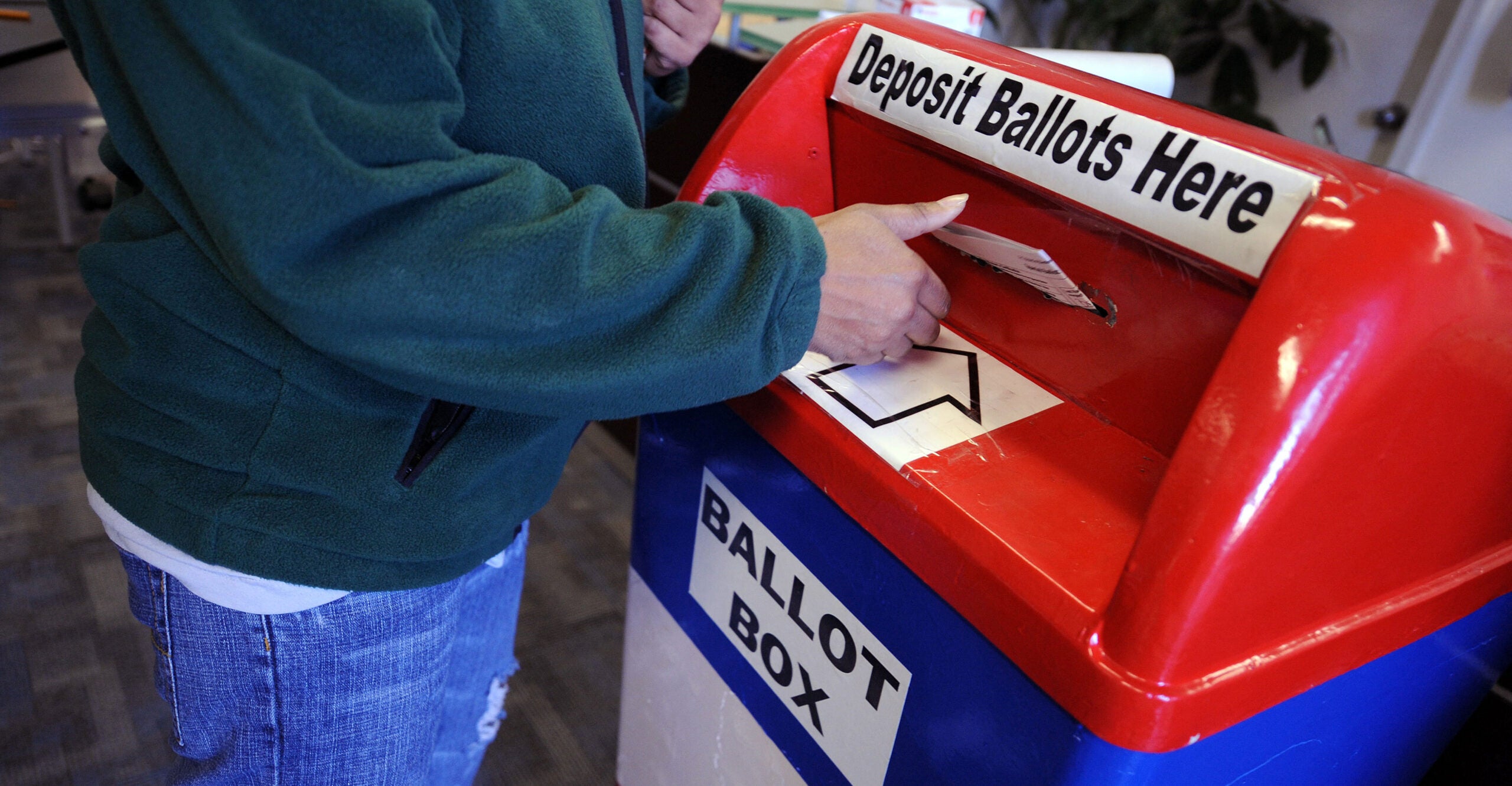
In a presidential election year like 2024, it’s natural that the concerns of voters and state legislators should turn to the security of their elections. And turn they did. Where legislators and voters set to work on elections, they generally improved the integrity of the procedures we use to choose our representatives. Since 2021, The Heritage Foundation has been tracking the laws of every state (and the District of Columbia) governing the conduct of elections—local, state, and federal—and ranking them in its Election Integrity Scorecard: 2024 saw 11 states improve their total election-integrity scores: Arkansas, Connecticut, Idaho, Indiana, Kentucky, Louisiana, Nevada, New Hampshire, Ohio, West Virginia, and Wisconsin.  Meanwhile, only two states, Arizona and Nebraska, and the District of Columbia saw their scores decline.  Among the year’s more interesting changes are those from Nevada, one of which resulted in immediate gains while others hold great promise for the future if ultimately enacted.  Nevada—among the worst performing states since the scorecard was released—gained one point this past November, when 53% of its voters defeated a referendum that would have made ranked choice voting the norm in the state. Ranked choice voting is an opaque and error-prone process, one that multiplies the challenges for election administrators far more than it delivers on its illusory promise of fairer outcomes.  Additionally, 73% of Nevada voters resoundingly endorsed two new measures that would require voters to present a photo ID to vote in person and to provide a unique identifying number such as that found on a driver’s license or Social Security card if voting by mail. To become state law, however, Nevada voters must confirm their support for these voter-ID measures in the next referendum, scheduled for 2026.  In one sense, Nevadans’ responses to these referendums were unsurprising. At those same polls, 50.6% of Nevadans gave the state’s six electoral votes to Donald Trump, who campaigned on the issue of secure elections. But in another sense, the matter is hardly clear-cut. Nevada’s U.S. Senate race was decided for the Democratic candidate as were three of the state’s four U.S. House races, indicating that basic election security is a concern cutting across party lines, which would be a positive development in and of itself.  While the state continues to lag its peers in several important areas, these improvements are nonetheless notable. Elsewhere, states that were already strong on election integrity continued their improving ways in 2024. Arkansas concluded agreements with three other states to share voter info in a manner that will help prevent duplicative, cross-state registrations of voters. The state also pledged to report annually to its legislature on improvements to the accuracy of the state’s voter rolls. Those earned Arkansas two points.  Indiana enacted a law, HB 1264, enabling election officials to use commercial data from credit agencies to verify voter registrations and jury information to verify citizenship status of would-be voters. Ohio did its part by requiring election officials to use the federal Systematic Alien Verification for Entitlements (SAVE) Program and state jury information to confirm the citizenship status of registered voters.   Meanwhile, Wisconsin voters endorsed an amendment to the state constitution prohibiting any private funding of election administration and earning the state a net 2-point rating improvement for the year. Fights over ranked choice voting occurred outside of Nevada with a variety of outcomes. Missouri voters banned the practice outright, D.C. voters adopted it, and Alaska voters failed to repeal it.  Bills concerning noncitizen voting were a favorite of state legislatures this year. At least 11 states enacted legislation or amended their constitutions to prevent noncitizen voting. It’s a little disconcerting that these measures are even necessary. One would think it self-evident that only citizens should be allowed to vote in our elections. After all, if no distinction is made between a citizen and a foreigner for purposes of political action, then nationhood itself is in serious jeopardy.  Regrettably, two states (and the District of Columbia) had net declines in their overall election-integrity scores.  The District lost a point when it adopted ranked choice voting through a November ballot referendum. Nebraska lost a point when it allowed same-day voter registration for persons naturalized as citizens after the voter registration deadline. And Arizona netted a 1-point decrease when it permitted the acceptance of certain mail-in ballots with a signature but no ID. The changes in 2024 produced few shifts in the overall rankings. Tennessee remains atop the list with 90 points out of 100. Arkansas enjoyed the most notable rise from seventh place to a tie for fifth place with Oklahoma at 82 points. Hawaii remains in the basement with 27 points.  This year will not feature electoral fireworks. Only New Jersey and Virginia will elect governors. Still, it would be a mistake for legislatures to let their interest in elections wane. Elections run better when they are prepared for well in advance. Hopefully, legislators will take the opportunity to enact positive reforms, such as those outlined in the “Model Legislation” section of The Heritage Foundation’s Election Integrity Scorecard, in the months to come. The post Election Integrity Notches Major Wins in 2024 appeared first on The Daily Signal.
Like
Comment
Share
Daily Signal Feed
Daily Signal Feed
1 y

MAGA and King’s Dream
Favicon 
www.dailysignal.com

MAGA and King’s Dream

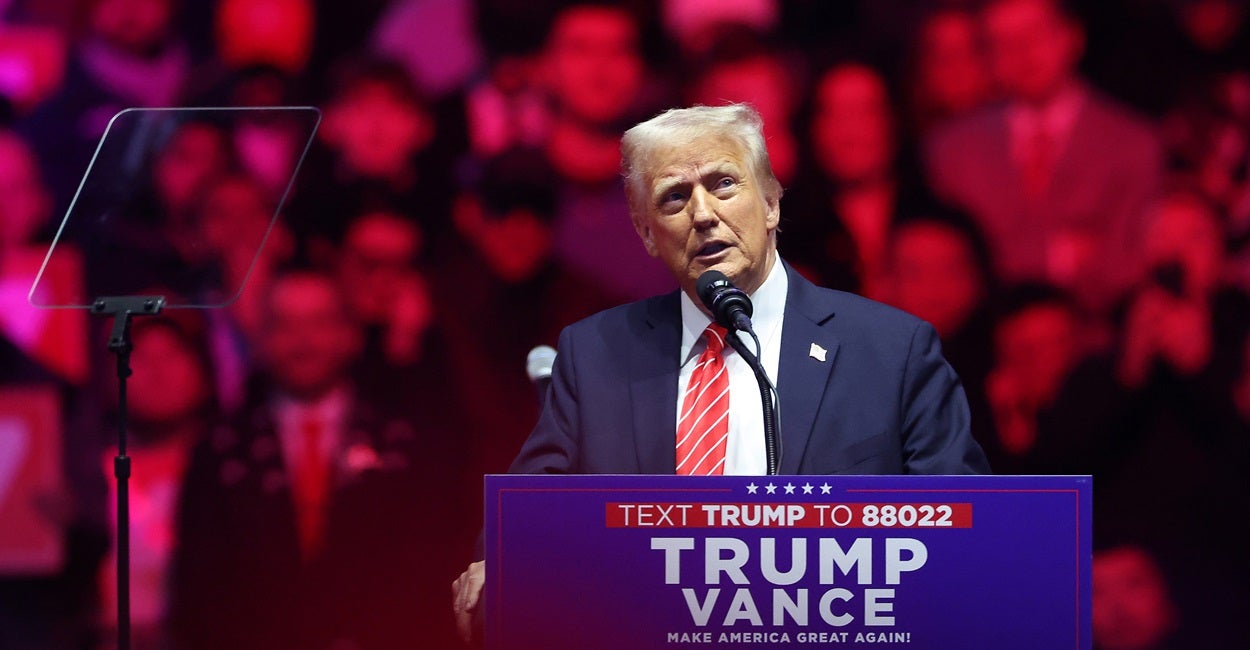
I have written often that there is a common denominator in our deeply divided nation. That is the general sense that something is wrong. The points of departure among our large and diverse population are the perceptions about what the problems are and what must be done. In this spirit I ask, as many have over recent days, what message we might take from the coincidence of the inauguration day of Donald J. Trump as America’s 47th president with the national holiday honoring the memory of Martin Luther King Jr. It is interesting to note that in 1964, shortly after King’s famous speech at the Lincoln Memorial and shortly after the assassination of an American president, 77% of Americans said, according to Pew Research, that “they trust government to do what is right just about always/most of the time.” The percent expressing this sentiment in 2024 was 22%. The percent expressing trust in government, per the Pew survey, spiraled relentlessly downward from 1964, and despite ups and downs, it never again got even close to the 77% of 1964. However, parallel with the spiraling down in trust in government has been a spiraling up in the growth of government. In 1964, per the Federal Reserve Bank of St. Louis, federal government expenditures took 17.3% of our gross domestic product. In 2024, federal government expenditures, per the Congressional Budget Office, took 23.9% of GDP. Can it be an accident that the more Americans have come to rely on government, the more Americans have allowed government to take over an increasing percentage of their lives, their trust in government has dramatically fallen? Common ground between the appeal of Donald Trump in 2025 and the appeal of King in 1963 is that both were about the pressing need to be faithful to the founding principles of the country. Trump’s MAGA message in 2025 is that the nation has destructively strayed from these principles. King’s message in 1963 was that the country failed and was failing to live up to those founding principles. However, common ground for both was and is concurrence about the validity of those founding principles–a free nation under God–and the critical importance of being true to them. What we do know is what the civil rights movement became, and what became widely understood to be the road to racial justice in America, was a great departure from King’s words and appeal in his “I Have a Dream Speech.” How can the sad irony be missed when today Al Sharpton wants to lead boycotts against corporations shaking off their DEI–diversity, equity, inclusion–programs when the most memorable line of King’s 1963 speech was his dream that one day his children would be judged by the “content of their character” and not “by the color of their skin”? A great point of inflection occurred in the 1960s, much under the leadership of President Lyndon Johnson, where the civil rights movement became a platform to direct the whole nation to the new god of big government. It has grown and grown, and here is the meeting point between MAGA and King’s dream. The false god of big government is hurting all Americans. We’re all drowning in it and damaged by it. The “I Have a Dream Speech” was really a pastor’s sermon, and the National Mall became his church. The substance of it is equally relevant, whether you see it about Making America Great Again or about Making America Great like it was meant to be. Restoring sanctity of life, liberty and property. Understanding that the source of our creativity is our Creator. In King’s words, “And if America is to be a great nation, this must become true.” And then we will join hands and sing “Free at last, free at last. Thank God Almighty, we are free at last.” COPYRIGHT 2025 CREATORS.COM We publish a variety of perspectives. Nothing written here is to be construed as representing the views of The Daily Signal. The post MAGA and King’s Dream appeared first on The Daily Signal.
Like
Comment
Share
Reclaim The Net Feed
1 y

President Donald Trump Officially Designates Brendan Carr and Andrew Ferguson To Chair FCC and FTC
Favicon 
reclaimthenet.org

President Donald Trump Officially Designates Brendan Carr and Andrew Ferguson To Chair FCC and FTC

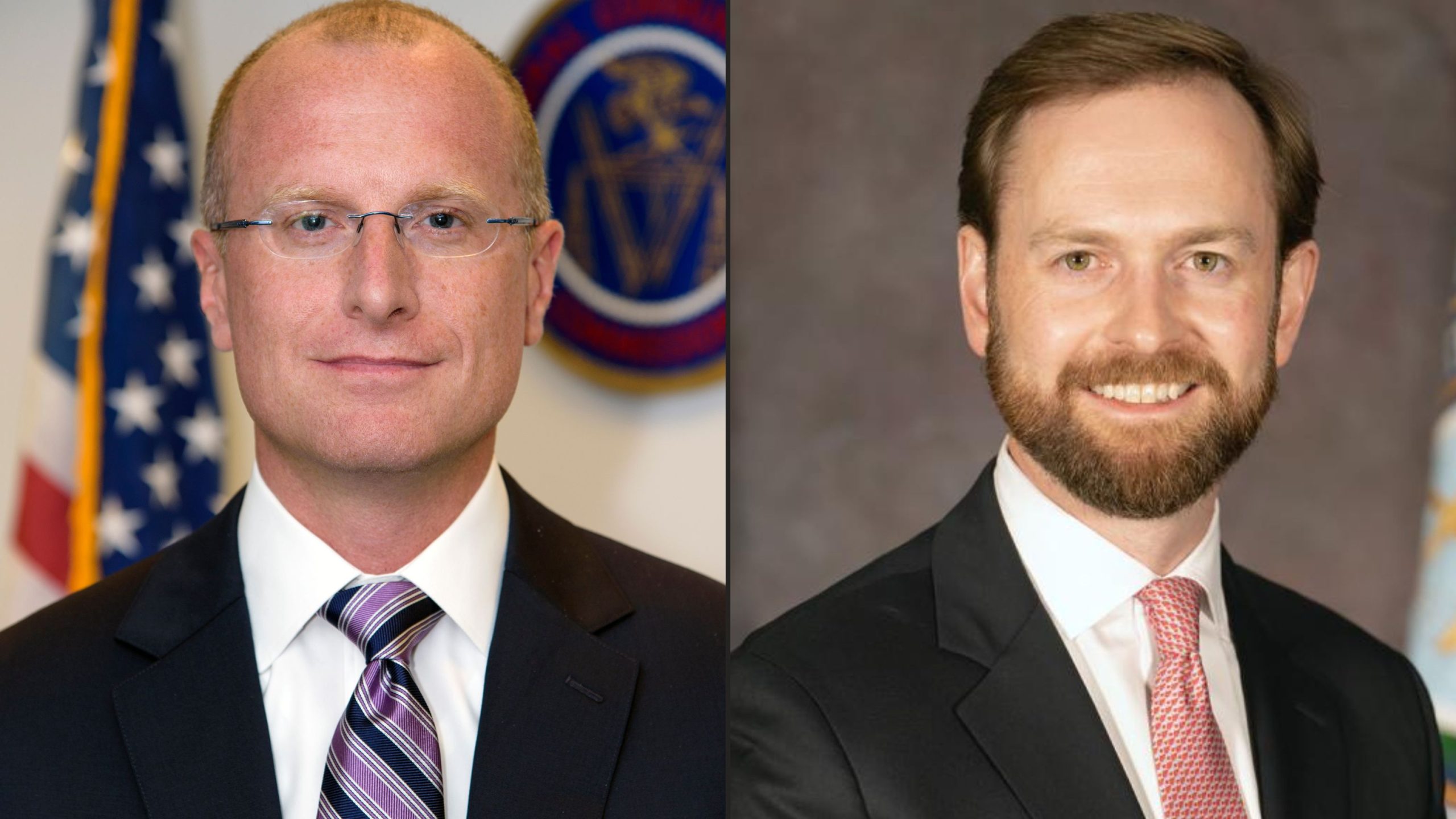
If you're tired of censorship and dystopian threats against civil liberties, subscribe to Reclaim The Net. Two of the US regulatory bodies that have the key influence on the internet and the tech industry, the Federal Communications Commission (FCC) and the Federal Trade Commission (FTC) have new chiefs: Brendan Carr and Andrew Ferguson. President Trump on Monday officially designated them to these positions, meaning that their appointment will not require congressional approval. In the past four years, which brought unprecedented and previously unimaginable levels of pressure on tech companies to suppress free speech including through antitrust behavior, both the officials – who have for some time now served as members of their respective commissions – emerged as opponents of such policies. During the previous administration, Carr and Ferguson demonstrated an understanding of the depth of the censorship that engulfed the US, but also other parts of the world. And they made references to the links between corporate entities, like massive advertising groups, that then formed anti-competitive “cartels” together with third-party “fact-checkers,” “raters,” etc., with the final “product” – online censorship. Now legacy media unhappy with the appointments of the two Republicans lament “the good old days” when the Democrat chair-led FTC, for example, “aggressively” went after tech giants with threats of breaking them up on antitrust grounds – but never mentioning how that ties into censorship, or taking any action to stop it. However, the choice could be seen as yet another form of indirect government pressure – “this is what might happen if you don’t behave on other issues” – with the goal of protecting a competitive online economy possibly being a smokescreen. Still with the legacy outlets, they are hoping that the work already started by the FTC will somehow result in a clash between the new White House and Big Tech bosses, many of whom are this time openly supporting President Trump. That could be self-serving, but it could also be an example of what happens when many years of government-backed pressure is lifted off somebody’s shoulders. Meanwhile, Carr responded to the news by promising to work on tech and media regulation, economic growth in the sector, and protecting consumers and national security, while Ferguson spoke about “usher(ing) in America’s Golden Age.” If you're tired of censorship and dystopian threats against civil liberties, subscribe to Reclaim The Net. The post President Donald Trump Officially Designates Brendan Carr and Andrew Ferguson To Chair FCC and FTC appeared first on Reclaim The Net.
Like
Comment
Share
Reclaim The Net Feed
1 y

Southport Tragedy Becomes Starmer’s Stage for Big Brother Britain
Favicon 
reclaimthenet.org

Southport Tragedy Becomes Starmer’s Stage for Big Brother Britain

If you're tired of censorship and dystopian threats against civil liberties, subscribe to Reclaim The Net. This content is available exclusively to supporters of Reclaim The Net Subscribe for premier reporting on free speech, privacy, Big Tech, media gatekeepers and individual liberty online.   Subscribe   Already a supporter? Login here.                       If you're tired of censorship and dystopian threats against civil liberties, subscribe to Reclaim The Net. The post Southport Tragedy Becomes Starmer’s Stage for Big Brother Britain appeared first on Reclaim The Net.
Like
Comment
Share
Showing 60816 out of 119294
  • 60812
  • 60813
  • 60814
  • 60815
  • 60816
  • 60817
  • 60818
  • 60819
  • 60820
  • 60821
  • 60822
  • 60823
  • 60824
  • 60825
  • 60826
  • 60827
  • 60828
  • 60829
  • 60830
  • 60831
Advertisement
Stop Seeing These Ads

Edit Offer

Add tier


Select an image
Delete your tier
Are you sure you want to delete this tier?

Reviews

In order to sell your content and posts, start by creating a few packages. Monetization

Pay By Wallet

Payment Alert

You are about to purchase the items, do you want to proceed?

Request a Refund