YubNub Social YubNub Social
    #freedom #law #civilrights #ai #fourthamendment #utah #privacy #lawenforcement #warrant #environmentalscience #surveillancestate #eff #alpr #flocksafety #licenseplate
    Advanced Search
  • Login
  • Register

  • Night mode
  • © 2026 YubNub Social
    About • Directory • Contact Us • Developers • Privacy Policy • Terms of Use • shareasale • FB Webview Detected • Android • Apple iOS • Get Our App

    Select Language

  • English
Community
New Posts (Home) ChatBox Popular Posts Reels Game Zone Top PodCasts
Explore
Explore
© 2026 YubNub Social
  • English
About • Directory • Contact Us • Developers • Privacy Policy • Terms of Use • shareasale • FB Webview Detected • Android • Apple iOS • Get Our App
Advertisement
Stop Seeing These Ads

Discover posts

Posts

Users

Pages

Blog

Market

Events

Games

Forum

YubNub News
YubNub News
1 y

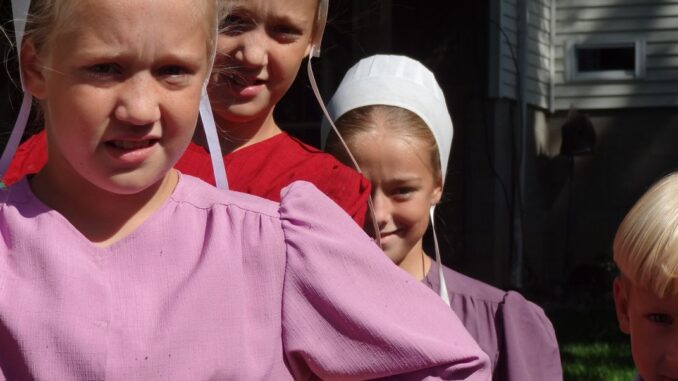
Amish Children Facing Forced Vaccinations in NY as Court Ruling Crushes Religious Freedom
Favicon 
yubnub.news

Amish Children Facing Forced Vaccinations in NY as Court Ruling Crushes Religious Freedom

@media (max-width: 1200px) { }.ns-inline:not(.ns-columns) .ns-buttons-wrapper { justify-content: center; }body .ns-inline:not(.ns-columns) a.ns-button, body .ns-inline .ns-total-share-count { margin:…
Like
Comment
Share
YubNub News
YubNub News
1 y

California Among Several States Suing Over Federal Cuts in Teacher Grants
Favicon 
yubnub.news

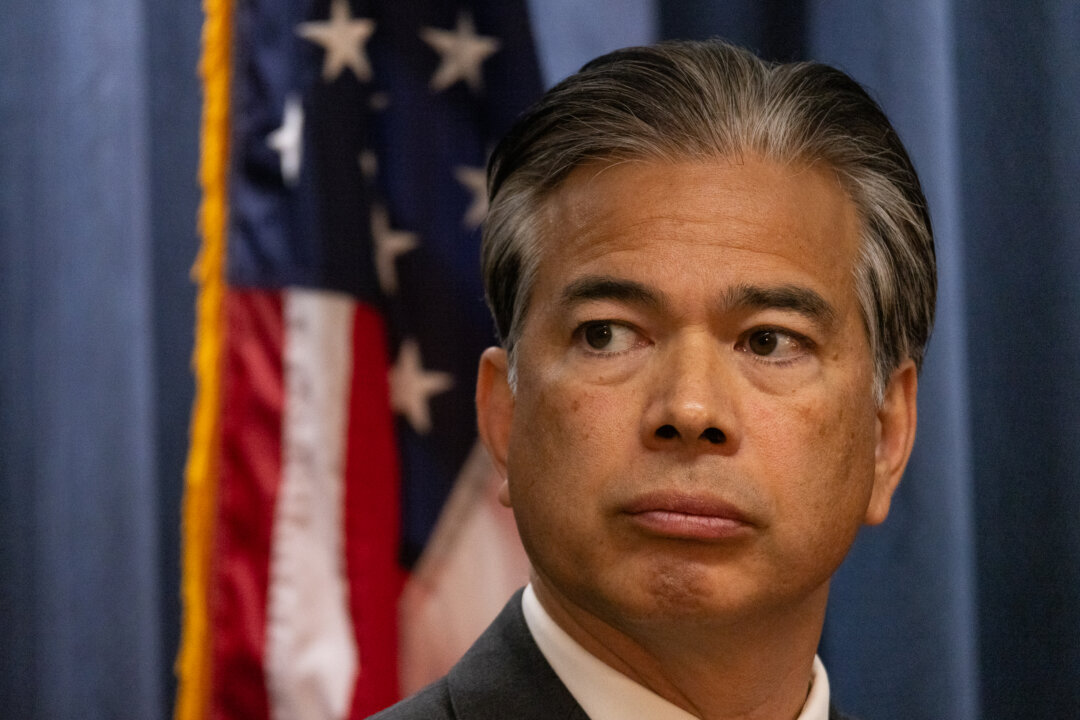
California Among Several States Suing Over Federal Cuts in Teacher Grants

California’s money would have prepared teachers for positions in rural and urban schools. Without the funds, teacher shortages will grow, state AG Bonta said.Leading a multistate coalition, California…
Like
Comment
Share
YubNub News
YubNub News
1 y

Bill Gates: Repeat ‘Conspiracy Theorists’ Must Be Sentenced to 12 Months of Reeducation
Favicon 
yubnub.news

Bill Gates: Repeat ‘Conspiracy Theorists’ Must Be Sentenced to 12 Months of Reeducation

@media (max-width: 1200px) { }.ns-inline:not(.ns-columns) .ns-buttons-wrapper { justify-content: center; }body .ns-inline:not(.ns-columns) a.ns-button, body .ns-inline .ns-total-share-count { margin:…
Like
Comment
Share
Ben Shapiro YT Feed
Ben Shapiro YT Feed
1 y ·Youtube Politics

YouTube
George Gilder describes the economy in simple terms
Like
Comment
Share
Conservative Voices
Conservative Voices
1 y

BREAKING: Trump suspends most new tariffs on Mexico
Favicon 
www.brighteon.com

BREAKING: Trump suspends most new tariffs on Mexico

Follow NewsClips channel at Brighteon.com for more updatesSubscribe to Brighteon newsletter to get the latest news and more featured videos:https://support.brighteon.com/Subscribe.html
Like
Comment
Share
Conservative Voices
Conservative Voices
1 y

'Tutor that doesn't teach kids': Brenberg schools Department of Education
Favicon 
www.brighteon.com

'Tutor that doesn't teach kids': Brenberg schools Department of Education

Follow NewsClips channel at Brighteon.com for more updatesSubscribe to Brighteon newsletter to get the latest news and more featured videos:https://support.brighteon.com/Subscribe.html
Like
Comment
Share
Conservative Voices
Conservative Voices
1 y

The Ukraine War’s Finale is Upsetting—but Trump Isn’t to Blame
Favicon 
www.theamericanconservative.com

The Ukraine War’s Finale is Upsetting—but Trump Isn’t to Blame

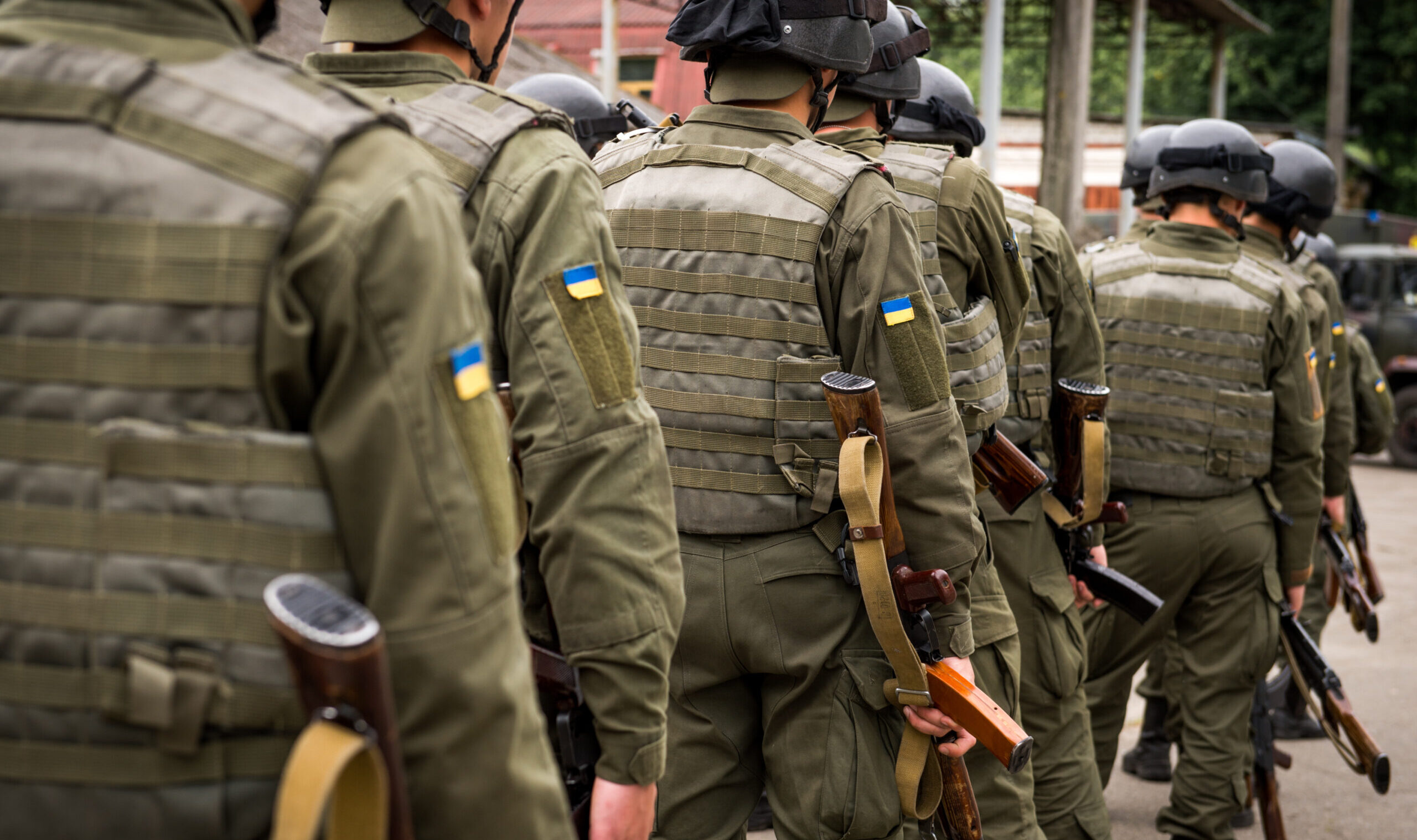
Foreign Affairs The Ukraine War’s Finale is Upsetting—but Trump Isn’t to Blame Western leaders deserve much blame for making Putin’s invasion more likely.  Credit: image via Shutterstock The war in Ukraine is not ending the way the U.S.-led West had hoped. Russia has not been defeated, and Ukraine will not enter NATO or reclaim all its captured territory. Ukraine, Europe, Canada, and even some members of the Republican party have responded with fury to President Donald Trump’s effort to resolve the conflict. But with whom should they be upset? Russia’s illegal invasion of Ukraine cannot be justified. But, from their perspective, the war became inevitable when three factors collided. The first was NATO expansion eastward right up to Russia’s borders, including the promise of an irreversible path to membership for Ukraine. The second was Ukraine’s failure to implement the Minsk Agreements and to protect the rights of ethnic Russian citizens of Ukraine. The third was the 60,000 elite Ukrainian troops massed on the eastern border with Donbas and the dramatic increase in Ukrainian artillery shelling into the Donbas. There was genuine alarm in Russia that Ukraine was about to invade the Donbas. “Suppose Ukraine is a NATO member,” Russian President Vladimir Putin said in the days before the war. “Suppose it starts operations in Crimea, not to mention Donbas… Imagine that Ukraine is a NATO country and starts these military operations. What are we supposed to do? Fight against the NATO bloc? Has anyone given at least some thought to this?” Putin certainly didn’t believe that Ukraine’s Western partners had benign intentions. NATO had broken its promise not to expand eastward after the Cold War, but that was just one reason the Kremlin distrusted the West. When Ukrainian ultranationalists opposed the implementation of the Minsk Agreements, the U.S. failed to support Zelensky, and France and Germany failed to pressure him. It would later become evident that Paris and Berlin saw the Minsk agreement as a means to buy Ukraine time to build its military—not as an opportunity to resolve the bitter conflict in eastern Ukraine. Still, diplomacy might have averted Russia’s invasion of Ukraine. On December 17, 2021, Russia proposed negotiations with the U.S. and NATO over security guarantees and a new security architecture in Europe. This moment was the opportunity for Washington to consider Russia’s concerns and prevent war. Instead, the U.S. and NATO rejected Russia’s key demands and insisted that NATO expansion into Ukraine was not even on the table for negotiations. Two months later, Russia invaded. But there was still hope that the conflict would be short and destruction constrained. In the early weeks of the war, Ukrainian and Russian negotiators headed down a promising diplomatic path to end the war. But instead of encouraging and supporting Ukraine on that path, Washington pushed them off it with promises of whatever they need for as long as they need it if they would agree to fight with Russia instead of signing a peace deal. Three years later, despite the most advanced Western military and intelligence aid, Ukraine has lost the war and will almost certainly settle for a worse peace deal than it could have gotten in 2022. Russia likely won’t sign an agreement until there is a written guarantee that Ukraine will never join NATO. Nor are they going to stop the war until there is de facto, if not formal, recognition that a portion of the territory that is now home to ethnic Russian Ukrainians is now part of Russia. Whatever Trump’s motivation, he is simply recognizing reality and aligning U.S. policy to it. It has long been obvious that Ukraine was going to have to give up its NATO aspirations. Russia has been clear that they would not stop the war without that guarantee. And NATO was clear that they were not going to grant membership: the proof was in the refusal to formally and concretely begin the process throughout the war and in the refusal of the Biden administration to commit troops to Ukraine precisely because of the necessity of avoiding the very confrontation with Russia that NATO’s article five would commit them to.  It has also become clear that Ukraine is incapable of reclaiming the territory it has lost since February 2022—let alone Crimea, which it lost in 2014—and that, despairing of the Minsk Agreement’s failure, Russia is not going to return it. Russia only continues to advance further as the talks begin. Unfair as it may be, not recognizing these realities and continuing to support Ukraine in the war does not help Ukraine; it condemns it only to further loss of life and land. Russia should be blamed for giving up on diplomacy and illegally invading Ukraine. But we should also be upset with generations of American presidents who pushed NATO east and ignored Russian concerns. And we should be upset with the United States for rejecting a final diplomatic chance to avoid the war and for derailing an opportunity to stop it early.  For those who love peace and long for justice in world affairs, Ukraine’s situation today is distressing. We should be upset with former President Biden and other Western leaders who ignored Russia’s security concerns in favor of pursuing their own foreign policy interests and made Putin’s invasion more likely. Let us hope the current president succeeds in bringing peace where his successor helped bring a bloody war. The post The Ukraine War’s Finale is Upsetting—but Trump Isn’t to Blame appeared first on The American Conservative.
Like
Comment
Share
Conservative Voices
Conservative Voices
1 y

Ukraine’s Gamble in Kursk Isn’t Paying Off
Favicon 
www.theamericanconservative.com

Ukraine’s Gamble in Kursk Isn’t Paying Off

Foreign Affairs Ukraine’s Gamble in Kursk Isn’t Paying Off Washington should urge Kiev to withdraw its forces from Russia. Credit: Vlasov Yevhenii Last week, Moscow launched a major counteroffensive to reclaim Ukrainian-held positions in Russia’s Kursk oblast, which Kiev invaded in August. Russian forces cut off key supply lines and forced Ukrainian troops into a defensive posture. Strategists in Kiev had hoped that the Kursk invasion would force Russia to divert significant forces away from the eastern front and provide Ukraine with a bargaining chip in future negotiations. However, since the initial incursion, Russia has retaken as much as 64 percent of occupied territory in Kursk, even while maintaining an upper hand on the battlefield in eastern Ukraine. Ukraine has deployed around 30,000 Ukrainian troops in Kursk—troops that are now vulnerable and badly outnumbered. As Kiev faces manpower shortages and worsening demographic challenges, it cannot afford to lose any more troops who aren’t actively advancing key strategic objectives. Retreating from the region would increase the odds of saving these troops’ lives and free up significant military assets, allowing Ukraine to reinforce key defensive positions in areas like Zaporizhzhia. The United States should encourage Kiev to withdraw its remaining forces from Kursk and use them not only to bolster its frontlines in eastern Ukraine but also, eventually, to support a post-war strategy of “armed neutrality.” Under this strategy, Western nations would help rebuild the Ukrainian military so that it could guarantee its own security going forward. But Ukraine would need as many soldiers as it can muster to make the strategy work. Kiev claims that Moscow diverted around 50,000 troops to reinforce Kursk, yet Ukrainian forces have not seen a reduction in pressure on the eastern front. This isn’t surprising. To meet the Ukrainian assault in Kursk, Russia has turned to its reserve forces. Meanwhile, thousands of North Korean troops joined Russian defensive efforts. As Ukraine failed to hold captured territory in Kurk, Russia’s territorial gains in eastern Ukraine have been slow but steady as its forces have scored several victories in the Donbas. The Kursk invasion may have seemed like a rational gamble at one point, but no longer. Last month, Kremlin spokesman Dmitry Peskov categorically rejected any prospect of trading territory. If Ukraine can’t use Kursk as a bargaining chip in negotiations, then continuing to lose soldiers there makes little strategic sense—especially since the end of the Russo-Ukrainian war won’t mean the end of Kiev’s need for a large, well-equipped military. Despite President Volodymyr Zelensky’s insistence that NATO membership is the best option to secure Ukraine’s future, the Trump administration has rejected this path, arguing that Kiev’s NATO aspirations helped instigate the war in the first place. Russia also opposes any post-war security arrangement that involves NATO troops on Ukrainian territory. Given these constraints, Kiev must focus on a self-reliant defense. To that end, it should prioritize securing its core territory now, rather than holding onto exposed positions in Russia, and it should prepare for the strongest possible defense after the war. Ukraine should have no illusions that the West will guarantee its security as part of a settlement. French and British officials have discussed deploying tens of thousands of troops to Ukraine, yet Moscow sees little to no difference between a peacekeeping deployment of Western troops to Ukraine and full Ukrainian NATO membership. Even if Russia consented, as part of a peace deal, to NATO members stationing troops on Ukrainian territory, the deterrence value of those troops would be questionable. Since the invasion began, Western governments have demonstrated their unwillingness to fight Russia over Ukraine.  Rather than directly contributing troops, the U.S. and Europe could reinforce Ukraine’s porcupine defense strategy by supplying short-range artillery and constructing barriers with dragon’s teeth and trenches. Western support for Ukraine’s burgeoning domestic drone manufacturing base would also further enable Ukraine to defend itself, compensate for its manpower shortages, and enhance monitoring along the eastern front.  Several historical examples of armed neutrality can serve as models for Ukraine in its future pursuit to form a formidable, independent military force. Among them is Finland, which was expected to fall within days after the Soviet Union invaded in 1939. While losing about 11 percent of its territory, Helsinki scored a moral victory by successfully preserving Finnish sovereignty despite being outnumbered three to one. Ukraine can follow a similar path, as it has valiantly maintained the defense of 80 percent of its territory. Although the Kursk incursion initially seemed like an opportunity for Kiev to enhance its leverage, the operation has proved unsustainable and ineffective. Ukraine must now consolidate its depleted resources to build an effective defense against future Russian aggression. It should withdraw the troops in Kursk and use them to defend Ukrainian territory from the Russian invaders. Ultimately, Ukraine will need as many troops as possible to avert future aggression from its much larger and more powerful neighbor. The post Ukraine’s Gamble in Kursk Isn’t Paying Off appeared first on The American Conservative.
Like
Comment
Share
Conservative Voices
Conservative Voices
1 y

Here’s How to Lose Midterms
Favicon 
www.theamericanconservative.com

Here’s How to Lose Midterms

Politics Here’s How to Lose Midterms Considering Medicaid cuts is a sign of advanced political derangement. Credit: Peopleimages.com – Yuri A./Shutterstock Medicaid cuts are political suicide.  Medicaid, like every massive program undertaken by human beings, has good points and bad points, and I’m not terribly interested in trying to tally them up here. I’m not an economist or an accountant; nor am I a healthcare expert. I can use my eyes, read, and do basic arithmetic, though, and there is very little ambiguity: If the Republicans want to go for a paddle in their own blood at midterms, monkeying with Medicaid funding is a terrific start. The calculus here is very simple: If you want a multiethnic, working-class coalition of voters—and the going theory is that this is the coalition that put Donald Trump in the White House a second time—Medicaid cuts are a terrific way to blow that up. Look at the numbers! Seventy-seven percent of Americans view Medicaid favorably or very favorably. Sixty-four percent of Republicans view it favorably or very favorably. Around 18.9 percent of Americans are on Medicaid. In the swing states: Pennsylvania, 21.5 percent; Wisconsin, 18.6 percent; Michigan, 21.7 percent; Nevada, 21.7 percent; Arizona, 24.2 percent; North Carolina, 22 percent; Georgia, 15.5 percent. In other states the Republicans are eyeing, the percentage is even higher: New Mexico’s enrollment is over 33 percent. The Congressional Budget Office found that Medicaid (and Medicare and CHIP) cuts are going to have to figure in a solution to hit the GOP’s ambitious budgeting goals. If the Republicans wish to stay in power, well, maybe those goals have to change. Here’s another calculus for you: Is it worth sacrificing your political power to reduce spending that the Democrats will immediately reinstate after your inevitable ignominious election loss? I am but a humble journalist, yet, to me, this is a no-brainer. Sometimes you have to take a stand for principle and take the political hit, but ideally you won’t do it for mere ephemera. There is little question that the American healthcare system is enormously dysfunctional. It is not, in itself, a terribly good sign that such a large portion of the American population is enrolled in Medicaid; in fact, the consistent rise in enrollments are in part a legacy of that old bogeyman, the Affordable Care Act or “Obamacare,” which directly led to massive premium distortions. The healthcare market itself is an impossibly creaky Rube Goldberg machine of subsidized demand and perverse incentives. Yet the political reality remains that a large number of voters—including lower-middle class voters who are gainfully employed—rely on Medicaid to cover their families’ legitimate insurance needs. (Even more rely on CHIP, the ACA’s insurance subsidies.) They are going to feel screwed if you cut the program, and they are not going to want to vote for you. This isn’t a far-out, John-the-Baptist-style prophecy of political doom. Steve Bannon, the MAGA movement bellwether (and, perhaps, 2028 presidential contender), observed, “A lot of MAGA’s on Medicaid. If you don’t think so, you’re dead wrong. Medicaid’s gonna be a complicated one. You just can’t take a meat axe to it.” This all is not to say that there aren’t plenty of ways you can improve the program. It is estimated that, in 2023, there was something in the ballpark of $50 billion worth of improper Medicaid payments—that is to say, fraud—but only about $1.25 billion was recovered. Directing the Department of Justice to put more resources toward welfare fraud is a political winner and will save a buck or two. House Speaker Mike Johnson’s proposed work requirements, depending on how they’re implemented, aren’t necessarily political poison either. But these measures won’t get the budget over the proposed line. So the proposed line needs to change. In a democracy (roughly speaking), sometimes you are faced with two bad choices. The state of the American fisc is appalling, as even mainstream sources have started to concede. But reforming it can occur only within the bounds of the politically possible. Cuts that will bring back the Democrats’ spending disco—not to mention the rest of their policy suite—are not in the long run helpful. Nor even in the short term: Midterms are not so very far in the future. The Republicans weren’t catapulted into government on a program of revolutionary fiscal austerity. Their mandate is to bring back normality, or rather the fading memory of “normal America” that persists in the hearts and minds of the majority of American voters. (The actually existing normality of the past 20 years has not been to their liking.) While the first weeks of the Trump administration have been chock-full of ’90s-style attacks of fraud, waste, and abuse, they are only one part of a program to reorient America’s economy, culture, and place in the world—a program that aims to reduce mass reliance on entitlements like Medicaid. Is a premature suicide attack on a massively popular welfare program worth the candle?  The post Here’s How to Lose Midterms appeared first on The American Conservative.

Like
Comment
Share
Conservative Voices
Conservative Voices
1 y

The Dangerous Instability Of The Left’s Ongoing Tantrum
Favicon 
conservativefiringline.com

The Dangerous Instability Of The Left’s Ongoing Tantrum

The following article, The Dangerous Instability Of The Left’s Ongoing Tantrum, was first published on Conservative Firing Line. With Donald Trump in office and making stupendous changes at the federal level, we’re witnessing the left having an epic meltdown on a national (and, some might argue, international) scale. It’s unprecedented, because for the first time in generations, the left isn’t getting their way. Like a toddler, they’re having a full-blown tantrum as a … Continue reading The Dangerous Instability Of The Left’s Ongoing Tantrum ...
Like
Comment
Share
Showing 62389 out of 126799
  • 62385
  • 62386
  • 62387
  • 62388
  • 62389
  • 62390
  • 62391
  • 62392
  • 62393
  • 62394
  • 62395
  • 62396
  • 62397
  • 62398
  • 62399
  • 62400
  • 62401
  • 62402
  • 62403
  • 62404
Advertisement
Stop Seeing These Ads

Edit Offer

Add tier


Select an image
Delete your tier
Are you sure you want to delete this tier?

Reviews

In order to sell your content and posts, start by creating a few packages. Monetization

Pay By Wallet

Payment Alert

You are about to purchase the items, do you want to proceed?

Request a Refund