YubNub Social YubNub Social
    #freedom #libtards #patriots #privacy #americafirst #loonyleft #surveillancestate #police\ #alpr #flock
    Advanced Search
  • Login
  • Register

  • Night mode
  • © 2026 YubNub Social
    About • Directory • Contact Us • Developers • Privacy Policy • Terms of Use • shareasale • FB Webview Detected • Android • Apple iOS • Get Our App

    Select Language

  • English
Community
New Posts (Home) ChatBox Popular Posts Reels Game Zone Top PodCasts
Explore
Explore
© 2026 YubNub Social
  • English
About • Directory • Contact Us • Developers • Privacy Policy • Terms of Use • shareasale • FB Webview Detected • Android • Apple iOS • Get Our App
Advertisement
Stop Seeing These Ads

Discover posts

Posts

Users

Pages

Blog

Market

Events

Games

Forum

Daily Wire Feed
Daily Wire Feed
1 y

Tokyo Inferno: Operation Meetinghouse, The Deadliest Air Raid In History, Part 3
Favicon 
www.dailywire.com

Tokyo Inferno: Operation Meetinghouse, The Deadliest Air Raid In History, Part 3

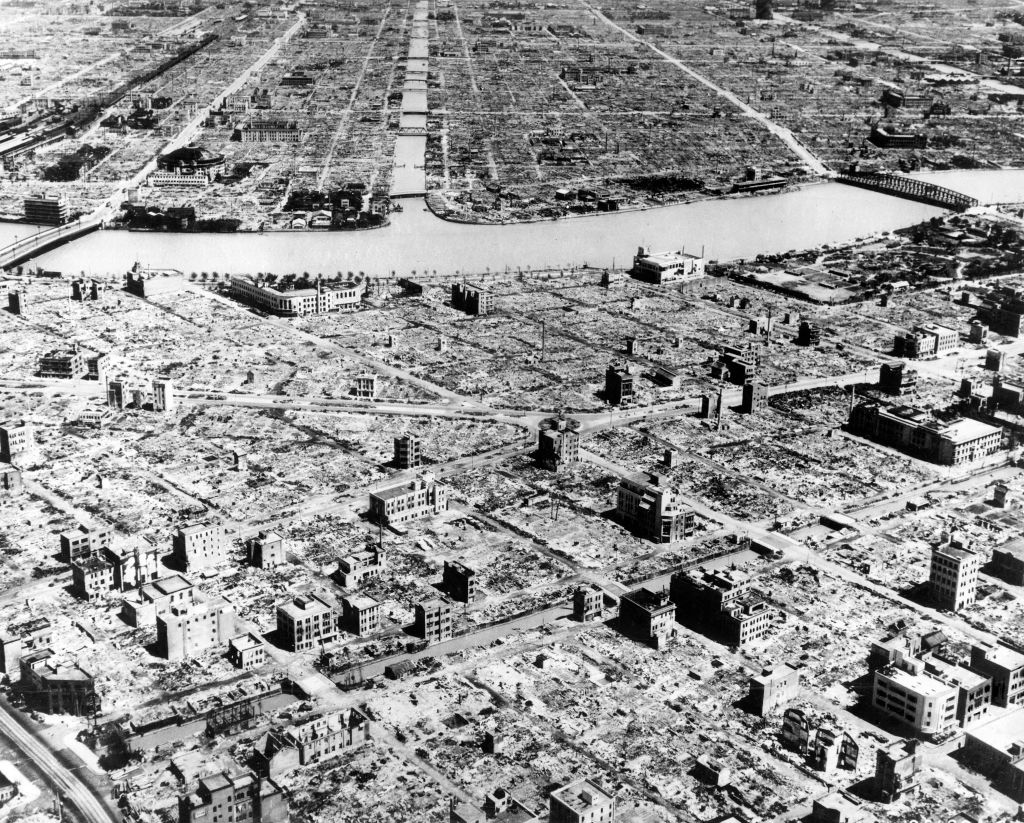
By 2:30 a.m. on March 10, 1945, the bombers had all disappeared over the glowing horizon and the “all clear” sounded across a shattered Tokyo.  While back on Guam, Gen. LeMay and his staffers were breathing a collective sigh of relief, over a million suddenly homeless Japanese wandered the smoldering lunar landscape of their devastated capital city like bewildered phantasms. When the smokey dawn arrived, the grey, muted sunlight revealed badly burned survivors stumbling into what medical centers remained while others returned to ash heaps that were once their neighborhoods searching for family members separated from them in the chaos of the night before. Ishikawa Iwao came upon the charred remains of his wife and two girls. One young girl would recall having to push her way through the dead bodies with her feet. In the Tokyo subway, thousands of naked and seared humanoid figures were piled into the narrow confines. If it was not hell itself, LeMay’s bombers had come as close as the human race could to replicating it on this earth. Although there were attempts soon after the raid to arrive at a reliable casualty figure, it was guesswork. Many of the Tokyo officials who would have tallied the corpses and presented a body count to the emperor, whose palace had been spared, were either dead, injured, searching for loved ones, or scrounging for food. Various historians, as well as subsequent Japanese and U.S. records, put the death toll at anywhere from 87,000 to over 110,000 with another 40,000 injured. Respected researchers like Edwin Hoyt, however, argued that even the high estimates of fatalities are a gross undercount given the population of the area that was scorched, and that these figures only represent actual counted dead along with approximations based on fragments of clothing, bones, jewelry, and the like. He would actually put the number at over 200,000. We will never know for sure. But what we do know is that, with the possible exception of Hiroshima, the March 9-10, 1945, firebombing of Tokyo was the most lethal single act of war in human history, and certainly tops anything conventional weapons had ever achieved before or since. Tokyo residents who lost their homes as a result of the U.S. bombings. 10th March 1945. Photo: Kouyou Ishikawa, officer of the Metropolitan Police Department. Tokyo, Japan. (Photo By Galerie Bilderwelt/Getty Images) Despite the mass killing they’d just unleashed, LeMay and his bomber crews were ebullient. Losses hadn’t been 70% as some predicted but rather just 4%: 14 bombers and 96 crewmen lost. This in exchange for reducing over 16 square miles of the enemy’s capital city to ash. The Superfortresses incinerated 63% of the commercial district, wiped out 18% of Tokyo’s industry, and burned to the ground roughly a quarter million buildings and homes, which was 25% of the city. Flying at low altitude, it turned out, was less taxing on the B-29’s temperamental engines as well as more fuel-efficient. So low-level nighttime fire bombings would be LeMay’s template going forward. In effect, America’s strategy for winning the war was to simply dump burning gasoline over Japan until they finally came to their senses. In fact, over the next six months the B-29s would proceed to burn out one Japanese city after another, including several return trips to embattled Tokyo, effectively hammering a nation already teetering due to critical shortages to its knees. In fact, LeMay was confident that by putting every Japanese city to the torch, his B-29s could compel Japan to surrender without ever having to invade, or drop an atomic bomb. And, as post-war surveys revealed, of all the reasons Japanese civilians believed their nation had no choice but to end the war, the air raids topped the list. And no wonder. As historian and author James Bradley writes: “Curtis [LeMay] was clearly much more effective than the American bombers had been in Europe. Bombing destroyed seventy-nine square miles of Germany’s urban area. Curtis destroyed more than twice as much urban area in Japan. 178 square miles…In fact, the damage in just two Japanese cities, Tokyo (56.3 square miles) and Osaka (16.4 square miles) nearly equaled all the damage done to all German cities put together.” And these were just two of nearly 70 cities the B-29s burned out between March and August 1945. Aerial view of Tokyo razed by American bombing carried out on the evening of March 9th by 334 B-29 Super Flying Fortresses. Tokyo, March 1945 (Photo by Mondadori via Getty Images) Indeed, even after the atomic bombs vaporized Hiroshima and Nagasaki, the firebombing continued; the last Japanese city to be put to the torch was Akita, on August 14, 1945, five days after Nagasaki and just hours before Japan announced its capitulation. The morality of firebombing or “area bombing” has been a subject of intense debate ever since. Certainly in the modern age where nations like Israel are castigated in the court of global opinion for “disproportionate” responses to acts of war, one is hard-pressed to find proportionality in a bombing campaign that, in ostensible retaliation for 2,400 dead at Pearl Harbor, eventually burned to death over a half million old men, women, and children and rendered over eight million homeless. To be sure, some in the military did question the ethics of such indiscriminate killing. Brig. Gen. Charles Bonner Feller condemned the Tokyo raid as “one of the most ruthless and barbaric killings of non-combatants in all of history.” LeMay himself candidly conceded, “I suppose if we’d lost the war, I would have been tried as a war criminals.” But when it comes to the bombing of Japan especially, there are two factors to consider before handing down judgement ex post facto. First, 34% of Japanese industrial workers were jammed into her six largest cities. And many of those who did not work on the factory floor were directly involved in contributing to the war effort through the cottage industry of making parts for nearby factories in their home workshops. As one 1944 report to the White House argued, “each factory was like a tree radiating a web of roots throughout the surrounding living areas from which it drew both workers and parts.” In other words, an argument could be made that every Japanese dwelling was a legitimate military target. And thusly, “de-housing”, to use Churchill’s antiseptic phrase, was considered to be justified. Feller’s rare dissent aside, we are speaking of what the Germans called “terror bombing” and the Japanese “slaughter bombing” with the advantage of decades of hindsight and reflection. Today we know that by March 1945 the war was barely six months away from concluding. But U.S. planners back then certainly could not know this. As far as they were concerned the ferocious battles of Peleliu, Manila, Iwo Jima, and Okinawa amply demonstrated that, if anything, Japanese resistance was stiffening, and growing ever more fanatical. In 1945, Germany may have been on the ropes, but Japan was showing no hint of surrender. The trusted journalist Ernie Pyle wrote, “The closer we get to Japan, the harder it will be. To me it looks like trying days for us in the years ahead.” As Bradley points out, Pyle said years, not months. It was with this backdrop of frustration with an enemy who, though clearly beaten, still refused to give up, combined with the brutality of the Japanese themselves — especially their sadistic conduct towards civilians and POWs that was well-known by then — that erased any moral qualms from the nation’s collective conscience. The growing consensus both inside the War Department as well as Main Street, USA, was that this madness had to end. And if it took burning all of Japan back into the stone age to stop our boys from coming home in coffins or maimed and mutilated, then so be it. Who are we, basking in the eighth decade of the hard-won Pax Americana, to judge those who saw nothing but a human catastrophe looming before them? As the war inexorably moved towards what would have been its inevitable gory climax, all that lay ahead was an invasion of the home islands with literally millions of Allied, and most likely tens of millions of Japanese, casualties to pay the price. As for the men who carried out the burning of Tokyo that night, once the euphoria of surviving a mission so many expected to be their last wore off, they no doubt pondered the ethics of dumping napalm on defenseless people below. But training, discipline, and war-weariness had instilled in most of them a sense of clinical detachment. They just wanted to get in, execute the mission, and get out of there in one piece. As LeMay would offer unapologetically, “Every soldier thinks about the moral aspect of what he is doing. But all war is immoral, and if you let that bother you, you’re not a good soldier.” On August 6, 1945, the uranium bomb “Little Boy” destroyed Hiroshima. Three days later the plutonium bomb “Fat Man” obliterated Nagasaki. But Japan’s most stalwart militarists, who were more than prepared to sacrifice their entire population to thwart an Allied invasion, viewed atomic weapons as more of a gradual rather than quantum leap in escalation. After all, as with the M69, the atomic bombs killed most of their victims with fire. Russia’s invasion of Japanese-occupied Manchuria on August 8, 1945, certainly removed another piece of their wobbly Jenga tower. One and a half million Red Army troops attacked the emperor’s three quarter of a million warriors in the Chinese province and, along with vengeful Manchus, engaged in the mass killing, looting, and rape of thousands of Japanese “pioneers,” and sent 700,000 captives to Stalin’s gulags. Even the intrepid U.S. submariners effectively sinking the Japanese Merchant Marine did not alone end Japan’s war effort. Dai Nippon’s commanders still ate well, drank good sake, and ravished enslaved “comfort women” while their starving people subsisted on grasshoppers and sawdust cakes. Morality aside, a strong case can be made that, of all the factors that led to Japan’s ultimate surrender, it was the firebombing that weighed most heavily in Hirohito’s decision to compel his nation to “bear the unbearable, and “endure the unendurable.” In fact, it is quite conceivable to imagine eventual U.S. victory over Japan through “slaughter bombing” alone. In a meeting with Gen. Arnold, LeMay informed him that by September 1945 there would be no more Japanese targets left to bomb. “And with the targets gone we couldn’t see much of any war going on.” According to Prince Fumimaro Konoe, “…the thing that brought about the determination to make peace was the prolonged bombing by the B-29.” It makes one wonder if Hiroshima and Nagasaki ever needed to occur. Although others would argue that the atom bombs were, in fact, the essential wake-up call demonstrations of the awesome power arrayed against Japan. In a post-war interview, Prime Minister Suzuki Kantaro stated, “The atom bomb didn’t end the war, but it prompted the emperor to make a decision.” The debate continues. Hulton Archive/Getty Images Again, these are questions revisited today through the clear lens of decades of hindsight. At the time, the U.S. government, seeing no end in sight, had a solemn obligation to the American people to do whatever was necessary to end the costliest war in human history. Still, no matter what ultimately prompted Japan’s leaders to accept defeat, the countdown to that defeat began on a terrible March night over Tokyo, eighty years ago, when the B-29s came in force, and the night sky rained fire. And the hellfire of total war finally came home to Japan. * * * Brad Schaeffer is a commodities fund manager, author, and columnist whose articles have appeared on the pages of The Daily Wire, The Wall Street Journal, NY Post, NY Daily News, National Review, The Hill, The Federalist, Zerohedge, and other outlets. He is the author of three books. Follow him on Substack and X/Twitter. The views expressed in this piece are those of the author and do not necessarily represent those of The Daily Wire.

Like
Comment
Share
The Lighter Side
The Lighter Side
1 y

Prince Robert Gives Emotional Tribute After 22-Year-Old Son Dies From Rare Condition
Favicon 
www.inspiremore.com

Prince Robert Gives Emotional Tribute After 22-Year-Old Son Dies From Rare Condition

Prince Robert of Luxembourg and Princess Julie of Nassau have announced that their son, Prince Frederik, has died at 22 after suffering from a rare genetic condition called POLG Mitochondrial disease. “It is with a very heavy heart that my wife and I would like to inform you of the passing of our son, the POLG Foundation Founder and Creative Director, Frederik,” Robert wrote in a statement on the POLG Foundation website. “Last Friday, February 28th, on ‘Rare Disease Day,’ our beloved son called us into his room to speak to him for one last time,” he continued. “Frederik found the strength and the courage to say goodbye to each of us in turn – his brother, Alexander; his sister, Charlotte; me; his three cousins, Charly, Louis, and Donall; his brother-in-law, Mansour; and finally, his Aunt Charlotte and Uncle Mark. He had already spoken all that was in his heart to his extraordinary mother, who had not left his side in 15 years. After gifting each of us with our farewells – some kind, some wise, some instructive – in true Frederik fashion, he left us collectively with a final long-standing family joke. Even in his last moments, his humour, and his boundless compassion compelled him to leave us with one last laugh … to cheer us all up. View this post on Instagram A post shared by Grand Ducal Family of Luxembourg (@royalsofluxembourg) Prince Robert Calls Prince Frederik His “Superhero” Robert shared that his son had been unable to speak “for several days” before their final conversation, which made the experience truly bittersweet. He also wrote that Frederik “needed reassurance that he had contributed all that he possibly could in his short and beautiful existence and that he could now finally move on.” POLG is a “mitochondrial disorder that robs the body’s cells of energy, in turn causing progressive multiple organ (brain, nerves, liver, intestines, muscles, swallowing and ocular function, etc.) dysfunction and failure.” While the prince was born with the condition, he was not diagnosed until he was 14. Prince Frederik passed away on March 1st. This story’s featured image is by Bertrand Rindoff Petroff/Getty Images For Cour grand-ducale. The post Prince Robert Gives Emotional Tribute After 22-Year-Old Son Dies From Rare Condition appeared first on InspireMore.
Like
Comment
Share
The Lighter Side
The Lighter Side
1 y

Families Compete In Giant Version Of Classic Game “Hungry Hungry Hippos”
Favicon 
www.inspiremore.com

Families Compete In Giant Version Of Classic Game “Hungry Hungry Hippos”

Did you love playing “Hungry Hungry Hippos” as a child? What if we told you that there was a game almost exactly like it, but much, much bigger? Families at the World of Winter Festival in Grand Rapids, Michigan, got the chance to participate in a hilarious sport. Based on footage from the event, we’d say they had the best time ever! MLive shared a video on social media that shows delighted families playing a fun game similar to “Hungry Hungry Hippos” on an ice rink. Tons of multi-colored balls were set loose on the slippery surface, and participants had to scoop up as many as possible with the provided baskets. It looks like some players were ferried back and forth across the ice on snow tubes, giving them a short window of time to grab these items. @mlivenews Families competed to collect colorful balls like Hungry Hungry Hippos on the ice rink at Rosa Parks Circle over the weekend. The event was part of the World of Winter Festival in Grand Rapids. Follow our link in bio for photos. (Isaac Ritchey/MLive) #grandrapids #grandrapidsmichigan #worldofwinter #hungryhungryhippos ♬ original sound – MLive “Families competed to collect colorful balls like Hungry Hungry Hippos on the ice rink at Rosa Parks Circle over the weekend,” wrote the news outlet in their social media caption. “The event was part of the World of Winter Festival in Grand Rapids.” This video has received thousands of views online. Some commenters definitely wished they could have joined in the fun! “Put me in coach!” joked one user. Screengrab from TikTok Another person chimed in, “I am beyond JEALOUS right now! This looks like soooo much fun.” Screengrab from TikTok You can check out some great photos from the whimsical game resembling “Hungry Hungry Hippos” in this article from MLive. According to the news outlet, it was just one of many unique activities available during the World of Winter Festival, which is apparently the “largest winter fest in the United States.” It sounds like this was quite the event! You can find the source of this story’s featured image here. The post Families Compete In Giant Version Of Classic Game “Hungry Hungry Hippos” appeared first on InspireMore.
Like
Comment
Share
Daily Caller Feed
Daily Caller Feed
1 y

Morons Harass Gargantuan Bear In Scene That Could’ve Turned Into Utter Disaster
Favicon 
dailycaller.com

Morons Harass Gargantuan Bear In Scene That Could’ve Turned Into Utter Disaster

Idiots gon' idiot, I guess
Like
Comment
Share
Daily Caller Feed
Daily Caller Feed
1 y

Dems Think Swearing Like Drunken Sailors Will Help Make Americans Like Them
Favicon 
dailycaller.com

Dems Think Swearing Like Drunken Sailors Will Help Make Americans Like Them

'It’s probably not authentic'
Like
Comment
Share
Daily Caller Feed
Daily Caller Feed
1 y

Left’s Attempts To Help Disabled Workers May Be Doing More Harm Than Good
Favicon 
dailycaller.com

Left’s Attempts To Help Disabled Workers May Be Doing More Harm Than Good

'Hard-working individuals'
Like
Comment
Share
Hot Air Feed
Hot Air Feed
1 y

Pass the CR And Prepare For the Real Fight
Favicon 
hotair.com

Pass the CR And Prepare For the Real Fight

Pass the CR And Prepare For the Real Fight
Like
Comment
Share
NewsBusters Feed
NewsBusters Feed
1 y

PBS Plays Dumb on Why Power-Mad Trump Is Punishing Columbia University
Favicon 
www.newsbusters.org

PBS Plays Dumb on Why Power-Mad Trump Is Punishing Columbia University

Bias by omission on the PBS weekly news roundtable Washington Week with The Atlantic, as the panel of journalists played dumb about why Trump would cancel federal grant money from Columbia University, describing it as a typical Trumpian power grab. Whatever could have been happening there recently to validate such a move? (Besides months of anti-Semitic campouts last year and the harassment of Jewish students and the chanting of homicidal slogans in the wake of Hamas’s terrorist invasion of Israel, of course.) But this public television show skipped all that, making it seem Trump was just targeting an elite university because that’s what MAGA does. Under a chyron that read “Revenge and Retribution,” guest moderator Franklin Foer addressed the panel. Franklin Foer: I want to just talk about a few events which may have slipped under the radar this week but seem pretty darn significant to me. So, Donald Trump signed an executive order stripping lawyers at the firm Perkins Coie, which had represented Hillary Clinton in 2016, of their security clearances and other privileges, which follows a similar executive order which he signed stripping those same privileges of Covington Burling, who’d worked pro bono with Jack Smith. Then earlier today the administration stopped a huge number of grants and funds that were going to Columbia University to punish them. Dan, I just want -- just what`s the pattern? What are we seeing when we see all these things lined up together? Dan Balz, Washington Post: Well, I mean, we’re seeing what he promised, which is retribution and some measure of revenge against the people that he thinks did him wrong over the last four years. They've been quite systematic about that. They've done it through the whole Justice Department in a variety of ways. And now they've broadened it out into the private sector, if you will, and into the universities. I don't think there's any doubt that Columbia is not the last university that`s going to see funds stripped from them. I think many, particularly elite universities, feel that they are on notice. He’s done things to try to rein in the press, or to target the press, as we know, particularly the things that have gone on with the press pool. And all of this is part of his effort to dominate everything about the federal government and to accrue as much power in his hands as he can. Actually, Columbia University’s funding was pulled after months of antisemitic harassment (including chants of “intifada” and “long live the intifada”) and death threats against Jewish students and their supporters on the school's campus in Manhattan since the Hamas terrorist assault on Israel and the resulting war in Gaza, with ineffectual at best response from Columbia to the attacks both on students and on campus property, including disrupting classes, breaking windows, and barricading themselves inside campus buildings. Even considering it was another busy week of news, Washington Week should have taken the time to explain just why Columbia was being punished, and not leave viewers with the implication that Trump was just punishing Columbia for being a bunch of liberal elitists (which they are). As CBS News reported, “The Trump administration moved Friday to cancel $400 million in grants and contracts to Columbia University, citing "the school's continued inaction in the face of persistent harassment of Jewish students." CBS quoted Secretary of Education Linda McMahon: "Since October 7, Jewish students have faced relentless violence, intimidation, and antisemitic harassment on their campuses – only to be ignored by those who are supposed to protect them." Proving the validity of Trump's actions, Reuters quoted Columbia’s interim president Katrina Armstrong bowing to the Trump administration’s concerns in a statement issued late Friday: "I want to assure the entire Columbia community that we are committed to working with the federal government to address their legitimate concerns.”
Like
Comment
Share
The Blaze Media Feed
1 y

Christ is king: Why the globalist agenda is doomed to fail
Favicon 
www.theblaze.com

Christ is king: Why the globalist agenda is doomed to fail

The world isn’t what it used to be — or at least, that’s how it feels. Every day, we wake up to another headline that sounds more like a dystopian novel than real life. The moral decay, the erosion of individual freedoms, the blatant hostility toward biblical truth — none of it happened overnight, but the acceleration is dizzying. It’s easy to look around and think, "This is it. This is the end." We may not always see his plan clearly, but we trust in the one who rules over all.Just last year, the darkness felt particularly suffocating. Conservative parents protesting at school board meetings and Christians praying quietly at abortion clinics were targeted by the Biden Justice Department. Policies were enacted that undermined the family, eroded religious liberties, and weakened our national sovereignty. Globalist elites smugly declare, "You will own nothing, and you will be happy," while living in luxury and flying their jets around the globe. Big Government, Big Tech, Big Finance, Big Pharma — all marching in lockstep toward a world devoid of personal liberty. And for those who resist? They are silenced, canceled, or crushed. In moments like these, despair whispers in our ears. The absolute sovereignty of God When the world unravels, it’s easy to forget that nothing happens outside God’s control. Governments may rage, tyrants may scheme, and civilizations may crumble, but not one event unfolds apart from the sovereign hand of our king. History is not spiraling into chaos — it is marching toward fulfilling God’s eternal plan. Scripture makes this clear: "The king’s heart is a stream of water in the hand of the LORD; he turns it wherever he will" (Proverbs 21:1). Every ruler, government, and regime — even those that oppose God — are still subject to his authority. We do not panic when the world grows darker or lose heart when persecution increases. Instead, we stand firm, knowing that the same God who works all things for our good (Romans 8:28) also works all things for his ultimate glory. We may not always see his plan clearly, but we trust in the one who rules over all. How should Christians respond? Knowing God is sovereign does not give us an excuse to retreat from the battle. Quite the opposite — it is the foundation for bold, fearless action. So how shall we then live? 1. Reject passivity & despair It’s one thing to acknowledge God’s sovereignty; it’s another to live like we believe it. Too many Christians have surrendered to passivity, thinking God’s control means inaction while the world burns around them. But throughout history, the faithful have fought, preached, worked, and suffered, trusting in God’s unfolding plan even when they couldn’t see the whole picture. First Corinthians 15:25 reminds us that Christ is actively reigning, subduing his enemies even now, and we have a role to play. When culture turns hostile and governments oppress, we do not despair — we pick up our tools, stand firm in truth, and advance with unwavering faith. The gates of hell will not prevail against Christ’s church. 2. Live as people of hope & action Our mindset should not be dictated by headlines but by the unshakable reality that Jesus Christ is king. We do not cower in fear; we step forward in faith. The kingdom of God is advancing, and we are called to be active participants, refusing despair and apathy. No matter how dark things seem, we press on because we know how the story ends — Christ wins. As Martin Luther said, “Even if I knew that tomorrow the world would go to pieces, I would still plant my apple tree.” We do not wait for better days to act. We act now, living in faith, planting seeds for the future, and trusting that God will bring the harvest. 3. Strengthen the foundations The erosion of a civilization does not begin with policies or politicians — it starts with the rejection of truth. When truth is abandoned, families weaken, churches compromise, and societies collapse. To see lasting change, we must strengthen the foundations by taking responsibility for the next generation, reclaiming education, and equipping children to think biblically and stand firm. But it’s not just education. We must also build Christian institutions, churches that preach the full counsel of God, businesses that operate with integrity, and communities rooted in biblical values. The enemy seeks to dismantle these pillars, but we must be relentless in rebuilding them. The church must lead by restoring truth, strengthening families, and reclaiming the cultural ground we have ceded. We do not need permission to live as God has called us — we need the courage to do it. The long game History turns quickly, and just when darkness seems overwhelming, God moves. The early church endured brutal persecution, yet the gospel spread like wildfire. The Reformers stood against a corrupt religious system, unleashing the word of God and transforming nations. Tyrants have repeatedly tried to stamp out the truth, only to fail. This should give us confidence! Donald Trump’s re-election has shifted policies, reversing some of the damage inflicted by the Democratic Party. This has given us some breathing room in which to make progress. But our hope is not in any politician. Christ reigns now, and our mission remains the same, no matter who holds earthly power. The church has outlasted empires. Rome fell. The Soviet Union crumbled. Countless oppressive governments have come and gone, yet the body of Christ remains, and his kingdom advances. "For he must reign until he has put all his enemies under his feet" (1 Corinthians 15:25). We do not fight for short-term victories alone — we build for the long haul. We do not merely survive — we advance. And we do so with full confidence that no globalist agenda, no failing civilization, and no oppressive government will overthrow the king of kings. Christ reigns — now If there’s one truth that should shape how we live, it’s this: Christ reigns. Not someday, not after some future event — now. He is seated at the Father's right hand, ruling over all things and bringing history to its appointed end. The collapse of nations, the rise of tyrants, the chaos of our age — none of it is outside his control. That means we have no reason to fear. Too many Christians today live as if they are on the losing side. But the reality is the exact opposite. The kingdom of God is advancing, and the enemies of Christ are being subdued. Every cultural battle, political upheaval, and struggle we face is just one more step toward the fulfillment of his plan. Our job is not to retreat or despair but to proclaim Christ, make disciples, and take dominion. So press forward — not with fear but with faith. We build, we fight, we raise our children to love the Lord, and we take every thought captive to the obedience of Christ. We do not measure success by election cycles or news headlines but by the unshakable promise of God’s word. Victory is certain. Christ reigns. Now, let’s live like it.
Like
Comment
Share
Twitchy Feed
Twitchy Feed
1 y

Daniel Horowitz Lists Excuses GOP Uses 'When They Have to Pretend to Do Something'
Favicon 
twitchy.com

Daniel Horowitz Lists Excuses GOP Uses 'When They Have to Pretend to Do Something'

Daniel Horowitz Lists Excuses GOP Uses 'When They Have to Pretend to Do Something'
Like
Comment
Share
Showing 62517 out of 127218
  • 62513
  • 62514
  • 62515
  • 62516
  • 62517
  • 62518
  • 62519
  • 62520
  • 62521
  • 62522
  • 62523
  • 62524
  • 62525
  • 62526
  • 62527
  • 62528
  • 62529
  • 62530
  • 62531
  • 62532
Advertisement
Stop Seeing These Ads

Edit Offer

Add tier


Select an image
Delete your tier
Are you sure you want to delete this tier?

Reviews

In order to sell your content and posts, start by creating a few packages. Monetization

Pay By Wallet

Payment Alert

You are about to purchase the items, do you want to proceed?

Request a Refund