YubNub Social YubNub Social
    #astronomy #nightsky #florida #humor #law #loonylibs #electionfraud #voterfraud #civilrights #trans #lawsuit #funny #jupiter #policemisconduct #lies
    Advanced Search
  • Login
  • Register

  • Night mode
  • © 2026 YubNub Social
    About • Directory • Contact Us • Developers • Privacy Policy • Terms of Use • shareasale • FB Webview Detected • Android • Apple iOS • Get Our App

    Select Language

  • English
Community
New Posts (Home) ChatBox Popular Posts Reels Game Zone Top PodCasts
Explore
Explore
© 2026 YubNub Social
  • English
About • Directory • Contact Us • Developers • Privacy Policy • Terms of Use • shareasale • FB Webview Detected • Android • Apple iOS • Get Our App
Advertisement
Stop Seeing These Ads

Discover posts

Posts

Users

Pages

Blog

Market

Events

Games

Forum

Daily Caller Feed
Daily Caller Feed
1 y

WHO Begs For Money Online After Trump Announces Withdrawal
Favicon 
dailycaller.com

WHO Begs For Money Online After Trump Announces Withdrawal

'cost reductions and efficiencies'
Like
Comment
Share
Daily Signal Feed
Daily Signal Feed
1 y

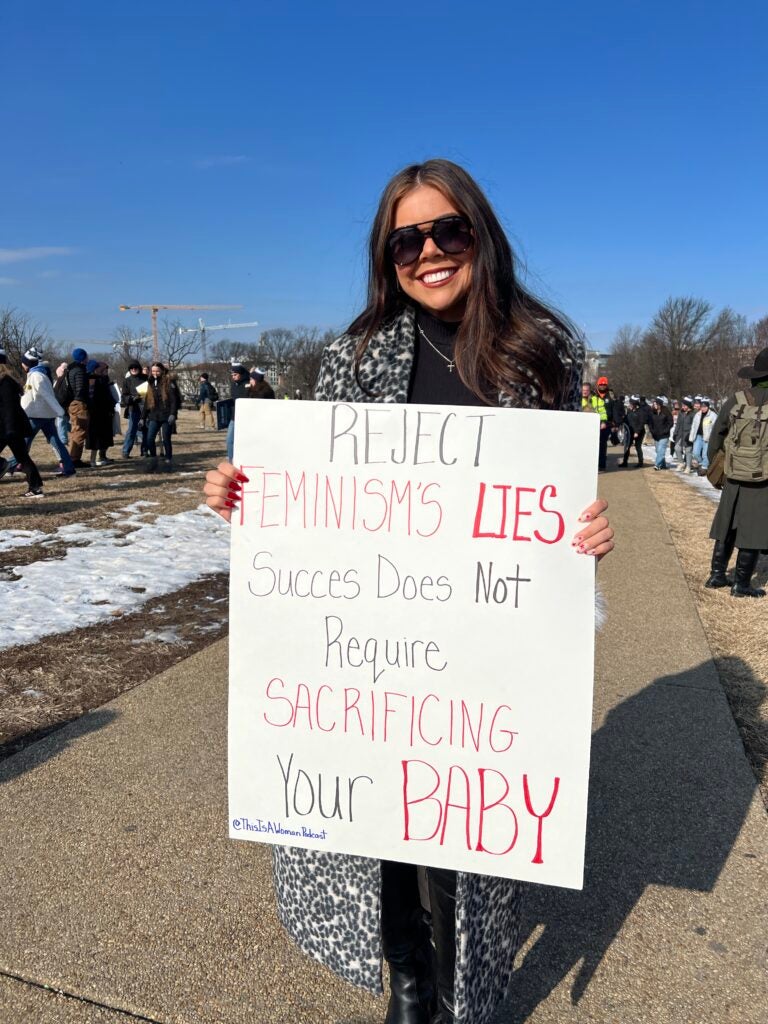
47 of the Best Signs at the 52nd March for Life
Favicon 
www.dailysignal.com

47 of the Best Signs at the 52nd March for Life

Thousands of Americans rallied in support of the unborn Friday, marching from the National Mall to the Supreme Court in the 52nd annual National March for Life in Washington, D.C. Students, families, and church groups from across the country braved the cold for the third march since the overturn of Roe v. Wade. Vice President JD Vance, Speaker of the House Mike Johnson, and Senate Majority Leader John Thune addressed crowds at the pre-march rally, themed “Life: Why We March.” Here are 47 of the best signs from supporters at the rally. The post 47 of the Best Signs at the 52nd March for Life appeared first on The Daily Signal.
Like
Comment
Share
Daily Signal Feed
Daily Signal Feed
1 y

Unlikely Bedfellows, DeSantis and Teachers’ Union Agree on Smartphones
Favicon 
www.dailysignal.com

Unlikely Bedfellows, DeSantis and Teachers’ Union Agree on Smartphones

What do the nation’s largest teacher union and the country’s most conservative governor agree on? Smartphones—specifically, keeping them out of the classroom. In 2023, Florida Gov. Ron DeSantis made his state the first to prohibit students from using cell phones during instructional time. Policymakers in other states quickly followed, including South Carolina, Indiana, and California. Now, lawmakers in Tennessee and New Hampshire are among those considering similar proposals. The plans have remarkable bipartisan support. Florida’s K-12 system is known for school choice, deregulation, and strong civics standards, while California schools are dominated by unions and lessons on “diversity, equity, and inclusion” are common. Yet officials in both states correctly view phones as a distraction to learning. So, too, does the National Education Association, a reliably left-of-center interest group. A union survey found that 90% of their members support policies that keep phones away from students during lessons. On both sides of the aisle, policymakers recognize that phones are a problem in school: Surveys find that teenagers spend more than seven hours per day on their phone, on average, with more than half of this time spent on social media. Forty-six percent of teens responded to a Pew Research survey saying they are online “almost constantly.” Still other research suggests that steady social media use results in hypersensitivity to others’ opinions, leading to more time on social media. So, while access to the internet can aid students in research and help families communicate, smartphones are an unwelcome distraction during the school day. Some critics argue that if students cannot get to their phone, they will not be able to alert authorities in the event of an emergency. But phones actually may do more to contribute to school violence than prevent such problems. National School Safety and Security Services, a school safety consulting firm, observes that students can use phones to send threats to school administration or other students during the day. Phones can also keep students from following instructions when adults respond to emergencies because students’ eyes are glued to a screen instead of following the directions of a teacher. And rumors spread quickly in the event of a crisis, even faster with cell phones. If a parent urgently needs to get in touch with their child, they may call the school, and if a student needs to call their parent because they forgot something at home, for example, they may use a phone provided by the front office. Other critics may say these policies should be made by school districts. Yet educators in nearly 80% of all schools have adopted policies limiting cell phone access during school days and problems persist. State officials should collaborate with local officials to determine which policies are effective. In addition, absent school choice, many families are not afforded the luxury—financially or geographically—to choose a school that has a phone-free policy over one that does not. Policymakers would do well to carefully design phone policies for schools. Tennessee’s latest proposal, for example, requires local boards of education to design policies for their schools that at least prohibit students from using cell phones in class unless the use is part of an educational activity or necessary for emergency response or a student’s health. Policymakers should consider “bell-to-bell policies” that require students to turn in their phones at the start of the day, or at least at the start of each class period. Policies formed through compromise that only restrict students from using their phone during class keep teachers on the hook for policing. When students can carry their phone with them during a school day, they may be less prone to make eye contact and hold conversations. Critically, it results in kids pouring over their phone in between class periods and during lunch, encouraging their impulse to turn to their phone rather than developing basic social skills by talking with peers in the hallway and at lunch. Furthermore, kids may access obscene content on their smartphones through their data plans that school devices and wi-fi is required to filter and block. Heavy and habitual phone use has harmful ramifications. A recent scientific study shows it can lead to an “inability to exert prolonged mental effort.” Heavy screen use among teens has also been linked to loneliness. The U.S. Surgeon’s General report in May 2023 painted a troubling connection between frequent social media or phone use and changes in the developing brain’s emotional learning and behavior and impulse control. Research supports limits on student cell phone use, and policymakers and interest groups on the left and right also agree on firm boundaries. Adults should not be discouraged if students are not part of this consensus—their job is not to comply with students but to protect them. The post Unlikely Bedfellows, DeSantis and Teachers’ Union Agree on Smartphones appeared first on The Daily Signal.
Like
Comment
Share
Daily Signal Feed
Daily Signal Feed
1 y

Debunking 4 Big Errors Made in Lawsuit to Stop Trump’s Birthright Citizenship Order
Favicon 
www.dailysignal.com

Debunking 4 Big Errors Made in Lawsuit to Stop Trump’s Birthright Citizenship Order

One of the most controversial of the executive orders signed by President Donald Trump in the hours after being sworn in was his order on birthright citizenship. That order directed federal agencies to stop issuing citizenship documents for children born in the United States unless at least one parent was a citizen or lawful permanent resident at the time of the child’s birth. As my colleagues and I have long argued, such a move is not only perfectly consistent with the original public meaning of the 14th Amendment’s Citizenship Clause, but is an important and necessary course-correction in federal immigration policy. Within a day, however, a number of Democrat-controlled states filed a lawsuit in federal court seeking to stop Trump’s order from going into effect—just one of several similar lawsuits filed by various groups since then. The arguments offered by these Democratic-controlled states were, as anticipated, largely terrible. Here are four of the most erroneous things they assert in their lawsuit. Error #1: The Citizenship Clause merely adopted the pre-Dred Scott common law rule that everyone born in the United States is automatically a citizen. In 1856, the Supreme Court held in the infamous case of Dred Scott v. Sandford that the U.S.-born descendants of African slaves were not and could never become citizens, even though under the traditional common law rule, a person automatically became a citizen of the nation on whose soil he or she was born. The plaintiffs contend that the 14th Amendment’s Citizenship Clause was intended to restore this earlier common law rule of universal birthright citizenship. They support this claim with a single, highly edited quotation from Sen. Jacob Howard, a Republican from Michigan, who was instrumental in drafting the Citizenship Clause: “This amendment … is simply declaratory of what I regard as the law of the land already, that every person born within the limits of the United States, and subject to their jurisdiction, is … a citizen of the United States.” While it’s true that Congress sought to override Dred Scott, this doesn’t mean it sought to adopt the pre-Dred Scott common law rule. It’s clear from the unedited context and a comprehensive reading of the legislative history that when Howard referred to the “law of the land already,” he wasn’t referring to the pre-Dred Scott common law rule of universal birthright citizenship. That common law rule, after all, had been largely abrogated by the Dred Scott decision. Instead, Howard was referring to the Civil Rights Act of 1866, which was valid federal law. That act was Congress’s first attempt to override Dred Scott, and statutorily defined birthright citizenship for the first time in American history: “[A]ll persons born in the United States and not subject to any foreign power, excluding Indians not taxed, are hereby declared to be citizens of the United States.” Far from being an adoption of common law universal birthright citizenship, the Civil Rights Act intended to bestow birthright citizenship only on the children of those who, like the newly freed slaves, owed complete allegiance to the United States and were subject to the fullest extent of its political jurisdiction. As Sen. Lyman Trumbull, a Republican from Illinois—the primary drafter of the Act’s Citizenship Clause—explained, one of Congress’ main difficulties was finding language adequate for that task. He recounted how they at first considered the qualifier: “That all persons born in the United States and owing allegiance thereto are hereby declared to be citizens.” But Congress rejected this phrasing because “upon investigation it was found that a sort of allegiance was due to the country from persons temporarily resident in it whom we would have no right to make citizens, and that that form would not answer.” Congress then settled on the final language of the Civil Rights Act, which, unlike the common law rule, clearly distinguished who was entitled to birthright citizenship based on the strength of their allegiance. The drafters and ratifiers of the 14th Amendment sought to cement this conception of birthright citizenship, not the broader common law. Key members of Congress acknowledged this reality throughout legislative history, as did subsequent generations of renowned constitutional law scholars. Indeed, the most damning indictment of the plaintiff’s contention comes from the very quotation they use to support it—at least when that quotation isn’t disingenuously edited. The very next line of the quote, which the plaintiffs in this lawsuit conveniently cut, reads: “This will not, of course, include persons born in the United States who are foreigners, aliens, who belong to the families of embassadors [sic] or foreign ministers accredited to the Government of the United States, but will include every other class of persons.” This clearly demonstrates that Howard believed they weren’t constitutionalizing the common law rule, but rather a rule that—consistent with the Civil Rights Act’s focus on allegiance to foreign powers—was much more selective in its bestowal of birthright citizenship. While this new rule wouldn’t create barriers based on race, it would absolutely create them based on the strength of the person’s relationship to the nation. Moreover, the statutory definition of birthright citizenship remained valid federal law after the 14th Amendment was ratified, and existed side-by-side with the new constitutional definition for another 70 years. During that time, both courts and scholars understood that these definitions were consistent and complementary, which couldn’t possibly be the case if the 14th Amendment merely adopted the old common law rule. Error #2: This is an unprecedented action—the Executive Branch has long recognized that it can’t deny citizenship to children based on the immigration or citizenship status of their parents. This assertion is only true if history begins in the first half of the 20th century. Unfortunately for the plaintiffs, it doesn’t. In the decades following the ratification of the 14th Amendment, the federal government regularly articulated a view of the Citizenship Clause that’s remarkably similar to that espoused in Trump’s order, and the executive branch issued citizenship documents accordingly. For example, in 1885, Secretary of State Thomas Bayard instructed federal officials not to consider a U.S.-born man to be a U.S. citizen because his German parents were never permanent U.S. residents and returned with the child to Germany when he was  2-years old. He was, therefore, at the time of his birth, “subject to a foreign power” and not “subject to the jurisdiction of the United States.” Earlier that year, then-Secretary Frederick Frelinghuysen similarly instructed officials to deny a man a U.S. passport despite his birth on U.S. soil, because his German father brought him back to Germany as an infant and raised him there. He wrote that “the fact of birth [in the United States], under circumstances implying alien subjection, establishes of itself no right of citizenship.” And in 1890, the secretary of the Treasury issued an opinion denying citizenship for the child of a would-be immigrant who was being held on a ship in New York Harbor while awaiting immigration approval. The mother had been allowed to give birth and receive treatment at a New York hospital. Nonetheless, they were both deported as non-citizens, and the opinion distinguished this case from that of an immigrant mother who’d “resided in this country a considerable time before her child was born.” Error #3: The Supreme Court confirmed in Wong Kim Ark that the Citizenship Clause automatically bestows citizenship on the U.S.-born children of noncitizen parents. Contrary to popular assertions, this is not what the Supreme Court held in the 1898 case of Wong Kim Ark v. United States. The question decided by the court in that case was far narrower: whether a child born in the U.S. to lawfully present and permanently domiciled immigrant parents was a U.S. citizen. And the court concluded that, indeed, the U.S.-born child of this narrow and specific subset of noncitizen parents is a citizen. Importantly, at the time, the Chinese Exclusion Acts effectively prohibited Chinese immigration and prevented those Chinese immigrants already lawfully residing in the U.S. (like Wong Kim Ark’s parents) from becoming naturalized citizens. The court was assessing a situation where federal law created a permanent race-based barrier to citizenship, that resulted in a class of lawful permanent residents being relegated to perpetual alienage throughout subsequent generations. This was an almost identical scenario to the situation of the U.S.-born descendants of African slaves after Dred Scott, which Congress was specifically trying to rectify with the Civil Rights Act and 14th Amendment. But Wong Kim Ark does not stand for the premise that all U.S.-born children of all immigrants under all circumstances are automatically citizens. Nor does it mean that the Supreme Court definitively held that the 14th Amendment adopted the full scope of the common law’s universal birthright citizenship. In fact, the court repeatedly emphasized the lawful and permanent domicile of Wong Kim Ark’s parents, factors that are utterly irrelevant under the common law. A true common law opinion would have said, “He was born on U.S. soil, his parents aren’t diplomats or part of some invading army, so therefore he is a citizen.” This is also why, for decades after Wong Kim Ark, leading constitutional law scholars continued to articulate a distinction between American birthright citizenship—“where the alien must be permanently domiciled”—and birthright citizenship under English common law, which applied even to temporary sojourners. Error #4: The president’s order will leave many children deportable and stateless. It would rarely, if ever, be true that a U.S.-born child of illegal or non-permanent resident aliens would be left stateless simply because he or she isn’t automatically granted U.S. citizenship. Virtually every nation (including the United States) recognizes some manner of citizenship “by blood,” under which a child is automatically eligible for citizenship when one or both parents are citizens, even if that child is born abroad. In many countries, this hereditary citizenship is bestowed automatically. In some countries, like India, the child is automatically eligible for citizenship but only obtains it if the parents register the birth at an Indian diplomatic mission within one year.  The plaintiffs, meanwhile, don’t bother articulating a single set of circumstances under which a U.S.-born child of foreign nationals would ever be completely ineligible for—or disqualified from—citizenship or nationality in every other country the world due to a confluence of legal technicalities and the fact of his or her birth on U.S. soil. It’s clear from this lawsuit that proponents of universal birthright citizenship are far more interested in obtaining their desired outcome than they are interested in discerning what the 14th Amendment actually meant to the people who drafted and ratified it. But then again, in a world of living constitutionalists who feel that meaning of our nation’s charter should change to suit their current political ideology, what else is new? The post Debunking 4 Big Errors Made in Lawsuit to Stop Trump’s Birthright Citizenship Order appeared first on The Daily Signal.

Like
Comment
Share
Hot Air Feed
Hot Air Feed
1 y

Richmond, VA, Ran Dry and They Can't Fix It
Favicon 
hotair.com

Richmond, VA, Ran Dry and They Can't Fix It

Richmond, VA, Ran Dry and They Can't Fix It
Like
Comment
Share
Hot Air Feed
Hot Air Feed
1 y

MSNBC Faces Defamation Lawsuit Over Claims About Doctor Dubbed the 'Uterus Collector'
Favicon 
hotair.com

MSNBC Faces Defamation Lawsuit Over Claims About Doctor Dubbed the 'Uterus Collector'

MSNBC Faces Defamation Lawsuit Over Claims About Doctor Dubbed the 'Uterus Collector'
Like
Comment
Share
The Blaze Media Feed
1 y

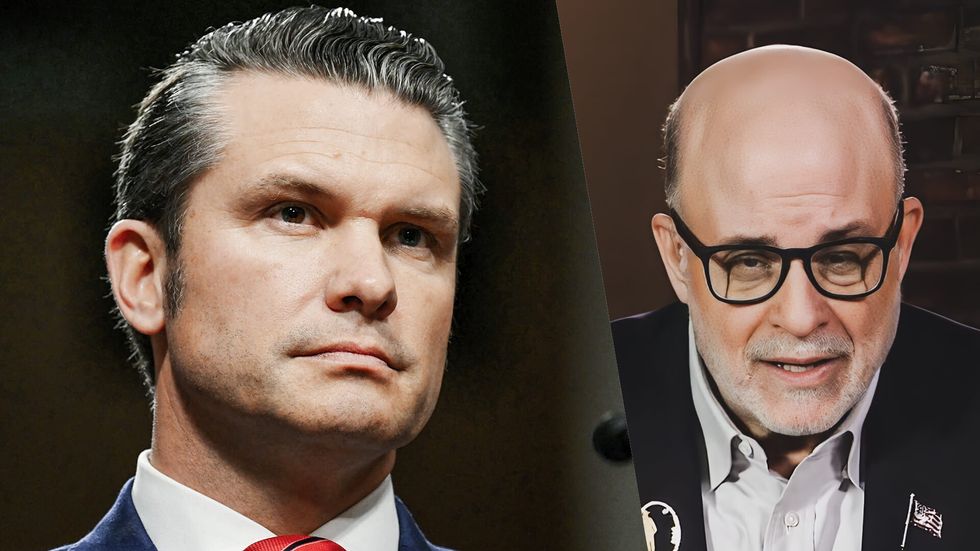
Mark Levin ROASTS corrupt politicians orchestrating character assassination against Pete Hegseth — ‘Capitol Hill is a cesspool’
Favicon 
www.theblaze.com

Mark Levin ROASTS corrupt politicians orchestrating character assassination against Pete Hegseth — ‘Capitol Hill is a cesspool’

Confirmation for Donald Trump’s nominee for secretary of defense, Pete Hegseth, remains uncertain. While support from Trump’s base has remained unwavering for the combat veteran, Hegseth has lost support in the Senate, even among Republicans, due to allegations of sexual misconduct and alcohol abuse, Hegseth’s former denunciation of women in combat roles, and because of his so-called “inexperience.” Hegseth was cleared of all sexual misconduct allegations, and nearly all alcohol abuse allegations were made anonymously. Hegseth has repeatedly denied and debunked every accusation launched against him. He also has softened many of his former statements about women in combat roles since his nomination. As for his “inexperience,” it’s only his naysayers who take issue with his background. Even still, he was unable to secure the vote of Republican Sen. Lisa Murkowski of Alaska and Republican Sen. Susan Collins of Maine. To be expected, all Democrats voted against him. But Mark Levin knows that this is just an effort to thwart Trump’s agenda — “They want to destroy Pete Hegseth because he wants to reform [the military].” “What President Trump is looking for is not somebody who's been at the Department of Defense. ... He wants somebody who's going to look after the war fighters, who's going to represent them — not all this woke stuff that comes from the politicized generals,” he explains. But Democrats and RINOs don’t want reform, so they’ve orchestrated a character assassination against Pete Hegseth. That’s why in the confirmation hearing, Sen. Tim Kaine (D-Va.) asked Hegseth the following: “You referenced a minute ago [something] that occurred in Monterey, California, in October 2017. At that time, you were still married to your second wife, correct? And you had just fathered a child by a woman who would later become your third wife, correct?” “What is this all about?” asks Levin, noting that this line of questioning is coming from “the party of Joe Biden sniffing the hair of little girls and rubbing their shoulders, the party of Bill Clinton — a serial molester.” Kaine went on to lambaste Hegseth for his infidelity — “I assume that in each of your weddings you've pledged to be faithful to your wife; you've taken an oath to do that, haven't you?” “What is the point of going there other than to try and create some kind of drama?” asks Levin. “This disgusts me. ... This process is intended for the Senate to make a determination if somebody's qualified that a president wants in a high position,” he explains. But the Senate is rather using this process to drag Hegseth’s past out in the open for all to see, assuming the role of moral arbitrator. As Levin watched the hearing, he thought: “You bastards — Capitol Hill is a cesspool of grotesque politicians who cheat on their wives, who lie to the American people, who are power hungry.” To hear more of his commentary, watch the clip above. Want more from Mark Levin?To enjoy more of "the Great One" — Mark Levin as you've never seen him before — subscribe to BlazeTV — the largest multi-platform network of voices who love America, defend the Constitution, and live the American dream.
Like
Comment
Share
The Blaze Media Feed
1 y

America’s ‘tourism industry’ is over as Trump ENDS birthright citizenship
Favicon 
www.theblaze.com

America’s ‘tourism industry’ is over as Trump ENDS birthright citizenship

A man of his word, President Donald Trump has wasted no time tackling America’s immigration crisis — signing an executive order effectively ending birthright citizenship in the United States. Trump has argued that no other country in the world has as lax citizenship requirements as America, but Democrat critics are hopeful that the Supreme Court will overturn the order. “We’re the only country in the world that does this with birthright, as you know,” Trump said as he signed the order, adding, “And it’s just absolutely ridiculous, but we’ll see. We think it will have very good grounds. People have wanted to do this for decades.” Sara Gonzales of “Sara Gonzales Unfiltered” couldn’t be more on board. “There is a tourism industry surrounding this whole birthright citizenship. Women come here before they give birth so that they can just give birth here, and then their babies become United States citizens. That’s nuts, and to his point, nobody else does this,” Gonzales says. Around 150,000 children are born annually in the United States who don’t have an American citizen as a parent. “Moving forward, let’s not do that,” Gonzales says. And it really may be the end of birthright citizenship, as Jason Buttrill believes that this time around, the Trump administration has everything needed to make sure this executive order sticks. “Big-time Democrat lawyers were saying ‘Look, we’re going to do what we can, but this is not the same Trump administration of 2017,’” Buttrill says. “It’s a completely different ball game. They’ve come with armies of lawyers.” “They can try to fight a lot of this stuff. It’ll probably take them four years to get any kind of finality on it,” he adds. Want more from Sara Gonzales?To enjoy more of Sara's no-holds-barred take to news and culture, subscribe to BlazeTV — the largest multi-platform network of voices who love America, defend the Constitution, and live the American dream.
Like
Comment
Share
The Blaze Media Feed
1 y

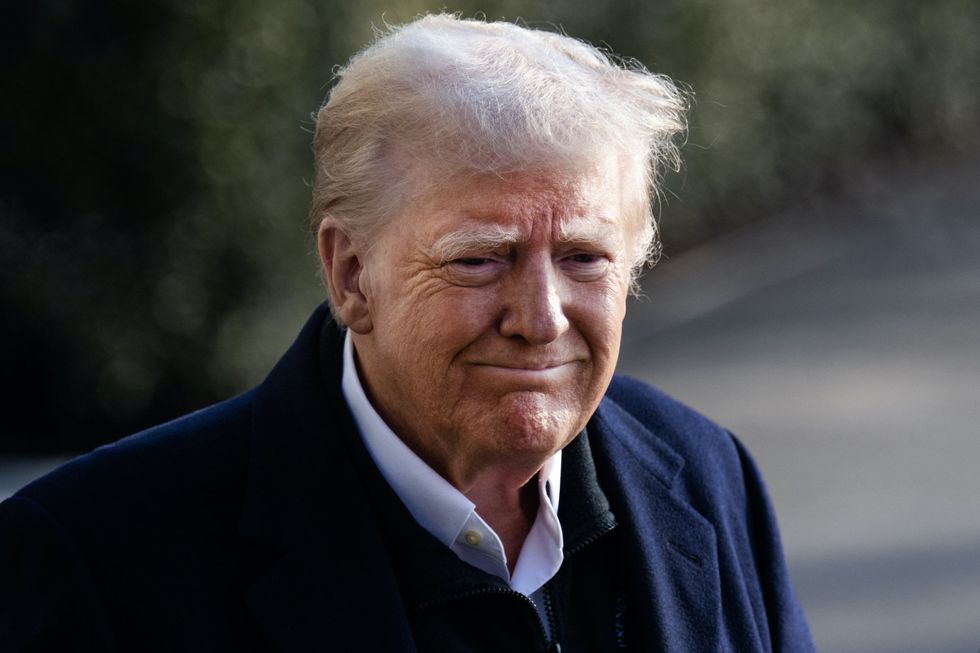
Proposed constitutional amendment would allow Trump to serve 3rd term as president
Favicon 
www.theblaze.com

Proposed constitutional amendment would allow Trump to serve 3rd term as president

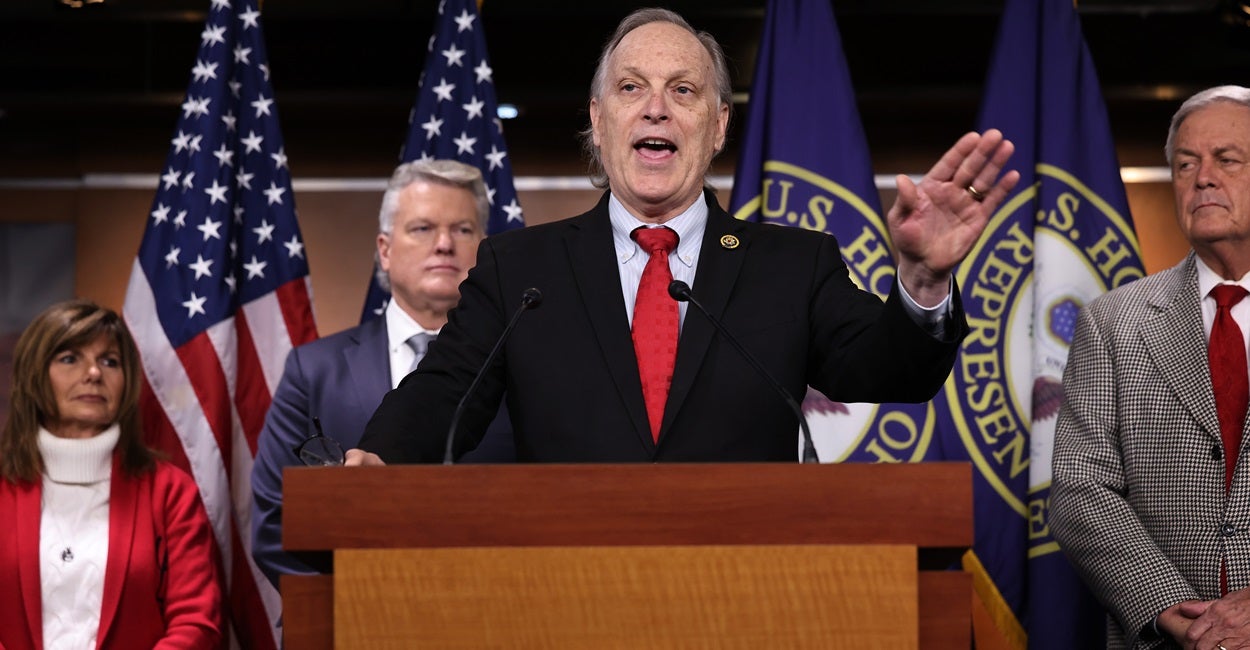
A proposed constitutional amendment would allow President Donald Trump to serve a third term if it is able to get through the difficult amendment process. U.S. presidents are limited to two terms in office because of the 22nd Amendment, but the new amendment proposal would increase the limit to three terms. The proposal was filed by Republican Rep. Andy Ogles of Tennessee. 'This amendment would allow President Trump to serve three terms, ensuring that we can sustain the bold leadership our nation so desperately needs.' Ogles said that Trump needed to have more time to fulfill his vision for the U.S. "[Trump] has proven himself to be the only figure in modern history capable of reversing our nation’s decay and restoring America to greatness, and he must be given the time necessary to accomplish that goal," read a statement from the congressman. "To that end, I am proposing an amendment to the Constitution to revise the limitations imposed by the 22nd Amendment on presidential terms," he added. "This amendment would allow President Trump to serve three terms, ensuring that we can sustain the bold leadership our nation so desperately needs." The two-term limit was a tradition set by George Washington, the first president, but that tradition was rejected by Democrat President Franklin Delano Roosevelt, who served four terms during and after the Great Depression. Congress responded by passing the 22nd Amendment to legally limit the presidency to only two terms. Some noted that the proposal appeared to be written so that former President Barack Obama could not run again for a third term.An amendment to the Constitution would need support from two-thirds of each of the two chambers of Congress or a constitutional convention called by two-thirds of state legislatures. Three-fourths of states would then need to ratify it. If Trump were to be elected to a third term, he would be 82 years old when that term began and 86 years old at the end of that term. Like Blaze News? Bypass the censors, sign up for our newsletters, and get stories like this direct to your inbox. Sign up here!
Like
Comment
Share
Twitchy Feed
Twitchy Feed
1 y

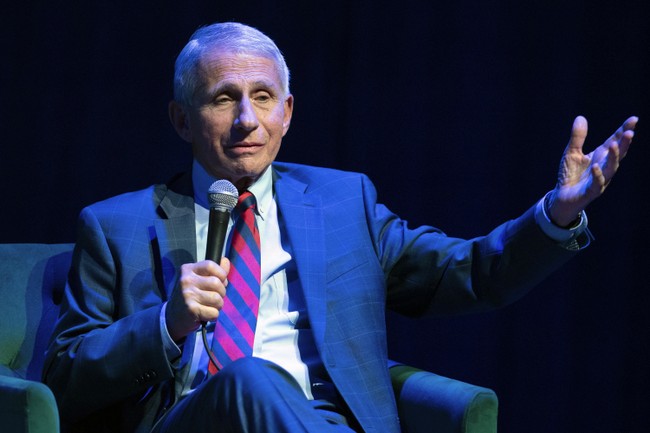
On Their Own: Trump Revokes Taxpayer-Funded Security for Millionaires Dr. Fauci and John Bolton
Favicon 
twitchy.com

On Their Own: Trump Revokes Taxpayer-Funded Security for Millionaires Dr. Fauci and John Bolton

On Their Own: Trump Revokes Taxpayer-Funded Security for Millionaires Dr. Fauci and John Bolton
Like
Comment
Share
Showing 66506 out of 125337
  • 66502
  • 66503
  • 66504
  • 66505
  • 66506
  • 66507
  • 66508
  • 66509
  • 66510
  • 66511
  • 66512
  • 66513
  • 66514
  • 66515
  • 66516
  • 66517
  • 66518
  • 66519
  • 66520
  • 66521
Advertisement
Stop Seeing These Ads

Edit Offer

Add tier


Select an image
Delete your tier
Are you sure you want to delete this tier?

Reviews

In order to sell your content and posts, start by creating a few packages. Monetization

Pay By Wallet

Payment Alert

You are about to purchase the items, do you want to proceed?

Request a Refund