YubNub Social YubNub Social
    #astronomy #nightsky #newyork #physics #moon #astrophysics #fullmoon #supermoon #planet #nasa #zenith #wolfmoon #moonafteryule #cosmology #coldmoon
    Advanced Search
  • Login
  • Register

  • Night mode
  • © 2026 YubNub Social
    About • Directory • Contact Us • Developers • Privacy Policy • Terms of Use • shareasale • FB Webview Detected • Android • Apple iOS • Get Our App

    Select Language

  • English
Install our *FREE* WEB APP! (PWA)
Night mode toggle
Community
New Posts (Home) ChatBox Popular Posts Reels Game Zone Top PodCasts
Explore
Explore
© 2026 YubNub Social
  • English
About • Directory • Contact Us • Developers • Privacy Policy • Terms of Use • shareasale • FB Webview Detected • Android • Apple iOS • Get Our App
Advertisement
Stop Seeing These Ads

Discover posts

Posts

Users

Pages

Blog

Market

Events

Games

Forum

Living In Faith
Living In Faith
1 y

Olympic Gold to Missionary Sacrifice: Eric Liddell’s Legacy at 100
Favicon 
www.thegospelcoalition.org

Olympic Gold to Missionary Sacrifice: Eric Liddell’s Legacy at 100

In 2004, Chinese athlete Liu Xiang won Olympic glory for his nation as the gold medalist in the 110-meter hurdles. After his victory, he was acknowledged as the first male Chinese-born track and field Olympic champion. From the standpoint of his nationality, that may be true. If you were to go to Weifang in Shandong, however, you’d find a monument to another son of China who won track and field gold 80 years earlier. That monument marks the burial site of Eric Liddell. Liddell was the son of Scottish missionaries who competed in the 1924 Paris Olympics for the United Kingdom. But Liddell was born in Tianjin, China, and later died in a Japanese internment camp near Weifang during World War II. His picture is mounted there on a lamppost, and a large granite stone is inscribed with his achievements. In Duncan Hamilton’s excellent biography of Liddell, he calls it “a Communist homage to a Christian, a man China regards with pride as its first Olympic champion.” Olympic Champion There are a host of reasons to remember Liddell. As this summer marks the 100-year anniversary of the 1924 Paris Olympics, we look back on his triumphant victory there in the 400 meters. That story begins in his rivalry with fellow British sprinter Harold Abrahams, the two entering the Olympics as favorites in both the 100 meters and 200 meters. However, Liddell dropped out of a heat for the 100 meters because it was run on Sunday (a race Abrahams later won). Liddell’s decision to skip those races for his religious convictions was immortalized in the movie Chariots of Fire. I grew up loving that movie, the glimpse of a man who stood firmly on his faith and still emerged a champion. Liddell’s character famously says, “I believe God made me for a purpose, but he also made me fast. When I run, I feel his pleasure.” Many a young Christian has been inspired by the fact that, for Liddell, even athletics was a place of worship. Missionary to China Perhaps an even greater reason to remember Liddell is his decision to lay aside his athletic career for a higher calling. After returning from Olympic triumph in Paris to overwhelming popular adulation, he shocked everyone by announcing his intention to return to China as a missionary. After returning from Olympic triumph in Paris to overwhelming popular adulation, Liddell shocked everyone by announcing his intention to return to China as a missionary. In an age when sports was becoming ever more popular in Britain, many argued he could reach more people at home than abroad. Indeed, the Sunday after he returned from Paris to preach in a Scottish church, the pews were filled with people. Liddell preached on Psalm 119:18: “Open thou mine eyes, that I may behold wondrous things out of thy law” (KJV). It was plausible that staying in Britain and continuing his athletic career might fit hand-in-glove with Liddell’s desire to preach the gospel. When asked why he’d give up such an opportunity, he’d simply reply, “Because I believe God made me for China.” The next summer, he traveled the Trans-Siberian railway overland from Europe through Russia and down to China. He would serve there for 20 years as a missionary. Faithful Servant Undoubtedly the greatest reason to remember Liddell is the way his life ended. With the Japanese invasion pressing further into China in 1944, his wife and their two daughters (and another on the way) were sent overseas to avoid danger. In hindsight, the London Missionary Society probably should have sent all the missionaries, but Liddell was convinced he should stay. Liddell was able to minister for many months until finally he was rounded up with more than 2,000 others and taken to an internment camp in Weixian (the modern city of Weifang). Even there, his ministry flourished. Despite appalling conditions and death all around him, he poured himself into ministry with the young people of the camp. Langdon Gilkey writes, The man who more than anyone brought about the solution of the teen-age problem was Eric. . . . It is rare indeed when a person has the good fortune to meet a saint, but he came as close to it as anyone I have ever known. Often in an evening of that last year I would pass the game room and peer in to see what the missionaries had cooking for the teenagers. As often as not Eric would be bent over a chessboard or a model boat, or directing some sort of square dance—absorbed, warm and interested, pouring all of himself into this effort to capture the minds and imaginations of those penned up youths. This is a snapshot of a missionary faithfully at work. At this point, Liddell was already physically suffering from the brain tumor that would eventually take his life. But he was still engaged in ministry to others—leading Bible studies, counseling others, doing physical labor to meet practical needs. Thus he continued until February 21, 1945, when he died. Finishing the Race The apostle Paul wrote about the end of his own life as the finishing of a race: “I have fought the good fight, I have finished the race, I have kept the faith” (2 Tim. 4:7). In doing so, he exhorted Timothy—and all of us—to give everything we have until the finish line. The Christian life is a race not just to be started but to be run with perseverance all the way to the end. The way we finish speaks the most loudly of the object of our faith. When you watch the Olympics this summer in Paris, think back not just on the Olympic glory Liddell won there 100 years earlier. Think about his love for China that led him to leave athletics behind for his calling there. Most of all, think about his love for Christ that carried him all the way to the end of his race.
Like
Comment
Share
Living In Faith
Living In Faith
1 y

Editor’s Pick: 7 Books on End-of-Life Issues
Favicon 
www.thegospelcoalition.org

Editor’s Pick: 7 Books on End-of-Life Issues

End-of-life issues bring turbulence to even the strongest believers. Whether we’re dealing with a sudden loss, a long-term decline, or an unexpected diagnosis, it can be hard to sift through the technical and doctrinal issues amid overflowing emotions. We need help to understand that accepting palliative care is different from euthanasia. We need to be reminded Christ is with us in our sufferings because he suffered on our behalf. These seven books are pastoral, technically sound resources that offer comfort, confidence, and clarity in due season. 1. Making a Good Return: Biblical Wisdom on Honoring Aging Parents by Kathleen B. Nielson (P&R, 2024) To equip children with aging parents. How do we fulfill God’s commandment to honor our parents (Ex 20:12)? When we’re young, it’s simple: obey and be respectful. But what happens when we’re adults and they’re declining both physically and mentally? How do we honor our parents as they suffer the effects of aging and we have to help them make hard decisions? Kathleen Nielson wrestles with these questions in Making a Good Return. She shows how we can be humble and respectful, even as we encourage our parents to navigate options that may limit their freedom and independence. There’s both practical wisdom and biblical exhortation within this book, which makes it helpful resource for Christians with aging parents. 2. We Shall All Be Changed: How Facing Death with Loved Ones Transforms Us by Whitney K. Pipkin (Moody, 2024) For those with a loved one with a terminal diagnosis. Finding the beauty in resurrection hope can be hard, especially as the tide of sadness comes and goes. Journalist Whitney Pipkin reflects on her mother’s extended illness and how anticipating that loss helped her understand her own mortality [read TGC’s review]. She writes, “The hidden beauty of knowing a loved one is dying is this: tucked into the folds of their fading are flashes of the new life that’s beginning.” Finding the beauty in resurrection hope can be hard, especially as the tide of sadness comes and goes. This is a moving book that can encourage those facing their own slow decline or that of a loved one. Pipkin isn’t triumphalistic, but she’s encouraging as she suggests, “Perhaps the greatest comfort Christians have in the face of death, then, is that their God went first.” That’s a great comfort indeed. 3. Between Life and Death: A Gospel-Centered Guide to End-of-Life Medical Care by Kathryn Butler (Crossway, 2019) To prepare individuals and their family for medical decisions in the face of death. Former trauma and critical-care surgeon Kathryn Butler gives a biblically rich, well-informed perspective on end-of-life medical decisions. She provides a theology of suffering and the sanctity of life. However, she also makes an ethically appropriate distinction between killing and letting die. Bringing these ideas to bear on the technological questions can be overwhelming when we’re in the hospital room with a family member on life support. This is a book that can help pastors provide moral counsel in hard moments after a tragedy or during a slow decline. It’d be best read by families before the moment of crisis happens so they frame advance medical directives and make informed decisions when the time comes. 4. How Should We Then Die? A Christian Response to Physician-Assisted Death by Ewan Goligher (Lexham, 2024) For those seeking to understand the ethics of euthanasia. Physician-assisted suicide is in the news on a regular basis. How should Christians think about it? As both a professor and a physician, Ewan Goligher shows why we should refrain from choosing euthanasia for ourselves or our loved ones. He argues that Christians should actively resist the legalization or expansion of physician-assisted death wherever they live because it devalues people and reinforces an unbiblical understanding of human autonomy. This book is less pastoral than ethical, but for Christians pondering end-of-life questions, it can bring moral clarity [read an excerpt]. 5. Memorable Loss: A Story of Friendship in the Face of Dementia by Karen Martin (Christian Focus, 2023) To encourage those helping a loved one through dementia. Karen Martin, a retired English teacher, offers a compassionate and personal account of caring for a friend who suffered from dementia. Memorable Loss [read TGC’s review] offers a first-hand account of the slow decline, the hard decisions, and the emotional drain that accompanies a loved one’s severe cognitive decline. Martin provides medically accurate explanations at various stages of her friend’s life. She shows how friends and family members can help support a loved one and treat him with dignity as he travels down the tunnel of dementia. It’s a sad but beautiful book. 6. You Are Still a Mother: Hope for Women Grieving a Stillbirth or Miscarriage by Jackie Gibson (New Growth Press, 2023) For women wrestling with the loss of a pregnancy. Losing a pregnancy is a personal and tragic event. It can be hard for pastors, friends, and family to know what to say to offer hope and comfort. Women who lose a child will often end up with hard doctrinal questions and even sometimes a sense of guilt. Jackie Gibson writes of the sadness surrounding the loss of her daughter, Leila, though stillbirth. You Are Still a Mother [read TGC’s review] offers biblical meditation on God’s goodness, the value of humanity, and our hope in the resurrection. This is a valuable resource for churches to have on hand to offer comfort for families grieving pregnancy loss. 7. A Time to Mourn: Grieving the Loss of those Whose Eternities Were Uncertain by Will Dobbie (Christian Focus, 2024) To assist those dealing with the loss of an unbelieving friend or family member. Funerals are emotionally hard. They’re especially hard when the deceased is someone who hadn’t professed faith in Christ. Feelings of failure that we didn’t effectively share the gospel well or often enough are common. Sometimes, mourners can begin to question the doctrine of hell or even God’s goodness. In A Time to Mourn, pastor Will Dobbie offers a concise theological reflection on God’s goodness in the face of such uncertainty. It’s not the sort of book I’d distribute at a funeral, but it’s a helpful pastoral resource for the weeks following the death of someone who didn’t clearly profess Christ.
Like
Comment
Share
Living In Faith
Living In Faith
1 y

It Takes a Church to Disciple Kids
Favicon 
www.thegospelcoalition.org

It Takes a Church to Disciple Kids

Discipleship is essential for the spiritual growth of the next generation. In this breakout session from TGC’s 2023 conference, Terrence Shay emphasizes the distinct roles of home and church in disciple making, with parents as primary disciple makers and the church providing a supportive community. As we seek to effectively nurture children’s spiritual development, especially in a post-pandemic culture, may the church equip and support parents with resources and a community to aid their children’s spiritual growth and love for Christ.
Like
Comment
Share
Daily Caller Feed
Daily Caller Feed
1 y

Texas Tech Softball Pays A Whopping $1.2 Million For Transfer NiJaree Canady, Proving NIL Has Truly Changed The Game
Favicon 
dailycaller.com

Texas Tech Softball Pays A Whopping $1.2 Million For Transfer NiJaree Canady, Proving NIL Has Truly Changed The Game

Wow ... now college softball players are out here landing the bag
Like
Comment
Share
Conservative Voices
Conservative Voices
1 y

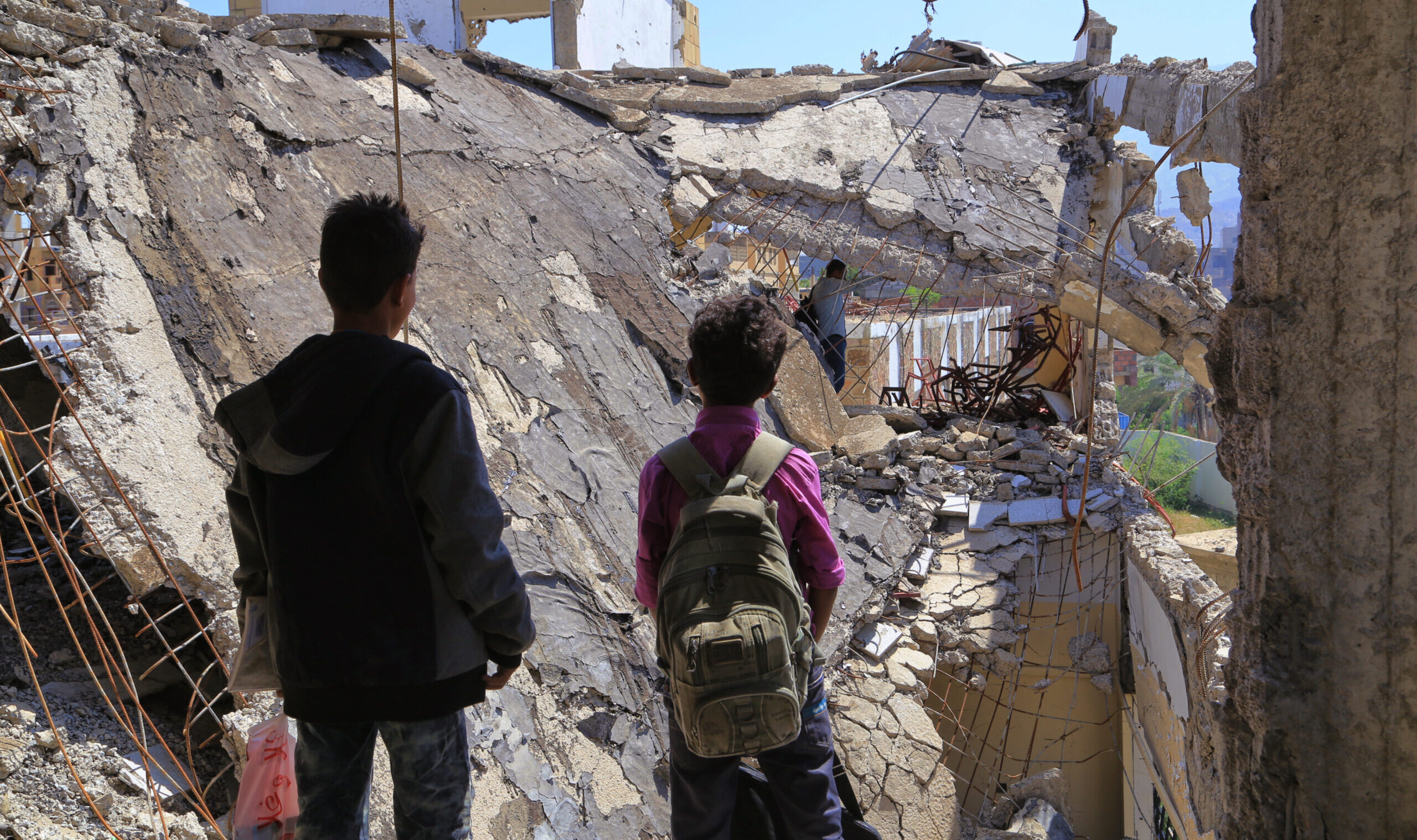
Is It Too Late for Diplomacy in Yemen?
Favicon 
www.theamericanconservative.com

Is It Too Late for Diplomacy in Yemen?

Foreign Affairs Is It Too Late for Diplomacy in Yemen? Force has been an ineffective tool for resolving Red Sea unrest, but it may preclude other solutions. Credit: anasalhajj The world is very large and very old. Its many inhabitants, while not in the main very clever, have a surfeit of idiosyncrasy and cussedness, making them unruly on the best of days and baffling to the high-flying masters of the universe. Take a country of middling size—Yemen, which is back in the news this week. The Houthis, who have been menacing Red Sea shipping since the outbreak of the Israel–Gaza war, attacked Israel directly by drone last Friday; Israel retaliated with air strikes on a Yemeni port city. The Houthis vowed further direct strikes against Israel. This is an unwelcome escalatory spiral; not only does it possibly open a third(!) front for Israel, but the ongoing disruption of Red Sea traffic threatens the stability of Egypt, whose tatterdemalion economy is propped up by Suez fees. Yet it is difficult to see a way out. It didn’t have to be this way; how we got here is almost unfathomably complicated, and better policies could have been adopted at many junctures. Yemen is the inexplicable fusion of two Cold War–era republics, one Soviet-aligned and one Arab League–aligned. (Confusingly, the former was also supported by Israel to stymie Nasser in Egypt.) The resulting state found a president-for-life ruling over a sandy shoebox full of religious and tribal factions in a byzantine ecosystem of interlocking mutual beeves. One of these factions was the Shi’ite Houthis. The Houthis had it in for the president, whom they accused of being a corrupt puppet for the Saudis and the Americans. Tacitly conceding the point, the president threw the Houthis’ leader into jail in 2003, where he died, which did not improve the group’s attitude. In 2011, amid the broader regional unrest of the Arab Spring, various Yemeni discontents, Houthis included, took the opportunity to air their grievances, can the president, and cook up a new political settlement. As happened in every Arab Spring arena, liberal rhetoric swiftly flew out the window to make way for naked power-grabs by force of arms. The Houthis are an unpleasant gang of ugly ideologues who have little use for (among other things) liberal democracy, America, or the Jews. As the press will never let you forget, they draw support from Iran. (“Iran-backed” is one of the better vague but obligatory epithets like “hardline” and “far-right.”) They also control Yemen’s formal capital, Sana’a,  and most of the territory that constituted the former Yemen Arab Republic, one of the two precursor states for the modern unified Republic of Yemen. (In an echo of Afghanistan’s ironies, this makes the formerly communist portion of the country the Western-backed agonist.)  This is not a particularly new development; they have been in the catbird seat for about a decade, despite the heroic efforts of our favorite Middle Eastern despots. The tender ministrations of the Saudis and the Jordanians have not dislodged the Houthis, but they have caused a years-long on-and-off famine and widespread misery by annihilating much of Yemen’s civilian infrastructure. I am afraid that, when a gang of thugs with all the guns takes control of the capital and the surrounding third of the country and refuses to leave, we have a name for it: a government. You have two tools for getting foreign governments to do what you want, diplomacy and war. After ten years and change, it is fair to say that war has been found wanting. Novel half-measures like calling the Houthis terrorists haven’t done much to get everyone onside (but they have kept the State Department’s deputy undersecretary for immiserating foreign peoples busy, so it’s not completely a wash).  That leaves diplomacy. In these ugly peripheral proxy wars, there are two courses of action when your horse fails to win the race. You can try to do down your opponent in anticipation of the presumed next round of conflict; this is the tack we have taken toward North Korea. Or you can work out a modus vivendi with the full spectrum of normal diplomatic relations; this is the tack we have taken toward communist Vietnam. One of these approaches has given us a hostile, fortified nuclear power that happily operates against American interests. The other has yielded a stable, non-aligned power that operates as a counterweight to overtly hostile interests in the neighborhood. Nobody thinks Vietnam is a special friend to America, but it is a normal nation among normal nations. That is better than another Hermit Kingdom.  A settlement in Yemen seems unlikely while the war in Israel-Palestine is still going—another incentive to finish up that war. Americans and Western Europeans have a strong interest in keeping the sea lanes open, and it seems unlikely that yet more questionably legal American bombing is going to stop the Houthis’ Red Sea operations. Rather than dealing out more force, perhaps the masters of the universe should try cutting deals for a change. The post Is It Too Late for Diplomacy in Yemen? appeared first on The American Conservative.
Like
Comment
Share
Conservative Voices
Conservative Voices
1 y

A Tale of Two Kamalas
Favicon 
www.theamericanconservative.com

A Tale of Two Kamalas

Politics A Tale of Two Kamalas The narrative woven about the Democrats’ new presumptive nominee is at odds with her record. Hope is a hell of a drug.  Since Sunday, the U.S. vice president turned presumptive Democratic nominee for president, Kamala Devi Harris, has been treated to a political honeymoon so intense, so adoring that it recalls—and perhaps exceeds—the gushing press a young Illinoisan senator named Barack Obama received after his 2004 DNC speech in Boston. The enthusiasm with which Democratic partisans have reacted to the news of Biden’s departure from the race is understandable enough. After a rough month, beginning with the disastrous June 27 debate, followed shortly by Trump’s surprisingly courageous reaction after nearly having his head blown off on July 13, and a largely successful, at times entertaining (thank you, Terry Bollea) RNC in Milwaukee, the Democrats were in need of something, anything to shift the narrative away from that of impending electoral disaster. And thanks to the surprisingly selfless and patriotic decision by President Joe Biden to drop out, that is what they got. And yet.  For all the happy talk, Democrats must be (or should be) wondering, deep within the recesses of their collective psyches, Will we be getting the Harris of History or the Harris of our Imaginations?  Because one is radically different from the other.  This week, in what was supposed to be a kind of “gotcha” moment for the Trump campaign, it was revealed that in 2011 Harris’s campaign for California Attorney General received a check for $6,000 from a New York real estate developer named Donald J. Trump. But from the standpoint of progressive Democrats, would this not raise questions about Harris’s own politics? She did, after all, cash it. The interesting (or worrying, as the case may be) question for progressive Democrats is: Why did Harris appeal to donors such as Trump? That one is easy enough. Harris, then, and really up until the moment the George Floyd rioters set Minneapolis (and dozens of other American cities) ablaze, presented herself as a “tough-on-crime” prosecutor, one who bragged about jailing the parents of truant California schoolchildren. Harris is now said to represent the best the Democratic Party has to offer—and that she will give Trump a real fight for the White House. Yet her shambolic 2020 presidential campaign tells a different story. Harris, who won a grand total of zero primary delegates, was also roundly humiliated on the debate stage by a young congresswoman from Hawaii, Tulsi Gabbard. Once in office, Harris’s office was plagued by staff turnover and she gained a reputation for treating staff badly. So the question arises: If she can’t manage a smallish vice presidential staff in the EEOB (the Office of the Vice President employs approximately 100 people), why assume she will be able to manage the country? And then there is the matter of foreign policy. Progressive Democrats (with the exception, notably, of the Palestinian-American Rep. Rashida Tlaib of Michigan) immediately jumped on the Harris bandwagon—one they were unwilling to even consider in 2020 while their erstwhile champion Bernie Sanders was in the ring. Now, it seems, thanks to what is thought to be Harris’s identitarian appeal, they are “all in” and in the process wasting little time in deluding themselves as to what a Harris presidency might bring. “With a President Harris,”  one anonymous national security official told POLITICO this week, “a two-state solution may finally be possible.”  O-kay. Even if the two state solution weren’t as dead as doornail, the above assumes Harris possesses a measure of statesmanship that has otherwise been kept under lock and key, hidden deep from public view for the entirety of her career. An examination of Harris’s foreign policy record provides ample evidence that she is a standard issue liberal interventionist in the mold of the troika of Obama-era “Valkyries”: Hillary Clinton, Susan Rice, and Samantha Power. To be fair, as a U.S. senator, she did, as the estimable Daniel Larison points out, oppose Trump’s scrapping of both the Iranian nuclear accord and the landmark INF treaty, but that opposition might also be chalked up to partisan politics.  Indeed, as the Progressive magazine noted shortly after she joined the Democratic ticket in 2020,  Instead of offering a progressive alternative, Harris often attacks Trump from the right, criticizing him for cozying up to leaders in North Korea, Russia, and China. It would be safe to expect more of the same. The coming campaign will probably feature more Russia-related smears aimed in Trump’s direction, while Harris will don the mantle of “Protectress of the U.S. National Security State.” Indeed, someone with Harris’s limitations makes her the perfect cipher for the “Deep State Democrats” who run the Democratic party. A President Harris—should that eventuality come to pass—will not provide the country with a much needed respite from hegemonic weltanschauung of the current administration.  She will only prolong it.   The post A Tale of Two Kamalas appeared first on The American Conservative.

Like
Comment
Share
RetroGame Roundup
RetroGame Roundup
1 y ·Youtube Gaming

YouTube
Pop Culture Quick Bytes (Episode #36 : System Gamer Max-Play Magazine)
Like
Comment
Share
Intel Uncensored
Intel Uncensored
1 y

Trump Shooter Gab Account Proves He Was a Leftist. 2 Other Suspects at Rally Not Reported 7-25-2024
Favicon 
api.bitchute.com

Trump Shooter Gab Account Proves He Was a Leftist. 2 Other Suspects at Rally Not Reported 7-25-2024

Trump Shooter Gab Account Proves He Was a Leftist. 2 Other Suspects at Rally Not Reported 7-25-2024 - Yeah. Not surprising that Crooks who has been seen dressed in Drag is a LIBERAL. A Pro Illegal Immigrant, Pro Vaxer at that. - Trump Assassin SOCIAL MEDIA FOUND & Posts Are VERY BAD For The Narrative! - 318,710 views July 25, 2024 TheQuartering - Daily New Broadcast on Rumble at 1:00 PM - Use code "summer" at https://coffeebrandcoffee.com/collect... to get great coffee and support the channel! - FAIR USE FOR EDUCATIONAL PURPOSES - Mirrored From: https://www.youtube.com/@TheQuartering
Like
Comment
Share
Intel Uncensored
Intel Uncensored
1 y

Manson & the Secret War of the 60s, Tom O'Neill. CIA & U.S. GOV. REIGN OF TERROR
Favicon 
api.bitchute.com

Manson & the Secret War of the 60s, Tom O'Neill. CIA & U.S. GOV. REIGN OF TERROR

Manson & the Secret War of the 60s, Tom O'Neill. CIA & U.S. GOV. REIGN OF TERROR - MANSON WAS NOT THE TERRORIST - THE CIA AND OUR OWN GOVERNMENT WAS - While the CIA and Deep State Agencies were Secretly Running Drugs and Waging a Psychological War Pushing for the Corruption of our Youth and American Ideals to Destroy America From Within, they Vilified the Hippy Anti Government Youth. Primarily to Nullify Anti War Dissidents and Activists. - The Tavistock Institute of Social Engineering and CIA MKUltra Mind Control Operations have been Waged Against American Citizens ever since. - THE MANSON FAMILY MURDERS WERE A FALSE FLAG PSYOP - SO WAS THE ZODIAC KILLER MURDERS FAKED - THIS IS AN EPISODE IN AMERICAN HISTORY THAT EVERYONE MUST UNDERSTAND INDEED, OUR MODERN DAY CANNOT BE UNDERSTOOD WITHOUT HAVING THE CONTEXT OF THE WAR OUR GOVERNMENT IS WAGING AGAINST US *** 189,653 views September 14, 2021 Investigative Journalist Tom O'Neill - Investigative Journalist Tom O'Neill started researching the Manson killings in 1999, twenty years later he finally published what became one of the most complete accounts of the secret war against the counterculture of the 1960s. - ***He discovered links to the CIA's top secret mind control project MK Ultra, the JFK assassination and much more.*** - In this conversation with Rebel Wisdom's David Fuller, they talk about the untold story of this seismic time in American history and ask if America needs to come to terms with its past if it is to move on. - What Was the Most Astonishing Thing That You Discovered during Your Research 20:34 Family Constellations 33:00 Frank Church Hearings 36:06 The Family Constellations Model 37:53 - To join conversations with other Rebel Wisdom members about topics like this, check out membership options here: https://rebelwisdom.co.uk/plans - FAIR USE FOR EDUCATIONAL PURPOSES - Mirrored From: https://www.youtube.com/@RebelWisdom
Like
Comment
Share
Intel Uncensored
Intel Uncensored
1 y

Russia's Catastrophic Population, Economic and Political Crisis. Crisis Escalated Once Again
Favicon 
api.bitchute.com

Russia's Catastrophic Population, Economic and Political Crisis. Crisis Escalated Once Again

Russia's Catastrophic Population, Economic and Political Crisis. Crisis Escalated Once Again - (Please Note: This is a very long video and I cannot vouch for the content. This video maker has already proven he is Biased and Pro NATO, so decide for yourself what is valid and what is Not) - OK. This Dip Shit is Twisting the Facts about How and Why the Ukraine War Started and Pushing a Pro NATO Narrative. - Personally, I see both sides as just a different NWO. I Oppose Any New World Order. - But what is covered well here is how the New Oil Price Cap is Actually doing major damage to the Russian Economy that the Sanctions could not achieve. - This is a Major Escalation in the Economic War. How Putin Reacts to this will be hard to call. But operating out of Desperation is not a good thing. - THINGS WILL CONTINUE TO HEAT UP * 19,401 views • Jul 25, 2024 Business Basics - Sign up for our Cohort Waitlist here: https://bit.ly/CohortWaitlist Russia's Catastrophic “Everything” Problem. Putin is Worried, Scared Collapse Russia's Catastrophic Population, Economic and Political Crisis - FAIR USE FOR EDUCATIONAL PURPOSES - Mirrored From: https://www.youtube.com/@BusinessBasicsYT
Like
Comment
Share
Showing 69640 out of 105259
  • 69636
  • 69637
  • 69638
  • 69639
  • 69640
  • 69641
  • 69642
  • 69643
  • 69644
  • 69645
  • 69646
  • 69647
  • 69648
  • 69649
  • 69650
  • 69651
  • 69652
  • 69653
  • 69654
  • 69655
Advertisement
Stop Seeing These Ads

Edit Offer

Add tier


Select an image
Delete your tier
Are you sure you want to delete this tier?

Reviews

In order to sell your content and posts, start by creating a few packages. Monetization

Pay By Wallet

Payment Alert

You are about to purchase the items, do you want to proceed?

Request a Refund