YubNub Social YubNub Social
    #jesuschrist #christmas #christ #merrychristmas #christmas2025 #princeofpeace #achildisborn #noël #sunrise #morning
    Advanced Search
  • Login
  • Register

  • Night mode
  • © 2025 YubNub Social
    About • Directory • Contact Us • Developers • Privacy Policy • Terms of Use • shareasale • FB Webview Detected • Android • Apple iOS • Get Our App

    Select Language

  • English
Install our *FREE* WEB APP! (PWA)
Night mode toggle
Community
New Posts (Home) ChatBox Popular Posts Reels Game Zone Top PodCasts
Explore
Explore
© 2025 YubNub Social
  • English
About • Directory • Contact Us • Developers • Privacy Policy • Terms of Use • shareasale • FB Webview Detected • Android • Apple iOS • Get Our App
Advertisement
Stop Seeing These Ads

Discover posts

Posts

Users

Pages

Blog

Market

Events

Games

Forum

Reclaim The Net Feed
1 y

Fourth Amendment Under Fire: Court Deems Google Location Data Fair Game
Favicon 
reclaimthenet.org

Fourth Amendment Under Fire: Court Deems Google Location Data Fair Game

If you're tired of censorship and dystopian threats against civil liberties, subscribe to Reclaim The Net. The US Court of Appeals for the Fourth Circuit published its opinion in the United States v. Chatrie case, which concerns alleged violations of the Fourth Amendment. We obtained a copy of the opinion for you here. This constitutional amendment is supposed to protect against unreasonable (including warrantless) searches. At the center is Google, and how the giant’s collection of users’ locations, then accessed by others to locate a person, might constitute a violation. Related: Geofence Warrants Are Dangerous For Everyone In a 2-1 vote the appellate court has decided that accessing Google location data is not a search. A court that originally dealt with the case, where location data was used to identify a bank robber. The warrant was based on the mass and indiscriminate surveillance method known as “geofencing.” In 2022, that court found that data collected and made available to law enforcement does mean a search has been performed in contravention of the Fourth Amendment. This was viewed as unconstitutional, and the court was not satisfied that (in this case) location information collected this way passed legal muster. Two years on, Circuit Court judges Jay Richardson and Harvie Wilkinson concluded the search of location data was – no search, at least not in their understanding of the Fourth Amendment. The dissenting opinion came from Judge James Wynn. Judge Richardson states that the government accessing Google location history of the appellant (defendant in the appeals proceedings) Okello Chatrie “did not have a reasonable expectation of privacy” during the two hours he was “geofenced” by Google – plus, Chatrie “volunteered” it in the first place (by using Google and its location feature.) The Circuit Court, which extensively cited the 2018 Carpenter v. United States, also seems to go into the meaning of privacy, and possibly try to redefine it. Namely, – do “only” two hours of a person’s life (monitored by Google and then accessed by law enforcement) count? Not really, as the majority opinion put it: “All the government had was an ‘individual trip viewed in isolation,” which, standing alone, was not enough to enable deductions about ‘what (Chatrie) does repeatedly, what he does not do, and what he does ensemble.” And – “Chatrie voluntarily exposed his location information to Google by opting in to Location History.” Apart from future implications regarding geofencing, there’s a life hack hidden in this ruling as well: just to be on the safe side, never opt in to Google’s surveillance schemes. If you're tired of censorship and dystopian threats against civil liberties, subscribe to Reclaim The Net. The post Fourth Amendment Under Fire: Court Deems Google Location Data Fair Game appeared first on Reclaim The Net.
Like
Comment
Share
Science Explorer
Science Explorer
1 y

Is There An Up And Down In Space?
Favicon 
www.iflscience.com

Is There An Up And Down In Space?

For humans, being able to orientate ourselves is crucial. Getting lost on the level is bad enough, but not knowing which way is up is worse. Most of the time gravity ensures that’s not a problem – but what happens in space without that assistance?The International and Tiangong Space Stations lie very much within the Earth’s gravitational well, being about 400 kilometers (240 miles) up. At such a small distance compared to Earth’s radius, gravity is almost 90 percent as strong as at sea level. However, astronauts on the stations, and the satellites themselves, don’t experience this because they are in free-fall. They don’t plummet towards the surface because they are also moving very fast. If the Earth’s gravity were to magically turn off somehow, they would fly off into space on a tangent to the orbit, like a ball on a string whirled around a child’s head when let go.Trainee astronauts experience weightlessness during periods of free-fall on the “vomit comet”; once in space, the weightlessness is sustained. Since the whole station is falling together, there is no sensation of falling, so people and objects float.However, there is a reason the plane officially known as KC-135 0-G has its unappetizing nickname: humans have spent millions of years evolving in a gravitational field, and losing it can prove unpleasant. For many, losing it leads to disorientation and nausea.Conditions in orbit used to be referred to as “zero-gravity” or “zero-g”. That’s been dropped in favor of the more accurate term "microgravity". After all, even if the gravitational effect of the Earth is cancelled out, everything with mass has a gravitational pull, so astronauts experience a tiny amount of gravity from the space station and even from each other.These forces are so weak, however, our bodies don’t really register them. Moreover, the space station is all around them and pulling in every direction, even more strongly towards where the mass is greatest. Consequently, in orbit, we can’t get a sense of up and down from gravity. We Can Make Our Own UpHowever, that doesn’t mean all directions have to be the same. Our body uses both our inner ear’s capacity to feel gravity and acceleration, and our eyes’ registration of our location relative to other things for orientation. We get motion sickness or space adaptation syndrome when these two contradict each other, but the fact our eyes also provide orientation means it is possible to make our own up and down. We might not sense it, but we can see it.One way to do this is to have everything within the space station orientated the same way. For example, the ISS is designed so most of the lights come from one direction, which then becomes a ceiling, while the opposite is the floor. It would be possible to have notices on the walls randomly orientated, but to do so would be confusing, so instead they are generally placed the same way. That gives astronauts an incentive to usually stay orientated with their head towards the "ceiling".The second way a sense of up and down can be created is external. Using the Sun or stars for orientation would be quite problematic, but the Earth is much more convenient.Like the Moon, the ISS always keeps the same face to the Earth. Also like the Moon, this doesn’t mean it doesn’t turn. Instead, it rotates with the same period as it orbits. Being much closer to Earth than our natural satellite, the orbit is much shorter – 90 minutes instead of a month - so the turning is faster, but not enough to be a problem. There are several advantages of this. Besides offering consistency to the astronauts, radio transmitters don’t need to move much relative to the rest of the station. Moreover, the same gravitational forces that cause moons to keep a constant face to their planet apply to artificial satellites as well. It’s easier not to fight them.Since 2010, the station has had the cupola, a module whose seven windows offer panoramic views of the home planet. Before that, astronauts had to rely on small portholes. The continued presence of these portholes, however, means that in many parts of the station, astronauts are reminded as to the Earth’s direction, which becomes a default “down” or nadir.All “explainer” articles are confirmed by fact checkers to be correct at time of publishing. Text, images, and links may be edited, removed, or added to at a later date to keep information current.  
Like
Comment
Share
Science Explorer
Science Explorer
1 y

Humans Left Africa To Hook Up With Neanderthals Earlier (And More Often) Than Thought
Favicon 
www.iflscience.com

Humans Left Africa To Hook Up With Neanderthals Earlier (And More Often) Than Thought

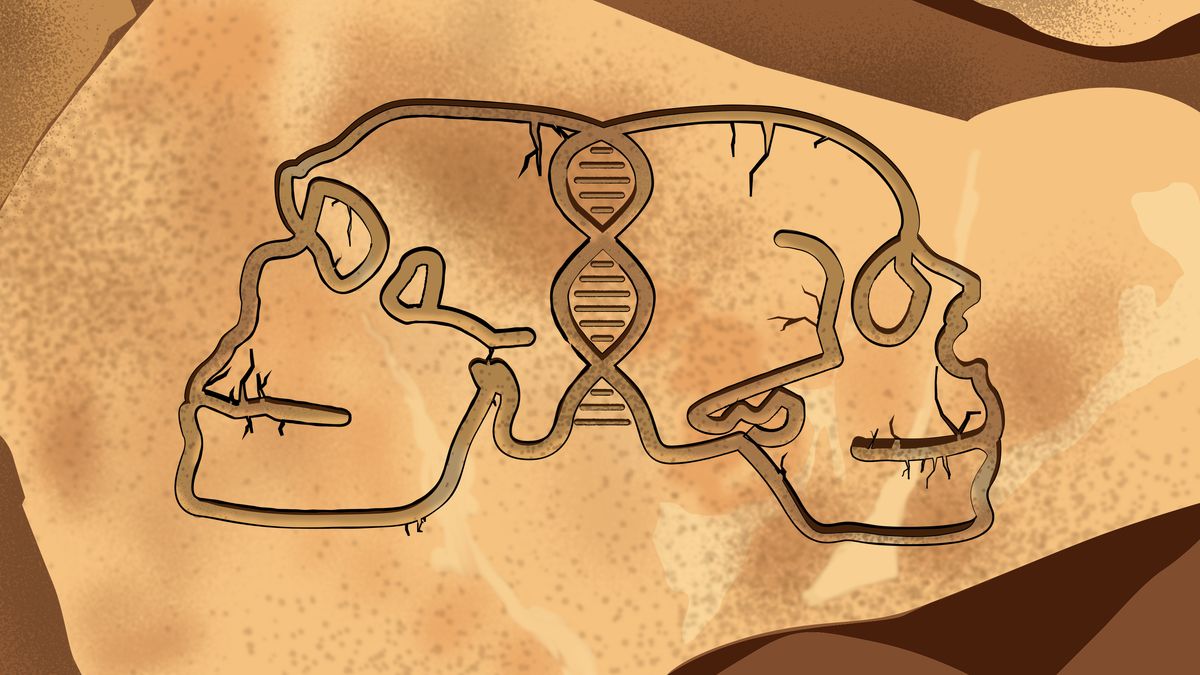
When human ancestors dispersed out of Africa over 50,000 years ago, they encountered Neanderthals that already carried some of their genes. Today we are the only human species in the world, but it wasn’t always like that. Four hundred thousand years ago, when Homo sapiens' ancestors lived in East Africa, Neanderthals already lived in Eurasia. When the only way to get around is on foot, that is literally worlds apart. Nevertheless, 50,000 years ago H. sapiens arrived in Europe, and Neanderthals disappeared. An unlucky coincidence? Killed by our ancestors? The subject has long been debated. In 2010, the Neanderthal genome was sequenced and traces of their DNA were found in modern human genomes, suggesting a story of (maybe even loving) contact between these ancient humans. Since then, the bits of Neanderthal genome found in contemporary humans have been linked to COVID-19 susceptibility, Type 2 diabetes, and even autism.Recent studies flipped the question around, looking at how many H. sapiens genes were present in the Neanderthal genome. A new story emerged, one in which H. sapiens made the harrowing journey (on foot!) out of Africa multiple times, meeting Neanderthals and having babies with them. In a new study, Liming Li and colleagues analyzed 2,000 human, three Neanderthal, and one Denisovan genome and looked at the flow of genetic information between these hominins over a 200,000-year period. They found 2.5-3.7 percent of human ancestry in Neanderthal DNA, which is surprisingly more than the 2 percent of Neanderthal DNA found in contemporary humans. According to their model, two waves of human-to-Neanderthal gene flow predate the final meeting 50,000 years ago: one around 250,000 to 200,000 years ago, and the second around 120,000 to 100,000 years ago, a time consistent with the presence of a Nile-Sinai land bridge connecting Africa and Europe. In both of these events, H. sapiens arrived in Europe, bred with Neanderthals, and the offspring and their genomes were likely assimilated into the Neanderthal populations. When a wave of H. sapiens met Neanderthals one last time 50,000 years ago, the gene flow changed direction and the ancestors of non-African humans assimilated Neanderthal ancestry. It remains an open question whether Neanderthal-to-human gene flow in African humans exclusively came after this final wave. Future studies on African genetic diversity could help discover further migration patterns within and possibly back to the African continent. Li and colleagues also found that if they accounted for the H. sapiens component in the Neanderthal genome this reduced our estimations of Neanderthal population size by around 20 percent. They suggest that these small population sizes could have led to more interbreeding and the accumulation of deleterious mutations that were then inherited by H. sapiens. Small populations also meant that “Neanderthals were teetering on the edge of extinction, probably for a very long time”, said Joshua Akey, senior author on the study, in a statement. The repeated encounters with H. sapiens over 200,000 years “were essentially like waves crashing on a beach, slowly but steadily eroding the beach away”, until Neanderthals faded into the sea of H. sapiens population.The study is published in Science.
Like
Comment
Share
Science Explorer
Science Explorer
1 y

The Gladiator II Trailer Looks Epic, But Is Any Of It Accurate? We Asked The Experts
Favicon 
www.iflscience.com

The Gladiator II Trailer Looks Epic, But Is Any Of It Accurate? We Asked The Experts

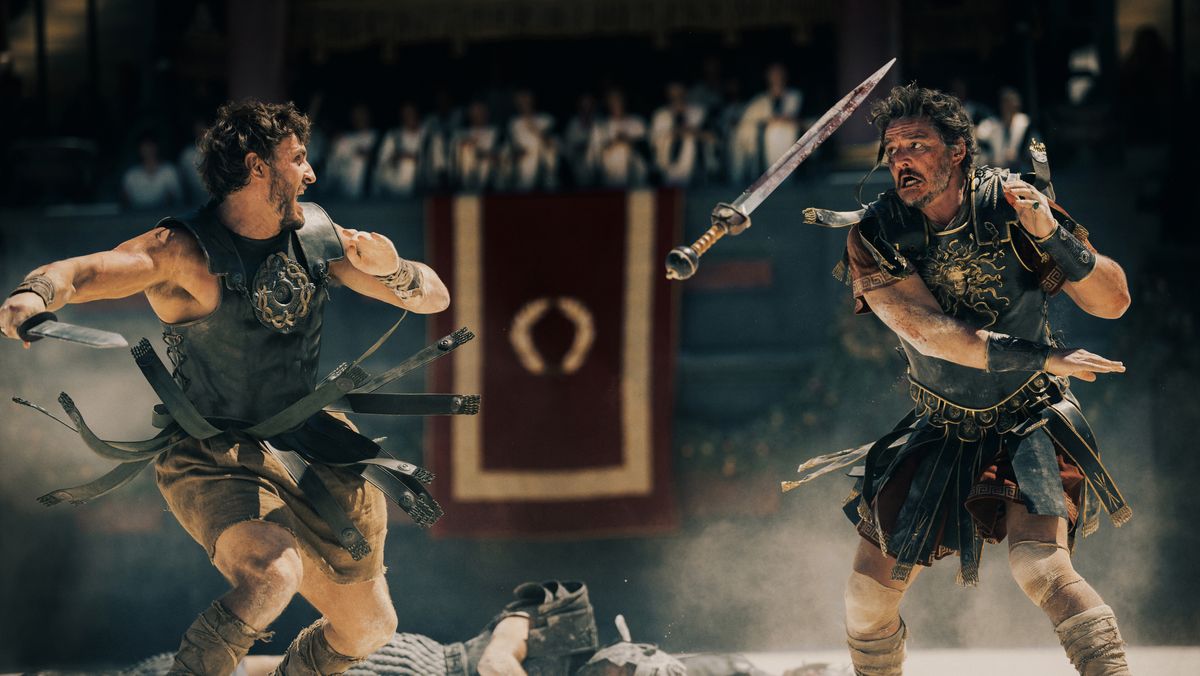
The trailer for Ridley Scott’s Gladiator II is now out and promises to be an unmatched cinematic spectacle. If you were a fan of the first film, there is every chance that you’ll love the new star-studded performance showcasing epic duels, fiendish Colosseum battles, and hints of political intrigue. But as with all Hollywood historical epics, you might end up asking how much of what is being portrayed is based on historical fact and how much is fun fiction?We turned our questions to the Bad Ancient team to get their expert views on the fun, the fantasy, and the facts.What is the film all about?The story of the new Gladiator film picks up 25 years after the events of the first movie. The trailer opens with Lucius Verus II (played by Paul Mescal), the boy in the original story and son of Lucilla, recounting the fatal duel between Emperor Commodus (Joaquin Phoenix) and the gladiator and fallen general Maximus Decimus Meridius (Russell Crowe). It seems that, in the years following this event, Lucius is in exile in Numidia, in northwestern Africa, and is captured by the Roman army, who force him to become a gladiator. Of course, Lucius wants to bring down the Roman order and abolish any form of slavery.                 We later see Lucius fighting the fictitious General Marcus Acacius (Pedro Pascal), who also seems to have misgivings about the Roman Empire’s wanton bloodshed. Throughout the trailer, we are further introduced to characters like Macrinus (Denzel Washington), a scheming gladiator-owing power broker, and the gaunt, pale brother emperors Geta and Caracalla (played by Joseph Quinn and Fred Hechinger respectively), who appear cruel and decadent.The trailer is filled with hints of spectacular scenes, like a gladiator riding a rhino, a simulated maritime battle in a flooded Colosseum (complete with boats and man-eating sharks), as well as politics and intrigue.It’s a lot. It’s fun, but how realistic is it?First things first, what did you think of the trailer? Dr Jo Ball (JB), an archaeologist and specialist in Roman battle and conflict: I had been incredibly excited to see the trailer for the new Gladiator II film, and it did not disappoint, seemingly promising a spectacular visual feast – hopefully with some decent history thrown in! I am particularly interested to see the storyline of Pedro Pascal’s Marcus Acacius, who appears from the trailer to come to protest the endless conquests of Rome, and the human lives it cost – and seemingly to be punished for his views – with the humanization of Roman generals and the army more widely, a potentially interesting thread playing alongside the main gladiator theme.Denzel Washington plays Macrinus, a man with apparent ambitions.Image credit: Cuba Scott. © 2024 Paramount Pictures.Alexandra Sills (AS), postgraduate at the University of Leicester: It definitely looks like it will eclipse the first film in terms of pure spectacle. I'm excited to see what 24 years of CGI development can bring to a Roman arena. I'm also curious to see how the movie deals with the fact that the Republic hasn't been reinstated. That was the whole reason Maximus sacrificed himself in the first film, so will Lucius finish the job? We know that emperors continued to rule for centuries, so it's unlikely, but it will definitely be interesting to see whether the political angle is continued or dropped completely in favor of a personal revenge story.Dr Owen Rees (OR), founder and lead editor of Bad Ancient: The original Gladiator is a film very dear to my heart, so my initial response was Why?! Why is there a sequel? But then when the cityscape of Rome came on the screen, that response just melted away and I became engrossed in the spectacle on screen. I can’t wait to see how they link this to the previous film and pick up the themes laid out – the glory of Rome, the desire for a quiet life away from the hub of power, the ideological beacon of "the Republic".Did anything immediately jump out as accurate or inaccurate/anachronistic?JB: Paul Mescal’s Lucius appears to have become a gladiator after being captured in a violent conquest of Numidia in northwestern Africa – but this area had been part of the Roman world for centuries by the time the film is set, and it is difficult to imagine scenes like those shown in the trailer playing out as a result of Severan political reorganization in the region (around the time when the film is set).Elements of the dress seem problematic, particularly the wristbands that seem to be compulsory for everyone who owns a sword! The accents are an interesting mix, but I actually quite like this, as it is a useful reminder that the "Romans" were not a homogenous population, but came from an empire that stretched from Britain across Europe, the Near East, and northern Africa – why people would be expected to have the same accents is beyond me (and even if they did, a modern American accent is no less accurate a representation than a classic British one!).AS: Nobody is topless! Gladiators wore nothing to protect their torsos, because that would be seen as making the fight too easy. Pedro and Paul should also be carrying shields, because gladiators carried those instead of having chest armor. The cool thing is that the shield could be used offensively, almost like a second weapon, and it makes fights more interesting because both arms are in play. I can understand not putting famous movie stars in helmets that cover their face, but these guys should be showing a lot of bare chest. No doubt many in the cinema wouldn't mind, either...Is there a problem with the portrayal of the two emperors? AS: The characterization of Caracalla and Geta is a bit strange; they look and act more like Nero and Caligula stereotypes than the actual Severans. Also, they're conspicuously pale: both brothers were actually half Libyan, half Syrian.There were many people of color in the Roman world, and it's a shame to whitewash emperors who we know had darker skin. I'm excited to see Denzel Washington in the cast though, his character seems really intriguing.Joseph Quinn and Fred Hechinger play the emperors Geta and Caracella.Image credit: Aidan Monaghan. © 2024 PARAMOUNT PICTURES. ALL RIGHTS RESERVED.OR: They seem to be a caricature of many "bad emperors" rolled into one, and the choice to cast such pale actors is an interesting one in this day and age. But we shall see when the film comes out how their characters are fleshed out. It is unfair to judge it from a few moments in an advert!Was the Colosseum ever filled with water and used to stage maritime battles?JB: Absolutely – naumachiae were popular and spectacular (if very expensive and logistically challenging) events put on to entertain the people of Rome on special occasions. Naumachiae were staged by the earliest emperors of Rome, although until the reign of Nero, they didn’t take place in amphitheaters but on lakes or in specially constructed basins. The Colosseum became a dedicated venue for naumachiae, and one even featured in its inauguration in 80 AD during the reign of the emperor Titus – but we have little idea of how they filled the arena with water for the battle, and it was probably done to the minimum level possible to make the ships float!AS: Paul Mescal's character wouldn't have fought in naumachiae though. Instead of trained (read – expensive) gladiators, Romans used prisoners of war and condemned criminals, and we can deduce from this that few were expected to survive, if any. It's also worth mentioning that the naumachia of Claudius on the Fucine Lake was the only recorded instance of participants saying "We who are about to die salute you." Gladiators did not have to say this.Would gladiators have actually fought rhinos... or sharks?JB: Roman audiences liked novelty in their beast shows, and there were few animals they would not consider putting in the arena – there was a lucrative trade in sourcing animals for this very purpose, and the more exotic, the better. The animals did not even have to be particularly ferocious as long as they were unusual – animals like giraffes also featured alongside more "classic" wild animals such as lions or bears.The Romans loved a spectacle, but did their simulated maritime battles, known as naumachia, ever involve sharks like the one in the trailer?Image credit: © 2024 PARAMOUNT PICTURES. ALL RIGHTS RESERVEDAS: Gladiators only ever fought other gladiators. But there were people who fought with or hunted animals in the arena; they were known as venatores and bestiarii.We do know that rhinos were presented in Rome. Pompey Magnus was the first known to import one. The emperor Commodus (portrayed by Joaquin Phoenix in the first film) had one imported so that he himself could kill it in the Colosseum (he shot arrows at it from a platform so that he was never in any danger).As for sharks, we're going into fantasy territory here. The Romans grew very skilled at collecting and transporting all manner of wild animals, particularly from Africa, but had no way of catching sharks, bringing them to Rome, and keeping them somewhere before a Games. On the other hand, if they could have, they undoubtedly would have and thought it was awesome, so maybe this is cinematic wish fulfillment for dead guys.OR: Animals were seen in the arena, but it was not the same gladiators who did the fighting. Our term gladiator is an oversimplification of what the Romans had in the arena.
Like
Comment
Share
Pet Life
Pet Life
1 y

Alligator snatches puppy but quickly learns he messed with the wrong dad
Favicon 
animalchannel.co

Alligator snatches puppy but quickly learns he messed with the wrong dad

It all started on your typical Florida afternoon. Richard Wilbanks and his beloved pup, Gunner, were enjoying a peaceful stroll when suddenly, chaos erupted. In a heart-stopping moment, an alligator lunged from the water, clamping its powerful jaws around little Gunner. What happened next showed the incredible bond between a man and his dog, and... The post Alligator snatches puppy but quickly learns he messed with the wrong dad appeared first on Animal Channel.
Like
Comment
Share
Pet Life
Pet Life
1 y

Camera films heart-pounding moment dad wrestles alligator to save his puppy
Favicon 
animalchannel.co

Camera films heart-pounding moment dad wrestles alligator to save his puppy

It all started on your typical Florida afternoon. Richard Wilbanks and his beloved pup, Gunner, were enjoying a peaceful stroll when suddenly, chaos erupted. In a heart-stopping moment, an alligator lunged from the water, clamping its powerful jaws around little Gunner. What happened next showed the incredible bond between a man and his dog, and... The post Camera films heart-pounding moment dad wrestles alligator to save his puppy appeared first on Animal Channel.
Like
Comment
Share
NewsBusters Feed
NewsBusters Feed
1 y

Harrison Butker Called Out at ESPYs in Feminist Powerplay: 'We Don't Need You,' 'At All, Like Ever'
Favicon 
www.newsbusters.org

Harrison Butker Called Out at ESPYs in Feminist Powerplay: 'We Don't Need You,' 'At All, Like Ever'

THIS is why feminism is such a turnoff for most men, and a good portion of women, too. The catty, vindictive, condescending attitude that feminist statements and ideology bring just make you look like an a**hole. And yes, women can be those as well. Sports’ biggest night of self-congratulations happened on Thursday with ESPN’s annual ESPY Awards. And wouldn’t you know it, instead of being classy legends, tennis’ Williams sisters decided to put on their best “we don’t need men” masks on, despite them not being where they are today without being pushed by their who? Oh, that’s right. Their father. The Williams sisters were on stage with actress Quinta Brunson — apparently she initially got famous for doing skits for the now-defunct Buzzfeed, so that’s all you need to know right there — and the women were pumping up women’s sports, because — I don’t know — equity? Anywho, the trio decided to use their time — whether the line was written for them or not — to call out and shame Kansas City Chiefs kicker Harrison Butker, who caught grief from feminazis around the globe for talking about women having the option of being a traditional housewife should they so choose during his commencement speech at Benedictine College back in May. “So go ahead and enjoy women’s sports like you would any other sports, because they are sports,” Venus Williams said. “Except you, Harrison Butker. We don’t need you,” Serena Williams followed up. “At all,” Brunson dropped in. “Like, ever.” "So, go ahead and enjoy women's sports like you would any other sports, because they are sports." - Venus Williams "Except you, Harrison Butker. We don't need you." - Serena Williams "At all. Like, ever." - Quinta Brunson #ESPYS pic.twitter.com/RhvxfiHUWN — Awful Announcing (@awfulannouncing) July 12, 2024 Talk about petty. It’s almost as if these women needed to call out Butker to make themselves seem more important, like they were compensating for some kind of insecurities they subconsciously feel they have. I will give them an ounce of credit for at least saying in front of Butker, who was reportedly in the audience. The Williams sisters are two of the most accomplished female athletes of all-time, but they felt the need to call out a man for having an opinion, because in their world there’s no place for that. I can see the moment as more needed for someone like Brunson, who created the abomination of an ABC show, “Abbott Elementary.” I, much like many of you, never heard of her before writing this blog. These are the same people who will publicly state that they have no problem with men beating the crap out of women in women’s sports, but decry a man for holding traditional values because they’re not “progressive” enough. But, maybe that’s just my toxic masculinity showing itself, yet again.  
Like
Comment
Share
The Blaze Media Feed
1 y

Rand Paul's finest moment
Favicon 
www.theblaze.com

Rand Paul's finest moment

Yesterday morning, ranking member Rand Paul (R-Ky.) filed into a small committee room with his staff for a hearing of the Senate Homeland Security committee. The hearing was not a grand affair. There was no Anthony Fauci to draw the attention of the press, so media attention was sparse. This low-profile and mostly ignored hearing was not the sort of capstone that most politicians who have successfully clawed their way into the halls of the United States Senate dream about. But as the small assembled group of witnesses and staffers settled into their seats, Paul was in reality enjoying a victory of the rarest kind in Washington, D.C.: a victory that actually matters. The victory was that the hearing, which was titled "Risky Research: Oversight of U.S. Taxpayer Funded High-Risk Virus Research," was occurring at all. And as Democratic committee Chair Sen. Gary Peters (Mich.) gave his opening remarks — remarks that reflected, in their sincerity, just how far Paul has pushed the national discussion on this issue — Paul waited quietly for his turn to speak. And then there's Rand Paul. In ordinary life, his haphazard mop of curls would probably not draw a second glance. But in the United States Senate, it's the equivalent of a two-foot-tall pink mohawk. As Peters wound down his remarks and turned to introduce Paul, the junior senator from Kentucky practically leaped forward to take the floor from Peters, because he had important things to say. And before Peters had even fully finished talking, Paul opened his mouth to speak. ++++++++ The first thing that always comes to mind when I think about Rand Paul is his hair. I know what you are thinking: Where does a guy with no working follicles north of his ears get off talking about anyone's hair? Let me explain: I am not here to criticize Rand Paul's hair. His hair is fine. Clearly better than mine, for sure. But it is a strange fact of life that you can tell a lot about a lot of people by looking at their hair. For instance, Josh Hawley's hair is Josh Hawley. When you've seen Hawley's hair, you have a pretty good idea of what you're going to get from him as a person, and for better or worse, you won't be disappointed when he starts talking. Same thing with Bernie Sanders. If you knew nothing about politics and came across Bernie Sanders on the street, with his crazy shock of likely uncombed white fuzz, you would think to yourself before he even opened his mouth, "I have a pretty good idea where this guy is going." And you would probably be right. And while we are on Hawley (whose fine hairdo I am also not criticizing), we should note that Hawley has what could be fairly called the Median Male Senatorial Hairdo. With rare exceptions, the Median Male Senatorial Hairdo is the hairdo you are supposed to have in the Senate. Almost all the guys in the Senate are walking around with some version of it, albeit in varying stages of gray and afflicted with various degrees of male pattern baldness. But here on this seemingly random Thursday was a hearing whose very existence testified to Paul's victory on an important issue — perhaps the most important issue of our times. And then there's Rand Paul. In ordinary life, his haphazard mop of curls would probably not draw a second glance. But in the United States Senate, it's the equivalent of a two-foot-tall pink mohawk. In an institution that has a 200-plus-year history of successfully enforcing visual conformity, Paul's hair says things about him as a senator. It says he is not afraid to stick out. To happily be the only crusader on a cause that no one else cares about. In other words, it says things about him that are pretty accurate. ++++++++ An honest appraisal of the success of most of Paul's crusades would say that he has not enjoyed a lot of what most people would call success. Although his annual Festivus lists of grievances against wasteful government spending have become must-read political entertainment every year, federal government spending has continued to balloon out of control. It is definitely true that the GOP's foreign policy vision is now much more aligned to Paul's isolationist tastes than it was 15 years ago, but it's an open question how much Paul is responsible for that as compared to Trump. And while his 2016 presidential campaign raised his national profile, it did not have the kind of on-the-ground success that his supporters hoped for. Through it all, Fauci has had the good media sense not to respond in kind. Instead, when attacked, he has retreated to a very effective device, an affectation of being an exasperated grandpa. He shrugs his shoulders and releases an exasperated sigh that says, 'Gosh, these crazy Republicans. Can you believe it?' But here on this seemingly random Thursday was a hearing whose very existence testified to Paul's victory on an important issue — perhaps the most important issue of our times. ++++++++ Four years ago, even as the world was being ravaged by the opening stages of the COVID-19 pandemic, a Senate hearing chaired by a Democrat that was designed to curtail gain-of-function research would have been unthinkable. At the time, most members of the Senate — and even more, the American public — had little or no idea what gain-of-function research even was. Paul was, without question, the earliest and most persistent voice on Capitol Hill demanding a re-examination of this country's funding of gain-of-function research after the pandemic. While other GOP senators were either going along with Fauci or politely ignoring him due to political pressures, Paul was grilling him on questions he clearly did not want to answer, on a subject the American people did not know they were supposed to care about. Consider, if you will, how far the world has moved on this issue since Paul began beating this drum. When Paul first began to harangue Fauci at public hearings about the issue, he was dismissed or tsk-tsked by the media and ignored by Democrats. But in July 2021, his persistent and disturbingly informed questioning on this issue finally did the unthinkable: It made Anthony Fauci lose his temper. ++++++++ Say what you will about Anthony Fauci's policies, but the man is a consummate media professional. Fauci has now been hauled before various congressional hearings dozens of times and has often been subjected to harsh grilling from Republicans in particular. Most of this grilling has been fair and well informed, but some of it has not. Through it all, Fauci has had the good media sense not to respond in kind. Instead, when attacked, he has retreated to a very effective device, an affectation of being an exasperated grandpa. He shrugs his shoulders and releases an exasperated sigh that says, "Gosh, these crazy Republicans. Can you believe it?" It works because it's good theater but also because the majority of the media, for partisan reasons, decided early on in the pandemic not to question the pronouncements of Anthony Fauci too closely — even though the pandemic instantly turned him into perhaps the most powerful bureaucrat in history. Their own internal narrative views Fauci as the savior of the country who is standing in the breach against a bunch of anti-science lunatics, so his "What are you gonna do with these guys?" act only played up the media's natural sympathies for him. What was notable about the interview was that one of the first softballs Colbert lobbed at Fauci was about ... gain-of-function research. Very rarely did Fauci ever break character. But the most notable time he did, it was thanks to Rand Paul. In a July 2021 hearing, Paul's questioning over the U.S. government's funding of gain-of-function research at the Wuhan Institute of Virology caused Fauci to lose his cool. He angrily wagged his entire head at Paul and righteously declared, "Senator Paul, you do not know what you are talking about, frankly." After further back-and-forth, Fauci yelled, "I totally resent the lie that you are now propagating." Although we know now, as Fauci's own successor has admitted, that Paul was right and Fauci was wrong, at the time the world press almost universally took Fauci's side in the exchange. The Washington Post, in a representative sample, quoted Fauci's words in the headline and all but stood with Fauci in declaring that Paul did not know what he was talking about. ++++++++ Fast-forward three years to 2024, and you could find Fauci sitting down for the most comfortable of interviews: a late-night session with the formerly humorous de facto DNC spokesperson Stephen Colbert. A visibly besotted Colbert opened the festivities by asking Fauci if he had considered running for president. Clearly, Fauci had found an interviewer who was more interested in protecting his reputation than even he was. What was notable about the interview was that one of the first softballs Colbert lobbed at Fauci was about ... gain-of-function research. And Fauci, who had spent the last two decades of his public career fighting aggressively against oversight of gain-of-function research, was forced to concede, even in this friendliest of forums, that the time has come to "put better constraints on [these] kinds of experiments." This remarkable about-face was, to close observers, a reflection of how far the national conversation on gain-of-function research has moved in the four years since Rand Paul and his nonconformist hair decided to become a thorn in Fauci's side on the issue. Having set the table for the stakes, Paul got right to the point: 'So what has been done since the uncovering that our government was funding dangerous virus research overseas with little or no oversight? The answer is stark and chilling: virtually nothing.' ++++++++ Another, perhaps more substantive, indication is that yesterday's hearing occurred at all and that the Democratic committee chair who opened the hearing did so by accepting the premise of Paul's four-year crusade, noting that Congress does, in fact, have a responsibility to make sure that the public is protected from the unintentional consequences of risky scientific experiments, regardless of whether you believe the COVID-19 pandemic started in a lab in Wuhan or as the result of animal spillover. When he opened his mouth to speak, Paul spoke with the clarity of someone who has understood the truth for longer than most: that risky biological research is the most genuine existential threat we face as a species. "Since 2020, Americans have borne the devastating costs of the COVID-19 pandemic. Lives were unnecessarily lost, civil liberties were unilaterally stripped away by government bureaucrats. Taxpayers will bear the burden of the trillions of dollars borrowed and spent by the government for decades and generations to come," Paul said. Having set the table for the stakes, Paul got right to the point: "So what has been done since the uncovering that our government was funding dangerous virus research overseas with little or no oversight? The answer is stark and chilling: virtually nothing. The next lab-created pandemic might involve something far worse, like H5N1, which has killed roughly half of people who have contracted it, as compared with about 1% for COVID-19. "Some prefer this inaction, preferring the shadows of government bureaucracy and secrecy. They want Congress to remain passive and accept their reassurances without question ... but we cannot stand idly by," Paul intoned. "How can we trust in a system that so blatantly ignores its own safeguards? How can we believe in leadership that permits such dangerous research without stringent oversight, risking global health for the sake of dubious scientific advancement? This is not merely a failure; it's a betrayal of public trust. We sit here today at a critical juncture, facing what many believe is the nuclear threat of our time: gain-of-function research. Manipulating viruses to make them more lethal poses a danger akin to that of an atomic bomb. "In this dystopian reality we find ourselves in, it is our duty to challenge the status quo, to shine a light on the darkest corners of government operations, and to protect the lives and freedom of the people we serve. The era of complacency must end, and change must begin with us." ++++++++ Time will tell whether the bill submitted by Dr. Paul will survive the legislative process and ever become law, although the scuttlebutt is that Democrats are not prepared to oppose it in toto. Time will tell whether, if it passes, it will be sufficient to meet the challenges posed by this danger. But the seriousness of this moment demands that we try. If anything, Paul understated the danger by comparing it to a nuclear bomb. SARS-CoV-2 is definitely not the worst virus that could have escaped from a lab, and it killed 20 million people and counting. No atomic bomb has that kind of power. The next lab-created pandemic might involve something far worse, like H5N1, which has killed roughly half of people who have contracted it, as compared with about 1% for COVID-19. The impacts of such a pandemic, if a mutant strain of H5N1 escaped from a lab and became capable of aerosol transmission in humans, would be almost literally unimaginable. And scientists have been working on creating exactly such a virus, right here in Wisconsin, America, for years. If we are all still alive 20 years from now, we might one day have Rand Paul to thank for it, even though we likely will not know. And if we do, this little-noticed moment in an obscure hearing room will deserve to be known as Rand Paul's finest moment and a finer moment than many of us can ever claim.

Like
Comment
Share
The Blaze Media Feed
1 y

Pennsylvania governor's Cabinet official accused of dodging audit of program funded by taxpayers
Favicon 
www.theblaze.com

Pennsylvania governor's Cabinet official accused of dodging audit of program funded by taxpayers

A member of Pennsylvania Democrat Gov. Josh Shapiro's cabinet is currently under subpoena after his department allegedly dodged records requests regarding a taxpayer-funded neighborhood initiative.For more than a decade, the good people of Pennsylvania have been paying to fund the Allentown Neighborhood Improvement Zone, a program designed to revitalize the city after much of its industry began to collapse in the late 1960s and early 1970s. Since 2011, about $500 million have been allocated to the Allentown NIZ, and now state officials want more information about how that money has been spent.'It’s hard to determine the value of a program when its financial records remain largely hidden and secretive.'First-term Republican state Sen. Jarrett Coleman began exploring the issue in March 2023, when he made two official requests to the Pennsylvania Department of Revenue for financial records related to the Allentown NIZ. However, Revenue Secretary Pat Browne reportedly denied those requests.By May 2023, Coleman had sought further assistance in the matter from the Legislative Budget and Finance Committee. He then drew up Senate Resolution 110, asking the LBFC to conduct "a performance audit" of the Allentown NIZ. In December, the LBFC agreed to do so.According to reports, the LBFC has made at least four official attempts this year — on April 15, May 9, June 5, and June 6 — to gain access to the tax records associated with the Allentown NIZ, but the Revenue Department has seemingly thwarted each of those efforts.As a result of the department's apparent stonewalling, the Senate Intergovernmental Operations Committee, chaired by Coleman, voted on Wednesday to subpoena Secretary Browne."The sources of the Allentown NIZ’s revenues, the way it uses the money and the effectiveness of the program seem to be shrouded in mystery," Coleman said in a statement. "It’s hard to determine the value of a program when its financial records remain largely hidden and secretive."This is not the first time Sen. Coleman and Sec. Browne have been at odds. Browne sat in the state Senate seat currently occupied by Coleman for nearly 20 years until Coleman defeated him in the 2022 GOP primary. After the loss, Browne, a longtime Pennsylvania Republican, was appointed to serve in the Cabinet of Democrat Gov. Shapiro.Like Blaze News? Bypass the censors, sign up for our newsletters, and get stories like this direct to your inbox. Sign up here!
Like
Comment
Share
The Blaze Media Feed
1 y

Trump CHALLENGES Biden to a $1M golf match and a no-moderator debate
Favicon 
www.theblaze.com

Trump CHALLENGES Biden to a $1M golf match and a no-moderator debate

If there’s one thing certain about former President Donald Trump, it’s that he knows how to electrify a crowd — especially a big one. His latest rally in Miami was no exception, where Trump challenged President Joe Biden to some high-stakes events before a crowd of 45,000. “So, tonight, I’m officially offering Joe the chance to redeem himself in front of the entire world,” Trump boomed into the microphone. “Let’s do another debate this week so that Sleepy Joe Biden can prove to everyone all over the world that he has what it takes to be president.” However, Trump’s offer to debate is a little different from the last one hosted by CNN. “This time it will be man to man, no moderators, no holds barred. Just name the place. Any time, anywhere,” he said. “And in the debate, sleepy Joe declared that he wanted to test his skills and stamina against mine on the golf course. Can you believe this? Can you believe this? Did you ever see him swing? He’s like this,” Trump continued before taking a moment to act out a golf swing that can only be described as lethargic. “I’m officially challenging Crooked Joe to an 18-hole golf match right here,” Trump said to thunderous applause. “At Doral’s Blue Monster, considered one of the greatest tournament golf courses anywhere in the world.” He went on to say it would be “among the most watched sporting events in history,” before adding, “maybe bigger than the Ryder Cup or even the Masters.” “I will give Joe Biden 10 strokes a side. 10 strokes. That’s a lot. That means 20 strokes in case you don’t play golf. I will give him 10 strokes a side, and if he wins, I will give the charity of his choice, any charity that he wants, one million dollars,” he offered. Pat Gray, Keith Malinak, and Jeffy of “Pat Gray Unleashed” are thrilled to say the least. “I would watch every second of that,” Malinak says, before Gray wonders aloud whether anyone will ask Karine Jean-Pierre if Biden intends to take Trump up on his offer. “If he’s called on any time this week, I guarantee you he’ll ask that question,” Malinak says, referencing Peter Doocy. “Imagine how big that would be! Every American. It’d be 330 million viewers for that thing,” Gray adds. Want more from Pat Gray?To enjoy more of Pat's biting analysis and signature wit as he restores common sense to a senseless world, subscribe to BlazeTV — the largest multi-platform network of voices who love America, defend the Constitution, and live the American dream.
Like
Comment
Share
Showing 70172 out of 104089
  • 70168
  • 70169
  • 70170
  • 70171
  • 70172
  • 70173
  • 70174
  • 70175
  • 70176
  • 70177
  • 70178
  • 70179
  • 70180
  • 70181
  • 70182
  • 70183
  • 70184
  • 70185
  • 70186
  • 70187
Advertisement
Stop Seeing These Ads

Edit Offer

Add tier


Select an image
Delete your tier
Are you sure you want to delete this tier?

Reviews

In order to sell your content and posts, start by creating a few packages. Monetization

Pay By Wallet

Payment Alert

You are about to purchase the items, do you want to proceed?

Request a Refund