YubNub Social YubNub Social
    #jesuschrist #liberals #christ #jesus #americafirst #socialists #easter #resurrection #resurrectionsunday #heisrisen #christisrisen #happyeaster #recruitment #rebirth #nokings
    Advanced Search
  • Login
  • Register

  • Day mode
  • © 2026 YubNub Social
    About • Directory • Contact Us • Developers • Privacy Policy • Terms of Use • shareasale • FB Webview Detected • Android • Apple iOS • Get Our App

    Select Language

  • English
Night mode toggle
Featured Content
Community
New Posts (Home) ChatBox Popular Posts Reels Game Zone Top PodCasts
Explore
Explore
© 2026 YubNub Social
  • English
About • Directory • Contact Us • Developers • Privacy Policy • Terms of Use • shareasale • FB Webview Detected • Android • Apple iOS • Get Our App
Advertisement
Stop Seeing These Ads

Discover posts

Posts

Users

Pages

Blog

Market

Events

Games

Forum

Fun Facts And Interesting Bits
2 yrs

10 Stories That Prove Good People Still Exist in the World
Favicon 
listverse.com

10 Stories That Prove Good People Still Exist in the World

No matter whether you get your source of local or international news via television‚ printed newspapers‚ or online news websites‚ one thing is for certain—the headlines seem to be a dreary reminder of all the unfortunate events plaguing our world today. With all the reports on crime‚ natural disasters‚ political unrest‚ and wars that seem […] The post 10 Stories That Prove Good People Still Exist in the World appeared first on Listverse.

Like
Comment
Share
History Traveler
History Traveler
2 yrs

Longsword and longer man found in medieval burial in Sweden
Favicon 
www.thehistoryblog.com

Longsword and longer man found in medieval burial in Sweden

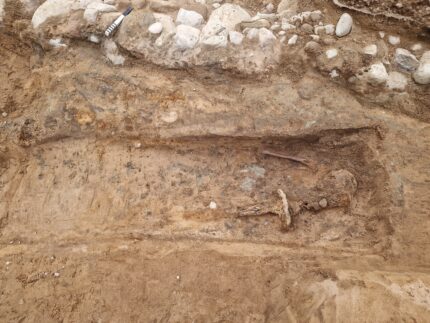
A medieval grave containing the remains of a man more than six feet tall with a sword more than four feet long has been discovered in the port city of Halmstad on Sweden’s west coast. The sword was placed at the man’s left side and was the only artifact in the grave. Osteological examination of the skeletal remains found the man was at least 6’3″ and the surviving parts of the sword‚ wooden hilt included‚ are 4’3″ long. The burial was discovered at Lilla Torg‚ a square in the city center that in the 15th century was part of the Franciscan monastery of Sankta Annas. The first excavation at the square in 1932 found the remains of the monastery kitchen and of the church. This year’s excavation found more of the monastery church. The grave with the sword was discovered under the floor of the south nave. Two other graves were found next to him‚ one belonging to an adult woman‚ the other to a man. No other objects were preserved in the three investigated graves. The sword is also the only decommissioned object found in the 49 graves examined so far during the ongoing reconstruction of Lilla Torg. Finding swords in medieval graves is very rare‚ and the people who were buried with swords belonged to the upper echelons of society. The sword find at Lilla Torg confirms that Sankta Anna’s church was used as a burial place for‚ among other things‚ people of noble birth during the 35 years that the Franciscan order operated on the site. The sword has been removed from the ground and sent to conservation to begin examination and treatment of the find in a protective environment. The first X-ray image of the find shows that the blade is decorated with two inlaid crosses‚ probably in precious metal. Already when the sword was found‚ the field archaeologists could guess that the blade was decorated‚ something that the X-ray image has now confirmed. Halmstad received its first town charter in 1307 and its current historic center was established in the 1320s. It was part of the Kingdom of Denmark at that time. The Sankta Annas monastery‚ built between 1494 and 1503 with the aid of a donation of an expensive silver plate from Christina of Saxony‚ then Queen of Denmark‚ had a brief life. It was shut down by the city magistrate in 1531 and the property repurposed to various uses including as a hospital and an armory. What was left of the monastery burned down in a 1619 fire that destroyed much of the town.
Like
Comment
Share
Conservative Voices
Conservative Voices
2 yrs

A More Burdened Consumer in 2023 does not bode well for the American economy in 2024
Favicon 
townhall.com

A More Burdened Consumer in 2023 does not bode well for the American economy in 2024

A More Burdened Consumer in 2023 does not bode well for the American economy in 2024
Like
Comment
Share
Intel Uncensored
Intel Uncensored
2 yrs

Google’s New Patent: Using Machine Learning to Identify “Misinformation” on Social Media
Favicon 
www.sgtreport.com

Google’s New Patent: Using Machine Learning to Identify “Misinformation” on Social Media

by Didi Rankovic‚ Reclaim The Net: Google has filed an application with the US Patent and Trademark Office for a tool that would use machine learning (ML‚ a subset of AI) to detect what Google decides to consider as “misinformation” on social media. Google already uses elements of AI in its algorithms‚ programmed to automate censorship on […]
Like
Comment
Share
History Traveler
History Traveler
2 yrs

Janissaries: The Elite Fighters of the Ottoman Empire
Favicon 
www.historydefined.net

Janissaries: The Elite Fighters of the Ottoman Empire

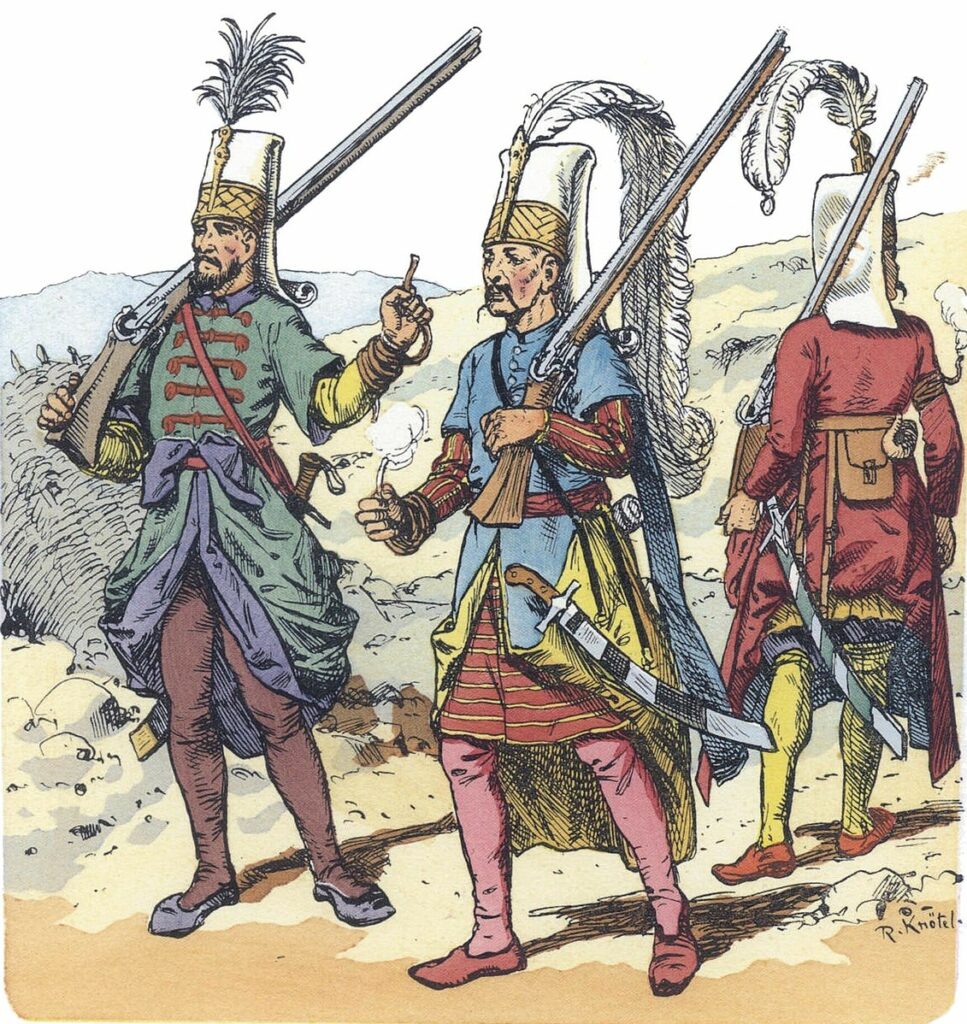
Military history is filled with tales of elite groups of fighters that stand apart from the regular military. Exceptional fighters who have proven themselves in battle.  These groups were called on for special missions. They had reputations for being the best of the best and were known worldwide. They struck fear into their enemies.  Examples range from the indomitable Roman Centurions and Spartan warriors‚ to today’s elite military groups like the Navy SEALS and Delta Force.  Among these legendary groups‚ the Janissaries of the Ottoman Empire stand out as one of the most feared and respected military forces in history. Not only were they highly skilled warriors but they were trained and educated in other fields such as science‚ history‚ and literature.  In this article‚ we will explore the fascinating history of the Janissaries and the mark they left on military training today.  A picture of the Janissaries of the Ottoman Empire by Richard Knötel. History of Janissaries The Janissaries‚ known as the Yeniçeri in Turkish‚ can trace their origins to the early years of the Ottoman Empire. They were established during the reign of Sultan Murad I in the late 14th century. The Janissaries were initially a small and elite force composed of enslaved Christian youths. These young recruits‚ known as devshirme‚ were taken from the empire’s Christian territories‚ converted to Islam‚ and trained for military service. Originally created as personal bodyguards for the Sultan‚ the Janissaries quickly evolved into a powerful military force with significant political influence. Their role rose above and beyond those of the traditional infantry. They became a versatile force employed in various campaigns‚ both within and beyond the Ottoman borders. The Janissaries played a crucial role in several key events throughout Ottoman history. One notable example is the capture of Constantinople in 1453. This brought about the end of the Byzantine Empire.  Their presence in major battles and campaigns‚ such as those against the Safavids and the Habsburgs‚ further solidified their reputation as a highly skilled and brutal military force.  Recruitment and Training The founding of the Janissaries lay in the strategic and controversial method by which they were recruited. This was known as the devshirme system. It involved the drafting of young Christian boys‚ usually between the ages of 8 and 18‚ from the empire’s Christian provinces.  These young recruits were often taken from impoverished families or orphanages. There were several advantages to this system that benefited both the empire and the new recruits: Loyalty to the State: Selecting recruits from poor families or orphans meant that these individuals often had weaker ties to their own communities and families. This reduced the likelihood of divided loyalties and ensured that the Janissaries would be more dedicated to the Ottoman state. Social Mobility: The devshirme system offered a chance for individuals to rise above their socio-economic circumstances. It provided an opportunity for upward social mobility that they would never have on their own.  By joining the Janissaries‚ these recruits could rise through the ranks based on merit‚ achievements‚ and loyalty to the Ottoman state. This gave opportunities to those who would have otherwise spent generations in poverty.  Strategic Advantage: Poor families often lacked the resources to provide education or opportunities to their children. By selecting recruits from economically disadvantaged backgrounds‚ the Ottoman Empire could shape and mold them to its specific needs.  Reduced Opposition: Conscription from poor families or orphanages helped minimize opposition to the devshirme system. Families in dire economic circumstances might see the recruitment as a chance for their children to escape poverty.  Additionally‚ orphans without familial ties had fewer advocates to challenge the system. This made it easier to implement. The Janissary Army. Ambrose Video Publishing‚ Inc Training and Education During their training‚ the Janissaries received more than just a military education. They were known for their knowledge in various fields including science‚ history‚ and literature.  This created a well-rounded force capable not only of executing military strategies but also of comprehending the world around them and adapting to changing times.  Scientific Knowledge Janissaries were taught a foundational understanding of scientific principles. This knowledge included aspects of mathematics‚ astronomy‚ and engineering. This allowed them to navigate and contribute to the technological advancements of their era.  History and Literature  The Ottoman Empire understood that those who don’t know history are doomed to repeat it. The Janissaries’ education encompassed a study of historical events. This helped inform their decision-making on the battlefield. Literary training enhanced their communication skills and provided a cultural context that enriched their overall perspective. Cultivation of Leadership Qualities The emphasis on education within the Janissary system went beyond acquiring knowledge. It aimed at nurturing leadership qualities.  Janissary officers‚ known as “cehnedar‚” were expected to demonstrate not only military expertise but also a deep understanding of politics‚ diplomacy‚ and cultural nuances. This combination of skills allowed them to serve not just as warriors but also as leaders in the Ottoman Empire. Notable Campaigns and Achievements The Janissaries played a pivotal role in numerous key battles throughout the history of the Ottoman Empire. Their disciplined and well-trained ranks combined with their reputation across Europe made them a formidable force on the battlefield. Battle of Nicopolis  One of the notable campaigns in which the Janissaries brought victory to the Ottoman Empire was the Battle of Nicopolis in 1396.  The Ottoman forces‚ under the command of Sultan Bayezid I‚ faced off against a combined army of European powers seeking to halt Ottoman expansion into Europe.  The European coalition was primarily composed of French‚ Hungarian‚ and Burgundian armies. Despite having a larger army‚ the European coalition lacked the training and coordination that the Janissaries possessed and were swiftly defeated.  Battle of Mohács 1526 Another significant battle was The Battle of Mohács‚ fought on August 29‚ 1526. Sultan Suleiman the Magnificent‚ hungry to expand the reach of the Ottoman territories into Central Europe‚ launched a military campaign against the Kingdom of Hungary.  The Hungarian army‚ led by King Louis II‚ was vastly outnumbered and outdated in their training and weapons. The highly skilled Janissaries made quick work of the Hungarian army and took control of a large swath of Hungary’s territory.  This victory paved the way for further Ottoman expansion into Central Europe. This marked the beginning of a period of Ottoman dominance in the region.  The defeat also had political repercussions. King Louis II was killed on the field of battle. This created a power vacuum and triggered succession disputes within the Kingdom of Hungary. Political Influence The Janissaries’ unique status as educated warriors gave them considerable power and respect that extended beyond the battlefield. Over time‚ they began to have more and more influence in the political landscape of the Ottoman Empire. They often intervened in diplomacy and matters of the state. Their loyalty to the sultan‚ coupled with their military training‚ made them a force to be reckoned with. They often swayed political decisions in their favor.  Their involvement in politics was a double-edged sword. While their influence brought stability and strength to the empire‚ it also led to periods of political unrest and internal strife.  Corruption‚ Downfall‚ and Reforms With many victories under their belt‚ fear‚ and regional respect led the Janissaries to have an inflated sense of self-worth. The power they wielded went to their heads. This made them less disciplined. They engaged in corrupt practices and exerted their influence in political matters. This made them less effective on the battlefield and began to erode the reputation that was carefully crafted over generations.  In the early 19th century‚ Sultan Mahmud II had had enough of the Janissaries. He initiated a series of military and administrative reforms known as the Tanzimat reforms.  The Janissaries viewed the reforms as a threat to their power and privileges and actively resisted them. In response‚ Mahmud II took decisive action‚ leading to the infamous Janissary revolts. The Janissary Revolts Between 1826 and 1828‚ the Janissary stood up and revolted against the Sultan and his reforms. Mahmud II was not one to back down from a fight. He knew that the Janissaries did not possess the military prowess of generations before.  They had become entitled‚ complacent‚ and in some cases‚ lazy. Mahmud II‚ determined to modernize the Ottoman military‚ quelled the revolts through force.  The once-mighty corps was disbanded‚ and many of its members were either executed or imprisoned. This marked the end of the Janissary era and the closure of a significant chapter in Ottoman history. Revolt of the Janissaries. 2 January 1701 Legacy of Janissaries The legacy of the Janissaries resonated through centuries and reached far beyond the confines of the Ottoman era. Their impact is evident in various aspects‚ ranging from cultural influences within Ottoman society to shaping military structures worldwide. They left lasting impressions on modern Turkey. The Janissaries are considered pioneers in military training methods‚ discipline‚ and ability to adapt to modern technology. The concept of a standing army was a hallmark of the Janissary system which influenced military structures all over the world.  Although the Janissaries were officially disbanded in the early 19th century‚ their legacy continues to resonate in modern Turkey. The Janissaries left an imprint on Turkish identity‚ and their memory is preserved in historical narratives‚ literature‚ and popular culture.  References Janissary https://en.wikipedia.org/wiki/Janissary# The Rise And Fall Of The Janissaries‚ The Ottoman Empire’s Elite Military Force https://allthatsinteresting.com/janissaries Devshirme | A tradition of Elite Training &; Slavery https://www.timelessmyths.com/history/devshirme/The post Janissaries: The Elite Fighters of the Ottoman Empire first appeared on History Defined.
Like
Comment
Share
History Traveler
History Traveler
2 yrs

Grossest Disaster in History? The Erfurt Latrine Disaster
Favicon 
www.historydefined.net

Grossest Disaster in History? The Erfurt Latrine Disaster

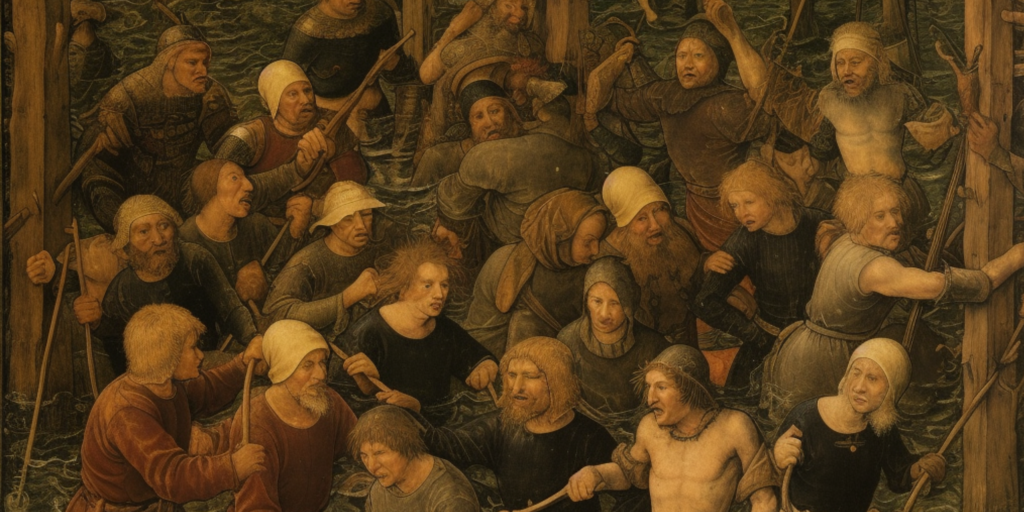
Even the most well-intentioned deed can go awry‚ but not many go off the rails quite as much as the meeting put together by King Henry VI in July 1184.  Henry had organized the meeting‚ called a Hoftag‚ to help broker peace between two other leaders‚ Louis III of Thuringia and Archbishop Conrad of Mainz. Whether he would have resolved the feud between the two is unknown‚ because something much worse than a meeting gone wrong occurred. A deadly combination of poor infrastructure‚ overcrowding‚ and a lack of proper waste management would end up with 100 or more nobles swimming in literal excrement. This travesty‚ called the Erfurt latrine disaster‚ would dwarf whatever feud brought the nobles together in the first place.  So what exactly caused the Erfurt latrine disaster?  A painting depicting the nobles that fell through the collapsed floor and into the latrine pit. The Setting of the Erfurt Latrine Disaster: Medieval Erfurt  Many medieval cities were poorly constructed and filthy. However‚ Erfurt more closely resembled a modern city even in 1184.  It featured cobblestone streets‚ timber-framed houses‚ and the enormous‚ looming Erfurt Cathedral. It was considered a center of commerce as well as a hub of cultural and religious activity.  As posh and modern as Erfurt appeared‚ it suffered from a problem that even the largest medieval cities struggled with: sanitation and waste management. Modern plumbing was still hundreds of years away.  Erfurt did what every other city did to deal with the never-ending flow of human waste–they used a latrine system.  Erfurt Cathedral Square with St. Marien Cathedral (left) and Severikirche (right) by night The Latrine System of Erfurt Waste disposal wasn’t really a thing in medieval Europe. Instead‚ it was an out-of-sight‚ out-of-mind situation.  In order to deal with human waste‚ huge pits were dug beneath structures. Waste would drop directly from the toilet into the pits‚ also known as cesspools or latrine cesspits.  The biggest downside of these pits was that they had to be emptied by hand. If this wasn’t possible‚ the cesspools full of human waste were simply boarded over and abandoned.  The people of the medieval world had no concepts of bacteria‚ viruses‚ or germ theory. Therefore‚ there was no way for them to understand the risk this posed to their health via the waste making it into their drinking water. Cities bordering rivers‚ like Erfurt‚ had an advantage in that they would build their latrines to connect to the river. This allowed the water to take the waste with it downstream.  If a river wasn’t present‚ the waste would simply sit in the pit‚ slowly decomposing and seeping to the ground. Either way‚ it would eventually make it into the water table. This would increase illness‚ unbeknownst to the people of the time.  It wasn’t illnesses that became such a problem with the Erfurt latrines‚ though. Instead‚ the combination of river water and human waste soaking into the wooden structure of the cesspit slowly weakened it.  At the same time‚ the river was constantly washing away the riverbank. This made the ground less and less steady with each passing day.  Henry VI held his Hoftag at the Erfurt‚ or Petersburg Cathedral. Since the cathedral latrine system dumped into the Gera River‚ it was being weakened at all times by exposure to moisture.  The population of Erfurt was experiencing an increase at the time. The extra human waste also worked to damage the latrine structure. The Erfurt latrine system just wasn’t built to handle so many people all at once.  The Erfurt Latrine Disaster of 1184 On the day of the disaster‚ a large number of nobles gathered to attend the meeting. Henry VI had sent invitations to all of the nobles of the Holy Roman Empire to attend the meeting. Many of them answered the summons.  The large crowd of nobility gathered on the second floor of the cathedral and waited for the meeting to begin. Little did they know that there would be no meeting. Instead‚ many of them would be fighting for their lives in just a matter of minutes.  Just as the meeting began‚ the wooden floor of the cathedral collapsed. It dumped all of those gathered through two floors and into the cesspool below.  St. Peter’s Church (green)‚ where the accident occurred. Located within the Petersberg Citadel in Erfurt.1910. Erfurt City Archives The latrine system for the cathedral was enormous‚ allowing it to last much longer before needing to be emptied. The depth of it ascertained that the amount of human waste was deeper than the height of a man because as soon as they hit the wastewater‚ many of the nobles found themselves unable to keep their heads above the waste.  The death toll of the disaster ranges between 60 and 100 people. Causes of death were attributed to drowning‚ the trauma of the fall right after the collapse‚ being hit by falling debris‚ or suffocating on the fumes coming from decaying human waste.  Aftermath of the Disaster  In a strange twist of fate‚ all three of the men involved in the creation of the meeting that led to the disaster survived. King Henry VI managed to avoid plunging into the excrement because he was seated in a stone alcove that was spared during the collapse of the wooden structure.  Even so‚ he had to be rescued with a ladder.  The king had apparently had quite enough of Erfurt by that point and left hastily after his rescue. The archbishop had been seated with the king and therefore also avoided the plunge into the latrine pit.  Louis III of Thuringia was not so lucky. He went down into the depths of the filth along with all of the other nobles. His luck did return when he was rescued and didn’t become one of the unfortunate souls to lose their lives in the Erfurt latrine disaster.  As expected‚ the feud that the nobles had originally gathered for went unresolved. But it’s safe to say that it was no longer at the forefront of the survivor’s minds. King Henry VI went on to greatness‚ eventually becoming the Holy Roman Emperor. References  “Chronicle of St. Peter in Erfurt” https://web.archive.org/web/20101004181057/http://www.genealogie-mittelalter.de/ludowinger_landgrafen_von_thueringen/chronik_zu_erfurt.html “Erfurt Latrine Fall” https://www.br.de/radio/bayern2/sendungen/kalenderblatt/2607-latrinensturz100.htmlThe post Grossest Disaster in History? The Erfurt Latrine Disaster first appeared on History Defined.
Like
Comment
Share
Conservative Voices
Conservative Voices
2 yrs ·Youtube

YouTube
Mark Levin Audio Rewind - 12/28/23
Like
Comment
Share
BlabberBuzz Feed
BlabberBuzz Feed
2 yrs

Renowned Surgeon Slams American College Of Surgeons For Prioritizing
Favicon 
www.blabber.buzz

Renowned Surgeon Slams American College Of Surgeons For Prioritizing "Antiracist Initiatives" Over Medical Excellence

Like
Comment
Share
Survival Prepper
Survival Prepper  
2 yrs

25 Amish Home Remedies You Might Need Someday
Favicon 
www.prepperwebsite.com

25 Amish Home Remedies You Might Need Someday

The post 25 Amish Home Remedies You Might Need Someday appeared first on Prepper Website.
Like
Comment
Share
Survival Prepper
Survival Prepper  
2 yrs

Don’t Let the Bread Waste–Make Croutons!
Favicon 
www.prepperwebsite.com

Don’t Let the Bread Waste–Make Croutons!

The post Don’t Let the Bread Waste–Make Croutons! appeared first on Prepper Website.
Like
Comment
Share
Showing 107471 out of 117311
  • 107467
  • 107468
  • 107469
  • 107470
  • 107471
  • 107472
  • 107473
  • 107474
  • 107475
  • 107476
  • 107477
  • 107478
  • 107479
  • 107480
  • 107481
  • 107482
  • 107483
  • 107484
  • 107485
  • 107486
Advertisement
Stop Seeing These Ads

Edit Offer

Add tier


Select an image
Delete your tier
Are you sure you want to delete this tier?

Reviews

In order to sell your content and posts, start by creating a few packages. Monetization

Pay By Wallet

Payment Alert

You are about to purchase the items, do you want to proceed?

Request a Refund