YubNub Social YubNub Social
    #jesuschrist #christmas #christ #merrychristmas #christmas2025 #princeofpeace #achildisborn #noël #sunrise #morning
    Advanced Search
  • Login
  • Register

  • Night mode
  • © 2025 YubNub Social
    About • Directory • Contact Us • Developers • Privacy Policy • Terms of Use • shareasale • FB Webview Detected • Android • Apple iOS • Get Our App

    Select Language

  • English
Install our *FREE* WEB APP! (PWA)
Night mode toggle
Community
New Posts (Home) ChatBox Popular Posts Reels Game Zone Top PodCasts
Explore
Explore
© 2025 YubNub Social
  • English
About • Directory • Contact Us • Developers • Privacy Policy • Terms of Use • shareasale • FB Webview Detected • Android • Apple iOS • Get Our App
Advertisement
Stop Seeing These Ads

Discover posts

Posts

Users

Pages

Blog

Market

Events

Games

Forum

The Lighter Side
The Lighter Side
3 w

After accidentally ruining Santa for her young daughter, mom flips the script in the best way
Favicon 
www.upworthy.com

After accidentally ruining Santa for her young daughter, mom flips the script in the best way

For many families, Santa is a beloved part of the holiday season…until the inevitable happens, and kids start asking questions. Because treading that fine line between preserving holiday magic and avoiding gaslighting is precarious. One mom named Martha, aka @read_between_the_whines on TikTok, unfortunately did not strike that balance last year, and inadvertently "ruined" Christmas for her daughter. And now she’s sharing her "cautionary tale" in hopes that it will help other parents navigate those early curious years, especially with what she calls "cuspy kids" who are beginning to connect the dots.In her video, Martha explained that she used to be someone who was determined to stay completely truthful with her children. So once the holidays rolled around and her oldest began asking pointed questions, she tried to keep things vague without directly lying."Last year, the whole season, my oldest was saying things to me that's making me go, 'Okay, she's questioning the validity of this. Tread lightly.' I would try not to lie," she said.When Martha’s daughter finally did ask outright if Santa was real, she simply responded with, "A lot of people believe he is."But on Christmas morning, after Martha’s three-year-old opened a much bigger gift, her daughter voiced concerns again, saying, "I don't think Santa came for me."Thinking this was the perfect moment to offer a gentle explanation and give her kiddo some clarity, Martha said: "You know how Anna and Elsa are very fun ideas to imagine? Well, similarly, Santa is an idea. He's a really, really fun magical thing to imagine. Santa did come for you. Daddy and I are Santa."And that’s when everything went downhill. Her daughter cried, she cried, and everything was a huge emotional mess. "Watching the innocence and magic leave your child’s body is one of the most devastating things I've ever experienced," she shared. This left poor Martha with only one conclusion: Ride that "gray line" as long as possible, and only answer what kids are directly asking you (in this instance, it was the question of whether Santa had come for her daughter, not whether or not Santa was real). @read_between_the_whines This one has effed me up for life. #parentingmoments #momof3 #millenialmom ♬ original sound - read_between_the_whines "Because there's nothing else in life that we lie to our children about," she said. "And if this is going to bring them a little bit of magic, and then they naturally come to the conclusion that this just actually doesn't make that much sense, let them get there on their own."The comments on her video show just how emotionally loaded this moment can be for families.One person wrote, "I'm 34 and my mom has still never said Santa isn't real."Another shared, "This is why we never did Santa. I don't ever want my kid to look at me and say, 'you lied to me? My whole life?'"One added, "I got to watch both my kids hear their aunt say that he isn’t real, but our family is allowed to believe if we want to. My son was on the cusp as well, but my daughter still fully believed. Heartwrenching for me. I had to leave the house for a bit so I could cry and collect myself."Another commenter wrote, "[My] daughter asked me to pinky promise, swear on my life, that I wasn’t Santa so I told her the truth and she bawled her eyes out, as did I. It was horrific."On the bright side, one person shared a heartwarming moment from their own childhood: "When I was probably 6, I saw my dad assembling a Barbie Dreamhouse on Christmas Eve. I was stunned so I was telling a friend about it. Her teenage brother overheard me and said 'you’re right. You figured it out. It’s ridiculous to think Santa visits all of the kids on earth in one night. There’s no way. Santa actually sends your gifts to your parents by UPS and your parents have to put them together for you.' That made sooooo much sense and actually had a lot of explanatory power. It allowed me to continue to believe for several more years. Now as an adult I think of the kindness of a teenage boy saving Christmas for me and for his sister. That was so sweet and I know he’s probably an amazing dad now."Every family handles this moment differently. But once that moment happens, there’s no going back. So it’s understandable that no parent looks forward to it. However, it can also be a good opportunity to teach them other ways Christmas can feel special. And that’s exactly what Martha did. In a follow-up video, she told her daughter:"I know that it feels very sad right now because you feel like the magic of Christmas is just completely gone, but what you don’t realize is that the magic of Christmas has just begun. The true magic of Christmas is when you get to be Santa for other people." @read_between_the_whines Like… fixed it but she’s still kinda sad… but is also so excited to be my helper this season. #parentingishard #millenialmom #kidsgrowingup #parentingmoments #momof3 ♬ original sound - read_between_the_whines Suddenly, instead of anguish, Martha’s daughter felt pure excitement at the thought of getting to go Christmas shopping, wrapping presents, eating Santa's cookies, and making magic for others. Martha even went the extra mile by enlisting the extended family to help welcome her daughter into the super secret "Santa Club," making it feel more like a fun rite of passage.If this isn’t grade-A parental pivoting, we don’t know what is.
Like
Comment
Share
The Lighter Side
The Lighter Side
3 w

88-year-old veteran's touching story of why he works full time goes viral, raising over $1 million
Favicon 
www.upworthy.com

88-year-old veteran's touching story of why he works full time goes viral, raising over $1 million

When shoppers at a Meijer grocery store in Brighton, Michigan stop by the self-checkout, many of them look forward to seeing the friendly face of Ed Bambas, an 88 year old Army veteran who would find himself at the center of social media attention. Bambas works eight hours a day, five days a week. When Australian content creator and “kindness influencer” Samuel Weidenhofer asked Bambas why he was still working at his age, his heartfelt answer instantly struck a chord. “I have to.”In a video that has now reached millions of viewers, Bambas explained that he retired from General Motors in 1999. But in 2012, the company went bankrupt, and Bambas’ pension was taken away. To make matters worse, his wife of fifty year, Joan, became ill and her medical bills had to be paid out of pocket. See on Instagram “The thing that hurt me the most was when my wife was really sick and when they took the pension, they also took the healthcare coverage and all but 10000 of my life insurance,” he said, voice breaking.After selling his house and other property he owned, Bambas and Joan “made it through” for a time, but she did pass away seven years ago. Since then, he has been trying to “re establish” himself, but his income has never been enough to stop working.When asked what his dream was, Bambas simply said to “live somewhat the life I was hoping for.”That is what prompted Weidenhofer to hand him a $400 tip on the spot, then set up a GoFundMe to help him finally retire. “Despite everything, Ed shows up every day with quiet dignity, strength, and perseverance. His story is a stark reminder that too many of our seniors, especially veterans, face incredible challenges just to survive,” Weidenhofer wrote on the GFM page. The fundraiser passed $800,000 on its first day. By Wednesday it had climbed well above $1.2 million. See on Instagram Supporters shared why they felt compelled to help. One commenter wrote, “This man is the salt of the earth. We see him every time we go into the store and he is always smiling and just the kindest soul. This makes me so happy to see him recognized and receiving the flowers he deserves and earned so very long ago.”Celebrities took notice as well. Charlie Puth commented, “Commenting to spread this video. I also donated to you sir.”Meijer confirmed Bambas has been part of their team for more than five years. The company said, “Ed is a beloved member of the Brighton Meijer store and has been a team member for more than five years. He has a wonderful way of connecting with customers and brings joy to the store with his warmth and his smile.” They added that they are providing him with financial planning assistance so he can make the most of the donations.Bambas, who’s only ever had a flip phone, never engaged with Instagram or TikTok, let alone knew he had gone viral. "It came out of the clear blue — I really truly mean that," he told WXYZ.Weidenhofer has yet to reveal Bambas’ grand total to him, and the fundraiser is still going. Soon he’ll learn that an entire community saw his dream was worth fighting for.If you’d like to help make this dream come true, you can contribute to Bambas’ GoFundMe page here.
Like
Comment
Share
The Lighter Side
The Lighter Side
3 w

Woman on a plane who saw man's body-shaming texts about her handles the situation with pure grace
Favicon 
www.upworthy.com

Woman on a plane who saw man's body-shaming texts about her handles the situation with pure grace

Vanessa, a TikTok user who goes by (@soberspouse), is an inspiration to many because of the way she handled an incredibly uncomfortable situation on a flight from Tampa, Florida, to New York on Delta Airlines. It all started when she sat down beside a man, who immediately rolled his eyes at her.When she sat down, she noticed he had sent a text message to someone that read: “Ugh, HUGE woman sat next to me,” she recalled. “As soon as I sat, I just glanced over, and I saw it. It was right there in front of my face, and after he had to hit send, he sent a series of empty texts to essentially push what he had written off the view of his screen,” Vanessa told The Mary Sue. Before the plane took off for the two-hour flight of misery, she posted a TikTok sharing her story while asking for kindness.“Be kind. If you’re feeling inclined, can you send some love? I lost 60+ lbs and have actually been feeling good about myself,” she requested. @soberspouse After two hours of torture in the sky, Vanessa landed in New York to countless well-wishers congratulating her on her weight loss. "You lost 60 lbs?!? CONGRATULATIONS! That clearly took a lot of effort from you… Don’t let the jerk derail you as you are on a JOURNEY!" one TikTok commenter wrote. "CONGRATS on losing 60lbs! That’s amazing!! So proud of you! Keep feeling good about yourself and do NOT let someone else that clearly doesn’t even like themselves make you doubt yourself!" another added.During the flight, Vanessa wanted to speak her mind and tell the guy off, but she didn’t want to cause drama on the airplane. To make it through two hours without causing a scene was a lesson in grace. “I didn’t wanna say anything because I really needed to get home to my kids, and I was afraid that if I started this conversation with him, I would be asked to leave the plane,” she told The Mary Sue. “So I took a few deep breaths, made the TikTok or two. I remember thinking I wish I could tell the flight attendant, but I didn’t even wanna get up or move.” A representative image of a text.via Tod PerryVanessa attributes her self-control to the personal development she’s made as a sober spouse. “When it happened, my husband was the first person I texted,” she told Upworthy. “He responded by validating the situation I was in and then reassured me I am beautiful, to take a deep breath, and that I would be home soon. If he didn't have the tools from the program, I'm sure the conversation would have looked different.”Even though she stayed quiet, Vanessa had some things she would have wished she could have told the man. “I’ve thought about this a lot. Part of me has some choice words for him and his khaki pants and his manspread, but then I remember the whole lesson in kindness here. I'm going to assume he's been through something or has been hurt before, and just remember that his comment was more about what he's experienced than me. I honestly have prayed for him and hope he can find some kindness to pay forward in his life,” she told Upworthy. @soberspouse Vanessa shared a follow-up video sharing the real lesson of the incident. "I'm so glad this little moment of lemons has turned into so much lemonade for so many people," she said. "The amount of kindness that's been spread and shared is really unbelievable."
Like
Comment
Share
Classic Rock Lovers
Classic Rock Lovers  
3 w

The song Frank Zappa called one of the “most important musical statements”
Favicon 
faroutmagazine.co.uk

The song Frank Zappa called one of the “most important musical statements”

Spellbinding... The post The song Frank Zappa called one of the “most important musical statements” first appeared on Far Out Magazine.
Like
Comment
Share
Classic Rock Lovers
Classic Rock Lovers  
3 w

The guitarist so good he scared Billy Gibbons: “Absolutely terrifying”
Favicon 
faroutmagazine.co.uk

The guitarist so good he scared Billy Gibbons: “Absolutely terrifying”

"An absolutely terrifying player..." The post The guitarist so good he scared Billy Gibbons: “Absolutely terrifying” first appeared on Far Out Magazine.
Like
Comment
Share
Intel Uncensored
Intel Uncensored
3 w

Practical Preparedness Suggestions – Part 2
Favicon 
www.sgtreport.com

Practical Preparedness Suggestions – Part 2

by R.J., Survival Blog: 5. Self Defense This segment references reading, training and situational awareness that will be difficult for some people. Use what you can. Learn how to profile people and your surroundings. It happens in many forms, constantly. There are predators who don’t care about how nice you are. (Jeremiah 17:9 “The heart […]
Like
Comment
Share
Intel Uncensored
Intel Uncensored
3 w

ISRAEL CONTINUES ATROCITIES IN GAZA! – Dress As Doctors & Execute Hospital Patients!
Favicon 
www.sgtreport.com

ISRAEL CONTINUES ATROCITIES IN GAZA! – Dress As Doctors & Execute Hospital Patients!

from World Alternative Media: TRUTH LIVES on at https://sgtreport.tv/
Like
Comment
Share
History Traveler
History Traveler
3 w

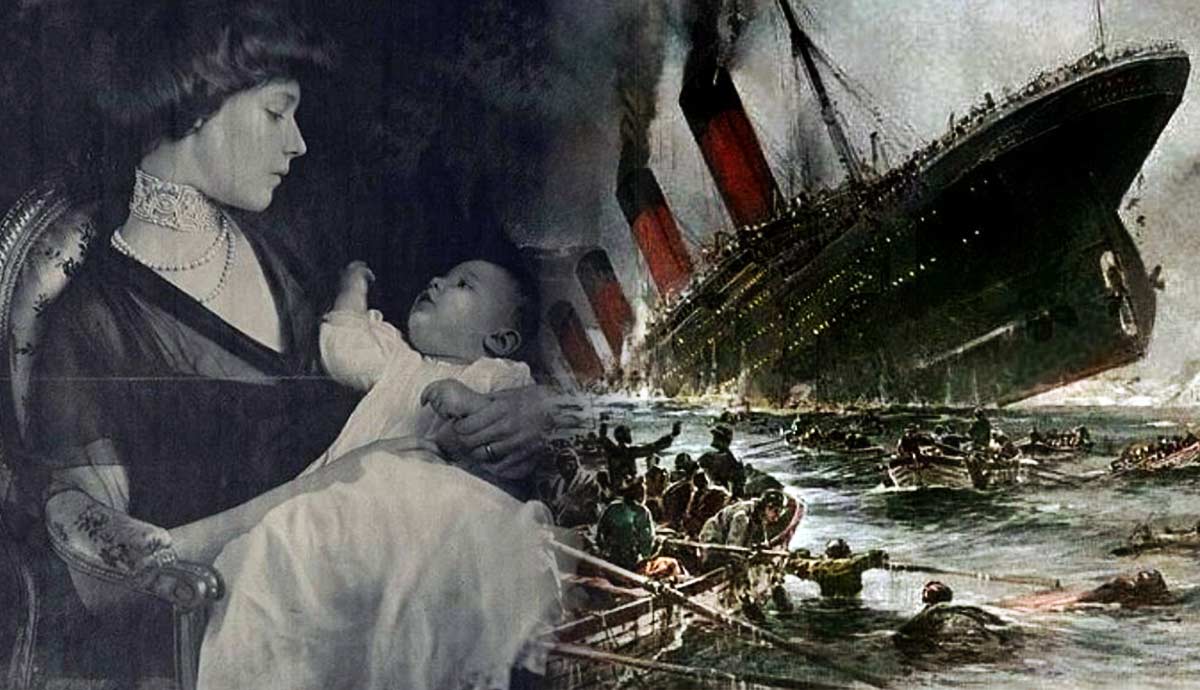
4 Heroines of the Titanic Who Braved the Waters
Favicon 
www.thecollector.com

4 Heroines of the Titanic Who Braved the Waters

  The Titanic is known for its grandeur, its tragic end, and the stories of those who perished. Not nearly discussed enough however are the stories of incredible feminine heroism. Some of the Titanic’s most remarkable survivors were women who defied traditional expectations, showing unshakeable courage in the face of disaster.   1. Mary Kelly: The Irishwoman Who Saved Two Orphans Woman and Titanic, by Coolarts223. Source: DeviantArt   Mary Kelly’s story is not just about survival—though getting off the Titanic from steerage was quite the achievement. It is also about her unexpected role in one of the most curious mysteries swirling about that infamous night. At 22, Mary, from County Westmeath, boarded the Titanic in Queenstown with dreams of starting a new life overflowing with opportunity in New York with her fiancé, John Heslin. After navigating the chaos of the sinking ship and finding her way to collapsible Lifeboat D, she became an impromptu guardian to two curly-haired French boys.   Called the “Titanic Waifs,” these two boys were improperly dressed for the cold conditions and couldn’t speak a word of English. No one at the time knew, but Edmond and Michel Navratil, aged two and three, were smuggled aboard the Titanic by their father, Michel Sr., under the alias Louis Hoffman. He had taken them in a dramatic act of defiance against their mother in France and the courts that had just awarded her custody of their sons amid their separation.   As the ship sank, Michel Sr. did the last decent thing a parent could do—he handed his boys to a stranger, probably knowing he wouldn’t be there to see them grow up. The boys were quite lucky: this was the last lifeboat to leave the Titanic as the water was making its way up the final stairwell leading to the deck.   Here the boys’ stories intersect with that of Mary Kelly, whose maternal instincts kicked in while the ship’s orchestra was probably playing Nearer, My God, to Thee (just jesting, this is an apocryphal though epic story concerning the band). She took the little boys under her wing, comforting and trying to warm them as the lifeboat drifted in the freezing Atlantic. When they finally reached the Carpathia, no one had any idea who the boys were—Edmond and Michel were too young to explain their situation and could have been easily too traumatized to speak at all.   Like the boys in her care, Mary had been blessed by fate to get a spot on the last lifeboat. In fact, she hadn’t taken the stairs to get to safety like most others had done. Mary, following the guidance of a domestic ship worker, pushed herself up an air shaft to leave third-class rooms behind.   The last lifeboat successfully launched from the Titanic, 1912. Source: National Archives   The press, as you can imagine, had a field day with the story of the puzzlingly unparented tots, and Mary found herself briefly at the center of a media storm. However, Mary wasn’t in it for fame or fortune. After handing the boys over to a rather assertive wealthy first-class passenger, Margaret Hays, Mary quietly went on her way to meet her fiancé in New York.   The boys were eventually reunited with their mother, Marcelle Navratil, though that was a process in and of itself. Ms. Hays didn’t want to hand over the children, and Marcelle had to tell things about her sons to authorities that only their mother could know. The family of three was successfully reunited after some time.   Mary’s story doesn’t end with the Titanic, but it certainly gives her quite the origin tale in the New World. She married, raised six children, and lived out her life at least in part on Coney Island Avenue. Her survival, combined with her innate compassion, earned her a place not just in her family’s long memory, but in Titanic lore—a reluctant hero with a heart big enough to shelter two lost souls.   2. Countess of Rothes: The Noblewoman Turned Leader The Countess of Rothes. Source: Wikitree   Lucy Noël Martha Dyer-Edwards, better known as the Countess of Rothes, showed that grace under pressure was not just a lofty ideal—it was a part of her inner grit. This aristocrat-turned-unlikely-boat captain took command of a lifeboat on the night of the Titanic disaster, proving that calm capability and compassion could overcome even the most terrifying circumstances.   Noël boarded the Titanic on April 10th, 1912, with her parents (who disembarked in Cherbourg), her cousin Gladys Cherry, and her maid, Roberta “Cissy” Maioni. She was on her way to Vancouver to reunite with her husband, Norman Evelyn Leslie, the 19th Earl of Rothes. Instead of a grand reunion, she found herself on a sinking ship in the middle of the frigid Atlantic Ocean.   Titanic departing Southampton, 1912. Source: Wikimedia Commons   When the iceberg struck, Noël and her cousin had just settled in their first-class cabin for the night. At first, they weren’t overly concerned about the odd scraping noise they heard, but once Captain Smith recommended they fetch lifejackets, they realized that their night was quickly going to worsen. Noël’s calm control shone even then, comforting her terrified maid with a fortifying glass of brandy before they all made their way to the boat deck. Once there, the trio was loaded onto lifeboat no. 8, the first one to be lowered from the port side.   Here is where the story veers from three unmoored women fleeing the sinking ship to an unbending lady leading the charge. Noël was no passive passenger once secure in the lifeboat; able seaman Thomas Jones quickly noticed her capable presence. In his words, “I heard the quiet, determined way she spoke to the others, and I knew she was more of a man than any we had onboard.” That was high praise and well-earned.   Jones ordered her to the tiller, trusting her to steer lifeboat no. 8 as they rowed into the blackness, away from the dying Titanic. When Jones stated that he wanted to go back to find other survivors and pull them from the icy waters, Noël wholeheartedly expressed her support for the plan. However, these two brave souls were outvoted by their fellow lifeboat passengers, who feared that the suction from the sinking liner would pull their tiny dingy into the depths with her.   Titanic sinking, colorized, by Willy Stower, after 1912. Source: GetArchive   It wasn’t just Noël’s leadership in the frosty dark that impressed. When one of the lifeboat’s passengers, a newlywed named Maria Peñasco, was devastated by the loss of her husband, Noël stepped away from steering to offer comfort (no brandy was conveniently on hand this time).   After being rescued by the Carpathia, the countess of Rothes didn’t stop for a wellness day. She continued to care for her fellow survivors, nursing the injured and using her sewing skills to fashion warm clothing from blankets for those in second and third class who were suffering in the cold. Her humble, no-nonsense attitude about her role only added to her legend. While Jones’s account of her heroics spread through the press, Noël brushed off any notion of being a heroine, focusing instead on the people she had helped.   The countess and Jones had formed a true friendship aboard that lifeboat, the kind that can only be found amongst those who’ve survived something shocking together and came out on the other side with respect for how one another handled it. The two exchanged regular correspondence for the rest of their lives, and their families have met up in recent years to celebrate two people who, on the surface, couldn’t have been more different but, deep beneath society’s trappings and expectations, had matching mettle.   The countess of Rothes may have boarded the Titanic as a noblewoman, but she left it as a shining example of female stalwartness—a rare beacon of strength, empathy, and quiet heroism in the face of an unexpected catastrophe on an unsinkable ship.   3. Madeleine Astor: A Young Mother’s Strength Young Madeleine Astor, 1910. Source: Picryl   Madeleine Astor was the epitome of upper-crust New York society—without quite being part of the Four Hundred club that her mother-in-law, the famed Caroline Astor, would have approved of. Her family came from a respectable lineage: her mother, Katherine Talmage Force, boasted a former Brooklyn mayor in her family tree, while her father, William Hurlbut Force, owned a shipping company and held a seat in the New York Chamber of Commerce. They may not have had the gravitas of the Astor name but were certainly a class above mere “new money.”   Described by a Paris correspondent as a sweet girl who, “knew how to twine herself around the heart of anybody,” Madeleine seemed destined for a comfortable life, though perhaps not the grandeur she found in her marriage to a recently divorced Astor. All that came to an end when fate threw her into the watery chaos of the Titanic disaster.   As the ship struck the iceberg, Madeleine and her much older husband, Colonel John Jacob Astor IV, weren’t immediately filled with worry. In fact, they were passing the time relaxing on the mechanical horses in the ship’s gymnasium while other passengers scrambled for the lifeboats. Astor, ever the steady seaman, remained convinced that the ship would stay afloat, though he still insisted Madeleine bundle up for warmth. He even played the lady’s maid and assisted her in changing into warmer clothes, right there on the deck.   It was as panic truly set in that Madeleine showed her own fortitude. When she spotted third-class passenger Leah Aks clutching her infant son in desperation, Madeleine handed over her scarf to wrap the baby in. It was a small gesture, but one that illustrated her natural compassion—even in the face of looming disaster. It was also an act of kindness from one mother to another, seeing each other in the midst of turmoil.   Madeleine and the “Titanic Baby,” 1916. Source: Library of Congress   When it came time to board the lifeboats, Colonel Astor famously tried to join his wife but was told only women and children could go. Whether or not he protested, no one’s sure, but he sent her off with all the gallant dignity you’d expect from a man of his status. As Madeleine’s lifeboat, No. 4, hit the freezing water around 1:55 a.m., a man in a “state of great excitement” leaped aboard at the last moment, landing in the boat alongside her. He then was too afraid to make himself useful in any way and spent his time cowering.   Now, here is where Madeleine’s real backbone showed. As the women rowed frantically to escape the sinking ship, the force of Titanic’s final plunge pulled their lifeboat dangerously close. Icy sea water splashed into the boat, and Madeleine, along with the others (except for our “excited” man, who hid under blankets), bailed it out as if their lives very accurately depended on it.   In the dead of night, freezing, soaked, and terrified, the visibly pregnant Madeleine kept her composure. When the boat finally managed to distance itself from the deadly suction, Madeleine and the crew demonstrated the courage to row back and pull six men from the freezing water—though two of them died from exposure soon after. Madeleine Astor was not exactly what her social equals would have expected from the fragile wife of one of America’s wealthiest men, but she handled herself with gumption and grace.   John Jacob Astor IV, c. 1895. Source: Wikimedia Commons   The press later painted Colonel Astor as the great hero of the night for having helped save not only his wife but two other women. Madeleine’s own heroism presented itself in different ways. Despite the stress and trauma of the Titanic disaster, she carried her pregnancy to term, giving birth to John Jacob Astor VI—dubbed the “Titanic baby”—in August that same year.   Because life in high society never strays too far from legal drama, by then the details of Colonel Astor’s will had become public. He left Madeleine a cool $100,000 outright (a tidy $2.75 million in today’s terms), the use of his home on Fifth Avenue, and a $5 million trust fund. Their son received a $3 million trust of his own. After all, who wouldn’t need the equivalent of an $80 million trust fund to help ease the trauma of losing a father on the Titanic? However, Madeleine’s benefits only lasted as long as she was willing to remain single.   4. Edith Rosenbaum: A Journalist With a Lucky Pig Advert for Edith’s Business, 1922. Source: Wikimedia Commons   Edith Louise Rosenbaum (aka Edith Russell) was a remarkable woman, born into a wealthy Jewish family in Cincinnati, Ohio, on June 12, 1879. Her father, Harry Rosenbaum, was a successful clothes manufacturer who had emigrated to the US from Germany before her birth. Edith, an only child, grew up surrounded by affluence, and it wasn’t long before she made her way to Europe to carve out her own path in journalism, fashion, and the limelight.   By 1912, Edith had become a well-established fashion correspondent, and she was in Paris covering French fashion at the Easter Sunday races when she decided it was time to return home. She booked her first-class passage on the Titanic at Cherbourg, occupying cabin A-11, and paying £27 14s 5d for her ticket. However, the grandeur of the Titanic did not sit well with Edith. In a letter sent from Queenstown to her secretary in Paris, she expressed her feelings of unease. “I cannot get over my feeling of depression and premonition of trouble,” she wrote, a chilling foreshadowing of the tragedy to come.   Bow of Titanic wreck, 2004. Source: NOAA   Edith’s premonition wasn’t unfounded. The Titanic struck that infamous iceberg on April 14, 1912, and despite the initial reassurances from the crew that there was no immediate danger, Edith found herself in a life-or-death situation. As chaos began to unfold, Edith recalled being pushed by White Star Line director Bruce Ismay toward a lifeboat. Though petrified, Edith eventually boarded Lifeboat 11.   It was not just fear and a strong survival instinct that got her through that awful night—it was also a music-box toy pig, a gift from her mother after she had survived a car accident in France. The pig, said to be a symbol of good luck, played a popular tune when its tail was twisted. Edith would later credit this quirky keepsake with helping to soothe both her and the wailing children in the lifeboat during their long, cold wait for rescue.   Edith Rosenbaum, photo by Henri Manuel, before 1947. Source: Picryl   Edith’s life was forever changed by the Titanic disaster. In the years that followed, she became a sought-after speaker, recounting her experiences on the ship and in the aftermath. Often, curious onlookers would ask her about the famous details of the disaster: “Did you hear Nearer, My God, to Thee?” “Were you frightened?” “Was the water cold?” Edith would answer these questions with a mix of grace and dry wit, but it was clear that her connection to the Titanic would shape the rest of her life. The courage she forged that night would get her through her years of war reporting from the field in WWI, marking her as one of the few women to do so.   In the decades following the sinking, Edith crossed the Atlantic many times but steadfastly (and somewhat ironically) refused to fly, preferring the relative safety of steamships. She lived a full life, continuing her work in fashion and maintaining a busy social calendar, but the night of the Titanic remained an ever-present chapter in her story. The tragedy not only defined her but also turned her into a symbol of survival and resilience.
Like
Comment
Share
History Traveler
History Traveler
3 w

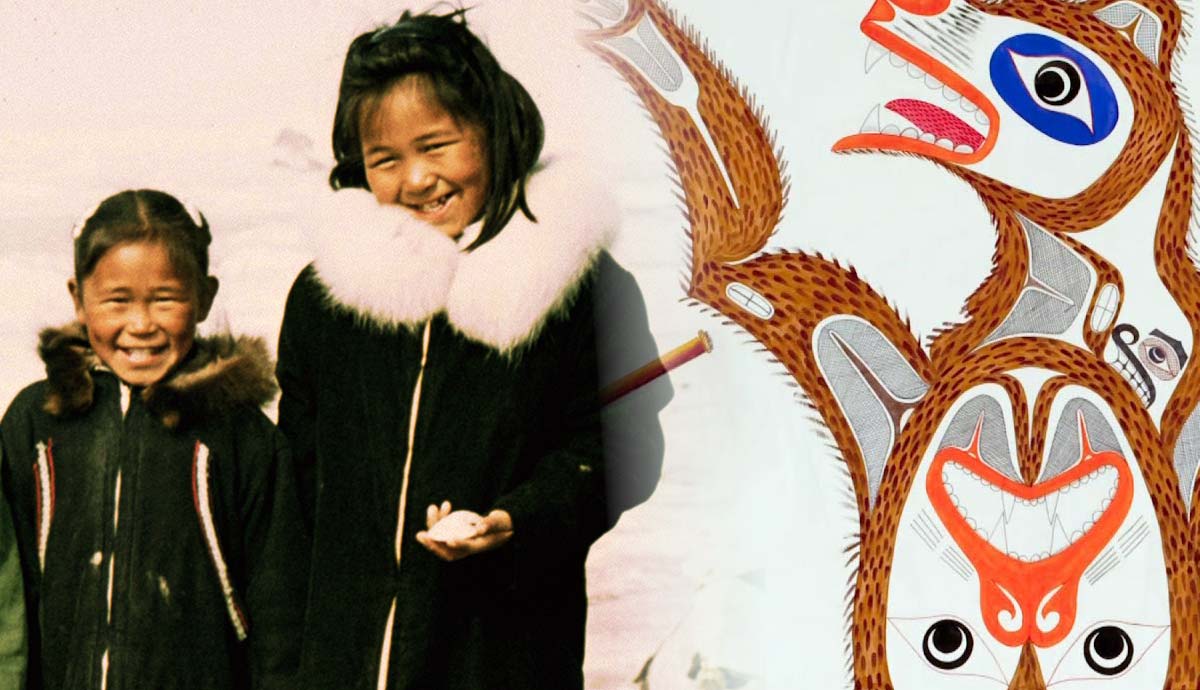
How Interaction Between First Nations and Europeans Birthed Canada’s Pidgin Languages
Favicon 
www.thecollector.com

How Interaction Between First Nations and Europeans Birthed Canada’s Pidgin Languages

  From the Pacific Northwest to the Atlantic Provinces, from the Arctic to the Great Lakes region, the colonization of present-day Canada completely altered the lives of the First Nations who had lived there since time immemorial. Their health declined as European-imported diseases swept through Indigenous communities. Their diets changed as settlers and loggers invaded their hunting grounds. Alliances shifted. Entire communities were disrupted. Colonial authorities deliberately targeted their languages, preventing children in residential schools from speaking them. However, new contact languages emerged across Canada to facilitate communication between Anglophone and Francophone newcomers and First Nations. These simplified languages are known as pidgins.   Eskimo Trade Jargon Inuit, by Louise Nigyok. Source: Meadows Museum of Art   The Inuit refer to Herschel Island, located in the Beaufort Sea off the coast of Yukon, as “Qikiqtaruk,” an Inuvialuktun term that translates simply as “island.” East of Herschel Island is Point Barrow—known locally as Nuvuk—which is the northernmost point of the United States, located in what is now Alaska. South of Point Barrow lies Point Hope, just above the Arctic Circle.   Its strategic position in the Point Hope landhead allowed the local Inuit to hunt whales more easily, hence its local name, “Tikiġaq,” which translates as “forefinger.” Further south, nestled on the Baldwin Peninsula in Kotzebue Sound along the eastern coast of present-day Alaska, is Kotzebue. Known in the Iñupiaq language as “Qikiqtaġruk” (or “Kikiktagruk”) meaning “small island” or “resembling an island,” Kotzebue was an important trading center during the 18th and 19th centuries.   Indigenous Children in Alaska, by the UC Berkeley, Department of Geography. Source: Unsplash   Despite the vast distances that separate them, all these places are united by a pidgin language (or jargon) that emerged during the 19th century when the local population needed a shared means of communication with European whalers, traders, and Russian settlers. This language is known as Eskimo Trade Jargon. Now extinct, it combined elements from various Indigenous languages, particularly those of the Inuit and the Yupik, as well as vocabulary primarily related to trade goods like whaling products, fur, and fish, from English and Russian.   Despite being a pidgin (a simplified language by definition) the Eskimo Trade Jargon had at least four dialects that emerged along the coast of present-day Alaska and in Yukon, Canada, at Herschel Island, Point Barrow, Point Hope, and Kotzebue. By the early-mid-20th century, Eskimo Trade Jargon had already fallen out of use.   While widely used in the 18th and 19th centuries and during most of the 20th century, the term “Eskimo” used to describe the closely related Indigenous peoples of the Arctic—the Inuit and the Yupik (or Yuit)—is generally considered offensive today.   The Inuit and the French Kimmirut, Nunavut, photograph by Isaac Demeester. Source: Unsplash   Today, Inuktitut (ᐃᓄᒃᑎᑐᑦ) is widely spoken in the Canadian Arctic, throughout most of what is now the Inuit Nunangat (ᐃᓄᐃᑦ ᓄᓇᖓᑦ), “the place where Inuit live.” However, it is referred to as Inuktitut mainly by the non-Inuit population and in Nunavut, where it is an official language, alongside English, French, and Inuinnaqtun. In Nunavik (northern Quebec), one of the four Inuit homelands that make up Nunangat, it is called “Inuttitut.” In Nunatsiavut (northern Labrador), it is referred to as “Inuttut.”   Over the years, various Inuktitut-English pidgins emerged across Nunangat as Inuit communities encountered English-speaking whalers, sealers, and fur traders. Between the 1550s and the 1620s, Basque fishermen and whalers established various outposts in Southern Labrador, typically living and working there for a few months from summer until late fall.   Inuit artist Aggeok Pitseolak with other Inuit in Keatuk, Baffin Island, Nunavut. Source: Canadian Museum of History   Basque newcomers inevitably interacted with the local First Nations. Although they had good trading relations only with the Montagnais and the Iroquoians, they engaged also with Inuit communities, whose descendants today wish to be known as Labradormiut.   In his work Trade Languages in the Strait of Belle Isle, Peter Bakker notes that a Basque fisherman from Bayonne reported in 1542 on his encounters with the local Inuit, whom he referred to as “Indians”. The Inuit he met were able to understand “any language, French, English and Gascon and their own tongue.”   Around 1580, the so-called Algonquian-Basque pidgin (or Souriquois) emerged in the Gulf of Saint Lawrence, with the Basque language serving as its main lexifier. Evidence indicates that it was widely used across a large area, ranging from Southern Labrador to New England and along the St. Lawrence River.   The St. Lawrence River, photograph by Karl-Heinz Müller. Source: Unsplash   During the 17th and 18th centuries, the French replaced the Basque fishermen and established new outposts in the Strait of Belle Isle (“Beautiful Island,” in French), an important waterway in the southeast of the Labrador Peninsula that separates Labrador from Newfoundland. A new pidgin, initially called “Broken French,” developed as a result of contact, which is now known as Labrador Inuit Pidgin French (LIPF), or Inuit French Jargon.   While the Inuktitut-English pidgins that originated across Nunavut had English as their lexifier, the Labrador Inuit Pidgin was influenced mainly by French. In the 1740s, French Canadian entrepreneur Jean-Louis Fomel reported that this pidgin borrowed words not only from French but also from Breton, Basque, Spanish, and Dutch.   Finally, in 1763, Britain took possession of Labrador, and the French and Basque outposts were subsequently overtaken by whalers and fishermen from present-day New England and Britain. By the 18th century, most non-English-based pidgins gradually fell out of use.   Slavey Jargon A group of Slavey people gathered to receive treaty money from the Dominion Government, 1914. Source: Wikimedia Commons   The Slavey Jargon (also known as Broken Slavey or Broken Slavé) was a Slavey-based pidgin used throughout the 19th century in Yukon, particularly along the area’s two main rivers, the Athabasca River and the Mackenzie River (known in Inuvialuktun as Kuukpak, meaning “the great river”). The Slavey Jargon combined English and Chipewyan (Dene Suline) nouns with French verbs and pronouns, along with elements from Slavey, the Athabaskan language spoken by the Dene First Nation.   The Custodians of a vast area stretching from northern Alaska and the Canadian Arctic, south of Inuvialuit, to the southwestern United States, the homelands of the Dene encompassed western Yukon, the Mackenzie Valley, the northern regions of British Columbia, Saskatchewan, Alberta, and Manitoba. The Slavey Jargon was spoken not only by the Dene people but also by the Métis and Inuit.   Mackenzie River, photograph by Alan Emery. Source: Unsplash   Over the years, linguists and missionaries, including Father Émile Petitot (1838-1916), debated the proportions of English and Chipewyan elements in Slavey Jargon, as well as the similarities and differences between the Slavey Jargon and the so-called Loucheux Pidgin. Petitot, in particular, maintained that the Loucheux Pidgin was predominantly spoken along the Peel River, the northernmost tributary of the Mackenzie River, as well as along sections of the Yukon River.   The Yukon River, one of the longest rivers in North America, flows north from the northwest corner of British Columbia across Yukon and into Alaska before emptying into the Bering Sea, traversing the ancestral lands of the Tlingit (Łingít, “the people of the tides”), Han (Tr’ondëk Hwëch’in), Southern and Northern Tutchone, and Tagish (Carcross). At the end of the 19th century, especially during the 1896-1903 Klondike Gold Rush, the shores and waters of the Yukon River became a site of interaction, trade, and sometimes conflict, between Europeans and First Nations. It was along these shores that the Loucheux Pidgin emerged and developed.   Nootka Jargon The Nuu-chah-nulth were (and continue to be) the Traditional Custodians of the west coast of Vancouver Island, photograph by Conrad Stel, 2023. Source: American Museum of Natural History   The Nootka Jargon, also known as Nootka Lingo, was widely used across the Pacific Northwest during the late 18th and early 19th centuries. The term “Nootka” is the English name of Nuučaan̓uł (or Nuu-chah-nulth), the Southern Wakashan language spoken by the Nuu-chah-nulth, the Traditional Custodians of the west coast of Vancouver Island.   Interestingly, Nuučaan̓uł translates to “all along the mountains and sea.” Their ancestral lands extended from Point-no-Point in the south to Brooks Peninsula in the north, encompassing Ucluelet, Yuquot, and what is now called Nootka Island. It was here, at Yuquot, that Captain James Cook first encountered the Nuu-chah-nulth in 1778, and it was Cook who named them “Nootka” after the group he first encountered directed his ship to “come around” the harbor. Nuutkaa means “to circle around” or “to go around.”   Nootka Sound, British Columbia, the inlet where James Cook first encountered the Nuu-chah-nulth, photograph by Conrad Stel. Source: Unsplash   The Nuu-chah-nulth were hunter-gatherers and skilled whalers, as well as among the first people in the Pacific Northwest to interact with Europeans. Tragically, within less than 50 years, about 90% of the Nuu-chah-nulth population on Vancouver Island perished after coming into contact with European-imported highly infectious diseases to which they had virtually no immunity. Diseases like malaria and smallpox spread rapidly throughout Vancouver Island, devastating communities that were once thriving.   A Nuučaan̓uł-based pidgin, the Nootka Jargon emerged to facilitate communication between the Nuu-chah-nulth and Russian, European, and American whalers, traders, and mercantilists. Some linguists believe that the Nootka Jargon may have been a precursor to the Chinook Jargon, as the Nuu-chah-nulth language contributed much of the words of the Chinook Jargon.   Chinook Jargon Fort Vancouver, as depicted in Joseph Gaston’s Centennial History of Oregon, 1827. Source: Wikimedia Commons   The Chinook Jargon is commonly referred to as “the language of the Pacific Northwest.” As mentioned above, the Nuu-chah-nulth-based Nootka Jargon likely served as a foundation for the Chinook Jargon, given the significance of Vancouver Island and Nootka Sound in early interactions between local populations, James Cook, and traders.   From the late 18th century, various Nuu-chah-nulth word lists circulated among Anglophone and Francophone fur traders operating in present-day British Columbia, along the Columbia River, and on Vancouver Island. These word lists are believed to be the basis from which the Chinook Jargon developed. Traveling along trading routes, the Jargon—also known as Chinook Wawa, with wawa meaning “talk”—quickly evolved, incorporating terms and grammatical structures from French, English, and various Salish languages.   Columbia River, photograph by Jamie Pilgrim. Source: Unsplash   When the Hudson’s Bay Company (HBC) constructed Fort Vancouver between 1824 and 1825, approximately 150 km (93 miles) inland on the north shore of the Columbia River to manage trade from Alaska to California, the Chinook Jargon became the primary language spoken among the people working there. Roman Catholic priest Modeste Demers even compiled a dictionary of Chinook that became widely used among employees of the Hudson’s Bay Company, trappers, coureurs des bois (wood-runners, as they were known in English), Protestant and Catholic missionaries, as well as Chinese immigrants and Indigenous and non-Indigenous workers in canneries and mills.   In the 19th century, Chinook Jargon was spoken not only in British Columbia but also in parts of Alaska, present-day Oregon, Washington, Idaho, Montana, and Northern California. Today, despite its rapid decline in the early 20th century, Chinook Jargon remains the most well-known of the many pidgin languages spoken across Canada during the Colonial Period.   Death of Captain Cook, painting by George Carter, 1781. Source: National Museum of Australia   Starting in the mid-16th century, pidgins emerged across present-day Canada and the United States. These were simplified languages with a reduced vocabulary and basic grammatical structures meant to facilitate communication between local Indigenous populations and newcomers, such as settlers, traders, missionaries, or employees of the Hudson’s Bay Company.   In most cases, these newcomers were either Anglophone or Francophone, but in particular regions, such as the Arctic, the Inuit also encountered Spanish and Russian traders and Basque fishermen. The pidgins that arose from these interactions, such as the Eskimo Trade Jargon, the Labrador Inuit Pidgin French, the Chinook Wawa, and the Slavey and Nootka Jargons, offer important insights into the complex colonial history of North America.

Like
Comment
Share
Conservative Voices
Conservative Voices
3 w ·Youtube Politics

YouTube
Trump Makes the Case For Why America Needs LESS Legal Immigration From Somalia, with Michael Knowles
Like
Comment
Share
Showing 2856 out of 104238
  • 2852
  • 2853
  • 2854
  • 2855
  • 2856
  • 2857
  • 2858
  • 2859
  • 2860
  • 2861
  • 2862
  • 2863
  • 2864
  • 2865
  • 2866
  • 2867
  • 2868
  • 2869
  • 2870
  • 2871
Advertisement
Stop Seeing These Ads

Edit Offer

Add tier


Select an image
Delete your tier
Are you sure you want to delete this tier?

Reviews

In order to sell your content and posts, start by creating a few packages. Monetization

Pay By Wallet

Payment Alert

You are about to purchase the items, do you want to proceed?

Request a Refund