YubNub Social YubNub Social
    #jesuschrist #christmas #christ #merrychristmas #christmas2025 #princeofpeace #achildisborn #noël #sunrise #morning
    Advanced Search
  • Login
  • Register

  • Night mode
  • © 2025 YubNub Social
    About • Directory • Contact Us • Developers • Privacy Policy • Terms of Use • shareasale • FB Webview Detected • Android • Apple iOS • Get Our App

    Select Language

  • English
Install our *FREE* WEB APP! (PWA)
Night mode toggle
Community
New Posts (Home) ChatBox Popular Posts Reels Game Zone Top PodCasts
Explore
Explore
© 2025 YubNub Social
  • English
About • Directory • Contact Us • Developers • Privacy Policy • Terms of Use • shareasale • FB Webview Detected • Android • Apple iOS • Get Our App
Advertisement
Stop Seeing These Ads

Discover posts

Posts

Users

Pages

Blog

Market

Events

Games

Forum

Classic Rock Lovers
Classic Rock Lovers  
4 w

Aerosmith, Yungblud & Lainey Wilson: “Wild Woman” Released
Favicon 
rockintown.com

Aerosmith, Yungblud & Lainey Wilson: “Wild Woman” Released

Aerosmith, Yungblud and Country singer Lainey Wilson have released “Wild Woman,” a track from Aerosmith and Yungblud’s collaborative EP “One More Time.” “I’m really hyped to have Lainey Wilson jump on this record with us,” enthused Yungblud. “I have been a fan of her for a while. Her life story is truly inspirational. With this record, we really needed a female vocalist who could carry it with the level of authenticity that Lainey embodies. We needed a wild woman and we for sure got one!” Lainey Wilsom Wilson’s musical style is rooted in Country but also incorporates elements of Pop and Southern Rock. To date, she has released five albums. Her most recent being last year’s “Whirlwind.” Wild Woman “One More Time” EP Tracks: 01. My Only Angel02. Problems03. Wild Woman04. A Thousand Days05. Back In The Saddle (2025 Mix)06. Wild Woman (Lainey Wilson Version) ### The post Aerosmith, Yungblud & Lainey Wilson: “Wild Woman” Released appeared first on RockinTown.
Like
Comment
Share
Intel Uncensored
Intel Uncensored
4 w

Favicon 
www.infowars.com

Friday Live: UK Suspends Elections, Trump Warns Mass Migration Has Europe Facing “Civilizational Erasure” & White House “At Odds” With NATO Over Ukraine/Russia War

POTUS continues battling globalism abroad amid Deep State attacks domestically.
Like
Comment
Share
Pet Life
Pet Life
4 w ·Youtube Pets & Animals

YouTube
Dog And His Dad Sleep on a 9,400-Foot Mountain to Paraglide at Sunrise | The Dodo
Like
Comment
Share
Let's Get Cooking
Let's Get Cooking
4 w

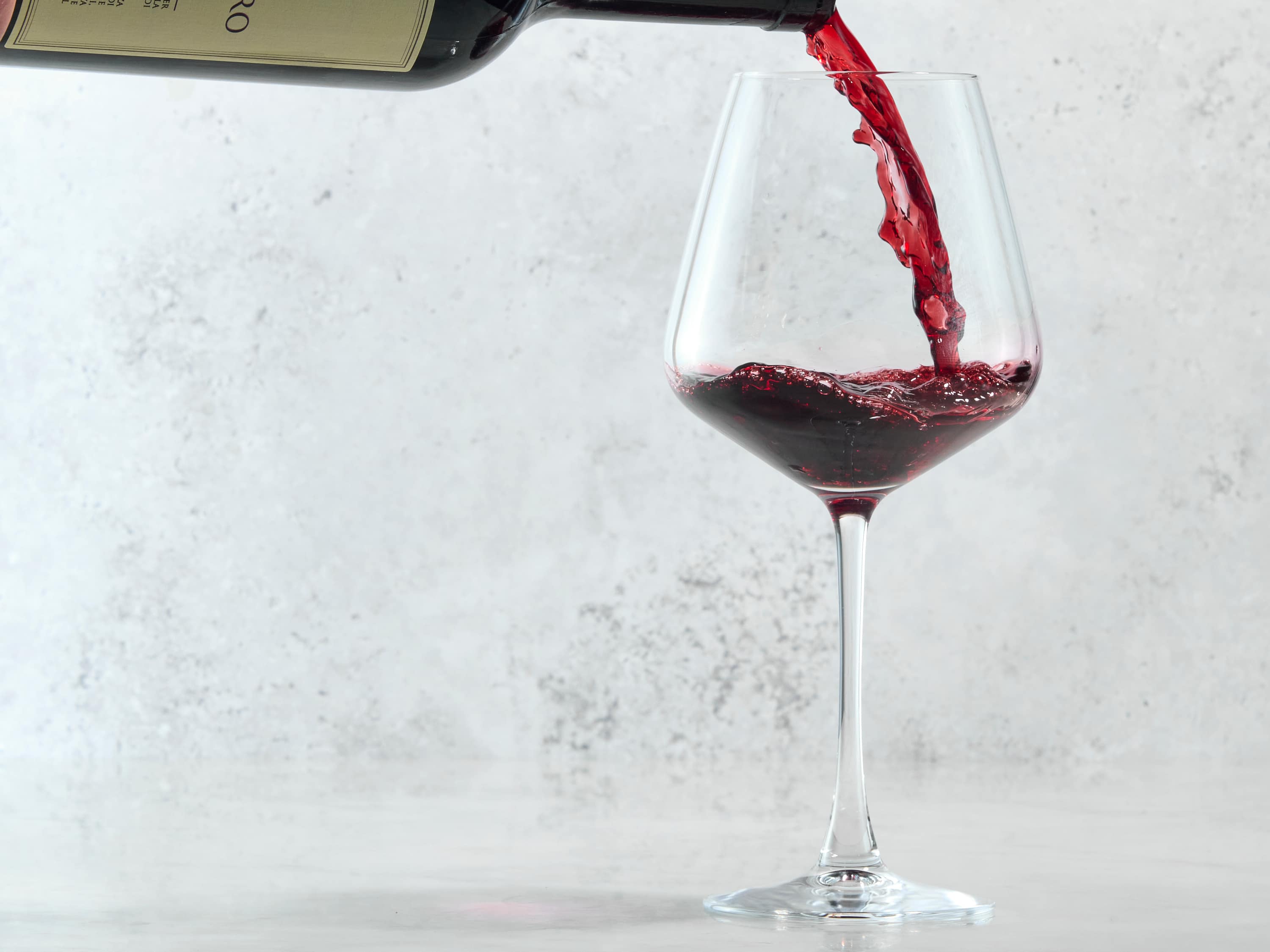
The Martha Stewart Wine Set Friends and Family Will Want to Find Under the Tree
Favicon 
www.thekitchn.com

The Martha Stewart Wine Set Friends and Family Will Want to Find Under the Tree

Plus, two more festive wine sets. READ MORE...
Like
Comment
Share
History Traveler
History Traveler
4 w

Why Napoleon’s First Grave Was Blank, and His Second Took 20 Years
Favicon 
www.thecollector.com

Why Napoleon’s First Grave Was Blank, and His Second Took 20 Years

  In May 1821, Napoleon Bonaparte, formerly Emperor of the French, died of stomach cancer on the remote island of St. Helena, where he had been exiled six years previously. While he expressed a wish in his will to be buried on the banks of the River Seine in Paris, this request was initially denied. Napoleon was finally granted his wish in 1840 when his remains were repatriated to Paris, though it would take more than two decades for the magnificent Tomb of Napoleon Bonaparte to be completed.   Napoleon’s First Tomb Napoleon’s original tomb on St. Helena. Source: Wikimedia Commons   On May 5, 1821, Napoleon Bonaparte died of stomach cancer at the age of 51 on the remote island of Saint Helena, where he had been exiled by the British after his defeat at Waterloo in 1815. In his last will and testament, dated April 15, Napoleon expressed his wish that “my remains may repose on the banks of the Seine, in the midst of the French people, whom I have loved so well.”   Contrary to popular belief, it was not the British authorities but rather the French government under the restored King Louis XVIII that denied Napoleon this wish. Accordingly, he was buried on the island of St. Helena in the picturesque Sane Valley, which has come to be known as the Valley of the Tomb. While the British government had never recognized Napoleon as emperor, he was buried with full military honors as a general. The 3,000 men of the British garrison lined the route of the cortège that brought Napoleon’s body to its first resting place.   Even on St. Helena, there were disputes about the tomb. General Tristan de Montholon, one of Napoleon’s officers who accompanied him in exile, requested for the inscription on the grave to say “Napoleon,” reflecting his style as emperor. Napoleon’s governor, Sir Hudson Lowe, insisted on the full name “Napoleon Bonaparte.” With neither side willing to back down, the gravestone remained blank. Napoleon’s remains would lie in this unmarked tomb for the next 19 years.   The Political Context King Louis Philippe I of the French, by Franz Xaver Winterhalter, 1841, © Château de Versailles, Dist. RMN / © Christophe Fouin. Source: Château de Versailles   While Napoleon’s mortal remains lay in St. Helena, France experienced further political upheaval when Prince Louis-Philippe of Orléans overthrew his cousin King Charles XI of France in the July Revolution of 1830, establishing a regime known as the July Monarchy. The new king represented the interests of the liberal bourgeoisie, was more favorable to the memory of the Napoleonic period, and sought to present himself as Napoleon’s political heir. Such initiatives included the inauguration of the Arc de Triomphe in 1836 and the creation of a new French history museum in the Palace of Versailles with grand paintings of Napoleon’s battles and his marshals.   Louis-Philippe’s efforts to claim Napoleon’s political legacy faced opposition from members of the Bonaparte family. Ever since Napoleon’s defeat at Waterloo in 1815, the Bonapartes had their estates and titles confiscated and were banned from setting foot on French soil, and Louis-Philippe maintained the policy. This did not prevent Napoleon’s nephew, Louis-Napoleon Bonaparte, from attempting to foment an uprising in Strasbourg in 1836. However, the revolt petered out very quickly, and he was forced into exile again.   By 1840, Louis-Philippe had been on the throne for a decade, and his regime was becoming unpopular among the liberals who had helped him gain power. The historian Adolphe Thiers, who served as Louis-Philippe’s prime minister, believed the government could restore its popularity by reburying Napoleon’s remains in Paris. Louis-Philippe was not convinced, fearing that such an occasion would draw attention to the contrast between Napoleon’s glory and his beleaguered government. Nevertheless, he eventually gave his backing to the project.   Les Invalides The Church of the Invalides, photograph by Jimmy Chen, 2012. Source: Jimmy Chen   In early 1840, Thiers appointed a committee of twelve (the Commission des douze) to decide on the location and design of Napoleon’s final resting place. Several locations were discussed and rejected. The Church of the Madeleine and the Vendome Column were too central and likely to attract Bonapartist crowds. The Basilica of Saint-Denis was too closely associated with the kings of France.   The site eventually chosen for Napoleon’s tomb was one of the most important military sites in the French capital. Located on the south bank of the Seine in the 7th arrondissement, the Hôtel des Invalides was founded by King Louis XIV as a retirement home for veterans of the French army, a purpose it continues to serve until the present day. Louis initially built a church to cater to the spiritual needs of the veterans but later ordered the construction of a domed royal chapel, which has become the most iconic structure in the complex.   In 1800, Napoleon transferred the remains of Marshal Turenne, one of Louis XIV’s greatest generals, from the Basilica of Saint-Denis to the Church of the Invalides. Eight years later, Napoleon followed suit by transferring the heart of Marshal Vauban, the great military engineer, to Les Invalides. Vauban’s original grave near his estate at Bazoches had been destroyed during the French Revolution.   The presence of famous soldiers such as Turenne and Vauban, coupled with the site’s preexisting military significance, made Les Invalides an obvious location for Napoleon’s final resting place. It had the advantage of being on the banks of the Seine, in accordance with Napoleon’s wishes, but in a sparsely populated area where crowds of Bonapartists were less likely to gather.   Le Retour des Cendres Napoleon’s coffin being brought to Paris during the Retour des cendres by Félix Philippoteaux, 1867. Source: Wikimedia Commons/Château de Malmaison   The process of the repatriation of Napoleon’s body, known in French as the retour des cendres, is usually translated as the “return of the ashes,” though Napoleon was not cremated, and the term cendres was used to refer to his mortal remains. It was easy enough to obtain permission from the British to exhume his body. Lord Palmerston, the British Foreign Secretary, had no objections and saw it as an opportunity to improve relations with France.   In July 1840, King Louis-Philippe’s third son François, Prince de Joinville, set sail for St. Helena in the frigate Le Belle Poule. The exhumation of Napoleon’s body took place on October 15, exactly 25 years to the day of Napoleon’s arrival on the island. By the time the Belle Poule returned to France, Thiers’ government had fallen and been replaced by a government nominally headed by Marshal Jean-de-Dieu Soult, one of Napoleon’s most accomplished subordinates, though dominated by François Guizot, a conservative who had opposed the initiative.   News of Napoleon’s repatriation to France angered the Bonaparte family, who remained banned from France and could not participate in the ceremonies honoring the emperor. This inspired Louis-Napoleon to launch a second attempt to overthrow the July Monarchy, leading to his incarceration in the Château de Ham. He would undertake a daring escape five years later.   Napoleon’s funerary cortege passing under the Arc de Triomphe, unknown artist, c. 1840. © RMN-GP (Château de Versailles) / © Franck Raux. Source: Château de Versailles   Nevertheless, with Napoleon back in France, the government decided to continue with the plans, and his remains were taken up the Seine to the outskirts of Paris by December 14. The following day, the elaborate cortege decorated with Napoleonic symbols was escorted into Paris by soldiers of the French Army via the Arc de Triomphe, down the Champs-Elysées, and over the Seine to Les Invalides. An estimated 750,000 Frenchmen gathered to witness the proceedings, including a large number of Napoleonic veterans.   By 3 pm on December 15, Napoleon’s remains had arrived at the Dome Church of Les Invalides, where the king received Napoleon’s body from his son “in the name of France.” General Gaspard Gourgaud placed the sword Napoleon had worn at Marengo and Austerlitz on Napoleon’s coffin in the Chapel of St Jerome, and a group of musicians from the Paris Opera performed Mozart’s Requiem. Among those present at the ceremony was the 86-year-old Marshal Bon-Adrien Jeannot de Moncey, then Governor of Les Invalides, who had been in poor health for several months and did not expect to live to see the event. After the ceremony was over, he allegedly remarked, “Now, let’s go home and die,” though he lived another two years.   The Tomb of Napoleon Bonaparte The Tomb of Napoleon Bonaparte from the Lower Gallery, © Musée de l’Armée-RMN Grand Palais, Emilie Cambier. Source: Fondation Nápoleon, Paris   In April 1840, the Commission des douze held a competition for the design of the tomb of Napoleon and chose the submission of Italian-French architect Louis Visconti. However, while it had taken almost two decades for Napoleon’s body to be brought from Saint Helena to Paris, it would take even longer for Visconti to realize his design, and he would not live to see its completion.   Visconti’s plans envisaged excavating an open crypt beneath the Dome of the Invalides, enabling the tomb to be seen from two levels. Visconti also planned to place Napoleon’s body (under seven nested coffins) in a sarcophagus of red porphyry like the emperors of Rome. However, he was not satisfied with the existing collections of porphyry and was eventually presented with a sample of rock from the village of Shoksha in Lake Onega in Russia, labeled as porphyry but now known as Shoksha quartzite. The rock was already being used for architectural elements in St. Isaac’s Cathedral in St. Petersburg and would later be used in Lenin’s Mausoleum.   Portrait of Louis Visconti, by Théophile Vauchelet, 1854. Source: Wikimedia Commons/Musée Carnavalet, Paris   Visconti had been given a budget of two million francs for the work, which quickly proved inadequate. The collapse of Louis-Philippe’s regime in 1848 and the establishment of the Second Republic under Louis-Napoleon further complicated issues with government financing, which was eventually approved. Work on the sarcophagus began in 1850, and It was almost complete in December 1853 when Visconti died of a heart attack, further delaying the completion of the project. The main sculptor, James Pradier, had also died the previous year while working on the statues of the twelve caryatids around the tomb.   By now, Louis-Napoleon had overthrown the Second Republic and made himself Emperor Napoleon III. He had considered a new scheme to bury his uncle at Saint-Denis but eventually gave his backing for the completion of the tomb at Les Invalides. Jules Frédéric Bouchet was appointed to succeed Visconti. Pierre-Charles Simart completed the marble work, including the Carrara marble bas-reliefs depicting major episodes from Napoleon’s reign on the surrounding walls and a statue of Napoleon as a Roman emperor.   The transfer of Napoleon’s body from St Jerome’s chapel to the completed tomb took place on April 2, 1861. The ceremony of Napoleon’s final reburial was a modest affair, with only Napoleon III and his family in attendance, along with a small number of dignitaries. The Tomb of Napoleon Bonaparte has become one of Paris’ main attractions, drawing over a million visitors a year.   Companions in Death Grave of Napoleon II, King of Rome, photograph by Jimmy Chen, 2012. Source: Jimmy Chen   Within a few years of the retour des cendres, Napoleon was joined by some of his closest comrades. In 1847, the remains of his close friend Géraud Duroc, who served as Grand Marshal of the Palace before his death in battle in 1813, were transferred to the Invalides alongside those of General Henri Gatien Bertrand. Bertrand had succeeded Duroc as Grand Marshal of the Palace and accompanied Napoleon into exile in St. Helena. In 1840, he returned to St. Helena to participate in the ceremony of Napoleon’s exhumation and reburial and died in 1844. Duroc and Bertrand’s funerary monuments were designed by Visconti as part of the scheme for Napoleon’s tomb, enabling them to continue attending to the emperor in death.   During the 1860s, Napoleon was joined at Les Invalides by two of his brothers. His youngest brother, Jérôme Bonaparte, formerly King of Westphalia, had died in 1860. In 1862, his remains were placed in St. Jerome’s chapel. He was joined two years later by Joseph Bonaparte, former King of Spain and Naples and the eldest of the Bonaparte brothers, whose coffin was placed in St. Augustine’s chapel.   In 1940, after the fall of France in WWII, Adolf Hitler presented the remains of Napoleon’s legitimate son, Napoleon Charles Francis, as a “gift” to the French people. Born in 1811 and recognized by Bonapartists as Napoleon II, after Napoleon’s abdication, he spent his life in the Austrian court where he was known as Franz, Duke of Reichstadt, and died in July 1832. His remains were transferred from the Habsburg Imperial Crypt in Vienna to the Invalides on December 15, 1940, the 100th anniversary of his father’s reburial. In 1969, they were deposited in a vault under a marble slab in front of Simart’s statue of Napoleon.
Like
Comment
Share
History Traveler
History Traveler
4 w

9 Interesting and Surprising Facts About Nevada’s History
Favicon 
www.thecollector.com

9 Interesting and Surprising Facts About Nevada’s History

  In popular imagination, Nevada is a state characterized by hot deserts, its casinos, and its nightlife. There is, of course, much more to the state than at first glance. Nevada is home to a rich history, replete with surprising facts about the Silver State and the people who live there.   1. Nevada Has Several Nicknames Big sagebrush in Nevada. Source: Famartin / Wikimedia Commons   The state of Nevada has several nicknames. Chief among them is “The Silver State,” a name earned for the prevalence of silver mining. Even in the years preceding statehood, silver mining was a huge enterprise that brought many pioneers and prospectors to the area.   Nevada is also known as the “Battle Born State” because it achieved statehood in 1864, during the Civil War. The words “Battle Born” appear on the state flag and are commonly misidentified as the state motto. The motto of Nevada is actually “All for Our Country” and can be found on the state seal.   A third nickname, “The Sagebrush State,” is derived from the fact that Nevada is covered with sagebrush. Big sagebrush (Artemisia tridentata) is the official flower of Nevada.   2. Nevada Is Home to Many Indigenous Communities A Native American woman taking part in the annual Nevada Day Parade. Source: Nevada’s Indian Territory   Nevada’s history didn’t begin with European settlers or statehood. It began with the people who lived there before. The Paiute, Shoshone, and Washoe tribes inhabited the land, and many of their descendants still live in the state today.   Currently, the state has 28 federally recognized tribes, whose members account for around 1.4% (or around 45,000 people) of its total population of 3.2 million. Native American culture in Nevada is distinct and celebrated through many traditions that keep these identities alive.   There are 31 Indian reservations and colonies dotted throughout Nevada, all of which reflect the cultural diversity of the Native American people who call this state home.   3. Nevada Produces More Gold Than Anywhere Else in the US The Lucky Jim mine near Tonopah, Nevada, 1902. Source: Western Mining History   Known as “The Silver State,” Nevada is known for having a long history of silver mining. Nevada is, however, by far the largest gold producer of all the states. Gold was first discovered in Nevada in 1849, ten years before the famous discovery of silver, and throughout its history, Nevada has produced more than twice as much gold as California—a state that got its nicknames of “The El Dorado State” and the “Golden State” because of its association with gold.   Today, Nevada’s gold production dwarfs that of other states. Its annual production is over 6 million troy ounces, while Colorado comes in second place with a little more than 300,000 troy ounces. At last count, California’s production was barely more than 150,000 troy ounces.   Silver, by comparison, is a much closer statistic. In recent years, Alaska has held the title of producing the most silver annually, but these numbers fluctuate considerably. Nevada and Colorado easily challenge for the number one spot.   It is also salient to note that most of Nevada’s silver production is actually a byproduct of gold mining!   4. Nevada Is the 36th State Location of Nevada in the United States. Source: Wikimedia Commons   On October 31, 1864, Nevada was admitted into the Union as the 36th state. This admission came just days before the presidential election, which saw Abraham Lincoln win a second term as president. It involved telegraphing the Constitution of Nevada to Congress. This transmission was the longest and most expensive telegraph ever sent!   Nevada lacked the 60,000 residents needed for a territory to achieve statehood, but this requirement was waived in Nevada’s case, and the territory was rushed to the front of the queue of other territories seeking statehood.   This was done because Lincoln wanted to ensure his reelection by securing Nevada’s three electoral votes and had presumed correctly that Nevada would increase the number of Republicans in Congress.   5. Most of the Land Is Owned by the Federal Government Logo of the United States Bureau of Land Management. Source: Wikimedia Commons   Although Alaska ranks as the state with the largest amount of land owned by the federal government, Nevada has the highest proportion of federally owned land: 80.1% of Nevada is owned by the government.   The majority of this land is under the jurisdiction of the Bureau of Land Management. Other departments, such as the Forest Service, Department of Defense, Park Service, Bureau of Reclamation, Department of Energy, and Fish and Wildlife Service, administer the other areas. Nevada is home to 23 state parks and 372 national historic sites.   Nevada is also home to the enigmatic Area 51, a military site where top secret, technologically advanced military projects are conducted, and has had a reputation for allegedly working on technology recovered from extraterrestrial spacecraft!   6. Gambling Was Legalized in Nevada in 1931 Cards and chips. Source: pxhere.com   Gambling wasn’t always legal in Nevada. In 1910, the practice was prohibited as part of an attempt to ban gambling nationwide. Laws prohibiting gambling, however, would not last. When the Great Depression hit, every state had to look for ways to bring itself out of the economic turmoil, and for Nevada, this was gambling.   In 1931, the dice were back on the table. This was the central axis around Nevada’s economic recovery, and although intended as a stopgap until the economy had recovered, outlawing gambling was never seriously considered ever again.   Gambling quickly became Nevada’s most profitable industry and remains so to this day.   7. Nevada Held the Biggest Single Public Works Project in US History Aerial view of Hoover Dam. Source: Andrew Parnell / Wikimedia Commons   Perhaps the most famous dam in the world, the Hoover Dam is certainly the most famous in the United States. When it was finished on March 1, 1936, it was the tallest dam in the world, measuring 726 feet high.   There was controversy surrounding the name since President Herbert Hoover, for whom the dam was named, was a very much disliked figure by many Americans, especially those who blamed him for the Great Depression. Until President Truman made the name official, the structure was also called “Boulder Dam.”   Nevertheless, the construction of the dam was a monumental achievement. Twenty-one thousand workers built the dam, with an average of 3,500 working daily. Approximately 4.3 million cubic yards of concrete were used in its construction, and 96 people died in the process. However, according to the Bureau of Reclamation, and contrary to popular belief, there are no dead bodies trapped within the concrete!   With so many construction workers, an entire city had to be built to accommodate them all. Boulder City was founded for this purpose, and among its local laws, alcohol and gambling were banned.   By damming the Colorado River, Lake Mead was created and serves as America’s largest reservoir. The reservoir supplies water to Nevada, America’s driest state, and its surrounding states.   Apart from the vital services provided, Lake Mead has also become a tourist destination. The first recreation area was created there in 1964, and the lake is a popular destination for boating, fishing, and swimming.   8. Nuclear Detonations Were a Tourist Attraction Reporters capturing footage of a nuclear test on June 24, 1957. Source: Las Vegas News Bureau Collection (via Las Vegas Convention and Visitors Authority)   Sixty-five miles northwest of Las Vegas is the Nevada National Security Site, also known as the Nevada Test Site, which was acquired in 1951 for the purposes of testing nuclear weapons. From 1951 to 1994, a total of 928 nuclear tests were conducted. Many of these had been conducted above ground in the early years, making them visible from Las Vegas. Huge numbers of tourists flocked to the city to witness the bright flashes and the mushroom clouds from these tests.   In 1963, a ban was put in place that prohibited the testing of nuclear weapons above ground and in the ocean, and subsequent tests were conducted below ground.   9. Slavery Was Technically Legal in Nevada Until 2024! Nevada State Legislature in Carson City. Source: Chanilim714 / Wikimedia Commons   Nevada’s strong support for the Union cause and anti-slavery sentiment were reasons why the territory was admitted to statehood. In an ironic turn of events, according to Article 1, Section 17 of the Nevada Constitution, slavery was technically legal in the state.   The section reads, “Neither Slavery nor involuntary servitude unless for the punishment of crimes shall ever be tolerated in this State.” Thus, slavery was still legal as a form of punishment until November 2024, when the people of Nevada voted to remove this language from the state’s constitution.   This wasn’t the first time this had happened in the United States, however. Between 2016 and 2022, eight other states voted on nine measures to remove technical provisions for slavery in the respective constitutions.   The flag of Nevada. Source: Wikimedia Commons   Each of the 50 states, with their histories and interesting quirks, is wholly unique. Nevada is certainly no exception. From pre-Columbian times to the modern era, Nevada has proven itself to be of much interest to pioneers, tourists, and business owners, all of whom have turned this dry patch of the United States into a thriving center of opportunity.
Like
Comment
Share
Country Roundup
Country Roundup
4 w

Travis Turner: What We Know About His Disappearance + Charges
Favicon 
tasteofcountry.com

Travis Turner: What We Know About His Disappearance + Charges

Virginia High School coach Travis Turner vanished just before serious charges were filed. Here’s what we know about his disappearance, charges and family’s plea. Continue reading…
Like
Comment
Share
Country Roundup
Country Roundup
4 w

These Actors Won't Return for Season 2 of The Hunting Wives
Favicon 
tasteofcountry.com

These Actors Won't Return for Season 2 of The Hunting Wives

A lot can change in a season, especially when death comes knocking. Let’s see who’s back and who’s not in this gripping drama. Continue reading…
Like
Comment
Share
Conservative Voices
Conservative Voices
4 w

Watch: Trump Quotes Gospel of John, Tells Audience 'You're Right' as They Cheer Jesus' Name at Nat'l Christmas Tree Lighting
Favicon 
www.westernjournal.com

Watch: Trump Quotes Gospel of John, Tells Audience 'You're Right' as They Cheer Jesus' Name at Nat'l Christmas Tree Lighting

Thursday night saw the lighting of the national Christmas tree from the White House by President Donald Trump along with First Lady Melania Trump. Although this tradition has been going on for more than 100 years, Trump's speech at the ceremony was an exceptional one for our time. The president...
Like
Comment
Share
Conservative Voices
Conservative Voices
4 w

Nearly Half of LGBT TV Characters to Vanish Next Year as Show Cancellations Pile Up
Favicon 
www.westernjournal.com

Nearly Half of LGBT TV Characters to Vanish Next Year as Show Cancellations Pile Up

GLAAD’s annual “Where We Are on TV” report offers a clear picture of the state of LGBT representation on television: It’s shrinking. The group is sounding the alarm after finding that 41 percent of LGBT characters counted this year will not return to screens next season. The reason is simple....
Like
Comment
Share
Showing 2906 out of 104338
  • 2902
  • 2903
  • 2904
  • 2905
  • 2906
  • 2907
  • 2908
  • 2909
  • 2910
  • 2911
  • 2912
  • 2913
  • 2914
  • 2915
  • 2916
  • 2917
  • 2918
  • 2919
  • 2920
  • 2921
Advertisement
Stop Seeing These Ads

Edit Offer

Add tier


Select an image
Delete your tier
Are you sure you want to delete this tier?

Reviews

In order to sell your content and posts, start by creating a few packages. Monetization

Pay By Wallet

Payment Alert

You are about to purchase the items, do you want to proceed?

Request a Refund