YubNub Social YubNub Social
    #jesuschrist #christmas #christ #merrychristmas #christmas2025 #princeofpeace #achildisborn #noël #sunrise #morning
    Advanced Search
  • Login
  • Register

  • Day mode
  • © 2025 YubNub Social
    About • Directory • Contact Us • Developers • Privacy Policy • Terms of Use • shareasale • FB Webview Detected • Android • Apple iOS • Get Our App

    Select Language

  • English
Install our *FREE* WEB APP! (PWA)
Night mode toggle
Community
New Posts (Home) ChatBox Popular Posts Reels Game Zone Top PodCasts
Explore
Explore
© 2025 YubNub Social
  • English
About • Directory • Contact Us • Developers • Privacy Policy • Terms of Use • shareasale • FB Webview Detected • Android • Apple iOS • Get Our App
Advertisement
Stop Seeing These Ads

Discover posts

Posts

Users

Pages

Blog

Market

Events

Games

Forum

SciFi and Fantasy
SciFi and Fantasy  
4 w

What Keeps You Reading?
Favicon 
reactormag.com

What Keeps You Reading?

Books Mark as Read What Keeps You Reading? Becoming a reader is different than *staying* a reader… By Molly Templeton | Published on December 4, 2025 Portrait de Marguerite (The Reader) by Henri Matisse, 1906 Comment 0 Share New Share Portrait de Marguerite (The Reader) by Henri Matisse, 1906 Lately, it feels like every time I log on, there’s a new article or post bemoaning the state of reading. Some of it is genuinely distressing; some of it draws a bit more of a side-eye, from me at least. A Smithsonian headline says “Reading for Pleasure Has Declined by a ‘Deeply Concerning’ 40 Percent Over the Past Two Decades.” I don’t want to rehash the content of all of these articles, which talk about everything from the lure of social media to the sad percentage of adults who read to children to the question of whether “performative reading” is a thing and what the term itself means. But I have been thinking about a different facet of the same topic: The people who read all the time. The kids who love books; the friends whose reading I simply cannot keep up with; the booming corners of the publishing industry, where dragons and faeries rule over all. Last month, I went to the Portland Book Festival, where the presence of Rebecca Yarros was unmissable: there were Basgiath War College sweatshirts aplenty, plus dragon imagery everywhere and women with their hair in elaborate braids that I began to understand marked them as Fourth Wing fans. The festival is always lively and well-attended, but this year, it sold out for the first time ever. And the crowd was a little different than usual, or at least looked that way. Some people aren’t reading. But some people are reading a lot. Not everything is darkness. Publishing would not put out books like Hwang Bo-Reum’s Every Day I Read: 53 Ways to Get Closer to Books if there were no market for such books. Last year, Evan Friss’s The Bookshop: A History of the American Bookstore was a bestseller. Char Adams’ Black-Owned: The Revolutionary Life of the Black Bookstore just came out last month. There are countless books about books, booksellers, publishers; journals about reading; gift items in the shape of books or designed to make you think about books; book-related tarot cards; bookish mugs and scarves and bags and magnets. Being a capital-R Reader has never felt as commodified as it does right now. Book people are clearly a market. There can’t be that few of us.  I find it hard to imagine not being a reader. I was that cliched kid who would read the back of the cereal box if there was nothing else available. I’ve read really, really random books out of sheer desperation, having underestimated my book needs on a trip to a place with no bookstore. Before phones, there was always a book in my bag; now I rarely carry a bag, but there is always something to read on my phone.  But I can also see that if only a few things were different in my childhood, I might have turned out otherwise. What if my grandmother didn’t teach me to read long before I started school? What if my house hadn’t been filled with books? What if my parents hadn’t allowed me to read anything I wanted? What if my mom didn’t read Le Guin and Tolkien to me? What if I didn’t get to make regular trips to the library? What if there had been social media when I was young? Any life is filled with these variables, the things that, had they been different, might have led us down such different paths. Some big, some small, some life-changing. I wonder what could change, still, for the people who take no joy in reading.  Becoming a reader, though, is different than staying a reader. When I’m thinking about these columns, sometimes I make my way through a series of blogs, websites, forums, newspapers, browsing around to see what people are talking and thinking about. There is always someone finding something new, and always someone struggling to sustain their joy. There’s always a list post made up entirely of obvious books and one that’s full of surprises. Now, especially, is the time of lists—all these best-of wrap-ups full of books I’ve not gotten to yet. (There are at least 50 titles on my list of “2025 books I wish to read someday”).  Still, even when I’m overwhelmed, overworked, stressed out, mid-move, missing deadlines, worrying about the world, furious at the world—in all of these times, I’m reading. Or I’m trying to read. At the very least I am putting the books I plan to read next into a stack in the middle of the room, where I can’t help but see them. Sustaining this habit is a priority because I make it one. What keeps me reading? Curiosity, more than anything. What’s out there? What don’t I know about? What will I learn from the next thing I read—about writing, about history, about people, about a place in the world, about trauma and conflict and love and contentment? Where can I go in a book that I may never go in real life? What can I take from a book to use in my own writing? What will inspire me or make me cry or leave me so rapt that I don’t want to watch TV or leave the house or anything? Why does it do that? How does it do that? What else is out there? What is it like to be in someone else’s head? What is it like to live in their space, to walk their roads? Reading, for me, is the single best way to experience lives I will never live. Watching TV and movies is delightful, magical, enjoyable, but it’s watching, and watching is different than reading. Reading, I’m in charge of the pace, how quickly or slowly I follow or race through the words. I’m in charge of casting, location, setting. The image that forms in my head may or may not exactly match the author’s description, but whatever it is, it’s something my brain—my store of ideas and visuals and references—cooks up to accompany the prose. Sometimes, it feels like practice for living.  I don’t mean to be too terribly grandiose. I have grown wary of the reading-is-good-for-you positions, the but-you-need-it-for-empathy arguments that seem to posit reading as a moral good. There are plenty of things a person can read that are not going to add to their own personal moral goodness quotient. I’m not reading because it’s good for me. Reading isn’t vegetables! I’m reading because I can’t imagine not—and because I want all the things that books encourage me to imagine.  What keeps you reading? How did books and stories come to matter in your life? Each of us has a story about how we got this way, don’t we?[end-mark] The post What Keeps You Reading? appeared first on Reactor.
Like
Comment
Share
Daily Signal Feed
Daily Signal Feed
4 w

Don’t Trust the Government to Solve the Housing Affordability Problem That It Created
Favicon 
www.dailysignal.com

Don’t Trust the Government to Solve the Housing Affordability Problem That It Created

Owning a home is a cornerstone of the American Dream. But with the recent rise in home prices and mortgage rates, homeownership feels like a far-off dream for an increasing share of Americans, especially those in their 20s and 30s. In 2019, the median first-time homebuyer was 33 years old. Today, the typical first-time homebuyer is 40 years old. That shift didn’t happen on its own. It’s an unintended consequence of the federal government’s COVID-era policies that included pumping trillions of dollars into the economy and driving short-term borrowing costs down to near zero. These policies briefly led to a homebuyer’s paradise, but over the medium-term they’ve left a dysfunctional housing market in their wake. Federal lawmakers passed an unprecedented $7 trillion in new spending between 2020 and 2022, including three rounds of stimulus checks, state and local government bailouts, and boosts to unemployment benefits, Medicaid, and Obamacare. Many Americans had ample money in their pockets in the early 2020s, and, at the time, housing was viewed as a strong investment. Simultaneously, the Federal Reserve pushed easy money and low short-term interest rates, while nearly doubling its holdings of mortgage-backed securities. These actions kept mortgage borrowing costs down. For new homebuyers in mid-2020 through mid-2022, the cost of homeownership became relatively manageable, and, as a result, home sales spiked during this period. But such artificial government stimulus can last only so long before it turns into runaway inflation. Inflation peaked in June 2022, shortly after the Fed finally reversed course on its easy money policy. And from early 2022 through 2024 the Fed tightened the money supply to beat back inflation. Mortgage interest rates, which dropped below 2.65% in January 2021, shot up to near 7.8% by October 2023. Such a dramatic increase in interest rates translates into a jaw-dropping rise in monthly payments on a 30-year loan. For a $400,000 mortgage, monthly principal and interest climbed from roughly $1,612 at the low to almost $2,877 at the peak, an additional $1,265 per month. Even after rates eased back somewhat, the financial burden of a new mortgage remained enormous. As of September 2025, the same $400,000 loan carried payments near $2,488, up 54% from January 2021. For millions of potential buyers who missed the low-interest-rate window, the math for purchasing a home no longer computes. At the same time, many recent homebuyers and those who refinanced their mortgages into rock-bottom rates in the early 2020s are reluctant to sell their homes and lose those favorable financing terms. Why give up a 3% mortgage for a 7% market rate if it means paying hundreds of thousands of dollars more in interest over the life of a loan? By 2023, more than 80% of outstanding mortgages were locked in at rates at least one percentage point below prevailing market rates, which in turn created a “lock-in” effect where existing homeowners stay put. As a result, there are fewer homes on the market than today’s high home prices would otherwise suggest. In a healthy housing market, high home prices would drive homebuilders to increase construction of new homes. That resulting new supply would help ease prices for new homebuyers. But several factors have dampened the supply response, including the higher financing costs, strict local zoning laws, and federal environmental restrictions that add bureaucratic red tape to new construction. The government manufactured the recent spike in home prices and mortgage interest rates that have made housing seem unattainable for many young Americans today. Lawmakers juiced demand for housing while the Fed worked to slash the cost of obtaining a mortgage. Interest rates aren’t just a benign, reversible lever for policymakers to push and pull at will. Interest rates are a critical market price that the government can control in the short run, but often at great cost. There are always tradeoffs. When the government spends with reckless abandon, American families always pay the price. One consequence of the government’s heavy-handed actions is that it trains homebuyers and homebuilders to look to the government—not natural market forces—to determine when and whether to buy or sell. Potential homebuyers wait for the government to create the next buyer’s paradise situation, while homebuilders and sellers of existing homes stay on the sideline waiting for the government to swing conditions in their own favor. The result is a centrally planned and stale housing market that works well for almost nobody. The best thing that the government can do to solve for the lack of affordable housing is to get out of the way. The Fed should strive to keep inflation in check while avoiding massive swings in interest rates. Lawmakers and regulators should reduce burdensome taxes and regulations. Local officials should open up more land for construction and streamline permitting processes. If we want the American Dream to remain attainable for the next generation, we must return to a free and dynamic housing market that allows people to build homes, build families, build equity, and plan out their own future. Not just in government-created windows of opportunity, but whenever it’s right for the individuals and families. The post Don’t Trust the Government to Solve the Housing Affordability Problem That It Created appeared first on The Daily Signal.
Like
Comment
Share
Hot Air Feed
Hot Air Feed
4 w

The Green Energy Revolution Was Predicated on a Lie
Favicon 
hotair.com

The Green Energy Revolution Was Predicated on a Lie

The Green Energy Revolution Was Predicated on a Lie
Like
Comment
Share
Hot Air Feed
Hot Air Feed
4 w

BREAKING: Suspect Arrested in January 6 Pipe Bomb Attack; UPDATE: NBC Identifies Suspect
Favicon 
hotair.com

BREAKING: Suspect Arrested in January 6 Pipe Bomb Attack; UPDATE: NBC Identifies Suspect

BREAKING: Suspect Arrested in January 6 Pipe Bomb Attack; UPDATE: NBC Identifies Suspect
Like
Comment
Share
Science Explorer
Science Explorer
4 w

The "Special Regions" On Mars Where It Is Forbidden To Explore, For Good Reason
Favicon 
www.iflscience.com

The "Special Regions" On Mars Where It Is Forbidden To Explore, For Good Reason

Despite being one of the most promising places to explore for signs of life, "special regions" and "uncertain regions" may be best left alone.
Like
Comment
Share
Science Explorer
Science Explorer
4 w

Live Seven-Arm Octopus Spotted In The Deep Sea – Only The Fourth Time It’s Been Seen In 40 Years
Favicon 
www.iflscience.com

Live Seven-Arm Octopus Spotted In The Deep Sea – Only The Fourth Time It’s Been Seen In 40 Years

It actually has eight arms, but then the males do something rather strange…
Like
Comment
Share
Science Explorer
Science Explorer
4 w

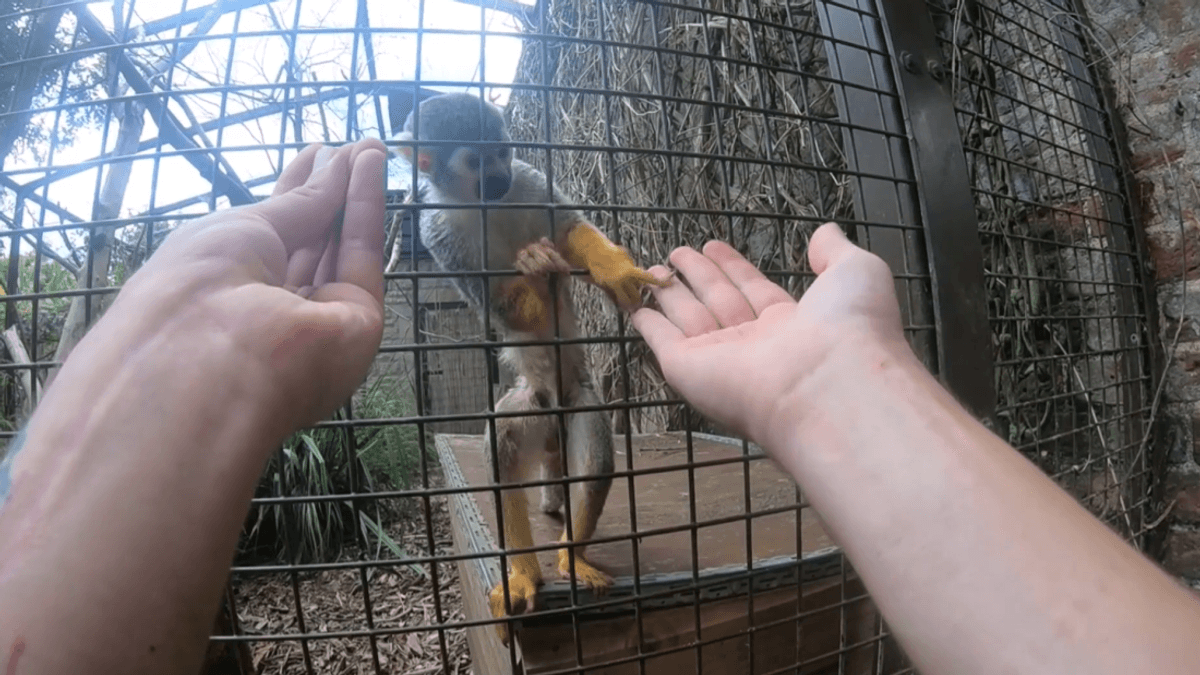
Do Animals Fall For Magic Tricks? Watch A Devastated Squirrel Monkey Prove That Yes, They Do
Favicon 
www.iflscience.com

Do Animals Fall For Magic Tricks? Watch A Devastated Squirrel Monkey Prove That Yes, They Do

Susceptibility to magic may be all in the hands for some primates.
Like
Comment
Share
Science Explorer
Science Explorer
4 w

A Strange New Species Of Bird Has Worrying Similarities To The Doomed Dodo
Favicon 
www.iflscience.com

A Strange New Species Of Bird Has Worrying Similarities To The Doomed Dodo

The new species is chilled out. Perhaps too chilled out.
Like
Comment
Share
NewsBusters Feed
NewsBusters Feed
4 w

Morning Joe’s Scarborough Interrupts WH Statement, Goes on Bible Rant
Favicon 
www.newsbusters.org

Morning Joe’s Scarborough Interrupts WH Statement, Goes on Bible Rant

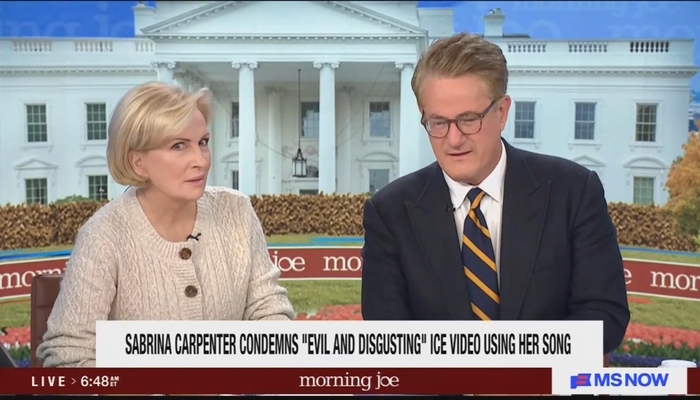
MS NOW’s Joe Scarborough came out swinging against MAGA Wednesday morning, castigating the Trump administration for its “lies” and taking pleasure in its immigration enforcement “cruelty.” The Morning Joe co-host then lashed out at the President’s supporters for, apparently, not taking the teachings of Jesus to heart. The morning program spent some time on a spat between the White House and pop artist Sabrina Carpenter, who rebuked the administration for using one of her songs in an immigration video. Co-host Mika Brzezinski started to read through the White House’s response when Scarborough got fed up and interrupted her: BRZEZINSKI: White House spokesperson Abigail Jackson responded with a statement referencing Carter's [sic] lyrics, writing, “Here's a Short ‘n Sweet message for Sabrina Carpenter: we won't apologize for deporting dangerous criminal illegal” — SCARBOROUGH: You know, I’m just — I'm tired of the lies — [Crosstalk] BRZEZINSKI: — “murderers, rapists, and pedophiles from our country.” SCARBOROUGH: Nope, nope, nope, nope, nope, nope. We're not gonna read the lies.     Oof. Wasn’t even willing to listen to both sides of the story. Interestingly, Brzezinski returned the favor by interrupting Scarborough right before he said… something: SCARBOROUGH: You know, there — they are getting students, and Jacob — BRZEZINSKI: Uppp! SCARBOROUGH: Am I not supposed to say this just yet? BRZEZINSKI: Well, just hang on, okay? It’s not clear who exactly Scarborough was about to name-drop, but it could’ve been MS NOW political and national correspondent Jacob Soboroff, who has been covering immigration for the network. Perhaps Scarborough nearly leaked a big scoop that was still under wraps! Scarborough went on to accuse Trump administration of actually enjoying violent raids: “It's savage. The savagery, the cruelty. And it's something they celebrate. They love this. They think, inside the White House, they — I mean, Donald Trump has said before he doesn't want to see mothers ripped from the arms of children, but that's exactly what they're doing tenfold compared to the first term.” Co-host Jonathan Lemire concurred with the characterization, “… you're right, it's trolling. It is government by trolling. The idea of putting out these slick videos they know are going to get a reaction, that are reveling in the cruelty of the moment.” Not too much later, after making an homage to the “extraordinarily heroic” Pope (very briefly this time), Scarborough made his pastoral debut lecturing the American public on how to treat foreigners: “And again, you just can't keep going back to the story of the Good Samaritan enough, where Jesus says, ‘Love your neighbor as yourself.’ They ask, ‘Who's my neighbor?’ And he picks the most despised foreigner, the most despised foreigner, the Samaritan to say, ‘That's your neighbor, and that's who you love, and that's who is — who will be first in the Kingdom of God.’” In any other context, one might think Scarborough had been ordained and commissioned to administer some conviction in hearts and minds. Alas, what we got was, frankly, uncouth: Because make no mistake, read the Bible. Read Jesus's words. Don't go to Leviticus. Read Jesus's words. Don't go to Nahum. Read Jesus's word. Don't go back to Exodus. Read Jesus's words and it could not be any more clear. These people who continue to support these policies are literally doing the opposite of what Jesus Christ said in Matthew, Mark, Luke and John. Wooaahhhh, calm down, buddy. What about all the crime, fraud, waste and abuse incurred by Biden’s mass-immigration policy? Ignoring that wouldn’t be loving your domestic neighbor. Weren’t you supposed to be “pretty conservative” on the border? The transcript is below. Click "expand" read: MS NOW’s Morning Joe December 3, 2025 6:47:12 a.m. EST MIKA BRZEZINSKI: Well, first it was Taylor, — JOE SCARBOROUGH: Yeah. BRZEZINSKI: — and now it's Sabrina. Sabrina Carpenter, the singer becoming the latest pop superstar to get into a feud with the Trump White House. The fight began with Carpenter slamming the administration for using one of her songs in a video applauding ICE raids. SCARBOROUGH: That's probably not — BRZEZINSKI: I wouldn't want that. SCARBOROUGH: — good branding. Yeah. BRZEZINSKI: The clip posted by the official White House X account, Twitter account, shows a video montage of ICE officers chasing and handcuffing people to a remix of Carpenter's song, “Juno.” The post includes text reading, “Bye-bye,” with a heart eyes emoji. This is so sick. SCARBOROUGH: Yeah, the cruelty is really — BRZEZINSKI: I am sorry. SCARBOROUGH: — is staggering. BRZEZINSKI: This is so sick. The singer responded with a video — a post of her own, writing, “this video is evil and disgusting. Do not ever involve me or my music to benefit your inhumane agenda.” White House spokesperson Abigail Jackson responded with a statement referencing Carter's [sic] lyrics, writing, “Here's a Short ‘n Sweet message for Sabrina Carpenter: we won't apologize for deporting dangerous criminal illegal” — SCARBOROUGH: You know, I’m just — I'm tired of the lies — [Crosstalk] BRZEZINSKI: — “murderers, rapists, and pedophiles from our country.” SCARBOROUGH: Nope, nope, nope, nope, nope, nope. We're not gonna read the lies. You know, there — they are getting students, and Jacob — BRZEZINSKI: Uppp! SCARBOROUGH: Am I not supposed to say this just yet? BRZEZINSKI: Well, just hang on, okay? SCARBOROUGH: They are — ICE is getting innocent people that are going to see their family. They are busting down, like, kindergartens and pulling out kindergarten teachers. They're throwing mothers to the ground. It's savage. The savagery, the cruelty. And it's something they celebrate. They love this. They think, inside the White House, they — I mean, Donald Trump has said before he doesn't want to see mothers ripped from the arms of children, but that's exactly — BRZEZINSKI: That’s been — SCARBOROUGH: — what they're doing tenfold compared to the first term. It's why he's upside down on immigration, an issue that should be his strongest because the southern border is shut down. JONATHAN LEMIRE: Yeah. And as much as Trump has said he doesn't want that, but at the same time, he sat down with 60 Minutes a month ago and was told — he was asked about immigration and his sinking poll numbers, saying, “Well, we have to go harder. We have to go harder with the deportation,” doubling down on this. But you're right, it's trolling. It is government by trolling. The idea of putting out these slick videos they know are going to get a reaction, that are reveling in the cruelty of the moment. And not just Sabrina Carpenter, but a lot of Americans have said, “We don’t want this. This isn’t what we want. We’re disgusted by this.” (…) 6:51:39 a.m. EST SCARBOROUGH: David, one church institution that's showing compassion is the Catholic Church. The Pope has been extraordinarily heroic and — well, in doing his job. I mean, he's quoting Jesus. He's quoting the most obvious parts of the red letters. Which, of course leads to the question, how do so many people who are — who grew up in our churches, who grew up as Baptists like me across the deep south, how are so many people turning a blind eye not only to the savagery here, but also to a President they voted for twice calling God's children — let's make no mistake of this, Jesus was very clear. We're all God's children. And in fact, when he talks about the last being first and the first being last, well, you could probably put billionaire leaders on one side of that and Somali immigrants on the other. When he calls Somalis, quote, “human garbage,” that is something — again, for people who didn't grow up in the Baptist church, who didn't grow up reading the red letters, didn't grow up in the Gospels, didn't grow up like you and me, you know, reading about this in, you know, Sunday school and training union. I mean, the thing is, when you get into the Gospels, they're not so many rules, people like to talk about rules, the commandment is, just time and time again, blessed are the merciful for they shall be shown mercy. Like, what you do to the least of these among me, you do to me, myself. And again, you just can't keep going back to the story of the Good Samaritan enough, where Jesus says, “Love your neighbor as yourself.” They ask, “Who's my neighbor?” And he picks the most despised foreigner, the most despised foreigner, the Samaritan to say, “That's your neighbor, and that's who you love, and that's who is — who will be first in the Kingdom of God.” So again, a very long windup to ask this question. How have these people been so programed to forget every single thing they were taught in church, in Sunday school, in training union on Wednesday night Bible studies, like, how have they been so programed that they completely put this political, I don't even know what to call it, over the teachings of Jesus Christ? Because make no mistake, read the Bible. Read Jesus's words. Don't go to Leviticus. Read Jesus's words. Don't go to Nahum. Read Jesus's word. Don't go back to Exodus. Read Jesus's words and it could not be any more clear. These people who continue to support these policies are literally doing the opposite of what Jesus Christ said in Matthew, Mark, Luke and John.

Like
Comment
Share
The Blaze Media Feed
4 w

Do we love the 'Wicked' movies because we hate innocence?
Favicon 
www.theblaze.com

Do we love the 'Wicked' movies because we hate innocence?

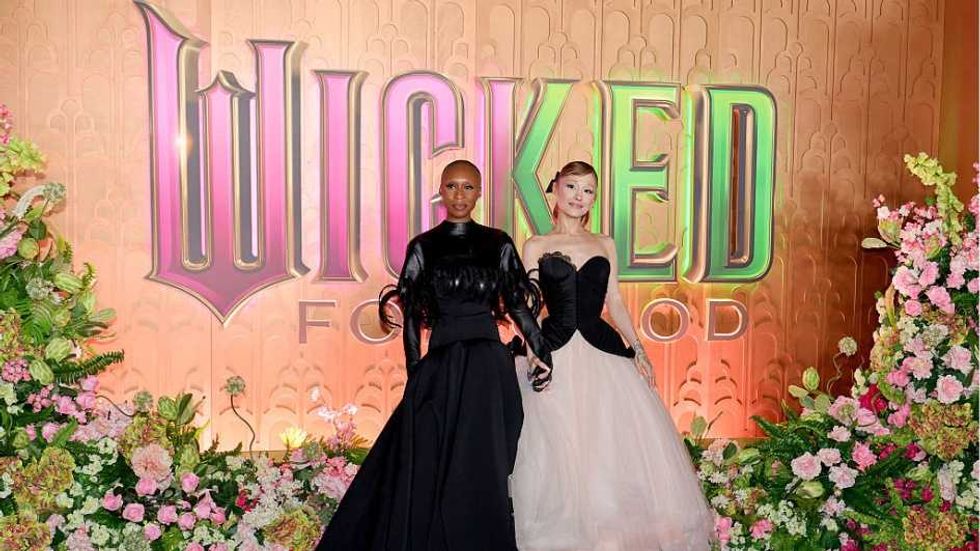
As I watched Jon M. Chu's "Wicked: For Good" last week, I kept thinking about another, very different filmmaker: David Lynch. Specifically, the Lynch that emerges from Alexandre Philippe's excellent 2022 documentary "Lynch/Oz," wherein we discover just how deeply the infamously surreal filmmaker was influenced by one of cinema's sweetest fantasy films: the original "Wizard of Oz." In the era of #WitchTok ... a story like 'Wicked' has built-in appeal. Philippe's film includes footage from a 2001 Q and A in which Lynch confirms the extent of his devotion: "There is not a day that goes by that I don't think about 'The Wizard of Oz.'"The logic of fairylandAnd that shouldn't be surprising given how much it shows up in his work. From Glinda the Good Witch making an appearance in "Wild at Heart," to the hazy, dreamlike depiction of suburbia in "Blue Velvet," his films exist in a dual state between the realm of fairyland and the underworld.Indeed, Lynch doesn't reject either. In proper Buddhist fashion, these two forces exist in balance, equally potent and true. There is both good and evil in his world. Neither negates the other's existence. And when darkness spills over into the light, it may be tragic, but it is also just another part of the world. Like Dorothy, his protagonists find themselves walking deeper into unknown territory. The protagonists of his films truly "aren't in Kansas anymore.""The Wizard of Oz" is potent because it captures the logic of fairyland better than almost any film ever made. Channeling the fairy stories of J.R.R. Tolkien, Lewis Carroll, and George MacDonald, it transports the mind to a realm that is more real than real, where even the most dire intrusion of evil can be set right according to simple moral rules. As G.K. Chesterton famously puts it:Fairy tales do not give the child his first idea of bogey. What fairy tales give the child is his first clear idea of the possible defeat of bogey. The baby has known the dragon intimately ever since he had an imagination. What the fairy tale provides for him is a St. George to kill the dragon.Wicked good"Wicked" and its new sequel reject this comforting clarity for something altogether more "adult" and ambiguous. Instead of presenting good and evil as objective realities that can be discerned and defeated, the films show how political authorities manipulate those labels to scapegoat some and exalt others.They do so by swapping the original's heroes and villains. The Wonderful Wizard is a cruel tyrant. Glinda is foppish and self-obsessed. Dorothy is the unwitting tool of a corrupt regime. And Elphaba — the so-called Wicked Witch — is reimagined as a sympathetic underdog with a tragic backstory, a manufactured villain invented to keep Oz unified in ire and hatred.Elphaba exudes a whiff of Milton's Lucifer — an eternal rebel in a tragic quest to upend the moral order. But unlike "Paradise Lost," "Wicked" presents rebellion against its all-powerful father figure not as a tragic self-deception, but as a justified response to systemic cruelty.Witch way?"Wicked: For Good" takes the ideas of its predecessor even further than mere rebellion. If "Wicked: Part One" is about awakening to the world's realities and becoming radicalized by them, "Wicked: For Good" is about the cost of selling out — the temptation to compromise with a corrupt system and the soul-crushing despair that follows.This is where the irony of the film's title, "Wicked: For Good" comes in. Once a person sees the world for what it truly is, they can't go back without compromising themselves. They've "changed for good." They've awakened and can't return to sleep.It's worth considering why the "Wicked" franchise is so wildly popular. Gregory Maguire's original 1995 novel has sold 5 million copies. The 2003 stage show it inspired won three Tony Awards and recently became the fourth longest-running Broadway musical ever. And the first film grossed $759 million last winter, with the sequel poised to make even more money. Perhaps it is no coincidence that this outsize success comes at a time when Wicca and paganism have grown into mainstream cultural forces. In the era of #WitchTok, in which self-proclaimed witches hex politicians and garner billions of views on social media, a story like "Wicked" has built-in appeal. It offers glamorous spell-casting and a romantic tale of resistance to authority.RELATED: 'Etsy witches' reportedly placed curses on Charlie Kirk days before assassination Photo by The Salt Lake Tribune / Contributor via Getty ImagesA bittersweet moralThe temptation of witchcraft is one that always hovers over our enlightened and rationalistic society. Particularly for young women, witchcraft offers a specific form of autonomy and power — over body, spirit, and fate — that patriarchal societies often deny. Many view witchcraft as progressive and empowering; "witchy vibes" have become a badge of identity.Thus the unsettling imagery of Robert Eggers' 2015 film "The Witch" comes into focus: A satanic coven kidnaps and kills a Puritan baby, seduces a teenage girl, and gains the power to unsubtly "defy gravity" through a deal with the devil."Wicked" is all about this power to transcend. Even as its protagonist grows despairing in the second film and abandons her political quest for the freedom of the wastelands, the film presupposes that it is better to resist or escape a corrupt system than submit to it.Ultimately, the two films leave their audience with a bittersweet moral: Society is dependent on scapegoats. The Platonic noble lie upon which all societies rest cannot be escaped — but it can be redirected. A new civic myth can be founded that avoids sacrificing the vulnerable and overthrows the demagogues atop Mount Olympus. And the witches play the central role in overturning the world of Oz. Their rebellion sets it free.But because the films blur the clear, objective distinction between good and evil — even while acknowledging that real evil exists — the characters in "Wicked" often drift in moral grayness, defining themselves mainly in relation to power. The world becomes overbearing, radicalizing, and morally unstable.Sad truthThis is far afield from the vision of Oz presented in the 1939 film, the one David Lynch venerated as vital to his understanding of the world. But it reflects how modern storytellers often grapple with Oz. Almost every sequel or spin-off struggles to recapture the sincerity of the original. The 1985 sequel "Return to Oz" reimagined the land with a dark-fantasy twist. 2013's "Oz the Great and Powerful" comes closest to the original tone but centers on fraudulence and trickery. "Wicked," too, falls in line with the modern tendency to subvert and complicate traditional stories of good versus evil. "Frozen," "The Shape of Water," "Game of Thrones," and "Star Wars: The Last Jedi" all explore morally conflicted worlds where bravery is futile or where Miltonian rebellion is celebrated.Of course, seeing the stories of our childhood with a jaundiced adult eye can be quite entertaining; it's perfectly understandable why even those not in covens love these films. They are well-made, well-performed, and especially irresistible to former theater kids (I am one). Their popularity isn't inherently bad either. They are perfectly fine in isolation. It is only when we contrast them with the clarity and beauty of the original — and place them within the context of our society — that a sad truth emerges: Finding fairyland is hard. Most of us prefer to live in the Lynchian underworld.
Like
Comment
Share
Showing 3205 out of 104493
  • 3201
  • 3202
  • 3203
  • 3204
  • 3205
  • 3206
  • 3207
  • 3208
  • 3209
  • 3210
  • 3211
  • 3212
  • 3213
  • 3214
  • 3215
  • 3216
  • 3217
  • 3218
  • 3219
  • 3220
Advertisement
Stop Seeing These Ads

Edit Offer

Add tier


Select an image
Delete your tier
Are you sure you want to delete this tier?

Reviews

In order to sell your content and posts, start by creating a few packages. Monetization

Pay By Wallet

Payment Alert

You are about to purchase the items, do you want to proceed?

Request a Refund