YubNub Social YubNub Social
    #freedom #libtards #terrorism #patriots #antifa #privacy #americafirst #loonyleft #surveillancestate #police\ #alpr #flock
    Advanced Search
  • Login
  • Register

  • Night mode
  • © 2026 YubNub Social
    About • Directory • Contact Us • Developers • Privacy Policy • Terms of Use • shareasale • FB Webview Detected • Android • Apple iOS • Get Our App

    Select Language

  • English
Community
New Posts (Home) ChatBox Popular Posts Reels Game Zone Top PodCasts
Explore
Explore
© 2026 YubNub Social
  • English
About • Directory • Contact Us • Developers • Privacy Policy • Terms of Use • shareasale • FB Webview Detected • Android • Apple iOS • Get Our App
Advertisement
Stop Seeing These Ads

Discover posts

Posts

Users

Pages

Blog

Market

Events

Games

Forum

Conservative Voices
Conservative Voices
2 d ·Youtube Politics

YouTube
John Thune's Weak Excuses DESTROYED!
Like
Comment
Share
Comedy Corner
Comedy Corner
2 d ·Youtube Funny Stuff

YouTube
Losing the Booty | Pat Brown Stand-Up Comedy
Like
Comment
Share
Intel Uncensored
Intel Uncensored
2 d News & Oppinion

rumbleBitchute
Vaccine pusher Top Gear's Jeremy Clarkson diagnosed with CANCER
Like
Comment
Share
History Traveler
History Traveler
2 d

9 Balfour Declaration Facts That Explain a Century of Conflict
Favicon 
historycollection.com

9 Balfour Declaration Facts That Explain a Century of Conflict

In 1917, a 67-word letter from a British foreign secretary promised Palestine to two peoples at once. These nine facts explain how the Balfour Declaration works, why it was so deliberately vague, and why its consequences are still unfolding today. The post 9 Balfour Declaration Facts That Explain a Century of Conflict appeared first on History Collection.
Like
Comment
Share
Let's Get Cooking
Let's Get Cooking
2 d

Fajita-Style Ground Beef Skillet
Favicon 
www.thekitchn.com

Fajita-Style Ground Beef Skillet

Just add tortillas! READ MORE...
Like
Comment
Share
Let's Get Cooking
Let's Get Cooking
2 d

The "Gorgeous" Pyrex Bowls That Will Make You Quit Plastic Food Containers
Favicon 
www.thekitchn.com

The "Gorgeous" Pyrex Bowls That Will Make You Quit Plastic Food Containers

And they're on sale! READ MORE...
Like
Comment
Share
History Traveler
History Traveler
2 d

8 Key Festivals of the Pagan Wheel of the Year
Favicon 
www.thecollector.com

8 Key Festivals of the Pagan Wheel of the Year

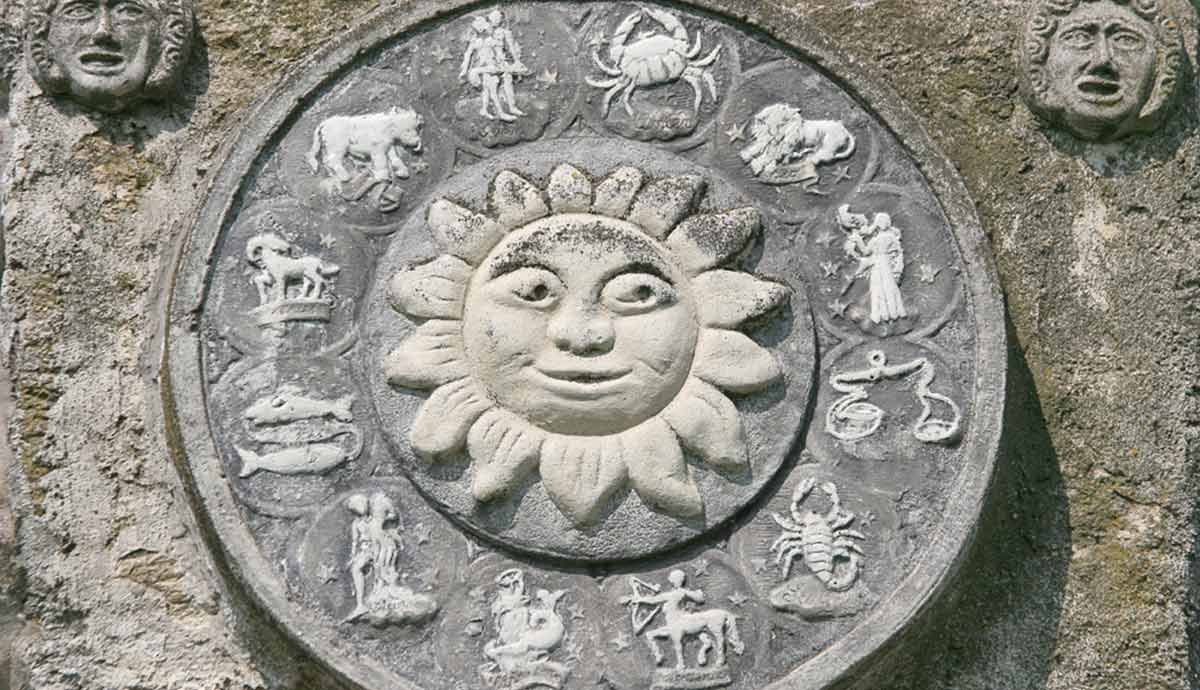
  We know from the historical record that our ancestors marked time and organized their lives around the changing of the seasons, with major festivals associated with moments such as the height of summer, the harvest, and winter hibernation. As modern paganism celebrates our pre-Christian past and looks to re-embrace ancient traditions, it has developed its own spiritual calendar centered on the solstices and equinoxes and the rhythm of nature. This is known as the Wheel of the Year. Drawn principally from the traditions of Ireland and other Celtic nations, these are the major dates that characterize the pagan Wheel of the Year.   Imbolc (February 1/2) Imbolc celebrations in Marsden, West Yorkshire, 2007. Source: Wikimedia Commons   Imbolc, the festival traditionally observed on February 1st and 2nd in the Northern Hemisphere, is a Gaelic seasonal festival celebrated between the winter solstice and the spring equinox, marking the transition from winter to spring. As ancient traditions merged into Christianity, it became known as Saint Brigid’s Day, celebrating the Irish goddess Brigid, who transformed into the patron saint of Ireland. Brigid is a goddess of wisdom, healing, poetry, and protection. Saint Brigid was reportedly a 6th-century abbess of Kildare who gained sainthood, but the two are often impossible to untwine.   While Imbolc appears less often in surviving early Irish literature than other festivals, scholars agree that it was a pre-Christian agrarian festival connected to the lambing season and the goddess Brigid. Moder traditions such as weaving Brigid’s crosses, parading Brídeóg dolls, and visiting holy wells probably date to ancient times. Archaeological evidence suggests this date was important as far back as Neolithic times, as tombs aligned with the sun at Imbolc and Samhain have been discovered.   Men making St. Brigid’s crosses in Toome, Co. Antrim, c. early 1900s. Source: Ulster Folk Museum   In Ireland, many ancient traditions can be seen in Saint Brigid Day celebrations. In County Kerry, the annual Biddy’s Day Festival has participants in straw hats and masks carrying a Brídeóg to secure protection and prosperity, along with folk music, lectures, and cross-weaving workshops, culminating in a torchlit parade. Since 2009, County Louth has hosted the Brigid of Faughart Festival, integrating pilgrimage, poetry, and scholarly reflection on Brigid as saint and goddess. There is also Derry’s Imbolc International Music Festival and Marsden’s Imbolc Fire Festival, which stages lantern processions and symbolic battles.   Ostara (March 20-23) Eostre, by Johannes Gehrts, 1888. Source: Wikimedia Commons   Ostara is often credited with being one of the inspirations for Christian Easter. It is the festival of the spring equinox, marking the transition between the depths of winter and the ascent toward summer. The term derives from Jacob Grimm’s reconstruction of an Old High German form of the Old English Ēostre, an Anglo-Saxon goddess described by Bede as honored with feasts during “Eosturmonath,” corresponding to April in the Julian calendar.   Linguistically linked to “east” and “dawn,” Eostre/Ostara symbolizes renewal and the awakening of nature. It is the second spring festival within the Wheel of the Year, the first, Imbolc, celebrating the emergence of the goddess, while at Ostara she matures and unites with the sun god in sacred marriage.   Many modern Easter symbols can be linked to Ostara, including eggs and rabbits, which represent fertility. Ostara, when the length of the day and night are in balance, is when the planting season would start in earnest.   Beltane (May 1) May Queen at the Beltane Festival in Edinburgh, Scotland, 2025. Source: BBC   Beltane, the May Day festival, is held on May 1st and marks the onset of summer and occupies the midpoint between the spring equinox and the summer solstice. Also known as Cétshamhain (first of summer), it is referenced in early Irish and Scottish literature and was associated with pastoral practices such as driving cattle to summer pastures.   Beltane was marked with protective rituals involving bonfires, as the flames, smoke, and ashes were believed to safeguard people, livestock, and crops. Communities extinguished household fires and rekindled them from the sacred Beltane flame. Cattle were passed between fires to secure blessings, and people often leapt over fires for good luck. Women who wanted to become pregnant would place a cauldron over a fire and jump across it. Children who were conceived at this time of year were said to be special and potentially possess a unique connection to the spiritual realm.   Beltane bonfire on the Hill of Uisneach, County Westmeath, Ireland, 2022. Source: Wikimedia Commons   The 10th-century Sanas Cormaic interprets Beltane as “lucky fire” or “fire of Bel,” underscoring its divine associations. Beyond agrarian rites, Beltane celebrated fertility, creativity, and communal joy, expressed through courtship dances, Maypole rituals, and symbolic acts of conception. Other festivities included feasting, offerings to deities, adornment of homes and livestock with yellow May flowers, visits to holy wells, and the use of Beltane dew as beauty products.   Litha (June 20-21) Sunrise during summer solstice celebrations at Stonehenge, England, 2025. Source: The Guardian   Litha, or Midsummer, is celebrated on the summer solstice on the 20th or 21st of June and marks the formal beginning of summer. Modern celebrations draw on various cultural traditions. Among the Celts, hilltop bonfires and dancing were common, with participants leaping through flames for luck and vitality. Other European customs included igniting wheels and rolling them into rivers or lakes, symbolizing solar energy and renewal. The solstice, the longest day of the year, was often interpreted as a cosmic contest between light and darkness.   Archaeological evidence demonstrates that the summer solstice has been important since the Neolithic era. Monuments such as Stonehenge in England, Newgrange in Ireland, and Bryn Celli Ddu in Wales were deliberately aligned with sunrises or sunsets on the solstice.   Postcard of children from Dyrham School maypole dancing, Gloucestershire, c. 1912. Source: National Trust   The Old English word “midsumor” attests to its enduring recognition, while Christian reinterpretations frame midsummer fires as symbols of St. John the Baptist and protection against malign forces. Modern observances include gatherings at Stonehenge, herbal rituals using plants such as St. John’s Wort and Lavender, and communal activities that emphasize reverence for nature’s energy.   The name Litha comes from the Anglo-Saxon names for the months of June and July, līða, which fall on either side of the solstice.   Lughnasadh (August 1) Poster for Lughnasadh music and arts festival 2024, held annually at the Forgan Arts Centre in Newport-on-Tay, Fife, Scotland. Source: Snack Magazine   Lughnasadh, celebrated on August 1st, is a festival marking the commencement of the harvesting season and was historically celebrated across the British Isles. Positioned between the summer solstice and autumn equinox, it symbolized the first fruits of agricultural labor and the delicate balance between nature’s bounty and human effort. For agrarian communities, Lughnasadh inaugurated the reaping of corn, a process that continued until Samhain.   Rooted in Celtic tradition, the festival celebrates the god Lugh, renowned for mastery of skills and crafts, and commemorates his foster-mother Tailtiu, who, according to legend, died after preparing Ireland for cultivation. Rituals included feasting, athletic contests, storytelling, matchmaking, and offerings, blending solemn remembrance with communal joy.   Later, Anglo-Saxon communities observed Lammas, or “Loaf Mass,” on the same date, a Christianized harvest festival marked by baking bread from the first grain and blessing it within the Church.   Mabon (September 21-23) Photograph of the Castle or Pyramid of Kukulcan at Chichen Itza, Mexico, taken in 2025. Source: ChichenItza.com   Mabon is celebrated around September 21–23 in the Northern Hemisphere to coincide with the autumn equinox. It is when communities started collecting fruit, nuts, and grains to store for the colder winter months ahead.   While evidence for how the Celts marked Mabon is limited, we know more about other cultures. The Mayans designed Chichen Itzá to capture equinoctial sunlight, while Neolithic and Bronze Age communities constructed monuments such as Carin T in Ireland and Mnajdra in Malta to align with sunrise on the equinox.   Votive plaque depicting elements of the Eleusinian Mysteries, mid-4th century BC. Source: National Archaeological Museum, Athens, Greece   Mythologically, Mabon represents the descent of the Sun King and the Goddess’s transformation into her crone aspect, paralleling Persephone’s journey to the Underworld. The Greek Eleusinian Mysteries similarly underpin life, death, and rebirth, reflecting harvest symbolism.   The modern name “Mabon” was introduced in the 1970s by Aidan Kelly, inspired by Welsh mythology of Mabon ap Modron, “Son of the Mother.” Contemporary Pagan observances intertwine ancient harvest traditions with modern interpretations, honoring deities, vegetation cycles, and the balance of light and shadow.   Samhain (October 31-November 1) Macnas Samhain parade in Dublin, Ireland, 2024. Source: ACM Multimedia   Perhaps the most famous sabbat of the Pagan Wheel is Samhain, because it corresponds with the modern festival of Halloween. Samhain festival started at sunset on October 31st and continued throughout November 1st, marking the end of the harvest season and the onset of winter, often described as the “darker half” of the year.   Originating in Ireland, Samhain was widely celebrated across Ireland, Scotland, and the Isle of Man, with its Welsh equivalent known as Calan Gaeaf. It functioned both as a pastoral harvest festival and as the Celtic New Year. This was a time when the veil between the worlds was considered at its thinnest, and the chances of supernatural encounters were most likely. Consequently, bonfires were central to celebrations as they were believed to offer protection from the unseen.   Archaeological evidence, such as the alignment of Neolithic tombs like the Mound of the Hostages at Tara, suggests its observance predates Celtic culture. Literary sources from the 9th century describe feasts, gatherings, and the opening of burial mounds as portals to the Otherworld.   Student Halloween party at the University of Southern California, Los Angeles, USA, c. 1890. Source: USC History Collection, Driehaus Museum, Chicago   Ancestors were revered with offerings, while costumes and masks were worn to ward off harmful forces. Later traditions included mumming and guising, first recorded in 16th-century Scotland, spreading back to Ireland before evolving into modern Halloween customs. Mumming and guising involved dressing up in faerie-inspired attire and reciting verse in return for food or other gifts, while some participants would threaten mischievous practical jokes if they did not receive such a reward.   Christianity incorporated ancestor veneration into All Saints’ and All Souls’ Days, while Irish emigrants carried Samhain-derived practices to America, where they blended with local harvest traditions. Turnip and potato carving developed into pumpkin carving, and mumming and guising became “trick or treating,” shaping Halloween into a major cultural festival in the United States.   Yule (December 20-21) Håkon den Gode og bøndene ved blotet på Mære (Håkon the Good and the farmers at the lake on Mære), by Peter Nicolai Arbo, 1860. Source: Wikimedia Commons   Yule is a winter festival historically central to the lives of Germanic peoples, later merged with Christmas during Christianization. The term “Yule” remains in English, Scandinavian, Finnish, and Estonian to denote Christmastide. Several modern customs, including the Yule log, Yule goat, and Yule singing, may derive from older pagan traditions.   Yule is attested to in early Germanic calendars, such as the Gothic Fruma Jiuleis (5th–6th century AD), and in Bede’s 8th-century account of the Anglo-Saxon months geola or giuli. The Saga of Hákon the Good credits King Haakon I of Norway with aligning Yule to Christian Christmas, mandating communal ale feasts as part of the celebration.   Winter solstice celebrations at Glastonbury Tor, England, 2024. Source: BBC   In pre-Christian Britain, Druids marked the solstice by cutting mistletoe from sacred oaks, representing life amid winter darkness. They also lit a Yule log, a twelve-day fire to banish evil, ensure luck, and celebrate renewal.   Modern pagan traditions interpret Yule diversely, yet Wicca commonly observes it at the winter solstice as the rebirth of the Horned God, representing the newborn sun. Practices range from private rites to coven gatherings, with intentions of peace, harmony, and resilience amid winter’s symbolic darkness and historical hardship.

Like
Comment
Share
History Traveler
History Traveler
2 d

How Pyrrhonian Skepticism and Nietzsche Make You Question Everything
Favicon 
www.thecollector.com

How Pyrrhonian Skepticism and Nietzsche Make You Question Everything

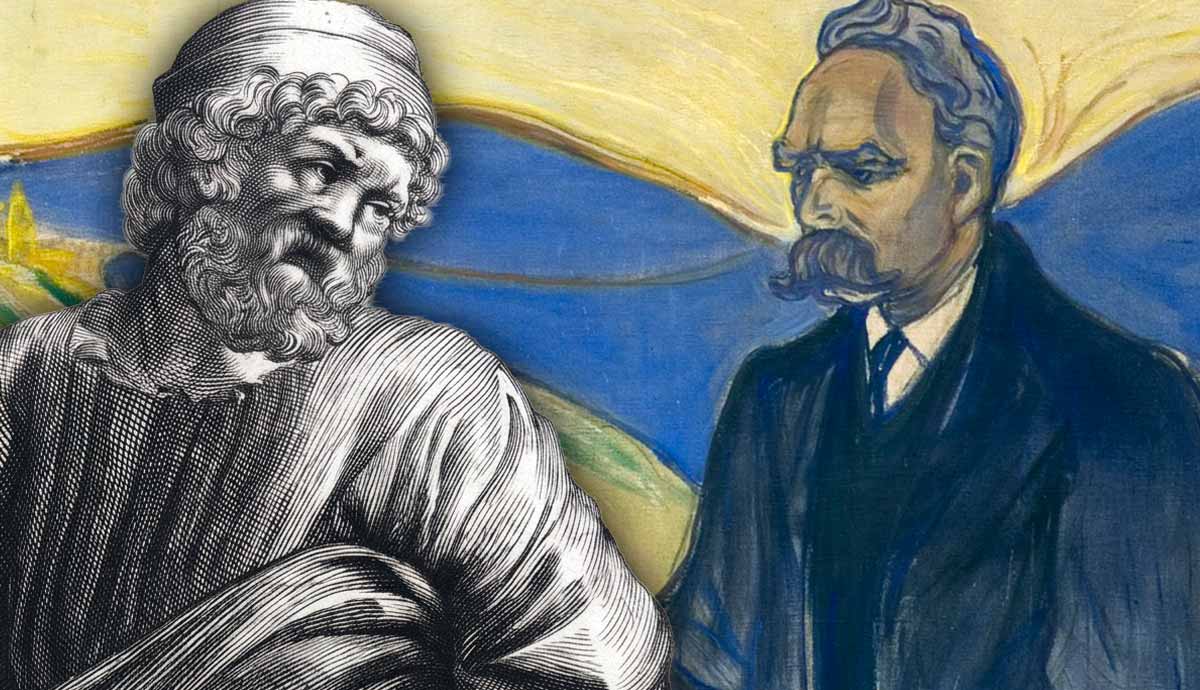
  Long before Nietzsche challenged morality and the knowledge of his contemporaries, Pyrrhonian skeptics pioneered radical doubt. By suspending judgment (epoche) and seeking tranquility (ataraxia), they questioned the very possibility of knowledge. Nietzsche admired their relentless critique of dogma but rejected their passive detachment, instead transforming skepticism into a life-affirming philosophy of struggle and creativity. This article examines the origins, core principles, and enduring impact of ancient skepticism, tracing its resonance in Nietzsche’s provocative philosophy.   Origins of Ancient Skepticism School of Athens, by Raphael, 1511. Source: Vatican Museums   Ancient skepticism emerged in Greece around the 4th century BC as a radical alternative to the dogmatic philosophies of the time. Its rise coincided with a period of intellectual fragmentation, in which competing philosophical schools advanced incompatible accounts of nature, knowledge, and the good life. The apparent failure of these systems to secure agreement or certainty prompted some thinkers to question whether such foundations were attainable at all. Skeptics responded by turning their attention away from the construction of metaphysical systems and toward the limits of human cognition itself.   Skeptics questioned the very possibility of certain knowledge, advocating the suspension of judgment (epoche) as a path to peace of mind (ataraxia). Unlike Plato or Aristotle, who sought foundational truths capable of grounding ethics and knowledge, skeptics argued that human faculties are limited and fallible, and that claims to certainty often exceed what experience can justify.   Arcesilaus and Carneades, skeptics from the new Academy. Source: Wikimedia Commons   Two primary schools developed: Academic Skepticism and Pyrrhonian Skepticism. Academic Skepticism developed within Plato’s Academy in the generations following Plato. Figures such as Arcesilaus (315-240 BC) transformed the school into a skeptical institution that denied the possibility of certain knowledge and held that beliefs could at best be considered probable.   Pyrrhonian Skepticism, named after Pyrrho of Elis (360-275 BC), went further by refusing to endorse even this conclusion. Instead, it emphasized the persistent balance of opposing arguments. They asserted that for every proposition there exists an equally persuasive counter-proposition. Pyrrhonism additionally aimed to function as a practical mode of inquiry by promoting an engagement with the world without committing to fixed beliefs.   Core Tenets of Pyrrhonian Skepticism Marble Head of Pyrrho, 2nd Century AD. Source: Wikimedia Commons   Pyrrhonian skepticism is as much practical as philosophical. Its central principle is withholding assent to any claim, a suspension of judgement known as epoche. Skeptics weigh every proposition against an opposing argument, a method formalized as the ten “tropes” by Sextus Empiricus. Observing a table, for example, they might note contradictory perceptions of its color or weight, thus demonstrating that certainty is elusive.   The ultimate goal of their approach was ataraxia, a type of mental tranquility unshaken by the presence of doubt. In other words, it was a form of humility that acknowledges the limits of perception and reason. This approach also had ethical implications. By acknowledging the fallibility of reason and perception, the skeptic avoided conflict.   Skepticism also introduced the idea of epistemic relativism. Because beliefs vary across cultures, contexts, and individuals, no single perspective is privileged. Experience and reflection take precedence over rigid truths. Such questioning creates a mindset of cautious inquiry, which would later influence Nietzsche and partially inform his critique of moral and metaphysical dogma. While Pyrrhonian tranquility differs from Nietzsche’s affirmative philosophy, the method of radical questioning provided him with tools to confront inherited systems of thought.   Key Figures and Their Legacy Pyrrho, 1655. Source: Wikimedia Commons   Pyrrho of Elis (c. 360–275 BC) was born in the Peloponnesian city of Elis. He traveled extensively, including journeys with Alexander the Great, observing a wide variety of peoples and their customs.   Little of his own writing survives. Our knowledge of him comes mainly from Diogenes Laertius and later skeptics. These sources portray Pyrrho as a careful, inquisitive observer whose life embodied the curiosity and intellectual experimentation of a Greek philosopher in the Hellenistic era. His teachings emphasized observing life without rigid judgments, whilst valuing open-mindedness and the careful weighing of appearances. His teachings encouraged a view of the world guided by prudence and practical wisdom rather than abstract theorizing.   Book Illustration of Sextus Empiricus, 1692. Source: British Museum, London   Although Pyrrho is credited as the founder of Pyrrhonian skepticism, it was Timon of Phlius who transformed his ideas into a coherent, often satirical, critique of dogmatism. Timon’s writings, though mostly surviving in fragments, illustrate skepticism as a lived practice by way of an attitude that balanced humor with irony.   Centuries later, Sextus Empiricus codified these teachings further. Unlike Pyrrho or Timon, whose views survive only through later testimony, Sextus Empiricus is known primarily through his own writings, which provide the most systematic and influential account of Pyrrhonian skepticism. For example, his “Outlines of Pyrrhonism” detailed ten tropes for suspending judgment and emphasized skepticism as a practical tool for tranquility and not merely intellectual doubt. Sextus’s work preserved Pyrrhonian methods and ensured their influence on later philosophers, from Renaissance thinkers to early modern empiricists like Montaigne and Hume.   For Nietzsche, Pyrrhonian skepticism represented both inspiration and contrast. Its disciplined questioning (epoche) provided a model for critically interrogating tradition and morality. Yet its pursuit of serene detachment (ataraxia) conflicted with his provocative philosophy of renewal.   Nietzsche’s Encounter With Skepticism Friedrich Nietzsche, by Edvard Munch, 1906. Source: Thiel Gallery, Stockholm, Sweden   Nietzsche approached ancient skepticism as a serious philosophical challenge and was drawn to its refusal to accept inherited beliefs without question. The skeptical practice of epoche appealed to Nietzsche because it disrupted moral and metaphysical systems that claimed certainty where none could be justified. In this sense, skepticism offered him a way to expose how deeply entrenched beliefs often rest on authorities or fear rather than truth.   This influence can be seen in Nietzsche’s method of critique. Like the skeptics, he questioned the foundations of knowledge and morality by showing how competing interpretations undermine claims to absolute truth. Moral values, religious doctrines, and philosophical systems were not treated as timeless facts but as products of history and human psychology. Skeptical questioning allowed Nietzsche to reveal the instability of these systems and to challenge their authority without immediately replacing them with new certainties.   However, Nietzsche did not adopt skepticism as a final position. Where Pyrrhonian skeptics sought balance between opposing views, Nietzsche used conflict as a productive force. Rather than suspending judgment in favor of neutrality, he pushed ideas against one another in order to expose their weaknesses and hidden assumptions. Skepticism, for Nietzsche, functioned as a tool for clearing ground and opening space for new possibilities.   Nietzsche’s Answer to Skepticism Wanderer Above the Sea of Fog, by Caspar David Friedrich, 1817. Source: Hamburger Kunsthalle, Hamburg, Germany   Despite his admiration for skeptical discipline, Nietzsche ultimately rejected the Pyrrhonian goal of ataraxia, or tranquility. He viewed the pursuit of peace of mind as a retreat from life rather than a philosophical achievement. For Nietzsche, the desire to avoid disturbance often reflected weariness not wisdom. A philosophy that aimed primarily at calm seemed to him ill-suited to a world defined by struggle and uncertainty, and the changes that the individual needed to make.   Nietzsche’s alternative was an active engagement with life’s difficulties. His idea of the “will to power” framed growth as a process of self-overcoming. Instead of seeking relief from contradiction, Nietzsche believed that meaning arises through confronting it. His break from skepticism meant avoiding its inherent limitations that resulted in the loss of “any conception of independence of decision, of the valiant feeling of pleasure in willing” (Beyond Good and Evil, 208).   For Nietzsche, uncertainty was not something that should be neutralized but something to be transformed into a source of strength and creativity. At the same time, ancient skepticism’s emphasis on tranquility stood opposed to his affirmative philosophy, which demanded risk and a commitment to life’s conflicts. Although Nietzsche rejected skepticism as a way of life, he retained its discipline of inquiry, using it to challenge inherited values, cultivate multiple perspectives, and unsettle the moral order he believed had grown stagnant.   The Enduring Influence of Ancient Skepticism The Treachery of Images, by René Magritte, 1929. Source: Renemagritte.org   Ancient skepticism endures not because it resolves philosophical problems, but because it refuses to let them harden into dogma. Pyrrhonian skepticism offered a disciplined way of confronting uncertainty, exposing the fragility of claims to truth and the limits of human understanding. Its emphasis on suspension and tranquility represented one possible response to a world marked by disagreement and instability.   Nietzsche’s engagement with this tradition reveals both its power and its limits. He inherited the skeptical impulse to question inherited values and unsettle claims to certainty, but he refused to limit himself to skepticism’s therapeutic teachings.   What emerges from this encounter is not a rejection of skepticism, but its transformation. Skeptical doubt becomes a precondition for self-overcoming rather than an end in itself. The legacy of ancient skepticism, which survives in Nietzsche’s work, contributes to its intensity. At his best, Nietzsche exposes the weakness in accepting ready-made truths coupled with a demand to create new values in their absence.   Today, the skeptical tradition resonates in fields beyond philosophy. In science, psychology, and critical theory, the practice of questioning assumptions and suspending premature judgment fosters innovation and ethical reflection. Ancient skepticism’s insistence on inquiry over dogma encourages modern thinkers to embrace uncertainty as a catalyst for intellectual and creative growth.
Like
Comment
Share
The People's Voice Feed
2 d

Favicon 
thepeoplesvoice.tv

Hollywood Child Star Found Dead After Exposing Ashton Kutcher as Child Trafficking Kingpin

A former Hollywood child star with links to the highest levels of the industry has been found dead. The authorities are calling it non-suspicious. But this story is explosive. Daveigh Chase was a bubbly child [...] The post Hollywood Child Star Found Dead After Exposing Ashton Kutcher as Child Trafficking Kingpin appeared first on The People's Voice.
Like
Comment
Share
One America News Network Feed
2 d

Trump contradicts Iranian claims, asserts ‘Iran has fully and completely agreed’ to nuclear inspections
Favicon 
www.oann.com

Trump contradicts Iranian claims, asserts ‘Iran has fully and completely agreed’ to nuclear inspections

Contradicting claims made by Iran, President Donald Trump said that the Islamic Republic has agreed to high-level nuclear inspections.
Like
Comment
Share
Showing 334 out of 127320
  • 330
  • 331
  • 332
  • 333
  • 334
  • 335
  • 336
  • 337
  • 338
  • 339
  • 340
  • 341
  • 342
  • 343
  • 344
  • 345
  • 346
  • 347
  • 348
  • 349
Advertisement
Stop Seeing These Ads

Edit Offer

Add tier


Select an image
Delete your tier
Are you sure you want to delete this tier?

Reviews

In order to sell your content and posts, start by creating a few packages. Monetization

Pay By Wallet

Payment Alert

You are about to purchase the items, do you want to proceed?

Request a Refund