YubNub Social YubNub Social
    #racism #elections #conservatives #gerrymandering
    Advanced Search
  • Login
  • Register

  • Night mode
  • © 2026 YubNub Social
    About • Directory • Contact Us • Developers • Privacy Policy • Terms of Use • shareasale • FB Webview Detected • Android • Apple iOS • Get Our App

    Select Language

  • English
Night mode toggle
Featured Content
Community
New Posts (Home) ChatBox Popular Posts Reels Game Zone Top PodCasts
Explore
Explore
© 2026 YubNub Social
  • English
About • Directory • Contact Us • Developers • Privacy Policy • Terms of Use • shareasale • FB Webview Detected • Android • Apple iOS • Get Our App
Advertisement
Stop Seeing These Ads

Discover posts

Posts

Users

Pages

Blog

Market

Events

Games

Forum

Intel Uncensored
Intel Uncensored
4 w

When Judges Release Thugs Who Then Kill, Should “Your Honor” Be Punished?
Favicon 
www.sgtreport.com

When Judges Release Thugs Who Then Kill, Should “Your Honor” Be Punished?

by Selwyn Duke, The New American: “The ultimate result of shielding men from the effects of folly is to fill the world with fools,” warned 19th-century English philosopher Herbert Spencer. Would he say today, though, that the ultimate result of shielding men from the effects of folly is … the United States’ criminal-justice system? Some […]
Like
Comment
Share
Intel Uncensored
Intel Uncensored
4 w

Dan Bongino continues his pathetic downward spiral.
Favicon 
www.sgtreport.com

Dan Bongino continues his pathetic downward spiral.

from Owen Report: TRUTH LIVES on at https://sgtreport.tv/
Like
Comment
Share
History Traveler
History Traveler
4 w

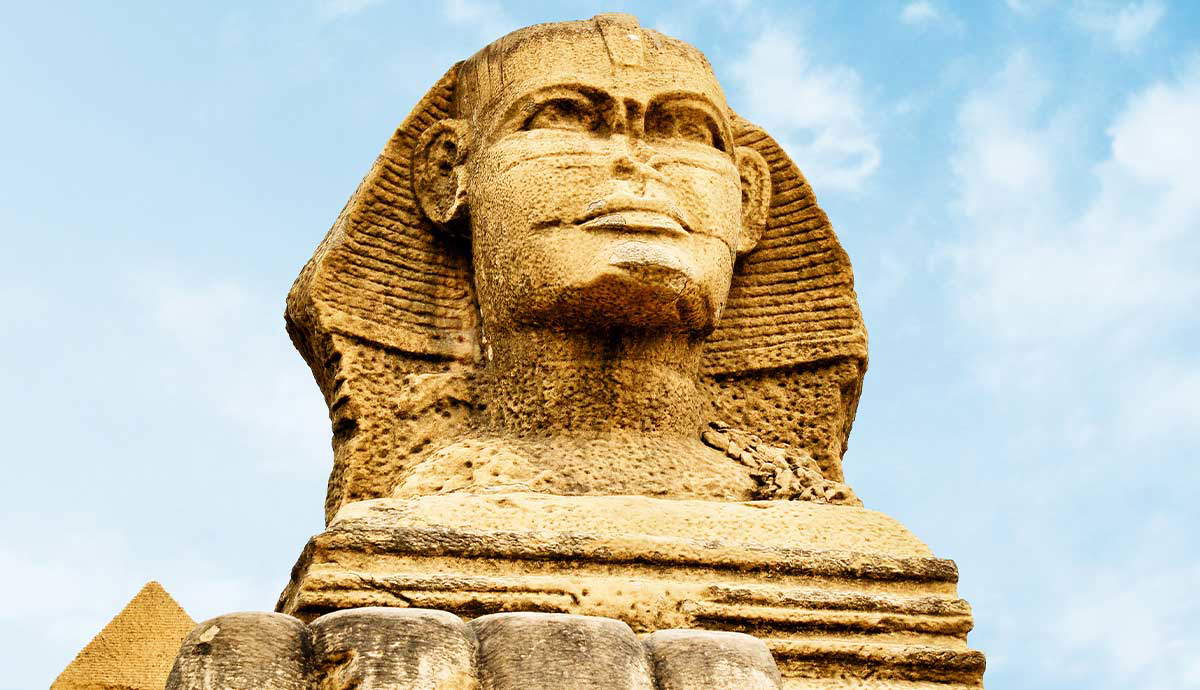
Who Really Built the Great Sphinx of Giza and Why Does It Lack a Nose?
Favicon 
www.thecollector.com

Who Really Built the Great Sphinx of Giza and Why Does It Lack a Nose?

  The Great Sphinx of Giza appears to depict a human head atop a lion’s body. This statue may represent important symbols of the power and strength of the Egyptian pharaohs, perhaps also depicting the Pharaoh Khafre (c. 2558-2532 BC). The Sphinx is positioned to guard the famous Giza pyramids. Although it is one of the largest ancient monuments created, the origins and purpose of the Sphinx remain a mystery to archaeologists and Egyptologists alike. Read on to learn more about one of the world’s oldest statues.   How Old Is the Great Sphinx of Giza? Mummy Mask dating back to the Old Kingdom, photograph by Osama Shukir Muhammed Amin, 2019. Source: Wikimedia Commons/Neues Museum, Berlin   The Old Kingdom period spanned the third and sixth dynasties, roughly 2686-2181 BC. Historians consider it a golden period for ancient Egypt. The era witnessed intense creativity, including the construction of some of the great stone monuments still standing today.   The first Egyptian pyramid was built during the reign of Pharaoh Djoser of the third dynasty, around 2600 BC. After securing Egypt’s borders through military campaigns, Djoser ordered the construction of what became known as the Step Pyramid, which served as the model for future pyramids.   Under the relative stability of the fourth dynasty, pyramid building became widespread, beginning under its first king, Sneferu. These newer structures were built with smooth triangular sides. Sneferu’s son, Khufu, built the famous Great Pyramid at Giza, the largest building in Ancient History. Historians generally view the fourth dynasty as the height of Egyptian power in the Old Kingdom.   Following Khufu came the reign of Khafre. Under Khafre’s rule, another grand pyramid was built, almost as tall as the Great Pyramid. It is generally believed that the Great Sphinx was also erected during Pharaoh Khafre’s reign, making it around 4,500 years old. Kahfre’s son, Menkaure, continued a reign of building projects.   Who Built the Great Sphinx of Giza? Statue of Pharaoh Khafre from his Valley Temple at Giza, photograph by Prof. Mortel, 2022. Source: Wikimedia Commons/Egyptian Museum, Cairo   Khafre ruled Egypt from around 2558-2532 BC. He took power following the death of his brother, Djedefre. Although the circumstances of Djedefre’s death are unclear, some scholars speculate that Khafre violently killed his older sibling.   The name Khafre means “appearing like Ra,” the sun god of Egypt. Like many pharaohs, Khafre had several wives and many children, including Menkaure, who succeeded him to the throne.   The tombs of nobles reveal evidence that Egypt prospered during Khafre’s reign. Indeed, Egyptian artifacts found in Northern Africa and Western Asia suggest that Egypt under Khafre was active in trade and diplomacy. There were no known military campaigns at the time, and Egypt appears to have enjoyed relative peace, allowing large-scale building projects to take place.   Although Khafre’s reign is known for political stability, ancient Greek historians portrayed the Old Kingdom pharaoh as ruthless. There are few contemporary sources, but later writings by Manetho, Herodotus, and Diodorus claim Khafre was a cruel tyrant. However, these later accounts may be somewhat inaccurate. Whatever the case, Khafre’s reign was full of grand architectural achievements.   Pyramid of Khafre, Jeremy Bishop. Source: Unsplash   Besides the Great Sphinx, Khafre’s pyramid is his most notable achievement. This construction was unusual in that the pyramid was also linked to a causeway, a mortuary temple, and the Sphinx. Besides Khafre’s tomb in the pyramid, these other structures glorified Khafre’s power and divinity.   One feature that makes Khafre’s pyramid even more unique is that part of the original limestone casing still covers its top. During the Old Kingdom, Khafre’s whole pyramid was covered in bright limestone. This gave the object a smooth, polished appearance.   What Is the Great Sphinx of Giza? The Great Sphinx of Egypt, by Dilip Poddar. Source: Unsplash   Despite the Sphinx’s popularity, the limestone structure remains an enigma. Most mainstream Egyptologists believe its face was modeled on that of Pharaoh Khafre.   The problem is that no direct historical text or other concrete artifacts exist from the time of construction. The only documentation about the Great Sphinx of Giza came at a much later period. In fact, the Sphinx was likely still under development at the time of Khafre’s death.   More direct evidence dates back to the New Kingdom. Pharaoh Thutmose IV built the Dream Stele by the Sphinx’s paws around 1401 BC. The Stele describes a dream Thutmose had about seizing the throne of Egypt. Most importantly, the inscription on the Stele links the Sphinx to Pharaoh Khafre.   The direct connection between the Sphinx and the Khafre pyramid is another indication of the Old Kingdom pharaoh’s involvement. Additionally, archaeologists discovered that the limestone used for the bedrock was the same for both the Sphinx and the Khafre pyramid.   Unfortunately, as with many ancient buildings, robbers looted Khafre’s tomb of most artifacts. However, archaeologists believe there were once openings in the pyramid walls that would have housed sphinx-like statues of the king. There is no indication that any earlier pharaohs constructed the Great Sphinx.   Despite major erosion, the Sphinx still depicts a pharaoh’s face. A famous statue of Khafre has features similar to those of the Sphinx. Furthermore, a lion’s body with a pharaoh’s head facing the powerful sun represented a divine solar connection. Khafre’s reign emphasized a solar relation, making him a logical candidate to erect the statue.   Where Is the Great Sphinx of Giza Located & What Is Its Size? Sphinx and the pyramid of Khafre, stereograph card by unknown artist, 1896. Source: Chrysler Museum of Art, Norfolk, Virginia   Unlike the ancient pyramids, contemporary research claims the Great Sphinx of Giza’s foundation was formed by natural elements. In other words, the ancient Egyptians carved out the figure of a lion with a pharaoh’s head on an already established bedrock ridge, sculpted over time by wind.   The Great Sphinx of Giza is located on the west bank of the Nile, close to central modern Cairo. The structure itself was carved out of limestone. The Sphinx measures 240 feet long and 66 feet high, making it the largest sculpture in the world.   Researchers believe the Sphinx originally resonated with vibrant painted colors. As late as the Roman period, Pliny the Elder described the statue as painted a bright red. This contrasted with the white-painted stones of the nearby Great Pyramids.   Thousands of workers built the Great Sphinx. Earlier theories suggested that slaves provided most of the labor for construction. However, it is now estimated that much of the workforce comprised professional skilled craftsmen.   The workers’ families also relocated to the construction site, just as they did for the pyramids. They lived in a 17-acre temporary city that supplied food and materials.   The Sphinx has outlasted many empires and civilizations. Most of the decay over the centuries was due to natural forces, such as wind and rain, which removed parts of the sculpture and rock.   However, humans removed the statue’s nose. There are numerous legends about what caused the Sphinx to lose its nose. One theory claims that French soldiers under Napoleon Bonaparte shot off the nose with artillery in the late 1700s. According to another story, Muslim factions defaced the face in the late 1300s to prevent local farmers from worshiping the Great Sphinx.   Why Was the Great Sphinx of Giza Made? The Giza Sphinx, photographed by Beniamino Facchinelli, c. 1880. Source: Rare Historical Photos   The exact reason Pharaoh Khafre built the Sphinx may never be known. For the ancient Egyptians, it likely symbolized a royal protector. Sphinx-style objects were often found near temple entrances and royal burial sites.   Another reason may relate to the summer equinox. The Great Sphinx lines up with the Great Pyramid of Khufu and Khafre’s pyramid. This position highlights when the sun is at the highest point in the sky. It is an indication of a connection with the Egyptian supreme sun god Ra.   Carved in the likeness of Khafre’s image, the Great Sphinx was built to portray the immense power and strength of the king. However, at the time, there is no evidence of a cult of priests or priestesses worshiping the statue. On the other hand, during the New Kingdom, about 1,000 years later, the Great Sphinx did attain greater spiritual importance.   A different Egyptian god dedicated to the rising sun also came to be linked with the Great Sphinx and the power of the pharaohs. The deity was referred to as Horemakhet (Horus of the Horizon). Again, evidence for these connections came later, during the New Kingdom period.   Built out of rock, workers constructed the Great Sphinx to last. Although many monuments have crumbled, the Sphinx remains intact after thousands of years. The hot, arid climate helps to preserve the structure. Still, the Sphinx survived earthquakes, windstorms, and flash floods in the past. Today, new challenges include pollution, climate change, and issues with underground sewage.   The Great Sphinx of Giza has remained a subject of myth and mystery for thousands of years. Long after it was built, the ancient Greeks adopted it into their own mythology. In the Greek story, the Sphinx guarded the entrance to the city of Thebes. Anyone unable to solve the mystery of the Sphinx could not pass through and lost their life. Today, the Sphinx remains an object of great historical importance and wonder for both visitors and historians.

Like
Comment
Share
The Lighter Side
The Lighter Side
4 w

Humanity’s Long-Awaited Return to Lunar Space Captured with Brilliant Photographs
Favicon 
www.goodnewsnetwork.org

Humanity’s Long-Awaited Return to Lunar Space Captured with Brilliant Photographs

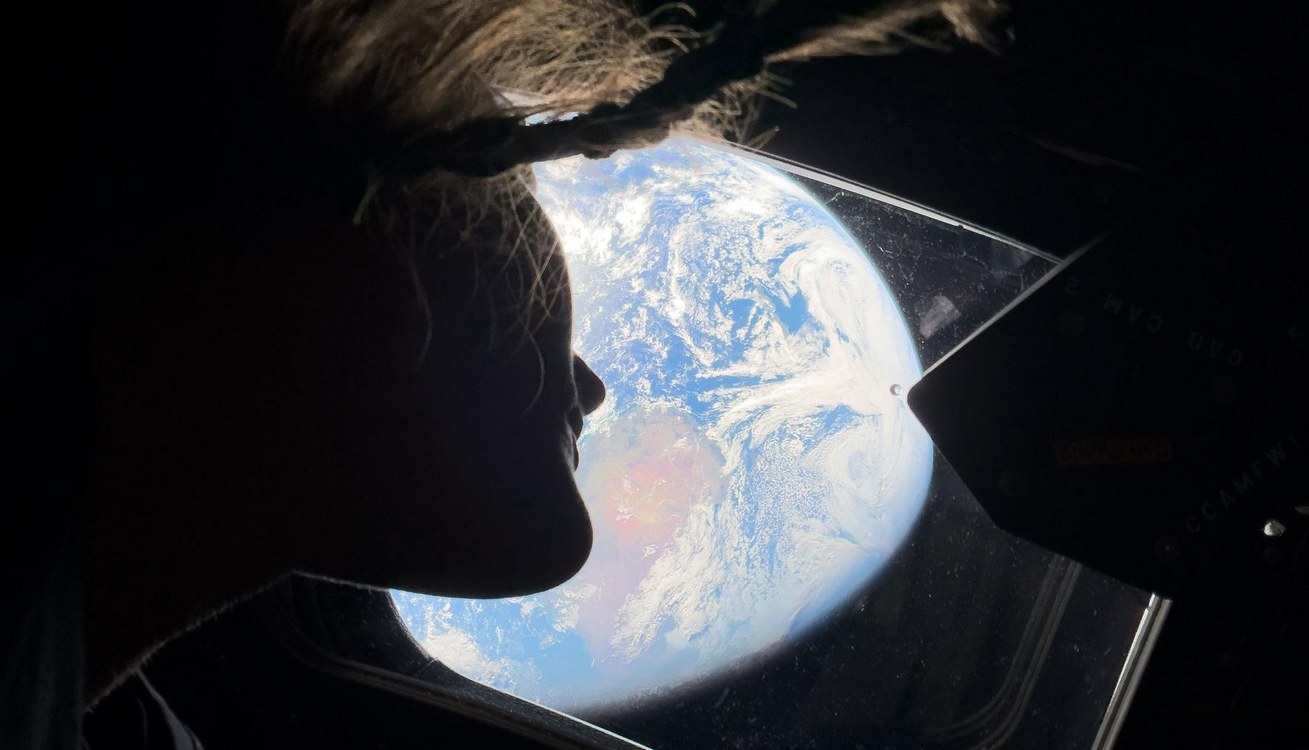
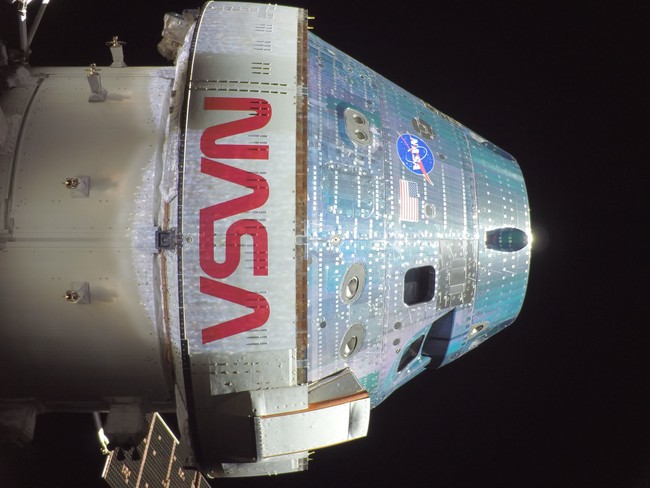
Americans and Canadians been delighted with images of the Moon and Earth taken from onboard the Orion capsule as it took 4 astronauts into Lunar orbit for the first time since the Apollo program. Artemis II lifted off from Kennedy Space Center in Florida on April 1st, 2026, reached the Moon on the 5th, and […] The post Humanity’s Long-Awaited Return to Lunar Space Captured with Brilliant Photographs appeared first on Good News Network.
Like
Comment
Share
The Lighter Side
The Lighter Side
4 w

In The Middle Of NYC, A Tiny Bird Is Creating Big Moments Of Joy
Favicon 
www.sunnyskyz.com

In The Middle Of NYC, A Tiny Bird Is Creating Big Moments Of Joy

Like
Comment
Share
The Lighter Side
The Lighter Side
4 w

This Small Island Diner Keeps Making Millionaires And No One Can Explain Why
Favicon 
www.sunnyskyz.com

This Small Island Diner Keeps Making Millionaires And No One Can Explain Why

Like
Comment
Share
Daily Signal Feed
Daily Signal Feed
4 w

How China Dominates the World’s Critical Minerals Production
Favicon 
www.dailysignal.com

How China Dominates the World’s Critical Minerals Production

Critical minerals are mined all over the world but the majority of the supply ends up passing through China. For a broad range of key metals and minerals, China is either the largest miner, the dominant refiner, or both. This is true for rare earths, lithium, cobalt, graphite, nickel, and many other metals and minerals that are essential to defense, energy and high-tech applications. It is less about where ores are dug out of the ground and more about where they are turned into usable components. In other words, Chinese processing plants are essentially the gatekeepers of global supply. Australia and South America host much of the world’s lithium, while Congo supplies the lion’s share of cobalt and copper. But the rocks themselves can’t become a battery or magnet without intensive downstream processing and refining. China built those downstream industries at scale over decades through state support and investment. The result is clear—China has effectively monopolized refining for most critical minerals while the rest of the world depends on it for much-needed supply. China is listed as the dominant refiner for 19 of 20 materials analyzed by the IEA in their Global Critical Minerals Outlook for 2025, making up roughly 70% of the global processing capacity overall. How dominant is dominant? The numbers illustrate the scale and variety of China’s concentration. Data from 2024 shows China as the leading producer or processor for roughly 99% of gallium, 95% of magnesium, 83% of tungsten, 79% of graphite and over 69% of all rare earths. For battery materials, Chinese firms account for an overwhelming share of manufacturing capacity, giving China control over the upper and middle parts of the battery supply chain, even though much of the raw materials are sourced elsewhere. Put simply: control of smelters and refineries is the chokepoint. Analysis from the United States Geological Survey shows how China’s share rises dramatically from mining to processing. Many minerals that are mined in other countries are still processed into a refined product within China. That clear advantage lets Chinese policy shifts ripple quickly through global supply and pricing—a growing threat for the West. In fact, China has already weaponized its stronghold on the industry in ways that have triggered both concern and action from the United States government. Over the past couple of years, Beijing has imposed a series of export restrictions on critical minerals that have sounded alarms in Washington. These controls immediately tightened global supply for various essential materials, including gallium, germanium, silver, graphite, and certain rare-earth processing technologies. This caused semiconductor and defense firms to scramble for alternatives while exposing how dangerously dependent manufacturers are on Chinese supply. These actions have shaped how Western governments view critical minerals. What were once perceived as simply commodities are now seen as strategic assets crucial to national defense. U.S. officials have become increasingly vocal about reliance on China for critical minerals and the associated risks, prompting government action to reduce exposure. These maneuvers include billions of dollars of investment into domestic production, executive orders empowering the Defense Production Act to boost U.S. mining and refining, and coordinated international initiatives to strengthen supply chains outside of China. Meanwhile, while Western governments work to diversify away from dependence on Beijing, it’s the private sector that is moving most of the world’s critical minerals. The raw materials that feed Chinese smelters often move through the world’s major commodity trading houses. These traders, including commodity giants like Mercuria and IXM, source raw ores from Africa, South America, and Australia and then sell them into markets structured around Chinese processing. As long as that remains an industrial norm, the West will face clear obstacles. Many of these firms are deeply embedded in China. Mercuria, for example, has carved out a business operation in China that is legally separate to their main Geneva-based entity. The company has set up a number of Chinese-based subsidiaries to directly engage with China’s valuable energy sector and has secured long-term energy and gas deals with notable state-owned enterprises. This allows Mercuria to integrate massive China-based operations with its international trading network. Beijing, also, may have given its vote of confidence to the firm when ChemChina, one of the country’s largest state-owned companies, purchased a 12% stake in Mercuria back in 2016. The benefits of being heavily involved within China’s dominant industrial and energy environment are clear, but the unpredictable geopolitical risks associated with it are less so. IXM, too, has been notable player for the Chinese side of the industry. The trading arm of China Molybdenum, IXM is directly controlled by a major Chinese mining conglomerate and plays a central role in supplying cobalt, copper, and other critical minerals into Chinese processing chains. The firm has built a global network of offices and logistics infrastructure to move resources from Africa and South America into Chinese industrial markets, making it a key conduit between foreign resource extraction and China’s downstream dominance. Such arrangements make these international trading houses both suppliers to, and partners with, Chinese processing. With the U.S. and its allies now seeing the concentration of mineral refining capacity in a single country as a vulnerability, traders deeply entrenched in China are now seen as bringing more risk rather than security. If the United States is serious about diversifying away from Chinese dependence and to protect its defense industrial base that sits on top of critical mineral supply chains, it must be cautious about doing business with Chinese traders deeply entrenched in Chinese state-owned enterprises and political influence. For the West, securing critical mineral supply without reliance on China requires more than just sourcing mines in friendly countries. It requires alternative processing capacity, substantial long-term supply agreements, and coordination between policymakers and private traders who still move much of the world’s ore. Until those pieces are in place, Chinese smelters and refineries will remain the world’s primary mechanism of transforming raw materials into products used for defense and high-tech applications. And while that remains the case, the rest of the world will have to navigate through the geopolitical risks that are brought on by Beijing’s mineral dominance. This article was originally published by RealClearDefense and made available via RealClearWire. The post How China Dominates the World’s Critical Minerals Production appeared first on The Daily Signal.
Like
Comment
Share
Survival Prepper
Survival Prepper  
4 w

Cooking On A Hearth Or Open Fire: Old World Kitchen Skills For Modern Preppers
Favicon 
www.survivopedia.com

Cooking On A Hearth Or Open Fire: Old World Kitchen Skills For Modern Preppers

Pull up almost any prepper or survivalist checklist and I bet you will find food storage, water filtration, and medical supplies near the top. What you rarely see listed is the ability to actually cook the food you have stored when the stove does not work. That gap is more significant than most people realize […]
Like
Comment
Share
The Blaze Media Feed
4 w

Elon Musk's Terafab is coming, and you're not ready
Favicon 
www.theblaze.com

Elon Musk's Terafab is coming, and you're not ready

The announcement of Terafab was made at a decommissioned power plant, reflecting Elon Musk’s understanding of stagecraft: The ruined infrastructure of one era makes a convenient altar for the next. On March 21 and 22, 2026, at the Seaholm Power Plant in Austin, Musk presented Terafab. It is either the most ambitious semiconductor manufacturing project in history or a very expensive project that may not come to be.Terafab is a plan to build vertically integrated chip-manufacturing capacity in Austin, combining under one roof the design, fabrication, packaging, and testing of advanced semiconductors. Tesla, SpaceX, and xAI are the collaborating entities. The announced investment figure is $20 billion. The stated long-run target is one terawatt of compute capacity per year, a number that converts the language of performance into the language of power. Terafab is a cultural event as much as a technical announcement.Measuring compute in watts means that the limiting factor is energy throughput. The International Energy Agency has described data centers as a fast-growing fraction of global electricity demand; by 2030, in its base case, that demand could roughly double. The technical core of Terafab is its most defensible part. The pitch is about iteration speed: If you can design a chip, fabricate it, package it, test it, and revise the mask, all inside one building, without shipping components between specialized facilities in different countries, you can improve faster than anyone who does not. In conventional semiconductor manufacturing, these functions are geographically and organizationally scattered. A mask set travels; a wafer ships; a packaged part crosses an ocean. Each journey is a delay, and delay is the enemy of the feedback loop. Terafab is a wager that learning velocity beats static node leadership. A factory within a factoryAdvanced fabs are among the most expensive and complex structures human beings have ever built, typically $10 billion and several years for a single facility, dependent on supply chains for equipment that cannot be wished into existence by ambition or capital alone. Extreme ultraviolet lithography machines, to name one critical dependency, cost hundreds of millions of dollars apiece and are manufactured by a single Dutch company. The closed loop is a compelling engineering idea. The project will involve equipment lead times, utility provisioning, the yielding of learning curves, and the peculiar physics of building things in the real world. There is a second Terafab nested inside the first. The announcement includes chips, named D3, designed for space environments, paired with a vision of solar-powered orbital compute satellites, initially around 100 kilowatts and scaling toward the megawatt range. Terrestrial compute is constrained by land, power, cooling, and local political opposition to enormous data centers. Space has sunlight and no neighbors to complain about the noise. RELATED: Bernie Sanders and AOC propose law to shut down future AI data centers Photo (left): Andrew Harnik/Getty Images; Photo (right): Alex Kraus/Bloomberg/Getty Images Of course, space also has no air. In vacuum, heat cannot leave a system by convection, only by radiation, which requires very large radiator surfaces at high power levels. The International Space Station’s thermal control system requires radiators the size of tennis courts to reject the heat generated by its systems. Radiation poses its own complications: The energetic particles of the space environment induce bit flips and long-term degradation in electronics not specifically hardened against them. The orbital vision is not impossible. It is simply a different problem than the earthbound one, even when presented in the same breath, as though the same momentum carries the project from Austin to low Earth orbit without friction. The future needs powerTerafab’s “everything under one roof” approach has an ancestor in the great vertical integration projects of industrial capitalism, such as Ford’s River Rouge complex, which turned raw materials into finished automobiles inside a single, vast geography, its own power plant humming at the center. The global semiconductor supply chain is highly concentrated: Roughly 92% of the world’s most advanced chip manufacturing capacity sits in Taiwan. To build end-to-end domestic capability is simultaneously a resilience project and a power project, a bid to internalize a strategic resource inside one corporate constellation rather than depend on the broader market of specialized suppliers. Terafab is a cultural event as much as a technical announcement, and its cultural work is to naturalize a particular diagnosis: that intelligence is infrastructure, infrastructure is energy, and energy is the horizon of meaning for civilizational progress. Whether or not the fab gets built on schedule, whether or not the orbital satellites ever achieve megawatt-scale compute, the frame has been installed. The factory is where the future lives, and the future needs power.
Like
Comment
Share
RedState Feed
RedState Feed
4 w

Trump Offers Artemis II Astronauts Oval Office Visit — Crew Offers Immediate Reply
Favicon 
redstate.com

Trump Offers Artemis II Astronauts Oval Office Visit — Crew Offers Immediate Reply

Trump Offers Artemis II Astronauts Oval Office Visit — Crew Offers Immediate Reply
Like
Comment
Share
Showing 3512 out of 120522
  • 3508
  • 3509
  • 3510
  • 3511
  • 3512
  • 3513
  • 3514
  • 3515
  • 3516
  • 3517
  • 3518
  • 3519
  • 3520
  • 3521
  • 3522
  • 3523
  • 3524
  • 3525
  • 3526
  • 3527
Advertisement
Stop Seeing These Ads

Edit Offer

Add tier


Select an image
Delete your tier
Are you sure you want to delete this tier?

Reviews

In order to sell your content and posts, start by creating a few packages. Monetization

Pay By Wallet

Payment Alert

You are about to purchase the items, do you want to proceed?

Request a Refund