YubNub Social YubNub Social
    #freedom #libtards #terrorism #patriots #antifa #privacy #americafirst #loonyleft #surveillancestate #police\ #alpr #flock
    Advanced Search
  • Login
  • Register

  • Night mode
  • © 2026 YubNub Social
    About • Directory • Contact Us • Developers • Privacy Policy • Terms of Use • shareasale • FB Webview Detected • Android • Apple iOS • Get Our App

    Select Language

  • English
Community
New Posts (Home) ChatBox Popular Posts Reels Game Zone Top PodCasts
Explore
Explore
© 2026 YubNub Social
  • English
About • Directory • Contact Us • Developers • Privacy Policy • Terms of Use • shareasale • FB Webview Detected • Android • Apple iOS • Get Our App
Advertisement
Stop Seeing These Ads

Discover posts

Posts

Users

Pages

Blog

Market

Events

Games

Forum

Daily Signal Feed
Daily Signal Feed
5 w

The Steyer Smear
Favicon 
www.dailysignal.com

The Steyer Smear

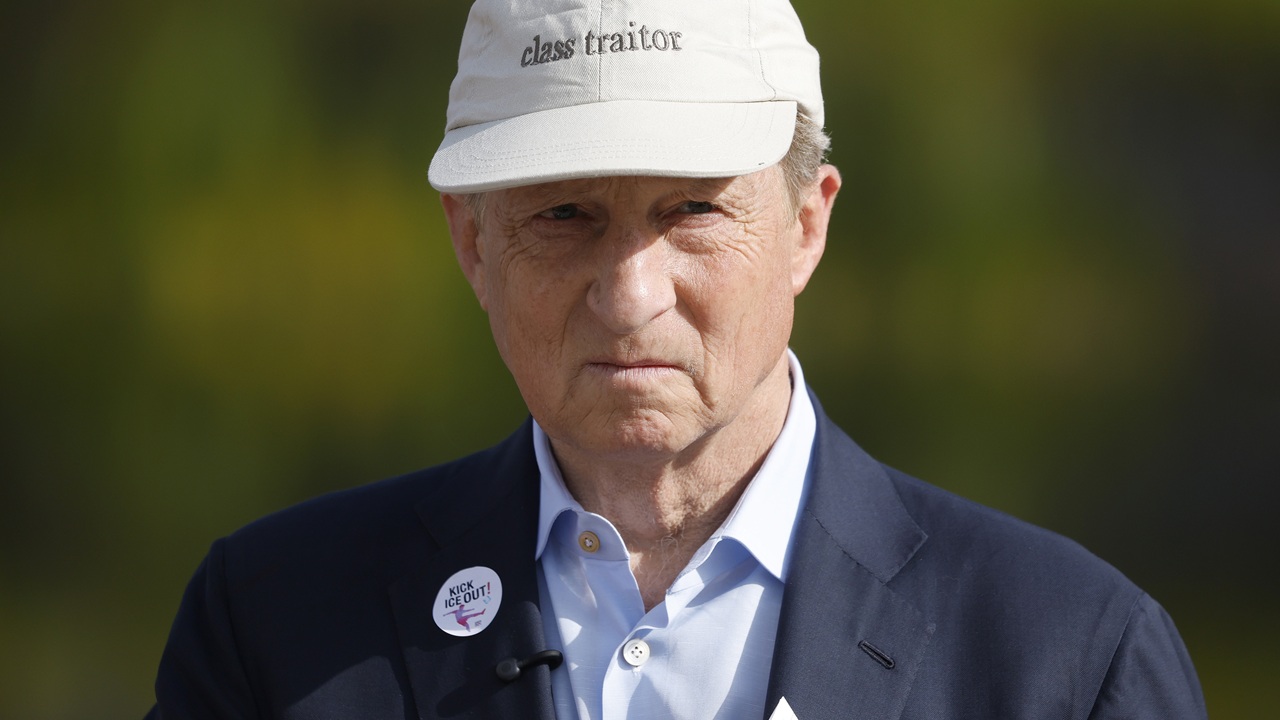
Billionaire Tom Steyer used his money to attack a lone climate researcher. Roger Pielke Jr.’s research on climate and disaster policy wins awards and is cited by the United Nations’ Intergovernmental Panel on Climate Change. “My views are entirely mainstream,” says Pielke. “My work is cited by all three working groups of the IPCC. There’s nothing contrarian.” Both Steyer and Pielke agree that “greenhouse gases warm the climate,” but Pielke’s sin was saying, “it’s not the apocalypse.” Because of that, “the Center for American Progress decided to make me a target,” he says. The center is a lefty group that pushes climate hysteria, running articles claiming, “Climate change is fueling more deadly and destructive floods,” “Extreme weather is only intensifying,” etc. Anyone who disagrees is labeled a “climate denier.” Steyer, now running for governor of California, gave the center enough money to run hit piece after hit piece that describes Pielke’s work as “fantastical falsehoods,” and calls him a “disinformer” who “ignores the data on climate science.” Pielke didn’t know who funded the smears until WikiLeaks revealed an email to Steyer from ThinkProgress’s editor: “Thanks for your support of this work … it’s fair to say, without Climate Progress, Pielke would still be writing on climate change.” Think about that. “Progressive” activists are proud to stop a researcher from writing about what he knows. Pielke describes his persecution in my new video. It began after Al Gore’s Oscar-winning movie in which Gore claimed that temperature increases create stronger storms. Pielke had the nerve to disagree. “Doesn’t warmer water create bigger storms?” I ask him. “All else equal, yes, it does. But the atmosphere is a complicated place. You have things like windshear, which knocks over storms. … We haven’t observed changes in the frequency or intensity beyond natural variability.” Pielke’s research acknowledged that there were “increasing impacts of extreme weather, mostly economic costs and loss of life,” but said the impacts were not caused by bigger storms but by “what we build, where we build, how much wealth we have in harm’s way.” “When the climate advocacy movement shifted to extreme weather, I was on the ‘wrong’ side,” he adds. “I had a choice to make. Was I going to call things like I see them, or was I going to succumb to pressure to say things that maybe I didn’t believe?” Pielke called it as he saw it and paid a price.  “There was an enormous effort to try to silence people who had a voice,” says Pielke. Testifying before Congress, Pielke said, “It is misleading … to claim that disasters associated with hurricanes, tornadoes, floods, or drought have increased.” That information is also in the findings of the IPCC. But the Obama White House put out a 3,000-word memo attacking him: “Dr. Pielke’s statements … are seriously misleading … not representative of mainstream views.” “It was the sort of thing your crazy uncle might put on Facebook,” laughs Pielke. “I’m the only academic or researcher that any president, including Donald Trump, has ever singled out.” The University of Colorado, where Pielke worked for 24 years, caved in to the pressure. They closed Pielke’s research center, canceled his classes, and moved his office into a closet. “What I went through was not what a university is supposed to be for,” says Pielke. The state-funded school, after dumping Pielke’s actual scientific research, now calls “climate change and sustainability … the central focus of our campus-wide initiatives” and hosts silly things like “climate summits” with panels on “youth climate advocacy.”  It’s so dumb. And so wrong. Fortunately, Pielke found another job. Now he researches climate at the American Enterprise Institute, one of many think tanks that does research universities once did. As I write, betting sites have Steyer in second place in California’s governor’s race. COPYRIGHT 2026 BY JFS PRODUCTIONS INC. We publish a variety of perspectives. Nothing written here is to be construed as representing the views of the Daily Signal.
Like
Comment
Share
Science Explorer
Science Explorer
5 w

What Would Happen If You Tried To Plug A Volcano With Concrete? It Could Make Things Far Worse
Favicon 
www.iflscience.com

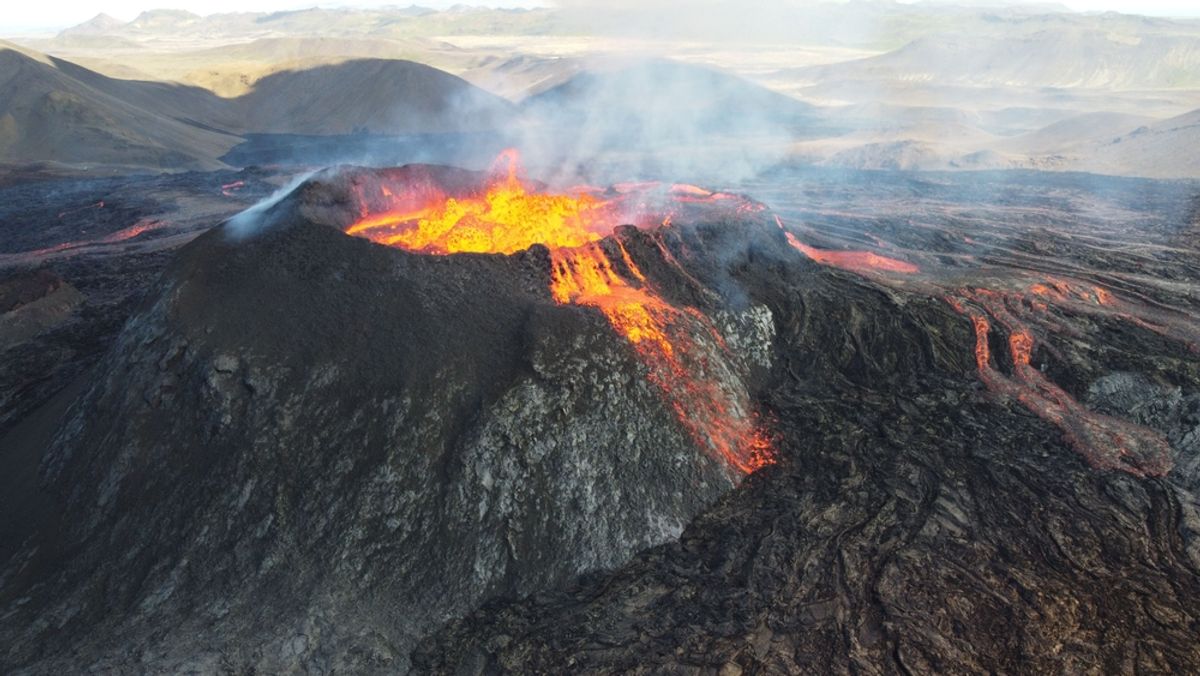
What Would Happen If You Tried To Plug A Volcano With Concrete? It Could Make Things Far Worse

People have been wondering whether a volcano could simply be plugged with concrete. In reality, there are plenty of reasons why that would be a very bad idea.
Like
Comment
Share
NewsBusters Feed
NewsBusters Feed
5 w

PolitiFact: Marco Rubio Is 'Half True' For Blaming Cuba's Problems On Its Leaders
Favicon 
www.newsbusters.org

PolitiFact: Marco Rubio Is 'Half True' For Blaming Cuba's Problems On Its Leaders

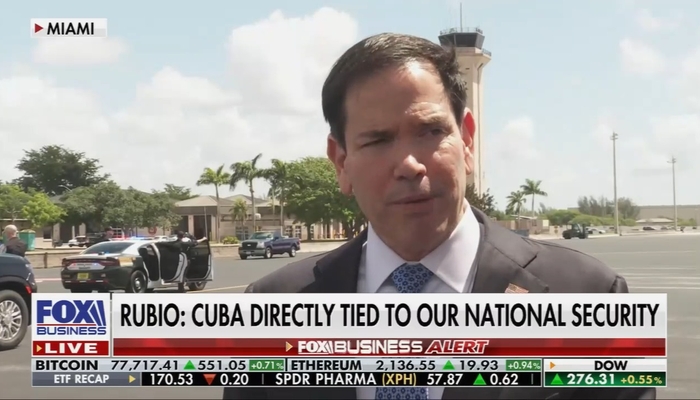
On Friday, PolitiFact writers Samantha Putterman and Maria Briceno gave Secretary of State Marco Rubio a “half true” rating for his claim that the United States is not the reason that Cuba is experiencing 22-hour blackouts. According to Putterman and Briceno, it is true that economic mismanagement—the words “communist” or “socialist” appear nowhere in the article—has led to the decay of Cuba’s energy system and the original blackouts. However, in the “If your time is short section,” they write, “The U.S. government’s oil blockade has worsened the situation. The U.S. cut off Venezuela’s oil shipments to Cuba and threatened tariffs and sanctions on other countries seeking to send fuel or do business with the island.” One hand-picked expert the authors selected was William LeoGrande, who said, “The length of the blackouts has gotten worse since the oil embargo was in place, so that is clearly, unquestionably, a major part of the problem," and “To claim blackouts are solely the (Cuban) government's fault is simply disingenuous." Of course, Putterman and Briceno declined to mention that LeoGrande is a former Democratic staffer who is ideologically opposed to a hardline approach to Cuba. PolitiFact’s other experts echoed Leo Grande. For instance, Bert Hoffman, “a Latin America expert at the German Institute of Global and Area Studies,” declared, “While there have been frequent blackouts in the past, they now are on a very different scale.” The U.S. began seizing Venezuelan oil in December 2025, but in August 2025 CNN—not exactly a Trump administration-friendly outlet—was running headlines about Cuba’s 20-hour blackouts. Yes, Rubio said 22 hours, but that is the high end of the usual 20–22- hour range. PolitiFact also cited Rubio as saying, “They haven't spent a penny in fixing their energy production, their electrical grid. They don't spend any money on that stuff. They pocket it.” That is true and should have led to PolitiFact putting Rubio’s claim fully on the true side of the truth-o-meter. The recently indicted Raul Castro somehow managed to amass a net worth of $150 million in the communist country, while Fidel was once estimated to be worth $900 million. Therefore, PolitiFact has confused correlation for causation because it is only logical to assume that even if the U.S. didn’t start seizing Venezuelan oil, Cuba’s energy system would only further decay over the last six months.
Like
Comment
Share
The Blaze Media Feed
5 w

How the H-1B visa replaces American workers
Favicon 
www.theblaze.com

How the H-1B visa replaces American workers

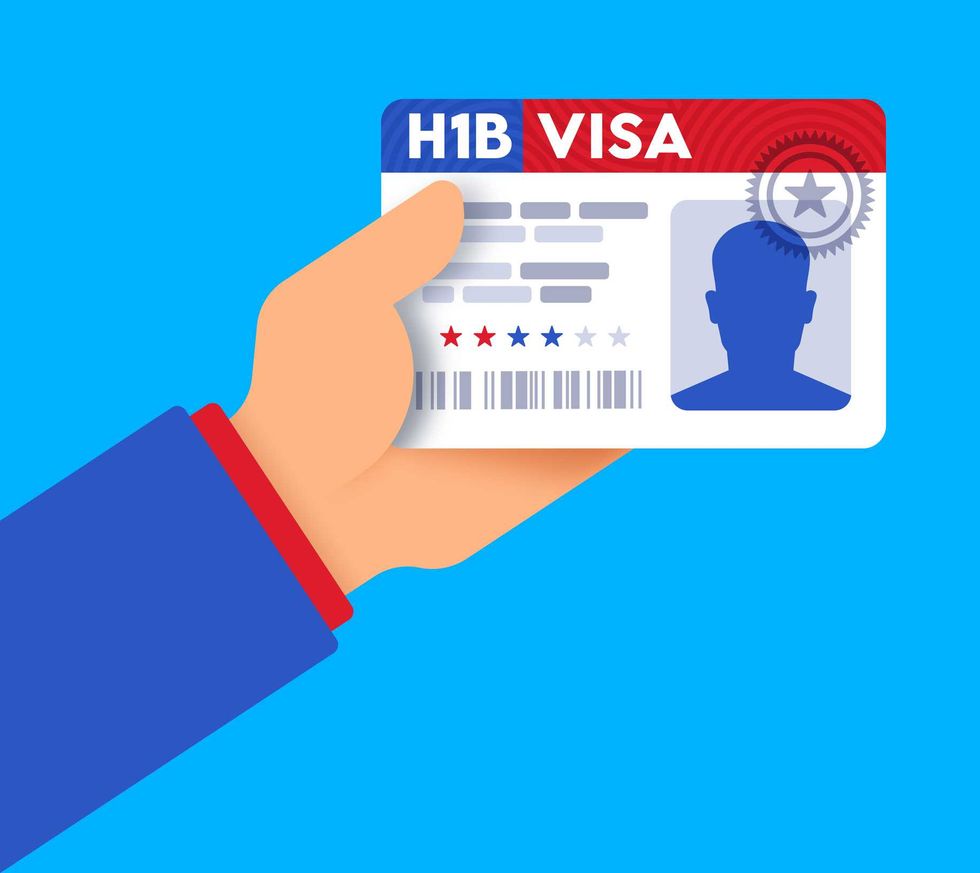
Mary, a veteran Silicon Valley marketer who can’t find a job, considers herself a victim of an H-1B visa program run amok.Her story, a U.S. native replaced by a foreign-born employee who is willing to work at a significantly lower wage, has become commonplace, particularly in the tech industry. Adding insult to injury, she says, her CEO, who hails from India, told her to train the man he selected to replace her before laying her off.Despite stints at Google and Cisco and two years of job-hunting, Mary can no longer compete in a job market saturated with foreign-born H-1B visa holders. “I had experience. I should have walked right into these corporate jobs, but I didn't. Why? Because Silicon Valley is flooded with people who work for two-thirds of the price, or even half price,” said Mary, who asked to be identified only by her first name.Companies, on average, save nearly $100,000 per worker over six years by hiring an H-1B worker rather than an American.U.S. tech workers like Mary are at the center of a battle brewing in Washington, D.C., over reforming the troubled H-1B visa program, which is designed to fill highly skilled positions when qualified American workers can’t be found. The controversy pits tough-on-immigration Republicans and some Democrats against the most formidable of opponents — Big Tech, the primary beneficiary of a program considered by critics to be little more than a pipeline of cheap labor.In the last few decades, the California dream has gone global, as U.S. tech firms have filled their ranks and C-suites with employees born abroad. Intel is no longer the company of its founders, Robert Noyce and Gordon Moore, but of Malaysian-born Lip-Bu Tan, its CEO since March 2025. Microsoft is led by Satya Nadella; Alphabet Inc. by Sundar Pichai; Adobe by Shantanu Narayen; IBM by Arvind Krishna; and T-Mobile US by Srinivas Gopalan — all of whom were born in India.All told, a remarkable two-thirds of the Valley’s nearly 400,000 tech jobs are now held by those born abroad, according to a 2025 report from the think tank Joint Venture Silicon Valley. Today, more tech workers were born in India (23%) and China (18%) combined than in the U.S. (34%).Low-cost talentThe influx of low-cost Asian talent has clearly helped fuel profits in one of America’s most influential sectors. But there is a downside to this tech boom — the sidelining of U.S. workers thanks to the H-1B visa program. Created in 1990, the federal program has morphed into a vehicle for employers, particularly in the nation’s tech centers, to recruit much cheaper foreign labor at the expense of U.S. tech workers, according to Harvard economist George J. Borjas.While the H-1B program spans multiple industries, it is overwhelmingly concentrated in tech. Last year, Amazon, Meta, Microsoft, Tata Consultancy, and Google were the biggest visa users, with Amazon alone recording more than 13,000 applications. These companies find the savings from hiring foreign workers hard to resist. The job of software developer, for instance, accounts for 38% of all H-1B visa workers, according to a 2026 paper by Borjas. And these foreign software developers earn about 30% less than their U.S. counterparts, the economist estimates.Since many of these tech jobs pay six figures, the savings quickly add up. Borjas estimates that companies, on average, save nearly $100,000 per worker over six years by hiring an H-1B worker rather than an American. The arrangement “redistributes wealth from those who compete with immigrants to those who use immigrants,” Borjas wrote in 2016. That, in turn, helps account for the soaring stock prices of Big Tech since the 2008 financial crash.RELATED: America should eliminate the H-1B and replace it with THIS El Nuevo Herald/Getty ImagesFalse rationaleThe vaguely written H-1B law has been easy for companies to exploit. Hassan Abdullah, an immigration attorney and H-1B advocate, said the supposed congressional basis of the law — to fill highly skilled jobs with foreigners if Americans aren’t available — has always been a fiction. “The actual regulations don’t necessarily say that's required,” said Abdullah, who helps companies get the visas. “Throughout all my years, I’ve never had to even consider that as a factor.”One of the most glaring weaknesses of the law, critics say, is that most companies applying for these visas are not required to demonstrate that they were unable to find qualified American workers. Only companies with more than 15% of their workforce on H-1Bs must make small efforts to recruit U.S. citizens.Companies are required to pay foreign workers at least the “prevailing wage” for the occupation and region, a provision that should theoretically reduce the incentive to hire employees from Asia. But the process relies on self-reporting and has been easy to manipulate because salaries are calculated using broad regional averages that often fail to reflect real market wages in the technology sector.As a result, the number of H-1B visa workers has skyrocketed. 2025 was a banner year, with 406,348 approved visas, according to U.S. Citizenship and Immigration Services. Seventy percent of those visas were issued to Indians. That compares with a total of 275,317 visa approvals in 2015.Missouri Sen. Eric Schmitt, who is part of the MAGA wing of the GOP, reacted to these numbers on X, calling the program “a national security nightmare. Enough. No more flooding the market with 400k+ H-1B visas while our people and our sovereignty gets screwed."After foreign-born employees take on leadership roles, including CEO, they attract and hire more foreigners by tapping their own professional and social networks.With criticism of the visas dovetailing with broader anti-immigration sentiments, the Trump administration has made the most serious move yet to restrict the program. Six months ago, USCIS announced a new $100,000 fee that companies must pay per new H-1B worker living outside the U.S. While official figures have not yet been released, some immigration experts estimate that the fee may lead to a 30% to 50% decline in new visa applications.“This is the first year we have not filed any H-1B visas for people outside the U.S. because tech companies don’t want to pay the $100,000 fee,” said immigration attorney Navdeep Meamber, who is based in Silicon Valley.But companies have found a work-around. Meamber said she has seen an increase in the number of clients filing for the visas for workers already in the U.S., particularly those such as students who transferred from other visa types to H-1Bs.“The $100,000 fee is discouraging some employers from bringing in brand-new H-1B workers, but it is not reducing the numbers, because foreign students, especially those who get on the Optional Practical Training program, can move into the H-1B pipeline without paying that fee,” said attorney Rosemary Jenks, a campaigner for immigration reform with the Immigration Accountability Project. “So there are still plenty of H-1B visas being issued every year.”American ingenuitySilicon Valley wasn’t always dominated by foreigners. Some claim the true birthplace of Silicon Valley can be found in a garage at 367 Addison Avenue in Palo Alto. It was there that David Packard, a native of Colorado, and Bill Hewlett of Michigan founded Hewlett-Packard in 1939. Robert Noyce, a native son of Iowa and co-inventor of the integrated circuit, critically made from silicon, gave name to the valley after the substance. With his colleague, Gordon Moore of San Francisco, they founded Intel in 1968.Throughout the postwar years, America’s booming tech industry was largely pioneered by natives. By the 1980s, however, concerns were raised about the dwindling number of young people available to fill STEM jobs in the future. Erich Bloch, director of the National Science Foundation, told the American Council on Education in 1985: “The pool of potential students from U.S. schools will become smaller. Demographic projections, of which you are all aware, show the number of 18- to 24-year-olds declining by about 20% over the next decade.”The 1990 Immigration Act created the H-1B visa, a temporary work visa lasting a few years aimed at filling the labor shortages Bloch had warned about. Since then, tech firms have sometimes struggled to find employees, particularly specialized engineers, during times of rapid growth. But whether the industry faces a persistent shortage of American workers is a matter of debate among economists and labor analysts.Major technology companies reject the criticism that the H-1B system is primarily a source of cheap labor. Executives stress that the program allows American firms to recruit engineers and researchers with advanced technical expertise in areas where qualified talent can be scarce.They also contend that many H-1B workers are paid high salaries and that access to global talent helps keep American companies competitive against rivals.Critics of the visas point to waves of layoffs accompanied by the growth in H-1Bs as evidence that a labor shortage is nothing more than a fig leaf. Michael Capuano of the Federation for American Immigration Reform wrote in a blog post last year,Google laid off 951 U.S. employees in 2024, but found room for 1,058 new H-1B workers. Apple laid off 735 people in 2024, but signed on 864 new H-1B employees. Microsoft laid off 3,426 workers from 2022 to 2024 and hired 3,259 new H-1Bs during that same period.A 2023 analysis by the Economic Policy Institute similarly found that the top 30 H-1B employers hired more than 34,000 new H-1B workers in 2022 while laying off at least 85,000 employees during the same period.In addition to cheaper talent, critics say H-1B visas also provide a captive workforce. Because employers can sponsor visa holders for permanent residency, many workers become heavily reliant on keeping their jobs in order to remain in the United States. Critics argue that this dynamic discourages employees from changing companies or demanding higher wages, with some likening the system to a form of indentured servitude.Tribalism at playCritics say favoritism has also contributed to foreign dominance of the tech sector. After foreign-born employees take on leadership roles, including CEO, they attract and hire more foreigners by tapping their own professional and social networks.Kevin Lynn, executive director of the Institute for Sound Public Policy, argues that “professionalism doesn’t exist in these IT departments any more,” adding that “when you look at the hiring, it gets very tribal. It’s really India versus the rest of the world.”Microsoft saw the number of decisions on H-1B applications rise from 2,983 in 2014, when Nadella became CEO, to 6,258 in 2025. Google’s numbers jumped from 2,309 in 2015, when Pichai took the top job, to 7,868 in 2025. During these years, these companies also grew, making it hard to know if the percentage of foreign workers increased. At IBM, H-1B decisions have remained consistent since Arvind Krishna was named the leader.Meamber, the immigration lawyer, disputes the idea that companies run by foreign-born leaders are more likely to rely on labor from their home countries. “The CEO doesn’t even know who is being hired. ... These decisions are being taken at a lower level by the HR team and by the recruiters,” she said.Stephen Vivien, an engineer, said he witnessed Indian employees helping each other get hired by sharing interview questions when he worked at Google. “There were a lot of H-1B workers ... there's a network.” he said. “When one Indian guy would be coming up for his interview; the other Indian guys who had [already] gotten hired would call and share the questions.”RELATED: America didn’t lose its tech edge — globalist CEOs gave it away Dhiraj Singh/Bloomberg/Getty ImagesIn April, a New York jury found New Jersey-based Cognizant Technology Solutions liable for $8.4 million after a former executive sued the company, which was founded in India, for discrimination against non-Indian and non-South Asian workers. The executive argued he was passed over for a promotion and was later fired for raising concerns about bias against non-Indian employees.The decision follows a separate successful lawsuit brought by three other employees against Cognizant in 2017, all similarly claiming discrimination against non-Indian workers, though the company is appealing and denies all allegations. In both lawsuits, juries found in favor of claims that Cognizant had used the H-1B program as a tool to discriminate against American workers. Since 2009, the company has received tens of thousands of H-1B visa approvals.Reformers vs. Big TechWhile restrictions to the program have yet to meaningfully slow its growth, some Republicans have called to abolish it. In February, Florida Rep. Greg Steube (R) introduced the EXILE Act, which would end the H-1B visa program entirely.A proposed reform that might gain more bipartisan support targets the ineffective prevailing wage requirement that allows firms to underpay foreign workers. One idea floated by Republicans would create a minimum salary requirement for H-1B workers that is much higher than the current pay scale, thus removing the financial incentive to replace U.S.-born workers.Ro Khanna, the Democrat congressman representing much of Silicon Valley, said on the "All-In" podcast last year that “there’s definitely abuse. ... It needs to be corrected” in the H-1B program. Khanna said a new prevailing wage standard would be a reform he could support.But legislation that would raise labor costs would be opposed by Big Tech, armed with its war chest of money and influence in Washington. Jenks, the lawyer, said H-1B reformers face a tough fight. “The donors on this issue include all of the high-tech companies, whether it’s Microsoft, Facebook, all of them,” she said. “They put millions and millions of dollars every year into lobbying.”Editor’s note: This article was originally published by RealClearInvestigations and made available via RealClearWire. The article was reported in conjunction with a GB News documentary, which can be viewed here.

Like
Comment
Share
Trending Tech
Trending Tech
5 w

9 Hidden Tips And Tricks Every Samsung Galaxy Buds Owner Should Know About
Favicon 
www.bgr.com

9 Hidden Tips And Tricks Every Samsung Galaxy Buds Owner Should Know About

From adjusting sound to getting a case for your case, every single Samsung Galaxy Buds owner should learn these tips for how to optimize their earbuds.
Like
Comment
Share
History Traveler
History Traveler
5 w

From Soviet Subsidies to Chronic Blackouts: Cuba’s Economy from the 1980s to 2026
Favicon 
www.historyisnowmagazine.com

From Soviet Subsidies to Chronic Blackouts: Cuba’s Economy from the 1980s to 2026

In the 1980s, Cuba’s economy operated as a heavily subsidized outpost of the Soviet bloc, with massive external support masking deep structural weaknesses. Decades later, after the loss of its primary benefactor and repeated shifts in external alliances, the island faces one of its most prolonged economic crises, marked by widespread energy blackouts, food shortages, hyperinflation, and large-scale emigration. This comparison reveals both continuity in central planning and the recurring consequences of heavy dependence on external aid.Lilian George explains. Horse transport in Cuba in the 1990s. Source/Attribution: Nick, available here. The 1980s: An Economy Built on Soviet GenerosityDuring the 1980s, Cuba’s economy was deeply integrated into the socialist bloc. The Soviet Union provided substantial subsidies through preferential trade terms — buying Cuban sugar at prices well above the world market and selling oil at discounted rates. These inflows averaged nearly 23 percent of Cuba’s GDP between 1985 and 1988, reaching as high as $4.3 billion annually in some estimates.The arrangement allowed Cuba to re-export much of the subsidized Soviet oil for hard currency, which often accounted for more than 40 percent of the country’s total export revenues. Sugar remained the dominant export, but the economy was highly centralized, with the state controlling nearly all production and distribution. Official statistics showed average daily caloric availability around 2,900–3,050 kcal per person. However, this national average masked significant daily struggles for ordinary families. The rationing system provided a monotonous diet heavy in starches, with limited protein and fresh produce, and many households experienced ongoing scarcity despite the Soviet subsidies. The Shrinking Safety Net: Rationing from the 1980s to 2026Rationing through the libreta de abastecimiento (ration book) has been a cornerstone of Cuban daily life since 1962. In the 1980s, the system provided relatively stable and more generous quotas of basic goods — rice, beans, sugar, oil, eggs, and occasional meat or coffee — supported by Soviet subsidies. While variety was limited and everything was tightly controlled, the rationing system functioned as a predictable safety net for most families.By 2026, the libreta has become far less effective. Quotas have been repeatedly reduced, deliveries are often late or incomplete, and the quality of goods has declined. Starting in April 2026, the government began phasing out universal subsidies on most rationed items, shifting instead toward targeted assistance only for the most vulnerable households. Many staples now arrive in quantities that last only 10–15 days per month rather than the full month. Fuel shortages and frequent blackouts further complicate distribution and storage.As a result, the ration book no longer offers the same level of protection against hunger that it did in the 1980s. Most families must supplement the libreta with purchases on the open or informal market, where prices are significantly higher due to inflation and dollarization. The Shock of the 1990s: The Special Period and Total CollapseThe sudden dissolution of the Soviet Union in 1991 triggered a catastrophic economic contraction known as the “Special Period in Time of Peace.” The loss of Soviet subsidies — estimated at $4–6 billion per year — caused Cuba’s GDP to fall by approximately 33–40 percent between 1990 and 1993. Average daily caloric intake dropped sharply from around 2,900–3,050 kcal in the late 1980s to roughly 1,863–2,099 kcal in 1993 (with some reports and vulnerable groups experiencing even lower levels). This translated into widespread hunger, significant weight loss across the population, and severe nutritional deficiencies.Power blackouts became routine, sometimes lasting up to 20 hours a day. Agricultural production plummeted due to lack of fuel, fertilizers, and machinery. The government responded with emergency measures, including limited openings to foreign investment and tourism, but the decade was defined by hardship, scarcity, and improvisation.Partial Recovery and Shifting Dependencies (2000–2020)In the early 2000s, Cuba found a new external partner in Venezuela under Hugo Chávez. The two countries signed agreements under which Venezuela supplied subsidized oil in exchange for Cuban medical personnel and other services. This provided a temporary lifeline, though it never matched the scale or stability of Soviet support.Under Raúl Castro (who assumed power in 2008), limited reforms were introduced, including greater space for small private businesses, some foreign investment in tourism, and efforts to unify the dual-currency system. Tourism became an important source of hard currency. However, the underlying model of central planning remained largely intact. The Current Crisis (2021–2026): Deeper and More Prolonged?Since the early 2020s, Cuba’s economy has struggled with multiple shocks, including the impact of the COVID-19 pandemic on tourism, sharply reduced Venezuelan oil deliveries, and long-standing structural problems. Official data show negative or near-zero growth in several recent years, with independent estimates suggesting a cumulative contraction of around 10–15 percent.Chronic fuel shortages have led to frequent nationwide blackouts, sometimes lasting days. Agricultural output has reached historic lows in key products. Inflation has remained high, and the Cuban peso has depreciated significantly against the US dollar on the informal market. Growing Dependence on Remittances and DollarizationA defining feature of the current economic landscape is the increasing reliance on remittances sent by Cuban emigrants, primarily in US dollars. Estimates place annual remittances at around $3 billion, accounting for roughly 8.3 percent of Cuba’s GDP. Nearly 70 percent of the population receives some form of remittance support.This inflow has accelerated the dollarization of the economy. Many goods and services — especially in the informal and emerging private sectors — are now priced or only available in US dollars or other hard currencies. Those with access to remittances have significantly higher purchasing power, while those relying solely on state salaries face deepening hardship. The surge in emigration since 2020 has paradoxically strengthened this channel, but it has also exacerbated inequality. Medicine and Healthcare: From Partial Coverage to Systemic StrainCuba’s healthcare system, long presented as one of the revolution’s major achievements, has faced recurring challenges with medical supplies. In the 1980s, there were already periods when hospitals struggled to meet basic needs due to inefficiencies in the centralized system, even with Soviet support providing some stability in pharmaceuticals and equipment.By 2026, the situation has deteriorated significantly. Hospitals and clinics report severe shortages of essential medicines, antibiotics, surgical gloves, and basic supplies. Power outages lasting 20 hours or more disrupt critical services such as dialysis, chemotherapy, radiotherapy, neonatal care, and refrigeration for vaccines and medications. Pharmaceutical production inside Cuba has slowed sharply due to fuel shortages affecting factories.As of early 2026, more than 96,000 patients were waiting for surgeries (including thousands of children), with many procedures postponed or canceled. Independent reports indicate that only about 3 percent of citizens can consistently find needed medicines in state pharmacies, while black-market prices make them unaffordable for most. The recent cutoff of Venezuelan oil supplies in 2026 has further worsened the crisis by intensifying blackouts and limiting the transport of medical staff and supplies. Impact of Developments in Venezuela (2026)The situation deteriorated sharply in early 2026 following the US intervention in Venezuela and the capture of President Nicolás Maduro. Venezuela had been supplying Cuba with approximately 26,000–35,000 barrels of oil per day in 2025 (down from much higher volumes in previous years). After the intervention, shipments effectively stopped as the United States exerted control over Venezuelan oil exports and imposed restrictions on flows to Cuba.The sudden cutoff removed a critical portion of Cuba’s fuel supply, triggering more frequent and prolonged nationwide blackouts, further disruptions to food distribution, and additional pressure on an already strained economy. While Mexico had briefly become the top supplier in 2025, overall imports remain far below what is needed to meet demand. The loss of the Venezuelan lifeline has compounded existing vulnerabilities.Why Recovery Has Proved ElusiveCuba’s economic difficulties stem from a combination of internal factors — decades of central planning, low productivity, underinvestment in infrastructure, and policy inconsistency — and external shocks, including the loss of major benefactors and shifting geopolitical pressures. While tourism, limited private enterprise, and remittances have provided some relief, they have not offset the structural weaknesses. As of 2026, the economy continues to face significant challenges in restoring reliable energy supply, boosting agricultural and pharmaceutical production, and reversing emigration trends. Did you find that piece interesting? If so, join us for free by clicking here. ReferencesHernández-Catá, Ernesto (2013). “Cuba, the Soviet Union, and Venezuela: A Tale of Dependence and Shock.” ASCE ProceedingsBTI Project (2026). Cuba Country ReportOrozco, Manuel (2024). Remittances studies, Inter-American DialogueReports from Havana Times, Reuters, and Lancet Oncology on medicine shortages and healthcare conditions (2025–2026)Various ASCE and independent economic analyses (2025–2026)
Like
Comment
Share
NEWSMAX Feed
NEWSMAX Feed
5 w

NY Post: Iraqi Terror Suspect Tied to Alleged Ivanka Plot
Favicon 
www.newsmax.com

NY Post: Iraqi Terror Suspect Tied to Alleged Ivanka Plot

An accused commander of the Iran-backed militia Kata'ib Hizballah is being held without bail in New York on federal terrorism charges tying him to nearly 20 attacks across Europe and Canada and a thwarted plot against Jewish institutions in three U.S. cities.
Like
Comment
Share
NEWSMAX Feed
NEWSMAX Feed
5 w

Stefanik Uses Book Launch to Flex GOP Influence
Favicon 
www.newsmax.com

Stefanik Uses Book Launch to Flex GOP Influence

Outgoing GOP Rep. Elise Stefanik used a Washington book event this week to showcase her continued influence in Republican politics, Politico reported on Saturday. The congresswoman from upstate New York praised the Trump administration's response to campus antisemitism while...
Like
Comment
Share
Conservative Satire
Conservative Satire
5 w

World War Eleven: The True Story of the Wokest Generation (Official Trailer)
Favicon 
genesiustimes.com

World War Eleven: The True Story of the Wokest Generation (Official Trailer)

In the greatest war movie never made, a ragtag squad of elite progressive warriors must save democracy… and Private Brian Stelter. Watch as Ilhan Omar, AOC, George Floyd, and Elliot Page storm the beaches of systemic oppression in this epic, completely true parody documentary that roasts every war movie ever made. From screaming “Eat The Rich!” while mag-dumping, to struggling to lift George Floyd while yelling “I identify as strong!”, to Ilhan Omar delivering a bloodthirsty Patton speech about making Zionists do the dying — this is the war story the mainstream media doesn’t want you to see.The Wokest Generation has arrived. Featuring: Ilhan Omar as the fearless Squad Commander AOC as the livestreaming revolutionary George Floyd as the heavy breather Elliot Page as the testosterone-filled hero Brian Stelter as the man they’re trying to save Some fought for freedom.They fought for like Like if you’re ready for World War Eleven Subscribe for more unhinged political satire#WorldWarEleven #TheWokestGeneration #SquadGoals #Satire #PoliticalParody The post World War Eleven: The True Story of the Wokest Generation (Official Trailer) appeared first on Genesius Times.
Like
Comment
Share
YubNub News
YubNub News
5 w

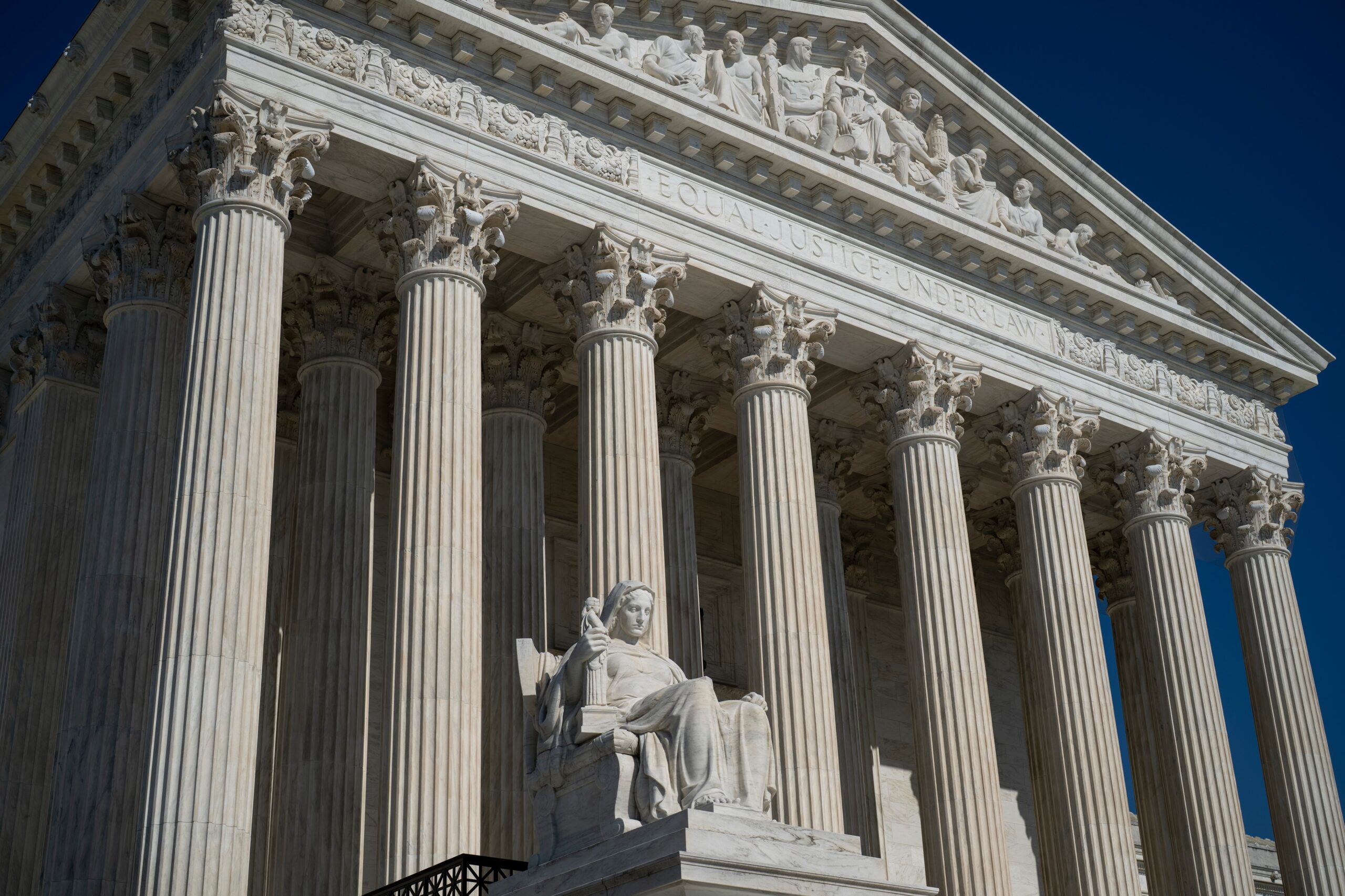
SCOTUS Dismisses Alabama's Bid to Execute Inmate with Borderline Intellectual Disability
Favicon 
yubnub.news

SCOTUS Dismisses Alabama's Bid to Execute Inmate with Borderline Intellectual Disability

A divided Supreme Court on Thursday dismissed Alabama’s bid to be allowed to execute a convicted murder who was found by lower courts to be intellectually disabled. The court’s action leaves in place…
Like
Comment
Share
Showing 4168 out of 127367
  • 4164
  • 4165
  • 4166
  • 4167
  • 4168
  • 4169
  • 4170
  • 4171
  • 4172
  • 4173
  • 4174
  • 4175
  • 4176
  • 4177
  • 4178
  • 4179
  • 4180
  • 4181
  • 4182
  • 4183
Advertisement
Stop Seeing These Ads

Edit Offer

Add tier


Select an image
Delete your tier
Are you sure you want to delete this tier?

Reviews

In order to sell your content and posts, start by creating a few packages. Monetization

Pay By Wallet

Payment Alert

You are about to purchase the items, do you want to proceed?

Request a Refund